





























before op
12 months in
2,800 grafts
FUE method
City Medical Centre
0% instalments
from $367/mo
A look and a figure — $0.
Real result
before op
12 months in
FUE avoids cutting and sewing altogether. Grafts and a result forecast reckoned up without paying — before you decide.
Free online consultation · Reply within 15 minutes
No payment at all, no surgery booking required
Message our coordinator
Free online consultation · Reply within 15 minutes
Message us on TelegramMessage us on WhatsAppBy messaging us, you agree to our Privacy Policy
Hair transplant for patients from Nottingham at City Medical Centre starts at £1,700 (from $2,200). The first online consultation is free; the doctor names the final price and it is fixed in the contract.
How it works · Hair transplant prices
Information current as of 24 October 2026
results
Genuine City Medical Centre patients, every one.
before op
12 months in
2,800 grafts
FUE method

before op
12 months in
3,500 grafts
FUE method

before op
12 months in
2,600 grafts
FUE method

before op
12 months in
3,000 grafts
FUE method

before op
12 months in
2,700 grafts
FUE method

before op
12 months in
3,300 grafts
FUE method

before op
12 months in
2,900 grafts
FUE method

before op
12 months in
2,500 grafts
FUE method

before op
12 months in
3,400 grafts
FUE method

before op
12 months in
2,500 grafts
FUE method

before op
12 months in
3,100 grafts
FUE method

before op
12 months in
3,600 grafts
FUE method

before op
12 months in
4,000 grafts
FUE method

before op
12 months in
3,200 grafts
FUE method

before op
12 months in
3,000 grafts
FUE method

before op
12 months in
3,700 grafts
FUE method

before op
12 months in
2,700 grafts
FUE method

before op
12 months in
3,800 grafts
FUE method

before op
12 months in
3,300 grafts
FUE method

before op
12 months in
2,800 grafts
FUE method

before op
12 months in
2,500 grafts
FUE method

before op
12 months in
3,900 grafts
FUE method

before op
12 months in
3,500 grafts
FUE method

before op
12 months in
3,800 grafts
FUE method

before op
12 months in
2,900 grafts
FUE method

before op
12 months in
3,600 grafts
FUE method

before op
12 months in
2,600 grafts
FUE method

before op
12 months in
2,700 grafts
FUE method

before op
12 months in
3,700 grafts
FUE method

before op
12 months in
3,200 grafts
FUE method

before op
12 months in
3,000 grafts
FUE method

before op
12 months in
2,800 grafts
FUE method

before op
12 months in
4,000 grafts
FUE method

before op
12 months in
3,400 grafts
FUE method

before op
12 months in
2,900 grafts
FUE method

before op
12 months in
3,100 grafts
FUE method

before op
12 months in
2,600 grafts
FUE method

before op
12 months in
3,300 grafts
FUE method

before op
12 months in
3,900 grafts
FUE method

before op
12 months in
3,500 grafts
FUE method

before op
12 months in
2,700 grafts
FUE method

before op
12 months in
3,800 grafts
FUE method

before op
12 months in
3,200 grafts
FUE method

before op
12 months in
3,000 grafts
FUE method

before op
12 months in
2,800 grafts
FUE method

before op
12 months in
3,100 grafts
FUE method

before op
12 months in
3,600 grafts
FUE method
Comparison
We offer three graft transfer technologies: classic FUE, suture-free DHI and a combined protocol. Set them side by side by implantation technique, tissue trauma and graft survival, and choose knowingly.
Classic method requiring no cuts or sutures

$2,200
$2,700
Graft implantation technique
ForcepsGraft trauma
MinimalA natural growth angle
NaturalGraft survival
98–100%Suitable for
Androgenetic alopeciaSuture-free implantation with a Choi pen

$2,500
$2,900
Graft implantation technique
DHI pen, Choi implanterGraft trauma
MinimalA natural growth angle
NaturalGraft survival
98–100%Suitable for
DensificationExtraction by FUE, DHI implant

$2,700
$2,900
Graft implantation technique
FUE extraction plus DHI implantGraft trauma
MinimalA natural growth angle
NaturalGraft survival
98–100%Suitable for
Densification for androgenetic alopeciaSurvival and trauma data are averaged by method and offered as a guide: the exact numbers depend on the transplant area and on the patient's individual features, which the doctor clarifies at the consultation.
Learn more


















about the clinic
Comfort in the rooms, modern equipment, care for every patient

We will answer your questions and arrange a consultation at a convenient time
Message us on WhatsApp Make an enquiryIf your case can be handled without surgery, the doctor will tell you so at the consultation — and your money stays with you. Below are the conditions in which a transplant really works.
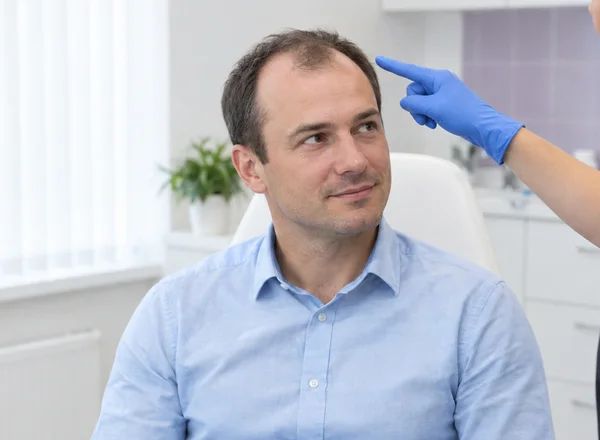

Just a number. A coordinator asks for photos in a messenger, the doctor replies whether a transplant will help you. Free, no booking.

services
The figure is set at the free consultation once the grafts have been counted, and the contract keeps it that way.
suture-free graft extraction

$2,200$2,700
or $367/mo — 0% instalments for 6 months
Freeze the priceimplantation without channels

$2,500$2,900
or $417/mo — 0% instalments for 6 months
Freeze the pricecombined technique

$2,700$2,900
or $450/mo — 0% instalments for 6 months
Freeze the price| Your case reviewed | Free |
|---|---|
| Eyebrow transplant, FUE | |
| Beard transplant, FUEinstalments $467/mo | |
| Hair trichopigmentation | |
| PRP therapy / session | $200 |
all included
We stay with you from pre-op planning to 12 months later.
The day of surgery adds nothing to the price.
two added zones
Hair for any zone comes from the back of the head, and the method used is FUE in every single case.
FUE method, free of cuts or stitches

Grafts are taken from the donor area at the back of the head and moved through micro-punctures of about 1 mm, so no scars are left. The doctor agrees the shape with you before the operation, taking your facial features into account. Transplanted hair grows for life: trim and style the beard as usual.
$2,800$3,000
or $467/mo — 0% instalments for 6 months
Freeze the priceFUE method, free of cuts or stitches

At the first consultation the surgeon draws the brow, you look through reference photos together and the design is matched to the proportions of your face. Hairs placed at the growth angle make the brows believable. It also works where years of plucking stopped growth.
$1,600$1,700
a day-case operation done under local anaesthesia
Freeze the priceYour donor zone is examined, the grafts are counted, and you see what result is realistic. The figure is named at the appointment and recorded in the contract.

Message our coordinator
Free online consultation · Reply within 15 minutes
Message us on TelegramMessage us on WhatsAppBy messaging us, you agree to our Privacy Policy
Process
From consultation to going home — all in one day

For patients in Nottingham, the starting point is a talk about DHI and FUE, answers to their questions, and an examination of the donor zone.

The deposit is what turns a chosen day into a confirmed one. A card payment at reception or an online transfer, either is fine.

Tests come before the transplant. You receive a complete list from the clinic together with clear directions for each.

No pain accompanies the surgery, as a local anaesthetic is used throughout it.

Harvesting grafts from the back of the head or the temples happens without stitches at this stage.

Surgeons work the extracted grafts into the part of the scalp that has thinned.
The final step is recovery, backed by the clinic's supplies and full instructions for fast healing.

Scabs drop away, the swelling eases, the skin heals bit by bit

Expected and temporary: the shafts go, the roots stay put

The area gradually thickens, and the result shows

The hair fills in, with volume and hairline clearly visible

Full volume and a finished, natural hairline

Free, before the operation, and you owe nothing.
Learn moredoctors

Hair transplant doctor, trichologist, surgeon
10 years in practice

Dermatovenereologist, trichologist, surgeon
11 years in practice

Plastic surgeon
9 years of experience

Plastic surgeon
9 years of experience

Assistant
9 years of experience
Your donor zone is examined, the grafts are worked out, and the realistic outcome is explained to you.
Learn morecoordinators
A coordinator is assigned to you and stays with you until you have recovered.
Patient services lead
Follows your case from the start to recovery
Sees to all the papers and diary dates
Patient services lead
Follows your case from the start to recovery
Sees to all the papers and diary dates
Patient services lead
Follows your case from the start to recovery
Sees to all the papers and diary dates
Patient services lead
Follows your case from the start to recovery
Sees to all the papers and diary dates













We will answer your questions and arrange a consultation at a convenient time
Message us on WhatsApp Make an enquiryReviews
I was having trouble with my hair. I came here and got a hair transplant. The results was awesome thank you
Review on Google
І experienced hair loss due to COVID and turned to this clinic; they helped me and performed a hair transplant, moving hair from the back of my head to my temples. Thank you.
Review on Google
I traveled to City Medical Centre, where they helped me overcome hair loss through a transplant to the balding areas of my scalp. I am grateful to the doctors for performing the procedure painlessly.
Review on Google
I am sharing my experience, because before the operation I went through a pile of reviews myself and was looking for real stories. I had a beard transplant six months ago. Honestly, in the first days after the procedure I felt a little jittery: my face looked unfamiliar, there was slight swelling and small scabs. In the first couple of months the hair partly fell out, as the doctor had warned. But now the result truly makes me very happy) From about the 4th month active, even growth began. The transplanted hair took very well, the beard now looks as natural as possible, no bald patches are left. The beard became much thicker and denser, with the shape I had thought about for a long time. All in all, I recommend the clinic, the doctor was polite and explained everything 👍 The result is definitely worth it!
Review on Google
I traveled to this clinic and do hair transplant, very good quality and cheap. Good doctors
Review on Google
I do hair transplant here very good doctors!!
Review on Google
Asked all the time
People often say hair implants, but no artificial hair is used. In a hair transplant the doctor moves your own follicles (grafts) from the donor area to thinning or bald areas using FUE or DHI.

Yes, without any problem. The clinic treats people no matter where their home happens to be, and the case is assessed online beforehand.
FUE: $2,200 (≈ £1,700). DHI: $2,500 (≈ £1,900). Combined: $2,700 (≈ £2,050). A free consultation and graft count gives you the final, contract-fixed price with no hidden extras.
One day handles the whole operation, with home afterwards.
It helps with stable pattern hair loss and a receding hairline when there are enough donor grafts. Some types of alopecia need treatment first; the doctor checks this at the consultation.
Local anaesthesia numbs everything, leaving no pain behind.
In FUE, grafts are harvested with a tweezer, no cuts or stitches involved. In DHI, a Choi pen implants grafts without opening channels first. The combined method pairs FUE harvesting with DHI implantation.
Grafts are counted by the doctor without any fee, and the donor zone is what the count is built upon.
Healing occupies 0–10 days. The 2–4 week shedding of transplanted hair is normal and temporary. Regrowth starts from 3–4 months, real volume appears at 6–9 months, then the result matures at 12–18 months.
A lifetime guarantee of hair growth is included, confirmed in your contract.
The clinic holds a medical licence and care meets the standards and clinical guidelines
under Ministry of Health.

Diplomas and certificates of the surgeons operating
View our paperworkAKC POMOSHCH LLC
the clinic's legal name
1057746096924
OGRN
7728536872
INN
FUE and DHI suit a patient in Nottingham: no cuts, no stitches, local anaesthesia only, and the operation is over in a single day. Graft survival runs 98-100 %, and a price from $2,200 (≈ £1,700) is fixed in the contract after a free graft count, so nothing is added later.
A patient in Nottingham can get a doctor's opinion at home: the online consultation is free, the photos of the thinning area are enough, and the grafts are counted from them. The clinic keeps in touch 24/7, in your own hours.
Plan on 0-10 days of healing, then a normal shedding of the transplanted hairs at 2-4 weeks, then patience until 3-4 months, which is when growth begins and the whole undertaking starts to look worthwhile.
Prices are in US dollars; the amount in brackets is an approximate conversion to GBP at the rate of 02.10.2026. The final price is fixed in your contract.
By messaging us, you agree to our Privacy Policy
The procedure takes one day and you go home the same day. Healing takes 0–10 days, and the follow-up dressings and healing check-ups are part of the price.
Yes. The first consultation is free and starts online: send your details and photos on WhatsApp or Telegram, and the doctor reviews them and explains the options and the price.
Photos of the thinning areas and of the donor area at the back of the head in good light, your age, and whether you have had a transplant before. The doctor names the number of grafts and the price.
Healing takes up to 10 days, then the transplanted hairs shed at 2–4 weeks. New growth starts at 3–4 months, density comes at 6–9 months and the final result at 12–18 months.
Yes. Send us the date you have in mind on WhatsApp or Telegram. The first consultation is free, and you can start it online with the photos and details you send; the clinic then confirms the nearest available dates for the consultation and the operation before you plan anything.
Well-known people who spoke openly about this surgery, in their own words.
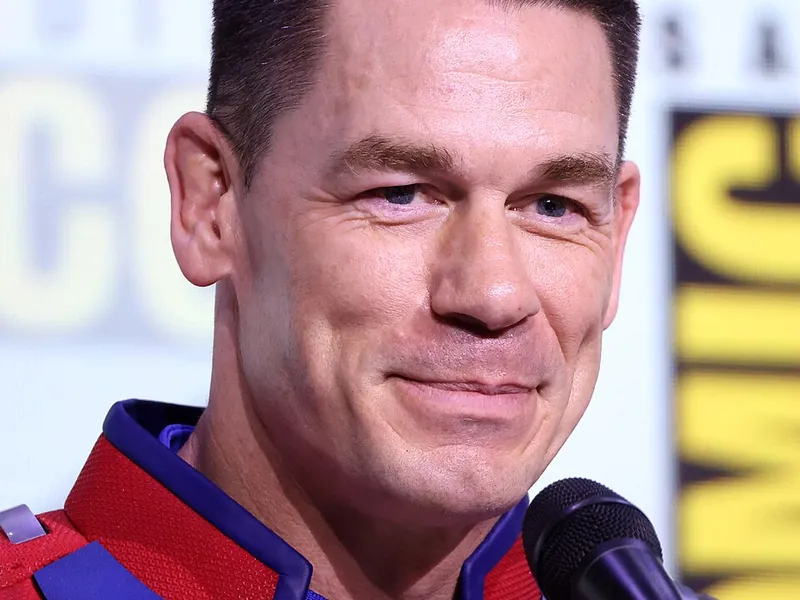 John Cena's hair transplant: “I got a problem, I try to fix it”John Cena spoke openly in 2025 about his hair transplant and the fan signs that pushed him to it. His words, how the procedure works and the recovery.
 Did Calum Best have a hair transplant? Yes, and he said so himselfCalum Best said in 2023 he had his sixth hair transplant, this time using patches of beard hair. His words, how the procedure works and recovery.
 Did Chloe Goodman have a hair transplant? Yes, and she explained whyChloe Goodman had a hair transplant in 2025 after losing hair following pregnancy. Her own words, how the procedure works and what recovery involves.
 Did Dean McCullough have a hair transplant? Yes, and he filmed itRadio 1 presenter Dean McCullough shared his FUE hair transplant on TikTok in 2024. His own words, what the swelling means and how results develop.
 Did Ella Morgan have a hair transplant? Yes — to cover a hairline scarThe Married at First Sight star revealed a hair transplant in 2025 to cover scarring along her hairline from facial surgery. Her own words and the facts.
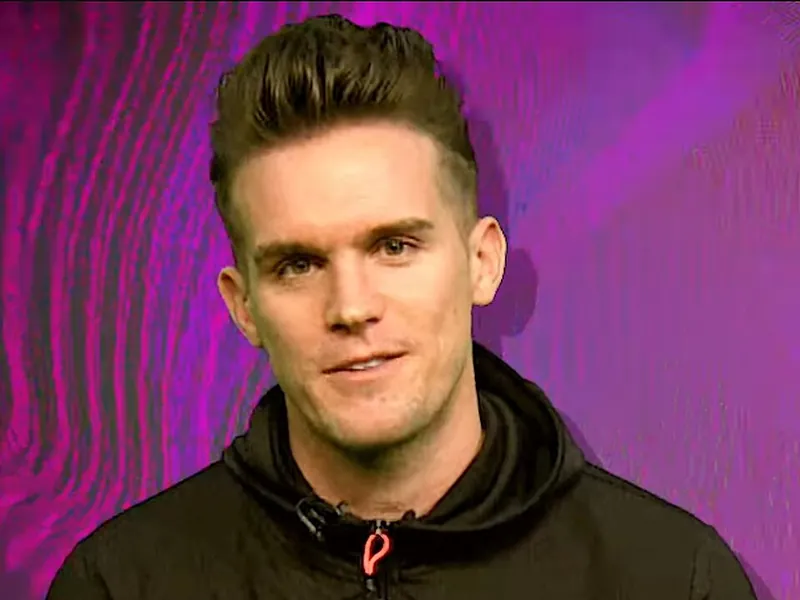 Gaz Beadle on his beard transplant: “I LOVE IT”Gaz Beadle told his 3.6 million followers he had a beard transplant after years of patchy stubble. His own words, and how a hair or beard transplant works today.
Page medically reviewed by Anastasia A. Kolesnik, hair transplant doctor. Review date: .
A hair transplant is a one-day procedure, but the story around it lasts more than a year. The transplanted hairs go through healing, shedding, first growth and gradual thickening, and the final density shows 12–18 months after surgery. Across that stretch you will live through every season the East Midlands has to offer, so it helps to know what those seasons look like in Nottingham before you choose a date.
The Met Office figures for 1991-2020, measured at Watnall a few miles north-west of the centre, give a clear outline. The annual mean temperature is 10.1 °C, with a mean maximum of 13.8 °C and a mean minimum of 6.5 °C. July is the warmest month, with a mean maximum of 21.5 °C and a mean minimum of 12.4 °C. August is close behind at 21.1 °C. January is the coldest month, with a mean maximum of 6.9 °C and a mean minimum of 1.7 °C, and February has the same minimum. This is a moderate climate with no long extremes, which makes planning easier than in places with a hard winter or a scorching summer.
The exceptions still count. About 11 days a year reach 25 °C or above, and Watnall recorded 39.8 °C on 19 July 2022. At the other end there are on average 36.9 days of air frost a year. For a person with a freshly treated scalp, a hot spell and a frosty morning ask for different habits, and both can fall within a single recovery year. The coordinator who guides you from the first message to the follow-up stage will go through these practical points with you, and the doctor will give the medical instructions during the consultation.
Nottingham itself sits on low hills along the lower valley of the River Trent, with Sherwood Forest to the north. Nothing about this terrain creates a special microclimate worth building a medical plan around. The useful point is simpler: the numbers above are what a resident can realistically expect, and we use them to match the stages of recovery with the weather you are likely to meet.
The stages of growth are fixed by biology, not by the weather. The service plan gives these windows: 0-10 days of healing, when the crusts fall away and the swelling subsides; 2-4 weeks of shedding of the transplanted hairs, a normal stage in which only the hairs shed and the follicles stay in place; 3-4 months for first growth; 6-9 months, when density shows; and 12-18 months for the end result. What you can choose is where those windows land in the Nottingham year.
Take an example. Suppose the procedure is done in the second half of November 2026. The first ten days of healing then fall at the end of November and the start of December, which are among the wettest and dullest weeks of the year here. October (71.7 mm), December (69.6 mm) and November (69.5 mm) are the wettest months, and December has only 55.3 hours of sunshine. The shedding stage would come around the Christmas period, and the first new hairs would be expected from about late February to March 2027. Density would build through the spring and summer of 2027, and the end result would be judged between roughly November 2027 and May 2028.
Now compare a late-spring date. Surgery in May would put the healing days into the sunniest part of the year: May and July each get 191.5 hours of sunshine, and June 170.5 hours. Annual sunshine is 1,487.0 hours, so the sun is not constant, but the bright months are concentrated and they overlap with the period when a freshly treated scalp needs sensible protection. Neither timing is wrong. They simply place different demands on you, one being damp and dark, the other bright and warm, and the doctor and coordinator can help you weigh them against your work and family plans.
The calendar also holds fixed days off. In 2026 England and Wales have eight bank holidays, and the last two are Christmas Day on 25 December and the substitute Boxing Day on 28 December. For a November procedure, the stretch of shedding and early recovery meets this long break, which suits people who prefer to have the early days at home with fewer obligations. Check your own employer's arrangements, though, because the bank holiday list says nothing about your shifts.
The care plan that comes with the procedure covers washing your hair, sleep and headwear, together with dressings and healing checks. We deliberately give no universal rule about hats here, because the right choice depends on your stage and on what the doctor says after looking at your case. What we can do is describe the Nottingham conditions that make the question practical.
Rain is the first one. Annual precipitation is 715.6 mm spread over 125.9 days, so wet days are a regular feature rather than an event. Over a year, that is roughly one day in three. During the early healing days, getting caught in a shower is a realistic possibility, and it is worth asking the coordinator in advance what to do if that happens, what to carry, and what kind of covering is appropriate. Asking beforehand is far easier than improvising on a wet morning.
Cold is the second. With 36.9 days of air frost a year, and January and February mean minimums at 1.7 °C, the winter mornings are cold enough that most people reach for a hat automatically. A habit that is normal for everyone else can become a point to check once you have a treated area: material, tightness and how long it stays on. The same applies to scarves and hoods. Raise these questions at the consultation or later in the chat, and follow the written instructions you are given rather than general advice from the internet.
Sun is the third, and it is the one people forget in a country known for grey skies. The sunniest months are May and July, and about 11 days a year reach 25 °C or above. If your first months of growth coincide with such a period, ask for specific guidance on covering and protecting the scalp. Wind needs a similar word: the area is not a wound to be left exposed to dust and friction, and your coordinator can tell you how to deal with that in practice.
Throughout all this, remember that the follow-up is structured: the plan includes check-ins at 1, 3, 6, 9 and 12 months, with progress tracked by photo, and a personal coordinator you can reach round the clock. If something about the weather and your scalp worries you between those points, message the coordinator instead of waiting for the next scheduled check.
Nottingham has a young population. Almost 62,000 students attend its three universities: Nottingham Trent, the University of Law and the University of Nottingham. Hair loss in early adulthood is not rare, and androgenetic alopecia is one of the conditions where a transplant is considered, though the doctor will say honestly if your case can be handled without surgery. People under 18 are not suitable candidates, so the procedure is for adults only.
If you are a student, the practical question is where to place the first two weeks. The healing window is 0-10 days, and shedding follows at 2-4 weeks, so the part when your appearance changes the most is relatively short. Many people choose a gap between terms or a period with lighter teaching. That is an option to consider, not a rule, and the online consultation is a good moment to ask what a realistic plan looks like for your timetable.
Active people have another concern. The city hosts the Nottingham Trophy tennis tournament, the Robin Hood Marathon and the Outlaw Triathlon each year, and plenty of residents train for sport on an ordinary weekday. The programme includes a plan for returning to sport and hair care, so you do not need to guess when to resume running, swimming or contact activities. We do not quote numbers of days for this, since the doctor sets the timing for your own case after the procedure.
Working adults tend to ask about bandages, visibility and meetings. The honest answer is that the early days show crusts and swelling that subside, and that shedding at 2-4 weeks is normal. Plan the most public weeks carefully, and use the coordinator to talk through what you will be asked to do, and when, so that your diary is not a surprise.
The NHS is clear in its own words: «Cosmetic surgery is not routinely provided on the NHS». It might pay for some procedures for psychological or other health reasons, with rhinoplasty for breathing problems as one of its examples, but most people who want cosmetic surgery need to pay privately. Hair restoration is not on its list of examples. If you live in Nottingham and are hoping that a GP referral will lead to a transplant, set your expectations accordingly and ask your GP about any other treatments for hair loss that suit your situation.
It is also worth saying what the health service is dealing with. In NHS England's latest monthly statistics, 7.3 million pathways were waiting to start treatment, representing around 6.2 million unique patients, and 111,379 had waited more than 52 weeks. That says nothing about hair transplants in particular, but it shows why people look for a direct, scheduled option for something that is not urgent in a medical sense but matters in daily life.
A free online consultation is a low-pressure first step. You send photos by WhatsApp or Telegram, the doctor assesses them, the number of grafts and the plan are discussed, and nothing is booked until you confirm the plan and the dates. The procedure itself is done under local anaesthesia and takes one day at the clinic, and the doctor will explain during the consultation which technique fits your case: FUE, DHI or a combined protocol.
Finally, a few conditions make a transplant unsuitable, among them trichotillomania, body dysmorphic disorder, cancer, epilepsy, serious heart conditions, diabetes mellitus, a pacemaker, HIV/AIDS, hepatitis B or C, pulmonary embolism and intolerance to anaesthetics. If any of them applies to you, say so in your first message. The doctor would rather tell you honestly that a transplant will not help than plan something that should not be done.
No month is ruled out. The question is which stages of recovery you would rather meet in which weather. A November procedure puts the first healing days into the wettest, dullest part of the year, while a May procedure puts them into the sunniest. Both are workable with the right instructions, and the doctor and coordinator will help you decide against your own calendar.
Ask the coordinator before the procedure, not after. Nottingham has 125.9 days of precipitation a year and 36.9 days of air frost, so wet and cold mornings are normal. The care plan includes advice on washing, sleep and headwear, and you will receive written instructions to follow. If something unexpected happens, message the coordinator, who is available round the clock.
First growth is expected at 3-4 months, and density shows at 6-9 months. In Nottingham, May and July are the sunniest months, at 191.5 hours each, and June has 170.5 hours. If your growth stage overlaps with them, ask the doctor or coordinator what protection and covering are appropriate for your case. We do not give a universal rule.
The NHS states that cosmetic surgery is not routinely provided and that most people who want it need to pay privately. It may fund some procedures for psychological or other health reasons, but hair restoration is not among its examples. For the options available in your area, the best person to ask is your GP.
Some people do. In 2026, Christmas Day falls on 25 December and the substitute Boxing Day on 28 December. For a procedure in the second half of November, the shedding stage at 2-4 weeks would fall around that period. It is a convenient option if you want to be at home, but check your own work arrangements, and confirm the dates with the coordinator before anything is booked.
Almost 62,000 students attend the three universities, so you are not alone in asking. The most visible phase is short: 0-10 days of healing, then shedding at 2-4 weeks. Many students look for a gap between terms. Discuss your timetable in the online consultation, and the coordinator will help you choose a window.
The programme includes a plan for returning to sport and hair care, so you will not have to guess. The exact timing is set by the doctor after the procedure, according to your case, and we do not give a general number of days. Tell the coordinator which sport you do and how often you train, so the plan can be specific.
Use natural daylight where possible, near a window, and avoid harsh shadows. December has only 55.3 hours of sunshine, so on dull days a bright room with an even light works better than a dim hallway. Send the front, the crown, both temples and the back of the head, because the doctor will look at the donor area and count the grafts from these images.

 Forceps
 Minimal


