





























initial
12 months along
2,800 grafts
FUE method
City Medical Centre
FUE · DHI
from $2,200
Your first chat and sum — $0.
Actual case
initial
12 months along
No cuts, no sutures — the FUE method. Grafts and the forecast done for you, free of fee — before you decide.
Free online consultation · Reply within 15 minutes
Not a penny, no surgery booking required
Message our coordinator
Free online consultation · Reply within 15 minutes
Message us on TelegramMessage us on WhatsAppBy messaging us, you agree to our Privacy Policy
Hair transplant for patients from Málaga at City Medical Centre starts at €2,000 (from $2,200). The first online consultation is free; the doctor names the final price and it is fixed in the contract.
How it works · Hair transplant prices
Information current as of 5 November 2026
results
Each case is a real City Medical Centre patient.
initial
12 months along
2,800 grafts
FUE method

initial
12 months along
3,500 grafts
FUE method

initial
12 months along
2,600 grafts
FUE method

initial
12 months along
3,000 grafts
FUE method

initial
12 months along
2,700 grafts
FUE method

initial
12 months along
3,300 grafts
FUE method

initial
12 months along
2,900 grafts
FUE method

initial
12 months along
2,500 grafts
FUE method

initial
12 months along
3,400 grafts
FUE method

initial
12 months along
2,500 grafts
FUE method

initial
12 months along
3,100 grafts
FUE method

initial
12 months along
3,600 grafts
FUE method

initial
12 months along
4,000 grafts
FUE method

initial
12 months along
3,200 grafts
FUE method

initial
12 months along
3,000 grafts
FUE method

initial
12 months along
3,700 grafts
FUE method

initial
12 months along
2,700 grafts
FUE method

initial
12 months along
3,800 grafts
FUE method

initial
12 months along
3,300 grafts
FUE method

initial
12 months along
2,800 grafts
FUE method

initial
12 months along
2,500 grafts
FUE method

initial
12 months along
3,900 grafts
FUE method

initial
12 months along
3,500 grafts
FUE method

initial
12 months along
3,800 grafts
FUE method

initial
12 months along
2,900 grafts
FUE method

initial
12 months along
3,600 grafts
FUE method

initial
12 months along
2,600 grafts
FUE method

initial
12 months along
2,700 grafts
FUE method

initial
12 months along
3,700 grafts
FUE method

initial
12 months along
3,200 grafts
FUE method

initial
12 months along
3,000 grafts
FUE method

initial
12 months along
2,800 grafts
FUE method

initial
12 months along
4,000 grafts
FUE method

initial
12 months along
3,400 grafts
FUE method

initial
12 months along
2,900 grafts
FUE method

initial
12 months along
3,100 grafts
FUE method

initial
12 months along
2,600 grafts
FUE method

initial
12 months along
3,300 grafts
FUE method

initial
12 months along
3,900 grafts
FUE method

initial
12 months along
3,500 grafts
FUE method

initial
12 months along
2,700 grafts
FUE method

initial
12 months along
3,800 grafts
FUE method

initial
12 months along
3,200 grafts
FUE method

initial
12 months along
3,000 grafts
FUE method

initial
12 months along
2,800 grafts
FUE method

initial
12 months along
3,100 grafts
FUE method

initial
12 months along
3,600 grafts
FUE method
Comparison
Graft transfer here comes in three technologies: classic FUE, suture-free DHI and a combined protocol. Compare them on implantation technique, tissue trauma and graft survival and choose knowingly.
Classic technique without incisions or stitches

$2,200
$2,700
Graft implantation technique
ForcepsGraft trauma
MinimalA natural growth angle
NaturalGraft survival
98–100%Suitable for
Androgenetic alopeciaNo-stitch implantation with a Choi pen

$2,500
$2,900
Graft implantation technique
DHI pen, Choi implanterGraft trauma
MinimalA natural growth angle
NaturalGraft survival
98–100%Suitable for
DensificationExtraction by FUE, DHI implant

$2,700
$2,900
Graft implantation technique
Extraction by FUE, DHI implantGraft trauma
MinimalA natural growth angle
NaturalGraft survival
98–100%Suitable for
Densification for androgenetic alopeciaPer method, survival and trauma figures are averaged and given for guidance: the exact numbers depend on the transplant area and the patient's individual features, and the doctor clarifies them at the consultation.
Speak to a specialist


















about the clinic
Proper equipment, a calm room and attention for each patient

Every query is handled and the consultation booked at an hour that suits
TelegramMessage us on TelegramMessage us on Telegram Message us on WhatsApp Make an enquiryIf your case can be solved without an operation, the doctor will say so at the consultation, and you will not waste your money. Below are the conditions where a transplant really works.
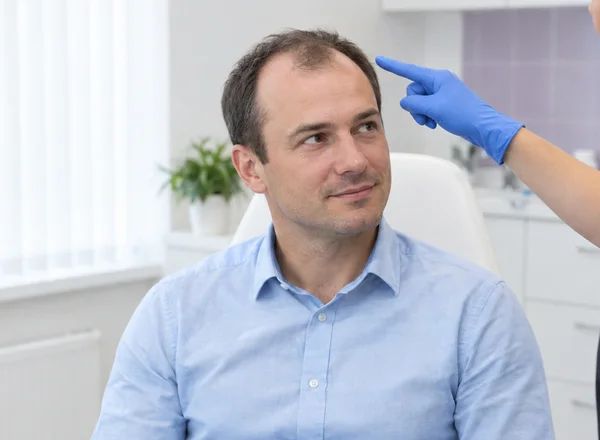

Your number opens the process. A coordinator asks for photos of the thinning area in a messenger, a doctor reviews them and says whether a transplant would help. Free, no obligation to book.

services
Grafts are counted free of charge, the price follows, and the contract makes it binding.
suture-free graft extraction

$2,200$2,700
Your first chat and sum — $0.
Set the price nowimplantation without channels

$2,500$2,900
Your first chat and sum — $0.
Set the price nowcombined technique

$2,700$2,900
Your first chat and sum — $0.
Set the price now| Assessing your hair | Free |
|---|---|
| Eyebrow transplant, FUE | |
| Beard transplant, FUE | |
| Hair trichopigmentation | |
| PRP therapy / session | $200 |
all included
We see it through: pre-op planning and 12 months of care.
Nothing unexpected lands on your bill that day.
two extra patches
A hair transplant is more than the scalp. The same grafts from the back of the head, the same FUE method — only the area changes.
FUE, no incisions and no stitches

Grafts are taken from the donor area at the back of the head and moved through micro-punctures of about 1 mm — there are no scars afterwards. The doctor agrees the shape with you before the operation, taking your facial features into account. Transplanted hair grows for life: trim and style the beard as usual.
$2,800$3,000
Your first chat and sum — $0.
Set the price nowFUE, no incisions and no stitches

A drawn shape comes first. The surgeon does it at the first consultation; you go through sample images together, and the proportions of your face decide the curve. The hairs go in at the natural growth angle, which keeps the brows convincing. It also helps where years of plucking stopped growth.
$1,600$1,700
a procedure that needs no stay, numbed locally
Set the price nowThe doctor studies the donor zone, settles on a graft number and shows what outcome it will give. Pricing follows straight after, and the contract keeps it unchanged.

Message our coordinator
Free online consultation · Reply within 15 minutes
Message us on TelegramMessage us on WhatsAppBy messaging us, you agree to our Privacy Policy
Process
From consultation to going home — all in one day

The consultation costs nothing and gives you a full explanation of FUE and DHI, answers to your questions, and an individual plan built for your surgery.

A deposit — paid by card at the clinic or sent online — reserves the surgery date, and the terms are set out in a medical services contract.

Patients in Málaga prepare for the transplant by completing a set of pre-surgery tests, using the list and instructions the clinic provides.

Local anaesthesia is the method used here, making the whole operation painless.

This step collects grafts from the donor zone — the back of the head or the temples — using a scarless technique.

The grafts are implanted into the area of hair loss by the surgical team.
This is the recovery stage, supported by full supplies and complete instructions from the clinic.

Crusts come off, swelling goes down, and the area gradually recovers

Expected, not a setback: the hair shafts go, the roots remain

Gradually new hairs appear and the result shows

Hair thickens, and the main volume and contour become visible

Final density and a natural hairline are in place

Free, before the surgery, with no obligation.
Speak to a specialistdoctors

Hair transplant doctor, trichologist, surgeon

Dermatovenereologist, trichologist, surgeon
11 years of experience

Plastic surgeon
9 years in practice

Plastic surgeon
9 years in practice

Assistant
9 years in practice
The doctor judges the donor zone, puts a figure on the grafts and sets out the outcome you can expect.
Speak to a specialistcoordinators
A personal coordinator guides you from your first enquiry all the way to recovery.

Your patient adviser
Will support you before and after surgery
Deals with all your papers and time slots
Your patient adviser
Will support you before and after surgery
Deals with all your papers and time slots

Your patient adviser
Will support you before and after surgery
Deals with all your papers and time slots
Your patient adviser
Will support you before and after surgery
Deals with all your papers and time slots













Every query is handled and the consultation booked at an hour that suits
TelegramMessage us on TelegramMessage us on Telegram Message us on WhatsApp Make an enquiryReviews
I was having trouble with my hair. I came here and got a hair transplant. The results was awesome thank you
Review on Google
І experienced hair loss due to COVID and turned to this clinic; they helped me and performed a hair transplant, moving hair from the back of my head to my temples. Thank you.
Review on Google
I traveled to City Medical Centre, where they helped me overcome hair loss through a transplant to the balding areas of my scalp. I am grateful to the doctors for performing the procedure painlessly.
Review on Google
I am sharing my experience, because before the operation I went through a pile of reviews myself and was looking for real stories. I had a beard transplant six months ago. Honestly, in the first days after the procedure I felt a little jittery: my face looked unfamiliar, there was slight swelling and small scabs. In the first couple of months the hair partly fell out, as the doctor had warned. But now the result truly makes me very happy) From about the 4th month active, even growth began. The transplanted hair took very well, the beard now looks as natural as possible, no bald patches are left. The beard became much thicker and denser, with the shape I had thought about for a long time. All in all, I recommend the clinic, the doctor was polite and explained everything 👍 The result is definitely worth it!
Review on Google
I traveled to this clinic and do hair transplant, very good quality and cheap. Good doctors
Review on Google
I do hair transplant here very good doctors!!
Review on Google
Points people raise
People often say hair implants, but no artificial hair is used. In a hair transplant the doctor moves your own follicles (grafts) from the donor area to thinning or bald areas using FUE or DHI.

Yes — City Medical Centre regularly treats patients from other cities and countries, starting with an online consultation.
Prices start at $2,200 (≈ €2,000) for FUE, $2,500 (≈ €2,250) for DHI, and $2,700 (≈ €2,450) for the combined method. Your final price is set after a free graft count and locked into the contract.
The whole operation is completed in one day, with no overnight stay needed.
It helps with stable pattern hair loss and a receding hairline when there are enough donor grafts. Some types of alopecia need treatment first; the doctor checks this at the consultation.
No pain during the procedure, thanks to local anaesthesia.
FUE is cut-free graft extraction by tweezer. DHI is direct implantation with a Choi pen, skipping channel-making. The combined technique takes grafts by FUE and places them using the DHI method.
At the free consultation, the doctor counts the grafts you need according to your donor area.
Healing takes 0–10 days. Transplanted hair sheds at 2–4 weeks, which is normal. New growth starts at 3–4 months, with noticeable density at 6–9 months and the final result at 12–18 months.
The clinic provides a lifetime guarantee on hair growth, stated in the contract.
The clinic works under a medical licence, care is provided to the standards and clinical guidelines
of Ministry of Health.

Diplomas and certificates of the doctors who operate
Open the paperworkAKC POMOSHCH LLC
the clinic's legal entity
1057746096924
OGRN
7728536872
INN
FUE and DHI are both suitable for a patient in Málaga. Neither approach calls for cuts or stitches, local anaesthesia is all the pain relief required, and the operation is finished inside one day, so the evening is already free again.
Nothing has to be arranged in advance to start in Málaga. The online consultation is free: the doctor studies photos of the thinning area and counts the grafts needed. The clinic is in touch 24/7, so you write when it suits you.
Healing takes 0-10 days; at 2-4 weeks the transplanted hairs shed, and that is normal; growth begins at 3-4 months, density builds by 6-9 and the final result settles at 12-18. Check-ups fall on months 1, 3, 6, 9 and 12, with photo tracking by a personal coordinator and a lifetime growth guarantee in the contract.
Prices are in US dollars; the amount in brackets is an approximate conversion to EUR at the rate of 02.10.2026. The final price is fixed in your contract.
By messaging us, you agree to our Privacy Policy
Written by Anastasia A. Kolesnik, plastic surgeon, hair transplant doctor
Medically reviewed by Ellina V. Goncharova, dermatovenereologist, trichologist, surgeon. Review date:
How we prepare and review medical content · Medical disclaimer
Well-known people who spoke openly about this operation, in their own words.
 Did Diego Matamoros have a hair transplant? Yes, and he explained itSpanish influencer Diego Matamoros had an FUE hair transplant of 1,100 follicles in April 2023 and explained why on Instagram. His words and the facts.
 Did IlloJuan have a hair transplant? Yes, and he explained whySpanish streamer IlloJuan told his Twitch audience in November 2025 that he had a hair transplant. His own words, the procedure and what recovery looks like.
 Did Iván González have a hair transplant? Yes, he announced it on televisionSpanish TV collaborator Iván González said on air that he had a hair transplant after noticing hair loss following covid. His words and how the procedure works.
 Did Jordi Wild have a hair transplant? Yes, he confirmed it himself on his own podcastSpanish YouTuber Jordi Wild took off his cap on camera and confirmed a hair transplant. His words, how the procedure works and what recovery involves.
 Did Kiko Hernández have a hair transplant? Yes, and he said whySpanish TV personality Kiko Hernández had a hair transplant in August 2022 and explained his reasons in an interview. His words, the procedure and recovery.
 Did Kiko Jiménez have a hair transplant? Yes, and he documented itIn October 2025 the Spanish TV personality Kiko Jiménez showed his hair transplant on social media. His words, why he did it and how the procedure works.
Málaga is a municipality of 597,173 residents (2025), and the hair doctor a resident of Málaga meets may carry one of two specialist titles. Knowing them saves you from nodding politely at words you do not understand.
The first is Dermatología Médico-Quirúrgica y Venereología, a four-year residency programme. Its official text expects fourth-year residents to know the physiology and clinical aspects of trichology, the techniques used to study hair and its diseases, and it lists alopecias among the diseases of the skin appendages. In short, this is the title of a doctor trained to diagnose why hair is lost.
The second is Cirugía Plástica, Estética y Reparadora, a five-year residency covering the surgical correction of conditions that affect form and function. It is the title of a surgeon trained to operate on the appearance and function of the body.
Why does this matter for a transplant? Because the question has two halves. Someone has to establish the cause and type of the hair loss, and someone has to carry out the surgical work. The clinic's team includes a plastic surgeon and a dermatovenereologist and trichologist, together with a hair transplant doctor, which mirrors those two paths. Ask which of them will examine you, who counts the grafts, and who performs the implantation.
Training, permission to practise and premises are three distinct questions; note each on its own row and tick them off one by one.
Be careful about one thing. A title tells you the road a doctor travelled, and it does not tell you how many transplants they have done. Ask that separately, and get an answer you can write down.
For the question of who is allowed to practise, Spain offers the public register kept by the General Council of Medical Colleges (Consejo General de Colegios Oficiales de Médicos). Type a name with first surname, or a college number. The register's page says that joining a college is compulsory to practise in Spain, so ask any doctor you are considering which licence and register they work under.
What the register does not show is the doctor's specialty field. That is something to ask directly, and to compare with the two programmes described earlier. A short written reply from the doctor stating the specialty and the year of qualification is a reasonable thing to request.
For the premises, the Junta de Andalucía publishes the Registro de Centros, Establecimientos y Servicios Sanitarios (SICESS), run by its Consejería de Presidencia, Sanidad y Emergencias. It exists to list health centres, services and establishments, and it is the regional place to look when the question is about a facility rather than a person. Ask any provider to say which register entry applies to it, and then check it yourself.
Alongside those public lookups, use the clinic's own paperwork. It holds a medical licence, and it lets you view the doctors' diplomas and certificates before you pay. Put the four things together in one message: name, college number, specialty and the legal entity that will issue your contract.
If an answer comes back vague, ask once more, politely and in writing. If it stays vague, you have learned something useful before any money moved.
Spain's public system does not pay for cosmetic work, and the reason is set down in law. Royal Decree 1030/2006 defines the common services portfolio of the national health system, and Article 5.4.a excludes techniques whose purpose is aesthetic or cosmetic improvement. An elective transplant for appearance therefore falls into private territory.
That does not close every door. If your hair loss is linked to an illness or a treatment, your family doctor is the person to ask, and that conversation belongs before any decision about surgery. A clinic that tells you the transplant is not the answer in your case is doing you a favour, and this one says openly that its doctor will not send you into the operating theatre unnecessarily.
Under a private plan, expect the sum to track the graft count: it is stated once the doctor has counted what you need, then frozen in the contract. The date is held by a deposit, paid by card at the clinic or online, and its terms are written into the medical services contract.
Ask, too, how the consultation will end. A useful session closes with a personal plan, a graft count and a stated sum, all reproduced afterwards in writing. If you leave with a general impression only, ask for the missing pieces by message the same day, while the conversation is fresh for both sides.
Never agree to a figure on the strength of a message alone. The count depends on the donor area, which the doctor studies at the consultation, and the contract is where the number becomes binding.
Lead with images of each thinning zone taken overhead, at the front, on both sides and at the rear, under even light, hair dry. Say in one sentence when the loss began and whether it is still advancing. A doctor receives the set via your coordinator and tells you whether a transplant would help; there is no fee, nothing is booked, and replies arrive at any hour in WhatsApp or Telegram.
Good candidates tend to have androgenetic or diffuse thinning, bald patches or a retreating front edge. The clinic is equally frank about who should not go ahead: people with trichotillomania, body dysmorphic disorder, cancer, epilepsy, diabetes, a pacemaker, a serious heart condition, hepatitis B or C, HIV, a past pulmonary embolism or anaesthetic intolerance, and anyone under 18. If one of these fits you, mention it in your first message, since it alters the answer.
Bring questions on paper. What is my diagnosis? Which method do you suggest, and why? How many grafts are likely? Who performs each step? What would you advise if I preferred to wait? The questions are simple; the quality of the replies tells you more than the confidence of the tone.
The method vocabulary fits in four lines. FUE: forceps, one graft after another, no incisions, no stitches. DHI: a pen-shaped implanter that deposits each hair directly, with no pre-cut channels. Combined: harvest the first way, implant the second, a choice presented for densifying zones affected by androgenetic alopecia. Donor hair comes from the back of the head or the temples.
Treat survival and trauma percentages in any comparison table as orientation. Your own numbers hinge on the zone treated and on your biology, and a doctor walks you through them at the consultation.
Set every quote beside the clinic's own description of its package: dressings and healing visits, aftercare for grafted and donor skin, advice on shampooing, sleep and head covering, a return-to-sport plan, a coordinator who collects photos as the weeks pass, and reviews at 1, 3, 6, 9 and 12 months. A missing line is a question, not a verdict.
The operation occupies one day under local anaesthesia, then you go home. Tests come earlier, with a list and instructions supplied by the clinic, which you should request as soon as a date is pencilled in.
Recovery is a matter of months. Roughly ten days pass while crusts lift and swelling fades; in weeks two to four the implanted hairs shed, which is expected because the follicles remain in the skin. Fresh hair appears at three to four months, density builds through months six to nine, and the final look settles by months twelve to eighteen.
Keep one folder with your photographs, the doctor's answers, the draft contract and the signed copy. At each review add new photos in the same light and poses, together with a note of the advice you were given.
Beards and eyebrows follow the same FUE logic, using donor hair from the back of the head; mention them early if you want them discussed.
The official programme for Dermatología Médico-Quirúrgica y Venereología lasts four years, asks fourth-year residents for knowledge of trichology and the techniques used to study hair and its diseases, and lists alopecias among diseases of the skin appendages.
Cirugía Plástica, Estética y Reparadora is a five-year residency covering the surgical correction of conditions that affect form and function.
It does not. You search by name with first surname or by college number, and registration is compulsory in Spain, but the specialty has to be asked about separately.
SICESS, the Registro de Centros, Establecimientos y Servicios Sanitarios, run by the Junta de Andalucía through its Consejería de Presidencia, Sanidad y Emergencias.
Article 5.4.a of Royal Decree 1030/2006 leaves techniques aimed at aesthetic or cosmetic improvement out of the national health system's common services portfolio.
If your hair loss may be linked to an illness or a treatment, yes. A family doctor can advise before any decision about surgery.
Pictures of each thinning zone from every side, a short history of the loss and your written questions.

 Forceps
 Minimal


