





























before
12 months later
2,800 grafts
FUE method
City Medical Centre
0% instalments
from $367/mo
Consultation and quote — $0.
Real case
before
12 months later
FUE surgery, no cuts and no stitches. Grafts and the forecast calculated free of charge — before you decide.
Free online consultation · Reply within 15 minutes
Free of charge, no surgery booking required
Message our coordinator
Free online consultation · Reply within 15 minutes
Message us on TelegramMessage us on WhatsAppBy messaging us, you agree to our Privacy Policy
Hair transplant for patients from Manchester at City Medical Centre starts at £1,700 (from $2,200). The first online consultation is free; the doctor names the final price and it is fixed in the contract.
How it works · Hair transplant prices
Information current as of 5 November 2026
results
Every case shown is a real CMC patient.
before
12 months later
2,800 grafts
FUE method

before
12 months later
3,500 grafts
FUE method

before
12 months later
2,600 grafts
FUE method

before
12 months later
3,000 grafts
FUE method

before
12 months later
2,700 grafts
FUE method

before
12 months later
3,300 grafts
FUE method

before
12 months later
2,900 grafts
FUE method

before
12 months later
2,500 grafts
FUE method

before
12 months later
3,400 grafts
FUE method

before
12 months later
2,500 grafts
FUE method

before
12 months later
3,100 grafts
FUE method

before
12 months later
3,600 grafts
FUE method

before
12 months later
4,000 grafts
FUE method

before
12 months later
3,200 grafts
FUE method

before
12 months later
3,000 grafts
FUE method

before
12 months later
3,700 grafts
FUE method

before
12 months later
2,700 grafts
FUE method

before
12 months later
3,800 grafts
FUE method

before
12 months later
3,300 grafts
FUE method

before
12 months later
2,800 grafts
FUE method

before
12 months later
2,500 grafts
FUE method

before
12 months later
3,900 grafts
FUE method

before
12 months later
3,500 grafts
FUE method

before
12 months later
3,800 grafts
FUE method

before
12 months later
2,900 grafts
FUE method

before
12 months later
3,600 grafts
FUE method

before
12 months later
2,600 grafts
FUE method

before
12 months later
2,700 grafts
FUE method

before
12 months later
3,700 grafts
FUE method

before
12 months later
3,200 grafts
FUE method

before
12 months later
3,000 grafts
FUE method

before
12 months later
2,800 grafts
FUE method

before
12 months later
4,000 grafts
FUE method

before
12 months later
3,400 grafts
FUE method

before
12 months later
2,900 grafts
FUE method

before
12 months later
3,100 grafts
FUE method

before
12 months later
2,600 grafts
FUE method

before
12 months later
3,300 grafts
FUE method

before
12 months later
3,900 grafts
FUE method

before
12 months later
3,500 grafts
FUE method

before
12 months later
2,700 grafts
FUE method

before
12 months later
3,800 grafts
FUE method

before
12 months later
3,200 grafts
FUE method

before
12 months later
3,000 grafts
FUE method

before
12 months later
2,800 grafts
FUE method

before
12 months later
3,100 grafts
FUE method

before
12 months later
3,600 grafts
FUE method
Comparison
Grafts are transferred by one of three technologies: classic FUE, suture-free DHI and a combined protocol. Compare implantation technique, tissue trauma and graft survival and choose with open eyes.
Classic technique without incisions or stitches

$2,200
$2,700
Graft implantation technique
ForcepsGraft trauma
MinimalThe natural growth angle
NaturalGraft survival
98–100%Suitable for
Androgenetic alopeciaImplantation with a Choi pen, no sutures

$2,500
$2,900
Graft implantation technique
DHI pen, Choi implanterGraft trauma
MinimalThe natural growth angle
NaturalGraft survival
98–100%Suitable for
DensificationExtraction by FUE, DHI implant

$2,700
$2,900
Graft implantation technique
FUE extraction, DHI implantationGraft trauma
MinimalThe natural growth angle
NaturalGraft survival
98–100%Suitable for
Androgenetic alopecia and densificationSurvival and trauma figures are averages for each method, given as a guide: the precise numbers depend on the transplant area and the patient's individual features, and the doctor clarifies them at consultation.
Book a consultation


















about the clinic
Modern equipment, comfort in the rooms, care for every patient

We will deal with your questions and pick a convenient time to consult you
TelegramMessage us on TelegramMessage us on Telegram Message us on WhatsApp Choose a messengerYour case may be solvable without surgery; the doctor will say so right at the consultation — and you will not waste your money. Below are the conditions where a transplant works.

Drop your number: photos in a messenger to the coordinator, then the doctor's answer on whether a transplant helps. Free, no booking.

services
The price is set at the free consultation, after the grafts are counted, and fixed in the contract.
suture-free graft extraction

$2,200$2,700
or $367/mo — 0% instalments for 6 months
Lock in the priceimplantation without channels

$2,500$2,900
or $417/mo — 0% instalments for 6 months
Lock in the pricecombined technique

$2,700$2,900
or $450/mo — 0% instalments for 6 months
Lock in the price| Initial consultation | Free |
|---|---|
| Eyebrow transplant, FUE | |
| Beard transplant, FUEinstalments $467/mo | |
| Hair trichopigmentation | |
| PRP therapy / session | $200 |
all included
From preparation before surgery to 12 months after.
No extra payments on the day of surgery.
two more areas
A hair transplant is not confined to the scalp. Same grafts from the back of the head, same FUE method — only the area changes.
FUE method, no incisions or stitches

Grafts come from the donor area at the back of the head and are placed through micro-punctures of about 1 mm, leaving no scars. The doctor discusses the shape with you before surgery, taking your facial features into account. The transplanted hair grows for life, and the beard can be trimmed and styled as usual.
$2,800$3,000
or $467/mo — 0% instalments for 6 months
Lock in the priceFUE method, no incisions or stitches

The eyebrow shape is drawn by the surgeon at the initial consultation: you review references together and the design takes your facial features into account. Hairs are implanted at the correct angle, so the brows look natural. It also helps where hairs no longer grow after years of plucking.
$1,600$1,700
an outpatient procedure under local anaesthesia
Lock in the priceThe doctor will look at your donor area, count the grafts and show the result achievable in your case. The cost is quoted at the consultation and fixed in the contract.

Message our coordinator
Free online consultation · Reply within 15 minutes
Message us on TelegramMessage us on WhatsAppBy messaging us, you agree to our Privacy Policy
Process
Modern equipment, comfort in the rooms, care for every patient

Everything begins with a free consultation: the doctor explains the FUE and DHI methods, answers your questions, and puts together a plan designed specifically for you.

Once the deposit is paid — in person by card or online — the surgery date is booked and confirmed under a medical services contract.

Patients in Manchester prepare for the transplant by completing a set of pre-surgery tests, using the list and instructions the clinic provides.

This stage applies local anaesthesia, which keeps the entire operation painless.

The harvesting stage takes grafts from either the back of the head or the temples, with no need for stitches.

Surgeons carefully implant the grafts into the balding zone.
Recovery is thoroughly supported: the clinic gives you everything you need plus full instructions.

The crusts fall away, the swelling subsides, the area slowly recovers

A normal stage. Only the hairs shed, the follicles stay in place

Gradually the new hairs appear, the result is seen

The hair gets denser, the main volume and contour are visible

You get the final density and a natural hairline

Free, before the operation and owing nothing.
Book a consultationdoctors

Hair transplant doctor, trichologist surgeon

Dermatovenereologist, trichologist, surgeon
11 years of experience

Plastic surgeon
9 years of experience

Plastic surgeon
9 years of experience

Assistant
9 years of experience
The doctor will look at your donor area, count the grafts and say what result you can get.
Book a consultationcoordinators
You are given a personal coordinator who guides you from the first enquiry to recovery.

Patient care specialist
Will see you through before and after surgery
Will assist with papers and visits
Patient care specialist
Will see you through before and after surgery
Will assist with papers and visits

Patient care specialist
Will see you through before and after surgery
Will assist with papers and visits
Patient care specialist
Will see you through before and after surgery
Will assist with papers and visits













We will deal with your questions and pick a convenient time to consult you
TelegramMessage us on TelegramMessage us on Telegram Message us on WhatsApp Choose a messengerReviews
I was having trouble with my hair. I came here and got a hair transplant. The results was awesome thank you
Review on Google
І experienced hair loss due to COVID and turned to this clinic; they helped me and performed a hair transplant, moving hair from the back of my head to my temples. Thank you.
Review on Google
I traveled to City Medical Centre, where they helped me overcome hair loss through a transplant to the balding areas of my scalp. I am grateful to the doctors for performing the procedure painlessly.
Review on Google
I am sharing my experience, because before the operation I went through a pile of reviews myself and was looking for real stories. I had a beard transplant six months ago. Honestly, in the first days after the procedure I felt a little jittery: my face looked unfamiliar, there was slight swelling and small scabs. In the first couple of months the hair partly fell out, as the doctor had warned. But now the result truly makes me very happy) From about the 4th month active, even growth began. The transplanted hair took very well, the beard now looks as natural as possible, no bald patches are left. The beard became much thicker and denser, with the shape I had thought about for a long time. All in all, I recommend the clinic, the doctor was polite and explained everything 👍 The result is definitely worth it!
Review on Google
I traveled to this clinic and do hair transplant, very good quality and cheap. Good doctors
Review on Google
I do hair transplant here very good doctors!!
Review on Google
Frequent questions
People often say hair implants, but no artificial hair is used. In a hair transplant the doctor moves your own follicles (grafts) from the donor area to thinning or bald areas using FUE or DHI.

Yes. The clinic works with patients from other cities and countries, and an online consultation is available first.
FUE: $2,200 (≈ £1,700). DHI: $2,500 (≈ £1,900). Combined: $2,700 (≈ £2,050). A free consultation and graft count gives you the final, contract-fixed price with no hidden extras.
It takes just one day from start to finish, and you're free to go home afterward.
It helps with stable pattern hair loss and a receding hairline when there are enough donor grafts. Some types of alopecia need treatment first; the doctor checks this at the consultation.
The surgery is performed under local anaesthesia, so it's painless.
With FUE, grafts are taken by tweezer with no incisions. With DHI, grafts are implanted directly using a Choi pen, without pre-made channels. The combined method mixes FUE harvesting with DHI implantation.
At the free consultation, the doctor counts the grafts you need according to your donor area.
First comes 0–10 days of healing, then shedding at 2–4 weeks (a normal stage). Growth starts at 3–4 months, density is clear by 6–9 months, and the final outcome shows at 12–18 months.
Hair growth is covered by a lifetime guarantee, fixed in the signed contract.
The clinic works under a medical licence, care is provided to the standards and clinical guidelines
under Ministry of Health.

Diplomas and certificates of the doctors who operate you
View the documentsAKC POMOSHCH LLC
the clinic's own entity
1057746096924
OGRN
7728536872
INN
The two methods offered to a patient in Manchester, FUE and DHI, leave no cuts and no stitches, work under local anaesthesia and finish within one day. Graft survival is 98-100 %, and a price from $2,200 (≈ £1,700) is fixed in the contract after a free graft count.
If you are in Manchester, the first step is a free online consultation: photographs of the thinning area go to the doctor, who looks at them and counts the grafts. Daily contact is open 24/7, so nothing depends on a lucky moment.
It heals within 0-10 days, the transplanted hairs shed at 2-4 weeks and this is the norm, growth appears at 3-4 months, density at 6-9 and the final result at 12-18. Along the way there are check-ups at 1, 3, 6, 9 and 12 months, photo tracking with a personal coordinator and a lifetime growth guarantee.
Prices are in US dollars; the amount in brackets is an approximate conversion to GBP at the rate of 02.10.2026. The final price is fixed in your contract.
By messaging us, you agree to our Privacy Policy
Yes, and it is free. You send your details and answer a few questions about your health; the doctor reviews them and explains the options and the cost.
One day for the procedure, after which you leave the same day, and then healing of 0–10 days. The healing check-ups are part of the price.
Yes. Send us the date you have in mind on WhatsApp or Telegram. The first consultation is free, and you can start it online with the photos and details you send; the clinic then confirms the nearest available dates for the consultation and the operation before you plan anything.
From photos you send in the chat: front hairline, top, crown and the back of the head (donor area). Add your age and any previous transplant; the graft count and the price follow from the review.
If you want a visible result for a date, plan about a year ahead: growth starts at 3–4 months, thickens by 6–9 and is final at 12–18 months. Healing alone takes 0–10 days.
Written by Anastasia A. Kolesnik, plastic surgeon, hair transplant doctor
Medically reviewed by Ellina V. Goncharova, dermatovenereologist, trichologist, surgeon. Review date:
How we prepare and review medical content · Medical disclaimer
Well-known people who spoke openly about this operation, in their own words.
 Did Calum Best have a hair transplant? Yes, and he said so himselfCalum Best said in 2023 he had his sixth hair transplant, this time using patches of beard hair. His words, how the procedure works and recovery.
 Did Chloe Goodman have a hair transplant? Yes, and she explained whyChloe Goodman had a hair transplant in 2025 after losing hair following pregnancy. Her own words, how the procedure works and what recovery involves.
 Did Dean McCullough have a hair transplant? Yes, and he filmed itRadio 1 presenter Dean McCullough shared his FUE hair transplant on TikTok in 2024. His own words, what the swelling means and how results develop.
 Did Ella Morgan have a hair transplant? Yes — to cover a hairline scarThe Married at First Sight star revealed a hair transplant in 2025 to cover scarring along her hairline from facial surgery. Her own words and the facts.
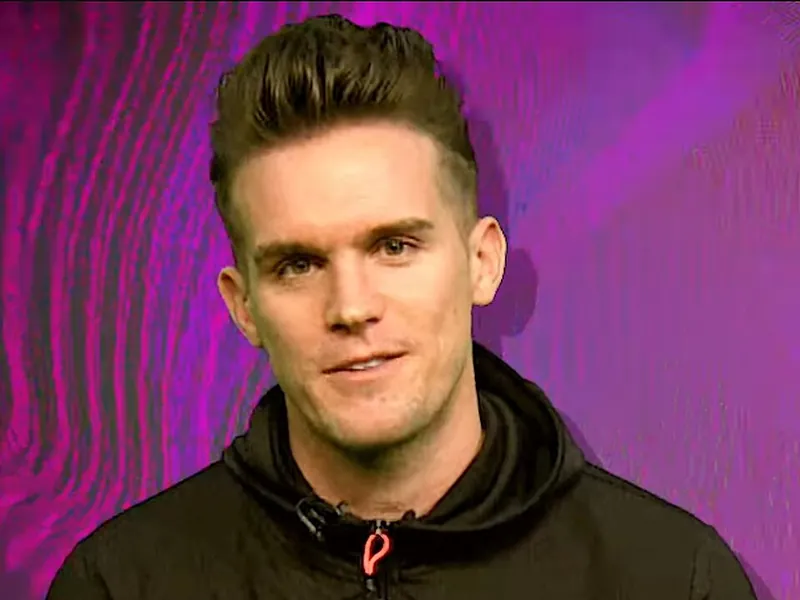 Gaz Beadle on his beard transplant: “I LOVE IT”Gaz Beadle told his 3.6 million followers he had a beard transplant after years of patchy stubble. His own words, and how a hair or beard transplant works today.
 Did Jack Fincham have a hair transplant? Yes, and he explained whyJack Fincham had a hair transplant in 2020 to cover a scar from a childhood head injury. His words, how the procedure works and recovery.
Manchester is given a population of 588,256 for 2025, the figure for the city district. If thinning hair has you weighing up a transplant, the sensible first step is not a booking. It is a short list of registers that anyone in England can look up for free.
The NHS guidance on hair transplants is blunt about what to check. The first entry is the CQC: the NHS says all independent hospitals and clinics providing cosmetic surgery in England must be registered with it. The second is the General Medical Council: all doctors must be on its register and hold a licence to practise. The third is the British Association of Hair Restoration Surgery: the NHS suggests checking whether the surgeon is a full or affiliate hair transplant member. None of these lookups costs anything. The NHS also notes that some clinics pay to advertise on search listings, so a high position on a results page tells you nothing about the surgeon behind it.
Take the same logic to the team that would assess your photographs. Ask for the medical licence and its number, the name of the legal entity that delivers the care, and the names of the doctors. The clinic states that everything can be checked before payment, doctors' diplomas and certificates included, so make that request in your first message and keep what comes back.
Write the answers into a table with three columns: what you asked, what you were told, and the document that proves it. Anything that stays in the third column as a blank is a question to repeat.
Keep the habit of reading the result critically. A register tells you that a person may practise, not how many hair operations that person has performed this year or how they handle a difficult donor zone. For that, the NHS suggests asking the surgeon how many hair transplants they have performed, how many of those had complications, which type of transplant they would recommend for you and why, what follow-up to expect if things go wrong, and what their patient satisfaction rates are. Ask for the answers in writing before any money moves.
A hair transplant is not available on the NHS, because it counts as cosmetic surgery. The NHS page on cosmetic procedures adds that most people who want this kind of surgery pay for it themselves. In practice that means the contract between you and the clinic is the only safety net you hold, so it deserves a slow read.
The NHS checklist for anyone considering a cosmetic procedure starts with an honest question: why do I want this? It then suggests talking to a GP or a mental health professional, researching the procedure, working out all the costs including aftercare, and being sceptical of social media, where influencers are usually paid to promote a service. It also says you should not pay for anything before you have had a consultation, and that you should be given time after the consultation to decide.
Apply that to a transplant in concrete terms. A first online consultation with the clinic is free and books nothing. Photographs go to a coordinator, a doctor studies them, and you hear whether a transplant is worth considering. A surgery date is only held once a deposit has been paid, at the clinic by card or online, and the terms go into a medical services contract. If a conversation ever pushes you toward the deposit first, you have found the moment to step back.
Ask what the deposit covers, whether it is refundable and under what conditions, and what happens to the date if you need to move it. Ask for those answers as text. A policy that exists only in a voice call is not a policy you can rely on.
A practical test for any offer: could you explain, in one sentence to a friend in Manchester, exactly what you have agreed to? If the sentence needs the words 'it depends' or 'we will see on the day', the paperwork is not finished yet. The contract should name the method, the graft count, the number of check-ups and the care that follows, so that nothing rests on a spoken promise.
The same NHS page lists things to avoid: group treatments and events involving alcohol, treatment vouchers sold on discount sites, procedures done in private homes or hotels, and practitioners who advertise only on social media. A transplant is a surgical day with local anaesthesia, so a venue that is a clinic and a name that appears on a register are the minimum, not extras.
A transplant has two stages with their own techniques: taking the grafts and placing them. With FUE the grafts come from the donor zone, the back of the head or the temples, using forceps, with no incisions and no stitches. DHI places every graft with a Choi pen, so no channels are made beforehand. The combined protocol takes grafts by FUE and places them by DHI, and is described as a way to densify hair in androgenetic alopecia.
For FUE the clinic gives graft survival as 98–100 percent, and it adds that survival and trauma figures are averages offered for guidance. Your donor zone and recipient area decide the actual numbers, which the doctor sets out at the consultation. So the sharper question is not about a general rate but about your own case: what do you expect for my donor zone and my recipient area, and where will that estimate be written?
Ask which technique is proposed for you and what reasoning stands behind it, then ask what the alternative would be and why it was not chosen. A doctor who explains a choice in two sentences has usually made one.
The graft count belongs in your contract. The doctor studies the donor zone, arrives at the number and explains the outcome that can realistically be achieved, and the price is fixed after that count. If one clinic gives you a number of grafts and another gives a very different one, do not average them. Ask each to explain the difference in terms of your donor density and the area to be covered.
The doctor who sees you at the consultation is the doctor who works in the operating room; ask for that sentence in writing too.
Tests deserve the same attention as technique. The clinic outlines exactly which are needed before the operation and gives instructions for completing them. Ask where each can be done near home, how recent the results must be, and who reads them.
A transplant fits particular situations only. Good reasons to go ahead, as the clinic lists them, are androgenetic or diffuse alopecia and bald areas together with a receding frontal area. Firm stops include trichotillomania, body dysmorphic disorder, cancer, being under 18, epilepsy, a pacemaker, diabetes mellitus and pulmonary embolism, and the full list is longer, so ask to see it whole. Insufficient hair density and shedding after an illness are named as cases where surgery may not be the answer. The NHS adds that a transplant suits permanent baldness of the type that runs in families, and is not usually suitable for other kinds of hair loss, such as the kind that causes bald patches.
That is why a good first exchange can end with 'this is not for you', and why the clinic says the doctor has no reason to send anyone to the operating theatre unnecessarily. Declaring a condition early is the information the doctor needs.
For the first message, prepare a set of photographs of the areas where your hair has thinned, plus one sentence about when the thinning began and whether anyone in your family has similar loss. A coordinator passes the set to the doctor, who answers whether a transplant would help. All that is requested at that stage is a phone number and the pictures.
One more point comes from the NHS: your own hair may keep thinning around the transplanted area as the years pass. For that reason it asks the surgeon to plan the design so that the result still looks natural later. Put the question plainly: how will you plan for the hair I still have, not only the bare patch in front of me?
The clinic describes recovery in stages. Days 0 to 10 are for crusts and swelling to settle. Weeks 2 to 4 bring the shedding of transplanted hairs while the follicles stay in place. Expect the first new hairs at 3 to 4 months, returning volume at 6 to 9 months and the finished result at 12 to 18 months. Treat each stage as a range, not a promise.
Check-ups are set at 1, 3, 6, 9 and 12 months, and all five can go into your diary on the day of surgery.
Photograph the same areas under the same light at each check and name the files with the date. While you wait for regrowth and little seems to be happening, a folder of pictures from day ten, week three and week eight is more trustworthy than memory. Send the set to your coordinator so that your doctor sees what you see.
If you are comparing two proposals, put the timelines side by side as well. Both should describe a shedding stage, a quiet stage and a gradual return of volume, and both should be honest that the finished result takes 12 to 18 months. A proposal promising a finished head of hair in a few weeks describes something that does not match the stages above. The NHS gives a similar picture: new hair usually starts to appear after about 4 months, and the full result is seen after 10 to 18 months.
Look the surgeon up on the General Medical Council register and check for a licence to practise. For the clinic, check its registration with the CQC. For hair restoration specifically, the NHS also suggests asking whether the surgeon is a full or affiliate member of the British Association of Hair Restoration Surgery.
No. The NHS says a hair transplant is not available on the NHS because it is cosmetic surgery, and that most people wanting cosmetic surgery pay privately.
The NHS advises against paying for a cosmetic procedure before you have had a consultation. With the clinic the first online consultation is free and books nothing, and the deposit comes only when you reserve a surgery date.
A phone number and pictures of the areas where hair has thinned. The coordinator hands them to a doctor, who tells you if a transplant is likely to help.
The count is what the doctor reaches after studying your donor zone, and the price is fixed after it. A number that exists only in a conversation cannot be compared with what is actually done.
How many of these procedures they have done, what qualifications and training they have, whether they belong to a relevant professional association, the common complications, what aftercare you can expect, what happens if something goes wrong, and what further treatment would cost.
The doctor does, after looking at your photographs or at the consultation. Contraindications such as cancer, epilepsy, a pacemaker or being under 18 end the discussion about a transplant.

 Forceps
 Minimal


