





























before
12 months later
2,800 grafts
FUE method
City Medical Centre
0% instalments
from $367/mo
Consultation and quote — $0.
Real case
before
12 months later
No incisions, no stitches with FUE. Grafts and outcome forecast calculated free of charge — before you decide.
Free online consultation · Reply within 15 minutes
Free of charge, no surgery booking required
Message our coordinator
Free online consultation · Reply within 15 minutes
Message us on TelegramMessage us on WhatsAppBy messaging us, you agree to our Privacy Policy
Hair transplant for patients from Leeds at City Medical Centre starts at £1,700 (from $2,200). The first online consultation is free; the doctor names the final price and it is fixed in the contract.
How it works · Hair transplant prices
Information current as of 5 November 2026
results
All cases shown are real CMC patients.
before
12 months later
2,800 grafts
FUE method

before
12 months later
3,500 grafts
FUE method

before
12 months later
2,600 grafts
FUE method

before
12 months later
3,000 grafts
FUE method

before
12 months later
2,700 grafts
FUE method

before
12 months later
3,300 grafts
FUE method

before
12 months later
2,900 grafts
FUE method

before
12 months later
2,500 grafts
FUE method

before
12 months later
3,400 grafts
FUE method

before
12 months later
2,500 grafts
FUE method

before
12 months later
3,100 grafts
FUE method

before
12 months later
3,600 grafts
FUE method

before
12 months later
4,000 grafts
FUE method

before
12 months later
3,200 grafts
FUE method

before
12 months later
3,000 grafts
FUE method

before
12 months later
3,700 grafts
FUE method

before
12 months later
2,700 grafts
FUE method

before
12 months later
3,800 grafts
FUE method

before
12 months later
3,300 grafts
FUE method

before
12 months later
2,800 grafts
FUE method

before
12 months later
2,500 grafts
FUE method

before
12 months later
3,900 grafts
FUE method

before
12 months later
3,500 grafts
FUE method

before
12 months later
3,800 grafts
FUE method

before
12 months later
2,900 grafts
FUE method

before
12 months later
3,600 grafts
FUE method

before
12 months later
2,600 grafts
FUE method

before
12 months later
2,700 grafts
FUE method

before
12 months later
3,700 grafts
FUE method

before
12 months later
3,200 grafts
FUE method

before
12 months later
3,000 grafts
FUE method

before
12 months later
2,800 grafts
FUE method

before
12 months later
4,000 grafts
FUE method

before
12 months later
3,400 grafts
FUE method

before
12 months later
2,900 grafts
FUE method

before
12 months later
3,100 grafts
FUE method

before
12 months later
2,600 grafts
FUE method

before
12 months later
3,300 grafts
FUE method

before
12 months later
3,900 grafts
FUE method

before
12 months later
3,500 grafts
FUE method

before
12 months later
2,700 grafts
FUE method

before
12 months later
3,800 grafts
FUE method

before
12 months later
3,200 grafts
FUE method

before
12 months later
3,000 grafts
FUE method

before
12 months later
2,800 grafts
FUE method

before
12 months later
3,100 grafts
FUE method

before
12 months later
3,600 grafts
FUE method
Comparison
Three graft transfer technologies are in use here: classic FUE, suture-free DHI and a combined protocol. Weigh the implantation technique, tissue trauma and graft survival, and choose your method knowingly.
Classic method requiring no cuts or sutures

$2,200
$2,700
Graft implantation technique
ForcepsGraft trauma
MinimalHair's natural angle
NaturalGraft survival
98–100%Suitable for
Androgenetic alopeciaStitch-free implantation with a Choi pen

$2,500
$2,900
Graft implantation technique
DHI pen, Choi implanterGraft trauma
MinimalHair's natural angle
NaturalGraft survival
98–100%Suitable for
DensificationExtraction by FUE, DHI implant

$2,700
$2,900
Graft implantation technique
FUE extraction plus DHI implantGraft trauma
MinimalHair's natural angle
NaturalGraft survival
98–100%Suitable for
Densification for androgenetic alopeciaFigures for survival and trauma are method averages and serve as a guide: the exact numbers rest on the transplant area and the patient's individual features, and the doctor explains them at the consultation.
Book a consultation


















about the clinic
Comfort in the rooms, modern equipment, care for every patient

We will answer your questions and find you a convenient consultation time
TelegramMessage us on TelegramMessage us on Telegram Message us on WhatsApp Choose a messengerIf your case can be managed without surgery, the doctor will say so at the consultation — and you will not waste your money. Below are the conditions in which a transplant really works.
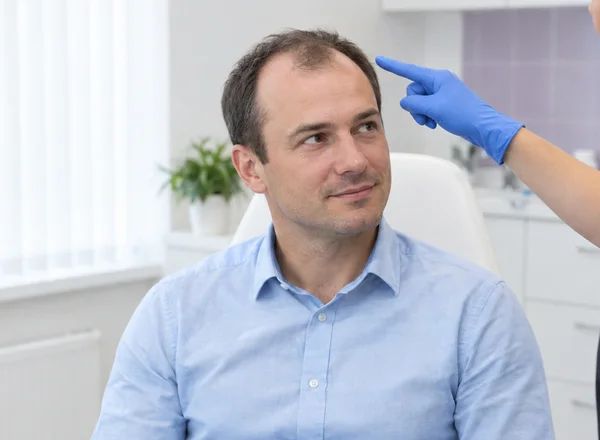

Leave your number. The coordinator asks for photos in a messenger, the doctor decides if a transplant will help. Free of charge.

services
The free consultation ends with a graft count: the cost is named and fixed in the contract.
suture-free graft extraction

$2,200$2,700
or $367/mo — 0% instalments for 6 months
Lock in the priceimplantation without channels

$2,500$2,900
or $417/mo — 0% instalments for 6 months
Lock in the pricecombined technique

$2,700$2,900
or $450/mo — 0% instalments for 6 months
Lock in the price| Initial consultation | Free |
|---|---|
| Eyebrow transplant, FUE | |
| Beard transplant, FUEinstalments $467/mo | |
| Hair trichopigmentation | |
| PRP therapy / session | $200 |
all included
From the first preparations to 12 months of follow-up.
No add-on charges on the day of your surgery.
two more areas
A hair transplant works beyond the scalp: same grafts from the back of the head, same FUE method — only the area changes.
FUE method, no incisions or stitches

Grafts taken from the back of the head, the donor area, move through micro-punctures of about 1 mm, with no scars left. The doctor discusses the shape with you before the operation, taking your facial features into account. The hair grows for life once transplanted; the beard can be trimmed and styled as usual.
$2,800$3,000
or $467/mo — 0% instalments for 6 months
Lock in the priceFUE method, no incisions or stitches

The surgeon draws your eyebrow shape at the initial consultation: you study references together and the design is built around your facial features. Hairs are implanted at the right angle, so the eyebrows look natural. It also works where hairs have stopped growing after years of plucking.
$1,600$1,700
a day procedure done under local anaesthesia
Lock in the priceThe doctor looks at your donor area, counts the grafts and shows what result is achievable in your case. The price is named at the consultation and fixed in the contract.

Message our coordinator
Free online consultation · Reply within 15 minutes
Message us on TelegramMessage us on WhatsAppBy messaging us, you agree to our Privacy Policy
Process
Comfort in the rooms, modern equipment, care for every patient

This free initial meeting with the doctor is where FUE and DHI are explained, your questions get answered, and a personal plan for the operation takes shape.

This step reserves your surgery date through a deposit, paid by card at the clinic or online, with terms captured in a medical services contract.

This stage is about completing the pre-operative tests, for which the clinic gives you a clear list and step-by-step instructions.

Local anaesthesia ensures the procedure is carried out without any pain.

The surgeon collects grafts from the donor zone, back of the head or temples, without leaving stitches.

At this stage, the surgeons position the grafts into the balding area.
Recovery is supported by the clinic, which supplies all necessary items and full instructions.

The crusts leave, the swelling goes down, the area gradually recovers

A normal stage. Hairs fall out, the follicles stay where they are

New hairs gradually appear, the result starts to show

The hair gets denser, the main volume and contour are visible

The final density and natural hairline settle in

Free, before the operation and free of obligations.
Book a consultationdoctors

Hair transplant doctor, trichologist surgeon

Dermatovenereologist, trichologist, surgeon
11 years of experience

Plastic surgeon
9 years of experience

Plastic surgeon
9 years of experience

Assistant
9 years of experience
The doctor will see your donor area, count the grafts and say what result is achievable.
Book a consultationcoordinators
A personal coordinator is assigned to you and guides you from enquiry to recovery.

Patient care specialist
Will accompany you before and after surgery
Will help with documents and appointments
Patient care specialist
Will accompany you before and after surgery
Will help with documents and appointments

Patient care specialist
Will accompany you before and after surgery
Will help with documents and appointments
Patient care specialist
Will accompany you before and after surgery
Will help with documents and appointments













We will answer your questions and find you a convenient consultation time
TelegramMessage us on TelegramMessage us on Telegram Message us on WhatsApp Choose a messengerReviews
I was having trouble with my hair. I came here and got a hair transplant. The results was awesome thank you
Review on Google
І experienced hair loss due to COVID and turned to this clinic; they helped me and performed a hair transplant, moving hair from the back of my head to my temples. Thank you.
Review on Google
I traveled to City Medical Centre, where they helped me overcome hair loss through a transplant to the balding areas of my scalp. I am grateful to the doctors for performing the procedure painlessly.
Review on Google
I am sharing my experience, because before the operation I went through a pile of reviews myself and was looking for real stories. I had a beard transplant six months ago. Honestly, in the first days after the procedure I felt a little jittery: my face looked unfamiliar, there was slight swelling and small scabs. In the first couple of months the hair partly fell out, as the doctor had warned. But now the result truly makes me very happy) From about the 4th month active, even growth began. The transplanted hair took very well, the beard now looks as natural as possible, no bald patches are left. The beard became much thicker and denser, with the shape I had thought about for a long time. All in all, I recommend the clinic, the doctor was polite and explained everything 👍 The result is definitely worth it!
Review on Google
I traveled to this clinic and do hair transplant, very good quality and cheap. Good doctors
Review on Google
I do hair transplant here very good doctors!!
Review on Google
Frequent questions
People often say hair implants, but no artificial hair is used. In a hair transplant the doctor moves your own follicles (grafts) from the donor area to thinning or bald areas using FUE or DHI.

Yes — City Medical Centre regularly treats patients from other cities and countries, starting with an online consultation.
FUE is $2,200 (≈ £1,700), DHI is $2,500 (≈ £1,900), combined DHI+FUE is $2,700 (≈ £2,050). A free consultation with a graft count gives you the exact, contract-fixed price.
The whole operation is completed in one day, with no overnight stay needed.
It helps with stable pattern hair loss and a receding hairline when there are enough donor grafts. Some types of alopecia need treatment first; the doctor checks this at the consultation.
No — local anaesthesia keeps the whole procedure pain-free.
FUE relies on tweezer harvesting with no incisions or stitches. DHI relies on Choi-pen implantation without channels. The combined DHI+FUE approach harvests by FUE and implants by DHI.
The doctor calculates the exact number of grafts at a free consultation, based on your donor area.
Expect 0–10 days to heal, then normal shedding of transplanted hairs at 2–4 weeks. Growth begins around 3–4 months, density builds by 6–9 months, and the final look appears at 12–18 months.
Your procedure includes a lifetime hair-growth guarantee under contract.
The clinic acts under a medical licence, care is to the standards and clinical guidelines
under Ministry of Health.

Diplomas and certificates of the doctors in the theatre
View the documentsAKC POMOSHCH LLC
the clinic's legal name
1057746096924
OGRN
7728536872
INN
People in Leeds usually ask how heavy the surgery is: FUE and DHI need no cuts and no stitches and run on local anaesthesia, and one day covers it. Graft survival is 98-100 %, with a price from $2,200 (≈ £1,700) fixed in the contract after a free graft count.
A resident of Leeds needs only a phone for the first step. The online consultation is free: the doctor looks at photos of the thinning area and counts the grafts. Contact is open 24/7, so the reply comes the same day.
Healing takes 0-10 days; at 2-4 weeks the transplanted hairs shed, and that is normal; growth begins at 3-4 months, density builds by 6-9 and the final result settles at 12-18. Check-ups fall on months 1, 3, 6, 9 and 12, with photo tracking by a personal coordinator and a lifetime growth guarantee in the contract.
Prices are in US dollars; the amount in brackets is an approximate conversion to GBP at the rate of 02.10.2026. The final price is fixed in your contract.
By messaging us, you agree to our Privacy Policy
Photos of the thinning areas and of the donor area at the back of the head in good light, your age, and whether you have had a transplant before. The doctor names the number of grafts and the price.
For the scalp to look healed, allow at least 10 days: healing takes 0–10 days. Transplanted hairs shed normally at 2–4 weeks, growth starts at 3–4 months and the final result shows at 12–18 months.
The procedure takes one day and you go home the same day. Healing takes 0–10 days, and the follow-up dressings and healing check-ups are part of the price.
Yes. Send us the date you have in mind on WhatsApp or Telegram. The first consultation is free, and you can start it online with the photos and details you send; the clinic then confirms the nearest available dates for the consultation and the operation before you plan anything.
Yes. The first consultation is free and starts online: send your details and photos on WhatsApp or Telegram, and the doctor reviews them and explains the options and the price.
Written by Anastasia A. Kolesnik, plastic surgeon, hair transplant doctor
Medically reviewed by Ellina V. Goncharova, dermatovenereologist, trichologist, surgeon. Review date:
How we prepare and review medical content · Medical disclaimer
Well-known people who spoke openly about this operation, in their own words.
 Did Calum Best have a hair transplant? Yes, and he said so himselfCalum Best said in 2023 he had his sixth hair transplant, this time using patches of beard hair. His words, how the procedure works and recovery.
 Did Chloe Goodman have a hair transplant? Yes, and she explained whyChloe Goodman had a hair transplant in 2025 after losing hair following pregnancy. Her own words, how the procedure works and what recovery involves.
 Did Dean McCullough have a hair transplant? Yes, and he filmed itRadio 1 presenter Dean McCullough shared his FUE hair transplant on TikTok in 2024. His own words, what the swelling means and how results develop.
 Did Ella Morgan have a hair transplant? Yes — to cover a hairline scarThe Married at First Sight star revealed a hair transplant in 2025 to cover scarring along her hairline from facial surgery. Her own words and the facts.
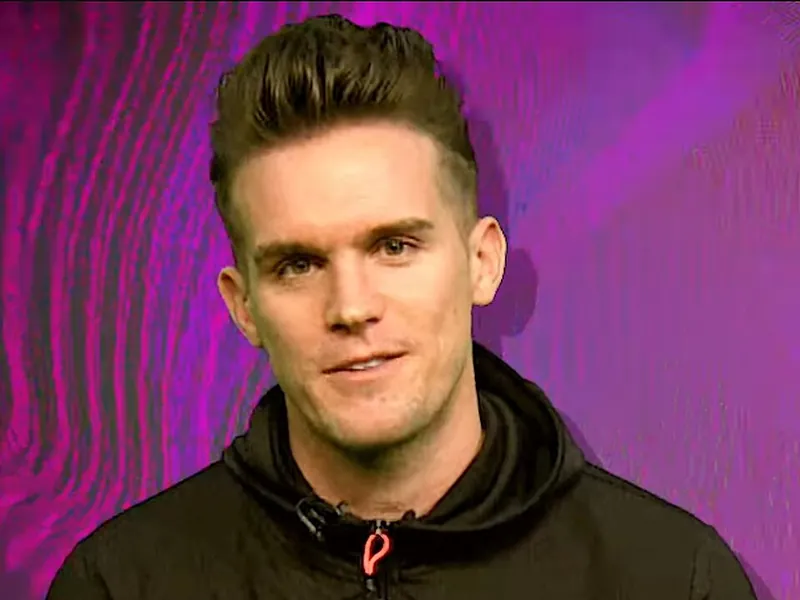 Gaz Beadle on his beard transplant: “I LOVE IT”Gaz Beadle told his 3.6 million followers he had a beard transplant after years of patchy stubble. His own words, and how a hair or beard transplant works today.
 Did Jack Fincham have a hair transplant? Yes, and he explained whyJack Fincham had a hair transplant in 2020 to cover a scar from a childhood head injury. His words, how the procedure works and recovery.
Leeds is a district of 811,953 people at the 2021 census (the district, not the wider urban area). The NHS puts it plainly: having a hair transplant is a big decision, so find out as much as you can first. A practical way to do that is to turn your doubts into questions and collect the answers in writing.
The NHS also suggests asking yourself why you want to change the way you look, and speaking to a professional about the procedure. A GP or a mental health professional might be a good place to start, but the NHS says you should book a consultation with the practitioner too. Talk to them about what you expect, because that conversation helps you check that the operation is right for you.
The NHS suggests putting these to the surgeon: what qualifications and experience do you have, how many hair transplants have you performed, how many of those had complications, which type would you recommend for me and why, and what follow-up should I expect if things go wrong. Add three of your own: who exactly will operate, what is written into the contract about the method, and what happens if I decide to stop after the consultation.
Notice how each question is answered, not only what is said. A clear reply that names a method and gives a reason is useful. A reply that moves straight to dates and deposits is a signal to slow down. The NHS also advises that you should not pay for any procedure until you have had a consultation to check it is right for you, and that a cooling-off period should be offered afterwards.
You can start from home. The first online consultation is free and books nothing: a coordinator asks for a phone number and for photographs of the areas where your hair has thinned, and a doctor reviews them and says whether a transplant would help. A coordinator answers round the clock on WhatsApp and Telegram, so a question that occurs at night does not have to wait for office hours.
Write the answers in a table with three columns: the question, what you were told and when, and what you received in writing. Two weeks later the table will tell you more than your impression of the conversation. If the same question gets two different answers from two members of staff, mark it and ask once more, in writing, who is right.
The NHS states that all independent clinics and hospitals providing cosmetic surgery in England must be registered with the CQC, and that you can check the registration or ask to see the clinic's certificate. The CQC website lets you search for a service by name and by location and publishes quality ratings on a four-point scale. For any clinic outside the English register, ask which authority issued its licence and ask for the number. Note the date you checked.
For the surgeon, the NHS hair transplant page says all doctors must be registered with the General Medical Council and hold a licence to practise, and points to the British Association of Hair Restoration Surgery, where a surgeon may be listed as a full or affiliate hair transplant member. The NHS also notes that some surgeons hold the cosmetic surgery certificate of the Royal College of Surgeons, which means they have been assessed and meet an agreed national standard. These are separate checks.
The clinic's own wording is that you can check everything before you pay, including the medical licence and the diplomas and certificates of the doctors. Ask for the licence number, the name of the legal entity that provides the medical services and the names of the doctors who will see you. Keep copies.
Reserving a surgery date involves a deposit, paid by card at the clinic or online, and the terms are recorded in a medical services contract. Ask to read the contract in full before anything is paid, and ask what the sum includes. The NHS adds a caution about search listings and social media: some clinics pay to advertise, and influencers are usually paid too, so an eye-catching post is not evidence of quality.
The NHS also lists things to avoid when choosing a practitioner: paying for a procedure before a consultation, treatment vouchers sold online on group discount sites, group treatments or events involving alcohol, mobile services where procedures are done in private homes or hotels, and practitioners who only advertise on social media.
A short list of what to keep in one folder on your phone: the licence number, the legal entity, the contract, the list of inclusions, the doctor's name and the date you checked each register. If you ever need to ask a question six months later, the folder answers half of it before you write.
If you receive two opinions that do not match, one suggesting the strip method and another suggesting individual grafts, it helps to know what each means. The NHS describes both: in the strip method a thin band of skin with hair is removed from the back of the head and divided into grafts of one to four hairs, leaving a scar that is not visible unless the hair is very short; in follicular unit extraction hairs are removed one by one and leave many tiny scars that are not very noticeable.
The clinic works with FUE, with DHI and with a combination of the two. In FUE the grafts are extracted with forceps, without incisions or stitches. In DHI a Choi implanter pen places each graft directly. In the combined protocol FUE does the extraction and DHI the implantation. The averages for survival and trauma are a guide only, and the doctor sets out your exact figures at the consultation.
When two proposals disagree, write them side by side with the same headings: method, who extracts, who implants, how many grafts, which area, what is included, what is said about follow-up. Gaps are usually easier to see on one sheet than in memory. Then send the sheet back to each doctor and ask them to comment on the other's proposal.
A sound answer explains the reason for a method in terms of your own scalp: the donor zone, the area to be covered, the expected density. Be wary of an answer that is only a slogan. If a doctor will not commit the graft count and the method to paper, treat that as an answer in itself.
A useful test is to ask each doctor to explain, in two sentences, why the other method would be worse for you. Also ask who decides the shape of the frontal area, and whether you will see it drawn on your head before anything is done.
A consultation can end with the sentence that surgery is not for you, and that outcome saves money and a procedure that would not help. The NHS says a transplant is suitable for people with permanent baldness that runs in families. The clinic lists androgenetic or diffuse alopecia, bald areas and a receding frontal area as good reasons to go ahead.
Several situations point the other way. The written contraindications range from trichotillomania and body dysmorphic disorder to cancer, being under 18, epilepsy, serious heart conditions, diabetes, a pacemaker, hepatitis and HIV. Low hair density, genetic traits of hair growth and shedding after illness or hormonal imbalance can also mean surgery is not the answer. The complete list is longer, so read it in full rather than from a summary.
Ask the clinic to send the whole list in writing and to mark which items, if any, apply to you. Then ask a question that is easy to forget: what would you advise if I decided not to operate? The NHS also warns that hair may continue to thin around a transplanted area, which is a fair thing to raise with the doctor at the start rather than in year two.
The operation is a single day under local anaesthesia, and you go home afterwards. The clinic outlines which tests are needed beforehand, so ask for that list early and keep it with your other papers.
Memory is a poor witness to slow change. The clinic's timetable has five stages, from healing in the first 0 to 10 days, through shedding at 2 to 4 weeks, to regrowth at 3 to 4 months, density at 6 to 9 months and a final result at 12 to 18 months. Ask for it as a printed sheet and tick off each stage as it arrives, so the progress is yours and not a matter of mood.
Follow-up checks are set at 1, 3, 6, 9 and 12 months. Put them in your calendar on the day of surgery. Before each one, photograph the same areas in the same light: the top, the front, the sides and the back. Date every file, send the set to your coordinator and write beside it what you were told. The clinic's plan is that you talk to your own coordinator and send photos as things change.
A diary like this protects you from two kinds of worry. Around weeks two to four, when the transplanted hairs are shedding, it reminds you that this is a normal stage and the follicles stay in place. Later, when regrowth is slow to show, it shows the real progress. It also gives the doctor something concrete to examine at each check.
The care plan for the transplanted and donor areas, the guidance on washing, sleep and headwear, and the plan for returning to sport are part of the included support. Ask for them in writing before the day of surgery and keep them next to the photographs.
Write down your own questions for each check as they occur: how long to keep out of the pool, when to colour or cut the hair, whether a patch is thinner than it should be. Take them as a numbered list.
Put them on one sheet under the same headings: method, who extracts and implants, graft count, area, inclusions and follow-up. Anything missing from one quote is a question for that clinic.
The CQC register for the clinic and the General Medical Council online register for the doctor. The NHS also points to the British Association of Hair Restoration Surgery for hair transplant surgeons.
The NHS says you should be offered one after any consultation and that you can walk away if you are not comfortable. Use it, and read the contract again with fresh eyes.
No. The NHS says a transplant is not available because it counts as cosmetic surgery.
The areas where your hair has thinned, from the top, the front, the sides and the back, plus a short note on when the thinning began.
The clinic describes shedding at 2 to 4 weeks as a normal stage: the hairs fall out while the follicles stay in place. Mention it to your coordinator if you are unsure.
That is a legitimate result of a consultation. Ask for the reasons in writing, and ask what the doctor would advise instead.
Ask your coordinator whether a person you trust can join the online consultation. Agree beforehand who will take notes, so that the answers are written down while they are given.

 Forceps
 Minimal


