





























before
12 months later
2,800 grafts
FUE method
City Medical Centre
0% instalments
from $367/mo
Consultation and quote — $0.
Real case
before
12 months later
FUE method, cuts and stitches excluded. Grafts and the forecast calculated free of charge — before you decide.
Free online consultation · Reply within 15 minutes
Free of charge, no surgery booking required
Message our coordinator
Free online consultation · Reply within 15 minutes
Message us on TelegramMessage us on WhatsAppBy messaging us, you agree to our Privacy Policy
Hair transplant for patients from London at City Medical Centre starts at £1,700 (from $2,200). The first online consultation is free; the doctor names the final price and it is fixed in the contract.
How it works · Hair transplant prices
Information current as of 5 November 2026
results
All cases come from real CMC patients.
before
12 months later
2,800 grafts
FUE method

before
12 months later
3,500 grafts
FUE method

before
12 months later
2,600 grafts
FUE method

before
12 months later
3,000 grafts
FUE method

before
12 months later
2,700 grafts
FUE method

before
12 months later
3,300 grafts
FUE method

before
12 months later
2,900 grafts
FUE method

before
12 months later
2,500 grafts
FUE method

before
12 months later
3,400 grafts
FUE method

before
12 months later
2,500 grafts
FUE method

before
12 months later
3,100 grafts
FUE method

before
12 months later
3,600 grafts
FUE method

before
12 months later
4,000 grafts
FUE method

before
12 months later
3,200 grafts
FUE method

before
12 months later
3,000 grafts
FUE method

before
12 months later
3,700 grafts
FUE method

before
12 months later
2,700 grafts
FUE method

before
12 months later
3,800 grafts
FUE method

before
12 months later
3,300 grafts
FUE method

before
12 months later
2,800 grafts
FUE method

before
12 months later
2,500 grafts
FUE method

before
12 months later
3,900 grafts
FUE method

before
12 months later
3,500 grafts
FUE method

before
12 months later
3,800 grafts
FUE method

before
12 months later
2,900 grafts
FUE method

before
12 months later
3,600 grafts
FUE method

before
12 months later
2,600 grafts
FUE method

before
12 months later
2,700 grafts
FUE method

before
12 months later
3,700 grafts
FUE method

before
12 months later
3,200 grafts
FUE method

before
12 months later
3,000 grafts
FUE method

before
12 months later
2,800 grafts
FUE method

before
12 months later
4,000 grafts
FUE method

before
12 months later
3,400 grafts
FUE method

before
12 months later
2,900 grafts
FUE method

before
12 months later
3,100 grafts
FUE method

before
12 months later
2,600 grafts
FUE method

before
12 months later
3,300 grafts
FUE method

before
12 months later
3,900 grafts
FUE method

before
12 months later
3,500 grafts
FUE method

before
12 months later
2,700 grafts
FUE method

before
12 months later
3,800 grafts
FUE method

before
12 months later
3,200 grafts
FUE method

before
12 months later
3,000 grafts
FUE method

before
12 months later
2,800 grafts
FUE method

before
12 months later
3,100 grafts
FUE method

before
12 months later
3,600 grafts
FUE method
Comparison
We perform graft transfer by three technologies: classic FUE, suture-free DHI and a combined protocol. Compare implantation technique, tissue trauma and graft survival to make an informed choice.
Classic technique without incisions or stitches

$2,200
$2,700
Graft implantation technique
ForcepsGraft trauma
MinimalHair's natural angle
NaturalGraft survival
98–100%Suitable for
Androgenetic alopeciaNo-stitch implantation with a Choi pen

$2,500
$2,900
Graft implantation technique
DHI pen (Choi implanter)Graft trauma
MinimalHair's natural angle
NaturalGraft survival
98–100%Suitable for
DensificationFUE for extraction, DHI implant

$2,700
$2,900
Graft implantation technique
FUE extraction, DHI implantationGraft trauma
MinimalHair's natural angle
NaturalGraft survival
98–100%Suitable for
Densification for androgenetic alopeciaFigures for survival and trauma are method averages and serve as a guide: the exact numbers rest on the transplant area and the patient's individual features, and the doctor explains them at the consultation.
Book a consultation


















about the clinic
Up-to-date equipment, comfortable rooms, care for the patient

We will answer what you ask and arrange a consultation at a convenient time
TelegramMessage us on TelegramMessage us on Telegram Message us on WhatsApp Choose a messengerIf your case can be managed without surgery, the doctor will say so at the consultation — and you will not waste your money. Below are the conditions in which a transplant really works.
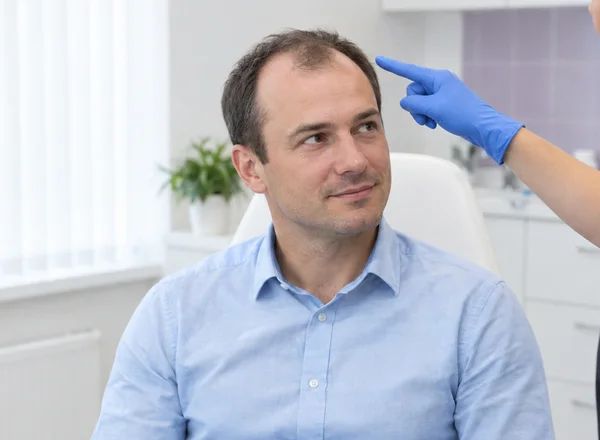

Drop your number: photos in a messenger to the coordinator, then the doctor's answer on whether a transplant helps. Free, no booking.

services
The cost comes at the free consultation, after the graft count, and is fixed in the contract.
suture-free graft extraction

$2,200$2,700
or $367/mo — 0% instalments for 6 months
Lock in the priceimplantation without channels

$2,500$2,900
or $417/mo — 0% instalments for 6 months
Lock in the pricecombined technique

$2,700$2,900
or $450/mo — 0% instalments for 6 months
Lock in the price| Initial consultation | Free |
|---|---|
| Eyebrow transplant, FUE | |
| Beard transplant, FUEinstalments $467/mo | |
| Hair trichopigmentation | |
| PRP therapy / session | $200 |
all included
From pre-surgery preparation to 12-month follow-up.
No add-on charges on the day of your surgery.
two more areas
A hair transplant is not about the scalp alone. Same grafts from the back of the head, the same FUE method — only the area changes.
The FUE method, no incisions used

Grafts taken from the back of the head, the donor area, move through micro-punctures of about 1 mm, with no scars left. The doctor discusses the shape with you before the operation, taking your facial features into account. The hair grows for life once transplanted; the beard can be trimmed and styled as usual.
$2,800$3,000
or $467/mo — 0% instalments for 6 months
Lock in the priceThe FUE method, no incisions used

The eyebrow shape is drawn by the surgeon at the initial consultation: you review references together and the design takes your facial features into account. Hairs are implanted at the correct angle, so the brows look natural. It also helps where hairs no longer grow after years of plucking.
$1,600$1,700
an outpatient procedure under local anaesthesia
Lock in the priceThe doctor will assess your donor area, count the grafts and show what you can achieve. The cost is quoted at the consultation and fixed in the contract.

Message our coordinator
Free online consultation · Reply within 15 minutes
Message us on TelegramMessage us on WhatsAppBy messaging us, you agree to our Privacy Policy
Process
Up-to-date equipment, comfortable rooms, care for the patient

This first step, offered free of charge, is where the doctor explains FUE and DHI, answers your questions, and drafts an individual plan for the operation.

Once you're ready, the surgery date is reserved with a deposit, paid either by card at the clinic or online, and the terms are fixed in a medical services contract.

This stage involves getting the required tests done, with the clinic providing both the list and the instructions you need.

The treatment area is numbed with local anaesthesia, so the entire surgery is pain-free.

At this stage, grafts are taken from the donor area — back of the head or temples — through a stitch-free method.

Grafts are carefully implanted into the area of hair loss by the surgeons.
This final step covers recovery, with the clinic giving you everything required and detailed instructions to speed healing.

The crusts fall away, the swelling subsides, the area slowly recovers

Normal stage — only the hairs fall out, the follicles stay in place

New hairs appear bit by bit, the result shows

The hair becomes thicker, and the volume and contour are visible

Final density arrives, the hairline looks natural

Free, before the surgery and without obligation.
Book a consultationdoctors

Hair transplant doctor and trichologist

Dermatovenereologist, trichologist, surgeon
11 years in practice

Plastic surgeon
9 years in practice

Plastic surgeon
9 years in practice

Assistant
9 years in practice
The doctor will assess your donor area, count the grafts and name an achievable result.
Book a consultationcoordinators
A personal coordinator leads you from your very first enquiry through to recovery.

Patient care specialist
Will be there before and after the surgery
Will help with papers and appointments
Patient care specialist
Will be there before and after the surgery
Will help with papers and appointments

Patient care specialist
Will be there before and after the surgery
Will help with papers and appointments
Patient care specialist
Will be there before and after the surgery
Will help with papers and appointments













We will answer what you ask and arrange a consultation at a convenient time
TelegramMessage us on TelegramMessage us on Telegram Message us on WhatsApp Choose a messengerReviews
I was having trouble with my hair. I came here and got a hair transplant. The results was awesome thank you
Review on Google
І experienced hair loss due to COVID and turned to this clinic; they helped me and performed a hair transplant, moving hair from the back of my head to my temples. Thank you.
Review on Google
I traveled to City Medical Centre, where they helped me overcome hair loss through a transplant to the balding areas of my scalp. I am grateful to the doctors for performing the procedure painlessly.
Review on Google
I am sharing my experience, because before the operation I went through a pile of reviews myself and was looking for real stories. I had a beard transplant six months ago. Honestly, in the first days after the procedure I felt a little jittery: my face looked unfamiliar, there was slight swelling and small scabs. In the first couple of months the hair partly fell out, as the doctor had warned. But now the result truly makes me very happy) From about the 4th month active, even growth began. The transplanted hair took very well, the beard now looks as natural as possible, no bald patches are left. The beard became much thicker and denser, with the shape I had thought about for a long time. All in all, I recommend the clinic, the doctor was polite and explained everything 👍 The result is definitely worth it!
Review on Google
I traveled to this clinic and do hair transplant, very good quality and cheap. Good doctors
Review on Google
I do hair transplant here very good doctors!!
Review on Google
Frequent questions
People often say hair implants, but no artificial hair is used. In a hair transplant the doctor moves your own follicles (grafts) from the donor area to thinning or bald areas using FUE or DHI.

Yes — City Medical Centre regularly treats patients from other cities and countries, starting with an online consultation.
Prices start at $2,200 (≈ £1,700) for FUE, $2,500 (≈ £1,900) for DHI, and $2,700 (≈ £2,050) for the combined method. Your final price is set after a free graft count and locked into the contract.
The procedure is completed within a single day, after which you head home.
It helps with stable pattern hair loss and a receding hairline when there are enough donor grafts. Some types of alopecia need treatment first; the doctor checks this at the consultation.
No — the procedure is done under local anaesthesia and is painless.
In FUE, grafts are harvested with a tweezer, no cuts or stitches involved. In DHI, a Choi pen implants grafts without opening channels first. The combined method pairs FUE harvesting with DHI implantation.
Your graft count is worked out for free by the doctor during the consultation, based on the donor zone.
The timeline is: 0–10 days healing, 2–4 weeks shedding (normal), 3–4 months new growth, 6–9 months visible density, and 12–18 months for the final result.
Hair growth is covered by a lifetime guarantee, fixed in the signed contract.
The clinic runs on a medical licence, care follows the standards and clinical guidelines
of Ministry of Health.

Diplomas and certificates of the operating surgeons
View the documentsAKC POMOSHCH LLC
our clinic's legal entity
1057746096924
OGRN
7728536872
INN
Someone in London needs no hospital stay for this: FUE and DHI go without cuts or stitches, under local anaesthesia, and the whole operation takes one day. Graft survival is 98-100 %, and a price from $2,200 (≈ £1,700) is set in the contract after a free graft count.
Begin with a photo, not with paperwork, if you are in London: the free online consultation gives the doctor a view of the thinning area and a graft count. The clinic is in touch 24/7, so the answer is never delayed for long.
The head heals in 0-10 days, the transplanted hairs fall at 2-4 weeks as a normal part of the cycle, growth starts at 3-4 months, density arrives at 6-9 and the result is final at 12-18. Photo check-ups with a personal coordinator at 1, 3, 6, 9 and 12 months, plus a lifetime growth guarantee.
Prices are in US dollars; the amount in brackets is an approximate conversion to GBP at the rate of 02.10.2026. The final price is fixed in your contract.
By messaging us, you agree to our Privacy Policy
From photos you send in the chat: front hairline, top, crown and the back of the head (donor area). Add your age and any previous transplant; the graft count and the price follow from the review.
Yes. Write to us with the dates that suit you. You can start the free first consultation online, so you can do it from home: after the doctor reviews your details, the clinic offers its nearest free dates.
If you want a visible result for a date, plan about a year ahead: growth starts at 3–4 months, thickens by 6–9 and is final at 12–18 months. Healing alone takes 0–10 days.
One day for the procedure, after which you leave the same day, and then healing of 0–10 days. The healing check-ups are part of the price.
Yes. The first consultation is free and starts online: send your details and photos on WhatsApp or Telegram, and the doctor reviews them and explains the options and the price.
Written by Anastasia A. Kolesnik, plastic surgeon, hair transplant doctor
Medically reviewed by Ellina V. Goncharova, dermatovenereologist, trichologist, surgeon. Review date:
How we prepare and review medical content · Medical disclaimer
Well-known people who spoke openly about this operation, in their own words.
 Did Calum Best have a hair transplant? Yes, and he said so himselfCalum Best said in 2023 he had his sixth hair transplant, this time using patches of beard hair. His words, how the procedure works and recovery.
 Did Chloe Goodman have a hair transplant? Yes, and she explained whyChloe Goodman had a hair transplant in 2025 after losing hair following pregnancy. Her own words, how the procedure works and what recovery involves.
 Did Dean McCullough have a hair transplant? Yes, and he filmed itRadio 1 presenter Dean McCullough shared his FUE hair transplant on TikTok in 2024. His own words, what the swelling means and how results develop.
 Did Ella Morgan have a hair transplant? Yes — to cover a hairline scarThe Married at First Sight star revealed a hair transplant in 2025 to cover scarring along her hairline from facial surgery. Her own words and the facts.
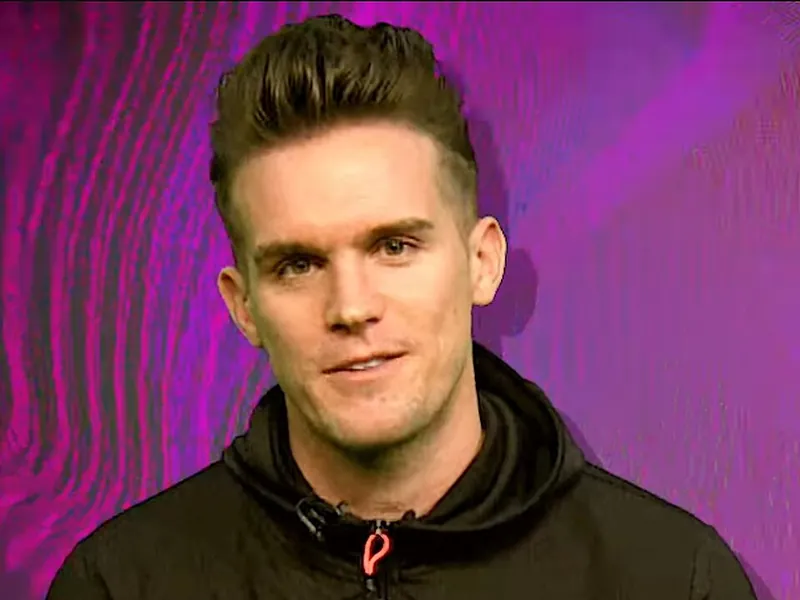 Gaz Beadle on his beard transplant: “I LOVE IT”Gaz Beadle told his 3.6 million followers he had a beard transplant after years of patchy stubble. His own words, and how a hair or beard transplant works today.
 Did Jack Fincham have a hair transplant? Yes, and he explained whyJack Fincham had a hair transplant in 2020 to cover a scar from a childhood head injury. His words, how the procedure works and recovery.
London has a population of about 9.1 million (2025 estimate), so a patient here is never short of choice, and the real difficulty is sorting offers from one another. A hair transplant is a surgical procedure on a body part you will carry for decades. That is a good reason to slow down and ask for evidence before you ask about timing.
In England, providers of health and social care are registered, inspected and rated by the CQC, an independent regulator. Its site includes a search for services, so a provider's registration status can be looked up before you reply to anything. Make that your first check on any clinic that approaches you, whether it is in London or elsewhere.
The NHS publishes advice for anyone considering a cosmetic procedure. It tells you to choose a qualified practitioner with experience of the specific procedure and with insurance to put right anything that goes wrong, to ask questions about the procedure and its risks, and to take time over the decision. It adds that you should be offered a cooling-off period after any consultation. Treat those lines as a script for your own questions.
The first online assessment with City Medical Centre costs nothing and books nothing. A coordinator is reachable on WhatsApp and Telegram round the clock, so you can send photographs whenever it suits you. Nothing needs to be decided in that first exchange.
Send the first message in your own words. Say where the thinning is, when it began, and what you hope to see in the mirror in a year. Short, specific sentences get shorter, more specific replies.
Whatever clinic you are weighing, ask it to confirm the following in a message or document you can keep. First, the number of the medical licence and the full legal name of the organisation providing care. Second, the name and qualifications of every doctor who will take part, with the diplomas and certificates available for inspection. Third, the method proposed and the reasoning behind it.
Fourth, the number of grafts the doctor expects to move, counted after the donor zone has been examined, not guessed from a photograph. Fifth, the area to be treated. Sixth, who performs each stage; at this clinic the doctor at the consultation is the doctor in the operating room, and you can have that stated in writing. Seventh, what the agreed sum includes. Eighth, the schedule of check-ups after surgery.
Place two clinics' answers side by side in a grid, with one column per clinic and one row per item. An empty cell tells you where the next question goes. A quotation that cannot name its method, its graft count and its surgeon is not yet an offer.
Sentences from a chat are notes; the contract for medical services is the document that binds both sides. The clinic holds a date after the deposit arrives, which can be paid by card at the clinic or online, and records the conditions in the contract. Read that text before you pay, and ask about anything that differs from what you were told.
If you want a second opinion, ask a different clinic the same eight questions rather than a different set. Answers become comparable only when the questions match.
A last practical test: could a friend read your folder and explain, without your help, what was agreed? If the plan, the method, the count, the surgeon, the inclusions and the dates are all there in black and white, the answer is yes, and you are ready to compare clinics fairly.
A transplant is not for everybody, and the doctor says so plainly at the consultation instead of booking an operation that would not help. The clinic names three reasons that point in its favour: androgenetic or diffuse alopecia, bald patches, and a receding front of the scalp.
The cautionary list is organised around risk. Medical entries: cancer, epilepsy, diabetes mellitus, a pacemaker, serious heart disease, pulmonary embolism, hepatitis B or C, HIV or AIDS and intolerance to anaesthetics. Psychological entries: trichotillomania and body dysmorphic disorder. Under 18 is excluded. Then come factors tied to the hair, which call for a frank conversation before any booking: thin donor density, inherited growth traits, damage from burns or injuries, shedding that follows an illness or a hormonal imbalance, and patchy alopecia.
Notice how many entries are about causes rather than appearance. The clinic lists shedding after an illness or from a hormonal imbalance among the cases that need a frank conversation, which is why the doctor looks at the history before the scalp. Write a paragraph on the order in which things happened: when thinning began, whether it came with a health event, whether relatives are affected.
If you take regular medication, or have a condition that is not on the list, say so anyway. The clinic's rule is simple: nobody should be sent to the operating room unless it helps, and a refusal with reasons is a sign of careful practice.
Think about who in your life should hear this plan before it is final. A relative who has known your hair for decades can confirm how quickly it changed, and a second pair of eyes sometimes notices a question you forgot. Ask the coordinator whether they are welcome to join the online call.
Think of the methods by what happens to one graft. Under FUE it leaves the donor zone in forceps, with no cut and no stitch, and is placed at the hair's natural angle; for this method the clinic quotes graft survival of 98 to 100 per cent and recommends it for androgenetic alopecia. DHI skips the channel stage, because a Choi pen carries each unit straight into the skin. The third route lifts grafts by FUE and sets them with the DHI pen, a pairing aimed at densification.
The survival and trauma figures describe averages per method. Your own result depends on the treated area and your features, and the doctor writes it out at the consultation. Ask which method is proposed and why, in one sentence, and then ask which fact would reverse the advice.
Grafts come from the back of the head or the temples. Local anaesthesia numbs the area before anything starts, the whole operation fits into a single day, and you leave on that day. Ask the coordinator for the list of tests that precede surgery and the instructions that come with each.
A beard uses the same donor zone at the back of the head: grafts pass through micro-punctures about a millimetre wide and leave no scars. For eyebrows the surgeon sketches the line first, reviews reference photographs and your facial proportions, and only then places hairs at the growth angle. Eyebrow work is a day-case operation under local anaesthesia.
Photographs cannot show the density of the donor zone or the number of grafts required. These are judged by the doctor at the consultation, which is why any figure quoted from pictures alone is provisional and the one written into the contract is the one that counts.
The British Association of Plastic, Reconstructive and Aesthetic Surgeons states that purely cosmetic surgery is heavily rationed on the NHS, that what is available varies from area to area, and that a visit to your GP comes first. In practical terms, plan on a private route for a hair transplant and ask the NHS only about medical causes of hair loss.
Use the cooling-off period the NHS mentions as a working tool. After the consultation, close the folder for two or three days, then reread the written plan and ask yourself three questions: do I understand what will be done, do I know who will do it, and can I find every promise on paper? If one answer is no, send that question to the coordinator before anything else.
Hair works to a slow clock, so expect nothing dramatic early on. Days 0 to 10 are for soothing: crusts shed and swelling falls. In weeks 2 to 4 the implanted hairs drop out, a normal stage that leaves the follicles where they are. If month five looks unchanged, remember that new growth starts at 3 to 4 months, thickness returns at 6 to 9, and volume with a natural edge is complete at 12 to 18 months.
Five appointments are planned over the year: at 1, 3, 6, 9 and 12 months. Write them in your diary on the day of surgery. Ahead of each, take the same pictures under the same light and pass them to your coordinator, who stays in touch between visits. Ask for the aftercare package to be itemised: dressings, healing checks, a plan for the donor and recipient areas, washing and sleeping advice, headwear, and the route back to exercise.
Before the first call, write your own rule for saying yes. Choose a day until which no money changes hands, then note two or three conditions that would persuade you and two or three that would send you elsewhere. When the replies come in, hold them up against that note rather than against your mood that evening. Since results take months to show, a decision made calmly on paper is your best insurance against doubt later.
The CQC registers, inspects and rates health and social care providers in England and offers a search for services on its site. Ask the clinic for the legal name of the organisation and the licence number, and compare them with what you find.
The professional body for plastic surgeons says that purely cosmetic surgery is heavily rationed on the NHS, with availability varying by area and a visit to your GP as the first step.
To choose a qualified practitioner with experience of the procedure and with insurance, to ask about the procedure and its risks, and to take time to decide, with a cooling-off period offered after any consultation.
Photographs of every area that has thinned, taken in daylight, a note about when and how fast the thinning began, any illness, medicines or conditions on the cautionary list, and the date by which you would like to decide.
Yes. Send the same photographs to another clinic and ask it the same questions, then compare method, graft count, area, surgeon and inclusions side by side.
The doctor who sees you at the consultation is the doctor in the operating room, a point worth asking the clinic to put in writing.
The plan, the method, the graft count, every written answer, the contract and the dates of the check-ups, in one folder with each file named by date.
No. A transplant is not right for everyone, and a refusal with reasons, which you can ask to have in writing, is part of an honest assessment.

 Forceps
 Minimal


