





























earlier
12 months since
2,800 grafts
FUE method
City Medical Centre
0% instalments
from $367/mo
Meeting and a quote — $0.
Real patient
earlier
12 months since
FUE method, no cuts or stitches. Grafts and the result forecast totted up at no cost to you — before you decide.
Free online consultation · Reply within 15 minutes
No fee at all, no surgery booking required
Message our coordinator
Free online consultation · Reply within 15 minutes
Message us on TelegramMessage us on WhatsAppBy messaging us, you agree to our Privacy Policy
Hair transplant for patients from Cardiff at City Medical Centre starts at £1,700 (from $2,200). The first online consultation is free; the doctor names the final price and it is fixed in the contract.
How it works · Hair transplant prices
Information current as of 24 October 2026
results
Results shown were all achieved at CMC.
earlier
12 months since
2,800 grafts
FUE method

earlier
12 months since
3,500 grafts
FUE method

earlier
12 months since
2,600 grafts
FUE method

earlier
12 months since
3,000 grafts
FUE method

earlier
12 months since
2,700 grafts
FUE method

earlier
12 months since
3,300 grafts
FUE method

earlier
12 months since
2,900 grafts
FUE method

earlier
12 months since
2,500 grafts
FUE method

earlier
12 months since
3,400 grafts
FUE method

earlier
12 months since
2,500 grafts
FUE method

earlier
12 months since
3,100 grafts
FUE method

earlier
12 months since
3,600 grafts
FUE method

earlier
12 months since
4,000 grafts
FUE method

earlier
12 months since
3,200 grafts
FUE method

earlier
12 months since
3,000 grafts
FUE method

earlier
12 months since
3,700 grafts
FUE method

earlier
12 months since
2,700 grafts
FUE method

earlier
12 months since
3,800 grafts
FUE method

earlier
12 months since
3,300 grafts
FUE method

earlier
12 months since
2,800 grafts
FUE method

earlier
12 months since
2,500 grafts
FUE method

earlier
12 months since
3,900 grafts
FUE method

earlier
12 months since
3,500 grafts
FUE method

earlier
12 months since
3,800 grafts
FUE method

earlier
12 months since
2,900 grafts
FUE method

earlier
12 months since
3,600 grafts
FUE method

earlier
12 months since
2,600 grafts
FUE method

earlier
12 months since
2,700 grafts
FUE method

earlier
12 months since
3,700 grafts
FUE method

earlier
12 months since
3,200 grafts
FUE method

earlier
12 months since
3,000 grafts
FUE method

earlier
12 months since
2,800 grafts
FUE method

earlier
12 months since
4,000 grafts
FUE method

earlier
12 months since
3,400 grafts
FUE method

earlier
12 months since
2,900 grafts
FUE method

earlier
12 months since
3,100 grafts
FUE method

earlier
12 months since
2,600 grafts
FUE method

earlier
12 months since
3,300 grafts
FUE method

earlier
12 months since
3,900 grafts
FUE method

earlier
12 months since
3,500 grafts
FUE method

earlier
12 months since
2,700 grafts
FUE method

earlier
12 months since
3,800 grafts
FUE method

earlier
12 months since
3,200 grafts
FUE method

earlier
12 months since
3,000 grafts
FUE method

earlier
12 months since
2,800 grafts
FUE method

earlier
12 months since
3,100 grafts
FUE method

earlier
12 months since
3,600 grafts
FUE method
Comparison
Grafts are transferred by one of three technologies: classic FUE, suture-free DHI and a combined protocol. Compare implantation technique, tissue trauma and graft survival and choose with open eyes.
Classic method requiring no cuts or sutures

$2,200
$2,700
Graft implantation technique
ForcepsGraft trauma
MinimalNatural hair growth angle
NaturalGraft survival
98–100%Suitable for
Androgenetic alopeciaImplantation with a Choi pen, no sutures

$2,500
$2,900
Graft implantation technique
DHI pen, Choi implanterGraft trauma
MinimalNatural hair growth angle
NaturalGraft survival
98–100%Suitable for
DensificationFUE for extraction, DHI implant

$2,700
$2,900
Graft implantation technique
FUE extraction with DHI implantGraft trauma
MinimalNatural hair growth angle
NaturalGraft survival
98–100%Suitable for
Androgenetic alopecia and densificationThe survival and trauma figures shown are method averages, a guide only: exact numbers depend on the transplant area and the patient's individual features, and the doctor clarifies them at the consultation.
Learn more


















about the clinic
Modern equipment, comfortable rooms, care for every patient

We will go through your questions and find a convenient time to consult
Message us on WhatsApp Send the formIf your case can be solved without surgery, you will hear that right at the consultation — and you will not waste your money. Below are the conditions where a transplant really works.
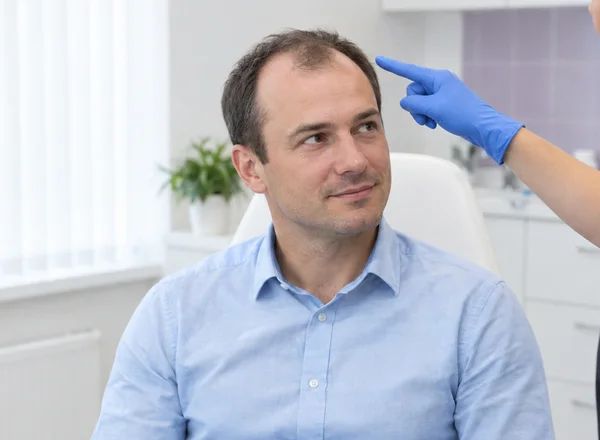

Give a number for contact. Pictures of the thinning zone are requested by a coordinator in a messenger, then a doctor looks and answers whether a transplant would help you. No payment, no obligation.

services
The cost follows the graft count at the free consultation and is fixed in the contract.
suture-free graft extraction

$2,200$2,700
or $367/mo — 0% instalments for 6 months
Pin your priceimplantation without channels

$2,500$2,900
or $417/mo — 0% instalments for 6 months
Pin your pricecombined technique

$2,700$2,900
or $450/mo — 0% instalments for 6 months
Pin your price| The first assessment | Free |
|---|---|
| Eyebrow transplant, FUE | |
| Beard transplant, FUEinstalments $467/mo | |
| Hair trichopigmentation | |
| PRP therapy / session | $200 |
all included
From surgery prep right up to 12 months of follow-up.
No additional charges on the day of surgery.
two extra patches
Beyond the scalp too: the same grafts from the back of the head, the same FUE method — only the area changes.
FUE, no incisions and no stitches

Grafts are taken from the donor area at the back of the head and moved through micro-punctures of roughly 1 mm — no scars are left. You and the doctor discuss the shape before the operation, taking your facial features into account. Transplanted hair grows for life: the beard can be trimmed and styled as usual.
$2,800$3,000
or $467/mo — 0% instalments for 6 months
Pin your priceFUE, no incisions and no stitches

The surgeon draws the eyebrow shape at the initial consultation: you look through references with them and the design takes your facial features into account. The hairs are implanted at the right angle, so the eyebrows look natural. It also helps where plucking ended growth years ago.
$1,600$1,700
a procedure that needs no stay, numbed locally
Pin your priceYour donor area is assessed, the grafts counted and the achievable result shown. The cost is quoted at the consultation and fixed in the contract.

Message our coordinator
Free online consultation · Reply within 15 minutes
Message us on TelegramMessage us on WhatsAppBy messaging us, you agree to our Privacy Policy
Process
From consultation to going home — all in one day

During this free consultation, patients in Cardiff get a clear explanation of the FUE and DHI methods, answers to their questions, and an individual surgery plan.

A deposit is what holds the slot in the surgical calendar. Pay it by card when you are at the clinic, or send it online.

A course of analyses precedes the transplant, and everything needed for it, list and directions alike, comes from the clinic.

This step uses local anaesthesia to make sure the operation is completely painless.

Each graft is removed from the donor zone behind the head or near the temples, and no suture closes the site.

For patients in Cardiff, this step means the surgeons implant the grafts into the balding zone.
For patients in Cardiff, everything required for healing is provided, with instructions explaining its use.

The crusts come off, the swelling eases, the skin restores itself

Expected, brief and harmless: shafts go, follicles remain

Growth arrives slowly, and you begin to notice it

The hair becomes denser, the main volume and contour are seen

Density becomes final, the hairline natural

Free, before the operation, leaving you free to think.
Learn moredoctors

Hair transplant doctor, trichologist, surgeon
10 years of experience

Dermatovenereologist, trichologist, surgeon
11 years of experience

Plastic surgeon
9 years of experience

Plastic surgeon
9 years of experience

Assistant
9 years of experience
The doctor will assess the donor area, count the grafts and say what result is achievable.
Learn morecoordinators
You are given a personal coordinator who guides you from the first enquiry to recovery.
Patient support lead
Accompanies you from the first step onward
Sees to all the papers and diary dates
Patient support lead
Accompanies you from the first step onward
Sees to all the papers and diary dates
Patient support lead
Accompanies you from the first step onward
Sees to all the papers and diary dates
Patient support lead
Accompanies you from the first step onward
Sees to all the papers and diary dates













We will go through your questions and find a convenient time to consult
Message us on WhatsApp Send the formReviews
I was having trouble with my hair. I came here and got a hair transplant. The results was awesome thank you
Review on Google
І experienced hair loss due to COVID and turned to this clinic; they helped me and performed a hair transplant, moving hair from the back of my head to my temples. Thank you.
Review on Google
I traveled to City Medical Centre, where they helped me overcome hair loss through a transplant to the balding areas of my scalp. I am grateful to the doctors for performing the procedure painlessly.
Review on Google
I am sharing my experience, because before the operation I went through a pile of reviews myself and was looking for real stories. I had a beard transplant six months ago. Honestly, in the first days after the procedure I felt a little jittery: my face looked unfamiliar, there was slight swelling and small scabs. In the first couple of months the hair partly fell out, as the doctor had warned. But now the result truly makes me very happy) From about the 4th month active, even growth began. The transplanted hair took very well, the beard now looks as natural as possible, no bald patches are left. The beard became much thicker and denser, with the shape I had thought about for a long time. All in all, I recommend the clinic, the doctor was polite and explained everything 👍 The result is definitely worth it!
Review on Google
I traveled to this clinic and do hair transplant, very good quality and cheap. Good doctors
Review on Google
I do hair transplant here very good doctors!!
Review on Google
Regular questions
People often say hair implants, but no artificial hair is used. In a hair transplant the doctor moves your own follicles (grafts) from the donor area to thinning or bald areas using FUE or DHI.

Certainly — the clinic is used to patients from cities far apart and other countries, and a doctor gives an online opinion first.
FUE is $2,200 (≈ £1,700), DHI is $2,500 (≈ £1,900), combined DHI+FUE is $2,700 (≈ £2,050). A free consultation with a graft count gives you the exact, contract-fixed price.
Reckon on a single day, ending with a return to your home.
It helps with stable pattern hair loss and a receding hairline when there are enough donor grafts. Some types of alopecia need treatment first; the doctor checks this at the consultation.
Not at all — you feel nothing, because local anaesthesia is used.
In FUE, grafts are harvested with a tweezer, no cuts or stitches involved. In DHI, a Choi pen implants grafts without opening channels first. The combined method pairs FUE harvesting with DHI implantation.
The total is individual and is named by the doctor, without charge, after the donor area is examined.
Healing: 0–10 days. Shedding: 2–4 weeks, and that is normal. Growth: from 3–4 months. Visible density: 6–9 months. Final result: 12–18 months.
The clinic provides a lifetime guarantee on hair growth, stated in the contract.
The clinic works under a medical licence, care meets the standards and clinical guidelines
per Ministry of Health.

Documents showing the training of every operating doctor
View our paperworkAKC POMOSHCH LLC
the clinic's legal name
1057746096924
OGRN
7728536872
INN
A resident of Cardiff can plan around a single day: FUE and DHI leave no cuts and no stitches and are done under local anaesthesia. Graft survival stands at 98-100 %, while a price from $2,200 (≈ £1,700) is fixed in the contract after the free counting of grafts.
The beginning is remote and free for a patient in Cardiff: photographs of the area, a look from the doctor, and a clear word on whether a transplant will help. The clinic responds 24/7.
Healing needs 0-10 days of your patience and nothing else. Then at 2-4 weeks the transplanted hairs shed, a normal turn of events. Growth starts at 3-4 months and continues long after that first sign of it.
Prices are in US dollars; the amount in brackets is an approximate conversion to GBP at the rate of 02.10.2026. The final price is fixed in your contract.
By messaging us, you agree to our Privacy Policy
Photos of the thinning areas and of the donor area at the back of the head in good light, your age, and whether you have had a transplant before. The doctor names the number of grafts and the price.
Write to us on WhatsApp or Telegram or leave a request on this page. The coordinator asks for the photos and health details the doctor needs, and the doctor gives you a free assessment and a price.
For the scalp to look healed, allow at least 10 days: healing takes 0–10 days. Transplanted hairs shed normally at 2–4 weeks, growth starts at 3–4 months and the final result shows at 12–18 months.
The procedure takes one day and you go home the same day. Healing takes 0–10 days, and the follow-up dressings and healing check-ups are part of the price.
Yes. Write to us with the dates that suit you. You can start the free first consultation online, so you can do it from home: after the doctor reviews your details, the clinic offers its nearest free dates.
Well-known people who spoke openly about this operation, in their own words.
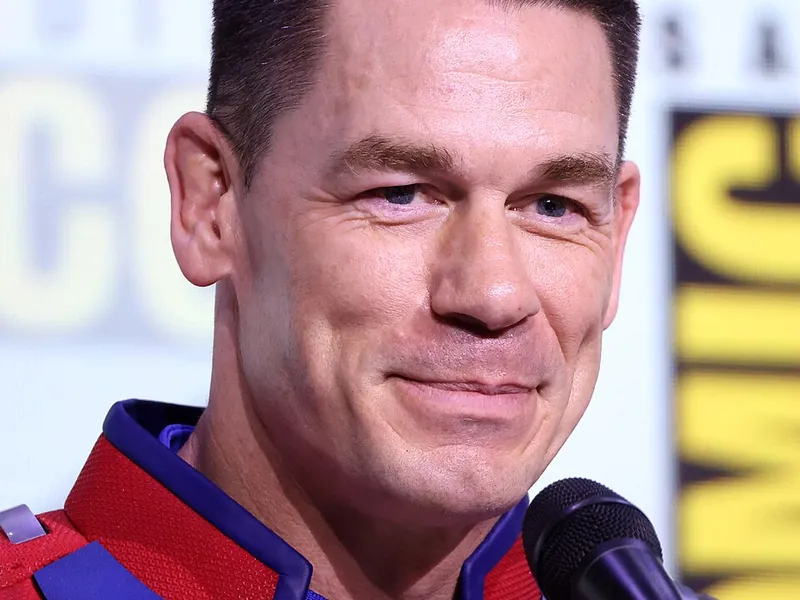 John Cena's hair transplant: “I got a problem, I try to fix it”John Cena spoke openly in 2025 about his hair transplant and the fan signs that pushed him to it. His words, how the procedure works and the recovery.
 Did Calum Best have a hair transplant? Yes, and he said so himselfCalum Best said in 2023 he had his sixth hair transplant, this time using patches of beard hair. His words, how the procedure works and recovery.
 Did Chloe Goodman have a hair transplant? Yes, and she explained whyChloe Goodman had a hair transplant in 2025 after losing hair following pregnancy. Her own words, how the procedure works and what recovery involves.
 Did Dean McCullough have a hair transplant? Yes, and he filmed itRadio 1 presenter Dean McCullough shared his FUE hair transplant on TikTok in 2024. His own words, what the swelling means and how results develop.
 Did Ella Morgan have a hair transplant? Yes — to cover a hairline scarThe Married at First Sight star revealed a hair transplant in 2025 to cover scarring along her hairline from facial surgery. Her own words and the facts.
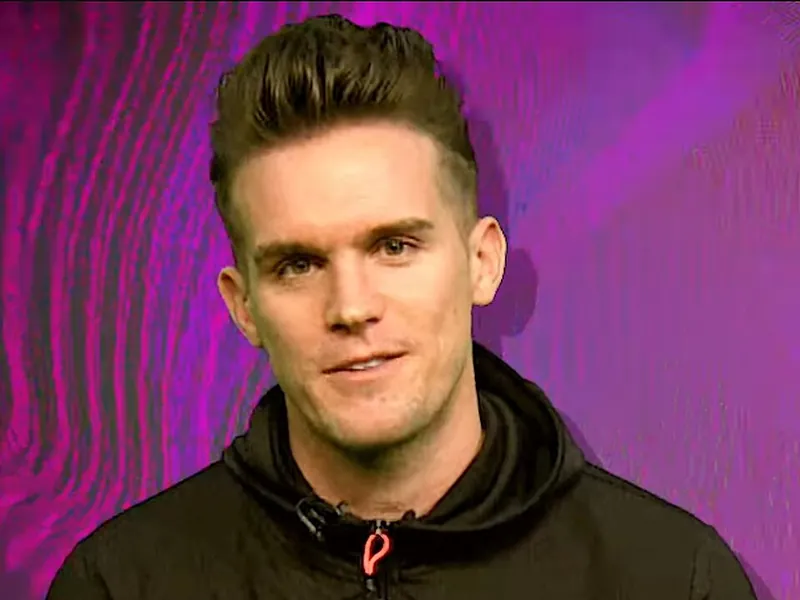 Gaz Beadle on his beard transplant: “I LOVE IT”Gaz Beadle told his 3.6 million followers he had a beard transplant after years of patchy stubble. His own words, and how a hair or beard transplant works today.
Page medically reviewed by Anastasia A. Kolesnik, hair transplant doctor. Review date: .
Cardiff's weather is rarely extreme, but it is persistent. The Met Office 1991-2020 normals for Bute Park record 1,203.5 mm of precipitation a year, spread over 153.4 days with 1 mm or more. That is roughly one day in three. For someone planning a hair transplant, this matters less as a matter of comfort and more as a matter of routine. In the first ten days after FUE or DHI, the recipient area is covered in small crusts and the donor area at the back of the head is healing too. Rain, wet wool and a damp collar all touch those zones, so it is worth deciding in advance what will sit on your head when the forecast turns.
The healing stage at CMC runs from day 0 to day 10: crusts fall away, swelling subsides and the area slowly recovers. During those days, headwear is a medical question, not a style one. The coordinator gives you advice on washing your hair, on sleep and on headwear as part of the care plan. Ask in the first consultation what type of cover the doctor accepts for the first days, and buy it before the procedure, not after. In a city where the sky can change within an hour, a clean, loose, breathable option that is already in the hallway is more useful than a perfect one you have to look for.
Temperature is gentle by comparison. The annual mean maximum at Bute Park is 15.0 °C and the mean minimum 7.3 °C. In January the mean maximum is 8.6 °C and the mean minimum 2.5 °C. These are not temperatures that endanger a healing scalp, but they mean that for much of the year you will want something over your head when you go outside. Cold air is not the main concern; wet, wind and friction are. The doctor will explain at the consultation what the transplanted and donor areas should and should not touch in the first days.
Wind deserves a mention. Cardiff sits on the Severn Estuary side of the Bristol Channel, with the river Taff through the centre and the Ely and Rhymney reaching the water on either side. Low, flat ground close to the water tends to feel breezy, and the city centre is relatively flat, with hills only to the north, east and west. A breeze on the day you first go outside after the procedure is a small thing. Still, a hood that flaps or a cap that drags across the crusts is not. Ask the doctor whether to pick a loose, soft cover and how long to keep it on, and let that decision, not fashion, dictate what you wear.
The online format helps here. The consultation is carried out by photos on WhatsApp or Telegram, and the coordinator answers 24/7. If a rainy morning raises a doubt about washing, covering or sleeping position, you can write at once rather than wait for an appointment slot, and you receive an answer tied to your own case.
Sunshine in Cardiff follows a clear curve. The annual total is 1,572.9 hours. July is the brightest month with 199.6 hours, followed by May with 198.4 and June with 195.2. December has only 50.4 hours and January 53.5. That gap is large, and it shapes the planning of the months after surgery, because the healing and growth timeline of a transplant is long and will meet every kind of light.
Take the stages from the CMC timeline. After the first 0-10 days of healing, shedding of the transplanted hairs comes at 2-4 weeks. This is a normal stage: only the hairs shed, the follicles stay in place. First growth appears at 3-4 months. Density shows at 6-9 months, when the main volume and contour become visible. The end result is judged at 12-18 months. Place this against the local calendar and the picture is practical.
Suppose the procedure falls in November 2026. The healing days and the shedding stage then fall in the darkest, wettest part of the year. In Cardiff, December is the wettest month with 139.6 mm, and November follows with 130.7 mm. Few people look closely at their scalp in dim light, which makes the shedding stage easier to live through, though it does not change what is happening. First growth at 3-4 months would arrive roughly in the spring of 2027. The density stage at 6-9 months would then coincide with the brightest part of the year, from May onward, and the final result at 12-18 months would be assessed between late 2027 and spring 2028.
Now consider a procedure in spring. The first weeks of healing would fall in the sunniest period, when May alone brings 198.4 hours of sunshine. A scalp with fresh crusts needs protection from direct sun, and the doctor will say exactly what to use and when. The CMC advice on headwear covers this. A light, breathable cover that shades the scalp is the usual direction, but the specifics for your own case come from the doctor, not from a general rule. Do not improvise with sunscreen or products on the transplanted area before the doctor has approved them.
The point is not that one season is right and another wrong. Each has trade-offs, and the choice is yours. Winter brings damp, dark mornings and more headwear, but less sun on healing skin. Summer brings more daylight and easier outdoor days, but a stronger need to shield the scalp. Our coordinators can lay the stages against your own diary so that you see which month of the year each stage will land in.
A transplant is a project of more than a year, so it helps to link each stage to events you already know. Cardiff's calendar has a few fixed points, and they make good markers.
The first is the bank holiday pattern. GOV.UK lists eight bank holidays in England and Wales for 2026. The last ones of the year are Christmas Day on 25 December and the substitute Boxing Day on 28 December. If your procedure is early in November 2026, the shedding stage at 2-4 weeks would fall in the weeks around those holidays. That has a practical side: family gatherings and photographs happen in exactly the weeks when the transplanted hairs are shedding. This is normal, but it is better to know beforehand than to be surprised at a table full of relatives. Some people choose a date that leaves the festive period clear of the visible shedding stage; others accept it. Both are reasonable decisions.
The second marker is October. The Cardiff Half Marathon takes place each October and attracts over 20,000 participants. It has held the World Athletics Elite Road Race Label since 2017. For a runner, the event is a natural date to plan around. The CMC care plan includes a plan for returning to sport and hair care, and the doctor sets the time at which running, sweating and sport can resume. Do not guess that date from friends' experience. Instead, ask at the consultation, and if the half marathon is your goal, mention it in your first message so that the coordinator can place the procedure far enough ahead.
The third marker is summer. Cardiff Big Weekend is held in the city centre in summer, and the Photomarathon exhibition appears in June or July each year, after running since 2004. These are occasions where you may be photographed or want to look your best. Because the density stage runs from 6 to 9 months, a procedure in the autumn of 2026 reaches that stage in the late spring and summer of 2027, so the visible improvement tends to coincide with such summer events. The result at 12-18 months is the final one, and it is worth saying plainly that no event should be timed against a result that has not matured yet.
The fourth marker is the university year. Around 43,900 students are enrolled across Cardiff University, Cardiff Metropolitan University, the University of South Wales and the Royal Welsh College of Music & Drama. For students and staff, the academic calendar defines free weeks, exam periods and presentations. A young adult over 18 may prefer to place the quiet healing days in a vacation, since the procedure itself takes one day at the clinic and the following days are best spent without crowded, friction-heavy settings. The coordinator can help you check dates against your own term.
Cardiff has a reputation for sport. In 2008/09, 61% of its residents regularly took part in sport, the highest figure of Wales's 22 local authorities, and the city was named European City of Sport for 2009 and 2014. The Taff Trail, a walking and cycle path of 55 miles (90 km), runs from Cardiff Bay to Brecon. For anyone who runs, cycles or rows, the question after a transplant is when to start again, and under what kind of headwear.
The answer is individual, and the CMC plan for returning to sport and hair care handles it. Sweat, helmet pressure, friction from straps and a wet, windy ride are all different loads on the recipient and donor areas. A cycle helmet, for example, presses on both the crown and the back of the head, and the back of the head is where the grafts are harvested. Do not decide on your own when a helmet is acceptable. Describe your sport to the doctor, tell the coordinator which kind of headwear you use, and follow the dates they give you. If your sport is outdoors on the Taff Trail or along the bay, add that detail about wind and rain, since it affects what you can wear and when.
There is also water. Cardiff Bay is a freshwater lake behind the Cardiff Bay Barrage, with the Aquabus water taxi running hourly to the city centre and Penarth, boat trips to Flat Holm from March to October, and Cardiff International Pool, which opened on 12 January 2008. Swimming pools and open water are among the activities your care plan must tackle. Ask the doctor when the scalp can be immersed and what to do about chlorine or lake water. Do not assume that a short dip is harmless in the early stages.
Walking is the simple case. A short walk along the river or around the bay is part of normal life, and there is no need to stay indoors for the whole of the healing stage. The question is covering, not whether to go outside. A walk with the right headwear, in dry conditions, is usually unproblematic, but follow what the doctor says about your own stage. And because grafts are fixed in a dense, careful pattern, avoid rubbing, scratching or picking at crusts during the first 10 days, however much the area itches.
People often ask whether the NHS covers hair restoration. The NHS states that cosmetic surgery is not routinely provided on the NHS. It may pay for some procedures for psychological or other health reasons, with rhinoplasty for breathing problems and breast enlargement for very uneven or absent breasts causing significant psychological distress given as examples, but most people who want cosmetic surgery pay privately. Hair restoration is not named in these examples, so do not assume that referral will lead to funding. The guidance exists on the NHS site, and your GP is the person to ask about your own situation.
CMC's online model means you do not have to decide on funding before you know the facts. The first consultation is free. You send photos by WhatsApp or Telegram, receive a doctor's assessment, and learn how many grafts are needed and what the plan involves. The final price is set after the grafts are counted and fixed in the contract. Instalments are available, and the amounts are listed in the price section, so you can look at them there. No extra payments are added on the day of the procedure.
Not everyone is a candidate, and the doctor says so openly. A transplant is suitable for androgenetic or diffuse alopecia, bald patches and a receding frontal edge of the hair, a high frontal edge, insufficient density, the genetic side of hair growth, and the effects left by an injury or burn. Contraindications include trichotillomania, body dysmorphic disorder, cancer, age under 18, epilepsy, serious heart conditions, diabetes mellitus, a pacemaker, AIDS/HIV, hepatitis B/C and pulmonary embolism. Hair loss from illness, shedding from a hormonal imbalance, and patchy alopecia are also listed among cases where surgery is not the way forward. In some cases, the answer is a different treatment, and the doctor will tell you so at the start rather than after you have paid.
For residents of a city with a large student and young professional population, age is worth stating plainly: the procedure is for adults, and under 18 is a contraindication. For those with a long-term health condition, mention it in the first message. A condition from the list above can change the decision entirely, and the doctor has to know before anything is booked.
Three technologies are offered: classic FUE, suture-free DHI, and a combined protocol. In FUE, grafts are extracted without incisions or stitches. In DHI, the grafts are implanted with a Choi pen without pre-made channels. In the combined version, extraction is by FUE and implantation by DHI. The procedure is done under local anaesthesia, takes one day at the clinic, and the doctor decides which method suits your pattern of loss. FUE is described for androgenetic alopecia, while DHI and the combined protocol are also described for densification.
Preparation is where the online format has to be precise. After the deposit, the date is confirmed under a medical services contract. You complete a set of pre-surgery tests using a list and instructions that the clinic provides, and your coordinator explains each step. You then learn what to buy beforehand, including headwear for the wet and windy days that Cardiff regularly produces. After the procedure there are follow-up visits at 1, 3, 6, 9 and 12 months, and progress is tracked by photo. A photo record is useful in a city of changing light, so take your pictures in the same place and the same lighting each time, ideally by a window in daylight. Low winter light can make hair look thinner than it is, and bright July light can do the opposite.
If you also want a beard or eyebrow transplant, the same donor area and FUE method apply. Grafts for the beard are placed through micro-punctures of about 1 mm, and eyebrows are designed with you at the consultation. Both are outpatient procedures under local anaesthesia, and the same weather and sun logic applies to the healing skin of the face.
Rain does not change the procedure, which takes place indoors in one day under local anaesthesia. It matters for the healing days from day 0 to day 10, when crusts are present and the scalp should not be soaked or rubbed. Cardiff has 153.4 days a year with 1 mm or more of precipitation, so plan the headwear and washing routine in advance, and ask the doctor which cover is acceptable.
There is no perfect month. A November 2026 procedure would put healing and shedding in the darkest, wettest weeks, with December the wettest month at 139.6 mm, and bring density at 6-9 months into the brighter months of 2027. A spring date would put healing in the sunniest weeks, which calls for more attention to shading the scalp. The coordinator can lay the stages against your diary.
The CMC timeline places shedding of the transplanted hairs at 2-4 weeks, so it would come in late November and December 2026, around the Christmas Day and Boxing Day substitute bank holidays on 25 and 28 December. It is a normal stage in which only the hairs shed and the follicles stay in place. Knowing this in advance helps you plan photographs and gatherings.
The date is set by the doctor, not by a general rule. The care plan includes a plan for returning to sport and hair care, which accounts for sweat, friction and headwear. Tell the coordinator about your race date in the first message, and the procedure can be placed far enough ahead. The final result is judged at 12-18 months.
The NHS says cosmetic surgery is not routinely provided and that most people pay privately, though some procedures may be funded for psychological or other health reasons. Hair restoration is not listed in its examples, so do not count on funding. Your GP can advise on your own circumstances, and the CMC consultation is free, so you can learn the plan and the price before making any decision.
Not straight away. A helmet presses on the donor area at the back of the head, and swimming brings chlorine or lake water into contact with healing skin. The doctor gives the dates for each activity as part of the plan for returning to sport. Describe your activity in detail in your first message so that the advice fits it.
Yes. December has 50.4 hours of sunshine and January 53.5, compared with 199.6 in July, so the same scalp can look different across the year. For the follow-up photos at 1, 3, 6, 9 and 12 months, take them in similar daylight by a window, and the doctor can compare them reliably.
Coordinators answer on WhatsApp and Telegram round the clock, 24/7, and the first reply to an enquiry comes within 15 minutes. Each patient has a personal coordinator from the first message through recovery, so a question about washing, covering or sleeping can be sent at once with a photo.

 Forceps
 Minimal


