


























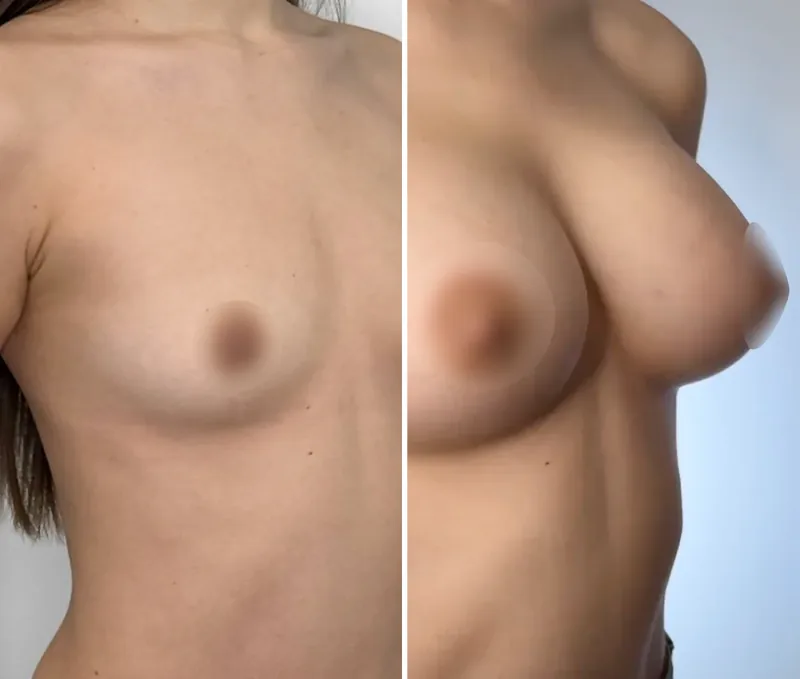
 beforeafter
Mammoplasty
Method: implants
Breast augmentation
$4,700
$5,900 · First consultation — Free
Free online consultation · Reply within 15 minutes
Message our coordinator
Free online consultation · Reply within 15 minutes
Message us on TelegramMessage us on WhatsAppBy messaging us, you agree to our Privacy Policy
Breast augmentation for patients from Cardiff at City Medical Centre starts at £3,600 (from $4,700). The first online consultation is free; the doctor names the final price and it is fixed in the contract.
How it works · Breast augmentation prices
Information current as of 24 October 2026
Results
Every case shown is a real patient of the clinic; faces and identifying details are hidden.
beforeafterMethod: implants
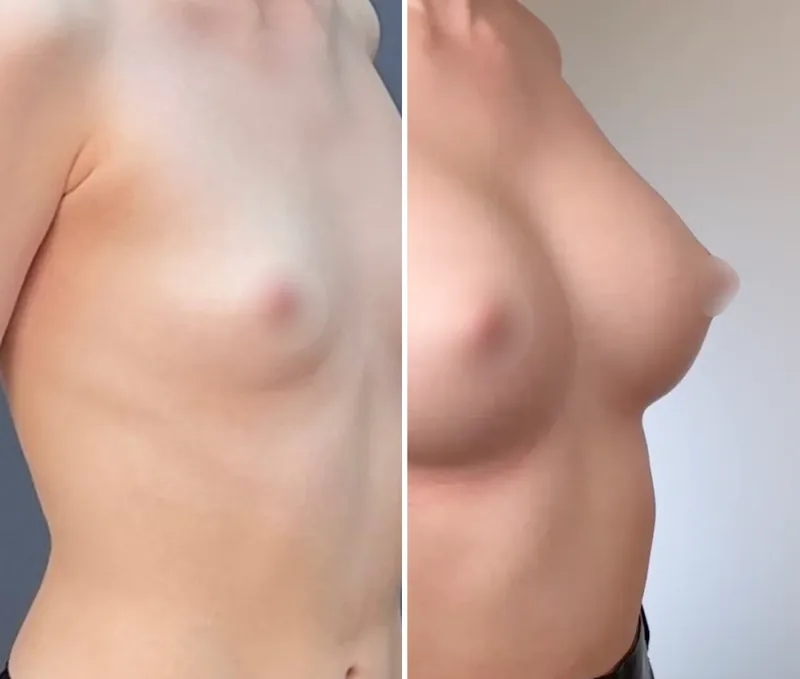 beforeafter
Method: implants
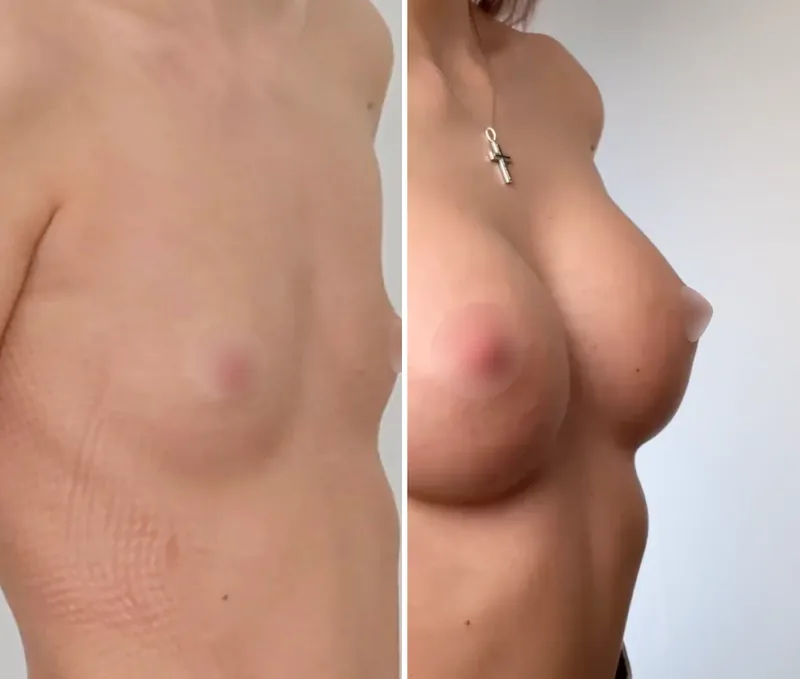 beforeafter
Method: implants
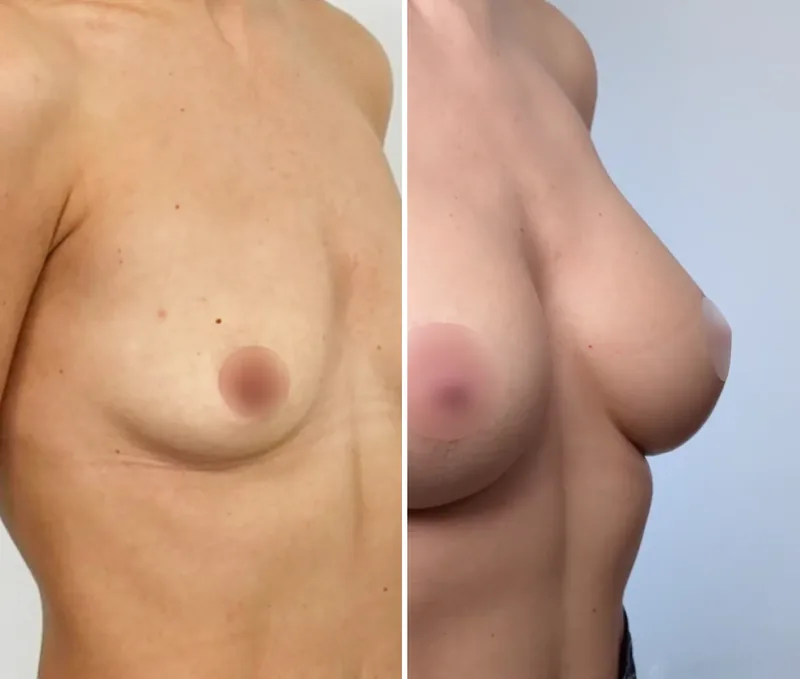 beforeafter
Method: implants
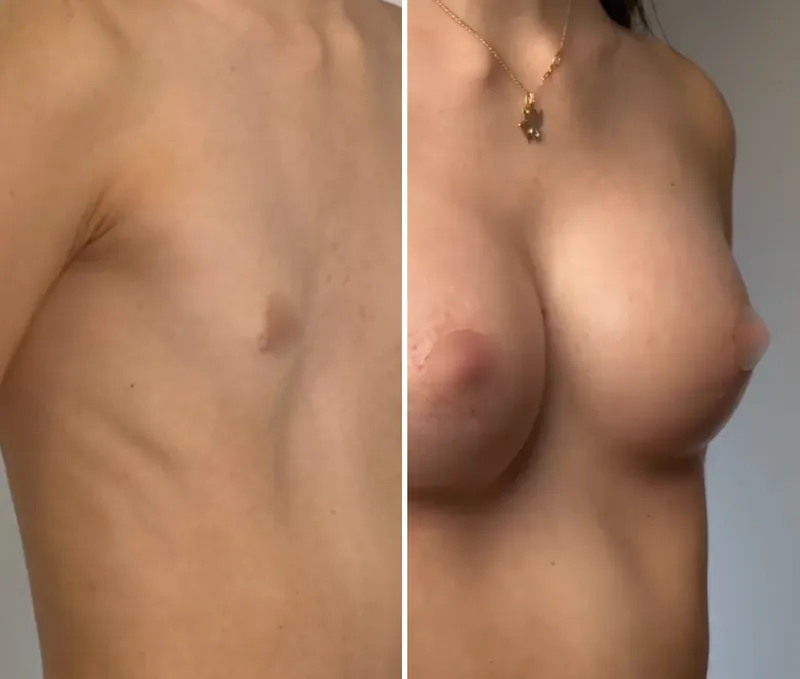 beforeafter
Method: implants
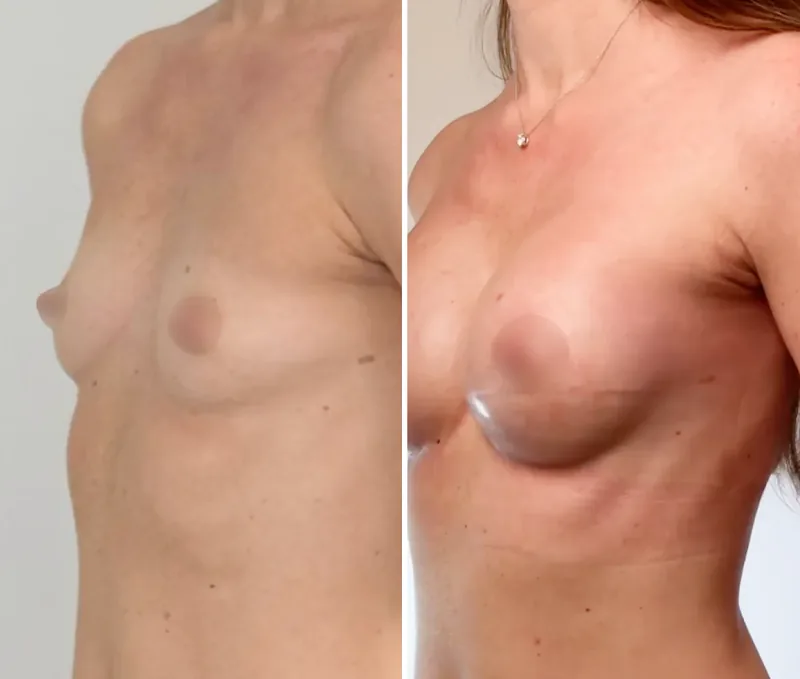 beforeafter
Method: implants
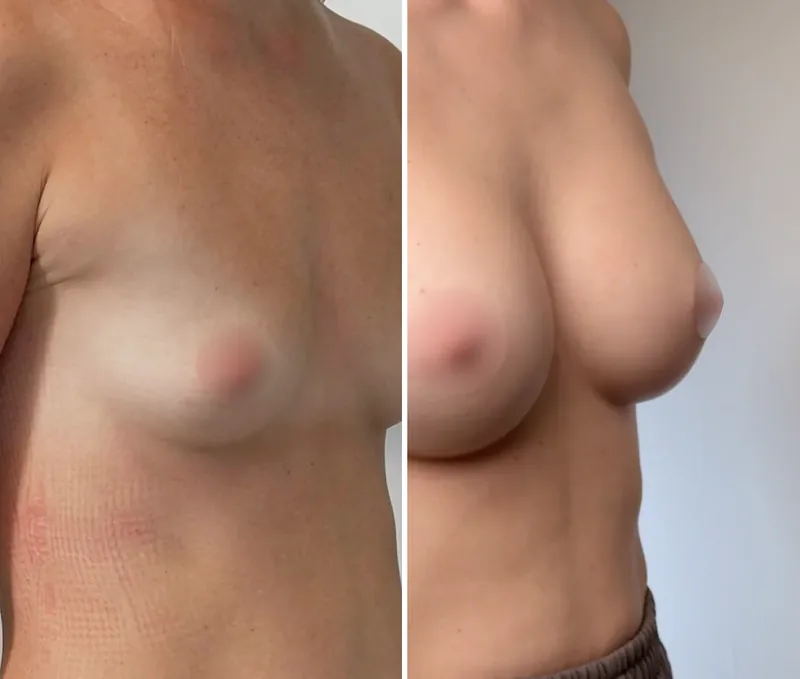 beforeafter
Method: implants
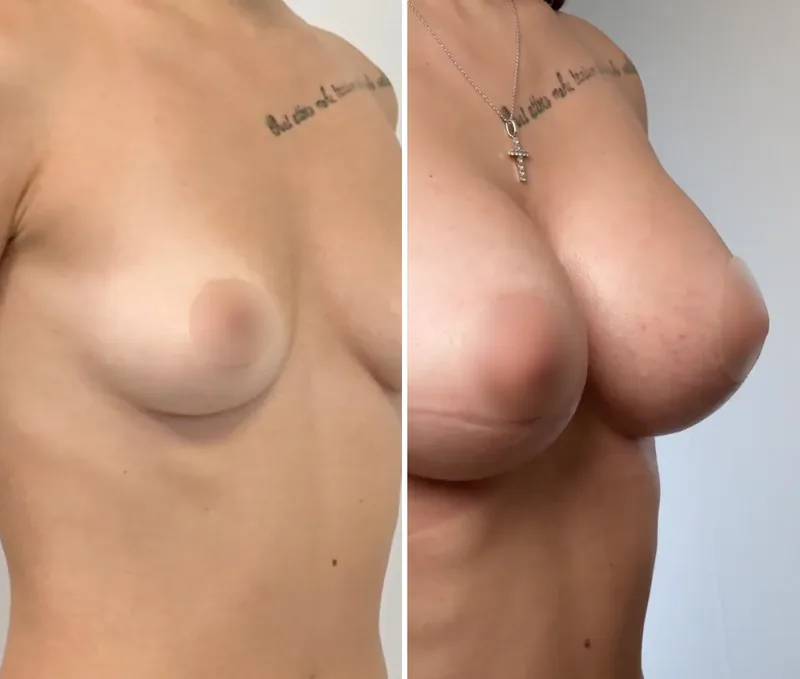 beforeafter
Method: implants
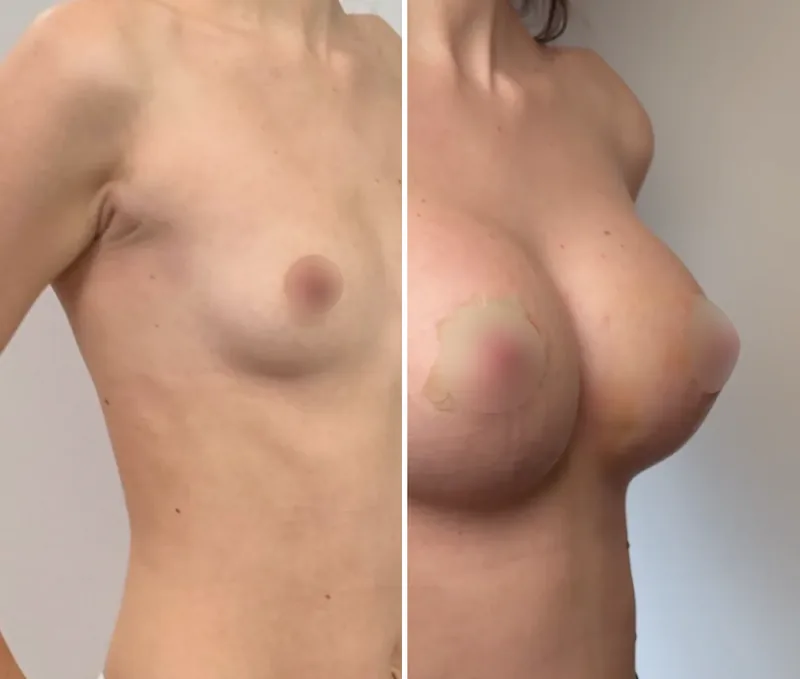 beforeafter
Method: implants
Comparison
We work with two main breast correction methods: augmentation and reduction. Compare the main goal, the precision of correction and the indications to choose your method with confidence.
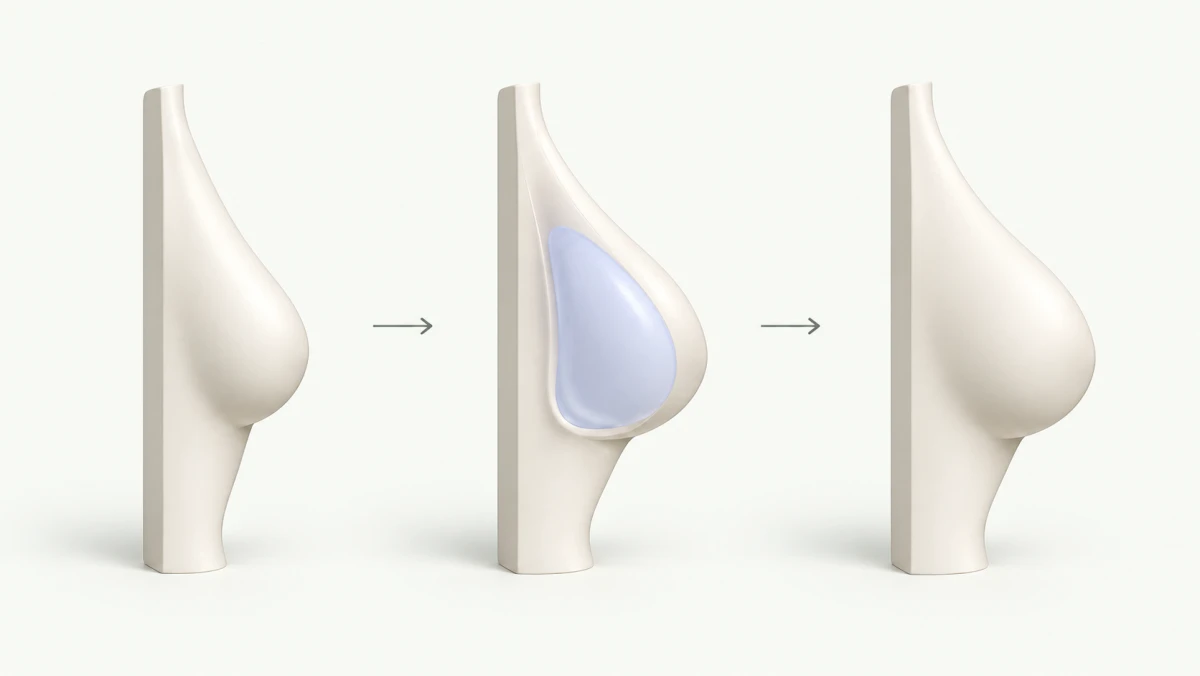
Size and shape correction with implants
Discounted price
$4,700 $5,900
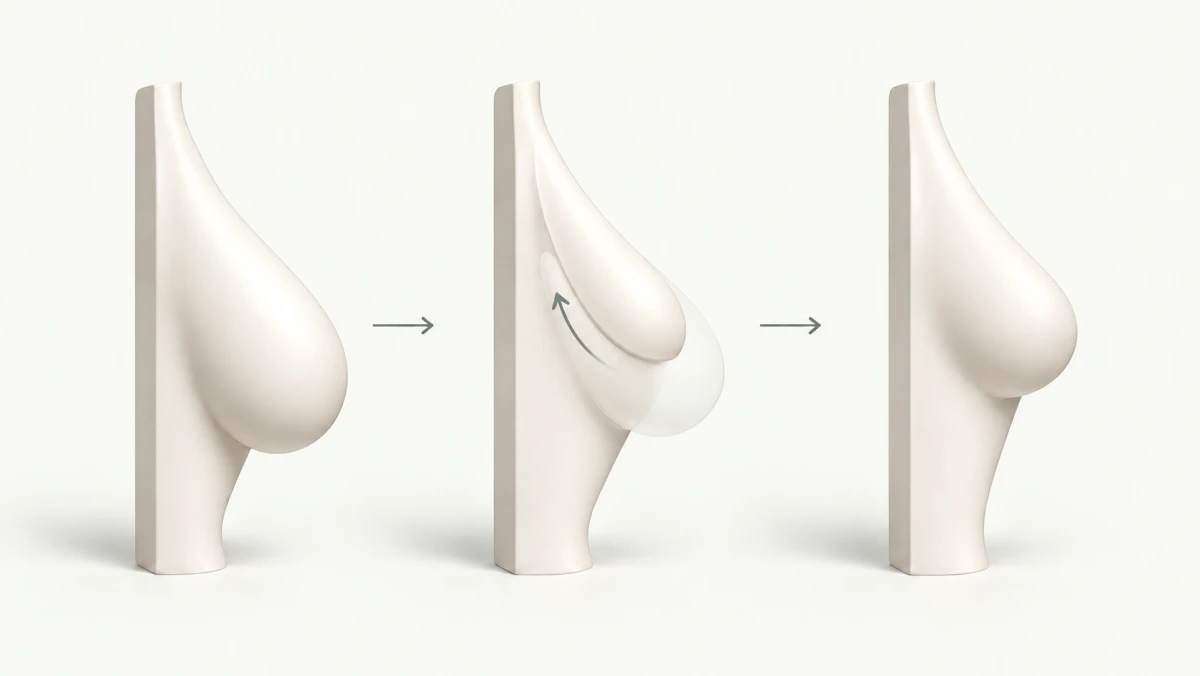
Breast size correction: making the breasts smaller and lighter
Discounted price
$4,700 $5,900
At your consultation the surgeon looks at the shape and proportions of your breasts, talks through what you want and recommends the best mammoplasty option.
The consultation is free, before surgery and with no commitment.
Comparison
Round and anatomical implants are the two main types we work with. Each adds volume and corrects the shape, but the form and the final look differ.
Even volume with more fullness at the top
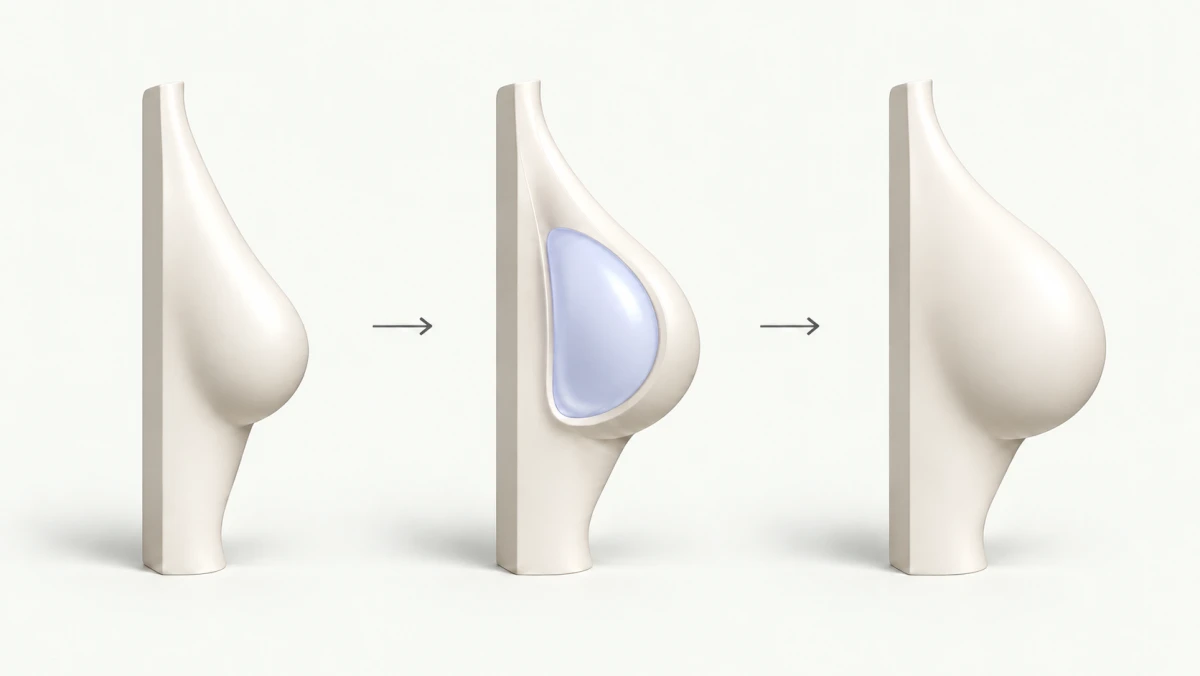
A smooth slope and a soft teardrop outline
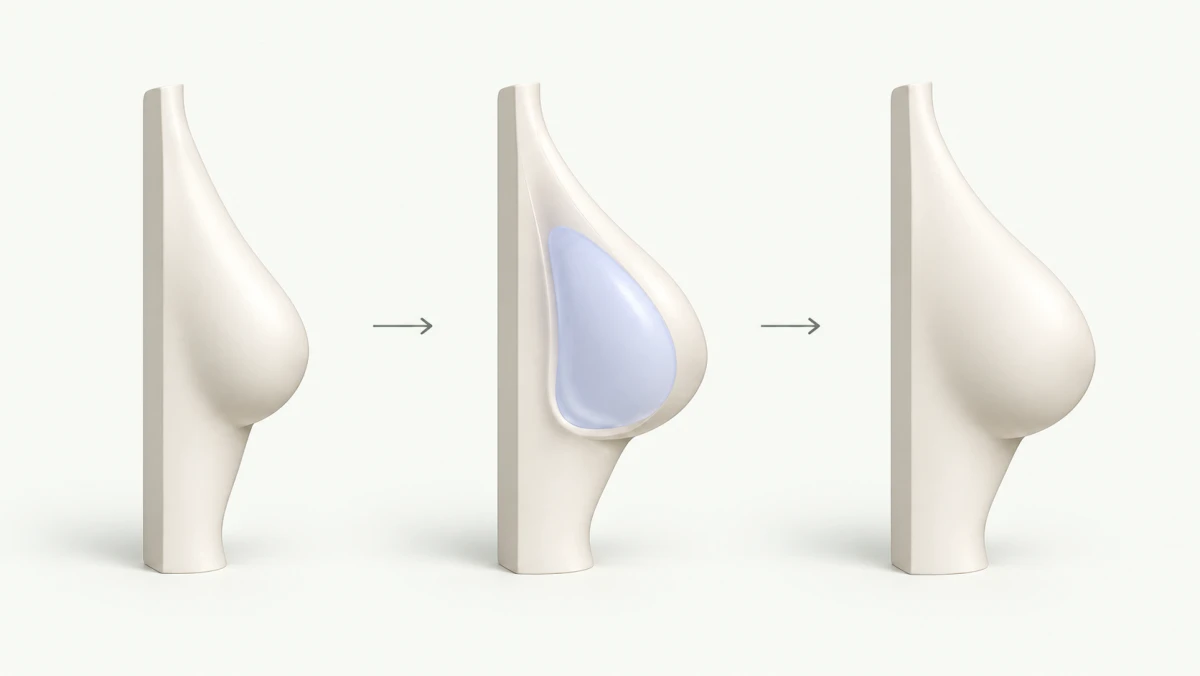
The surgeon will help you choose the implant shape and volume.
Inside the clinic
Modern technology, cosy rooms and personal attention for every patient
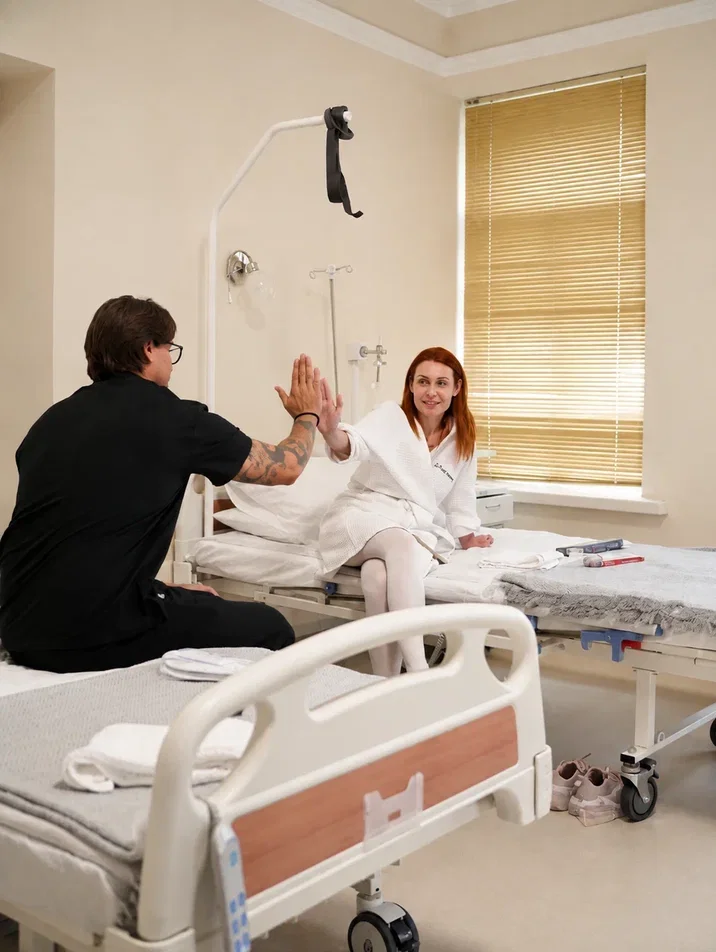
We will answer your questions and find a convenient time for a consultation
By messaging us, you agree to our Privacy Policy
If your concern can be addressed without an operation, the doctor will say so at the consultation, so you do not pay for surgery you do not need.

Not sure whether surgery is right for you?
Message us — your coordinator will ask for photos in a messenger, and the surgeon will look at them and tell you whether mammoplasty is right for you.
Find out if it suits me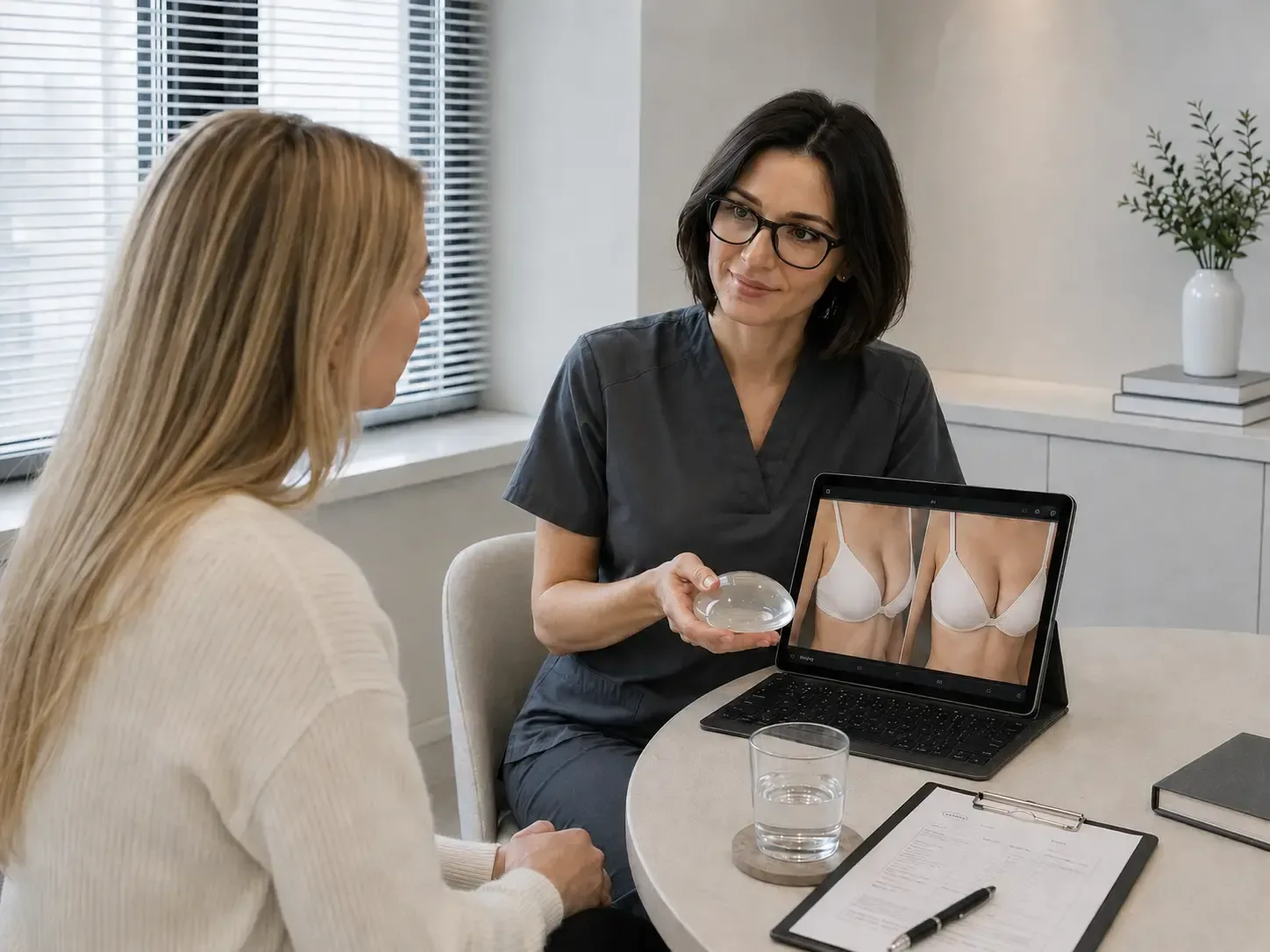
Prices
The price is set at the consultation and fixed in the contract.
Discounted price
Size and shape correction with implants
$4,700$5,900
Discounted price
Reducing the volume and weight of the breasts
$4,700$5,900
Breast restoration after mastectomy
The price is set at the consultation and fixed in the contract.
Get a consultationThe surgeon assesses the anatomy and proportions of your breasts, listens to your wishes and chooses the right correction method.
The price is set at the consultation and fixed in the contract.
Message our coordinator
Free online consultation · Reply within 15 minutes
Message us on TelegramMessage us on WhatsAppBy messaging us, you agree to our Privacy Policy
all inclusive
Starting with preparation for surgery
and ending with support for 12 months.
Discounted price
$4,700$5,900
How it works
A personal correction plan, inpatient observation and a year of recovery monitoring.
 1
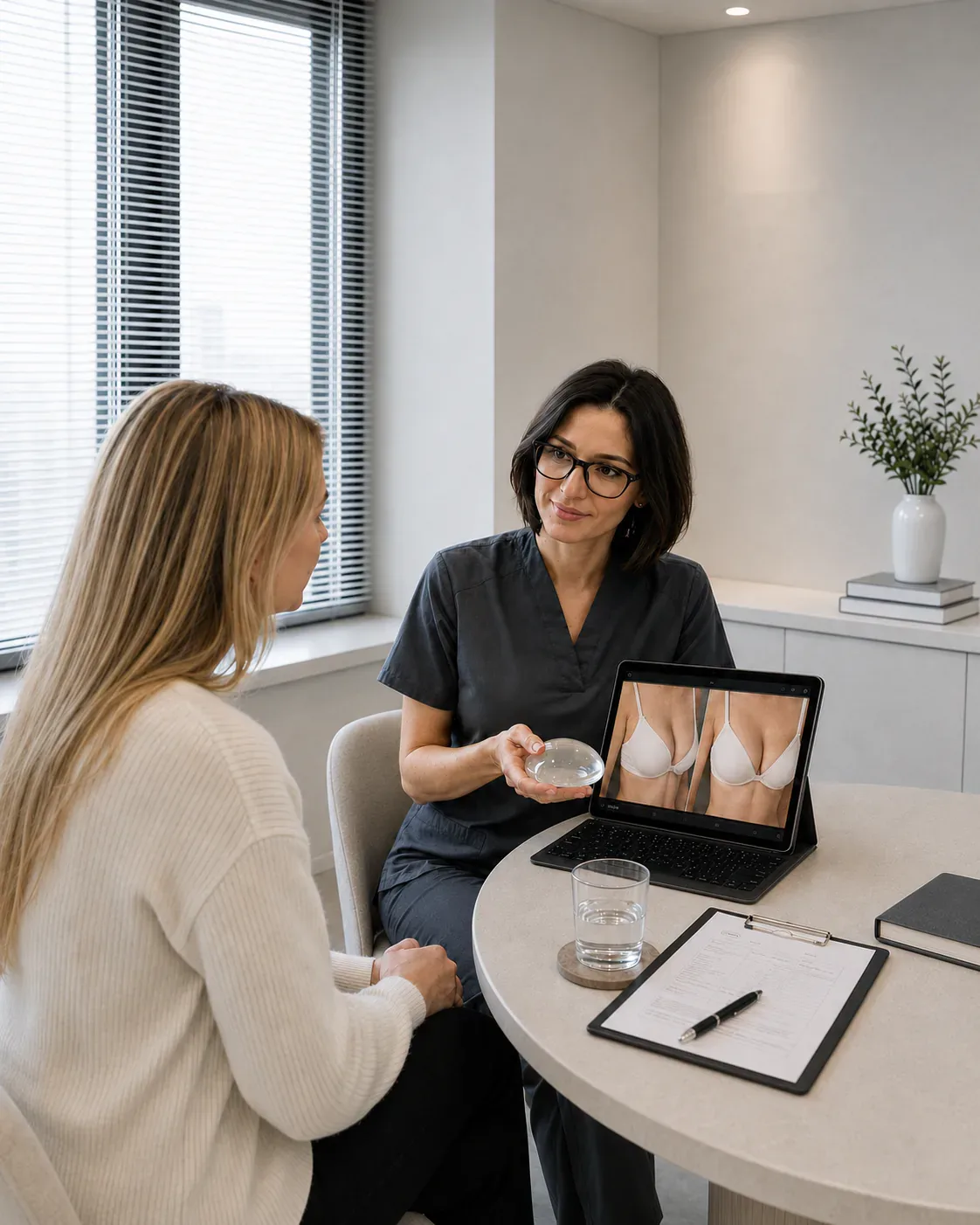
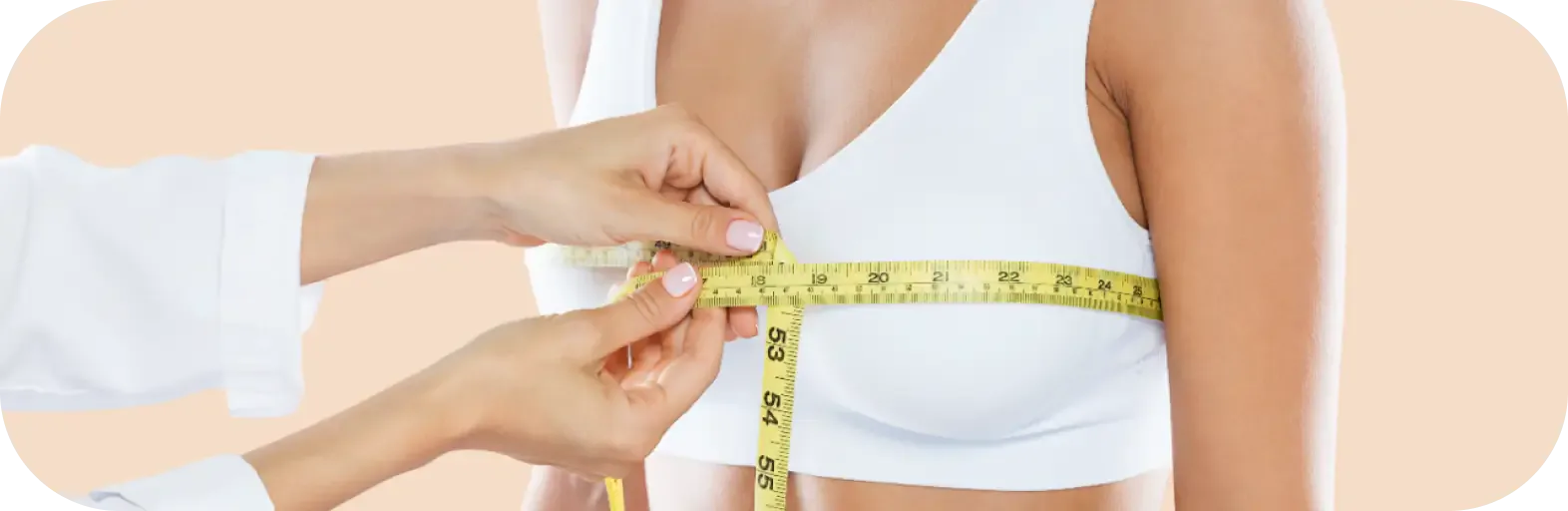
The surgeon examines your figure, discusses your wishes and selects the best volume, shape and correction method.
 2
Your surgery date is reserved for you: the deposit can be paid by card at the clinic or online by bank transfer, and the terms are fixed in the medical services contract
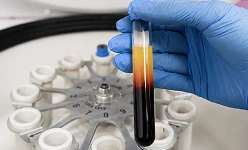 3
Ahead of surgery you go through full testing — blood tests, an ECG and other examinations as prescribed by the doctor.
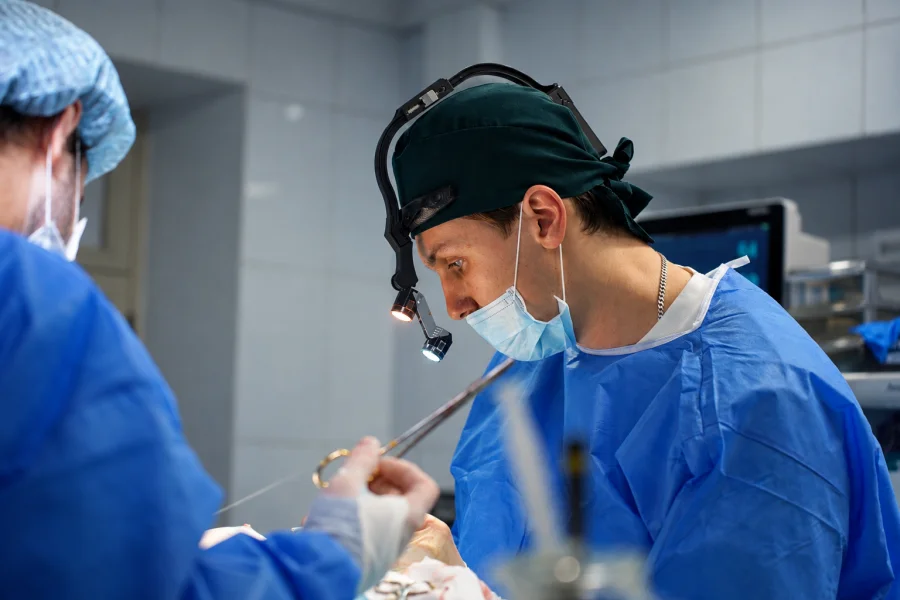 4
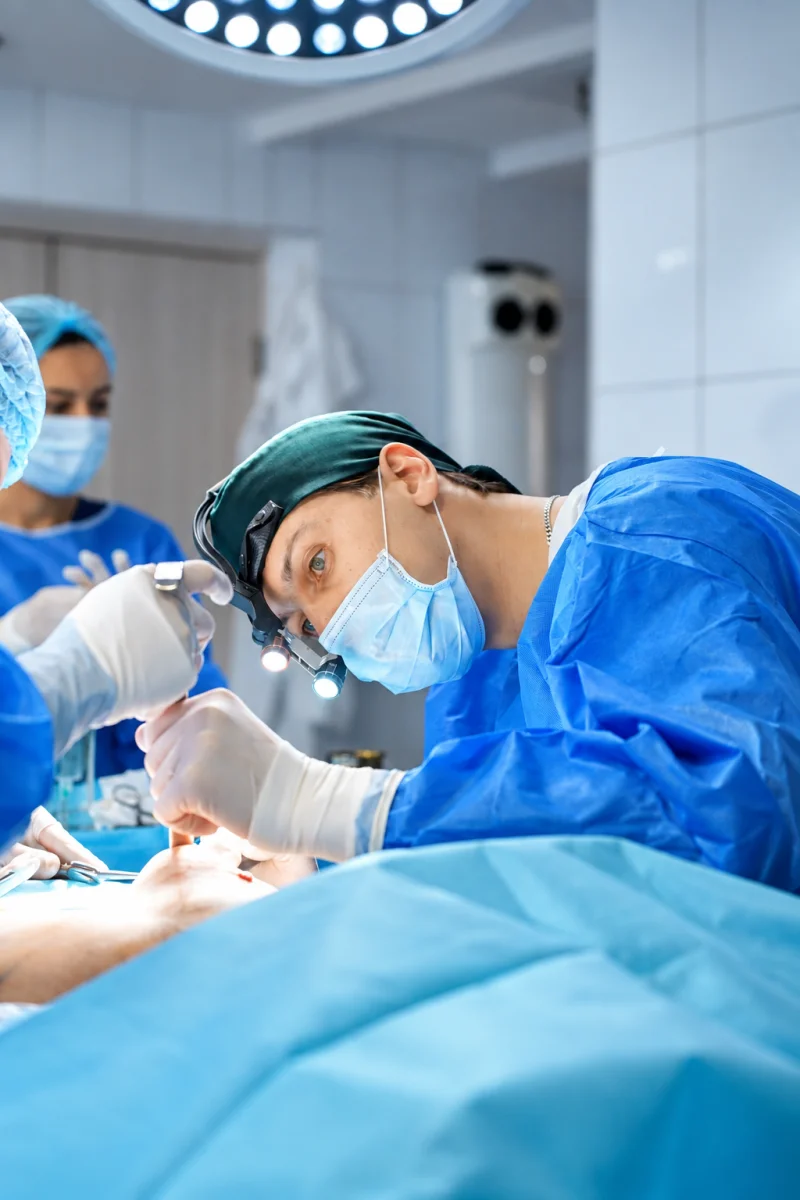
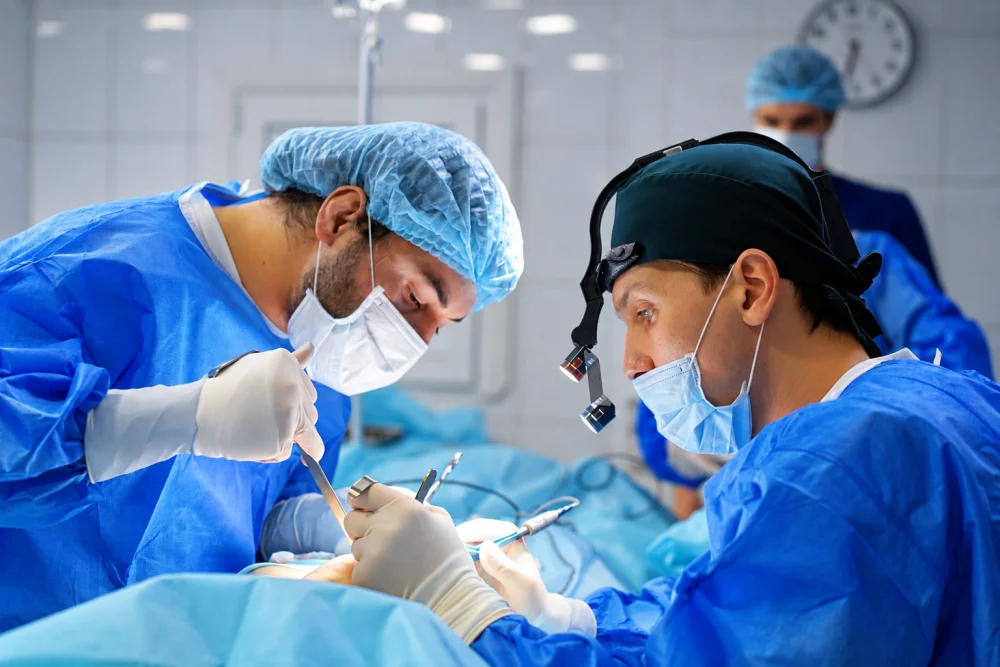
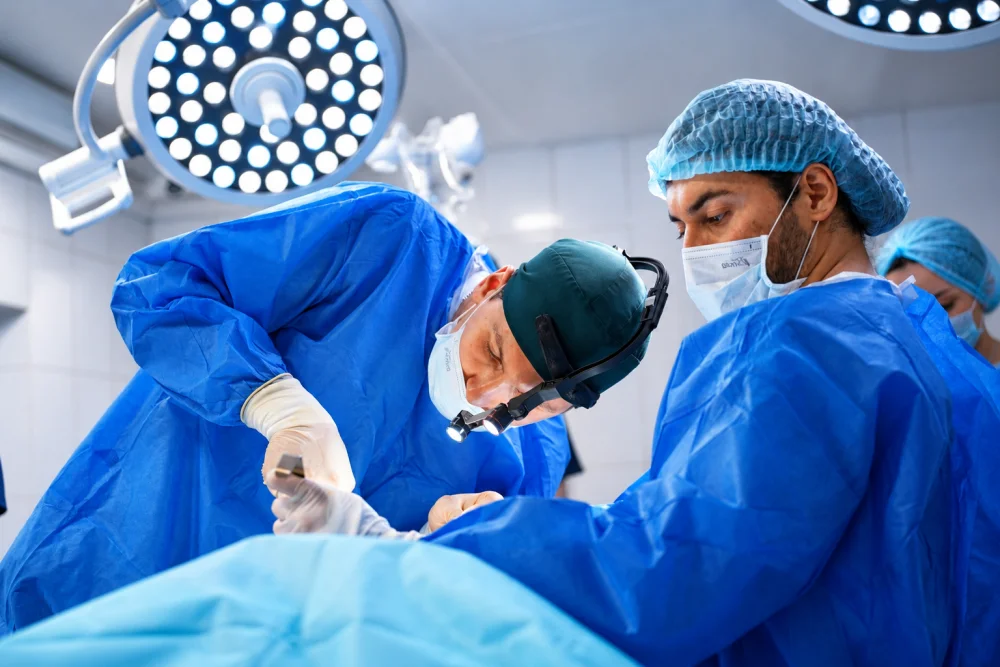
The surgeon performs mammoplasty according to your individual plan. The operation takes place under general anaesthesia with continuous patient monitoring.
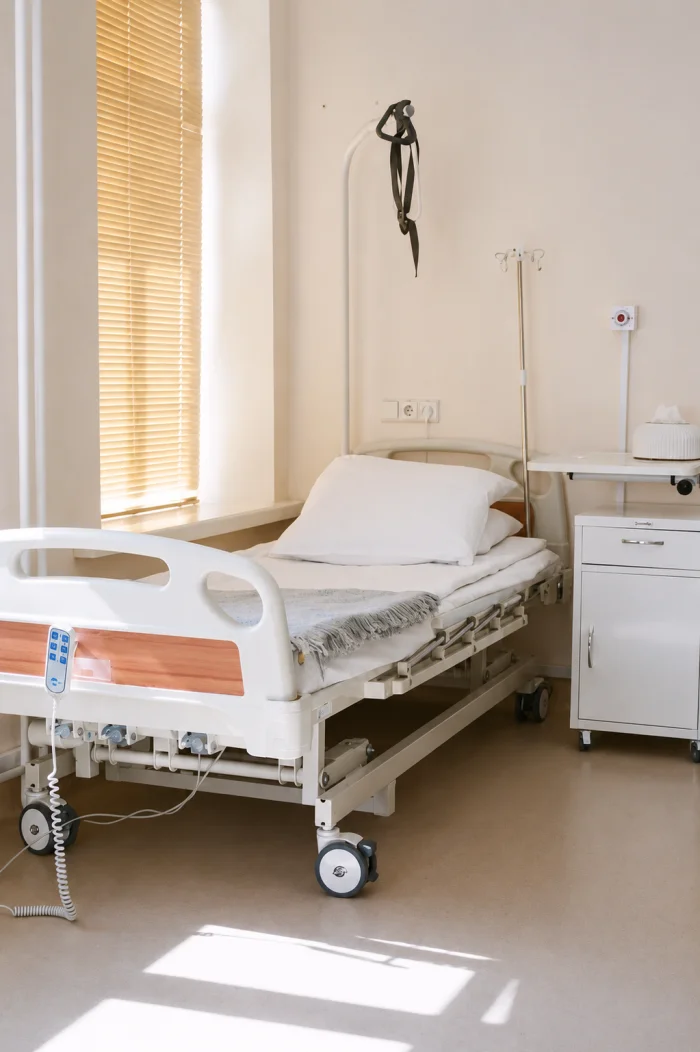 5
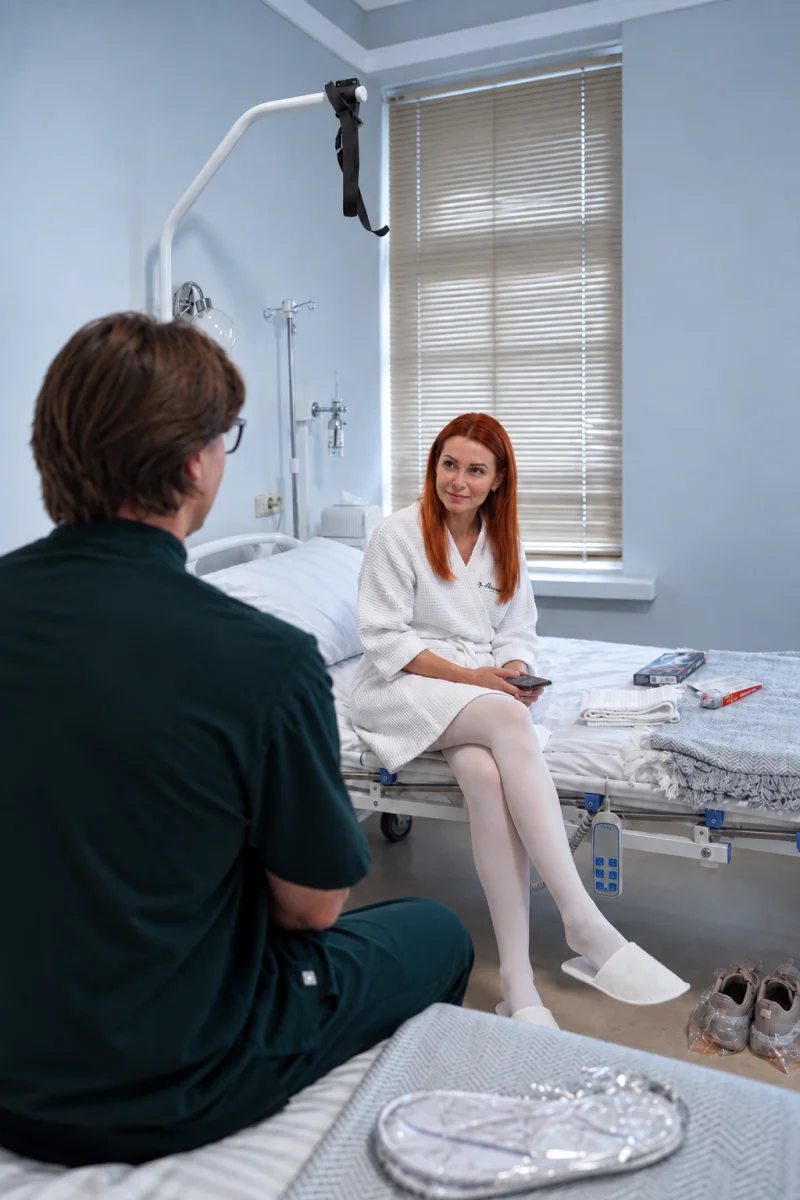
After surgery you stay in the clinic's comfortable inpatient ward under the care of the medical team until discharge.
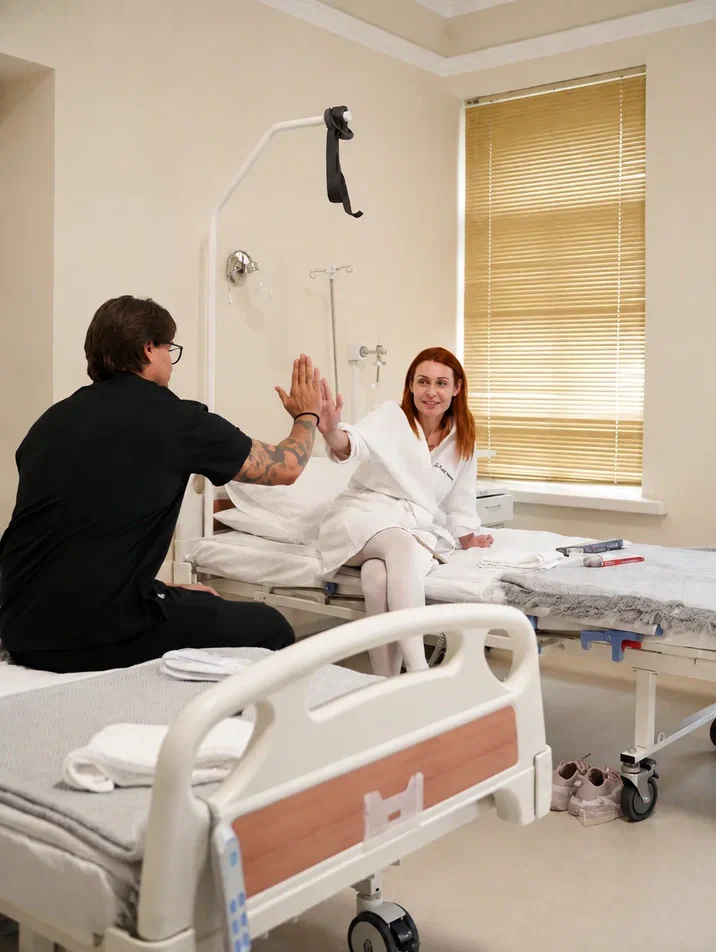 6
You get a personal recovery programme after the operation. Follow-up visits at 7 days, 3 and 6 months monitor healing; for a year, surgeon consultations are free of charge.
Ahead of surgery, take a few simple steps: balance work and rest, get more sleep, steer clear of stress, anxiety and strong emotions, and cut back on physical activity.
At least one month before the procedure, oral hormonal contraceptives should be stopped
Stop using drugs with aspirin, steroids and hormonal medications prescribed for chronic conditions before surgery
Take your tests a week before surgery
After 3 weeks, post-op swelling disappears
Scars form within 3 weeks
No heavy exertion (lifting more than 3 kg)
No lifting arms above shoulder height — 3 weeks
Recovery after the correction involves wearing compression garments for 1–1.5 months
For up to 40 days, avoid hard gym workouts and very active aerobics; after a month you may do light cardio. Keep an eye on your diet and meals.
Discomfort disappears after 3 months
Baths and saunas are off-limits up to three months, as is physiotherapy
Within 3 months all inflammatory changes in the tissue resolve and a “pocket” forms around the implant
Doctors
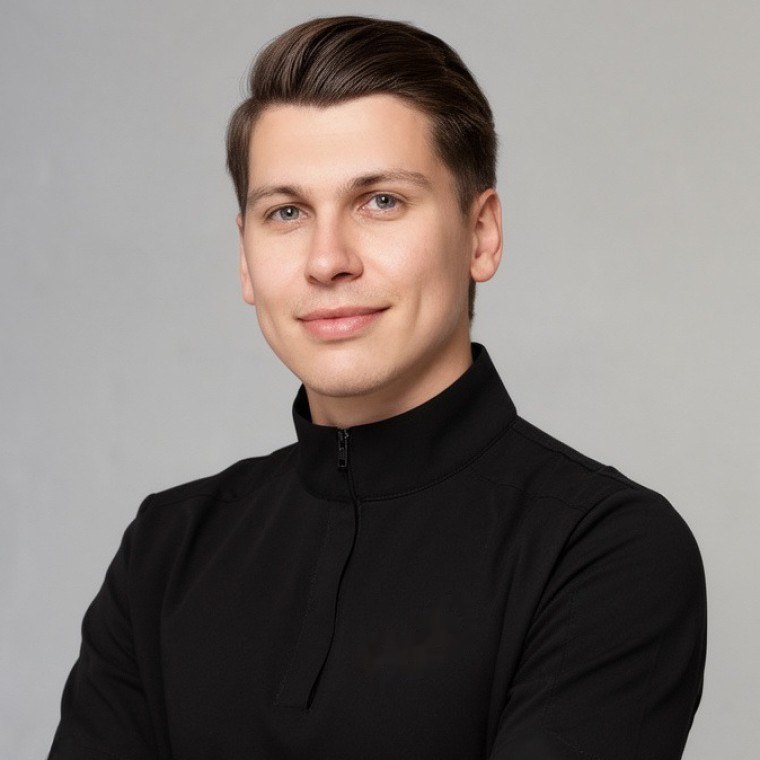
7 years of experience
Plastic surgeon
Residency training in plastic surgery, Petrovsky National Research Centre of Surgery. Specializes in aesthetic and reconstructive procedures on the breast and body.
At the consultation, you talk directly to your operating surgeon
A plastic surgeon with deep experience who cares about patient beauty and health
Book a consultationAdvantages
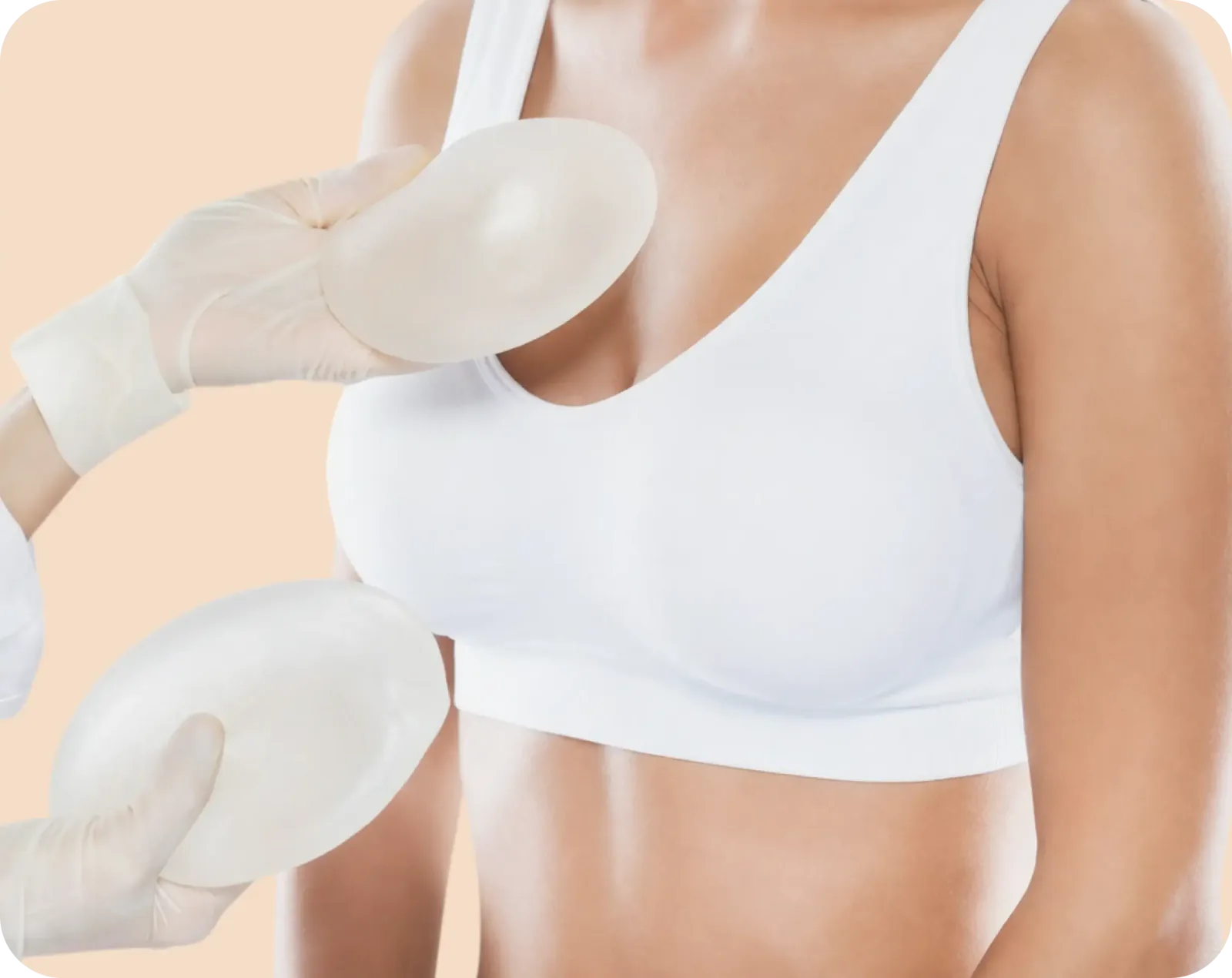
At the consultation we talk through what you want and model the changes. The surgeon explains the possibilities of surgery so that the goal is clear to you.
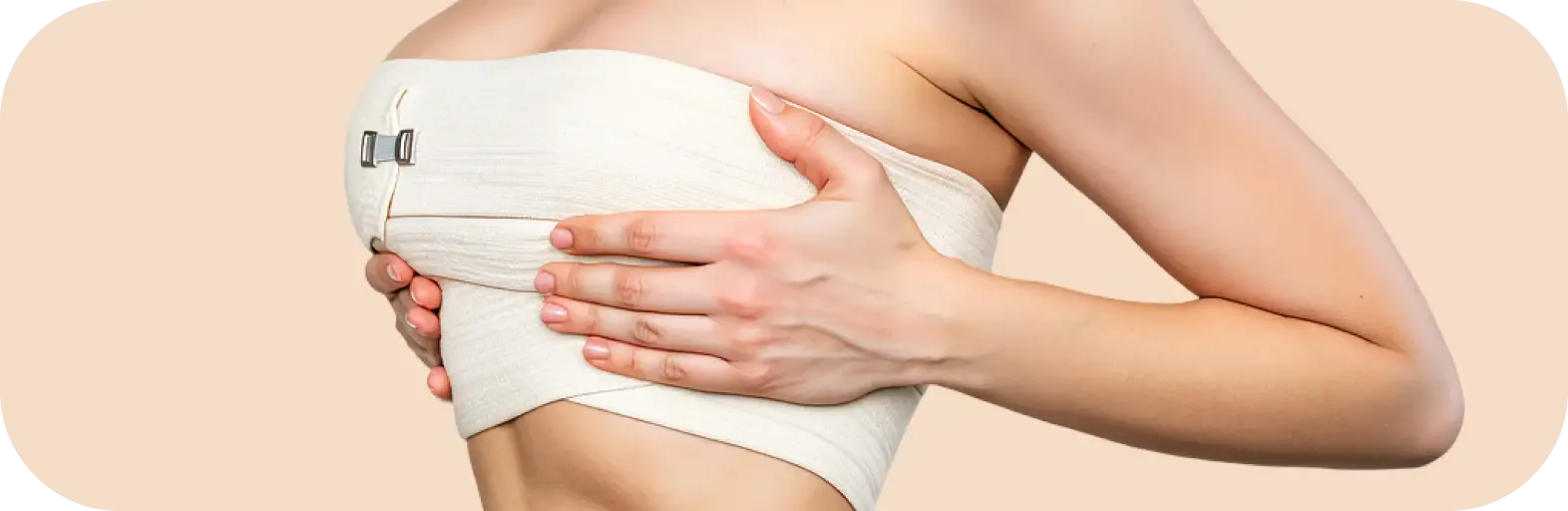
The surgeon follows your recovery and the changes in breast shape for a year. Check-ups and dressings are already included in the price.
Shape, volume and correction method are chosen to match your anatomy and wishes. For augmentation, the implant size and profile are selected individually.
We respect your time: we work 24/7, with easy booking and a personal approach — we adapt to your pace.
Once the surgeon has defined the extent of correction at the consultation, you get a clear surgery price — no surprises on the way to your result.

Recovery starts in a comfortable inpatient ward with nursing care around the clock. Your stay and meals are already included in the price.
FAQ
Yes. Boob job is the everyday name for breast augmentation. At City Medical Centre it is done with round or anatomical implants that the surgeon chooses with you at the consultation.
Breast enlargement adds volume with implants. A breast lift (mastopexy) raises sagging breasts and removes excess skin. Which one suits you is decided at the free consultation.
Mammoplasty is an umbrella for several procedures: augmentation (increasing volume with implants), reduction (taking away excess tissue and skin), mastopexy (lifting sagging breasts), reconstruction (after mastectomy) and asymmetry correction. Your wishes and the surgeon's advice determine the best individual method.
Message us — our coordinator will get back to you shortly and book your consultation. The plastic surgeon consultation is free.
As long as all recommendations are kept, complications are rare. Among the possible ones: hematoma or seroma, wound infection, reduced or increased nipple sensitivity, capsular contracture, aesthetic asymmetry, wound separation and tissue necrosis.
Mammoplasty gives a lasting result: around 10–15 years after augmentation (up to implant replacement) and 5–10 years after a lift or reduction. How long it holds depends on weight, pregnancy, skin aging and gravity. To keep the result, wear supportive underwear and keep your weight under control.
Whether breastfeeding remains possible after mammoplasty depends on the type of operation. With augmentation via an under-breast or armpit incision and the implant beneath the muscle, lactation is usually preserved, as the glandular tissue is spared. After a lift or reduction the risk is higher because ducts may be cut. Talk it through with your surgeon beforehand.
The choice of implant looks at material (silicone looks most natural, while saline is used less often), shape (round or anatomical teardrop), surface (smooth or textured), size and profile. The surgeon will choose what works best for your anatomy and wishes.
The surgery itself is performed under general anaesthesia — the patient feels nothing. In the first 1–3 days moderate discomfort is possible and is relieved with painkillers. By day 5–7 pain decreases significantly, and by weeks 2–3 discomfort is gone. If pain is severe, tell your doctor right away.
Work without physical exertion can be resumed after 7–14 days. Light walks after 1–2 weeks. Fitness and swimming after 4–6 weeks, strength training after 3 months. Pool and sea after 4–6 weeks. Compression garments are worn for 4–6 weeks. Exact timing depends on how you recover.
No scientific evidence shows that mammoplasty raises the risk of breast cancer, and implants do not cause cancer. After surgery, continue regular screening with self-exams, mammography and ultrasound, and always tell the examining doctor that you have implants.
It is possible to have mammoplasty after a C-section, provided the body has recovered fully. Wait no less than 6–12 months after birth and after finishing breastfeeding. A surgeon's consultation and examination are needed before the operation.
Mammoplasty leaves scars, yet a skilled surgeon makes them minimal. Incisions are made where they are hidden: under the breast, around the areola or in the armpit. Scars are reddish at first, and within 6–12 months they fade until they are almost invisible.
A little asymmetry in the early weeks after the operation is normal, due to swelling and uneven healing. If the shape or size still differs after 3–6 months, have your surgeon examine you to determine the cause.
After mammoplasty, the breasts and nipples can temporarily lose or gain sensitivity. Irritation of the nerve endings is responsible. Most often sensitivity returns within 3–12 months. If there is no improvement a year later, see your surgeon.
Hormonal drugs (contraceptives, hormone replacement therapy) do not affect implants directly, but may cause swelling or changes in breast tissue volume, temporarily affecting appearance. Be sure to tell your surgeon about such medications before surgery.
Prices are in US dollars; the amount in brackets is an approximate conversion to GBP at the rate of 02.10.2026. The final price is fixed in your contract.
Prices start from $4,700 (≈ £3,600). The surgeon sets the final price at the free consultation, and it is fixed in the contract, with no hidden extras.
The surgical team's work, anaesthesia, the inpatient stay with meals, dressings and follow-up visits for twelve months.
Message us on WhatsApp or Telegram using the buttons below. A coordinator will answer your questions and book a free consultation where the doctor names the exact price.
By messaging us, you agree to our Privacy Policy
Leave at least 6–12 months after childbirth and after breastfeeding has ended, once your body has fully recovered. The surgeon confirms it at a consultation and check-up.
Your age, height and weight, your current bra size and the result you would like, plus previous surgeries, pregnancies and breastfeeding. The coordinator tells you which photos the surgeon needs, and the price is confirmed after the surgeon has reviewed them.
Yes. The first consultation is free and starts online: send your details and photos on WhatsApp or Telegram, and the doctor reviews them and explains the options and the price.
Plan the operation at least 1–1.5 months before: compression garments are worn for that long, and swelling goes down in about 3 weeks. Baths and saunas stay off for up to three months.
The operation is followed by one day in hospital. Lifting your arms above shoulder level is off for 3 weeks, so plan help with lifting and carrying. The doctor sets the follow-up visits.
Message the coordinator with your preferred dates. The first consultation is free, and you can start it online; the clinic then confirms which dates are open, and only after that is anything booked.
Gentle cardio after about a month, intense gym work and active aerobics after up to 40 days. No raising the arms above shoulder level for 3 weeks.
Women in Cardiff who are unhappy with small or uneven breasts often look into augmentation. The operation places an implant in a pocket created by the surgeon, who then adjusts its position for symmetry and a natural contour. Incisions sit in discreet places: under the breast, around the areola or in the armpit. Over the following months the scars fade and become almost invisible.
For anyone in Cardiff planning augmentation, preparation starts weeks ahead. Aspirin-containing drugs, steroids and some hormonal medications are stopped 1–2 weeks before; oral contraceptives, at least a month before. Tests are taken a week prior. After the operation you remain in hospital for one day, then follow a recovery program focused on reducing swelling and caring for the breasts.
Budget matters, so the price is fixed upfront: from $4,700 (≈ £3,600) for breast augmentation with implants. Nothing essential is billed separately — the team's work, anaesthesia, meals, inpatient rooms, dressings and post-op visits over twelve months are part of the package. In-house instalments are available. To begin, Cardiff residents simply leave a phone number and wait for the coordinator's call.
Well-known people who spoke openly about this operation, in their own words.
 Did Brandi Glanville have a breast augmentation? Yes — a 20-year implant exchangeThe RHOBH star had 20-year-old implants replaced in 2026 — then a dive dislodged one. Her quotes on silicone poisoning and the repair ahead.
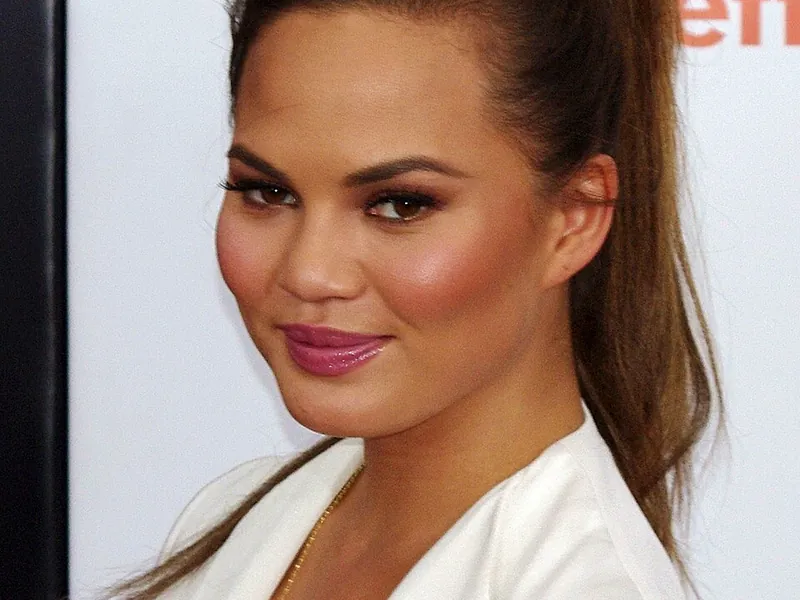 Chrissy Teigen and breast augmentation: what she said about her implantsChrissy Teigen got breast implants at 20 and said they were great to her for many years. Her words, how augmentation works and how to plan long term.
 Did Courtney Stodden have a breast augmentation? Yes at 18 — and a reduction at 31The reality star got huge implants at barely 18 and removed them at 31. Their honest quotes on reclaiming the decision and what surgery involves.
 Did Dolly Parton have a breast augmentation? Yes — and she jokes about it openlyThe country queen has never denied her breast implants — from age 22 to today. Her funniest and wisest quotes, and what augmentation involves.
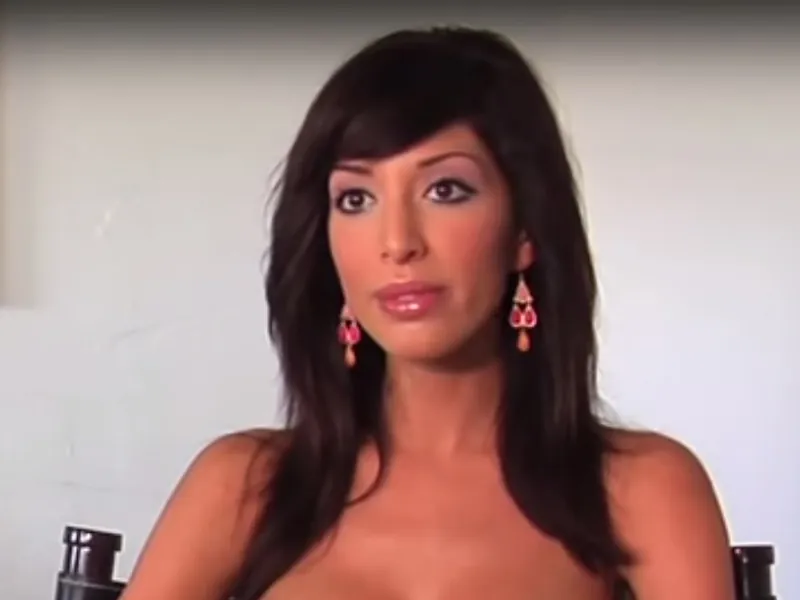 Did Farrah Abraham have a breast augmentation? Yes — and she explained whyThe Teen Mom star's chest changed after her baby and hurt her self-esteem — so she had augmentation. Her quotes and what the operation involves.
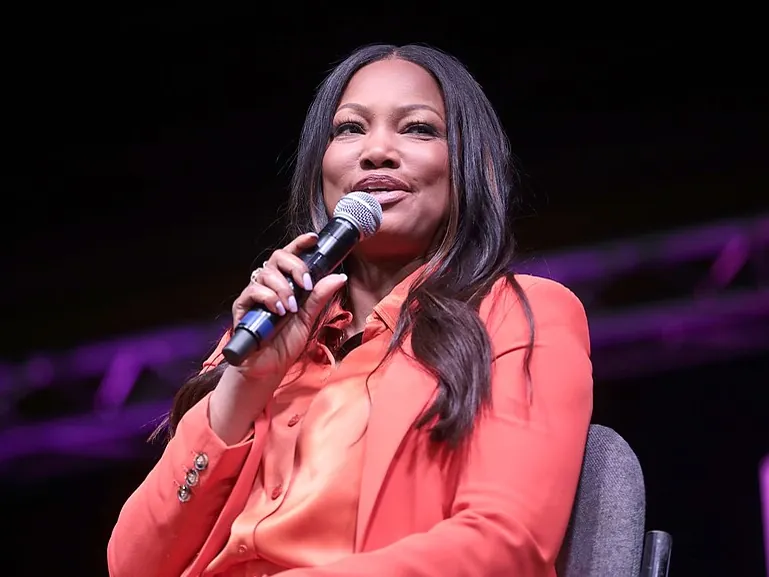 Did Garcelle Beauvais have breast implants? Yes — and she had them removedThe RHOBH star opened up about getting her breast implants removed — and said plastic surgery shouldn't be taboo. Her story and what removal involves.
What patients write after this operation. Reviews are translated from the original language.
Anna Smirnova
I went to Dmitry Sergeyevich for breast augmentation with implants. At the consultation everything was explained in detail, and together we chose the best size. The operation under combined anaesthesia took 2 hours, and I was discharged home the next day. The swelling went down in about a month, and my breasts look very natural. The year of follow-up care is a real lifesaver: you can always ask a question and get an answer. Thank you to the clinic!
Breast augmentation
Doctor: Dmitry S. Kuznetsov
Ekaterina Morozova
After two births I decided on a breast lift without implants. I chose Dmitry Sergeyevich and have no regrets. The result exceeded all my expectations: my breasts are lifted and the shape is youthful and firm. The incisions are minimal and almost invisible. I spent one day in the hospital, and the room was very comfortable. I recommend him!
Breast lift
Doctor: Dmitry S. Kuznetsov
Olga Kuznetsova
I had a combined operation, a breast lift with augmentation, with Dmitry Sergeyevich. At the consultation it was immediately clear that I was in the right place. Everything is included in the price, with no hidden charges. After a month my breasts already feel soft and natural. Personal follow-up after the operation is very valuable.
Breast lift with implants
Doctor: Dmitry S. Kuznetsov
Maria Lebedeva
Breast augmentation from a size 3 to a size 4 with Dmitry Sergeyevich. He chose perfect anatomical implants. The operation took 2 hours, and I woke up with almost no pain. In the ward I was fed and monitored around the clock. Four months have passed and the result looks like a magazine cover.
Breast augmentation
Doctor: Dmitry S. Kuznetsov
Natalia Vorobyova
I went to Dmitry Sergeyevich to correct breast asymmetry with a small lift. A true professional: at the consultation he immediately showed before-and-after photos of similar cases. Recovery was easy and the swelling went down quickly. I had my check-up after just 7 days. An excellent clinic!
Breast reconstruction
Doctor: Dmitry S. Kuznetsov
Yulia Romanova
I had a lift with implants after losing a lot of weight. I chose Dmitry Sergeyevich. At the consultation everything was explained in simple words, and my fears were gone. One day in the hospital, then care at home. Now my breasts look natural and keep their shape. I am very happy!
Breast lift with implants
Doctor: Dmitry S. Kuznetsov
Page medically reviewed by Dmitry S. Kuznetsov, plastic surgeon. Review date: .
Breast augmentation at City Medical Centre is planned as one day at the clinic under general anaesthesia, followed by a recovery that is mostly spent at home. For someone living in Cardiff, that means the useful question is not only "when is the operation?" but "what will my ordinary weeks look like afterwards?" The recovery rules are fixed: about 3 weeks without lifting over 3 kg or raising the arms above shoulder level, compression garments for 1–1.5 months, no intense gym training for up to 40 days, and baths, saunas and physiotherapy off the list for up to three months. Your own calendar decides how comfortably those rules fit into daily life.
Cardiff has a large student population. Total higher education enrolment is about 43,900 across Cardiff University, Cardiff Metropolitan University, the University of South Wales and the Royal Welsh College of Music & Drama. If you study, teach or work in administration at one of these institutions, term dates, placements and exam periods are your main constraints. The return to desk-based work is possible after 7–14 days, but you also need to think about carrying a laptop bag, a stack of books or a box of files. Anything over 3 kg is off limits for 3 weeks, so a rucksack with a laptop and a water bottle may already be too heavy in the first days. Lecturers and seminar leaders should also think about long stretches of writing on a whiteboard, which means raising the arm above the shoulder.
The public holidays in England and Wales can work in your favour. In 2026 there are 8 bank holidays, and the two at the end of the year are Christmas Day on 25 December and the substitute Boxing Day on 28 December. Suppose the operation is on Monday 2 November 2026. Swelling is expected to settle after about 3 weeks, which brings you to late November. The check-up at 7 days would fall around 9 November, and a return to light office work between 9 and 16 November is realistic. By Christmas you would be some seven weeks in, beyond the 4–6 week mark when fitness and swimming become possible, and the compression garment period of 1–1.5 months would be over or almost over. That makes late autumn a sensible season to plan for if you want the winter break to be a quiet one, though the date always depends on your own tests and the doctor's assessment.
The coordinator works with you on dates through WhatsApp or Telegram, round the clock, so you can discuss options in the evening after work or between lectures. Nothing is booked until the doctor has seen your photos, named the plan and the dates have been confirmed by you. It is worth sending the coordinator your real calendar: exam weeks, school-run duties, deadlines, a planned family event, and any physical job tasks. The more precisely you describe your month, the easier it is to place the 7-day check-up and the 3- and 6-month check-ups so that they do not collide with fixed commitments.
If you care for small children, the lifting limit deserves honest attention. Picking up a toddler is clearly more than 3 kg. Plan for a spouse, relative or friend to take over lifting for about three weeks, and arrange the first days at home so that nappies, bottles, a pushchair and a car seat do not require you to raise your arms or carry weight. Preparing a lower shelf for everyday items before the operation costs nothing and removes a lot of stress afterwards.
The compression garment is worn for 1–1.5 months while the tissues settle. The service information also gives a range of 4–6 weeks for the garment in the recovery timeline. The doctor will confirm the exact period for you after the operation, because it depends on how your recovery goes. What the garment feels like depends heavily on the weather, and Cardiff's climate gives you a clear picture of what to expect month by month.
According to the Met Office 1991–2020 normals for Bute Park, the coldest month is January, with a mean daily maximum of 8.6 °C and a mean minimum of 2.5 °C. February has the same mean minimum of 2.5 °C. In those months a fitted compression garment sits under a jumper and a coat, and many women find that the extra layer is not a problem at all. What you do need is clothing that is easy to put on without lifting the arms above shoulder level. Front-opening tops, loose cardigans and soft zip jackets are more practical than anything pulled over the head during the first 3 weeks.
The warmest months are July, with a mean maximum of 21.8 °C, and August, with 21.4 °C. The annual mean maximum is 15.0 °C and the annual mean minimum is 7.3 °C, so the city is mild rather than hot. Even in July the mean minimum is 13.1 °C. That is helpful for compression: you will rarely face the sticky heat that makes a tight garment truly unpleasant, though on a bright afternoon in July, with 199.6 hours of sunshine across the month, a closed garment under summer clothes can feel warm. If your recovery falls in summer, ask the coordinator about breathable fabrics and about having a second garment so that one can be washed while you wear the other.
Rain is the other factor. Annual precipitation is 1,203.5 mm over 153.4 days with 1 mm or more. The wettest months are December with 139.6 mm, November with 130.7 mm and October with 129.1 mm, and April is the driest with 72.1 mm. For recovery, wet months matter for practical reasons. An umbrella is hard to hold above shoulder height in the first weeks, so a hooded waterproof coat that you can put on from the front is a better choice. Slippery pavements also argue for flat, grippy shoes: you want to avoid any fall that would involve catching yourself with the arms.
Light is a quieter factor, but it affects mood and energy during recovery. December has only 50.4 hours of sunshine and January 53.5 hours, whereas May has 198.4 hours and June 195.2. If your first weeks fall in the dullest part of the year, plan a short daily walk in daylight. Easy walks are possible from 1–2 weeks after the operation, and a few minutes outdoors helps sleep and mood. In the brighter months, remember that the area around the scars should be looked after according to the doctor's instructions, not exposed carelessly.
A final practical point: the garment is not a fashion item, but it does shape how you feel in the first weeks. Ask the coordinator in the messenger about the size and style that will be recommended, so that you can buy or prepare appropriate clothes before the day of the operation rather than after it.
Cardiff sits on the Bristol Channel, with the Severn Estuary to the south-east, and water is an obvious part of the city's geography. The River Taff runs through the centre, the Ely joins it and flows into freshwater Cardiff Bay, and the Rhymney flows into the Severn Estuary. For anyone who swims, takes boat trips or simply likes to be by the water, the question after breast augmentation is when these activities come back.
The medical timeline is clear. The service information gives fitness and swimming from 4–6 weeks, and pool and sea from 4–6 weeks. Baths, saunas and physiotherapy are different: they are not allowed for up to three months. So the first swim is not a matter of "when the scars look healed" but of the doctor's confirmation, usually at a check-up. Before that, a hot bath is not an alternative to a pool, since baths are excluded for the longer period. Showers are the practical option in the early weeks, as the doctor will instruct you at discharge.
Cardiff Bay is a freshwater lake behind the Cardiff Bay Barrage, and it has several ways to be on the water without swimming. The Aquabus water taxi runs hourly between the bay, the city centre and Penarth, and boat trips to Flat Holm run from March to October. Sitting on a boat is not the same as swimming, but handling ropes, climbing steps and carrying bags are more physical than they look. In the first 3 weeks, when lifting over 3 kg and raising the arms above the shoulder are forbidden, a calm seated trip may be possible once you feel well, but boarding and holding on to rails should be taken slowly. If you are unsure, ask the doctor during the consultation or at the 7-day check-up.
Cardiff International Pool opened on 12 January 2008. A pool is a controlled environment, and for many people it is the natural place for a first return to swimming. After the 4–6 week mark and with the doctor's agreement, begin with gentle, short sessions. Avoid vigorous strokes that stretch the chest and shoulders, such as butterfly or fast front crawl, at the beginning. Breaststroke or slow swimming with an easy rhythm is more forgiving. Lane swimming with many turns and wall pushes is a gradual step, not the first.
For sea swimming, the timeline is the same 4–6 weeks, but conditions are less predictable than in a pool. The Bristol Channel and the Severn Estuary are tidal, and the sea in the Channel is cool for most of the year. You should think about how long you will be in the water and how you will get dry and warm afterwards, since the temperature difference between water and air is more of an issue when you are wearing a recovery garment or are just out of it. A sea swim in a month with a July mean maximum of 21.8 °C is quite different from one in November, when the average rainfall is 130.7 mm and sunshine is scarce. If your 4–6 week mark falls in cold months, treat the pool as your first step and leave open water for later.
Swimwear is a quiet but real topic. Many women pick a new swimsuit or bikini top after augmentation, and it is better to try it on only after the swelling has settled. Swelling disappears after about 3 weeks, and the shape continues to settle during the following months. Within 3 months, the tissue is free of inflammatory changes and a "pocket" surrounds the implant. Buying swimwear at around that point will give a more accurate fit than buying it earlier.
Cardiff has a strong sporting reputation. In 2008/09, 61% of its residents regularly took part in sport, the highest of the 22 local authorities in Wales, and the city was named European City of Sport for 2009 and 2014. If you are one of the many who run, swim, cycle or train, you will want specific information about when each activity returns after augmentation.
The rules from the service information are cautious and specific. For about 3 weeks, there is no strenuous activity and no lifting over 3 kg, and the arms must not be raised above shoulder level. Intense gym training is skipped for up to 40 days, overly active aerobics should be avoided, and light cardio may be possible after a month. Fitness and swimming come back from 4–6 weeks, and strength training from 3 months. Easy walks are possible from 1–2 weeks. The central idea is that the implant pocket needs time, and upper-body work, especially chest and shoulder exercises, puts load on exactly the area that is healing.
Running is a good example of how the plan works. The Cardiff Half Marathon takes place each October, attracts over 20,000 participants and has held the World Athletics Elite Road Race Label since 2017. If you have this event in mind, start from the date and count backwards. The service timeline does not list running on a specific day, so ask the doctor in the consultation. As a general sequence, easy walks come first, light cardio is possible after a month, and a supportive sports bra is advisable once the doctor allows it. Training for a half marathon involves long runs, and the repeated movement of the chest is something to discuss before you set a target. If your operation is in the early part of a year, an October event may be realistic, but you should plan the build-up with the doctor's approval at the check-ups instead of fixing a race first and the operation second.
Cycling needs the same thought. The Taff Trail is a walking and cycle path of 55 miles (90 km) running from Cardiff Bay to Brecon, and it is a familiar route for outings. The Nextbike hire scheme ran from March 2018 to January 2024, so rental should be arranged privately if you want it. Cycling puts weight on the hands and arms, and the handlebars keep the shoulders and chest in a held position. Wait for the doctor's agreement and start with short, flat stretches. The first section of the trail near the bay is a gentle choice compared with hilly routes. The city centre is relatively flat, with hills to the north, east and west, and the highest point in the local authority area is Garth Hill at 307 m. If you live on the slopes, plan routes that avoid steep climbs in the early weeks, because effort on a bicycle, especially standing on the pedals, loads the upper body.
For gym-goers, the 40-day rule on intense training is the first milestone and the 3-month mark for strength training the second. In between, a sensible approach is to keep legs and core active within what the doctor allows, while leaving out chest presses, push-ups, pull-ups and heavy overhead work. Walk daily, and increase gradually. Women who work in sport or fitness, such as coaches and instructors, should tell the coordinator about their job at the start, so that the date of the operation is chosen with enough time to return to demonstration-based work.
After the recovery, the long-term result is described in the service information as lasting about 10–15 years for augmentation, until implant replacement. Weight changes, pregnancy, skin ageing and gravity affect how long it lasts. A supportive bra for sport is therefore a long-term habit, not only a recovery item.
Cosmetic surgery is not routinely provided on the NHS. The NHS website says that it might pay for some procedures for psychological or other health reasons. As an example, it names breast enlargement for very uneven or absent breasts causing significant psychological distress. Most people who want cosmetic surgery need to pay privately. If your situation might fit the NHS example, the route is through a GP, and you should treat that as a separate pathway from the consultation with City Medical Centre. If you decide on the private route, the first consultation with the doctor is free and online, the price is named by the doctor and fixed in the contract, and the plan is confirmed before anything is booked.
Cardiff is the capital and largest city of Wales, with a population of 381,516 in 2025 on the principal-area figures, and the Cardiff Capital Region has about 1.5 million people. The city covers 141 km2 in the south-east of the country. What this means for you is mostly practical: you are in one of the larger urban areas in the region, so most of the preparation, such as blood tests, an ECG and other examinations prescribed by the doctor, is arranged by you with the coordinator's guidance. Do the tests a week before the operation, and send the results through the messenger.
The preparation timeline is straightforward. One to two months before, keep a healthy work-rest balance, sleep more, avoid stress and reduce physical activity. Stop hormonal oral contraceptives at least one month before the procedure. One to two weeks before, aspirin-containing drugs, steroids and hormonal medications for chronic conditions must be stopped, which should be agreed with the doctor if you take any of them for a chronic condition. Then do your tests a week before the operation. These steps are the same wherever you live, but the local calendar affects how you fit them in. For instance, if the operation is set for early November, the one-month period for contraceptives starts in early October, around the time the Cardiff Half Marathon is held, and you should include this in your schedule if you plan to take part.
The process is built around the messenger. You send photos on WhatsApp or Telegram, receive a free assessment and the price, and then confirm the plan and the dates. Before the operation, the consultation includes modelling of the planned change, and the doctor chooses between round and anatomical implants with you. Round implants give even volume with more fullness at the top, and anatomical ones give a natural slope and a soft teardrop shape. The decision is not made from a catalogue: the doctor takes into account your anatomy, proportions and wishes.
After the operation, support continues for 12 months. Check-ups happen at 7 days, 3 months and 6 months, and consultations with the doctor are free for a year. Because the follow-up is organised around messages and the planned check-ups, think about how you will take part in them from home. Keep your phone charged, photograph the area in the same light and position as the doctor requests, and write down your questions as they come. For women with a very busy week, setting a recurring reminder for the check-up dates is a simple method.
The service information also lists who is not a suitable candidate: pregnancy and breastfeeding, acute infections, inflamed or damaged skin in the operative area, decompensated chronic diseases, age under 18, uncorrected clotting disorders, uncontrolled diabetes and malignant breast tumours before treatment is complete. If any of these apply, the doctor will say so at the consultation. If the concern can be addressed without surgery, you will be told, so you do not pay for an operation you do not need.
A recovery is rarely a straight line, and Cardiff's wettest months, October to December, are also the months when many people prefer to schedule the operation, because they are quieter socially. The messenger channel is open 24/7, which suits those weeks when you wake at night with a question, or when a weekend plan changes. The service information states that the first days may bring moderate discomfort, eased with painkillers, that by day 5–7 the pain is much milder, and that by weeks 2–3 the discomfort disappears. If pain is severe, tell your doctor immediately.
On the day itself, you stay one day at the clinic after general anaesthesia, with 24/7 monitoring by medical staff, comfortable wards and meals. After discharge you go home with a recovery programme. A calm home setup helps: put what you need at waist height, prepare simple meals, keep a few front-opening tops ready and arrange help for lifting. The garment, dressings and check-ups are part of the plan, and the follow-up for the full year is included in the price named at the consultation.
Cardiff's built-up flat centre, which is built on reclaimed marshland, makes short walks easy to arrange. In the first weeks, a flat walk of a few minutes around your neighbourhood is better than a long hilly route. When the weather is poor, with a high chance of rain in autumn and winter, you can walk indoors at home and leave longer outings for the dry days. Taking a short daily outing as the weeks pass is good for circulation and mood, and the doctor will tell you when to extend it.
Finally, if you have questions about how the whole plan fits your month, whether it is exams, a school term, Christmas, a race or a planned holiday, send the coordinator your calendar and photos. The first assessment is free, there is no obligation, and the price and dates are confirmed before anything is booked.
In 2026 there are 8 bank holidays, including Christmas Day on 25 December and the substitute Boxing Day on 28 December. Because return to desk work is possible after 7–14 days and swelling settles after about 3 weeks, an operation in early November, for example on Monday 2 November 2026, would put you well into recovery before the end-of-year break. The 7-day check-up would be about 9 November, and the 4–6 week mark for swimming and fitness would fall between 30 November and 14 December. The exact dates are agreed with the coordinator and the doctor, and nothing is booked until you confirm them.
Cardiff is mild. At Bute Park the warmest months are July, with a mean maximum of 21.8 °C, and August, with 21.4 °C, and the July mean minimum is 13.1 °C. The garment is worn for 1–1.5 months, and in a warm spell it can feel closed under light clothing. Ask the coordinator about breathable fabrics and having a second garment to rotate. Do not remove or change the garment on your own; follow the doctor's instructions at discharge and the check-ups.
The service information gives fitness and swimming from 4–6 weeks, and pool and sea from 4–6 weeks, with the exact timing depending on your individual recovery. Baths, saunas and physiotherapy are different and are not allowed for up to three months. A pool such as Cardiff International Pool is a controlled setting for a first return, and sea swimming in the Bristol Channel is better left until you are comfortable and the weather is mild. Confirm with the doctor at a check-up before the first swim.
It depends on when the operation takes place and how you recover. Easy walks are possible from 1–2 weeks, light cardio may be possible after a month, intense gym training is skipped for up to 40 days, and strength training starts from 3 months. The event, which attracts over 20,000 participants, is a fixed date, so count back from it and discuss a training plan with the doctor at the consultation and at the check-ups. Running is not listed as a separate step, so ask for a personal answer.
Not in the first weeks. For about 3 weeks, strenuous activity, lifting over 3 kg and raising the arms above shoulder level are excluded, and cycling loads the hands, arms and shoulders. Start with easy walks from 1–2 weeks and ask the doctor when to add short, flat cycling. The path from Cardiff Bay to Brecon is 55 miles (90 km) long, so begin with a short stretch near the bay, not the whole route.
Cosmetic surgery is not routinely provided on the NHS, according to the NHS website. It may pay for some procedures for psychological or other health reasons, and breast enlargement for very uneven or absent breasts causing significant psychological distress is named as an example. Most people who want cosmetic surgery need to pay privately. If you think you might qualify, a GP is the starting point. The free online consultation with City Medical Centre is a separate step and involves no obligation.
A return to work without physical exertion is possible after 7–14 days. The limits are practical: no lifting over 3 kg and no raising the arms above shoulder level for about 3 weeks. That affects carrying a bag of books or a laptop, writing high on a whiteboard and handling boxes of equipment. Tell the coordinator about your tasks, and the doctor can advise on timing and on whether a short period of adjusted duties would be sensible.
Think about clothing and movement. Have front-opening tops and a waterproof coat with a hood that you can put on without lifting the arms, since October to December are the wettest months, with 129.1 mm to 139.6 mm of rain. Wear flat, grippy shoes and keep items at waist height. Stop hormonal oral contraceptives at least one month before, stop aspirin-containing drugs and steroids 1–2 weeks before as instructed, and do your tests a week before the operation.