City Medical Centre · multi-specialty surgery clinicOpen 24/7

Tummy tuck

Abdominoplasty (Tummy Tuck) in Alicante

Free consultation

from $2,400

The price is fixed in the contract before surgery

Message us on WhatsApp

Free online consultation · Reply within 15 minutes
Real case
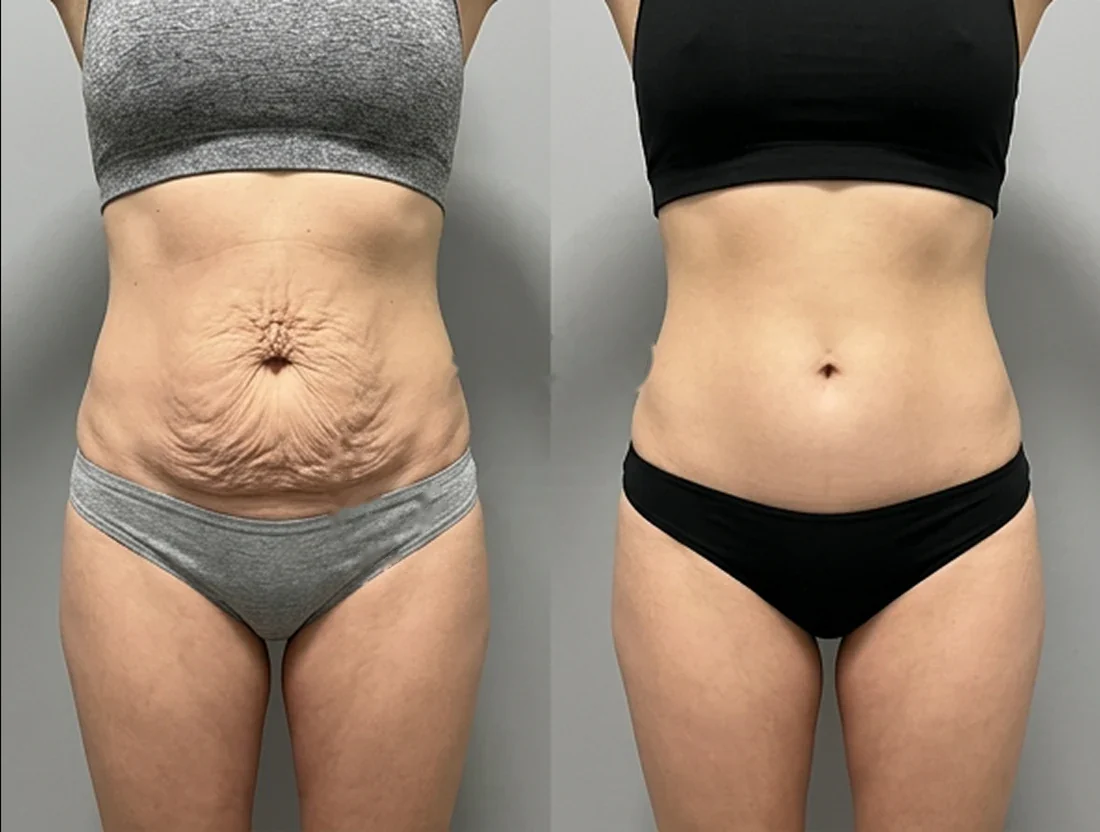
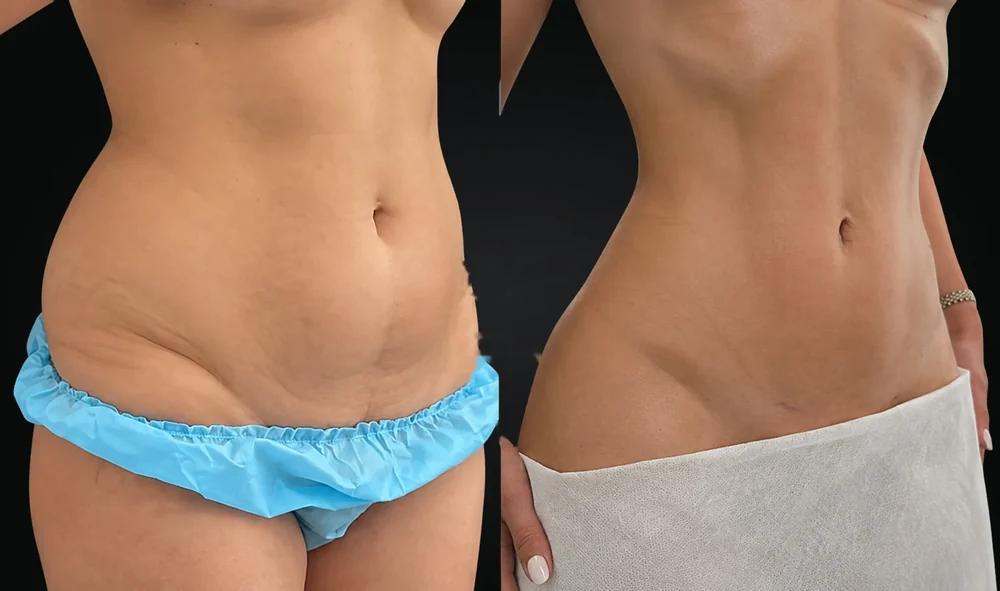
Tummy tuck: a patient's abdomen before and after surgery before after
A flat tummy and a toned silhouette in one operation. Your individual surgical plan and the expected result are discussed at the consultation

Message our coordinator

Free online consultation · Reply within 15 minutes

Message us on Telegram

By messaging us, you agree to our Privacy Policy

Tummy tuck (abdominoplasty) in Alicante: price and key facts

Tummy tuck for patients from Alicante at City Medical Centre: the price is named at the free online consultation and fixed in the contract with no hidden extra charges.

Duration
2–4 hours
Anesthesia
general
Stay
1–3 days
Recovery
back to work after 2–3 weeks
Final result
6–12 months after surgery
How it works
Send photos on WhatsApp or Telegram, get a free doctor assessment and the price, then confirm the plan and dates before anything is booked.

How it works · Tummy tuck prices

Information current as of 24 October 2026

Free online consultation on WhatsApp and Telegram

Results

Tummy tuck (abdominoplasty) results
of our patients

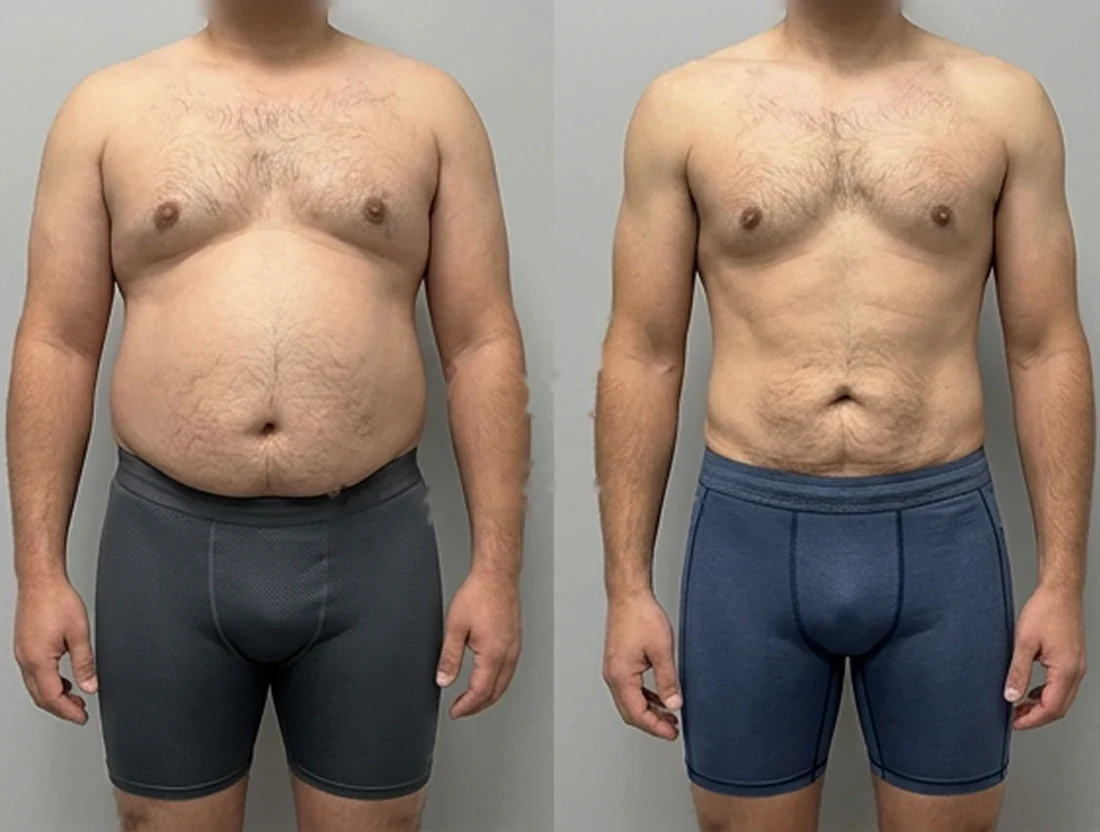
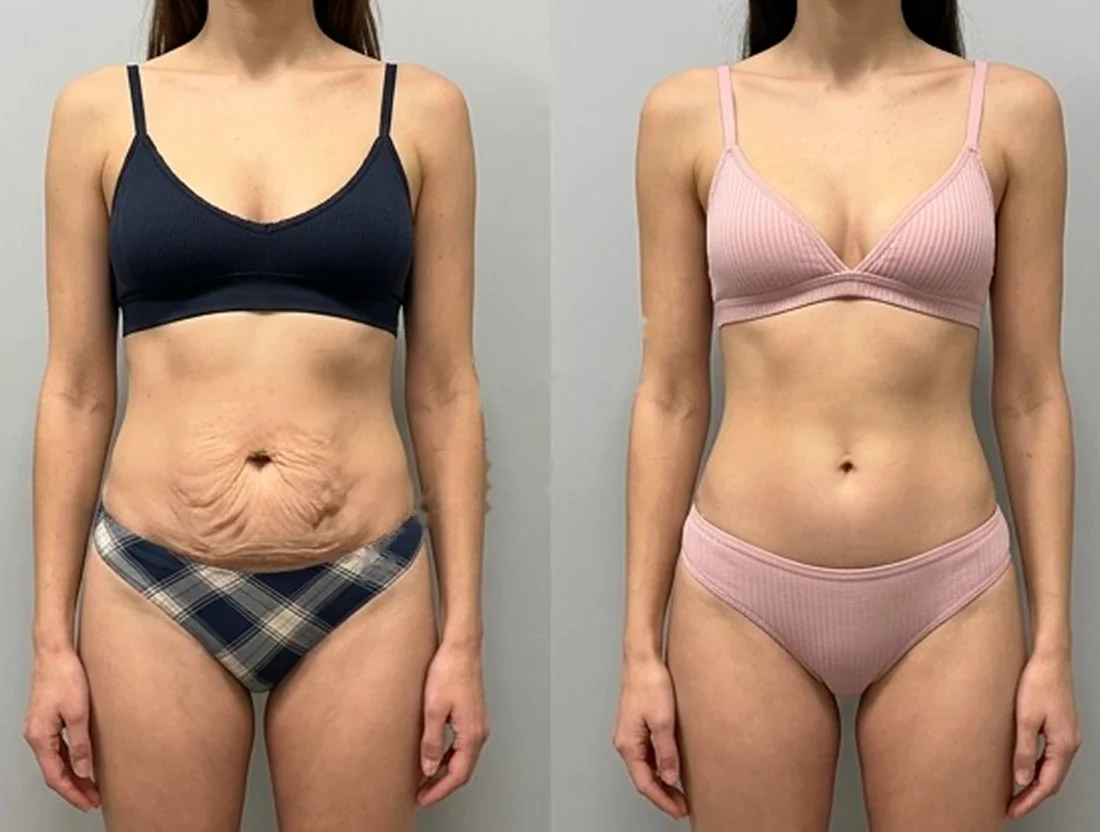
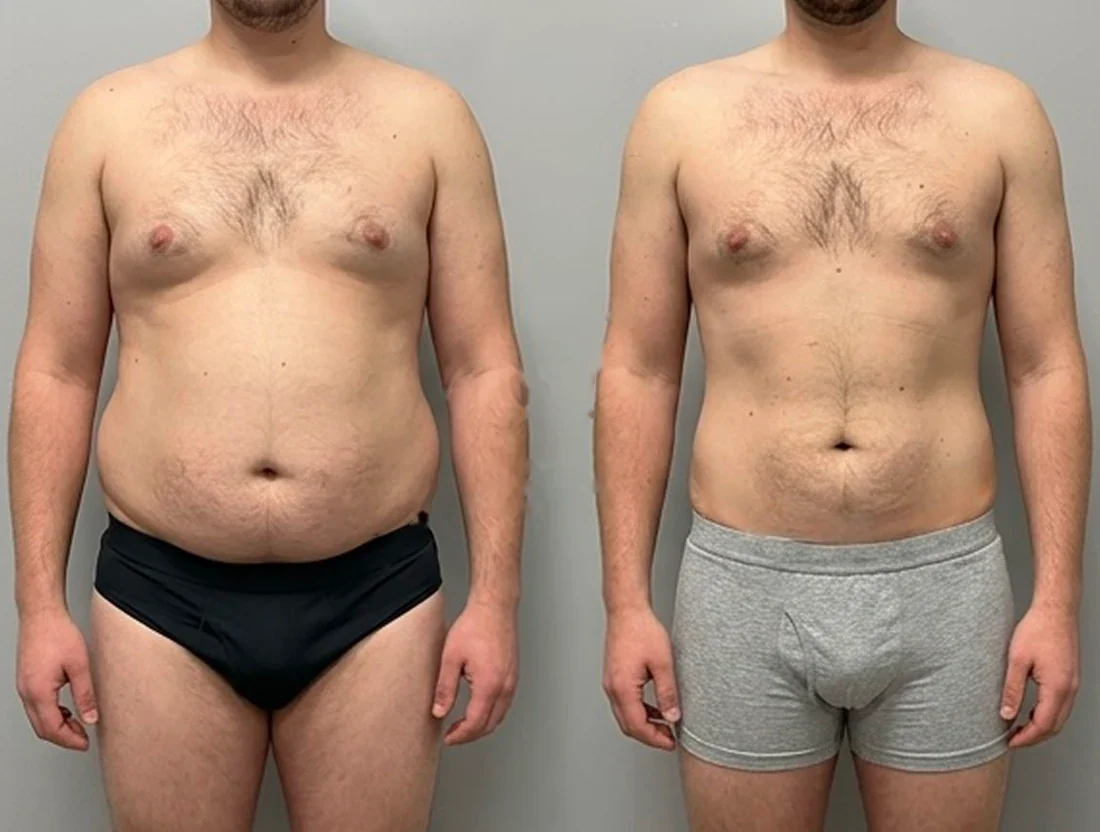
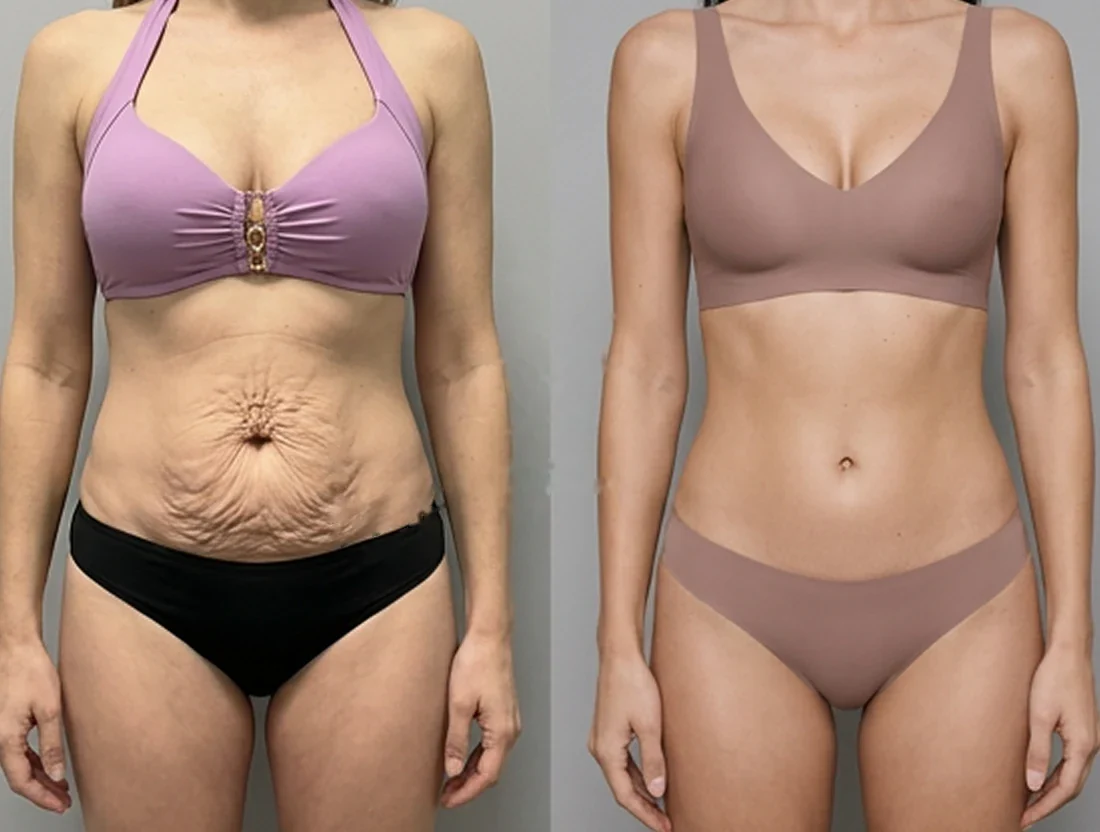
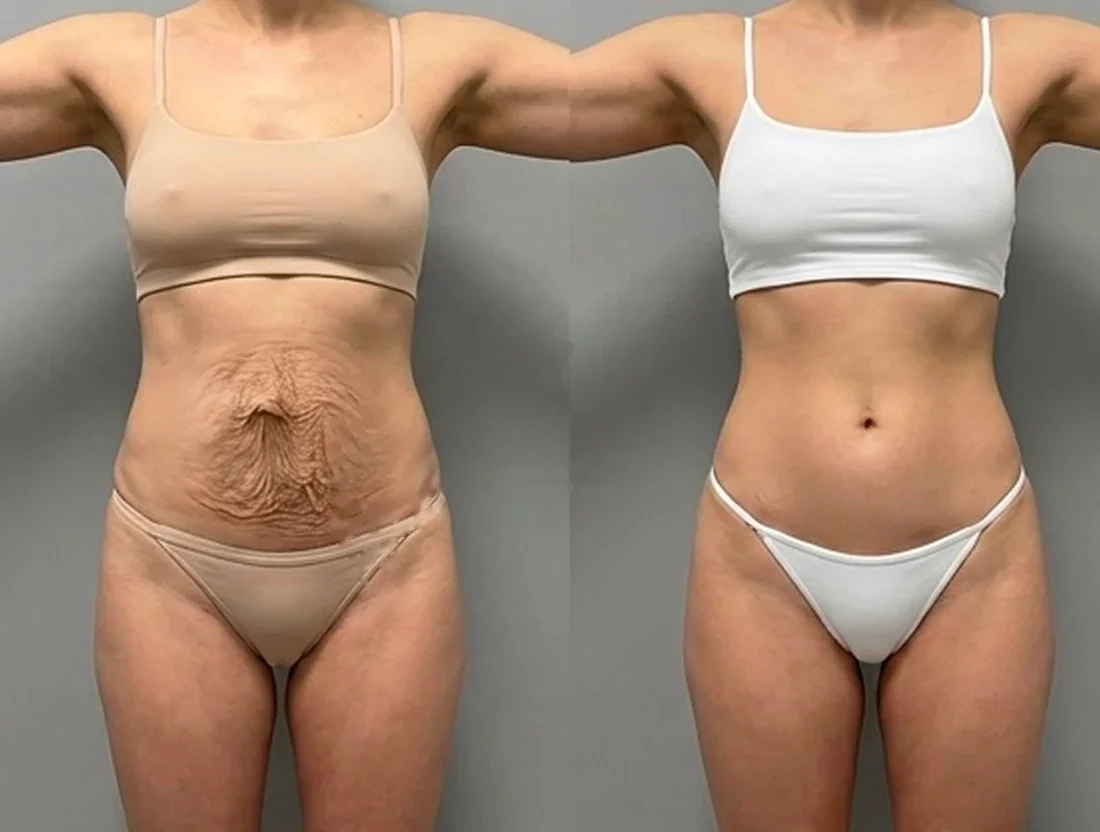
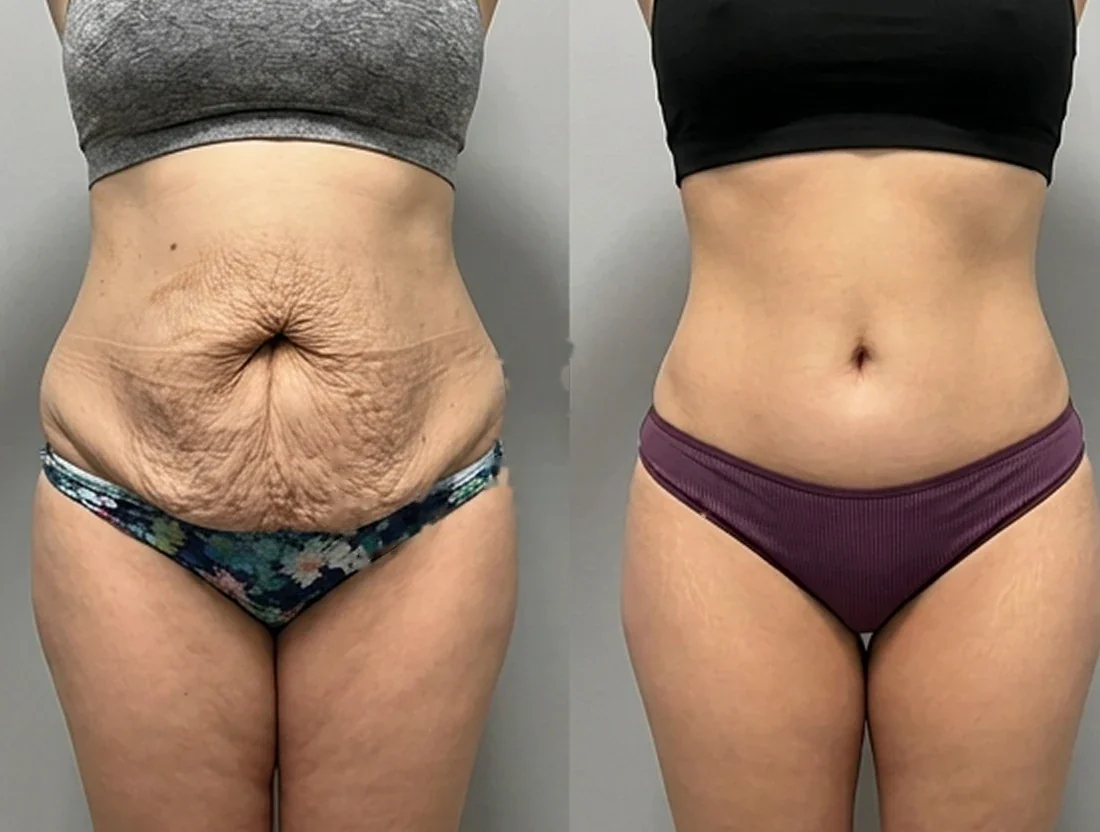
All cases are real patients. Faces and identifying details are hidden.

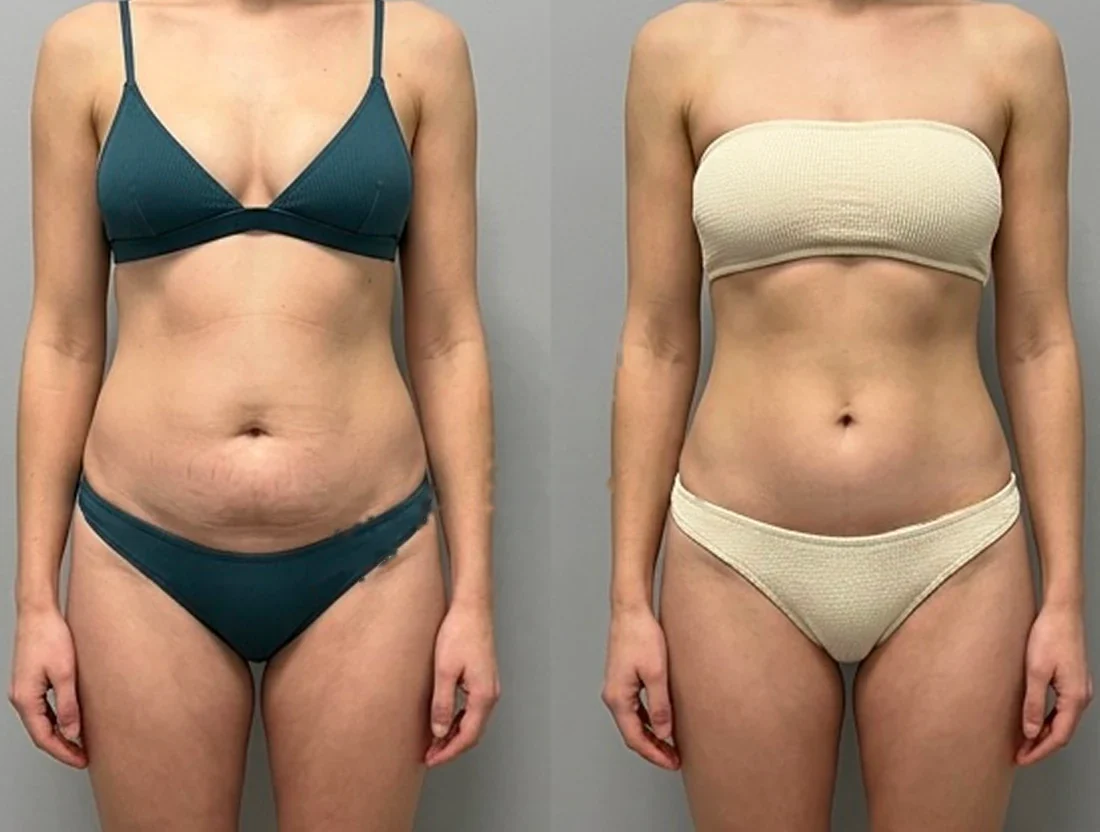
Tummy tuck: a female patient's abdomen before and after surgerybeforeafter
Tummy tuck: a male patient's abdomen before and after surgerybeforeafter
Tummy tuck: a female patient's abdomen before and after surgerybeforeafter
Tummy tuck: a male patient's abdomen before and after surgerybeforeafter
Tummy tuck: a female patient's abdomen before and after surgerybeforeafter
1 of 8

Comparison

Tummy tuck techniques

A tummy tuck is done as a full (classic) or mini operation, or combined with liposuction as lipoabdominoplasty. Compare the scope of surgery, the indications and the expected results to choose the right technique together with your surgeon.

Tummy tuck

Removal of excess skin, abdominal muscle tightening
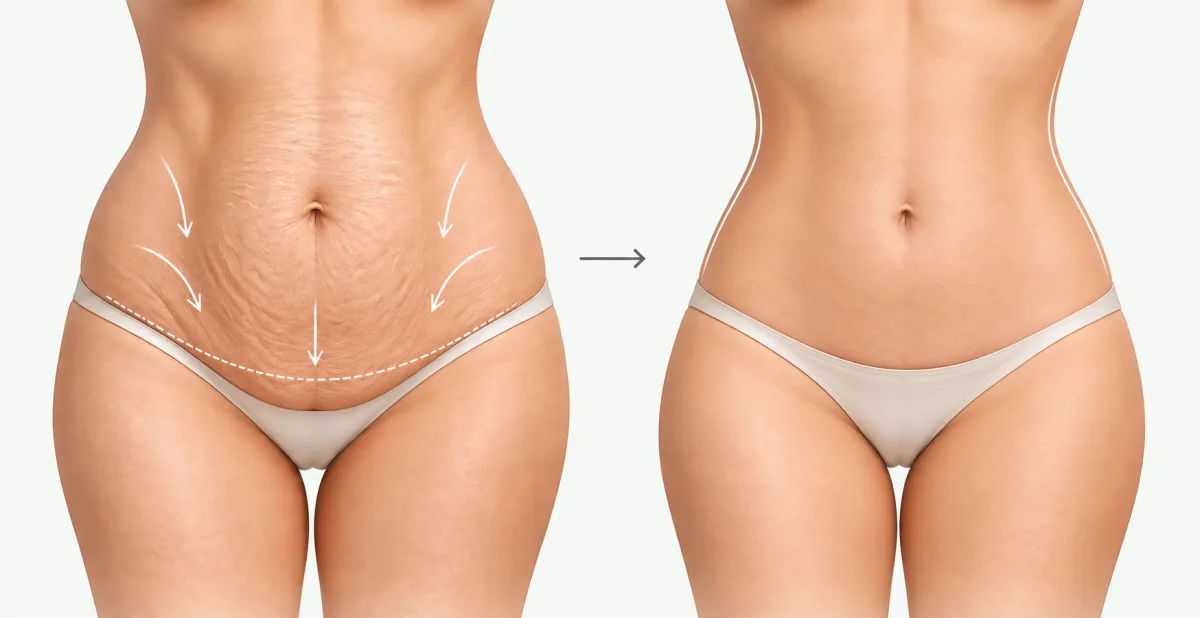
Tummy tuck diagram: the abdomen before surgery with the incision line, and the result
Main goal
Removal of excess skin, diastasis repair
When it is done
Excess skin after childbirth or weight loss
Anaesthesia and stay
General anaesthesia, up to 3 days in hospital

Lipoabdominoplasty

Tummy tuck with added liposuction
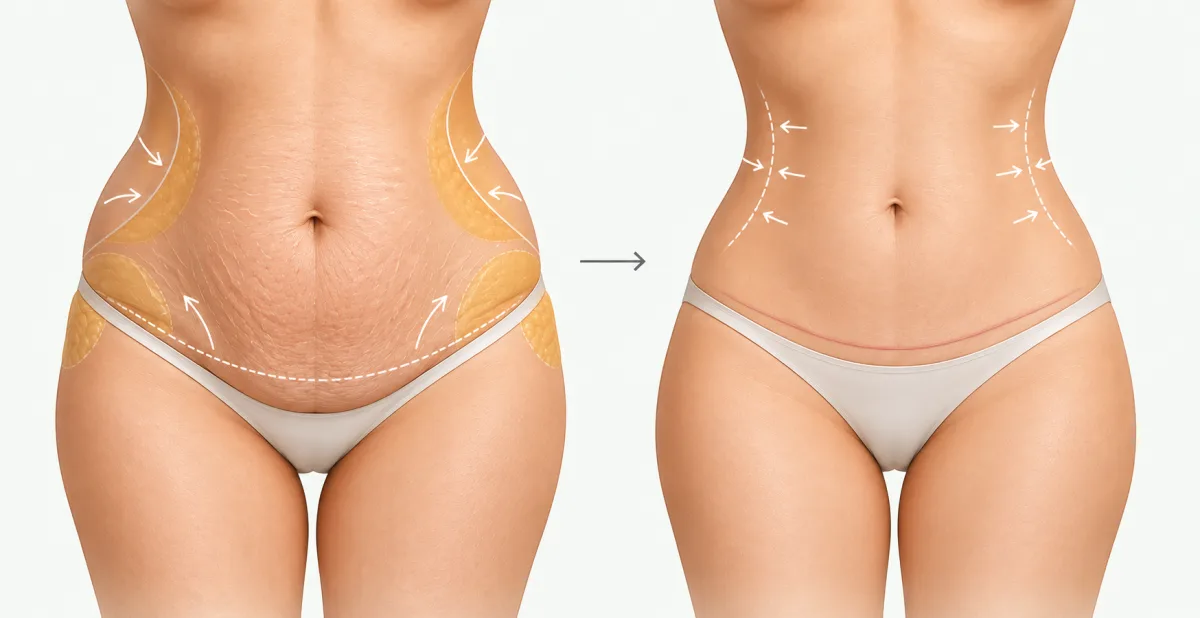
Lipoabdominoplasty diagram: the abdomen with fat on the flanks before surgery, and the result
Main goal
Tummy tightening and waist contouring
When it is done
For fat deposits on the flanks and waist
Anaesthesia and stay
General anaesthesia, up to 3 days in hospital

The benefits and recovery times shown are averaged for each technique and given for guidance: the scope of correction and rehabilitation depend on your anatomy and individual features, and the surgeon confirms them at the consultation.

At the consultation the surgeon draws up a plan for your case and explains how your tummy tuck will go.

Free, before surgery and with no obligation.

Book a consultation

Tummy tuck from the inside

About the clinic

A clinic where you can feel at ease

Modern equipment, comfortable rooms and care for every patient

A doctor and a patient in a clinic ward

Contact us the way that suits you

We will answer your questions and find a convenient time for a consultation

By messaging us, you agree to our Privacy Policy

A tummy tuck is not for everyone

If your case can be solved without surgery, the doctor will tell you so at the consultation — and you will not spend money for nothing.

Suitable

A surgeon shows a patient on a model and a monitor how the abdominal contour changes after a tummy tuck
  • Rectus abdominis diastasis
  • Skin folds after weight loss
  • Loose abdominal skin
  • Stretched skin after pregnancy
  • A distorted abdominal contour

Not suitable

A surgeon discusses the indications and contraindications for a tummy tuck with a patient
  • Acute infections
  • Severe disease of the heart, kidneys or liver
  • Problems with blood clotting
  • Age below 18
  • Decompensated diabetes
  • Cancer
  • Skin inflammation in the surgical area
  • Pregnancy or breastfeeding

Not sure the surgery is right for you?

Message us — the coordinator will ask for your photos in the messenger, and the surgeon will tell you whether a tummy tuck suits you. No surgery booking needed.

Find out if it suits me

A surgeon goes through a tummy tuck diagram with a patient at the consultation

Prices

You know the price
before surgery

The price is set at the consultation and fixed in the contract.

Other services

  • First consultationFree
  • Liposuction of the abdomen and flanksfrom $1,700
Book a consultation

Find out your tummy tuck plan and price

The surgeon assesses your abdominal skin and muscles, listens to your wishes and chooses the right correction technique.
The price is set at the consultation and fixed in the contract.
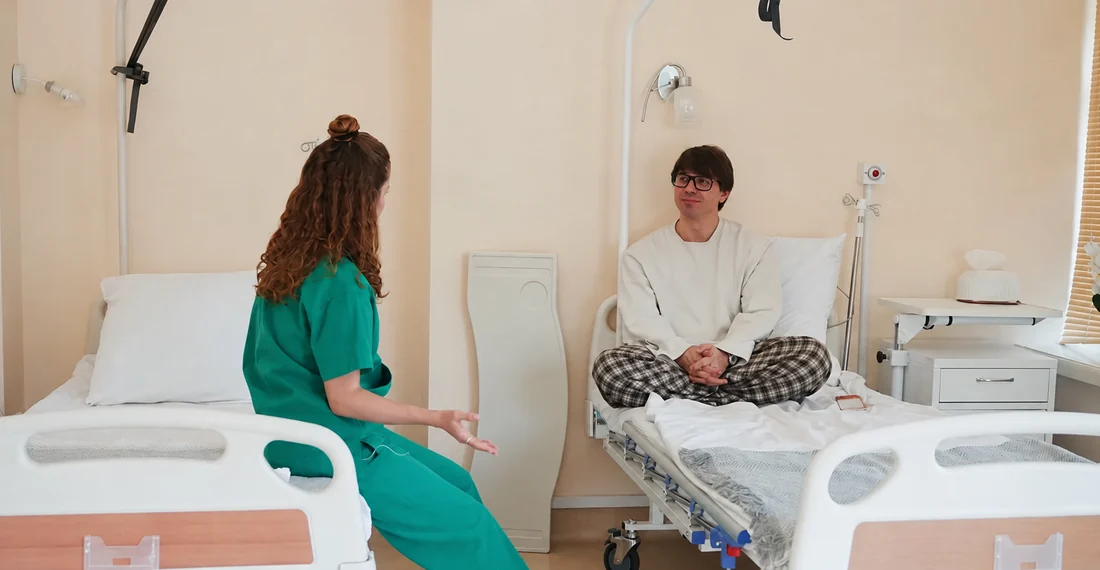
A nurse talks to a patient in a clinic ward

Message our coordinator

Free online consultation · Reply within 15 minutes

Message us on Telegram

By messaging us, you agree to our Privacy Policy
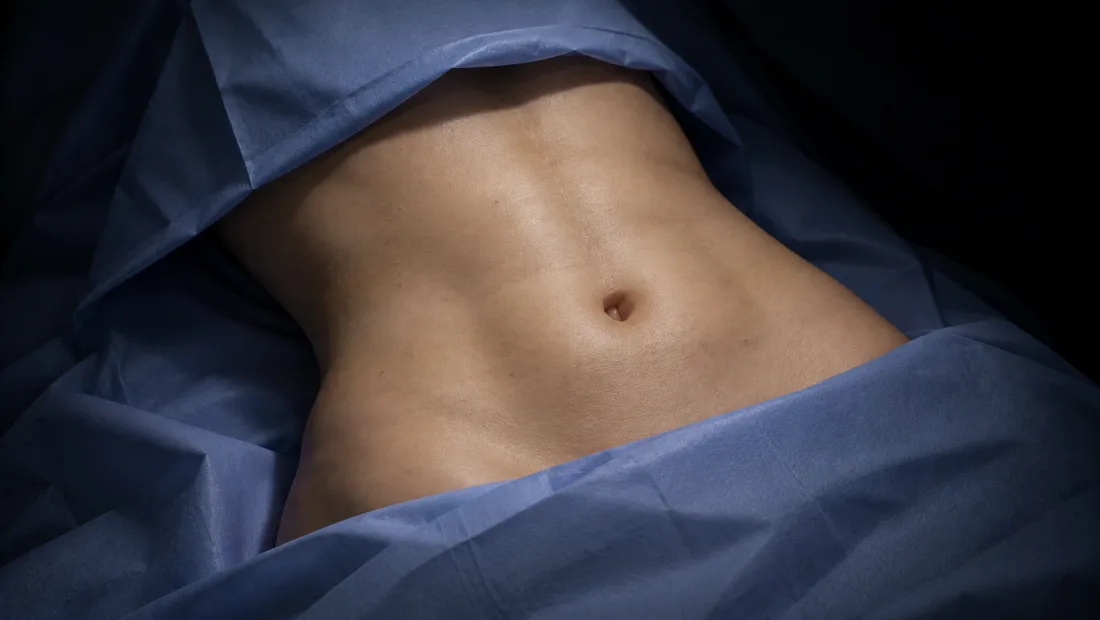
A patient's abdomen before a tummy tuck in the operating room

all inclusive

What the price includes

From preparation for surgery
to post-op check-ups.

  • All scheduled dressings
  • Scheduled post-op check-ups
  • A personal coordinator on call
  • Compression garments fitted on the day of surgery
  • A stay in a comfortable
    hospital ward with meals
  • Individual recommendations
    for recovery
  • Remote progress monitoring
    by photos

How it works

Three days at the clinic —
from preparation to discharge

An agreed correction plan, inpatient observation and post-op check-ups.

A doctor shows a patient a tummy tuck diagram on a monitor1

Consultation
and the surgical plan

The surgeon assesses your abdominal skin and muscles and checks for diastasis, listens to your wishes and chooses the right correction technique.

Paying the deposit by card at the clinic reception2

Booking the date
of surgery

We reserve a surgery date for you: the deposit can be paid by card at the clinic or online by bank transfer. The terms are fixed in the contract for medical services

A blood sample tube for tests before a tummy tuck3

Check-up before
surgery

Before surgery you complete a full lab check-up: blood tests, an ECG, a chest X-ray and reports from the required specialists.

The surgical team during the operation4

Surgery

The surgeon performs the tummy tuck with the chosen technique, repairs diastasis if needed and shapes a firmer abdominal contour.

A hospital ward at the clinic5

Inpatient stay

After surgery the patient stays for 1–3 days in a comfortable hospital ward with meals, under medical supervision.

A surgeon and a patient in the ward during recovery6

Recovery

After surgery you get a recovery programme. Check-ups at 7 days, 3 and 6 months help track your recovery.
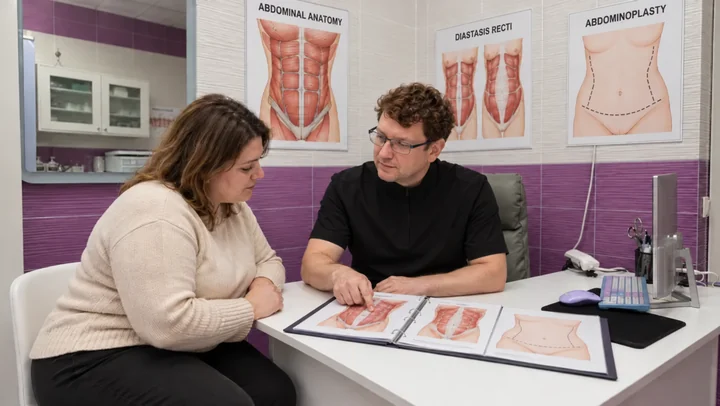
Book a free consultation — the surgeon will plan every step with you.

A doctor discusses the tummy tuck plan with a patient
Book a consultation
A doctor discusses the tummy tuck plan with a patient

How it really happens

Recovering after a tummy tuck

Straight after surgery the patient spends 1–3 days in hospital under medical supervision. Drains are usually removed on day two, and stitches after 7 days. A compression binder is worn for 1.5–2 months — it supports the abdominal wall and shapes a smooth contour. Most swelling resolves within 30 days, and office work resumes after 2–3 weeks. Sports, sauna and heavy lifting are off-limits for 2–3 months, and sleeping on your back with knees bent is advised at first. The scar matures fully by 12 months, fading and becoming barely noticeable.

Post-op check-ups

After 7 days, at 3 months and at 6 months. Until the end of the year, get a post-surgery consultation with your surgeon to review results and get more information, at the clinic's expense

Advantages

What makes patients choose City Medical Centre

A surgeon discusses the tummy tuck plan with a patient at the consultation

Just find out — you lose nothing

At the consultation we discuss your wishes and assess your abdominal skin and muscles. The surgeon explains what changes are possible, chooses the correction technique and answers your questions.

A surgeon on a video call with a patient after surgery

We stay with you after surgery

The surgeon follows your recovery and the changing abdominal contour at check-ups after 7 days, 3 and 6 months. Check-ups, dressings and aftercare advice are already included in the price of surgery.

A surgeon shows a patient a model and tummy tuck diagrams

A beautiful contour that fits your figure

We choose the correction technique based on your skin, muscles and figure. Our aim is a harmonious abdominal contour that keeps the natural proportions of your body.

A patient writes down a convenient visit time in her planner

Your schedule is our priority

We respect your time: we work 24/7, with easy booking and a personal approach — we adapt to your pace.
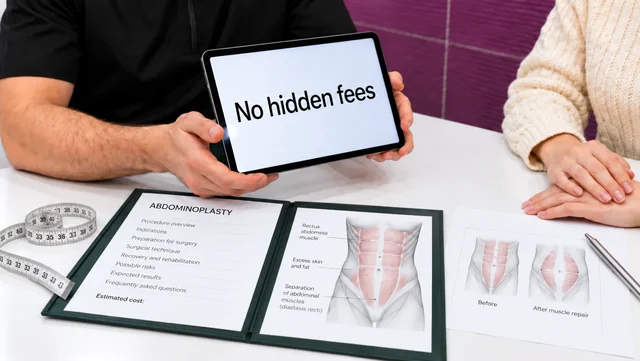
A surgeon shows a patient the fixed price of surgery with no extra charges

Fixed prices

After the consultation the surgeon defines the extent of correction, and you get a clear price for the surgery — no surprises on the way to the result you want.

A surgeon visits a patient in the hospital ward after surgery

Round-the-clock care after surgery

Recovery starts in a comfortable hospital ward under round-the-clock nursing care. The stay and meals are already included in the price.

FAQ

We answer what
people ask before booking

Tummy tuck in Alicante: techniques, stages and recovery

A tummy tuck, or abdominoplasty, is surgical tightening of the front abdominal wall that removes excess stretched skin and fat. It is not a weight-loss method and does not replace diet or exercise. For patients from Alicante, the goal is a flat abdominal contour: removing the overhanging skin-and-fat apron, repairing separated rectus muscles and, where needed, creating a new navel.

The result comes in stages. First changes show about two weeks after surgery, an interim result is visible at 1.5–2 months and the final contours form at 6–12 months. The scar keeps maturing for up to a year before it fades. Check-ups take place at 7 days, 3 months and 6 months, and until the end of the year a post-surgery consultation for patients from Alicante is at the clinic's expense.

If you are comparing tummy tuck options in Alicante, look at more than the operation itself. Here the approach includes hormone screening before surgery, tests at the clinic with no waiting, a hospital stay under medical supervision and surgeon support until the result. The cost is calculated after a free consultation and fixed in the contract. Leave a request to arrange yours.

Stories of well-known people

Well-known people who spoke openly about this operation, in their own words.

All stories about this operation →

Public healthcare, long queues and why a tummy tuck is usually planned privately

In Spain the national health system (SNS) works from a common portfolio of services, set out in Royal Decree 1030/2006. That text says techniques performed for "mere aesthetic or cosmetic improvement" are not financed. Procedures with an aesthetic purpose that have no link to an accident, an illness or a congenital malformation are also excluded from specialised care. For an adult in Alicante who wants a tummy tuck mainly to change the shape of the abdomen, this normally means the operation is arranged outside the public system. Whether a particular case has a medical side is a question for your own health provider. A coordinator in a chat cannot settle it, and we do not pretend otherwise.

The waiting-list figures explain why many people do not want to rely on the public route even when it might apply. At 31 December 2025, Plastic Surgery had the longest average wait of any specialty in the SNS: 269 days. The average across all surgical specialties was 121 days, and 21.6 % of patients waited more than six months. In the Comunitat Valenciana, 51,600 patients were in structural surgical waiting at that date, which is 9.91 per 1,000 inhabitants, with an average wait of 88 days. These figures describe whole systems and all kinds of operations. They do not predict anything for you personally. They do show that planning around a public queue is hard when you want a firm date.

A private plan starts differently. You send photos on WhatsApp or Telegram, and a doctor assesses them in a free online consultation. The price is named there and fixed in the contract before the operation, with no hidden extra charges. Coordinators answer round the clock, 24/7, so you can ask questions in the evening or at night, whenever it suits you. Nothing is booked until you confirm the plan and the dates. The doctor will also say plainly if your case can be solved without an operation.

The rest of the route is easy to picture in advance. Before surgery you complete a laboratory check-up: blood tests, an ECG, a chest X-ray and reports from the required specialists. Tests are usually valid for 10–14 days, so they should be done close to the planned date but not the day before. The operation takes 2–4 hours under general anaesthesia, followed by 1–3 days in a hospital ward with meals and medical supervision. Dressings, scheduled check-ups, a personal coordinator on call and a compression garment fitted on the day of surgery are part of the price.

The abdominal wall in the first weeks: bending, lifting and a normal working day

A tummy tuck changes how the front of your body behaves. The skin is tightened and, where the muscles are actually separated, the rectus muscles are brought together in the same operation. For this reason the first weeks are about protecting the abdominal wall. Drains are usually removed after two days and stitches after 7 days. A compression binder supports the wall and shapes the contour. At first you are advised to sleep on your back with your knees bent. Physical exertion, heavy lifting and sudden movements are not allowed for the first 2–3 weeks.

Work is where the plan most often needs thought. Office work resumes after 2–3 weeks, but that is the figure for desk tasks. Sports, sauna and heavy lifting are off-limits for 2–3 months. If your job involves carrying boxes, pushing trolleys, working with patients or children, or long hours on your feet, the real return date may be later than for an office worker. Tell the doctor exactly what a normal shift involves at the consultation. A phased return, a temporary change of duties or a conversation with your employer is much easier to arrange before the operation than during recovery.

Home life contains just as many small loads. Think about where heavy items are stored, who carries the shopping, and how laundry baskets, bags and bottled water get moved. Many of these tasks require bending or pulling. The sensible approach is to rearrange the home before the operation. Move everyday items to waist height, and agree in advance who will lift what. You do not need to invent special techniques. You need fewer situations where you must lift something heavy or twist suddenly while the tissues are healing.

Alicante sits at 3 m above sea level on mostly flat terrain, with a few low hills such as Benacantil and Serra Grossa. Once the doctor allows gentle activity, that is a point in favour of short, calm outings. Flat ground makes it easy to keep to the principle of increasing activity gradually. Sport resumes only with the doctor's approval.

The timeline helps to keep expectations realistic. The first changes appear about 2 weeks after surgery, as the main swelling subsides. Most swelling goes within 30 days. An interim result is visible at 1.5–2 months, and the final contours are assessed at 6–12 months. Check-ups take place at 7 days, 3 months and 6 months. Between them, progress is monitored remotely by photos, and your coordinator stays reachable at any hour.

Family life during recovery: children, a spouse and the order of plans

Family life is the part of recovery that people often underestimate. A toddler who wants to be picked up, a school bag, a pushchair to fold and lift into a car: each of these is a load. During the first 2–3 weeks heavy lifting is not allowed, and for the following weeks it is only gradually reintroduced. The sensible plan is to ask a spouse, a relative or a friend to take over these tasks. Arrange it before the day of surgery, not after. The 1–3 days in hospital are also easier when school runs and meals at home are already covered.

Explaining the situation to children does not need detail. It is enough to say that your tummy needs time to heal, that you cannot lift them for a while, and that cuddles on the sofa are still fine. Whether that is comfortable is something to ask the doctor, because the position and pressure matter in the first days. Sleeping on your back with your knees bent also changes how you share a bed. Think about how you will manage that for the first period.

Timing relative to pregnancy matters too. A pregnancy after a tummy tuck is possible, but it stretches the repaired muscles and skin again. For that reason, surgery is planned once the family is complete: childbirth first, then the operation. If you are still hoping for more children, a conversation with the doctor at the free consultation is worth more than any general rule. Skin that has been removed does not regrow, but the abdomen can stretch again with pregnancy or significant weight gain.

Weight deserves an honest paragraph. A tummy tuck is not a way to lose weight. Its purpose is to remove excess stretched skin and the fat apron and to restore the abdominal muscle wall. The operation is done at a stable weight. If your weight is still changing, the advice is to see a dietitian or an endocrinologist first. The 2020 European Health Survey in Spain found obesity in 16.0 % of adults and overweight in 37.6 %, so 53.6 % were above the weight considered normal. Plenty of people therefore live with changes in weight, and many consider body contouring only after a period of change. A stable weight before surgery helps keep the result. Where the case calls for it, liposuction of the flanks and waist can be added in the same operation, as lipoabdominoplasty. That means one anaesthesia and one recovery period.

Compression, scars and the Mediterranean sun

The compression binder is worn for 1.5–2 months. It supports the abdominal wall and helps shape a smooth contour. Alicante is a warm, semi-arid city. Average humidity is 65 %. July and August have maximum temperatures of 30.7 °C and 31.1 °C and minimums of 21.3 °C and 21.8 °C, and the recorded maximum is 42.0 °C. January is the coolest month, with a maximum of 17.2 °C and a minimum of 6.7 °C. Wearing a binder during a hot, humid month is simply more tiring than in January. If you plan the operation for a warmer period, think about cool rooms, loose clothing over the garment and rest in the shade. Follow the doctor's instructions on how long to wear it and how to care for your skin underneath.

The scar is the other part of the plan that is shaped by the climate. A classic tummy tuck leaves an incision across the lower abdomen from hip to hip, below the underwear or swimsuit line. A mini tummy tuck leaves a much shorter one. It fades and thins with time, and by 12 months it is fully mature and barely noticeable. The city receives about 3,014 hours of sun a year: 345 hours in July and 175 in December. During the first year after an operation you will pass through bright months whichever season you choose, so sun protection is a topic for the check-ups, not for guesswork. Tanning beds are excluded for at least a month, and the doctor will tell you at the 7-day, 3-month and 6-month check-ups how to protect the scar.

Beaches are an obvious question in a city with this much coastline. The municipality includes San Juan, the urban Postiguet, La Almadraba, Albufereta, Agua Amarga and El Saladar, and the island of Tabarca, about 8 nautical miles to the south, belongs to it as well. After a tummy tuck, pool and steam bath are excluded for at least a month, together with sauna and alcohol. Sport comes back gradually, and sauna and heavy lifting stay off-limits for 2–3 months. It is sensible to apply the same caution to the sea and to ask the doctor when the incision is ready. The sea itself ranges from a minimum of 14 °C in February–March to 26 °C in August, with an annual average of 19.6 °C.

Heat, sun and a healing wound do not mix well. Plan your first weeks so that you can be at home in a cool room, and wait for the doctor's approval before you spend a full day outdoors. The dressings, check-ups and recovery advice are already in the price, so you can ask the coordinator at any hour how to handle a particular day.

Choosing a month: a quiet winter, a spring plan or the weeks after the fireworks

There is no universal best month for a tummy tuck. There is a month that fits your calendar. Start with the fixed periods: office work after 2–3 weeks, a compression binder for 1.5–2 months, sports, sauna and heavy lifting off-limits for 2–3 months, check-ups at 7 days, 3 months and 6 months, and the final result at 6–12 months. Put the date of surgery on a calendar and count forward. This turns a general wish into a clear picture of what you will be doing at each stage.

Here is one example. Suppose the operation is on 12 January 2027. Stitches come out around 19 January. Office work becomes possible between late January and early February. The binder is worn until roughly late February or mid-March. The restrictions on sport, sauna and heavy lifting last until mid-March to mid-April. The 3-month check-up falls in mid-April and the 6-month check-up in July. The final result and scar are then assessed from July 2027 onwards, through to January 2028. January is the coolest month, with a maximum of 17.2 °C, so the binder is more comfortable. The sea is also at its coolest period, with 14 °C reached in February–March. The first bright months of the year then arrive when the scar is still maturing, which you can discuss at the 3-month check-up.

A spring date puts summer events on the calendar. The Hogueras de San Juan run from 19 to 24 June and are a Festival of International Tourist Interest. A few days later come five nights of fireworks competitions on Postiguet beach. If surgery were on 13 April 2027, the 2–3-month restriction would end between mid-June and mid-July. The festival would therefore fall near the end of that window. The binder would already be off by then, but sudden movements and heavy lifting would still be best avoided. If you do not want to spend the celebrations in recovery, choose a date well before or well after them.

Autumn has its own logic. September (51.1 mm) and October (33.1 mm) are the wettest months, and annual rainfall is 284.5 mm over 34.7 days. July is the driest, with 3.2 mm. December receives only 175 hours of sun, so a December operation puts the first weeks of recovery in the least sunny month. This is a calm start, but the later months of scar maturation will still include the bright season. None of these patterns is better than the others in general. The coordinator can compare two or three possible dates with your work, family and holidays, 24/7, and the exact date is fixed with the doctor and the contract.

Will the public health system in Alicante pay for a tummy tuck?

Usually not when the operation is done to improve appearance. The common portfolio of services of the national health system does not finance techniques with the sole purpose of "mere aesthetic or cosmetic improvement". It also excludes aesthetic procedures that have no connection with an accident, an illness or a congenital malformation. Whether a specific case has a medical component is something to clarify with your own health provider. At the free online consultation the doctor can describe what your abdomen looks like and what the operation would change, and the price is fixed in the contract before surgery.

Is waiting for a public plastic surgery appointment a realistic alternative?

It depends on your situation, but the figures are worth knowing. On 31 December 2025, Plastic Surgery had the longest average wait in the national health system, 269 days, while the average across surgical specialties was 121 days. In the Comunitat Valenciana the average surgical wait was 88 days, with 51,600 patients waiting. These are averages for all patients and all procedures, so they do not predict your own wait. If you want a defined date, a private plan lets you agree the date and the contract terms in advance.

How will a compression binder feel in Alicante's summer heat?

It is more tiring in hot, humid weather than in winter. July and August have maximum temperatures of 30.7 °C and 31.1 °C and minimums above 21 °C, and average humidity is 65 %. The binder is worn for 1.5–2 months and supports the abdominal wall, so you should not simply remove it because of the heat. Plan cool rooms, light clothing over it and rest in the shade, and ask the coordinator about skin care under the garment. If the heat worries you, choose an operation date that places most of the binder period in cooler months.

Can I go to the beach or the pool while I recover?

Not at first. After a tummy tuck, pool, steam bath, sauna, tanning beds and alcohol are excluded for at least a month, and sauna, sport and heavy lifting stay off-limits for 2–3 months. Sport resumes gradually and only with the doctor's approval. The sea in Alicante ranges from 14 °C in February–March to 26 °C in August, but the temperature is not the main question. The question is whether the incision is ready. Ask the doctor at the 7-day and 3-month check-ups, and send photos if you are unsure.

How should I think about the scar and the strong sun here?

The city has about 3,014 hours of sun a year, with 345 hours in July and 175 in December, so the scar will meet bright months whichever date you choose. A classic tummy tuck leaves a scar from hip to hip, below the underwear or swimsuit line, and a mini tummy tuck leaves a shorter one. The scar becomes fully mature by 12 months, when it fades and is barely noticeable. Tanning beds are excluded for at least a month. Ask the doctor about sun protection at the check-ups at 7 days, 3 months and 6 months.

I work with my hands or on my feet. How long until I can go back?

The figure for office work is 2–3 weeks. Sports, sauna and heavy lifting stay off-limits for 2–3 months, so a physical job may need a longer plan. During the first 2–3 weeks heavy lifting, physical exertion and sudden movements are not allowed. Describe your tasks to the coordinator and the doctor at the consultation: lifting, bending, hours standing and so on. They can then tell you what is realistic and whether a gradual return or temporary change of duties is worth arranging with your employer.

If my operation falls near the Hogueras de San Juan, should I plan differently?

It is worth looking at the calendar. The Hogueras run from 19 to 24 June, with fireworks competitions on Postiguet beach a few days later. If surgery took place on 13 April 2027, the 2–3-month restriction would end between mid-June and mid-July, and the compression binder would already be off. The celebrations would fall near the end of the period when sudden movements and heavy lifting are best avoided. You can choose a date well before or well after, and the coordinator will compare options with you, 24/7.

How do I prepare for tests and the date while living in Alicante and starting online?

Start by sending photos on WhatsApp or Telegram for the free assessment. After you confirm the plan, a date is reserved and the terms are fixed in the contract. Before surgery you complete blood tests, an ECG, a chest X-ray and reports from the required specialists. Smoking, alcohol and medicines affecting blood clotting are stopped 7–10 days before the operation. Tests are usually valid for 10–14 days, so book them close to the date, but not the day before. The doctor gives the exact list at the consultation.