



























Message our coordinator
Free online consultation · Reply within 15 minutes
Message us on TelegramMessage us on WhatsAppBy messaging us, you agree to our Privacy Policy

Facelift and neck lift in Cordoba: price and key facts
Facelift for patients from Cordoba at City Medical Centre starts at €2,150 (from $2,400). The first online consultation is free; the doctor names the final price and it is fixed in the contract.
- Price
- €2,150 (from $2,400)
- Anesthesia
- general (inhalation)
- Recovery
- about 2 months to full recovery
- Final result
- 3–6 months after surgery
- How it works
- Send photos on WhatsApp or Telegram, get a free doctor assessment and the price, then confirm the plan and dates before anything is booked.
How it works · Facelift prices
Information current as of 24 October 2026

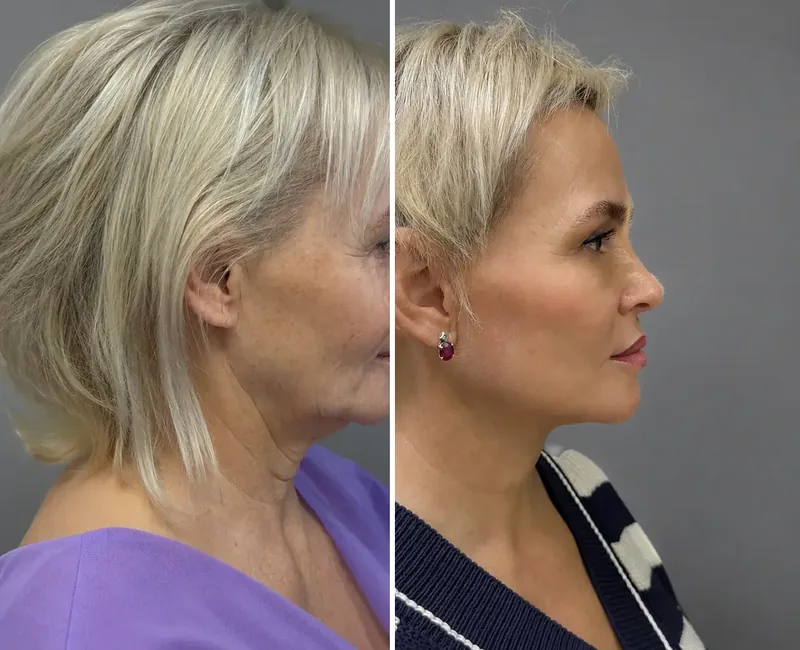
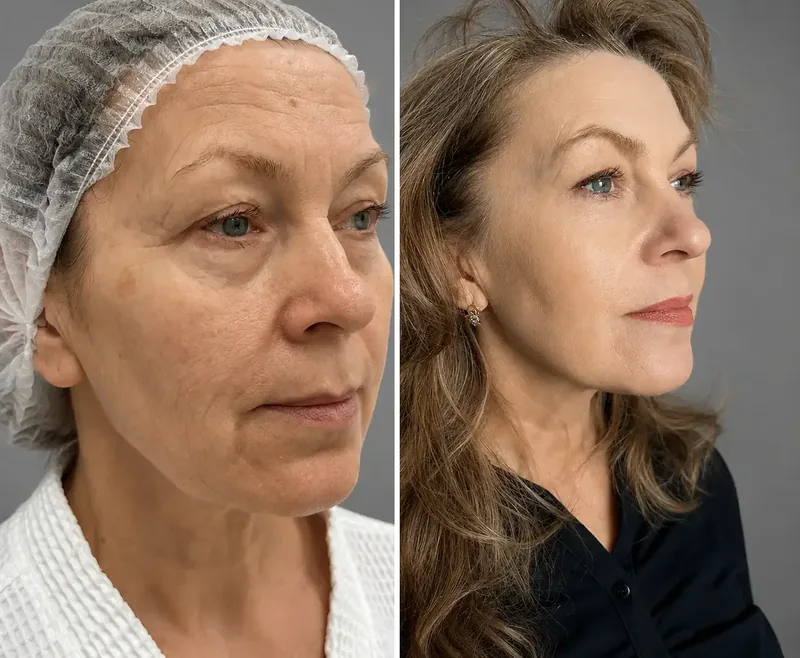
50 years
9 months
SMAS facelift
58 years
8 months
SMAS facelift
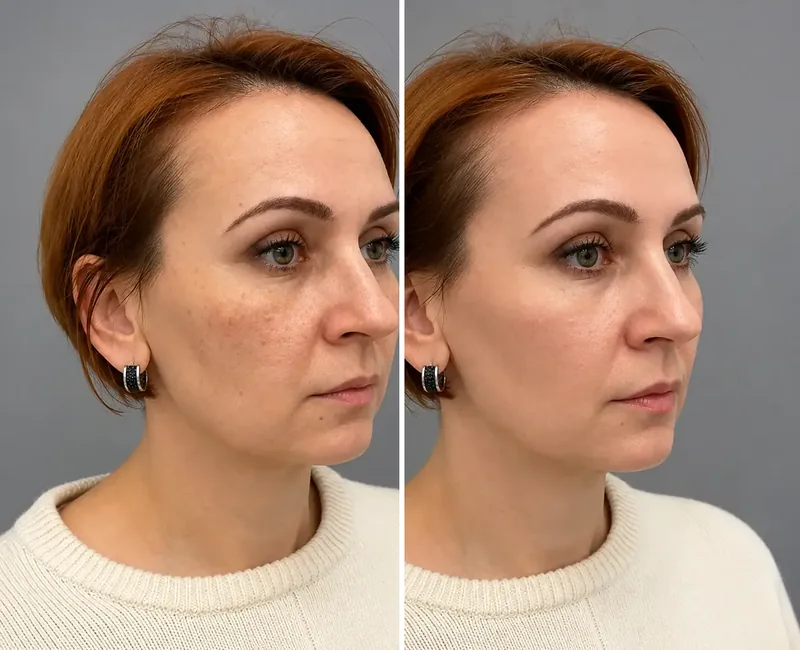
34 years
5 months
SMAS facelift
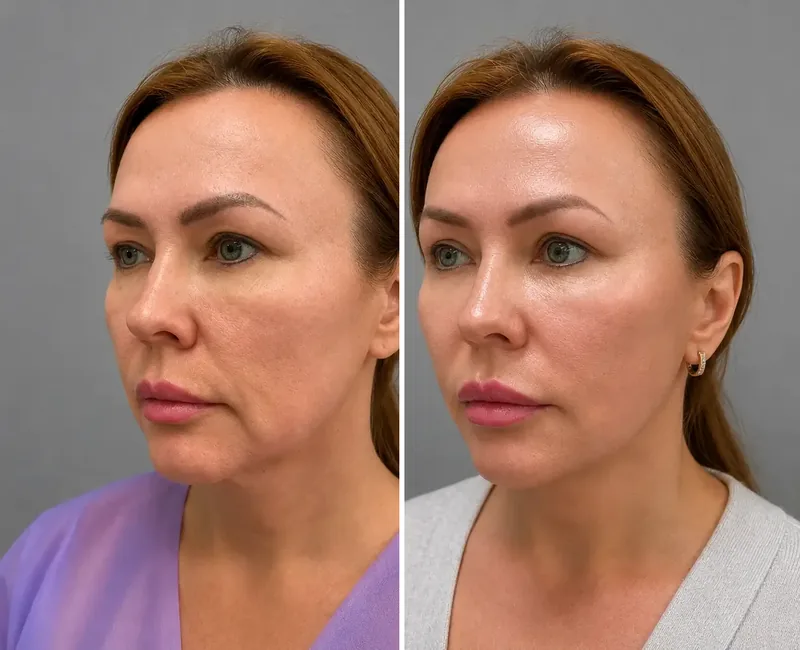
32 years
7 months
SMAS facelift
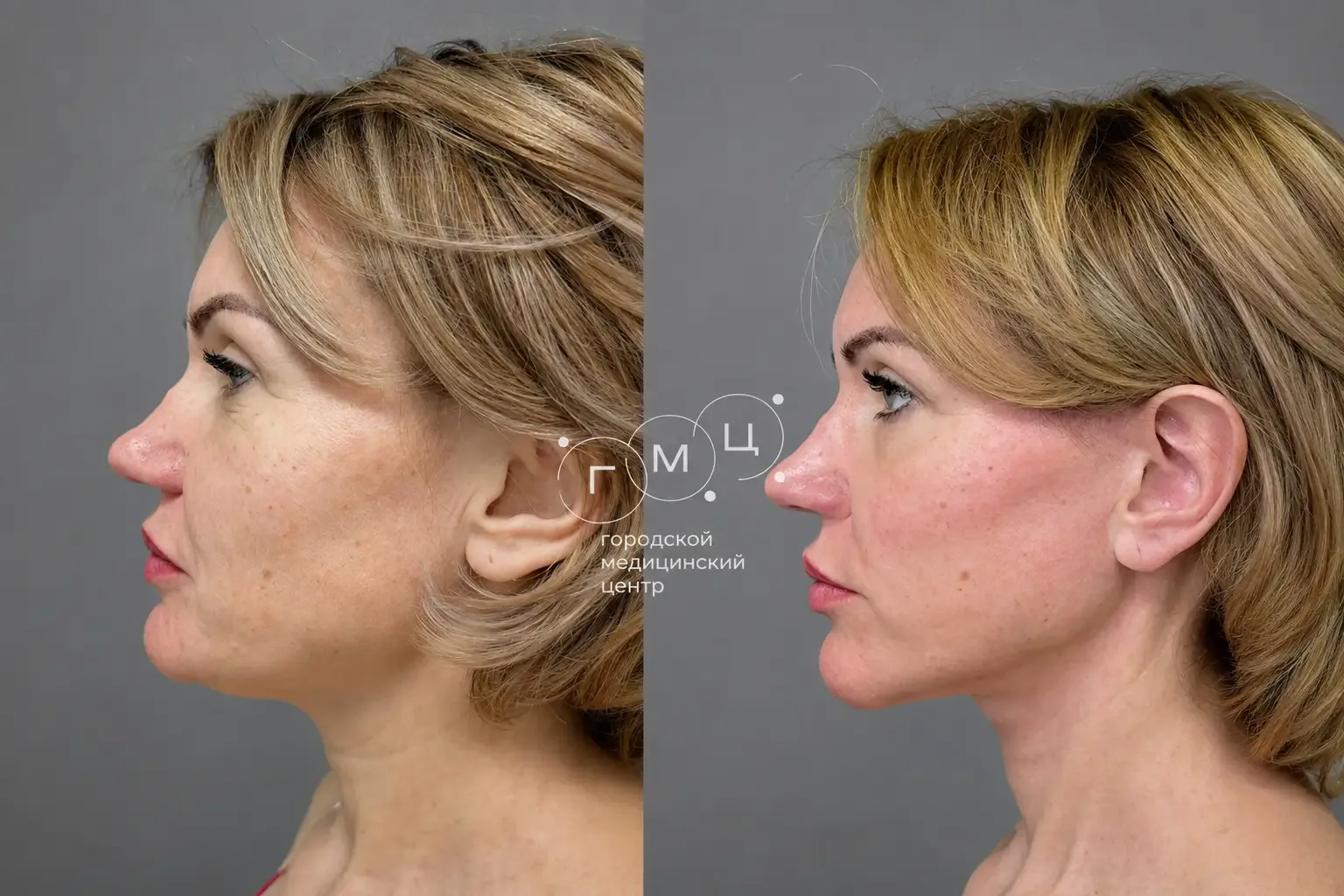
40 years
6 months
SMAS facelift
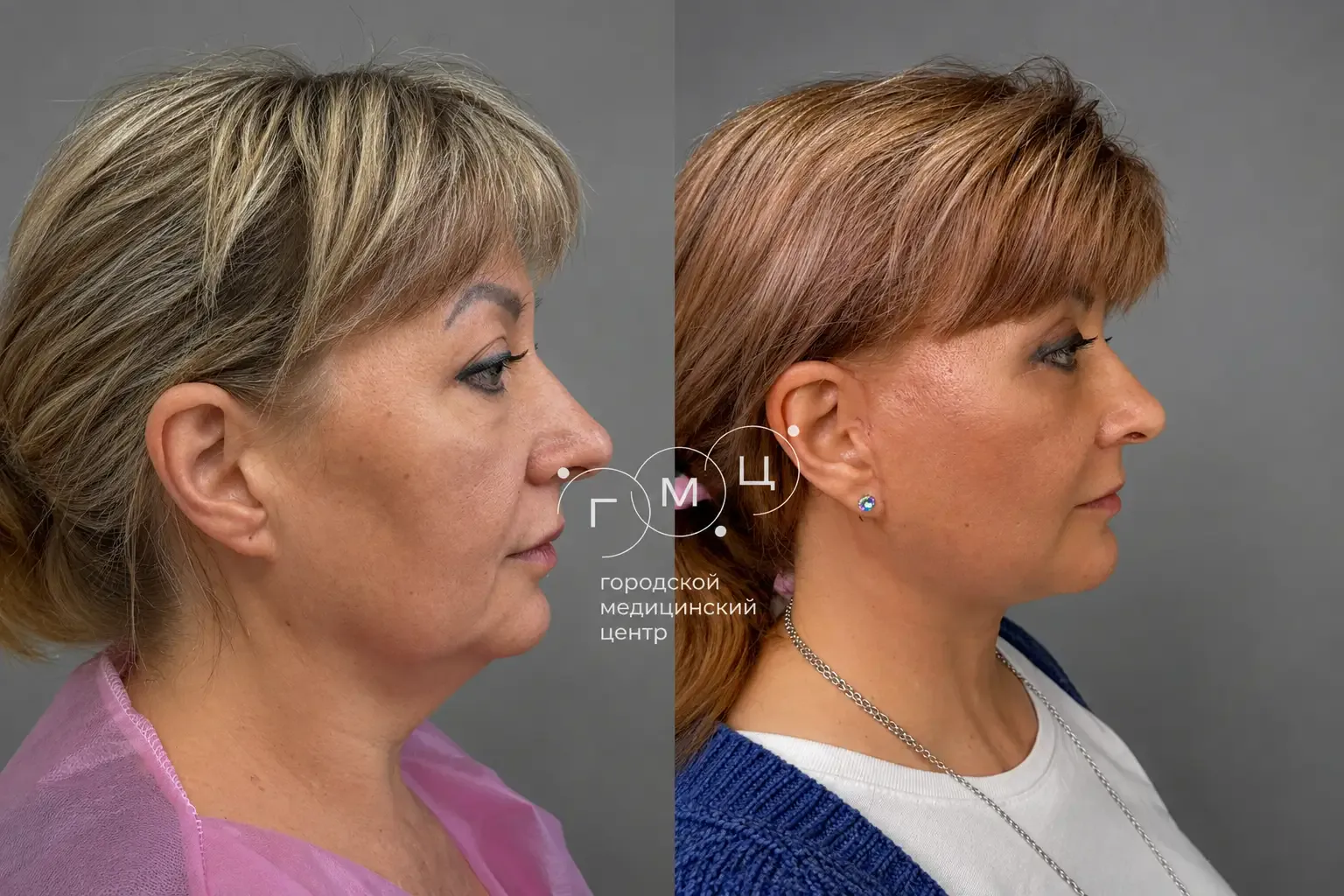
45 years
8 months
SMAS facelift
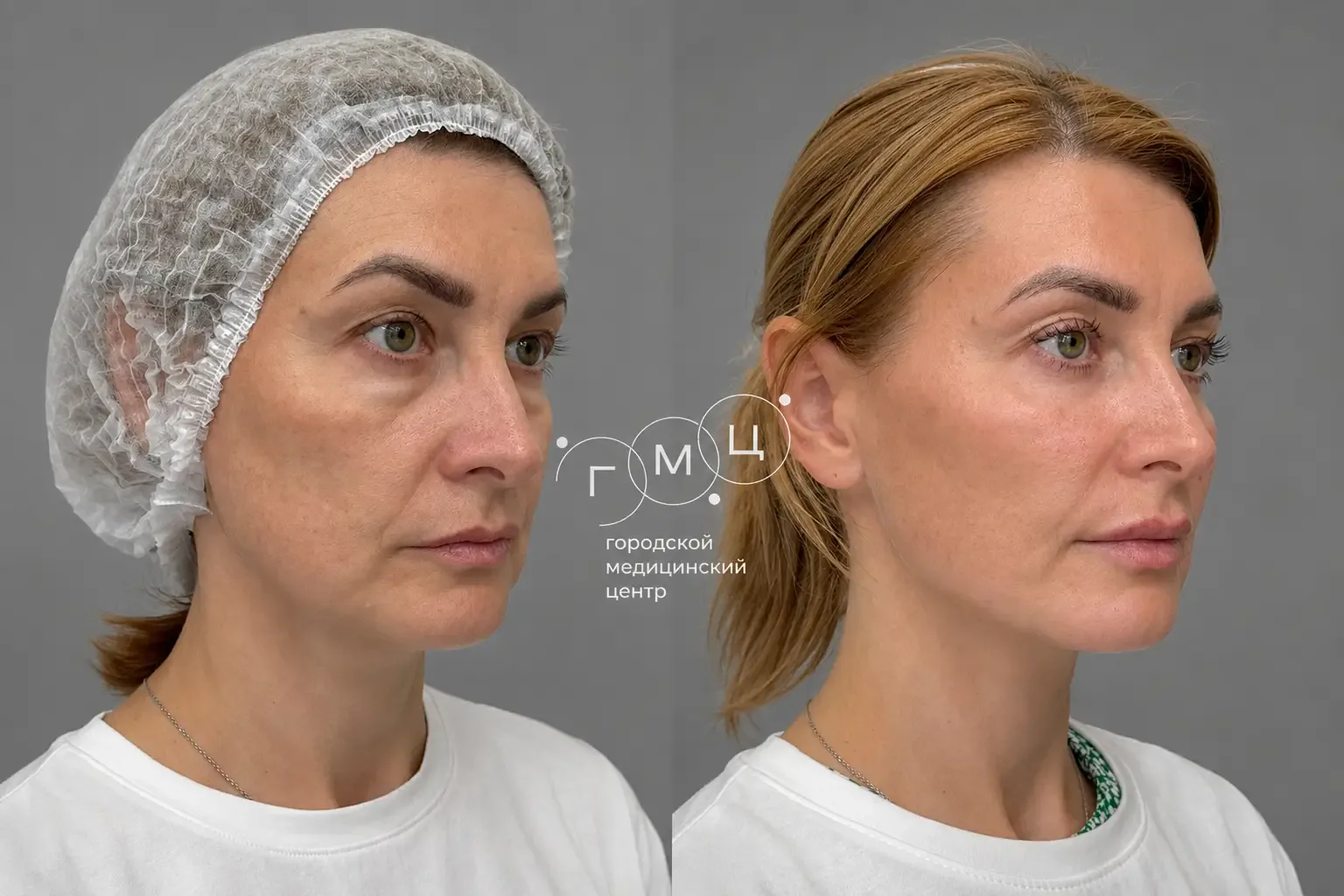
38 years
5 months
SMAS facelift
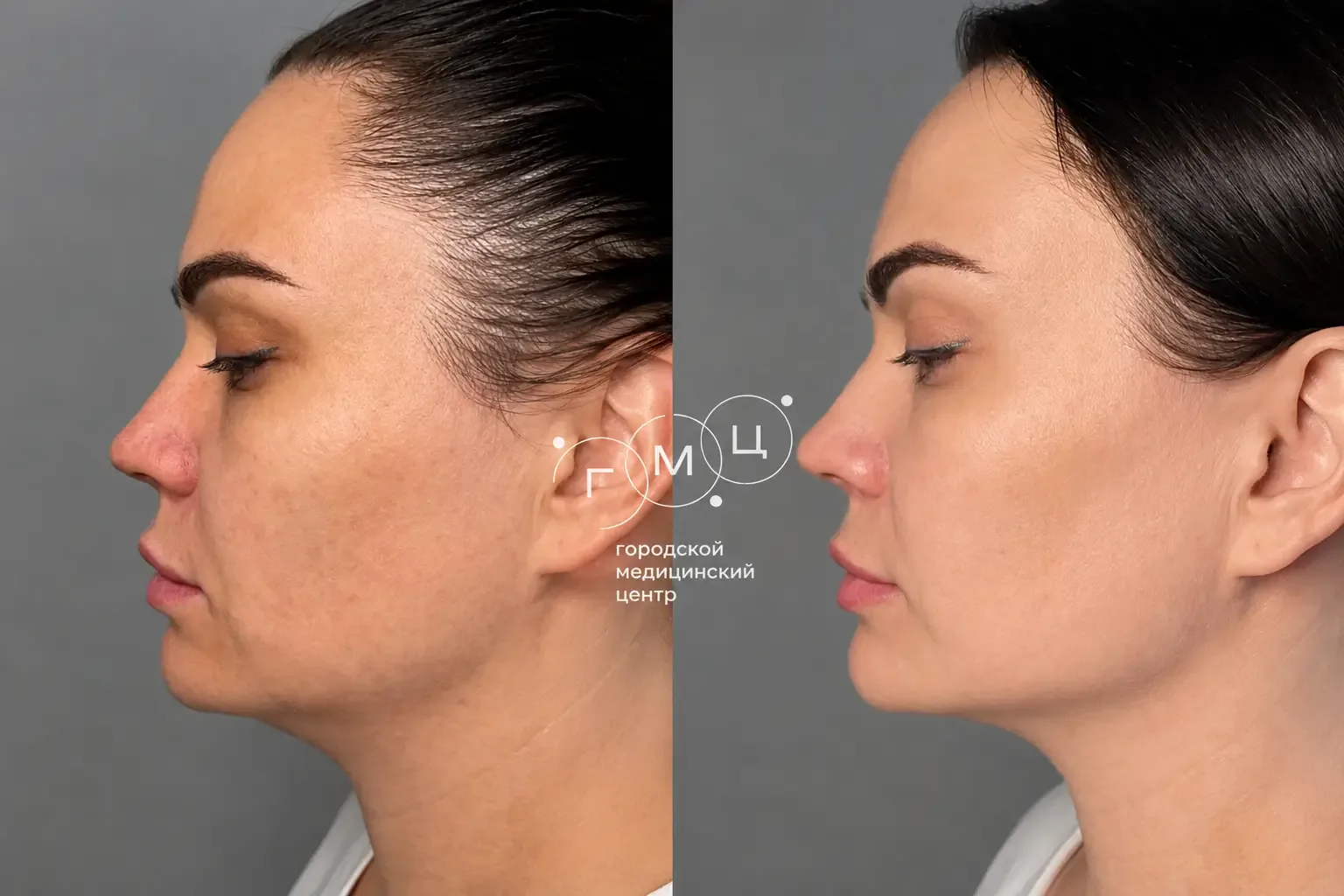
33 years
6 months
SMAS facelift
50 years
9 months
SMAS facelift
58 years
8 months
SMAS facelift
34 years
5 months
SMAS facelift
32 years
7 months
SMAS facelift
40 years
6 months
SMAS facelift
45 years
8 months
SMAS facelift
38 years
5 months
SMAS facelift
33 years
6 months
SMAS facelift
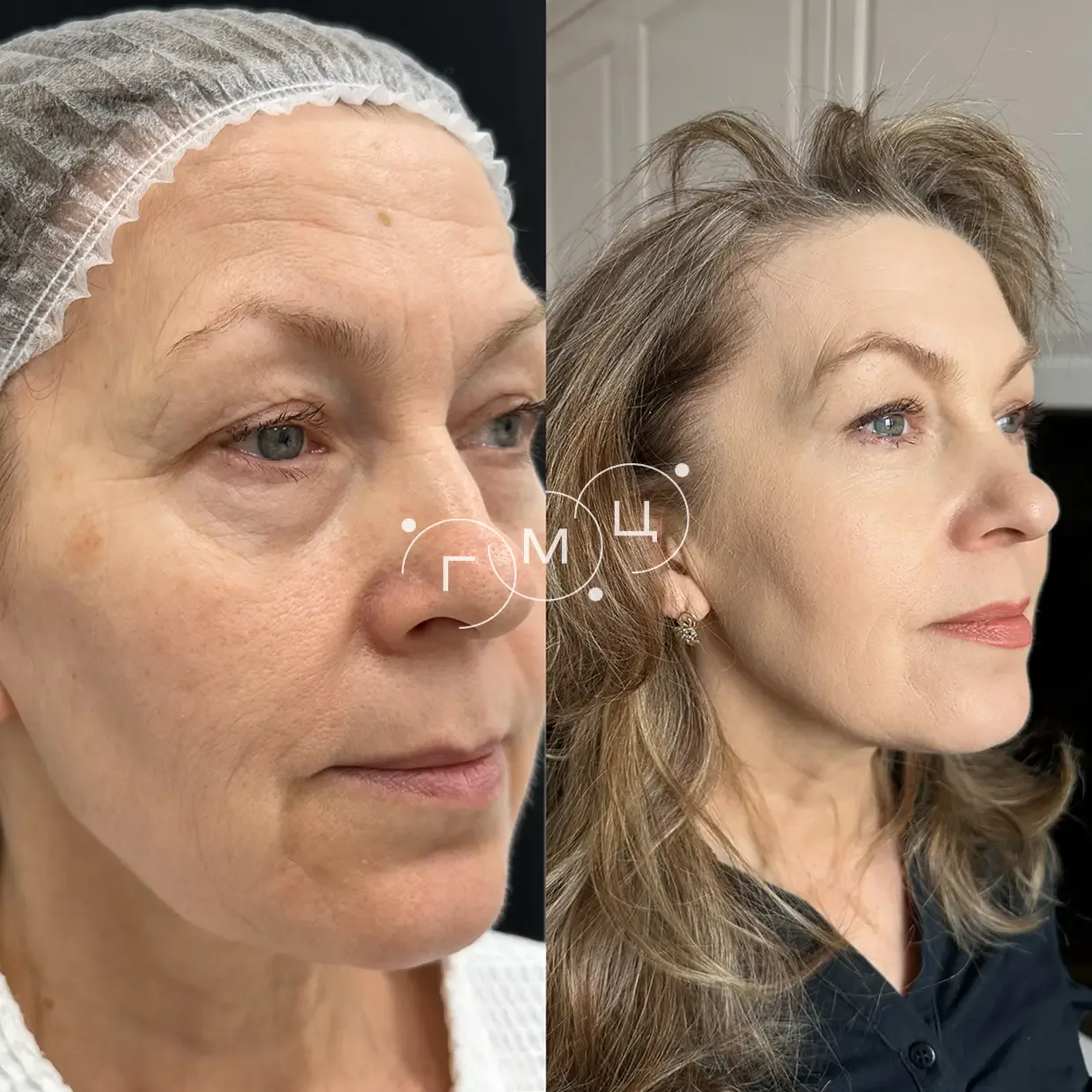

Marked sagging across the face and neck
The jawline is blurred, with jowls
Double chin, loose skin on the neck
Deep nasolabial folds and marionette lines
A heavy, tired look from drooping brows
Skin firmness lost significantly after 40
Wanting a long-term result (7–10 years)

Being under 30
An acute skin inflammation
Pregnancy or the breastfeeding period
A severe cardiovascular condition
A blood-clotting disorder
Cancer
Decompensated diabetes
What Cordoba residents ask about a facelift
What changes after a facelift? The lower-face contour becomes crisp, the cheeks are lifted, the chin line is clean without a double chin and nasolabial folds soften. Brows rise and the eyes look more open. The aim for patients from Cordoba is a younger, fresher look without an overdone effect or a mask-like appearance. One surgery gives a complete result, and a full lift keeps it for up to 10 years.
Follow-up does not end at discharge. Throughout the first year, your plastic surgeon monitors how the face settles and checks the result until it is final. Personal support is provided before and after surgery. When combined procedures such as eyelid surgery or double-chin liposuction are planned, the surgeon sets their scope in advance. For patients from Cordoba, every step is agreed at the consultation.
If you are comparing facelift prices in Cordoba, check what each offer includes and how long the result lasts. Here the price starts from $2,400 (≈ €2,150) and covers anaesthesia, the stay, meals, 24/7 monitoring and a year of follow-up, while a surgical SMAS lift holds for 7–10 years. The final amount is fixed at the consultation. Book yours for free via the form.
Stories of well-known people
Well-known people who spoke openly about this operation, in their own words.
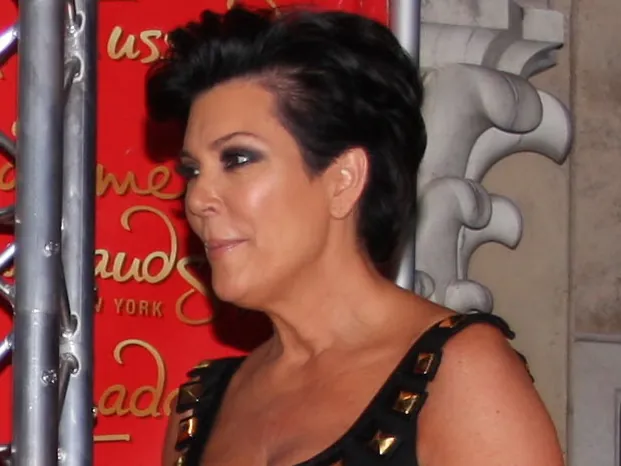 Kris Jenner’s facelift: “I love my facelift”Kris Jenner said she had a facelift about 15 years ago and a refresh before turning 70 — and that she loves it. How a SMAS facelift and recovery work.
 Did Vicki Gunvalson have a facelift? Yes, and she showed the result herselfVicki Gunvalson had a facelift in May 2018 after deciding fillers no longer looked like her. Her own words, how a facelift works and recovery.
 Keltie Knight’s facelift: why she decided to “just own it”Keltie Knight had a facelift in 2023 at 41 and chose to talk about it openly. What she said, how a SMAS facelift works and what recovery looks like.
 Did Linda de Mol have a neck lift? Yes, and she wrote about it herselfLinda de Mol wrote in LINDA. in 2025 that she had a neck lift. What she said, why she chose to be open, and how a face and neck lift works today.
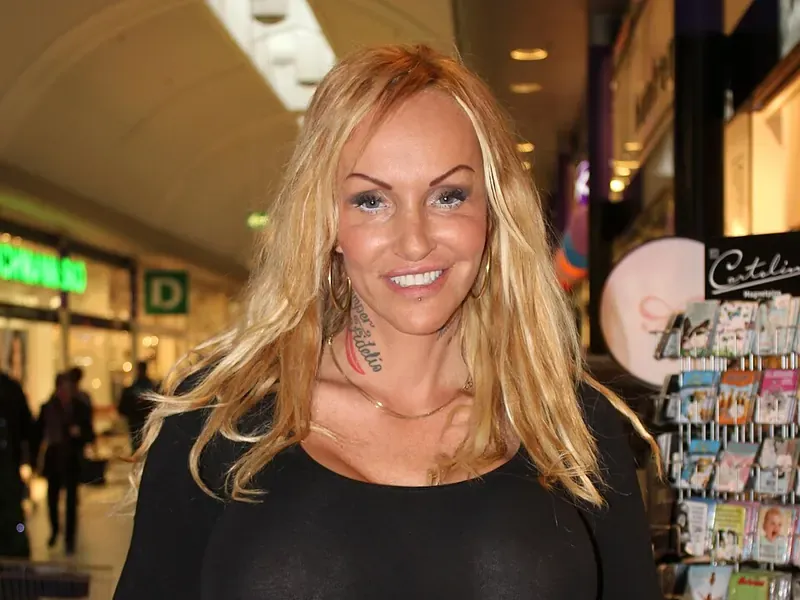 Linse Kessler and her facelifts: what she said herselfDanish reality star Linse Kessler has said openly that she has had several facelifts. Her words, how a modern facelift works and what recovery involves.
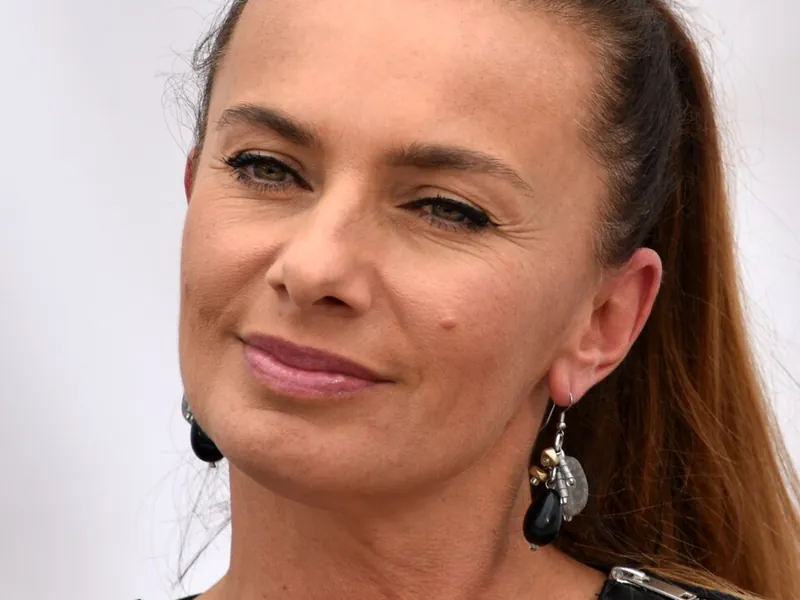 Did Alice Bendová have a facelift? Yes, and she explained why herselfAlice Bendová confirmed a deep plane facelift in September 2026. Her words, how a facelift works, who it suits and what recovery looks like.
Facelift in Cordoba: price and what is included
Prices are in US dollars; the amount in brackets is an approximate conversion to EUR at the rate of 02.10.2026. The final price is fixed in your contract.
- Faceliftfrom $2,400 (≈ €2,150)
What is a SMAS facelift?
It is a face lift that tightens the deep SMAS layer under the skin, not only the skin itself, so the lower face, jawline and neck stay firmer for longer. The result lasts about 7–10 years.
How much does a facelift in Cordoba cost?
Prices start from $2,400 (≈ €2,150). The surgeon sets the final price at the free consultation, and it is fixed in the contract, with no hidden extras.
What is included in the price?
A one-to-one consultation, the medical team, anaesthesia, inpatient care with meals, 24/7 monitoring and twelve months of follow-up by the surgeon.
How do I get my exact price?
Message us on WhatsApp or Telegram using the buttons below. A coordinator will answer your questions and book a free consultation where the doctor names the exact price.
By messaging us, you agree to our Privacy Policy
2,990 hours of sunshine and the skin of the face
Cordoba sits in the Guadalquivir depression, and its sunshine record is hard to ignore: about 2,990 hours a year, which is 66 % of the hours that are theoretically possible. July alone brings 372 hours, while December has 161. For anyone considering a SMAS facelift, this changes how the conversation with the doctor should start. Skin that has spent decades under a high sun index is not the same canvas as skin from a cloudier climate, and the consultation is the moment to talk about it openly.
A SMAS facelift works on three levels. The skin flap is lifted and redraped, the fat of the cheeks and lower face is redistributed, and the muscle and fascia layer is lifted and fixed. In a sunny city the first level deserves attention in particular. Send clear daylight photos on WhatsApp or Telegram, from the front and both sides, with no make-up and the hair pulled back. The doctor can then judge the texture of the skin and the depth of the folds, and explain which of the four available types suits you: the standard SMAS lift, the full circular lift, the lift of the lower face and neck, or the endoscopic lift of brow and temple.
Humidity is another local detail. In July the relative humidity averages 38 %, in December 78 %. Dry summer air is one more reason to ask the doctor how to care for the skin during the first weeks. Ask only about the habits that matter for you: how to protect the face outdoors, what to avoid, and when you may return to your usual routine. Those instructions come from the operating doctor, who follows each patient for the whole first year, so there is no need to improvise from forums.
A last point for people who spend a lot of time outdoors. A facelift repositions tissues, but it does not change how the skin reacts to the sun. The service describes results of 7–10 years, up to 10 years for the most complete options, and the doctor will explain honestly what depends on the operation and what depends on your own habits.
Choosing a season: 37 °C in July, 15 °C in January, rain in the autumn
The long-term climate averages show how much Cordoba's seasons differ. July and August are the warmest months, with an average maximum of 37.1 and 37.0 °C and minimums of 19.1 and 19.6 °C. January is the coldest, with a maximum of 15.2 °C and a minimum of 3.7 °C. The record high is 46.9 °C, recorded on 13 July 2017 and again on 14 August 2021, and the record low is −8.2 °C, from 28 January 2005. The decision about when to have a facelift is partly a decision about which of these conditions you would rather live through during the first days.
The first stage of recovery lasts 7–10 days: rest, a compression bandage and reduced physical activity. A bandage around the face and neck is easier to tolerate on a January afternoon with a maximum of about 15 °C than on a day of 37 °C. Neither season is simply right or wrong. Summer offers long light evenings and quiet weeks for many people, but heat makes the early days less comfortable. Winter makes it easier to cover the face with a scarf or a high collar without looking out of place. The doctor will tell you what to avoid in either case.
Rain also matters. Annual precipitation is 572.9 mm over 55.1 days, and the wettest months are December (90.7 mm), November (79.2 mm) and October (78.7 mm). July is almost completely dry, with 0.5 mm. In the wet months, short walks may need planning, but there is little temptation to spend hours in strong sun. Discuss with the coordinator which of these trade-offs matters more for your own routine.
Swelling and bruising usually fade in 2–4 weeks, and the first clear changes appear after 3–4 weeks. The final look of the face arrives 3–6 months after the operation. Counting back from the date when you want to look your best is therefore more useful than picking a month because the weather is pleasant. The coordinators answer 24/7, so these calculations can be done in the chat on any day.
Planning around the Feria, the academic year and ordinary working weeks
Cordoba's calendar has fixed points that people tend to plan around. The Feria de Nuestra Señora de la Salud takes place in the last full week of May, and the Festival of the Cordoba Patios was declared UNESCO World Heritage in 2012, with its centenary celebrated in 2021. Anyone who wants to look fresh at an event like this will plan backwards, and with a SMAS facelift the arithmetic is quite specific.
Take late May 2027 as an example. A free online consultation in November 2026 leaves time to send photos, receive the doctor's assessment and agree the plan before anything is booked. If the operation then takes place in winter, the 7–10 days of rest, the 2–4 weeks of swelling and bruising and the roughly 2 months of full recovery all fit comfortably before spring. The final look, which arrives 3–6 months after the operation, would then be taking shape around the time of the festivities. This is only an illustration of how to count. The real dates are set with the doctor.
The city also has two universities, the University of Cordoba, founded in 1972, with about 21,000 enrolled students, and Loyola Andalucía. For lecturers, administrators and anyone whose work follows the academic year, the quiet weeks between terms may suit a period of reduced activity better than a busy examination period. For people in other professions the logic is the same: look at your own calendar for presentations, family events and meetings, and keep the first two or three weeks as clear as you can.
The question of when you will look presentable again has no single answer, and it is better not to promise one. The text of the plan sets out the stages: the first days of rest, swelling and bruising that fade over 2–4 weeks, first visible changes after 3–4 weeks, and complete recovery after about 2 months. How quickly an individual returns to public life depends on skin, age, the scope of the operation and whether it is combined with eyelid surgery, rhinoplasty or double-chin liposuction. The doctor decides the combined scope at the consultation, and it is wise to ask how it changes the schedule.
Public waiting lists and why a cosmetic facelift stays outside them
People in Andalusia often compare private options with the public health system, so it helps to have the numbers in front of you. On 31 December 2025, Andalusia had 199,950 patients on structural surgical waiting lists, which is 23.51 per 1,000 inhabitants, with an average wait of 173 days. The national average was 121 days. Across the national health system, plastic surgery was the specialty with the longest average wait, 269 days.
The more important point is a legal one. The common portfolio of services of the national health system, set out in Royal Decree 1030/2006, does not fund techniques whose purpose is mere aesthetic or cosmetic improvement. Procedures with an aesthetic purpose that are unrelated to an accident, an illness or a congenital malformation are excluded from specialised care. A facelift performed to restore the contours of the face and neck falls into that group, so queueing for it in the public system is not a realistic route, and the waiting-list figures above describe other kinds of operations.
The same decree treats breast prostheses and skin expanders as reconstructive implants, but not when they are used in cosmetic surgery unrelated to accident, illness or malformation. The principle is the same: the purpose of the procedure decides how it is classified. This is useful background if you are trying to understand why a facelift is discussed in a private consultation and not in a public one.
What the waiting-list figures do show is the value of a schedule you control. After a free online consultation you receive the doctor's assessment and the plan, and you confirm the dates before anything is booked. The coordinators reply within 15 minutes in the chat, and the contract fixes the final price and the scope. The waiting time that matters for the facelift is the recovery time, not a place in a queue.
A wide municipality, one river and a consultation from your own sofa
Cordoba is a large municipality. It has about 324,902 inhabitants according to the 2024 figure, and 354,202 in the metropolitan area in 2022. It covers about 1,253 km2, so a short trip in one direction can be long in another. The Guadalquivir crosses the city from east-northeast to west-southwest, mostly along its right bank. For a medical consultation this geography is simply a reason to value an online format: the doctor looks at your photos and speaks with you without anyone needing to cross the city.
Preparing for the conversation is simple. Photograph the face in even daylight from the front, from both sides and at three-quarter angles, and add a photo of the neck. Write down any chronic illnesses and the medicines you take. The contraindications are listed clearly: age under 30, acute skin inflammation, pregnancy and breastfeeding, severe cardiovascular conditions, problems with blood clotting, cancer and decompensated diabetes. People with chronic conditions should speak to a doctor before anything else.
National health survey data show why this step is not a formality. In the 2020 European Health Survey, the most commonly diagnosed chronic problems among people aged 15 and over in Spain were high blood pressure (19.0 %), high cholesterol (15.3 %) and arthrosis (14.4 %). Many adults therefore take regular medication, and the doctor needs the full list in order to assess the operation and anaesthesia safely. Be precise rather than reassuring.
The operation itself is performed under general inhalation anaesthesia, so there is no pain during it. In the first days discomfort and a feeling of tightness may occur, and the doctor prescribes medication for them. The operating doctor follows you for the first year until the final result. Questions between consultations can go to the coordinators, who answer round the clock on WhatsApp and Telegram, and you can send photos directly in the chat.
Is the strong sun in Cordoba a problem for choosing a facelift?
It is not a barrier, but it is a subject for the consultation. Cordoba has about 2,990 hours of sunshine a year, and the skin's condition influences how the doctor plans the work on the skin flap. Send clear daylight photos so the doctor can assess the skin, and ask for instructions on protecting the face in the first weeks.
Which months in Cordoba are easier for the first days of recovery?
It depends on what you find harder. The first 7–10 days involve rest and a compression bandage. July and August have average maximums of 37.1 and 37.0 °C, while January has a maximum of 15.2 °C and a minimum of 3.7 °C. The rainiest months are October, November and December. Discuss your own preferences with the coordinator.
How far ahead should I plan if I want to look fresh for the Feria in late May?
Count backwards. Swelling and bruising fade in 2–4 weeks, the first clear changes appear after 3–4 weeks, full recovery takes about 2 months and the final look arrives 3–6 months after the operation. A consultation in November 2026 leaves plenty of time to agree the dates before anything is booked. The doctor confirms the real schedule.
Can I be seen in public during the Patios festival or other events soon after the operation?
The first 7–10 days are for rest, so public events in that period are not realistic. After that, swelling and bruising continue to fade over 2–4 weeks. How quickly you feel ready depends on you and on the scope of the operation, so ask the doctor during the consultation rather than relying on a general answer.
Does the public health system cover a facelift for people living in Cordoba?
Not when it is done for aesthetic reasons. Royal Decree 1030/2006 excludes techniques whose purpose is mere cosmetic improvement, and procedures with an aesthetic aim unrelated to an accident, illness or congenital malformation are outside specialised care. That is why the facelift is arranged privately, starting with a free online consultation.
Is the consultation really possible entirely online for someone in Cordoba?
Yes. You send photos on WhatsApp or Telegram, receive a free assessment from the doctor and the price, and then confirm the plan and dates before anything is booked. The coordinators answer round the clock, and replies usually come within 15 minutes.
I take medication for blood pressure or cholesterol. Should I mention it?
Yes, always. These are among the most commonly diagnosed chronic problems in Spain, with 19.0 % and 15.3 % of people aged 15 and over in the 2020 survey. Severe cardiovascular conditions and problems with blood clotting are contraindications, so the doctor needs the full list of your illnesses and medicines before giving advice.
Can a facelift be combined with other procedures if I plan around a busy calendar?
Yes. A surgical facelift is often combined with eyelid surgery, rhinoplasty or double-chin liposuction. The doctor decides the combined scope at the consultation, and this affects the recovery plan, so it is worth settling before you commit to dates around a big event.