





























at first
just 12 months on
2,800 grafts
FUE method
City Medical Centre
0% instalments
from $367/mo
Review and the figure — $0.
Real client
at first
just 12 months on
FUE, no incisions or sutures. Graft count and outcome forecast estimated and not billed — before you decide.
Free online consultation · Reply within 15 minutes
Free, no catch, no surgery booking required
Message our coordinator
Free online consultation · Reply within 15 minutes
Message us on TelegramMessage us on WhatsAppBy messaging us, you agree to our Privacy Policy
Hair transplant for patients from Cordoba at City Medical Centre starts at €2,000 (from $2,200). The first online consultation is free; the doctor names the final price and it is fixed in the contract.
How it works · Hair transplant prices
Information current as of 24 October 2026
results
All cases are real patients of the clinic.
at first
just 12 months on
2,800 grafts
FUE method

at first
just 12 months on
3,500 grafts
FUE method

at first
just 12 months on
2,600 grafts
FUE method

at first
just 12 months on
3,000 grafts
FUE method

at first
just 12 months on
2,700 grafts
FUE method

at first
just 12 months on
3,300 grafts
FUE method

at first
just 12 months on
2,900 grafts
FUE method

at first
just 12 months on
2,500 grafts
FUE method

at first
just 12 months on
3,400 grafts
FUE method

at first
just 12 months on
2,500 grafts
FUE method

at first
just 12 months on
3,100 grafts
FUE method

at first
just 12 months on
3,600 grafts
FUE method

at first
just 12 months on
4,000 grafts
FUE method

at first
just 12 months on
3,200 grafts
FUE method

at first
just 12 months on
3,000 grafts
FUE method

at first
just 12 months on
3,700 grafts
FUE method

at first
just 12 months on
2,700 grafts
FUE method

at first
just 12 months on
3,800 grafts
FUE method

at first
just 12 months on
3,300 grafts
FUE method

at first
just 12 months on
2,800 grafts
FUE method

at first
just 12 months on
2,500 grafts
FUE method

at first
just 12 months on
3,900 grafts
FUE method

at first
just 12 months on
3,500 grafts
FUE method

at first
just 12 months on
3,800 grafts
FUE method

at first
just 12 months on
2,900 grafts
FUE method

at first
just 12 months on
3,600 grafts
FUE method

at first
just 12 months on
2,600 grafts
FUE method

at first
just 12 months on
2,700 grafts
FUE method

at first
just 12 months on
3,700 grafts
FUE method

at first
just 12 months on
3,200 grafts
FUE method

at first
just 12 months on
3,000 grafts
FUE method

at first
just 12 months on
2,800 grafts
FUE method

at first
just 12 months on
4,000 grafts
FUE method

at first
just 12 months on
3,400 grafts
FUE method

at first
just 12 months on
2,900 grafts
FUE method

at first
just 12 months on
3,100 grafts
FUE method

at first
just 12 months on
2,600 grafts
FUE method

at first
just 12 months on
3,300 grafts
FUE method

at first
just 12 months on
3,900 grafts
FUE method

at first
just 12 months on
3,500 grafts
FUE method

at first
just 12 months on
2,700 grafts
FUE method

at first
just 12 months on
3,800 grafts
FUE method

at first
just 12 months on
3,200 grafts
FUE method

at first
just 12 months on
3,000 grafts
FUE method

at first
just 12 months on
2,800 grafts
FUE method

at first
just 12 months on
3,100 grafts
FUE method

at first
just 12 months on
3,600 grafts
FUE method
Comparison
Three graft transfer technologies are in use here: classic FUE, suture-free DHI and a combined protocol. Weigh the implantation technique, tissue trauma and graft survival, and choose your method knowingly.
Classic method requiring no cuts or sutures

$2,200
$2,700
Graft implantation technique
ForcepsGraft trauma
MinimalThe natural growth angle
NaturalGraft survival
98–100%Suitable for
Androgenetic alopeciaNo-stitch implantation with a Choi pen

$2,500
$2,900
Graft implantation technique
DHI, a Choi implanterGraft trauma
MinimalThe natural growth angle
NaturalGraft survival
98–100%Suitable for
DensificationExtraction by FUE, DHI implant

$2,700
$2,900
Graft implantation technique
FUE extraction, DHI implantationGraft trauma
MinimalThe natural growth angle
NaturalGraft survival
98–100%Suitable for
Densification for androgenetic alopeciaThe numbers for survival and trauma are averaged for each method and given as a guide: exact values depend on the transplant area and the patient's individual features and are clarified by the doctor at consultation.
Book your assessment


















about the clinic
Quality equipment, a restful room, attention for every patient

We will answer everything you ask and find a convenient time to consult
Message us on WhatsApp Contact us nowShould the answer for you lie outside the operating room, the doctor names it at the consultation and nothing is spent. Read below about the situations where a transplant is truly effective.
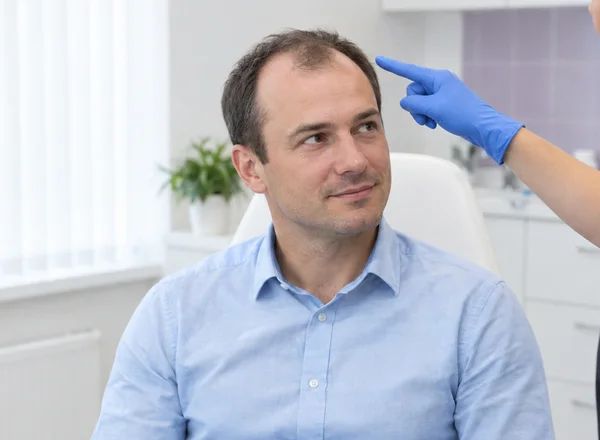

Leave a number and a coordinator will ask for photos of the thinning area in a messenger; a doctor then says whether a transplant would help you. Free, with no obligation to book an operation.

services
The cost is named at the free consultation, after the graft count, and written into the contract.
suture-free graft extraction

$2,200$2,700
or $367/mo — 0% instalments for 6 months
Freeze the priceimplantation without channels

$2,500$2,900
or $417/mo — 0% instalments for 6 months
Freeze the pricecombined technique

$2,700$2,900
or $450/mo — 0% instalments for 6 months
Freeze the price| First hair check-up | Free |
|---|---|
| Eyebrow transplant, FUE | |
| Beard transplant, FUEinstalments $467/mo | |
| Hair trichopigmentation | |
| PRP therapy / session | $200 |
all included
From preparation for surgery up to 12 months after.
Surgery day brings no bill you did not expect.
two more areas
The same donor zone at the back of the head and the same FUE method serve areas beyond the scalp.
FUE, no incisions and no stitches

Grafts taken from the back of the head, the donor area, move through micro-punctures of about 1 mm, with no scars left. The doctor discusses the shape with you before the operation, taking your facial features into account. The hair grows for life once transplanted; the beard can be trimmed and styled as usual.
$2,800$3,000
or $467/mo — 0% instalments for 6 months
Freeze the priceFUE, no incisions and no stitches

The brow contour is the surgeon's work at the first appointment: references are compared with you, and your facial proportions decide the design. Hairs implanted at the growth angle give brows that hold up close. Where tweezers have stopped the growth over the years, it works.
$1,600$1,700
a procedure with no overnight stay, numbed locally
Freeze the priceAt the consultation the doctor assesses your donor area, counts the grafts and shows the achievable result. The cost is quoted there and fixed in the contract.

Message our coordinator
Free online consultation · Reply within 15 minutes
Message us on TelegramMessage us on WhatsAppBy messaging us, you agree to our Privacy Policy
Process
From consultation to going home — all in one day

Before anything else the doctor explains the workings of the DHI and FUE methods, responds to whatever you ask, and inspects the donor area.

Surgical days fill up, so a deposit secures yours. Card payments are taken at the clinic and online payment is also an option.

There is a round of analyses to complete first, and the clinic supplies both the list and the guidance for it.

The operation runs on local anaesthetic, which removes any pain from it.

This stage extracts grafts from the back of the head or the temples using a technique that requires no stitches.

The balding part of the scalp receives the grafts at this point.
Recovery is made easier with everything the clinic provides, together with complete guidance.

Crusts come off and swelling goes down while the area recovers

No cause for worry, the shafts drop and the roots are untouched

Hairs break through one by one, the difference shows

Coverage improves, the main volume and the shape stand out

Final density arrives, the hairline looks natural

Free, prior to surgery, and it binds you to nothing.
Book your assessmentdoctors

Hair transplant doctor, trichologist, surgeon
10 years in practice

Dermatovenereologist, trichologist, surgeon
11 years in practice

Plastic surgeon
9 years in practice

Plastic surgeon
9 years in practice

Assistant
9 years in practice
A doctor will assess your donor area, count the grafts and tell you the achievable result.
Book your assessmentcoordinators
The same coordinator answers you before, during and after, all the way through recovery.

Patient liaison officer
Never leaves you alone at any stage
Covers the paperwork and the scheduling
Patient liaison officer
Never leaves you alone at any stage
Covers the paperwork and the scheduling
Patient liaison officer
Never leaves you alone at any stage
Covers the paperwork and the scheduling
Patient liaison officer
Never leaves you alone at any stage
Covers the paperwork and the scheduling













We will answer everything you ask and find a convenient time to consult
Message us on WhatsApp Contact us nowReviews
I was having trouble with my hair. I came here and got a hair transplant. The results was awesome thank you
Review on Google
І experienced hair loss due to COVID and turned to this clinic; they helped me and performed a hair transplant, moving hair from the back of my head to my temples. Thank you.
Review on Google
I traveled to City Medical Centre, where they helped me overcome hair loss through a transplant to the balding areas of my scalp. I am grateful to the doctors for performing the procedure painlessly.
Review on Google
I am sharing my experience, because before the operation I went through a pile of reviews myself and was looking for real stories. I had a beard transplant six months ago. Honestly, in the first days after the procedure I felt a little jittery: my face looked unfamiliar, there was slight swelling and small scabs. In the first couple of months the hair partly fell out, as the doctor had warned. But now the result truly makes me very happy) From about the 4th month active, even growth began. The transplanted hair took very well, the beard now looks as natural as possible, no bald patches are left. The beard became much thicker and denser, with the shape I had thought about for a long time. All in all, I recommend the clinic, the doctor was polite and explained everything 👍 The result is definitely worth it!
Review on Google
I traveled to this clinic and do hair transplant, very good quality and cheap. Good doctors
Review on Google
I do hair transplant here very good doctors!!
Review on Google
Common questions
People often say hair implants, but no artificial hair is used. In a hair transplant the doctor moves your own follicles (grafts) from the donor area to thinning or bald areas using FUE or DHI.

Yes. City Medical Centre has patients scattered across several countries, and you are offered a consultation online beforehand.
Pricing starts from $2,200 (≈ €2,000) for FUE, $2,500 (≈ €2,250) for DHI, and $2,700 (≈ €2,450) for combined DHI+FUE. The exact figure is confirmed for free after a graft count and written into the contract.
Reckon on a single day, ending with a return to your home.
It helps with stable pattern hair loss and a receding hairline when there are enough donor grafts. Some types of alopecia need treatment first; the doctor checks this at the consultation.
Nothing sharp is felt — local anaesthesia blocks all sensation.
FUE is cut-free graft extraction by tweezer. DHI is direct implantation with a Choi pen, skipping channel-making. The combined technique takes grafts by FUE and places them using the DHI method.
The count is personal to each patient, determined free of charge by the doctor after a donor zone review.
Reckon on 0–10 days of healing and a normal shed at 2–4 weeks. Hair returns from 3–4 months, becomes visibly dense at 6–9 months, and 12–18 months is where it ends.
The clinic provides a lifetime guarantee on hair growth, stated in the contract.
We hold a medical licence, and care is provided to the standards and clinical guidelines
of Ministry of Health.

The doctors' qualification papers are there to be seen
View the detailsAKC POMOSHCH LLC
the clinic's legal name
1057746096924
OGRN
7728536872
INN
For a patient from Cordoba the procedure is one day long: FUE and DHI use no scalpel cuts and no stitches, only local anaesthesia. Graft survival is 98-100 %, and a price from $2,200 (≈ €2,000) is fixed in the contract once the free graft count has been done.
You can begin in Cordoba without leaving home: the online consultation is free, and the doctor looks at photos of the thinning area and counts how many grafts it will take. The clinic is reachable 24/7, so a message fits your schedule.
Wounds close within 0-10 days. The shedding of transplanted hairs at 2-4 weeks is a stage, not a loss, and everyone passes through it. From 3-4 months onwards the new hairs start pushing through.
Prices are in US dollars; the amount in brackets is an approximate conversion to EUR at the rate of 02.10.2026. The final price is fixed in your contract.
By messaging us, you agree to our Privacy Policy
Well-known people who spoke openly about this surgery, in their own words.
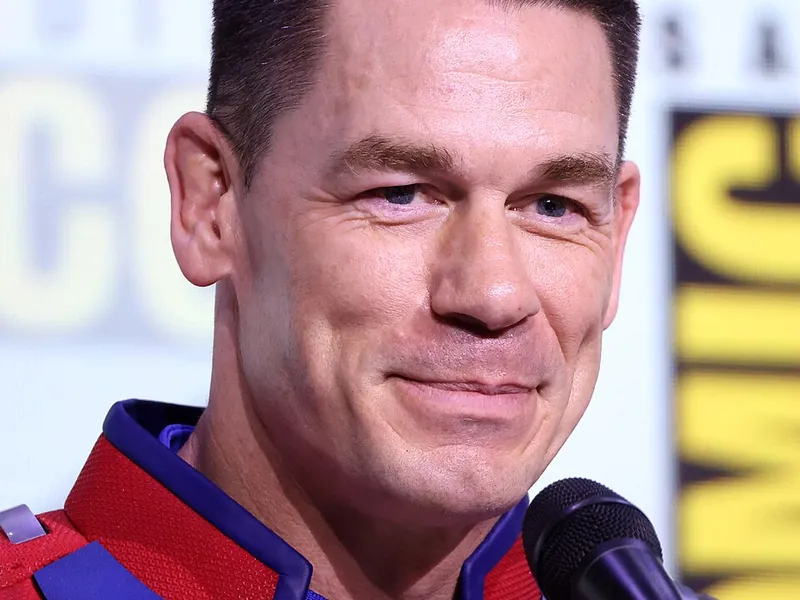 John Cena's hair transplant: “I got a problem, I try to fix it”John Cena spoke openly in 2025 about his hair transplant and the fan signs that pushed him to it. His words, how the procedure works and the recovery.
 Did Calum Best have a hair transplant? Yes, and he said so himselfCalum Best said in 2023 he had his sixth hair transplant, this time using patches of beard hair. His words, how the procedure works and recovery.
 Did Chloe Goodman have a hair transplant? Yes, and she explained whyChloe Goodman had a hair transplant in 2025 after losing hair following pregnancy. Her own words, how the procedure works and what recovery involves.
 Did Dean McCullough have a hair transplant? Yes, and he filmed itRadio 1 presenter Dean McCullough shared his FUE hair transplant on TikTok in 2024. His own words, what the swelling means and how results develop.
 Did Ella Morgan have a hair transplant? Yes — to cover a hairline scarThe Married at First Sight star revealed a hair transplant in 2025 to cover scarring along her hairline from facial surgery. Her own words and the facts.
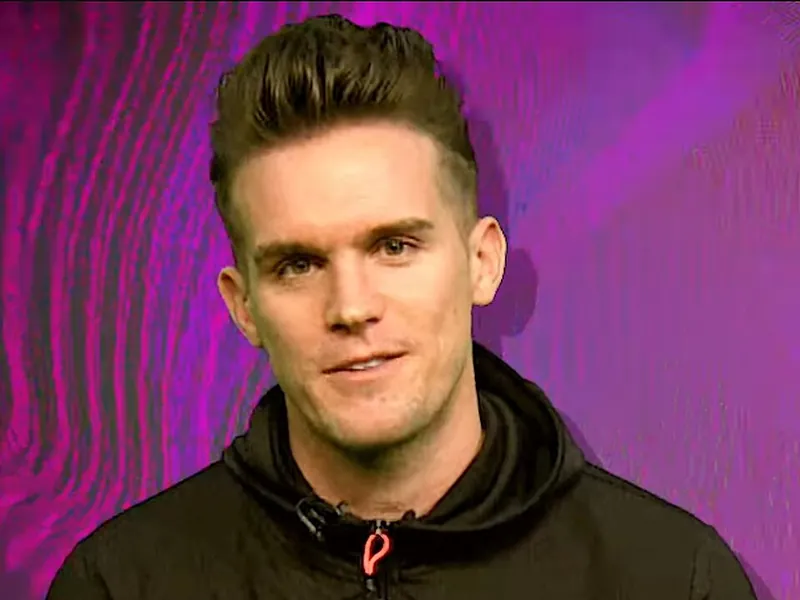 Gaz Beadle on his beard transplant: “I LOVE IT”Gaz Beadle told his 3.6 million followers he had a beard transplant after years of patchy stubble. His own words, and how a hair or beard transplant works today.
Page medically reviewed by Anastasia A. Kolesnik, hair transplant doctor. Review date: .
Cordoba sits in the Guadalquivir depression, in the middle course of the river, at roughly 106 m above sea level. The sun is the main factor in the local climate. Weather records for the city show about 2,990 hours of sunshine a year, around 66 % of the hours that are possible. July is the brightest month at 372 hours, and December the dimmest at 161. For someone planning a hair transplant, this is more than a weather note. The transplanted area and the donor area at the back of the head are both sensitive skin during the first weeks. How you protect them depends on when in the year you have the procedure.
In July and August the average daily maximum is 37.1 and 37.0 °C, with nights of 19.1 and 19.6 °C. The recorded maximum is 46.9 °C, reached on 13 July 2017 and again on 14 August 2021. In weather like that, an uncovered scalp is exposed to strong sun for most of the day. The doctor will give exact instructions on headwear and sun exposure for the healing period during the consultation. The care plan from the medical centre includes advice on washing your hair, on sleep and on headwear. Ask how those instructions apply to a hot, dry season, and say plainly how much of your day is spent outdoors.
Humidity matters too. In July relative humidity averages about 38 %, and in December about 78 %. Dry summer air and humid winter air feel different on healing skin. Crusts, tightness and the urge to touch the area can be more noticeable in one season than in the other. During the first 0-10 days, when crusts fall away and swelling subsides, you will want a routine that suits the weather outside your window. You can describe your usual day to the coordinator on WhatsApp or Telegram, and the instructions can be adapted to it.
Cold is not absent either. January is the coldest month, with an average maximum of 15.2 °C and a minimum of 3.7 °C. The lowest temperature on record is −8.2 °C, on 28 January 2005. A soft covering on a chilly morning is a different question from a hat in July, and the doctor can say which kinds of headwear are acceptable at each stage of healing.
The medical timeline for a transplant is the same wherever you live. The procedure takes one day at the clinic under local anaesthesia. Then comes a sequence of stages: 0-10 days of healing, shedding of the transplanted hairs at 2-4 weeks, first growth at 3-4 months, visible density at 6-9 months, and the final result at 12-18 months. The follow-up visits are planned at 1, 3, 6, 9 and 12 months, with progress tracked by photo. What differs from city to city is the calendar those stages fall on.
Take an example for someone in Cordoba. Suppose the procedure is on 16 November 2026. The first 0-10 days of healing then fall in the second half of November and early December. This is the rainy part of the year: October, November and December are the wettest months, at 78.7, 79.2 and 90.7 mm. Annual precipitation is 572.9 mm over 55.1 days. For healing, wet days mean practical questions about covering the head outdoors, which the coordinator can answer in advance.
The shedding of the transplanted hairs at 2-4 weeks would arrive in December and early January. It is a normal stage in which only the hairs fall out and the follicles stay in place. Many people find it unsettling, so it helps to know that it falls in the dimmest part of the year, with only about 161 hours of sunshine in December. First growth at 3-4 months would then appear around late February to March 2027. The stage of 6-9 months, when density becomes visible and the main volume and contour show, would run from mid-May to mid-August 2027. The final result at 12-18 months would be assessed between November 2027 and May 2028.
This arithmetic is worth doing for any date you consider. A procedure in the cool months lets the shedding and early growth pass in mild weather and puts the stage of visible density at the start of summer. A procedure in late spring puts the first weeks of healing into the hottest months, when sun and heat call for more discipline with headwear. Neither option is wrong, but the choice should be conscious. The doctor and coordinator will go through your preferred dates with you at the free consultation and confirm the plan before anything is booked.
The follow-up visits at 1, 3, 6, 9 and 12 months are also easier to keep if you mark them next to the events you already know about. Photos for them can be sent in your usual messenger, so a fixed holiday week or a busy period at work does not need to disturb the schedule.
A practical question for anyone with a recent transplant is what to wear on the head. The medical centre's care instructions cover headwear, and the doctor specifies what is suitable at each stage. The weather in Cordoba gives you several situations to ask about.
The first is summer sun. With July sunshine at 372 hours and an average maximum above 37 °C, the question is not whether to cover the head but with what, and for how long each day. A cap that presses on the grafted area is a different matter from a loose, breathable covering. Ask the doctor what is acceptable in the first days and what changes later. The answer depends on the transplant area, which is why it is given at the consultation and not as a general rule.
The second is rain. In the wettest months the city gets 78 to 91 mm of rain per month, while July has just 0.5 mm. For the winter weeks of healing, think through how you will move around on a wet day without rubbing the treated area or bringing hands to your head. A simple plan made before the procedure is better than improvisation afterwards.
The third is the cold morning. In January the average minimum is 3.7 °C. A tight woollen hat is not the same as a loose covering, and the donor area at the back of the head needs thought as well as the front. Raise this when you describe your daily routine.
The fourth is sleep. Advice on sleep is part of the care plan. Humid winter air and dry summer air do not change the medical principle, but they change comfort, so tell the coordinator how your bedroom is usually ventilated or heated.
None of this replaces the individual instructions. It is a list of questions to ask. The coordinator is available 24/7 on WhatsApp and Telegram, so you can ask a question the same evening it comes up, for example when the weather forecast changes.
For hair restoration in Spain, the public health system is not the usual route. The common portfolio of services of the national health system (Royal Decree 1030/2006, art. 5.4.a.4º) does not fund techniques whose purpose is "mere aesthetic or cosmetic improvement". Procedures with an aesthetic purpose that are not related to an accident, illness or congenital malformation are excluded from specialised care. A transplant for androgenetic alopecia is normally planned outside the public system for that reason, and the decision is yours and the doctor's.
Waiting times in the public system show why many people look at other options for elective work. In Andalucía, at 31 December 2025, 199,950 patients were on the structural surgical waiting list, 23.51 per 1,000 inhabitants, with an average wait of 173 days. The national average is 121 days. Plastic Surgery has the longest average wait of any specialty in the national health system, at 269 days. For first specialist consultations, the national average wait is 102 days. These numbers describe the public system as a whole, not a hair transplant specifically, but they set the context.
An online consultation works differently. You send photos on WhatsApp or Telegram, the doctor assesses your donor area, counts the grafts and says what result is realistic for you. The price is named at the free consultation and fixed in the contract. Nothing is booked until you confirm the plan and dates. If the doctor concludes that a transplant does not suit your case, for example because the hair loss comes from illness or a hormonal imbalance, you will be told directly, and there is nothing to pay for that conversation.
It is worth knowing the conditions where the doctor will advise against a transplant. These include trichotillomania, body dysmorphic disorder, cancer, being under 18, epilepsy, serious heart conditions, diabetes mellitus, a pacemaker, AIDS/HIV, hepatitis B or C, pulmonary embolism and patchy alopecia. If one of these applies to you, say so in your first message so the answer comes sooner.
Cordoba is a city of about 324,900 people, the twelfth largest in Spain by municipal population, with a metropolitan area of about 354,000. The municipality is very large, around 1,253 km². Distances inside it can be considerable, which is a reason to value an online first step. Photos, the doctor's assessment and the plan can all be handled without leaving home, and the coordinator who guides you from the first enquiry to recovery stays in the same chat throughout.
The city's rhythm also affects timing. The University of Córdoba, founded in 1972, has about 21,000 enrolled students, and Universidad Loyola Andalucía is the second university. For students and staff, the academic calendar defines which weeks are free for a quiet recovery. For everyone else, it is work, family obligations and local events. The Feria de Nuestra Señora de la Salud takes place in the last full week of May, and the Festival of the Cordoba Patios, declared UNESCO World Heritage in 2012, is part of the spring calendar too. If you want to attend a particular event looking your best, count backwards. At 6-9 months density shows, but the final result takes 12-18 months, so an event only a few months after the procedure will fall in the earlier stages. The example earlier shows how: a procedure in mid-November 2026 reaches the stage of visible density around the late-May Feria of 2027, while the final result belongs to later in 2027 or 2028.
A few steps make the planning concrete. Send clear photos of the front, top, sides and back of the head. Tell the coordinator the dates you cannot move. Describe how much of your day is spent outdoors. Ask which method the doctor proposes: FUE, DHI, or the combined technique. Then ask about the number of grafts for your case. The cases shown in the service materials range from 2,500 to 4,000 grafts, but your own number is only fixed after the doctor looks at your donor area.
Before the procedure there is a set of pre-surgery tests, and the clinic provides the list and instructions. The medical contract and the date are confirmed after the deposit. On the day itself you spend one day at the clinic, with no extra payments on the day of the procedure.
It is not forbidden, but it asks for more care. In July and August the average maximum is about 37 °C and July has 372 hours of sunshine, so the healing scalp needs a carefully chosen covering and limited time in direct sun. The doctor gives individual instructions on headwear and sun exposure. Some people prefer the cooler months so that the first weeks of healing pass in milder weather. Discuss your own dates with the coordinator before booking.
Using the stages described by the doctors, the transplanted hairs shed at 2-4 weeks, which would be December or early January. First growth appears at 3-4 months, so around February or March 2027. Density becomes visible at 6-9 months, roughly May to August 2027. The final result is reached at 12-18 months, which means between November 2027 and May 2028. Individual timing can differ, and the follow-up visits at 1, 3, 6, 9 and 12 months track it.
The wettest months are October, November and December, with 78.7, 79.2 and 90.7 mm of rain. The medical issue is practical: how to cover and protect the head outdoors during the first 0-10 days, when crusts fall away and swelling subsides. Ask the doctor which coverings are suitable for a wet day, and plan routes and errands in advance so you do not need to improvise.
In general, no. The common portfolio of the national health system excludes techniques with a purely aesthetic or cosmetic purpose that are unrelated to an accident, illness or congenital malformation. A transplant for androgenetic alopecia is normally arranged privately. For context, the average wait for surgical procedures in Andalucía was 173 days at the end of 2025, and Plastic Surgery had the longest average wait nationally, at 269 days.
Relative humidity averages about 38 % in July and about 78 % in December. The medical principles of care do not change, but comfort does: crusts and tightness can feel different in dry or humid air. Tell the coordinator about your usual routine and sleeping conditions, and the advice on washing, sleep and headwear can be adapted. The doctor remains the final authority on what is allowed at each stage.
Work backwards from the event. Density becomes visible at 6-9 months, and the final result at 12-18 months. A procedure in mid-November 2026 would be at about six months by the last full week of May 2027, so the hair would be thicker but not yet final. A shorter interval means earlier stages: shedding or first growth. Share the exact event date with the coordinator so the doctor can explain what to expect by then.
No. The first consultation is online and free. You send photos on WhatsApp or Telegram, the doctor assesses your donor area, names the number of grafts and the price, and you confirm the plan and dates before anything is booked. Coordinators answer round the clock, 24/7, so you can send photos at whatever hour suits your day.
Mention how many hours a day you spend outdoors, whether you work in a hot or cold environment, which dates are fixed for work, study or family events, and what headwear you normally wear. These details help the doctor and coordinator fit the 0-10 day healing period and the later stages of shedding, first growth and density to your actual calendar.

 Forceps
 Minimal


