



























Message our coordinator
Free online consultation · Reply within 15 minutes
Message us on TelegramMessage us on WhatsAppBy messaging us, you agree to our Privacy Policy




Facelift and neck lift in Bilbao: price and key facts
Facelift for patients from Bilbao at City Medical Centre starts at €2,150 (from $2,400). The first online consultation is free; the doctor names the final price and it is fixed in the contract.
- Price
- €2,150 (from $2,400)
- Anesthesia
- general (inhalation)
- Recovery
- about 2 months to full recovery
- Final result
- 3–6 months after surgery
- How it works
- Send photos on WhatsApp or Telegram, get a free doctor assessment and the price, then confirm the plan and dates before anything is booked.
How it works · Facelift prices
Information current as of 24 October 2026

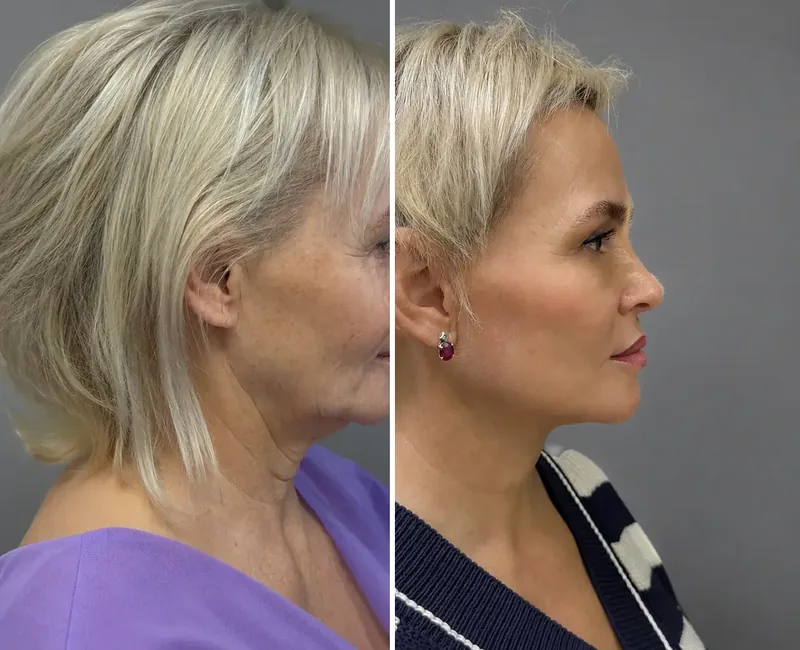

50 years
9 months

SMAS facelift
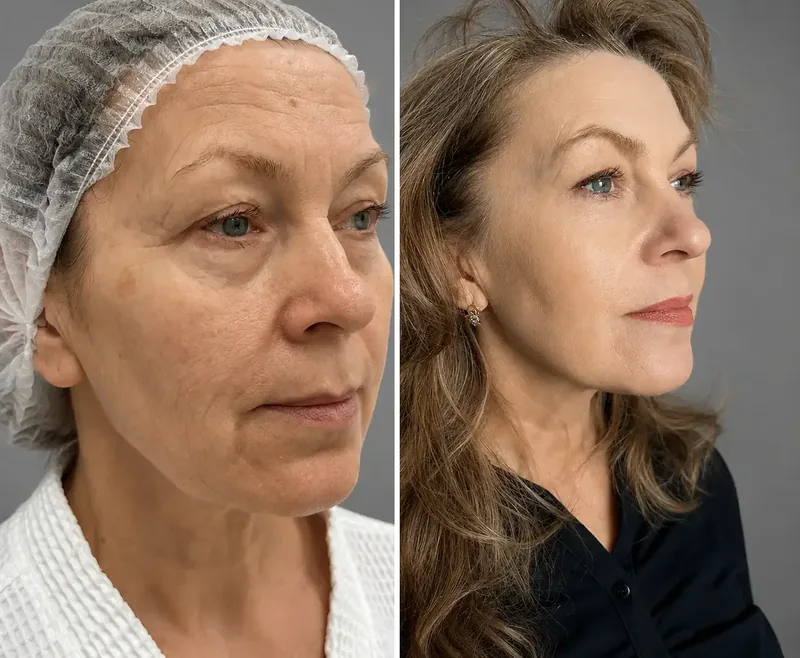
58 years
8 months
SMAS facelift
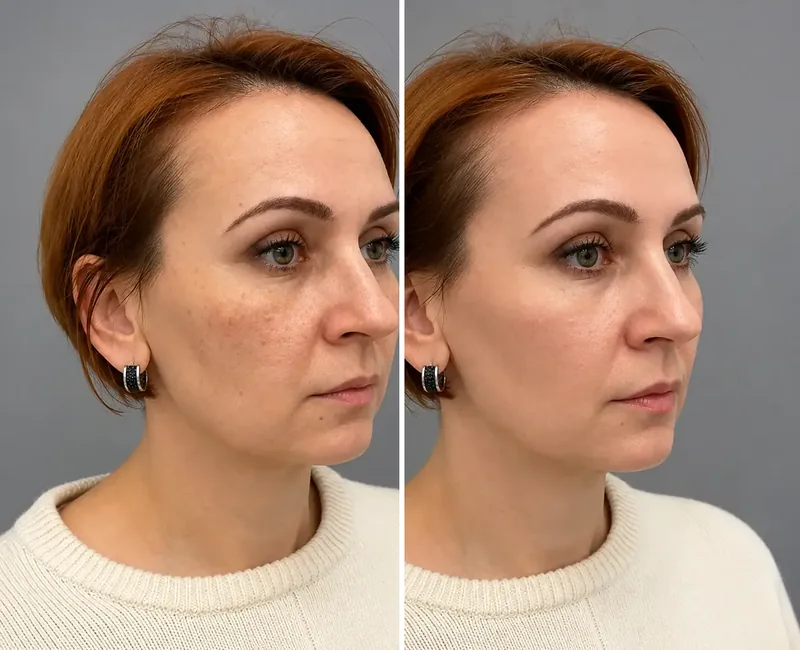
34 years
5 months
SMAS facelift
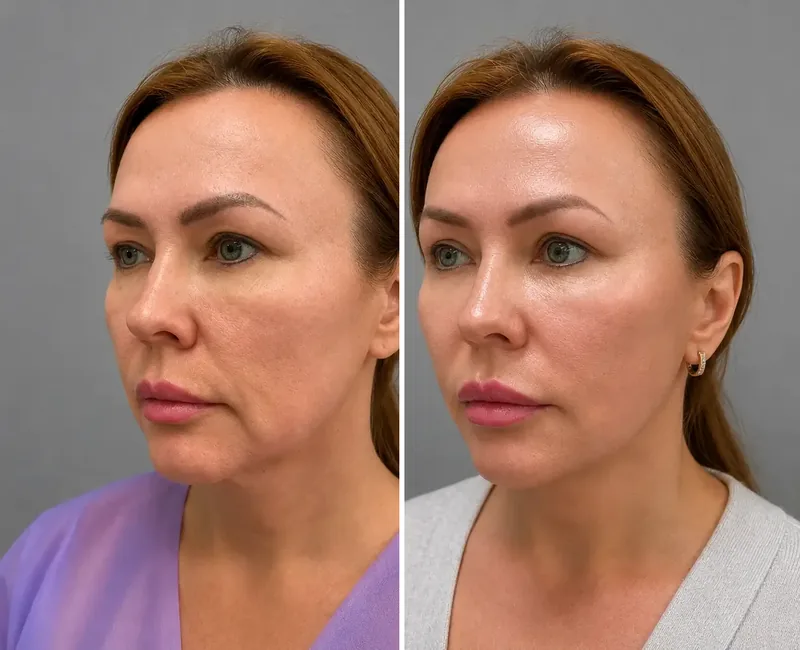
32 years
7 months
SMAS facelift
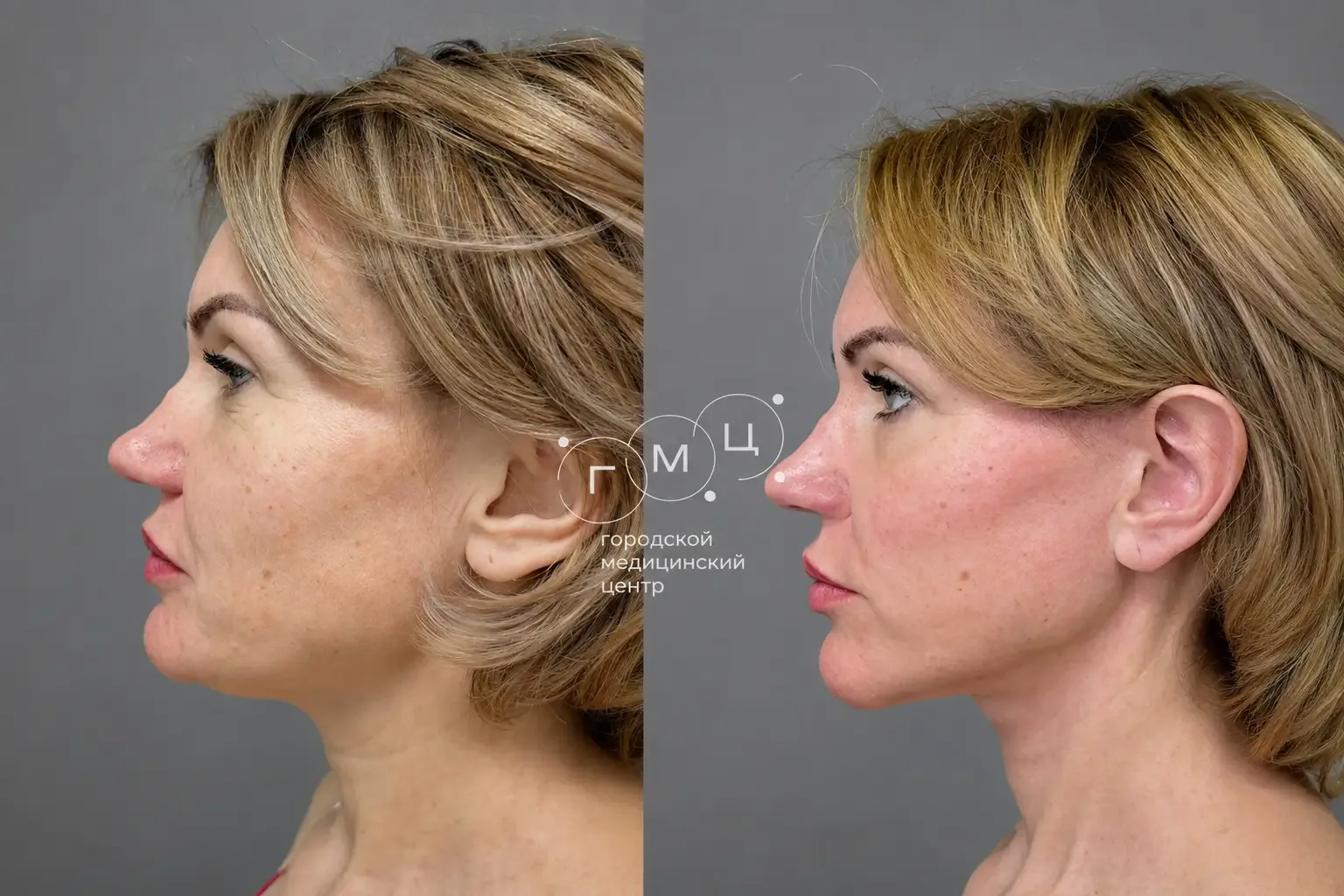
40 years
6 months
SMAS facelift
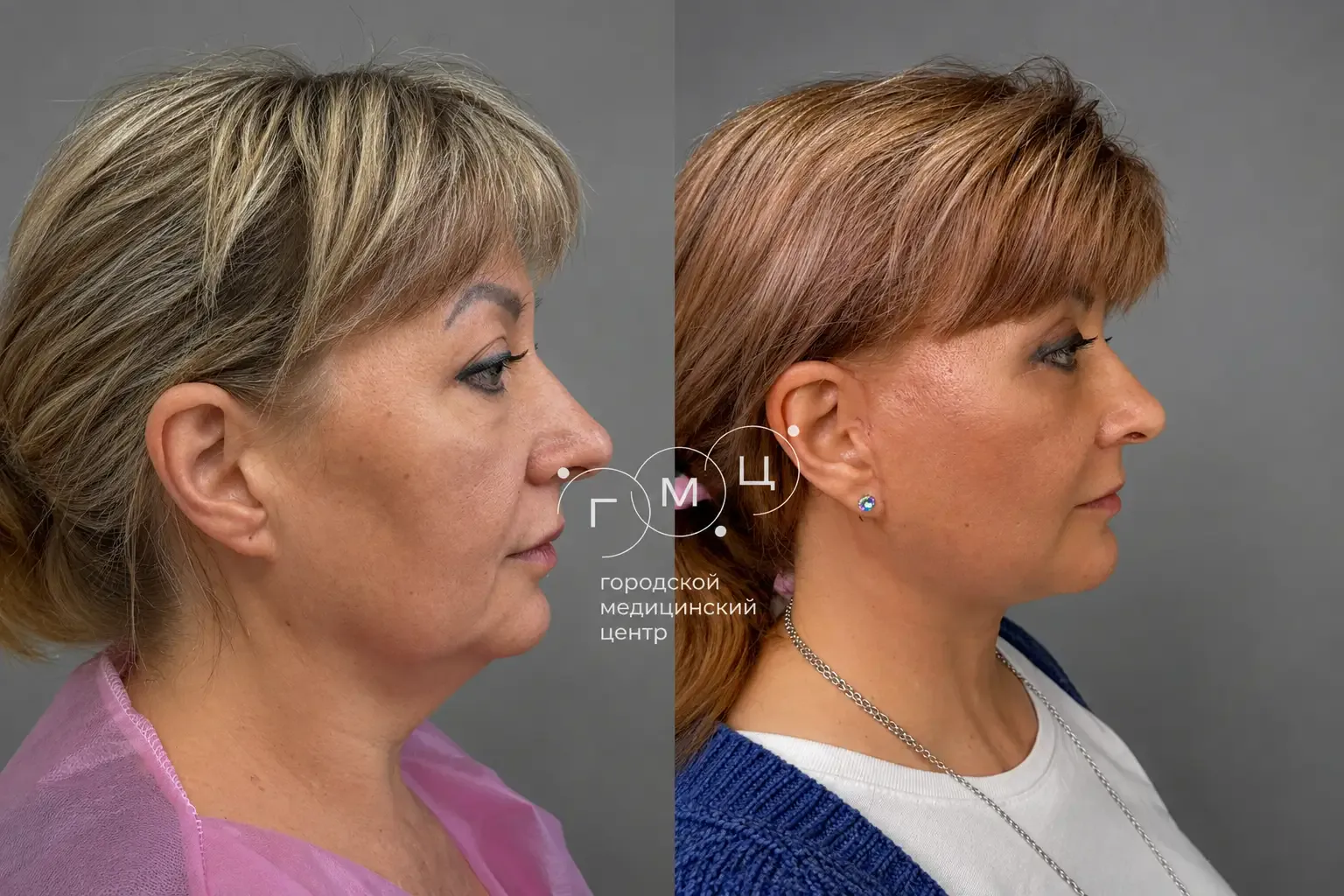
45 years
8 months
SMAS facelift
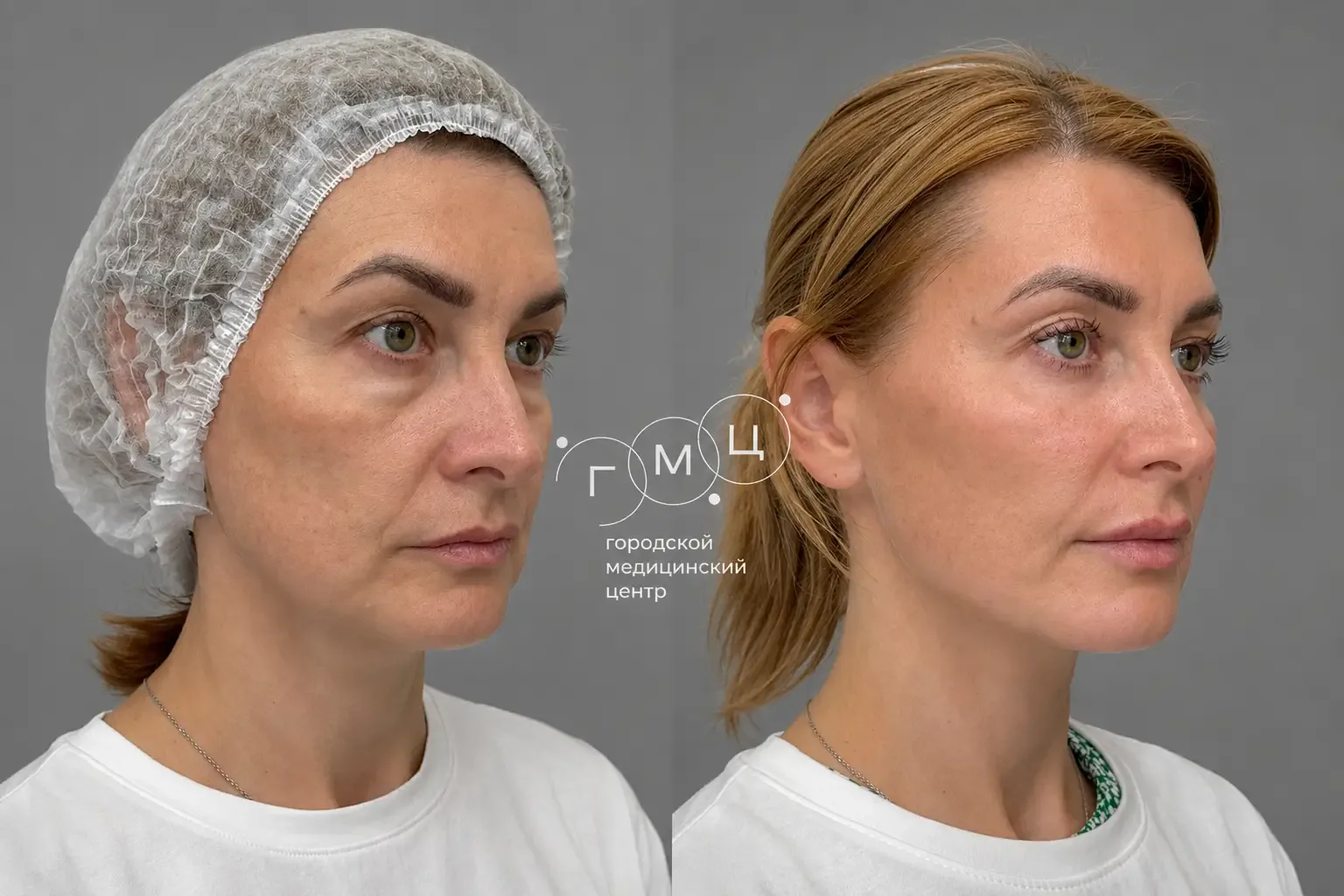
38 years
5 months
SMAS facelift
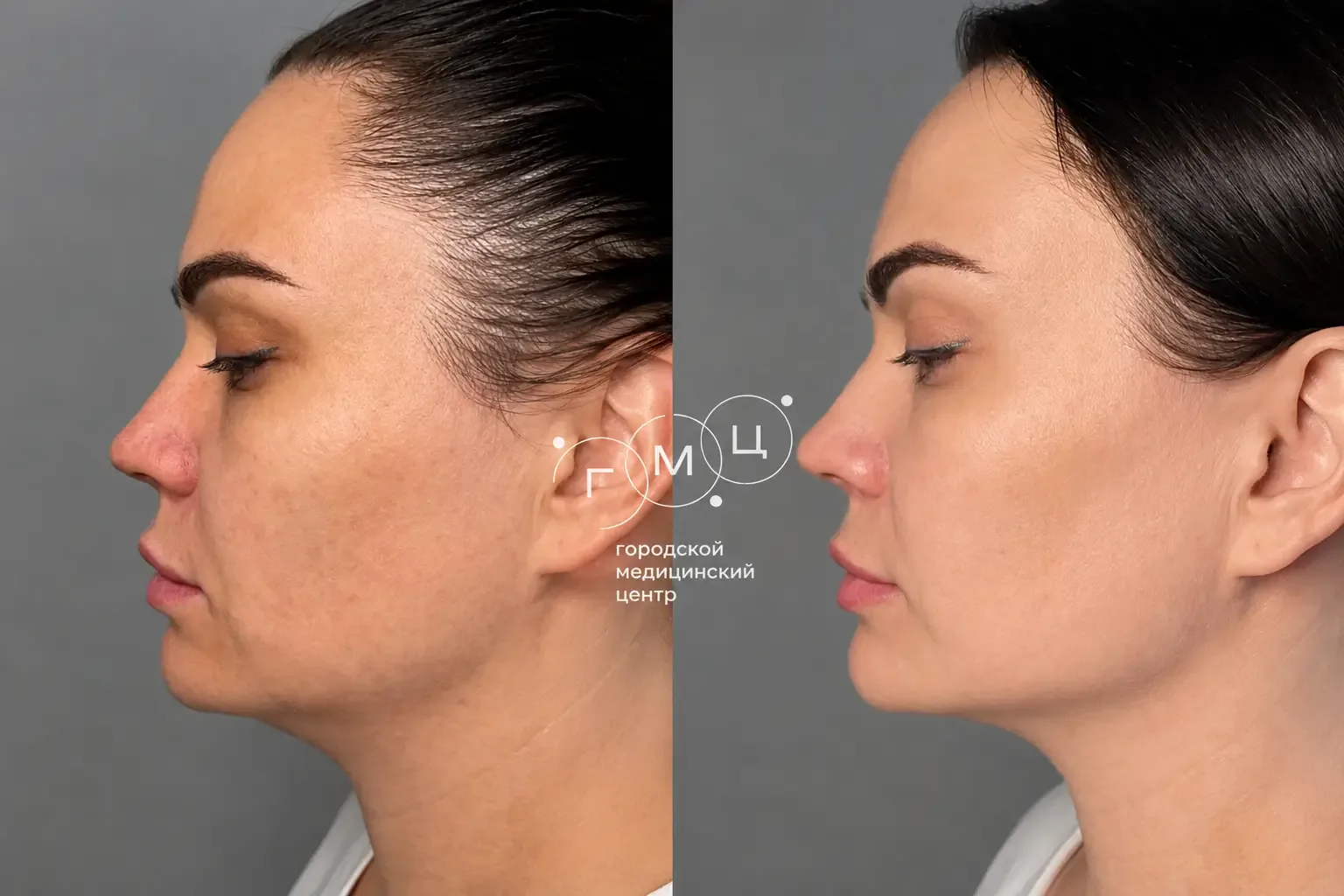
33 years
6 months
SMAS facelift
50 years
9 months
SMAS facelift
58 years
8 months
SMAS facelift
34 years
5 months
SMAS facelift
32 years
7 months
SMAS facelift
40 years
6 months
SMAS facelift
45 years
8 months
SMAS facelift
38 years
5 months
SMAS facelift
33 years
6 months
SMAS facelift
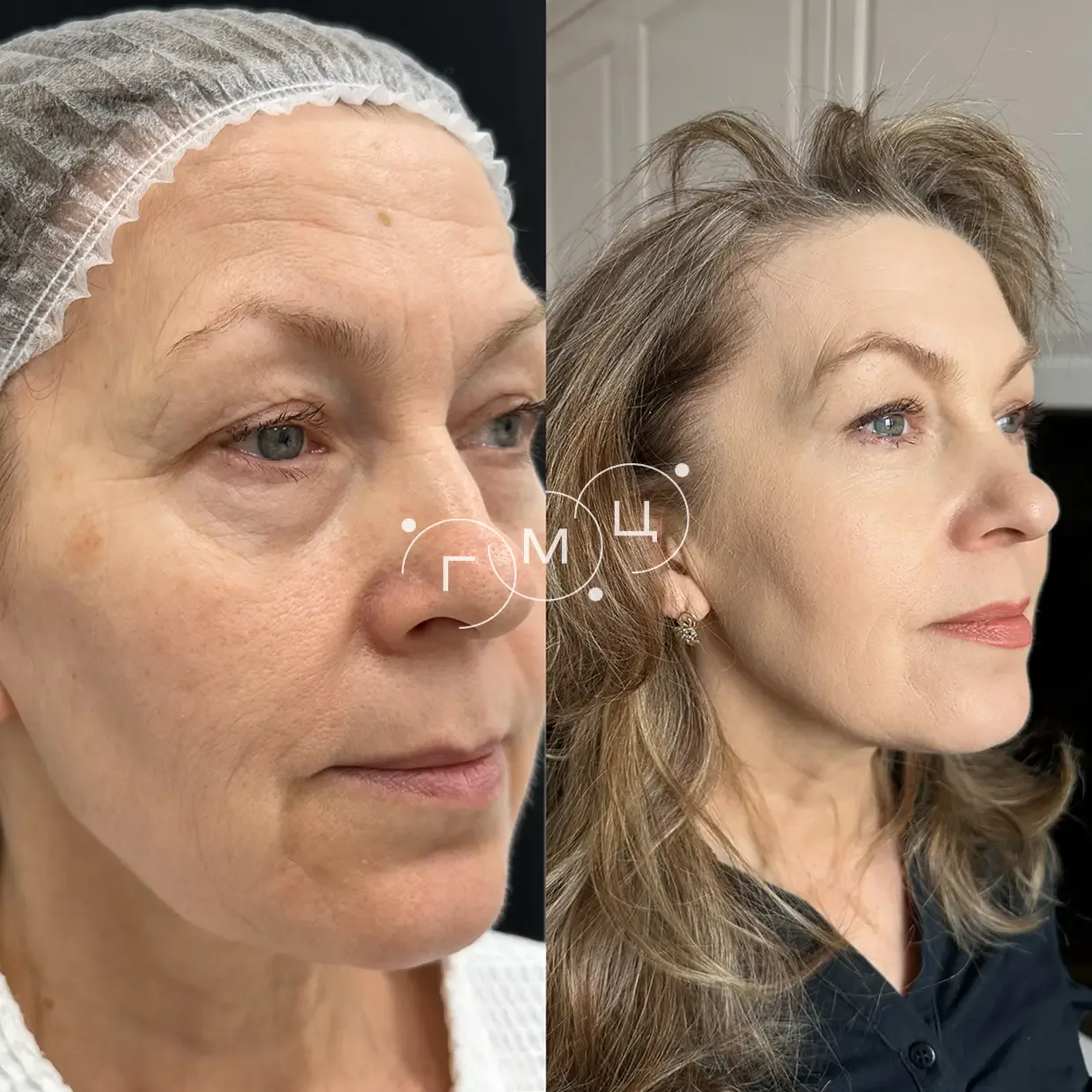

Marked sagging across the face and neck
The jawline is blurred, with jowls
A double chin with loose skin on the neck
Deep nasolabial folds, marionette lines
A heavy, tired look from drooping brows
Noticeable loss of skin firmness after 40
A long-term result is wanted (7–10 years)

Being under 30
Acute skin inflammation
Being pregnant or breastfeeding
Severe heart and vascular disease
Problems with blood clotting
Cancer
Decompensated diabetes
Everything about facial rejuvenation in Bilbao
As a rule, a surgical facelift is recommended from 40 with marked tissue sagging, and in some cases from 35; the recommendation is made individually after an examination. Contraindications include age under 30, acute skin inflammation, pregnancy and breastfeeding, severe cardiovascular disease, clotting disorders, cancer and decompensated diabetes. Bilbao patients with chronic conditions should consult a clinic doctor first.
The endoscopic brow and temple lift is the gentlest option: the surgeon uses an endoscope through tiny punctures, repositions the brows and smooths forehead and frown lines, with scars hidden in the hairline. A neck and lower face lift also uses small incisions, keeping scars barely visible. For people in Bilbao, the choice of access depends on which zones need correction and how marked the sagging is.
A facelift costs from $2,400 (≈ €2,150). For patients from Bilbao, the price includes a one-to-one consultation, a highly experienced medical team, combined inhalation anaesthesia, a stay in comfortable inpatient rooms, 24/7 monitoring by medical staff, meals during your stay, personal support before and after surgery and a year of follow-up by your plastic surgeon. Start with a free consultation.
Stories of well-known people
Well-known people who spoke openly about this operation, in their own words.
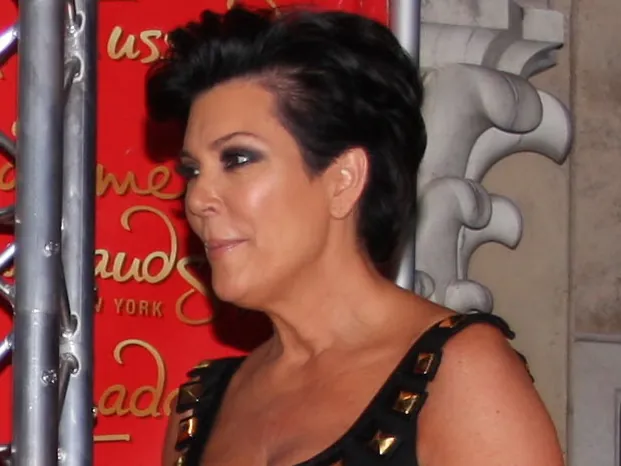 Kris Jenner’s facelift: “I love my facelift”Kris Jenner said she had a facelift about 15 years ago and a refresh before turning 70 — and that she loves it. How a SMAS facelift and recovery work.
 Did Vicki Gunvalson have a facelift? Yes, and she showed the result herselfVicki Gunvalson had a facelift in May 2018 after deciding fillers no longer looked like her. Her own words, how a facelift works and recovery.
 Keltie Knight’s facelift: why she decided to “just own it”Keltie Knight had a facelift in 2023 at 41 and chose to talk about it openly. What she said, how a SMAS facelift works and what recovery looks like.
 Did Linda de Mol have a neck lift? Yes, and she wrote about it herselfLinda de Mol wrote in LINDA. in 2025 that she had a neck lift. What she said, why she chose to be open, and how a face and neck lift works today.
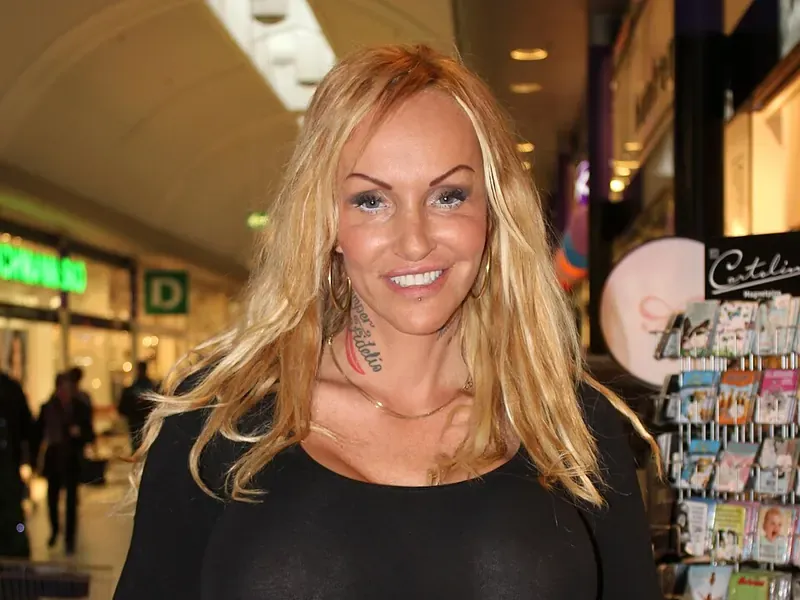 Linse Kessler and her facelifts: what she said herselfDanish reality star Linse Kessler has said openly that she has had several facelifts. Her words, how a modern facelift works and what recovery involves.
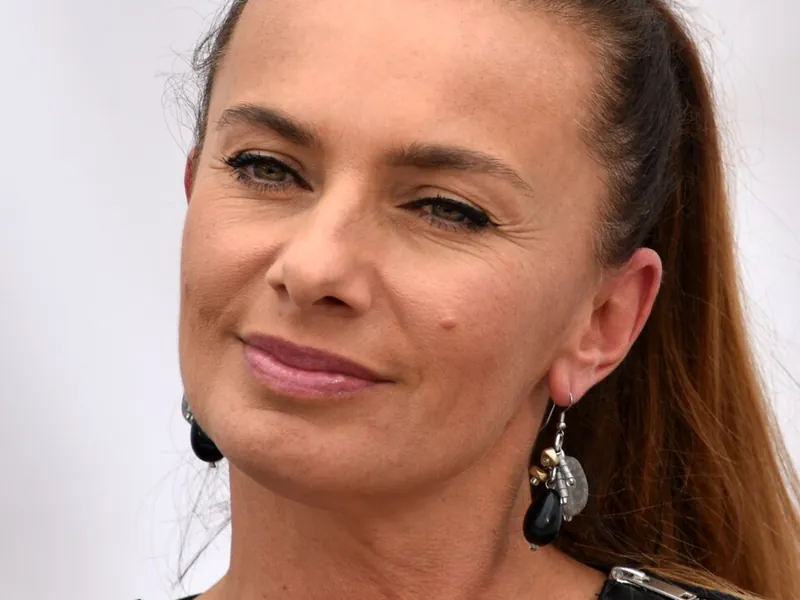 Did Alice Bendová have a facelift? Yes, and she explained why herselfAlice Bendová confirmed a deep plane facelift in September 2026. Her words, how a facelift works, who it suits and what recovery looks like.
Facelift in Bilbao: price and what is included
Prices are in US dollars; the amount in brackets is an approximate conversion to EUR at the rate of 02.10.2026. The final price is fixed in your contract.
- Faceliftfrom $2,400 (≈ €2,150)
What is a SMAS facelift?
It is a face lift that tightens the deep SMAS layer under the skin, not only the skin itself, so the lower face, jawline and neck stay firmer for longer. The result lasts about 7–10 years.
How much does a facelift in Bilbao cost?
Prices start from $2,400 (≈ €2,150). The surgeon sets the final price at the free consultation, and it is fixed in the contract, with no hidden extras.
What is included in the price?
A one-to-one consultation, the medical team, anaesthesia, inpatient care with meals, 24/7 monitoring and twelve months of follow-up by the surgeon.
How do I get my exact price?
Message us on WhatsApp or Telegram using the buttons below. A coordinator will answer your questions and book a free consultation where the doctor names the exact price.
By messaging us, you agree to our Privacy Policy
Grey light, sirimiri and the skin of the face
Bilbao has an oceanic climate. The sky is often covered, and the sunshine figures show it: about 1,640 hours a year, which is 36 % of what is astronomically possible. December and January get only 81 hours each, while July reaches 186. Average humidity is 71 %. For someone planning a facelift, this changes the usual conversation about sun. Many patients in sunnier regions have to arrange their whole recovery around strong ultraviolet light. In Bilbao, the cloudy months give a long stretch when the face is exposed to less direct sun, though cloud does not remove the need for protection. The doctor will explain during the consultation how to protect healing skin, and that advice applies in a grey November as much as in July.
The local fine drizzle, known as sirimiri, is worth a thought as well. It is not a downpour that sends you running for cover. It is a light, almost weightless mist that settles on the face and hair while you walk. During the first days after a SMAS facelift, the patient rests at home with a compression bandage and reduced physical activity. A walk in the drizzle is not a priority then. Later, once the doctor allows normal outdoor life, a hood or a wide-brimmed hat is a simple way to keep wind and moisture off the face while the tissues settle. The coordinator can tell you what to ask the doctor about outdoor walks and about when it is reasonable to go back to your normal routine.
Annual rainfall is 1,158 mm spread over 124.4 days, and November is the wettest month, with 171 mm over 13.7 days. July and August are the driest, with 52–53 mm. This matters for planning because recovery is not only about the days when you stay in. The first 7–10 days are the period of rest, bandage and limited activity, and the weeks that follow are when swelling and bruising fade, within 2–4 weeks. If those weeks fall in a damp month, you will spend more time indoors anyway, which suits the process. A dry summer gives you more freedom to walk, but also brighter light, so protection from the sun takes priority.
Our coordinators answer 24/7 on WhatsApp and Telegram. Many people from Bilbao send their first photos in the evening and receive the doctor's assessment without leaving home. You do not have to choose a season before you write. The doctor reviews your photos, names the final scope of surgery and the price in the contract, and only then do you and the coordinator talk about dates.
Cold mornings, wind from the Bay of Biscay and the first weeks after surgery
Bilbao sits about 16 km south of the Bay of Biscay. The built-up area lies in a river valley between two modest mountain ranges of around 400 m, and the highest point is Mount Ganeta at 689 m. Winters are mild rather than harsh. In January and February the average highs are 13.5 °C and 14.2 °C, and the lows are 5.3 °C and 5.1 °C. Snow falls on only 1.7 days a year. The record low of −8.6 °C dates from 1963 and is an outlier. So patients do not have to plan for frost, but they do have to plan for damp air and cool mornings.
Why does that matter after a facelift? In the first days, the face is swollen and the skin around the ears and along the incision lines is sensitive. Sharp cold wind on a swollen face is not pleasant, and a scarf pulled tight over a compression bandage can press where it should not. A loose, soft scarf and a hat that does not squeeze are more sensible than a tight wrap. The doctor will say what is acceptable. It is also worth preparing the clothes you will wear in advance: shirts and tops with buttons or wide necks that you can put on without pulling anything over the head. In a cool, humid climate you will probably wear layers, so choose ones that open at the front.
The summer extreme is also on record. The temperature reached 44.0 °C on 23 August 2023, which shows that Bilbao is not always mild. In July and August the average highs are 25.4 °C and 26.3 °C, and a heatwave is an exception rather than the norm. If your recovery period falls in a hot spell, the practical advice is simple: stay in a cool room, avoid strenuous activity, and keep the face out of direct sun. These are the same points the doctor covers when describing the first weeks.
A SMAS facelift is done under general inhalation anaesthesia, so there is no pain during the operation. Afterwards, discomfort and tightness are possible in the first few days, and the doctor prescribes medication for them. Recovery runs on a schedule that does not depend on the weather: 7–10 days of rest and a compression bandage, swelling and bruising fading in 2–4 weeks, and full recovery in about 2 months. The weather only decides how pleasant those weeks are, and a little forethought makes them easier.
Social calendar: when you want to look fresh again
Many people plan a facelift around an event: a family celebration, a reunion, the start of a work project. In Bilbao, one date stands out. Aste Nagusia, the Semana Grande, lasts nine days starting on the first Saturday after 15 August, and it opens with the chupinazo fired from the Teatro Arriaga. It is the city's biggest festive week, and it falls in late August, at the end of the warm season. If you want to feel confident in photographs and in company that week, the timeline matters, and it is worth working backwards.
Here is how the numbers from the procedure fit together. The first clear changes appear after 3–4 weeks, once swelling goes down. Swelling and bruising fade in 2–4 weeks. Full recovery takes about 2 months, and the final look of the face settles within 3–6 months. So if the festival is the target, it is realistic to allow roughly two months for a full return, and not to count on being at your final result by then. A face at 3–4 weeks looks fresher but is not yet finished. Someone who wants to look rested rather than conspicuously different will often choose a longer lead time and let the doctor advise on it.
The coordinator can build a calendar for you on request. You tell us the event, and we count backwards from it: the days of rest at the start, the weeks when you prefer to avoid close-up photographs, and the point when you can expect to look like yourself again, only more rested. Because the first consultation is online and free, this planning costs nothing. You can send photos in the evening, hear from the doctor, and decide with no pressure.
Autumn and winter can be practical for a different reason. The university year is in full swing and the city turns to indoor life. UPV/EHU, which grew out of the University of Bilbao of 1968, has its Bizkaia campus in Leioa, 11 km from the centre, and in the 2009–10 academic year it counted 44,921 students. If you work in education or have a timetable shaped by the academic year, a quieter patch between terms can suit your recovery. In any case, ask the coordinator to match the plan to your own calendar rather than to a general rule.
Waiting lists, the public system and why a private route is discussed
Spain's public health system, the SNS, does not cover procedures done only to improve appearance. The common service portfolio under Royal Decree 1030/2006 excludes techniques whose purpose is "mere aesthetic or cosmetic improvement", and aesthetic procedures not linked to an accident, illness or congenital malformation fall outside specialist public care. A facelift for rejuvenation therefore belongs outside the public system, whatever the length of any queue. That is a matter of the rules, not of waiting times, and it means patients in Bilbao decide for themselves how to arrange this kind of operation.
Even so, the waiting figures give a sense of the context. At the end of 2025, Plastic Surgery was the specialty with the longest average wait across the SNS: 269 days. Across all specialties, the average surgical wait was 121 days, and 21.6 % of patients waited more than six months. The Basque Country does better than most regions: 24,069 patients were on the surgical waiting list, 10.81 per 1,000 inhabitants, with an average wait of 64 days, one of the shortest in the system. These numbers describe reconstructive and medically indicated care, which is where public resources go. They show why patients whose procedure is aesthetic do not wait in that queue at all, and why a clear private timetable matters to them.
At our centre the process is organised differently. You send photos on WhatsApp or Telegram, receive a free doctor assessment, and get the final price in a contract. Nothing is booked until you confirm the plan and the dates. The coordinator replies round the clock. The first reply on the chat usually comes within 15 minutes, which is a practical difference from waiting weeks for a first appointment.
One more point for people who combine goals. If you are considering other procedures with a medical reason, such as work on the breasts or the digestive system, public criteria apply to them separately, and your family doctor is the right person to ask about those. For the facelift, the question is only whether the operation suits your face and health, and the doctor answers that after the online examination of your photos and your medical history. Patients with chronic illness should say so at the start, because severe cardiovascular conditions, clotting problems, cancer and decompensated diabetes are contraindications.
Choosing the type of lift for a face that has lived in a damp, bright-and-grey climate
The surgical facelift at City Medical Centre is not a single standard operation. There are four main options, and the doctor helps pick one for your age and type of ageing. The standard SMAS facelift addresses the mid and lower face. It deals with jowls, sagging cheeks, a double chin and deep nasolabial folds, with incisions hidden around the ears and along the frontal edge of the hair. The results last 7–10 years. The full, circular facelift treats the forehead, temples, mid and lower face and neck, and suits marked sagging in several areas at once. Results last up to 10 years. The lift for the neck and lower face uses small incisions and targets the chin, jowls and loose skin of the neck. The endoscopic brow and temple lift works through tiny punctures, repositions the brows and smooths forehead and frown lines.
Which of these fits depends on your face, not on the climate. Still, patients ask whether years of weather exposure change the plan. What the doctor looks at is the loss of firmness, which becomes noticeable after 40–50, and the descent of tissues, with jowls forming, the jawline blurring and the cheeks drooping. A SMAS facelift lifts and fixes the layer of muscle and fascia, and that is why it addresses the cause of sagging and not only the surface. The skin is redraped without excess tension, fat in the cheeks and lower face is redistributed, and the SMAS layer is repositioned. Skin care and sun protection support the result, but they do not replace the operation.
Age matters too. Surgery is generally advised for patients aged 40 and over with marked sagging, and in some cases from 35. Under 30 it is a contraindication. After the online examination the doctor gives an individual recommendation, and that is the point where you can ask whether a lighter option such as the lower-face lift would be enough. Some patients combine a facelift with eyelid surgery, rhinoplasty or double-chin liposuction, and the doctor decides on the combined scope during the consultation.
Included in the plan is care after the operation: monitoring by medical staff round the clock during the stay, a dedicated coordinator before and after, and follow-up with the operating doctor for a whole year until the final result. For a patient in Bilbao, that follow-up happens at a distance through photographs and messages, with the coordinator available at any hour.
Which season in Bilbao is the easiest for recovering after a facelift?
There is no single answer, because each season has its own trade-offs. The winter months are cool and mild, with highs around 13.5–14.2 °C in January and February, and little direct sun: December and January get only 81 hours each. Summer is drier, with 52–53 mm of rain in July and August, but brighter, with 186 hours of sun in July, so protecting healing skin needs more attention. The medical timeline is the same in every season: 7–10 days of rest, swelling and bruising fading in 2–4 weeks, and full recovery in about 2 months. Choose the season that matches your social calendar and tell the coordinator.
Is the damp climate and the sirimiri a problem for the first days after surgery?
The first 7–10 days are meant for rest at home with a compression bandage and reduced physical activity, so you will not be outdoors much. The fine drizzle known locally as sirimiri is not a reason to postpone. When the doctor allows short walks, a loose hood or soft hat helps keep moisture and wind off the face without pressing on the bandage. Humidity averages 71 % and rain falls on about 124 days a year, so you may as well plan for it in advance. Ask the doctor at the consultation what is acceptable at each stage.
I want to look fresh for Aste Nagusia. How early should I plan?
Aste Nagusia begins on the first Saturday after 15 August and lasts nine days. Count backwards from that date. The first clear changes show at 3–4 weeks, swelling and bruising fade in 2–4 weeks, full recovery takes about 2 months, and the final look arrives within 3–6 months. Many people therefore allow at least two months and sometimes more, so that the face has settled. Send your photos to the coordinator on WhatsApp or Telegram, name the event, and the doctor will suggest a timeline after assessing you.
Does the Spanish public health system cover a facelift?
No, not when the aim is rejuvenation. Royal Decree 1030/2006 states that the common service portfolio does not fund techniques with the purpose of mere aesthetic or cosmetic improvement, and aesthetic procedures unrelated to an accident, illness or congenital malformation are excluded from specialist public care. So a facelift is arranged privately. At City Medical Centre the first online consultation is free, and the final price is fixed in the contract after the doctor's assessment.
How does the wait in the Basque public system compare, and does it affect my plan?
At the end of 2025 the Basque Country had 24,069 patients on the structural surgical waiting list, 10.81 per 1,000 inhabitants, with an average wait of 64 days, one of the shortest in the national system. Across Spain, Plastic Surgery had the longest average wait of any specialty at 269 days. These figures concern care funded publicly, and an aesthetic facelift is not part of it. For our process, the timing depends on your choice: after the free online consultation and confirmation of the plan, the dates are set with you.
What should I prepare at home in Bilbao before the operation?
Think about the first 7–10 days, when you rest with a compression bandage and limit activity. Arrange loose clothing that opens at the front, a soft scarf or hat for cool and damp mornings, and a quiet room where you can stay indoors. Winter highs of 13.5–14.2 °C call for layers, and summer calls for protection from strong light. Also gather your medical history, since the doctor needs to know about chronic conditions, clotting problems, diabetes and heart disease. The coordinator will send a personal checklist on request.
Can I do the consultation and follow-up from Bilbao without leaving home?
Yes. The first consultation is online, free, and takes place through WhatsApp or Telegram, where you can send photos at any hour. The coordinators respond round the clock, and the doctor gives an assessment and names the final price, which is fixed in the contract. After the operation, you are followed up by the operating doctor for a whole year until the final result. Questions about swelling, bruising or timing can be sent to the coordinator at any time.