City Medical Centre · multi-specialty surgery clinicOpen 24/7

Tummy tuck

Classic and Mini Tummy Tuck in Lublin

Free consultation

from $2,400

The price is fixed in the contract before surgery

Message us on WhatsApp

Free online consultation · Reply within 15 minutes
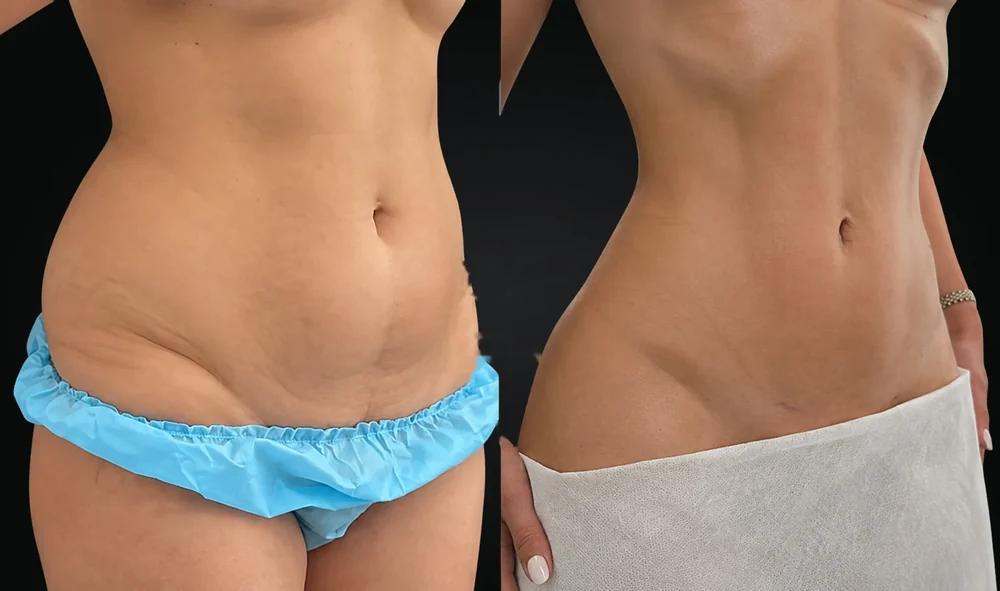
Real case
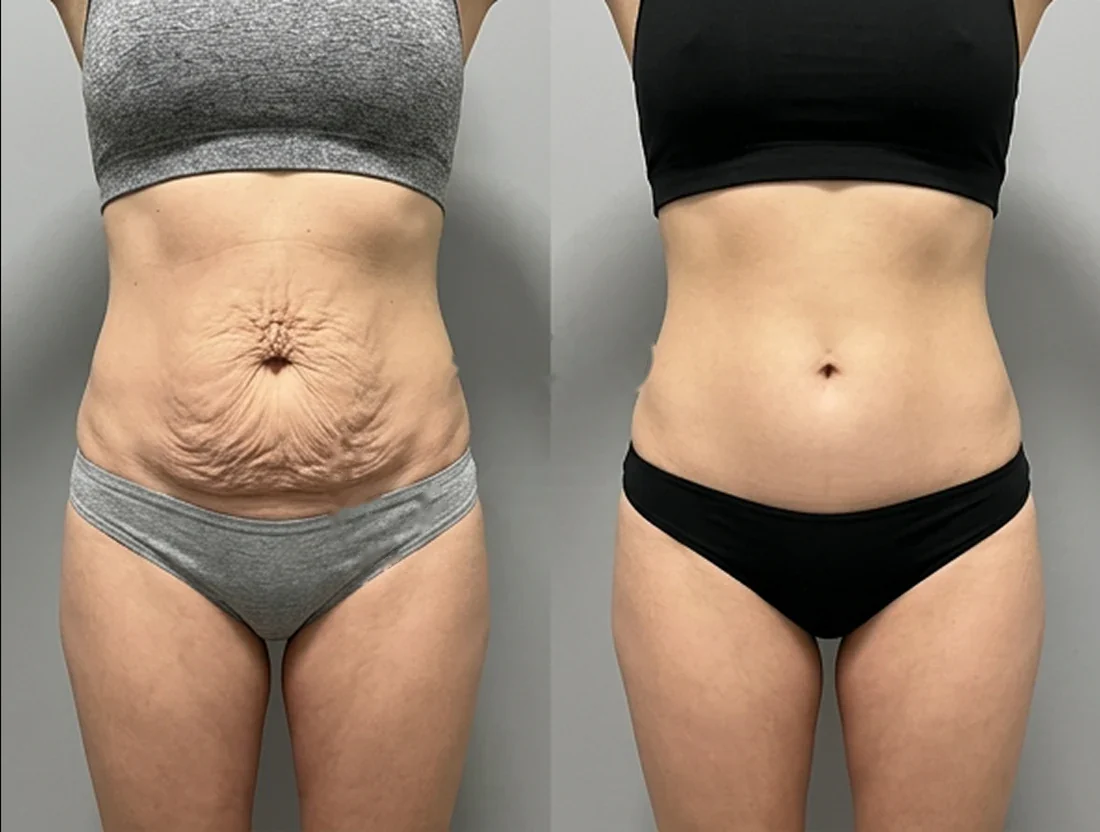
Tummy tuck: a patient's abdomen before and after surgery before after
A flat tummy and a toned silhouette in one operation. Your individual surgical plan and the expected result are discussed at the consultation

Message our coordinator

Free online consultation · Reply within 15 minutes

Message us on Telegram

By messaging us, you agree to our Privacy Policy

Tummy tuck (abdominoplasty) in Lublin: price and key facts

Tummy tuck for patients from Lublin at City Medical Centre: the price is named at the free online consultation and fixed in the contract with no hidden extra charges.

Duration
2–4 hours
Anesthesia
general
Stay
1–3 days
Recovery
back to work after 2–3 weeks
Final result
6–12 months after surgery
How it works
Send photos on WhatsApp or Telegram, get a free doctor assessment and the price, then confirm the plan and dates before anything is booked.

How it works · Tummy tuck prices

Information current as of 24 October 2026

Free online consultation on WhatsApp and Telegram

Results

Tummy tuck (abdominoplasty) results
of our patients

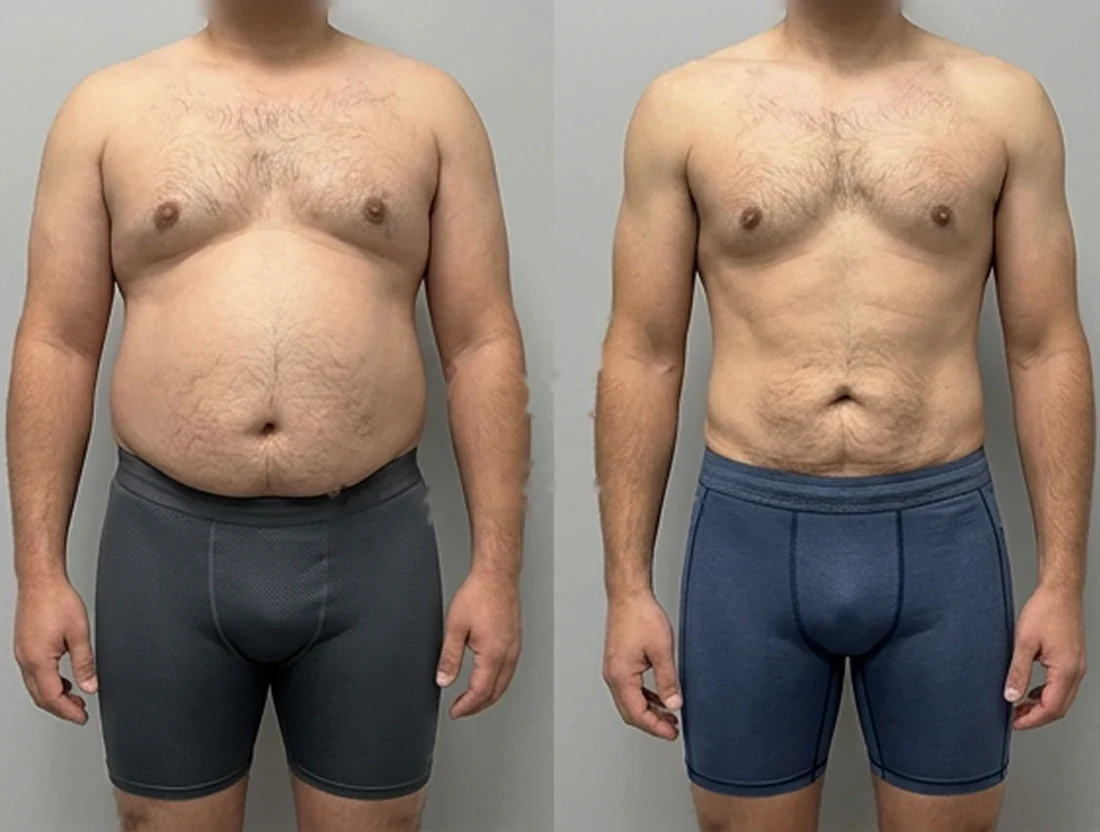
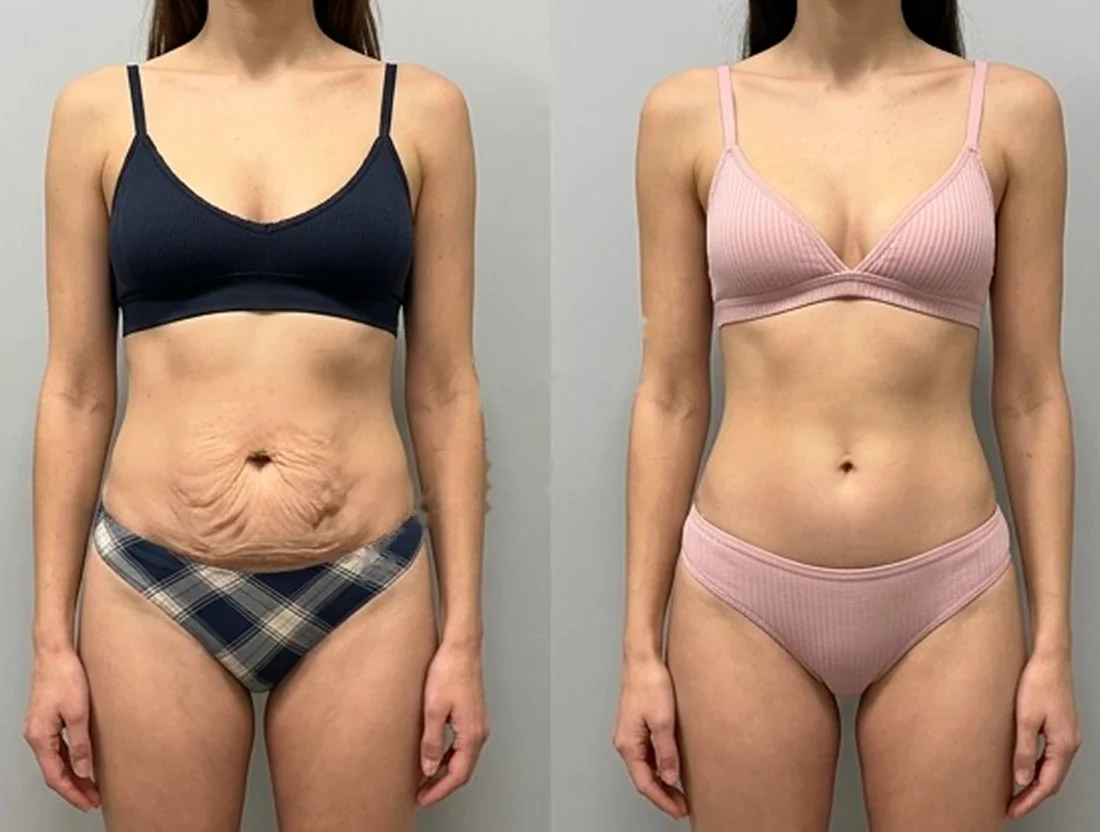
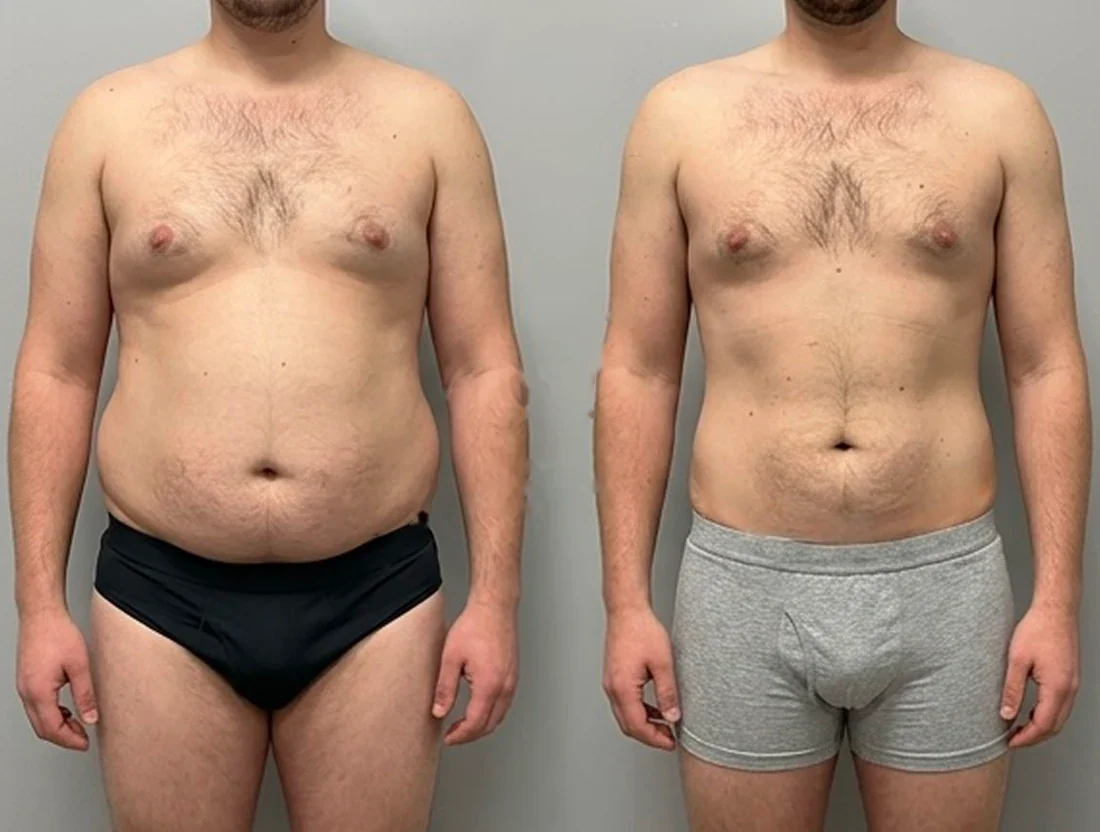
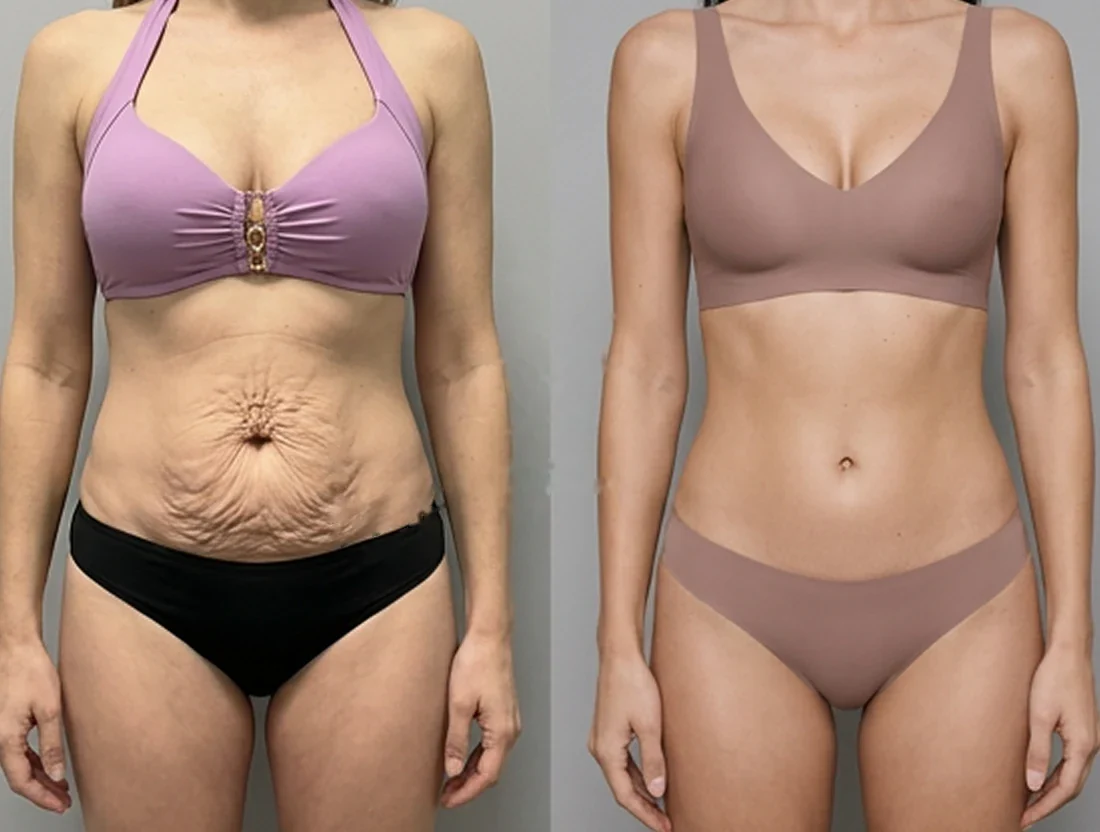
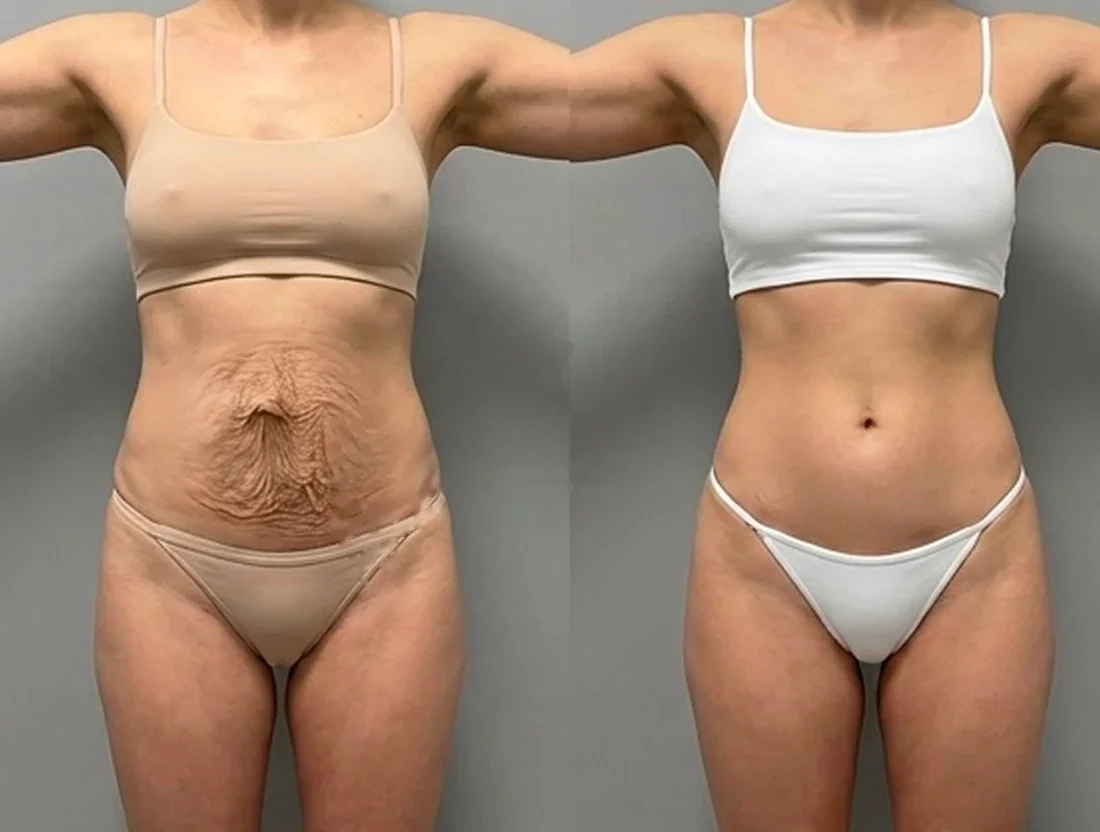
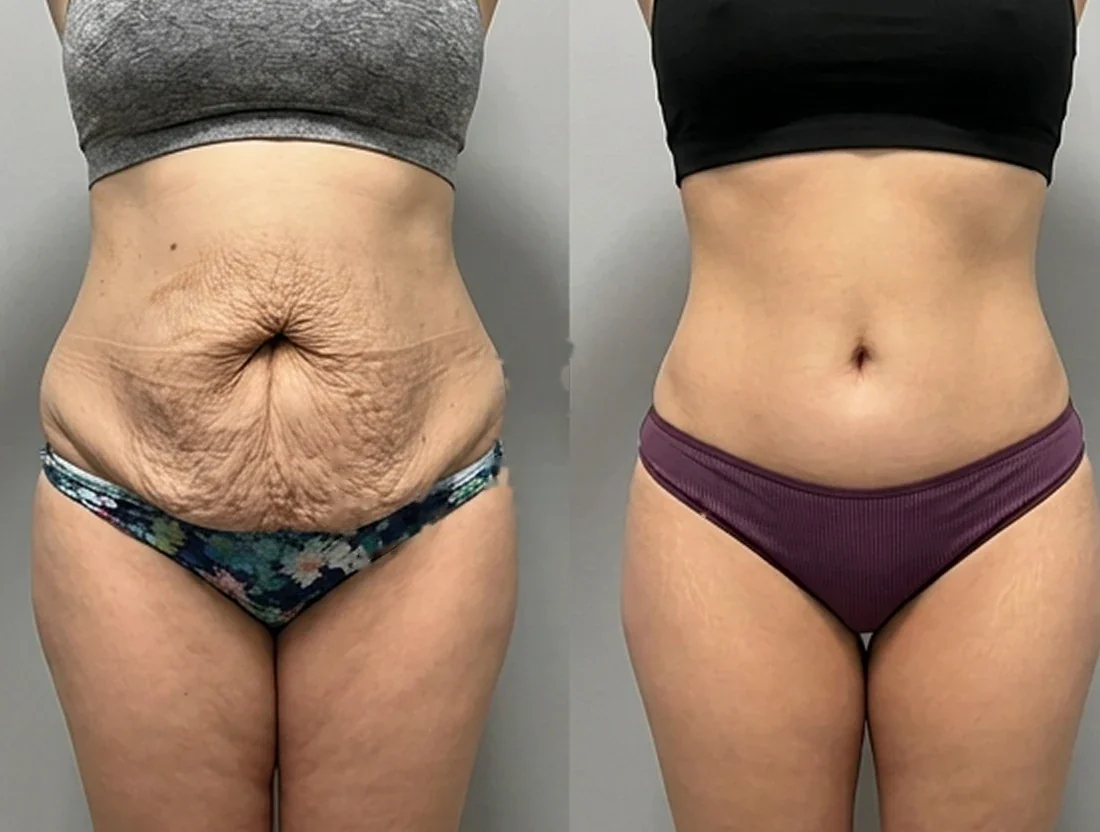
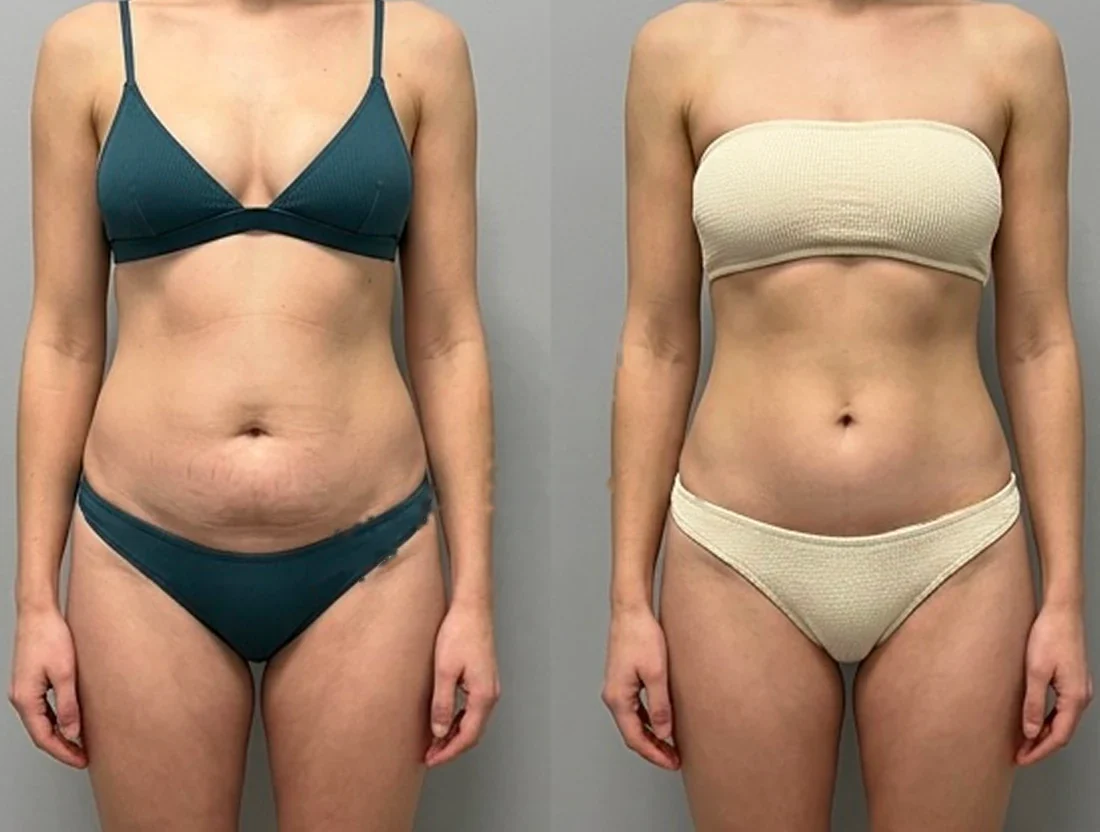
All cases are real patients. Faces and identifying details are hidden.

Tummy tuck: a female patient's abdomen before and after surgerybeforeafter
Tummy tuck: a male patient's abdomen before and after surgerybeforeafter
Tummy tuck: a female patient's abdomen before and after surgerybeforeafter
Tummy tuck: a male patient's abdomen before and after surgerybeforeafter
Tummy tuck: a female patient's abdomen before and after surgerybeforeafter
1 of 8

Comparison

Tummy tuck techniques

A tummy tuck is done as a full (classic) or mini operation, or combined with liposuction as lipoabdominoplasty. Compare the scope of surgery, the indications and the expected results to choose the right technique together with your surgeon.

Tummy tuck

Removal of excess skin, abdominal muscle tightening
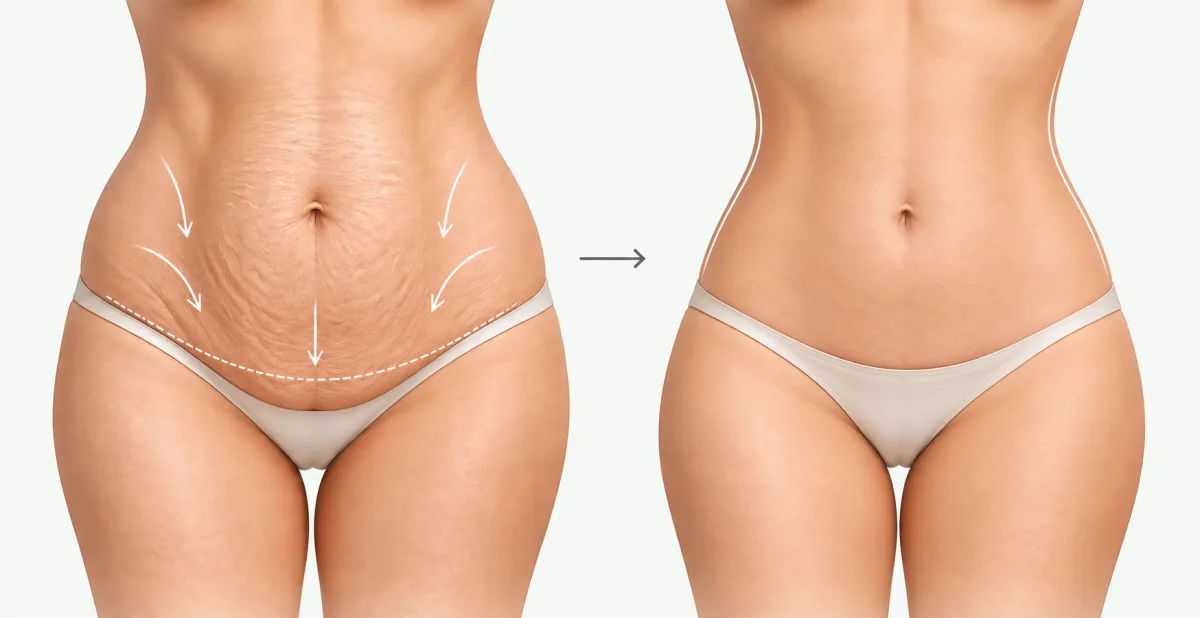
Tummy tuck diagram: the abdomen before surgery with the incision line, and the result
Main goal
Removal of excess skin, diastasis repair
When it is done
Excess skin after childbirth or weight loss
Anaesthesia and stay
General anaesthesia, up to 3 days in hospital

Lipoabdominoplasty

Tummy tuck with added liposuction
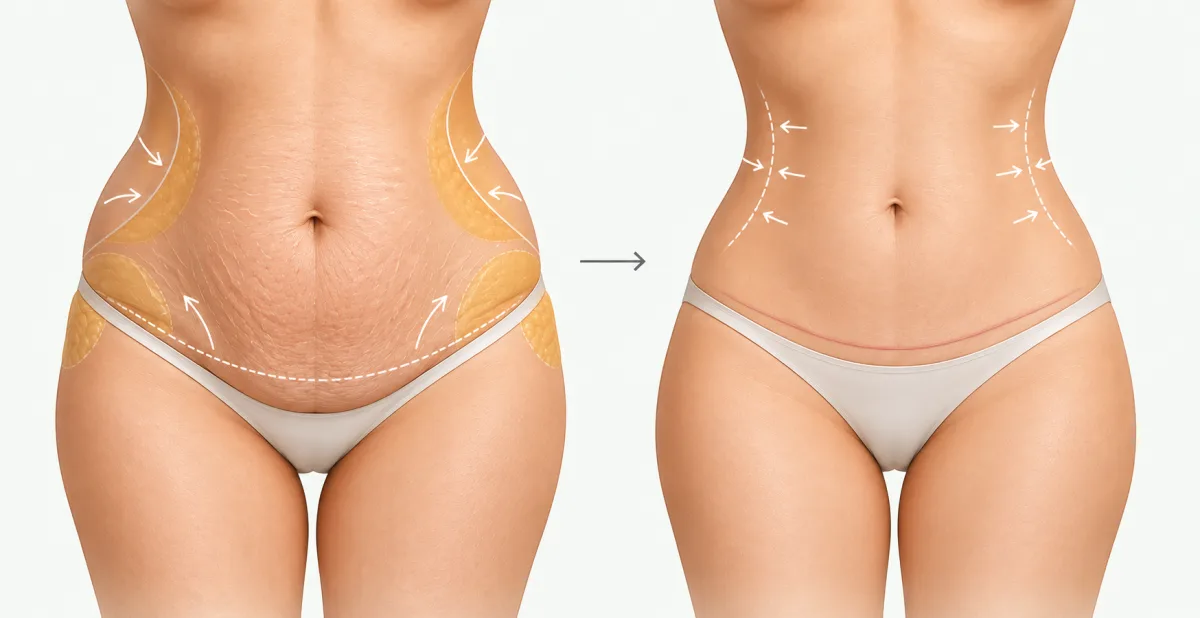
Lipoabdominoplasty diagram: the abdomen with fat on the flanks before surgery, and the result
Main goal
Tummy tightening and waist contouring
When it is done
For fat deposits on the flanks and waist
Anaesthesia and stay
General anaesthesia, up to 3 days in hospital

The benefits and recovery times shown are averaged for each technique and given for guidance: the scope of correction and rehabilitation depend on your anatomy and individual features, and the surgeon confirms them at the consultation.

At the consultation the surgeon draws up a plan for your case and explains how your tummy tuck will go.

Free, before surgery and with no obligation.

Book a consultation

Tummy tuck from the inside

About the clinic

A clinic where you can feel at ease

Modern equipment, comfortable rooms and care for every patient

A doctor and a patient in a clinic ward

Contact us the way that suits you

We will answer your questions and find a convenient time for a consultation

By messaging us, you agree to our Privacy Policy

A tummy tuck is not for everyone

If your case can be solved without surgery, the doctor will tell you so at the consultation — and you will not spend money for nothing.

Suitable

A surgeon shows a patient on a model and a monitor how the abdominal contour changes after a tummy tuck
  • Rectus abdominis diastasis
  • Skin folds after weight loss
  • Loose abdominal skin
  • Stretched skin after pregnancy
  • A distorted abdominal contour

Not suitable

A surgeon discusses the indications and contraindications for a tummy tuck with a patient
  • Acute infections
  • Severe heart, kidney or liver disease
  • Problems with blood clotting
  • Being under 18
  • Decompensated diabetes
  • Cancer
  • Skin inflammation in the surgical area
  • Currently pregnant or breastfeeding

Not sure the surgery is right for you?

Message us — the coordinator will ask for your photos in the messenger, and the surgeon will tell you whether a tummy tuck suits you. No surgery booking needed.

Find out if it suits me

A surgeon goes through a tummy tuck diagram with a patient at the consultation

Prices

You know the price
before surgery

The price is set at the consultation and fixed in the contract.

Other services

  • First consultationFree
  • Liposuction of the abdomen and flanksfrom $1,700
Book a consultation

Find out your tummy tuck plan and price

The surgeon assesses your abdominal skin and muscles, listens to your wishes and chooses the right correction technique.
The price is set at the consultation and fixed in the contract.
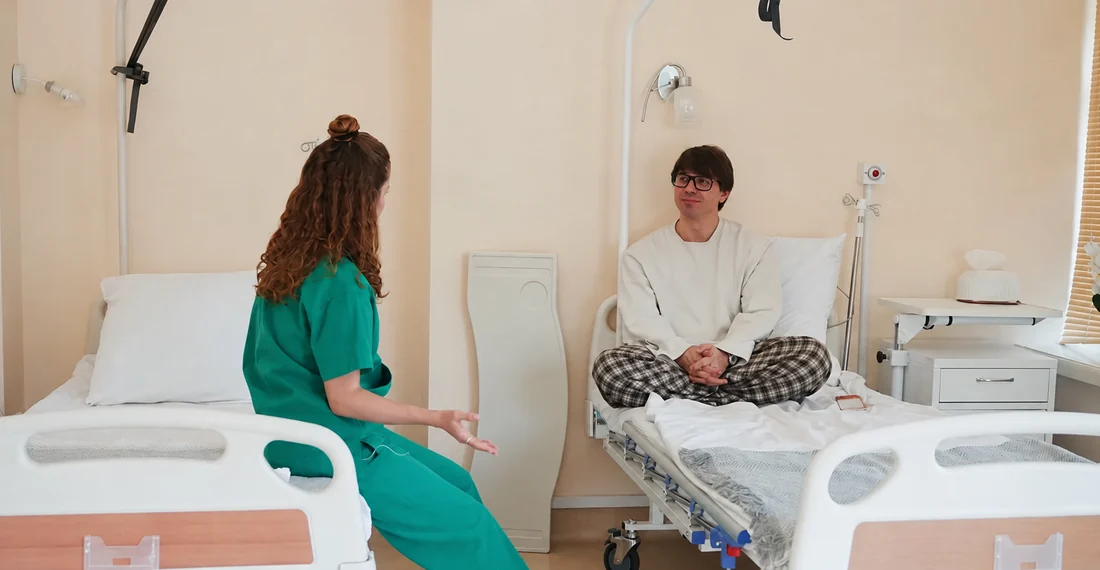
A nurse talks to a patient in a clinic ward

Message our coordinator

Free online consultation · Reply within 15 minutes

Message us on Telegram

By messaging us, you agree to our Privacy Policy
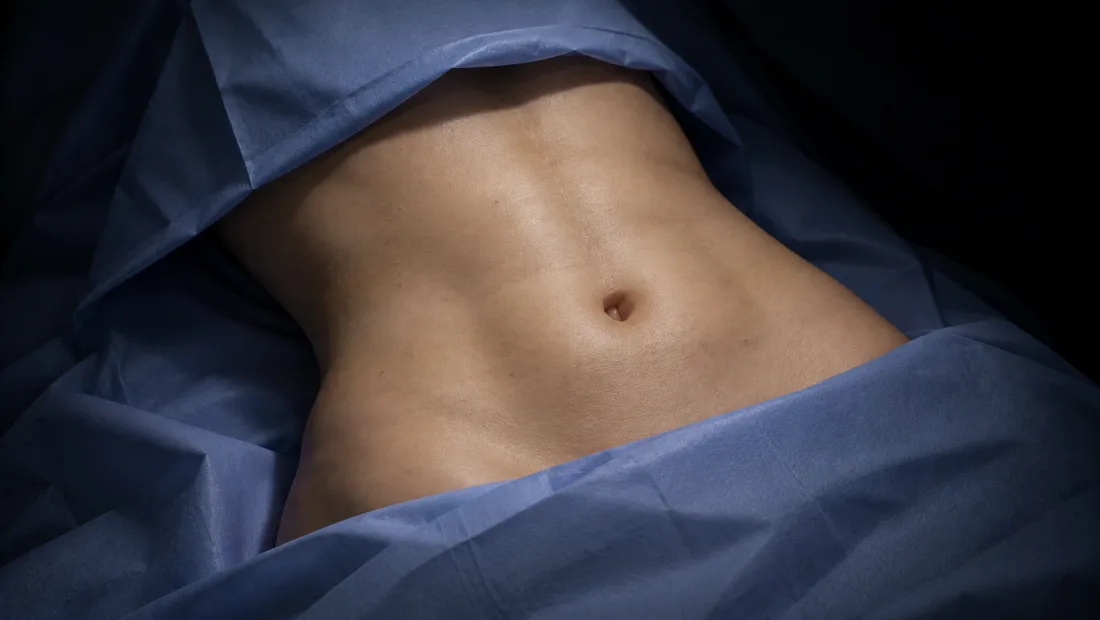
A patient's abdomen before a tummy tuck in the operating room

all inclusive

What the price includes

From preparation for surgery
to post-op check-ups.

  • All scheduled dressings
  • Scheduled post-op check-ups
  • A personal coordinator on call
  • Compression garments fitted on the day of surgery
  • A stay in a comfortable
    hospital ward with meals
  • Individual recommendations
    for recovery
  • Remote progress monitoring
    by photos

How it works

Three days at the clinic —
from preparation to discharge

An agreed correction plan, inpatient observation and post-op check-ups.

A doctor shows a patient a tummy tuck diagram on a monitor1

Consultation
and the surgical plan

The surgeon assesses your abdominal skin and muscles and checks for diastasis, listens to your wishes and chooses the right correction technique.

Paying the deposit by card at the clinic reception2

Booking the date
of surgery

We reserve a surgery date for you: the deposit can be paid by card at the clinic or online by bank transfer. The terms are fixed in the contract for medical services

A blood sample tube for tests before a tummy tuck3

Check-up before
surgery

Before surgery you complete a full lab check-up: blood tests, an ECG, a chest X-ray and reports from the required specialists.

The surgical team during the operation4

Surgery

The surgeon performs the tummy tuck with the chosen technique, repairs diastasis if needed and shapes a firmer abdominal contour.

A hospital ward at the clinic5

Inpatient stay

After surgery the patient stays for 1–3 days in a comfortable hospital ward with meals, under medical supervision.

A surgeon and a patient in the ward during recovery6

Recovery

After surgery you get a recovery programme. Check-ups at 7 days, 3 and 6 months help track your recovery.
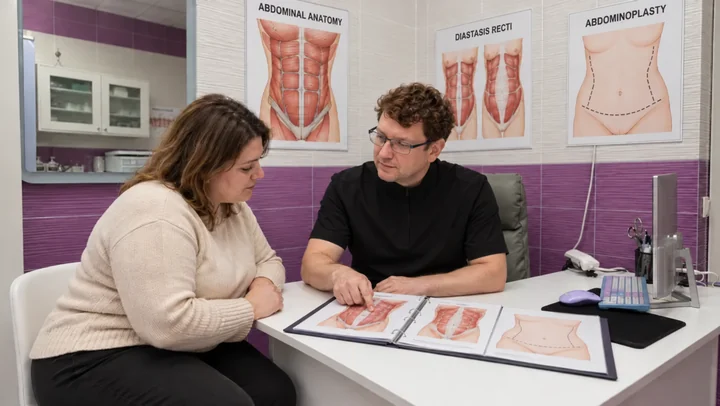
Book a free consultation — the surgeon will plan every step with you.

A doctor discusses the tummy tuck plan with a patient
Book a consultation
A doctor discusses the tummy tuck plan with a patient

How it really happens

Healing after a tummy tuck

After surgery comes a 1–3 day hospital stay under medical supervision. Drains usually come out after two days, and stitches are removed after 7 days. The compression binder is worn for 1.5–2 months — it supports the abdominal wall and helps shape a smooth contour. Most swelling subsides within 30 days; office work resumes after 2–3 weeks. For 2–3 months there is no sport, sauna or heavy lifting; early on, sleep on your back with your knees bent. The scar is fully mature by 12 months, fading until it is barely noticeable.

Post-op check-ups

After 7 days, at 3 months and at 6 months. Until the end of the year, get a post-surgery consultation with your surgeon to review results and get more information, at the clinic's expense

Advantages

Reasons to choose City Medical Centre

A surgeon discusses the tummy tuck plan with a patient at the consultation

Just find out — you lose nothing

At the consultation we discuss your wishes and assess your abdominal skin and muscles. The surgeon explains what changes are possible, chooses the correction technique and answers your questions.

A surgeon on a video call with a patient after surgery

We stay with you after surgery

The surgeon follows your recovery and the changing abdominal contour at check-ups after 7 days, 3 and 6 months. Check-ups, dressings and aftercare advice are already included in the price of surgery.

A surgeon shows a patient a model and tummy tuck diagrams

A beautiful contour that fits your figure

We choose the correction technique based on your skin, muscles and figure. Our aim is a harmonious abdominal contour that keeps the natural proportions of your body.

A patient writes down a convenient visit time in her planner

Your schedule is our priority

We respect your time: we work 24/7, with easy booking and a personal approach — we adapt to your pace.
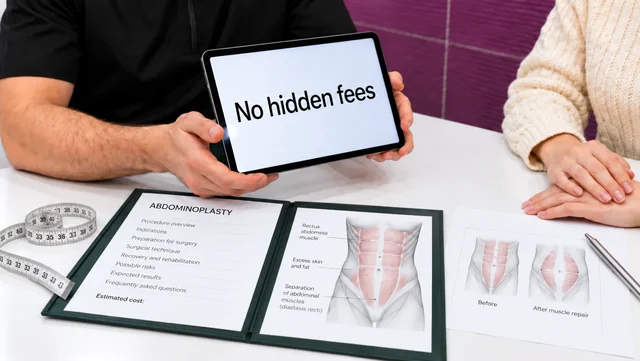
A surgeon shows a patient the fixed price of surgery with no extra charges

Fixed prices

After the consultation the surgeon defines the extent of correction, and you get a clear price for the surgery — no surprises on the way to the result you want.

A surgeon visits a patient in the hospital ward after surgery

Round-the-clock care after surgery

Recovery starts in a comfortable hospital ward under round-the-clock nursing care. The stay and meals are already included in the price.

FAQ

We answer what
people ask before booking

Choosing abdominoplasty in Lublin

Who is a candidate? Adults aged 18 and over with no contraindications; there is no upper age limit, and each case is considered after an examination. Surgery is done at a stable weight and is not performed during pregnancy or breastfeeding. Contraindications also include decompensated diabetes, blood clotting disorders, cancer and serious heart, kidney or liver disease. Lublin patients get a personal assessment.

Is it painful? During the procedure you feel nothing, since a tummy tuck is done under general anaesthesia. Tightness and soreness appear in the first days and are relieved with painkillers prescribed by the doctor; by the end of the first week the discomfort eases noticeably. For people from Lublin, the first visible changes appear about two weeks after surgery, when the main swelling subsides.

How much is a tummy tuck in Lublin? The answer comes at a free consultation: the surgeon examines the abdominal muscles and skin, chooses a classic or mini technique and decides whether diastasis repair or liposuction should be added. Only then is the price calculated and written into the contract. Send a request or message us in any messenger to get started.

Stories of well-known people

Well-known people who spoke openly about this operation, in their own words.

All stories about this operation →

The first fortnight: a body that cannot bend, twist or lift

A tummy tuck is an operation on the core. The incision runs low across the abdomen, and when the doctor repairs diastasis, the abdominal muscles are brought together along their length. For a patient in Lublin, the first practical question is therefore not how the result will look. It is what the first days will be like when everything you normally do with your trunk has to be done differently. The operation takes 2–4 hours under general anaesthesia, and the stay in hospital is 1–3 days under medical supervision. After that, recovery continues at home. Drains are usually removed after two days and stitches after 7 days, but the body needs much longer to settle.

Think through the day in physical terms. Reaching down to a low drawer, picking up a bag, getting out of a deep sofa and pulling on socks are all trunk movements. In the first 2–3 weeks, physical exertion, heavy lifting and sudden movements are not allowed. Many people underestimate how many such movements fill an ordinary day. A useful exercise before the date is to walk through your flat or house with a notebook. Write down everything that sits below knee height or above shoulder height and move it to waist level. Put the kettle, the cups, the medicines, the phone charger and the clothes you will actually wear within easy reach. Sleeping on your back with knees bent is advised at first, so arrange pillows in advance and check that you can get in and out of bed without a deep twist.

Lublin has its own geography to factor in. The Bystrzyca river divides a flatter eastern part from a western part with varied relief and loess gorges, and the city lies on the Lublin Upland, with its highest point at 235.0 m and its lowest at 163.6 m above sea level. For someone recovering from an abdominal operation, this simply means thinking about the route from the front door. If you live in a part of the city with slopes, steps to a block entrance or a steep path to the bus stop, plan who will accompany you on the first short walks and what you will do on a day when the surface is wet or icy. Short, slow walks are usually part of an individual recovery programme, and the coordinator can go through the details with you in the chat.

Work is the second big question. The service describes a return to office work after 2–3 weeks. That figure belongs to desk-based work. If your job involves standing all day, carrying boxes, lifting patients or children, or any repeated bending, say so at the online consultation. Sports, sauna and heavy lifting are off-limits for 2–3 months, and a doctor cannot name a safe return date without knowing what your working day involves. A good habit is to describe a typical shift in detail to the coordinator: how often you lift, how much weight it is in everyday terms, and whether you can be moved to lighter tasks for a while. The doctor can then give advice on timing and phasing that fits your own situation, not a general schedule.

Think also about who will be around in the first days. Even with a clear plan, you will not want to be alone straight after discharge. A spouse, a parent, an adult child or a close friend can handle shopping, cooking and the heaviest household tasks while you move slowly. Agree this in advance, not on the day. The coordinator stays on call round the clock on WhatsApp and Telegram, so questions that come up at night about a dressing, a drain or a sensation of tightness do not have to wait until morning.

Compression, sleep and a household that still needs running

A compression binder is worn for 1.5–2 months. It supports the abdominal wall and helps shape a smooth contour, and it is a working part of the treatment. Compression garments are fitted on the day of surgery, and they are included in what the contract covers. Practically, it means you will be wearing the same type of garment day and night for weeks, so it is worth thinking about clothing. Loose, soft tops and trousers with a high, forgiving waistband are much easier than anything with a stiff belt line. In a Lublin winter, layers over the binder also matter: you will want to be warm without pressing anything against the incision area.

Family life changes in specific ways. If you have small children, the biggest adjustment is lifting. A toddler who wants to be picked up several times a day is a heavy load for a recovering abdominal wall, and during the first 2–3 weeks heavy lifting is not allowed. Many parents manage by sitting down and letting the child climb into their lap, rather than bending and lifting. This can work, but it should be agreed with the doctor, because a child climbing onto you can cause sudden movements, too. A better plan for the first weeks is to arrange for a spouse, grandparent or other relative to take over the carrying, bathing and car-seat tasks. If that is impossible, tell the coordinator early. The recovery programme can then be set up around your real situation, not an imagined one.

Older children are easier but not free of consequences. They need to know that hugs will be gentle for a while, that the dog should not jump on you and that you cannot help with moving furniture or carrying shopping bags. Younger students in the household, which is not unusual in a city where about 35% of the population are students, can take over the heavier chores. It helps to write down the household tasks and allocate them before the date, so the plan does not fall apart in the second week when you feel better and are tempted to do too much.

Sleep deserves its own paragraph. Sleeping on your back with knees bent is advised at first. If you normally sleep on your side or front, this takes getting used to. A wedge pillow or a stack of ordinary pillows under the knees often helps, and it is much easier to test this a few nights before than to improvise on the first night at home. Keep water, medicines and a lamp within reach of the bed so you do not have to twist or stretch.

It is also worth setting expectations. Most swelling goes within 30 days, but tightness and a feeling of heaviness can continue for longer, and by 1.5–2 months the interim result can be assessed. Check-ups at 7 days, 3 months and 6 months, plus remote progress monitoring by photos, give you scheduled moments to ask whether what you feel is normal. Photos sent on WhatsApp or Telegram are the quickest way to show a dressing, a bruise or an area of swelling to a person who can respond, and the reply does not depend on office hours.

Finally, think about the binder and hygiene together. Having a second garment to change into is a practical question to raise with the coordinator, who can explain how the fitted garment is cared for and when it can be taken off for washing. Do not improvise this part, because the binder works only when it fits as it should.

Scars, sunshine and the Lublin calendar of light

A tummy tuck always leaves a scar, since removing excess skin has that cost. A classic operation leaves an incision across the lower abdomen from hip to hip, below the underwear or swimsuit line. A mini tummy tuck leaves a much shorter one. Over time the scar fades and thins, and by 12 months it is fully mature: it fades and is barely noticeable. The word to hold on to is "time". In the first months the scar is still changing, and how you treat it in that period matters more than any single product.

Sun is part of that treatment. Lublin has 1,821.3 hours of sunshine a year, with about 263 hours in each of June and July, while December has only 30.3 hours. The contrast is useful for planning. A healing scar should be kept away from strong direct sun, and the doctor will give you specific instructions on covering and protecting it. In practice this means that a scar which is still pink or red in its first summer is better covered by clothing than exposed on a beach. Tanning beds are also on the avoid list for at least a month after surgery. If you are the kind of person who spends June weekends outdoors, it is worth being honest about that at the consultation, because it affects what time of year suits you.

Summer in the city is also water. Zemborzyce Lake in the south is an artificial reservoir created by damming the Bystrzyca, and it serves recreational functions. The pool is also on the avoid list for at least a month after the operation, and sauna and steam bath likewise. Open water is a separate question for the doctor: the incision must be fully healed and cleared at a check-up before it is exposed to anything of the kind. Do not decide this on your own, even if the first weeks of warm weather tempt you. The scheduled check-ups at 7 days, 3 months and 6 months are natural moments to ask when it is reasonable to return to swimming and which activities remain off-limits.

Another point concerns clothing against the scar. Because the incision sits low, below the swimsuit line, many patients assume it will be invisible in summer clothing, and that is largely the intent of its placement. Still, waistbands and the edges of garments can rub a healing line. In the first months, soft fabrics and loose fits help. The compression binder covers the area for 1.5–2 months anyway, so the practical sun question starts mostly after the binder is no longer needed, around the time you might be heading to the lake.

Lublin's weather outside the sunny months is relevant too. Relative humidity averages 80.1% a year, reaching 89.5% in December and 89.0% in November, and the city has on average 67.5 snowy days a year. For someone wearing a compression garment and moving carefully, long grey damp spells are rarely a problem for the incision itself, but they do affect mood and the willingness to go for short walks. Planning a few indoor and outdoor routes helps, as does having someone to call.

Last, the final result takes time. The first changes appear 2 weeks after surgery as the main swelling subsides, the interim result comes at 1.5–2 months and the final contours at 6–12 months. Judging a scar at 6 weeks is like judging a house by its scaffolding. Photos taken at the scheduled points help you compare honestly.

Choosing the season: temperatures, holidays and the rhythm of the city

There is no single correct month for a tummy tuck, and the climate facts for Lublin show why. The city has a humid continental climate. July is the warmest month, with a mean maximum of 24.5 °C and a mean minimum of 13.6 °C, and August is close behind at 24.3 °C and 13.1 °C. The coldest months are January (-0.1 °C maximum, -4.9 °C minimum), February (1.6 °C and -4.2 °C) and December (1.2 °C and -3.3 °C). The record low is -33.7 °C in January and the record high is 38.0 °C in June. Each season brings its own advantages and difficulties during recovery.

Winter has the advantage that a compression binder under warm clothes is not a problem, and nobody expects you at outdoor events. Daylight is short, though: only 30.3 hours of sunshine across December. Ice and snow make walking on uneven surfaces less secure, and sudden movements are exactly what you are avoiding. If you choose winter, plan your first short walks with a companion and choose cleared, level routes. Heavy winter coats can also be awkward to put on without twisting, so decide in advance what you will wear.

Summer offers long daylight and easy short walks, which suit gradual recovery. The cost is heat under the binder. The warmest months have means around 24 °C, but record highs reach far beyond that, and a compression garment worn day and night is less comfortable in a heatwave. Summer is also when scar protection from sunshine is most important and when swimming and sauna are most tempting but still off the list in the first weeks.

Spring and autumn sit in between. Precipitation totals 601.0 mm a year on 166.9 days, with July the wettest month at 82.2 mm, then May at 70.7 mm and June at 66.8 mm, while February is driest at 31.5 mm and January at 33.6 mm. Wet weather is mostly a nuisance for walking, not for the healing itself, but it affects how easily you can go out in the first weeks.

The calendar of the city and the country matters as much as the weather. Poland has 14 public non-working days: 1 January, 6 January, Easter Sunday and Monday, 1 May, 3 May, Pentecost Sunday, Corpus Christi, 15 August, 1 November, 11 November, 24 December since 2025, and 25 and 26 December. If your work is flexible around such days, a date that lets you combine a few of them with your recovery means fewer days of leave. A concrete illustration: an operation planned for late January 2027, with the return to office work after 2–3 weeks, would put you back at your desk in mid-February. That is only an example, and the real date is agreed with the coordinator after the consultation.

Events fill the summer. The Night of Culture falls on the first Saturday night of June, East of Culture comes in late June, Carnaval Sztukmistrzow and the Urban Highline Festival fall in the last days of July, and the Jagiellonian Fair arrives in late August. The Student Culture Days last about three weeks between May and June, and the St Nicholas Day Folk Music Festival takes place in the first decade of December. If you do not want to miss one of them, work backwards. Sport, sauna and heavy lifting are off-limits for 2–3 months, and a crowd is a place where you can be jostled, so ask the doctor whether standing in a dense crowd is sensible at a given point in recovery. You may find that choosing a quiet stretch between events makes recovery calmer.

University life also sets a rhythm. With about 35% of the population being students, and with the Catholic University of Lublin, founded in 1918, and Maria Curie-Sklodowska University as the main universities, the city has academic terms and exam sessions. If you are a student, a lecturer or a parent of one, plan the operation outside exam weeks, since deadlines add stress you do not need in the first fortnight.

Weight, NFZ and where a tummy tuck sits in the system

Many patients considering a tummy tuck in Lublin have first lost a lot of weight or have had children. The service text states that a tummy tuck is not a way to lose weight: its goal is to remove excess stretched skin and the fat apron and to restore the abdominal muscle wall. It is done at a stable weight. If your weight is still changing, the advice is to see a dietitian or an endocrinologist first. A stable weight before surgery also helps keep the result.

The wider picture in Poland explains why this conversation is common. In 2019, 58.2% of people over 18 had overweight or obesity, compared with an EU average of about 53%, and obesity measured by BMI was 18%. According to a report cited in the 2026 AOTM analysis, BMI above 40 occurs in about 300 thousand people and BMI above 35 in over 1.5 million. The NIK figures for 2022 give 481 thousand adults with obesity in Lubelskie, or 29.0%, against 29.8% nationally, although the chart is titled as a share of patients with overweight and obesity, so the measure is not identical to prevalence. The point for you is practical: many people go through significant weight loss, and some end up with loose skin that does not return.

Bariatric operations are a publicly financed NFZ service. The tariff group is F14, "Chirurgiczne leczenie otyłości", covering BMI of 40 kg/m2 or more from age 18, and BMI of 35–40 kg/m2 where surgically induced weight loss may improve obesity-related disease. It has existed as a separate group since 1 January 2017, covering all three types of bariatric operation. The earlier KOS-BAR pilot programme used the same BMI thresholds, had 15 designated centres and about 2,907 patients planned, and its pre-operative phase usually lasted 3–6 months with a multidisciplinary team. A tummy tuck after weight loss is a different matter, and the key point is financing: services not listed in the NFZ catalogues are not financed by NFZ, while within the funded range treatment is in most cases free for the insured patient. Ask the coordinator how your own case is classified, and rely on the contract to set out what you will pay and what is included.

Health insurance in Poland is a contribution of 9% of personal income, of which 7.75% is deducted from tax and 1.25% is paid directly to NFZ. Uninsured patients pay the full cost of services. A private plastic procedure sits outside this system and is arranged by a contract for medical services, with the terms fixed before the operation. The service text states that the cost is named at the free online consultation and fixed in the contract, with no hidden extra charges. It also says that the cost covers all scheduled dressings, scheduled post-op check-ups, a personal coordinator on call, compression garments fitted on the day of surgery, a comfortable hospital ward with meals, individual recovery recommendations and remote progress monitoring by photos.

If you are on an NFZ waiting list for something else, such as a bariatric assessment or an orthopaedic operation, remember that the system has its own rules. A patient may be entered on a waiting list with only one provider for a given service, and the original referral must be delivered within 14 working days of entering the list. Waiting times vary by specialty: a ministerial reply of 5 August 2025 on orthopaedics noted that the average wait for hip replacement fell from 195 days in 2022 to 172 days in 2024, and for knee replacement from 242 to 214 days, although that source does not state clearly whether those figures are national. These figures are not about tummy tuck, but they show why it is wise not to schedule an elective cosmetic operation too close to other medical commitments. Tell the coordinator about anything pending, so dates do not collide.

The tummy tuck itself is not for everyone. Suitable situations include rectus abdominis diastasis, skin folds after weight loss, loose abdominal skin, stretched skin after pregnancy and a distorted abdominal contour. Not suitable are acute infections, severe disease of the heart, kidneys or liver, problems with blood clotting, age under 18, decompensated diabetes, cancer, skin inflammation in the surgical area, and pregnancy and nursing. If your case can be solved without surgery, the doctor will say so at the consultation.

Is there a good time of year in Lublin to plan a tummy tuck?

There is no single right month. Winter, with January means of -0.1 °C maximum and -4.9 °C minimum, makes a compression binder under warm clothes easy but brings ice and little daylight, since December has only 30.3 hours of sunshine. Summer, with July means of 24.5 °C maximum and 13.6 °C minimum, is easier for short walks but warmer under the binder and demands careful scar protection from the sun. Spring and autumn sit between the two. The doctor will discuss your work, family and events at the online consultation, and the date is agreed afterwards.

How do Lublin public holidays affect the return to work?

The return to office work is described as 2–3 weeks after surgery, so public non-working days that fall in that period can reduce the leave you need. Poland has 14 such days, including 1 and 6 January, Easter Sunday and Monday, 1 and 3 May, Pentecost Sunday, Corpus Christi, 15 August, 1 and 11 November, 24 December and 25 and 26 December. As an example, an operation in late January 2027 would put you back at a desk around mid-February. Treat this as an illustration and settle your own dates with the coordinator.

Can I go to Zemborzyce Lake or a pool in the first summer after surgery?

Not in the first weeks. Sauna, steam bath, pool, tanning beds, alcohol and smoking are to be avoided for at least a month, and sports, sauna and heavy lifting are off-limits for 2–3 months. Zemborzyce Lake in the south of the city is a recreational reservoir, and swimming there falls under the same caution until the doctor confirms at a check-up that the incision has healed. Check-ups come at 7 days, 3 months and 6 months, and the scar is fully mature at 12 months.

Does NFZ cover a tummy tuck?

Services that are not listed in the NFZ catalogues are not financed by NFZ, while within the funded range treatment is in most cases free for the insured patient. Bariatric operations are in the funded range, under tariff group F14. A tummy tuck at City Medical Centre is arranged by a contract for medical services, with the cost named at the free online consultation and fixed in the contract. Ask the coordinator about your individual case on WhatsApp or Telegram, and they will explain what the contract includes.

I am still losing weight after a bariatric operation. When is a tummy tuck sensible?

The service text says surgery is done at a stable weight, and that if your weight is still changing you should first see a dietitian or an endocrinologist. A stable weight before surgery also helps keep the result. The doctor will assess your skin and muscles at the online consultation and say whether the timing is right, so send photos and a short history of your weight change, and ask directly when a repeat assessment would make sense.

Who should be at home with me in the first days, given that I have children?

Plan for a spouse, relative or close friend to take over lifting and carrying. In the first 2–3 weeks, physical exertion, heavy lifting and sudden movements are not allowed, which includes picking up a small child. Sleeping on your back with knees bent is advised at first, so arrange pillows and put everyday items at waist height beforehand. The coordinator is on call round the clock, so questions that arise in the evening or at night can be sent on WhatsApp or Telegram, with photos if needed.

How should I time the pre-operative tests when I live in Lublin?

The list includes blood and urine tests, coagulation panel, biochemistry, infection tests, ECG, chest X-ray, leg vein ultrasound and a GP's report, plus anaesthetist consultations. Tests are usually valid for 10–14 days, so they should be done in advance but not too early, and the doctor gives the exact list at the consultation. Smoking, alcohol and medicines affecting blood clotting are stopped 7–10 days before the operation. Ask the coordinator to help you arrange the order so that the results are still valid on the day.

Will humid, snowy weather slow healing?

The documents describe recovery in terms of fixed milestones, not weather: drains usually come out after two days, stitches after 7 days, most swelling goes within 30 days and the binder is worn for 1.5–2 months. Lublin's humidity averages 80.1% a year, with 67.5 snowy days, and these conditions mainly affect how comfortable and safe short walks are, not the healing itself. Choose cleared, level routes, take someone with you at first, and send photos to the coordinator if anything about the dressings or the area worries you.