


























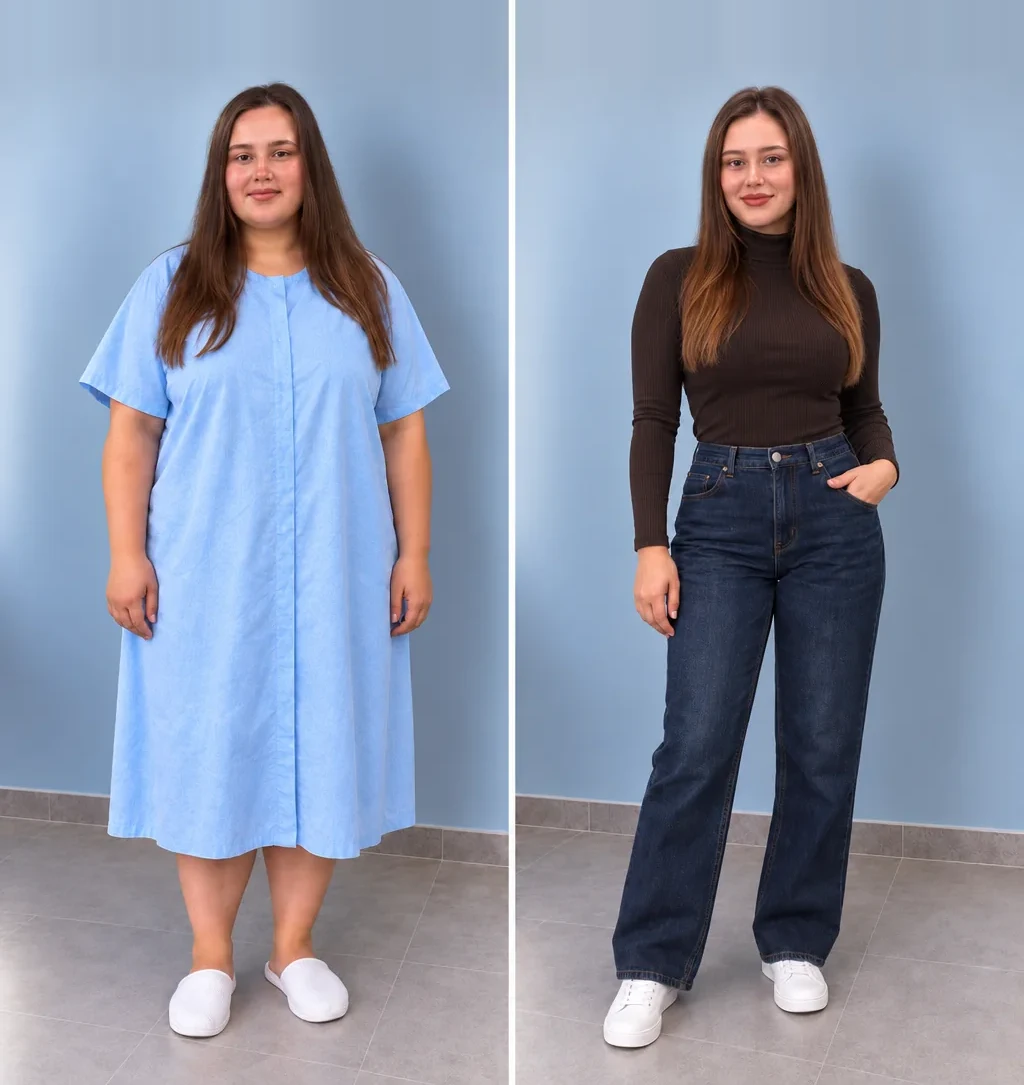
 beforeafter
Irina, 26
Bariatric surgery
Bariatric surgery
$3,600
$4,800 · First consultation — Free
Free online consultation · Reply within 15 minutes
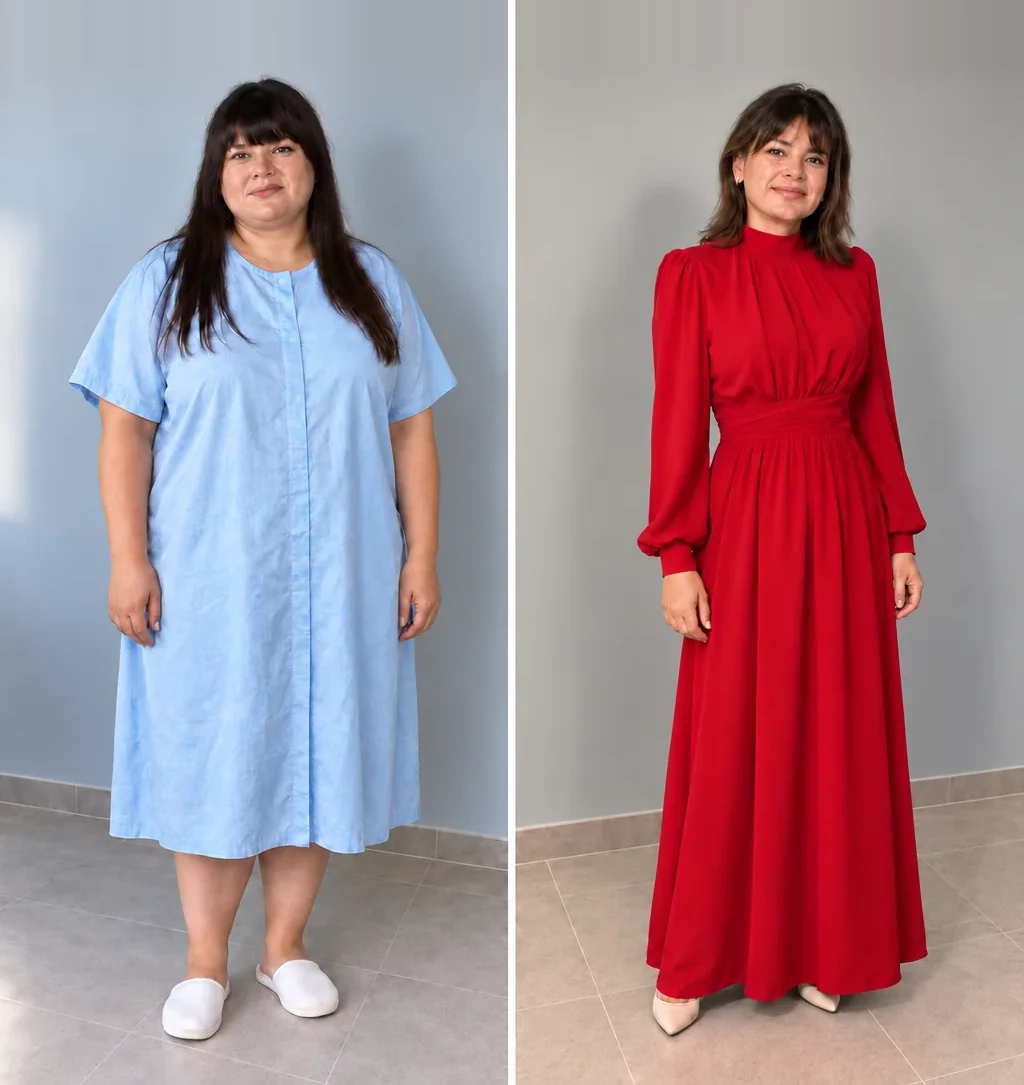 before
after
Message our coordinator
Free online consultation · Reply within 15 minutes
Message us on TelegramMessage us on WhatsAppBy messaging us, you agree to our Privacy Policy
Bariatric surgery for patients from Lublin at City Medical Centre starts at $3,600. The first online consultation is free; the doctor names the final price and it is fixed in the contract.
How it works · Bariatric surgery prices
Information current as of 24 October 2026
Results
Only real clinic patients appear here.
beforeafterBariatric surgery
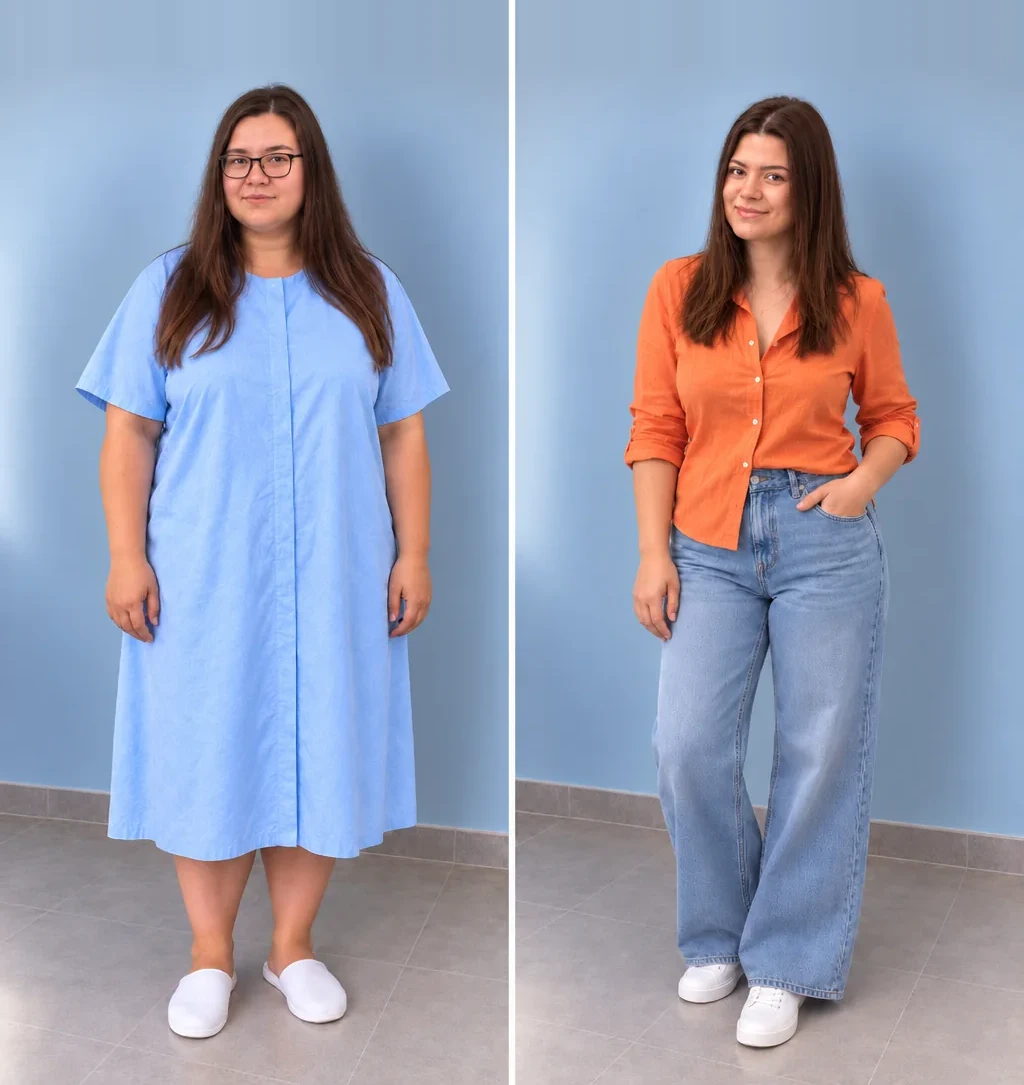 beforeafter
Bariatric surgery
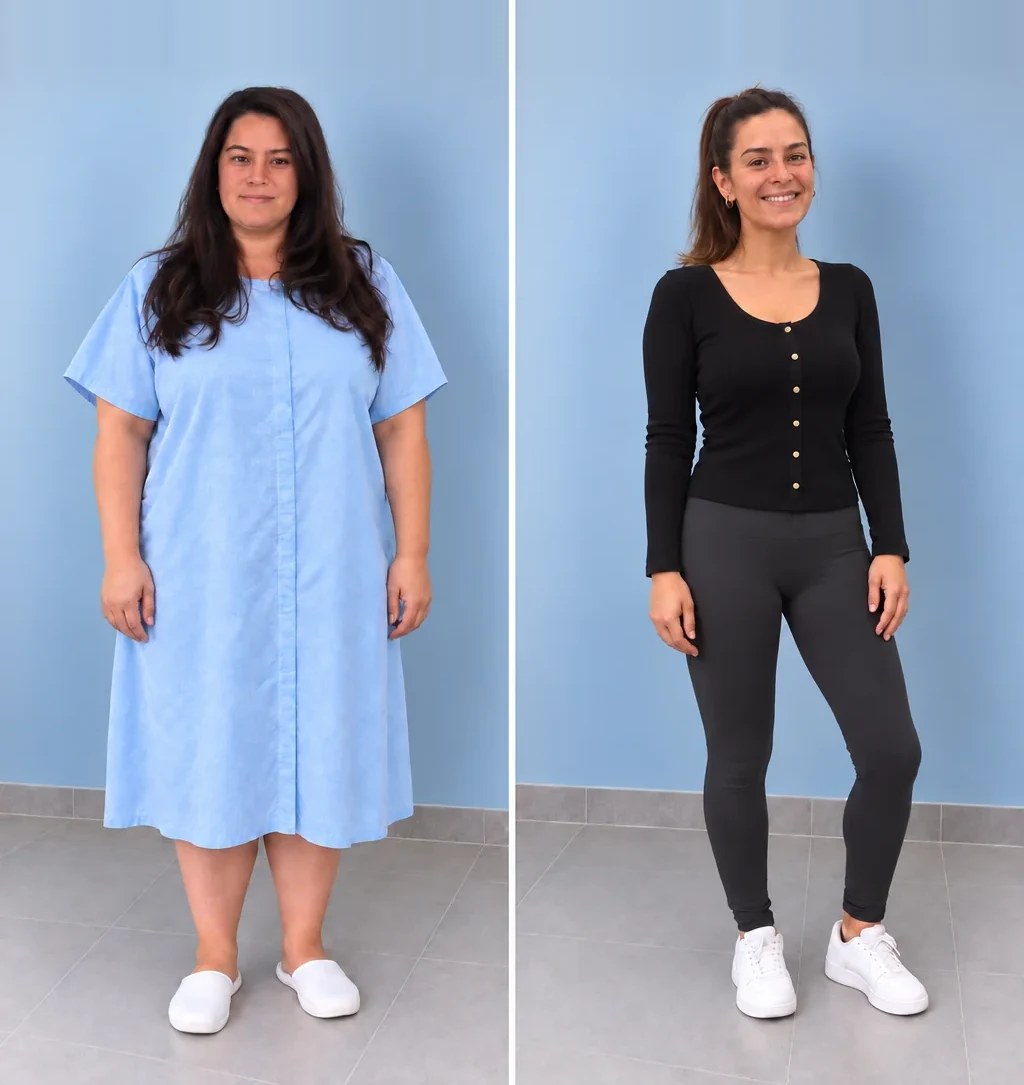 beforeafter
Bariatric surgery
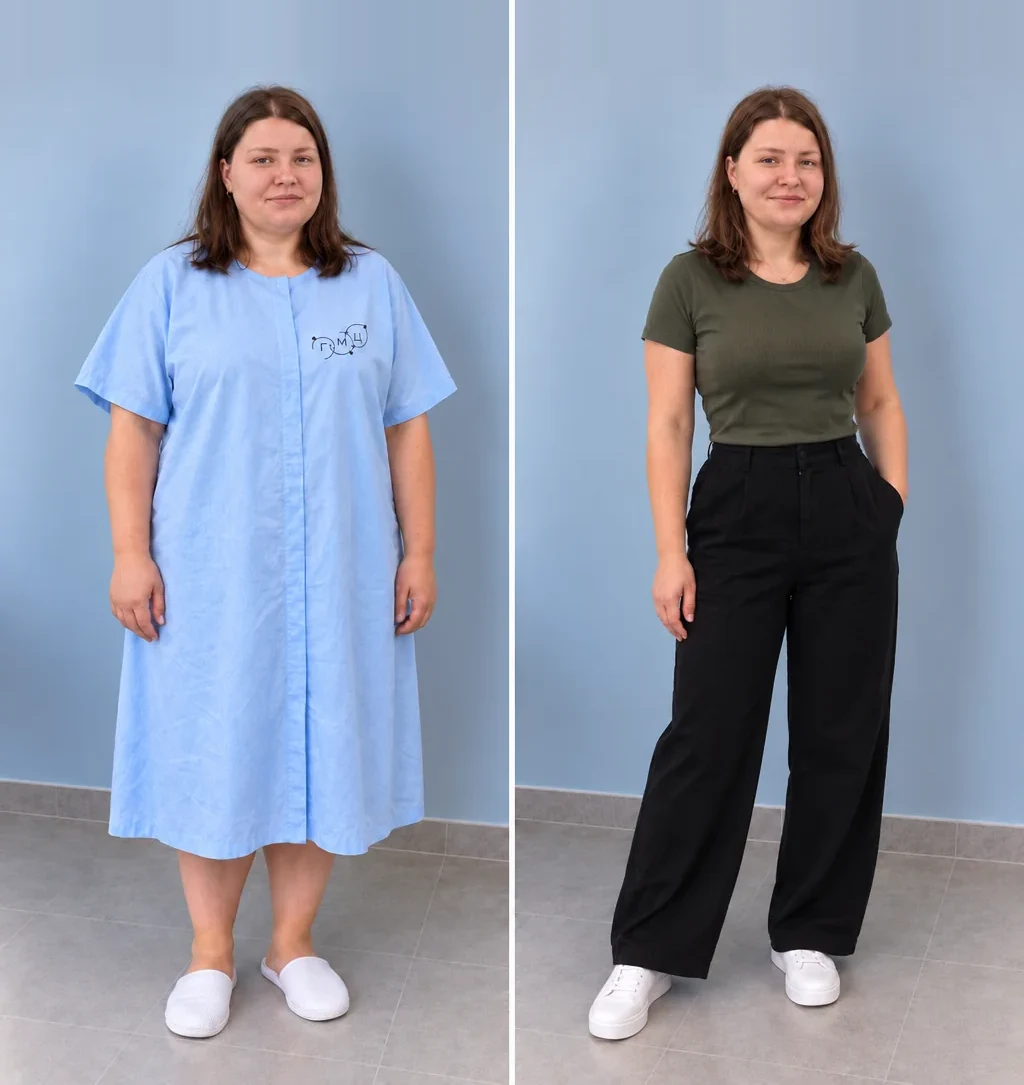 beforeafter
Bariatric surgery
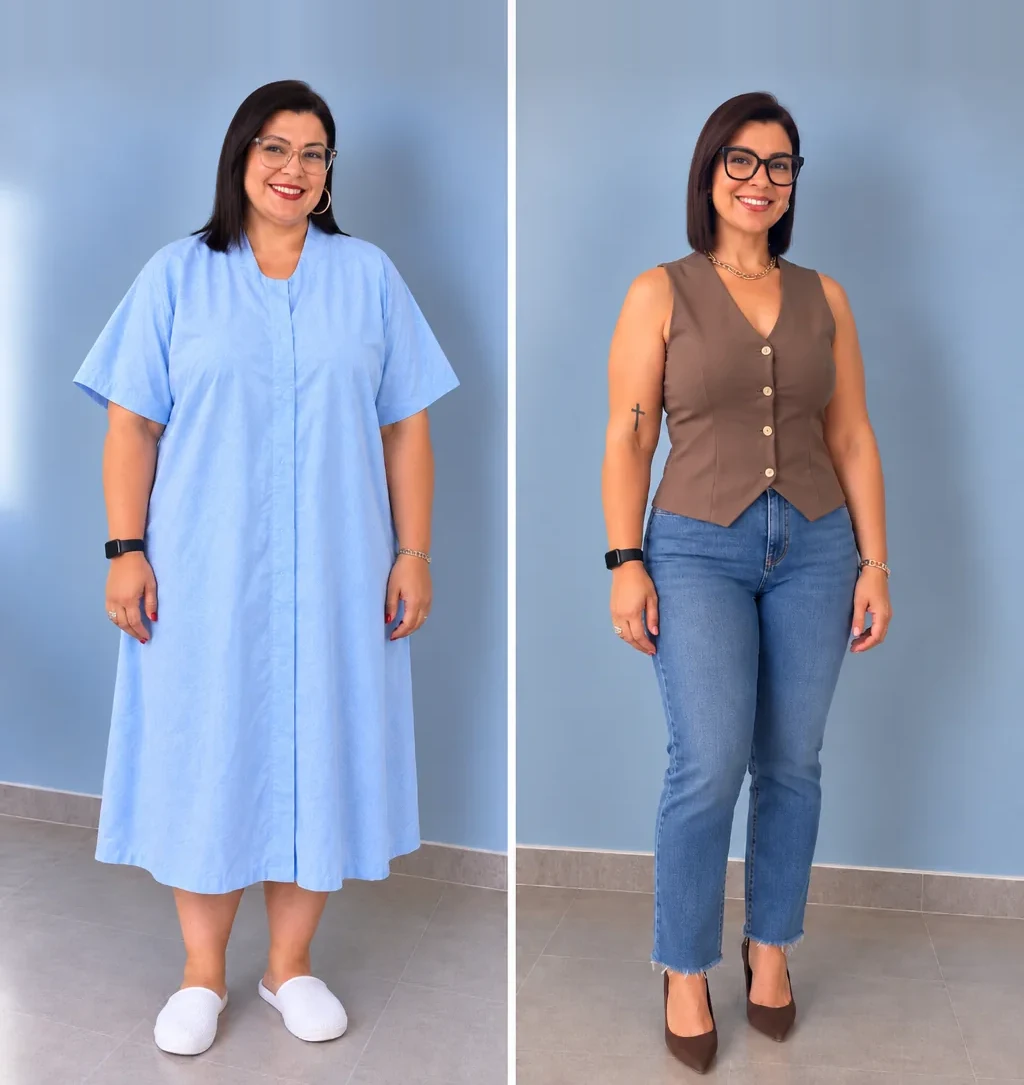 beforeafter
Bariatric surgery
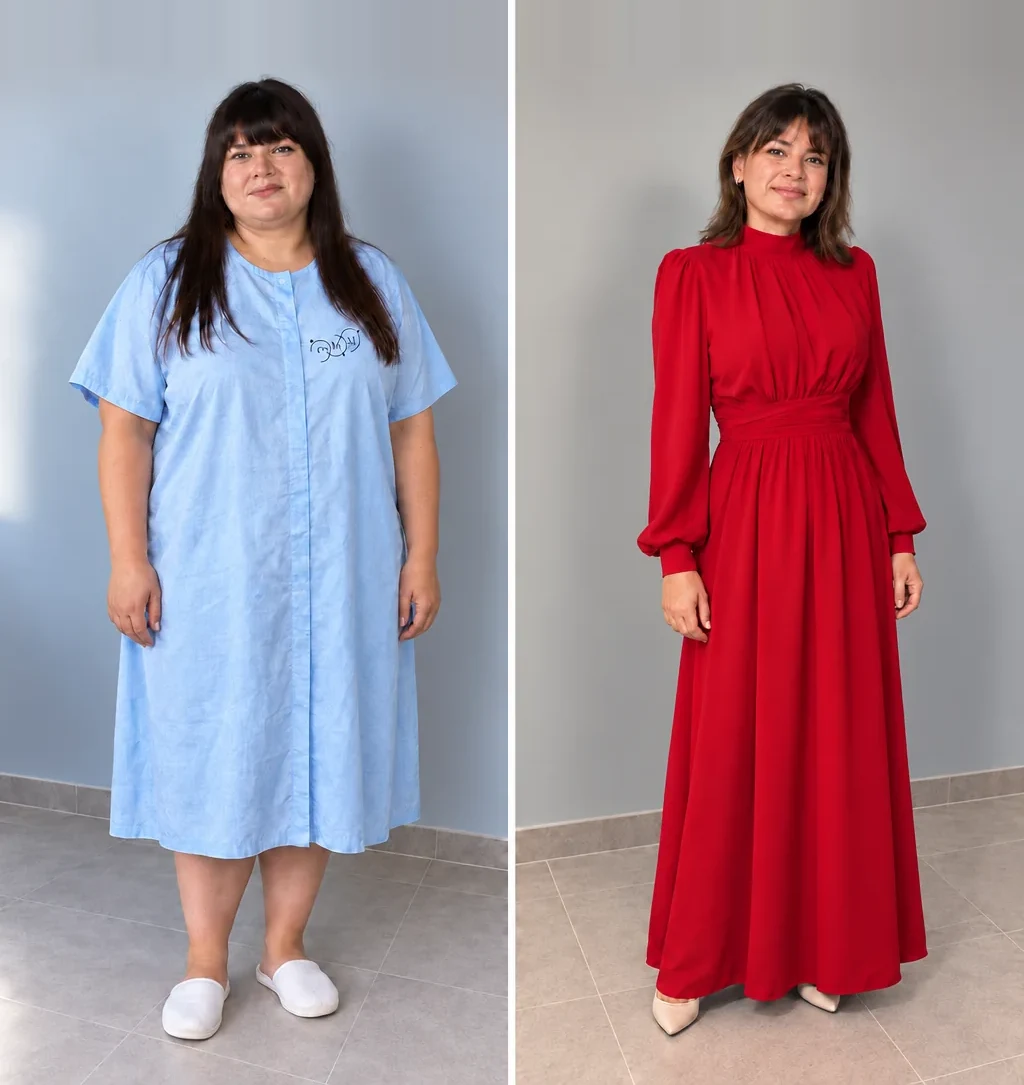 beforeafter
Bariatric surgery
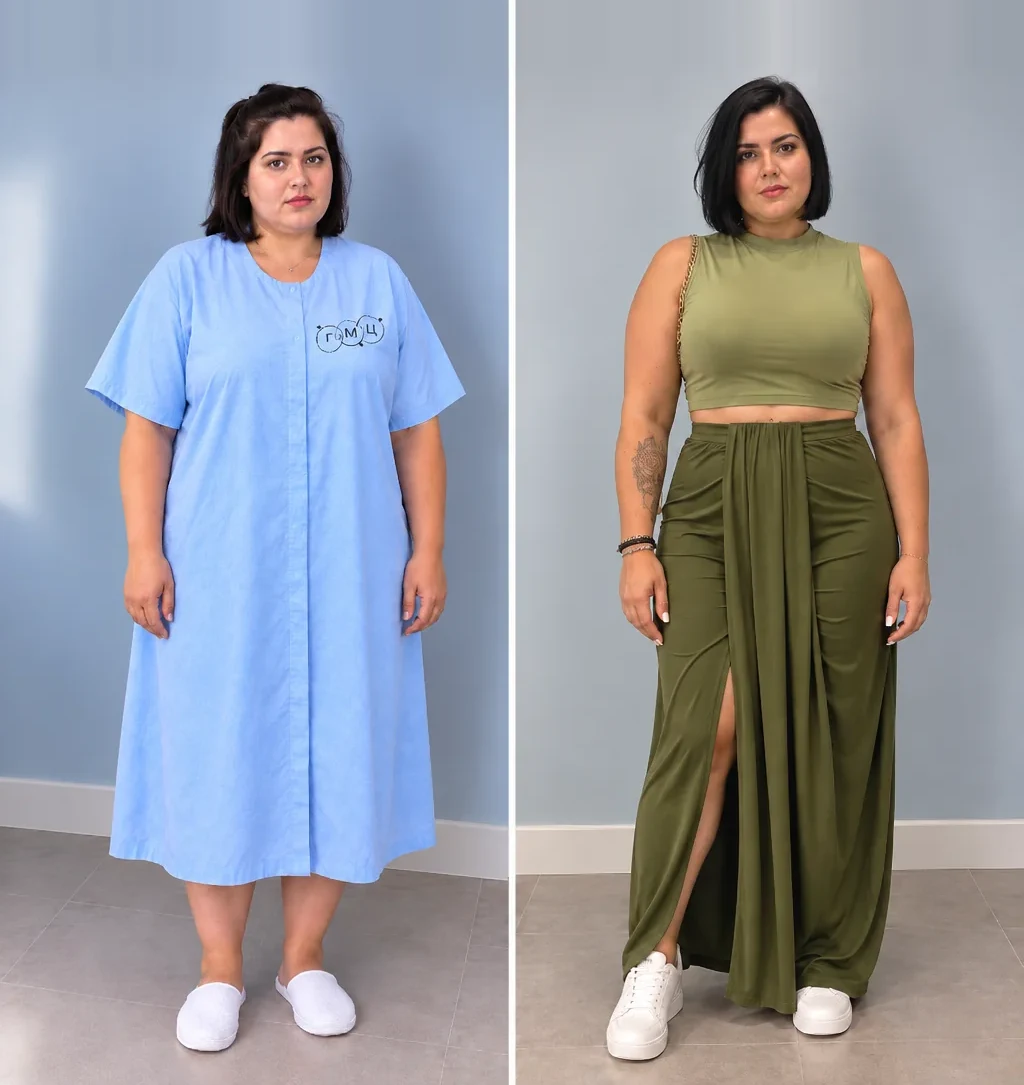 beforeafter
Bariatric surgery
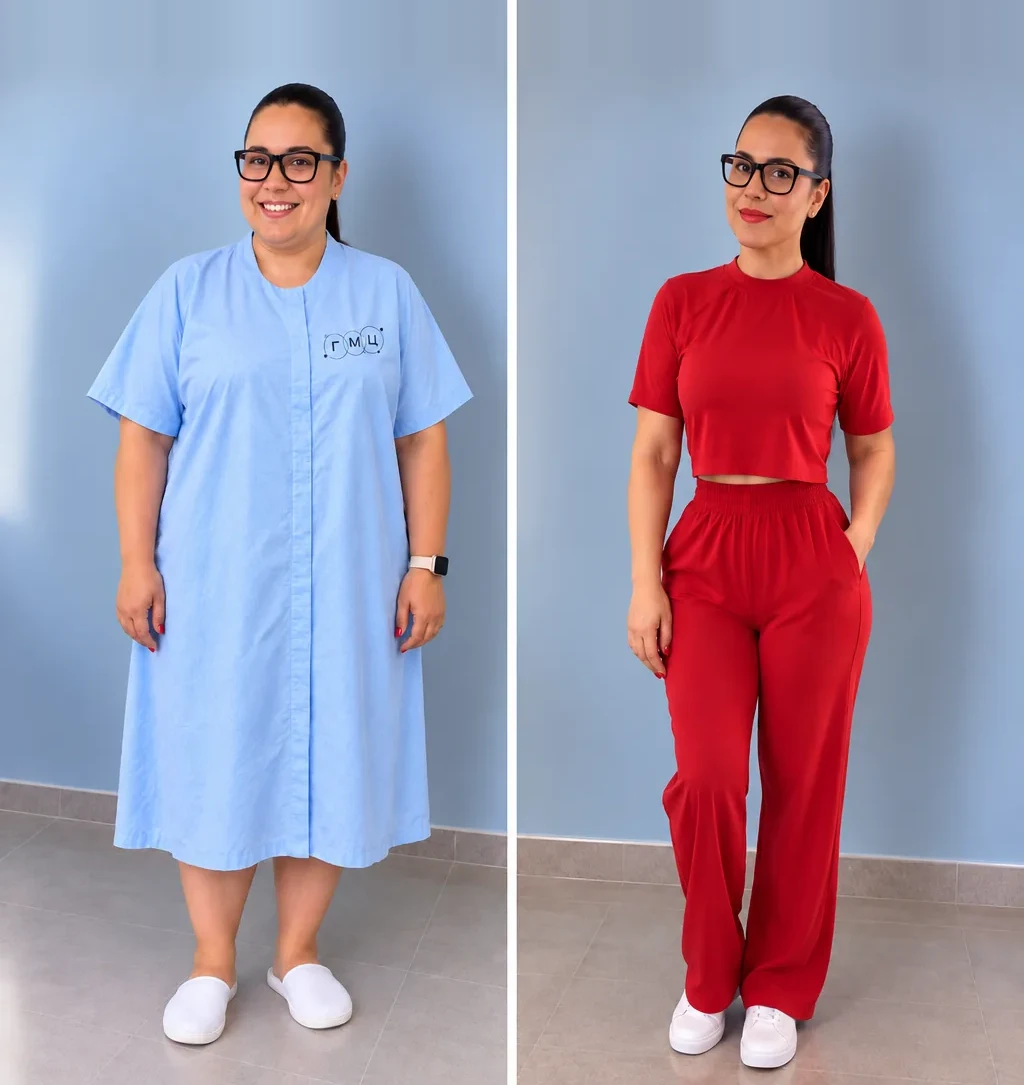 beforeafter
Bariatric surgery
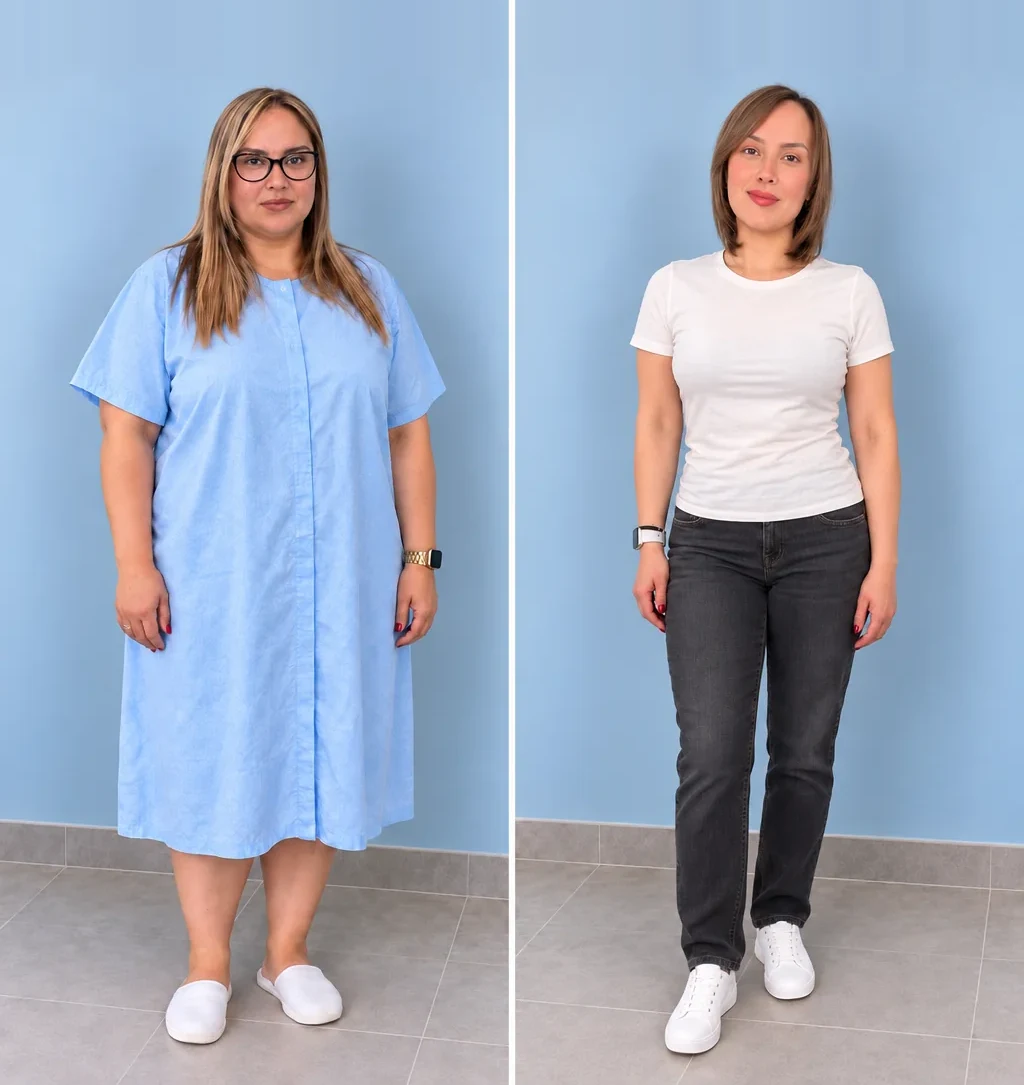 beforeafter
Bariatric surgery
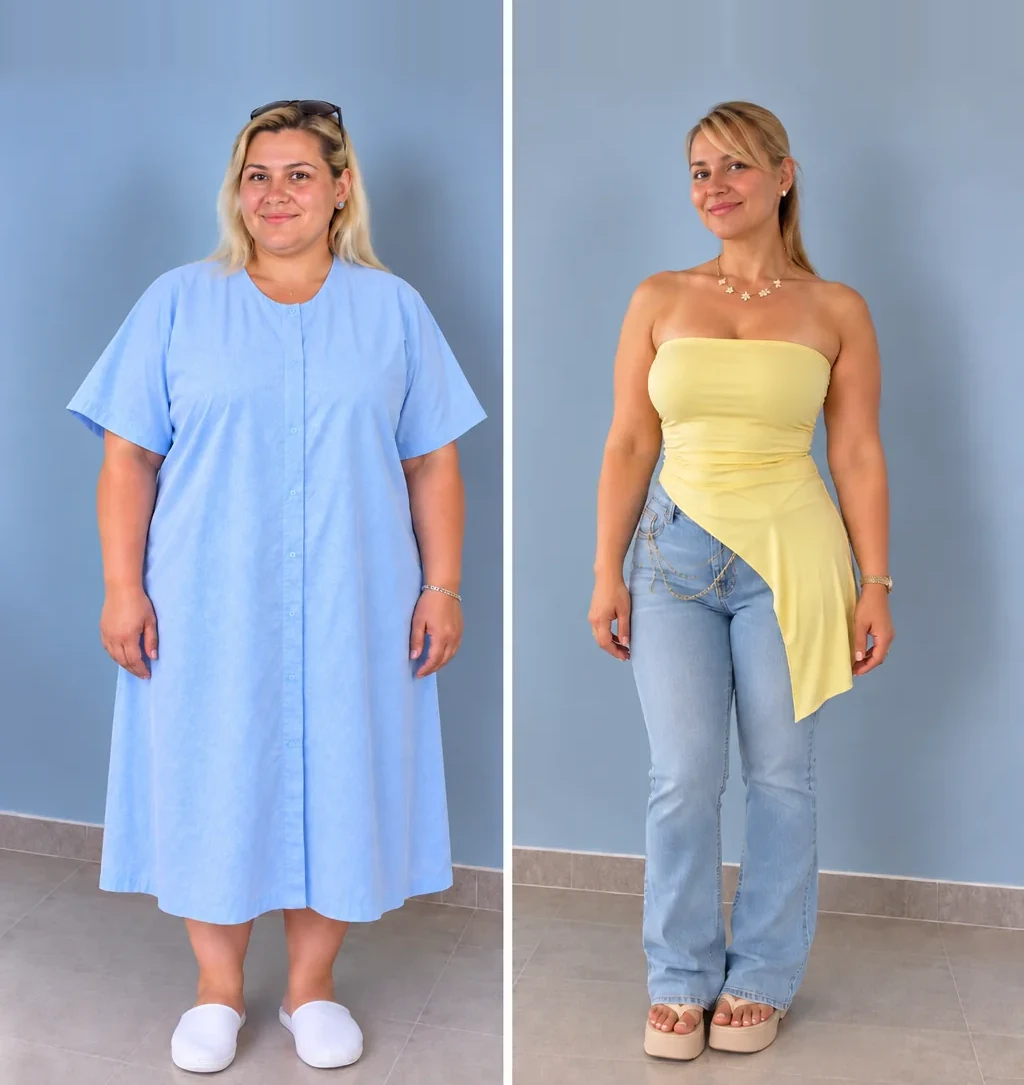 beforeafter
Bariatric surgery
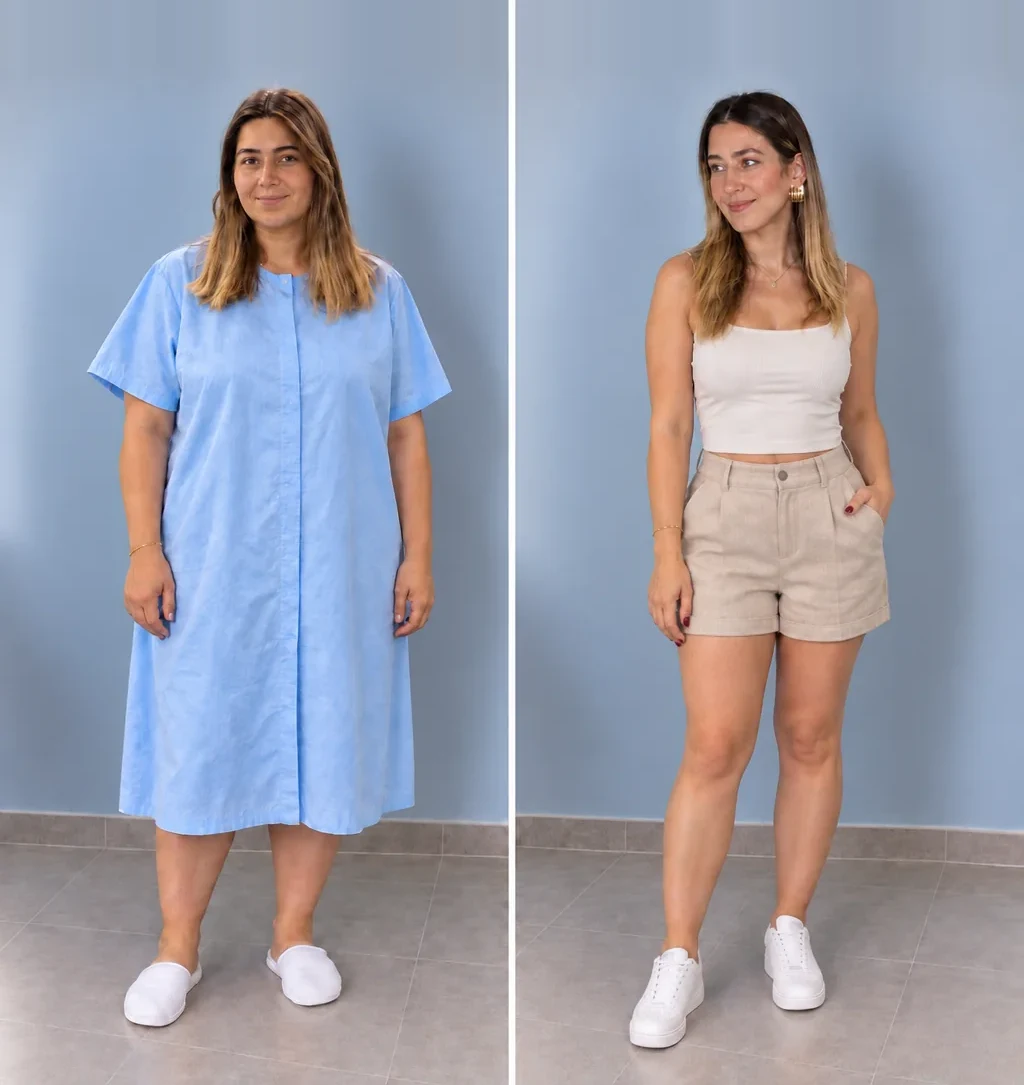 beforeafter
Bariatric surgery
Comparison
We carry out two principal operations: gastric bypass and sleeve gastrectomy. Review how each works, what it treats and when it is advised, and choose your method with confidence.
Less stomach volume
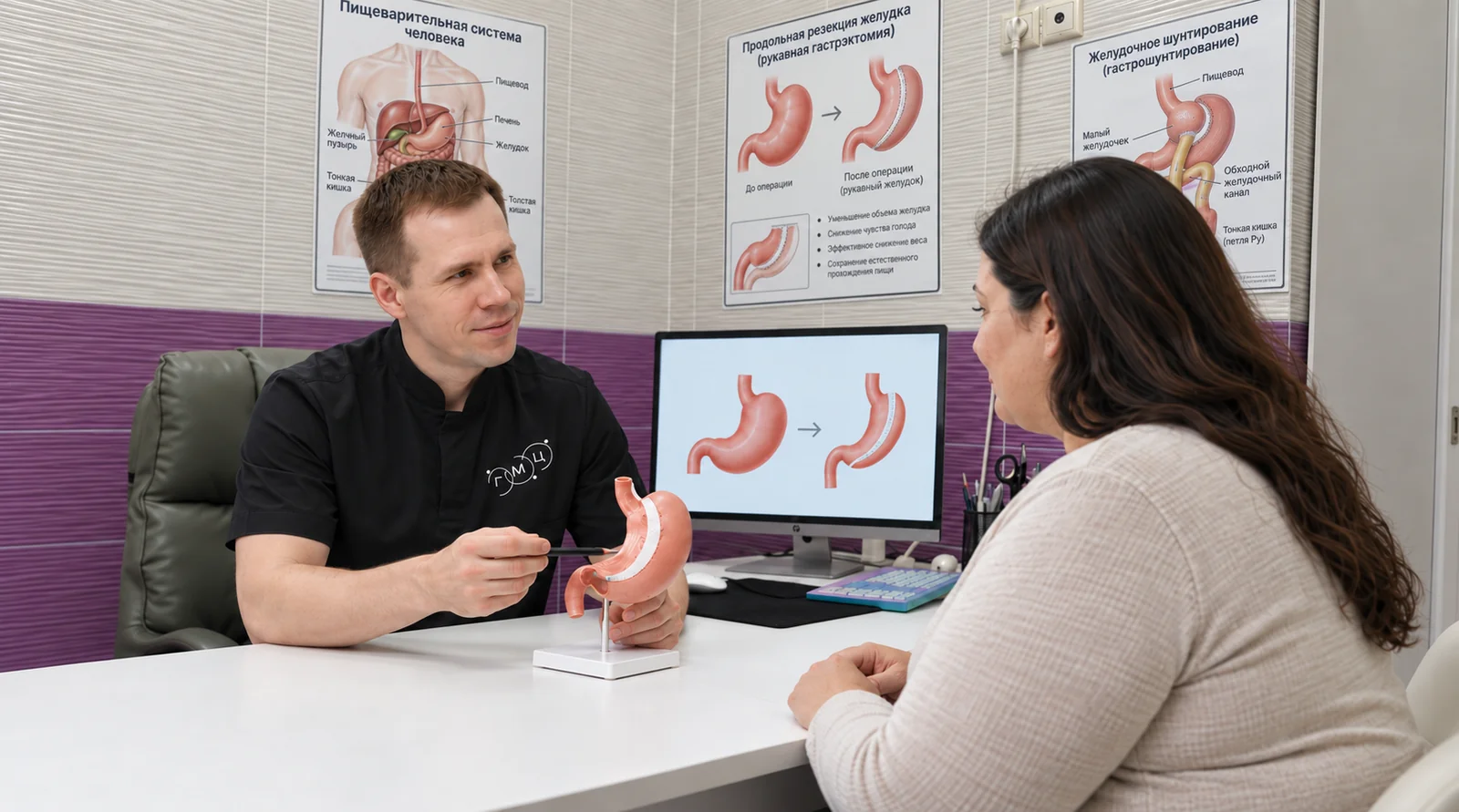
Discounted price
$3,600 $4,800
Reducing the stomach volume and rerouting food
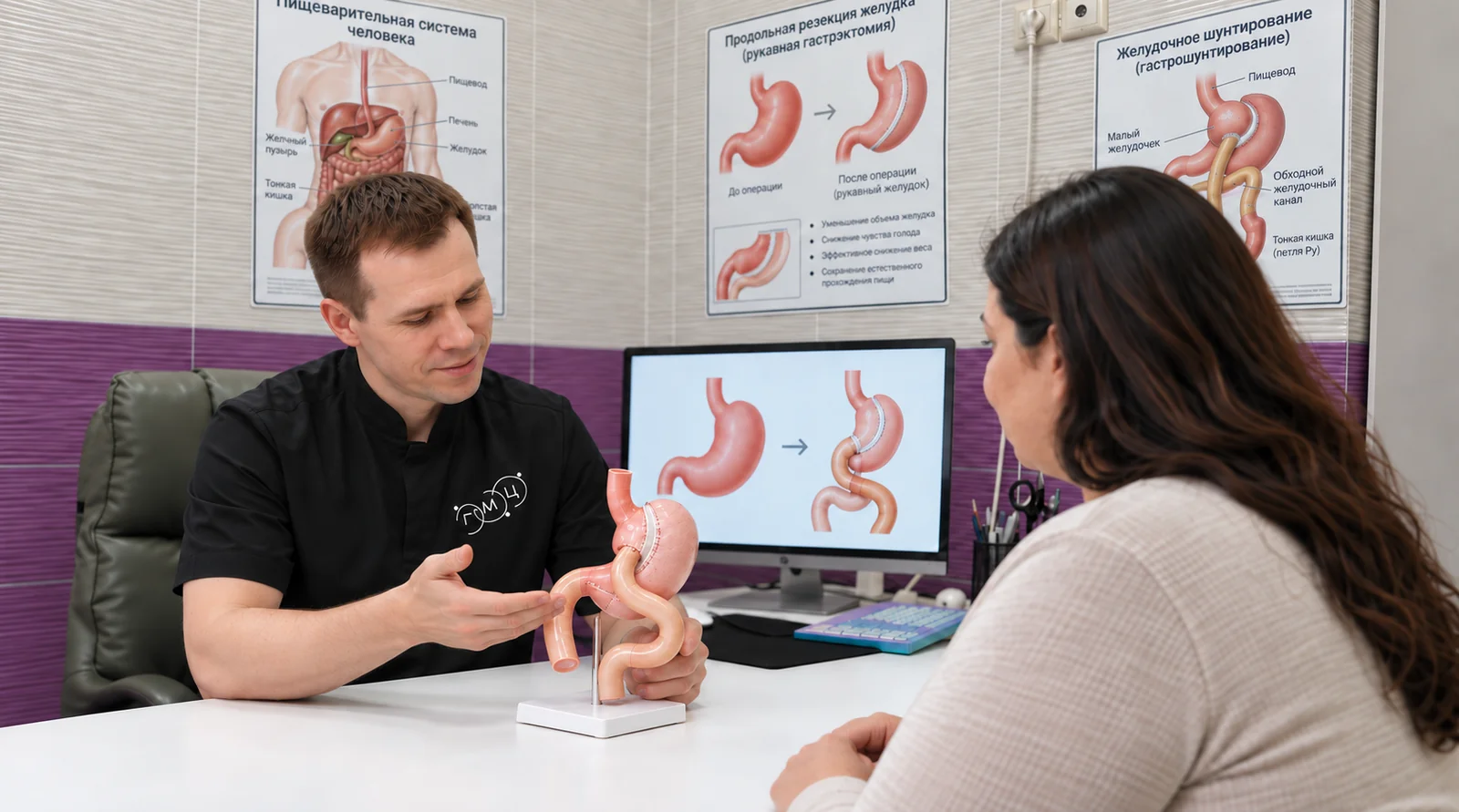
Discounted price
$4,000 $5,200
The benefits and recovery times are method averages meant as a guide; the actual scope of the operation and your recovery depend on your anatomy and individual features. The surgeon confirms them at the consultation.
Book a consultationThe clinic
Comfortable rooms, modern equipment and care for each person
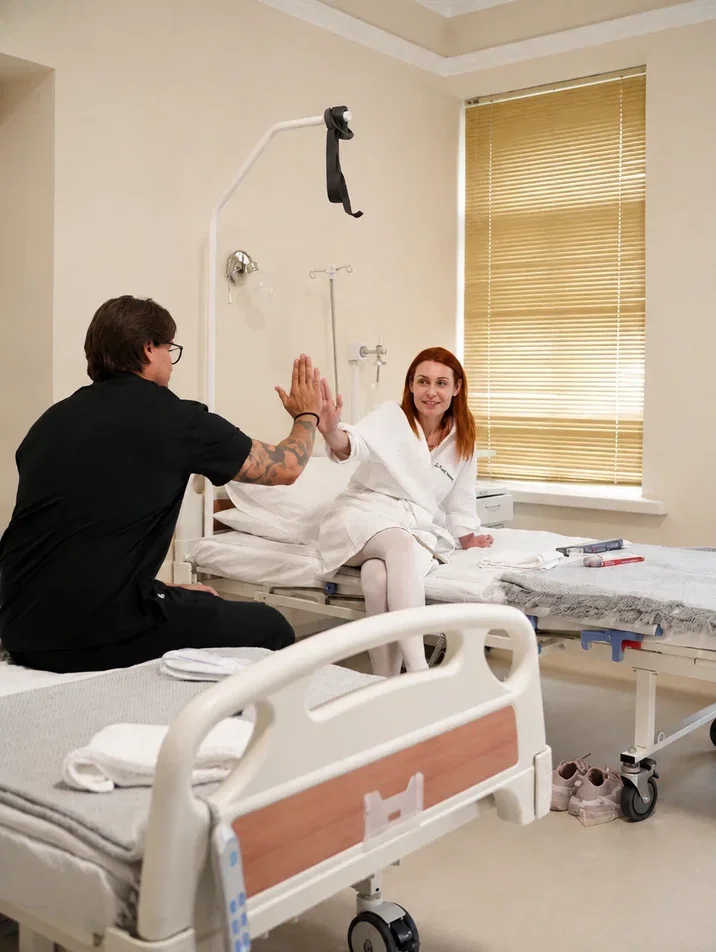
You get answers to your questions and a consultation slot that fits your schedule
By messaging us, you agree to our Privacy Policy
Get a consultationSurgery is only decided jointly with the surgeon, once the consultation and check-up are done.
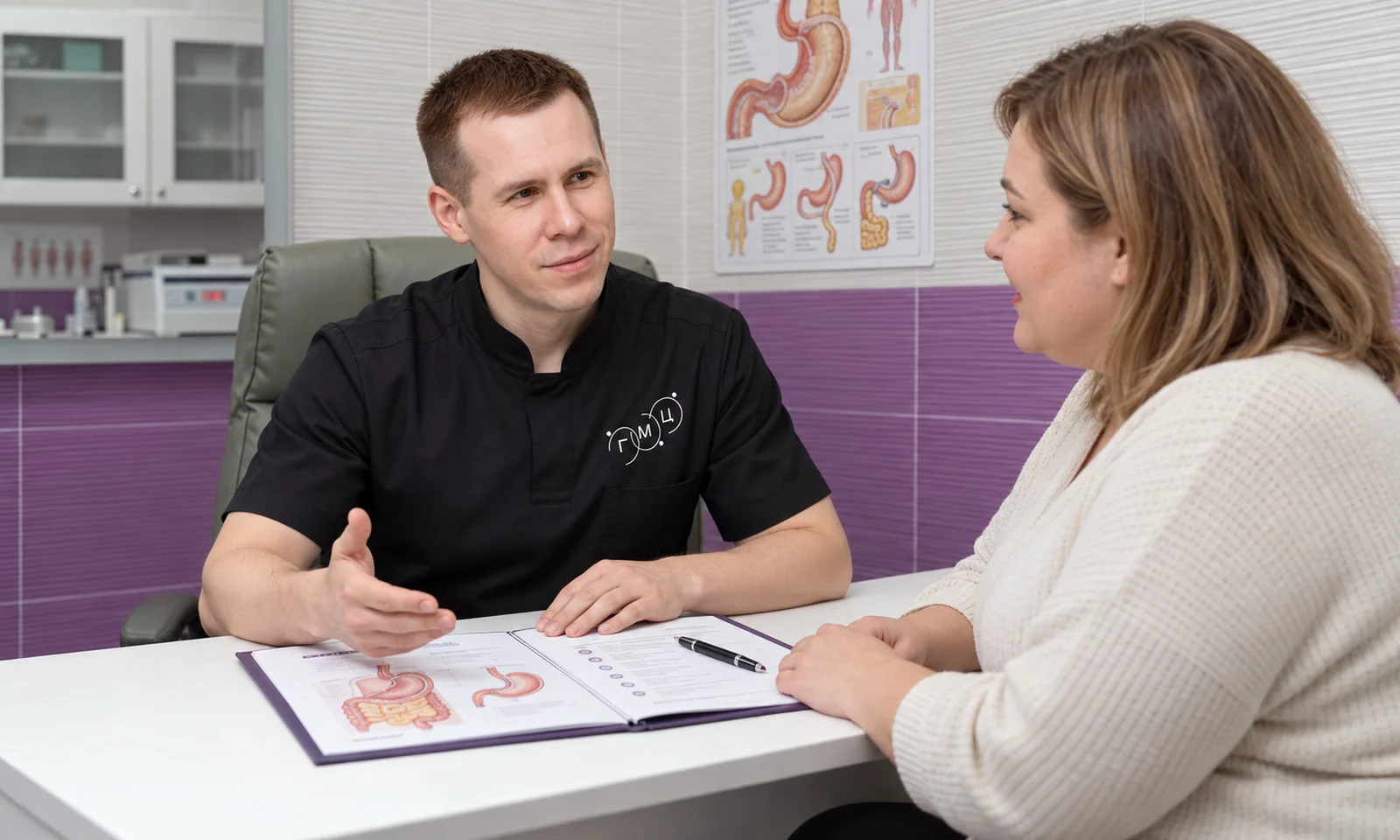
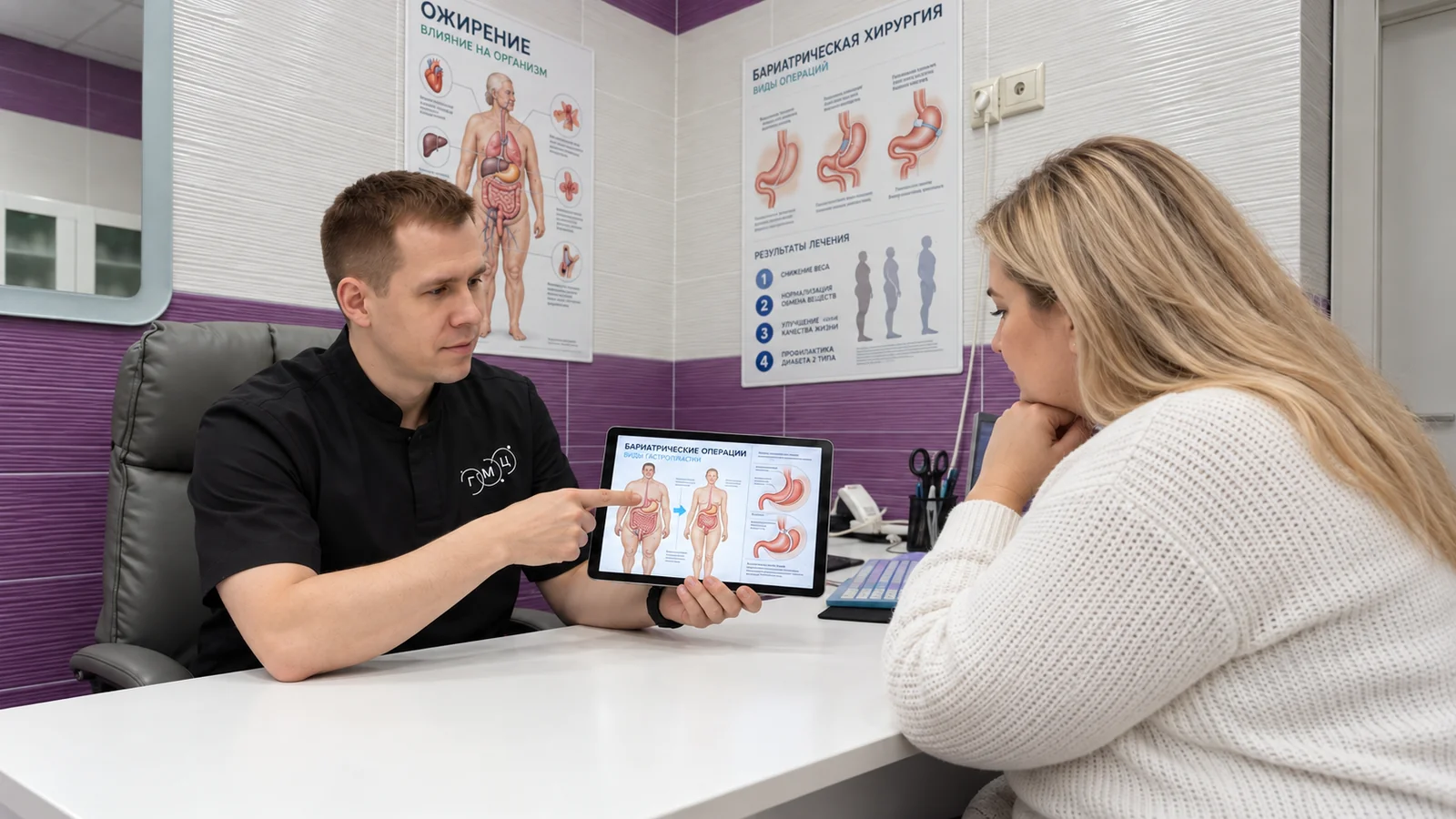
Can't tell which column fits your case?
Message us on Telegram and our coordinator will tell you if bariatric surgery suits you. The consultation with the surgeon is free and does not commit you to surgery.
Find out if it suits me
Prices
The cost becomes known at the consultation after your plan is ready, and the contract fixes it.
Discounted price
Less stomach volume
$3,600$4,800
Discounted price
Weight reduction with rerouting of food
$4,000$5,200
Free
The surgeon examines you and draws up a treatment plan

Free
you are told the cost of surgery
and it is fixed in the contract
The doctor looks at your health, talks about your goals and chooses the right method of bariatric surgery. You get the cost at the consultation, fixed in the contract.
Message our coordinator
Free online consultation · Reply within 15 minutes
Message us on TelegramMessage us on WhatsAppBy messaging us, you agree to our Privacy Policy

price
Preparation to 12 months of support in one package — nothing extra to pay.Everything from surgery preparation
to support over 12 months.
How it works
A treatment plan agreed with you, hospital monitoring and a year of support.
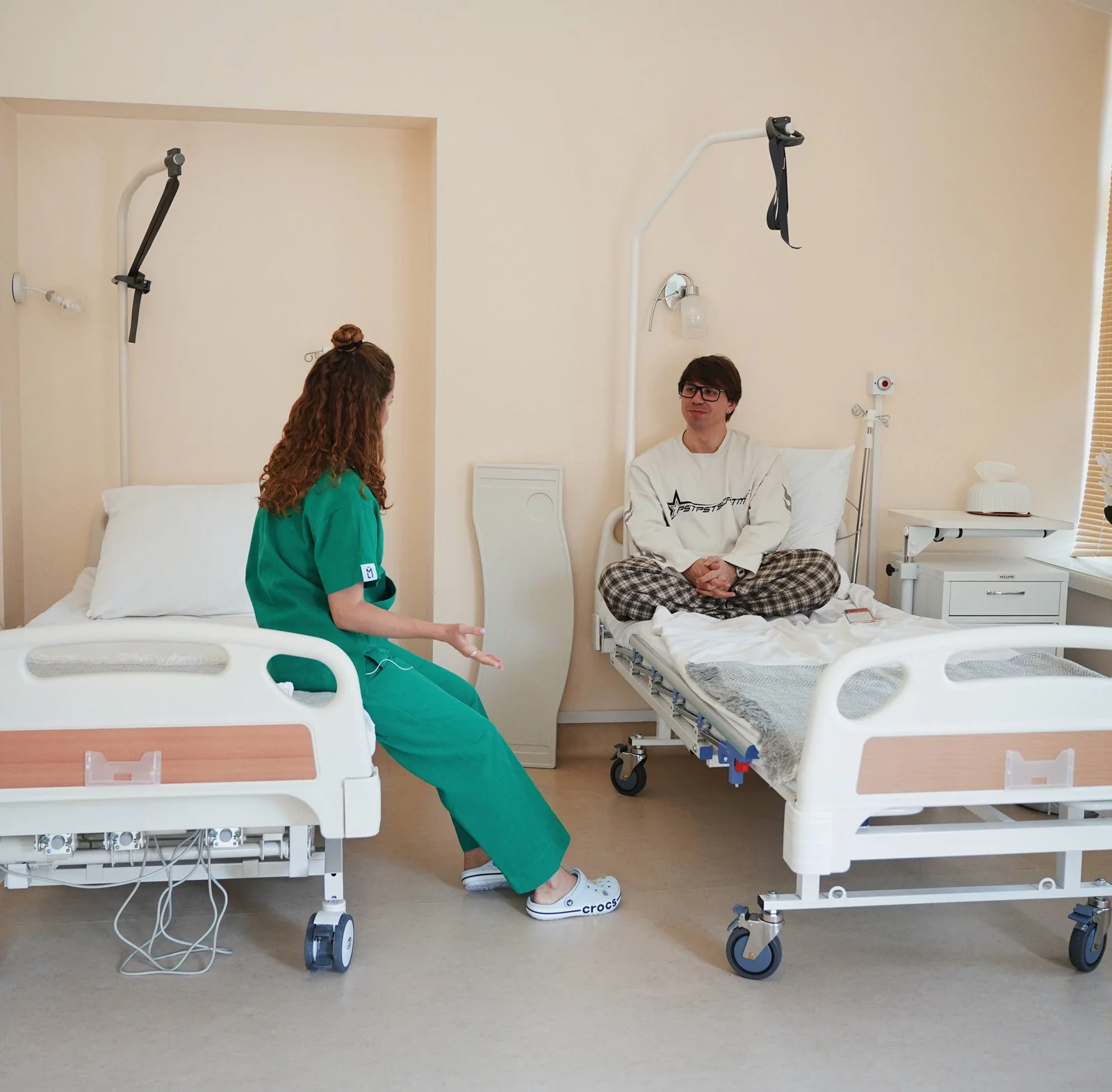
1The doctor evaluates your health, talks through your goals and orders the tests needed to select the right bariatric surgery method.
2We hold a surgery date for you: pay the deposit by card at the clinic or online by bank transfer. The terms are set out in the contract for medical services
 3
Before the operation you undergo blood and urine tests, an ECG, an ultrasound and a gastroscopy and see specialists — the doctor hands you the exact list at the consultation.
 4
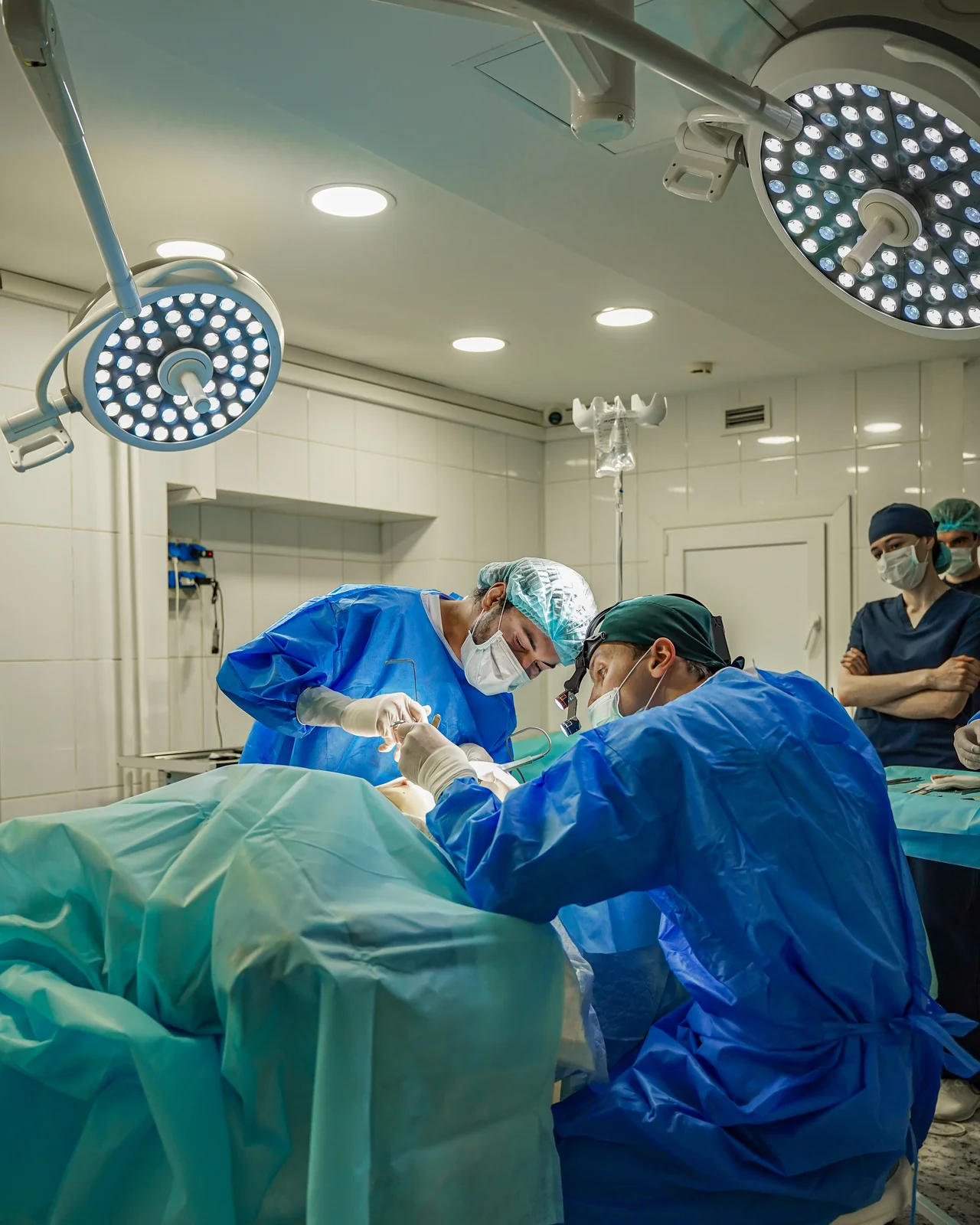
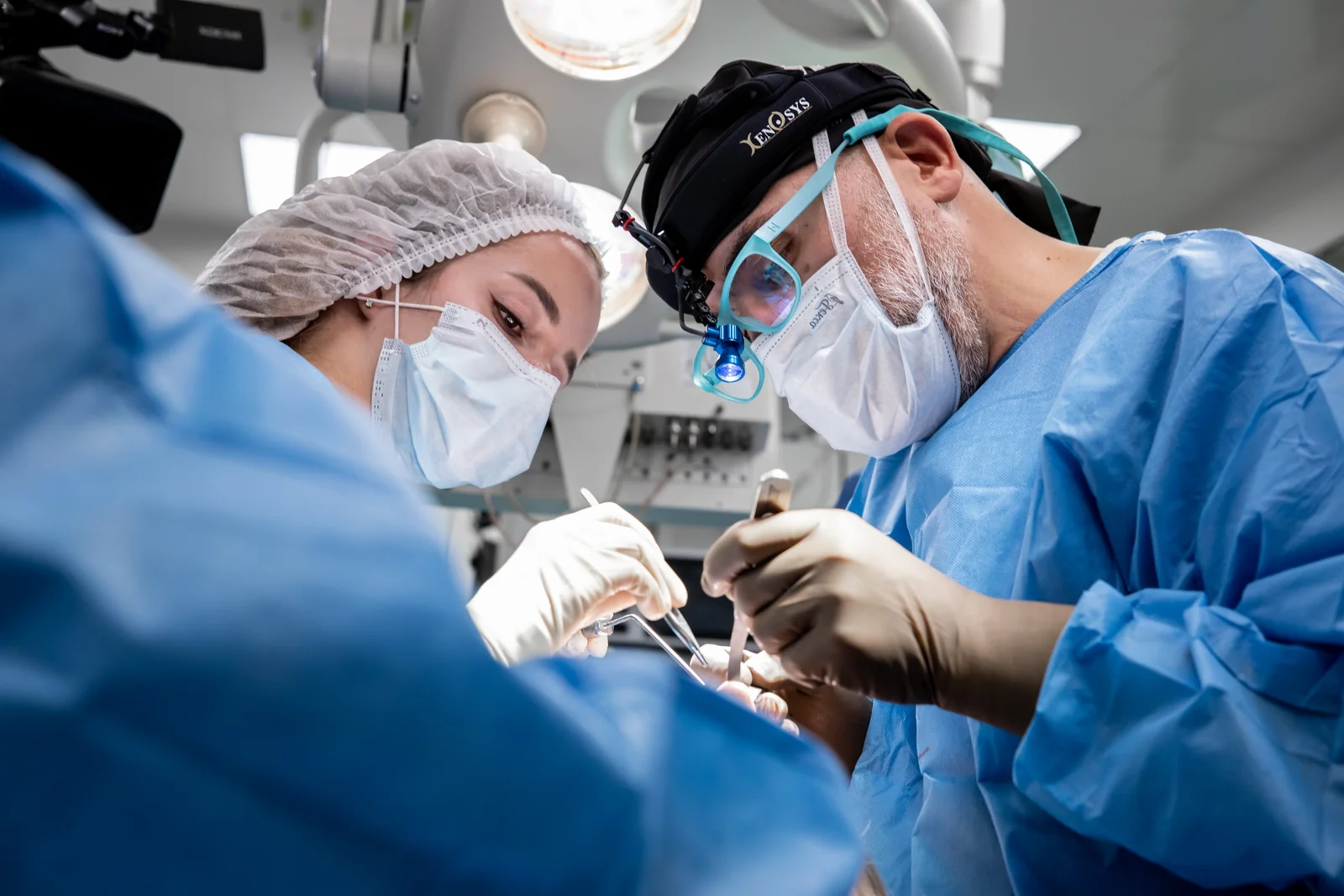
The surgeon carries out the chosen bariatric method under general anaesthesia. After the operation the patient is monitored by the medical team.
 5
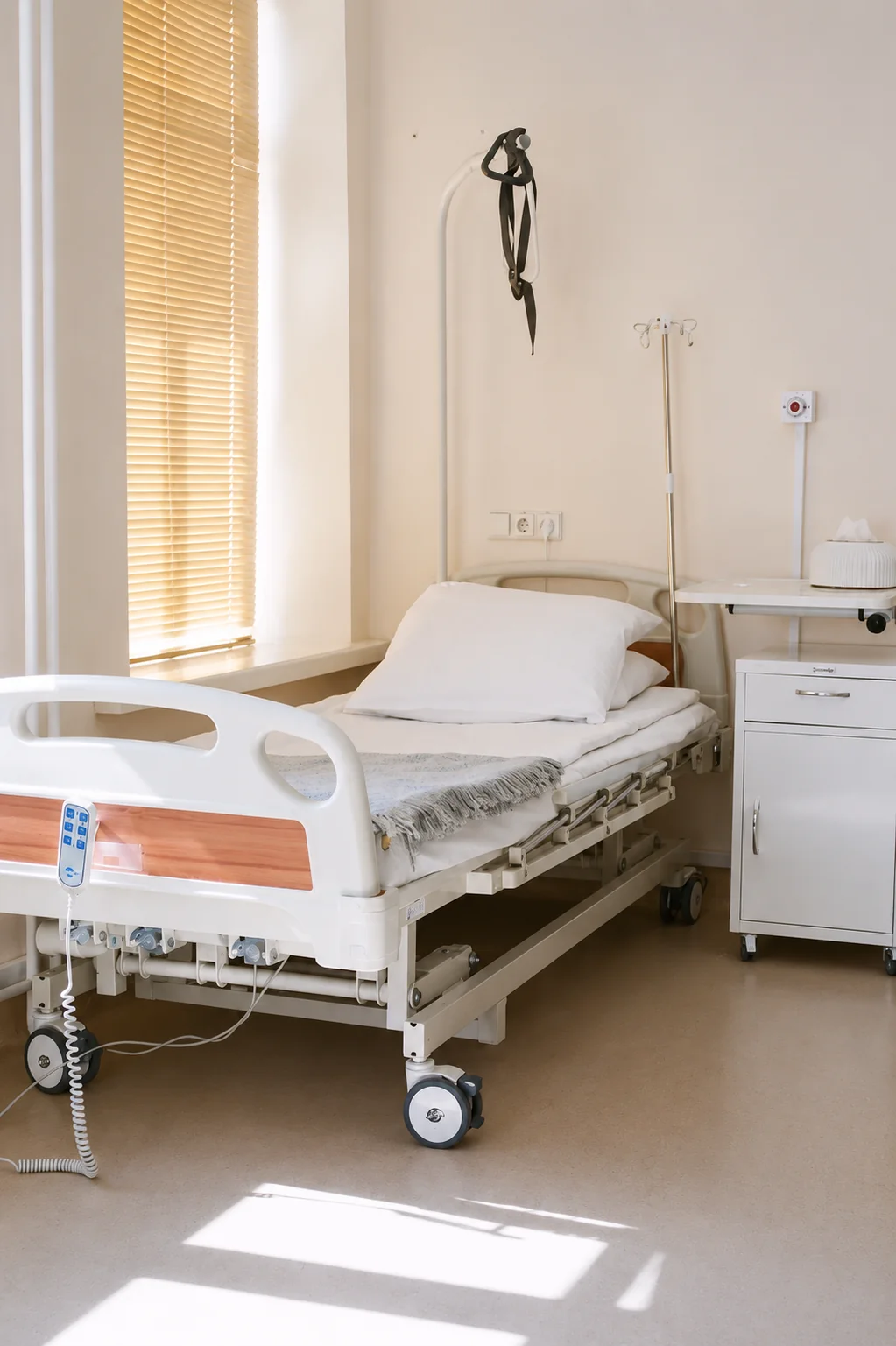
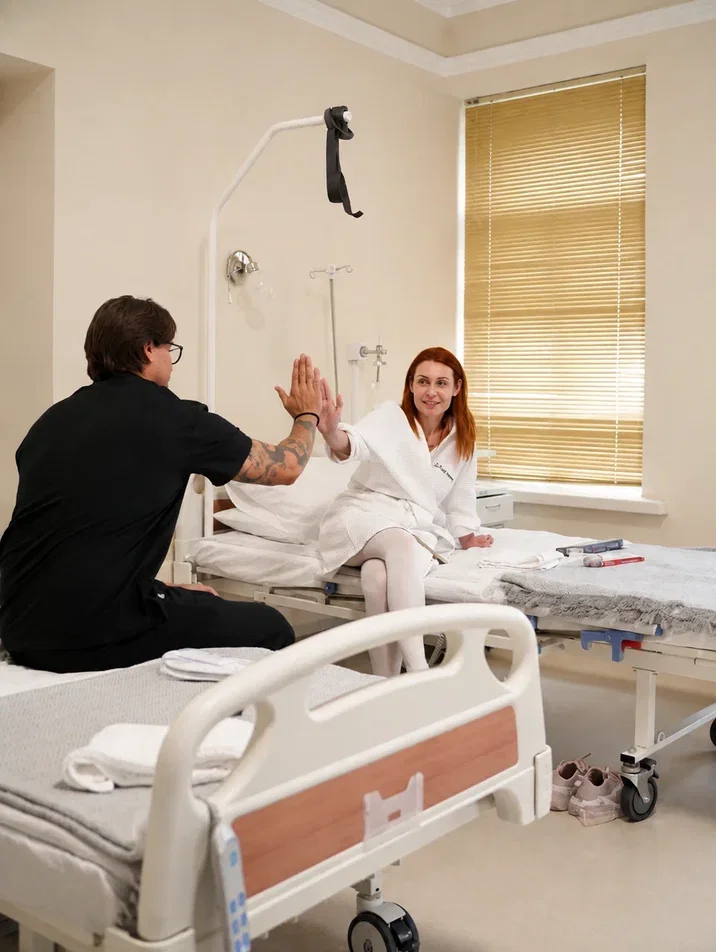
Once the operation is over, you stay in hospital supervised by doctors. Depending on its complexity and how you feel, this lasts from 1–3 to 4–5 days.
 6
After discharge, expect advice on diet and recovery and scheduled check-ups of your well-being, weight and test results. The clinic team supports you for a year.
The doctor explains how the surgery will go and draws up a plan at the consultation
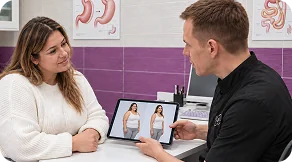
The consultation costs nothing, takes place before surgery and has no obligation.
Book a consultationDoctors

27 years of experience
Chief bariatric surgeon
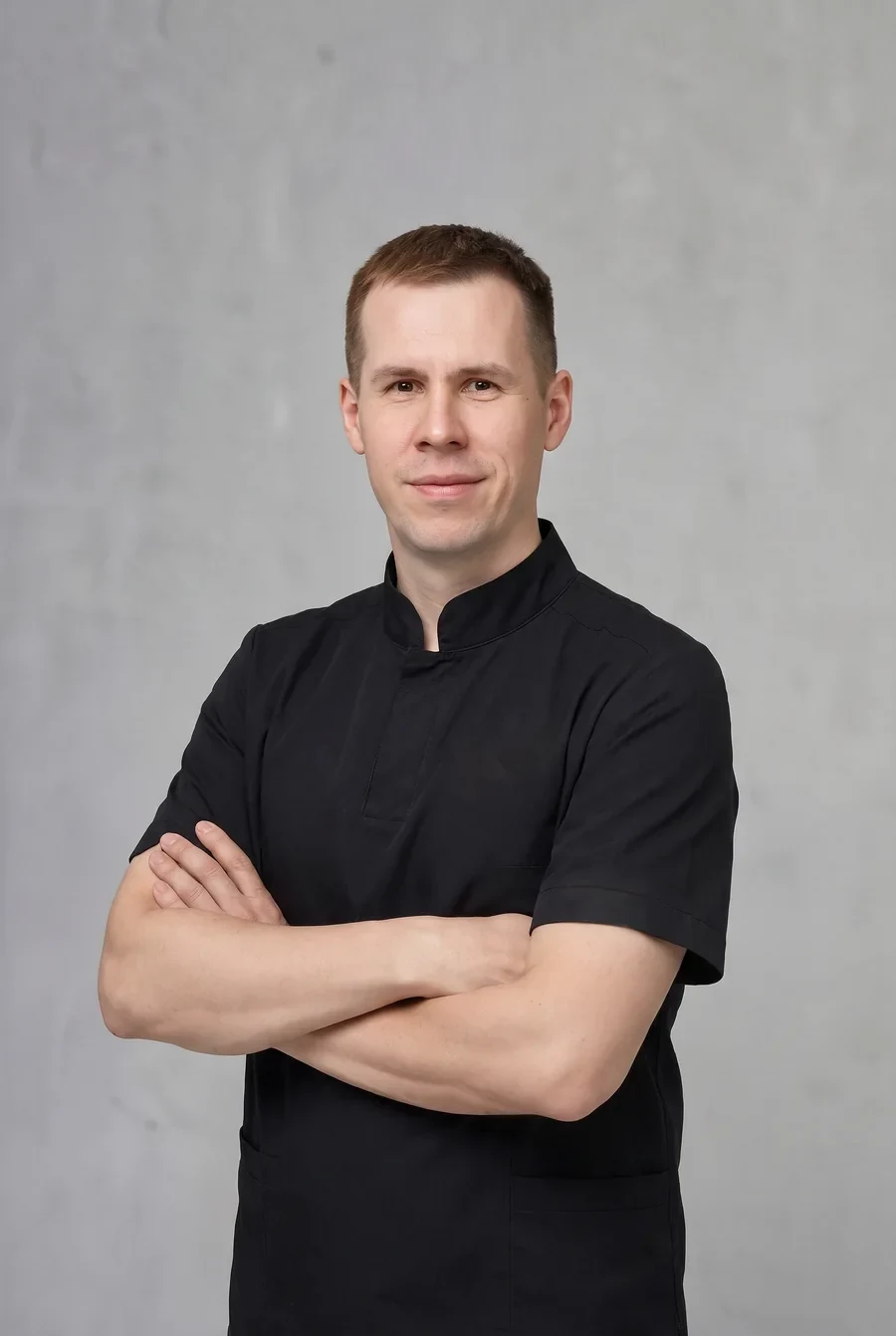
9 years of experience
Bariatric surgeon
Surgical oncologist
The surgeon operates and then follows you, from the very first consultation to the result.
Your first step is a consultation with our patient care manager: BMI calculation, an explanation of the methods and booking with the surgeon. Free of charge.
Book a consultationCoordinators
Our team supports you at each stage

From your first message to the consultation — your first contact at the clinic
Patient care specialist
Ahead of your first consultation, answers questions and helps you choose a convenient date

With you before your stay and during it, from booking to discharge
Patient care specialist
Helps you prepare for surgery and stays in touch during your stay at the clinic

From the day of discharge to your final check-up — with you through recovery
Patient care specialist
Arranges your follow-up visits with the surgeon and stays in touch while you recover
Advantages
We select the most suitable method for your health, lifestyle and goals. Our team supports you all the way.
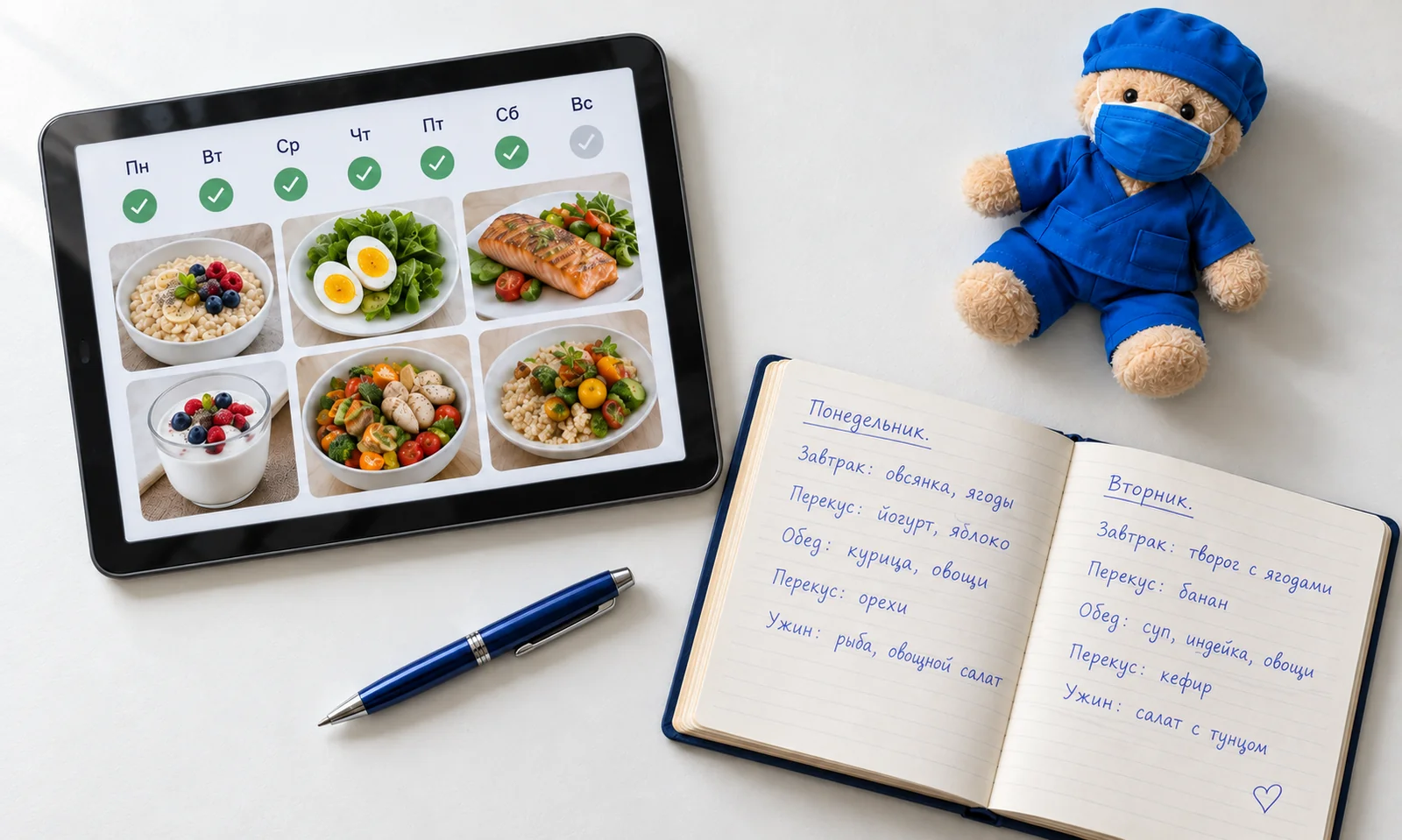
We help you adopt new eating habits, track your results and make them last.
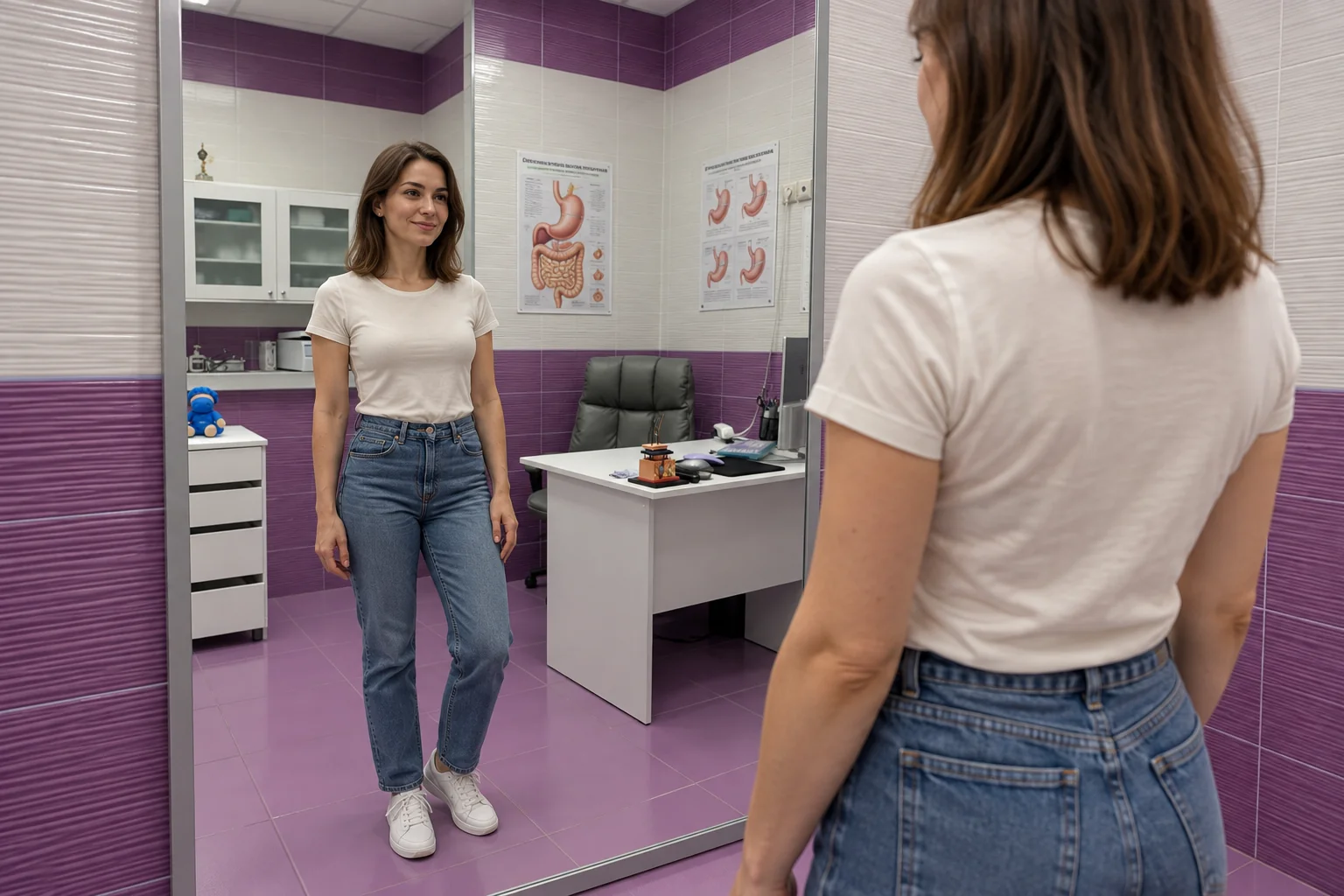
A higher quality of life, better well-being and steady weight loss.

We work 24/7: booking is easy, the approach is personal and we adapt to your pace.
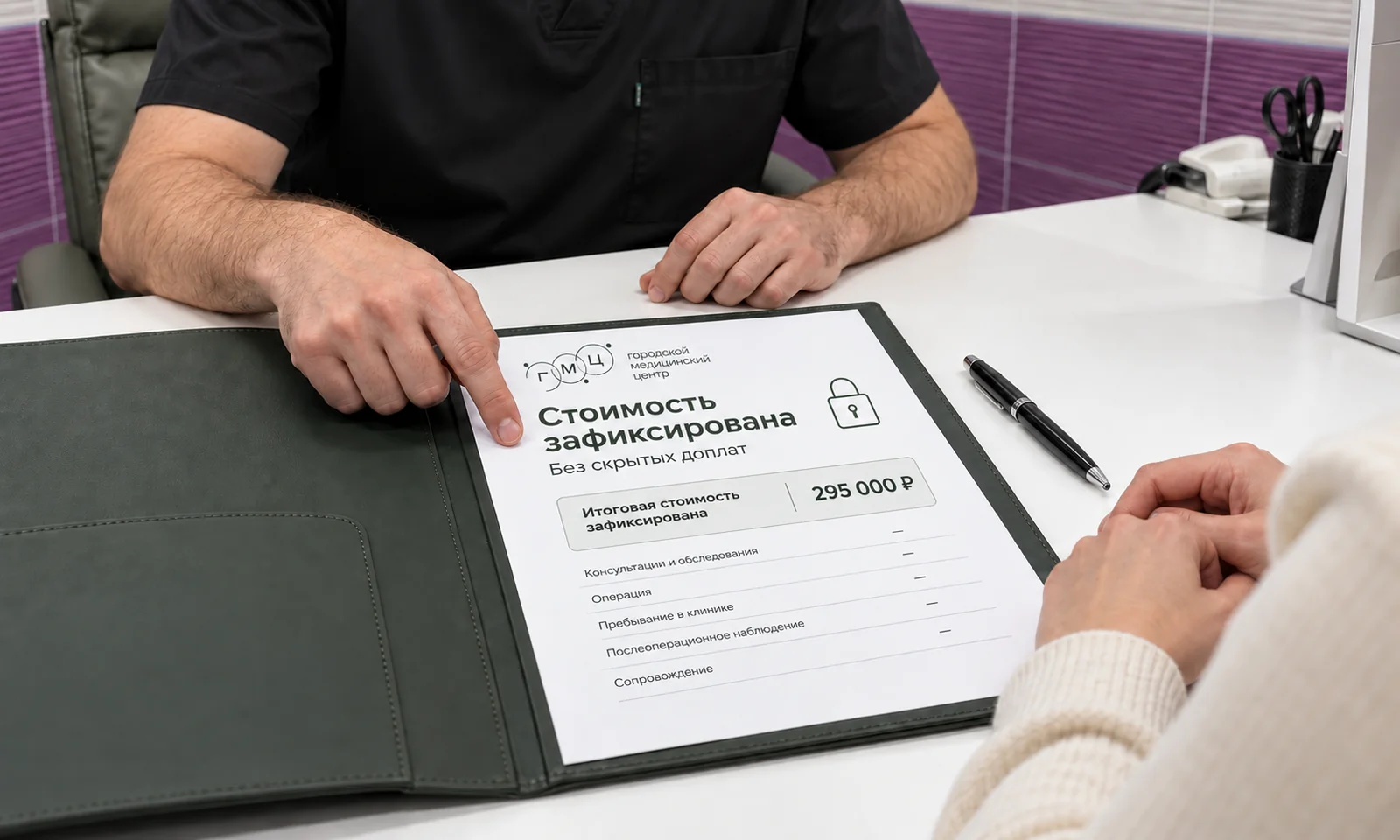
The surgeon chooses the method after the consultation and gives you a clear price, with no hidden fees or surprises on the way to your result.
FAQ
Yes, bariatric surgery is the medical term for it. At City Medical Centre the main methods are sleeve gastrectomy (gastric sleeve) and gastric bypass; the surgeon chooses the method by your BMI and health.
Usually a BMI over 40, or over 35 with related health conditions. The surgeon confirms whether surgery suits you at the consultation.
At the clinic, experienced bariatric surgeons perform the bariatric operations:
Message us and our coordinator will reply shortly and book your consultation. The consultation with a bariatric surgeon is free.
Surgery is prescribed only when clear criteria are met
Doctors assess obesity chiefly through BMI: take body weight (kg) and divide it by height squared (m²). Surgical treatment is usually justified at a BMI over 40, or over 35 with serious related conditions. Surgery may also be considered at lower values in some cases — where non-surgical approaches have failed.
Many mix them up, but they pursue fundamentally different goals. Bariatric surgery medically treats obesity and related diseases by changing how the digestive tract functions, addressing the causes of excess weight and metabolism. Plastic surgery reshapes the external contours of the body; it does not treat obesity or influence metabolism.
Four main types of bariatric surgery are performed at City Medical Centre: sleeve gastrectomy, Roux-en-Y gastric bypass, mini gastric bypass (MGB) and SADI-S duodeno-ileal bypass. Each is selected individually based on BMI, related conditions and patient goals.
Modern laparoscopic technique allows the operation through 4 small punctures of 5 to 15 mm. Cosmetic sutures make the marks almost invisible when fully healed.
Recovery varies with your activities. Office work: after 2–4 weeks. Physical work: after 1.5 months. Sport and activity: swimming is permitted after 30 days; other exercise is added gradually as weight decreases. Travel and holidays: best scheduled at least a month after surgery.
Stage by stage, you move from liquid food to soft and then solid. Priority goes to protein, and high-calorie, fatty food is limited.
Pregnancy after bariatric surgery is possible, but doctors advise waiting at least 12–18 months. During this time the body stabilizes, weight reaches target values and nutritional status normalizes.
Yes, vitamins after bariatric surgery are necessary. The body absorbs certain nutrients less well due to the changed digestive anatomy, so regular vitamin and mineral supplements become a permanent part of the patient's life.
Weight regain after bariatric surgery is possible, but very unlikely if you follow the doctor's advice. Proper nutrition, avoiding high-calorie drinks and regular follow-up with City Medical Centre specialists are key.
Prices are in US dollars; the amount in brackets is an approximate conversion to PLN at the rate of 02.10.2026. The final price is fixed in your contract.
Prices start from $3,600 (≈ PLN 14,500). The surgeon sets the final price at the free consultation, and it is fixed in the contract, with no hidden extras.
General anaesthesia, a personal coordinator from day one, monitoring in the hospital and support for one year.
The hospital stay is 1–5 days, depending on the method and how you feel. Office work is possible after 2–4 weeks.
Yes. The first consultation is free and does not oblige you to anything. You can start online by sending a message to the coordinator.
Message us on WhatsApp or Telegram using the buttons below. A coordinator will answer your questions and book a free consultation where the doctor names the exact price.
By messaging us, you agree to our Privacy Policy
Why do diets fail? The body fights back: metabolism slows, appetite grows, and lost kilos return. When diet changes and medication cannot fundamentally improve the situation, surgery becomes the effective way out. Lublin residents who have tried diets, fasting and pills for years without a lasting result are exactly the patients for whom bariatric operations are intended.
The final result is reached in 1.5–2 years. Throughout the first year the team tracks weight loss, monitors tests and answers questions about diet and recovery, providing psychological and medical support at every stage. For patients in Lublin, regular follow-up with specialists and avoiding high-calorie drinks are the keys to keeping the result for good.
What sets this programme apart is a result guarantee written into an official contract: weight loss is fixed legally, not just in words. Surgeons have 9–27 years in the field and work as a permanent team. Lublin residents can tick the situations that sound familiar on the page and then check their case for free with a surgeon.
Well-known people who spoke openly about this operation, in their own words.
 Al Roker and gastric bypass: twenty years of talking about it honestlyAl Roker had gastric bypass surgery in March 2002 and has talked about it for 20 years. His words, how the operation works and what recovery involves.
 Did Billy Gardell have bariatric surgery? Yes — and he says it saved his lifeThe Mike & Molly star had bariatric surgery in 2021 after a diabetes diagnosis. His quotes on the decision, the 100-pound loss and his children.
 Did Graham Elliot have weight-loss surgery? Yes, and he did it for his familyChef Graham Elliot had weight-loss surgery in 2013, saying it was what he needed to do for his family. His words, the operation and recovery.
 Did Mama June have a gastric sleeve? Yes — in her own wordsJune 'Mama June' Shannon had a gastric sleeve in May 2015. Her quotes on the 550-pound start, the regain and starting over.
 Did Randy Jackson have gastric bypass surgery? Yes, and he still talks about maintaining itRandy Jackson had gastric bypass surgery in 2003 and lost 114 pounds. His own words, how the operation works today and what recovery involves.
 Remi Bader and her weight-loss surgery: what she actually saidRemi Bader said in 2023 she had weight-loss surgery removing 80% of her stomach and lost 140 lbs. What she said, how the operation works, and recovery.
What patients write after this operation. Reviews are translated from the original language.
Irina, 26
For a long time I doubted whether to go ahead with surgery, but after the consultation I felt much calmer. Andrey Georgievich explained in detail how gastric bypass is done, what to expect after the operation and how recovery would go. I especially liked that they talked to me calmly and without pressure. I am now gradually getting used to my new way of life and I am very glad I took this step.
Bariatric surgery
Doctor: Andrey G. Ugay
Angelina, 22
For me the hardest part was deciding to have the operation. At the consultation Ruslan Sergeyevich answered all my questions in detail and explained the specifics of sleeve gastrectomy and recovery. After the operation I always understood what I was doing and why. Thank you to the doctor and the whole team for their attentiveness.
Bariatric surgery
Doctor: Ruslan S. Menzulin
Anna, 31
For a very long time I tried to deal with my excess weight on my own, but I did not get the result I wanted. After the consultation with Andrey Georgievich I finally understood what to do next. I came through the operation well, and my recovery was supervised by the doctors. It was important for me to feel that I was not left alone after surgery.
Bariatric surgery
Doctor: Andrey G. Ugay
Veronika, 25
Before the operation I had many fears, mostly of the unknown. Ruslan Sergeyevich explained every stage of treatment in detail and answered even the simplest questions. Thanks to that I felt much more confident. I keep following the recommendations and I am gradually seeing the changes I had the operation for.
Bariatric surgery
Doctor: Ruslan S. Menzulin
Valentina, 23
The decision to have bariatric surgery was not easy for me. I worried both about the operation itself and about how my life would change afterwards. At the consultation Andrey Georgievich explained everything in detail, so little by little my fear turned into confidence. What matters most to me now is the result and the chance to treat my health and lifestyle differently.
Bariatric surgery
Doctor: Andrey G. Ugay
Anna, 27
I am very grateful to Ruslan Sergeyevich for his attentiveness. Before the operation I had a huge number of questions, and I got a clear answer to every one of them. After the operation it was also clear which recommendations to follow and how to eat. It was important to me that the doctor stayed in touch and I felt supported at every stage.
Bariatric surgery
Doctor: Ruslan S. Menzulin
Page medically reviewed by Andrey G. Ugay, lead bariatric surgeon. Review date: .
The numbers behind the discussion of weight-loss operations in eastern Poland come from the national audit office, NIK. Its 2022 data count 9,185 thousand adults with obesity nationally, which is 29.8% of the population. For Lubelskie the same table gives 481 thousand adults and 29.0%. These figures are close to the national level, so the voivodeship does not sit far from the country's overall picture. The NIK chart is titled as a share of patients with overweight and obesity, so it is not identical to a pure prevalence figure. NIK's own text says that overweight and obesity together concern roughly 60–70% of residents, depending on the voivodeship.
A second set of figures comes from the 2026 report of the national health technology agency, AOTM. It cites a Lazarski University report and a Polish consensus document from 2025. For 2019 these sources give 58.2% of people over 18 with overweight or obesity, against an EU average of about 53%. Obesity measured by BMI alone was 18%. A BMI above 40 occurs in about 300 thousand people, and a BMI above 35 in over 1.5 million. The group for whom an operation is a realistic medical question is therefore much smaller than the group who are simply above a healthy weight. That is why a conversation about surgery starts with a calculation, not with a feeling.
Lublin is the capital of the voivodeship in eastern Poland. Its population is 326,700 at the end of 2025 and was 334,681 at the 30 June 2021 census, after a peak of 359,154 in 1999. English-language sources give 328,300 at the end of 2024 and about 664,000 for the metropolitan area. If the national share of 29.8% is applied loosely to a city of this size, it gives a rough idea of how many adults are living with obesity in a place like Lublin. That is an illustration, not a measured local statistic, and nobody should read it as a diagnosis. The only way to know where you stand is to calculate your own BMI.
BMI is body weight in kilograms divided by height in metres squared. In the consultation material for this operation, surgery is generally considered at a BMI above 40, or above 35 when serious related conditions are present. Sometimes lower values are discussed, when non-surgical methods have not worked. Those thresholds are almost identical to the national criteria described later. A resident of Lublin can therefore use the same arithmetic at home before writing to the coordinators.
The conditions the surgery is meant to help are listed in the consultation material: excess weight, hypertension, type 2 diabetes, sleep apnea, varicose veins, joint disease, fatty liver disease and reproductive health problems. Several of these are the very diagnoses that Polish programme documents mention when they extend eligibility below a BMI of 40. This is useful when you prepare for the first conversation. Bring your blood pressure readings, glucose results and any sleep-related findings, because they influence whether a BMI between 35 and 40 is treated as a medical indication.
Poland has a public insurance system run by NFZ. NFZ states that services not listed in its catalogues are not financed by it. Within the listed range, treatment is in most cases free for the insured patient. The contribution that funds the system is a fixed share of personal income. Most of it is deducted from tax and a smaller part is paid directly to NFZ. Uninsured patients pay the full cost of services. For someone in Lublin, the first practical question is whether you are insured and whether bariatric treatment appears in the list of financed services.
For bariatric operations it does. Since 1 January 2017 the NFZ tariff has a separate group called "chirurgiczne leczenie otyłości", coded F14, which covers all three types of bariatric operation. Before that, only gastric banding appeared as a bariatric procedure in the tariff, as the medical portal mp.pl reported on 30 June 2016. The change matters because it turned bariatric surgery from a marginal item into a defined service with its own qualification rules.
The 2026 AOTM report describes those rules. A BMI of 40 kg/m² or more from age 18, with ICD-10 code E66.0, qualifies. A BMI of 35–40 kg/m² also qualifies where surgically induced weight loss may improve an obesity-related disease. The 2021 Ministry of Health pilot programme KOS-BAR used the same logic, naming type 2 diabetes and hypertension as examples of such conditions. The pilot planned 15 designated centres and about 2,907 patients. Its pre-operative phase usually lasts 3–6 months with a multidisciplinary team.
These Polish thresholds correspond closely to what the consultation material says about BMI above 40, or above 35 with related conditions. In practice, a person from Lublin with a BMI of 38 and type 2 diabetes may fall within the public criteria. They may also be a suitable candidate for an online assessment. The two routes do not exclude each other at the stage of simply finding out where you stand.
A pre-operative phase of 3–6 months is worth noting if you are comparing routes. The consultation material describes a different sequence. You send photos by WhatsApp or Telegram and get a free doctor assessment. Then you confirm the plan and dates before anything is booked, and the tests follow: blood and urine tests, an ECG, an ultrasound and a gastroscopy, plus specialist appointments. The doctor gives the exact list at the consultation. Both routes need a medical file, so keeping your recent results in one folder helps either way.
Waiting is a recurring theme in Polish healthcare, and NIK's report on the growing number of people with obesity carries the word "queues" in its title. NFZ's own rules shape how waiting works. For a given service, a patient may be entered on a waiting list with only one provider. The original referral must be delivered within 14 working days of entering the list. Anyone planning to use the public route should treat that deadline seriously, because a missed delivery can undo the entry.
For scale, one official reply is useful, with a caution. The Ministry of Health answered interpellation no. 10545 on 5 August 2025. The question concerned orthopaedics and focused on the Warmian-Masurian voivodeship, and the source does not state clearly whether its figures are national. The reply says the average wait for hip replacement fell from 195 days in 2022 to 172 days in 2024. For knee replacement it fell from 242 to 214 days. These are not bariatric numbers and should not be read as the wait for weight-loss surgery. They show that for planned operations in Poland, waiting is counted in months, not days. They also show that even improving figures remain long.
A free online consultation does not take you off any list. The consultation material states that it is free and does not commit you to surgery. Coordinators reply on WhatsApp and Telegram 24/7, and the first reply is promised within 15 minutes. You can therefore find out whether you are a candidate, which of the methods fits, and what preparation involves, while any public-system process continues. If you later choose one route, you decide with the information in hand.
Be careful about the one-provider rule when you combine the two. It applies to a patient's entry on an NFZ waiting list for a given service. It says nothing about asking a medical centre for an opinion. If you hold a place on a public list and are weighing another plan, ask the public provider how cancelling or keeping the entry works before you change anything. The coordinator will not make that decision for you.
The service has defined stages that suit remote contact. First comes the consultation and treatment plan. Second, you reserve the operation date, and the terms are fixed in a contract for medical services. Third come the tests. Fourth is the operation, under general anaesthesia. Fifth is the hospital stay, which lasts 1–5 days depending on complexity and how you feel. Sixth is recovery, with support lasting 12 months. The online part covers the first conversation and the long follow-up, while the operation and hospital stay are the in-person part.
Four methods are carried out: sleeve gastrectomy, Roux-en-Y gastric bypass, mini gastric bypass (MGB) and SADI-S duodeno-ileal bypass. The two core procedures are the sleeve and the bypass. The sleeve reduces stomach volume, aims at weight loss and a quick feeling of fullness, and suits obesity without marked reflux. The bypass reduces stomach volume and changes the food path. It aims at weight loss and better metabolism, and it suits obesity with diabetes or reflux. A patient in Lublin whose file shows reflux or diabetes will probably hear a different discussion from someone without them.
Recovery happens in a particular climate, and Lublin's is documented. It is humid continental, type Dfb. January has a mean maximum of -0.1 °C and a mean minimum of -4.9 °C. February runs from 1.6 °C to -4.2 °C, and December from 1.2 °C to -3.3 °C. The record low is -33.7 °C, in January. The warm end is July, with a mean maximum of 24.5 °C and minimum of 13.6 °C, and August is close behind at 24.3 °C and 13.1 °C. The record high is 38.0 °C, in June.
For a plan built around an operation, those numbers set the conditions for the first weeks. The consultation material says office work is possible after 2–4 weeks and physical work after about 1.5 months. Sport is added gradually as weight drops. An operation in December or January would put the first walks in the coldest part of the year, with a mean December maximum of 1.2 °C. Average annual relative humidity is 80.1%, peaking at 89.5% in December and 89.0% in November. On average there are 67.5 snowy days a year. All of this affects what a short outdoor walk is like in the first weeks after discharge.
Daylight is also relevant. Lublin gets 1,821.3 hours of sunshine a year, about 263 hours each in June and July, but only 30.3 hours in December. A patient recovering in the dark months has far less natural light for walking, and little in the way of reminders to be active. A fixed daily routine helps in that case: a set time to drink, a set time to take supplements, a set time to walk indoors or outdoors, depending on the doctor's advice. The consultation material treats vitamin and mineral supplements as a lasting part of life after the operation, so a routine built early is easier to keep.
The terrain adds a note. The city lies on the Lublin Upland, and the Bystrzyca river crosses it. The western part has varied relief and loess gorges, and the eastern part is flat. The highest point is 235.0 m and the lowest 163.6 m above sea level, a difference of about 71 m. Someone living in the hillier west and someone in the flat east face different walking conditions. When the doctor says that activity should increase gradually, a flat route is a more comfortable starting point than a steep one. Ask about it at the consultation, because individual recovery decides.
In the south, Zemborzyce Lake is an artificial reservoir created by damming the Bystrzyca, and it serves recreational functions. If swimming is part of your plans, the consultation material says swimming is fine after 30 days, with other exercise added gradually. The 30 days is a general figure, and your own doctor confirms the date. The lake remains a possible goal for the warmer months, when the mean maximum is around 24 °C.
Lublin is a university city. Students make up about 35% of the population, and the two main universities are the Catholic University of Lublin, founded in 1918, and Maria Curie-Sklodowska University. A Polish encyclopedic source gives about 70 thousand students in the city for a 2016 estimate, with UMCS alone above 20 thousand. For a patient who studies, the academic calendar is a planning tool. The consultation material says that an office-type return to normal activity takes 2–4 weeks. A student's exam period or practical placement can be placed against that range. Ask the coordinator to help match the date to the schedule, without assuming a result.
The festival calendar gives fixed points on the other side. The Night of Culture falls on the first Saturday night of June, and East of Culture in late June. The Carnaval Sztukmistrzow and Urban Highline Festival take place in the last days of July. The Jagiellonian Fair is in late August, and the St Nicholas Day Folk Music Festival (Mikolajki Folkowe) in the first decade of December. Student Culture Days last about three weeks between May and June. None of these is a medical date, but they are useful anchors. A patient who wants to be fit for a particular June event can count backwards. The consultation material gives the final result as 18–24 months after the operation, so a festival is a milestone for activity and not the moment of the result.
Public holidays matter for follow-up. Poland has 14 public non-working days: 1 January, 6 January (Epiphany), Easter Sunday and Monday, 1 May, 3 May, Pentecost Sunday, Corpus Christi (the 9th Thursday after Easter), 15 August, 1 November, 11 November, 24 December (since 2025), and 25 and 26 December. A check-up of weight, test results and well-being does not need an appointment, because remote contact continues on WhatsApp and Telegram 24/7. Laboratory tests and local specialist appointments do depend on opening days, so allow for the holiday weeks when you ask for results.
Take an example. Suppose someone in Lublin finishes the tests in early December 2026 and plans the operation soon after. The hospital stay lasts 1–5 days, and office work resumes after 2–4 weeks. The holidays of 24, 25 and 26 December and 1 January fall inside the recovery period. Everything the consultation material lists is possible online. The coordinator keeps in touch during recovery, answers questions and schedules the follow-up. Remote progress checks by photos are part of the package, and support lasts 12 months.
A year of support is not a long time compared with the 18–24 months to the final result, so habits matter after it ends. The diet moves in stages from liquid to soft to solid food. The main focus is protein and restricting high-calorie, fatty food. High-calorie drinks should be avoided. Regular follow-up is, according to the consultation material, a key factor in avoiding weight regain. Regain is possible but very unlikely if the doctor's advice is followed. No source supplied here describes Lublin's food culture, so nothing is claimed about it. The practical point is that the staged diet is set by the medical team, not by regional habit. Plan what you buy and cook around the stages, not around tradition.
Pregnancy is a planning question for some patients, and the consultation material gives a clear figure. Pregnancy can happen after bariatric surgery, but doctors advise waiting at least 12–18 months, while the body stabilises and nutritional status normalises. The material lists "less than six months since breastfeeding ended" as a reason that surgery is not suitable yet. Spouses who plan a family should raise this at the first conversation, because it affects the order of the steps.
The contraindications are age under 18, malignant tumors, pregnancy, blood clotting disorders, severe chronic and mental illness, acute illness or flare-ups of chronic disease, and the breastfeeding interval above. A consultation and check-up come first, and then the patient and the doctor decide together.
It can be considered. The Polish national criteria described in the 2026 AOTM report cover a BMI of 35–40 kg/m² where surgically induced weight loss may improve an obesity-related disease. The consultation material likewise says that surgery is generally justified above a BMI of 40, or above 35 when serious related conditions are present. Whether it applies to you depends on conditions such as type 2 diabetes or hypertension, which the doctor assesses at the consultation.
In NIK's 2022 table it is slightly lower. The national figure is 29.8% of adults, and the Lubelskie figure is 29.0%, or 481 thousand people. NIK notes that the chart is titled as a share of patients with overweight and obesity, so the measure is not identical to prevalence. NIK's text also says overweight and obesity together concern roughly 60–70% of residents, depending on the voivodeship.
Yes, as an opinion. The consultation is free and does not commit you to surgery. NFZ rules say that for a given service a patient may be on a waiting list with only one provider, and that the original referral must be delivered within 14 working days of entering the list. Before changing anything in a public process, ask your public provider how it works.
It can affect the conditions for walking. January has a mean maximum of -0.1 °C and a mean minimum of -4.9 °C, with 67.5 snowy days a year on average and only 30.3 hours of sunshine in December. The consultation material says that exercise is added gradually and that the hospital stay lasts 1–5 days. Ask the doctor which activity suits your own condition and timing.
Poland has 14 public non-working days, including 24, 25 and 26 December, 1 January, 6 January, Easter Sunday and Monday, and 1 November. Contact with coordinators continues 24/7 on WhatsApp and Telegram. Laboratory and specialist appointments depend on working days, so request them early when a holiday falls in your recovery period.
The consultation material gives 2–4 weeks for office-type work and about 1.5 months for physical work. Lectures are closer to office work for most people, but your own recovery sets the pace. Bring your exam dates or placement dates to the consultation so the operation can be planned around them.
Swimming is fine after 30 days according to the consultation material, with other exercise added gradually as weight drops. Zemborzyce Lake in the south of the city is a reservoir created by damming the Bystrzyca and serves recreational functions. Confirm your own date with the doctor, because recovery depends on the method and your anatomy.
Support lasts 12 months. One coordinator stays with you from the first message. Progress is checked remotely by photos, and questions are answered on WhatsApp and Telegram 24/7. The final result comes 18–24 months after the operation, so the habits you build in the first year matter after support ends.
The national insurance system lists bariatric surgery under a separate NFZ group, F14, but services outside its catalogues are not financed by it. The terms for the operation described here are fixed in the contract for medical services, after the consultation. Ask the coordinator what the contract covers before you decide.