City Medical Centre · multi-specialty surgery clinicOpen 24/7

Tummy tuck

Tummy Tuck in Iasi: Free Consultation

Free consultation

from $2,400

The price is fixed in the contract before surgery

Message us on WhatsApp

Free online consultation · Reply within 15 minutes
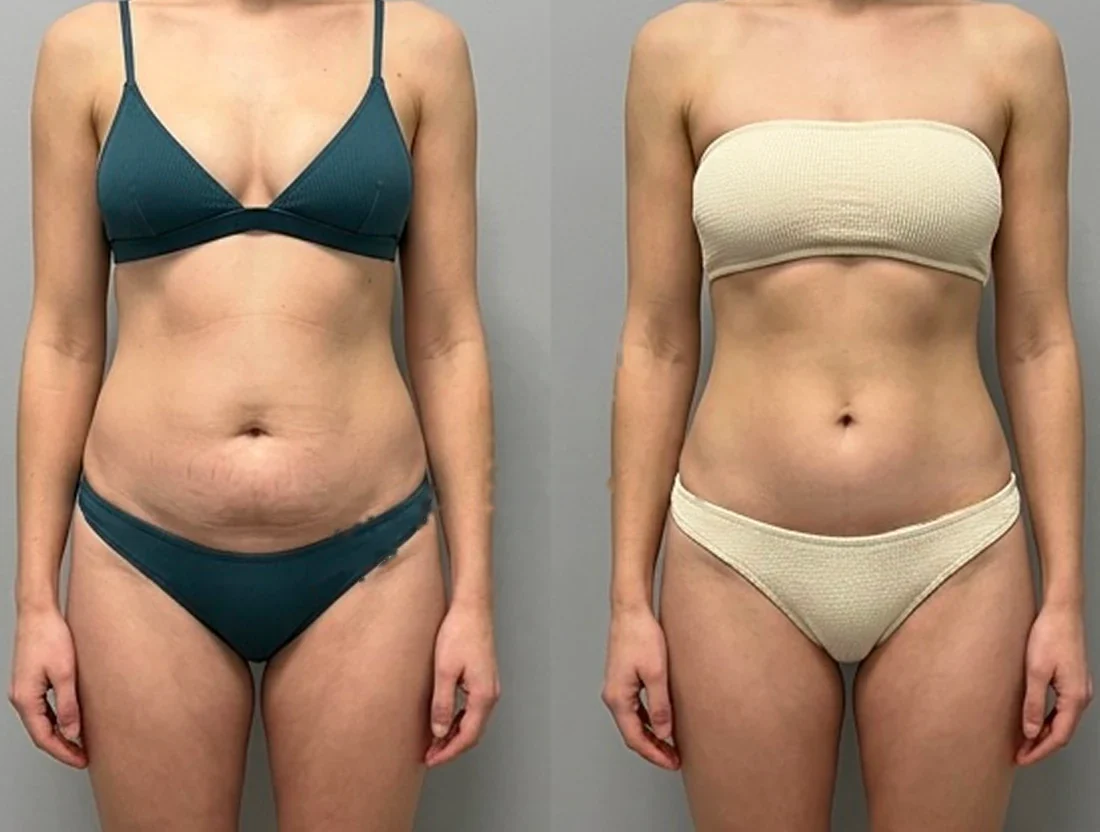
Real case
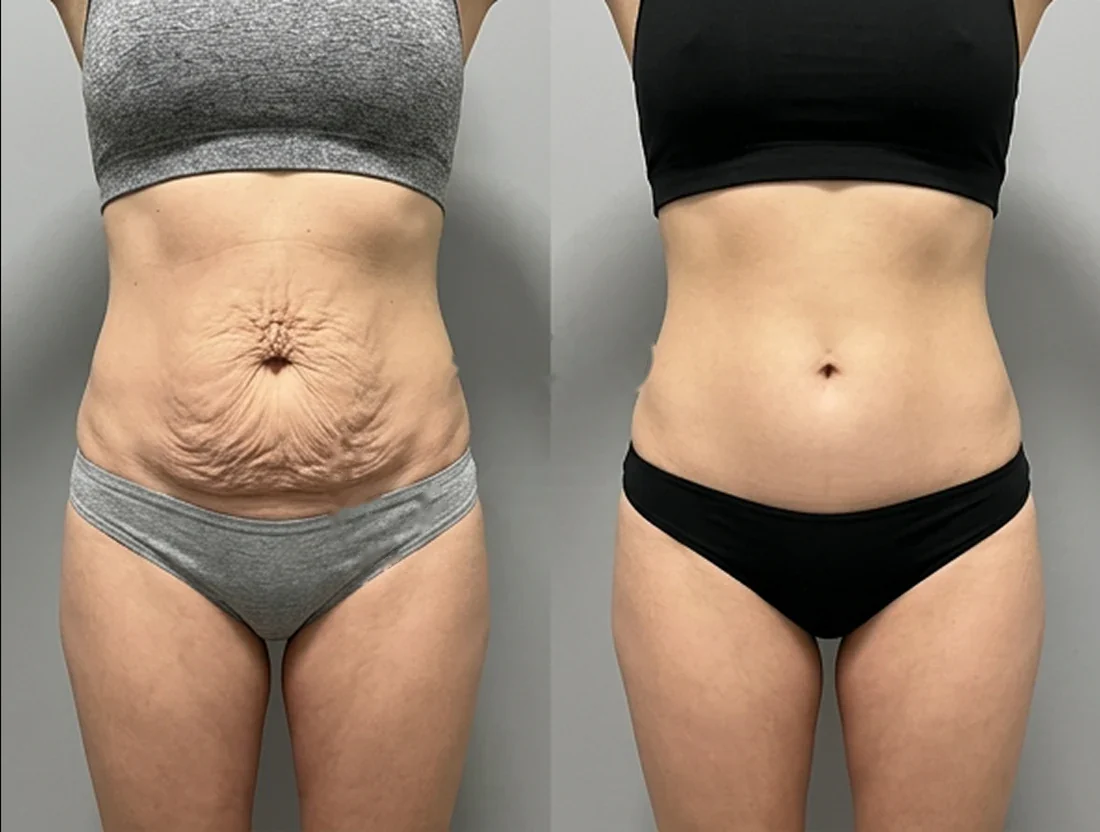
Tummy tuck: a patient's abdomen before and after surgery before after
A flat tummy and a toned silhouette in one operation. Your individual surgical plan and the expected result are discussed at the consultation

Message our coordinator

Free online consultation · Reply within 15 minutes

Message us on Telegram

By messaging us, you agree to our Privacy Policy

Tummy tuck (abdominoplasty) in Iasi: price and key facts

Tummy tuck for patients from Iasi at City Medical Centre: the price is named at the free online consultation and fixed in the contract with no hidden extra charges.

Duration
2–4 hours
Anesthesia
general
Stay
1–3 days
Recovery
back to work after 2–3 weeks
Final result
6–12 months after surgery
How it works
Send photos on WhatsApp or Telegram, get a free doctor assessment and the price, then confirm the plan and dates before anything is booked.

How it works · Tummy tuck prices

Information current as of 24 October 2026

Free online consultation on WhatsApp and Telegram

Results

Tummy tuck (abdominoplasty) results
of our patients

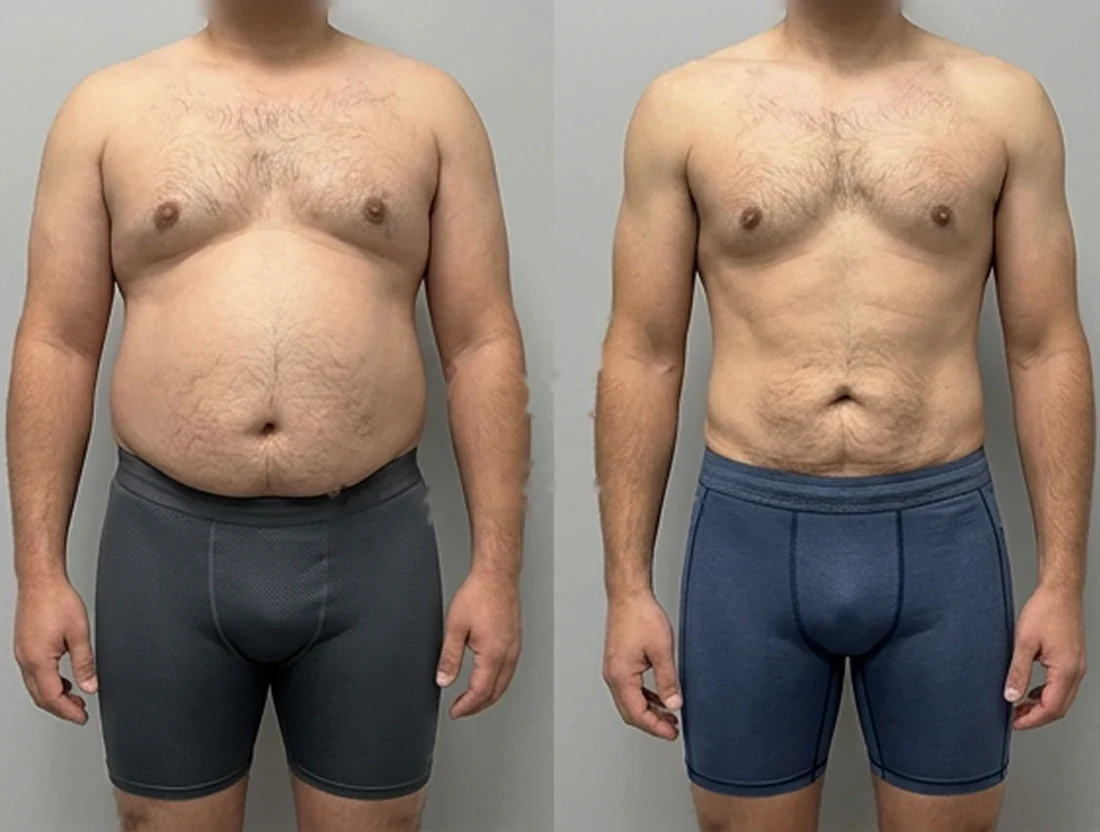
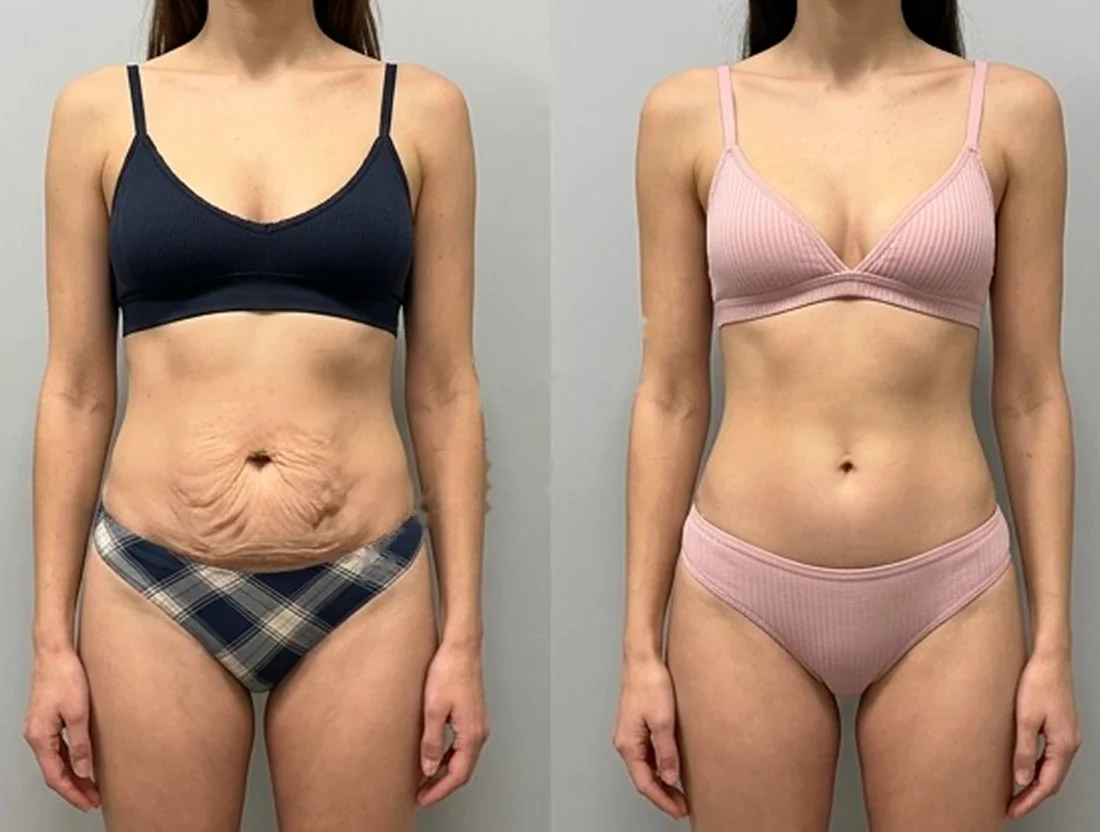
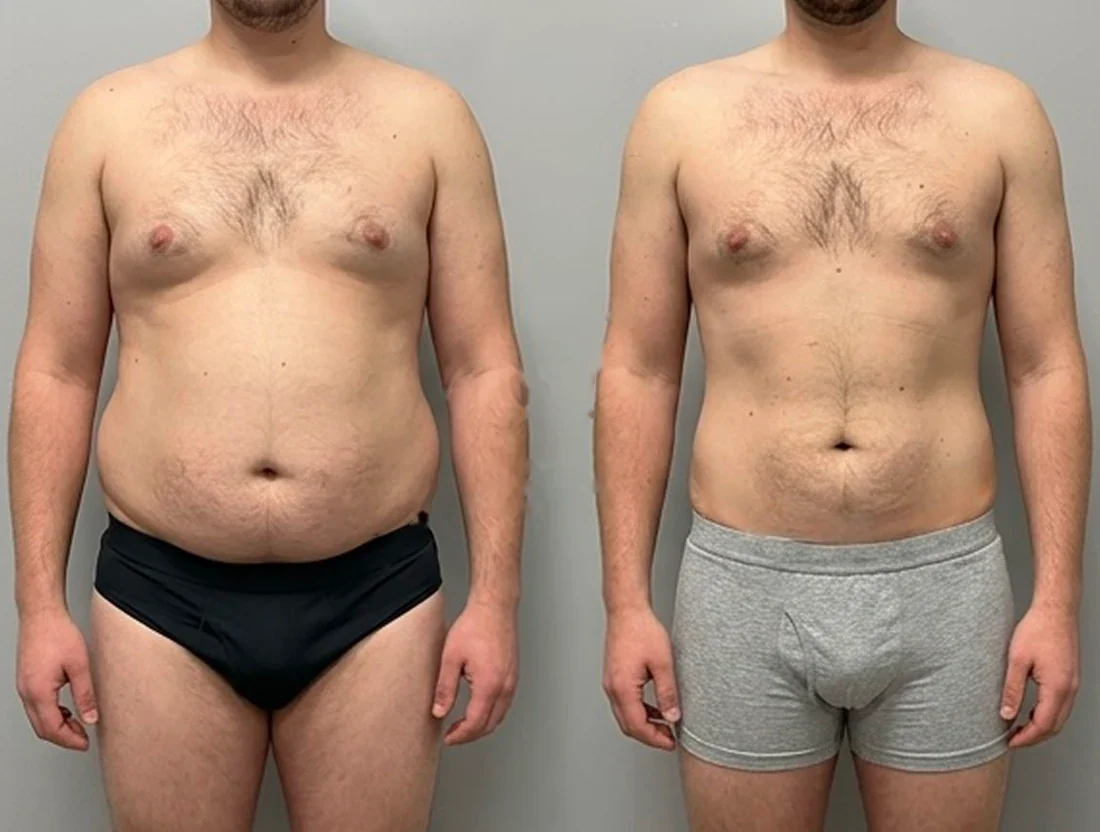
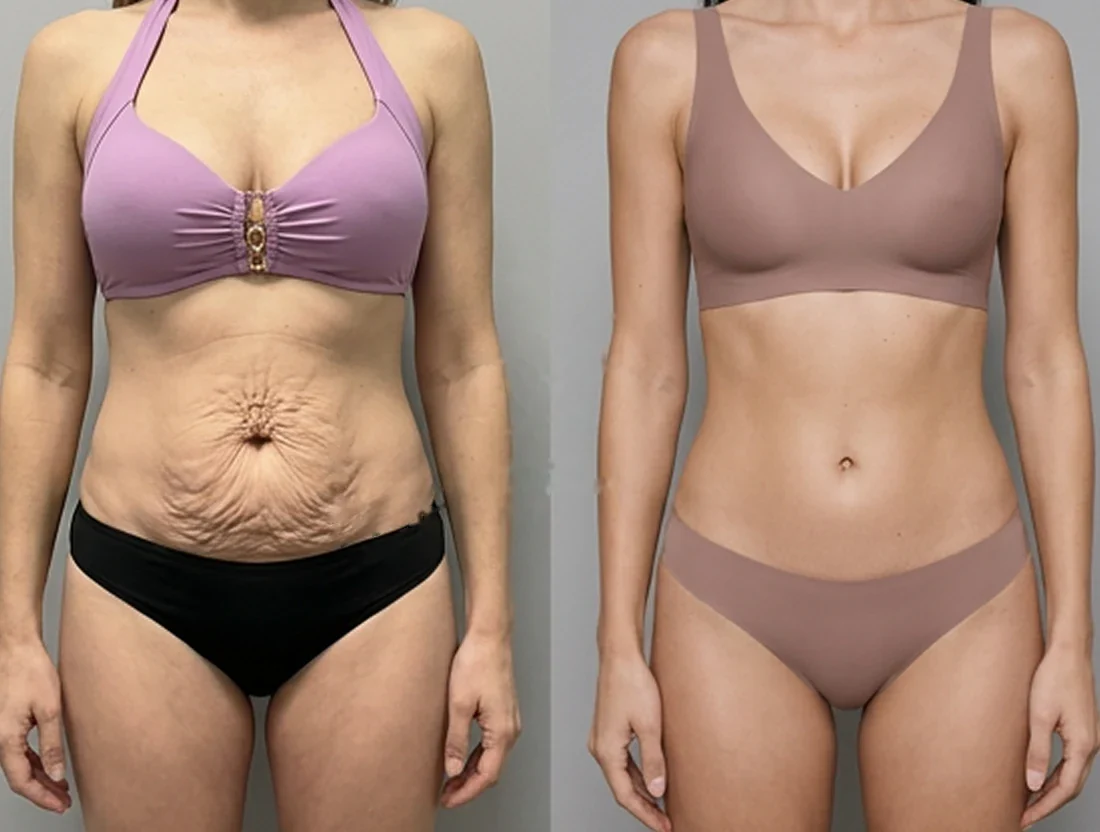
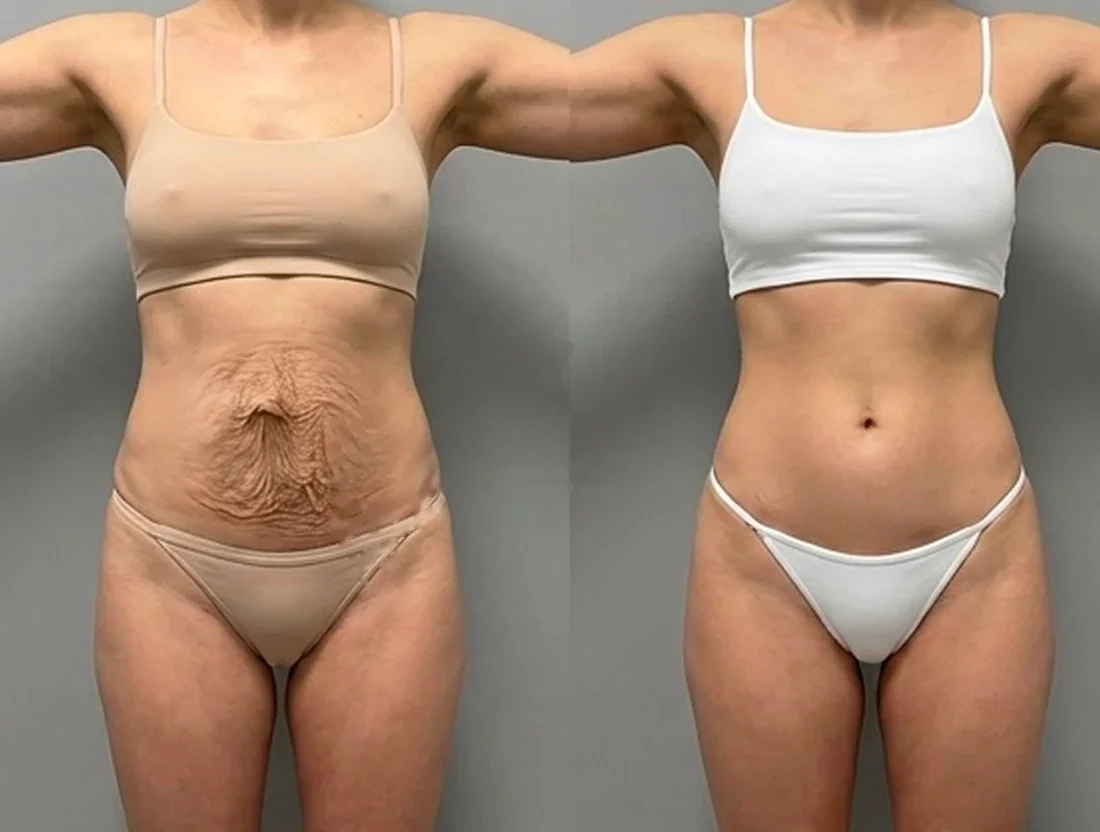
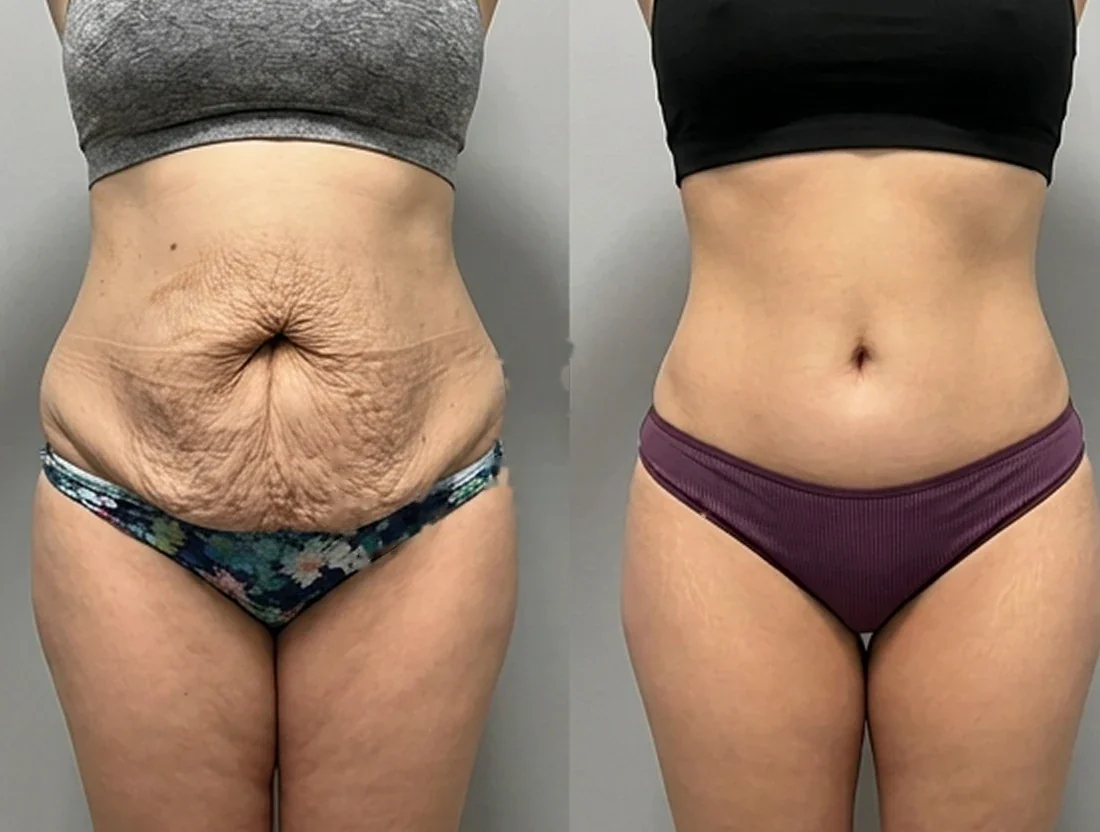
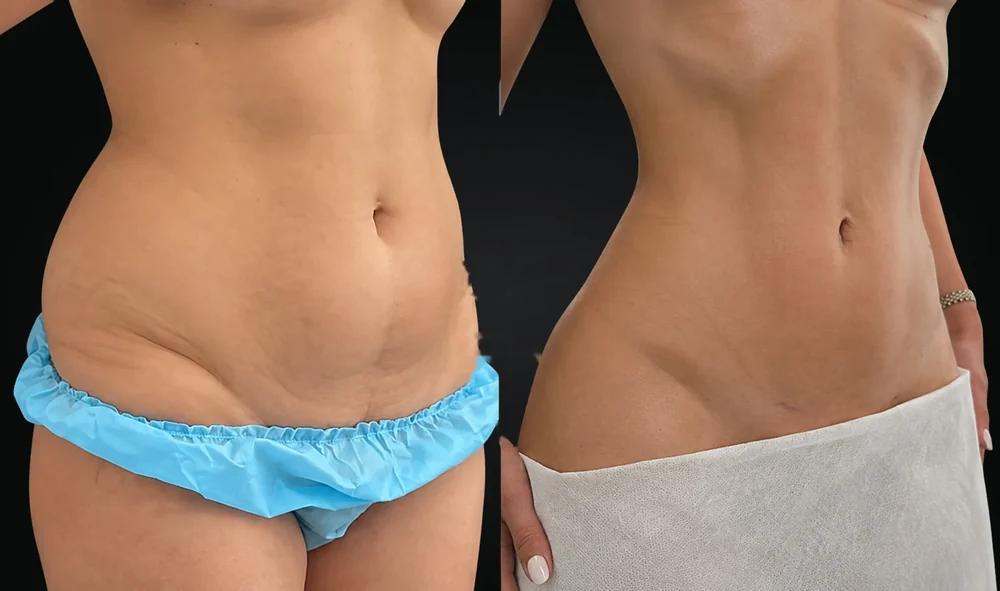
All cases are real patients. Faces and identifying details are hidden.

Tummy tuck: a female patient's abdomen before and after surgerybeforeafter
Tummy tuck: a male patient's abdomen before and after surgerybeforeafter
Tummy tuck: a female patient's abdomen before and after surgerybeforeafter
Tummy tuck: a male patient's abdomen before and after surgerybeforeafter
Tummy tuck: a female patient's abdomen before and after surgerybeforeafter
1 of 8

Comparison

Tummy tuck techniques

A tummy tuck is done as a full (classic) or mini operation, or combined with liposuction as lipoabdominoplasty. Compare the scope of surgery, the indications and the expected results to choose the right technique together with your surgeon.

Tummy tuck

Removal of excess skin, abdominal muscle tightening
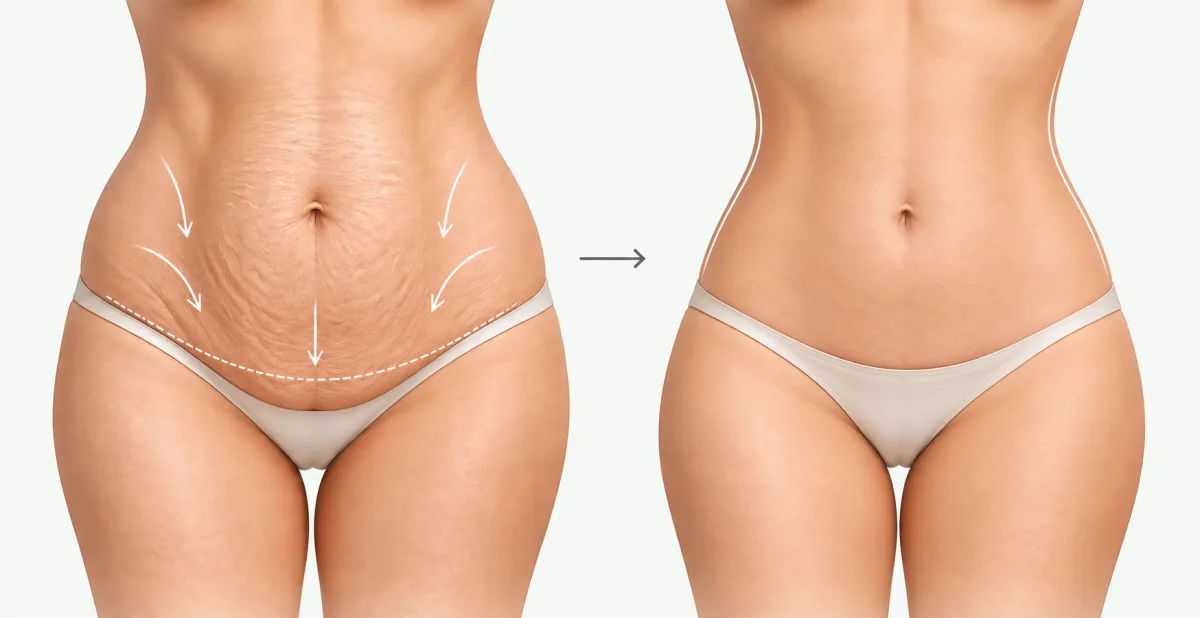
Tummy tuck diagram: the abdomen before surgery with the incision line, and the result
Main goal
Removal of excess skin, diastasis repair
When it is done
Excess skin after childbirth or weight loss
Anaesthesia and stay
General anaesthesia, up to 3 days in hospital

Lipoabdominoplasty

Tummy tuck with added liposuction
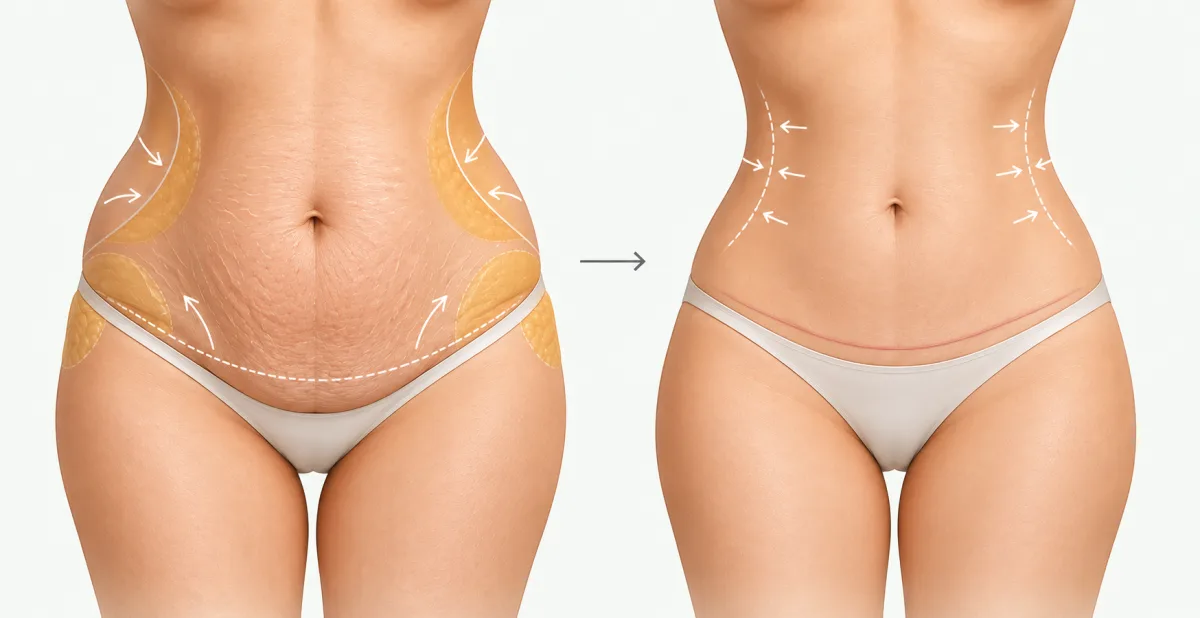
Lipoabdominoplasty diagram: the abdomen with fat on the flanks before surgery, and the result
Main goal
Tummy tightening and waist contouring
When it is done
For fat deposits on the flanks and waist
Anaesthesia and stay
General anaesthesia, up to 3 days in hospital

The benefits and recovery times shown are averaged for each technique and given for guidance: the scope of correction and rehabilitation depend on your anatomy and individual features, and the surgeon confirms them at the consultation.

At the consultation the surgeon draws up a plan for your case and explains how your tummy tuck will go.

Free, before surgery and with no obligation.

Book a consultation

Tummy tuck from the inside

About the clinic

A clinic where you can feel at ease

Modern equipment, comfortable rooms and care for every patient

A doctor and a patient in a clinic ward

Contact us the way that suits you

We will answer your questions and find a convenient time for a consultation

By messaging us, you agree to our Privacy Policy

A tummy tuck is not for everyone

If your case can be solved without surgery, the doctor will tell you so at the consultation — and you will not spend money for nothing.

Suitable

A surgeon shows a patient on a model and a monitor how the abdominal contour changes after a tummy tuck
  • Rectus abdominis diastasis
  • Skin folds after weight loss
  • Loose abdominal skin
  • Stretched skin after pregnancy
  • A distorted abdominal contour

Not suitable

A surgeon discusses the indications and contraindications for a tummy tuck with a patient
  • Acute infections
  • Significant disease of the heart, kidneys or liver
  • Problems with blood clotting
  • Under 18 years of age
  • Decompensated diabetes
  • Cancer
  • Skin inflammation in the surgical area
  • Pregnancy and nursing

Not sure the surgery is right for you?

Message us — the coordinator will ask for your photos in the messenger, and the surgeon will tell you whether a tummy tuck suits you. No surgery booking needed.

Find out if it suits me

A surgeon goes through a tummy tuck diagram with a patient at the consultation

Prices

You know the price
before surgery

The price is set at the consultation and fixed in the contract.

Other services

  • First consultationFree
  • Liposuction of the abdomen and flanksfrom $1,700
Book a consultation

Find out your tummy tuck plan and price

The surgeon assesses your abdominal skin and muscles, listens to your wishes and chooses the right correction technique.
The price is set at the consultation and fixed in the contract.
A nurse talks to a patient in a clinic ward

Message our coordinator

Free online consultation · Reply within 15 minutes

Message us on Telegram

By messaging us, you agree to our Privacy Policy
A patient's abdomen before a tummy tuck in the operating room

all inclusive

What the price includes

From preparation for surgery
to post-op check-ups.

  • All scheduled dressings
  • Scheduled post-op check-ups
  • A personal coordinator on call
  • Compression garments fitted on the day of surgery
  • A stay in a comfortable
    hospital ward with meals
  • Individual recommendations
    for recovery
  • Remote progress monitoring
    by photos

How it works

Three days at the clinic —
from preparation to discharge

An agreed correction plan, inpatient observation and post-op check-ups.

A doctor shows a patient a tummy tuck diagram on a monitor1

Consultation
and the surgical plan

The surgeon assesses your abdominal skin and muscles and checks for diastasis, listens to your wishes and chooses the right correction technique.

Paying the deposit by card at the clinic reception2

Booking the date
of surgery

We reserve a surgery date for you: the deposit can be paid by card at the clinic or online by bank transfer. The terms are fixed in the contract for medical services

A blood sample tube for tests before a tummy tuck3

Check-up before
surgery

Before surgery you complete a full lab check-up: blood tests, an ECG, a chest X-ray and reports from the required specialists.

The surgical team during the operation4

Surgery

The surgeon performs the tummy tuck with the chosen technique, repairs diastasis if needed and shapes a firmer abdominal contour.

A hospital ward at the clinic5

Inpatient stay

After surgery the patient stays for 1–3 days in a comfortable hospital ward with meals, under medical supervision.

A surgeon and a patient in the ward during recovery6

Recovery

After surgery you get a recovery programme. Check-ups at 7 days, 3 and 6 months help track your recovery.
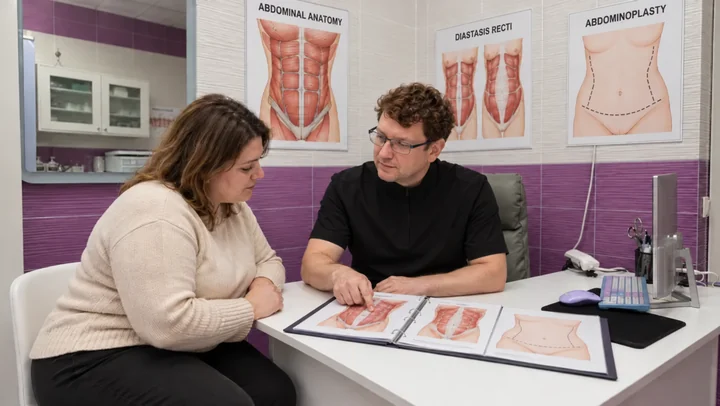
Book a free consultation — the surgeon will plan every step with you.

A doctor discusses the tummy tuck plan with a patient
Book a consultation
A doctor discusses the tummy tuck plan with a patient

How it really happens

After a tummy tuck: recovery

Straight after surgery the patient spends 1–3 days in hospital under medical supervision. Drains are usually removed on day two, and stitches after 7 days. A compression binder is worn for 1.5–2 months — it supports the abdominal wall and shapes a smooth contour. Most swelling resolves within 30 days, and office work resumes after 2–3 weeks. Sports, sauna and heavy lifting are off-limits for 2–3 months, and sleeping on your back with knees bent is advised at first. The scar matures fully by 12 months, fading and becoming barely noticeable.

Post-op check-ups

After 7 days, at 3 months and at 6 months. Until the end of the year, get a post-surgery consultation with your surgeon to review results and get more information, at the clinic's expense

Advantages

Why patients pick City Medical Centre

A surgeon discusses the tummy tuck plan with a patient at the consultation

Just find out — you lose nothing

At the consultation we discuss your wishes and assess your abdominal skin and muscles. The surgeon explains what changes are possible, chooses the correction technique and answers your questions.

A surgeon on a video call with a patient after surgery

We stay with you after surgery

The surgeon follows your recovery and the changing abdominal contour at check-ups after 7 days, 3 and 6 months. Check-ups, dressings and aftercare advice are already included in the price of surgery.

A surgeon shows a patient a model and tummy tuck diagrams

A beautiful contour that fits your figure

We choose the correction technique based on your skin, muscles and figure. Our aim is a harmonious abdominal contour that keeps the natural proportions of your body.

A patient writes down a convenient visit time in her planner

Your schedule is our priority

We respect your time: we work 24/7, with easy booking and a personal approach — we adapt to your pace.
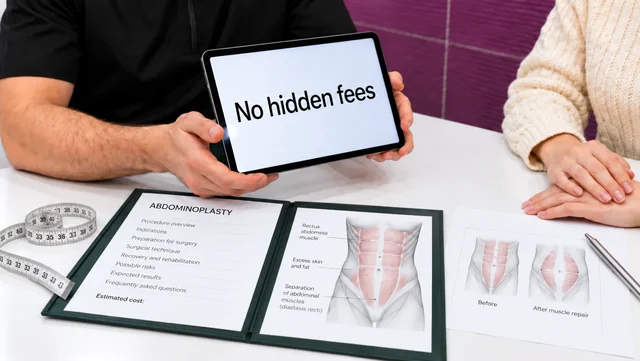
A surgeon shows a patient the fixed price of surgery with no extra charges

Fixed prices

After the consultation the surgeon defines the extent of correction, and you get a clear price for the surgery — no surprises on the way to the result you want.

A surgeon visits a patient in the hospital ward after surgery

Round-the-clock care after surgery

Recovery starts in a comfortable hospital ward under round-the-clock nursing care. The stay and meals are already included in the price.

FAQ

We answer what
people ask before booking

Choosing abdominoplasty in Iasi

An overhanging apron of skin, a belly that stays rounded despite training, a stretched area above a C-section scar: these are the usual reasons people in Iasi look into a tummy tuck. The operation tightens the front abdominal wall rather than reducing weight. With a small amount of excess skin, a mini tummy tuck may be enough; with marked changes, the classic technique is chosen.

It all begins with a surgeon consultation: the doctor listens to your wishes, examines the abdomen and rules out contraindications, and a hormone screening is ordered to help predict the long-term result. Patients from Iasi then complete a check-up: blood tests including a coagulation panel, biochemistry and infections, ECG and chest X-ray, all available at the clinic with no waiting.

Start with a free consultation for a tummy tuck in Iasi. The surgeon assesses your abdomen, explains the difference between the classic and mini techniques for your case and gives the final price, which is then recorded in the contract. Apply before the end of the year and the consultation is at the clinic's expense. Write to us in any messenger or use the form on the page.

Stories of well-known people

Well-known people who spoke openly about this operation, in their own words.

All stories about this operation →

Planning the weeks of core recovery around a working calendar

A tummy tuck is often described by the skin it removes, but the weeks afterwards are really about the abdominal wall. The operation takes 2–4 hours under general anaesthesia and is followed by 1–3 days in hospital. After that, the muscles and the lower abdominal incision decide what you can do each day. Office work usually resumes after 2–3 weeks. Sports, sauna and heavy lifting stay off the list for 2–3 months. For a patient in Iasi, the useful question is which tasks in your week involve pulling, lifting or twisting through the trunk, and who will take them over during that period.

The Romanian calendar helps with this. The country has 15 non-working days a year, and Orthodox Easter is a long block: Friday to Monday, plus the 1 May holiday that sometimes sits next to it. In 2027 Orthodox Easter Sunday falls on 2 May, so the Friday-to-Monday break runs from 30 April to 3 May, and 1 May falls inside it. Someone who has the operation just before that break gets a few extra days without needing to explain an absence. This does not shorten recovery, because the 2–3 weeks to office work still apply. It does make the first days quieter, when drains are in place (usually removed after two days) and the focus is on walking slowly and sleeping on your back with knees bent.

Pentecost, 15 August, 30 November, 1 December and the Christmas days are other fixed holidays on the same list. Each one gives a natural anchor for planning. Counting from the day of surgery, the first check-up comes at 7 days, when stitches are normally removed, and the second at 3 months. Putting those dates next to public holidays shows quickly which appointments can be held calmly by video and photos and which fall during a week when you would rather be at home. Our coordinators work round the clock on WhatsApp and Telegram, so a holiday does not leave you without an answer.

Lifting deserves its own paragraph, because it is the thing people underestimate. In the first 2–3 weeks, physical exertion, heavy lifting and sudden movements are not allowed. A full shopping bag, a laundry basket, a child on one hip, a suitcase in the hall or a box of paper from a shelf all count. Many people discover that most of their weekly lifting is routine and invisible. Before the operation, walk through one ordinary week and write down every object you carry. Then decide who will carry each of them. That list is more reliable than a general promise to "take it easy".

Work differs by role. A desk job with a screen and a chair is the simplest to resume at the 2–3 week point, as long as you can stand up and sit down without pushing hard through the abdomen. Jobs that involve standing for hours, moving stock, lifting patients or handling equipment need a longer conversation at the online consultation. The doctor can only advise properly if you describe the real movements involved, not just a job title. Send a short description with your photos: how much weight, how often, and whether anyone can help.

How Iasi's cold, damp and sunny months meet a compression binder

A compression binder is worn for 1.5–2 months after a tummy tuck. It supports the abdominal wall and helps shape a smooth contour, and the moment you wear it depends on the season. Long-term climate averages for Iasi show how different the year can be. In January the mean daytime high is 1.3 °C and the mean night-time low is -5.1 °C. In July the mean high is 29.0 °C and the low 16.3 °C, with August at 28.8 °C and 15.6 °C. The record extremes are 41.3 °C on the hot side and -36.3 °C in February on the cold side. The city sits in a humid continental zone with warm summers (Köppen Dfb), so you can choose between a winter recovery and a summer recovery, and each has its own character.

A winter recovery means layers. The binder sits under clothing, and the incision lies low on the abdomen, from hip to hip below the underwear or swimsuit line. Soft, loose trousers with a high waist can press on that area, whereas a longer knit top over the binder is gentler. Snow matters too: the older climate normals give about 61.8 cm of snowfall a year, with February (14.3 cm) and January (11.3 cm) the snowiest months. Icy pavement is a real concern for someone who has just had abdominal surgery, because a slip makes you reach and brace through the trunk by reflex. If you choose winter, plan walks for dry, cleared surfaces, short and slow, and ask someone to go with you to the door in the early days.

A summer recovery brings the opposite difficulty: warmth under compression. With July highs near 29 °C, a tight garment can feel hot and sticky, and swelling can feel more noticeable in the evening. Humidity in July is moderate (around 60% on the long-term average), lower than in December, when it reaches 83%. Cool rooms, breathable fabric over the binder, and rest in the shade on the hottest afternoons make that period easier. Remember that the pool, sauna, steam bath and tanning beds are all excluded for at least a month, so summer water plans have to wait. Sunbathing is not on the list of advice in this plan, and scars are sensitive to sun.

That brings us to the scar. The scar takes up to 12 months to fully mature, and during that time it fades and becomes thinner and barely noticeable. Iasi gets about 2,083.5 hours of sunshine a year. July alone has 291.2 hours, compared with 61.5 hours in December. That tells you that the strongest light of the year comes in the same months many people want to be in swimwear, which means the scar on the lower abdomen will probably be exposed at times if you are active outdoors. The sensible approach is to keep the area covered with clothing and not to expose the fresh scar to direct sun while it is still changing. Ask the doctor at the consultation, and again at the 3-month check-up, how to protect it, and show it on the photo you send.

Rain also affects planning, though less so than cold. June is the wettest month (78.0 mm), followed by July (70.8 mm), while February is the driest (25.8 mm). Annual precipitation is 548.0 mm on 75.1 days with at least 1 mm. Rainy days are an argument for staying in, which suits an early recovery anyway. If you choose late spring, expect a few wet days at the time you are building up your walking. Neither winter nor summer is automatically better. The right season is the one in which you have the most help at home and the fewest obligations for the first 2–3 weeks.

Hills, trams and the stairs between you and the front door

Iasi is built on hills around the Bahlui river, and the city is known for its "seven hills": Breazu, Bucium, Cetatuia, Copou, Galata, Repedea and Sorogari. Elevation ranges from about 34.5 m to 354.77 m, with the municipality at roughly 60 m on average. For a recovering patient, this matters mostly in everyday movement. A short walk that is flat in one district may include a steep slope in another. A gentle slope is no problem in the weeks when you are building up to normal activity, but a steep climb makes you tighten the abdominal wall more than you realise. In the first days, choose routes that are level, even if they are longer, and treat hills as something to return to when the doctor says it is time.

Public transport is part of daily life in the city. CTP Iasi runs 126 trams and 150 buses, and electric trams have operated since 1900. The network carried about 50 million passengers in 2014, which tells you it is a normal way to get around. For the first weeks, though, a crowded vehicle is a poor setting for someone with a healing incision. The risks are sudden braking, being jostled, hanging onto a rail with one hand and a bag in the other, and pushing through the doors. Plan the first outings, including the one for the 7-day check-up if it is needed in person, with a seat in mind and quiet hours. If someone can drive you, that is simpler. If not, consider what you can carry and whether a seat is likely.

Stairs are the other thing to count. Many apartment buildings have several floors, and the elevator may be small or absent. Going up and down slowly with a hand on the rail is fine for most people in the early days. Hauling shopping up is not. Ask a relative to bring groceries, or arrange deliveries for the first 2–3 weeks, when lifting is not allowed. If you have a very long staircase to your door, mention it during the online consultation, because it affects what the doctor tells you about the first week at home and about the day of discharge after 1–3 days in hospital.

Think about the bed too. At first, sleeping on your back with knees bent is advised. A bed that is very low, very soft or hard to get out of can mean sudden pushing through the abdomen. A few pillows under the knees and one beside you to lean on make it easier to get up without twisting. In the first days you will probably move slowly, rolling to the side and using your arms to rise. That is normal, and it improves as swelling decreases (most of it goes within 30 days).

Family life, children and who carries what

A tummy tuck is common after pregnancy, when the skin is stretched and the rectus muscles may have separated (diastasis). That also means many patients have small children at home. The medical advice about lifting is the same for everyone: no heavy lifting or sudden movements during the first 2–3 weeks, and no heavy lifting at all for 2–3 months. Picking up a toddler is a sudden heavy movement. Planning in advance is the only workable solution: a spouse, parent, sister or friend who can handle lifting, bathing, car seats and cots for the first weeks, and who knows this is not a favour for a weekend but a stretch of a few weeks.

Some practical rearrangements make it much easier. Move the things you use daily to waist height: nappies, cups, bottles, clean clothes, phone chargers. Let a child climb onto the sofa and sit beside you rather than being lifted. Read, draw and play quiet games. Explain to older children in simple language that the tummy has a sore spot and needs time, and that hugs are fine but jumping on the belly is not. If you cannot manage without support, ask the coordinator to share what a realistic plan looks like, based on what other patients have asked.

The order of life events matters, too. Skin that has been removed does not regrow, but a later pregnancy stretches the repaired muscles again. That is why the operation is planned once your family is complete. If you are still hoping for another child, discuss this honestly at the consultation, since the doctor needs to know about your plans. It affects whether surgery now is the right step or whether it is better to wait. Likewise, if your weight is still changing, the advice is to see a dietitian or endocrinologist first and to operate at a stable weight.

Spouses and relatives often ask what they should expect. The honest answer is that the first days involve tightness and soreness, relieved with painkillers prescribed by the doctor, and that the discomfort noticeably eases by the end of the first week. Swelling remains for a few weeks. Moods can fluctuate, as they do after any operation. Having someone who knows the schedule (drains out after about two days, stitches at 7 days, binder for 1.5–2 months, check-ups at 7 days, 3 months and 6 months) helps, because they can remind you when you forget a step. Sharing the written plan with a family member is useful.

Cultural and religious dates can shape family obligations as well. Saint Parascheva's pilgrimage around 14 October brings hundreds of thousands of pilgrims to the city, and it coincides with the Celebration Days, so the centre is crowded and busy. If your family usually takes part in that week, it is sensible not to schedule the operation so that your first 2–3 weeks fall in it, because you would be asked to stand in crowds, queue and carry things. Other events, such as Hangariada in May, the International Theatre Festival for Young Audience in October, the FILIT literature festival and the Afterhills music festival, are optional, and you can decide which ones to skip. Watching a performance from a seat after the third week is a reasonable goal, as long as you avoid pushing through crowds.

Insurance cards, co-payments and what an elective operation means in Romania

Romania's social health insurance is run by CNAS, the national health insurance authority, which manages a basic package of medical services, medicines, sanitary materials and medical devices. Free procedures require a health card showing paid insurance. EU citizens and uninsured Romanians get free emergency care. That framework is designed around medically necessary treatment. A tummy tuck is mostly an aesthetic and reconstructive decision, and I have not seen a published rule showing that CNAS covers cosmetic abdominal surgery. For that reason, you should not plan on reimbursement. Ask your insurer or family doctor if you want certainty about your own situation.

It is worth knowing how the system treats related areas. For bariatric surgery, a recent article in the Romanian press stated that CNAS does not fully reimburse the operation, in state or private hospitals, though some pre- and postoperative services such as endoscopy can be free with a family-doctor referral. If you have lost a lot of weight and are now considering skin removal, that may be relevant to you: some of the follow-up for weight loss may sit inside the insurance system, while the body contouring does not necessarily. Keep copies of your medical records from that period, because the doctor will want to know your weight history and whether it is stable.

The system itself is described as hospital-centric, with a shortage of healthcare workers. Since April 2019, insured people may pay the difference between private-provider tariffs and the fund's fees, and CNAS has begun introducing co-payments for services that are not strictly medically necessary. Out-of-pocket payments were about 21% of total health expenditure, compared with an EU average of 15%, according to dated figures. In practical terms, many Romanians are used to paying something themselves when they use private care. For a tummy tuck, what matters is clarity: the price is named at the free online consultation and fixed in the contract before surgery, and the package includes scheduled dressings, scheduled check-ups, a personal coordinator, compression garments fitted on the day of surgery, and the hospital stay with meals.

Even if the operation itself is not covered, some parts of your preparation may involve ordinary healthcare. The pre-operative list includes blood and urine tests, a coagulation panel, biochemistry, infection tests, ECG, chest X-ray, leg vein ultrasound and a GP's report. Tests are usually valid for 10–14 days, so timing matters: do them close enough to the operation not to expire, but early enough to leave time to repeat anything unclear. Ask the coordinator which of these you can obtain through your family doctor and which you should arrange separately. Take your health card to appointments in case it is needed for any item.

If you take regular medication, bring a full list. Medicines affecting blood clotting, along with smoking and alcohol, are stopped 7–10 days before a tummy tuck. Do not stop anything on your own: describe what you take, and the doctor will tell you what to change and when. Certain conditions mean the operation is not suitable, such as acute infections, severe heart, kidney or liver disease, clotting problems, decompensated diabetes, cancer, skin inflammation in the surgical area, and pregnancy or nursing. If you have any of these, the consultation is where it will be explained plainly, and you will not be pushed to book.

Using the online consultation well from Iasi

The consultation is free and online, and you can start with photos on WhatsApp or Telegram. Coordinators reply round the clock, and the stated reply time is within 15 minutes. You send photographs, receive a doctor's assessment and the price, and then confirm the plan and dates before anything is booked. Nothing in this process commits you to surgery. If your case can be solved without an operation, the doctor will tell you so.

Good photos make a big difference. Take them in daylight or bright, even light, standing straight, from the front, from both sides and from behind. Include the whole abdomen from the lower ribs to the upper thighs. Take one picture with your hands relaxed and one with the abdomen gently tensed, which helps show whether there is a separation of the muscles. Avoid filters and heavy shadows. If you have older scars, from caesarean section or other operations, photograph them too, because they affect planning. Write down your height, weight, any recent weight change and the number of pregnancies, as well as past operations and allergies.

During the conversation you will also hear which technique is likely to suit you. A full (classic) tummy tuck removes excess skin and tightens the abdominal muscles, and it is usually chosen for excess skin after childbirth or weight loss. A mini tummy tuck deals with a small excess below the navel, with a shorter incision, the navel staying put and faster recovery. Lipoabdominoplasty adds liposuction of the flanks and waist for those with fat deposits there. The stay is up to 3 days in hospital for the full or combined operation, and one day is usually enough for a mini. The doctor decides after assessing your skin and muscles, and the answer depends on your anatomy.

Think of the consultation as a place for practical questions, not just medical ones. Ask what the first night looks like, who removes the drains, how the compression garment is fitted on the day, what you can do on day five, and how remote monitoring by photos works. Ask how to describe a worry at 2 a.m. and who will answer. Ask what changes the plan for returning to work if your job is physical. The answers shape the whole recovery.

After the operation, remote monitoring continues. Check-ups at 7 days, 3 months and 6 months follow the recovery and the changing contour, and until the end of the year a post-surgery consultation with the doctor at the clinic's expense is offered to review results. Final contours and the scar are assessed at 6–12 months, and the first visible changes appear around 2 weeks after surgery as the main swelling subsides, with an interim result at 1.5–2 months. If you are a student at one of the city's five public universities, or work in a setting tied to an academic calendar, those milestones can be matched against exam periods or term starts. More than 60,000 students study in Iasi, and Alexandru Ioan Cuza University alone had 24,047 in 2019–2020 across 15 faculties. Younger patients, who are over 18 and have no contraindications, often find that a break between terms is the easiest window for the first 2–3 weeks.

Does Iasi's winter make a tummy tuck recovery harder than the summer?

Each season has its own difficulty. Long-term averages show January highs of about 1.3 °C and lows of -5.1 °C, and the snowiest months are February and January, so the main winter concern is icy pavement. A slip makes you brace through the abdomen, which is exactly what you want to avoid in the first 2–3 weeks. Summer highs near 29 °C make a compression binder, which is worn for 1.5–2 months, warmer and stickier. Neither is automatically better. Choose the season in which you have the most help at home, and discuss it at the free online consultation.

How should I use the Easter and May holidays when planning the date?

Orthodox Easter in 2027 falls on 2 May, with the Friday-to-Monday break running from 30 April to 3 May and 1 May inside it. A date shortly before that break gives you a few extra days at home, but it does not shorten recovery, because office work still resumes after 2–3 weeks and the 7-day check-up and stitch removal still apply. Check which of your appointments would fall on a holiday and ask your coordinator how they will be handled. Messages are answered round the clock, including on public holidays.

Can I use trams and buses in the first weeks?

The city has 126 trams and 150 buses, so public transport is a normal option, but early on it is not ideal. Sudden braking, crowding and holding a rail with a bag in the other hand all involve the movements you are asked to avoid during the first 2–3 weeks. For the first outings, choose a seat, quiet hours and a short distance, or ask someone to drive you. Ask the doctor at the consultation when you can resume it based on how you are healing.

Will the hills and stairs of Iasi be a problem during recovery?

They can be if you tackle them too early. The city is spread over hills, with elevation ranging from about 34.5 m to 354.77 m, and many buildings have long staircases. Slow walking on level routes is a good start. Climbing with a hand on the rail is usually fine in the first days, but carrying shopping or a child is not, since heavy lifting is excluded for 2–3 weeks at least and sport and heavy lifting for 2–3 months. If your home has many steps, tell the coordinator so that the day of discharge and the first week can be planned.

Will Romanian health insurance cover a tummy tuck?

Romania's insurance is run by CNAS and covers a basic package of services, with free procedures requiring a health card showing paid insurance. I have not seen a published rule that treats a cosmetic tummy tuck as part of that package, and CNAS is described as introducing co-payments for services that are not strictly medically necessary. You should therefore not count on reimbursement. Some preparatory tests may be available through your family doctor. Ask your insurer for your own situation, and remember that the price at City Medical Centre is named at the consultation and fixed in the contract.

Should I avoid the October pilgrimage week or the festival dates?

It is sensible to. The Saint Parascheva pilgrimage around 14 October draws hundreds of thousands of pilgrims and coincides with the city's Celebration Days, so crowds, queues and carrying things are likely, which does not suit the first 2–3 weeks after surgery. Festivals such as Hangariada in May or the theatre festival in October are optional, and you can plan to attend only after the doctor confirms you are ready. After 2–3 weeks, sitting in a seat at a performance is generally more comfortable than standing in a crowd.

How much sun protection does the scar need in a sunny city?

Iasi has about 2,083.5 hours of sunshine a year, with July at 291.2 hours, so strong light is common in the months when people want to wear swimwear. The scar sits low on the abdomen and matures over up to 12 months, fading and becoming barely noticeable. During that time, keep it covered and avoid direct sun and tanning beds (these are excluded for at least a month in any case). Ask the doctor for specific advice at the 3-month check-up and send a photo of the scar so that it can be assessed remotely.

How do I fit the pre-operative tests into a busy week in Iasi?

The list includes blood and urine tests, a coagulation panel, biochemistry, infection tests, ECG, chest X-ray, leg vein ultrasound and a GP's report. Results are usually valid for 10–14 days, so book them close to the operation date but early enough to repeat anything unclear. Many people spread them over two or three days. Ask your coordinator for the exact list, since the doctor confirms it at the consultation, and keep your health card with you when you attend appointments. Stop smoking, alcohol and medicines affecting clotting 7–10 days before the operation, but only as the doctor instructs.