



























Message our coordinator
Free online consultation · Reply within 15 minutes
Message us on TelegramMessage us on WhatsAppBy messaging us, you agree to our Privacy Policy




Facelift and neck lift in Iasi: price and key facts
Facelift for patients from Iasi at City Medical Centre starts at RON 11,500 (from $2,400). The first online consultation is free; the doctor names the final price and it is fixed in the contract.
- Price
- RON 11,500 (from $2,400)
- Anesthesia
- general (inhalation)
- Recovery
- about 2 months to full recovery
- Final result
- 3–6 months after surgery
- How it works
- Send photos on WhatsApp or Telegram, get a free doctor assessment and the price, then confirm the plan and dates before anything is booked.
How it works · Facelift prices
Information current as of 24 October 2026



50 years
9 months

SMAS facelift

58 years
8 months
SMAS facelift

34 years
5 months
SMAS facelift

32 years
7 months
SMAS facelift

40 years
6 months
SMAS facelift

45 years
8 months
SMAS facelift

38 years
5 months
SMAS facelift

33 years
6 months
SMAS facelift
50 years
9 months
SMAS facelift
58 years
8 months
SMAS facelift
34 years
5 months
SMAS facelift
32 years
7 months
SMAS facelift
40 years
6 months
SMAS facelift
45 years
8 months
SMAS facelift
38 years
5 months
SMAS facelift
33 years
6 months
SMAS facelift


Marked sagging across the face and neck
A blurred jawline, jowls
A double chin with loose skin on the neck
Deep nasolabial folds and marionette lines
Drooping brows and a heavy look
Significant loss of skin firmness after 40
Looking for a result that lasts (7–10 years)

Under 30 years old
Acute inflammation of the skin
Pregnancy and the breastfeeding stage
A severe cardiovascular condition
Problems with blood clotting
Cancer
Decompensated diabetes
Choosing a facelift in Iasi
Jowls, a heavy lower face, a blurred jawline, drooping brows: these are the changes that bring people in Iasi to a plastic surgeon. Cosmetology can refresh the skin, but it does not reach the deep layer where sagging begins. A SMAS facelift does, which is why it suits patients who want a lasting correction. Where sagging affects only the lower face, a neck and lower face lift may be enough.
It starts with a free consultation: the surgeon examines you, assesses the type and degree of ageing and the areas to correct, explains the expected result and answers your questions. Then the scope of surgery is defined and one of four facelift types is chosen. For patients from Iasi, every stage is explained in advance, with no pushing and no pressure to decide on the spot.
Start with a free, no-pressure consultation: you get an assessment of your ageing type, an explanation of the expected result and answers on recovery. If you decide to proceed, a facelift costs from $2,400 (≈ RON 11,500), with anaesthesia, the inpatient stay, meals and a year of follow-up included, and 0% instalments available. People in Iasi can send a request online or message a coordinator.
Stories of well-known people
Well-known people who spoke openly about this operation, in their own words.
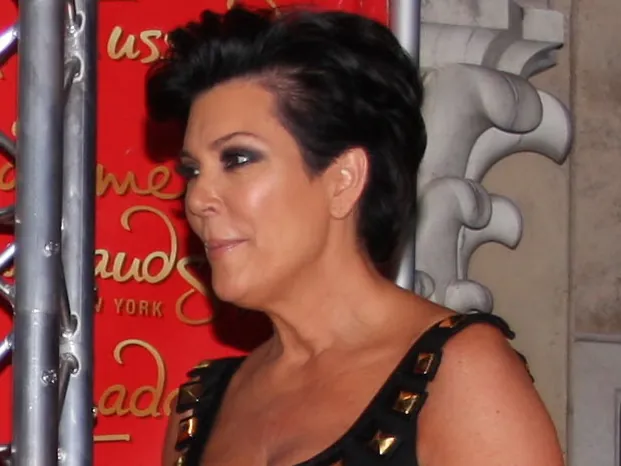 Kris Jenner’s facelift: “I love my facelift”Kris Jenner said she had a facelift about 15 years ago and a refresh before turning 70 — and that she loves it. How a SMAS facelift and recovery work.
 Did Vicki Gunvalson have a facelift? Yes, and she showed the result herselfVicki Gunvalson had a facelift in May 2018 after deciding fillers no longer looked like her. Her own words, how a facelift works and recovery.
 Keltie Knight’s facelift: why she decided to “just own it”Keltie Knight had a facelift in 2023 at 41 and chose to talk about it openly. What she said, how a SMAS facelift works and what recovery looks like.
 Did Linda de Mol have a neck lift? Yes, and she wrote about it herselfLinda de Mol wrote in LINDA. in 2025 that she had a neck lift. What she said, why she chose to be open, and how a face and neck lift works today.
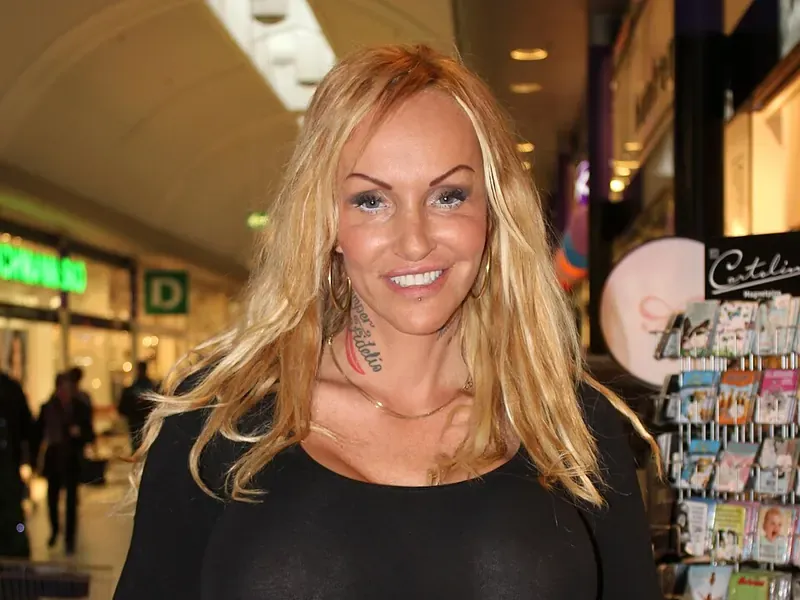 Linse Kessler and her facelifts: what she said herselfDanish reality star Linse Kessler has said openly that she has had several facelifts. Her words, how a modern facelift works and what recovery involves.
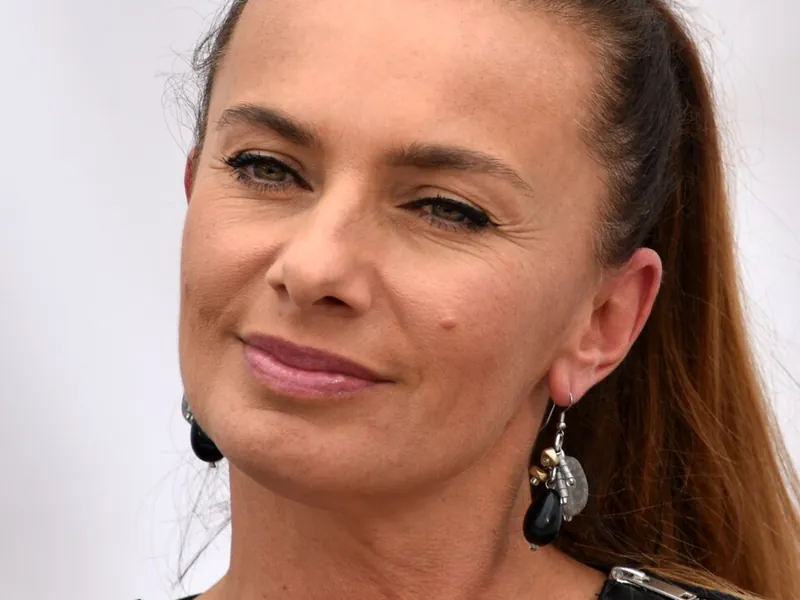 Did Alice Bendová have a facelift? Yes, and she explained why herselfAlice Bendová confirmed a deep plane facelift in September 2026. Her words, how a facelift works, who it suits and what recovery looks like.
Facelift in Iasi: price and what is included
Prices are in US dollars; the amount in brackets is an approximate conversion to RON at the rate of 02.10.2026. The final price is fixed in your contract.
- Faceliftfrom $2,400 (≈ RON 11,500)
What is a SMAS facelift?
It is a face lift that tightens the deep SMAS layer under the skin, not only the skin itself, so the lower face, jawline and neck stay firmer for longer. The result lasts about 7–10 years.
How much does a facelift in Iasi cost?
Prices start from $2,400 (≈ RON 11,500). The surgeon sets the final price at the free consultation, and it is fixed in the contract, with no hidden extras.
What is included in the price?
A one-to-one consultation, the medical team, anaesthesia, inpatient care with meals, 24/7 monitoring and twelve months of follow-up by the surgeon.
How do I get my exact price?
Message us on WhatsApp or Telegram using the buttons below. A coordinator will answer your questions and book a free consultation where the doctor names the exact price.
By messaging us, you agree to our Privacy Policy
Damp winters, dry heat and 291 hours of July sun: the weather your skin lives in
Iasi sits in a humid continental climate (Köppen Dfb), and the figures show how wide its range is. The January mean high is 1.3 °C and the mean low is -5.1 °C. July averages 29.0 °C by day and 16.3 °C at night. Recorded extremes run from -36.3 °C in February to 41.3 °C. A facelift works on the deep layers: the skin flap, the fat of the cheeks and lower face, and the SMAS layer of muscle and fascia. The surface of the face still has to cope with this weather before and after the operation.
Humidity and sunshine matter for planning. Annual relative humidity is about 70%, but it reaches 83% in December and falls to 60% in July. The city gets 2,083.5 hours of sunshine a year, with 291.2 hours in July and only 61.5 in December. Most of the sun load therefore falls in summer. An operation planned for the colder months means the visible healing happens when the sun is weakest. A summer date is possible too, but it asks for more care about sun exposure. The doctor will explain during the consultation how to protect healing skin. Do not improvise with creams or covers you have read about elsewhere.
Cold is the other half of the picture. On a January day with a high of 1.3 °C, the face is the part of the body that stays uncovered. During the first 7–10 days after a facelift the plan is rest, a compression bandage and reduced physical activity. In a Iasi winter that mostly means staying indoors. Ask the coordinator in the chat how to dress and how to cover the face when you do go out. The doctor gives the answer for your type of lift and your skin.
Winter also affects the photographs you send for the free online assessment. In December the city has only 61.5 hours of sunshine in the whole month, so indoor light tends to be yellow and flat. Stand facing a window in daylight, keep the camera at eye level, take the photos without filters and without make-up, and include a front view and both profiles. The doctor judges sagging, jowls and the jawline from these images. Honest light gives a more honest assessment.
Fitting recovery between 1 January, Orthodox Easter and the October pilgrimage
Romania has 15 non-working days a year: 1–2 January, 24 January, Orthodox Easter from Friday to Monday, 1 May, 1 June, Pentecost on Sunday and Monday, 15 August, 30 November, 1 December and 25–26 December. They are useful when you plan a facelift, because the first 7–10 days are meant for rest. A holiday that sits next to those days means fewer meetings to cancel. It does not replace the recovery itself, though. Swelling and bruising take 2–4 weeks to fade, and full recovery takes about 2 months.
Take a concrete example. Orthodox Easter Sunday in 2027 falls on 2 May, and the long weekend runs from 30 April to 3 May. If you want your face to look settled by then, work backwards. The first clear changes appear after 3–4 weeks, and about 2 months are needed for full recovery. A date at the end of February 2027 or earlier therefore leaves the two months before that weekend. The final look of the face still arrives 3–6 months after surgery. Treat Easter as a milestone on the way, not as the end point.
Autumn has its own rhythm in the city. The Saint Parascheva pilgrimage around 14 October draws hundreds of thousands of pilgrims and coincides with the Celebration Days. In October the International Theatre Festival for Young Audience also takes place. Hangariada is held each May, and FILIT and Afterhills add to the cultural calendar. If you expect to attend such events in public, count the months: an operation in spring 2027 would leave the October 2027 celebrations well past the 3–6 month window for the final result. That is an illustration of the arithmetic, not a promise about how your face will look.
The academic year shapes many working lives here. The city has more than 60,000 students in five public universities, and Alexandru Ioan Cuza University, founded in 1860, had 24,047 students in 2019–2020 across 15 faculties. If your work follows term dates, for example teaching, supervising or examining, tell the coordinator. The date can then be agreed so that the first week of rest and the weeks of visible swelling avoid your busiest days. Everything is confirmed with you before anything is booked.
Swelling, bruising and the first photographs: a realistic timeline
The operation is carried out under general (inhalation) anaesthesia, so there is no pain during it. Over the first few days some discomfort and tightness may be felt, and the doctor relieves it with prescribed medication. The first 7–10 days are the quiet phase: rest, a compression bandage and less physical activity. Swelling and bruising then fade over 2–4 weeks. This is the stretch in which most people decide whether they feel ready to be seen.
Being presentable is not a single day, so it helps to define it in steps. After about a week and a half you leave the strictest rest, but the face still carries swelling and bruising. At 3–4 weeks the first clear changes show as the swelling goes down. Full recovery takes about 2 months, and the final look of the face arrives 3–6 months after surgery. Many people choose different thresholds for each situation. A video call with colleagues, a family dinner and a public event each ask for a different level of settledness.
The scope of the lift also shapes the picture. The doctor tailors it at the consultation after assessing your changes. The options include the standard SMAS facelift, the full (circular) lift, a lift of the lower face and neck, and an endoscopic lift of the brow and temple. Scars are hidden around the ears and in the frontal edge of the hair, depending on the technique. Ask the doctor what each option means for the visible stage of healing. A combination with eyelid surgery or double-chin liposuction is possible and is decided at the same consultation.
You are not left alone after the operation. Your operating doctor follows you for the whole first year, until the final result. In practice that means sending photos on WhatsApp or Telegram at agreed moments and asking questions as they arise. Coordinators answer round the clock, which suits the days when swelling or tightness raises doubts at an awkward moment.
Trams, buses and a quiet first week in a city of seven hills
Iasi stands on the Bahlui river, a tributary of the Jijia, and is spread over hills. Breazu, Bucium, Cetatuia, Copou, Galata, Repedea and Sorogari are the seven that common belief counts. Elevation within the municipality of 93.9 km² ranges from 34.5 m to 354.77 m. A hilly route is physical activity, even when it feels like an ordinary walk. For the first 7–10 days, when activity is meant to be reduced, plan the days around the flat parts of your home surroundings and ask the doctor what counts as too much.
The public transport network is large. CTP Iasi runs 126 trams and 150 buses, carried 50,358,000 passengers in 2014, and has used electric trams since 1900. For a patient wearing a compression bandage, a crowded tram is not the most comfortable choice in the first days. It is sensible to arrange rides in advance with a relative or friend, or to schedule any necessary errands for the hours when you expect fewer people. This is practical common sense, and the doctor gives the medical instructions for your case.
The city proper has 271,692 residents (2021 census), the metropolitan area 423,154 and Iasi County 760,774. Many readers of this guide live in the county rather than in the city itself. Because the consultation is online and the follow-up runs through chat, where you live within the county changes little about the process. What matters is that you can send clear photos, answer the coordinator and follow the care instructions at home.
Sport and public life will wait. FC Politehnica Iasi plays at Emil Alexandrescu Stadium, and the city also has the basketball (1967) and rugby (1964) sections of CS Politehnica Iasi. If you play or exercise regularly, ask the doctor when it is safe to return. Reduced physical activity is part of the first stage, and the doctor will tell you when to resume.
Romanian health insurance and an elective facelift: what to assume
Health insurance in Romania is run by CNAS, the national health insurance fund. It manages the social insurance system and a basic package of medical services, medicines, sanitary materials and medical devices. Free procedures require a health card showing paid insurance. EU citizens and uninsured Romanians receive free emergency care. The system is described as hospital-centred, with a shortage of healthcare workers.
A facelift is an elective aesthetic operation. Public descriptions of the system give no official figure on cosmetic surgery coverage, so do not assume the fund will reimburse it. CNAS has also begun to introduce co-payments for some services that are not strictly medically necessary. Since April 2019, insured people may pay the difference between private-provider tariffs and the fund's fees. If you want certainty about your own situation, ask your insurer or the fund directly before you decide.
Out-of-pocket payments made up about 21% of total health expenditure, compared with an EU average of 15%, according to older published data. Paying for private care directly is therefore familiar to many people in Romania. In this process the final amount is named by the doctor after the free online consultation and is fixed in the contract. In-house 0% instalments are available, so you can pay in parts without bank interest or overpayment. Nothing is booked until you have confirmed the plan and the dates.
Insurance status matters in another way: your health. Contraindications to a facelift include age under 30, acute skin inflammation, pregnancy and breastfeeding, a severe cardiovascular condition, problems with blood clotting, cancer and decompensated diabetes. If you live with a chronic illness, mention it in your first message and attach any recent medical documents you have. The doctor assesses them during the consultation. Generally the operation is advised from 40 with marked sagging of the tissues, and in some cases from 35. An individual recommendation follows the examination.
Does the January cold in Iasi make winter a poor time for a facelift?
The cold does not decide the date. The first 7–10 days are for rest, a compression bandage and reduced activity, which means being indoors anyway. In January the mean high is 1.3 °C and the mean low is -5.1 °C, so the main practical task is to plan how to dress and cover the face for necessary outings. Ask the coordinator and the doctor for instructions suited to your type of lift.
Is a summer date a problem because of the sun in Iasi?
Summer is simply the period that needs more care. July has 291.2 hours of sunshine and a mean high of 29.0 °C, against only 61.5 hours in December. Swelling and bruising fade over 2–4 weeks, and full recovery takes about 2 months. A summer operation means those weeks fall in the sunniest months. The doctor explains how to protect healing skin during the consultation, so raise the question when you choose a date.
Can I plan the operation so that I am recovered by Orthodox Easter 2027?
Easter Sunday in 2027 is on 2 May, and the non-working days run from 30 April to 3 May. Full recovery takes about 2 months and the first clear changes appear after 3–4 weeks. An operation at the end of February 2027 or earlier would therefore leave the two months before the long weekend. The final look of the face takes 3–6 months to arrive. The doctor confirms the realistic date after seeing your photos.
If I have the operation in spring 2027, will I be settled for the Saint Parascheva celebrations in October?
The pilgrimage around 14 October falls well beyond 3–6 months from a spring operation, which is the window for the final result. That is the arithmetic only. Healing differs between people and between types of lift, and nobody can promise how your face will look on a given day. The doctor discusses the expected outcome at the consultation and follows you for the first year.
Will Romanian health insurance cover a facelift?
Do not assume it will. A facelift is an elective aesthetic operation, and public descriptions of CNAS give no official figure on cosmetic surgery coverage. CNAS has introduced co-payments for some services that are not strictly medically necessary. Since April 2019, insured people may pay the difference between private-provider tariffs and the fund's fees. For a definite answer about your own insurance, ask the fund or your insurer. The final amount for the facelift is named by the doctor and fixed in the contract.
I live in Iasi County, outside the city. Does that change anything?
No. The county has 760,774 residents, while the city proper has 271,692. The consultation is online, and the follow-up for the first year runs through WhatsApp or Telegram, where coordinators answer round the clock. What you need are clear photos, a way to reach the coordinator and the ability to follow the care instructions at home.
How should I take photos in winter, when daylight is short?
Use the hours around midday and stand facing a window, with the camera at eye level. December has only 61.5 hours of sunshine in the whole month, so indoor lamps give a yellow cast that can distort skin tone. Take a front view and both profiles without make-up, filters or strong shadows. Send them in the chat, and the doctor will give a free assessment based on them.