





























Before
12 months after
2,800 grafts
FUE method
City Medical Centre
0% instalments
from $367/mo
Guidance and a total — $0.
Real result
Before
12 months after
FUE technique, free of incisions or stitches. Grafts and forecast assessed with no fee at all — before you decide.
Free online consultation · Reply within 15 minutes
At no cost to you, no surgery booking required
Message our coordinator
Free online consultation · Reply within 15 minutes
Message us on TelegramMessage us on WhatsAppBy messaging us, you agree to our Privacy Policy
Hair transplant for patients from Iasi at City Medical Centre starts at RON 10,500 (from $2,200). The first online consultation is free; the doctor names the final price and it is fixed in the contract.
How it works · Hair transplant prices
Information current as of 24 October 2026
results
The people pictured were treated at CMC.
Before
12 months after
2,800 grafts
FUE method

Before
12 months after
3,500 grafts
FUE method

Before
12 months after
2,600 grafts
FUE method

Before
12 months after
3,000 grafts
FUE method

Before
12 months after
2,700 grafts
FUE method

Before
12 months after
3,300 grafts
FUE method

Before
12 months after
2,900 grafts
FUE method

Before
12 months after
2,500 grafts
FUE method

Before
12 months after
3,400 grafts
FUE method

Before
12 months after
2,500 grafts
FUE method

Before
12 months after
3,100 grafts
FUE method

Before
12 months after
3,600 grafts
FUE method

Before
12 months after
4,000 grafts
FUE method

Before
12 months after
3,200 grafts
FUE method

Before
12 months after
3,000 grafts
FUE method

Before
12 months after
3,700 grafts
FUE method

Before
12 months after
2,700 grafts
FUE method

Before
12 months after
3,800 grafts
FUE method

Before
12 months after
3,300 grafts
FUE method

Before
12 months after
2,800 grafts
FUE method

Before
12 months after
2,500 grafts
FUE method

Before
12 months after
3,900 grafts
FUE method

Before
12 months after
3,500 grafts
FUE method

Before
12 months after
3,800 grafts
FUE method

Before
12 months after
2,900 grafts
FUE method

Before
12 months after
3,600 grafts
FUE method

Before
12 months after
2,600 grafts
FUE method

Before
12 months after
2,700 grafts
FUE method

Before
12 months after
3,700 grafts
FUE method

Before
12 months after
3,200 grafts
FUE method

Before
12 months after
3,000 grafts
FUE method

Before
12 months after
2,800 grafts
FUE method

Before
12 months after
4,000 grafts
FUE method

Before
12 months after
3,400 grafts
FUE method

Before
12 months after
2,900 grafts
FUE method

Before
12 months after
3,100 grafts
FUE method

Before
12 months after
2,600 grafts
FUE method

Before
12 months after
3,300 grafts
FUE method

Before
12 months after
3,900 grafts
FUE method

Before
12 months after
3,500 grafts
FUE method

Before
12 months after
2,700 grafts
FUE method

Before
12 months after
3,800 grafts
FUE method

Before
12 months after
3,200 grafts
FUE method

Before
12 months after
3,000 grafts
FUE method

Before
12 months after
2,800 grafts
FUE method

Before
12 months after
3,100 grafts
FUE method

Before
12 months after
3,600 grafts
FUE method
Comparison
Classic FUE, suture-free DHI and a combined protocol: three graft transfer technologies we work with. Compare implantation technique, tissue trauma and graft survival, and choose your method knowingly.
Classic technique without incisions or stitches

$2,200
$2,700
Graft implantation technique
ForcepsGraft trauma
MinimalA natural growth angle
NaturalGraft survival
98–100%Suitable for
Androgenetic alopeciaImplantation with a Choi pen, no sutures

$2,500
$2,900
Graft implantation technique
Choi implanter, DHI penGraft trauma
MinimalA natural growth angle
NaturalGraft survival
98–100%Suitable for
DensificationFUE extraction, DHI pen implantation

$2,700
$2,900
Graft implantation technique
FUE extraction + DHI implantationGraft trauma
MinimalA natural growth angle
NaturalGraft survival
98–100%Suitable for
Densification for androgenetic alopeciaPer method, survival and trauma figures are averaged and given for guidance: the exact numbers depend on the transplant area and the patient's individual features, and the doctor clarifies them at the consultation.
Seek expert guidance


















about the clinic
Attention to each person, pleasant rooms, good equipment

We will answer your questions and book a consultation time that suits you
Message us on WhatsApp Send an enquiryShould the answer for you lie outside the operating room, the doctor names it at the consultation and nothing is spent. Read below about the situations where a transplant is truly effective.

Leave your number and photos in a messenger. The doctor looks and tells you if a transplant helps. Free, nothing booked.

services
The free consultation ends with a graft count: the cost is named and fixed in the contract.
suture-free graft extraction

$2,200$2,700
or $367/mo — 0% instalments for 6 months
Pin the price downimplantation without channels

$2,500$2,900
or $417/mo — 0% instalments for 6 months
Pin the price downcombined technique

$2,700$2,900
or $450/mo — 0% instalments for 6 months
Pin the price down| Where it all begins | Free |
|---|---|
| Eyebrow transplant, FUE | |
| Beard transplant, FUEinstalments $467/mo | |
| Hair trichopigmentation | |
| PRP therapy / session | $200 |
all included
Accompanied at every step and for 12 months afterwards.
Your payment does not grow on the day of surgery.
two extra zones
A hair transplant is not just the scalp. The same grafts from the back of the head, the same FUE method — only the area changes.
FUE method, no cuts or stitches

Grafts are harvested from the donor area at the back of the head and moved through micro-punctures of about 1 mm, without leaving scars. Before the operation the doctor settles the shape with you, taking your facial features into account. Transplanted hair grows for life and the beard is styled as usual.
$2,800$3,000
or $467/mo — 0% instalments for 6 months
Pin the price downFUE method, no cuts or stitches

The surgeon draws the eyebrow shape right at the initial consultation: you look through references together and the design takes your facial features into account. Hairs are implanted at the right angle, so the eyebrows look natural. It also helps when years of plucking stopped the growth.
$1,600$1,700
a day-clinic operation, the scalp numbed first
Pin the price downThe doctor will study your donor area, count the grafts and show the result achievable in your case. The cost is named at the consultation and fixed in the contract.

Message our coordinator
Free online consultation · Reply within 15 minutes
Message us on TelegramMessage us on WhatsAppBy messaging us, you agree to our Privacy Policy
Process
From consultation to going home — all in one day

Patients in Iasi are given a full account of DHI and of FUE, answers to anything they ask, and an examination of the donor area.

Once the deposit is paid — in person by card or online — the surgery date is booked and confirmed under a medical services contract.

You are given the full set of test requirements by the clinic, with directions attached, so preparation is straightforward.

The surgeon works on a numbed scalp, thanks to a local anaesthetic, without causing pain.

Grafts come from the donor area — the back of the head or temples — collected in a way that avoids stitches entirely.

For patients in Iasi, this step means the surgeons implant the grafts into the balding zone.
The clinic makes recovery straightforward, offering everything necessary and complete instructions for fast healing.

Crusts come off, swelling goes down, and the area gradually recovers

Quite normal. Only the hairs fall out, the follicles stay in place

New hairs come up gradually, the result is showing

The hair comes in fuller, the mass and the shape are apparent

At this point the thickness and the hairline are set

Free, before the operation, no strings at all.
Seek expert guidancedoctors

Hair transplant doctor, trichologist, surgeon
10 years of experience

Dermatovenereologist, trichologist, surgeon
11 years of experience

Plastic surgeon
9 years of experience

Plastic surgeon
9 years of experience

Assistant
9 years of experience
The doctor evaluates your donor area, counts the grafts and names the achievable result.
Seek expert guidancecoordinators
The clinic gives every patient one coordinator who covers the whole path to recovery.

Your care specialist
Will guide you before and after the surgery
Deals with all your papers and time slots
Your care specialist
Will guide you before and after the surgery
Deals with all your papers and time slots

Your care specialist
Will guide you before and after the surgery
Deals with all your papers and time slots
Your care specialist
Will guide you before and after the surgery
Deals with all your papers and time slots













We will answer your questions and book a consultation time that suits you
Message us on WhatsApp Send an enquiryReviews
I was having trouble with my hair. I came here and got a hair transplant. The results was awesome thank you
Review on Google
І experienced hair loss due to COVID and turned to this clinic; they helped me and performed a hair transplant, moving hair from the back of my head to my temples. Thank you.
Review on Google
I traveled to City Medical Centre, where they helped me overcome hair loss through a transplant to the balding areas of my scalp. I am grateful to the doctors for performing the procedure painlessly.
Review on Google
I am sharing my experience, because before the operation I went through a pile of reviews myself and was looking for real stories. I had a beard transplant six months ago. Honestly, in the first days after the procedure I felt a little jittery: my face looked unfamiliar, there was slight swelling and small scabs. In the first couple of months the hair partly fell out, as the doctor had warned. But now the result truly makes me very happy) From about the 4th month active, even growth began. The transplanted hair took very well, the beard now looks as natural as possible, no bald patches are left. The beard became much thicker and denser, with the shape I had thought about for a long time. All in all, I recommend the clinic, the doctor was polite and explained everything 👍 The result is definitely worth it!
Review on Google
I traveled to this clinic and do hair transplant, very good quality and cheap. Good doctors
Review on Google
I do hair transplant here very good doctors!!
Review on Google
Common questions
People often say hair implants, but no artificial hair is used. In a hair transplant the doctor moves your own follicles (grafts) from the donor area to thinning or bald areas using FUE or DHI.

Yes, they are accepted. City Medical Centre works with people from places large and small, and the case is discussed online before a decision.
FUE: $2,200 (≈ RON 10,500). DHI: $2,500 (≈ RON 12,000). Combined: $2,700 (≈ RON 13,000). A free consultation and graft count gives you the final, contract-fixed price with no hidden extras.
It takes just one day from start to finish, and you're free to go home afterward.
It helps with stable pattern hair loss and a receding hairline when there are enough donor grafts. Some types of alopecia need treatment first; the doctor checks this at the consultation.
Absolutely not — local numbing keeps the session free of pain.
FUE means tweezer-based, incision-free graft harvesting. DHI means channel-free implantation with a Choi pen. Combined DHI+FUE uses FUE for harvesting and the DHI pen for implanting.
The free consultation includes a graft count, which the doctor bases on the state of the donor zone.
Expect 0–10 days to heal, then normal shedding of transplanted hairs at 2–4 weeks. Growth begins around 3–4 months, density builds by 6–9 months, and the final look appears at 12–18 months.
A contract-backed, lifetime guarantee of hair growth comes with every procedure.
The clinic holds a medical licence and care meets the standards and clinical guidelines
under Ministry of Health.

Documents confirming what your surgeons are qualified to do
Go through the papersAKC POMOSHCH LLC
the firm's legal entity
1057746096924
OGRN
7728536872
INN
What makes FUE and DHI right for a patient in Iasi is how gentle they are: no incisions, no stitches, only local anaesthesia, and one day from the first graft to the last.
The beginning in Iasi is photos and a conversation, and both are free: the doctor examines the thinning area on the pictures and counts the grafts. The clinic stays in touch 24/7, so you write when the day allows it.
Healing: 0-10 days. Shedding of the transplanted hairs: 2-4 weeks, and it is normal. Start of growth: 3-4 months. Knowing those three numbers in advance saves most people a great deal of anxiety.
Prices are in US dollars; the amount in brackets is an approximate conversion to RON at the rate of 02.10.2026. The final price is fixed in your contract.
By messaging us, you agree to our Privacy Policy
Public figures who spoke openly about this operation, in their own words.
 John Cena's hair transplant: “I got a problem, I try to fix it”John Cena spoke openly in 2025 about his hair transplant and the fan signs that pushed him to it. His words, how the procedure works and the recovery.
 Did Calum Best have a hair transplant? Yes, and he said so himselfCalum Best said in 2023 he had his sixth hair transplant, this time using patches of beard hair. His words, how the procedure works and recovery.
 Did Chloe Goodman have a hair transplant? Yes, and she explained whyChloe Goodman had a hair transplant in 2025 after losing hair following pregnancy. Her own words, how the procedure works and what recovery involves.
 Did Dean McCullough have a hair transplant? Yes, and he filmed itRadio 1 presenter Dean McCullough shared his FUE hair transplant on TikTok in 2024. His own words, what the swelling means and how results develop.
 Did Ella Morgan have a hair transplant? Yes — to cover a hairline scarThe Married at First Sight star revealed a hair transplant in 2025 to cover scarring along her hairline from facial surgery. Her own words and the facts.
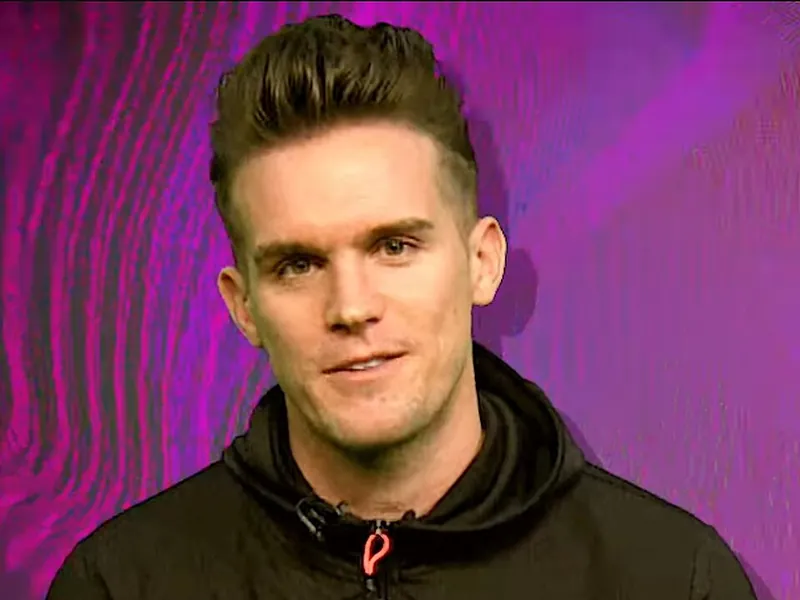 Gaz Beadle on his beard transplant: “I LOVE IT”Gaz Beadle told his 3.6 million followers he had a beard transplant after years of patchy stubble. His own words, and how a hair or beard transplant works today.
Page medically reviewed by Anastasia A. Kolesnik, hair transplant doctor. Review date: .
Iasi sits in the north-east of Romania, in the historical region of Moldavia, at about 60 m above sea level, on the Bahlui river and among hills such as Copou, Bucium and Cetatuia. Its climate is classed as Koppen Dfb, a humid continental type with clearly separated seasons. For a scalp that has just had grafts placed, those seasons matter more than the map does.
The 1991-2020 series from the city's weather station gives a July mean high of 29.0 °C and a mean low of 16.3 °C. August is close behind at 28.8 °C and 15.6 °C. Sunshine reaches 291.2 hours in July, against only 61.5 hours in December. The scalp has to cope with both extremes. In summer the risk is strong sun on a newly healed area. In winter the sky is grey and the air is damp and cold. The doctor will not tell you to ignore either one.
Winter is the opposite case. The January mean high is 1.3 °C and the mean low is -5.1 °C. The record low, set in February, is -36.3 °C, and the record high is 41.3 °C. Records are not a forecast, but they show how wide the range can be. Snow normals add up to 61.8 cm a year, with February at 14.3 cm and January at 11.3 cm. Anyone who spends the first days after the procedure walking between a tram stop and a front door will meet cold air, wet snow and sometimes thaw.
None of this is a reason to avoid planning a transplant in Iasi. It is a reason to plan it with the calendar in front of you. The care plan that comes with the procedure includes advice on washing your hair, on sleep and on headwear. A coordinator on WhatsApp or Telegram can adapt that advice to the week of the year in which you actually have the procedure, and the doctor can answer questions about the donor area at the back of the head and the treated zone. Send a few photos of both areas and the weather you expect, and the answer will be specific rather than general.
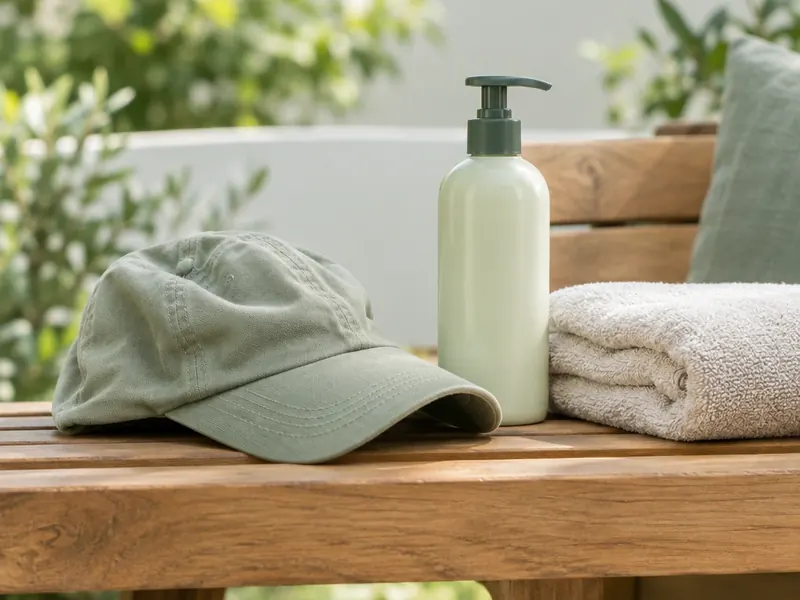
Headwear is the most practical question for anyone with a transplanted scalp, because it touches every day of recovery. The service programme covers advice on headwear, so what follows is a way of thinking about seasons, not a replacement for the doctor's instructions.
In the cold months the instinct is to pull a tight woollen cap down over everything. The first 0-10 days are the healing stage, when crusts fall away, swelling subsides and the area slowly recovers. During that stage the question is not only warmth but also what touches the skin. Ask the doctor at the consultation what is acceptable for your case, and when, before you buy anything. Buying a hat after the procedure, in a hurry, is a common mistake that is easy to avoid.
December in Iasi has 83% average humidity, and the annual figure is 70%. Damp cold feels sharper than the thermometer suggests. A hat that is wet from sleet is not something to wear on a healing scalp, so it helps to have a second item ready and to know in advance what the doctor allows. Wet snow, a bus queue and a tram stop are all part of a normal winter day here, and the city's public transport runs both trams and buses. You can plan the first days so that you rarely stand outside.
In summer the problem changes. With July sunshine at 291.2 hours and a mean high of 29.0 °C, direct sun on the scalp is something to ask about directly. July humidity is lower, at 60%, so the air feels drier and the sun harder. Ask the doctor which kind of covering suits the early stage and how long to keep to it. Do not decide it on your own from a shop display.
Spring and autumn are the easiest seasons for headwear because temperatures are moderate, but they bring rain. June is the wettest month at 78.0 mm, followed by July at 70.8 mm. Annual precipitation is 548.0 mm on 75.1 days with 1 mm or more. In practice, wet days are frequent enough that a plan for rain belongs in your preparation.
The growth phases in the programme are the backbone of any plan. In the first 0-10 days the area heals. At 2-4 weeks the transplanted hairs shed, which is a normal stage: only the hairs fall out and the follicles stay in place. At 3-4 months the first growth appears. At 6-9 months the density shows, and the main volume and contour become visible. At 12-18 months you reach the final result. Follow-up visits are set at 1, 3, 6, 9 and 12 months, with a coordinator and photo tracking in between.
To make this concrete, take a procedure on 9 November 2026, which is only an example. The healing stage would run into the third week of November. The shedding stage, 2-4 weeks, would fall in the last days of November and December. That period overlaps the public holidays of 30 November and 1 December, then 25-26 December and 1-2 January. Romania has 15 non-working days a year, and these cluster at the end of the year. People often use them for rest, so the holiday cluster can protect the early weeks from work and social pressure.
First growth at 3-4 months would then arrive roughly between February and March 2027. Density at 6-9 months would show from about May to August 2027, and the end result at 12-18 months would arrive between November 2027 and May 2028. Orthodox Easter Sunday falls on 2 May 2027, with the Friday to Monday a non-working stretch, which lands before the 6-9 month stage ends. Pentecost and 1 June are also non-working days. Use these dates only as a way to see the shape of the timetable. The real plan is fixed with the doctor after the consultation.
A second sample: a procedure in late winter would put the shedding stage in March and the density stage in autumn. You would then see the main volume by the time autumn cold arrives, which is also when the city's October events begin. Whichever month you choose, the point is the same. Know which public holidays and which weather fall on each stage, and take the follow-up schedule at 1, 3, 6, 9 and 12 months into account.
The programme is a one-day stay at the clinic under local anaesthesia, and the stay itself is brief. The calendar question is therefore about the months afterward, not the day itself. Ask the coordinator to put your growth stages on a calendar next to your own commitments.
Iasi is a university city. More than 60,000 students attend five public universities. Alexandru Ioan Cuza University, founded in 1860, had 24,047 students in 2019-2020 and 15 faculties. That matters for this service because a large share of the people thinking about hair restoration are young adults with exam sessions, lectures and part-time jobs. Androgenetic alopecia and a receding frontal edge of the hair are among the conditions the programme lists as indications, and they are often noticed early.
For a student, the question is when the shedding stage will be least disruptive. At 2-4 weeks the transplanted hairs fall out. If you have an exam period or an important presentation at that point, it is better to know in advance. The programme tells us this stage is normal, but a normal stage is easier to accept when it does not coincide with a graduation photo. Choose the date with the academic calendar in front of you, and ask the coordinator to help you compare it against the growth stages.
For someone who works in an office, the early days are the main concern, together with how headwear fits the dress code. The doctor will tell you in the consultation what to expect in the first 0-10 days and what is acceptable at work. A plan for returning to sport and hair care is part of the programme, which is useful in a city with active club sport. FC Politehnica Iasi plays at Emil Alexandrescu Stadium, and CS Politehnica Iasi has basketball, founded in 1967, and rugby, founded in 1964. Anyone who plays or coaches should ask the doctor specifically when contact and sweat are acceptable again.
Annual events also shape the calendar. Each year around 14 October the Saint Parascheva pilgrimage draws hundreds of thousands of pilgrims and coincides with the city's Celebration Days. Crowds, queues and long outdoor waits are likely then, so a recovering scalp is better kept away from them. Other fixed points include Hangariada each May, the International Theatre Festival for Young Audience each October, FILIT for literature since 2013 and the Afterhills music festival since 2017. If you plan to attend a festival, count backward from it using the growth stages. Do not count only forward from the date of the procedure.
Romania's social health insurance is run by CNAS, the Casa Nationala de Asigurari de Sanatate. It manages a basic package of services that covers medical services, medicines, sanitary materials and medical devices. Free procedures normally require a health card showing that insurance has been paid. EU citizens and uninsured Romanians receive free emergency care.
A hair transplant for cosmetic reasons is a different matter. We found no official statement that CNAS covers cosmetic hair restoration, and no published waiting-list figures for it. The system is described as hospital-centric, with a shortage of healthcare workers, and CNAS has begun introducing co-payments for certain services that are not strictly medically necessary. Do not assume the insurance card will cover this procedure. Ask your coordinator what the contract includes and what you pay yourself.
A comparable example from the same source material is bariatric surgery. CNAS does not fully reimburse it in either state or private hospitals. Some pre- and postoperative services, such as endoscopy, can be free with a family-doctor referral. That example shows how coverage often works for elective procedures: parts of the surrounding care may be covered while the procedure itself is not. If you need tests before a hair transplant, ask your family doctor whether any of them can be obtained through the insurance system. The clinic provides a list and instructions for the pre-surgery tests in any case.
Since April 2019, insured people in Romania may pay the difference between private-provider tariffs and the fund's rates. Out-of-pocket payments have historically been a large part of health spending in the country compared with the EU average. This is dated information, but it explains why private payment for elective care is familiar. For this service, the structure is simple. The doctor names the final amount after counting the grafts, it is fixed in the contract, and instalments are available. There are no extra payments on the day of the procedure, and the programme includes dressings, healing checks, a care plan and follow-up visits.
The first step is a free online consultation. You send photos on WhatsApp or Telegram, and the doctor assesses the donor area and the thinning zone. The coordinator replies within 15 minutes and is reachable around the clock, which suits people whose days are full. Students and shift workers often find the evenings the most convenient time.
Good photos make the assessment faster. Take them in daylight, which in Iasi is limited in December, with only 61.5 hours of sun in the month, so use a bright window and a plain wall if the weather is dull. Photograph the frontal edge of the hair, the crown, the temples and the back of the head, because the donor area at the back is where the grafts are taken from. Do not style or hide anything. The doctor needs to see the real density.
Think about the conditions the doctor will ask about. The programme lists contraindications that include trichotillomania, body dysmorphic disorder, cancer, being under 18, intolerance to anaesthetics, epilepsy, serious heart conditions, diabetes mellitus, a pacemaker, HIV/AIDS, hepatitis B/C and pulmonary embolism. Patchy alopecia is also listed as not suitable. If any of this applies to you, say so early. In some cases the doctor may find a solution that does not involve surgery, and will tell you so during the consultation.
Between the consultation and the procedure date there is a deposit stage and a contract. After that you complete the pre-surgery tests from the clinic's list. Allow time for them to be done and for the results to come back, and remember that public holidays can slow laboratories. It is sensible to start well before the chosen date.
The method is chosen together with the doctor. The programme describes FUE, DHI and a combined DHI+FUE protocol. All three are described with minimal graft trauma and natural growth angle. The doctor clarifies the figures for your own case, because they depend on the treated area and on your individual features.
Neither season is ruled out, and each asks for different habits. Winter has a January mean high of 1.3 °C, a mean low of -5.1 °C and 83% humidity in December, so the issue is cold, wet headwear and snow. Summer has a July mean high of 29.0 °C and 291.2 hours of sun, so the issue is sunlight on a healing scalp. The doctor will advise on headwear for the month you choose, and the coordinator can adjust the plan to it.
Romania has 15 non-working days, and several cluster at the end of the year: 30 November, 1 December, 25-26 December and 1-2 January. For an example procedure on 9 November 2026, the 2-4 week shedding stage would overlap those days. Orthodox Easter Sunday on 2 May 2027 falls in the period when the 6-9 month density stage is approaching. Ask your coordinator to place the stages beside the dates that matter to you.
We found no official figure showing that CNAS covers cosmetic hair restoration. The system is described as hospital-centric, and CNAS has introduced co-payments for some services that are not strictly medically necessary. Insured people can pay the difference between private tariffs and the fund's rates. Ask the coordinator what the contract covers, and ask your family doctor whether any pre-surgery tests can go through the insurance system.
It can. Around 14 October each year the city hosts hundreds of thousands of pilgrims during its Celebration Days, so crowds and long outdoor waits are likely. If your procedure falls in the early healing stage of 0-10 days, it is better to avoid being outdoors in a crowd. Count the growth stages backward from the date you want to be free of restrictions, and let the doctor confirm what is acceptable.
Pick the dates so that the 2-4 week shedding stage does not coincide with exams or important presentations. The shedding is a normal stage in which only the hairs fall out and the follicles stay in place. The first growth then comes at 3-4 months. Tell the coordinator your academic calendar, and the plan can be set around it.
Annual precipitation is 548.0 mm over 75.1 days with at least 1 mm, with June at 78.0 mm and July at 70.8 mm. Humidity averages 70% over the year, from 60% in July to 83% in December. For the healing stage the practical point is to avoid wet headwear and to ask the doctor what is acceptable in rain. The programme includes advice on washing your hair and on headwear.
Yes. You are given a personal coordinator reachable on WhatsApp and Telegram around the clock, and progress is tracked by photo. Follow-up visits are set at 1, 3, 6, 9 and 12 months. Seasonal questions, such as sun in July or sleet in February, can be raised at any stage, and the doctor can answer them with your photos in front of them.
They can. The programme includes a plan for returning to sport and hair care, so ask when contact, sweat and crowded events are acceptable again. If you play in a club, or want to attend a festival such as Hangariada in May or Afterhills, tell the coordinator the dates in advance. The growth stages can then be laid out beside them.

 Forceps
 Minimal


