City Medical Centre · multi-specialty surgery clinicOpen 24/7

Tummy tuck

Tummy Tuck for Patients from Bristol

Free consultation

from $2,400

The price is fixed in the contract before surgery

Message us on WhatsApp

Free online consultation · Reply within 15 minutes
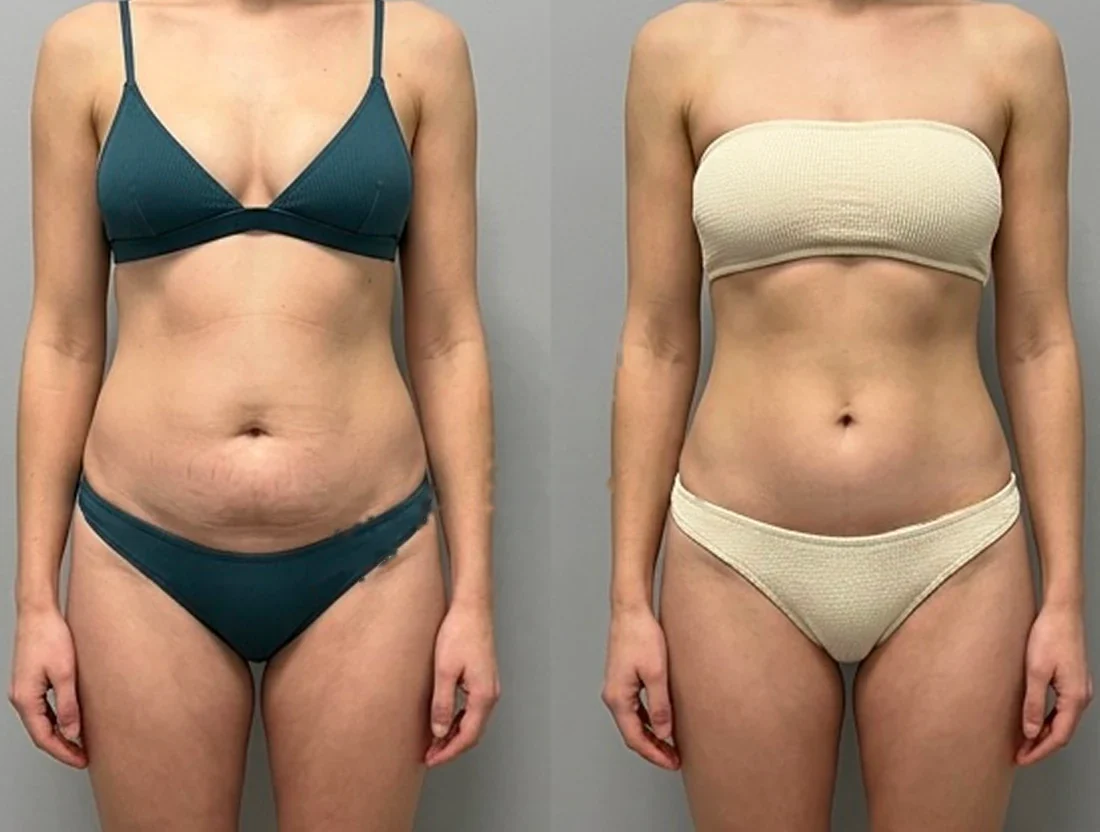
Real case
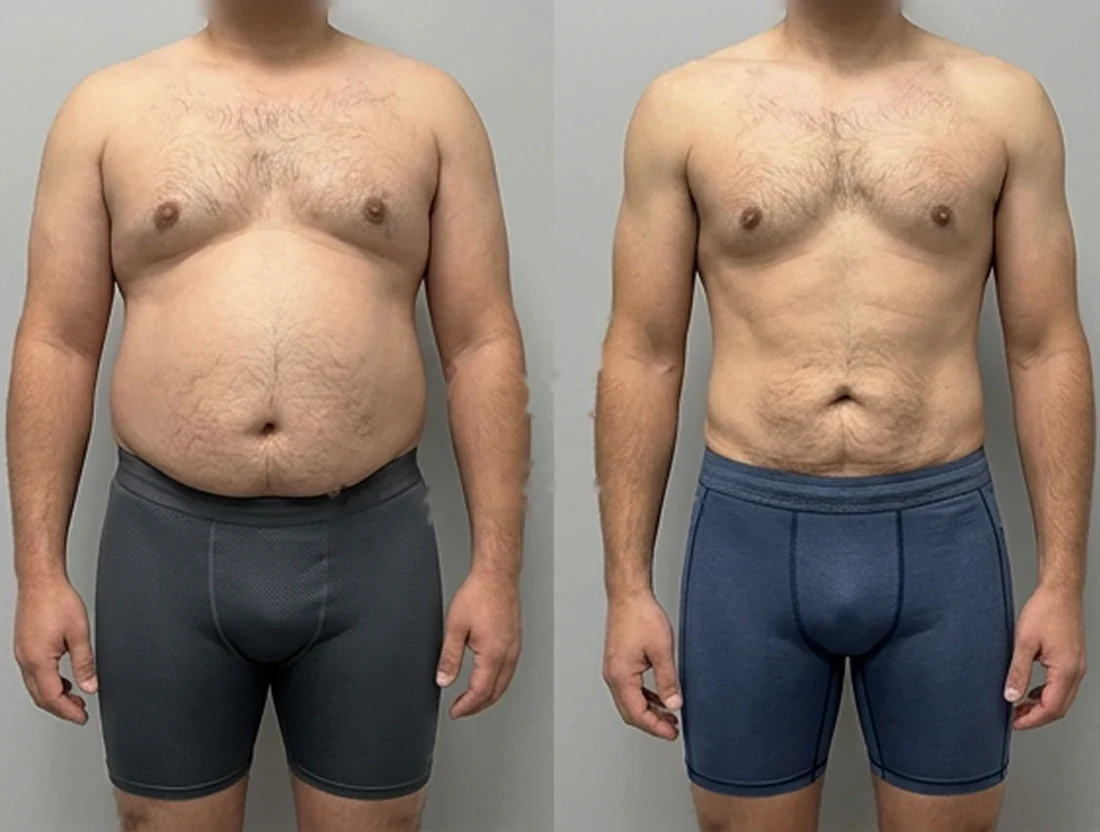
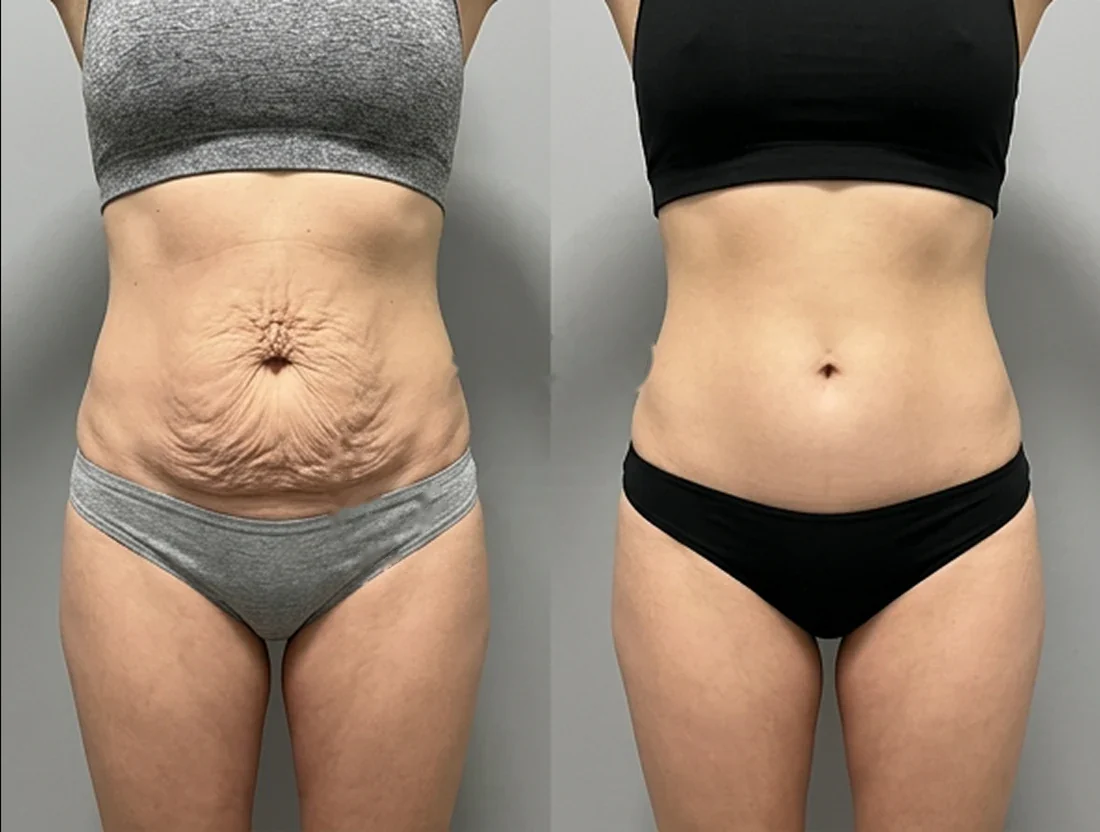
Tummy tuck: a patient's abdomen before and after surgery before after
A flat tummy and a toned silhouette in one operation. Your individual surgical plan and the expected result are discussed at the consultation

Message our coordinator

Free online consultation · Reply within 15 minutes

Message us on Telegram

By messaging us, you agree to our Privacy Policy

Tummy tuck (abdominoplasty) in Bristol: price and key facts

Tummy tuck for patients from Bristol at City Medical Centre: the price is named at the free online consultation and fixed in the contract with no hidden extra charges.

Duration
2–4 hours
Anesthesia
general
Stay
1–3 days
Recovery
back to work after 2–3 weeks
Final result
6–12 months after surgery
How it works
Send photos on WhatsApp or Telegram, get a free doctor assessment and the price, then confirm the plan and dates before anything is booked.

How it works · Tummy tuck prices

Information current as of 24 October 2026

Free online consultation on WhatsApp and Telegram

Results

Tummy tuck (abdominoplasty) results
of our patients

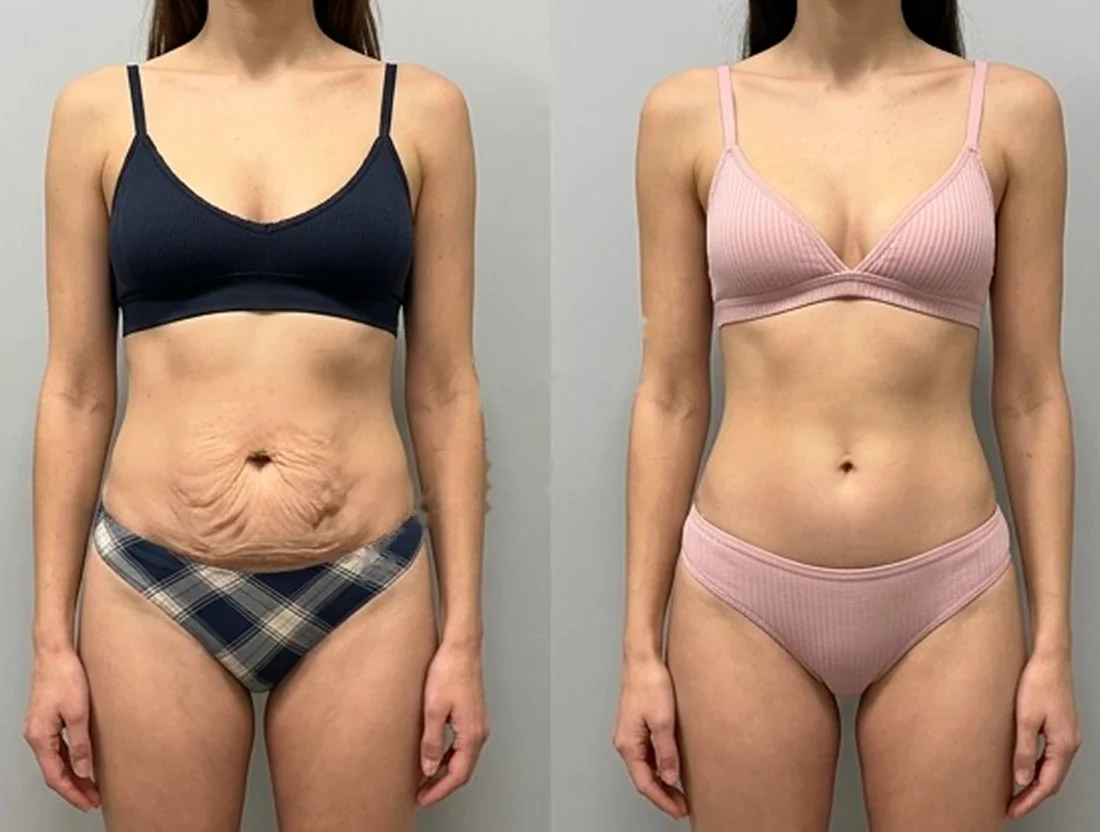
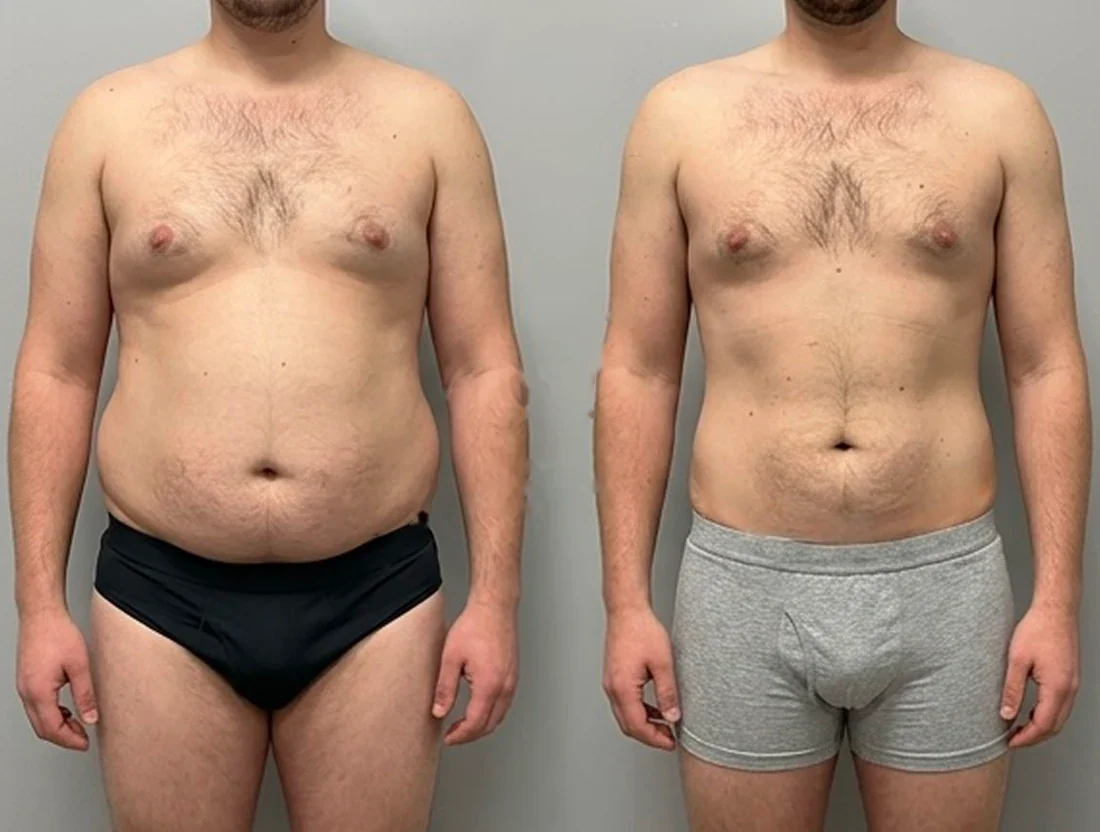
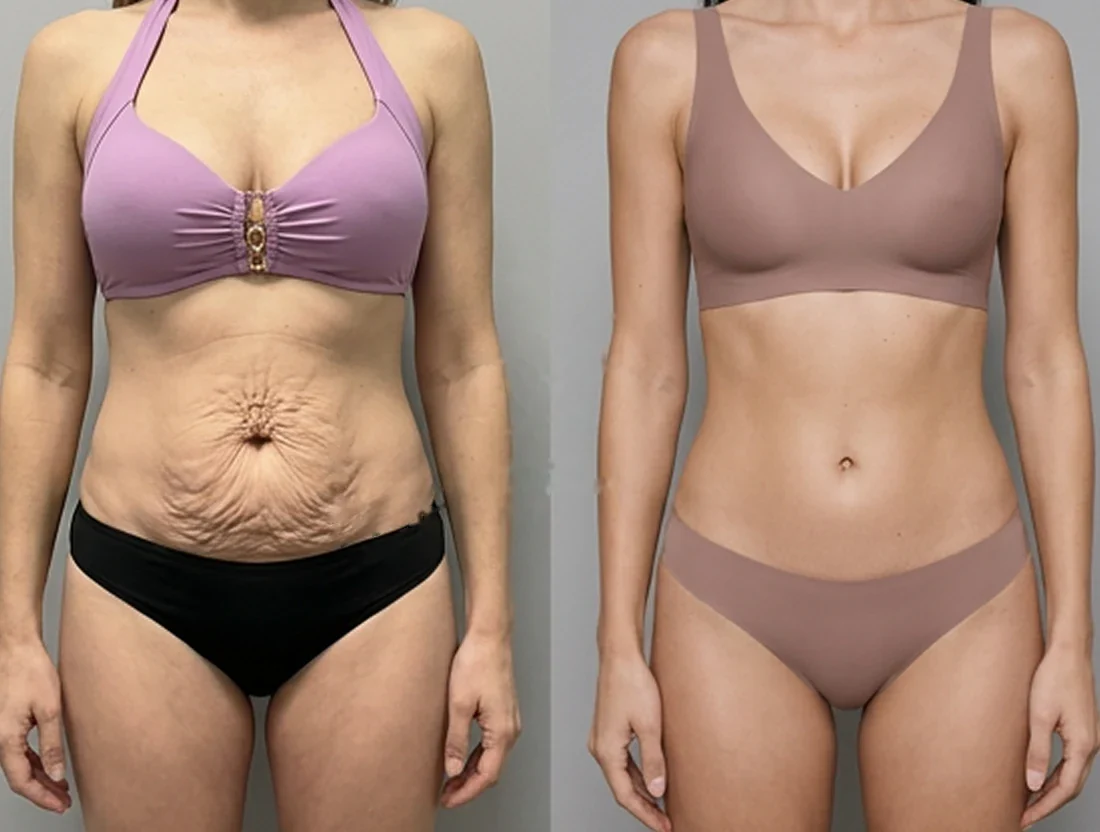
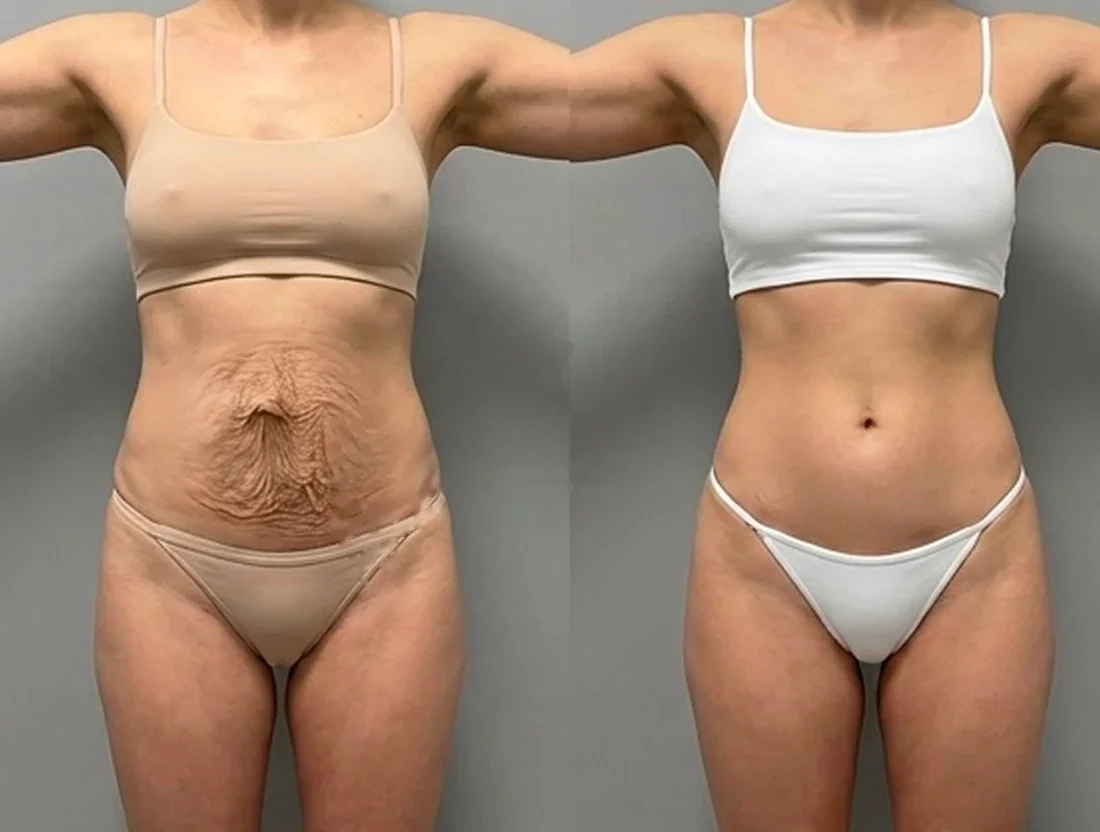
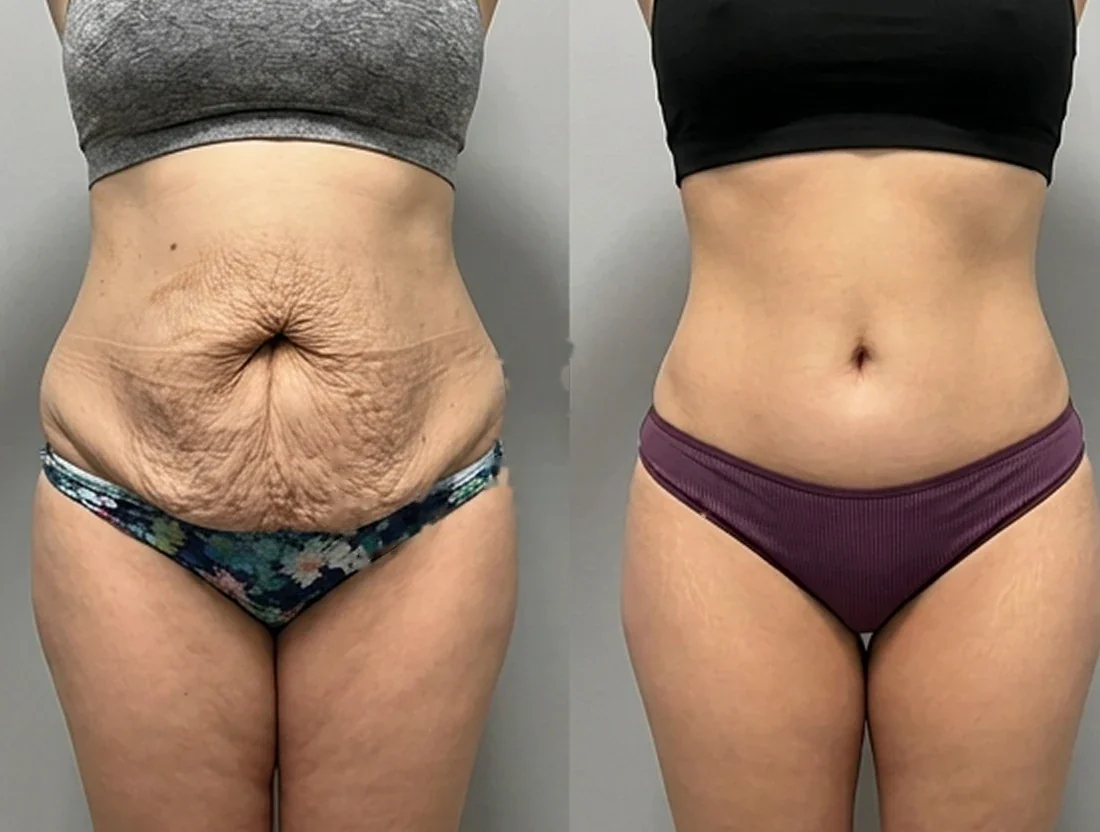
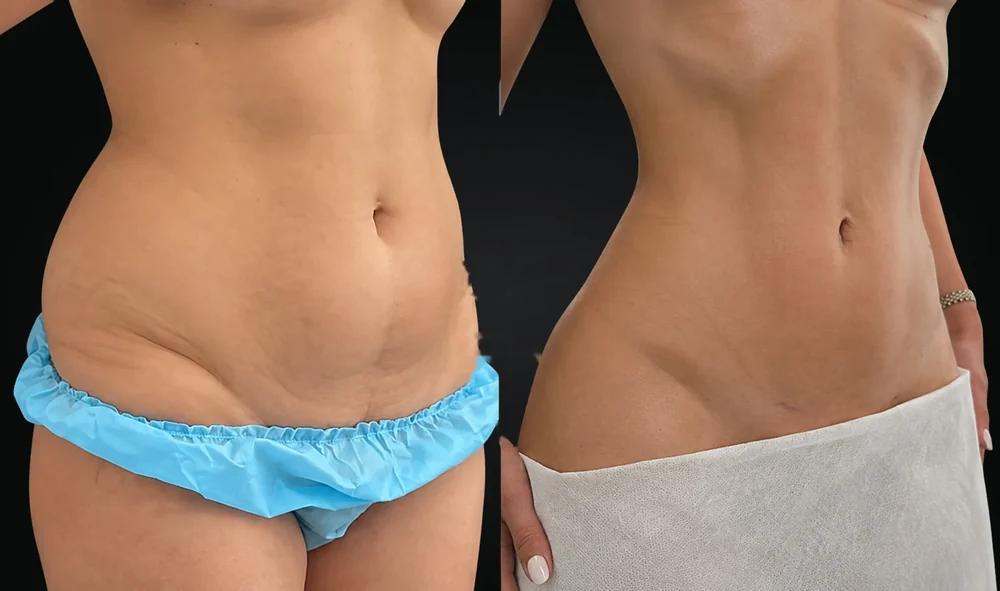
All cases are real patients. Faces and identifying details are hidden.

Tummy tuck: a female patient's abdomen before and after surgerybeforeafter
Tummy tuck: a male patient's abdomen before and after surgerybeforeafter
Tummy tuck: a female patient's abdomen before and after surgerybeforeafter
Tummy tuck: a male patient's abdomen before and after surgerybeforeafter
Tummy tuck: a female patient's abdomen before and after surgerybeforeafter
1 of 8

Comparison

Tummy tuck techniques

A tummy tuck is done as a full (classic) or mini operation, or combined with liposuction as lipoabdominoplasty. Compare the scope of surgery, the indications and the expected results to choose the right technique together with your surgeon.

Tummy tuck

Removal of excess skin, abdominal muscle tightening
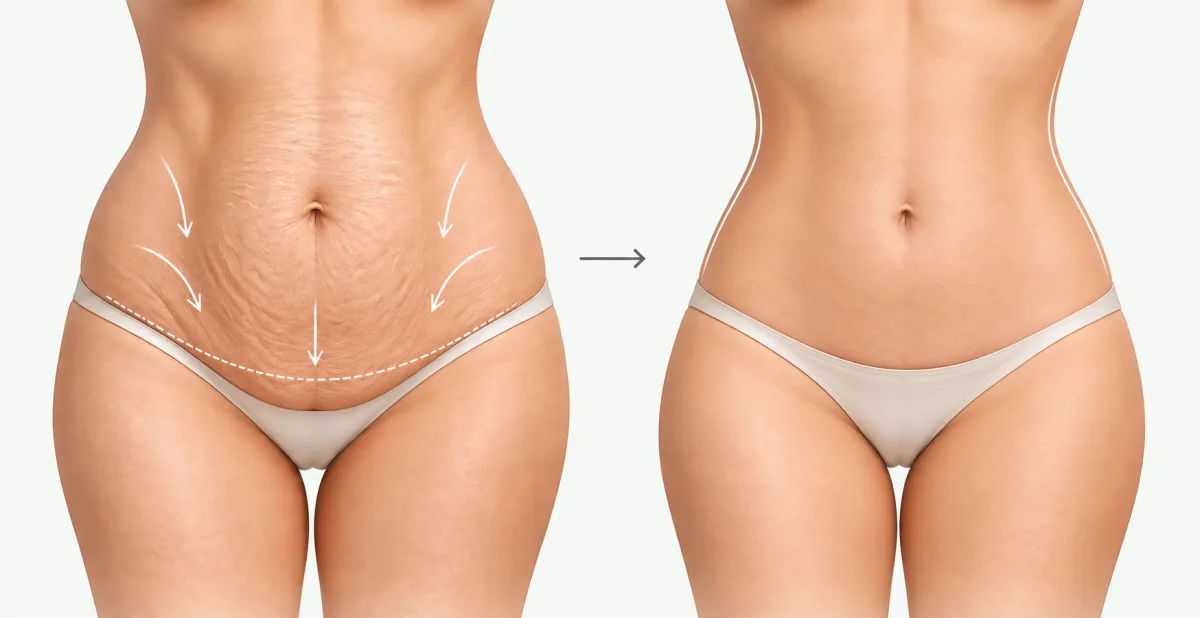
Tummy tuck diagram: the abdomen before surgery with the incision line, and the result
Main goal
Removal of excess skin, diastasis repair
When it is done
Excess skin after childbirth or weight loss
Anaesthesia and stay
General anaesthesia, up to 3 days in hospital

Lipoabdominoplasty

Tummy tuck with added liposuction
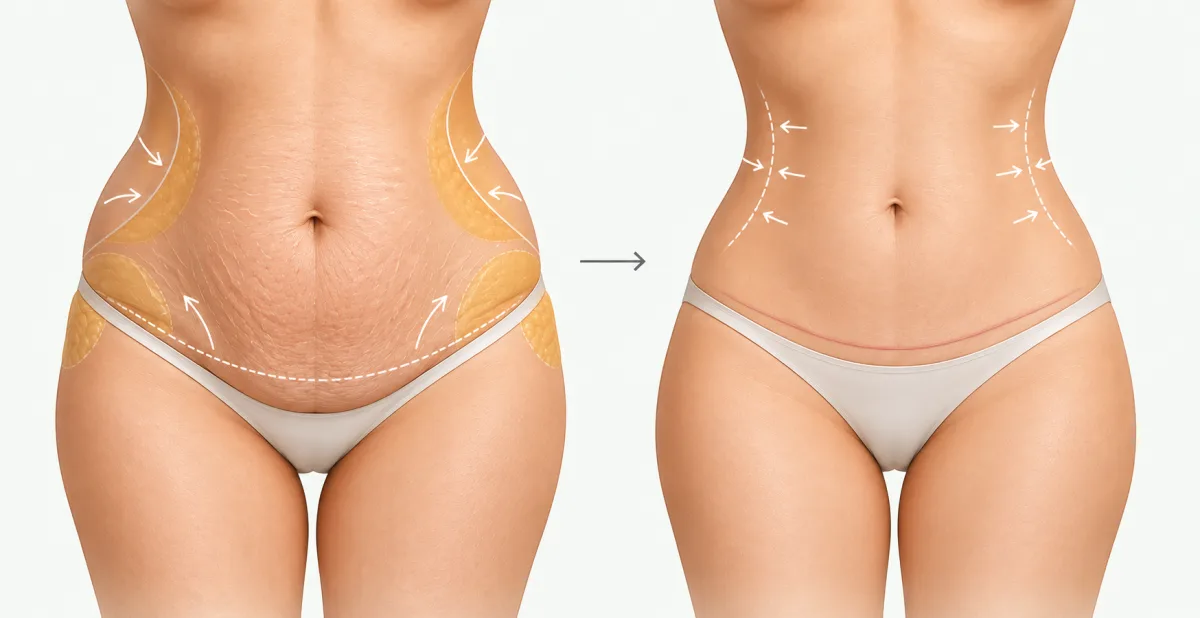
Lipoabdominoplasty diagram: the abdomen with fat on the flanks before surgery, and the result
Main goal
Tummy tightening and waist contouring
When it is done
For fat deposits on the flanks and waist
Anaesthesia and stay
General anaesthesia, up to 3 days in hospital

The benefits and recovery times shown are averaged for each technique and given for guidance: the scope of correction and rehabilitation depend on your anatomy and individual features, and the surgeon confirms them at the consultation.

At the consultation the surgeon draws up a plan for your case and explains how your tummy tuck will go.

Free, before surgery and with no obligation.

Book a consultation

Tummy tuck from the inside

About the clinic

A clinic where you can feel at ease

Modern equipment, comfortable rooms and care for every patient

A doctor and a patient in a clinic ward

Contact us the way that suits you

We will answer your questions and find a convenient time for a consultation

By messaging us, you agree to our Privacy Policy

A tummy tuck is not for everyone

If your case can be solved without surgery, the doctor will tell you so at the consultation — and you will not spend money for nothing.

Suitable

A surgeon shows a patient on a model and a monitor how the abdominal contour changes after a tummy tuck
  • Rectus abdominis diastasis
  • Skin folds after weight loss
  • Loose abdominal skin
  • Stretched skin after pregnancy
  • A distorted abdominal contour

Not suitable

A surgeon discusses the indications and contraindications for a tummy tuck with a patient
  • Acute infections
  • Severe disease of the heart, kidneys or liver
  • Blood coagulation disorders
  • Being under 18
  • Decompensated diabetes
  • Cancer
  • Skin inflammation in the surgical area
  • Pregnancy and nursing

Not sure the surgery is right for you?

Message us — the coordinator will ask for your photos in the messenger, and the surgeon will tell you whether a tummy tuck suits you. No surgery booking needed.

Find out if it suits me

A surgeon goes through a tummy tuck diagram with a patient at the consultation

Prices

You know the price
before surgery

The price is set at the consultation and fixed in the contract.

Other services

  • First consultationFree
  • Liposuction of the abdomen and flanksfrom $1,700
Book a consultation

Find out your tummy tuck plan and price

The surgeon assesses your abdominal skin and muscles, listens to your wishes and chooses the right correction technique.
The price is set at the consultation and fixed in the contract.
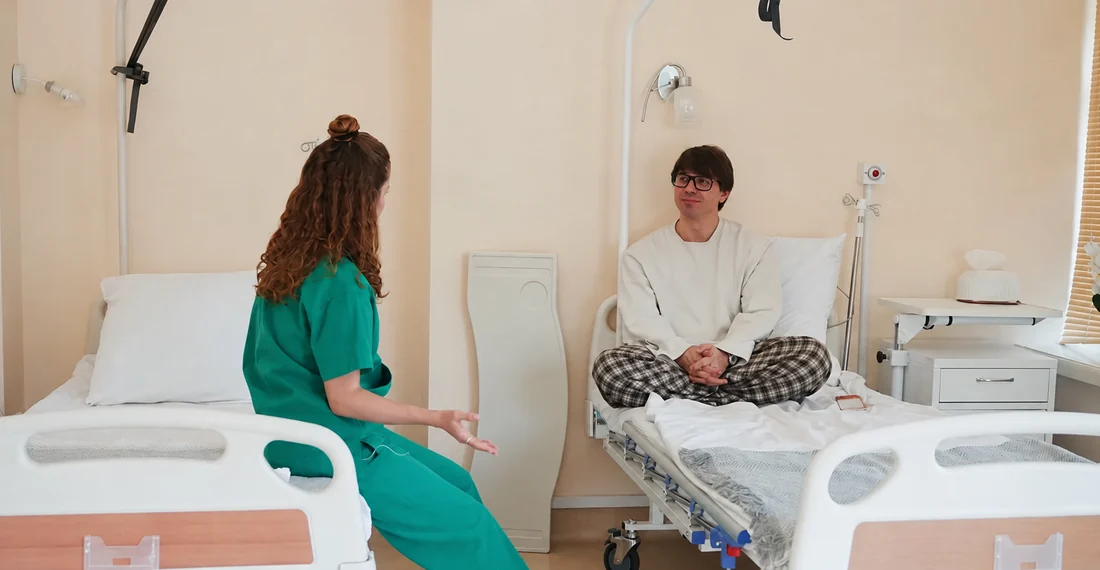
A nurse talks to a patient in a clinic ward

Message our coordinator

Free online consultation · Reply within 15 minutes

Message us on Telegram

By messaging us, you agree to our Privacy Policy
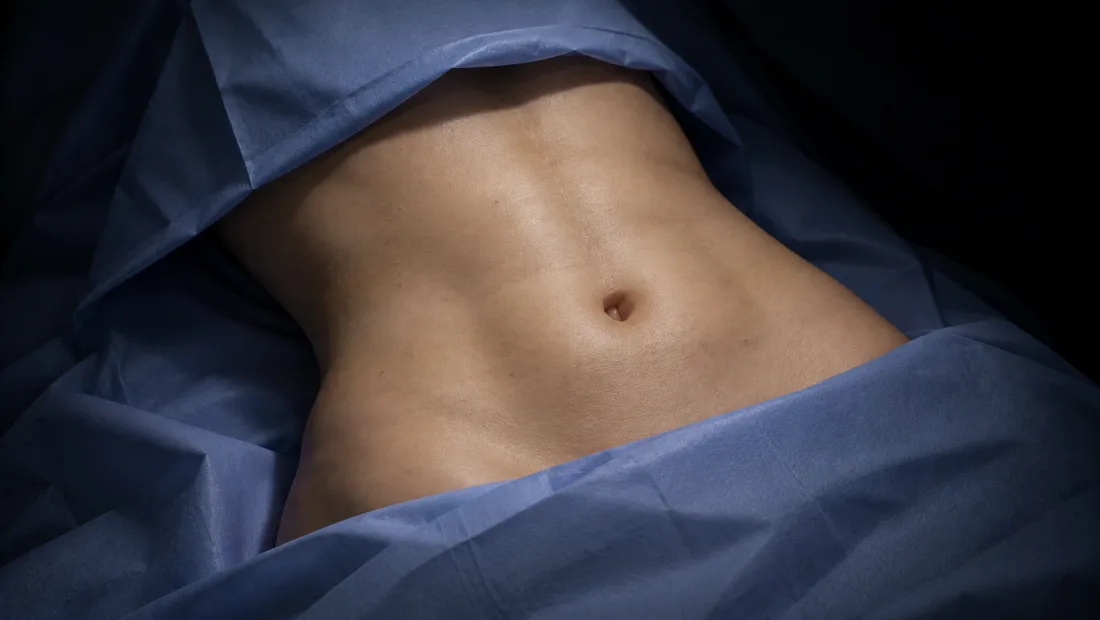
A patient's abdomen before a tummy tuck in the operating room

all inclusive

What the price includes

From preparation for surgery
to post-op check-ups.

  • All scheduled dressings
  • Scheduled post-op check-ups
  • A personal coordinator on call
  • Compression garments fitted on the day of surgery
  • A stay in a comfortable
    hospital ward with meals
  • Individual recommendations
    for recovery
  • Remote progress monitoring
    by photos

How it works

Three days at the clinic —
from preparation to discharge

An agreed correction plan, inpatient observation and post-op check-ups.

A doctor shows a patient a tummy tuck diagram on a monitor1

Consultation
and the surgical plan

The surgeon assesses your abdominal skin and muscles and checks for diastasis, listens to your wishes and chooses the right correction technique.

Paying the deposit by card at the clinic reception2

Booking the date
of surgery

We reserve a surgery date for you: the deposit can be paid by card at the clinic or online by bank transfer. The terms are fixed in the contract for medical services

A blood sample tube for tests before a tummy tuck3

Check-up before
surgery

Before surgery you complete a full lab check-up: blood tests, an ECG, a chest X-ray and reports from the required specialists.

The surgical team during the operation4

Surgery

The surgeon performs the tummy tuck with the chosen technique, repairs diastasis if needed and shapes a firmer abdominal contour.

A hospital ward at the clinic5

Inpatient stay

After surgery the patient stays for 1–3 days in a comfortable hospital ward with meals, under medical supervision.

A surgeon and a patient in the ward during recovery6

Recovery

After surgery you get a recovery programme. Check-ups at 7 days, 3 and 6 months help track your recovery.
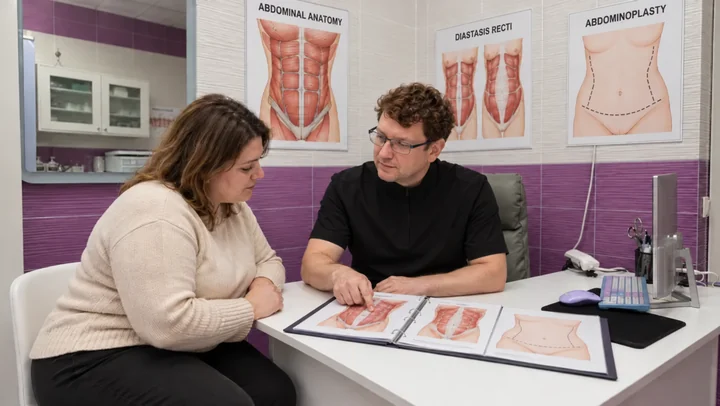
Book a free consultation — the surgeon will plan every step with you.

A doctor discusses the tummy tuck plan with a patient
Book a consultation
A doctor discusses the tummy tuck plan with a patient

How it really happens

Recovery after abdominoplasty

Immediately after surgery the patient stays in hospital for 1–3 days, supervised by doctors. Drains are usually removed after two days, stitches after 7 days. For 1.5–2 months you wear a compression binder that supports the abdominal wall and forms a smooth contour. Most of the swelling goes within 30 days; office work is possible after 2–3 weeks. No sports, sauna or heavy lifting for 2–3 months, and in the beginning it is best to sleep on your back with knees bent. At 12 months the scar is fully mature, faded and barely noticeable.

Post-op check-ups

After 7 days, at 3 months and at 6 months. Until the end of the year, get a post-surgery consultation with your surgeon to review results and get more information, at the clinic's expense

Advantages

What makes patients choose City Medical Centre

A surgeon discusses the tummy tuck plan with a patient at the consultation

Just find out — you lose nothing

At the consultation we discuss your wishes and assess your abdominal skin and muscles. The surgeon explains what changes are possible, chooses the correction technique and answers your questions.

A surgeon on a video call with a patient after surgery

We stay with you after surgery

The surgeon follows your recovery and the changing abdominal contour at check-ups after 7 days, 3 and 6 months. Check-ups, dressings and aftercare advice are already included in the price of surgery.

A surgeon shows a patient a model and tummy tuck diagrams

A beautiful contour that fits your figure

We choose the correction technique based on your skin, muscles and figure. Our aim is a harmonious abdominal contour that keeps the natural proportions of your body.

A patient writes down a convenient visit time in her planner

Your schedule is our priority

We respect your time: we work 24/7, with easy booking and a personal approach — we adapt to your pace.
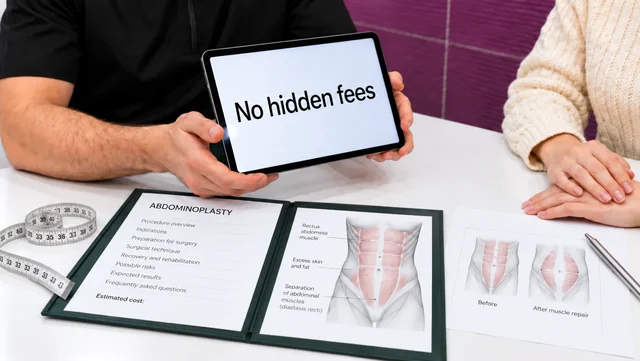
A surgeon shows a patient the fixed price of surgery with no extra charges

Fixed prices

After the consultation the surgeon defines the extent of correction, and you get a clear price for the surgery — no surprises on the way to the result you want.

A surgeon visits a patient in the hospital ward after surgery

Round-the-clock care after surgery

Recovery starts in a comfortable hospital ward under round-the-clock nursing care. The stay and meals are already included in the price.

FAQ

We answer what
people ask before booking

Choosing abdominoplasty in Bristol

Diastasis is not always part of the picture. Repair is done only when the rectus abdominis muscles are actually separated: the surgeon sees it at the examination and, if in doubt, it is confirmed by ultrasound. When needed, the muscles are brought together during the tummy tuck itself, with no separate procedure. Patients from Bristol learn at the consultation whether their case requires it.

Recovery has three milestones. Office work is possible after 2–3 weeks, swelling and tightness pass by 1.5–2 months, and the final result and scar are assessed at 6–12 months once tissues have adapted. Most swelling goes within 30 days. Sport, sauna and heavy lifting wait 2–3 months, and sleeping on your back with knees bent is advised at first. The same timeline applies to Bristol patients.

There is no single price for abdominoplasty, since a mini tummy tuck and a classic operation with diastasis repair differ in scope. What stays constant is the approach: the surgeon names the cost after an in-person examination, and it is fixed in the contract without surprises. Bristol residents can apply before the end of the year and get the consultation at the clinic's expense.

Stories of well-known people

Well-known people who spoke openly about this operation, in their own words.

All stories about this operation →

A scar from hip to hip, and how long it takes to settle

A tummy tuck removes loose, stretched skin and the fat apron on the abdomen and restores the abdominal muscle wall. Removing excess skin always has a price, and the price is a scar. In a classic tummy tuck the incision runs across the lower abdomen from hip to hip, placed below the underwear or swimsuit line. A mini tummy tuck deals with a small excess of skin below the navel, so the scar is much shorter, the navel stays where it is and recovery is faster. A classic tummy tuck also moves the navel and lets the doctor repair diastasis along the full length of the muscle.

Be patient with the scar. Over time it fades and thins, and the final result and the scar are assessed at 6 to 12 months, once the tissues have fully adapted. Early on it will look firm and red, and that is part of the process. The NHS describes the same course for its own patients, noting that a tummy tuck leaves a scar across the lower tummy and that raised, redder scars should fade over time. Ask the coordinator to describe how scars usually look at each stage so that you know what to expect when you look in the mirror at week 2, at month 3 and at month 6.

Skin that has been removed does not regrow, so that part of the result lasts. The abdomen will only stretch again with significant weight gain, and a pregnancy after a tummy tuck is possible but stretches the repaired muscles, so surgery is best planned once your family is complete. This is the single most useful question to settle with yourself before booking, and it is one we gladly discuss online, without any pressure and without a date being set.

Before you write to us, spend a few minutes with a mirror and a tape measure. Note the position of the loose skin, whether it hangs below the underwear line, whether you can feel a bulge in the middle that appears when you sit up and whether the navel has changed shape. You do not need to measure anything exactly. A short description in your own words, with photographs, lets the doctor decide between a mini and a classic version faster than a long list of numbers would.

Some patients arrive with questions about the navel. In a classic operation the navel is moved so that it sits naturally in the new position, while a mini version leaves it in place. Ask the doctor to show you what the new shape and position will look like in your case. It is a small detail, but it is what many people look at first in the mirror, and the answer is usually reassuring once you see the plan.

A word on expectations about the waist. A tummy tuck flattens and tightens the front of the abdomen, and when liposuction of the flanks is added, the waistline looks more defined as well. It does not change your bone structure, and the shape of your ribs and hips stays your own. A fair way to think about it is that the operation lets your clothes sit as your weight and height suggest they should, rather than being pulled out of line by a lower apron of skin.

One to three days under supervision, drains out at two, stitches at seven

Under general anaesthesia the operation lasts 2 to 4 hours, and you wake up in a comfortable ward where meals and medical supervision are part of the stay. A classic procedure typically means up to three days there, while a mini version often needs a single night. The operation itself is not painful; tightness and soreness in the first days are eased with the tablets your doctor prescribes, and by the end of the first week most people notice the discomfort easing.

Once you are home, recovery carries on under the doctor's eye. Scheduled check-ups come after 7 days, then at 3 months and at 6 months, and dressings, check-ups and aftercare advice are all inside the agreed price. The first visible change arrives about 2 weeks in, when the main swelling starts to drop, and most of it has gone within 30 days. An interim picture appears at 1.5 to 2 months, with the final contour taking 6 to 12 months.

You can start the conversation from home. A coordinator on WhatsApp or Telegram, available 24/7, will answer questions about the stay, about who can come with you and about what to bring. Do not wait for the last week to ask: practical details such as comfortable clothes that open at the front, a pillow for the knees and a plan for getting home are easy to arrange if you know about them early.

If you are going home from the ward by car, ask a relative to drive and bring a pillow to place between the seat belt and the abdomen. Wear clothes with a loose waistband and slip-on shoes, because bending to tie laces is awkward in the first days. A short list on the fridge with the coordinator's contact and the dates of your check-ups saves you from searching through messages at a tired moment.

Think about pain control in advance. You will be given the painkillers your doctor prescribes, and it helps to take them on time rather than waiting until discomfort builds. Keep a small notebook with the times, so that you and anyone helping you can see what you took and when. Tell the coordinator if the tightness feels stronger than you expected; most of the time it is normal, but it is better to ask than to wonder at night.

Ask the coordinator what the first night will be like, and when you will be helped to stand for the first time. You stay on the ward under medical supervision, and sleep is the better medicine, so ask which hours are best for family calls and messages. Keep your phone charged and the chat open for the people who will be waiting for news, and agree with them that you will reply when you are rested.

The binder through four Bristol seasons

The binder supports the abdominal wall, calms the swelling and helps shape a smooth line, and without it recovery goes less well. You wear it for 1.5 to 2 months in all, day and night for the first 3 to 4 weeks and by day for roughly a month beyond that. Because the period is long, the season you recover in changes how it feels.

Met Office averages for 1991 to 2020 from the Filton station, about 8 km from the city centre, give a mean daily maximum of 8.1 °C in January and 21.7 °C in July, with 819.0 mm of rain over 135.8 days a year. A recovery in the colder months is kind to a binder: you wear loose layers, a long cardigan covers the waist and nobody notices. Air frost is recorded on 32.9 days a year, so keep the core warm and avoid hurrying outside in damp air. A recovery in July, when Filton has a mean maximum of 21.7 °C and a record high of 34.5 °C, needs soft breathable fabrics, a fan and a spare binder.

Washing and drying need a plan in a city with so many damp days. Keep a second binder, wash according to the instructions and dry it indoors on a rack in good air flow. Do not hurry the drying by placing it on a hot radiator. Ask your coordinator about the fabric and how to check that the fit remains right as the swelling changes.

Think about what you wear against the skin. The binder sits close to the abdomen for weeks, so soft seamless underwear under it is more comfortable than thick fabrics, and a thin cotton layer between skin and binder helps with sweat on warm days. Pack a few fresh layers for the hospital stay, and bring a loose dressing gown. Anything with a hard waistband, buttons or zips at the abdomen should wait in the wardrobe until the doctor says the area is ready.

Think about hygiene and skin comfort under the binder. Follow the dressing instructions exactly, keep the area dry and clean, and report any redness, unusual smell or discharge to the coordinator at once. In warmer weather, sweat can irritate skin at the edge of the binder, so a thin cotton layer and regular changes of the spare binder keep things comfortable. Never loosen or remove the binder for convenience without asking the doctor first.

Stairs, shopping and school-run logistics in the first fortnight

For the first 2 to 3 weeks the rules are the same for everybody: nothing heavy to lift, no strenuous effort and no sudden movements. For at least a month stay away from saunas, steam baths, pools, sunbeds, alcohol and cigarettes. Sport returns step by step and only once the doctor agrees, and the heavier training waits a further 4 to 8 weeks. Desk work is possible after 2 to 3 weeks, and the swelling and tightness fade by 1.5 to 2 months.

Bristol is described by its inhabitants as being built on seven hills, and the city packs 4,516 people into every square kilometre, so many households deal with steps and stairs every day. If your home has stairs, plan for the day you come back from hospital: who will carry your bag, whether a handrail is secure and how you will manage the shopping. Online grocery delivery and a neighbour on call can matter more than any piece of equipment.

If you have children, think carefully. Lifting a toddler, carrying a school bag or catching a child who runs ahead are exactly the sudden movements to avoid. Arrange help for the first 2 to 3 weeks if you can, and tell the coordinator about your family situation when you choose a date. A tummy tuck is often planned after the family is complete, and the recovery plan should reflect what your household really needs.

Think about the working week too. If your job involves standing for long hours, carrying stock or driving a van, tell the coordinator, because 2 to 3 weeks may not be enough and a phased return may work better. Ask your employer about a gradual restart with lighter duties, and agree the dates before the operation, not after. For desk-based jobs, a supportive chair, a cushion and the freedom to stand up every half hour make the first working days easier.

A final idea for the early weeks is to keep a short routine of gentle walking indoors, as the doctor allows, because slow movement is better than lying still all day. Go slowly, keep upright when you feel comfortable, and do not force a stretch. On sunnier days sit by a window rather than going out, and save longer outings, including any walk in the green spaces of the city, until the doctor confirms you are ready.

What the NHS says, and why a steady weight comes first

The NHS states that cosmetic surgery is not routinely provided on the NHS and that most people who want it will need to pay privately. It lists a few examples where funding may occasionally apply for psychological or other health reasons, such as breast enlargement in specific circumstances, nose reshaping for breathing problems, ear correction and breast reduction; abdominoplasty is not among them. Its own description of the procedure says it is usually only recommended for people with a healthy body mass index and that it is not a procedure for someone who is overweight. Ask your GP if you wonder about your individual position.

A tummy tuck is not a way to lose weight. Its goal is different: to remove excess stretched skin and the fat apron and restore the abdominal wall. Surgery is done at a stable weight, because the result lasts only as long as your weight does, and if your weight is still changing, you should see a dietitian or an endocrinologist first. If you have lost a great deal of weight, the skin folds that remain are a common reason for the operation, and it is worth waiting until the weight has held steady before you decide.

Excess skin after pregnancy or weight loss and rectus diastasis, the separation of the muscle, are among the commonest reasons for a consultation. Combining is allowed and common: liposuction of the flanks and waist can be added to a tummy tuck. You then go through one anaesthesia and one recovery period. The doctor tells you at the consultation how extensive the procedure will be. Decompensated diabetes, age under 18 and certain other conditions are contraindications.

Another question that deserves an honest answer is the emotional side. A tummy tuck can change how you feel about your body, and for many people that is the point, but expectations should be realistic. The result is a flatter, firmer abdomen with a scar, not a different life. The NHS points out that procedures can affect your mental health if they do not turn out the way you expected, and advises taking time to think and expecting a cooling-off period after any consultation. We would rather you wait a month and be sure.

Taking time over the decision is not a delay. Many patients return after a week of thinking with a better set of questions and a clearer sense of the outcome they want. The consultation is online and free of charge, it does not oblige you to anything, and the coordinator will not hurry you. If you decide it is not right for you, or that it should wait until your weight is steady or your family is complete, that is a perfectly good answer.

It also helps to keep a record of your weight in the weeks before the consultation. Weigh yourself at the same time each week and note the figure. If it stays within a narrow range, you are in a good place to talk about a date; if it keeps moving, the doctor may suggest waiting. That plain record helps the conversation far more than a single number, and it gives you a baseline for protecting the result later.

Preparing from your kitchen table: photos, tests and dates

Start by sending the coordinator photos of the abdomen from the front, from each side and from three-quarters, standing relaxed, in daylight and without filters. Add your age, height, weight, the date of your last pregnancy if relevant, previous operations such as a C-section, and any health conditions. The doctor reviews the pictures and explains whether a mini or a classic tummy tuck suits you, or whether another approach would be better. Bristol winter afternoons are dim, so choose the brightest room, and keep the same distance for each picture.

Before the date you will need blood and urine analyses, clotting and biochemistry panels, infection screening, an ECG, a chest X-ray, an ultrasound of the leg veins and a report from your GP. Results usually stay valid for 10 to 14 days, so book them within that window instead of leaving everything to the last evening. Smoking, alcohol and any medicine that thins the blood stop 7 to 10 days before, and at the consultation the doctor gives you the exact list that applies to you.

Choose your dates with care. The 2027 bank holidays in England and Wales fall on 26 March, 29 March, 3 May, 31 May and 30 August, and a long weekend can add a few days to your recovery period, though it does not replace the 2 to 3 weeks before office work. If you need to be recovered for a holiday, allow 1.5 to 2 months at least, so that the binder is off and the swelling has gone. Send your preferred date to the coordinator; the clinic confirms which dates are open, and nothing is booked until you agree the plan.

Prepare your questions in writing. Which version of the operation do you recommend for me and why? Can anything else be combined with it? How long will I wear the binder? What are the signs that I should message you straight away? Who looks after me in the first night? When is the first check-up? Keep the answers in a note on your phone, and share it with the person who will help you at home.

On the day of the operation itself, keep it simple. Follow the fasting instructions you were given, bring your documents and test results, wear loose comfortable clothes and leave jewellery at home. Tell the team about any change in your health, even a cold. After the operation, rest, take small steps when the doctor allows, and message your coordinator when you get home. You will not be left to guess what comes next, because each step has a person and a plan behind it.

Last, think about the people who matter. Tell your family or the friend who will help you what the first fortnight looks like, send them the coordinator's contact and agree who does what: the school run, the shopping, the cooking, the dog. A calm household with a clear plan is the quiet part of every good recovery, and it costs nothing except a conversation before the day.

Is a tummy tuck available on the NHS in Bristol?

The NHS says cosmetic surgery is not routinely provided on the NHS, and abdominoplasty is not among the examples where funding may apply. At City Medical Centre the operation is arranged privately. Your GP can advise on your own case.

How long is the hospital stay?

For a classic operation plan between one and three days on the ward. Many mini cases need only one night.

When do drains and stitches come out?

Expect the drains to come out on the second day, with the stitches following at the one-week mark.

How long do I wear the binder?

In total the binder stays on for 1.5 to 2 months: day and night for the first 3 to 4 weeks, then by day only for about a month more. Your doctor confirms the final date.

When can I go back to the office?

Desk work becomes possible somewhere between two and three weeks. Until then there is no lifting, no hard effort and no sudden twisting.

Can I combine a tummy tuck with liposuction?

Yes. Liposuction of the flanks and waist is often added, and after childbirth the muscle separation can be repaired. You go through one anaesthesia and one recovery.

Do I need a stable weight before the operation?

Yes. A tummy tuck is not a way to lose weight, and the result lasts when your weight stays stable. See a dietitian or endocrinologist if your weight is still changing.

Is it better to recover in winter or summer?

A winter recovery is comfortable for a binder, while summer needs breathable fabrics and a spare binder. Both work with planning.

Can I have another pregnancy after a tummy tuck?

It can happen, but it stretches the repaired muscles again, which is why the operation is usually timed for when your family is complete.