City Medical Centre · multi-specialty surgery clinicOpen 24/7

Tummy tuck

Abdominoplasty in Leicester: a Flat Stomach

Free consultation

from $2,400

The price is fixed in the contract before surgery

Message us on WhatsApp

Free online consultation · Reply within 15 minutes
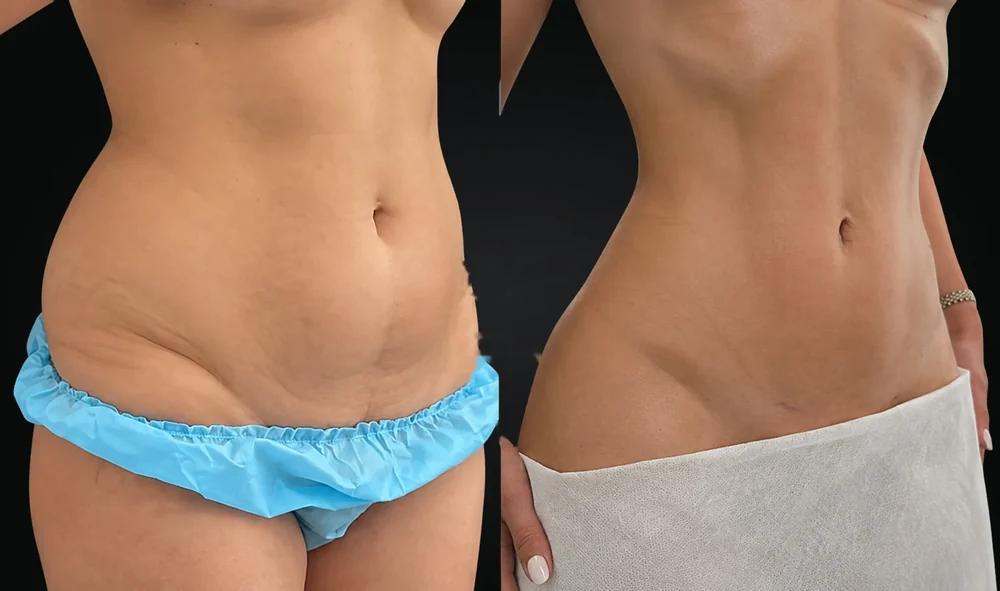
Real case
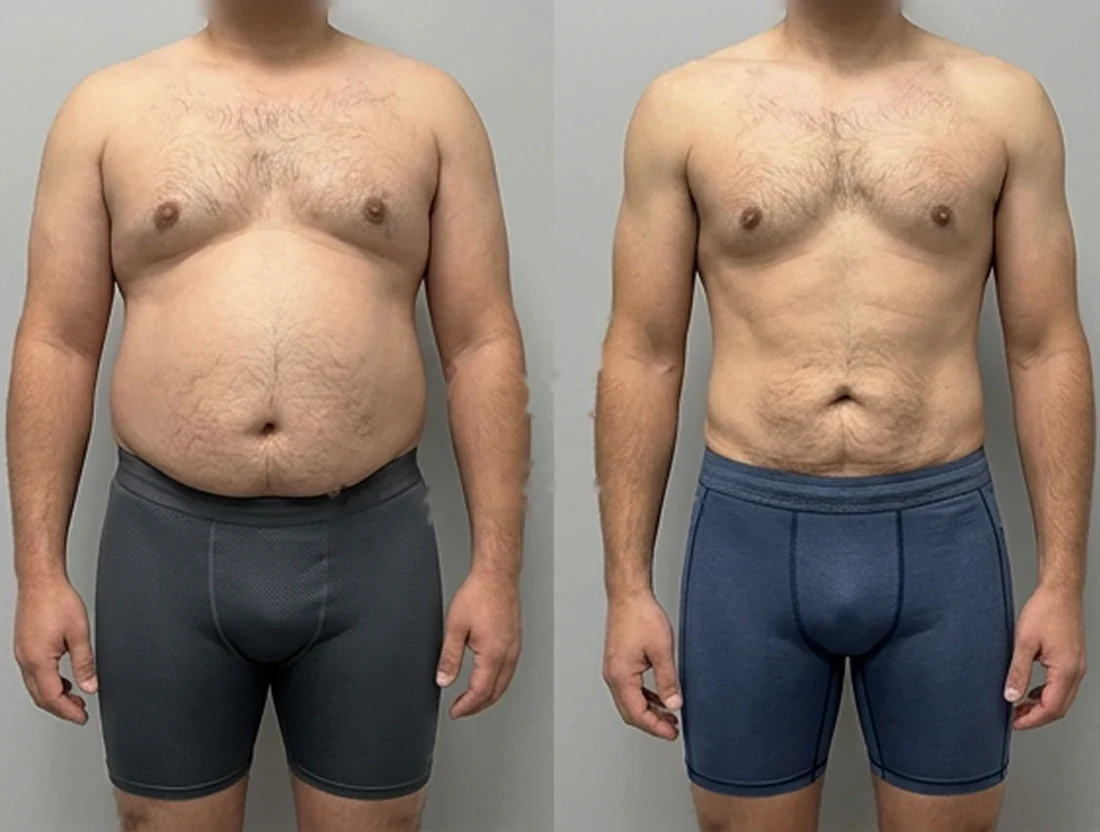
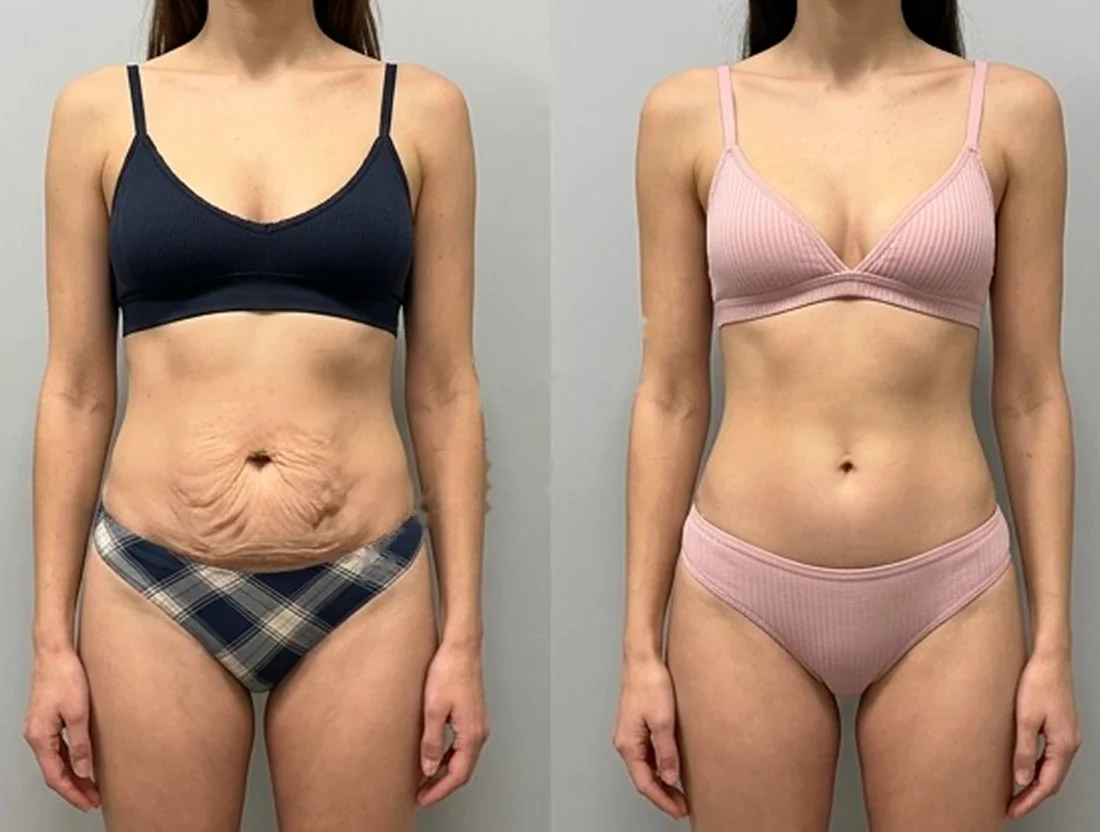
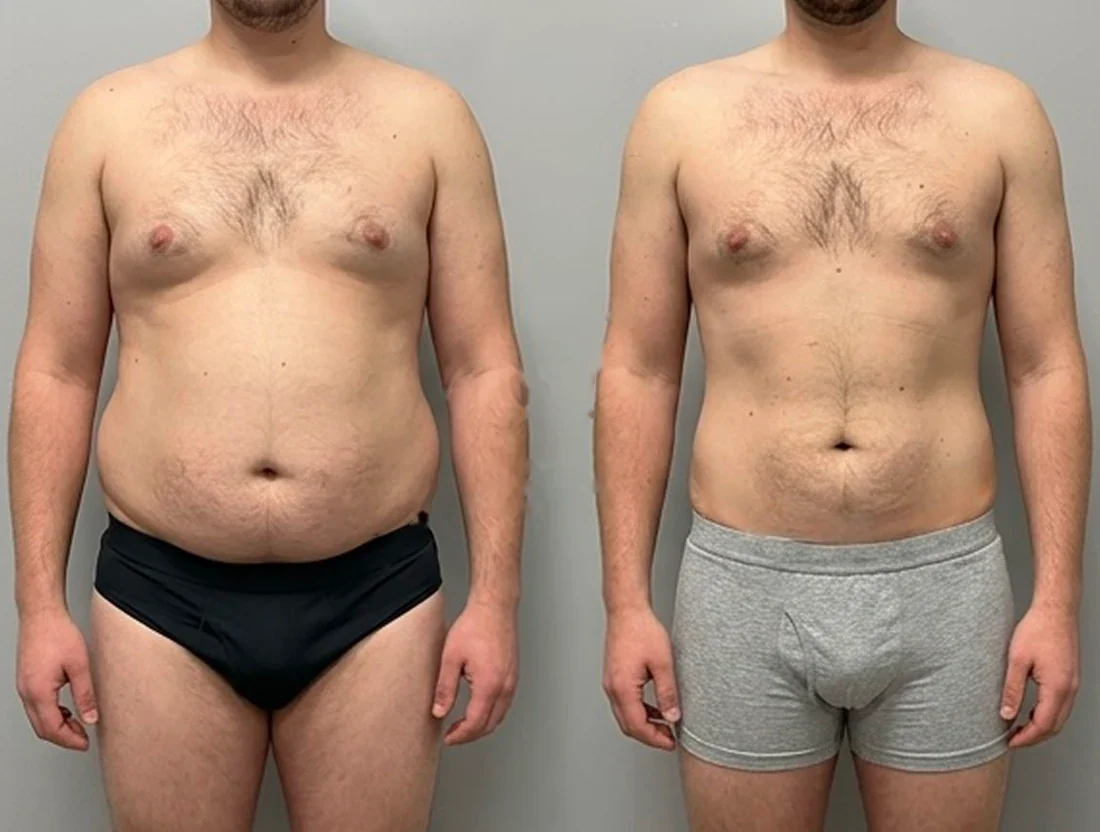
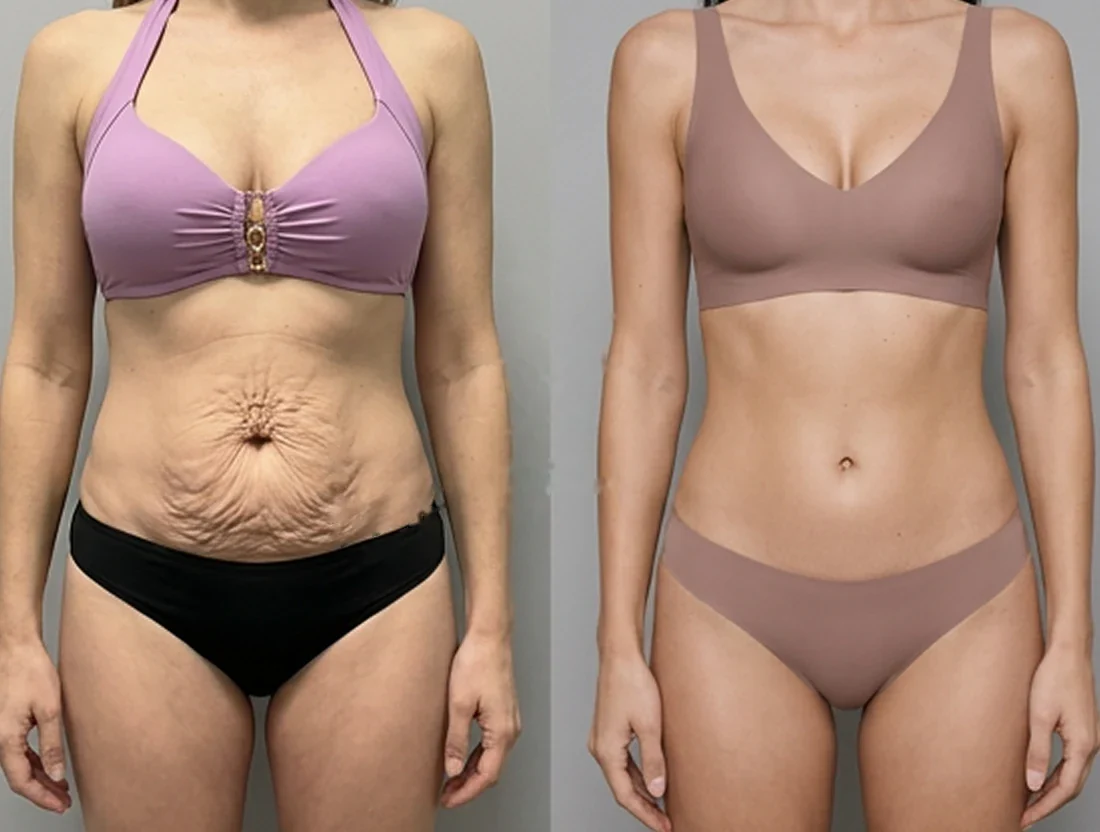
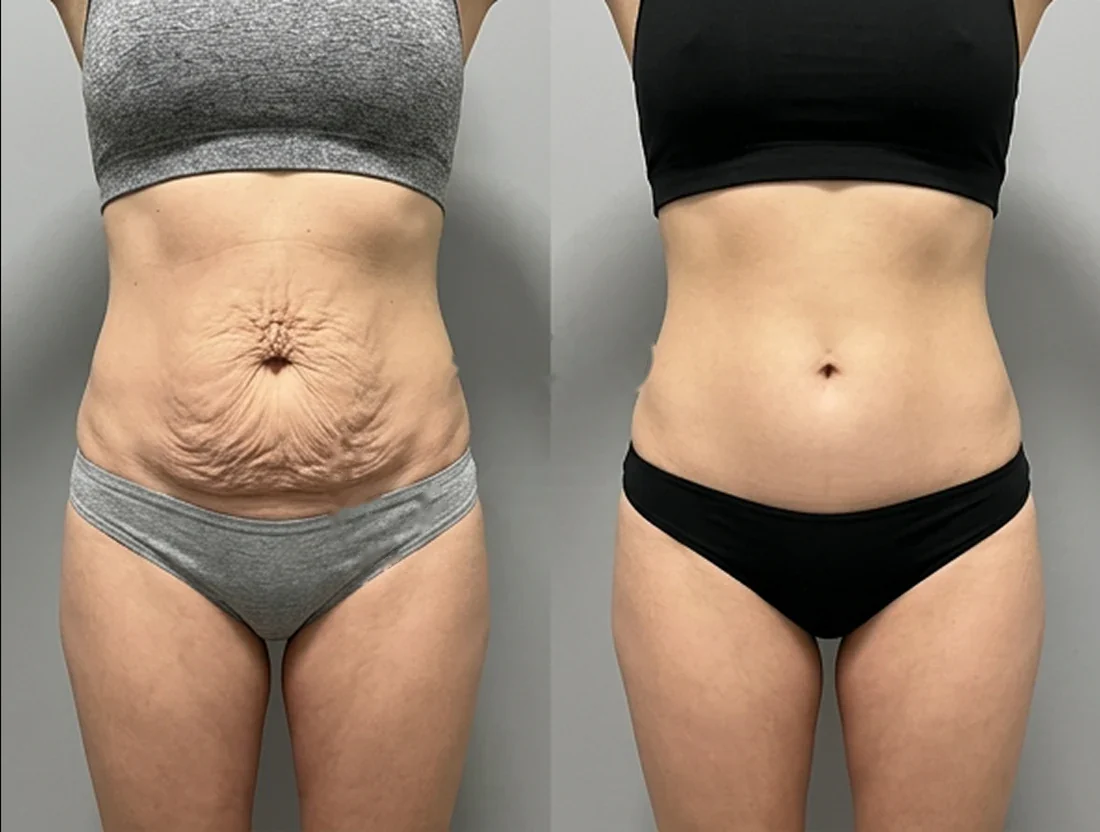
Tummy tuck: a patient's abdomen before and after surgery before after
A flat tummy and a toned silhouette in one operation. Your individual surgical plan and the expected result are discussed at the consultation

Message our coordinator

Free online consultation · Reply within 15 minutes

Message us on Telegram

By messaging us, you agree to our Privacy Policy

Tummy tuck (abdominoplasty) in Leicester: price and key facts

Tummy tuck for patients from Leicester at City Medical Centre: the price is named at the free online consultation and fixed in the contract with no hidden extra charges.

Duration
2–4 hours
Anesthesia
general
Stay
1–3 days
Recovery
back to work after 2–3 weeks
Final result
6–12 months after surgery
How it works
Send photos on WhatsApp or Telegram, get a free doctor assessment and the price, then confirm the plan and dates before anything is booked.

How it works · Tummy tuck prices

Information current as of 24 October 2026

Free online consultation on WhatsApp and Telegram

Results

Tummy tuck (abdominoplasty) results
of our patients

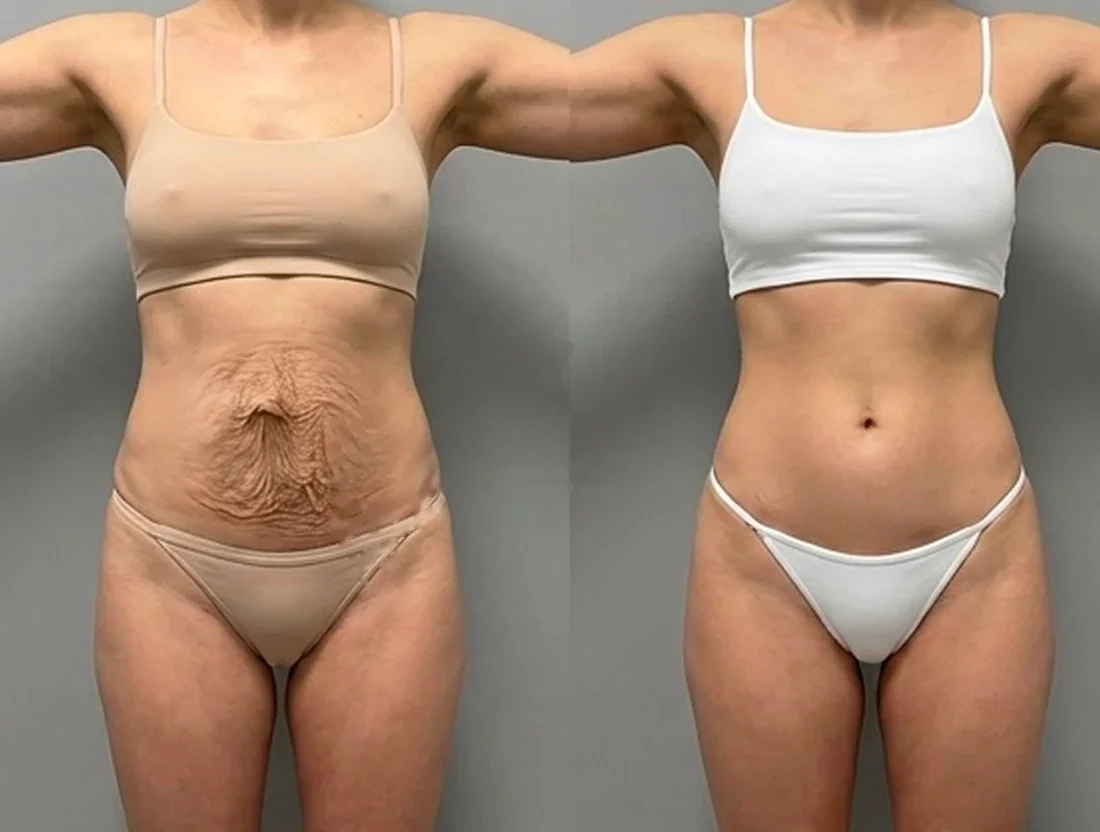
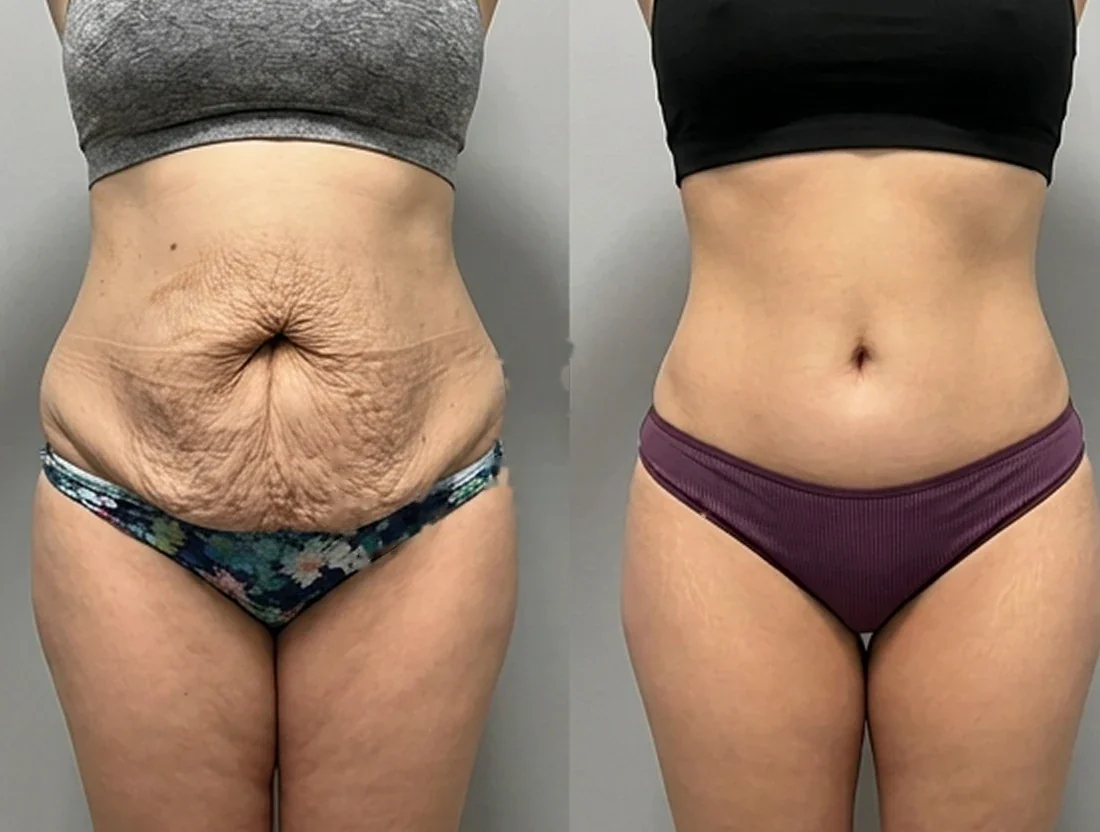
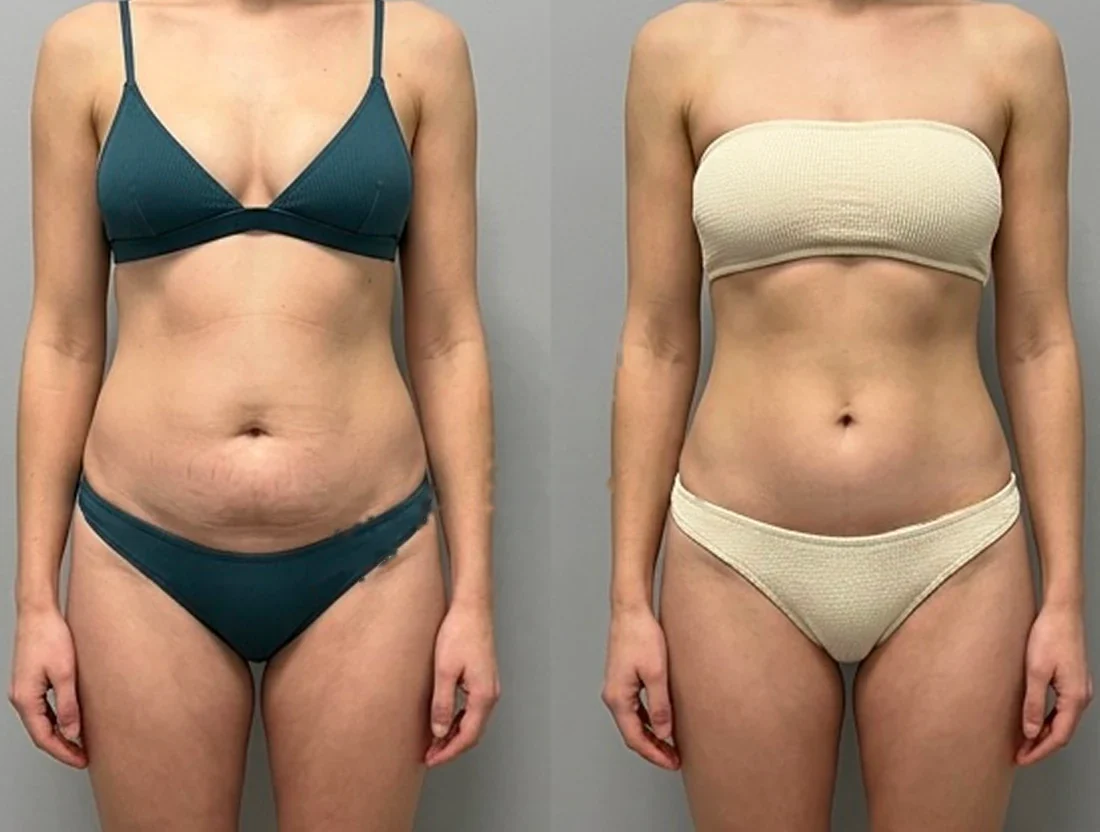
All cases are real patients. Faces and identifying details are hidden.

Tummy tuck: a female patient's abdomen before and after surgerybeforeafter
Tummy tuck: a male patient's abdomen before and after surgerybeforeafter
Tummy tuck: a female patient's abdomen before and after surgerybeforeafter
Tummy tuck: a male patient's abdomen before and after surgerybeforeafter
Tummy tuck: a female patient's abdomen before and after surgerybeforeafter
1 of 8

Comparison

Tummy tuck techniques

A tummy tuck is done as a full (classic) or mini operation, or combined with liposuction as lipoabdominoplasty. Compare the scope of surgery, the indications and the expected results to choose the right technique together with your surgeon.

Tummy tuck

Removal of excess skin, abdominal muscle tightening
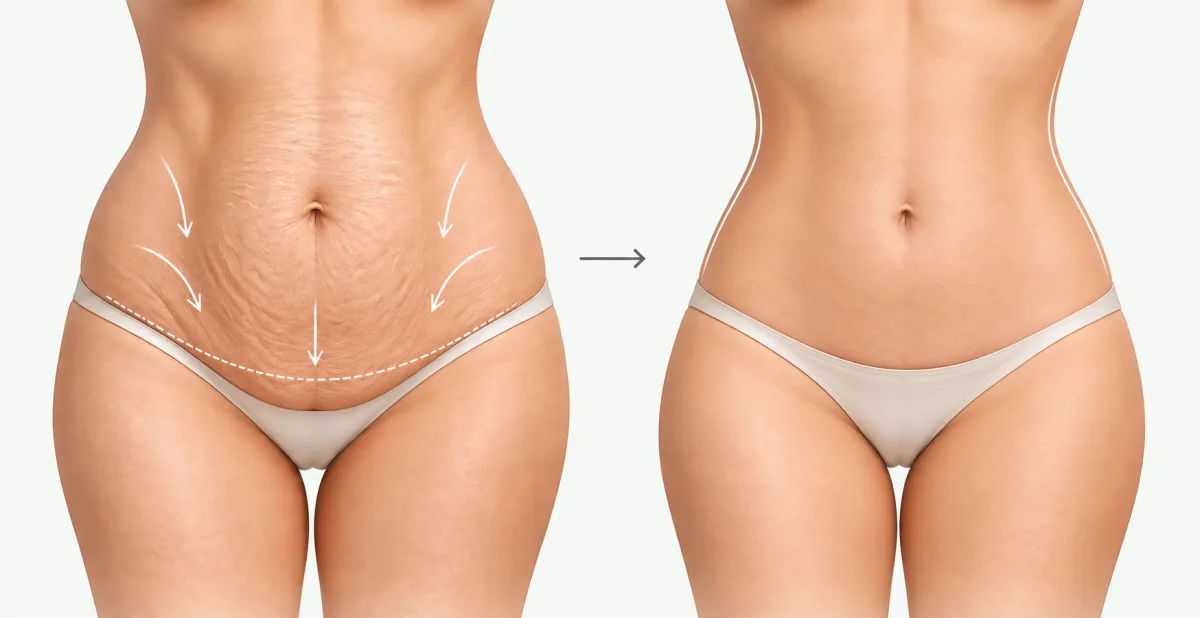
Tummy tuck diagram: the abdomen before surgery with the incision line, and the result
Main goal
Removal of excess skin, diastasis repair
When it is done
Excess skin after childbirth or weight loss
Anaesthesia and stay
General anaesthesia, up to 3 days in hospital

Lipoabdominoplasty

Tummy tuck with added liposuction
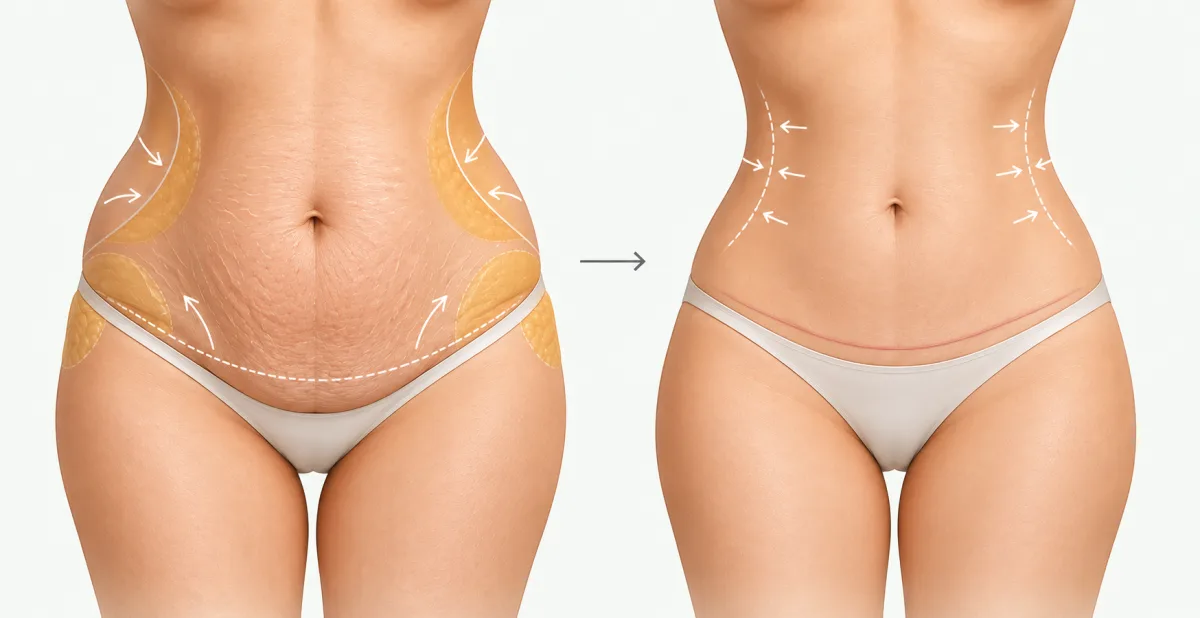
Lipoabdominoplasty diagram: the abdomen with fat on the flanks before surgery, and the result
Main goal
Tummy tightening and waist contouring
When it is done
For fat deposits on the flanks and waist
Anaesthesia and stay
General anaesthesia, up to 3 days in hospital

The benefits and recovery times shown are averaged for each technique and given for guidance: the scope of correction and rehabilitation depend on your anatomy and individual features, and the surgeon confirms them at the consultation.

At the consultation the surgeon draws up a plan for your case and explains how your tummy tuck will go.

Free, before surgery and with no obligation.

Book a consultation

Tummy tuck from the inside

About the clinic

A clinic where you can feel at ease

Modern equipment, comfortable rooms and care for every patient
A doctor and a patient in a clinic ward

Contact us the way that suits you

We will answer your questions and find a convenient time for a consultation

By messaging us, you agree to our Privacy Policy

A tummy tuck is not for everyone

If your case can be solved without surgery, the doctor will tell you so at the consultation — and you will not spend money for nothing.

Suitable
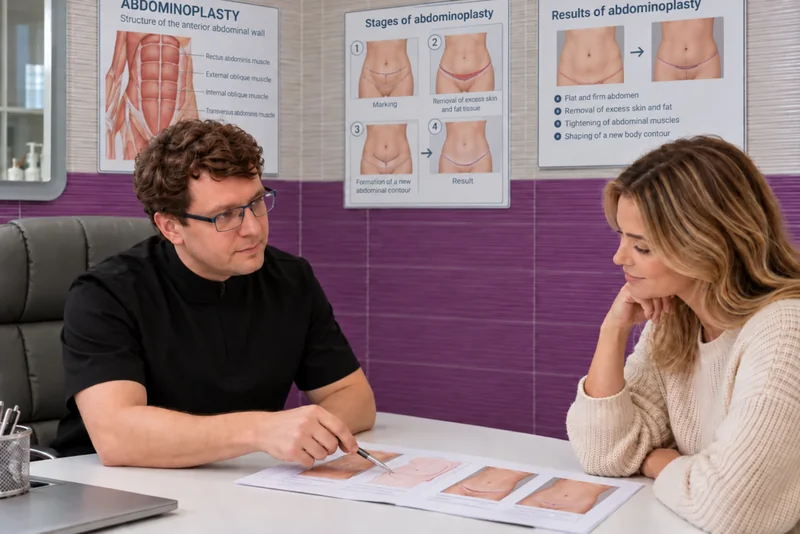
A surgeon shows a patient on a model and a monitor how the abdominal contour changes after a tummy tuck
  • Rectus abdominis diastasis
  • Skin folds after weight loss
  • Loose abdominal skin
  • Stretched skin after pregnancy
  • A distorted abdominal contour

Not suitable
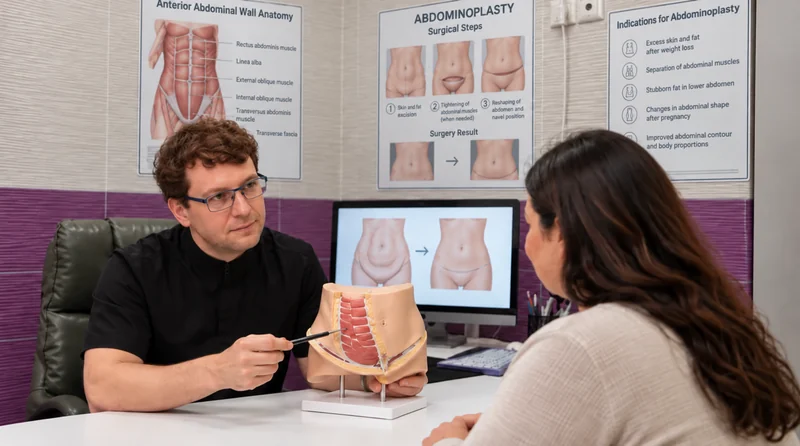
A surgeon discusses the indications and contraindications for a tummy tuck with a patient
  • Acute infections
  • Severe disease of the heart, kidneys or liver
  • Disorders of blood clotting
  • Under 18 years of age
  • Decompensated diabetes
  • Cancer
  • Skin inflammation in the surgical area
  • Pregnancy or breastfeeding

Not sure the surgery is right for you?

Message us — the coordinator will ask for your photos in the messenger, and the surgeon will tell you whether a tummy tuck suits you. No surgery booking needed.

Find out if it suits me
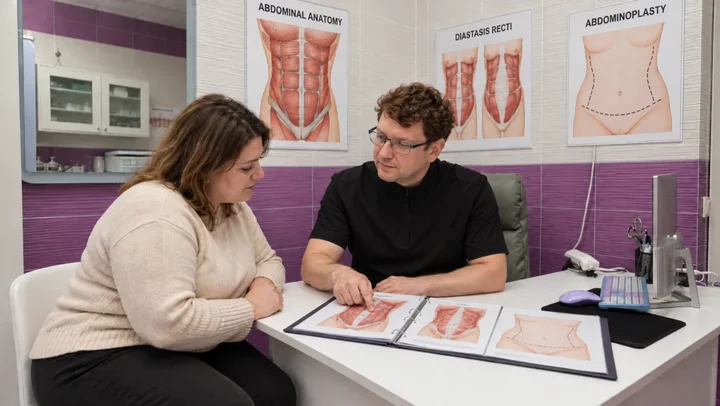
A surgeon goes through a tummy tuck diagram with a patient at the consultation

Prices

You know the price
before surgery

The price is set at the consultation and fixed in the contract.

Other services

  • First consultationFree
  • Liposuction of the abdomen and flanksfrom $1,700
Book a consultation

Find out your tummy tuck plan and price

The surgeon assesses your abdominal skin and muscles, listens to your wishes and chooses the right correction technique.
The price is set at the consultation and fixed in the contract.
A nurse talks to a patient in a clinic ward

Message our coordinator

Free online consultation · Reply within 15 minutes

Message us on Telegram

By messaging us, you agree to our Privacy Policy
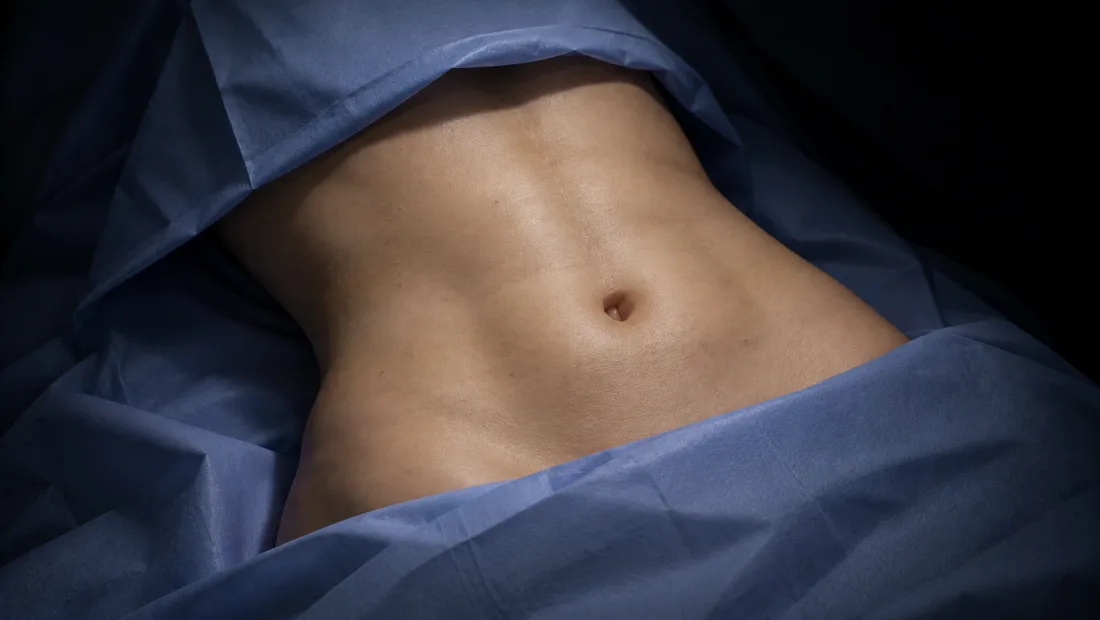
A patient's abdomen before a tummy tuck in the operating room

all inclusive

What the price includes

From preparation for surgery
to post-op check-ups.

  • All scheduled dressings
  • Scheduled post-op check-ups
  • A personal coordinator on call
  • Compression garments fitted on the day of surgery
  • A stay in a comfortable
    hospital ward with meals
  • Individual recommendations
    for recovery
  • Remote progress monitoring
    by photos

How it works

Three days at the clinic —
from preparation to discharge

An agreed correction plan, inpatient observation and post-op check-ups.
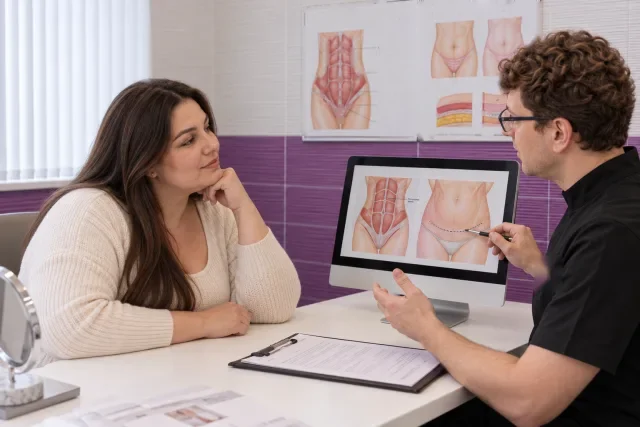
A doctor shows a patient a tummy tuck diagram on a monitor1

Consultation
and the surgical plan

The surgeon assesses your abdominal skin and muscles and checks for diastasis, listens to your wishes and chooses the right correction technique.

Paying the deposit by card at the clinic reception2

Booking the date
of surgery

We reserve a surgery date for you: the deposit can be paid by card at the clinic or online by bank transfer. The terms are fixed in the contract for medical services
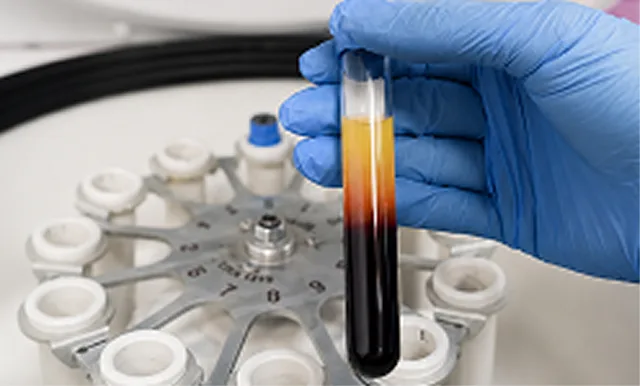
A blood sample tube for tests before a tummy tuck3

Check-up before
surgery

Before surgery you complete a full lab check-up: blood tests, an ECG, a chest X-ray and reports from the required specialists.
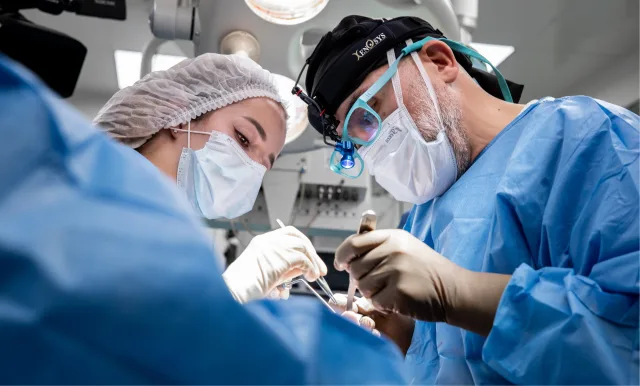
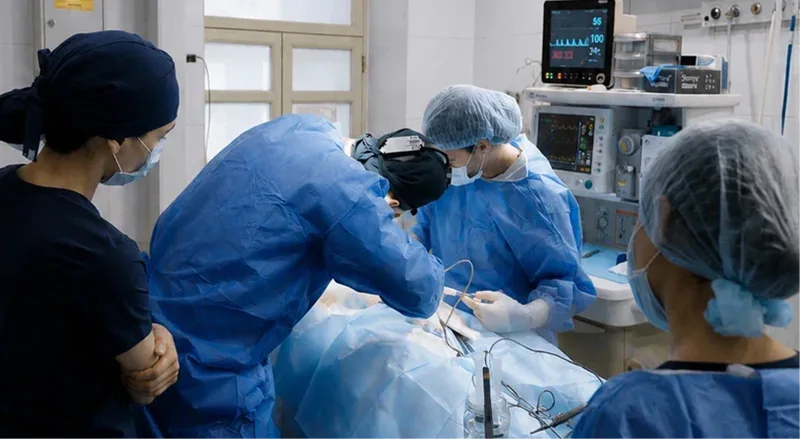
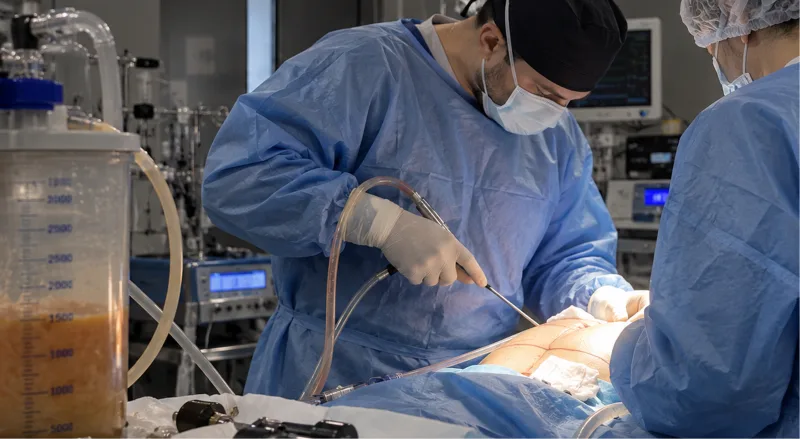
The surgical team during the operation4

Surgery

The surgeon performs the tummy tuck with the chosen technique, repairs diastasis if needed and shapes a firmer abdominal contour.
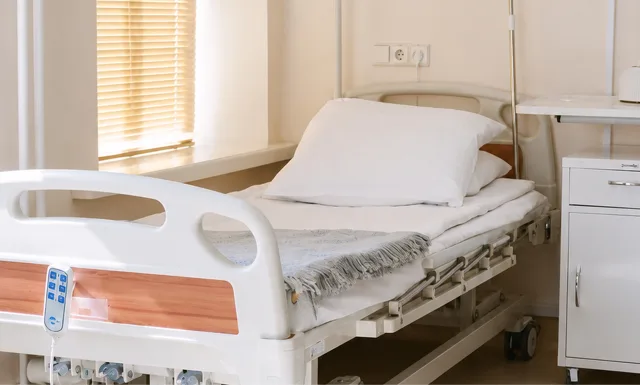
A hospital ward at the clinic5

Inpatient stay

After surgery the patient stays for 1–3 days in a comfortable hospital ward with meals, under medical supervision.
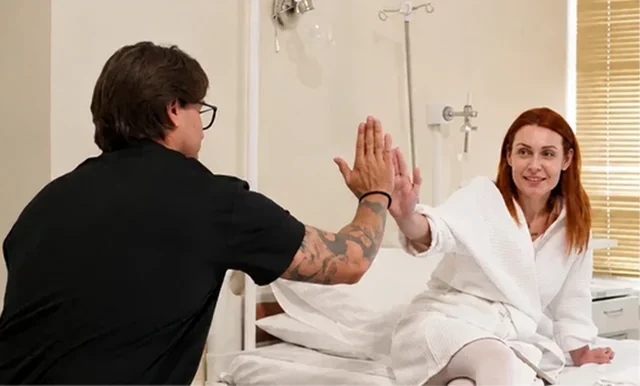
A surgeon and a patient in the ward during recovery6

Recovery

After surgery you get a recovery programme. Check-ups at 7 days, 3 and 6 months help track your recovery.
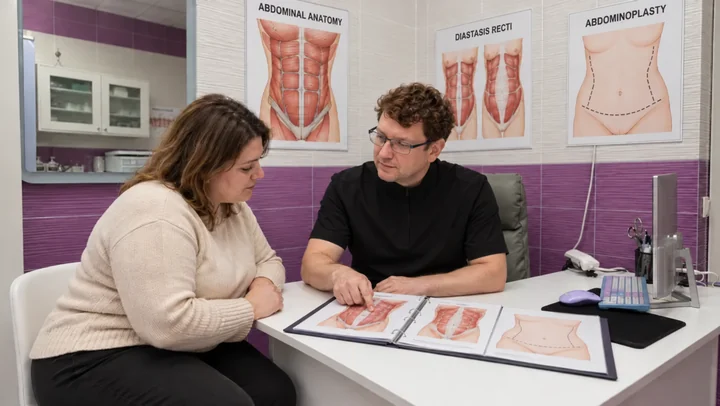
Book a free consultation — the surgeon will plan every step with you.

A doctor discusses the tummy tuck plan with a patient
Book a consultation
A doctor discusses the tummy tuck plan with a patient

How it really happens

Healing after a tummy tuck

Straight after surgery the patient spends 1–3 days in hospital under medical supervision. Drains are usually removed on day two, and stitches after 7 days. A compression binder is worn for 1.5–2 months — it supports the abdominal wall and shapes a smooth contour. Most swelling resolves within 30 days, and office work resumes after 2–3 weeks. Sports, sauna and heavy lifting are off-limits for 2–3 months, and sleeping on your back with knees bent is advised at first. The scar matures fully by 12 months, fading and becoming barely noticeable.

Post-op check-ups

After 7 days, at 3 months and at 6 months. Until the end of the year, get a post-surgery consultation with your surgeon to review results and get more information, at the clinic's expense

Advantages

Why patients pick City Medical Centre
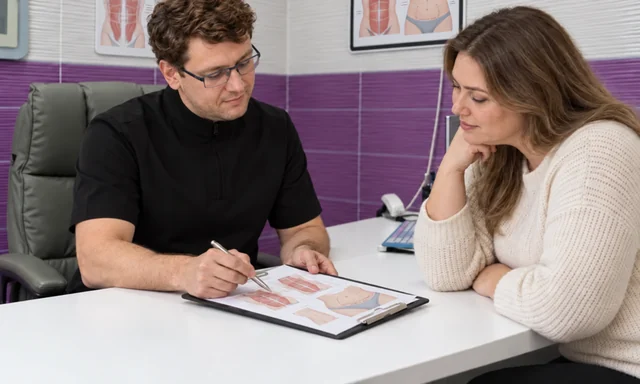
A surgeon discusses the tummy tuck plan with a patient at the consultation

Just find out — you lose nothing

At the consultation we discuss your wishes and assess your abdominal skin and muscles. The surgeon explains what changes are possible, chooses the correction technique and answers your questions.
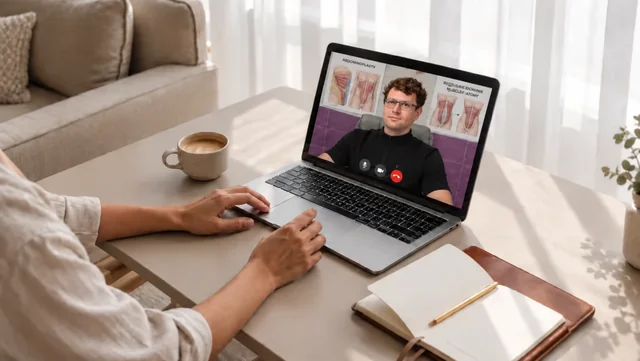
A surgeon on a video call with a patient after surgery

We stay with you after surgery

The surgeon follows your recovery and the changing abdominal contour at check-ups after 7 days, 3 and 6 months. Check-ups, dressings and aftercare advice are already included in the price of surgery.
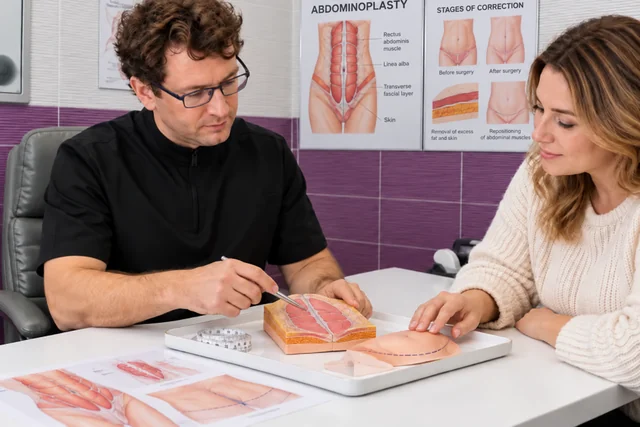
A surgeon shows a patient a model and tummy tuck diagrams

A beautiful contour that fits your figure

We choose the correction technique based on your skin, muscles and figure. Our aim is a harmonious abdominal contour that keeps the natural proportions of your body.

A patient writes down a convenient visit time in her planner

Your schedule is our priority

We respect your time: we work 24/7, with easy booking and a personal approach — we adapt to your pace.
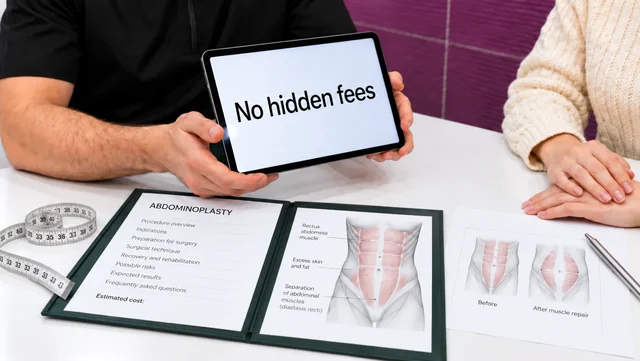
A surgeon shows a patient the fixed price of surgery with no extra charges

Fixed prices

After the consultation the surgeon defines the extent of correction, and you get a clear price for the surgery — no surprises on the way to the result you want.

A surgeon visits a patient in the hospital ward after surgery

Round-the-clock care after surgery

Recovery starts in a comfortable hospital ward under round-the-clock nursing care. The stay and meals are already included in the price.

FAQ

We answer what
people ask before booking

What Leicester residents ask about a tummy tuck

Abdominoplasty is often combined with other procedures. Liposuction of the flanks and waist can be added to shape the silhouette, and after childbirth rectus diastasis repair is included. One anaesthesia and one recovery period cover everything, and the surgeon decides the scope at an in-person consultation. This makes the operation a complete abdominal correction for patients from Leicester.

Preparation is straightforward. Two weeks before surgery, medicines affecting blood clotting are stopped; a week before, alcohol and smoking are ruled out for faster healing; the last meal is eight hours before. On the day, you meet the surgeon, the skin is marked and compression garments are fitted. The operation takes 2–4 hours under general anaesthesia. This is the plan for everyone in Leicester.

The price of a tummy tuck is set individually after a free consultation, because it depends on the technique and the scope of surgery. For patients from Leicester, the figure is then fixed in the contract with no hidden extra charges. The clinic works under an official contract with a guarantee. Leave your name and phone number, and a coordinator will contact you to book the consultation.

Stories of well-known people

Well-known people who spoke openly about this operation, in their own words.

All stories about this operation →

Where the strain falls while the abdominal wall heals

A tummy tuck changes more than the skin. When the abdominal muscles have separated, the doctor brings them together in the same operation, so for the first weeks the whole front of your body is a repair site. The medical timeline is clear. You stay in hospital for 1–3 days under supervision, drains are usually removed after two days, and stitches come out after 7 days. Office work is realistic after 2–3 weeks. Heavy lifting, sudden movements and physical exertion are off the list for the first 2–3 weeks, and sport, sauna and heavy lifting stay off for 2–3 months. Everything below is about fitting those limits to an ordinary week in Leicester.

Think of the movements your day is built from. Bending forward to a low cupboard, twisting to reach the back seat of a car, pushing a heavy door, picking up a bag of shopping and getting out of a soft sofa all load the middle of the body. For the first days, sleeping on your back with the knees bent is advised, and the same logic applies when you get up. Roll to the side, use your arms, and avoid sitting up straight from lying flat. This is not fussiness. The tissues are being held together by stitches and by a compression binder, and every sharp pull works against that.

Work is the second big question. Leicester is a university city, with the University of Leicester and De Montfort University among its large employers and student communities, and plenty of people there work at desks, in lecture rooms or in administration. For those jobs the stated return of 2–3 weeks is a sensible planning figure. Jobs that involve carrying, stacking, pushing trolleys or long stretches on your feet are a different matter. The doctor will ask about your daily duties at the online consultation, and it is better to describe them in detail than to say "office job" and leave out that you move boxes twice a week. If your role includes lifting, ask your employer in advance about lighter duties and plan to stay off the heavy tasks until the doctor confirms you can resume them. The 2–3 week figure applies to office work and should not be stretched to cover everything.

A practical point on the first fortnight is to prepare the house before you go into hospital, not after you return. Move what you use daily to waist-to-shoulder height. Put the kettle, plates, medication and phone charger where you can reach them without bending. Fill the freezer with meals that need only reheating. Set up a place to sleep where you can lie on your back with the knees supported. None of this is complicated, but it removes dozens of small decisions at the moment when you will least want to make them.

Finally, remember that being able to do something is not the same as being cleared to do it. About 30 days after surgery most of the swelling has gone, you feel much more like yourself, and the temptation to carry a laundry basket grows. The restriction on heavy lifting does not end with the swelling. It runs on for 2–3 months, and the doctor gives the final permission at the check-ups, not the mirror.

Home, children and the people who share your kitchen

Many patients considering this operation have had children, because stretched skin after pregnancy and diastasis of the abdominal muscles are among the main reasons for it. That means the recovery happens in a household with demands of its own. The honest advice is to arrange help before the operation, because the early weeks are not the time to test how much you can manage alone. Lifting a small child from a cot, a car seat or a bath is exactly the kind of heavy lifting and sudden movement the first 2–3 weeks rule out, and the longer restriction on heavy lifting covers a toddler on your hip as well.

Talk to your spouse, parents or friends in specific terms rather than a vague "I'll need some help". Who does the school run, who does the bath routine, who handles the laundry basket, and who lifts the child into the buggy? Written down, the list is usually shorter than people fear, and it can be handed over in tasks rather than in days. A child can still sit beside you, be read to, watch a film with you and be hugged gently, with a cushion held over the abdomen. It is picking up and carrying that has to be redistributed. Explaining it to older children in plain words, that the tummy is healing and needs rest for a while, tends to work better than avoiding the subject.

Leicester is a city of many households and communities, and the diversity visible in its calendar, from the Caribbean Carnival and parade, said to be the largest in the UK outside London, to the Diwali celebrations centred on Belgrave Road, which are described as the largest outside India, shows how much family life can revolve around large gatherings. If your family takes part in festivals, weddings or big meals, think early about what role you will have afterwards. Cooking for a crowd, standing for hours, carrying trays and lifting pots are not tasks for the first weeks. It is entirely reasonable to be present, seated and enjoying the event while others do the heavy work. Plan the surgery date with these occasions in mind so you are not choosing between your recovery and an event that matters to you.

Pregnancy planning deserves a word too. A pregnancy after a tummy tuck is possible, but it stretches the repaired muscles, so the operation is best planned once your family is complete. If you are not sure whether you want another child, say so frankly at the online consultation. The doctor can explain how this affects timing, and it is a better conversation to have before the operation than after.

There is also the question of what happens on a day that goes badly. You might wake with more tightness than expected, feel tired, or notice that you have done too much. A household that knows the plan can respond calmly. Keep the coordinator's WhatsApp or Telegram contact where everyone can see it, since coordinators answer round the clock, and agree beforehand that photos of the abdomen can be sent for the doctor to review remotely. The programme includes remote progress monitoring by photos and a personal coordinator on call, so a worry at night does not need to wait for a working day.

Pets are the last household item that gets forgotten. A large dog pulling on a lead is a sudden movement in a very literal sense. Arrange someone else to walk it for the first weeks, or use short, slow lead walks only once the doctor says gentle walking is fine.

The compression binder, the scar and the sun of the East Midlands

Compression is the quiet workhorse of this recovery. The binder is worn for 1.5–2 months, and it supports the abdominal wall and helps shape a smooth contour. The garments are fitted on the day of surgery as part of the programme, so you do not need to shop for one in advance. The practical question is how to live in it. Choose loose, soft clothing for the first weeks, with high-waisted, stretchy bottoms that do not press on the incision and tops that can be pulled over the binder easily. Leicester's seasons matter here, because a snug garment under winter layers is a different experience from the same garment under summer clothing, which brings us to temperature.

Leicester has a maritime climate with rain spread through the year and low sunshine. At Newtown Linford, about 5 miles north-west of the centre, the warmest month, July, averages a maximum of 21.6 °C and a minimum of 10.8 °C, while January averages 6.7 °C and 0.5 °C. A typical year is therefore mild, with only about 11.3 days reaching 25.1 °C or more. For someone wearing a binder this is useful. You are unlikely to be sweating under it for weeks on end, though the record highs, 34.5 °C at Newtown Linford in August 1990 and 35.1 °C at Leicester University in August 2003, show that occasional hot spells do occur. If one coincides with your recovery, wear breathable cotton under the binder, keep the skin dry and ask the coordinator about care for any irritation.

The scar needs honest handling. A classic tummy tuck leaves an incision across the lower abdomen from hip to hip, below the underwear or swimsuit line, and a mini tummy tuck leaves a much shorter one. The scar fades and thins over time, and by 12 months it is fully mature, barely noticeable. During those months it is a young scar. The service rules ask you to avoid sauna, steam bath, pool, tanning beds, alcohol and smoking for at least a month, and tanning beds in particular are not an option while the tissues are healing. Beyond that, sun protection for the scar is a sensible habit. Low sunshine is not the same as no ultraviolet light, and a bright day in April or a hot August afternoon will reach healing skin. Keep the area covered with clothing outdoors during the first months and ask the doctor at the check-ups what to use on the scar and from when.

Because Leicester's weather is changeable, the scar is more likely to be exposed by a holiday than by a normal week. If you have a beach or pool holiday already planned for the year after surgery, mention it at the online consultation. The scar will still be maturing, and it is far easier to protect it with a plan than to correct a darkened line afterwards.

The final shape takes time. The first changes appear about 2 weeks after surgery as the main swelling subsides. An interim result is visible at 1.5–2 months, and the final contour is assessed at 6–12 months. Photographs taken at the same angle and in the same light at each stage, sent through the messenger, give the doctor a clear record. They also give you a more accurate memory of the process than you will have from daily mirror checks.

Choosing the month: rain, mild highs and a crowded events calendar

There is no single right month for this operation, and the climate figures help you weigh the trade-offs rather than dictate the answer. Leicester's annual precipitation is 684.4 mm over 120.8 days in the 1971–2000 normals. December is the wettest month at 68.8 mm over 11.7 days, and January is close behind at 61.7 mm. July is the driest at 46.1 mm over 7.8 days. Rain matters to recovery in small ways. A wet day makes a short outdoor walk harder to take, wet pavements add a slip risk when you are moving carefully, and an umbrella in one hand and a bag in the other is not the best combination in the first weeks. Even so, the whole point of a walk in the early weeks is that it is short, so a rainy spell is no reason to postpone.

A winter operation has real advantages. Loose layers hide the binder, there is less pressure to be seen in fitted summer clothes, and the cold keeps you at home with a good excuse to rest. The cost is shorter daylight and a higher chance of colds. Coughing and sneezing are unpleasant when the abdominal muscles have just been repaired, so keep up your usual precautions and tell the coordinator early if you have a cold before the planned date, because an infection can change the plan. Acute infections are among the listed reasons a tummy tuck is not suitable at a given moment.

A summer operation has other trade-offs. The July mean maximum of 21.6 °C is comfortable for the binder, but longer days and events tempt you outside. Summer holidays and school breaks may make childcare easier, and your spouse or relatives may have more free time to help. On the other hand, sun on a fresh scar needs more care, and a summer plan has to leave out pools, tanning beds and sauna for the periods the rules specify.

The local calendar is worth reading before you choose. Leicester hosts the Caribbean Carnival and parade, Diwali celebrations on Belgrave Road, the Leicester Comedy Festival, Leicester Pride and, usually in early November, the Leicester International Short Film Festival. Sport also fills the year, with Leicester City FC, Leicester Tigers, Leicester Riders and Leicestershire County Cricket Club. These events are good reasons for choosing a date, because a crowded procession or a stadium crush is a poor place for someone in the first weeks with a healing abdomen. Seats and calm are fine, but jostling and long standing are not. If a particular festival matters to you, either schedule the operation well before it so you can enjoy it comfortably, or choose a date that leaves a full recovery buffer. If you cycle, remember that National Cycle Network Route 6 passes through Leicestershire and there is a bike park in Town Hall Square. Cycling counts as sport, so it belongs to the period when the doctor has not yet cleared exertion, and the 2–3 month restriction is the reference.

Finally, the bank holiday calendar. England and Wales have 8 bank holidays in 2026, and the two at the end of the year are Christmas Day on 25 December and the substitute Boxing Day on 28 December. A date near Christmas can suit people who want to use leave days efficiently, but check how hospital staffing, routine tests and check-up timing fall around the holiday. Pre-operative tests are usually valid for 10–14 days, so a delay caused by a holiday can mean repeating them. The coordinators work 24/7, which helps with questions, but the rest of the schedule has to be planned with care.

Waiting lists, private care and what the online consultation settles

A frequent first question from people in England is whether the NHS will do this. The NHS states that cosmetic surgery is not routinely provided and that it might pay for some procedures for psychological or other health reasons. Its examples are rhinoplasty for breathing problems and breast enlargement for very uneven or absent breasts causing significant psychological distress. It also says most people who want cosmetic surgery need to pay privately. A tummy tuck for loose skin after pregnancy or weight loss is not named among those examples, so realistic planning assumes a private route, and your GP is the right person to ask about your individual circumstances.

The wider NHS picture also explains why many people look for scheduled private care. NHS England's press notice of 10 September 2026 reports 7.3 million waiting pathways at the end of July 2026, covering around 6.2 million unique patients, with 111,379 waiting more than 52 weeks. Those figures describe the overall system and say nothing about any individual case, but they show why many people prefer a private option with a fixed date to an open-ended queue.

Weight is the other recurring theme. The NHS Health Survey for England 2022 reported that 29% of adults were living with obesity and 64% were overweight or living with obesity, with regional differences. The point for you is that a tummy tuck is not a weight-loss method. The goal is to remove excess stretched skin and the fat apron and to restore the abdominal wall. The operation is done at a stable weight, and if your weight is still changing, the sensible first step is a dietitian or endocrinologist. If you have lost weight through lifestyle changes or through weight-loss surgery, which the NHS says may be offered at BMI 40 or more, or 35–40 with a condition that might improve with weight loss, the timing of a tummy tuck needs to wait until your weight has settled. The doctor will ask about your weight history and about any plans to lose more.

This is what the free online consultation is for. You send photos by WhatsApp or Telegram, the doctor assesses them, and you receive an assessment of whether the operation suits you, which technique is likely, and the price, fixed in the contract before anything is booked. The techniques compared are the full (classic) tummy tuck, the mini version and lipoabdominoplasty, which adds liposuction of the flanks and waist. The consultation is free and carries no obligation, and if your case can be solved without surgery, the doctor will say so.

You will also discuss health conditions. The listed reasons a tummy tuck is not suitable include acute infections, severe disease of the heart, kidneys or liver, problems with blood clotting, decompensated diabetes, cancer, skin inflammation in the surgical area, pregnancy and nursing, and being under 18. Arthritis and joint problems, which the NHS and Arthritis UK describe as widespread in the UK, are not on that list, but they affect recovery in practical ways. If you have painful hips, knees or hands, getting out of bed and using your arms to push up will be harder, and you should say so during the consultation so the plan covers it.

The preparation list is concrete: blood and urine tests, coagulation panel, biochemistry, infection tests, ECG, chest X-ray, leg vein ultrasound and a GP's report, with the exact list given by the doctor. Smoking, alcohol and medicines affecting blood clotting are stopped 7–10 days before surgery. It is much easier to do these in your own city in advance than in a rush the day before.

Will the NHS pay for a tummy tuck if I live in Leicester?

The NHS says that cosmetic surgery is not routinely provided and that it might fund some procedures for psychological or other health reasons, giving rhinoplasty for breathing problems and breast enlargement for very uneven or absent breasts as examples. A tummy tuck is not listed among them, and most people who want cosmetic surgery need to pay privately. If you think your situation has a medical dimension, discuss it with your GP. For planning at the free online consultation, assume a private route and ask the coordinator any questions about how the plan and price are fixed in the contract.

Is it better to plan recovery for a Leicester summer or winter?

Both can work, and the choice depends on your life. In the 1971–2000 normals, July averages a maximum of 21.6 °C and January 6.7 °C, and the year has only about 11.3 days reaching 25.1 °C or more. A compression binder is worn for 1.5–2 months, so the mild summer is comfortable under clothing, but the scar needs care in sunlight and pools and tanning beds are excluded. Winter hides the binder under layers and keeps you at home, but colds are more likely, and coughing is uncomfortable in the first weeks. Tell the coordinator about any infection before the date, because an acute infection is a reason to postpone.

How should I plan around Christmas and the bank holidays?

England and Wales have 8 bank holidays in 2026, including Christmas Day on 25 December and the substitute Boxing Day on 28 December. Pre-surgery tests are usually valid for 10–14 days, so a holiday gap between the tests and the date can mean repeating them. Coordinators answer round the clock, but laboratories, GP surgeries and other services may have different hours around those days. Agree the sequence of tests, date and help at home in advance. Remember that heavy lifting and exertion are excluded for the first 2–3 weeks, so a festive meal for a large family is not the moment to take the main role.

How do I manage children and housework in the first weeks?

In the first 2–3 weeks physical exertion, heavy lifting and sudden movements are not allowed, and heavy lifting stays restricted for 2–3 months. Lifting a child from a cot or onto your hip counts. Arrange for your spouse, relatives or friends to take over lifting, bath time, the school run, laundry baskets and the dog's lead. You can still sit beside a child, read, and cuddle with a cushion over the abdomen. Prepare the house beforehand so that daily items are at waist-to-shoulder height and meals need only reheating.

Does Leicester's cloudy weather mean I can relax about sun protection for the scar?

No. The climate is maritime with low sunshine, but a bright day still reaches healing skin, and a hot spell is possible, with records of 34.5 °C at Newtown Linford in August 1990 and 35.1 °C at Leicester University in August 2003. A classic tummy tuck leaves a hip-to-hip scar below the underwear or swimsuit line, which becomes fully mature at 12 months. During that period keep the area covered outdoors, avoid tanning beds, and ask the doctor at the check-ups what to apply and from when. If you have a sunny holiday planned in the year after surgery, mention it at the consultation.

When can I return to cycling, running or a match day in Leicester?

Office work can resume after 2–3 weeks, but sport, sauna and heavy lifting remain off-limits for 2–3 months. Sport then restarts gradually and only with the doctor's approval at the check-ups. Cycling on a route such as National Cycle Network Route 6 belongs to sport, and crowds at a stadium or a carnival involve jostling and long standing, so choose seats and calm in the early period. If a specific event matters to you, plan the date of surgery to leave a full recovery buffer before it.

Does my weight matter for planning a tummy tuck in the UK?

Yes. A tummy tuck is not a way to lose weight. It removes excess stretched skin and the fat apron and restores the abdominal wall, and it is done at a stable weight. The NHS Health Survey for England 2022 reported 29% of adults living with obesity, so weight is a common topic. If your weight is still changing, see a dietitian or endocrinologist first. If you have had weight-loss surgery, which the NHS says may be offered at BMI 40 or more or at 35–40 with a related condition, the doctor will want your weight to settle before planning a tummy tuck.

How do check-ups work when I recover at home in Leicester?

Check-ups are scheduled at 7 days, 3 months and 6 months, and the programme includes remote progress monitoring by photos and a personal coordinator on call. You send photos in WhatsApp or Telegram, the doctor reviews them, and the coordinator replies round the clock. Take them at the same angle and in the same light each time. Dressings and aftercare advice are included in the price, and the fitted compression garment is worn for 1.5–2 months. If something worries you between check-ups, message the coordinator rather than waiting.