City Medical Centre · multi-specialty surgery clinicOpen 24/7

Tumescent and VASER Liposuction in Szczecin

Free consultation

from $1,200

The price is fixed in the contract before surgery

Message us on WhatsApp

Free online consultation · Reply within 15 minutes
Real case
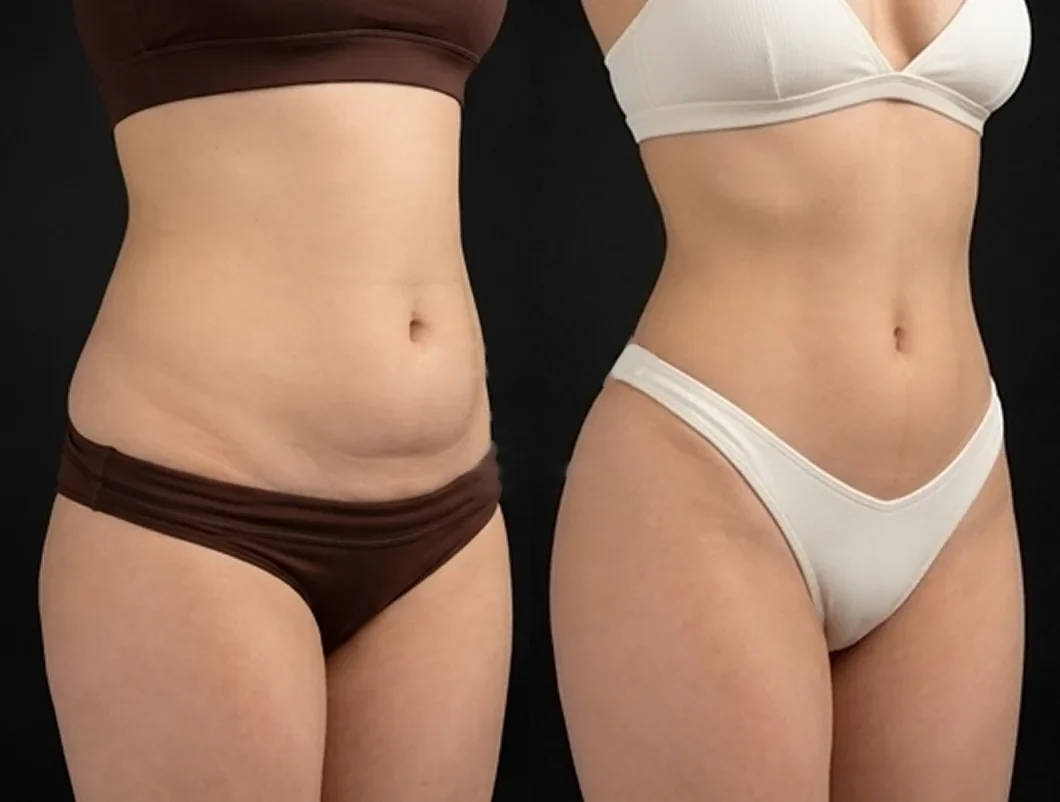
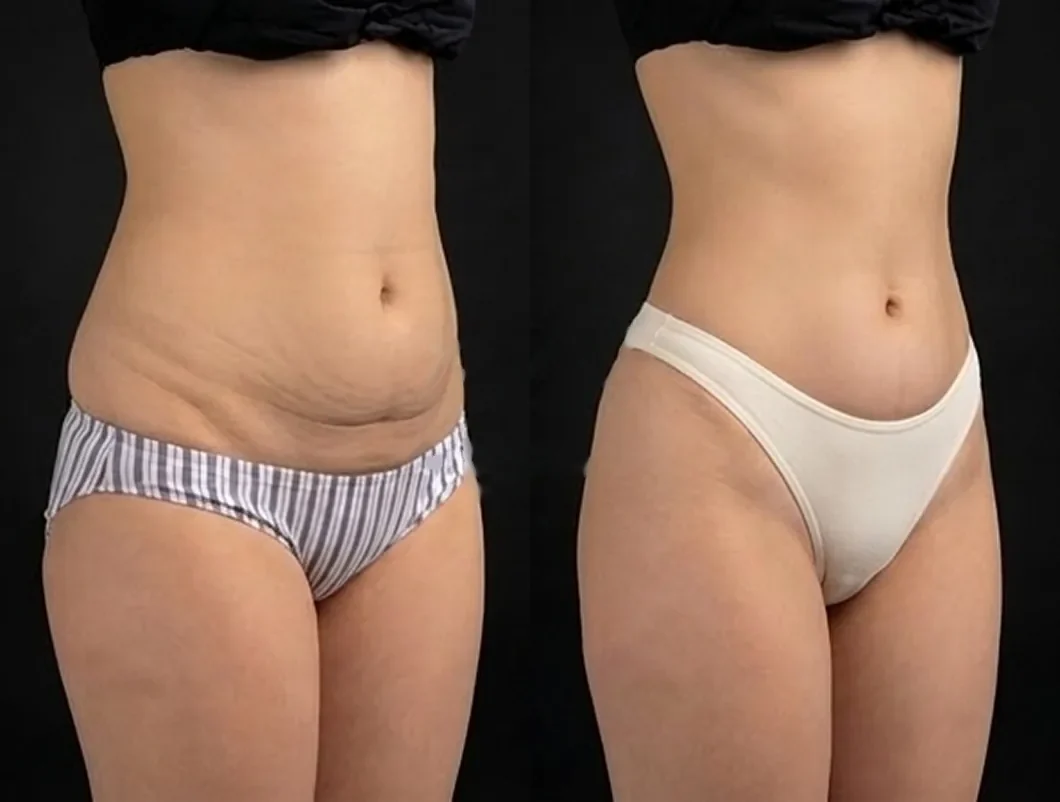
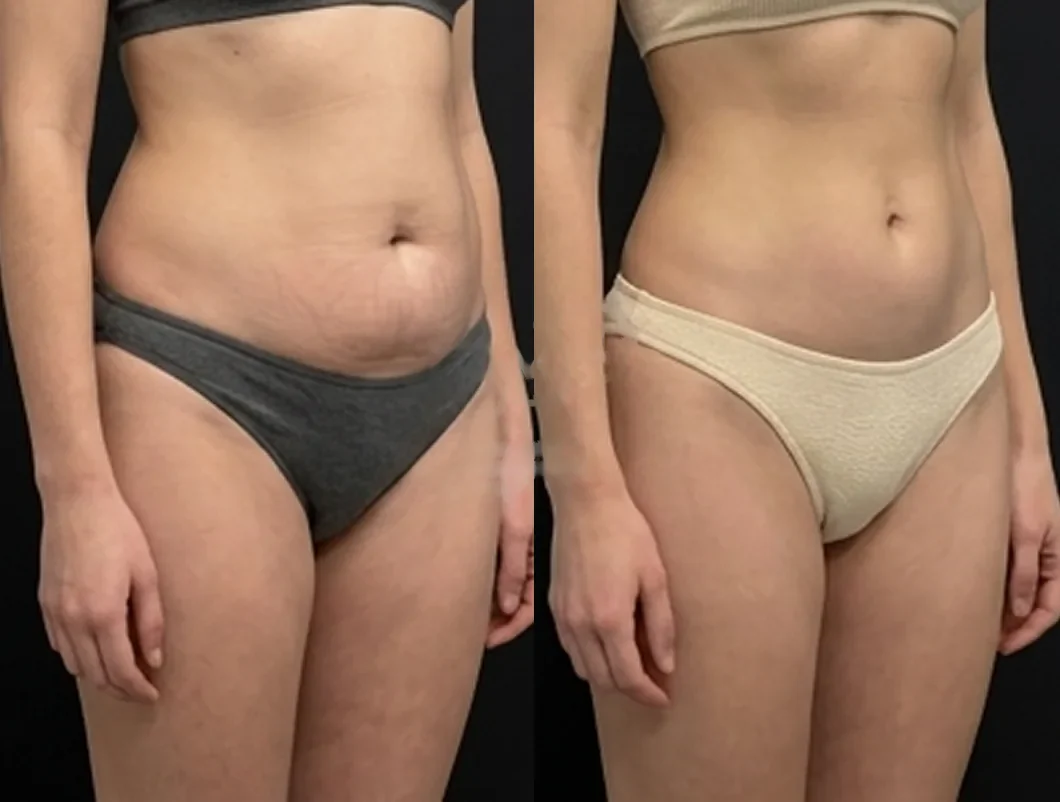
Liposuction: a patient's abdomen and flanks before and after surgery before after
Stubborn local fat that diet and exercise don't shift. Your plan is set at the consultation

Message our coordinator

Free online consultation · Reply within 15 minutes

Message us on Telegram

By messaging us, you agree to our Privacy Policy

Liposuction and fat removal in Szczecin: price and key facts

Liposuction for patients from Szczecin at City Medical Centre starts at PLN 4,700 (from $1,200). The first online consultation is free; the doctor names the final price and it is fixed in the contract.

Price
PLN 4,700 (from $1,200)
Duration
1–4 hours
Anesthesia
local or general
Stay
home the same day (local anesthesia) or after 1 day (general anesthesia)
Recovery
back to work after 7–10 days
Final result
3–6 months after surgery
How it works
Send photos on WhatsApp or Telegram, get a free doctor assessment and the price, then confirm the plan and dates before anything is booked.

How it works · Liposuction prices

Information current as of 24 October 2026

Free online consultation on WhatsApp and Telegram

Results

Liposuction and fat removal results
of our patients

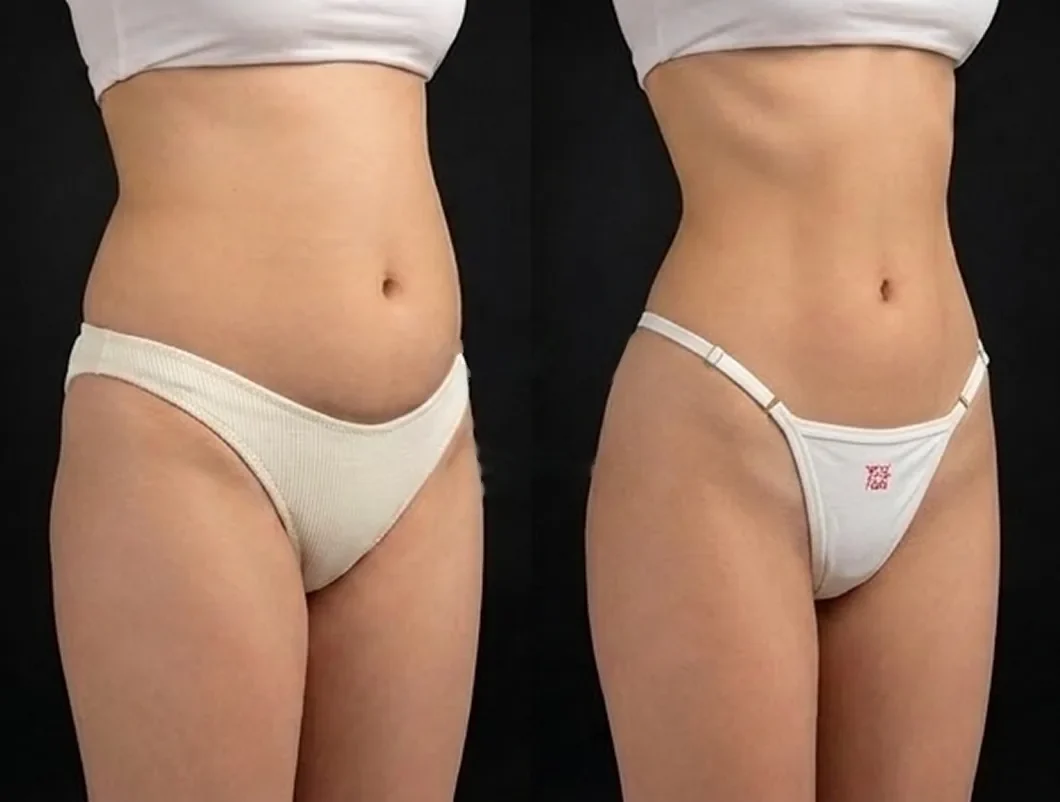
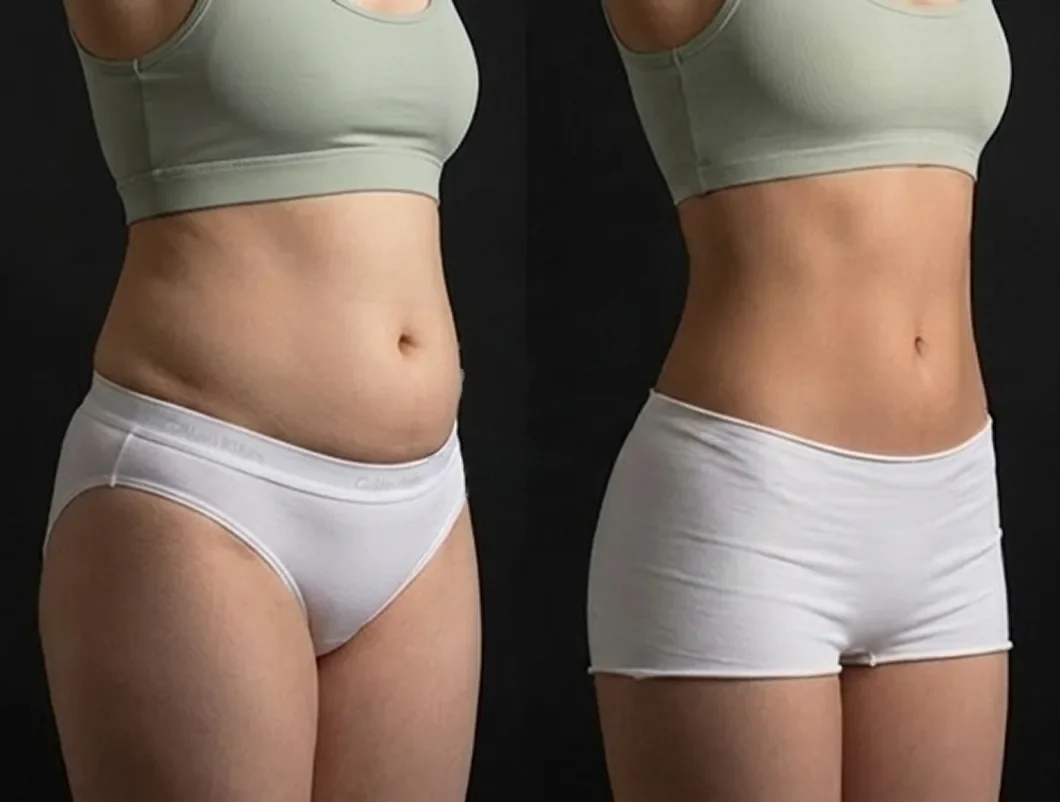
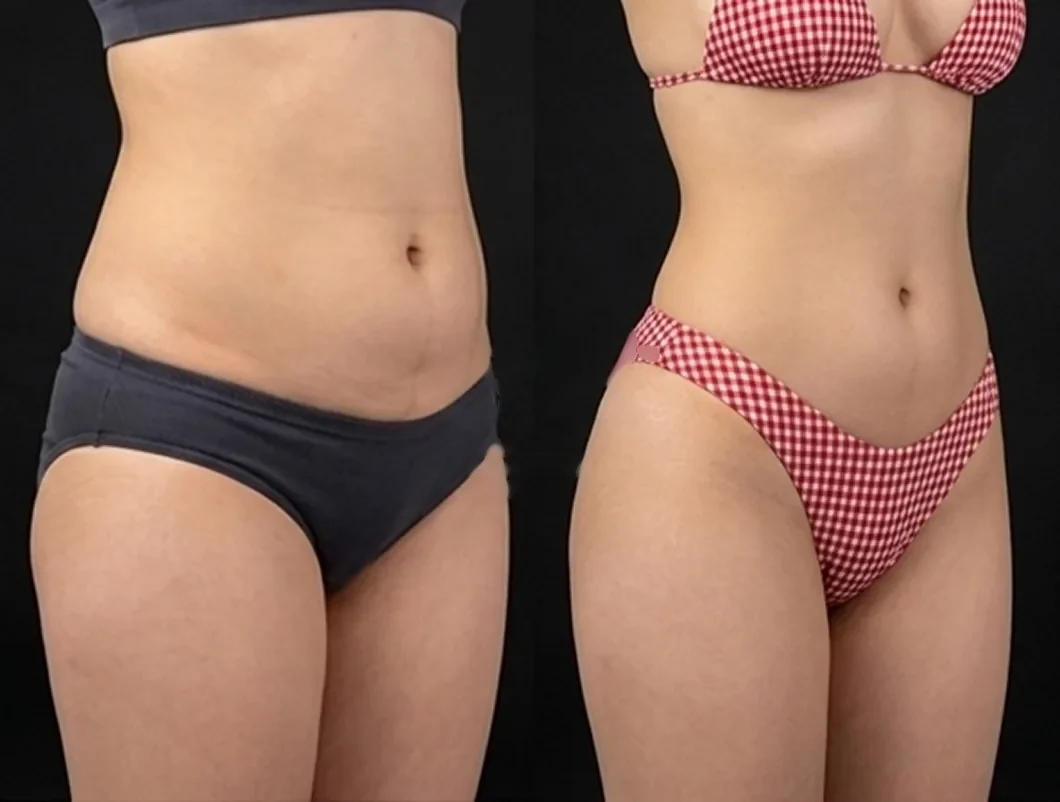
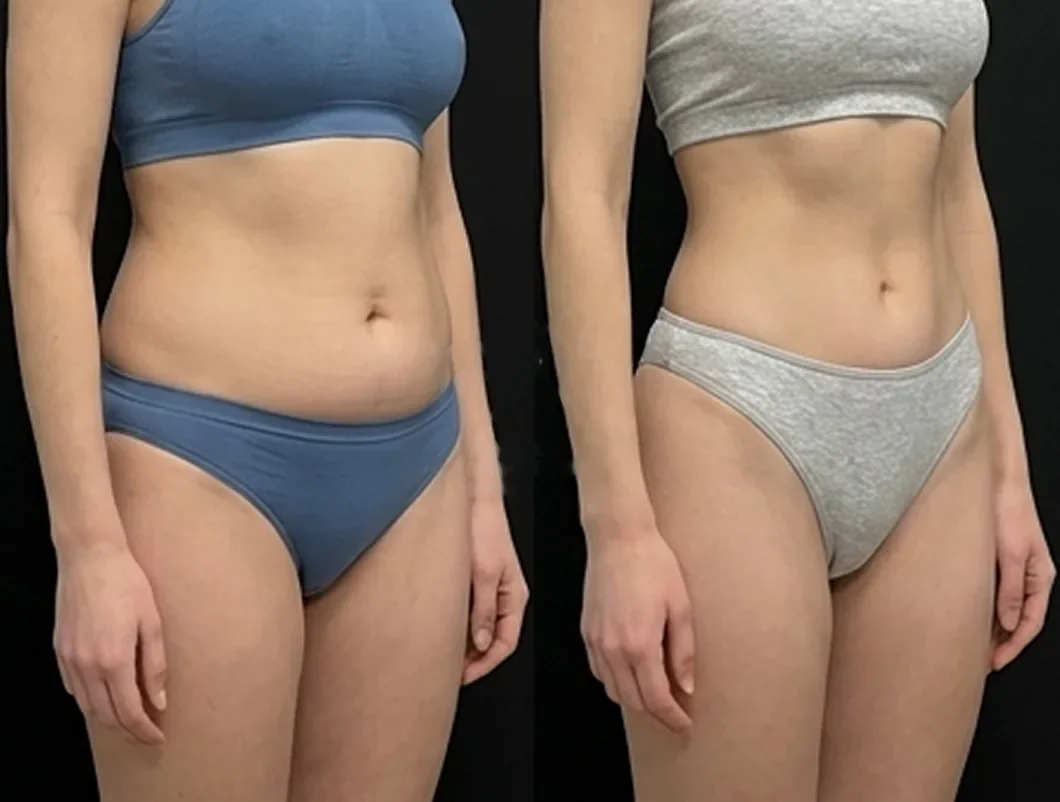
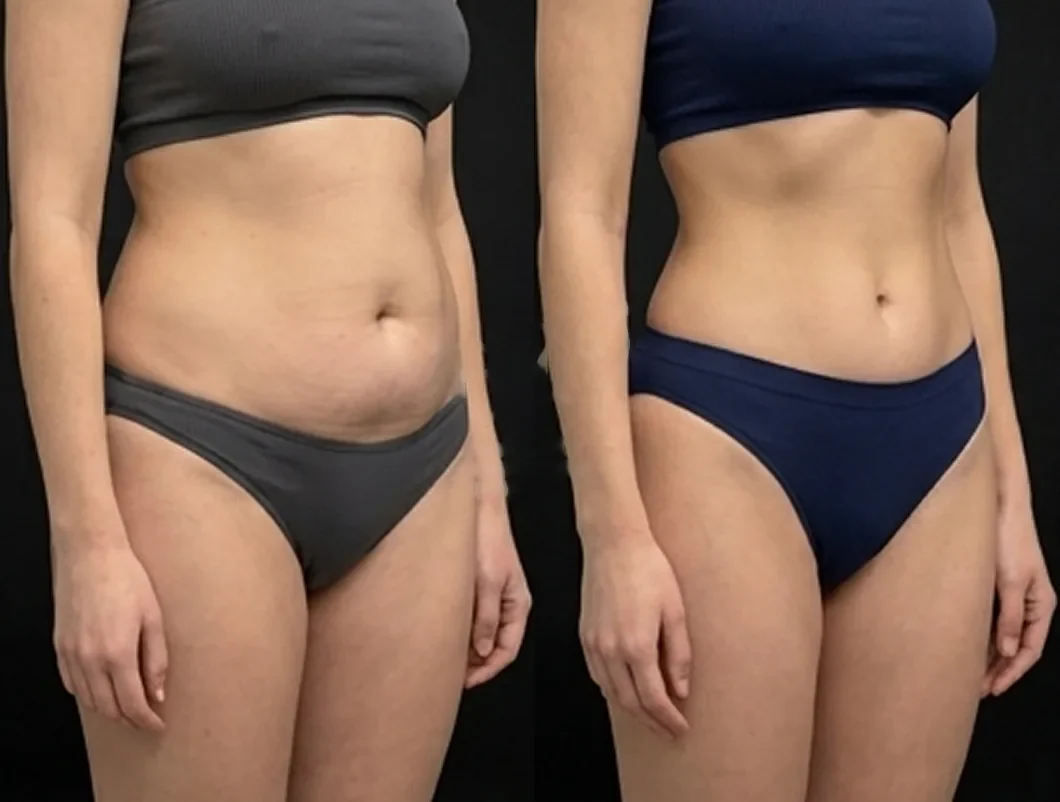
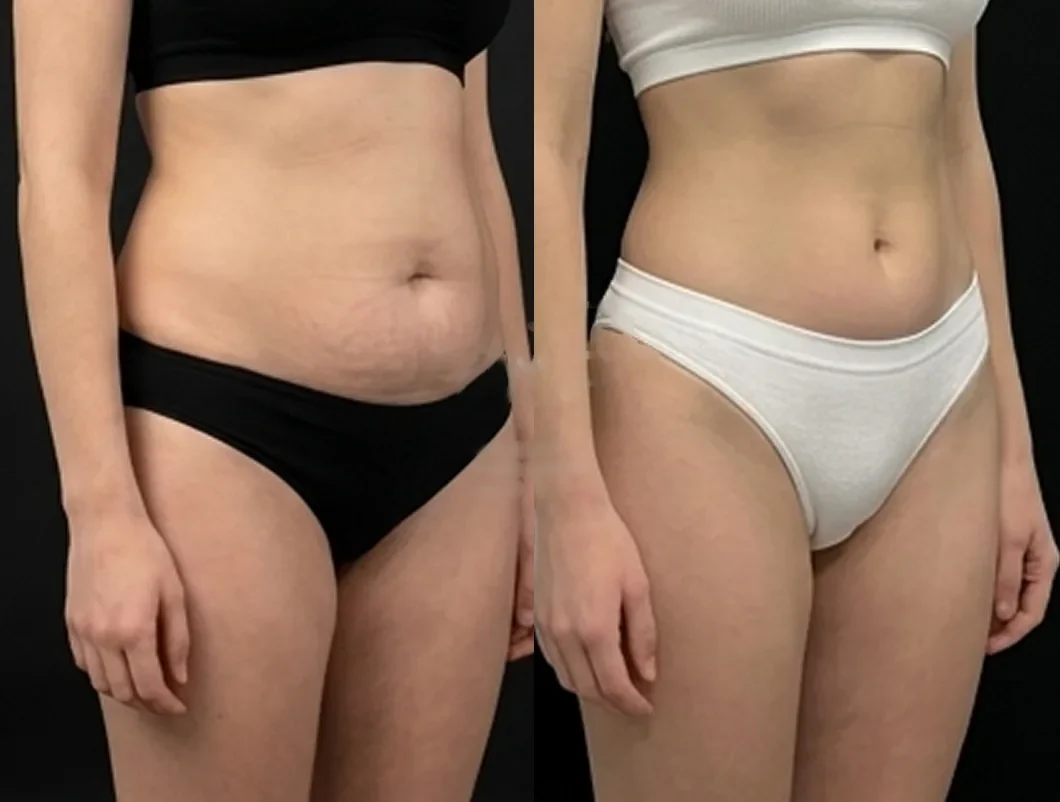
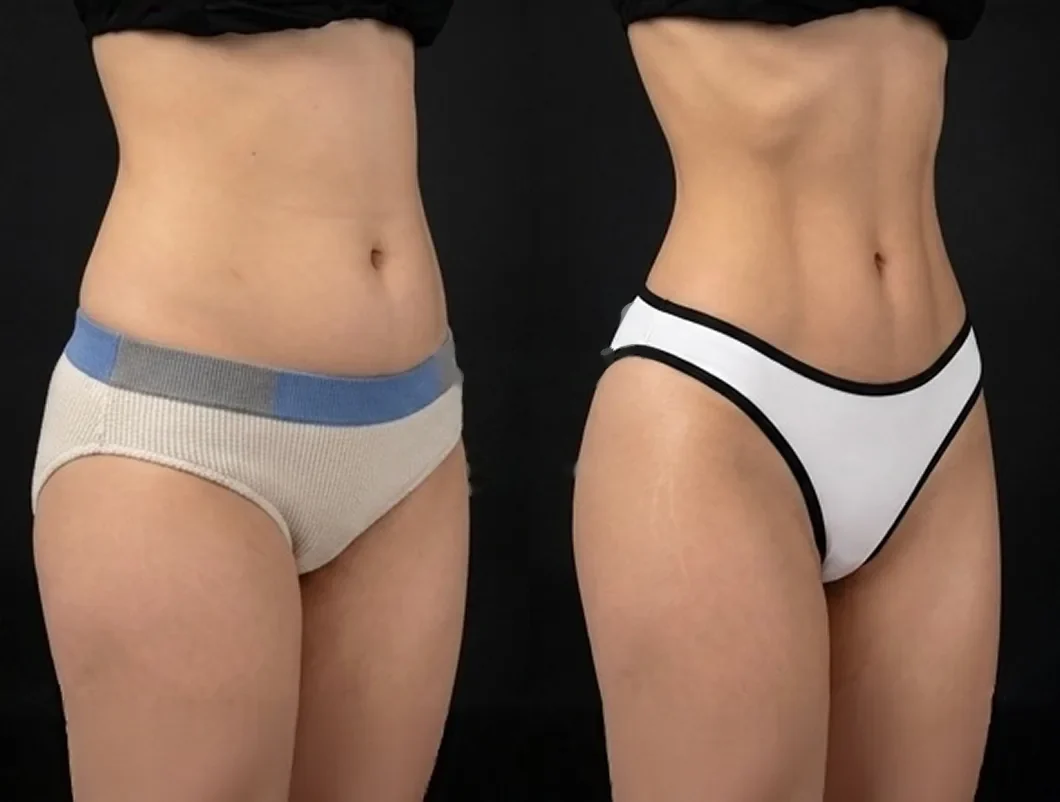
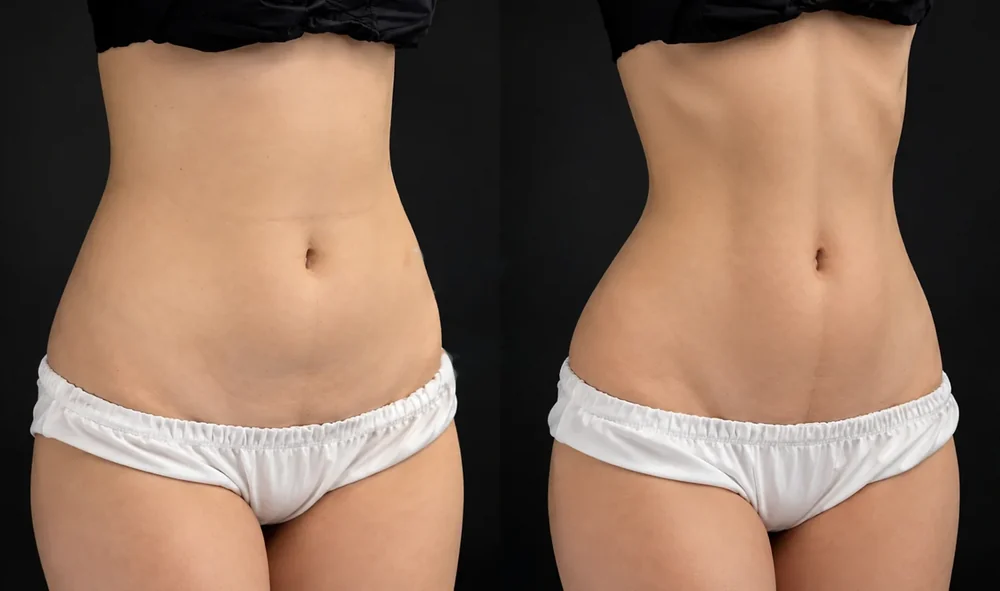
All cases are real patients. Faces and identifying details are hidden.

Belly and flanks

Liposuction of the abdomen and waist: before and after surgerybeforeafter
1 of 10

Comparison

Liposuction techniques

We use two liposuction techniques: tumescent (classic) and VASER (ultrasound). Compare the goal, the indications and the anaesthesia to choose the right technique together with your surgeon.

Tumescent liposuction

A special solution loosens fat for removal through a thin cannula
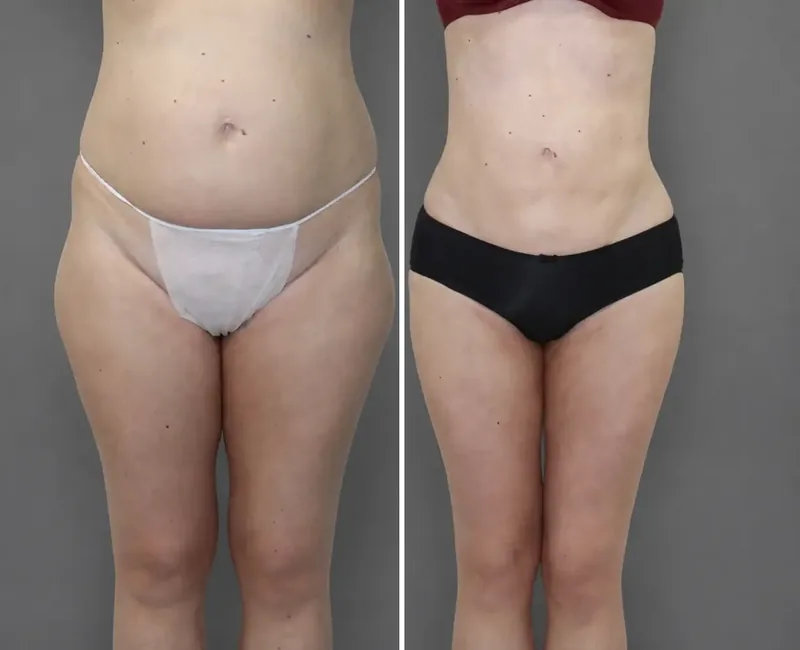
Tumescent liposuction: abdomen and thighs before and after surgery

from $1,200

Main goal
Removal of local fat with minimal blood loss
When it is done
Abdomen, flanks, thighs, back, arms, chin
Anaesthesia and stay
Local or general anaesthesia, home the same day or after 1 day

VASER liposuction

Ultrasound breaks down fat cells before vacuum removal
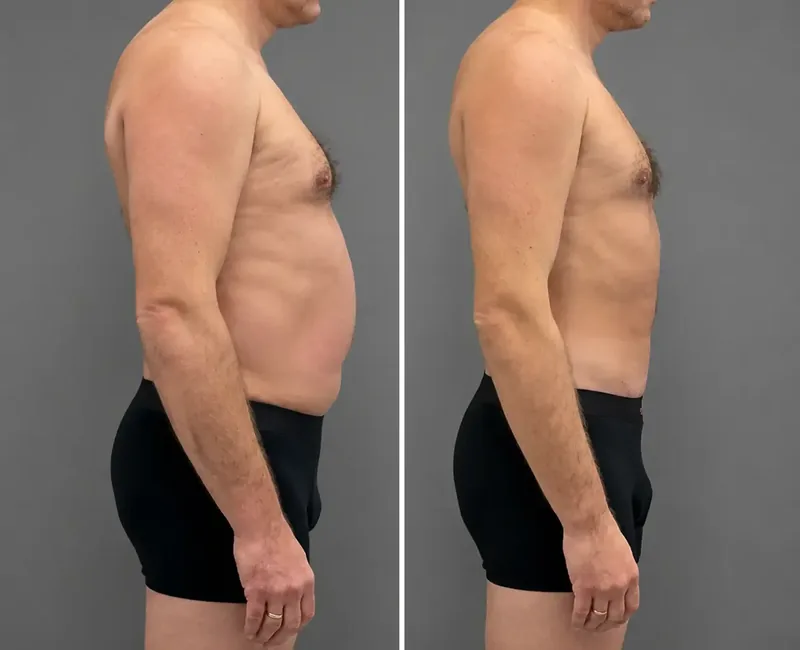
VASER liposuction: a male patient before and after surgery

Price at consultation

Main goal
Defined muscle relief and body contouring
When it is done
Athletic abs and delicate areas
Anaesthesia and stay
Local or general anaesthesia, 1–4 hours of surgery

The benefits and recovery times shown are averaged for each technique and given for guidance: the scope of correction and rehabilitation depend on your anatomy and individual features, and the surgeon confirms them at the consultation.

At the consultation the surgeon draws up a plan for your case and explains how your liposuction will go.

Free, before surgery and with no obligation.

Book a consultation

Areas we treat

Combine several areas in one operation to save recovery time and budget

  • Belly and flanks

    The most requested area for women and men, often combined with abdominoplasty

  • Thighs (outer and inner)

    Fat “traps” that resist exercise

  • Back and lower back

    Rolls on the back that affect the silhouette

  • Arms and shoulder area

    A cosmetic issue seen in warm weather

  • Chin and neck

    Small area, fast visible result

  • Knees

    A delicate spot that requires precision

  • Chest (for men)

    The fat component of gynecomastia and pseudogynecomastia

About the clinic

A clinic where you can feel at ease

Modern equipment, comfortable rooms and care for every patient

A doctor and a patient in a clinic ward

Contact us the way that suits you

We will answer your questions and find a convenient time for a consultation

By messaging us, you agree to our Privacy Policy

Request a free call

Liposuction is not for everyone

If your case can be solved without surgery, the doctor will tell you so at the consultation — and you will not spend money for nothing.

Suitable

A surgeon shows a patient on a model and a monitor how the body contour changes after liposuction
  • Local fat that resists diet and exercise
  • Uneven subcutaneous fat
  • Disrupted body proportions
  • Silhouette changes after childbirth or weight loss
  • Fat component of gynecomastia in men
  • Good skin tone and elasticity

Not suitable

A surgeon discusses the indications and contraindications for liposuction with a patient
  • Patients under 18
  • Pregnancy or breastfeeding
  • Endocrine obesity
  • Decompensated diabetes
  • Conditions affecting blood clotting
  • Serious heart, kidney or liver disease, cancer

Not sure the surgery is right for you?

Leave your number — the coordinator will call you back, and the surgeon will tell you whether liposuction suits you. No surgery booking needed.

Find out if it suits me

A surgeon goes through the treatment areas with a patient at the consultation

Prices

You know the price
before surgery

The final price is calculated individually after an examination and fixed in the contract.

Liposuction prices

  • First consultationFree
  • Flanks / waist liposuctionfrom $1,400
  • Thigh liposuction (outer)from $1,200
  • Thigh liposuction (inner)from $1,200
  • Liposuction of the torso — front abdominal wall, abdominal sides, lower backfrom $3,600
Book a consultation

Find out your liposuction plan and price

The surgeon assesses the fat deposits and skin tone, listens to your wishes and chooses the right technique.
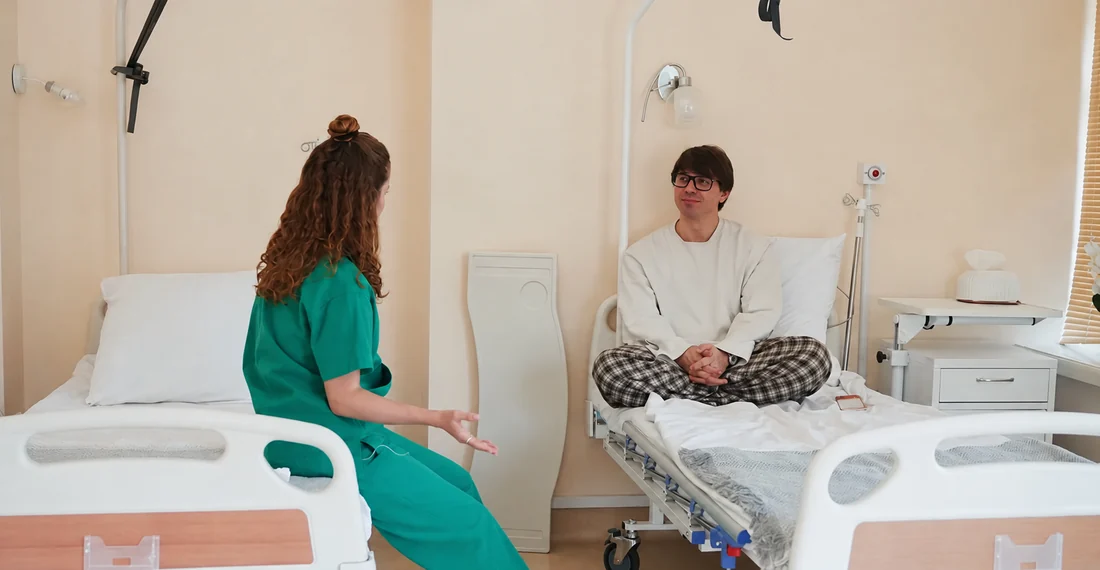
A nurse talks to a patient in a clinic ward

Message our coordinator

Free online consultation · Reply within 15 minutes

Message us on Telegram

By messaging us, you agree to our Privacy Policy
A patient before liposuction in the operating room

all inclusive

What the price includes

From preparation for surgery
to post-op check-ups.

  • All scheduled dressings
  • Scheduled post-op check-ups
  • A personal coordinator on call
  • Compression garments fitted on the day of surgery
  • A stay in a comfortable
    hospital ward with meals
  • Individual recommendations
    for recovery
  • Remote progress monitoring
    by photos

from $1,200

Book a consultation

How it works

From consultation —
to your new contour

An agreed treatment plan, careful monitoring after surgery and post-op check-ups.

A surgeon goes through the liposuction plan with a patient on a monitor1

Consultation
and the surgical plan

The surgeon listens to your wishes, assesses the fat deposits and skin tone and rules out contraindications. A hormonal screening is also ordered — it helps predict the long-term result.

Paying the deposit by card at the clinic reception2

Booking the date
of surgery

We reserve a surgery date for you: the deposit can be paid by card at the clinic or online by bank transfer. The terms are fixed in the contract for medical services

A blood sample tube for tests before liposuction3

Check-up before
surgery

Blood tests (complete count, coagulation panel, biochemistry, infections), an ECG, a chest X-ray and, if needed, a GP consultation. All tests can be done at the clinic with no waiting.

The surgical team during the operation4

Surgery

Marking the areas and fitting compression garments. Under local or general anaesthesia the surgeon removes fat through 3–5 mm micro-punctures — from 1 hour for small areas to 3–4 hours for a combined procedure.

A hospital ward at the clinic5

Waking up
and monitoring

With local anaesthesia you go home 3–4 hours after surgery; with general anaesthesia you stay one day in a comfortable ward under medical supervision.

A surgeon and a patient in the ward during recovery6

Recovery

Compression garments for 30–45 days. First changes show at 2 weeks, once swelling subsides; the final result forms in 3–6 months. Check-ups at 7 days, 3 and 6 months.
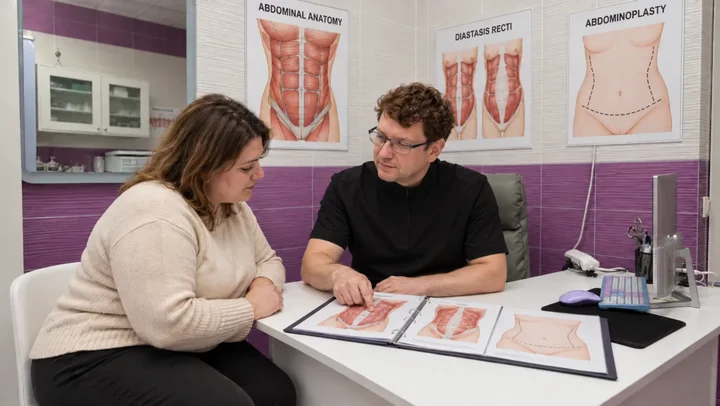
Book a free consultation — the surgeon will plan every step with you.

A doctor discusses the liposuction plan with a patient
Book a consultation
A doctor discusses the liposuction plan with a patient

The recovery period after liposuction

After tumescent liposuction, recovery is much shorter than after a conventional procedure. Most patients return to work within 7–10 days. In the first week, mild swelling and a raised temperature are possible — a normal response to surgery. Compression garments are worn for 30–45 days: they fix the new contours and speed up tissue recovery. In the first month, bathhouse, sauna, pool and intense sport are off-limits. For the best result and faster recovery we recommend lymphatic drainage massage, pressotherapy and a gradual return to activity. First visible changes show 2 weeks after surgery, when the main swelling subsides; the final result forms in 3–6 months.

Post-op check-ups

After 7 days, at 3 months and at 6 months. Until the end of the year, get a post-surgery consultation with your surgeon to review results and get more information, at the clinic's expense.

Advantages

What makes patients choose City Medical Centre

A surgeon discusses the liposuction plan with a patient at the consultation

Just find out — you lose nothing

At the consultation we discuss your wishes and assess the fat deposits and skin tone. Before surgery an endocrinologist rules out hormonal causes of the fat deposits — this improves the long-term result.

A surgeon on a video call with a patient after surgery

We stay with you after surgery

The surgeon follows your recovery and the new body contour at check-ups after 7 days, 3 and 6 months. Check-ups, dressings and aftercare advice are already included in the price of surgery.

A surgeon shows a patient a model and body contouring diagrams

A beautiful contour that fits your figure

Tumescent and VASER techniques, micro-incisions of 3–5 mm and precise volume control. Our aim is a smooth contour that keeps the natural proportions of your body.

A patient writes down a convenient visit time in her planner

Your schedule is our priority

We respect your time: we work 24/7, with easy booking and a personal approach — we adapt to your pace.

A surgeon shows a patient a tablet: no hidden fees

Fixed prices

After the consultation the surgeon defines the areas and the scope of surgery, and you get a clear price fixed in the contract — no hidden extras.

A surgeon visits a patient in the hospital ward after surgery

Round-the-clock care after surgery

With general anaesthesia recovery starts in a comfortable hospital ward under round-the-clock nursing care. The stay and meals are already included in the price.

FAQ

We answer what
people ask before booking

Liposuction in Szczecin: price and what is included

Prices are in US dollars; the amount in brackets is an approximate conversion to PLN at the rate of 02.10.2026. The final price is fixed in your contract.

How much does liposuction in Szczecin cost?

Prices start from $1,200 (≈ PLN 4,700) per area. The surgeon sets the final price at the free consultation, and it is fixed in the contract, with no hidden extras.

What is included in the price?

The operation under local or general anaesthesia and the surgeon's support throughout recovery. The price is per area and fixed in the contract.

How do I get my exact price?

Message us on WhatsApp or Telegram using the buttons below. A coordinator will answer your questions and book a free consultation where the doctor names the exact price.

By messaging us, you agree to our Privacy Policy

About liposuction for patients from Szczecin

Which zones can be treated? The abdomen and flanks are the most requested, for women and men alike. Thighs (outer and inner), back and lower back, arms and shoulders, chin and neck, knees and the male chest are also corrected. Several areas can be done in one operation, saving recovery time and budget, which is why patients from Szczecin rarely limit themselves to a single zone.

Duration depends on scope: from about one hour for a small area to three or four hours for a combined procedure. Anaesthesia is local or general depending on how much is treated. After general anaesthesia you spend one day in hospital under observation; after local anaesthesia you go home three to four hours later. The same approach applies to patients from Szczecin.

A free consultation is the easiest way to get an exact figure. The surgeon assesses the fat deposits, skin tone and your health, suggests the technique and the scope of surgery, and gives the price; liposuction starts from $1,200 (≈ PLN 4,700). Apply before the end of the year and the consultation is at the clinic's expense. Patients from Szczecin can apply via the form or any messenger.

Stories of well-known people

Well-known people who spoke openly about this operation, in their own words.

All stories about this operation →

Body contouring in a city of rivers, lakes and forest

Szczecin is the capital of West Pomeranian Voivodeship, in north-west Poland near the Baltic Sea. It sits on both banks of the Oder and on several large islands. The Regalica branch of the river runs through the city, and Lake Dąbie lies entirely within the city limits. About 24% of the 300.62 km² of urban area is water, so the setting is unusually open and outdoorsy for a city of roughly 384,000 residents. Liposuction is a decision about how your body looks in that setting, and in clothes you wear while moving through it.

People who ask about liposuction in a place like this are often active. They walk along the water, cycle on flat ground, take part in recreational sport, or simply spend a lot of time outdoors. Many notice that a stubborn deposit on the abdomen, flanks, outer thighs, back or upper arms stays put however regular the routine is. That is the situation liposuction is designed for: local fat that resists diet and exercise. It is not a method of losing weight overall, and the doctor will say so plainly during the online consultation.

The first step needs no appointment slot in a waiting room. You send photographs by WhatsApp or Telegram, and a coordinator answers round the clock, 24/7. The doctor assesses the fat deposits and the quality of the skin from the images and from your answers, and tells you whether the case fits. If the problem can be solved without an operation, you hear that at this stage. The consultation is free and does not oblige you to book anything.

Two techniques are used. Tumescent (classic) liposuction loosens the fat with a special solution so that it can be removed through a thin cannula, with minimal blood loss. It is used on the abdomen, flanks, thighs, back, arms and chin. VASER uses ultrasound to break down the fat cells before the fat is removed by vacuum. It is aimed at defined muscle relief and delicate areas, for example athletic abdominal contours. The scope of correction and the recovery depend on your anatomy, and the doctor confirms the choice with you in conversation.

Everything is arranged around your schedule. You do not have to fit the consultation into a working day, because the coordinator replies at any hour. For a student, a shift worker, someone on a long commute or someone with young children, that is a practical difference. Writing in the evening and getting a reply the same day is normal here.

Weight stability: the condition the plan is built around

A doctor planning liposuction wants to know one thing before almost anything else: is your weight stable? The operation removes fat cells from chosen areas, and those cells do not come back. The remaining fat cells, however, can grow if you gain weight. That is why a steady weight over a period before surgery, and a sensible routine afterwards, matter more than any single technique.

National figures show why this conversation is needed. In 2019, 58.2% of Polish adults over 18 had overweight or obesity, against an EU average of about 53%. Obesity measured by BMI affected 18%. The Supreme Audit Office (NIK), using 2022 data, counted about 9,185 thousand adults with obesity nationally, 29.8% of the population. For West Pomeranian Voivodeship its table gives 392 thousand adults and 28.9%. The chart is titled as a share of patients with overweight and obesity, so it is not identical to a plain prevalence rate. The NIK text says overweight and obesity concern roughly 60–70% of residents depending on the voivodeship.

These numbers matter for liposuction because they show who the procedure is not for. If your weight keeps rising, or if you carry overweight spread through the whole body, the right first step is a nutritionist or an endocrinologist. The service itself says this directly: first see a nutritionist or endocrinologist if your weight is unstable. Endocrine obesity and decompensated diabetes are on the list of conditions where liposuction is not suitable. Before any operation, a hormonal screening is ordered, because it helps to predict the long-term result.

Public healthcare in Poland treats severe obesity in a different way. Bariatric surgery is a publicly financed NFZ service in the group "Chirurgiczne leczenie otyłości". It is available from age 18 at BMI of 40 kg/m² or more, and at BMI 35–40 kg/m² where weight loss may improve an obesity-related disease. The KOS-BAR pilot, launched by the Ministry of Health in 2021, set a pre-operative phase of usually 3–6 months with a multidisciplinary team, in 15 designated centres. Those routes exist for a medical problem of a different scale. Liposuction is a contouring procedure for local deposits, and it is not on that list.

So the honest framing is simple. If your weight has been steady and the problem is a shape that diet and exercise do not change, liposuction may fit. If the problem is the number on the scales, the plan should begin elsewhere. The coordinator will ask about your weight history in the first conversation, and the doctor will return to it at the consultation.

Compression garments through a cold, damp winter and a mild summer

Compression garments are worn for 30–45 days after the operation. They fix the new contours and help the tissues recover. The garments are fitted on the day of surgery and are part of what is included in the plan. A practical question is what it feels like to wear them in the local weather, and the season of the operation changes the answer.

Szczecin has an oceanic climate. By the 1991–2020 normals recorded at Szczecin Dąbie, the warmest months are July, with a mean maximum of 24.3 °C and a minimum of 13.8 °C, and August, with 24.0 °C and 13.5 °C. The annual mean maximum is 13.7 °C and the minimum 5.5 °C. Even in high summer the average day does not become very hot, which is easier for someone in a close-fitting garment than a heat wave would be. Individual days can still be warmer than the averages, so loose, breathable clothing worn over the garment is sensible. If you are planning for a warm month, ask the coordinator which fabrics and cuts are practical.

Winter is a different story. January has a mean maximum of 3.0 °C and a minimum of −1.8 °C. February is 4.5 °C and −1.3 °C, and December 4.0 °C and −0.5 °C. In those months a compression garment sits under layers of ordinary winter clothing, and the added warmth is not a problem. The thing to plan for is dressing: a snug garment under a coat and scarf is easy, while tight trousers and jeans over swollen thighs may not be. Looser trousers in the first weeks are a simple precaution.

Humidity is highest in November (89.1%) and December (89.0%), and the annual average is 79.9%. Damp weather does not change the medical plan, but it affects comfort. A garment worn for weeks should be washed and dried properly, and it is worth having a second one so that you can rotate them. In a damp month, allow a longer drying time.

Snow falls on an average of 23.7 days a year, most in January (7.6) and February (6.9). The average extreme depth is 3.6 cm in January and 4.0 cm in February. There is no snow from May to October. Early after surgery, slippery pavements are worth thinking about, because falls and sudden movements are the opposite of the gentle return to activity the doctor recommends. A winter operation therefore needs a little more planning around footwear and short walks, while a late-spring or summer operation gives you drier, lighter days.

Neither season is better in a medical sense. The service text gives the same recovery framework for all: back to work after 7–10 days, first visible changes at 2 weeks, final result in 3–6 months. The difference is in how comfortable the weeks of compression are, and that is a personal preference you can discuss with the coordinator.

Sunlight, light and how the first months look

Light in this part of Poland changes sharply through the year, and so does how you see your own body. Szczecin gets 1,738.6 hours of sunshine a year. July has 246.3 hours, May 244.5 and June 242.3. December has only 32.2 hours and January 42.7. The contrast between long bright days in early summer and short dark ones in midwinter is large.

This has a quiet relevance for a body-contouring plan. In the first weeks you will be looking at swelling and bruising rather than at the final shape. The first changes show about 2 weeks after surgery, when the main swelling subsides. Swelling and bruising disappear by weeks 4–5, an interim result appears at 1.5–2 months, and the final contour forms at 3–6 months. In a dark month you may find it harder to judge progress by eye, because dim indoor light flattens contours. Taking photographs in the same place and with the same light, as you will be asked to do for the remote monitoring, gives a fairer comparison from one check-up to the next.

There is another practical point about sun. After the operation, tanning beds are to be avoided for at least a month, along with alcohol. Planning the date with the calendar in mind helps here. Someone who wants to be fully recovered for a sunny May or June can count back: 3–6 months for the final result, and at least a month without tanning beds, sauna, pool or intense sport. The coordinator will help you work out a realistic date.

A few rhythms of the city matter for scheduling too. An August marathon is organised in Szczecin, and the men's tennis tournament Pekao Szczecin Open is held every September. The Tall Ships' Races finals were held here in early August in 2007, 2013 and 2017. If you like to take part in events like these, it makes sense to think about the sequence. Intense sport is off-limits for the first month, so if you run, a plan for a late-summer race starts with the date of the operation, not the other way round. A gradual return to activity is what the doctor recommends, together with lymphatic drainage massage and pressotherapy for faster recovery.

If you are not sure which month suits you, send a message and describe your calendar. A coordinator who knows the recovery stages can suggest a date that leaves a calm period around the first two weeks, without you having to guess.

Walking, cycling and water sports: returning to movement step by step

Szczecin has a lot of space for movement. The city is surrounded by forest and heath, including Szczecin Landscape Park and the Wkrzańska Heath. The elevation ranges from −0.1 m to 131 m above sea level, with an average of about 25 m, so most everyday routes are not steep. The Oder, the Regalica and Lake Dąbie define the shape of the city. Further north, the Szczecin Lagoon covers 687 km², and Trzebież near Police is the beach town named in its article. There are also sailing (SEJK Pogoń Szczecin), diving (Husaria Szczecin) and water polo (Arkonia Szczecin) clubs.

For anyone who is physically active, the question is how soon to go back. The service gives a clear framework. During the first 7 days, skip physical exertion and heavy lifting. Most patients are back at work and in their normal routine within 7–10 days. For 4–6 weeks, wear the compression garment and avoid the bathhouse, sauna, pool and active sport. In the first month, intense sport is off-limits. Then the return is gradual.

For water sports this has a direct consequence. Swimming pools are excluded in the first month, and the same caution applies to water polo training, diving and any activity where you are immersed for long periods. The documents do not give separate rules for open water, so do not treat a lake or a lagoon as an exception. Ask the doctor before returning to any water activity, and wait for the go-ahead at the check-up.

Walking is the easiest place to start. Short, calm walks on level ground are consistent with the recommendation of a gradual return, and they are a natural fit for a city built around promenades by the water and forest paths on the outskirts. Cycling and running are less gentle: they involve repeated jarring, and the garment may rub. Treat them as part of the later stages, and let the swelling guide you. If an area becomes more swollen or uncomfortable after an outing, that is a signal to do less.

Cold weather also affects choices. In winter the paths can be icy, and for a few weeks it is more prudent to stay on cleared routes. In summer, the mean maximum of 24.3 °C in July makes outdoor walks comfortable even in the garment. The coordinator can talk through your usual week and set out which parts of it return first.

Muscle definition is a separate topic. If your goal is a defined athletic relief, for example on the abdomen, VASER is the technique the service connects with that aim. It is not a replacement for training, and it does not build anything. It removes the fat layer so that what you have built is visible. The doctor will tell you whether your anatomy allows that goal, and how far a single operation can take you.

What public healthcare covers, and what an online plan means here

Poland has a public health system financed through contributions. The health insurance contribution is 9% of personal income, of which 7.75% is deducted from tax and 1.25% is paid directly to NFZ. Uninsured patients pay the full cost of services. For a person living in Szczecin this is the background to any question about coverage, and it helps to separate what NFZ does from what a body-contouring procedure involves.

NFZ states that services that are not in its catalogues are not financed by it. Within the financed range, treatment is in most cases free for the insured patient. Cosmetic liposuction for a local deposit is not what the bariatric group, F14, describes. That group covers surgical treatment of obesity at defined BMI thresholds. So a person wondering whether insurance will cover liposuction should assume it will not, and ask the coordinator for the exact terms of the contract rather than rely on a guess. The final figure is set after the examination and fixed in the contract, and there are no hidden extras.

Waiting is also a feature of the public system. NFZ rules say that for a given service you may be entered on a waiting list with only one provider, and the original referral must be delivered within 14 working days of entering the list. A Ministry of Health reply of August 2025 gives a sense of scale for orthopaedics: the average wait for a hip replacement fell from 195 days in 2022 to 172 days in 2024, and for a knee replacement from 242 to 214 days. The source does not state clearly whether those averages are national. They concern a different kind of treatment, but they explain why some people prefer a service where the plan and the date are agreed in a few days.

Here the order is: photographs by WhatsApp or Telegram, a free doctor assessment, and then the confirmation of the plan and dates before anything is booked. A date reservation is made with a deposit. The terms are fixed in the contract for medical services. The plan includes scheduled dressings, scheduled check-ups, a personal coordinator on call, compression garments fitted on the day of surgery, a stay in a comfortable hospital ward with meals, individual recovery recommendations and remote monitoring of progress by photographs.

Before the operation there are tests: a complete blood count, a coagulation panel, biochemistry, infection tests, an ECG, a chest X-ray, and, if needed, a consultation with a general practitioner. All can be done at the clinic with no waiting. Preparation also includes stopping smoking, alcohol and medicines that affect clotting, such as aspirin, 7–10 days before. Instructions arrive after the first consultation, so you do not have to remember them from this text.

The calendar of public holidays is worth a look when you choose dates. Poland has 14 public non-working days, including 1 and 6 January, Easter Sunday and Monday, 1 May, 3 May, Pentecost Sunday, Corpus Christi, 15 August, 1 November, 11 November, 24 December since 2025, and 25 and 26 December. A long weekend around one of them can lengthen your quiet days at home, but the check-ups at 7 days, 3 months and 6 months will still need a free slot online, so look at the dates around them.

Who the plan is for, and who it is not for

It helps to be clear about the fit. Liposuction suits people with local fat that resists diet and exercise, uneven subcutaneous fat, disrupted body proportions, silhouette changes after childbirth or weight loss, and the fat component of gynecomastia in men. Good skin tone and elasticity are an advantage. The doctor always checks skin before surgery. Good skin tightens on its own and adapts to the new contours. If tone is reduced or there are stretch marks, the specialists recommend preparatory treatments that improve the skin in advance.

It does not suit everyone. The service lists age under 18, pregnancy and the breastfeeding period, endocrine obesity, decompensated diabetes, blood coagulation disorders, and serious heart, kidney or liver disease or cancer as reasons the operation is not for you. If your case can be solved without surgery, the doctor will say so, and you will not spend money for nothing. That is a deliberate part of the consultation.

A few typical situations show how this works in practice. A person in their thirties who cycles and walks daily, whose weight has been steady for years and who has a stubborn fold at the flanks, is the kind of case the doctor looks at closely. Someone who has lost a lot of weight and now has local deposits as well as loose skin should expect the doctor to talk about skin tone, because liposuction removes fat and does not tighten skin. A man with a firm chest and a fat component to gynecomastia will be assessed for that component. And a person whose weight is still climbing is directed to a nutritionist or an endocrinologist first.

Liposuction is not a treatment for cellulite either. It removes fat tissue, but it does not change the skin structure that causes cellulite, although improved contours still visibly reduce its appearance. The operation is done through punctures of only 3–5 mm, which usually need no stitches. After healing the marks are barely visible, and with proper care they fade.

The procedure itself takes from 1 hour for a small area to 3–4 hours for a combined procedure, and one operation can treat several areas, for example the abdomen and flanks, or the inner and outer thighs. Under local anaesthesia you go home 3–4 hours afterwards. Under general anaesthesia you stay one day in a ward under nursing supervision. The check-ups at 7 days, 3 months and 6 months follow how the contour is forming.

When you are ready, the simplest start is a message with a few photographs and a short description of what you want to change. The coordinator replies at any hour, and the doctor gives an assessment before you commit to anything.

Does the season in Szczecin make any difference to when I should plan liposuction?

The medical plan is the same in every month: back to work after 7–10 days, first changes at about 2 weeks, final result at 3–6 months, and compression garments for 30–45 days. What changes is comfort. In July the mean maximum is 24.3 °C, so a garment under light clothing is manageable, while in January the mean maximum is 3.0 °C and the garment sits under winter layers. Winter also brings snow on an average of 23.7 days a year, so you need to think about footwear and short walks. The coordinator can help you pick a month that suits your routine.

How should I handle the compression garment in the damp months?

Relative humidity in Szczecin averages 79.9% a year and reaches 89.1% in November and 89.0% in December. Damp air does not alter the recovery, but a garment worn for 30–45 days needs regular washing and enough time to dry. It is practical to have a second garment to rotate. Garments are fitted on the day of surgery as part of the plan, so you can ask the coordinator how many you will need and how to care for them.

I cycle and walk by the water every week. When can I go back to it?

In the first 7 days skip physical exertion and heavy lifting. Most patients return to work and routine after 7–10 days, and for 4–6 weeks the garment is worn and active sport is avoided. A gradual return is recommended, starting with calm walks. Cycling and running come later, and you should follow how the swelling behaves. The doctor gives individual recommendations after the operation and confirms at the check-ups when you may go back to your usual level.

Can I swim, dive or train in water polo soon after the operation?

Not in the first month. The pool, sauna and bathhouse are all off-limits in that period, along with intense sport, and the same caution applies to any water training where you are immersed for long. The documents do not give separate rules for open water, so do not treat it as an exception. Ask the doctor at the check-up before you return to any water sport, and let the swelling and the state of the punctures guide you.

Will NFZ cover liposuction if I am insured in Poland?

NFZ states that services not listed in its catalogues are not financed by it. The publicly financed bariatric group concerns surgical treatment of obesity at defined BMI thresholds: 40 kg/m² or more from age 18, or 35–40 kg/m² where weight loss may improve an obesity-related disease. Liposuction for local deposits is a different aim, so you should not expect it to be financed. The coordinator explains the terms of the contract before you decide, and the figure is fixed in the contract with no hidden extras.

Is liposuction a way to deal with obesity, given how common it is in the region?

No. Liposuction targets local fat deposits that resist diet and exercise and reshapes the contour. It is not a weight-loss method. NIK data for 2022 show 28.9% of adults with obesity in West Pomeranian Voivodeship, and Polish adults overall had overweight or obesity at 58.2% in 2019. For significant obesity the route is medical: a nutritionist or endocrinologist first, and bariatric treatment where the criteria are met. Endocrine obesity and decompensated diabetes are also listed as reasons liposuction is not suitable.

Does the low winter light make it harder to judge my results?

It can. Szczecin has 1,738.6 hours of sunshine a year, but only 32.2 hours in December and 42.7 in January, against 246.3 in July. Dim light flattens contours, and in the first weeks swelling hides the real shape anyway. First changes show at about 2 weeks, swelling subsides by weeks 4–5, an interim result appears at 1.5–2 months and the final contour forms in 3–6 months. For remote monitoring, take photographs in the same place, in the same light and at the same distance. That gives the doctor a fair comparison at each check-up.

I want to run the August marathon. How should I plan around the operation?

Count backwards from the race. Intense sport is off-limits for the first month, and the final result takes 3–6 months to form, with a gradual return to activity recommended in between. Alcohol and tanning beds are best avoided for at least a month as well. Tell the coordinator the date of the event, and the doctor can discuss a realistic gap between the operation and training. Do not plan your first long run for the weeks when swelling is still settling.

Do Polish public holidays affect the schedule of check-ups?

They can. Poland has 14 public non-working days, among them 1 January, Easter Monday, 1 May, 3 May, 15 August, 1 November, 11 November and 24–26 December. The check-ups at 7 days, 3 months and 6 months are held online and by photographs, but a holiday week may shorten the time you have free around the date of the operation. When you choose a date with the coordinator, look at the calendar so that neither the operation nor the first check-up falls in a week when you cannot rest.

How do I prepare for the first online consultation from Szczecin?

Take several clear photographs of the areas that bother you, in even light, from the front and the side. Write down your usual weight over the last year, any chronic conditions and the medicines you take, especially anything that affects clotting, such as aspirin. Be ready to say what you want to change. The doctor assesses the fat deposits and skin tone, rules out contraindications and names the final figure, which is then fixed in the contract. The consultation is free and does not oblige you to book surgery.