City Medical Centre · multi-specialty surgery clinicOpen 24/7

Liposuction in Bydgoszcz: Recovery and Results

Free consultation

from $1,200

The price is fixed in the contract before surgery

Message us on WhatsApp

Free online consultation · Reply within 15 minutes
Real case
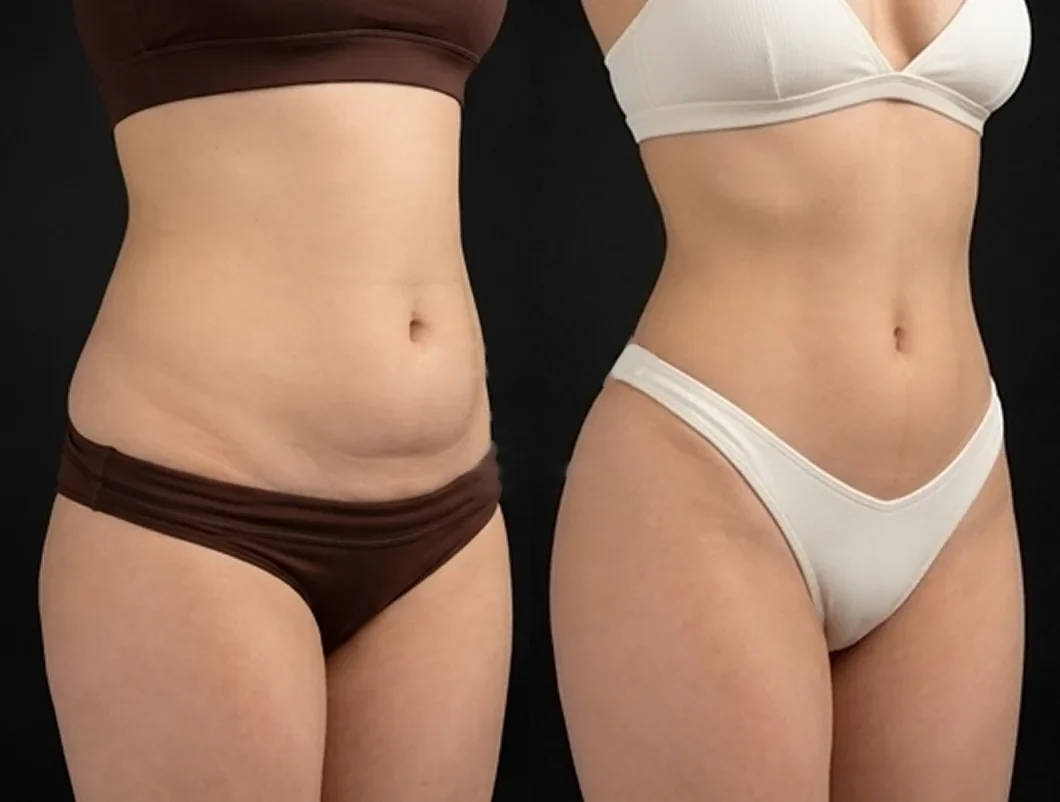
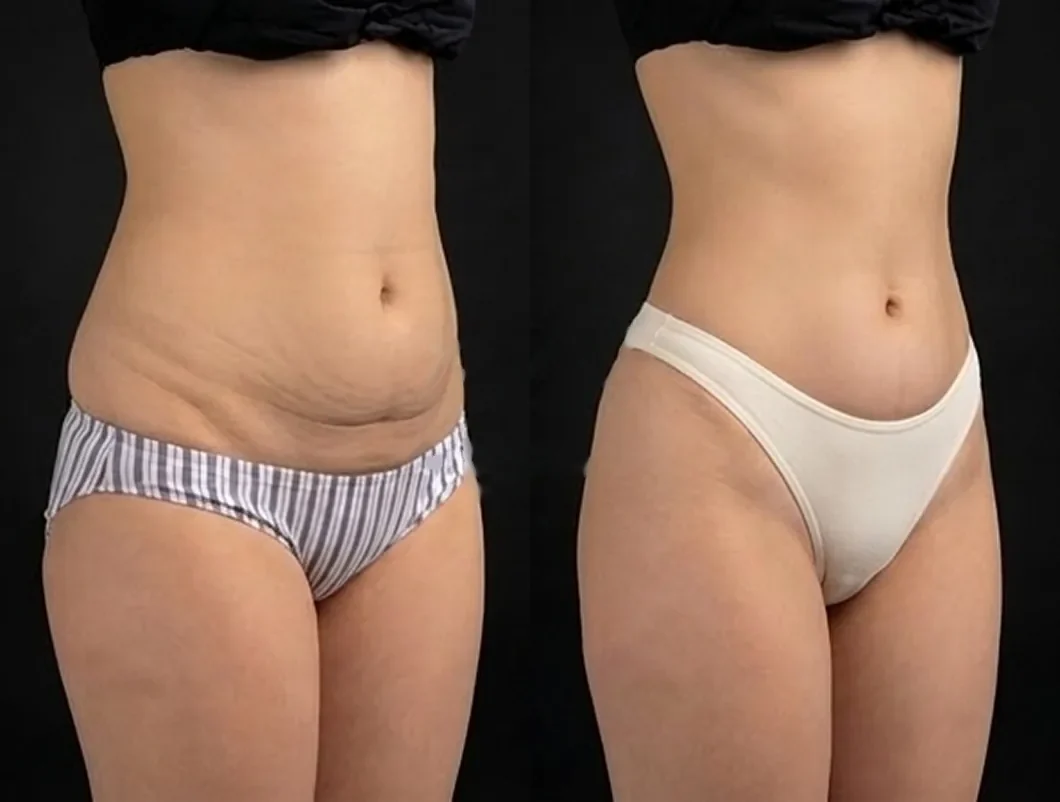
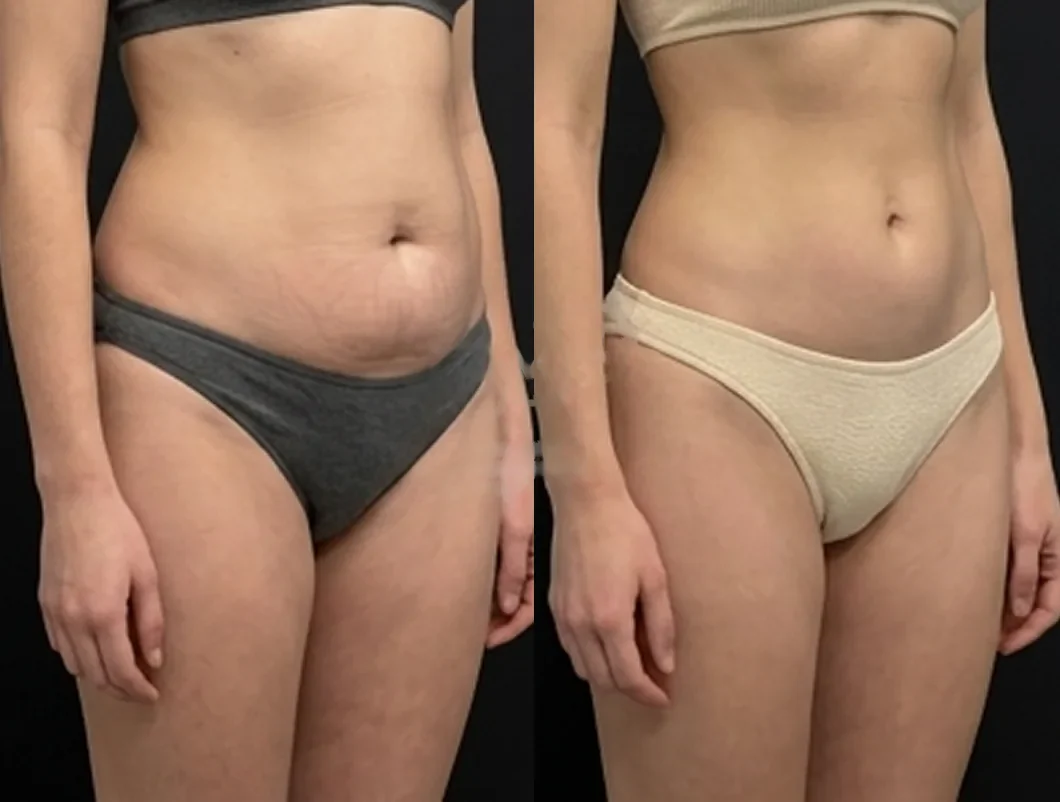
Liposuction: a patient's abdomen and flanks before and after surgery before after
Stubborn local fat that diet and exercise don't shift. Your plan is set at the consultation

Message our coordinator

Free online consultation · Reply within 15 minutes

Message us on Telegram

By messaging us, you agree to our Privacy Policy

Liposuction and fat removal in Bydgoszcz: price and key facts

Liposuction for patients from Bydgoszcz at City Medical Centre starts at PLN 4,700 (from $1,200). The first online consultation is free; the doctor names the final price and it is fixed in the contract.

Price
PLN 4,700 (from $1,200)
Duration
1–4 hours
Anesthesia
local or general
Stay
home the same day (local anesthesia) or after 1 day (general anesthesia)
Recovery
back to work after 7–10 days
Final result
3–6 months after surgery
How it works
Send photos on WhatsApp or Telegram, get a free doctor assessment and the price, then confirm the plan and dates before anything is booked.

How it works · Liposuction prices

Information current as of 24 October 2026

Free online consultation on WhatsApp and Telegram

Results

Liposuction and fat removal results
of our patients

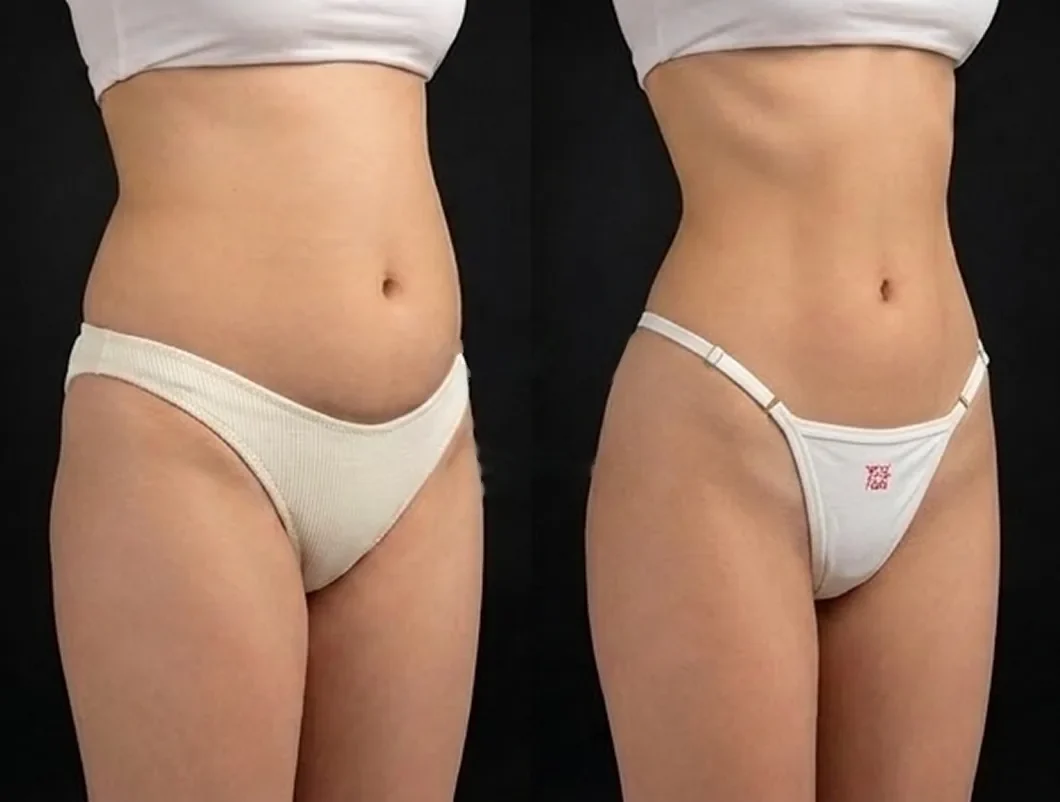
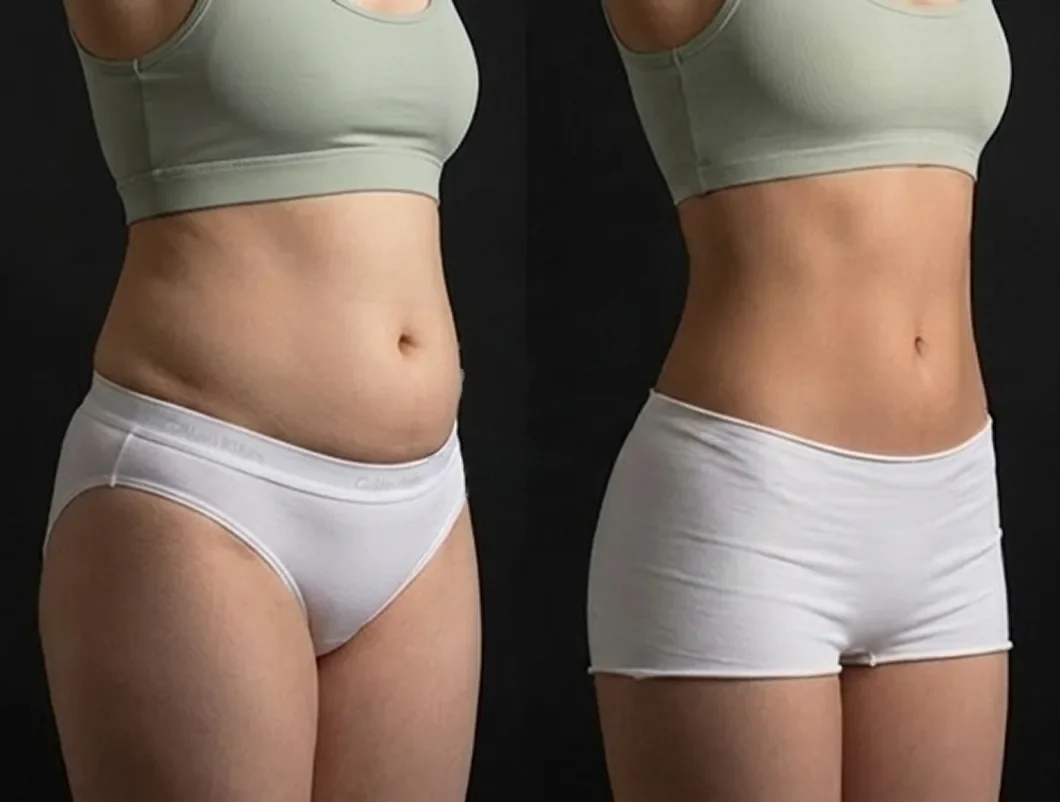
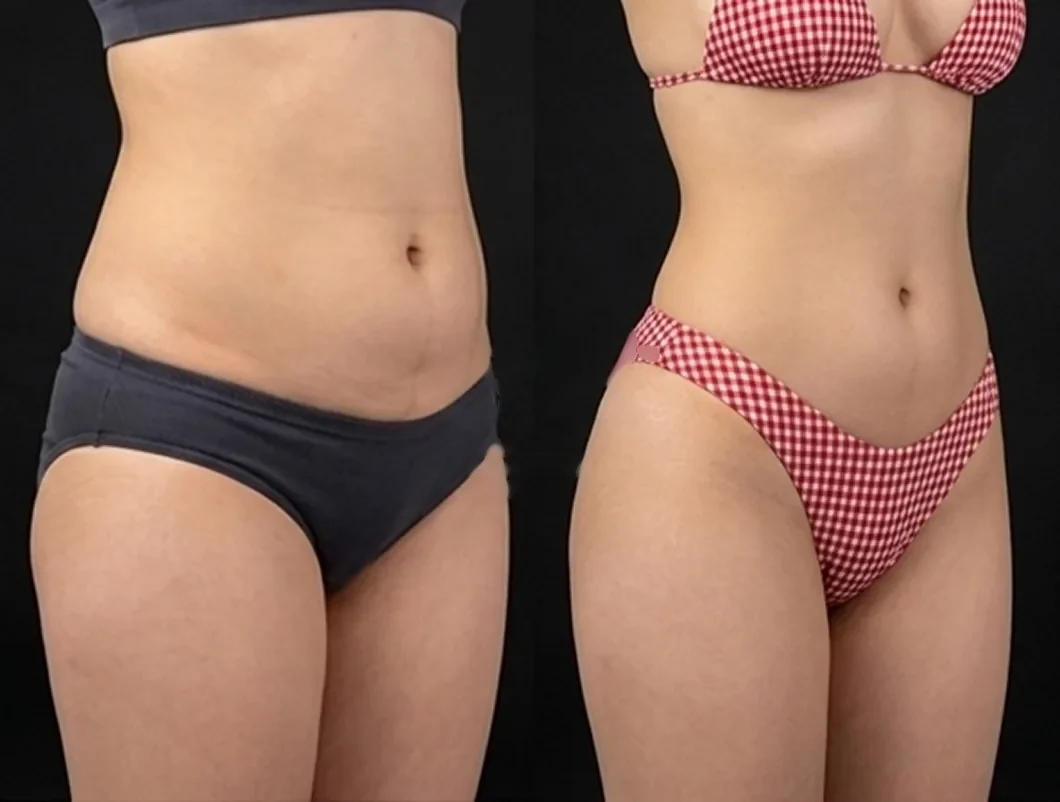
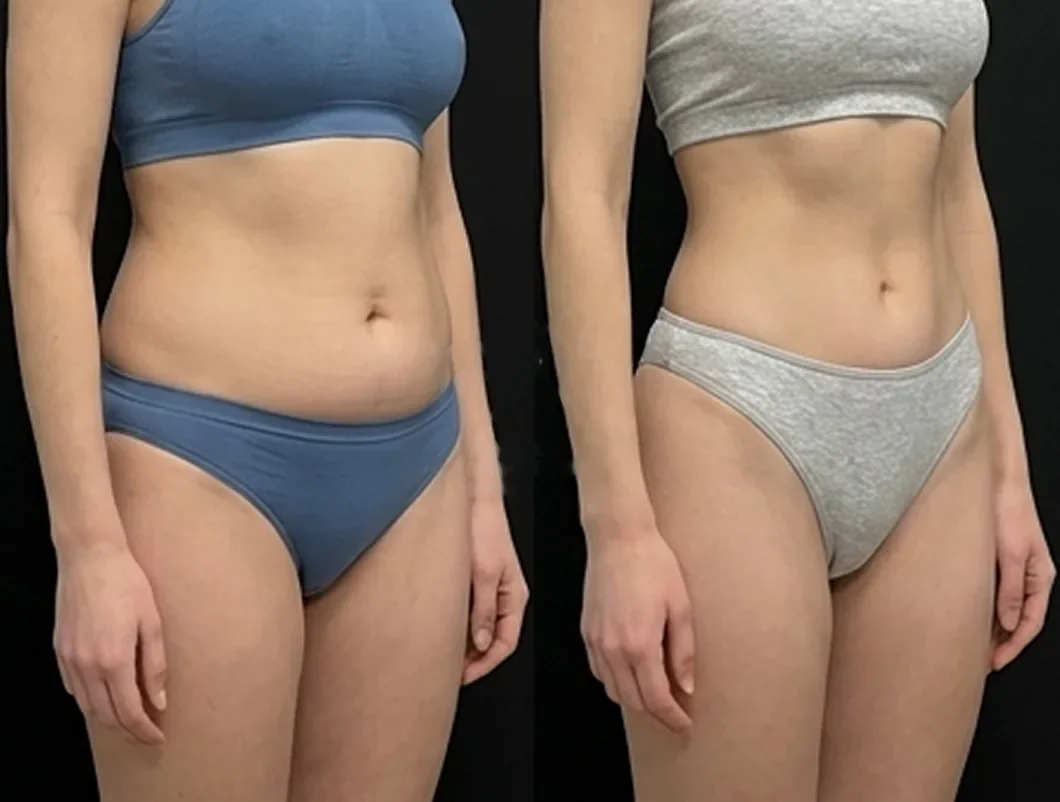
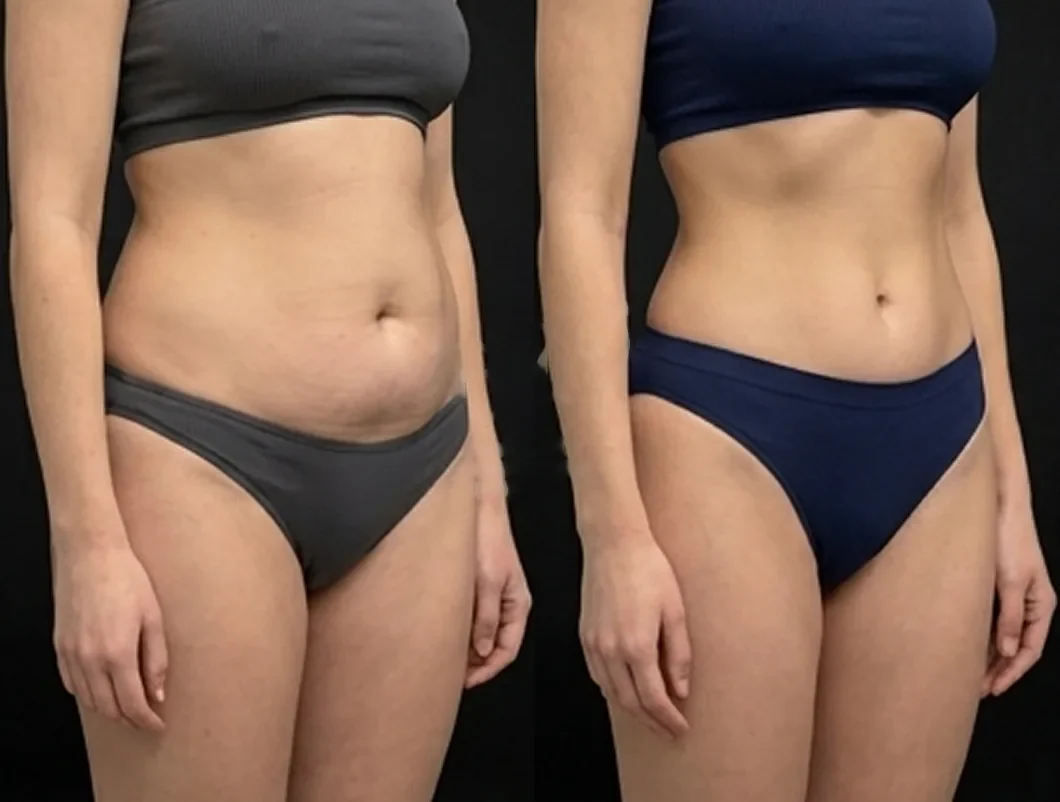
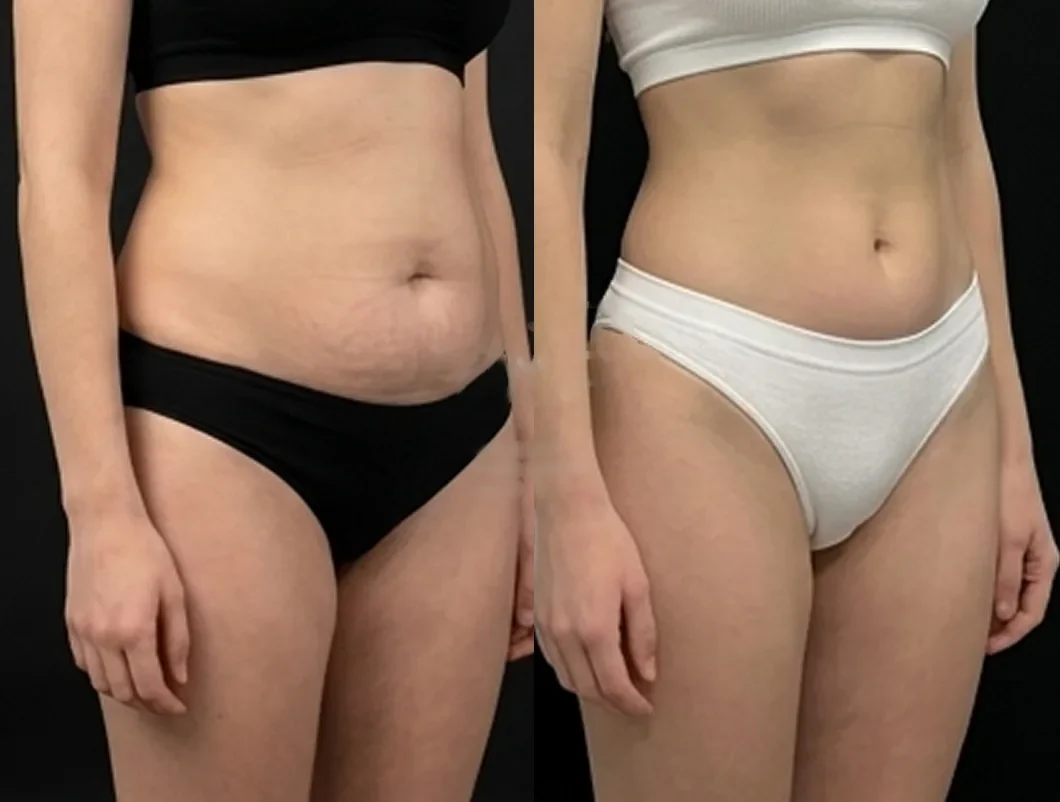
All cases are real patients. Faces and identifying details are hidden.

Abdomen and waist

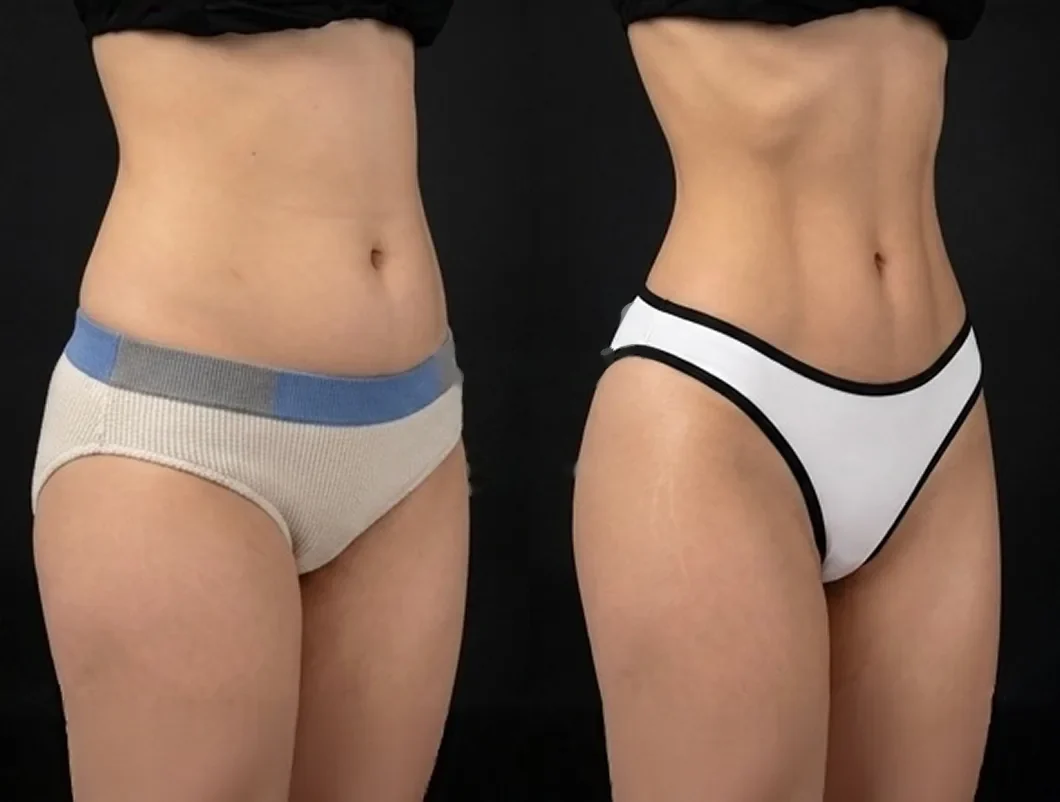
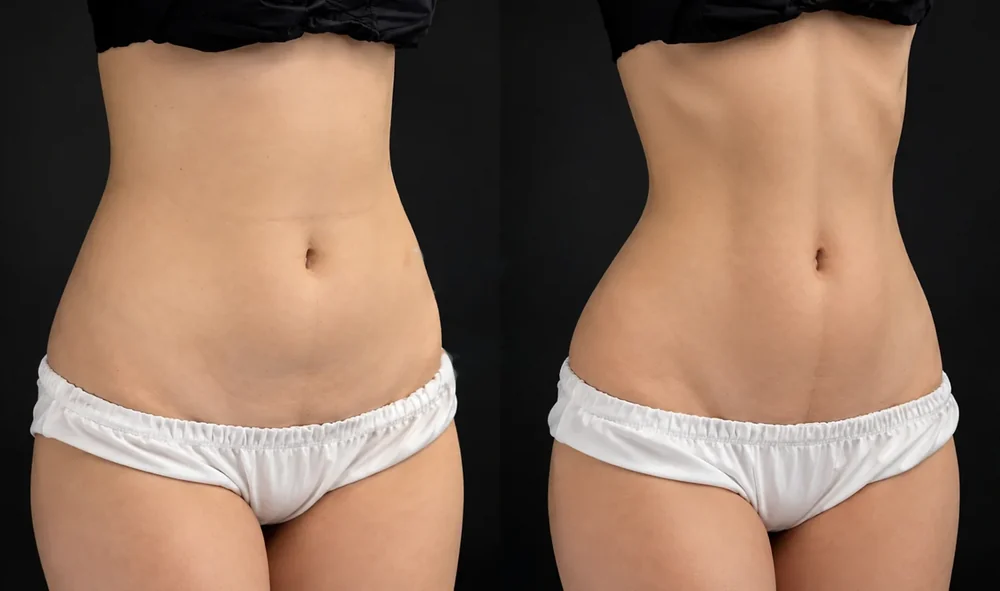
Liposuction of the abdomen and waist: before and after surgerybeforeafter
1 of 10

Comparison

Liposuction techniques

We use two liposuction techniques: tumescent (classic) and VASER (ultrasound). Compare the goal, the indications and the anaesthesia to choose the right technique together with your surgeon.

Tumescent liposuction

A special solution loosens fat for removal through a thin cannula
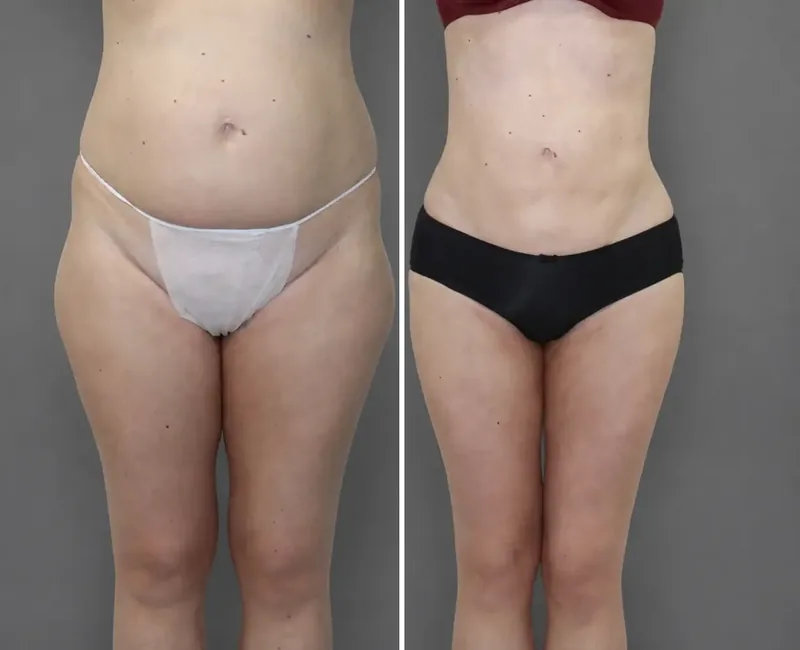
Tumescent liposuction: abdomen and thighs before and after surgery

from $1,200

Main goal
Removal of local fat with minimal blood loss
When it is done
Abdomen, flanks, thighs, back, arms, chin
Anaesthesia and stay
Local or general anaesthesia, home the same day or after 1 day

VASER liposuction

Ultrasound breaks down fat cells before vacuum removal
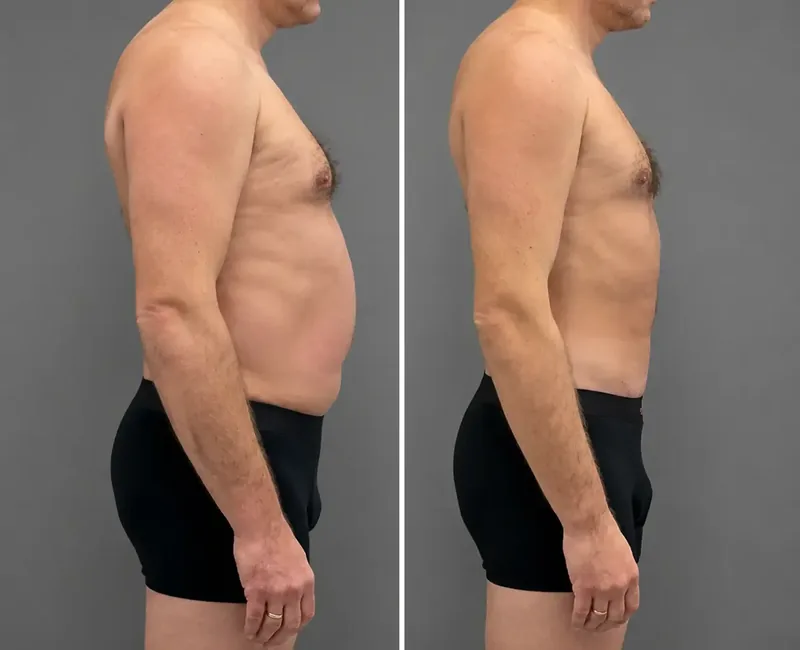
VASER liposuction: a male patient before and after surgery

Price at consultation

Main goal
Defined muscle relief and body contouring
When it is done
Athletic abs and delicate areas
Anaesthesia and stay
Local or general anaesthesia, 1–4 hours of surgery

The benefits and recovery times shown are averaged for each technique and given for guidance: the scope of correction and rehabilitation depend on your anatomy and individual features, and the surgeon confirms them at the consultation.

At the consultation the surgeon draws up a plan for your case and explains how your liposuction will go.

Free, before surgery and with no obligation.

Book a consultation

Body areas we treat

One operation can cover several areas — you save on recovery time and on budget

  • Abdomen and waist

    The most requested area for women and men, often combined with abdominoplasty

  • Thighs (outer and inner)

    Fat deposits exercise doesn't reach

  • Back and lower back area

    Back rolls that disrupt the silhouette

  • Shoulders and arms

    A cosmetic concern that shows in warm weather

  • Chin and neck

    Small volume, quick visible result

  • Knees

    An area that needs careful, precise work

  • Chest (for men)

    Gynecomastia, pseudogynecomastia: the fat part

About the clinic

A clinic where you can feel at ease

Modern equipment, comfortable rooms and care for every patient

A doctor and a patient in a clinic ward

Contact us the way that suits you

We will answer your questions and find a convenient time for a consultation

By messaging us, you agree to our Privacy Policy

Request a free call

Liposuction is not for everyone

If your case can be solved without surgery, the doctor will tell you so at the consultation — and you will not spend money for nothing.

Suitable

A surgeon shows a patient on a model and a monitor how the body contour changes after liposuction
  • Local fat that resists diet and exercise
  • Uneven subcutaneous fat
  • Disrupted body proportions
  • Silhouette changes after childbirth or weight loss
  • Fat component of gynecomastia in men
  • Good skin tone and elasticity

Not suitable

A surgeon discusses the indications and contraindications for liposuction with a patient
  • Age under 18
  • Expecting a baby or breastfeeding
  • Endocrine obesity
  • Decompensated diabetes
  • Problems with blood clotting
  • Serious heart, kidney or liver disease, cancer

Not sure the surgery is right for you?

Leave your number — the coordinator will call you back, and the surgeon will tell you whether liposuction suits you. No surgery booking needed.

Find out if it suits me

A surgeon goes through the treatment areas with a patient at the consultation

Prices

You know the price
before surgery

The final price is calculated individually after an examination and fixed in the contract.

Liposuction prices

  • First consultationFree
  • Flanks / waist liposuctionfrom $1,400
  • Thigh liposuction (outer)from $1,200
  • Thigh liposuction (inner)from $1,200
  • Liposuction for the torso (front abdominal wall, abdominal sides and lower back)from $3,600
Book a consultation

Find out your liposuction plan and price

The surgeon assesses the fat deposits and skin tone, listens to your wishes and chooses the right technique.
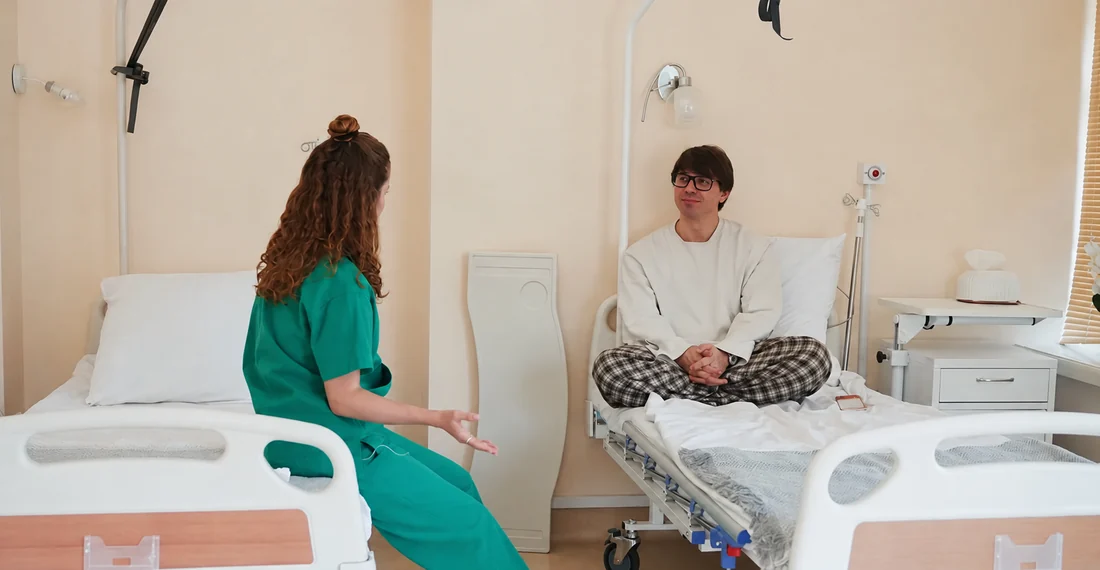
A nurse talks to a patient in a clinic ward

Message our coordinator

Free online consultation · Reply within 15 minutes

Message us on Telegram

By messaging us, you agree to our Privacy Policy
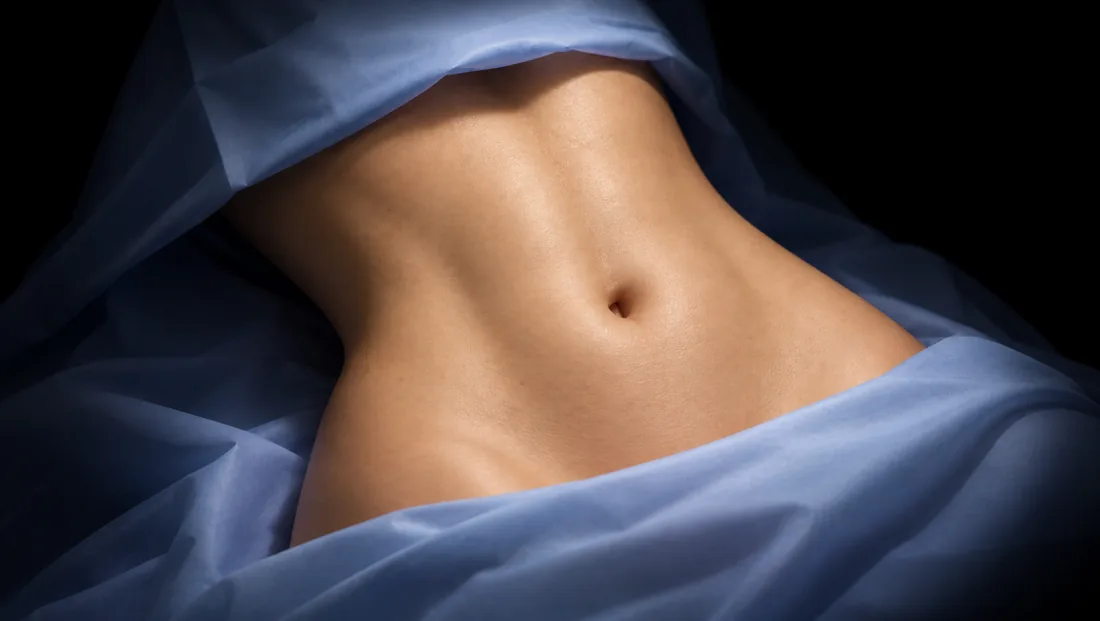
A patient before liposuction in the operating room

all inclusive

What the price includes

From preparation for surgery
to post-op check-ups.

  • All scheduled dressings
  • Scheduled post-op check-ups
  • A personal coordinator on call
  • Compression garments fitted on the day of surgery
  • A stay in a comfortable
    hospital ward with meals
  • Individual recommendations
    for recovery
  • Remote progress monitoring
    by photos

from $1,200

Book a consultation

How it works

From consultation —
to your new contour

An agreed treatment plan, careful monitoring after surgery and post-op check-ups.

A surgeon goes through the liposuction plan with a patient on a monitor1

Consultation
and the surgical plan

The surgeon listens to your wishes, assesses the fat deposits and skin tone and rules out contraindications. A hormonal screening is also ordered — it helps predict the long-term result.

Paying the deposit by card at the clinic reception2

Booking the date
of surgery

We reserve a surgery date for you: the deposit can be paid by card at the clinic or online by bank transfer. The terms are fixed in the contract for medical services

A blood sample tube for tests before liposuction3

Check-up before
surgery

Blood tests (complete count, coagulation panel, biochemistry, infections), an ECG, a chest X-ray and, if needed, a GP consultation. All tests can be done at the clinic with no waiting.

The surgical team during the operation4

Surgery

Marking the areas and fitting compression garments. Under local or general anaesthesia the surgeon removes fat through 3–5 mm micro-punctures — from 1 hour for small areas to 3–4 hours for a combined procedure.

A hospital ward at the clinic5

Waking up
and monitoring

With local anaesthesia you go home 3–4 hours after surgery; with general anaesthesia you stay one day in a comfortable ward under medical supervision.

A surgeon and a patient in the ward during recovery6

Recovery

Compression garments for 30–45 days. First changes show at 2 weeks, once swelling subsides; the final result forms in 3–6 months. Check-ups at 7 days, 3 and 6 months.
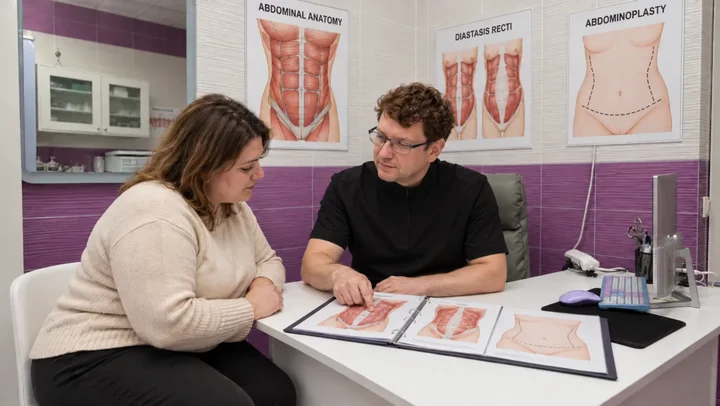
Book a free consultation — the surgeon will plan every step with you.

A doctor discusses the liposuction plan with a patient
Book a consultation
A doctor discusses the liposuction plan with a patient

Recovery after liposuction

After tumescent liposuction, recovery is much shorter than after a conventional procedure. Most patients return to work within 7–10 days. In the first week, mild swelling and a raised temperature are possible — a normal response to surgery. Compression garments are worn for 30–45 days: they fix the new contours and speed up tissue recovery. In the first month, bathhouse, sauna, pool and intense sport are off-limits. For the best result and faster recovery we recommend lymphatic drainage massage, pressotherapy and a gradual return to activity. First visible changes show 2 weeks after surgery, when the main swelling subsides; the final result forms in 3–6 months.

Post-op check-ups

After 7 days, at 3 months and at 6 months. Until the end of the year, get a post-surgery consultation with your surgeon to review results and get more information, at the clinic's expense.

Advantages

Why patients choose City Medical Centre

A surgeon discusses the liposuction plan with a patient at the consultation

Just find out — you lose nothing

At the consultation we discuss your wishes and assess the fat deposits and skin tone. Before surgery an endocrinologist rules out hormonal causes of the fat deposits — this improves the long-term result.

A surgeon on a video call with a patient after surgery

We stay with you after surgery

The surgeon follows your recovery and the new body contour at check-ups after 7 days, 3 and 6 months. Check-ups, dressings and aftercare advice are already included in the price of surgery.

A surgeon shows a patient a model and body contouring diagrams

A beautiful contour that fits your figure

Tumescent and VASER techniques, micro-incisions of 3–5 mm and precise volume control. Our aim is a smooth contour that keeps the natural proportions of your body.

A patient writes down a convenient visit time in her planner

Your schedule is our priority

We respect your time: we work 24/7, with easy booking and a personal approach — we adapt to your pace.
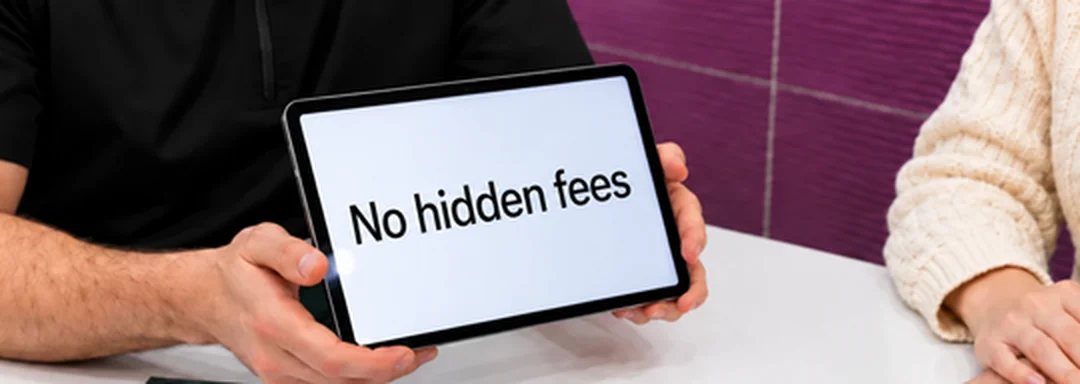
A surgeon shows a patient a tablet: no hidden fees

Fixed prices

After the consultation the surgeon defines the areas and the scope of surgery, and you get a clear price fixed in the contract — no hidden extras.

A surgeon visits a patient in the hospital ward after surgery

Round-the-clock care after surgery

With general anaesthesia recovery starts in a comfortable hospital ward under round-the-clock nursing care. The stay and meals are already included in the price.

FAQ

We answer what
people ask before booking

Liposuction in Bydgoszcz: price and what is included

Prices are in US dollars; the amount in brackets is an approximate conversion to PLN at the rate of 02.10.2026. The final price is fixed in your contract.

How much does liposuction in Bydgoszcz cost?

Prices start from $1,200 (≈ PLN 4,700) per area. The surgeon sets the final price at the free consultation, and it is fixed in the contract, with no hidden extras.

What is included in the price?

The operation under local or general anaesthesia and the surgeon's support throughout recovery. The price is per area and fixed in the contract.

How do I get my exact price?

Message us on WhatsApp or Telegram using the buttons below. A coordinator will answer your questions and book a free consultation where the doctor names the exact price.

By messaging us, you agree to our Privacy Policy

Everything about body contouring in Bydgoszcz

Some areas keep their fat no matter how active you are or how normal your weight is. That is exactly who liposuction in Bydgoszcz is for: people with local deposits that resist training and diet, uneven fat distribution or disrupted body proportions. It also helps restore the silhouette after childbirth or sudden weight loss, and in men it removes the fat component of gynecomastia.

Some rules matter after surgery. For the first seven days, no physical exertion or heavy lifting. For 4–6 weeks wear compression garments and avoid the bathhouse, sauna, pool and active sport. Alcohol and tanning beds are off-limits for at least a month. Your surgeon gives individual advice, and people from Bydgoszcz can stay in touch with the surgeon throughout recovery.

A free consultation is the easiest way to get an exact figure. The surgeon assesses the fat deposits, skin tone and your health, suggests the technique and the scope of surgery, and gives the price; liposuction starts from $1,200 (≈ PLN 4,700). Apply before the end of the year and the consultation is at the clinic's expense. Patients from Bydgoszcz can apply via the form or any messenger.

Stories of well-known people

Well-known people who spoke openly about this operation, in their own words.

All stories about this operation →

A river city, a canal and a very large park: what contouring means in practice

Bydgoszcz is a city county in northern Poland, the seat of Bydgoszcz County and one of the two capitals of the Kuyavian-Pomeranian Voivodeship. Its population is given as 321,100 at the end of 2025, on an area of about 176 km2. For a person thinking about liposuction, the size of the city matters less than the way it is laid out. The Brda flows for about 28 km through the urban area before it joins the Vistula, and the Bydgoszcz Canal crosses the western part for roughly 6.5 km. Add the city park Myslecinek, described as the largest city park in Poland at 830 ha, and the city offers plenty of room for walking, running or cycling.

This is relevant because liposuction is a procedure for people who already move and eat sensibly but still see a stubborn local deposit that does not respond: the abdomen and flanks, the outer or inner thighs, the back, the arms, the chin and neck, the knees, or the fat component of gynecomastia in men. The doctor repeats one point during every consultation: liposuction is not a weight-loss method. It reshapes the contour of chosen areas. If you already spend time outdoors along the water or in the park, that routine is an asset, because the return to activity after surgery is gradual and a familiar habit is easier to rebuild than a new one.

The consultation itself takes place online. You send photographs on WhatsApp or Telegram, the doctor assesses the fat deposits and the skin, and the coordinator answers round the clock. Nothing about living in Bydgoszcz has to change for this first step. You stay at home, choose a quiet moment, and take the pictures in good daylight in front of a plain wall. The doctor needs to see the whole body from the front, the sides and the back, not only the area that bothers you, because proportions are what the plan is built on.

A word about expectations. Photographs of a river promenade or a park path in the city are not a reference for the result, and nobody can promise a particular silhouette. What the doctor can do is explain which areas can be treated in one operation, which technique fits, and how the final contour usually forms over 3–6 months. Bring your own questions and the things you do not like; the plan is built around them.

Weight stability and the obesity figures behind the headlines

Statistics on excess weight in Poland are sometimes quoted as if they described every person who asks about liposuction. They do not, and the difference is worth understanding. According to figures cited in a 2026 AOTM report, 58.2% of people over 18 in Poland had overweight or obesity in 2019, compared with an EU average of about 53%, while obesity measured by BMI was 18%. A BMI above 40 occurs in about 300 thousand people and above 35 in over 1.5 million. These are population numbers, and they say nothing about whether an individual is a candidate for body contouring.

For the Kuyavian-Pomeranian Voivodeship the NIK data for 2022 show 433 thousand adults with obesity, a share of 26.4%, against 9,185 thousand adults and 29.8% for the whole country. The NIK chart is titled as a share of patients with overweight and obesity, so the measure is not identical to prevalence, and the text itself says overweight and obesity concern roughly 60–70% of residents depending on the voivodeship. The honest reading is that excess weight is common, and that many people who contact a body-contouring service are not looking for a contour change at all but for help with weight.

That is why the first questions at the consultation concern stability. The doctor asks whether your weight has been steady, whether it has recently gone up or down, and whether there is a hormonal background. An endocrinologist rules out hormonal causes of the fat deposits before surgery, and a hormonal screening is part of the planning because it helps predict the long-term result. Endocrine obesity and decompensated diabetes are on the list of cases where liposuction is not suitable. If your weight is unstable, the advice is to see a nutritionist or endocrinologist first.

One more point of principle. Removed fat cells do not come back, but the cells that remain can grow if you gain weight. The result therefore depends on keeping a balanced diet and regular physical activity. No strict diet is required after the operation, but a body that keeps changing in weight will change the contour as well. Being honest about this at the start protects the outcome far more than any technique.

Compression garments between a damp November and a warm July

The compression garment is the most visible part of recovery, and it is worn for 30–45 days. It is fitted on the day of surgery and its job is to hold the new contour and help the tissues recover. The weather in Bydgoszcz decides how comfortable that month feels. The 1991–2020 normals show a continental climate with a warm summer: the mean daily maximum is 24.6 °C in July with a minimum of 13.7 °C, and 23.9 °C and 13.1 °C in August. A garment worn through those weeks is rarely the problem on a typical day, but it can feel warm on the afternoons when the thermometer is at the top of that range.

Winter is the other end. January has a mean maximum of 1.1 °C and a minimum of -3.7 °C, February 2.7 °C and -3.0 °C, December 2.0 °C and -2.4 °C. In those months the garment is simply another layer, and the practical question is how to dress over it without pressing on the treated areas. Soft, loose clothing in natural fabrics works well over compression wear, and the doctor can tell you what to avoid for your particular areas, for example belts and tight waistbands after abdominal or flank liposuction.

Humidity is the part people rarely think about. Relative humidity in the city averages 80.3% over the year, peaks in November at 90.5% and December at 89.3%, and is lowest in May at 69.7%. Annual precipitation is 532.3 mm on 158.4 days with at least 0.1 mm, with July the wettest month at 83.4 mm. Damp, grey weeks make it tempting to stay in, and that is fine for the first week, when physical exertion and heavy lifting are to be avoided. What matters is keeping the garment dry and clean, and having a second one if the coordinator advises it.

None of these numbers changes the medical timetable. The first changes show about 2 weeks after surgery, once the main swelling subsides; swelling and bruising fade by weeks 4–5; an interim result is visible at 1.5–2 months; the final contours form in 3–6 months. The season only changes the comfort of the weeks in between, and that is something you can plan for with the coordinator on WhatsApp or Telegram before any date is booked.

Fitting recovery around public holidays, semesters and a busy cultural year

Most patients go back to work and their normal routine within 7–10 days after liposuction. That sentence is easy to read and harder to apply, so it helps to put it on a real calendar. Poland has 14 public non-working days: 1 January, 6 January, Easter Sunday and Monday, 1 May, 3 May, Pentecost Sunday, Corpus Christi, 15 August, 1 November, 11 November, 24 December since 2025, and 25 and 26 December. Several of them fall in clusters, and a cluster of days off can cover most of a first recovery week if the date is chosen with care.

Take an example after 1 November 2026. If the operation is planned so that the first 7–10 days end before 24 December, you return to work before the long festive break, and the check-up after 7 days still falls on a normal working day. If instead you want the first week to be spent entirely at home on days off, a date just before 25 and 26 December is one option; the doctor will ask whether the area treated is small or whether a combined procedure of 3–4 hours is planned, because that changes how much rest is sensible.

Bydgoszcz has a student rhythm too. About 35,000 students study across 15 universities, including Kazimierz Wielki University, Bydgoszcz University of Science and Technology and the Medical College of Nicolaus Copernicus University. If you are a student or a lecturer, the exam session and the teaching weeks decide your free days more than the national calendar does. About 100 cultural festivals and reviews take place in the city each year, and the International Paderewski Piano Competition is held every three years. The sources give no months, so there is no reason to guess; the practical advice is to leave a few days around a planned event rather than count on attending it.

Whatever your calendar looks like, the coordinator works 24/7, so the plan can be discussed at an hour that suits a shift worker, a parent or someone who studies in the evening. The date is confirmed only after the consultation and the pre-operative tests, and nothing is booked before you agree. If a holiday week in Poland is when you would like to recover, say so in the first message and the dates can be arranged around it.

Insurance, NFZ and what stays outside the catalogue

Anyone living in Poland knows the logic of NFZ, but it is worth stating how it applies to body contouring. NFZ information says that services that are not listed in the catalogues of services are not financed by the fund, while within the listed range treatment is in most cases free for the insured patient. Health insurance in Poland is funded by a contribution of 9% of personal income, of which 7.75% is deducted from tax and 1.25% is paid directly to NFZ; an uninsured patient pays the full cost of services. Those are the general rules, and they are the right starting point for a conversation with the insurer.

The bariatric group of services is a good example of how the catalogue works. Surgical treatment of obesity is a publicly financed NFZ service for adults with a BMI of 40 kg/m2 or more (ICD-10 E66.0), and for a BMI of 35–40 kg/m2 where surgically induced weight loss may improve obesity-related disease. Since 1 January 2017 the tariff has a separate group covering all three types of bariatric operation. The KOS-BAR pilot programme described a pre-operative phase that usually lasts 3–6 months with a multidisciplinary team. All of this concerns weight loss. Liposuction, as the service text describes it, is not a weight-loss method but a way of reshaping local fat deposits.

If you are on an NFZ waiting list for another reason, remember two rules from the fund. For a given service a patient may be entered on a waiting list with only one provider, and the original referral must be delivered within 14 working days of entering the list. A Ministry of Health reply of 5 August 2025 gave average waits for hip replacement of 195 days in 2022 and 172 days in 2024, and for knee replacement 242 and 214 days; the source does not make clear whether those figures are national. They are mentioned here only to show that a public queue and a private plan run on different clocks, and they should not be mixed up in one calendar.

What the coordinator can do is give you a clear written plan: the areas, the technique, the type of anaesthesia, the number of hours and what is included. The final price is calculated individually after the examination and fixed in the contract, and the scheduled dressings, the check-ups, the garments fitted on the day of surgery and the stay in a ward with meals are described there. Whether any part of your care can be claimed from an insurer is something to ask the insurer directly, with the plan in your hand.

From a photograph to a plan: how the online consultation works for a patient in Bydgoszcz

The consultation is free, it carries no obligation to book surgery, and the coordinator replies quickly on WhatsApp or Telegram. You are asked for photographs, for your height and weight, for a list of the medications you take and for any chronic conditions. The doctor looks at the fat deposits and the skin tone, listens to what you want and says plainly whether liposuction is the right tool. If your case can be solved without surgery, you are told so, and you will not spend money for nothing.

Two techniques are discussed. Tumescent liposuction, the classic one, uses a special solution that loosens the fat so that it can be removed through a thin cannula with minimal blood loss; it is used for the abdomen, flanks, thighs, back, arms and chin. VASER uses ultrasound to break down fat cells before vacuum removal and is chosen when defined muscle relief and fine contouring are the aim, for example athletic abdominal definition or delicate areas. Both can be done under local or general anaesthesia, and the operation lasts from 1 hour for a small area to 3–4 hours for a combined procedure. Fat is removed through punctures only 3–5 mm across, which usually need no stitches.

The list of reasons not to proceed is just as important as the list of areas. Liposuction is not suitable under 18, in pregnancy and during breastfeeding, in endocrine obesity, decompensated diabetes, blood coagulation disorders, or serious heart, kidney or liver disease and cancer. Good skin tone and elasticity make a better result more likely, and if tone is reduced or stretch marks are present, preparatory treatments can be recommended in advance. Cellulite is not removed directly, although better body contours visibly reduce its appearance.

After the consultation come the practical steps. Blood tests (complete count, coagulation panel, biochemistry, infections), an ECG, a chest X-ray and, if needed, a GP consultation are done before surgery. Smoking, alcohol and medicines that affect clotting, such as aspirin, are stopped 7–10 days before. Afterwards, if you go home the same day under local anaesthesia, you leave 3–4 hours after the operation; with general anaesthesia you stay one day in a ward under round-the-clock nursing care. Check-ups follow at 7 days, 3 months and 6 months, and progress is also followed remotely by photographs you send from home.

Does the damp autumn weather in Bydgoszcz affect how I recover from liposuction?

The medical timetable does not change with the weather. Compression garments are worn for 30–45 days, the first changes show at about 2 weeks, swelling and bruising fade by weeks 4–5 and the final contour forms in 3–6 months. In the city, relative humidity peaks in November at 90.5% and December at 89.3%, so the practical task is keeping the garment dry and having a spare if the coordinator advises one. Questions about swelling or a raised temperature in the first week go to the coordinator, and the doctor follows your progress with the photos.

Is it better to plan liposuction for winter or for summer if I live in Bydgoszcz?

Neither season is medically better. Summer brings a July mean maximum of 24.6 °C, so the garment can feel warm on afternoons, while winter has a January mean maximum of 1.1 °C and a minimum of -3.7 °C, which makes the garment an extra layer under clothing. Both are workable. In the first month you avoid bathhouse, sauna, pool and intense sport, and you keep away from alcohol and tanning beds for at least a month, so a warm month is not a reason to rush.

Can I walk along the Brda or in the Myslecinek park while I am recovering?

In the first 7 days you skip physical exertion and heavy lifting, so rest is the priority. After that, the advice is a gradual return to activity, and the doctor confirms what is suitable for your areas and the scope of your operation. The sauna, pool and intense sport remain off-limits for the first month. Ask the coordinator for a plan that says which days you may start easy walking and when to go back to anything more demanding, rather than deciding yourself.

I cycle regularly. When can I get back on the bike?

Cycling is a form of sport, and intense sport is not allowed in the first month. The compression garment is worn for 30–45 days, and the doctor decides on an individual basis when pressure on the treated areas, for example the abdomen, flanks or thighs, is acceptable. Describe how often and how hard you ride when you send your first message, and the plan can state a clear date. A gradual return, not a sudden restart, is what is recommended.

The statistics say many adults in Poland are overweight. Does that mean liposuction is meant for me?

Not automatically. Liposuction is not a weight-loss method; it targets local deposits that resist diet and exercise. The figures for Poland and the Kuyavian-Pomeranian Voivodeship show that excess weight is common, but the question for the doctor is different: is your weight stable, are the deposits local, and is your skin in good condition. If your weight is not stable, the advice is to see a nutritionist or endocrinologist first. The consultation is free and tells you which route fits.

Will NFZ cover liposuction?

NFZ finances only services that are listed in its catalogues. Bariatric operations for obesity are in the catalogue under defined BMI criteria, but liposuction is described as reshaping local fat deposits and not as weight loss. Ask your insurer or NFZ branch directly whether any part of your case could be covered. The coordinator can provide a written plan with the areas, technique and anaesthesia that you can show to the insurer, and the contract states what is included.

I am a student in Bydgoszcz. How should I plan the recovery around exams?

Most patients are back at work or their routine within 7–10 days, so the main thing is to avoid an exam, a practical or a long journey across the city in the first week, when you should avoid exertion and heavy lifting. The check-up at 7 days is done remotely by photos, so it fits around lectures. If the university year has fixed dates, tell the coordinator in the first message so the operation date is placed in a quiet window.

Can I arrange the operation around public holidays in Poland?

Yes, the date is agreed with you after the consultation and the tests. Holidays such as 11 November, 24 December and 25–26 December can cover part of the first recovery week. A common approach is to finish the first 7–10 days before a long break, so that the check-up at 7 days falls on a working day. The coordinator answers 24/7, including on days off, and nothing is booked until you confirm the plan.

How should I take photographs for the online consultation if the days are dark in winter?

Use daylight from a window around midday if you can, or switch on the same light in every shot so that shadows do not change the look of the fat deposits. Stand straight in front of a plain wall, photograph the whole body from the front, the sides and the back, and repeat the pictures a second time with a relaxed posture. Underwear that does not press on the skin works well. Faces are not needed, and your photographs are used only to assess the areas and the skin tone.

What should I prepare before the first message to the coordinator?

Prepare your height and weight, a note on whether your weight has been stable, the list of your medicines, any chronic diseases and previous operations, and a clear idea of which areas bother you. Remember that smoking, alcohol and clotting-affecting medicines such as aspirin are stopped 7–10 days before liposuction, and that pre-operative tests are required. All instructions arrive after the first consultation, and the coordinator will go through them with you in your own time.