



























Message our coordinator
Free online consultation · Reply within 15 minutes
Message us on TelegramMessage us on WhatsAppBy messaging us, you agree to our Privacy Policy




Facelift and neck lift in Bydgoszcz: price and key facts
Facelift for patients from Bydgoszcz at City Medical Centre starts at PLN 9,400 (from $2,400). The first online consultation is free; the doctor names the final price and it is fixed in the contract.
- Price
- PLN 9,400 (from $2,400)
- Anesthesia
- general (inhalation)
- Recovery
- about 2 months to full recovery
- Final result
- 3–6 months after surgery
- How it works
- Send photos on WhatsApp or Telegram, get a free doctor assessment and the price, then confirm the plan and dates before anything is booked.
How it works · Facelift prices
Information current as of 24 October 2026



50 years
9 months

SMAS facelift

58 years
8 months
SMAS facelift

34 years
5 months
SMAS facelift

32 years
7 months
SMAS facelift

40 years
6 months
SMAS facelift

45 years
8 months
SMAS facelift

38 years
5 months
SMAS facelift

33 years
6 months
SMAS facelift
50 years
9 months
SMAS facelift
58 years
8 months
SMAS facelift
34 years
5 months
SMAS facelift
32 years
7 months
SMAS facelift
40 years
6 months
SMAS facelift
45 years
8 months
SMAS facelift
38 years
5 months
SMAS facelift
33 years
6 months
SMAS facelift


Marked sagging of the face and neck
A blurred jawline with jowls
Loose skin on the neck, a double chin
Marionette lines and deep nasolabial folds
A heavy look caused by drooping brows
Noticeable loss of skin firmness after 40
Wish for a long-term result (7–10 years)

Younger than 30
Acute skin inflammation
Being pregnant or currently breastfeeding
Severe cardiovascular disease
A blood-clotting disorder
Cancer
Decompensated diabetes
Everything about facial rejuvenation in Bydgoszcz
City Medical Centre performs surgical facelifts only, and the scope is tailored at the consultation. Indications include marked sagging of the face and neck, a blurred jawline and jowls, a double chin or loose neck skin, deep nasolabial folds and marionette lines, and drooping brows that make the look heavy. People in Bydgoszcz who want a long-term result rather than a temporary fix are typical candidates.
The endoscopic brow and temple lift is the gentlest option: the surgeon uses an endoscope through tiny punctures, repositions the brows and smooths forehead and frown lines, with scars hidden in the hairline. A neck and lower face lift also uses small incisions, keeping scars barely visible. For people in Bydgoszcz, the choice of access depends on which zones need correction and how marked the sagging is.
A free consultation is the easiest way to get an exact figure. The surgeon assesses the degree of sagging and the zones to correct, recommends the type of lift and names the final price; a facelift starts from $2,400 (≈ PLN 9,400). Apply before the end of the year and the consultation is free. Patients from Bydgoszcz can use the form on the page or message us in any messenger.
Stories of well-known people
Well-known people who spoke openly about this operation, in their own words.
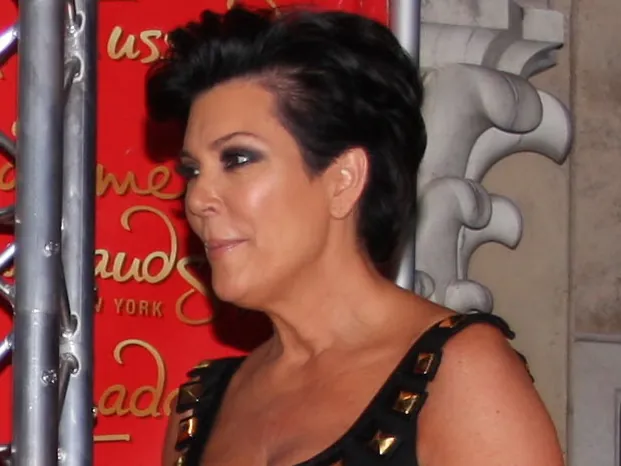 Kris Jenner’s facelift: “I love my facelift”Kris Jenner said she had a facelift about 15 years ago and a refresh before turning 70 — and that she loves it. How a SMAS facelift and recovery work.
 Did Vicki Gunvalson have a facelift? Yes, and she showed the result herselfVicki Gunvalson had a facelift in May 2018 after deciding fillers no longer looked like her. Her own words, how a facelift works and recovery.
 Keltie Knight’s facelift: why she decided to “just own it”Keltie Knight had a facelift in 2023 at 41 and chose to talk about it openly. What she said, how a SMAS facelift works and what recovery looks like.
 Did Linda de Mol have a neck lift? Yes, and she wrote about it herselfLinda de Mol wrote in LINDA. in 2025 that she had a neck lift. What she said, why she chose to be open, and how a face and neck lift works today.
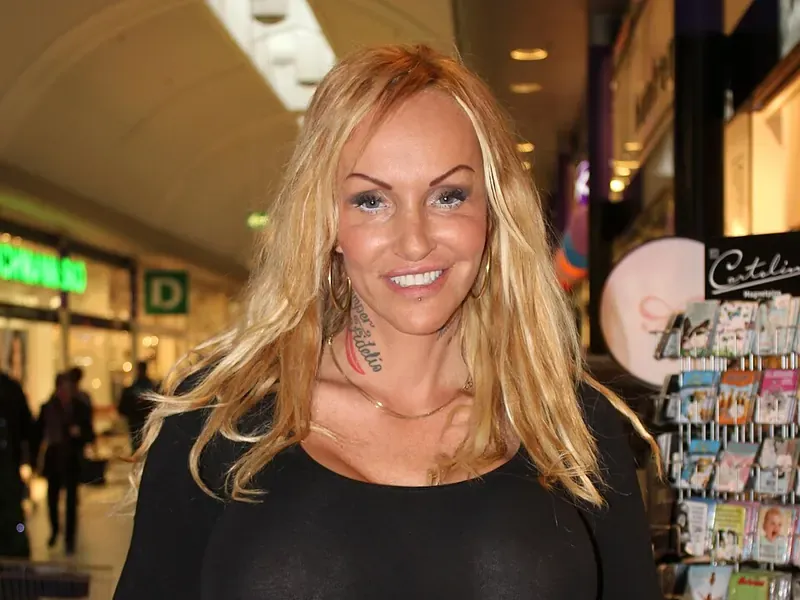 Linse Kessler and her facelifts: what she said herselfDanish reality star Linse Kessler has said openly that she has had several facelifts. Her words, how a modern facelift works and what recovery involves.
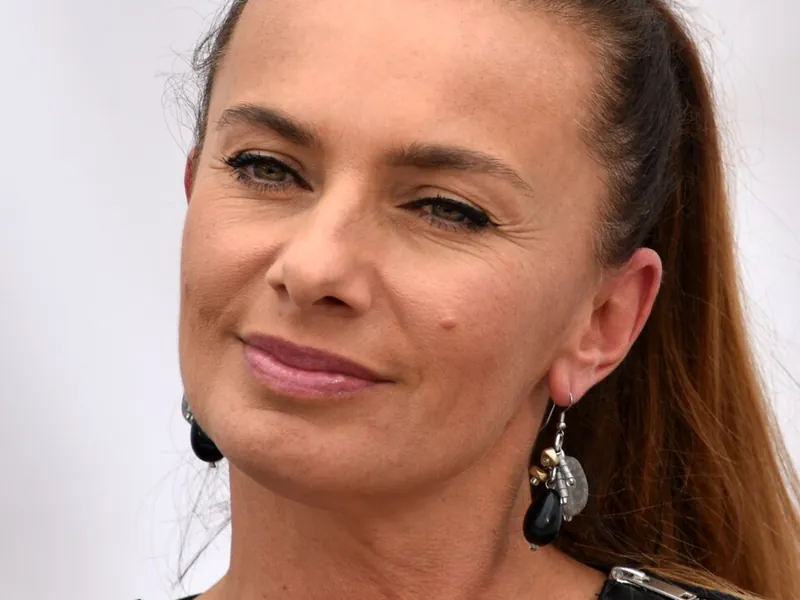 Did Alice Bendová have a facelift? Yes, and she explained why herselfAlice Bendová confirmed a deep plane facelift in September 2026. Her words, how a facelift works, who it suits and what recovery looks like.
Facelift in Bydgoszcz: price and what is included
Prices are in US dollars; the amount in brackets is an approximate conversion to PLN at the rate of 02.10.2026. The final price is fixed in your contract.
- Faceliftfrom $2,400 (≈ PLN 9,400)
What is a SMAS facelift?
It is a face lift that tightens the deep SMAS layer under the skin, not only the skin itself, so the lower face, jawline and neck stay firmer for longer. The result lasts about 7–10 years.
How much does a facelift in Bydgoszcz cost?
Prices start from $2,400 (≈ PLN 9,400). The surgeon sets the final price at the free consultation, and it is fixed in the contract, with no hidden extras.
What is included in the price?
A one-to-one consultation, the medical team, anaesthesia, inpatient care with meals, 24/7 monitoring and twelve months of follow-up by the surgeon.
How do I get my exact price?
Message us on WhatsApp or Telegram using the buttons below. A coordinator will answer your questions and book a free consultation where the doctor names the exact price.
By messaging us, you agree to our Privacy Policy
Skin, damp air and low sun: what a Bydgoszcz year does to the face before and after a facelift
The facelift described here is a SMAS lift. It works on the muscle and fascia layer under the skin, so it addresses the cause of sagging rather than only the skin surface. The skin still matters for healing and for how the result looks in the first weeks. Bydgoszcz sits at an elevation of about 60 m in northern Poland. Its climate is classed as Dfb, a humid continental type with a warm summer and a cold winter, so the skin goes through a wide seasonal swing.
The 1991-2020 normals show it clearly. January has a mean maximum of 1.1 °C and a mean minimum of -3.7 °C. December runs 2.0 °C and -2.4 °C, and February 2.7 °C and -3.0 °C. In July the mean maximum is 24.6 °C and the minimum 13.7 °C, with August close behind at 23.9 °C and 13.1 °C. Skin that spends December to February moving between cold outdoor air and heated rooms often looks more tired, drier and less even. That is worth telling the doctor during the free online consultation, because skin quality affects how the tissue is redraped.
Humidity adds another layer. Relative humidity averages 80.3% over the year. It peaks in November at 90.5% and in December at 89.3%, and is lowest in May at 69.7%. Damp, cold air does not dry the skin the way a frosty continental wind can, but it makes bandages, compression garments and hair feel clammy. Many people in that situation find the dry months of spring easier for the first weeks of recovery. That is a practical observation, not a rule, and the doctor makes the call from the photos and the health history you send.
Sunshine is the other variable. A figure of about 1,509 hours of sunshine a year is quoted for the city, although the period it covers is not stated. It tells you that the sun is a modest factor for much of the year and becomes noticeable mainly in the warm months. After a facelift the skin of the face and neck should not be exposed to strong sun while it is still swollen or bruised. Planning the operation so that the first weeks fall in a low-sun season is a reasonable idea to raise with the coordinator, who can compare several date options with you before anything is booked.
Photos are the starting point. You send clear pictures of your face and neck on WhatsApp or Telegram, in daylight and without filters. The coordinator replies within 15 minutes, and the doctor then looks at the type of ageing: the jawline, jowls, cheeks, the neck and the brows. At that stage you also hear which of the four main options is likely to fit, whether the standard SMAS lift, the full circular lift, the lower face and neck lift or the endoscopic brow and temple lift.
The first two weeks: swelling, bruising and a calendar that has a lot going on
The recovery timeline comes from the facelift description and should be treated as the working frame. The first 7-10 days are for rest, a compression bandage and reduced physical activity. Swelling and bruising fade over about 2-4 weeks. The first clear changes show at around 3-4 weeks, when the swelling goes down. Full recovery takes about 2 months, and the final look of the face settles 3-6 months after the operation.
Those numbers matter more once you set them beside a real city calendar. Bydgoszcz is a university city. Around 35,000 students study across 15 universities and higher schools, among them Kazimierz Wielki University, Bydgoszcz University of Science and Technology, the Medical College of Nicolaus Copernicus University and the Feliks Nowowiejski Music Academy. For anyone who teaches, lectures or works with students, the academic term sets the rhythm. The calendar can include exam sessions, thesis defences and graduation ceremonies, and the dates differ from year to year. A face that is still swollen in week one is not something most people want to show in a lecture hall, so it makes sense to leave the first 7-10 days entirely clear.
The cultural calendar is also busy. About 100 festivals and reviews take place in the city each year, though the source gives no months. The International Paderewski Piano Competition is held every three years. If you have a concert, a premiere or a family event that matters to you, tell the coordinator the date at the first message. The doctor can then say whether a given interval is realistic. A date 3-4 weeks after the operation is much more comfortable than one only a week or ten days away, because by then the first clear changes have begun to show. Even so, bruising can last up to the 4-week mark, so some people choose to wait longer before a major public appearance.
Think about it as a sequence rather than a single date. Days 1-10 are for rest at home. From week 2 you are usually presentable in loose clothing and calm settings, with swelling still visible in some people. By week 4, most of the swelling and bruising has gone, although the face is not yet in its final form. At about 2 months you are close to fully recovered, and the final look settles by month 3-6. The doctor adjusts this to your tissue and the scope of the operation, particularly if a facelift is combined with eyelid work, rhinoplasty or double-chin liposuction.
Holidays, the river and a quiet recovery in northern Poland
Poland has 14 public non-working days: 1 January, 6 January (Epiphany), Easter Sunday and Monday, 1 May, 3 May, Pentecost Sunday, Corpus Christi (the 9th Thursday after Easter), 15 August, 1 November, 11 November, 24 December (since 2025), and 25 and 26 December. Shops, offices and schools close or slow down around many of these days. For someone planning a facelift, that is useful in two ways.
First, a holiday period can serve as a natural buffer. Easter 2027 falls on 28 March, with Easter Monday on 29 March, and the stretch around it combines non-working days with a calmer social rhythm. If your work allows leave around these dates, the first week of rest can overlap with a time when others also stay home. Second, holidays shift services. Courier deliveries of compression garments or prescribed medication, pharmacy hours and family availability may all change. Ask the coordinator to list what you need before the date, so you are not looking for items on a day when a shop is closed.
The geography of the city suits a quiet recovery. The Brda river flows for about 28 km through the city before joining the Vistula at Brdyujscie, and the Bydgoszcz Canal crosses the western part for about 6.5 km. Mill Island (Wyspa Mlynska) in the city centre exists because the Brda was dammed there, with the Mlynowka river around it. Walking is one of the easiest forms of light activity after the first days, and calm riverside paths are natural for it. Light activity is not the same as physical training, though. During the first 7-10 days physical activity is reduced, so walks should be short and unhurried, and the doctor's instructions come first. Myslecinek, the city park, covers 830 ha and is described as the largest city park in Poland. It is a large green space for gentle walks later in the recovery, once the doctor says normal activity can resume.
None of this changes the medical plan, but a recovery needs somewhere to happen. Think about who will be with you in the first days, where you will rest, and how you will manage meals and medication. The package includes inpatient accommodation, meals and round-the-clock monitoring by medical staff for the duration of the stay at the clinic. After that you are followed up by the operating doctor for a whole year until the final result, which is why the coordinator is available 24/7 on WhatsApp and Telegram. Photos of your progress at week 1, week 2 and week 4 are the normal way to keep the doctor informed.
Coverage in Poland: how the public system treats cosmetic facelifts
People in Poland often ask whether the public health fund, NFZ, pays for this kind of operation. According to NFZ patient information, services that are not listed in the catalogues of financed services are not paid for by NFZ. Within the financed range, treatment is in most cases free for the insured patient. A cosmetic facelift to restore the contours of the face and neck is not a treatment for a disease, so you should plan on it being a private decision and not one covered by a referral.
The waiting-list rules of NFZ are a useful contrast. For a given service a patient can be entered on a waiting list with only one provider, and the original referral must be delivered within 14 working days of entering the list. That mechanism exists for services in the public catalogue. A facelift is different: you do not wait for a place on a list, and you do not need a referral from a general practitioner. You send photos, receive the doctor's assessment and discuss the plan and dates, and nothing is booked until you confirm.
To show how large the public system's waiting times can be, the Ministry of Health reported in August 2025 that the average wait for a hip replacement fell from 195 days in 2022 to 172 days in 2024, and for a knee replacement from 242 to 214 days. That reply concerned orthopaedics and focused on one voivodeship, so it is not a statement about plastic surgery. It simply illustrates why a private, scheduled operation works on a different timetable from public care, with a date fixed with the coordinator rather than a queue position.
Because the facelift is private, a few practical points follow. The consultation is free and online. The price is fixed in the contract after the doctor's assessment, and the service includes the consultation, the operation under combined inhalation anaesthesia, inpatient accommodation, meals and a year of follow-up. The clinic also offers in-house instalments without bank interest. If you hold supplementary private health insurance, ask the insurer in writing whether a cosmetic operation is covered. In most cases cosmetic procedures are excluded, but that depends on the policy wording and is not something the clinic can promise.
Poland's health insurance contribution is calculated from personal income, and uninsured patients pay the full cost of services. This does not alter the facelift decision, since it is private either way. It does matter for related care. If a chronic condition such as diabetes or a cardiovascular disease needs checking before the operation, the public system and your family doctor are the normal route for that, and their results can be shared with the doctor during the consultation.
Who should wait, and what the doctor needs to know from a Bydgoszcz patient
A surgical facelift is generally advised from the age of 40 for patients with marked tissue sagging, and in some cases from 35. Under 30 is a contraindication. Other contraindications are acute skin inflammation, pregnancy and breastfeeding, a severe cardiovascular condition, problems with blood clotting, cancer and decompensated diabetes. The indications are marked sagging of the face and neck, a loss of jawline definition, jowls, a double chin, loose skin on the neck, marionette lines and deep nasolabial folds, a heavy look caused by drooping brows, and a significant loss of skin firmness after 40.
What the national health data say about Poland's general health helps explain why the medical history matters. In 2019, 58.2% of people over 18 in Poland had overweight or obesity, compared with an EU average of about 53%. A national audit for 2022 reported that overweight and obesity concern around 60-70% of residents depending on the voivodeship. For the Kujawsko-Pomorskie voivodeship, which includes Bydgoszcz, the audit table gives 433 thousand adults with obesity and a share of 26.4%, although the measure used in that chart is not identical to prevalence. These numbers are population statistics, not a judgement of any individual. They are a reminder that weight, blood pressure and blood sugar are common topics in a pre-operative conversation. If you have type 2 diabetes, high blood pressure or a clotting problem, say so in the first message, because the medical form of the consultation is built around these questions.
Weight changes also matter for the face. Large weight loss can leave loose skin on the neck and lower face, and a later regain can change the result. If you are planning a major weight change, for example through a bariatric programme, discuss the sequence with the doctor. The clinic's service list also includes bariatric surgery and liposuction, so combined planning is possible. The public bariatric route in Poland applies to people with a BMI of 40 kg/m2 or above, or 35-40 where weight loss may improve obesity-related disease. It is a separate pathway from a facelift, and a facelift is usually considered once weight is stable.
Prepare a short list before the consultation: current medication, chronic illnesses, previous operations, allergies, smoking, and any anticoagulants or supplements that thin the blood. Add two or three clear photos, front and both sides, with the hair pulled back so the frontal edge of the hair and the ears are visible. That helps the doctor judge where incisions would sit. Those incisions are hidden along the hair and around the ears in the standard lift, and in the endoscopic option the scars are hidden in the hair after tiny punctures.
What you can realistically expect to see, and when
The result of a SMAS facelift is a crisp lower-face contour, lifted cheeks, a cleaner chin line, a more open gaze when the brows are addressed, and softer nasolabial folds, all without an overdone look. The effect is expected to last 7-10 years, and for the full circular facelift up to 10 years. A repeat procedure after that period is possible if you wish. A complete result is reached in one operation.
Seasonal life in Bydgoszcz can still shape how you feel about the outcome. In winter, with 158.4 days a year of at least 0.1 mm precipitation across a total of 532.3 mm, and with the wettest month being July at 83.4 mm, the weather rarely forces you indoors for the whole recovery. February is the driest month at 26.3 mm, and April is also dry at 28.2 mm. Wind and cold can leave skin red and tight, so scarves, hats and gentle skin care are practical for the weeks after the operation, but only in the form the doctor recommends. Do not use active cosmetic products on healing skin without asking.
Remember also that the three phases do not run on a calendar of their own. The first look at 3-4 weeks is encouraging, but the final form can differ from it. Judge the result at 3-6 months, and use the year of follow-up to ask questions as they come up. Send photos at the intervals the doctor suggests, and message the coordinator at any hour if something worries you.
Which season in Bydgoszcz is the easiest for the first weeks after a facelift?
There is no single answer, but the climate data give useful hints. January and February have mean maxima of 1.1 °C and 2.7 °C, so the cold can leave skin tight and red, while July is the warmest month with a mean maximum of 24.6 °C and also the wettest. May has the lowest humidity at 69.7%, and November and December are the dampest at over 89%. Strong sun is a concern while the face is swollen or bruised. The doctor can discuss date options with you during the free consultation, depending on your skin and your plans.
Will the cold and damp air of northern Poland affect healing?
Cold air can leave the skin of the face and neck red and tight, and very damp weeks in November and December can make bandages feel uncomfortable. These are comfort issues, not reasons to cancel an operation. Follow the doctor's instructions on the compression bandage for the first 7-10 days, keep to reduced physical activity, and ask before using any cosmetic product on healing skin. If something looks unusual, send a photo to the coordinator on WhatsApp or Telegram.
How do I fit the recovery around university terms, concerts or festivals in the city?
Start from the medical timeline. The first 7-10 days are for rest, swelling and bruising fade in about 2-4 weeks, and the first clear changes show at 3-4 weeks. With around 100 festivals and reviews a year in Bydgoszcz and a large student population, dates are rarely free of events. Give the coordinator your important dates in the first message. A gap of 3-4 weeks or more before a public appearance is more comfortable than a week or ten days.
Do Polish public holidays change how I should plan the operation?
They can. Poland has 14 public non-working days, including Easter Monday, 1 May, 3 May, Corpus Christi and the days around Christmas. Pharmacies, couriers and relatives may be less available around them. Ask the coordinator which items you need ready before the operation, such as compression garments and prescribed medication, and plan the first week of rest so that none of it depends on a shop being open on a holiday. The coordinator replies round the clock on WhatsApp and Telegram, including on public holidays.
Does NFZ pay for a facelift?
Services that are not in the NFZ catalogues of financed services are not paid for by NFZ, and a cosmetic facelift is a private decision. NFZ waiting lists and referral rules do not apply to it. You send photos, receive a free online assessment and the price, and confirm the plan and dates before anything is booked. If you hold supplementary insurance, ask the insurer in writing whether cosmetic procedures are included, since most policies exclude them.
Should I sort out chronic health issues with my family doctor before the consultation?
Yes, if you have a chronic illness. Diabetes that is not under control, a severe cardiovascular condition, clotting problems and cancer are contraindications, and the clinic asks you to consult a doctor first if you live with a chronic condition. Obesity-related conditions such as high blood pressure and type 2 diabetes are common in Poland, so they come up often in pre-operative conversations. Bring recent test results and a list of medication to the online consultation so the doctor can judge the situation.
At what age is it reasonable for someone in Bydgoszcz to ask about a facelift?
A surgical facelift is generally advised from 40 for marked sagging, and in some cases from 35. Under 30 is a contraindication. The recommendation is individual and follows an examination of the photos and your history. Younger patients who notice early jowls or a softening jawline can still ask for a free consultation, and the doctor will explain whether surgery makes sense now or later.
Can I be in touch with the doctor during the year after the operation, and how?
Yes. You are followed up by your operating doctor for the whole first year until the final result, and the coordinator is available 24/7 on WhatsApp and Telegram. Photos at about 1 week, 2 weeks and 4 weeks are the usual way to show the progress of swelling and bruising, and later photos at 2 months and 3-6 months show how the final look is settling.