





























at first
12 months out
2,800 grafts
FUE method
City Medical Centre
0% instalments
from $367/mo
Advice, then the price — $0.
Our patient
at first
12 months out
The FUE method, no incisions or stitches. Grafts and forecast tallied without a penny — before you decide.
Free online consultation · Reply within 15 minutes
You pay nothing, no surgery booking required
Message our coordinator
Free online consultation · Reply within 15 minutes
Message us on TelegramMessage us on WhatsAppBy messaging us, you agree to our Privacy Policy
Hair transplant for patients from The Hague at City Medical Centre starts at €2,000 (from $2,200). The first online consultation is free; the doctor names the final price and it is fixed in the contract.
How it works · Hair transplant prices
Information current as of 24 October 2026
results
All the cases are real CMC patients.
at first
12 months out
2,800 grafts
FUE method

at first
12 months out
3,500 grafts
FUE method

at first
12 months out
2,600 grafts
FUE method

at first
12 months out
3,000 grafts
FUE method

at first
12 months out
2,700 grafts
FUE method

at first
12 months out
3,300 grafts
FUE method

at first
12 months out
2,900 grafts
FUE method

at first
12 months out
2,500 grafts
FUE method

at first
12 months out
3,400 grafts
FUE method

at first
12 months out
2,500 grafts
FUE method

at first
12 months out
3,100 grafts
FUE method

at first
12 months out
3,600 grafts
FUE method

at first
12 months out
4,000 grafts
FUE method

at first
12 months out
3,200 grafts
FUE method

at first
12 months out
3,000 grafts
FUE method

at first
12 months out
3,700 grafts
FUE method

at first
12 months out
2,700 grafts
FUE method

at first
12 months out
3,800 grafts
FUE method

at first
12 months out
3,300 grafts
FUE method

at first
12 months out
2,800 grafts
FUE method

at first
12 months out
2,500 grafts
FUE method

at first
12 months out
3,900 grafts
FUE method

at first
12 months out
3,500 grafts
FUE method

at first
12 months out
3,800 grafts
FUE method

at first
12 months out
2,900 grafts
FUE method

at first
12 months out
3,600 grafts
FUE method

at first
12 months out
2,600 grafts
FUE method

at first
12 months out
2,700 grafts
FUE method

at first
12 months out
3,700 grafts
FUE method

at first
12 months out
3,200 grafts
FUE method

at first
12 months out
3,000 grafts
FUE method

at first
12 months out
2,800 grafts
FUE method

at first
12 months out
4,000 grafts
FUE method

at first
12 months out
3,400 grafts
FUE method

at first
12 months out
2,900 grafts
FUE method

at first
12 months out
3,100 grafts
FUE method

at first
12 months out
2,600 grafts
FUE method

at first
12 months out
3,300 grafts
FUE method

at first
12 months out
3,900 grafts
FUE method

at first
12 months out
3,500 grafts
FUE method

at first
12 months out
2,700 grafts
FUE method

at first
12 months out
3,800 grafts
FUE method

at first
12 months out
3,200 grafts
FUE method

at first
12 months out
3,000 grafts
FUE method

at first
12 months out
2,800 grafts
FUE method

at first
12 months out
3,100 grafts
FUE method

at first
12 months out
3,600 grafts
FUE method
Comparison
Three graft transfer technologies are in use here: classic FUE, suture-free DHI and a combined protocol. Weigh the implantation technique, tissue trauma and graft survival, and choose your method knowingly.
Classic technique without incisions or stitches

$2,200
$2,700
Graft implantation technique
ForcepsGraft trauma
MinimalHair's natural angle
NaturalGraft survival
98–100%Suitable for
Androgenetic alopeciaImplantation with a Choi pen, no sutures

$2,500
$2,900
Graft implantation technique
Choi implanter, DHI penGraft trauma
MinimalHair's natural angle
NaturalGraft survival
98–100%Suitable for
DensificationFUE extraction, DHI pen implantation

$2,700
$2,900
Graft implantation technique
FUE extraction with DHI implantGraft trauma
MinimalHair's natural angle
NaturalGraft survival
98–100%Suitable for
Androgenetic alopecia and densificationSurvival and trauma values are average figures for each method, shown as a guide: the exact numbers depend on the transplant area and the patient's own features, and the doctor confirms them at the consultation.
Speak to a specialist


















about the clinic
Up-to-date equipment, comfortable rooms, care for the patient

We will reply to your questions and choose a consultation time that suits you
Message us on WhatsApp Contact us nowWhen there is another way forward, the doctor names it at the consultation rather than booking you for surgery, and your money stays put. Just below are the situations where a transplant genuinely works.
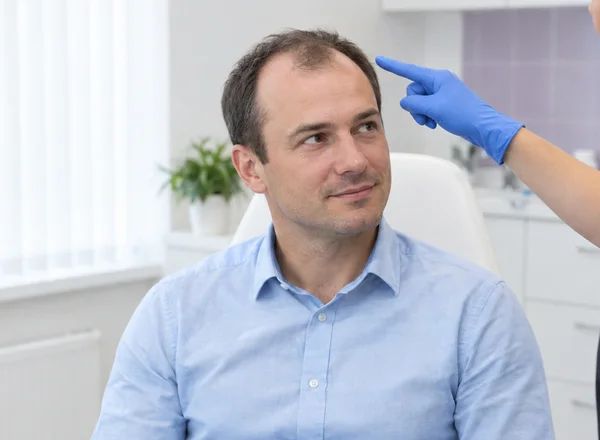

Leave a number and a coordinator will ask for photos of the thinning area in a messenger; a doctor then says whether a transplant would help you. Free, with no obligation to book an operation.

services
Once the grafts have been counted at the free consultation, the price is announced and entered in the contract.
suture-free graft extraction

$2,200$2,700
or $367/mo — 0% instalments for 6 months
Keep this priceimplantation without channels

$2,500$2,900
or $417/mo — 0% instalments for 6 months
Keep this pricecombined technique

$2,700$2,900
or $450/mo — 0% instalments for 6 months
Keep this price| First medical check | Free |
|---|---|
| Eyebrow transplant, FUE | |
| Beard transplant, FUEinstalments $467/mo | |
| Hair trichopigmentation | |
| PRP therapy / session | $200 |
all included
From readiness for surgery to 12 months of follow-up.
You are never billed twice on surgery day.
two further spots
Not the scalp alone. The same grafts from the back of the head, the same FUE method — only the treated area changes.
FUE method, no incisions or stitches

We take grafts from the donor area at the back of the head and move them through micro-punctures of about 1 mm — no scars remain. Before the operation the doctor agrees the shape with you, taking your facial features into account. Transplanted hair grows for life: the beard is trimmed and styled as usual.
$2,800$3,000
or $467/mo — 0% instalments for 6 months
Keep this priceFUE method, no incisions or stitches

At the initial consultation the surgeon draws the eyebrow shape: you and the surgeon look through references, and the design takes your facial features into account. The hairs are implanted at the right angle, so the eyebrows look natural. It also helps where plucking has stopped growth.
$1,600$1,700
a procedure done with local anaesthesia only
Keep this priceYou will be shown what your donor zone allows, how many grafts it gives and what outcome follows. Cost is settled at the consultation and signed off in the contract.

Message our coordinator
Free online consultation · Reply within 15 minutes
Message us on TelegramMessage us on WhatsAppBy messaging us, you agree to our Privacy Policy
Process
From consultation to going home — all in one day

The first appointment is where FUE and DHI get explained properly, where you can ask anything that worries you, and where the doctor looks closely at the donor zone.

The date is held with a deposit payment, made by card at the clinic or online, and the terms are documented in a medical services contract.

The clinic names every analysis required before surgery and gives you directions so the preparation goes without trouble.

The treatment area is numbed with local anaesthesia, so the entire surgery is pain-free.

Grafts are sourced from the donor region behind the head or at the temples, with stitches avoided entirely.

The grafts are implanted into the balding area, completing the surgical part of the procedure.
For patients in The Hague, everything required for healing is provided, with instructions explaining its use.

Scabs clear off, the swelling settles, the skin returns to normal

A normal stage. Only the hairs shed, the follicles stay in place

New hairs surface gradually, the result shows

The hair gains body; the volume and hairline are clear

The final density and natural hairline come through

Free, before surgery and with no obligations.
Speak to a specialistdoctors

Hair transplant doctor, trichologist, surgeon
10 years in practice

Dermatovenereologist, trichologist, surgeon
11 years of experience

Plastic surgeon
9 years of experience

Plastic surgeon
9 years of experience

Assistant
9 years of experience
The doctor judges the donor zone, works out the graft figure and tells you what outcome to expect.
Speak to a specialistcoordinators
Your coordinator is the same person at the first message and at the last check during recovery.

Care and support lead
Looks after you at each stage of the way
Will chase the papers and hold your slot
Care and support lead
Looks after you at each stage of the way
Will chase the papers and hold your slot
Care and support lead
Looks after you at each stage of the way
Will chase the papers and hold your slot
Care and support lead
Looks after you at each stage of the way
Will chase the papers and hold your slot













We will reply to your questions and choose a consultation time that suits you
Message us on WhatsApp Contact us nowReviews
I was having trouble with my hair. I came here and got a hair transplant. The results was awesome thank you
Review on Google
І experienced hair loss due to COVID and turned to this clinic; they helped me and performed a hair transplant, moving hair from the back of my head to my temples. Thank you.
Review on Google
I traveled to City Medical Centre, where they helped me overcome hair loss through a transplant to the balding areas of my scalp. I am grateful to the doctors for performing the procedure painlessly.
Review on Google
I am sharing my experience, because before the operation I went through a pile of reviews myself and was looking for real stories. I had a beard transplant six months ago. Honestly, in the first days after the procedure I felt a little jittery: my face looked unfamiliar, there was slight swelling and small scabs. In the first couple of months the hair partly fell out, as the doctor had warned. But now the result truly makes me very happy) From about the 4th month active, even growth began. The transplanted hair took very well, the beard now looks as natural as possible, no bald patches are left. The beard became much thicker and denser, with the shape I had thought about for a long time. All in all, I recommend the clinic, the doctor was polite and explained everything 👍 The result is definitely worth it!
Review on Google
I traveled to this clinic and do hair transplant, very good quality and cheap. Good doctors
Review on Google
I do hair transplant here very good doctors!!
Review on Google
The usual queries
People often say hair implants, but no artificial hair is used. In a hair transplant the doctor moves your own follicles (grafts) from the donor area to thinning or bald areas using FUE or DHI.

Yes, without any problem. The clinic treats people no matter where their home happens to be, and the case is assessed online beforehand.
Pricing starts from $2,200 (≈ €2,000) for FUE, $2,500 (≈ €2,250) for DHI, and $2,700 (≈ €2,450) for combined DHI+FUE. The exact figure is confirmed for free after a graft count and written into the contract.
You spend a day on it and return home once it finishes.
It helps with stable pattern hair loss and a receding hairline when there are enough donor grafts. Some types of alopecia need treatment first; the doctor checks this at the consultation.
The operation is painless; local anaesthesia is used on the scalp.
FUE is the classic method: grafts are harvested with tweezers, with no cuts or stitches. DHI implants grafts without channels, using a Choi pen. A combined method harvests grafts by FUE and implants them with the DHI pen.
Only a doctor can give that figure, and it is worked out free of charge once your donor area is examined.
Healing needs 0–10 days; a shed around 2–4 weeks is normal and passes on its own. Regrowth starts at 3–4 months, visible density at 6–9 months, the complete result at 12–18 months.
The clinic provides a lifetime guarantee on hair growth, stated in the contract.
We hold a medical licence, and care is provided to the standards and clinical guidelines
of the Ministry of Health.

Diplomas and certificates of the team that will operate
See the paperworkAKC POMOSHCH LLC
our clinic's legal entity
1057746096924
OGRN
7728536872
INN
People in The Hague usually ask how heavy the surgery is: FUE and DHI need no cuts and no stitches and run on local anaesthesia, and one day covers it. Graft survival is 98-100 %, with a price from $2,200 (≈ €2,000) fixed in the contract after a free graft count.
Ask now, decide later, and pay nothing for the asking: a patient in The Hague sends photos of the area, the doctor looks at them online and says whether a transplant helps. Contact 24/7.
Give it 0-10 days to heal and 2-4 weeks for the transplanted hairs to shed, which is normal, then 3-4 months to growth, 6-9 to density and 12-18 to the final result. Check-ups are scheduled at 1, 3, 6, 9 and 12 months with photo tracking by a personal coordinator and a lifetime growth guarantee.
Prices are in US dollars; the amount in brackets is an approximate conversion to EUR at the rate of 02.10.2026. The final price is fixed in your contract.
By messaging us, you agree to our Privacy Policy
Known people who talked openly about this operation, in their own words.
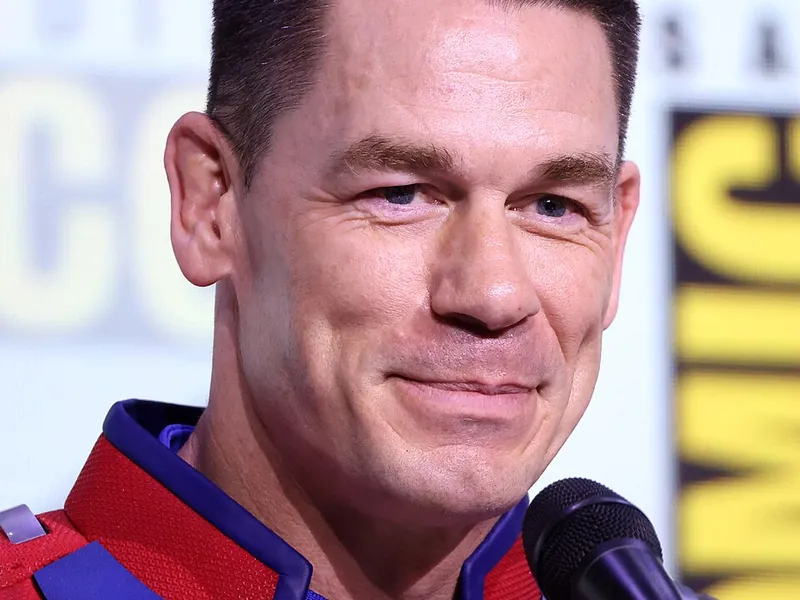 John Cena's hair transplant: “I got a problem, I try to fix it”John Cena spoke openly in 2025 about his hair transplant and the fan signs that pushed him to it. His words, how the procedure works and the recovery.
 Did Calum Best have a hair transplant? Yes, and he said so himselfCalum Best said in 2023 he had his sixth hair transplant, this time using patches of beard hair. His words, how the procedure works and recovery.
 Did Chloe Goodman have a hair transplant? Yes, and she explained whyChloe Goodman had a hair transplant in 2025 after losing hair following pregnancy. Her own words, how the procedure works and what recovery involves.
 Did Dean McCullough have a hair transplant? Yes, and he filmed itRadio 1 presenter Dean McCullough shared his FUE hair transplant on TikTok in 2024. His own words, what the swelling means and how results develop.
 Did Ella Morgan have a hair transplant? Yes — to cover a hairline scarThe Married at First Sight star revealed a hair transplant in 2025 to cover scarring along her hairline from facial surgery. Her own words and the facts.
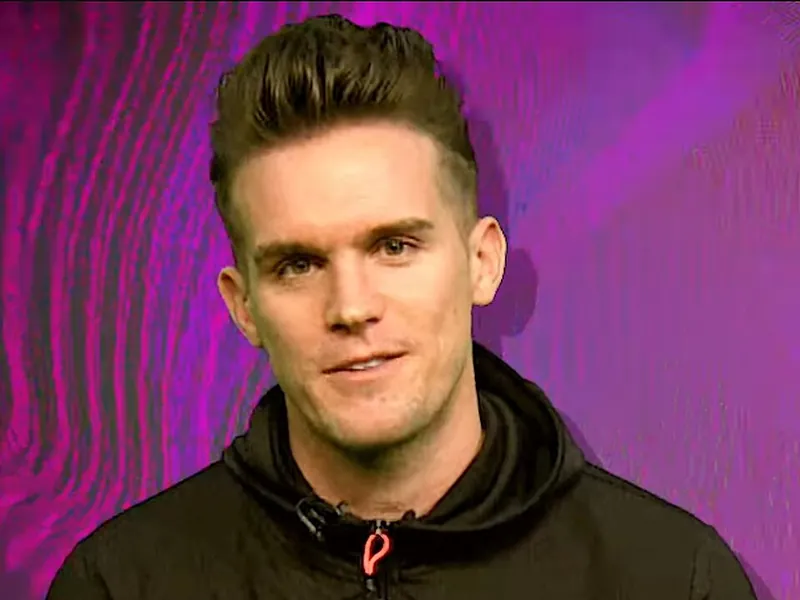 Gaz Beadle on his beard transplant: “I LOVE IT”Gaz Beadle told his 3.6 million followers he had a beard transplant after years of patchy stubble. His own words, and how a hair or beard transplant works today.
Page medically reviewed by Anastasia A. Kolesnik, hair transplant doctor. Review date: .
The Hague is the largest Dutch city on the North Sea, with eleven kilometres of coastline and a Scheveningen beach of almost twelve kilometres. For a hair transplant, that means the weather your scalp meets in the first weeks is shaped by the sea. Open shoreline, moving air and changeable days are the setting for the healing stage, and they are worth planning for before the date is fixed.
The long-term climate figures for the Valkenburg station (1981 to 2010) give an average daily maximum of 6.4 °C in January and 21.6 °C in July. The gap between winter and summer is moderate, so no season is unworkable. The two ends of the year simply call for different habits. In winter the main questions are a cold head, a wet head and what you can comfortably wear over fresh grafts. In summer the questions are sunshine, warmth under a cap and sweat.
The consultation package includes advice on washing your hair, on sleep and on headwear, and a care plan for both the transplanted and the donor areas. The doctor builds that advice around your own case, so ask about the climate you actually live in. A person who commutes along the seafront on a bicycle has different headwear needs from someone who works indoors all day. Mention your routine in the first WhatsApp or Telegram message, and the coordinator can pass it to the doctor along with your photos.
The consultation itself is online and free. You send photos of the front, top, crown and the donor area at the back of the head, and the doctor assesses them. The doctor names the number of grafts and the price, and the price is fixed in the contract. Nothing is booked until you confirm the plan and the dates. Because coordinators answer round the clock, you can ask about wind, hats and washing at whatever hour the question occurs to you, even on the evening of a stormy day when you wonder what you would do with a hood.
The procedure is FUE: grafts are taken without cuts or stitches, under local anaesthesia, and you spend one day at the clinic. The first ten days are the stage of crusts and swelling, and this is the stage where the weather matters most to your comfort. After that the weather matters mainly for planning, because the visible result develops over many months and you will pass through every season on the way.
A transplant is a project with a long timeline, and the stages come in a fixed order. The first ten days are for healing: the crusts fall away, the swelling subsides and the area slowly recovers. Weeks two to four bring the shedding of the transplanted hairs. That is a normal stage: only the hairs shed, and the follicles stay in place. The first new growth appears at three to four months. Density shows at six to nine months, when the main volume and contour become visible. The final result arrives at twelve to eighteen months.
You can lay that sequence over the Dutch calendar. The Christmas holiday in 2026 to 2027 runs from 19 December 2026 to 3 January 2027. Suppose the procedure takes place on 4 January 2027, the first working day after it. The healing days then run to about 14 January, and the shedding stage falls roughly between 18 January and 1 February. Those weeks are winter, when a hat is normal anyway, so shedding hairs and a cap draw little attention. Whether a given hat is suitable over fresh grafts is a question for the doctor, because the instructions on headwear are part of the care plan.
From that date, first growth falls in early April to early May 2027. The May holiday runs from 24 April to 2 May 2027, which gives families and anyone working in education a natural pause in the same weeks when the first new hairs begin to show. Density shows between July and October 2027, which overlaps with the 2027 summer holiday. The summer holiday runs between 10 July and 5 September, and by region it is 10 July to 22 August in the north and 24 July to 5 September in the south. The final result then falls between January and July 2028.
Another approach is to start in the autumn after the holidays end. Choose a date soon after 5 September 2027 and the healing days arrive when the summer sun has weakened, and the first growth lands in winter or early spring. You would be wearing a hat in cold weather for the first months in any case. These are only illustrations to show how to count. Your own date depends on the doctor's assessment, on your work and on the free slots, and the coordinator will confirm it under the contract.
There is no single correct season. A winter date makes the early weeks easier to hide. A summer date gives more freedom of schedule if you have time off, but it calls for more attention to sun and heat under headwear. Weigh both against your calendar: holidays of children, work deadlines, planned events in the twelve to eighteen months ahead. Keep in mind that the final density arrives long after the weather that surrounded the surgery itself.
The facts about the city give the framework, and they do not replace medical advice. A stretch of open coast means that wind will be part of daily life for many residents, and fresh grafts and a recovering scalp should not be exposed carelessly. This is why the care plan asks you to follow written instructions on washing, sleep and headwear rather than improvising. Take the plan seriously in the first ten days, when the area is healing, and ask the coordinator any follow-up question you have as it arises.
When you speak to the doctor, a few questions are worth putting on a short list.
- What kind of headwear is suitable during the first days, and what should I avoid?
- How should I wash my hair, and does it change if I have been outdoors in wind or rain?
- Are there activities I should postpone, and when can I return to sport? The clinic's plan covers the return to sport and hair care.
- What should I do about the sun on the transplanted area in the months of first growth and density?
- How should I handle sleep and position in the first days?
These are the same topics the care plan covers, so the answers will come in a form you can follow at home. Because the follow-up visits at 1, 3, 6, 9 and 12 months are tracked by photo with your personal coordinator, you can also raise a seasonal issue at those points. If in the sixth month your scalp feels dry in the summer or irritated after wearing a cap in a warm spell, mention it with a photo rather than waiting.
Keep one more point in mind. The shedding of the transplanted hairs at two to four weeks is a normal stage, and it can coincide with the weeks when a winter hat comes off indoors. Prepare yourself for it mentally. Only the hairs shed, and the follicles stay in place. If you are told this in advance, a thinner look in February will not seem like a failure.
Finally, the donor area at the back of the head also needs care. Grafts are taken there, or from the temples, without stitches, and the care plan covers that zone as well as the recipient area. Think about the hair at the back when you plan your haircuts and your headwear, and ask the doctor how to handle them.
Hair restoration is aimed at androgenetic or diffuse alopecia, bald patches and a receding frontal edge of the hair. The clinic also treats a high forehead line, insufficient density, effects left by an injury or burn, and the genetic side of hair growth. Some conditions rule it out or make it unsuitable: trichotillomania, body dysmorphic disorder, cancer, being under 18, intolerance to anaesthetics, epilepsy, serious heart conditions, diabetes mellitus, a pacemaker, AIDS/HIV, hepatitis B or C, pulmonary embolism, and patchy alopecia. Hair loss caused by illness or by a hormonal imbalance is also listed among the cases where a transplant is not the answer. The doctor tells you at the consultation if your case can be solved without surgery.
Three techniques are described. FUE is the classic method without incisions or stitches, with forceps used for implantation and minimal graft trauma. DHI uses a Choi pen and implanter, again without sutures, and it is described as suited to densification. The combined protocol uses FUE extraction and DHI implantation, and it is suited to androgenetic alopecia and densification. For all three, the trauma is described as minimal and the growth angle as natural. The precise figures depend on the transplant area and on your individual features, and the doctor clarifies them at the consultation.
As a resident of The Hague, a city of 569,076 people on 1 January 2026, you do not need to arrange a physical appointment first. The route is this: send photos on WhatsApp or Telegram, receive a free assessment and a price, then confirm the plan and the dates. Only after that is a deposit paid, and the date is confirmed under a medical services contract. Preparation before the procedure consists of a set of pre-surgery tests, following the list and instructions that the clinic gives you.
On the day, the stages follow in order. Local anaesthesia is applied. Grafts are harvested from the back of the head or the temples, with no stitches. They are then implanted into the area of alopecia. You stay for one day at the clinic, and the recovery is supported with the necessary materials and full instructions. Afterwards you have the follow-up checks, and your personal coordinator is reachable round the clock.
The number of grafts is counted at the consultation, from your donor area. There is no universal figure, so be wary of anyone who names a number without seeing photos of your head. Ask the doctor to explain how the count was reached and what result is realistic for you. The same doctor who will operate speaks with you at the consultation.
Everyone living or working in the Netherlands must take out standard health insurance. It covers hospital treatment, but it does not follow that every procedure on the market is reimbursed. According to the Consumentenbond, plastic procedures are reimbursed from the basic insurance only when there is a medical necessity, and cosmetic ones are not. A supplementary policy also pays only when the necessity is medical. A hair transplant for androgenetic alopecia is normally an elective procedure, so you should not plan on reimbursement unless your insurer confirms it to you in writing.
Practical advice follows from this. Before you decide, read your policy conditions and ask your insurer a direct written question about your own situation. Keep the answer with your papers. If you have a diagnosed condition, such as a scar from an injury or burn, ask whether that changes anything, because the rule is tied to medical necessity rather than to the label on the procedure. Do not assume an answer in either direction. The consultation is free and no booking is needed, so you can gather information without committing.
The same logic appears elsewhere in the Dutch system. Physiotherapy in the basic package, for example, is limited to certain conditions for adults, and bariatric procedures have detailed criteria such as a body mass index threshold and a documented lifestyle programme. These are different services, and the comparison is useful only as a reminder that Dutch reimbursement depends on specific criteria and written conditions. For a hair transplant, the habit to carry over is simple: ask for the rule, get it in writing, and keep it.
Costs at the clinic are a separate question from insurance. The price is quoted at the free consultation after the grafts are counted, and it is fixed in the contract. The package includes dressings and healing checks, a care plan, advice on washing, sleep and headwear, a plan for returning to sport and hair care, a personal coordinator with progress tracked by photo, and follow-up contacts at 1, 3, 6, 9 and 12 months. Ask the coordinator to list in writing what is included, so that on the day of surgery nothing new is added.
If you like to plan with figures, the KNMI publishes monthly climate data for coastal stations. It is a neutral source for comparing months, and you can use it to see how a given month on the coast has behaved over the years. The averages from Valkenburg, 6.4 °C in January and 21.6 °C in July, are a starting point, not a forecast for any particular week. A single month can differ widely from the average, so prepare for variation rather than for the mean.
Alongside the weather, keep your own record. Take photos in the same light and from the same angles before the procedure, then repeat them around the follow-up points at 1, 3, 6, 9 and 12 months. A hair transplant develops slowly, and memory is a poor judge of slow change. Pictures help you see the shedding stage for what it is, notice the first growth at three to four months, and recognise the density that shows between six and nine months. The final density and natural frontal edge of the hair come at twelve to eighteen months.
Compare like with like. A photo taken on a windy day, with the hair pushed in one direction, will look different from one taken indoors. Wet hair looks thinner than dry hair. A photo taken in January and one taken in July are not directly comparable if the lighting differs. Decide on a simple routine, such as the same room and the same position, and send the pictures to your coordinator.
Finally, keep realistic expectations. The page of results from the clinic shows real patients photographed before and 8 to 12 months later, with graft counts ranging from 2,500 to 4,000 depending on the case. Your own number depends on your donor area and the area to be covered. Use such examples to understand the process, not to predict your own outcome, and ask the doctor what is realistic for you.
Neither is ruled out. The average daily maximum is 6.4 °C in January and 21.6 °C in July, so the two seasons simply make different demands. In winter a hat is ordinary, which can make the early weeks and the shedding stage easier to manage. In summer you have to think more about sun and warmth under headwear. The doctor gives instructions on headwear as part of the care plan, so choose the season that fits your work and holidays and ask for advice matched to it.
As an illustration, the 2026 to 2027 Christmas holiday runs from 19 December 2026 to 3 January 2027. With a procedure on 4 January 2027, the first ten days of healing would run to about 14 January, and the shedding stage would fall between roughly 18 January and 1 February. First growth would then come in early April to early May 2027. This only shows how to count. The real date is set with your doctor and coordinator and confirmed in the contract.
It can matter for your schedule, though not for the biology. The May holiday in 2027 runs from 24 April to 2 May, and the summer holiday runs between 10 July and 5 September, with the north from 10 July to 22 August and the south from 24 July to 5 September. For a January procedure, the first growth at three to four months would fall near the May holiday, and the stage when density shows at six to nine months would overlap the summer. Use these dates to plan time off for follow-up photos and for events you want to attend.
Do not assume so. Standard insurance is compulsory for everyone living or working in the Netherlands and covers hospital treatment, but the Consumentenbond states that cosmetic plastic procedures are not reimbursed from the basic insurance, and a supplementary policy pays only where there is a medical necessity. Ask your insurer a written question about your own situation before deciding, and keep the reply. The consultation with our doctor is free, and the final price is fixed in the contract.
The facts about the city tell us that The Hague has an open North Sea coast, so wind is a reasonable thing to plan for. We cannot give a medical rule from the weather alone. The first ten days are the healing stage, with crusts and swelling, and the clinic provides full instructions on washing, sleep and headwear. Describe your daily routine to the coordinator, for instance cycling or working outdoors, and the doctor will tailor the advice.
Send clear photos on WhatsApp or Telegram of the front, the top, the crown and the donor area at the back of the head, in daylight and with dry hair if you can. Add a few lines about when the hair loss began, any illness or medication, and the conditions listed as contraindications, such as diabetes, epilepsy or a pacemaker. The doctor assesses the photos, tells you whether a transplant helps in your case, and counts the grafts. This is free and needs no booking.
Take photos in the same light and from the same angles before the procedure. Then repeat them at the follow-up points at 1, 3, 6, 9 and 12 months and send them to your coordinator. The stages are healing in the first ten days, shedding at two to four weeks, first growth at three to four months, density at six to nine months, and the final result at twelve to eighteen months. Photos make it easier to see slow change and to separate normal shedding from a real concern.
The doctor decides at the consultation. FUE is the classic technique without incisions or stitches. DHI uses a Choi pen, also without sutures, and is described as suited to densification. The combined protocol uses FUE extraction with DHI implantation, for androgenetic alopecia and densification. The precise figures depend on the transplant area and your individual features, so ask the doctor to explain why a particular method fits your photos.

 Forceps
 Minimal


