





























beginning
at 12 months
2,800 grafts
FUE method
City Medical Centre
0% instalments
from $367/mo
Review and the figure — $0.
Real outcome
beginning
at 12 months
FUE: no surgical cuts, no stitches. Grafts and outcome forecast reckoned up without paying — before you decide.
Free online consultation · Reply within 15 minutes
No fee at all, no surgery booking required
Message our coordinator
Free online consultation · Reply within 15 minutes
Message us on TelegramMessage us on WhatsAppBy messaging us, you agree to our Privacy Policy
Hair transplant for patients from Belfast at City Medical Centre starts at £1,700 (from $2,200). The first online consultation is free; the doctor names the final price and it is fixed in the contract.
How it works · Hair transplant prices
Information current as of 24 October 2026
results
All the cases are real CMC patients.
beginning
at 12 months
2,800 grafts
FUE method

beginning
at 12 months
3,500 grafts
FUE method

beginning
at 12 months
2,600 grafts
FUE method

beginning
at 12 months
3,000 grafts
FUE method

beginning
at 12 months
2,700 grafts
FUE method

beginning
at 12 months
3,300 grafts
FUE method

beginning
at 12 months
2,900 grafts
FUE method

beginning
at 12 months
2,500 grafts
FUE method

beginning
at 12 months
3,400 grafts
FUE method

beginning
at 12 months
2,500 grafts
FUE method

beginning
at 12 months
3,100 grafts
FUE method

beginning
at 12 months
3,600 grafts
FUE method

beginning
at 12 months
4,000 grafts
FUE method

beginning
at 12 months
3,200 grafts
FUE method

beginning
at 12 months
3,000 grafts
FUE method

beginning
at 12 months
3,700 grafts
FUE method

beginning
at 12 months
2,700 grafts
FUE method

beginning
at 12 months
3,800 grafts
FUE method

beginning
at 12 months
3,300 grafts
FUE method

beginning
at 12 months
2,800 grafts
FUE method

beginning
at 12 months
2,500 grafts
FUE method

beginning
at 12 months
3,900 grafts
FUE method

beginning
at 12 months
3,500 grafts
FUE method

beginning
at 12 months
3,800 grafts
FUE method

beginning
at 12 months
2,900 grafts
FUE method

beginning
at 12 months
3,600 grafts
FUE method

beginning
at 12 months
2,600 grafts
FUE method

beginning
at 12 months
2,700 grafts
FUE method

beginning
at 12 months
3,700 grafts
FUE method

beginning
at 12 months
3,200 grafts
FUE method

beginning
at 12 months
3,000 grafts
FUE method

beginning
at 12 months
2,800 grafts
FUE method

beginning
at 12 months
4,000 grafts
FUE method

beginning
at 12 months
3,400 grafts
FUE method

beginning
at 12 months
2,900 grafts
FUE method

beginning
at 12 months
3,100 grafts
FUE method

beginning
at 12 months
2,600 grafts
FUE method

beginning
at 12 months
3,300 grafts
FUE method

beginning
at 12 months
3,900 grafts
FUE method

beginning
at 12 months
3,500 grafts
FUE method

beginning
at 12 months
2,700 grafts
FUE method

beginning
at 12 months
3,800 grafts
FUE method

beginning
at 12 months
3,200 grafts
FUE method

beginning
at 12 months
3,000 grafts
FUE method

beginning
at 12 months
2,800 grafts
FUE method

beginning
at 12 months
3,100 grafts
FUE method

beginning
at 12 months
3,600 grafts
FUE method
Comparison
We perform graft transfer by three technologies: classic FUE, suture-free DHI and a combined protocol. Compare implantation technique, tissue trauma and graft survival to make an informed choice.
Classic method requiring no cuts or sutures

$2,200
$2,700
Graft implantation technique
ForcepsGraft trauma
MinimalNatural hair growth angle
NaturalGraft survival
98–100%Suitable for
Androgenetic alopeciaStitch-free implantation with a Choi pen

$2,500
$2,900
Graft implantation technique
DHI pen (Choi implanter)Graft trauma
MinimalNatural hair growth angle
NaturalGraft survival
98–100%Suitable for
DensificationFUE for extraction, DHI implant

$2,700
$2,900
Graft implantation technique
FUE extraction plus DHI implantGraft trauma
MinimalNatural hair growth angle
NaturalGraft survival
98–100%Suitable for
Androgenetic alopecia and densificationThe numbers for survival and trauma are averaged for each method and given as a guide: exact values depend on the transplant area and the patient's individual features and are clarified by the doctor at consultation.
Start with advice


















about the clinic
Everything in the room is set up for the patient's comfort

We will answer the questions you have and find a convenient consultation time
Message us on WhatsApp Write to usYour case may be solvable without surgery; the doctor will say so right at the consultation — and you will not waste your money. Below are the conditions where a transplant works.
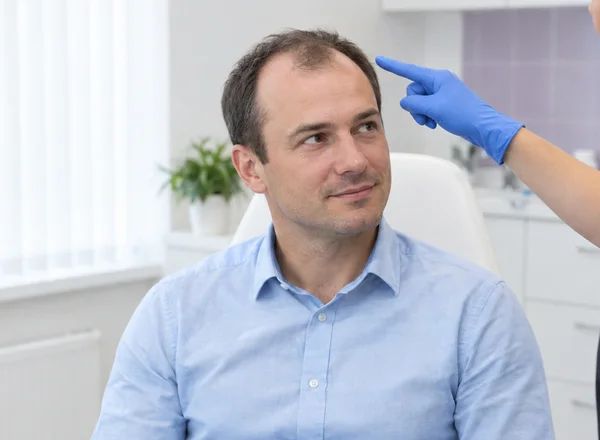

Your number is enough: a coordinator asks for photos, the doctor says if a transplant helps. Free, no booking.

services
The price is named at the free consultation, after the grafts are counted, and fixed in the contract.
suture-free graft extraction

$2,200$2,700
or $367/mo — 0% instalments for 6 months
Keep the cost as isimplantation without channels

$2,500$2,900
or $417/mo — 0% instalments for 6 months
Keep the cost as iscombined technique

$2,700$2,900
or $450/mo — 0% instalments for 6 months
Keep the cost as is| Talking to a doctor | Free |
|---|---|
| Eyebrow transplant, FUE | |
| Beard transplant, FUEinstalments $467/mo | |
| Hair trichopigmentation | |
| PRP therapy / session | $200 |
all included
We stay with you from pre-op planning to 12 months later.
You are not charged again on surgery day.
two further zones
Outside the scalp the work is identical: donor grafts from the back of the head, the FUE method, and only the zone is new.
FUE method, no incisions or stitches

Grafts are taken from the donor area at the back of the head and moved through micro-punctures of about 1 mm, so no scars are left. The doctor agrees the shape with you before the operation, taking your facial features into account. Transplanted hair grows for life: trim and style the beard as usual.
$2,800$3,000
or $467/mo — 0% instalments for 6 months
Keep the cost as isFUE method, no incisions or stitches

Drawing the brow is part of the first consultation: the surgeon does it, sample images are examined with you, and the design follows the proportions of your face. Angled to match natural growth, the hairs make the brows look natural. Growth stopped by years of plucking is no barrier.
$1,600$1,700
an outpatient session under a local anaesthetic
Keep the cost as isA check of the donor zone, a graft number, and a frank answer about the outcome. The price you are quoted at the consultation is the price in the contract.

Message our coordinator
Free online consultation · Reply within 15 minutes
Message us on TelegramMessage us on WhatsAppBy messaging us, you agree to our Privacy Policy
Process
From consultation to going home — all in one day

The doctor spends this appointment explaining DHI and FUE, replying to each of your questions, and examining what the donor area can offer.

Surgical days fill up, so a deposit secures yours. Card payments are taken at the clinic and online payment is also an option.

Before the operation, you'll need to complete a set of medical tests. The clinic provides a full list and instructions to guide you through it.

Thanks to local anaesthesia, the entire operation is carried out without pain.

Grafts come from the donor area — the back of the head or temples — collected in a way that avoids stitches entirely.

Grafts are carefully implanted into the area of hair loss by the surgeons.
This step supports fast healing, with the clinic providing all the necessary items and full instructions.

Crusts detach, puffiness fades, and the skin steadily settles down

The follicles stay; only the hair shafts fall out

Gradually new hairs appear and the result shows

Thickness picks up, and the body of the volume and shape emerge

Full thickness shows, with a front line that looks your own

Free, before the surgery and without obligation.
Start with advicedoctors

Hair transplant doctor, trichologist, surgeon
10 years of experience

Dermatovenereologist, trichologist, surgeon
11 years of experience

Plastic surgeon
9 years in practice

Plastic surgeon
9 years in practice

Assistant
9 years in practice
The doctor assesses your donor zone, gives a graft figure and explains the outcome that can be reached.
Start with advicecoordinators
The coordinator assigned to you is the person you write to at any time until recovery ends.

Patient support officer
Will back you up before and after surgery
Deals with all your papers and time slots
Patient support officer
Will back you up before and after surgery
Deals with all your papers and time slots
Patient support officer
Will back you up before and after surgery
Deals with all your papers and time slots
Patient support officer
Will back you up before and after surgery
Deals with all your papers and time slots













We will answer the questions you have and find a convenient consultation time
Message us on WhatsApp Write to usReviews
I was having trouble with my hair. I came here and got a hair transplant. The results was awesome thank you
Review on Google
І experienced hair loss due to COVID and turned to this clinic; they helped me and performed a hair transplant, moving hair from the back of my head to my temples. Thank you.
Review on Google
I traveled to City Medical Centre, where they helped me overcome hair loss through a transplant to the balding areas of my scalp. I am grateful to the doctors for performing the procedure painlessly.
Review on Google
I am sharing my experience, because before the operation I went through a pile of reviews myself and was looking for real stories. I had a beard transplant six months ago. Honestly, in the first days after the procedure I felt a little jittery: my face looked unfamiliar, there was slight swelling and small scabs. In the first couple of months the hair partly fell out, as the doctor had warned. But now the result truly makes me very happy) From about the 4th month active, even growth began. The transplanted hair took very well, the beard now looks as natural as possible, no bald patches are left. The beard became much thicker and denser, with the shape I had thought about for a long time. All in all, I recommend the clinic, the doctor was polite and explained everything 👍 The result is definitely worth it!
Review on Google
I traveled to this clinic and do hair transplant, very good quality and cheap. Good doctors
Review on Google
I do hair transplant here very good doctors!!
Review on Google
Popular questions
People often say hair implants, but no artificial hair is used. In a hair transplant the doctor moves your own follicles (grafts) from the donor area to thinning or bald areas using FUE or DHI.

Yes — patients from other cities and countries are welcome, and you can start with a free online consultation.
FUE is $2,200 (≈ £1,700), DHI is $2,500 (≈ £1,900), combined DHI+FUE is $2,700 (≈ £2,050). A free consultation with a graft count gives you the exact, contract-fixed price.
One day covers the entire operation, and home follows.
It helps with stable pattern hair loss and a receding hairline when there are enough donor grafts. Some types of alopecia need treatment first; the doctor checks this at the consultation.
No — the numbing is local and lasts through the whole operation.
In FUE, grafts are harvested with a tweezer, no cuts or stitches involved. In DHI, a Choi pen implants grafts without opening channels first. The combined method pairs FUE harvesting with DHI implantation.
Your donor area decides it, and the precise figure comes from the doctor at a consultation with no fee.
The recovery window is 0–10 days. Transplanted hairs falling out by 2–4 weeks is normal behaviour. Growth begins around 3–4 months, density is clear at 6–9 months, while 12–18 months is the final stage.
Hair growth is covered by a lifetime guarantee, fixed in the signed contract.
We hold a medical licence, and care is provided to the standards and clinical guidelines
under Ministry of Health.

Diplomas and certificates of the doctors who will operate
Open the documentsAKC POMOSHCH LLC
the clinic's own entity
1057746096924
OGRN
7728536872
INN
People in Belfast usually ask how heavy the surgery is: FUE and DHI need no cuts and no stitches and run on local anaesthesia, and one day covers it. Graft survival is 98-100 %, with a price from $2,200 (≈ £1,700) fixed in the contract after a free graft count.
Everything starts online for a patient in Belfast: a free consultation, photos of the thinning area, and a graft count made by the doctor from those photos. The clinic is available 24/7, so there is no guessing when to write.
Healing is quick, 0-10 days. The shedding at 2-4 weeks, when the transplanted hairs come out, is normal and short-lived. Growth begins at 3-4 months, and from then on the picture only improves.
Prices are in US dollars; the amount in brackets is an approximate conversion to GBP at the rate of 02.10.2026. The final price is fixed in your contract.
By messaging us, you agree to our Privacy Policy
Yes. Write to us with the dates that suit you. You can start the free first consultation online, so you can do it from home: after the doctor reviews your details, the clinic offers its nearest free dates.
For the scalp to look healed, allow at least 10 days: healing takes 0–10 days. Transplanted hairs shed normally at 2–4 weeks, growth starts at 3–4 months and the final result shows at 12–18 months.
Photos of the thinning areas and of the donor area at the back of the head in good light, your age, and whether you have had a transplant before. The doctor names the number of grafts and the price.
The transplant itself is a one-day procedure under local anaesthesia. Healing runs 0–10 days, and the doctor sets the check-ups.
Write to us on WhatsApp or Telegram or leave a request on this page. The coordinator asks for the photos and health details the doctor needs, and the doctor gives you a free assessment and a price.
Well-known people who spoke openly about this operation, in their own words.
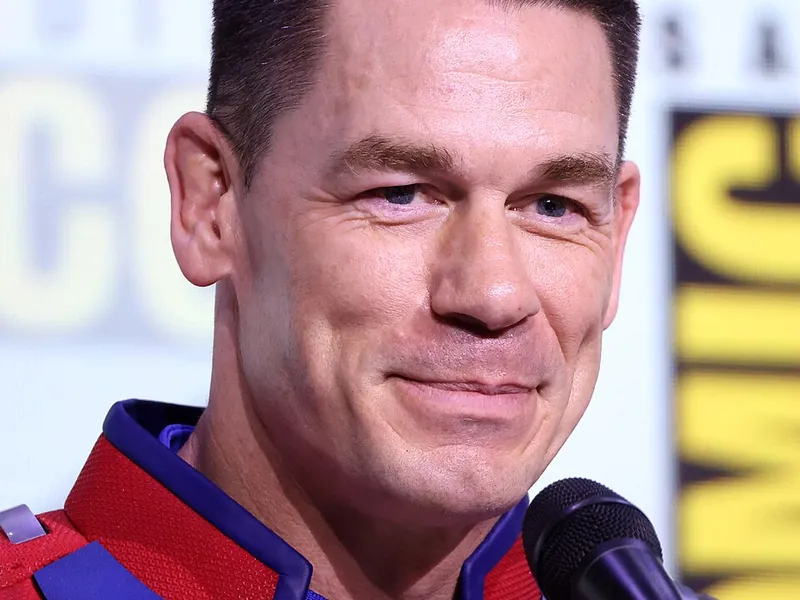 John Cena's hair transplant: “I got a problem, I try to fix it”John Cena spoke openly in 2025 about his hair transplant and the fan signs that pushed him to it. His words, how the procedure works and the recovery.
 Did Calum Best have a hair transplant? Yes, and he said so himselfCalum Best said in 2023 he had his sixth hair transplant, this time using patches of beard hair. His words, how the procedure works and recovery.
 Did Chloe Goodman have a hair transplant? Yes, and she explained whyChloe Goodman had a hair transplant in 2025 after losing hair following pregnancy. Her own words, how the procedure works and what recovery involves.
 Did Dean McCullough have a hair transplant? Yes, and he filmed itRadio 1 presenter Dean McCullough shared his FUE hair transplant on TikTok in 2024. His own words, what the swelling means and how results develop.
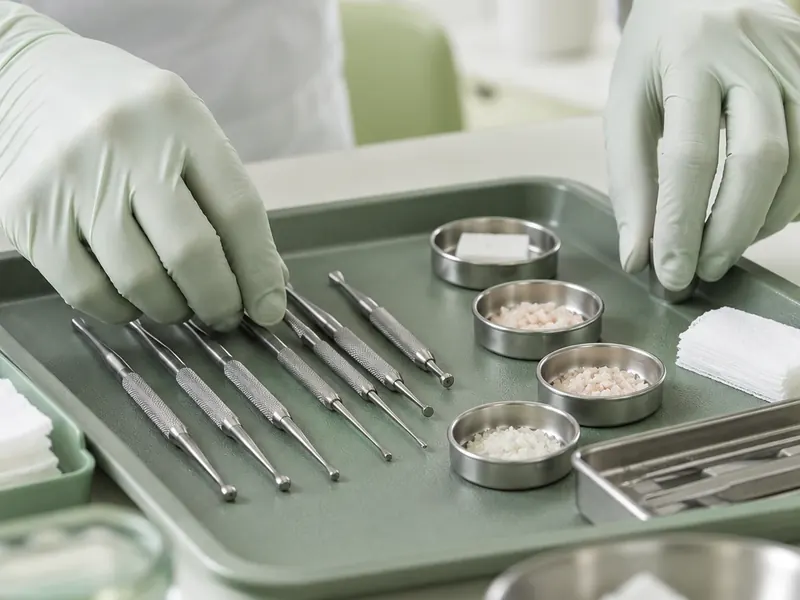 Did Ella Morgan have a hair transplant? Yes — to cover a hairline scarThe Married at First Sight star revealed a hair transplant in 2025 to cover scarring along her hairline from facial surgery. Her own words and the facts.
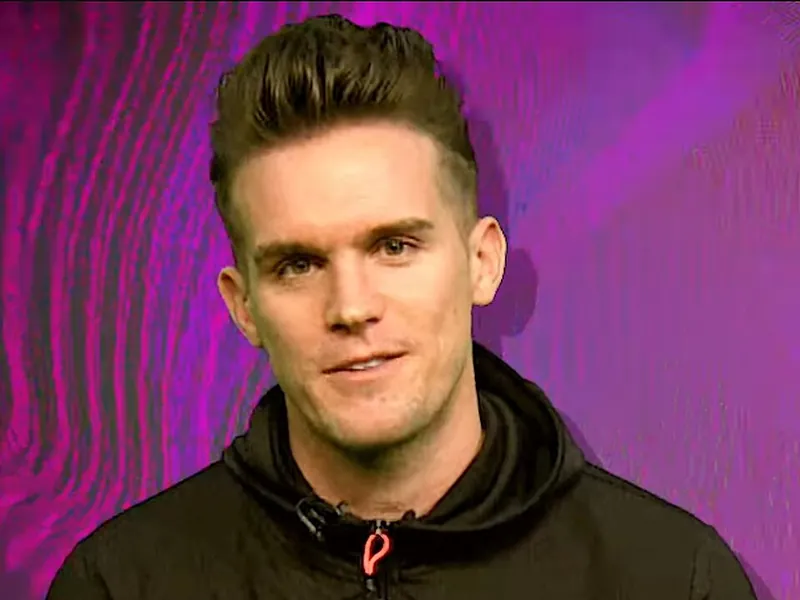 Gaz Beadle on his beard transplant: “I LOVE IT”Gaz Beadle told his 3.6 million followers he had a beard transplant after years of patchy stubble. His own words, and how a hair or beard transplant works today.
Page medically reviewed by Anastasia A. Kolesnik, hair transplant doctor. Review date: .
Belfast sits at the mouth of the River Lagan, at the head of Belfast Lough, and the water opens through the North Channel to the Irish Sea. The Met Office normals show a mild, narrow temperature range. The annual mean is 9.9 °C, the mean daily maximum is 13.7 °C and the mean minimum is 6.3 °C. Even in July, the warmest month, the average maximum is 19.7 °C. For someone planning a hair transplant this has a practical meaning: the city rarely gives you either of the two extremes that complicate early healing in other places, long scorching days or hard, prolonged frost.
Mild does not mean dry. Annual precipitation is 938.7 mm spread over 156.2 days, so rain falls on roughly every second or third day of the year. For the first days after a transplant, when the doctor's washing instructions matter most, this is the detail to plan around. In the period the timeline calls "0-10 days: heal", the crusts fall away and the swelling subsides. Spending that stretch mostly indoors, with a clear washing routine and sensible headwear, is easier than trying to dodge showers on the way to the shop. A coordinator can go through the wash-and-protect plan with you on WhatsApp or Telegram, so you know in advance what to do on a wet morning.
Sunshine is the other side of the picture. Belfast gets 1,277.0 hours of sun a year, which is modest, but it is unevenly spread. May is the sunniest month at 185.1 hours, followed by April at 157.1 and June at 151.1. December has only 35.3 hours and January 40.1. A newly transplanted scalp and a recently shaved donor area are not the places you want to test an unexpected bright spring spell. Long grey months can lull people into forgetting sun protection until a clear April or May day arrives. The care plan from CMC includes advice on washing, sleep and headwear, and the doctor will tell you during the consultation how long the area should be shielded and with what kind of cover.
The relief of the city matters in a smaller way. The basalt escarpment to the north and north-west rises to Divis Mountain at 478 m, Black Mountain at 389 m and Cavehill at 368 m, with the Castlereagh and Hollywood hills to the south-east. If you like walking up there, remember that a hillside in any month is more exposed than a street between buildings. In the early weeks you will probably want to keep those outings gentle and well covered, then return to them once the doctor has cleared you for normal activity. The plan for going back to sport and hair care is part of what the programme includes, so you do not have to guess.
The programme itself is built around one day at the clinic under local anaesthesia, and the final result is expected 12–18 months after the procedure. That long horizon is why the local climate is worth thinking about at the very start. You will live through a full cycle of Belfast seasons with your transplanted hair, and it helps to see them as a calendar rather than as a series of surprises.
The recovery stages are the same for every patient, but where they fall in the calendar is individual. According to the programme, the first 0-10 days are the healing phase, with crusts falling away and swelling subsiding. Between two and four weeks the transplanted hairs shed, which is a normal stage: only the hairs fall out, and the follicles stay in place. From three to four months the first growth appears, from six to nine months the density shows and the main volume and contour become visible, and from twelve to eighteen months you see the end result. Follow-up contact is built in at 1, 3, 6, 9 and 12 months.
Take an example. Suppose the transplant is done in the middle of January 2027. January and February are the coldest months, with a mean maximum of 8.2 °C in January and a mean minimum of 2.1 °C in February. The healing phase and the shedding stage would then fall in the grey, damp part of the year, when the sun is scarce and a cap or hat is a natural part of dressing. The first growth would be expected around April to May 2027, just as the city moves into its sunniest spell. That is a point at which you will want to ask the doctor about sun cover on the recipient area. Density would show between July and October 2027, and the end result would be judged from about January 2028 onwards, with the full window running into mid-2028.
Now compare an autumn plan. A transplant in early November 2026 puts the healing phase into the wettest part of the year. November has 102.3 mm of rain over 15.5 days, October is close behind at 95.8 mm, and December has 93.3 mm. Shedding would arrive in December, the dullest month with only 35.3 hours of sun. First growth would appear around March 2027, density from May to August 2027, and the end result somewhere between November 2027 and May 2028. The autumn route has one clear advantage: the early months need almost no sun management. It has one clear drawback: wet weather and short days can make the washing routine and the extra rest feel more of a chore. Neither is better in itself. It depends on what your calendar looks like and how you feel about being out in rain with a cap on.
Spring and early summer sit in the driest part of the year, with May at 59.6 mm and April at 60.4 mm. That is relatively kinder for the first week, but it is also the sunniest. If you choose April or May, the sun advice becomes the main item in your care plan from day one. A late-summer plan, in August, would have the early stages in the warmest weather of the year, though even there the maximum stays under 20 °C on average.
The point is not to pick a perfect month, because none exists. The point is to put the stages beside what is already fixed in your year: work deadlines, family occasions, the days when you must appear at an event. A coordinator can lay the stages over your own calendar so you are not surprised when the shedding stage arrives just before something important.
Belfast has a strong student and training rhythm. Queen's University Belfast has over 25,000 students, Ulster University has a city campus in the Cathedral Quarter, and Belfast Metropolitan College has over 53,000 students enrolled on full- and part-time courses. For a student, a lecturer or a member of college staff, the academic year gives a natural frame for the plan. The shedding stage at two to four weeks is the one that most people want to be out of the public eye for, and a quiet block of the term, a reading week or a holiday gap can suit that. Because the consultation is online and the first assessment is made from photos, you can have the whole conversation without losing a day of teaching or study.
Public holidays help too. GOV.UK lists 10 bank holidays in Northern Ireland in 2026, including St Patrick's Day on 17 March and the Battle of the Boyne substitute day on 13 July, in addition to the England and Wales set. Those days are useful when the plan calls for a stretch of quiet at home. A long weekend placed after the procedure gives you the first part of the healing phase without needing to explain your absence. The one-day format means you do not need extended time off for the procedure itself, but the first days afterwards are when a bank holiday helps most.
Events in the year also matter. The Belfast Marathon is run annually on May Day; the 41st edition in 2023 drew about 15,000 participants across its events. If you run, or if you simply plan to be out cheering at a busy event, remember that the programme includes a plan for returning to sport and hair care. The doctor and the coordinator will tell you when you can resume running, and when sweat, sun and a tight headband are acceptable again. Do not decide this on your own because a race date is approaching. Ask first, and let the race be the reason to plan early rather than a reason to cut the plan short.
Other dates are easier to build around. The city-centre St Patrick's Day celebration has been held on 17 March since 1998, and Belfast Pride ends in a city-centre parade at the end of July. Féile an Phobail, the community festival, draws over 100,000 visitors. If you want a clearly visible result, or at least a calm, normal-looking scalp, by one of these occasions, count back from the date. The shedding stage at two to four weeks is normal but visible to you, and the density stage between six and nine months is when the change becomes more obvious. A date that falls in the middle of those stages might not be the one you want to be photographed at. The coordinator can help you see this early, long before booking is confirmed.
Belfast has a good network for gentle outdoor activity. The Connswater Community Greenway offers 16 km of continuous cycle and walkway through east Belfast, and National Cycle Route 9 to Newry starts in the city. These routes are practical for the weeks after a transplant, but with conditions. In the early healing phase the priority is protecting the transplanted and donor areas, so a long ride in the wind and sun, or a hot, sweaty helmet, is not the thing to improvise. Ask the doctor and the coordinator when cycling, helmets and sustained exertion are acceptable. The plan for returning to sport is part of what CMC provides, and you will receive it before the procedure rather than learning it by trial and error.
Walking is the easier option. A walk along a flat, sheltered route is generally the kind of activity people are glad to return to early, although the exact timing is something to confirm with the doctor. The Greenway's continuous path is helpful because you can choose short out-and-back stretches and turn back if the weather changes. Belfast has rain on 156.2 days a year, so carry a light, clean cover and plan routes with places to stop.
Headwear deserves its own thought. In a city where the average maximum never reaches 20 °C even in July, a cap or hat is normal clothing for much of the year, and no one will look twice. That is a small convenience for the early weeks. But what you wear matters. The programme includes advice on washing your hair, on sleep and on headwear, and the doctor will tell you what to choose and when to avoid anything tight or rubbing. Do not assume that any hat is fine. A clean, loose-fitting cover is the usual direction, and the care plan will be specific.
Sleep is part of the same conversation. The darker months have very little sunshine, and long evenings tend to bring long nights. The plan includes advice on sleeping position and protecting the area at night. It is easier to follow when you have read it in advance and set up your bed before the day of the procedure.
After the procedure, you stay in contact with a personal coordinator, and progress is tracked by photo. That fits the climate well: if it is wet or you are not leaving the house, you can send a photo from home on WhatsApp or Telegram and get a reply without going anywhere.
Cosmetic procedures sit in a particular place in the UK system. The NHS states that cosmetic surgery is not routinely provided, that it might pay for some procedures for psychological or other health reasons, and that most people who want cosmetic surgery need to pay privately. The examples it gives are rhinoplasty for breathing problems and breast enlargement for very uneven or absent breasts causing significant psychological distress. Hair transplant is not on that list. If you live in Belfast, plan on the basis that it is a private decision, and ask your coordinator for anything you need in writing to talk it over with your family or your insurer.
The online format makes preparation straightforward. You send photos on WhatsApp or Telegram, receive a free doctor assessment, and confirm the plan and dates before anything is booked. The doctor looks at your donor area, counts the grafts and shows the result that is achievable in your case. The cost is quoted at the consultation and fixed in the contract. The first consultation is free, and coordinators reply 24/7, which is helpful when your working hours or study timetable make a daytime call hard to arrange.
A transplant does not suit everyone, and the doctor will say so openly. Hair transplant helps with androgenetic or diffuse alopecia, bald patches and a receding frontal edge of the hair. The contraindications listed include trichotillomania, body dysmorphic disorder, cancer, being under 18, intolerance to anaesthetics, epilepsy, serious heart conditions, diabetes mellitus, a pacemaker, AIDS/HIV, hepatitis B/C, pulmonary embolism and patchy alopecia. Hair loss from illness or from a hormonal imbalance may also mean a transplant is not the right route. If you are unsure which group you fall into, send photos first and ask. Your case may be solvable without surgery, and the doctor will tell you that right at the consultation.
Preparation also means choosing a method. The programme describes classic FUE, suture-free DHI with a Choi pen, and a combined protocol with FUE extraction and DHI implantation. FUE needs no incisions or stitches, and DHI is described as implantation without channels. Which one fits depends on the area and your goals: classic FUE is listed as suitable for androgenetic alopecia, DHI for densification, and the combination for both. The figures given for each method are averages and a guide, and the precise numbers depend on the transplant area and individual features. The doctor will clarify them during the consultation.
Finally, the procedure is a single day at the clinic, with local anaesthesia, and the programme includes dressings and healing checks, a care plan for transplant and donor areas, and a personal coordinator. Pre-surgery tests are done from a list and instructions the clinic provides. Once you have a date, fit those tests into your normal week and put the follow-up points at 1, 3, 6, 9 and 12 months into your diary.
There is no perfect month, only different trade-offs. Autumn and early winter are the wettest and dullest part of the year, with November at 102.3 mm of rain over 15.5 days and December at only 35.3 hours of sun, so sun protection matters little but a wet routine and short days do. April and May are the driest and sunniest months, which is kinder for washing but means the doctor's headwear and sun advice becomes the main item. Describe your calendar to the coordinator and they will lay the healing stages over it.
It might, so count back from the date. The programme places shedding of the transplanted hairs at two to four weeks, and that is a normal stage in which only the hairs fall out while the follicles stay in place. If you want to look settled at an occasion such as St Patrick's Day on 17 March or the Belfast Marathon on May Day, set the transplant date so that the shedding stage ends before it, or accept that it may fall around it. The coordinator can do this arithmetic with you before anything is booked.
Headwear is part of the advice the care plan covers, together with washing and sleep. With an annual mean maximum of 13.7 °C and a July maximum of 19.7 °C, a cover is ordinary in the city for most of the year. What matters is the type and the timing, because the doctor will say what to choose and what to avoid, such as anything tight or rubbing. Follow that guidance rather than choosing whatever is at hand.
The programme includes a plan for returning to sport and hair care, and the timing depends on your case, so the doctor and the coordinator will set it. The Greenway offers 16 km of continuous cycle and walkway through east Belfast, and National Cycle Route 9 to Newry starts in the city, so there is plenty to return to. Avoid improvising with a long, sweaty ride under a helmet in the early stages and ask first.
The NHS says cosmetic surgery is not routinely provided and that most people who want it need to pay privately, although it might fund certain procedures for psychological or other health reasons. Its examples are rhinoplasty for breathing problems and breast enlargement in cases of very uneven or absent breasts causing significant psychological distress. Hair transplant is not among them, so plan on it being a private decision. Ask the coordinator for the written plan and contract if you want to discuss it with family or an insurer.
Belfast has large student populations, with over 25,000 at Queen's University Belfast and over 53,000 enrolled on courses at Belfast Metropolitan College, and the academic year gives natural quiet blocks. The procedure itself takes one day at the clinic, and the first assessment is made online from photos, so little time is lost. The days to protect are the first 0-10 days of healing and the shedding stage at two to four weeks. Placing those over a reading week, a holiday gap or a run of bank holidays is the simplest approach.
GOV.UK lists 10 bank holidays in Northern Ireland in 2026, including 17 March for St Patrick's Day and 13 July for the Battle of the Boyne substitute day, in addition to the England and Wales set. A long weekend placed right after the procedure covers part of the first healing days without explanation at work. The coordinator can check your dates against the stages, and you confirm the plan before anything is booked.
Progress is tracked by photo with your personal coordinator, who is reachable on WhatsApp and Telegram round the clock, and follow-up visits are set at 1, 3, 6, 9 and 12 months. In a city with rain on 156.2 days a year, that means you can send a photo from home and get a reply without going out. The final result is expected 12–18 months after the procedure.

 Forceps
 Minimal


