





























beginning
now 12 months on
2,800 grafts
FUE method
City Medical Centre
0% instalments
from $367/mo
A chat and a costing — $0.
Actual case
beginning
now 12 months on
Grafts counted and the outcome forecast — FUE, without cuts or stitches worked out and not charged — before you decide.
Free online consultation · Reply within 15 minutes
At no cost to you, no surgery booking required
Message our coordinator
Free online consultation · Reply within 15 minutes
Message us on TelegramMessage us on WhatsAppBy messaging us, you agree to our Privacy Policy
Hair transplant for patients from Reading at City Medical Centre starts at £1,700 (from $2,200). The first online consultation is free; the doctor names the final price and it is fixed in the contract.
How it works · Hair transplant prices
Information current as of 24 October 2026
results
All cases come from real CMC patients.
beginning
now 12 months on
2,800 grafts
FUE method

beginning
now 12 months on
3,500 grafts
FUE method

beginning
now 12 months on
2,600 grafts
FUE method

beginning
now 12 months on
3,000 grafts
FUE method

beginning
now 12 months on
2,700 grafts
FUE method

beginning
now 12 months on
3,300 grafts
FUE method

beginning
now 12 months on
2,900 grafts
FUE method

beginning
now 12 months on
2,500 grafts
FUE method

beginning
now 12 months on
3,400 grafts
FUE method

beginning
now 12 months on
2,500 grafts
FUE method

beginning
now 12 months on
3,100 grafts
FUE method

beginning
now 12 months on
3,600 grafts
FUE method

beginning
now 12 months on
4,000 grafts
FUE method

beginning
now 12 months on
3,200 grafts
FUE method

beginning
now 12 months on
3,000 grafts
FUE method

beginning
now 12 months on
3,700 grafts
FUE method

beginning
now 12 months on
2,700 grafts
FUE method

beginning
now 12 months on
3,800 grafts
FUE method

beginning
now 12 months on
3,300 grafts
FUE method

beginning
now 12 months on
2,800 grafts
FUE method

beginning
now 12 months on
2,500 grafts
FUE method

beginning
now 12 months on
3,900 grafts
FUE method

beginning
now 12 months on
3,500 grafts
FUE method

beginning
now 12 months on
3,800 grafts
FUE method

beginning
now 12 months on
2,900 grafts
FUE method

beginning
now 12 months on
3,600 grafts
FUE method

beginning
now 12 months on
2,600 grafts
FUE method

beginning
now 12 months on
2,700 grafts
FUE method

beginning
now 12 months on
3,700 grafts
FUE method

beginning
now 12 months on
3,200 grafts
FUE method

beginning
now 12 months on
3,000 grafts
FUE method

beginning
now 12 months on
2,800 grafts
FUE method

beginning
now 12 months on
4,000 grafts
FUE method

beginning
now 12 months on
3,400 grafts
FUE method

beginning
now 12 months on
2,900 grafts
FUE method

beginning
now 12 months on
3,100 grafts
FUE method

beginning
now 12 months on
2,600 grafts
FUE method

beginning
now 12 months on
3,300 grafts
FUE method

beginning
now 12 months on
3,900 grafts
FUE method

beginning
now 12 months on
3,500 grafts
FUE method

beginning
now 12 months on
2,700 grafts
FUE method

beginning
now 12 months on
3,800 grafts
FUE method

beginning
now 12 months on
3,200 grafts
FUE method

beginning
now 12 months on
3,000 grafts
FUE method

beginning
now 12 months on
2,800 grafts
FUE method

beginning
now 12 months on
3,100 grafts
FUE method

beginning
now 12 months on
3,600 grafts
FUE method
Comparison
We work with three graft transfer technologies: classic FUE, suture-free DHI and a combined protocol. Compare the implantation technique, tissue trauma and graft survival to choose your method with open eyes.
Classic technique without incisions or stitches

$2,200
$2,700
Graft implantation technique
ForcepsGraft trauma
MinimalNatural hair growth angle
NaturalGraft survival
98–100%Suitable for
Androgenetic alopeciaStitch-free implantation with a Choi pen

$2,500
$2,900
Graft implantation technique
DHI, a Choi implanterGraft trauma
MinimalNatural hair growth angle
NaturalGraft survival
98–100%Suitable for
DensificationFUE for extraction, DHI implant

$2,700
$2,900
Graft implantation technique
FUE extraction, DHI implantationGraft trauma
MinimalNatural hair growth angle
NaturalGraft survival
98–100%Suitable for
Androgenetic alopecia and densificationSurvival and trauma figures come as method averages, as a reference point: the exact numbers depend on the transplant area and the patient's individual features, and the doctor clarifies them at consultation.
Have a consultation


















about the clinic
Modern equipment, comfortable rooms and care for all patients

Every query is handled and the consultation booked at an hour that suits
Message us on WhatsApp Send detailsIf your case does not require surgery, the doctor will say so right at the consultation — and your money will not be wasted. Below are the conditions in which a transplant really works.
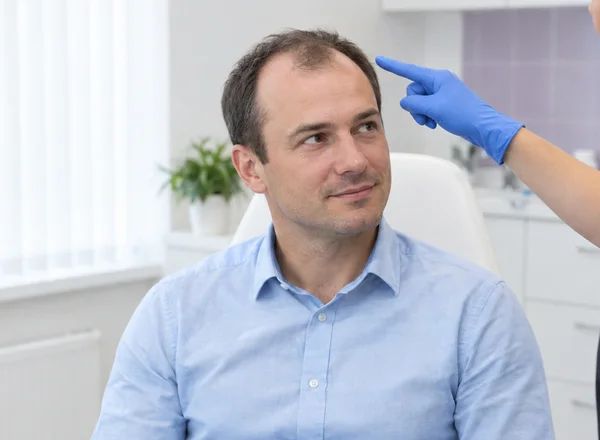

Nothing but a number is required. A coordinator will request pictures of the thinning zone in a messenger and a doctor will answer whether a transplant would help. Free, and no operation is arranged.

services
The cost is quoted after the grafts are counted at the free consultation, and fixed in the contract.
suture-free graft extraction

$2,200$2,700
or $367/mo — 0% instalments for 6 months
Freeze your quoteimplantation without channels

$2,500$2,900
or $417/mo — 0% instalments for 6 months
Freeze your quotecombined technique

$2,700$2,900
or $450/mo — 0% instalments for 6 months
Freeze your quote| First medical check | Free |
|---|---|
| Eyebrow transplant, FUE | |
| Beard transplant, FUEinstalments $467/mo | |
| Hair trichopigmentation | |
| PRP therapy / session | $200 |
all included
From the earliest planning to the 12-month follow-up.
You pay no extra charges on the day of surgery.
two other areas
A change of zone does not change the surgery: the back of the head supplies the grafts and FUE remains the method.
FUE, no incisions and no stitches

Grafts are taken from the donor area at the back of the head and moved through micro-punctures of about 1 mm, so no scars are left. The doctor agrees the shape with you before the operation, taking your facial features into account. Transplanted hair grows for life: trim and style the beard as usual.
$2,800$3,000
or $467/mo — 0% instalments for 6 months
Freeze your quoteFUE, no incisions and no stitches

At your first meeting the surgeon settles the brow shape: references are turned over together and the proportions of your face underpin the design. Angled correctly, the implanted hairs give brows that read as natural. Growth stopped by long years of plucking is covered as well.
$1,600$1,700
an outpatient session under a local anaesthetic
Freeze your quoteThe doctor checks the donor zone, arrives at a graft number and explains what outcome is realistic. What you agree at the appointment is exactly what the contract says.

Message our coordinator
Free online consultation · Reply within 15 minutes
Message us on TelegramMessage us on WhatsAppBy messaging us, you agree to our Privacy Policy
Process
From consultation to going home — all in one day

The doctor opens the process with a free consultation, explaining the FUE and DHI techniques, answering questions, and shaping a plan built around your specific needs.

Patients in Reading reserve their date by paying a deposit, either by card at the clinic or online, with the terms set in a medical services contract.

You'll complete the necessary medical tests before the operation, following the list and instructions supplied by the clinic.

Because the area is numbed locally, the whole operation passes comfortably.

The back of the head or the temples serve as the donor area, from which grafts are collected without stitches.

Grafts that were taken earlier are implanted into the bald zone.
After surgery the clinic provides the essentials and full directions, so healing proceeds quickly.

The crusts come off and the swelling goes down as the area recovers

The follicles stay; only the hair shafts fall out

New hairs show gradually, the result begins to show

Growth fills out; the hair gains body and its shape can be seen

The transplant matures into full volume and a soft hairline

Free, before the operation and committing you to nothing.
Have a consultationdoctors

Hair transplant doctor, trichologist, surgeon
10 years of experience

Dermatovenereologist, trichologist, surgeon
11 years in practice

Plastic surgeon
9 years in practice

Plastic surgeon
9 years in practice

Assistant
9 years in practice
Expect an examination of the donor zone, a graft figure, and a clear picture of the likely outcome.
Have a consultationcoordinators
You are given a personal coordinator who guides you from the first enquiry to recovery.
Patient services lead
Stays available the whole way through
Sorts out all your paperwork and bookings
Patient services lead
Stays available the whole way through
Sorts out all your paperwork and bookings
Patient services lead
Stays available the whole way through
Sorts out all your paperwork and bookings
Patient services lead
Stays available the whole way through
Sorts out all your paperwork and bookings













Every query is handled and the consultation booked at an hour that suits
Message us on WhatsApp Send detailsReviews
I was having trouble with my hair. I came here and got a hair transplant. The results was awesome thank you
Review on Google
І experienced hair loss due to COVID and turned to this clinic; they helped me and performed a hair transplant, moving hair from the back of my head to my temples. Thank you.
Review on Google
I traveled to City Medical Centre, where they helped me overcome hair loss through a transplant to the balding areas of my scalp. I am grateful to the doctors for performing the procedure painlessly.
Review on Google
I am sharing my experience, because before the operation I went through a pile of reviews myself and was looking for real stories. I had a beard transplant six months ago. Honestly, in the first days after the procedure I felt a little jittery: my face looked unfamiliar, there was slight swelling and small scabs. In the first couple of months the hair partly fell out, as the doctor had warned. But now the result truly makes me very happy) From about the 4th month active, even growth began. The transplanted hair took very well, the beard now looks as natural as possible, no bald patches are left. The beard became much thicker and denser, with the shape I had thought about for a long time. All in all, I recommend the clinic, the doctor was polite and explained everything 👍 The result is definitely worth it!
Review on Google
I traveled to this clinic and do hair transplant, very good quality and cheap. Good doctors
Review on Google
I do hair transplant here very good doctors!!
Review on Google
Asked most often
People often say hair implants, but no artificial hair is used. In a hair transplant the doctor moves your own follicles (grafts) from the donor area to thinning or bald areas using FUE or DHI.

Yes. People from all manner of towns and countries form a large part of the practice, and an online consultation opens everything.
FUE: $2,200 (≈ £1,700). DHI: $2,500 (≈ £1,900). Combined: $2,700 (≈ £2,050). A free consultation and graft count gives you the final, contract-fixed price with no hidden extras.
A single day, start to end, and then patients are home.
It helps with stable pattern hair loss and a receding hairline when there are enough donor grafts. Some types of alopecia need treatment first; the doctor checks this at the consultation.
No — a local anesthetic removes sensation for the whole operation.
FUE means tweezer-based, incision-free graft harvesting. DHI means channel-free implantation with a Choi pen. Combined DHI+FUE uses FUE for harvesting and the DHI pen for implanting.
Your donor area decides it, and the precise figure comes from the doctor at a consultation with no fee.
Allow 0–10 days for the skin to close. The 2–4 week shed is expected and passes. Growth comes back at 3–4 months, density builds through 6–9 months, and the finished result stands at 12–18 months.
A lifetime guarantee of hair growth is included, confirmed in your contract.
The clinic holds a medical licence; care meets the standards and clinical guidelines
under Ministry of Health.

Diplomas and certificates of the operating doctors
Check the documentsAKC POMOSHCH LLC
the firm's legal entity
1057746096924
OGRN
7728536872
INN
People in Reading usually ask how heavy the surgery is: FUE and DHI need no cuts and no stitches and run on local anaesthesia, and one day covers it. Graft survival is 98-100 %, with a price from $2,200 (≈ £1,700) fixed in the contract after a free graft count.
A resident of Reading can settle the main question from the sofa: the free online consultation shows the doctor your thinning area in photos and produces a graft count. The clinic is on the line 24/7, with no waiting list.
Healing occupies 0-10 days and asks little of you. At 2-4 weeks the transplanted hairs come away, a normal part of the process that catches unprepared patients by surprise. Growth returns at 3-4 months.
Prices are in US dollars; the amount in brackets is an approximate conversion to GBP at the rate of 02.10.2026. The final price is fixed in your contract.
By messaging us, you agree to our Privacy Policy
Yes. Write to us with the dates that suit you. You can start the free first consultation online, so you can do it from home: after the doctor reviews your details, the clinic offers its nearest free dates.
If you want a visible result for a date, plan about a year ahead: growth starts at 3–4 months, thickens by 6–9 and is final at 12–18 months. Healing alone takes 0–10 days.
Write to us on WhatsApp or Telegram or leave a request on this page. The coordinator asks for the photos and health details the doctor needs, and the doctor gives you a free assessment and a price.
One day for the procedure, after which you leave the same day, and then healing of 0–10 days. The healing check-ups are part of the price.
Clear photos of the hairline from the front, the top, the crown and the donor area at the back of the head, plus your age and whether you have had a transplant before. The doctor counts the grafts from them, and the price is fixed in the contract.
Well-known people who spoke openly about this operation, in their own words.
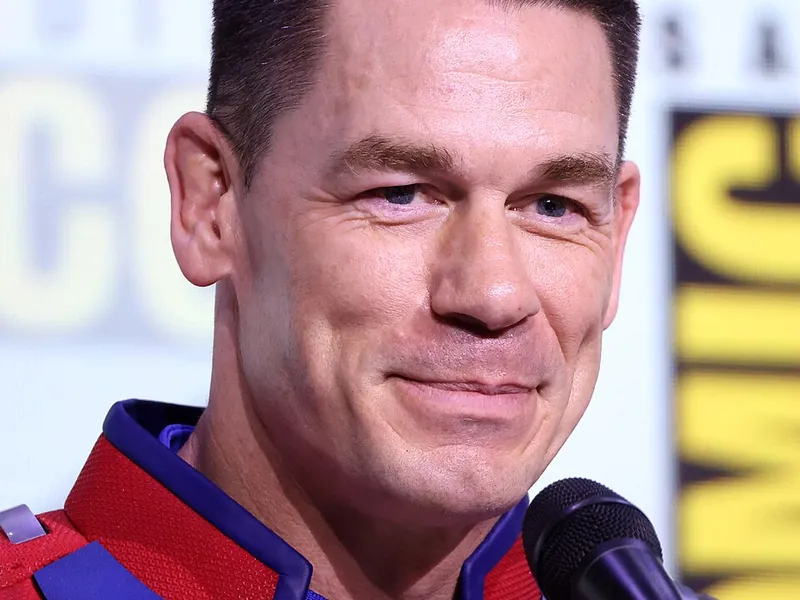 John Cena's hair transplant: “I got a problem, I try to fix it”John Cena spoke openly in 2025 about his hair transplant and the fan signs that pushed him to it. His words, how the procedure works and the recovery.
 Did Calum Best have a hair transplant? Yes, and he said so himselfCalum Best said in 2023 he had his sixth hair transplant, this time using patches of beard hair. His words, how the procedure works and recovery.
 Did Chloe Goodman have a hair transplant? Yes, and she explained whyChloe Goodman had a hair transplant in 2025 after losing hair following pregnancy. Her own words, how the procedure works and what recovery involves.
 Did Dean McCullough have a hair transplant? Yes, and he filmed itRadio 1 presenter Dean McCullough shared his FUE hair transplant on TikTok in 2024. His own words, what the swelling means and how results develop.
 Did Ella Morgan have a hair transplant? Yes — to cover a hairline scarThe Married at First Sight star revealed a hair transplant in 2025 to cover scarring along her hairline from facial surgery. Her own words and the facts.
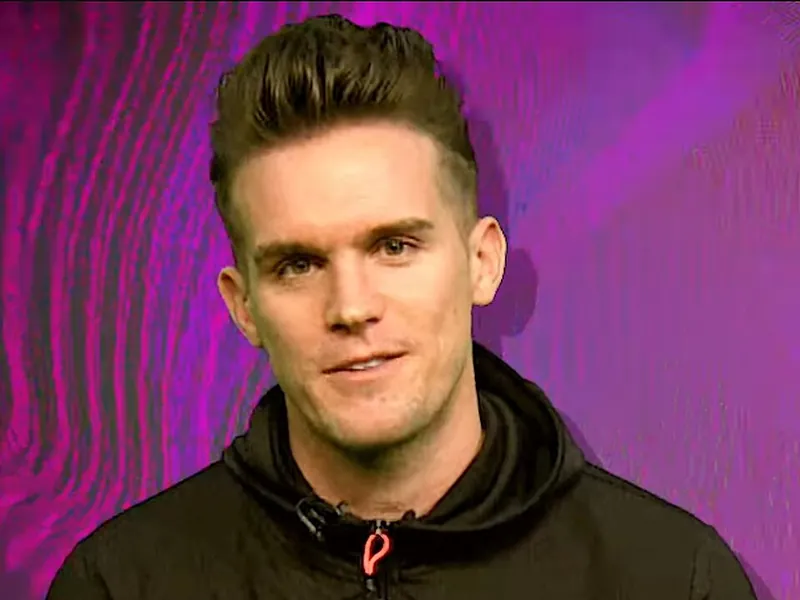 Gaz Beadle on his beard transplant: “I LOVE IT”Gaz Beadle told his 3.6 million followers he had a beard transplant after years of patchy stubble. His own words, and how a hair or beard transplant works today.
Page medically reviewed by Anastasia A. Kolesnik, hair transplant doctor. Review date: .
Reading stands at about 61 m above sea level, on a low ridge between the Thames and the Kennet. The Met Office 1991–2020 record for the University of Reading station shows 1,577.5 hours of sunshine a year. That annual total is less useful for planning a hair transplant than the way the hours are spread. July brings 205.5 hours, May 199.9 and June 199.0, while December has only 48.5. The scalp is the same in every month, but the sun it meets in the first weeks after surgery depends on the date you choose.
The procedure itself is the same whatever the season. Under local anaesthesia, grafts are taken from the back of the head or the temples with FUE, without cuts or stitches. They are then implanted into the thinning zone, and the whole thing takes one day at the clinic. The first stage of healing, 0–10 days, is when the crusts fall away and the swelling subsides. During those days the treated skin is a healing surface, and it is sensible to think about how much direct sun it will get. In May or June that question comes up much more often than in December.
The package includes advice on washing your hair, on sleep and on headwear, together with a care plan for both the transplanted and the donor areas. We do not invent general rules here. The type of headwear, the days you need it and the rules for being outside are set by the doctor for your case during the consultation, and the coordinator repeats them in writing in your messenger chat. What the Reading figures give you is the context for that conversation: a bright late spring asks different questions from a grey winter.
Open green spaces run along the Thames through the town: Thameside Promenade, Caversham Court, Christchurch Meadows, Hills Meadow, View Island and King's Meadow. A walk beside the river is a natural thing to plan for the recovery weeks. Wide open ground gives little cover from the sun, so it is worth asking the doctor, before your date is fixed, what that means for the first days. You can send photos of the donor area and the thinning zone on WhatsApp or Telegram at any hour, and the coordinator answers round the clock.
The coldest month in Reading is January, with a mean maximum of 8.0 °C and a mean minimum of 2.1 °C. The warmest are July, at 22.7 °C by day and 12.9 °C at night, and August, at 22.3 °C by day. The annual mean is 10.9 °C, with a mean maximum of 14.9 °C and a mean minimum of 6.9 °C. These are moderate numbers, and they mean that over a whole year, covering the head with something is an ordinary habit in this part of England. That habit is exactly what you will want to talk through with the doctor.
Autumn is the wettest stretch. October averages 73.8 mm of rain and November 73.1 mm. Across the year Reading gets 658.2 mm on 113.9 days, so rain is a regular companion, not a rare event. The driest months are March at 40.3 mm and May at 43.5 mm. For the weeks of healing, rain raises practical questions: what to wear over the head, how to keep the area clean and how the washing routine fits around the weather. Those answers come from the doctor's instructions and not from guesswork, so write your questions down before the consultation.
A winter or autumn date has one clear advantage for the early days. The sun is weak, and December is the dullest month of all, so direct sunlight on the treated area is a smaller worry. The trade-off is cold and damp, which is why the headwear advice matters in these months. A date in the brighter months reverses the picture. Neither choice is wrong, and the doctor does not rank the seasons. The point is to know which questions your chosen month will raise, and to have the answers ready before the day.
The coordinator who stays with you from the first message can help turn the weather into a plan. Tell them which months suit your work and your routine, and they will arrange the consultation and the pre-surgery tests around that. The clinic sends the list of tests and the instructions for preparation in advance, so nothing is left to the morning of the procedure.
The service has a clear timeline: 0–10 days to heal; 2–4 weeks when the transplanted hairs shed while the follicles stay in place; 3–4 months for the first growth; 6–9 months when density shows and the main volume and contour become visible; and 12–18 months for the final result. Placing that sequence on a real calendar shows how the seasons interact with it. Take an example date of 1 December 2026, purely as an illustration and not as a recommendation.
With surgery on 1 December 2026, the healing stage runs to around 11 December. The shedding stage falls between about 15 and 29 December, which puts it across the Christmas period. In 2026 England has Christmas Day on 25 December and a substitute Boxing Day bank holiday on 28 December. Shedding is a normal stage, and only the hairs fall out while the follicles stay in place, but it helps to know about it before a family gathering and not discover it in the middle of one.
The first growth would then appear around March and April 2027. The density stage would come roughly between June and September 2027, which are among the sunniest months in Reading. The final result would be judged between about December 2027 and June 2028. The consultation is where the doctor tells you which of these windows suit your case. Dates always shift a little from person to person, and the figures are ranges, not promises.
The package includes follow-up visits at 1, 3, 6, 9 and 12 months, and progress is tracked by photo through your personal coordinator. Because the consultations are online, those checks fit around a working week without a long journey. A useful habit is to take photos in the same room and the same light every time. Changing sun between a dull December and a bright June can otherwise make progress look different from what it is.
Reading's calendar has two fixed events that are worth setting beside a surgery date. The Reading Festival has run since 1971 and is held over the August bank holiday weekend, Friday to Sunday. The Reading Half Marathon is held on the streets in March each year and has 16,000 competitors. Neither is a reason to choose or avoid a date. They are useful markers, because crowds, sun exposure and physical effort are exactly the things the healing instructions deal with.
Take the half marathon first. The package includes a plan for returning to sport and hair care, and the doctor decides when running and heavier exercise are sensible for you after the transplant. No general number of weeks is given here, because the right answer depends on the transplant area and on how you heal. If you run, or just want to watch the race, mention it at the consultation. A March event fits the example calendar above in an interesting way: a December surgery would leave the March race at the stage of first growth, so you would be spectating or deciding with the doctor's advice in hand.
August is different. The festival weekend falls in a warm month, with a mean maximum of 22.3 °C in August, and in a period when direct sun is a real consideration. If your date falls in summer, ask the doctor how to handle crowds, sun and headwear in the first ten days. The healing stage, 0–10 days, is when the crusts fall away. In the same stretch, the area deserves the most careful treatment. Outside that window, the long list of everyday habits matters less, and the doctor will say when ordinary life resumes.
Bank holidays also shape ordinary logistics. England and Wales have 8 in 2026: New Year's Day, Good Friday on 3 April, Easter Monday on 6 April, the early May bank holiday on 4 May, the Spring bank holiday on 25 May, the Summer bank holiday on 31 August, Christmas Day and the substitute Boxing Day on 28 December. A long weekend can give you quiet days at home for the first stage, so some people choose their date around one. The coordinators work on WhatsApp and Telegram round the clock, so a holiday does not leave a question unanswered.
Reading is a borough of 183,762 people, within an urban area of 355,596, in South East England. Like everywhere in the country, its residents rely on the NHS for most medical care, but the NHS itself says that cosmetic surgery is not routinely provided. It might pay for some procedures for psychological or other health reasons, such as rhinoplasty for breathing problems. Most people who want cosmetic surgery need to pay privately. A hair transplant to restore the frontal edge of the hair, or to fill thinning areas, normally belongs in that private category, though the doctor can discuss your individual situation.
Waiting is the other practical point. NHS England's statistical notice of 10 September 2026 reports 7.3 million waiting pathways at the end of July 2026, covering around 6.2 million unique patients, and 111,379 people who had waited more than 52 weeks. These figures concern treatment that the NHS does provide, and they say nothing about hair transplants. They do show why many people prefer a private route with a fixed plan and a date they can choose themselves, instead of an open-ended queue.
With CMC the first step is free and needs no surgery booking. You send photos of the donor area and the thinning zone, the doctor assesses them, counts the grafts and explains the result that is realistic in your case. The shown cases use between 2,500 and 4,000 grafts, and your own number is set at the consultation. A transplant does not suit everyone. Under-18s, people with cancer, trichotillomania, body dysmorphic disorder, epilepsy, serious heart conditions, diabetes, a pacemaker, hepatitis B/C, HIV, pulmonary embolism or intolerance to anaesthetics are among the cases where it is not appropriate. Your case may also be solvable without surgery, and the doctor will say so.
The method is chosen with you. Classic FUE is suited to androgenetic alopecia. The DHI method, with a pen implanter, is suited to densification. The combined protocol extracts by FUE and implants by DHI. The doctor explains the difference, and the plan and dates are confirmed under a medical services contract before anything is booked. If you want to begin, message the coordinator on WhatsApp or Telegram, or leave a phone number and the coordinator will call back.
Neither is ranked as better. In Reading the sunniest months are July (205.5 hours), May (199.9) and June (199.0), and the dullest is December (48.5 hours). A bright month raises questions about sun on the treated area in the 0–10 day healing stage. A dull, cold month raises questions about headwear and damp. The doctor will give the headwear advice for your date during the consultation.
January is the coldest month, with a mean maximum of 8.0 °C and a mean minimum of 2.1 °C. The cold itself is moderate, but it means a hat or hood is an everyday item. The package includes advice on headwear, and the doctor will say what is suitable in the healing period and for how long.
Reading's wettest months are October (73.8 mm) and November (73.1 mm). Rain does not stop the procedure, which takes one day at the clinic. It does affect how you cover and wash the area afterwards. Ask the doctor and the coordinator about your washing routine, and write the instructions down before the date.
As an illustration only: with a surgery date of 1 December 2026, healing would run to about 11 December, shedding of the transplanted hairs would fall between about 15 and 29 December, and first growth would appear in March–April 2027. Density shows at 6–9 months and the final result comes at 12–18 months. Your own timeline may differ and the doctor will explain it.
In 2026 Christmas Day is on 25 December and the substitute Boxing Day bank holiday is on 28 December. Shedding is a normal stage, 2–4 weeks after surgery, when only the hairs fall out and the follicles stay in place. It helps to know about it in advance. Coordinators answer on WhatsApp and Telegram round the clock, including on bank holidays.
The package includes a plan for returning to sport and hair care, and the doctor sets the timing for your case. No general number is given here because it depends on the transplant area and your healing. Tell the doctor at the consultation which event you have in mind, and the plan can be built around it.
The NHS states that cosmetic surgery is not routinely provided and that most people who want it need to pay privately. It may fund some procedures for psychological or other health reasons. A hair transplant is normally treated as private, but you can describe your situation to the doctor during the free consultation.
No. The first consultation is online and free, through WhatsApp or Telegram, and needs no surgery booking. Send photos, receive the doctor's assessment and the grafts count, and confirm the plan and dates before anything is booked. The follow-up checks at 1, 3, 6, 9 and 12 months are tracked by photo through your coordinator.

 Forceps
 Minimal


