


























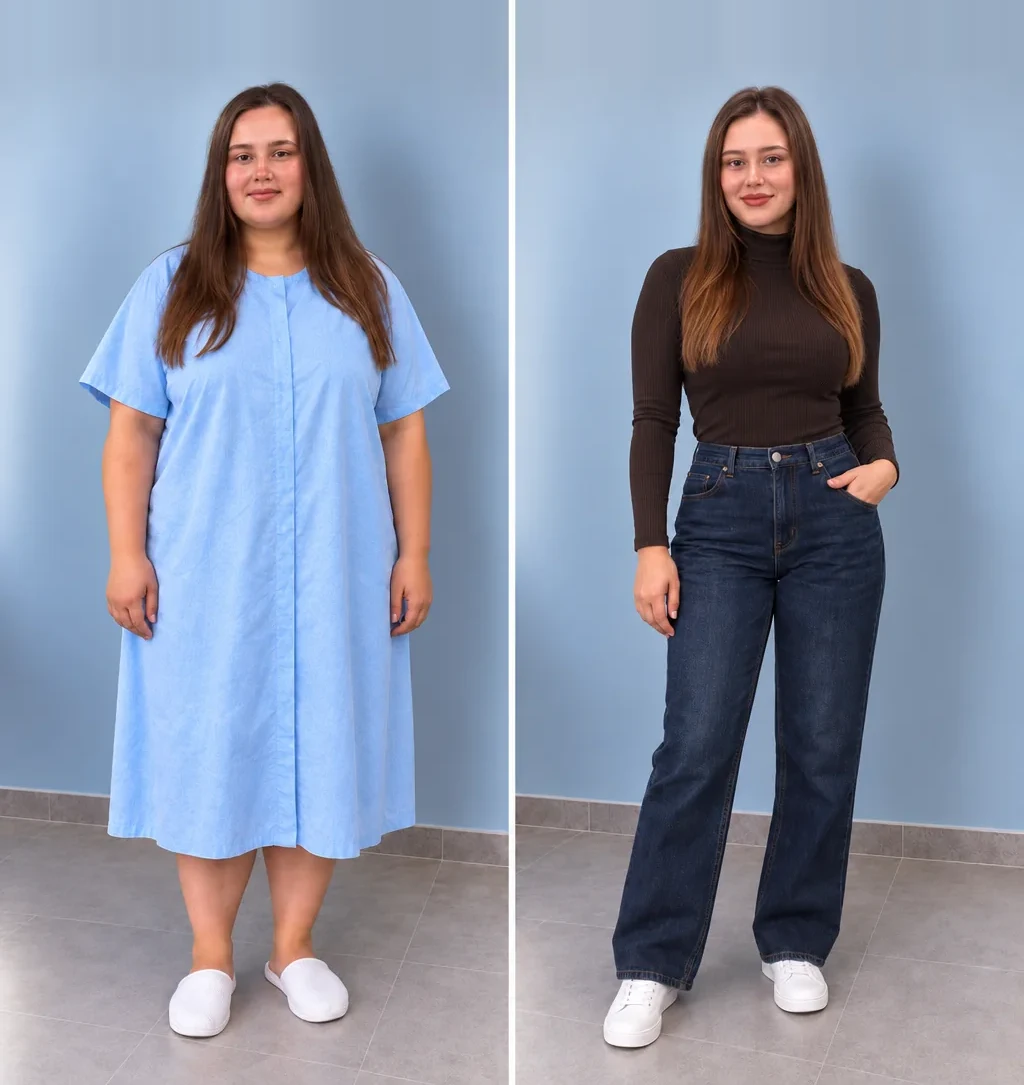
 beforeafter
Irina, 26
Bariatric surgery
Bariatric surgery
$3,600
$4,800 · First consultation — Free
Free online consultation · Reply within 15 minutes
 before
after
Message our coordinator
Free online consultation · Reply within 15 minutes
Message us on TelegramMessage us on WhatsAppBy messaging us, you agree to our Privacy Policy
Bariatric surgery for patients from Belfast at City Medical Centre starts at £2,750 (from $3,600). The first online consultation is free; the doctor names the final price and it is fixed in the contract.
How it works · Bariatric surgery prices
Information current as of 24 October 2026
Results
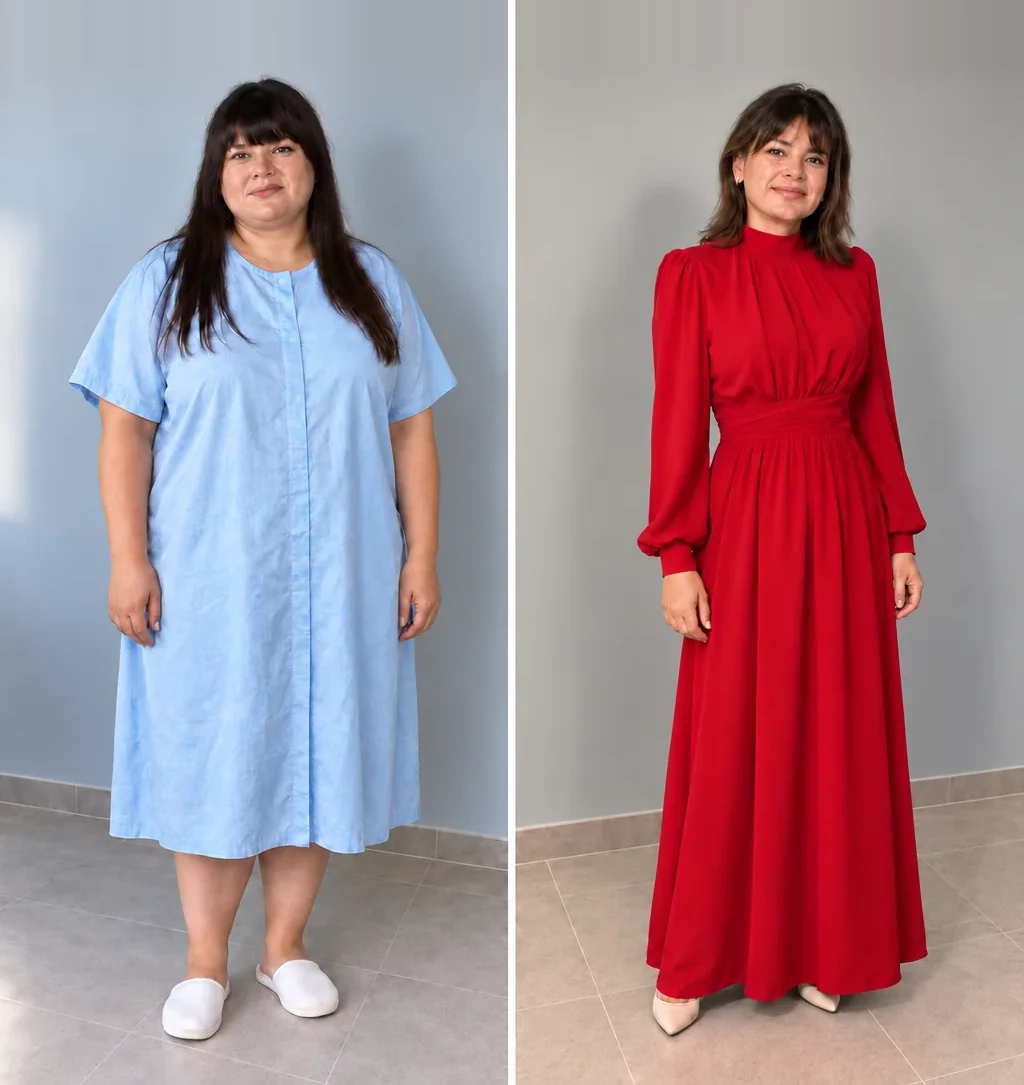
Only real clinic patients appear here.
beforeafterBariatric surgery
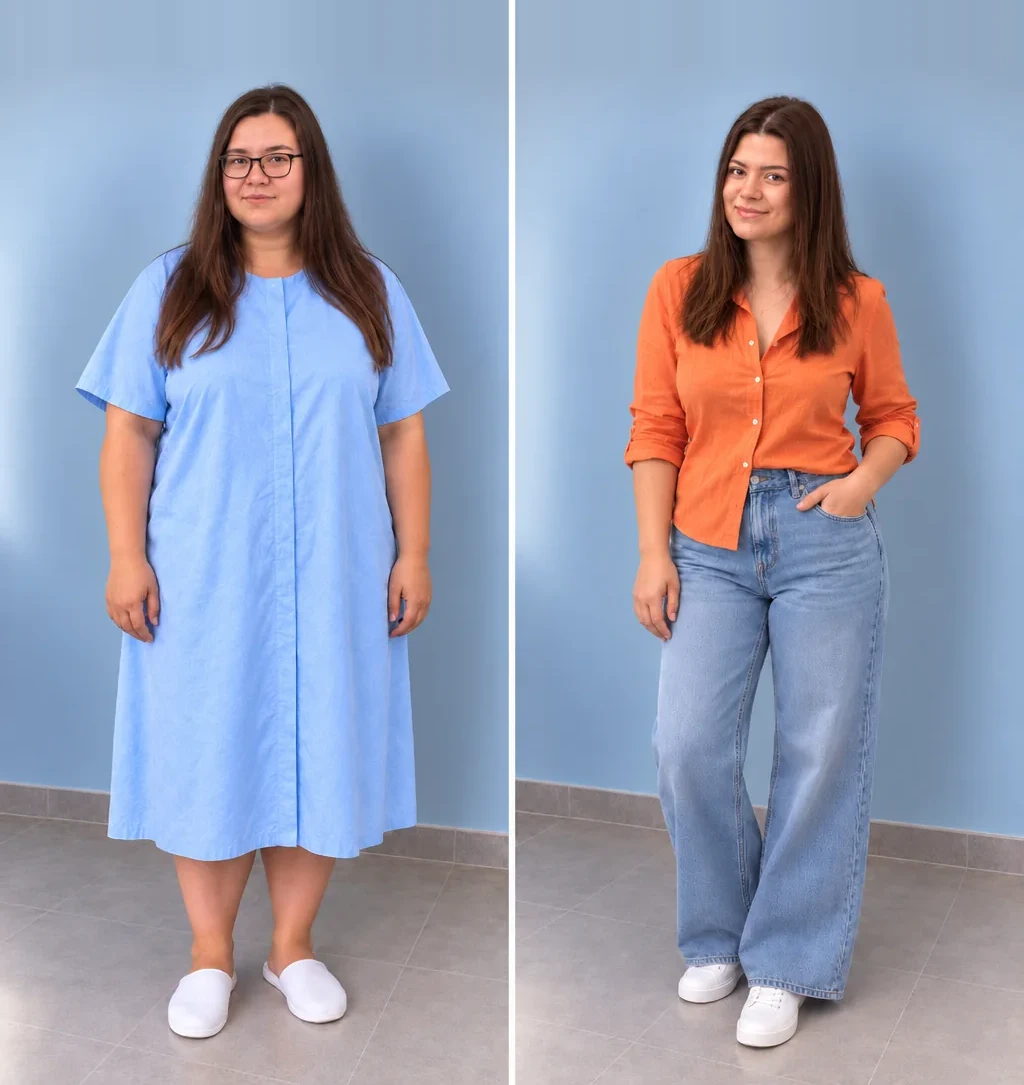 beforeafter
Bariatric surgery
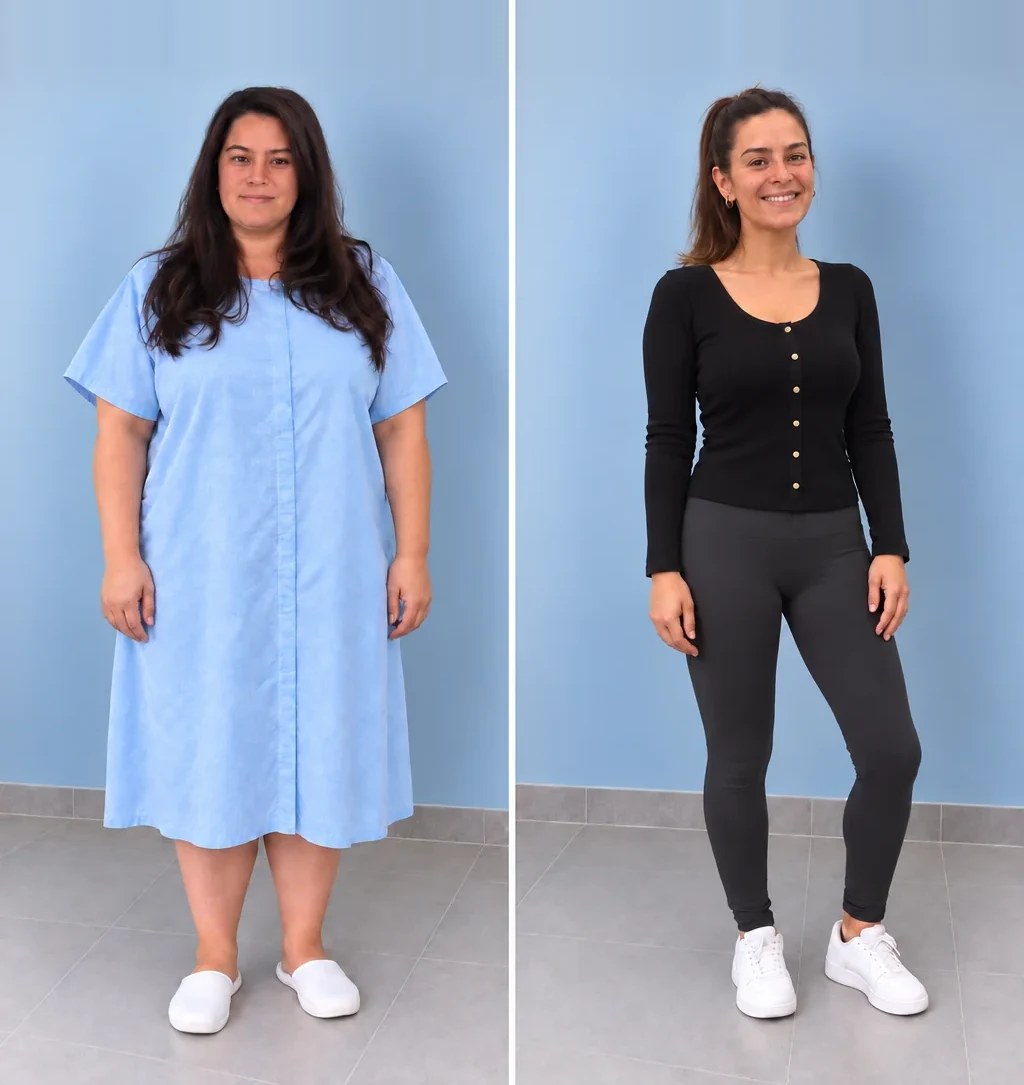 beforeafter
Bariatric surgery
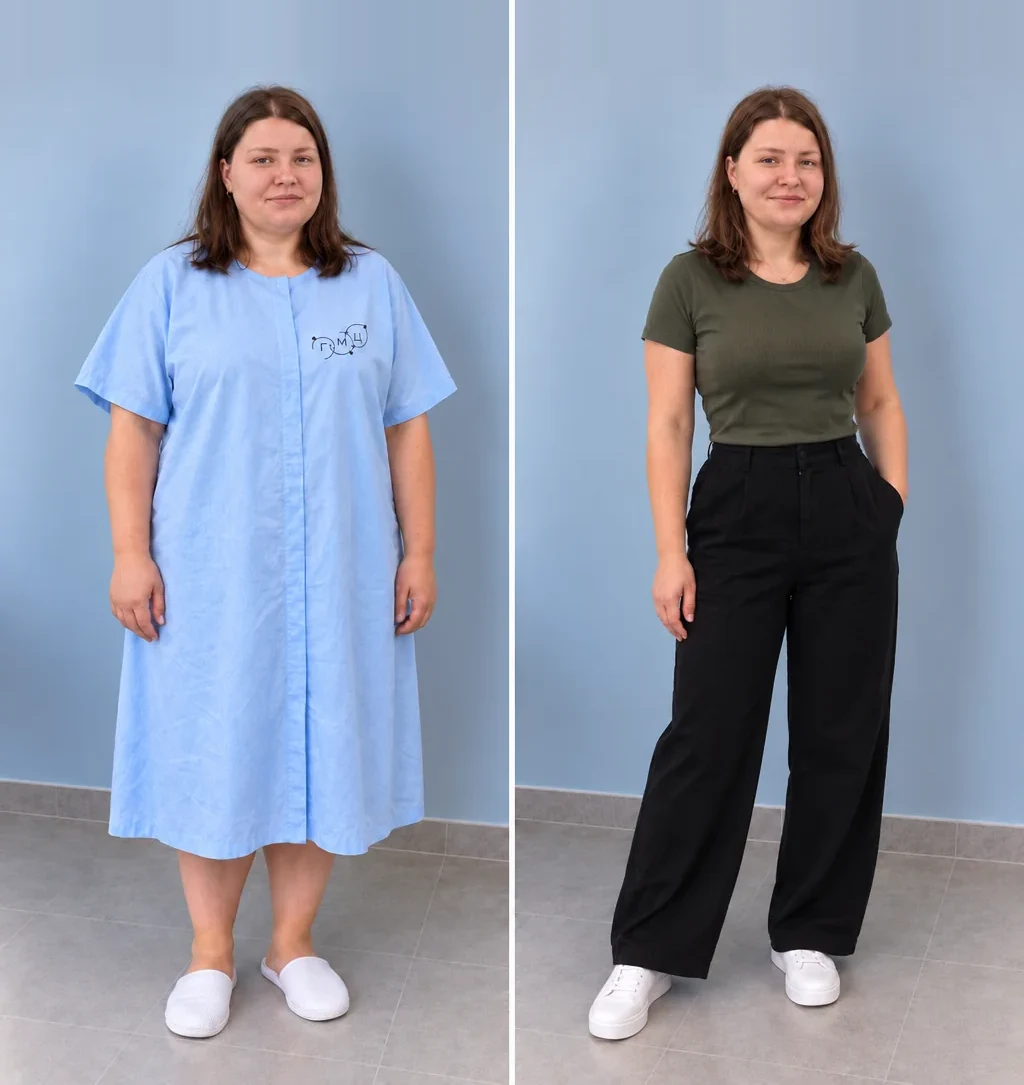 beforeafter
Bariatric surgery
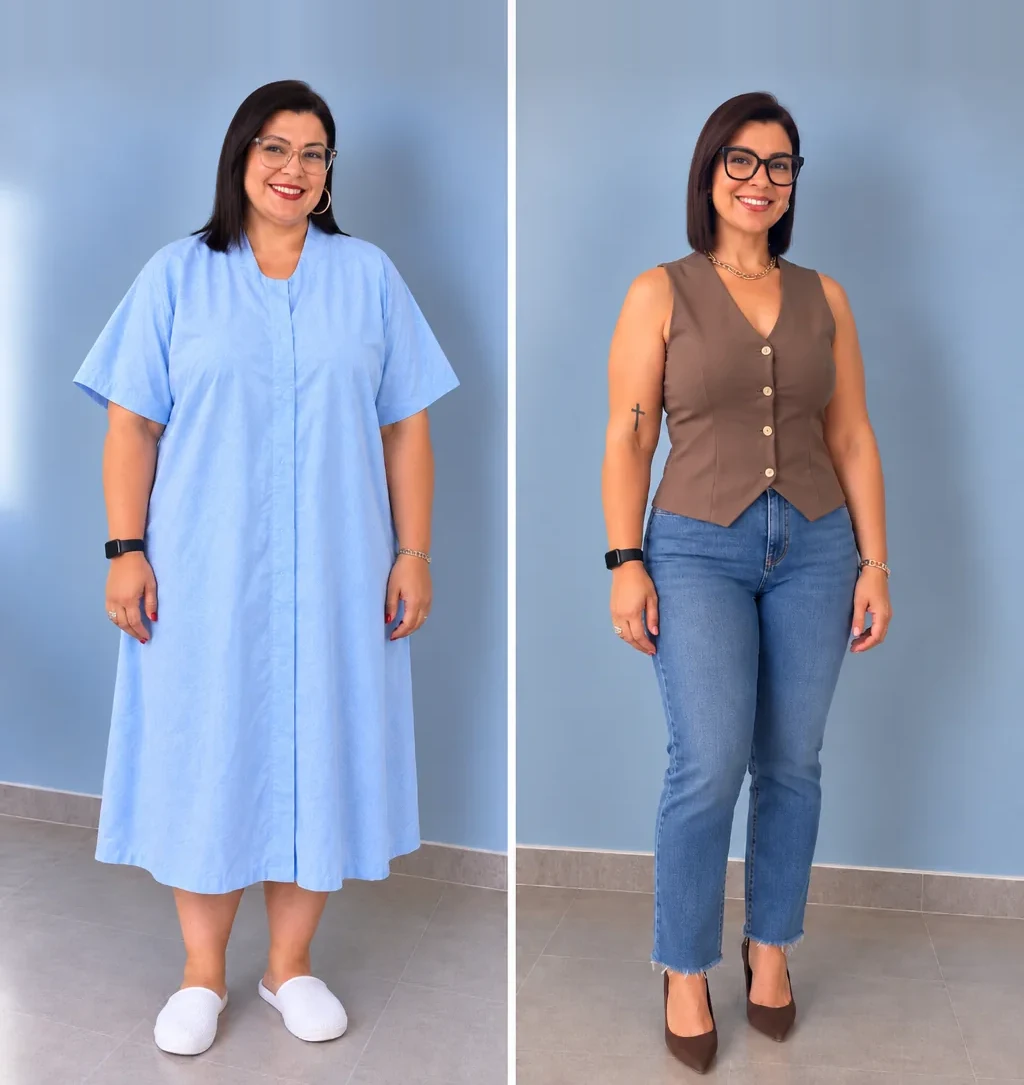 beforeafter
Bariatric surgery
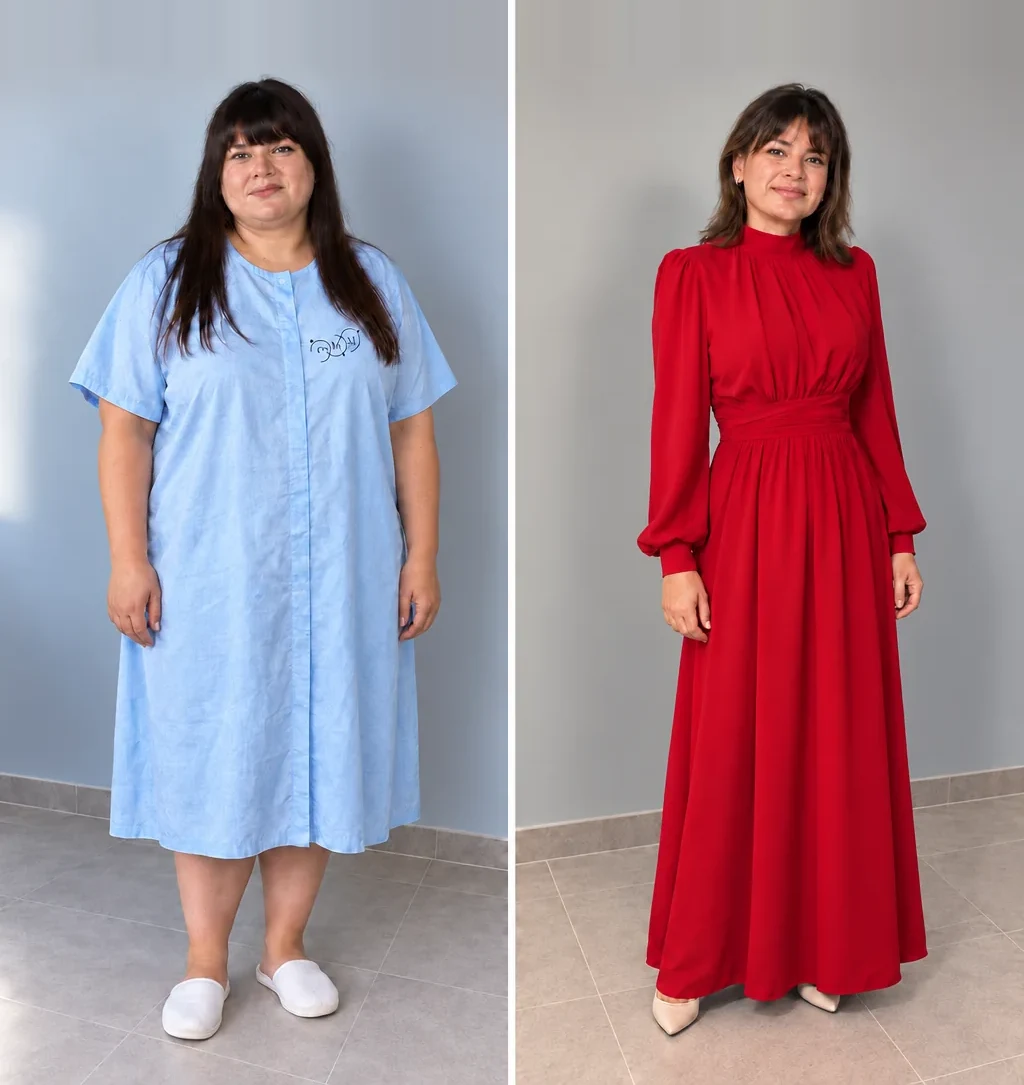 beforeafter
Bariatric surgery
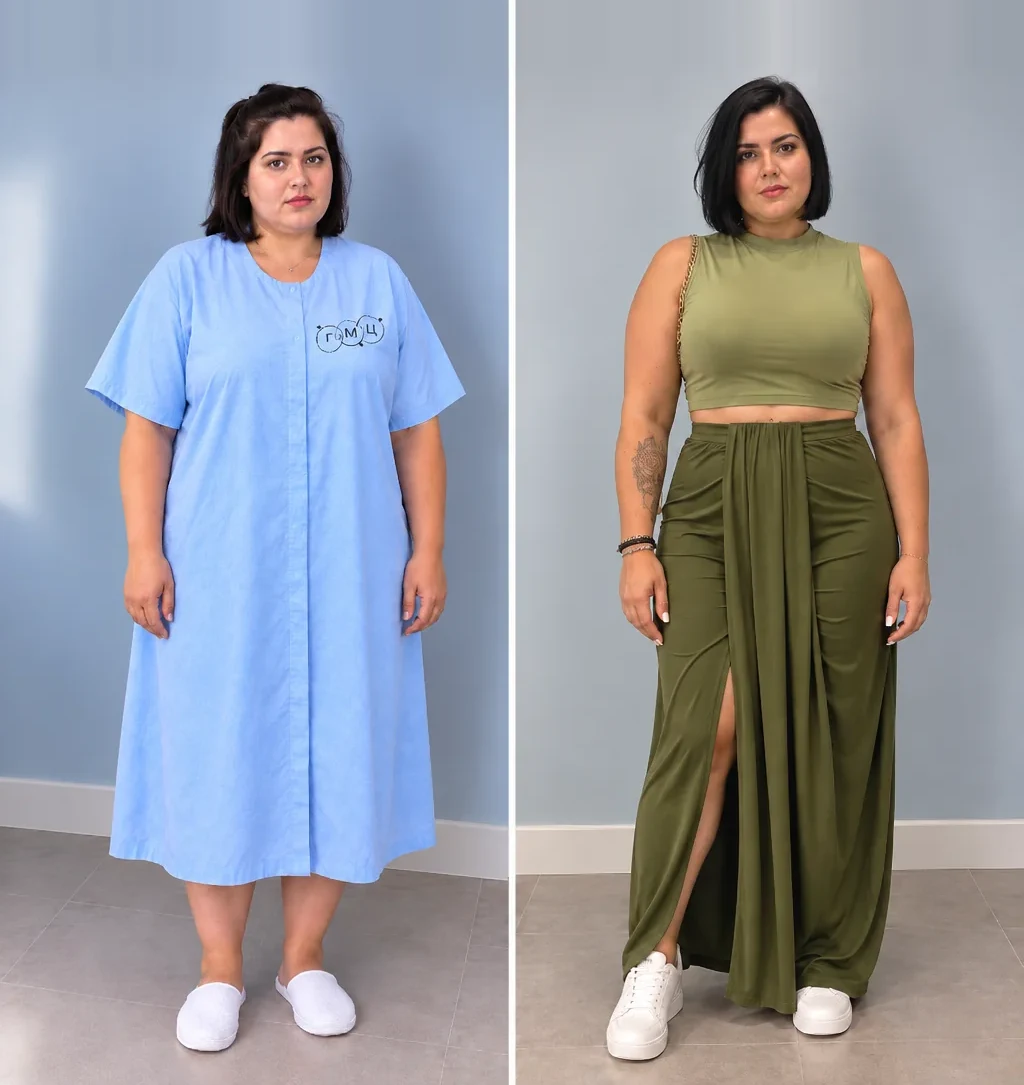 beforeafter
Bariatric surgery
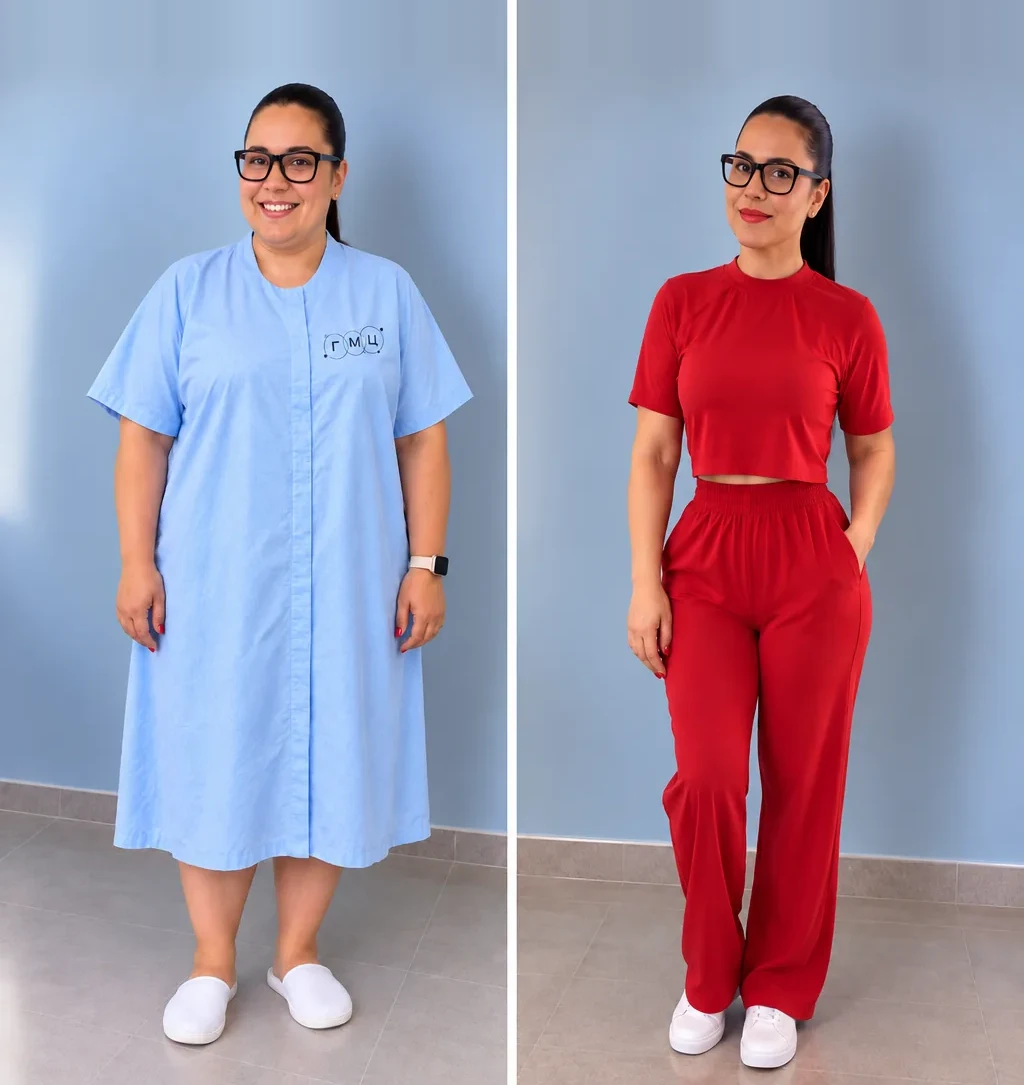 beforeafter
Bariatric surgery
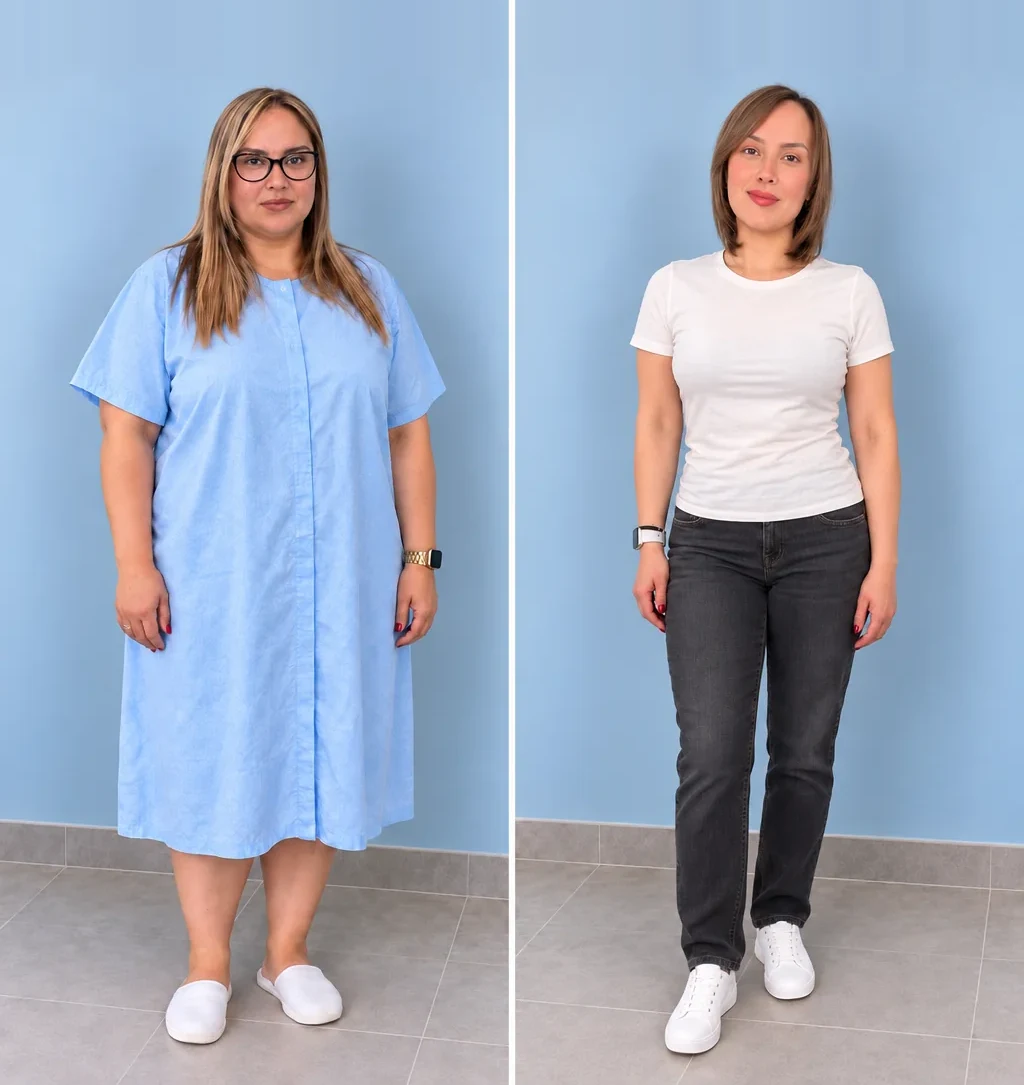 beforeafter
Bariatric surgery
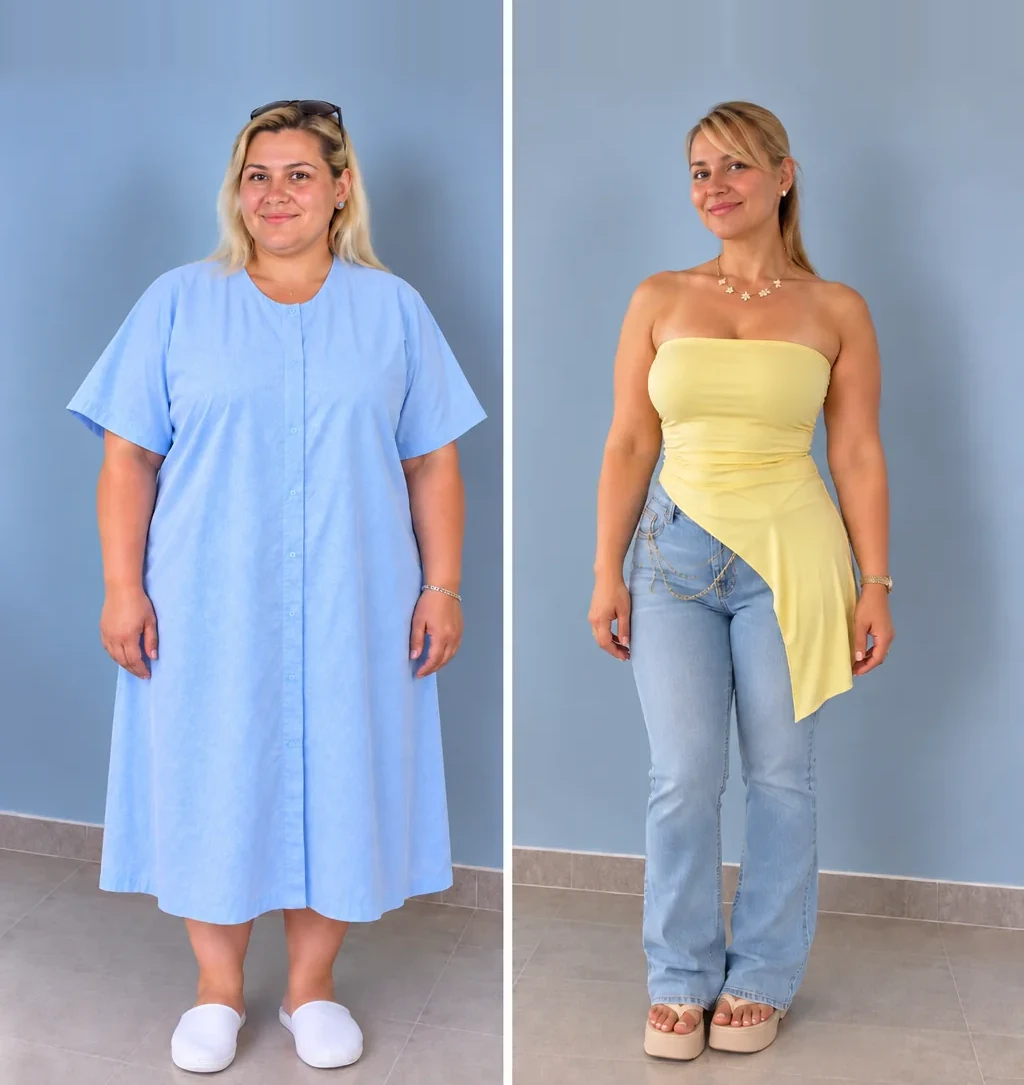 beforeafter
Bariatric surgery
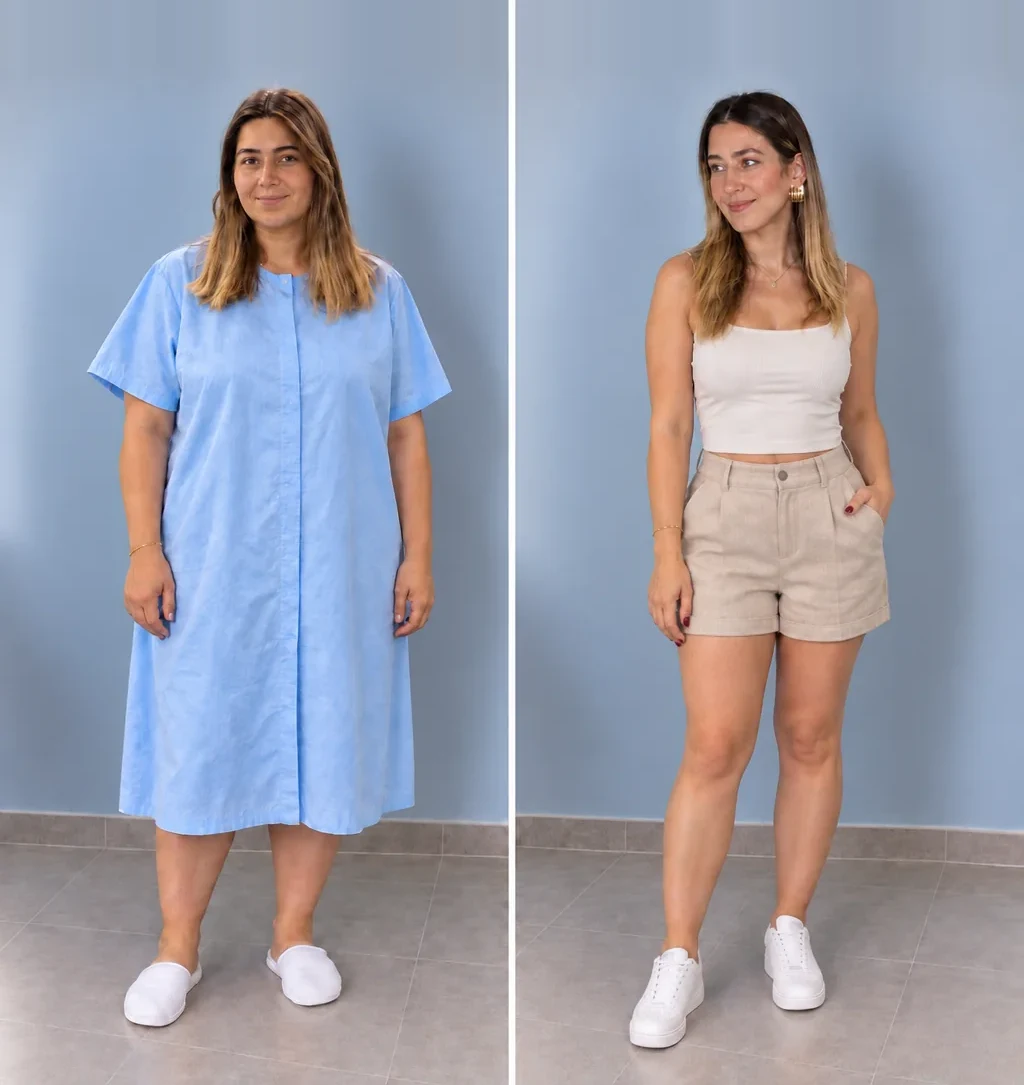 beforeafter
Bariatric surgery
Comparison
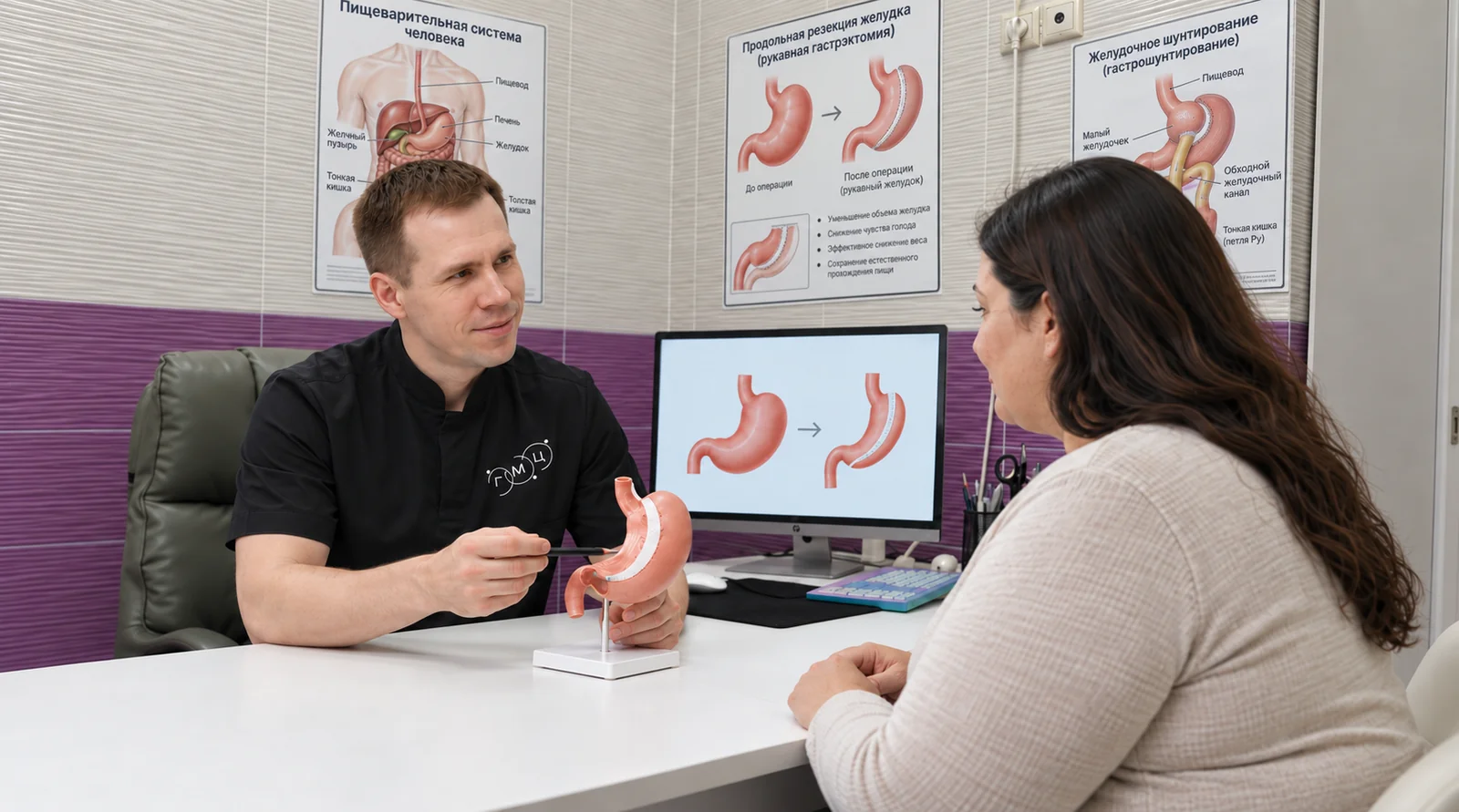
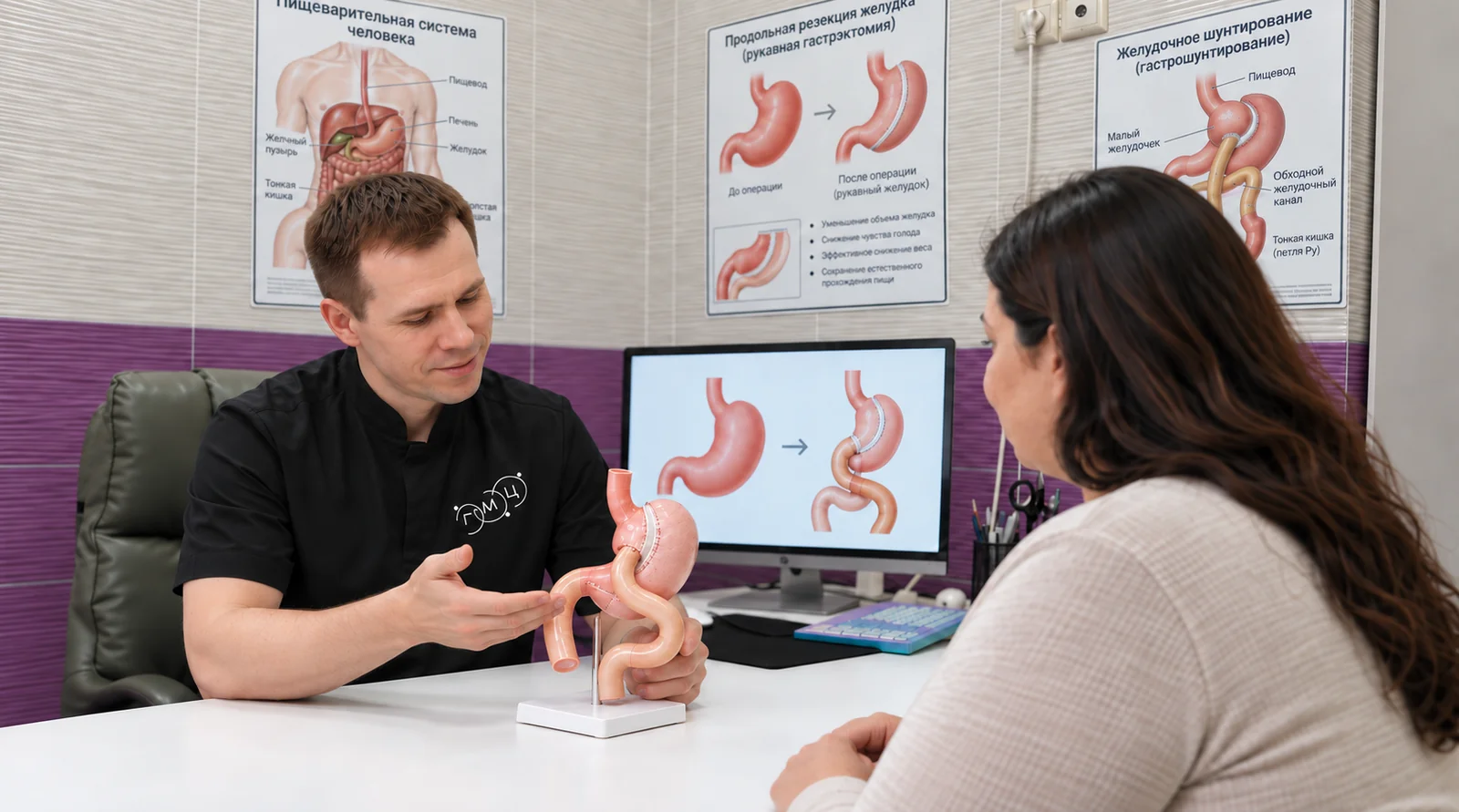
There are two main surgeries we offer: the sleeve and the bypass. Learn how they work, why they are done and who they suit, so you can choose your method with confidence.
Making the stomach smaller
Discounted price
$3,600 $4,800
Stomach volume is reduced and the food path is changed
Discounted price
$4,000 $5,200
The benefits and recovery times are method averages meant as a guide; the actual scope of the operation and your recovery depend on your anatomy and individual features. The surgeon confirms them at the consultation.
Book a consultationThe clinic
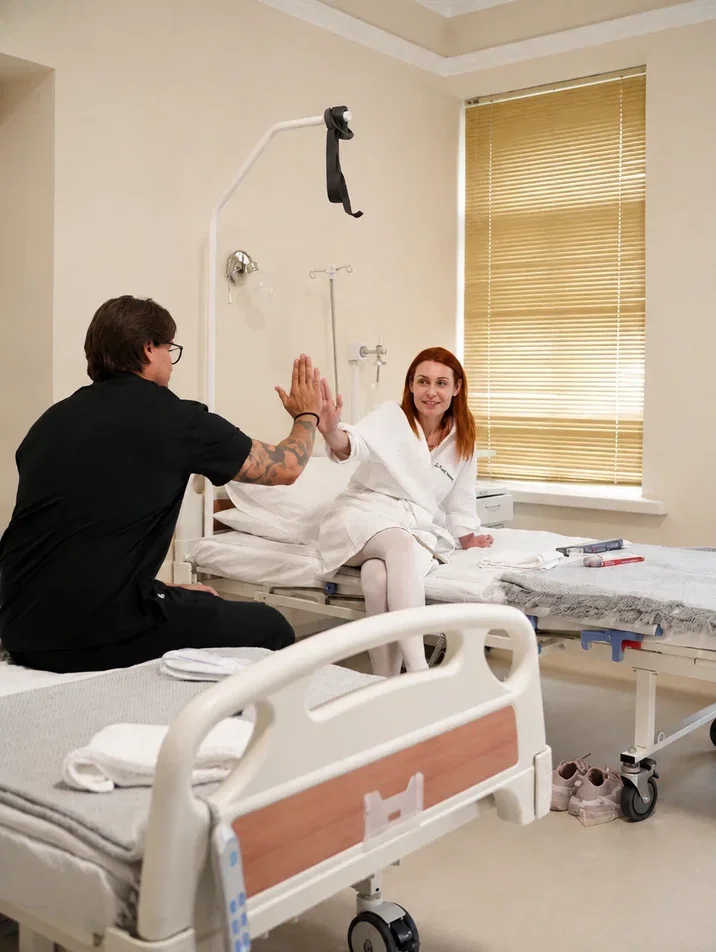
Each patient gets care, comfortable rooms and modern equipment
We will answer your questions and find a convenient time for a consultation
By messaging us, you agree to our Privacy Policy
Get a consultationA consultation and check-up come first; then you and the surgeon decide on surgery together.
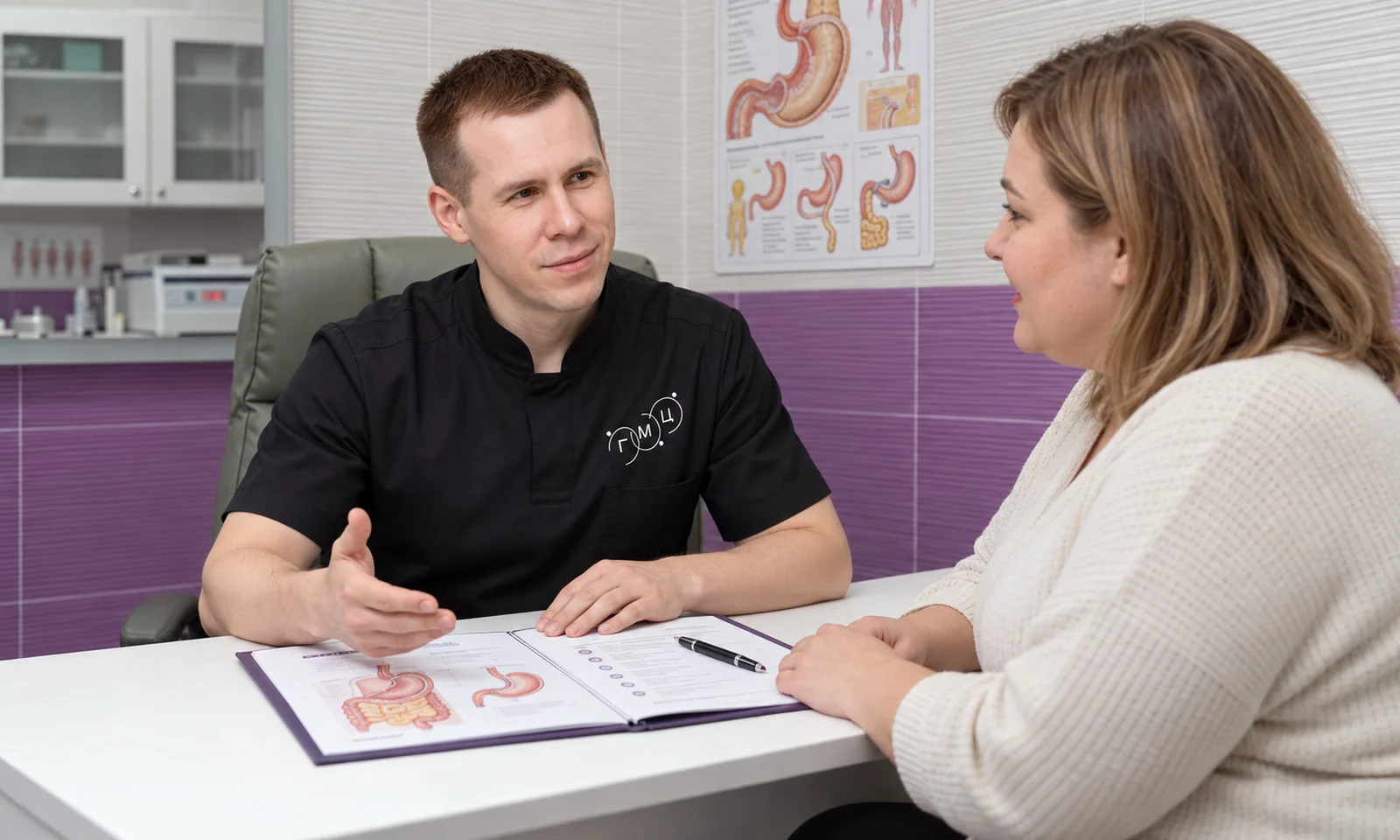
Can't tell which column fits your case?
Get in touch on Telegram — our coordinator will explain whether bariatric surgery is right for you. The consultation with a surgeon is free, and there is no commitment to an operation.
Find out if it suits me
Prices
The cost is named at the consultation once your plan is ready, and it is fixed in the contract.
Discounted price
Making the stomach smaller
$3,600$4,800
Discounted price
Rerouting food and losing weight
$4,000$5,200
Free
Examination by the surgeon and a personal treatment plan

Free
the price of surgery is confirmed
and fixed in your contract
Following a health assessment and a talk about your goals, the doctor chooses the right bariatric surgery method. The cost is named at the consultation and set in the contract.
Message our coordinator
Free online consultation · Reply within 15 minutes
Message us on TelegramMessage us on WhatsAppBy messaging us, you agree to our Privacy Policy

price
One package — from preparation to 12 months of support. No extra charges.From preparation for surgery
to support for 12 months.
How it goes
Monitoring in hospital, an agreed treatment plan and support for a whole year.
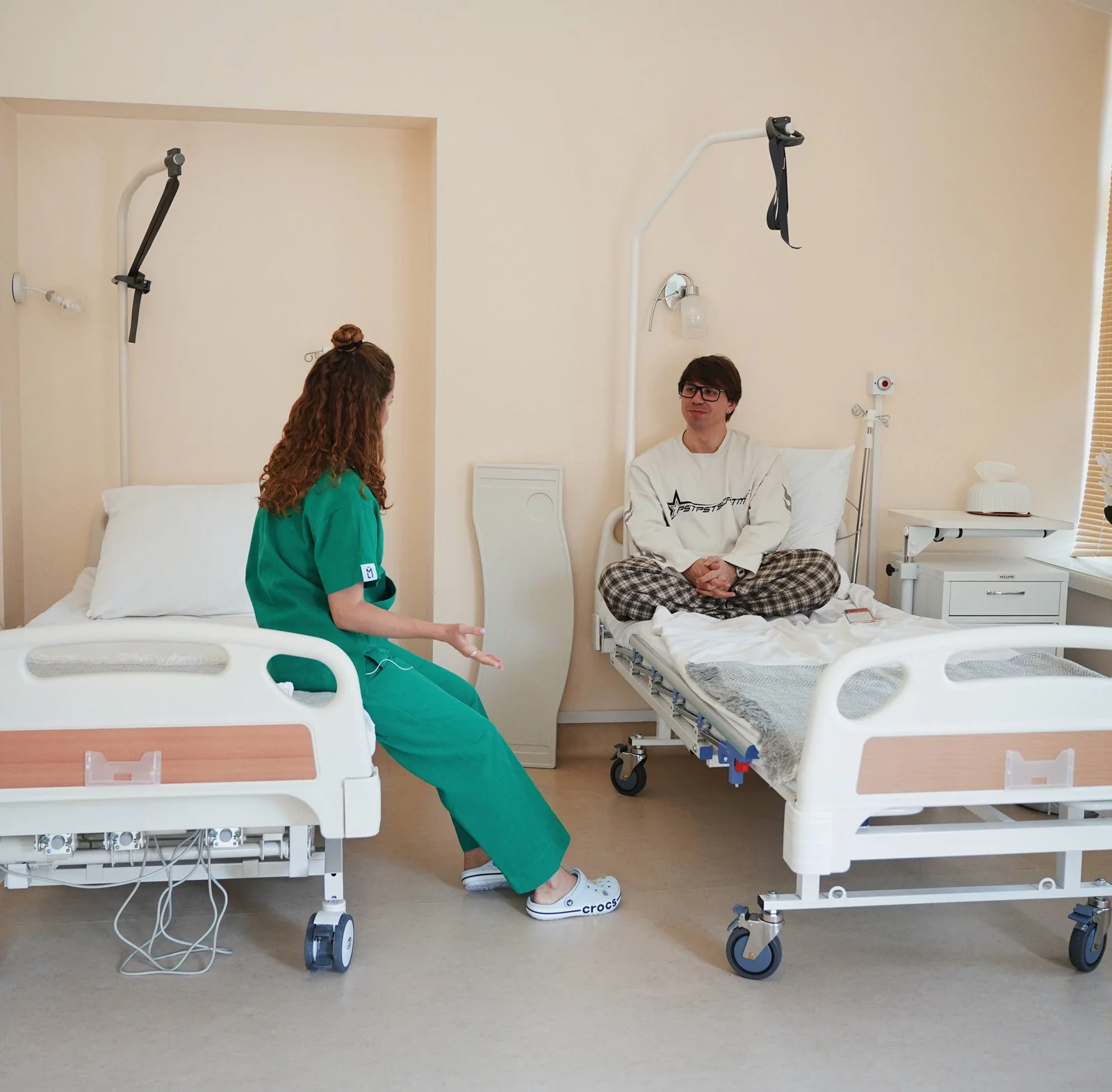
1The doctor evaluates your health, talks through your goals and orders the tests needed to select the right bariatric surgery method.
2The contract for medical services fixes the terms; we reserve a surgery date for you, and the deposit can be paid by card at the clinic or by bank transfer online
 3
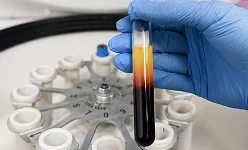
You see the specialists and have blood and urine tests, an ECG, an ultrasound and a gastroscopy before surgery. The doctor gives you the precise list at the consultation.
 4
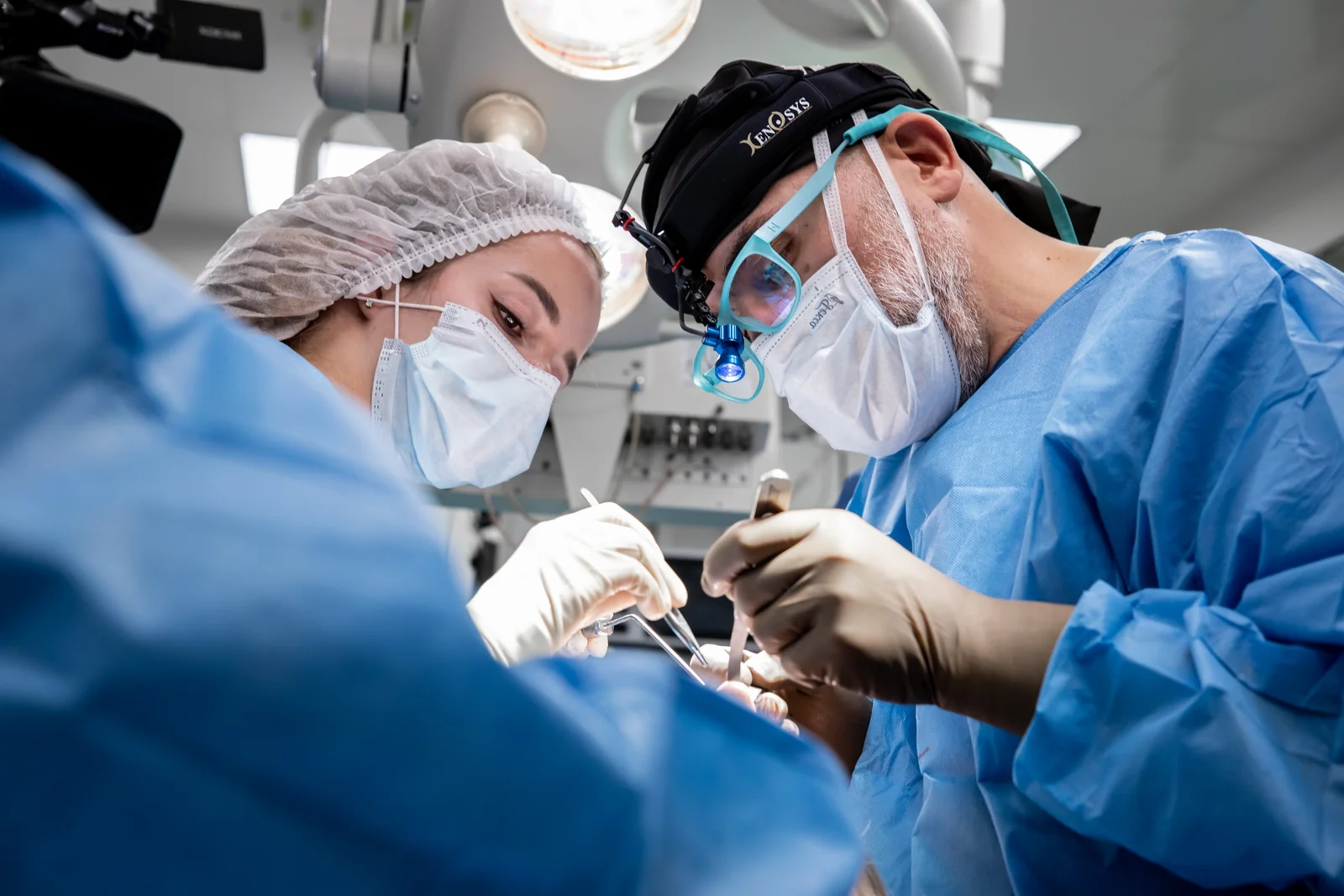
The surgeon does the bariatric operation under general anaesthesia by the method chosen. After surgery, the patient stays under the medical team's monitoring.
 5
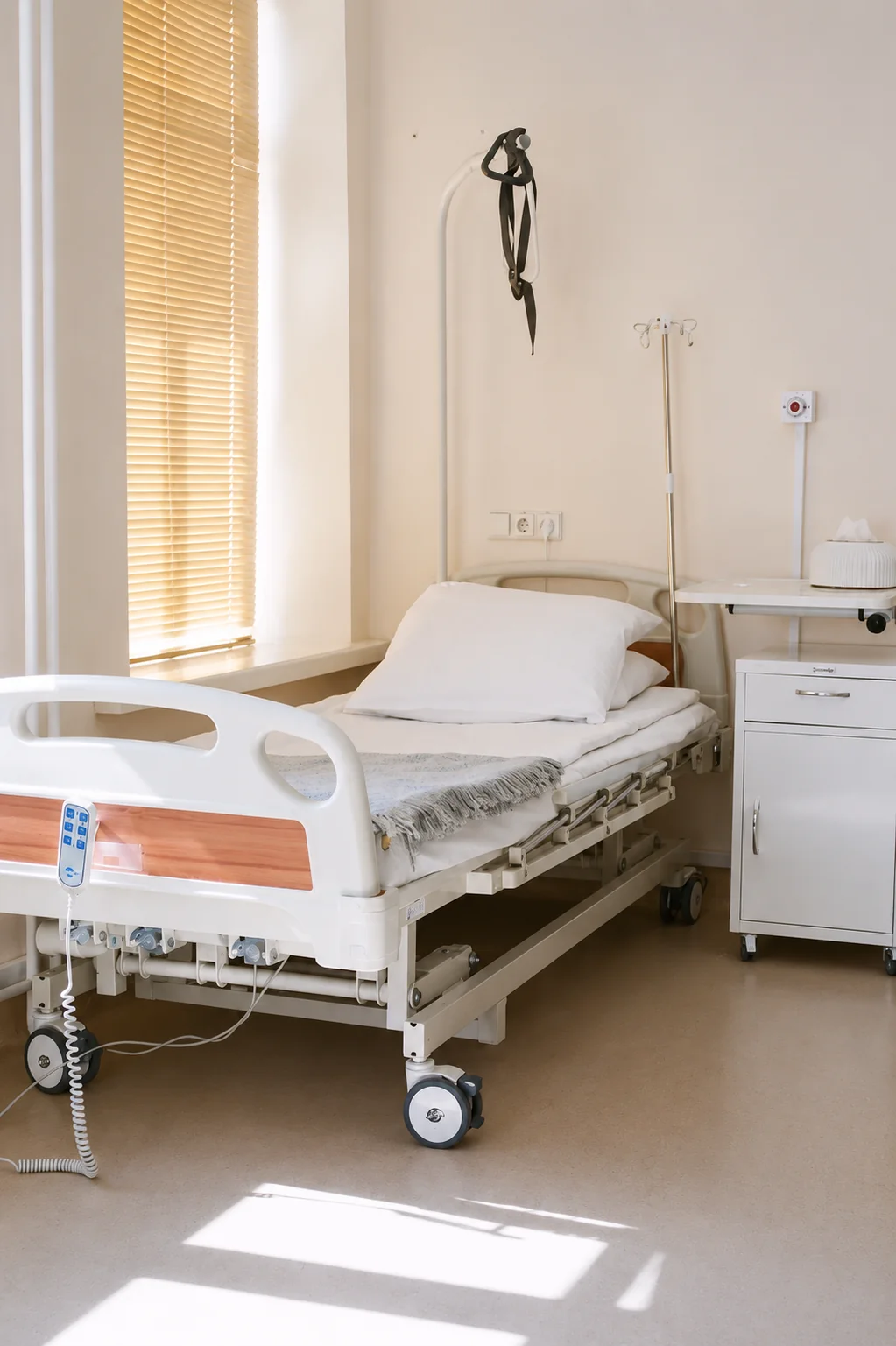
You stay in hospital under doctors' supervision after surgery; the stay runs from 1–3 to 4–5 days, depending on the operation's complexity and how you feel.
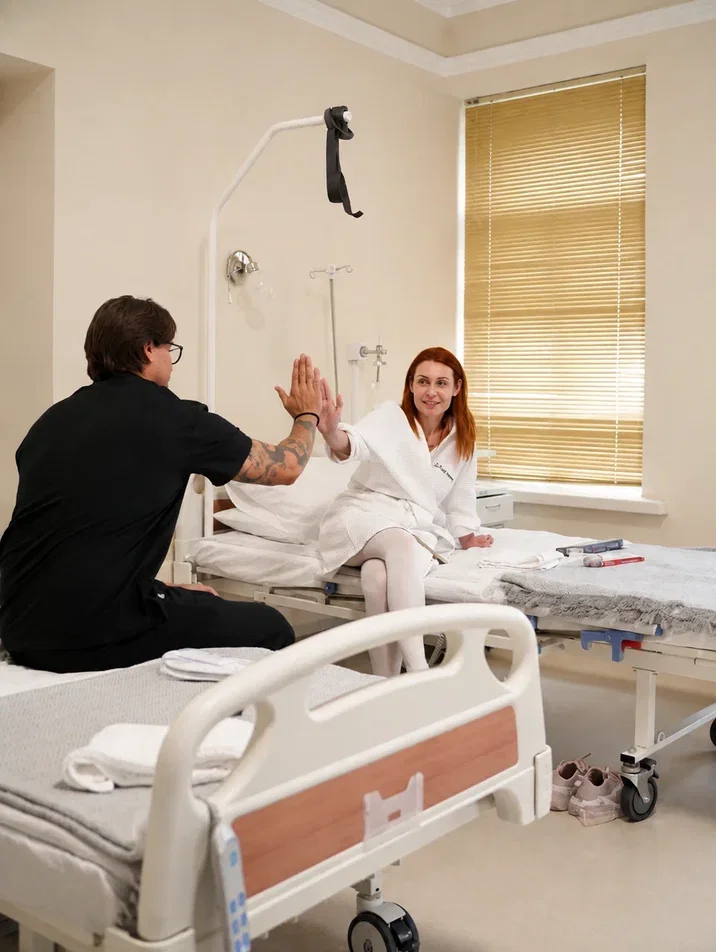 6
Following discharge you get advice on diet and recovery, while scheduled check-ups track how you feel, your weight and tests. The clinic team supports you for a year.
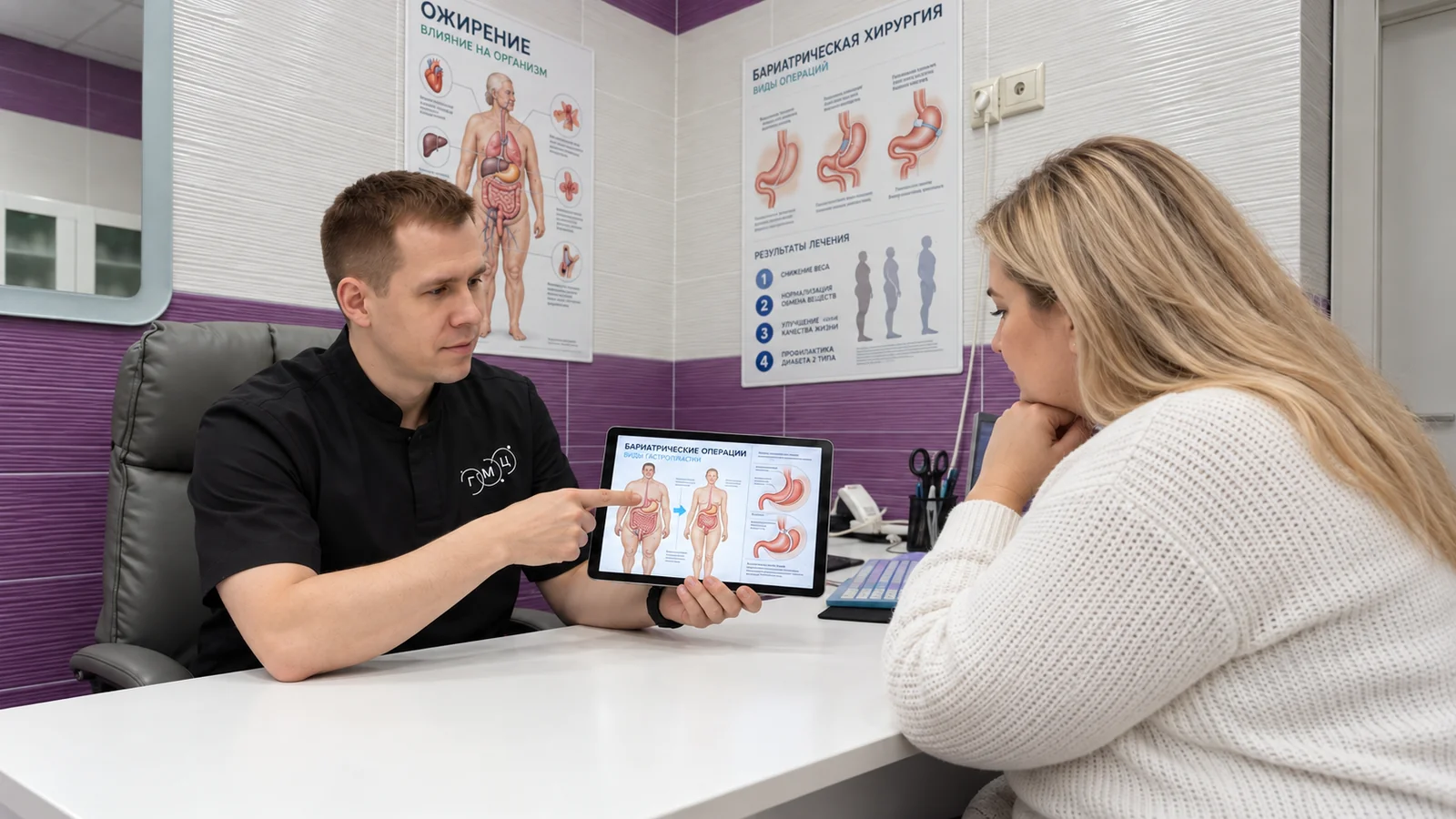
At the consultation the doctor draws up your plan and explains the surgery step by step
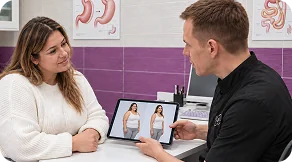
The consultation costs nothing, takes place before surgery and has no obligation.
Book a consultationDoctors

27 years of experience
Leading bariatric surgeon
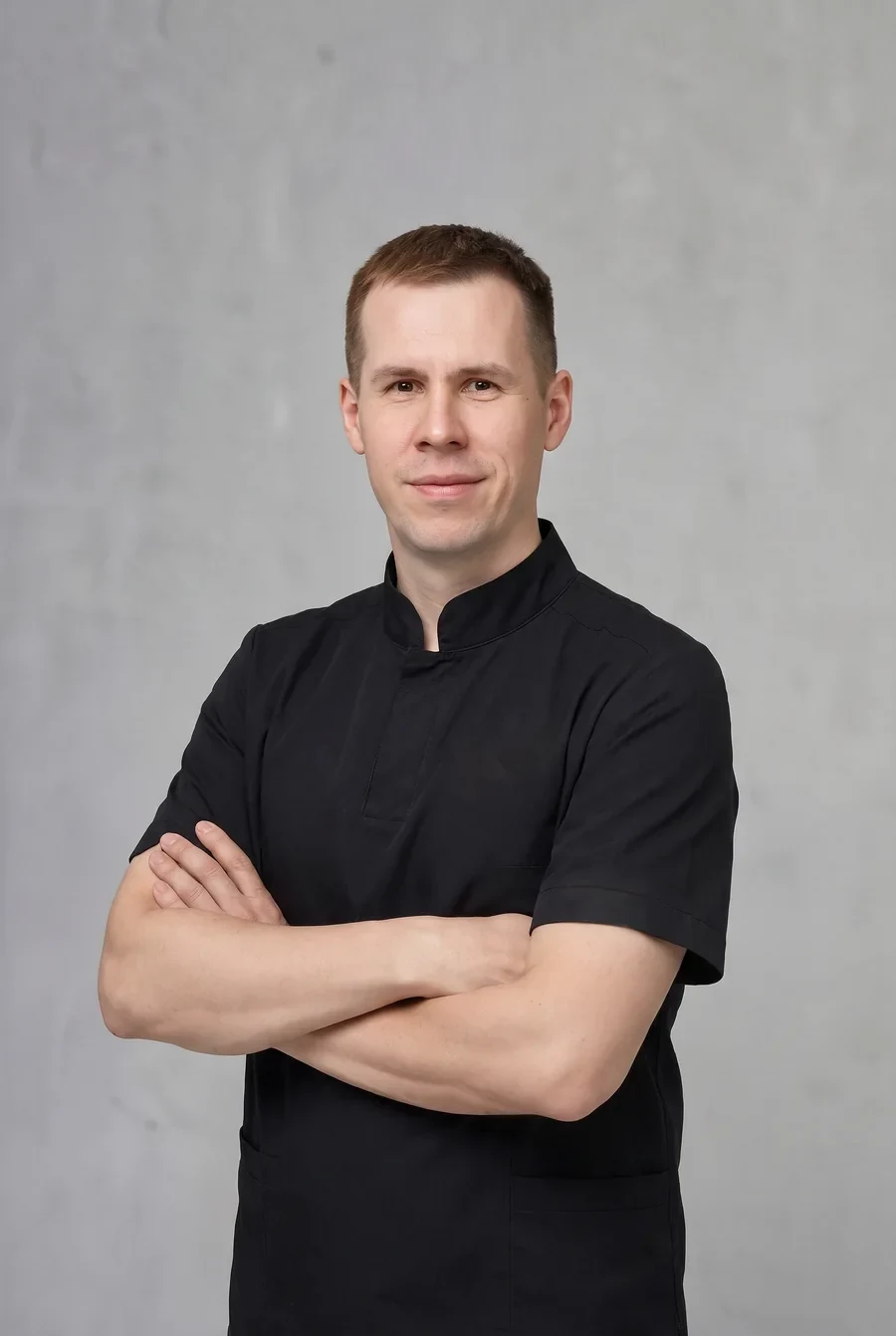
9 years of experience
Bariatric surgeon
Surgical oncologist
From the first consultation to the result, your surgeon operates and follows you.
Free of charge, the first consultation with our patient care manager covers calculating your BMI, explaining the methods and booking you in with the surgeon.
Book a consultationCoordinators
You have our support at every step

The clinic's first contact for you — from your first message until the consultation
Specialist in patient care
Answers your questions ahead of the first consultation and helps you pick a convenient date

With you before and during your stay — from booking to discharge
Specialist in patient care
Stays in touch during your clinic stay and helps you prepare for surgery

By your side through recovery, from discharge to your final check-up
Specialist in patient care
Books your follow-up visits with the surgeon and keeps in touch during recovery
Advantages
Your health, lifestyle and goals guide us to the best method, and our team is with you every step of the way.
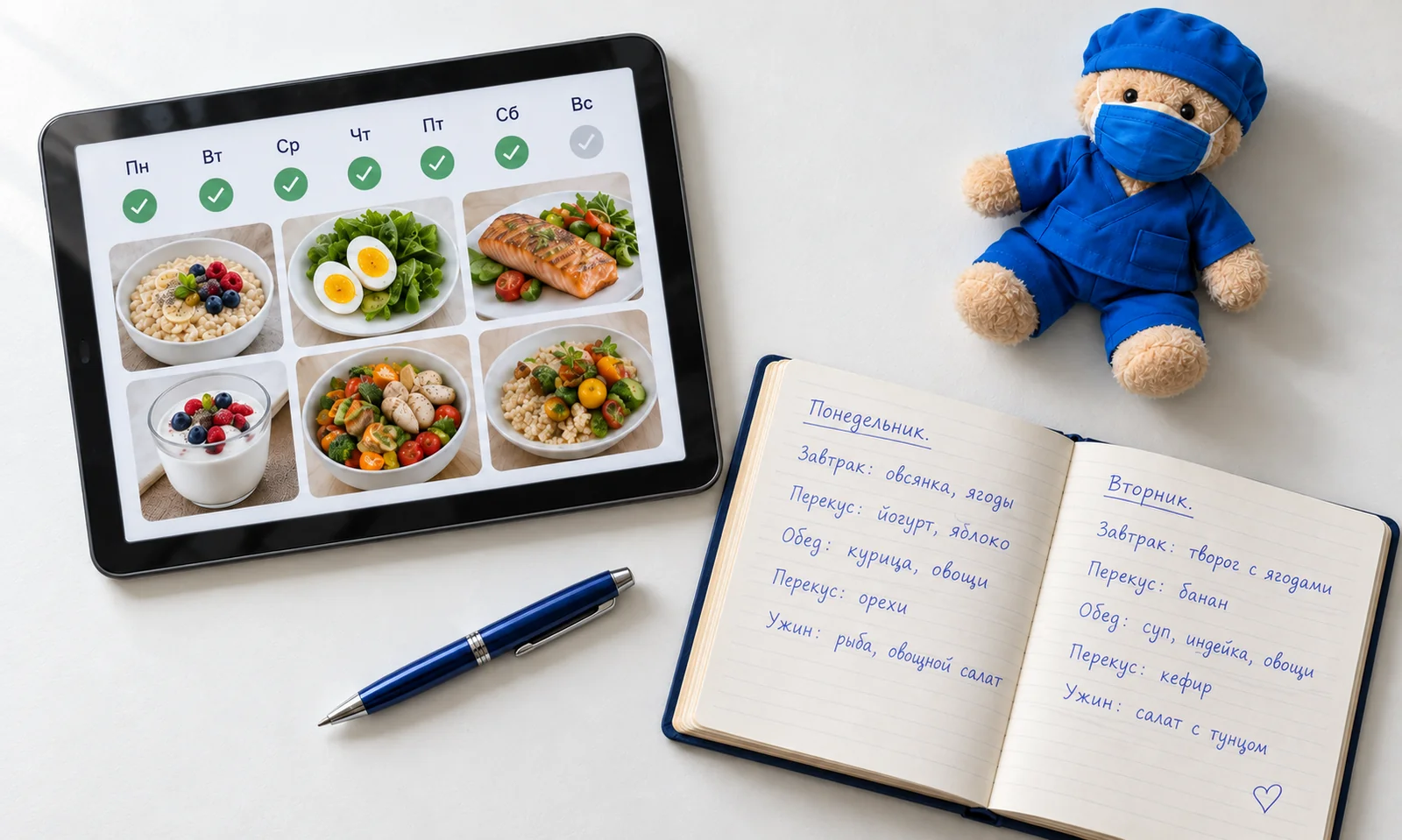
We help you get used to new eating habits, monitor your results and hold on to them.

Better well-being, a higher quality of life and steady weight loss.

We value your time: we are open 24/7, booking is easy and the approach is personal — we adapt to your pace.
After your consultation, the method is chosen by the surgeon and the price is made clear — no hidden fees and no surprises before your result.
FAQ
Yes, bariatric surgery is the medical term for it. At City Medical Centre the main methods are sleeve gastrectomy (gastric sleeve) and gastric bypass; the surgeon chooses the method by your BMI and health.
Usually a BMI over 40, or over 35 with related health conditions. The surgeon confirms whether surgery suits you at the consultation.
Bariatric surgery at the clinic is performed by experienced bariatric surgeons:
Write to us — a coordinator will get back to you soon and arrange your consultation. The bariatric surgeon consultation is free of charge.
Surgery is prescribed only when clear criteria are met
The degree of obesity is mainly assessed with BMI: body weight (kg) divided by height squared (m²). As a rule, surgery is justified when BMI exceeds 40, or exceeds 35 alongside serious related conditions. In some cases lower values may also qualify for surgery if non-surgical approaches have failed.
Though often confused, the two have fundamentally different goals. Bariatric surgery is a medical treatment of obesity and related illnesses; it changes the functioning of the digestive tract to address the causes of excess weight and metabolism. Plastic surgery reshapes the outer contours of the body and neither treats obesity nor affects metabolism.
Four main types of bariatric surgery are performed at City Medical Centre: sleeve gastrectomy, Roux-en-Y gastric bypass, mini gastric bypass (MGB) and SADI-S duodeno-ileal bypass. Each is selected individually based on BMI, related conditions and patient goals.
Modern laparoscopic technique is what we use. Just 4 small punctures of 5 to 15 mm are needed for the operation. Cosmetic sutures mean the marks are nearly invisible after healing.
Recovery depends on what you do. Office work: after 2–4 weeks. Physical work: after 1.5 months. Sport and activity: swimming is allowed after 30 days, other exercise is added gradually as weight drops. Travel and holidays: best planned no earlier than a month after surgery.
Eating changes gradually: liquid food first, then soft, then solid. The focus is protein, with high-calorie, fatty food kept to a minimum.
Pregnancy is possible after bariatric surgery; doctors advise waiting no less than 12–18 months. This gives the body time to stabilize, for weight to reach target values and nutritional status to normalize.
Yes, vitamins are essential after bariatric surgery. As digestive anatomy changes, the body absorbs certain nutrients less well, so regular vitamin and mineral supplements become a lasting part of the patient's life.
Weight may return after bariatric surgery, though that is very unlikely when you follow the doctor's advice. Key factors: proper nutrition, avoiding high-calorie drinks and regular follow-up with City Medical Centre specialists.
Prices are in US dollars; the amount in brackets is an approximate conversion to GBP at the rate of 02.10.2026. The final price is fixed in your contract.
Prices start from $3,600 (≈ £2,750). The surgeon sets the final price at the free consultation, and it is fixed in the contract, with no hidden extras.
General anaesthesia, a personal coordinator from day one, monitoring in the hospital and support for one year.
The hospital stay is 1–5 days, depending on the method and how you feel. Office work is possible after 2–4 weeks.
Yes. The first consultation is free and does not oblige you to anything. You can start online by sending a message to the coordinator.
Message us on WhatsApp or Telegram using the buttons below. A coordinator will answer your questions and book a free consultation where the doctor names the exact price.
By messaging us, you agree to our Privacy Policy
Message the coordinator with your preferred dates. The first consultation is free, and you can start it online; the clinic then confirms which dates are open, and only after that is anything booked.
From 1–3 to 4–5 days in hospital, depending on the operation and how you feel, plus the check-ups the doctor sets.
Height and weight for the BMI, age, conditions such as diabetes or hypertension, current medicines and past surgeries. The method is matched to your BMI and health, not chosen in advance.
Yes. The first consultation is free and starts online: send your details and photos on WhatsApp or Telegram, and the doctor reviews them and explains the options and the price.
SADI-S combines a sleeve with intestinal bypass in two stages and is one of the most powerful bariatric operations, with 80–90% excess weight loss and a long-lasting result. It suits super obesity with a BMI over 50, severe type 2 diabetes, or a second stage after an ineffective sleeve. Anyone in Belfast in these situations can discuss it at a consultation.
Recovery is short thanks to the minimally invasive technique, and absorbable sutures dissolve on their own. Office work is usually resumed after 2–4 weeks and physical work after about 1.5 months; swimming is allowed after 30 days, with other exercise added gradually. For the first weeks, no sauna or intense training. Belfast residents get the same step-by-step guidance from the team.
One package covers the full journey, from consultation to final result. There are no separate charges added later: ward, meals, nursing care and coordinator support are included. To find out whether surgery suits you, patients in Belfast can book a free surgeon consultation; the doctor reviews BMI, health and weight history and recommends a method.
Well-known people who spoke openly about this operation, in their own words.
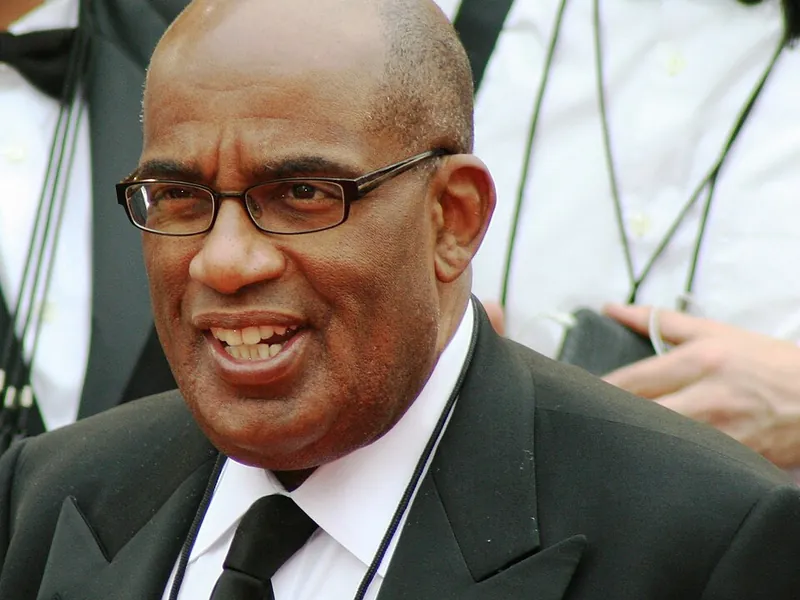 Al Roker and gastric bypass: twenty years of talking about it honestlyAl Roker had gastric bypass surgery in March 2002 and has talked about it for 20 years. His words, how the operation works and what recovery involves.
 Did Billy Gardell have bariatric surgery? Yes — and he says it saved his lifeThe Mike & Molly star had bariatric surgery in 2021 after a diabetes diagnosis. His quotes on the decision, the 100-pound loss and his children.
 Did Graham Elliot have weight-loss surgery? Yes, and he did it for his familyChef Graham Elliot had weight-loss surgery in 2013, saying it was what he needed to do for his family. His words, the operation and recovery.
 Did Mama June have a gastric sleeve? Yes — in her own wordsJune 'Mama June' Shannon had a gastric sleeve in May 2015. Her quotes on the 550-pound start, the regain and starting over.
 Did Randy Jackson have gastric bypass surgery? Yes, and he still talks about maintaining itRandy Jackson had gastric bypass surgery in 2003 and lost 114 pounds. His own words, how the operation works today and what recovery involves.
 Remi Bader and her weight-loss surgery: what she actually saidRemi Bader said in 2023 she had weight-loss surgery removing 80% of her stomach and lost 140 lbs. What she said, how the operation works, and recovery.
What patients write after this operation. Reviews are translated from the original language.
Irina, 26
For a long time I doubted whether to go ahead with surgery, but after the consultation I felt much calmer. Andrey Georgievich explained in detail how gastric bypass is done, what to expect after the operation and how recovery would go. I especially liked that they talked to me calmly and without pressure. I am now gradually getting used to my new way of life and I am very glad I took this step.
Bariatric surgery
Doctor: Andrey G. Ugay
Angelina, 22
For me the hardest part was deciding to have the operation. At the consultation Ruslan Sergeyevich answered all my questions in detail and explained the specifics of sleeve gastrectomy and recovery. After the operation I always understood what I was doing and why. Thank you to the doctor and the whole team for their attentiveness.
Bariatric surgery
Doctor: Ruslan S. Menzulin
Anna, 31
For a very long time I tried to deal with my excess weight on my own, but I did not get the result I wanted. After the consultation with Andrey Georgievich I finally understood what to do next. I came through the operation well, and my recovery was supervised by the doctors. It was important for me to feel that I was not left alone after surgery.
Bariatric surgery
Doctor: Andrey G. Ugay
Veronika, 25
Before the operation I had many fears, mostly of the unknown. Ruslan Sergeyevich explained every stage of treatment in detail and answered even the simplest questions. Thanks to that I felt much more confident. I keep following the recommendations and I am gradually seeing the changes I had the operation for.
Bariatric surgery
Doctor: Ruslan S. Menzulin
Valentina, 23
The decision to have bariatric surgery was not easy for me. I worried both about the operation itself and about how my life would change afterwards. At the consultation Andrey Georgievich explained everything in detail, so little by little my fear turned into confidence. What matters most to me now is the result and the chance to treat my health and lifestyle differently.
Bariatric surgery
Doctor: Andrey G. Ugay
Anna, 27
I am very grateful to Ruslan Sergeyevich for his attentiveness. Before the operation I had a huge number of questions, and I got a clear answer to every one of them. After the operation it was also clear which recommendations to follow and how to eat. It was important to me that the doctor stayed in touch and I felt supported at every stage.
Bariatric surgery
Doctor: Ruslan S. Menzulin
Page medically reviewed by Andrey G. Ugay, lead bariatric surgeon. Review date: .
The Health Survey Northern Ireland 2023/24, published on 12 December 2024, found that 28% of adults were obese and 37% overweight. Together that is 64% of adults living with a weight above the healthy range. For a reader in Belfast, the number is not abstract. The city is the capital and largest in Northern Ireland, with 351,927 residents in 2025 across 133 km2, so the survey shares apply to a very large number of households. Excess weight here is a common health condition. Nobody needs to feel singled out by it.
Weight rarely travels alone. The online consultation page for this operation lists conditions that bariatric surgery can help with: hypertension, type 2 diabetes, sleep apnea, joint disease, fatty liver disease, varicose veins and reproductive health problems. The NHS adds a detail that matters in a damp, cool climate. Osteoarthritis is the most common type of arthritis in the UK, and the risk is higher in people with obesity or a joint injury. A GP may suspect it in people aged 45 or older. Arthritis UK reports that over 10 million adults, young people and children in the UK live with arthritis. For someone who already notices stiff knees on the slope of Cavehill or after a day on the Connswater Greenway, joints are often the first practical reason to ask whether weight can be reduced in a medical way.
Medical language helps here, because bariatric surgery is the medical term for weight loss surgery. It is a treatment for obesity and the illnesses linked to it. It changes how the digestive tract works to tackle the causes of excess weight and metabolic problems. Plastic surgery is a different thing. It reshapes outer body contours and neither treats obesity nor affects metabolism. The NHS makes a similar distinction when it explains that cosmetic surgery is not routinely provided and that most people who want it have to pay privately. Obesity treatment is a medical question, not a cosmetic one, and it should be discussed in that spirit.
The usual starting point for the conversation is BMI. You get it by dividing body weight in kilograms by height in metres squared. Surgery is generally considered at a BMI above 40, or above 35 when serious related conditions are present. Sometimes it is also considered at lower values, when non-surgical methods have not worked. At this centre the coordinator can calculate your number in the first chat on WhatsApp or Telegram, and the doctor confirms at the consultation whether the operation suits you. The consultation is free and does not commit you to anything.
Belfast readers often ask the same question first: can the public system do this for me? The honest answer from the published record is cautious. In a statement of 19 March 2019, the Department of Health in Northern Ireland said that weight loss surgery had not been provided within the region's health service. A small number of patients had been funded for treatment elsewhere in the UK. The same statement said a planning group had assessed the South West Acute Hospital in Enniskillen as a possible base for a regional service. That is a proposal, and the statement does not describe a running programme in the capital.
A more recent document describes the day-to-day situation inside the city. In a reply to a freedom of information request dated 14 January 2026, the Belfast Health and Social Care Trust stated that its dietetic department does not have a specialist tier 3 and 4 obesity management service. Obesity is treated through core dietetic services, using regionally agreed elective care pathways. In plain terms, support exists through dietitians and the GP route, but the specialist weight management tiers that are usually the gateway to surgery were not set up as a separate service in the city at that date.
What does that mean for planning? It means you should not assume a quick public route and should ask your GP what is available to you now. It also means that many people look at an online consultation with a private provider while they continue any dietetic support they already have. Neither path excludes the other. If your GP can refer you to dietetic services, use them, because the dietary habits you build before an operation are the ones you will need afterwards. If you are considering a private operation, the first conversation with us costs nothing, and the price is stated by the doctor and fixed in the contract before anything is booked.
Waiting is where time passes quietly. A person with a BMI over 40 and type 2 diabetes or sleep apnea is not helped by waiting for a pathway that is still being designed. That is not a reason to rush. It is a reason to get a clear medical answer early: is surgery indicated, which method fits, and what must be prepared. You can send photos and basic details to the coordinator in a message, receive a free assessment, and decide in your own time. Nothing is booked until you confirm the plan and dates.
The centre carries out two core procedures that most patients are offered: gastric sleeve and gastric bypass. Across the programme there are four methods: sleeve gastrectomy, Roux-en-Y gastric bypass, mini gastric bypass (MGB) and SADI-S duodeno-ileal bypass. The doctor chooses by BMI, related conditions and your goals. The comparison below is a guide, not a diagnosis.
Sleeve gastrectomy reduces stomach volume. Its main goal is weight loss and a quick feeling of fullness. The listed indication is obesity without marked reflux. Gastric bypass reduces stomach volume and also changes the path of food. Its main goal is weight loss with better metabolism, and the listed indications are obesity, diabetes or reflux. Both are done under general anaesthesia with a hospital stay of 1–5 days. The doctor decides the actual length, which depends on complexity and how you feel after the operation.
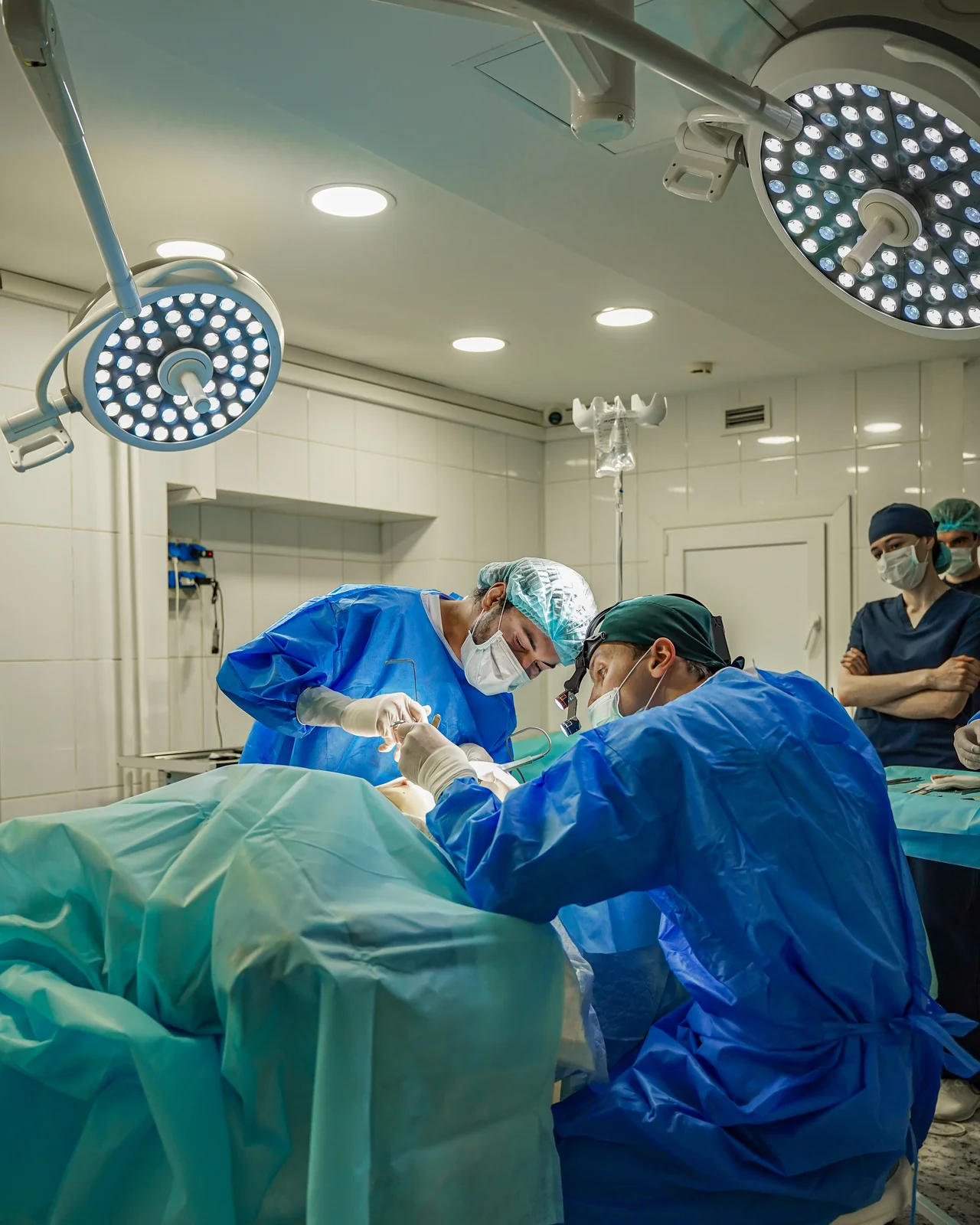
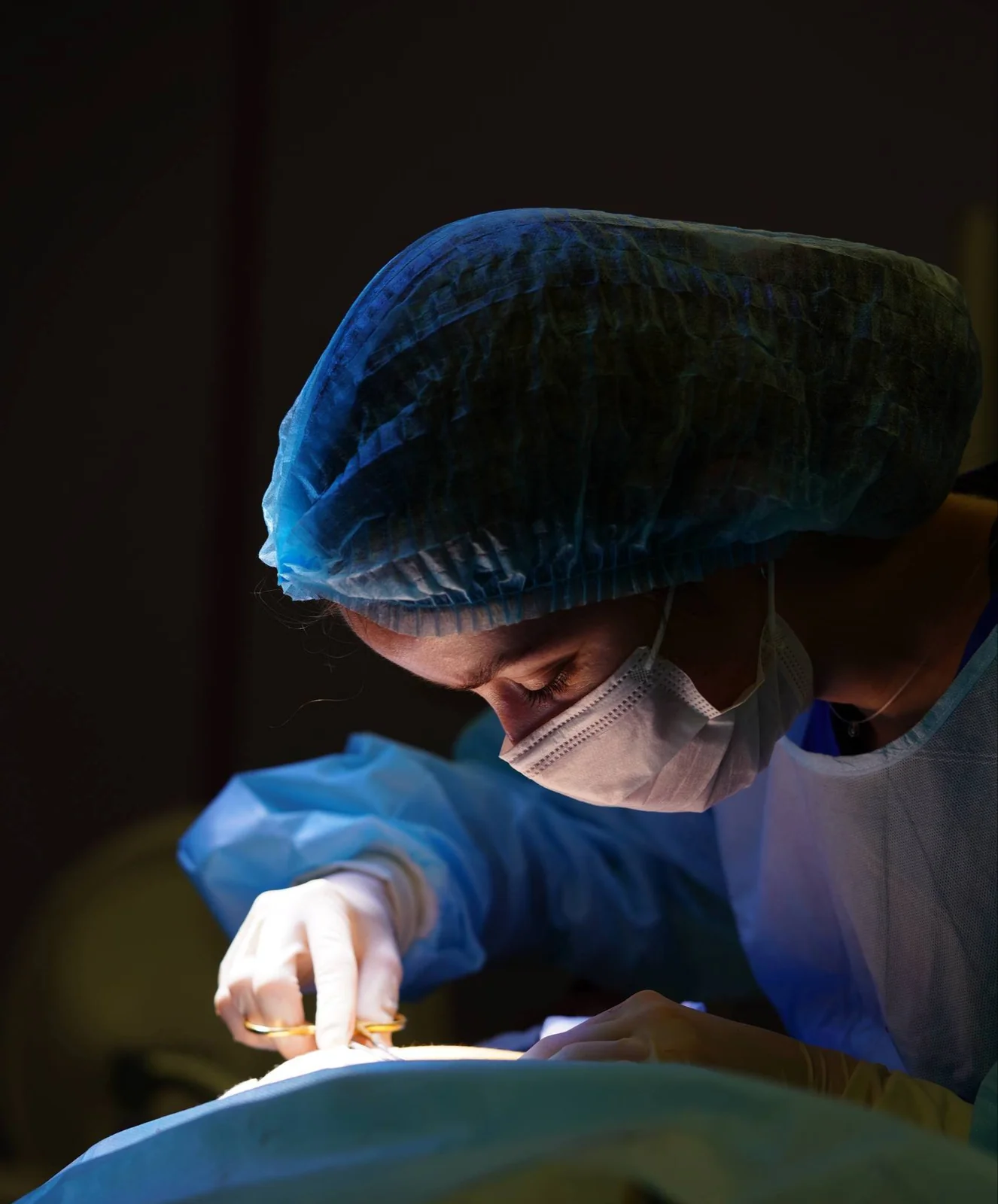
The operation is done with modern laparoscopic technique, through 4 small punctures of 5 to 15 mm. Cosmetic sutures are placed, so once healed the marks become almost invisible. That is a useful detail for anyone who is worried about scars in a country where summer maxima stay under 20 °C but beach weather in July still exists. July's mean maximum in Belfast is 19.7 °C, and people still go to the water.
Preparation is done step by step. After the free consultation and the plan, you reserve the date, and the terms go into the contract for medical services. Before surgery you have blood and urine tests, an ECG, an ultrasound and a gastroscopy, and you see the specialists. The doctor gives you the exact list at the consultation. Several of these checks are routine and can often be arranged near home, and the coordinator reminds you about tests and check-ups so nothing is missed. The people for whom this operation is not suitable are also listed clearly: those under 18, with malignant tumors, pregnancy, blood clotting disorders, severe chronic and mental illness, acute illness or flare-ups of chronic disease, and women within six months of the end of breastfeeding.
Diet changes in stages, from liquid to soft to solid food. The main focus is protein and restricting high-calorie, fatty food. High-calorie drinks matter as well. The centre's advice is that proper eating, avoiding high-calorie drinks and regular follow-up are the keys to avoiding weight regain. Regain is possible, but it is very unlikely if you follow the doctor's advice. Vitamins and minerals become part of life, because the changed anatomy means the body absorbs some nutrients less well.
Published facts about local food culture are thin, so it is better to talk about the calendar than about menus. Belfast has a busy year of events, and a plan for eating is easier to keep when you know the dates in advance. The city-centre St Patrick's Day celebration on 17 March has run since 1998, and Northern Ireland has 10 bank holidays in 2026, including 17 March and the Battle of the Boyne substitute day on 13 July. Long weekends tend to be social days, with meals out and with relatives. If your date for the operation or your soft-food phase falls close to one, tell the coordinator. It is simpler to shift a date than to manage a first month of recovery in the middle of a celebration.
The weather also shapes habits. Belfast has 938.7 mm of precipitation a year across 156.2 days, and November is the wettest month at 102.3 mm over 15.5 days, followed by October and December. December is also the dullest month, with 35.3 hours of sunshine, against 185.1 hours in May. Dark, wet weeks can pull people indoors and towards comfort eating, so a written plan for these months helps: protein-first meals prepared in advance, a set time for movement, and a message to the coordinator when routine slips. The same facts show an opening in spring. April and May are the driest months, at 60.4 mm and 59.6 mm, and May is the sunniest. That is a sensible time to build a walking habit.
Activity is added gradually. Swimming is fine after 30 days. Other exercise gets added as weight drops. The Connswater Community Greenway offers 16 km of continuous cycle and walkway through east Belfast, and National Cycle Route 9 to Newry begins in the city. These are useful for the later phase, when the doctor agrees that longer sessions are appropriate. The first weeks call for short walks on level ground, not a return to long rides.
The numbers for returning to normal life are averages for guidance. Office work resumes after 2–4 weeks. Physical work follows after 1.5 months. Travel and holidays are best planned from a month after surgery. The final result is reached 18–24 months after surgery, and that is a long road. It is the reason follow-up matters as much as the operation does.
In Belfast, many people work or study through the year. Queen's University Belfast has over 25,000 students, Ulster University has a city campus in the Cathedral Quarter, and Belfast Metropolitan College has over 53,000 students on full- and part-time courses. A student or a lecturer can plan the operation around term dates and the exam period, discussing it with the coordinator. For an office worker, the 2–4 week figure is a planning range, and the doctor refines it at the consultation. Someone in physical work should plan for the longer interval.
The package includes support for 12 months. One coordinator stays with you from day one. Progress is checked remotely by photos. You get advice on diet and recovery and scheduled check-ups of your well-being, weight and test results. Because the coordinators answer 24/7 on WhatsApp and Telegram, a question about a symptom or a meal does not have to wait for a calendar slot. Photos of scars, weight records and lab results can be sent in the same chat. This works well for a city like Belfast, where the nearest specialist point of contact for bariatric questions in the public system may not be set up in the way that is needed, as the 2026 reply from the trust shows.
The follow-up covers practical things. The coordinator answers questions during recovery, books follow-up visits and helps with documents. The doctor reviews the results and adjusts advice about food, vitamins and activity. Keep a simple record: weight weekly, what you ate, how you felt. A short note in the chat each week is enough to keep the doctor informed.
If you have a long-term condition such as rheumatoid arthritis, mention it. The NHS says there is no cure for rheumatoid arthritis, and that treatment is long-term medicine to relieve symptoms and slow progress, plus physiotherapy or occupational therapy, with surgery sometimes used to fix joint problems that develop. Weight-loss surgery is not a replacement for that treatment. The doctor needs your full medication list and diagnoses to judge whether the operation is safe, and acute flare-ups are on the list of reasons to postpone. For osteoarthritis, the NHS says hip replacement may be considered when pain and stiffness have a big effect on life and other treatments have not worked. Some people ask about the order of things, weight first or joint first. That is a medical decision for the doctors involved, and it should not be made from a website.
Pregnancy plans also deserve an early talk. Pregnancy after bariatric surgery can happen, but doctors advise holding off for at least 12–18 months, while the body becomes stable and weight reaches target values and nutritional status normalizes. Say so at the first consultation, because this affects timing.
Finally, a plain reminder about expectations. The photos on the clinic's results pages show real patients, and each one belongs to its patient. Your own result depends on your anatomy, your habits and your follow-up. The final price is named at the consultation and fixed in the contract, with the meals, anaesthesia, inpatient stay and 12 months of support described in the package. Read the contract, ask what is included and decide without pressure.
According to a Department of Health statement of 19 March 2019, weight loss surgery had not been provided within Northern Ireland's health service, and a small number of patients had been funded for treatment elsewhere in the UK. The statement also mentioned a planning group that assessed a hospital in Enniskillen for a regional service. Ask your GP about the current position, because it may have changed since then. An online consultation with us is free and does not stop you from using any public support.
In a reply dated 14 January 2026, the Belfast Health and Social Care Trust said that its dietetic department does not have a specialist tier 3 and 4 obesity management service. Obesity is treated through core dietetic services, using regionally agreed elective care pathways. That means dietitians and your GP are the usual starting points. Many people continue that support while they ask a bariatric doctor for an independent assessment.
The Health Survey Northern Ireland 2023/24, published on 12 December 2024, reported that 28% of adults were obese and 37% overweight, which together make 64%. So if you are in this group you are far from alone. Whether surgery suits you depends on your BMI and health, not on statistics. Generally the thresholds are a BMI over 40, or over 35 with related conditions, and the doctor confirms this at the consultation.
Yes. Office work usually resumes after 2–4 weeks, and physical work after about 1.5 months. The hospital stay is 1–5 days. If you study at one of the city's universities or colleges, or work to a seasonal calendar, tell the coordinator your key dates and they will help you pick a suitable window. Dates are confirmed in the contract before anything is booked.
Weather does not change the medical side of the operation, but it affects habits. In Belfast, November is the wettest month, with 102.3 mm over 15.5 days, and December has only 35.3 hours of sunshine. Indoor routines and prepared protein meals make those months easier. April and May are the driest, so some people choose to be in their active phase in spring. The final choice is yours and your doctor's.
Swimming is fine after 30 days. Other exercise is added gradually as weight drops. Short walks come first, then longer ones. In Belfast the Connswater Community Greenway has 16 km of continuous cycle and walkway through the east of the city, which suits steady walking on level ground. Ask the doctor before starting anything demanding.
It can. Joint disease is on the list of conditions that surgery can help with, and the NHS says obesity raises the risk of osteoarthritis. But if you have rheumatoid arthritis or another condition, the doctor needs your diagnoses and medicines to plan safely. Acute flare-ups are a reason to postpone. Share the full details in the first chat.
Support lasts 12 months. One coordinator stays with you from the start, answers questions during recovery, books follow-up visits and checks progress remotely by photos. You can message on WhatsApp or Telegram at any time, since coordinators answer 24/7. The final result is reached 18–24 months after surgery, so keep contact beyond the first weeks.