



























Message our coordinator
Free online consultation · Reply within 15 minutes
Message us on TelegramMessage us on WhatsAppBy messaging us, you agree to our Privacy Policy




Facelift and neck lift in Wuppertal: price and key facts
Facelift for patients from Wuppertal at City Medical Centre starts at €2,150 (from $2,400). The first online consultation is free; the doctor names the final price and it is fixed in the contract.
- Price
- €2,150 (from $2,400)
- Anesthesia
- general (inhalation)
- Recovery
- about 2 months to full recovery
- Final result
- 3–6 months after surgery
- How it works
- Send photos on WhatsApp or Telegram, get a free doctor assessment and the price, then confirm the plan and dates before anything is booked.
How it works · Facelift prices
Information current as of 24 October 2026



50 years
9 months

SMAS facelift

58 years
8 months
SMAS facelift

34 years
5 months
SMAS facelift

32 years
7 months
SMAS facelift

40 years
6 months
SMAS facelift

45 years
8 months
SMAS facelift

38 years
5 months
SMAS facelift

33 years
6 months
SMAS facelift
50 years
9 months
SMAS facelift
58 years
8 months
SMAS facelift
34 years
5 months
SMAS facelift
32 years
7 months
SMAS facelift
40 years
6 months
SMAS facelift
45 years
8 months
SMAS facelift
38 years
5 months
SMAS facelift
33 years
6 months
SMAS facelift


Pronounced sagging in the face and neck
Jowls and a blurred jawline
A double chin and loose neck skin
Deep nasolabial folds, marionette lines
Brows that droop, giving a heavy look
Noticeable loss of skin firmness after 40
A long-term result is wanted (7–10 years)

Being under 30
Acute inflammation of the skin
Pregnancy and the breastfeeding stage
Severe cardiovascular disease
Impaired blood clotting
Cancer
Decompensated diabetes
Choosing a facelift in Wuppertal
After 40–50 the skin gradually loses firmness: tissues sag, jowls form, the jawline blurs and the cheeks droop. A surgical SMAS facelift works deeper than cosmetology, repositioning the muscle and fascia layer so it treats the cause of sagging rather than its effects. For patients from Wuppertal, this gives a lasting result even when changes are significant, with the effect holding for 7–10 years.
The endoscopic brow and temple lift is the gentlest option: the surgeon uses an endoscope through tiny punctures, repositions the brows and smooths forehead and frown lines, with scars hidden in the hairline. A neck and lower face lift also uses small incisions, keeping scars barely visible. For people in Wuppertal, the choice of access depends on which zones need correction and how marked the sagging is.
A facelift costs from $2,400 (≈ €2,150). For patients from Wuppertal, the price includes a one-to-one consultation, a highly experienced medical team, combined inhalation anaesthesia, a stay in comfortable inpatient rooms, 24/7 monitoring by medical staff, meals during your stay, personal support before and after surgery and a year of follow-up by your plastic surgeon. Start with a free consultation.
Stories of well-known people
Well-known people who spoke openly about this operation, in their own words.
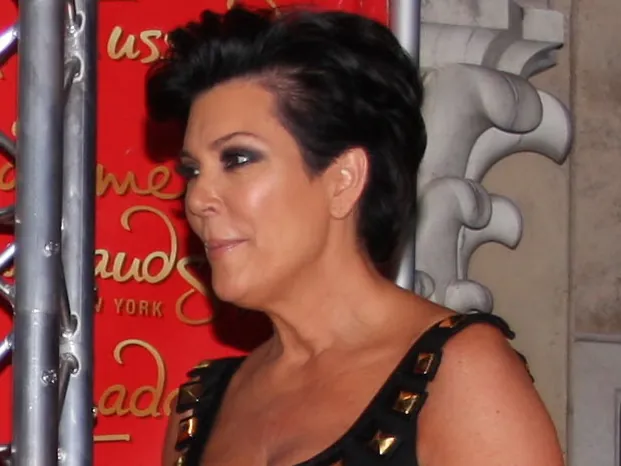 Kris Jenner’s facelift: “I love my facelift”Kris Jenner said she had a facelift about 15 years ago and a refresh before turning 70 — and that she loves it. How a SMAS facelift and recovery work.
 Did Vicki Gunvalson have a facelift? Yes, and she showed the result herselfVicki Gunvalson had a facelift in May 2018 after deciding fillers no longer looked like her. Her own words, how a facelift works and recovery.
 Keltie Knight’s facelift: why she decided to “just own it”Keltie Knight had a facelift in 2023 at 41 and chose to talk about it openly. What she said, how a SMAS facelift works and what recovery looks like.
 Did Linda de Mol have a neck lift? Yes, and she wrote about it herselfLinda de Mol wrote in LINDA. in 2025 that she had a neck lift. What she said, why she chose to be open, and how a face and neck lift works today.
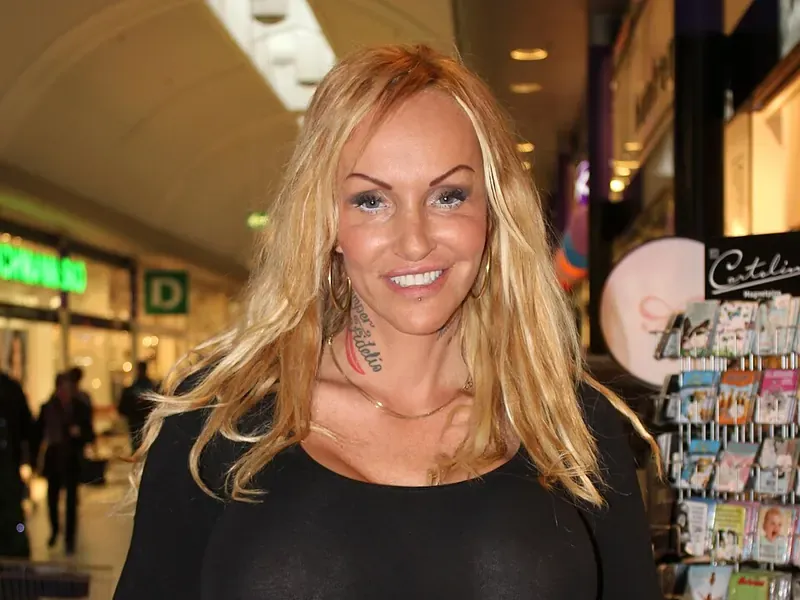 Linse Kessler and her facelifts: what she said herselfDanish reality star Linse Kessler has said openly that she has had several facelifts. Her words, how a modern facelift works and what recovery involves.
 Did Alice Bendová have a facelift? Yes, and she explained why herselfAlice Bendová confirmed a deep plane facelift in September 2026. Her words, how a facelift works, who it suits and what recovery looks like.
Facelift in Wuppertal: price and what is included
Prices are in US dollars; the amount in brackets is an approximate conversion to EUR at the rate of 02.10.2026. The final price is fixed in your contract.
- Faceliftfrom $2,400 (≈ €2,150)
What is a SMAS facelift?
It is a face lift that tightens the deep SMAS layer under the skin, not only the skin itself, so the lower face, jawline and neck stay firmer for longer. The result lasts about 7–10 years.
How much does a facelift in Wuppertal cost?
Prices start from $2,400 (≈ €2,150). The surgeon sets the final price at the free consultation, and it is fixed in the contract, with no hidden extras.
What is included in the price?
A one-to-one consultation, the medical team, anaesthesia, inpatient care with meals, 24/7 monitoring and twelve months of follow-up by the surgeon.
How do I get my exact price?
Message us on WhatsApp or Telegram using the buttons below. A coordinator will answer your questions and book a free consultation where the doctor names the exact price.
By messaging us, you agree to our Privacy Policy
Low winter sun, mild summers: what Wuppertal's light means for facial skin
Wuppertal sits in the Bergisches Land, in the valley of the Wupper. The average temperature runs from 3.1 °C in January to 18.7 °C in July, and the annual mean is 10.8 °C (DWD data for 2015–2020). A climate like this is gentle on tissue that is healing. Extreme heat, which pushes blood to the face and prolongs swelling, is not the main concern here. Dry cold air and strong wind are a bigger factor, and so is how much daylight reaches the skin while it recovers.
The sunshine figures are the most useful for planning. Over the year Wuppertal averages 4.3 hours of sun per day. June and July reach 6.6 and 6.5 hours, while December has only 1.5 hours and January 1.9. For anyone planning a facelift this means two different scenarios. Someone who recovers in early summer will be around much more daylight. The skin of the face and neck, with fresh incision lines near the ears, needs deliberate shading, a wide-brimmed hat and no sunbathing while the tissue is still settling. Someone who recovers in midwinter will hardly meet any strong light at all, so ultraviolet exposure is a smaller issue. In that season the tasks are different: keep the skin from drying out in heated rooms, and avoid the sharp contrast between a warm flat and a cold street.
Neither season is automatically better. The final look of the face arrives 3–6 months after the operation, so every patient will live through several months of changing light before the result is fully visible. A facelift in November 2026 will show its final contour somewhere between February and May 2027, when daylight is already increasing. That is a point many patients like. The gradual brightening of spring comes just as swelling is gone and the result can be judged honestly.
During the free online consultation, the coordinators and the doctor ask about your usual day: how much time you spend outdoors, whether you work at a desk or in a place with dry air, and how you currently care for your skin. Photos sent on WhatsApp or Telegram let the doctor assess skin quality, the degree of sagging in the jowls and neck, and the loss of definition along the jawline. Age matters as well. Surgical facelifts are generally advised from 40 with marked sagging, in some cases from 35, and under 30 is a contraindication. An individual recommendation always follows the examination of your photos and history.
Skin type and light exposure over the years are also worth discussing openly. A person who has spent years outdoors on the Nordbahntrasse, the 22 km cycle route across the city, or on the heights of the Bergische Hochflächen will have different skin texture from someone who works indoors. The doctor can only judge what the deeper SMAS work will achieve by looking at that texture. The SMAS technique repositions the layer of muscle and fascia, and it treats the cause of sagging instead of just tightening the surface.
A recovery calendar built from real dates
The medical rhythm after a SMAS facelift is clear. It starts with 7–10 days of rest, a compression bandage and reduced physical activity. Swelling and bruising fade over 2–4 weeks, and the first clear changes appear after 3–4 weeks as the swelling goes down. Full recovery takes about 2 months. The final look of the face arrives 3–6 months after the operation. The operation itself is done under general inhalation anaesthesia, and discomfort or tightness in the first days is eased with medication prescribed by the doctor.
Here is an example of how this fits a Wuppertal calendar. Suppose the operation takes place on 16 November 2026. The first week, up to roughly 23–26 November, is rest at home with the bandage. Bruising is at its most visible then, and you are not planning any social events. By mid-December, 3–4 weeks after the operation, the swelling has largely gone down and the first real changes in the jawline and cheeks begin to be visible. Around the middle of January 2027 you are at about 2 months, which is the point of full recovery. The face then keeps refining until somewhere between February and May 2027.
That timeline is only an illustration. The doctor adjusts it after the consultation. Some people have visible bruising for the full 2–4 weeks and some for less, and no one can promise an exact day. What the calendar does show is that a facelift fits better into a quiet period than into a busy one. In Wuppertal, long winter evenings with just 1.5 hours of average daily sun in December and 1.9 in January are, for many people, a natural time to stay in. Reduced physical activity is easier to accept when the weather is already pushing you towards the sofa.
A few practical points help the first week go smoothly. Arrange help at home for the first days. Prepare food that is easy to eat. Do not plan journeys on the hilly sections of the city, where the elevation runs from 101 m at the lowest point at Müngsten to 350 m at Lichtscheid. Walking uphill raises blood pressure in the head, and during the early days of swelling it is better to stay on level ground and move calmly. The Schwebebahn, which has run since 1901 with tracks 8 m above the streets and 12 m above the Wupper, is a gentle way to see the city from a seat, but wait until the doctor confirms that you can move around freely and that the bandage is no longer needed.
The coordinators answer round the clock on WhatsApp and Telegram, so questions that come up late in the evening in the first weeks do not need to wait. You can send photos of the healing area, and the doctor who operated follows you for the whole first year until the final result.
Wind, rain and hills: protecting healing tissue
Wuppertal is a wet city. The 2015–2020 table gives 1,025 mm of precipitation per year, with January the wettest month at 125 mm, then December at 113 mm and November at 105 mm. April and May are the driest, at 50 and 53 mm. Longer-term figures in the same source reach 1,116 mm in the valley and 1,183 mm on the heights. For someone in recovery, this makes the autumn and winter months a time of damp air and frequent rain, which is a practical matter rather than a medical one. Wet weather itself does not damage a healing face, but several things around it deserve attention.
First, avoid anything that irritates the skin around the incision lines. Incisions for a standard SMAS lift are hidden along the frontal edge of the hair and around the ears. A wet scarf or tight hood pressing on those areas is uncomfortable and can disturb the compression bandage in the first days. A loose, soft hat that covers the ears without pressure is more sensible, and the doctor will say when you may go without the bandage.
Second, think about wind and cold. Cold, dry air can make healing skin feel tight, and a sharp wind on the face adds to that feeling. Short walks in calm weather are fine within the activity limits given by the doctor, but long periods outside in strong wind are not a good idea in the first weeks. The same goes for the sudden jump from a heated tram or flat to a cold street, which can cause redness for a while.
Third, plan your physical activity honestly. The Nordbahntrasse is a good route for cycling and walking, but cycling, running and any intense exercise belong to the period of reduced activity. Do not restart them until the doctor permits it. A gentle flat walk is a reasonable start. Hilly streets in the southeastern part of the city, which belongs to the Bergische Hochflächen, are a harder test for the first weeks.
Finally, because the final result takes 3–6 months to appear, the face will go through several seasons of weather before it is fully settled. Moisturising, shade in summer and consistent daily skin care are sensible habits. The doctor will give specific instructions on creams and cleansing during the follow-up, and you can ask about them in the chat at any time.
When you want to be seen: semesters, the 2031 garden show and ordinary diaries
Wuppertal has several higher-education institutions, including the Bergische Universität Wuppertal with about 21,000 students in winter semester 2024/25, FOM and the Kirchliche Hochschule Wuppertal/Bethel. For lecturers, administrators and anyone else tied to the academic year, that rhythm gives natural windows. A teacher who wants to be back in front of a lecture hall with a calm, rested face will probably choose a gap between the end of one teaching period and the start of the next, because early recovery involves a bandage and visible bruising, and rest is the point.
Other people plan around work deadlines, family occasions or personal events. The medical timeline gives a useful structure. Count back from the date when you want to look your best. If you want the first clear changes to be visible, allow at least 3–4 weeks. If you want swelling and bruising to be gone, allow 2–4 weeks at minimum and preferably longer. If you want to be fully recovered, allow about 2 months. If you want to judge the final result, allow 3–6 months. An event at which you wish to appear relaxed should not fall in the first weeks.
Looking further ahead, Wuppertal will host the Federal Horticultural Show (Bundesgartenschau) in 2031. This is a long way off, but the result of a SMAS facelift is described as lasting 7–10 years, so someone who has the operation in the next few years will still be within that range in 2031. That is a general statement about the technique, not a promise about any individual face. Ageing continues, and the doctor will tell you what to expect for your own type of ageing.
Not everyone wants to say openly that they have had a procedure. The recovery schedule can be arranged so that the visible stage happens in private, and the coordinators can help with questions about what to say to employers or relatives. Quiet planning helps. A common approach is to take a block of time off, stay at home in the first 7–10 days, and return to normal activity gradually as the swelling fades. Pushing a return to public life too early is the most common mistake, and it is easy to avoid with a realistic calendar.
Insurance in Germany and a facelift: what to clarify early
In Germany, statutory health insurance (GKV) covers about 92% of the population, and about 88% of the working population is insured through statutory funds while about 11% are insured privately (figures as of 2024). A facelift for aesthetic reasons falls outside what statutory insurance pays for. The sources state that there is no cost coverage by the GKV for cosmetic procedures done at the patient's request, and that the patient bears the full cost, including lost income. Health insurers generally cover treatment costs with the exception of cosmetic surgery.
There is a second point that many people overlook. After a medically not indicated procedure, insured persons must share in the costs of any resulting complications, including sick pay. Under § 52 SGB V insurers may restrict or refuse benefits in such a case, and there is no entitlement to continued wage payment (Entgeltfortzahlung). In practical terms, this means you should think about the time off work as a personal matter. Do not assume that your employer or insurer will treat the recovery as sick leave. Talk to your employer about holiday or unpaid leave, and check the conditions of your own insurance policy, statutory or private, before the date is fixed.
The first online consultation is free, and the doctor names the final price and fixes it in the contract. You can also ask in the chat what is included and what follow-up care is covered during the first year. Examination, scope of the operation and final price are settled before anything is booked, so there is time to think about your insurance and employment situation without pressure.
Combining procedures is also common. A facelift can be combined with eyelid surgery (blepharoplasty), rhinoplasty or double-chin liposuction, and the doctor decides on the combined scope at the consultation. Combination affects the length and complexity of recovery, so tell your coordinator early if you are considering it, because it changes the planning for time off.
Which months in Wuppertal are easiest for healing skin?
There is no single ideal month. Summer has the most sunshine, with about 6.6 hours per day in June and 6.5 in July, so shading the face and the incision areas matters. Winter has very little, about 1.5 hours in December and 1.9 in January, so strong light is not the problem, but dry indoor air and cold wind are. The doctor will help you choose after hearing about your work and daily routine during the free consultation.
How would a recovery from mid-November 2026 look in practice?
As an illustration, with the operation on 16 November 2026, the first 7–10 days are rest with a compression bandage and reduced activity. Swelling and bruising fade over 2–4 weeks, and the first clear changes appear after 3–4 weeks, around mid-December. Full recovery takes about 2 months, which is mid-January 2027, and the final look arrives 3–6 months after the operation. Individual timing varies and is confirmed by the doctor.
Does the wet weather in Wuppertal affect recovery?
Rain itself does not harm a face that is healing, but damp, cold wind can make skin feel tight and uncomfortable. Wuppertal receives 1,025 mm of precipitation per year in the 2015–2020 table, with January, December and November the wettest. Keep short walks calm, avoid tight wet hoods pressing on the area around the ears, and follow the doctor's instructions on the bandage and skin care.
Will the hills of the city make the first weeks harder?
They can. The city's elevation runs from about 101 m at the lowest point to 350 m at Lichtscheid, and the southeastern part rises to the Bergische Hochflächen. Steep walking raises blood pressure in the head, which is not what you want while swelling is present. Stick to level ground and short, relaxed walks in the first weeks, and ask the doctor when you may return to cycling on the Nordbahntrasse or any intense exercise.
Does statutory health insurance in Germany pay for a facelift?
Statutory health insurance does not pay for cosmetic procedures done at the patient's request, and the patient bears the full cost, including lost income. If complications follow a medically not indicated procedure, insurers may restrict or refuse benefits under § 52 SGB V, and there is no entitlement to continued wage payment. Check your own insurance conditions and discuss time off with your employer before choosing a date.
Can I plan the operation around the university semester or a work project?
Yes, and it is sensible to do so. Work backwards from the date when you want to look rested. Allow 7–10 days of rest at the start, 2–4 weeks for swelling and bruising to fade, about 2 months for full recovery, and 3–6 months for the final result. A gap between teaching periods or between large projects suits that structure better than a busy stretch.
What should I send to the coordinators from Wuppertal before the consultation?
Clear photos of the face from the front and both sides, and of the neck, in daylight if possible, sent on WhatsApp or Telegram. Add a short note on chronic illnesses, current medication and what bothers you most, such as jowls, a blurred jawline, a double chin or deep nasolabial folds. The coordinators reply round the clock, and the doctor then assesses your case and names the price before anything is booked.