





























first
a full 12 months
2,800 grafts
FUE method
City Medical Centre
0% instalments
from $367/mo
Sit down, hear the cost — $0.
Honest case
first
a full 12 months
FUE method, no incisions or stitches. Grafts and outcome forecast counted without any fee — before you decide.
Free online consultation · Reply within 15 minutes
Charge-free, no surgery booking required
Message our coordinator
Free online consultation · Reply within 15 minutes
Message us on TelegramMessage us on WhatsAppBy messaging us, you agree to our Privacy Policy
Hair transplant for patients from Wuppertal at City Medical Centre starts at €2,000 (from $2,200). The first online consultation is free; the doctor names the final price and it is fixed in the contract.
How it works · Hair transplant prices
Information current as of 24 October 2026
results
All cases are real patients of the clinic.
first
a full 12 months
2,800 grafts
FUE method

first
a full 12 months
3,500 grafts
FUE method

first
a full 12 months
2,600 grafts
FUE method

first
a full 12 months
3,000 grafts
FUE method

first
a full 12 months
2,700 grafts
FUE method

first
a full 12 months
3,300 grafts
FUE method

first
a full 12 months
2,900 grafts
FUE method

first
a full 12 months
2,500 grafts
FUE method

first
a full 12 months
3,400 grafts
FUE method

first
a full 12 months
2,500 grafts
FUE method

first
a full 12 months
3,100 grafts
FUE method

first
a full 12 months
3,600 grafts
FUE method

first
a full 12 months
4,000 grafts
FUE method

first
a full 12 months
3,200 grafts
FUE method

first
a full 12 months
3,000 grafts
FUE method

first
a full 12 months
3,700 grafts
FUE method

first
a full 12 months
2,700 grafts
FUE method

first
a full 12 months
3,800 grafts
FUE method

first
a full 12 months
3,300 grafts
FUE method

first
a full 12 months
2,800 grafts
FUE method

first
a full 12 months
2,500 grafts
FUE method

first
a full 12 months
3,900 grafts
FUE method

first
a full 12 months
3,500 grafts
FUE method

first
a full 12 months
3,800 grafts
FUE method

first
a full 12 months
2,900 grafts
FUE method

first
a full 12 months
3,600 grafts
FUE method

first
a full 12 months
2,600 grafts
FUE method

first
a full 12 months
2,700 grafts
FUE method

first
a full 12 months
3,700 grafts
FUE method

first
a full 12 months
3,200 grafts
FUE method

first
a full 12 months
3,000 grafts
FUE method

first
a full 12 months
2,800 grafts
FUE method

first
a full 12 months
4,000 grafts
FUE method

first
a full 12 months
3,400 grafts
FUE method

first
a full 12 months
2,900 grafts
FUE method

first
a full 12 months
3,100 grafts
FUE method

first
a full 12 months
2,600 grafts
FUE method

first
a full 12 months
3,300 grafts
FUE method

first
a full 12 months
3,900 grafts
FUE method

first
a full 12 months
3,500 grafts
FUE method

first
a full 12 months
2,700 grafts
FUE method

first
a full 12 months
3,800 grafts
FUE method

first
a full 12 months
3,200 grafts
FUE method

first
a full 12 months
3,000 grafts
FUE method

first
a full 12 months
2,800 grafts
FUE method

first
a full 12 months
3,100 grafts
FUE method

first
a full 12 months
3,600 grafts
FUE method
Comparison
Graft transfer here comes in three technologies: classic FUE, suture-free DHI and a combined protocol. Compare them on implantation technique, tissue trauma and graft survival and choose knowingly.
Classic technique without incisions or stitches

$2,200
$2,700
Graft implantation technique
ForcepsGraft trauma
MinimalHair's natural angle
NaturalGraft survival
98–100%Suitable for
Androgenetic alopeciaSuture-free placement with a Choi pen

$2,500
$2,900
Graft implantation technique
DHI, a Choi implanterGraft trauma
MinimalHair's natural angle
NaturalGraft survival
98–100%Suitable for
DensificationFUE extraction, DHI pen implant

$2,700
$2,900
Graft implantation technique
Extraction by FUE, DHI implantGraft trauma
MinimalHair's natural angle
NaturalGraft survival
98–100%Suitable for
Androgenetic alopecia and densificationFor each method the survival and trauma figures are averaged and act as a guide: exact numbers depend on the transplant area and the patient's individual features, and the doctor clarifies them at the consultation.
Schedule a consult


















about the clinic
Comfort in the room, quality equipment, attention to the patient

We will take your questions and find a consultation time convenient for you
Message us on WhatsApp Drop us a lineIf the issue can be solved another way, the doctor says so at the consultation, and your budget is left alone. The situations in which a transplant is truly effective are listed below.
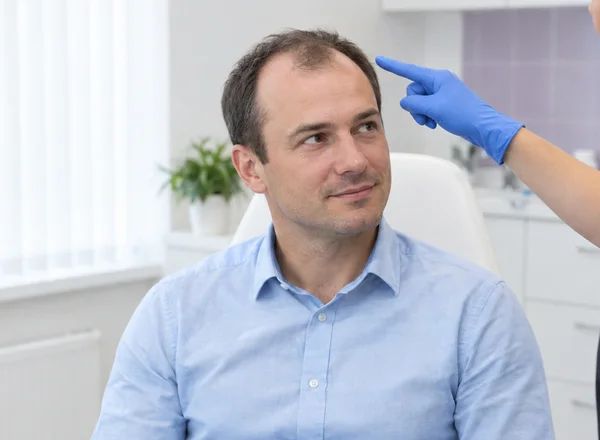

Leave a number: photos go to a coordinator in a messenger, the doctor looks and says if a transplant will help you. Free, no booking.

services
The free consultation includes a graft count; the figure you hear then goes into the contract unchanged.
suture-free graft extraction

$2,200$2,700
or $367/mo — 0% instalments for 6 months
Keep the cost as isimplantation without channels

$2,500$2,900
or $417/mo — 0% instalments for 6 months
Keep the cost as iscombined technique

$2,700$2,900
or $450/mo — 0% instalments for 6 months
Keep the cost as is| Initial examination | Free |
|---|---|
| Eyebrow transplant, FUE | |
| Beard transplant, FUEinstalments $467/mo | |
| Hair trichopigmentation | |
| PRP therapy / session | $200 |
all included
From prep for the surgery to 12 months of follow-up.
No extra payments on the day of surgery.
two more patches
A hair transplant goes beyond the scalp. The same grafts from the back of the head, the same FUE method — only the area changes.
FUE, no incisions and no stitches

Grafts are taken from the donor area at the back of the head and moved through micro-punctures of roughly 1 mm — no scars are left. You and the doctor discuss the shape before the operation, taking your facial features into account. Transplanted hair grows for life: the beard can be trimmed and styled as usual.
$2,800$3,000
or $467/mo — 0% instalments for 6 months
Keep the cost as isFUE, no incisions and no stitches

At your first meeting the surgeon settles the brow shape: references are turned over together and the proportions of your face underpin the design. Angled correctly, the implanted hairs give brows that read as natural. Growth stopped by long years of plucking is covered as well.
$1,600$1,700
a same-day procedure with the scalp area numbed
Keep the cost as isYour donor zone decides a great deal: it is inspected, the grafts totalled and the result explained. The cost is agreed at the consultation and stated in the contract.

Message our coordinator
Free online consultation · Reply within 15 minutes
Message us on TelegramMessage us on WhatsAppBy messaging us, you agree to our Privacy Policy
Process
From consultation to going home — all in one day

During the initial consultation, the doctor explains how the FUE and DHI methods work, answers all your questions, and puts together an individual plan for the surgery. This consultation is free.

Once you're ready, the surgery date is reserved with a deposit, paid either by card at the clinic or online, and the terms are fixed in a medical services contract.

A course of analyses precedes the transplant, and everything needed for it, list and directions alike, comes from the clinic.

This step uses local anaesthesia to make sure the operation is completely painless.

This step gathers grafts from the back of the head or temples, using a stitchless technique.

This step involves the surgeons implanting the grafts into the balding area.
Everything required afterwards comes from the clinic, together with a complete set of directions.

The crusts come away, the swelling eases, the area gradually recovers

A normal stage. Only the hairs go, the follicles stay in place

New hairs arrive gradually, the result starts to show

The hair looks heavier now, the volume and the outline stand out

The final density and a natural hairline take shape

Free, in advance of surgery, no strings at all.
Schedule a consultdoctors

Hair transplant doctor, trichologist, surgeon
10 years in practice

Dermatovenereologist, trichologist, surgeon
11 years of experience

Plastic surgeon
9 years of experience

Plastic surgeon
9 years of experience

Assistant
9 years of experience
First the donor zone is judged, then the grafts are counted, then the outcome is explained.
Schedule a consultcoordinators
One named coordinator works with you from the moment you write until recovery is over.

Your personal manager
Is there from preparation through to recovery
Helps with the forms and the arrangements
Your personal manager
Is there from preparation through to recovery
Helps with the forms and the arrangements

Your personal manager
Is there from preparation through to recovery
Helps with the forms and the arrangements
Your personal manager
Is there from preparation through to recovery
Helps with the forms and the arrangements













We will take your questions and find a consultation time convenient for you
Message us on WhatsApp Drop us a lineReviews
I was having trouble with my hair. I came here and got a hair transplant. The results was awesome thank you
Review on Google
І experienced hair loss due to COVID and turned to this clinic; they helped me and performed a hair transplant, moving hair from the back of my head to my temples. Thank you.
Review on Google
I traveled to City Medical Centre, where they helped me overcome hair loss through a transplant to the balding areas of my scalp. I am grateful to the doctors for performing the procedure painlessly.
Review on Google
I am sharing my experience, because before the operation I went through a pile of reviews myself and was looking for real stories. I had a beard transplant six months ago. Honestly, in the first days after the procedure I felt a little jittery: my face looked unfamiliar, there was slight swelling and small scabs. In the first couple of months the hair partly fell out, as the doctor had warned. But now the result truly makes me very happy) From about the 4th month active, even growth began. The transplanted hair took very well, the beard now looks as natural as possible, no bald patches are left. The beard became much thicker and denser, with the shape I had thought about for a long time. All in all, I recommend the clinic, the doctor was polite and explained everything 👍 The result is definitely worth it!
Review on Google
I traveled to this clinic and do hair transplant, very good quality and cheap. Good doctors
Review on Google
I do hair transplant here very good doctors!!
Review on Google
Your main worries
People often say hair implants, but no artificial hair is used. In a hair transplant the doctor moves your own follicles (grafts) from the donor area to thinning or bald areas using FUE or DHI.

Yes — applications are welcome from every kind of city and country, and questions are settled online in advance.
Prices start at $2,200 (≈ €2,000) for FUE, $2,500 (≈ €2,250) for DHI, and $2,700 (≈ €2,450) for the combined method. Your final price is set after a free graft count and locked into the contract.
One day in surgery, then straight back to your own home.
It helps with stable pattern hair loss and a receding hairline when there are enough donor grafts. Some types of alopecia need treatment first; the doctor checks this at the consultation.
No. Local anaesthesia is administered and the session is painless.
In FUE, grafts are harvested with a tweezer, no cuts or stitches involved. In DHI, a Choi pen implants grafts without opening channels first. The combined method pairs FUE harvesting with DHI implantation.
Nobody can guess it in advance; the doctor counts them at a free appointment based on your donor reserve.
Skin healing: 0–10 days. Then, at 2–4 weeks, transplanted hairs shed as expected. Regrowth is evident from 3–4 months, density is apparent by 6–9 months, so the outcome is final at 12–18 months.
The clinic provides a lifetime guarantee on hair growth, stated in the contract.
The clinic works with a medical licence, care follows the standards and clinical guidelines
per Ministry of Health.

Look through the diplomas before trusting anyone with surgery
Go through the papersAKC POMOSHCH LLC
the clinic's own entity
1057746096924
OGRN
7728536872
INN
A patient in Wuppertal gets a procedure that keeps things simple. FUE and DHI are performed with no cutting and no suturing, under local anaesthesia, and the operation is wrapped up in the course of one day.
Living in Wuppertal is no obstacle to a first opinion: the consultation runs online, costs nothing, and ends with the doctor saying whether a transplant helps after seeing photos of the area. Open 24/7.
After the operation: 0-10 days to heal, 2-4 weeks until the transplanted hairs shed, which is a normal phase, 3-4 months to the start of growth, 6-9 to real density and 12-18 to the final result. Check-ups at 1, 3, 6, 9 and 12 months, photos with a personal coordinator, lifetime growth guarantee.
Prices are in US dollars; the amount in brackets is an approximate conversion to EUR at the rate of 02.10.2026. The final price is fixed in your contract.
By messaging us, you agree to our Privacy Policy
Well-known people who spoke openly about this surgery, in their own words.
 John Cena's hair transplant: “I got a problem, I try to fix it”John Cena spoke openly in 2025 about his hair transplant and the fan signs that pushed him to it. His words, how the procedure works and the recovery.
 Did Calum Best have a hair transplant? Yes, and he said so himselfCalum Best said in 2023 he had his sixth hair transplant, this time using patches of beard hair. His words, how the procedure works and recovery.
 Did Chloe Goodman have a hair transplant? Yes, and she explained whyChloe Goodman had a hair transplant in 2025 after losing hair following pregnancy. Her own words, how the procedure works and what recovery involves.
 Did Dean McCullough have a hair transplant? Yes, and he filmed itRadio 1 presenter Dean McCullough shared his FUE hair transplant on TikTok in 2024. His own words, what the swelling means and how results develop.
 Did Ella Morgan have a hair transplant? Yes — to cover a hairline scarThe Married at First Sight star revealed a hair transplant in 2025 to cover scarring along her hairline from facial surgery. Her own words and the facts.
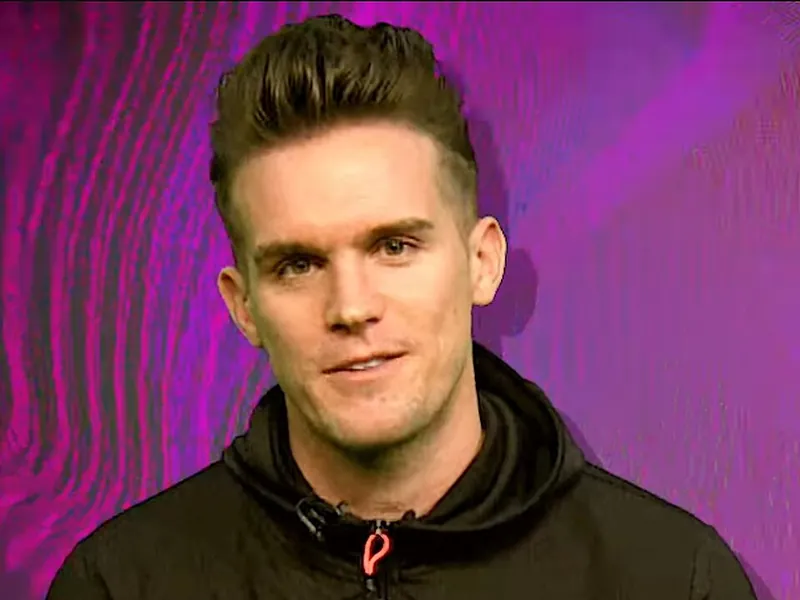 Gaz Beadle on his beard transplant: “I LOVE IT”Gaz Beadle told his 3.6 million followers he had a beard transplant after years of patchy stubble. His own words, and how a hair or beard transplant works today.
Page medically reviewed by Anastasia A. Kolesnik, hair transplant doctor. Review date: .
Wuppertal sits in the Wupper valley in the Bergisches Land. The river winds about 20 km through the city area, and the ground rises from a lowest point of 101 m at Müngsten to 350 m at Lichtscheid. The city's own elevation figure is 160 m. For a hair transplant this matters in a practical way. Two people with the same operation can spend their first weeks in different microclimates, depending on whether they live down by the river or up on the Bergische Hochflächen in the southeast.
The numbers for the wet part of the year are clear. Annual precipitation is 1,025 mm in the 2015–2020 table, and the wettest months are January with 125 mm, December with 113 mm and November with 105 mm. The longer-term figures are higher still: 1,116 mm in the valley and 1,183 mm on the heights. Early recovery runs from day 0 to day 10. In that period the crusts fall away and the swelling subsides, and the transplanted area has to stay protected from rain and wet headwear. A soaked cap pressed on freshly treated skin is the opposite of what the care plan asks for. If you plan your operation for the damp months, think about how you will get from the door to the car or the tram stop.
Sunshine is just as uneven. The year averages 4.3 hours a day, but December gets only 1.5 hours and January 1.9. In June the figure is 6.6 hours and in July 6.5. Winter in Wuppertal is gentle on a scalp in terms of sun, and the real concern is moisture and cold. Summer reverses this: long bright days arrive just when the new hairs are starting to show. Neither season is wrong for the operation, but each needs different habits. The coordinator on WhatsApp or Telegram will go through them with you before any date is booked.
Temperature adds a third factor. July averages 18.7 °C, January 3.1 °C, and the annual mean is 10.8 °C. These are mild values with no extreme heat. The usual Wuppertal problem is a cool, damp day with wind rather than a scorching one. Wind carries dust and drives rain sideways, so on the heights in particular you want a way to cover the head that is clean and does not rub the grafted zone. The doctor will explain how to choose it during the consultation, using the headwear advice that comes with the care plan.
Headwear is the most ordinary question in a damp, cool city, and it deserves a straight answer. The care plan that comes with the procedure includes advice on washing your hair, on sleep and on headwear. That advice is personal, so do not copy a stranger's routine from a forum. What this section can do is help you think about the situations that Wuppertal's weather creates, so you arrive at the consultation with specific questions.
The first question is what you will wear in the first 10 days, when crusts are still falling away. In a city with 105 to 125 mm of rain in each of the three winter months, a wet head is a realistic possibility. Ask the doctor what kind of covering is acceptable at that stage and what to avoid. Ask also how to handle a sudden shower when you are away from home. Having a clean spare item with you is a sensible habit, and your coordinator can confirm whether it fits your protocol.
The second question is the donor area. Grafts are taken from the back of the head or the temples with FUE, without stitches. That area also needs care, and the pressure of a tight hat or a bicycle helmet at the back of the head is a point to raise. If you cycle, and the Nordbahntrasse is a 22 km cycle route across the city, ask specifically when a helmet becomes acceptable again. The service plan includes a schedule for returning to sport and hair care, so the answer will be tailored to you.
The third question is the first sunny weeks. When the sun finally returns in spring and reaches 6.6 hours a day in June, the grown-in area will still be changing. The timeline has the density showing between 6 and 9 months, and the final result at 12 to 18 months. Treat the earlier months as a period of protecting the skin, and ask at the consultation about sun protection and head coverings for bright days. Do not improvise with products you have not discussed.
Hair transplant results are slow, so a calendar is more useful than a general promise. Take an example: an operation in the first week of November 2026, which is one day at the clinic under local anaesthesia. The stages below come from the standard course of recovery, and your own timing will be confirmed by the doctor.
From day 0 to day 10, so until mid-November, the crusts fall away and the swelling subsides. The area slowly recovers. In Wuppertal this falls in the wettest stretch of the year, with November at 105 mm of precipitation on average. Stay close to the care instructions and plan your first days at home rather than out in the weather.
From 2 to 4 weeks, so roughly late November to early December, the transplanted hairs shed. This is a normal stage. Only the hairs shed, and the follicles stay in place. People are often alarmed here, because the area can look as though the operation has been undone. It has not. Dark December days with only 1.5 hours of sun on average make this a quiet, indoor-heavy period anyway, so it is a convenient time to be less visible.
From 3 to 4 months, so February to March 2027, first growth appears. Gradually new hairs show and the result begins to be seen. From 6 to 9 months, so May to August 2027, density builds and the main volume and contour become visible. That coincides with the brightest part of the year, with June at 6.6 hours a day, so it is a good time to ask about sun protection. The end result comes at 12 to 18 months, which for this example means November 2027 to May 2028. Follow-up checks at 1, 3, 6, 9 and 12 months are included, with progress tracked by photo through your personal coordinator.
The photo gallery shows how hair looks 8 to 12 months later. Use those timings as a reality check, not the first weeks of growth.
Some people care about when the visible stage ends rather than when the operation happens. Wuppertal has its own rhythms. The Bergische Universität has about 21,000 students, as of the winter semester 2024/25, and four institutions of higher education are in the city, including FOM and the Kirchliche Hochschule Wuppertal/Bethel. For a student or a lecturer, the semester break is the obvious window to be at home during the shedding stage, which happens 2 to 4 weeks after the operation. A person with a heavy teaching schedule might choose a date so that the shedding falls outside their busiest weeks.
A working person can think about it in the same way. The first 10 days are the most visible period, and the shedding stage follows. Between months 3 and 4 the first growth begins, and the visible difference arrives gradually rather than on a certain date. If you have an event in your diary, such as a family occasion or a wedding, count backwards. For a firm anchor in the city's own calendar, Wuppertal will host the Bundesgartenschau in 2031. Anyone planning a longer-term phase of treatment, for example a beard or eyebrow transplant after the scalp, has time to stage everything well before that date. The same FUE method and the same donor area apply to those areas, with only the target changing.
Daily life also matters for movement. The Schwebebahn has operated since 1901, with its tracks 8 m above the streets and 12 m above the Wupper, and it is a normal way to cross the city. On busy mornings it means crowding and contact with other people. In the first days, ask the doctor how to protect the treated area in a crowded space. Returning to sport follows the plan you receive, and the doctor sets the timing.
Finally, think about the consultation itself. It is online, free, and the coordinator replies round the clock on WhatsApp and Telegram. Send photos, receive an assessment and price, and only then confirm the plan and dates. Nothing is booked before you agree.
In Germany, about 92% of the population is covered by statutory health insurance. In 2024 about 88% of the working population was insured through statutory funds and about 11% privately. That is a high figure, so it is natural to ask whether insurance covers a hair transplant. The general rule in the sources is that statutory insurance does not pay for cosmetic procedures done at the patient's request. The patient bears the full cost, including lost income. Whether your case counts as cosmetic or medical is a question for your insurer, and the doctor can describe the clinical picture during the consultation to help you put the question properly.
Sick pay is a separate point and often overlooked. After a medically not indicated procedure, insured persons must share in the costs of resulting complications, including sick pay. Insurers may restrict or refuse benefits under § 52 SGB V, and there is no entitlement to continued wage payment in that case. The practical lesson is to plan time off as holiday or flexible leave rather than counting on a sick note. A hair transplant is a day procedure with an early recovery stage of 0 to 10 days, so many people find it easier to schedule than a long absence.
The doctor will also check whether a transplant suits you at all. Conditions that help include androgenetic or diffuse alopecia, bald patches and a receding frontal edge of the hair. The contraindications listed include trichotillomania, body dysmorphic disorder, cancer, being under 18, epilepsy, serious heart conditions, diabetes mellitus, a pacemaker, AIDS/HIV, hepatitis B/C and pulmonary embolism. In some cases the doctor may say that a transplant is not the right step yet, and you will hear that at the consultation without owing anything.
A sensible order for German patients is therefore short. First send photos and get the free assessment. Second, ask your insurer in writing how your case would be classed. Third, plan leave. Fourth, choose the date with the seasonal calendar in mind.
It can be. November averages 105 mm of precipitation and December 113 mm, so the first 10 days, when crusts fall away and swelling subsides, will probably be damp. The advantage is low sun: December has only 1.5 hours a day on average. What matters is that you can stay indoors and follow the care instructions. The doctor will discuss the timing with you during the consultation.
Following the standard course, shedding of the transplanted hairs comes 2 to 4 weeks after the operation, so late November to early December. First growth appears at 3 to 4 months, around February to March 2027. Density shows at 6 to 9 months, roughly May to August 2027, and the end result arrives at 12 to 18 months. Individual timing is confirmed by the doctor.
The city rises from 101 m to 350 m, and the longer-term precipitation figures are 1,116 mm in the valley and 1,183 mm on the heights. So the heights are somewhat wetter. The care rules are the same, but if you live higher up it is worth asking how to protect the area on wet and windy days, and how to cover your head cleanly on the way home.
Sun is strongest in June and July, with 6.6 and 6.5 hours a day on average. For a November operation, that period falls in the 6 to 9 month stage, when density is showing. Ask the doctor during the consultation how to protect the area on bright days. The care plan includes advice on headwear, and the coordinator can answer follow-up questions on WhatsApp or Telegram.
According to the sources, statutory health insurance does not cover cosmetic procedures done at the patient's request, and the patient bears the full cost, including lost income. Whether your case is classed as cosmetic is for your insurer to say. Describe your situation to them in writing, and the doctor can explain the clinical picture at the consultation.
After a medically not indicated procedure, insured persons must share in the costs of complications, including sick pay. Insurers may restrict or refuse benefits under § 52 SGB V, and there is no entitlement to continued wage payment in that case. It is safer to arrange leave in advance. The early recovery stage lasts 0 to 10 days, and the doctor can advise on what to expect.
The Nordbahntrasse is a 22 km cycle route across the city, so many people ask. The plan you receive includes a schedule for returning to sport and hair care, and it also covers headwear. Ask specifically about helmets, because the donor area at the back of the head needs protection. The doctor sets the timing.
Wuppertal has four institutions of higher education, and the Bergische Universität alone has about 21,000 students. The shedding stage at 2 to 4 weeks is the most noticeable, so many students would want it to fall during a break. Count back from the semester dates, send your photos to the coordinator, and agree on a date with the doctor.

 Forceps
 Minimal


