





























earlier
12 months later
2,800 grafts
FUE method
City Medical Centre
FUE · DHI
from $2,200
Guidance and a total — $0.
Real patient
earlier
12 months later
FUE moves grafts without incisions or stitches. Graft count and forecast measured up and never billed — before you decide.
Free online consultation · Reply within 15 minutes
Nothing is owed, no surgery booking required
Message our coordinator
Free online consultation · Reply within 15 minutes
Message us on TelegramMessage us on WhatsAppBy messaging us, you agree to our Privacy Policy
Hair transplant for patients from Düsseldorf at City Medical Centre starts at €2,000 (from $2,200). The first online consultation is free; the doctor names the final price and it is fixed in the contract.
How it works · Hair transplant prices
Information current as of 5 November 2026
results
Photographs show people treated at our clinic.
earlier
12 months later
2,800 grafts
FUE method

earlier
12 months later
3,500 grafts
FUE method

earlier
12 months later
2,600 grafts
FUE method

earlier
12 months later
3,000 grafts
FUE method

earlier
12 months later
2,700 grafts
FUE method

earlier
12 months later
3,300 grafts
FUE method

earlier
12 months later
2,900 grafts
FUE method

earlier
12 months later
2,500 grafts
FUE method

earlier
12 months later
3,400 grafts
FUE method

earlier
12 months later
2,500 grafts
FUE method

earlier
12 months later
3,100 grafts
FUE method

earlier
12 months later
3,600 grafts
FUE method

earlier
12 months later
4,000 grafts
FUE method

earlier
12 months later
3,200 grafts
FUE method

earlier
12 months later
3,000 grafts
FUE method

earlier
12 months later
3,700 grafts
FUE method

earlier
12 months later
2,700 grafts
FUE method

earlier
12 months later
3,800 grafts
FUE method

earlier
12 months later
3,300 grafts
FUE method

earlier
12 months later
2,800 grafts
FUE method

earlier
12 months later
2,500 grafts
FUE method

earlier
12 months later
3,900 grafts
FUE method

earlier
12 months later
3,500 grafts
FUE method

earlier
12 months later
3,800 grafts
FUE method

earlier
12 months later
2,900 grafts
FUE method

earlier
12 months later
3,600 grafts
FUE method

earlier
12 months later
2,600 grafts
FUE method

earlier
12 months later
2,700 grafts
FUE method

earlier
12 months later
3,700 grafts
FUE method

earlier
12 months later
3,200 grafts
FUE method

earlier
12 months later
3,000 grafts
FUE method

earlier
12 months later
2,800 grafts
FUE method

earlier
12 months later
4,000 grafts
FUE method

earlier
12 months later
3,400 grafts
FUE method

earlier
12 months later
2,900 grafts
FUE method

earlier
12 months later
3,100 grafts
FUE method

earlier
12 months later
2,600 grafts
FUE method

earlier
12 months later
3,300 grafts
FUE method

earlier
12 months later
3,900 grafts
FUE method

earlier
12 months later
3,500 grafts
FUE method

earlier
12 months later
2,700 grafts
FUE method

earlier
12 months later
3,800 grafts
FUE method

earlier
12 months later
3,200 grafts
FUE method

earlier
12 months later
3,000 grafts
FUE method

earlier
12 months later
2,800 grafts
FUE method

earlier
12 months later
3,100 grafts
FUE method

earlier
12 months later
3,600 grafts
FUE method
Comparison
There are three graft transfer technologies to pick from: classic FUE, suture-free DHI and a combined protocol. Compare the implantation technique, the tissue trauma and the graft survival of each.
Classic technique without incisions or stitches

$2,200
$2,700
Graft implantation technique
ForcepsGraft trauma
MinimalA natural angle for hair
NaturalGraft survival
98–100%Suitable for
Androgenetic alopeciaSuture-free implantation with a Choi pen

$2,500
$2,900
Graft implantation technique
Choi implanter, DHI penGraft trauma
MinimalA natural angle for hair
NaturalGraft survival
98–100%Suitable for
DensificationFUE for extraction, DHI implant

$2,700
$2,900
Graft implantation technique
FUE extraction + DHI implantationGraft trauma
MinimalA natural angle for hair
NaturalGraft survival
98–100%Suitable for
Densification for androgenetic alopeciaThese survival and trauma figures are averages for each method, meant as a guide: exact numbers depend on the transplant area and the patient's individual features and are clarified by the doctor at consultation.
Speak to a specialist


















about the clinic
Unhurried care, comfortable rooms and current equipment

We will talk through your questions and book the consultation at a good time
TelegramMessage us on TelegramMessage us on Telegram Message us on WhatsApp Apply onlineIf your case can be solved without surgery, the doctor says so right at the consultation — and you keep your money. Below are the conditions in which a transplant really works.
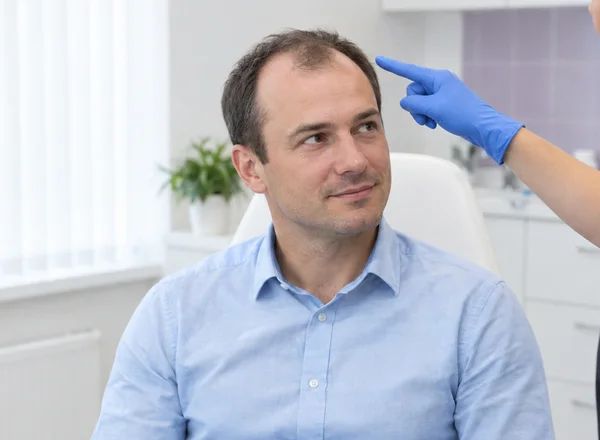

Hand over a number and nothing more. The coordinator requests messenger pictures of the thinning zone, a doctor looks them over and answers whether a transplant would help. Free, and nothing is booked.

services
At the free consultation, after the grafts are counted, the cost is named and fixed in the contract.
suture-free graft extraction

$2,200$2,700
Guidance and a total — $0.
Keep this priceimplantation without channels

$2,500$2,900
Guidance and a total — $0.
Keep this pricecombined technique

$2,700$2,900
Guidance and a total — $0.
Keep this price| A look at your scalp | Free |
|---|---|
| Eyebrow transplant, FUE | |
| Beard transplant, FUE | |
| Hair trichopigmentation | |
| PRP therapy / session | $200 |
all included
From readiness for surgery to 12 months of follow-up.
No hidden extra charges on the day of surgery.
two further spots
A hair transplant works beyond the scalp: same grafts from the back of the head, same FUE method — only the area changes.
FUE method, no cuts or stitches

Grafts are taken from the donor area at the back of the head and go in through micro-punctures of about 1 mm — no scars are left. The doctor discusses the shape with you ahead of the operation, taking your facial features into account. Transplanted hair grows for life: trim and style the beard as usual.
$2,800$3,000
Guidance and a total — $0.
Keep this priceFUE method, no cuts or stitches

Drawing the shape is the surgeon's first step at the initial appointment: references are compared side by side and your facial proportions settle the design. Angling every hair along its natural growth keeps the brows convincing at any distance. It also helps brows that stopped growing after years of plucking.
$1,600$1,700
a day-clinic operation, the scalp numbed first
Keep this priceBefore anything else the donor zone is inspected and the grafts counted, and a realistic outcome is shown. After that, the cost is named and the contract makes it final.

Message our coordinator
Free online consultation · Reply within 15 minutes
Message us on TelegramMessage us on WhatsAppBy messaging us, you agree to our Privacy Policy
Process
From consultation to going home — all in one day

The initial consultation is where the doctor explains FUE and DHI in detail, answers your questions, and creates a personal operation plan. It's completely free.

Once you're ready, the surgery date is reserved with a deposit, paid either by card at the clinic or online, and the terms are fixed in a medical services contract.

This step is dedicated to pre-surgery preparation: completing the tests the clinic lists, following its instructions closely.

The surgery proceeds under local anaesthesia, ensuring a painless experience for the patient.

Harvesting takes place in the donor zone, typically the back of the head or the temples, with no stitches involved.

The implantation stage places the grafts into the area of hair loss, handled by the surgeons.
The final step is recovery, backed by the clinic's supplies and full instructions for fast healing.

The crusts come off, the swelling goes down, the area gradually recovers

A normal step. Only the hairs fall out, the follicles stay in place

Little by little the area fills in, and the difference shows

The hair comes in fuller, the mass and the shape are apparent

The hair reaches its full volume and a natural edge

Free, well before surgery and with no obligation.
Speak to a specialistdoctors

Hair transplant doctor, trichologist, surgeon

Dermatovenereologist, trichologist, surgeon
11 years in practice

Plastic surgeon
9 years of experience

Plastic surgeon
9 years of experience

Assistant
9 years of experience
Examination of the donor zone, calculation of the grafts, and an explanation of the outcome.
Speak to a specialistcoordinators
You are assigned a personal coordinator to guide you from first enquiry to recovery.

Care team coordinator
Supports you before and after the surgery
Sees to all the papers and diary dates
Care team coordinator
Supports you before and after the surgery
Sees to all the papers and diary dates

Care team coordinator
Supports you before and after the surgery
Sees to all the papers and diary dates
Care team coordinator
Supports you before and after the surgery
Sees to all the papers and diary dates













We will talk through your questions and book the consultation at a good time
TelegramMessage us on TelegramMessage us on Telegram Message us on WhatsApp Apply onlineReviews
I was having trouble with my hair. I came here and got a hair transplant. The results was awesome thank you
Review on Google
І experienced hair loss due to COVID and turned to this clinic; they helped me and performed a hair transplant, moving hair from the back of my head to my temples. Thank you.
Review on Google
I traveled to City Medical Centre, where they helped me overcome hair loss through a transplant to the balding areas of my scalp. I am grateful to the doctors for performing the procedure painlessly.
Review on Google
I am sharing my experience, because before the operation I went through a pile of reviews myself and was looking for real stories. I had a beard transplant six months ago. Honestly, in the first days after the procedure I felt a little jittery: my face looked unfamiliar, there was slight swelling and small scabs. In the first couple of months the hair partly fell out, as the doctor had warned. But now the result truly makes me very happy) From about the 4th month active, even growth began. The transplanted hair took very well, the beard now looks as natural as possible, no bald patches are left. The beard became much thicker and denser, with the shape I had thought about for a long time. All in all, I recommend the clinic, the doctor was polite and explained everything 👍 The result is definitely worth it!
Review on Google
I traveled to this clinic and do hair transplant, very good quality and cheap. Good doctors
Review on Google
I do hair transplant here very good doctors!!
Review on Google
The usual queries
People often say hair implants, but no artificial hair is used. In a hair transplant the doctor moves your own follicles (grafts) from the donor area to thinning or bald areas using FUE or DHI.

Yes — City Medical Centre regularly treats patients from other cities and countries, starting with an online consultation.
Pricing starts from $2,200 (≈ €2,000) for FUE, $2,500 (≈ €2,250) for DHI, and $2,700 (≈ €2,450) for combined DHI+FUE. The exact figure is confirmed for free after a graft count and written into the contract.
The surgery takes a single day, and you go home the same day.
It helps with stable pattern hair loss and a receding hairline when there are enough donor grafts. Some types of alopecia need treatment first; the doctor checks this at the consultation.
No — the procedure is done under local anaesthesia and is painless.
FUE means tweezer-based, incision-free graft harvesting. DHI means channel-free implantation with a Choi pen. Combined DHI+FUE uses FUE for harvesting and the DHI pen for implanting.
The doctor calculates the exact number of grafts at a free consultation, based on your donor area.
First comes 0–10 days of healing, then shedding at 2–4 weeks (a normal stage). Growth starts at 3–4 months, density is clear by 6–9 months, and the final outcome shows at 12–18 months.
The clinic provides a lifetime guarantee on hair growth, stated in the contract.
The clinic holds a medical licence and care meets the standards and clinical guidelines
per Ministry of Health.

Certificates confirming the training behind your operation
Read the papersAKC POMOSHCH LLC
the clinic's legal name
1057746096924
OGRN
7728536872
INN
The transplant fits a patient from Düsseldorf because it is short and light: FUE and DHI, no cuts, no stitches, local anaesthesia, one day. Graft survival is 98-100 %, and a price from $2,200 (≈ €2,000) is fixed in the contract after a free count of the grafts.
For anyone in Düsseldorf the entry point is a free online consultation. Pictures of the thinning area are all the doctor needs in order to say whether a transplant would help you. The clinic is available 24/7.
Healing takes 0-10 days. At 2-4 weeks the transplanted hairs shed, which is normal, briefly disappointing and soon over. Growth restarts at 3-4 months and does not stop there.
Prices are in US dollars; the amount in brackets is an approximate conversion to EUR at the rate of 02.10.2026. The final price is fixed in your contract.
By messaging us, you agree to our Privacy Policy
Written by Anastasia A. Kolesnik, plastic surgeon, hair transplant doctor
Medically reviewed by Ellina V. Goncharova, dermatovenereologist, trichologist, surgeon. Review date:
How we prepare and review medical content · Medical disclaimer
Well-known people who spoke openly about this operation, in their own words.
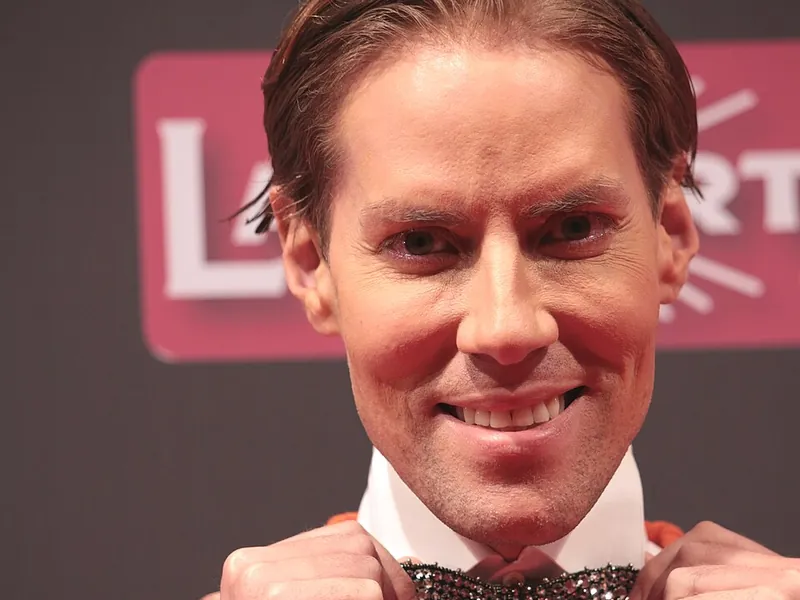 Did Jens Hilbert have a hair transplant? Yes — and he described every stepThe German reality star had a hair transplant in Turkey and then landed in an emergency room. His quotes and how the procedure usually goes.
 Did Jona Steinig have a hair transplant? Yes — his second one, documentedThe Germany Shore star had a second hair transplant in December 2025. His quotes on afro-textured hair, the failed first try and the redo.
 Did Jürgen Klopp have a hair transplant? Yes, and he said so himselfJürgen Klopp confirmed his hair transplant in April 2013. What he said, how the procedure works, how results develop and what to check before your own.
 Did Julian Claßen have a hair transplant? Yes, and he showed it himselfIn August 2024 YouTuber Julian Claßen shared his hair transplant on Instagram and called it a small dream come true. His words, the method and recovery.
 Did Kevin Großkreutz get a hair transplant? Yes, and he said so himselfIn March 2025, World Cup winner Kevin Großkreutz confirmed on Instagram that he had a hair transplant in December 2024 and is happy with the outcome.
A hair transplant is elective, and German social law has a clause for insured people who fall ill after elective cosmetic work. Section 52(2) of Book V of the Social Code covers insured people who fall ill as a result of an aesthetic operation without medical indication, a tattoo or a piercing. In that situation the sickness fund has to ask the patient to carry part of the cost of the treatment, and sick pay is to be withheld or reclaimed, wholly or in part, for as long as that treatment lasts.
The clause concerns illness that follows such an operation, not the price of the operation itself. So one practical question comes before any date is fixed: how would my own insurer treat a problem arising after a procedure of this kind? Pose it to the insurer by e-mail or letter and file the answer beside the contract.
On the question of who pays, the Ärztekammer Nordrhein, the medical chamber based in Düsseldorf, is plain. Its patient information on cosmetic surgery (status 16 October 2019) says that elective cosmetic operations are normally not reimbursed by statutory or private health insurers. Count on paying yourself and ask for every figure on paper.
At the clinic the quotation grows out of the free consultation: grafts are counted first, and the price is then written into the contract and stands on the day of surgery. To hold a date you leave a deposit, by card at the clinic or through an online payment, and the paper that records every term is a contract for medical services.
Germany has no specialist title for beauty surgery. The chamber says so directly: cosmetic surgery grew up outside the regulated system of further training, so no such specialist exists. The titles it lists as suited to cosmetic work include plastic and aesthetic surgery, dermatology and several other fields, and the first of these needs at least six years of further training after medical school.
When the first conversation happens through a messenger, you test the credentials yourself. If anyone mentions a German specialist title, the Arzt-Auskunft portal, run by the nonprofit foundation Stiftung Gesundheit, searches for doctors and clinics by specialty and place. Think of it as a directory and not as a regulator, and ask the coordinator to confirm the qualifications of the person who will examine you.
Hair work at the clinic is shared among three specialists: a trichologist surgeon, a dermatovenereologist who also practises trichology, and a plastic surgeon. Their diplomas and certificates may be viewed, the clinic publishes its medical licence number, and whoever meets you at the consultation will be in the operating room. Match the full name and specialty on the diplomas against what you were told, and put any mismatch to the coordinator as a written question.
One more habit helps with any title or directory entry: write down the date on which you checked it. A short note saying which source, which date and what it showed costs nothing, and it makes your later questions precise.
Think of the consultation as a job interview in which you hold the vacancy. Good questions are short. Which technique suits my pattern of loss, and for what reason? How many grafts, taken from which portion of the donor zone? Who extracts and who implants? What is put in writing about healing, and whom do I reach when something looks wrong on a Sunday? If I decided against surgery altogether, what would you advise?
Three words will recur in every reply, so pin them down. A graft is one unit of hair taken from the donor zone and placed in the thinning area. The donor zone is the stretch of scalp the grafts come from, at the back of the head or at the temples. Densification means adding hair to an area that still has some; the clinic ties it to the combined protocol.
Three methods are in use. FUE lifts grafts out with forceps; no incisions, no stitches. DHI sets each graft with a Choi pen, which spares the earlier step of opening channels. A combined protocol harvests by FUE and implants by DHI, and its stated purpose is densifying androgenetic alopecia. Survival and trauma rates are mere averages; ask the doctor for your own figures, for your own area, in a document.
The operation day, in outline, goes like this: local anaesthesia first, then harvesting from the donor zone (back of the head or temples), then placement of every graft where hair has thinned. A single day covers it all, after which you return home. Before that come tests; the clinic lists the ones needed and supplies instructions on how to complete them, so request the list early.
Hold the quotation up against the clinic's inclusions: dressings, healing inspections, a plan of care for the planted and the donor zones, advice on washing, sleep and headwear, a plan for returning to sport and hair care, a coordinator who exchanges photos with you, and inspections after months 1, 3, 6, 9 and 12. If a line is absent, write one more message before paying.
If a second clinic quotes a different number of grafts, do not average the two figures. Ask each of them to describe the donor zone it examined, the area it plans to cover and the density it expects, and ask for the answer on paper. A difference in counts often hides a difference in plan, and the plan is what you are really choosing.
A clinic can also say no. This clinic states that it does not push anyone toward the operating table without need, and it names what a transplant truly helps with: androgenetic or diffuse alopecia, and bald areas. Everything beyond that is judged one case at a time.
On the written exclusion list stand age under 18, cancer, epilepsy, diabetes mellitus, a pacemaker, pulmonary embolism, hepatitis B or C, HIV, serious heart conditions, intolerance to anaesthetics, trichotillomania and body dysmorphic disorder. The clinic's list of unsuitable cases adds damage from a burn or injury, shedding after an illness or from a hormonal imbalance, and insufficient hair density. Go through it at home, then ask the doctor which entries concern you.
A refusal is not a failure of the consultation. It spares you the cost and the healing period of something that would not work, and the doctor says so openly.
Hair grows slowly and memory is a poor witness, so keep stages on paper. Days 0 to 10: crusts fall away, swelling subsides. Weeks 2 to 4: the planted hairs shed, which is expected since the follicles remain. Months 3 to 4: first regrowth. Months 6 to 9: volume returns. Months 12 to 18: full volume and a natural edge.
Adopt a routine: photograph identical angles on the day of each inspection, date the files and forward them to the coordinator who is yours from the first message onward. Write between inspections too whenever something changes, at any hour. File the replies with the instructions on washing and headwear.
A phone is all you need in Düsseldorf. Photographs of the thinning area go through WhatsApp or Telegram, where coordinators reply day and night, and the doctor then states whether a transplant is likely to help. The assessment costs nothing and no date is reserved.
No. The Ärztekammer Nordrhein stresses that there is none. Titles suited to cosmetic work include plastic and aesthetic surgery, which needs at least six years of further training, and dermatology.
It is a search of doctors and clinics by specialty and place, run by the nonprofit foundation Stiftung Gesundheit. It is a directory, not a regulator, so ask your coordinator to confirm the qualifications of your own doctor.
For insured people who fall ill after an aesthetic operation without medical indication, the sickness fund asks them to share the costs of that treatment, and sick pay can be withheld or reclaimed for the duration.
According to the Ärztekammer Nordrhein, elective cosmetic operations are normally not reimbursed by statutory or private health insurers. Ask the clinic for every figure in the contract.
Method and the reason for it, graft count, who extracts and who implants, what the written care plan says, and what the doctor advises if you decide not to operate.
It can happen, and the clinic treats it as normal practice. The doctor sees no reason to send anyone into theatre without need and says so openly, which saves your money.
Take photographs of identical angles, date the files and pass them to your coordinator whenever you notice a change. Store the instructions on washing, sleep and headwear alongside the images.

 Forceps
 Minimal


