



























Message our coordinator
Free online consultation · Reply within 15 minutes
Message us on TelegramMessage us on WhatsAppBy messaging us, you agree to our Privacy Policy




Facelift and neck lift in Nantes: price and key facts
Facelift for patients from Nantes at City Medical Centre starts at €2,150 (from $2,400). The first online consultation is free; the doctor names the final price and it is fixed in the contract.
- Price
- €2,150 (from $2,400)
- Anesthesia
- general (inhalation)
- Recovery
- about 2 months to full recovery
- Final result
- 3–6 months after surgery
- How it works
- Send photos on WhatsApp or Telegram, get a free doctor assessment and the price, then confirm the plan and dates before anything is booked.
How it works · Facelift prices
Information current as of 24 October 2026



50 years
9 months

SMAS facelift

58 years
8 months
SMAS facelift

34 years
5 months
SMAS facelift

32 years
7 months
SMAS facelift

40 years
6 months
SMAS facelift

45 years
8 months
SMAS facelift

38 years
5 months
SMAS facelift

33 years
6 months
SMAS facelift
50 years
9 months
SMAS facelift
58 years
8 months
SMAS facelift
34 years
5 months
SMAS facelift
32 years
7 months
SMAS facelift
40 years
6 months
SMAS facelift
45 years
8 months
SMAS facelift
38 years
5 months
SMAS facelift
33 years
6 months
SMAS facelift


Marked sagging of the face and neck
The jawline is blurred, with jowls
Loose neck skin and a double chin
Marionette lines and deep nasolabial folds
A heavy look caused by drooping brows
A marked loss of skin firmness after 40
Looking for a result that lasts (7–10 years)

Being under 30
Skin in an acute inflammatory state
Pregnancy and the breastfeeding stage
Severe cardiovascular disease
A blood-clotting disorder
Cancer
Decompensated diabetes
Facelift in Nantes: what you should know
Jowls, a heavy lower face, a blurred jawline, drooping brows: these are the changes that bring people in Nantes to a plastic surgeon. Cosmetology can refresh the skin, but it does not reach the deep layer where sagging begins. A SMAS facelift does, which is why it suits patients who want a lasting correction. Where sagging affects only the lower face, a neck and lower face lift may be enough.
It starts with a free consultation: the surgeon examines you, assesses the type and degree of ageing and the areas to correct, explains the expected result and answers your questions. Then the scope of surgery is defined and one of four facelift types is chosen. For patients from Nantes, every stage is explained in advance, with no pushing and no pressure to decide on the spot.
If you are comparing facelift prices in Nantes, check what each offer includes and how long the result lasts. Here the price starts from $2,400 (≈ €2,150) and covers anaesthesia, the stay, meals, 24/7 monitoring and a year of follow-up, while a surgical SMAS lift holds for 7–10 years. The final amount is fixed at the consultation. Book yours for free via the form.
Stories of well-known people
Well-known people who spoke openly about this operation, in their own words.
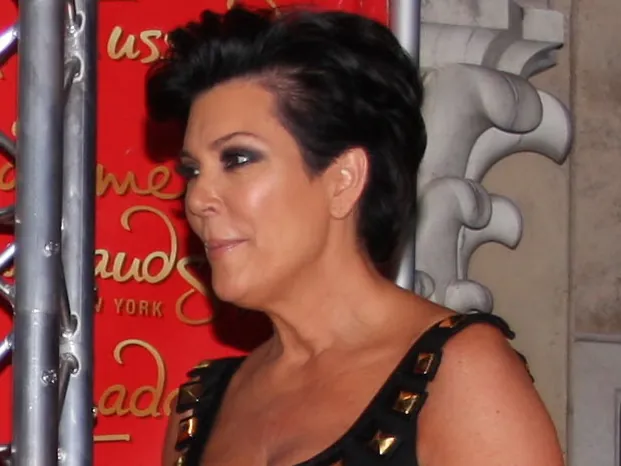 Kris Jenner’s facelift: “I love my facelift”Kris Jenner said she had a facelift about 15 years ago and a refresh before turning 70 — and that she loves it. How a SMAS facelift and recovery work.
 Did Vicki Gunvalson have a facelift? Yes, and she showed the result herselfVicki Gunvalson had a facelift in May 2018 after deciding fillers no longer looked like her. Her own words, how a facelift works and recovery.
 Keltie Knight’s facelift: why she decided to “just own it”Keltie Knight had a facelift in 2023 at 41 and chose to talk about it openly. What she said, how a SMAS facelift works and what recovery looks like.
 Did Linda de Mol have a neck lift? Yes, and she wrote about it herselfLinda de Mol wrote in LINDA. in 2025 that she had a neck lift. What she said, why she chose to be open, and how a face and neck lift works today.
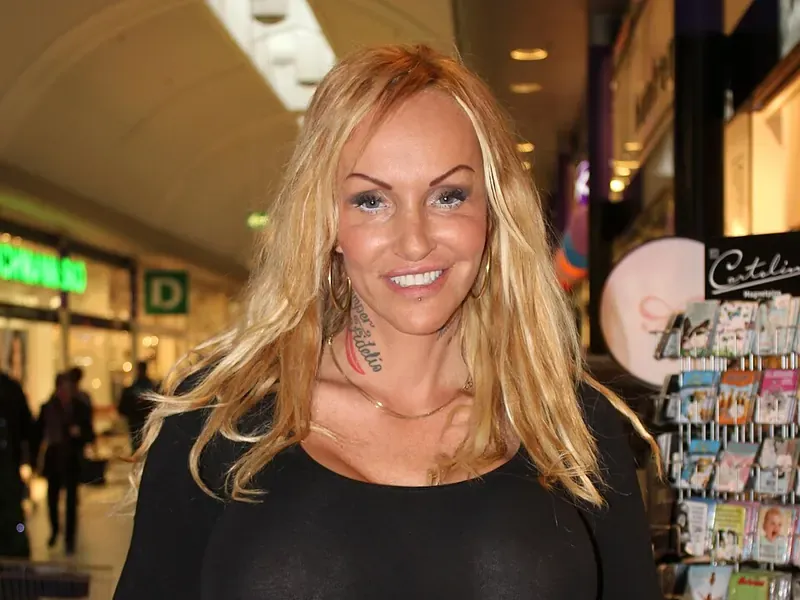 Linse Kessler and her facelifts: what she said herselfDanish reality star Linse Kessler has said openly that she has had several facelifts. Her words, how a modern facelift works and what recovery involves.
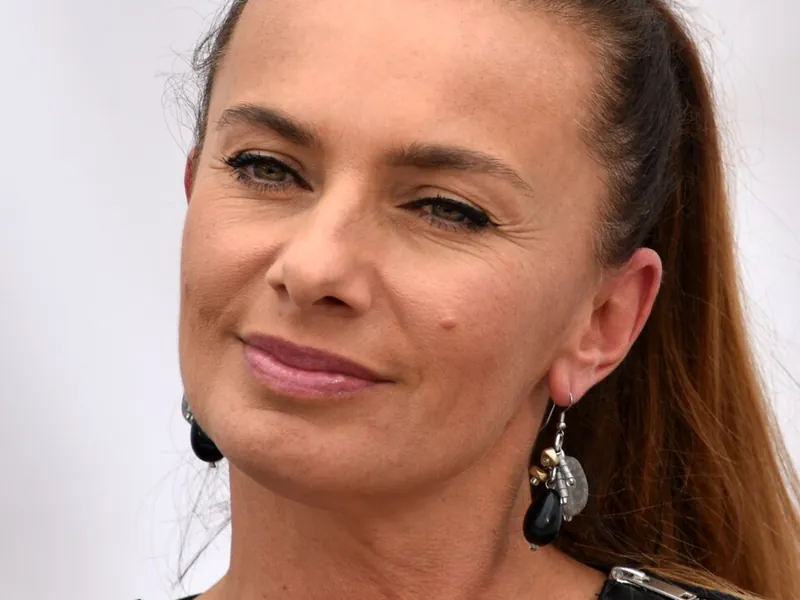 Did Alice Bendová have a facelift? Yes, and she explained why herselfAlice Bendová confirmed a deep plane facelift in September 2026. Her words, how a facelift works, who it suits and what recovery looks like.
Facelift in Nantes: price and what is included
Prices are in US dollars; the amount in brackets is an approximate conversion to EUR at the rate of 02.10.2026. The final price is fixed in your contract.
- Faceliftfrom $2,400 (≈ €2,150)
What is a SMAS facelift?
It is a face lift that tightens the deep SMAS layer under the skin, not only the skin itself, so the lower face, jawline and neck stay firmer for longer. The result lasts about 7–10 years.
How much does a facelift in Nantes cost?
Prices start from $2,400 (≈ €2,150). The surgeon sets the final price at the free consultation, and it is fixed in the contract, with no hidden extras.
What is included in the price?
A one-to-one consultation, the medical team, anaesthesia, inpatient care with meals, 24/7 monitoring and twelve months of follow-up by the surgeon.
How do I get my exact price?
Message us on WhatsApp or Telegram using the buttons below. A coordinator will answer your questions and book a free consultation where the doctor names the exact price.
By messaging us, you agree to our Privacy Policy
Humid Atlantic air, soft light and what that means for facelift skin
Nantes has an oceanic climate (Cfb) on the Loire, about 50 km from the Atlantic coast. The 1991-2020 figures for Nantes-Bouguenais put the annual mean high at 17.1 °C and the mean low at 8.3 °C. For the skin of the face and neck this is a mild setting with few extremes, but it is not a neutral one. Relative humidity averages 81% across the year, reaching 89% in December and easing to 75% in July. Damp air keeps the surface of the skin from drying out as quickly as it would in a continental climate. It also means that a compression bandage, dressings and the first days of rest are spent in an atmosphere that is rarely dry.
Sunshine is the second factor to plan around. The city records 1,873.3 hours of sun a year, but the spread is wide: 232.6 hours in August against 77.6 hours in December. A facelift moves the skin flap and the deeper SMAS layer, and healed skin is not meant to be exposed carelessly in its first weeks. The practical result is that the summer months bring the strongest light just when you are asked to keep activity reduced. December and January bring little light, but they come with the highest rainfall: December has 101.0 mm and 13.5 rainy days, against 44.2 mm and 7.1 rainy days in July. Rain here is frequent rather than extreme, so an umbrella and a brimmed hat are more useful than any heavy outerwear.
Cold deserves a mention too. The January mean is 9.3 °C by day and 3.4 °C at night. The station has recorded an extreme low of -15.6 °C and an extreme high of 42.1 °C, so the climate can step outside its usual mildness. In the early recovery weeks, when swelling and bruising are still fading, the face tolerates sharp cold and strong heat less comfortably. A scarf that covers the neck and a soft collar for outdoor walks matter more in a winter month, while shade and a wide hat matter more in July and August.
At the online consultation the doctor works from your photos and your description of your skin, not from a weather chart. Even so, it is worth telling the coordinator which season you are considering. Good photos help here. Send them in daylight, facing a window, without make-up, from the front and both sides, with the hair pulled back so the frontal edge of the hair and the ears are visible. The doctor can then judge where sagging is concentrated: the jowls, the cheeks, the neck, or the brow and temple. This determines which of the four available variants is discussed: the standard SMAS lift, the full circular lift, the lower face and neck lift, or the endoscopic brow and temple lift.
The doctor will also talk through the three levels of correction. The skin is lifted and redraped with the excess removed. Fat in the cheeks and lower face is redistributed. The muscle and fascia layer is lifted and fixed. That deepest layer is the one meant to deal with the cause of sagging, which is why the effect is described as holding for 7–10 years rather than for a season.
Picking the month: winter concerts, summer art trail, September jazz
A facelift has a recovery curve that is easy to lay over a calendar. The service describes it in steps. The first 7–10 days are for rest, a compression bandage and reduced physical activity. Swelling and bruising fade in 2–4 weeks. The first clear changes appear after 3–4 weeks, when swelling goes down. Full recovery takes about 2 months, and the final look of the face arrives 3–6 months after surgery. General (inhalation) anaesthesia is used, and discomfort and tightness in the first few days are relieved with medication prescribed by the doctor.
Now set that against the rhythm of Nantes. La Folle Journée, the classical music festival, takes over the city for five days each winter. Le Voyage à Nantes has run every summer since 2012. The Rendez-vous de l'Erdre jazz festival fills the banks of the Erdre in September, with about 150,000 attendees. If one of these events is something you attend with relatives or friends, count backwards from it. Someone aiming to be comfortable in a crowd at the jazz weekend in September should plan so that the 2–4 weeks of visible swelling and bruising are well behind them. That puts the procedure in early summer or earlier, not in August.
A concrete example: an operation on Monday 4 January 2027 would put the rest period at about 11–14 January, the end of the 7–10 day stage. Most visible swelling and bruising would fade between mid-January and the start of February, the 2–4 week window. By early March the roughly two months to full recovery would be complete. The final look, at 3–6 months, would settle between April and July. That timetable sits between the winter festival season and the summer art trail, so neither falls into the most visible weeks. It is only an illustration. The real dates are confirmed with the coordinator before anything is booked.
France has 11 public holidays: 1 January, Easter Monday, 1 May, 8 May, Ascension, Whit Monday, 14 July, 15 August, 1 November, 11 November and 25 December. Several fall in spring, and in some years they link into long weekends with Ascension and Whit Monday. For anyone who is employed, these dates can lengthen a rest period without using much leave. They also affect when relatives are free to help during the first days. The spring stretch from 1 May to Whit Monday gives plenty of such openings.
Presentability is a personal judgment. Many patients feel ready for a video call or a family dinner once the bruising has faded, but a stricter view is to wait for the 3–4 week point when the first clear changes appear. The coordinator can compare your photos with the pattern of recovery and help you decide whether you want a quiet month or a busy one.
Moving around the city while the face heals
Recovery after a facelift is mostly about being sensible with activity, and the geography of Nantes lends itself to that. The city covers 65.19 km² and has a density of 5,027 inhabitants per km², so everyday errands are close at hand. The tramway has three lines over 43.5 km, and Semitan recorded 132.6 million journeys in 2015. For the first week, the doctor's advice is rest and reduced physical activity, so crowded public transport at peak hours is not the ideal setting. Plan errands for quieter periods, or ask relatives to handle shopping.
Cycling is a different matter. Bicloo, the bike-sharing system, has 880 bicycles at 103 stations. It is convenient in normal life, but a bicycle brings wind on the face and the chance of a fall, so it is better to leave it for later in the recovery period, after you have checked with the doctor. The same goes for any sport. Stade de la Beaujoire seats 37,473 and hosted matches at Euro 1984, and FC Nantes have won eight league titles. If you play or go to matches, expect to be asked to hold back on intense exertion in the early weeks.
Gentle walking is usually the easier way back into movement. Green space covers 41% of the city, with 100 public parks over 218 ha. The terrain is mild, with a high point of 52 m in the northwest, the Butte Sainte-Anne at 38 m, and the lowest points along the Loire at 2 m. A short, flat walk along the water is a natural option for the early days, with a soft scarf and a hat in cooler weather. Steep climbs are rarely needed in town, which helps when you want to avoid raising your heart rate and blood pressure too quickly.
Remember the Loire estuary begins in Nantes and is 60 km long, with a tidal range of up to 6 m. Air near a tidal river tends to carry moisture, which is another reason to cover the neck and to choose a dry, still moment for a walk. After a lift of the neck and lower face, light cotton or silk is gentler than rough wool next to the skin.
A day-by-day plan makes sense. During days 1–10, rest, wear the bandage as instructed, take short walks in a park. By weeks 2–4, as swelling and bruising fade, you can extend the walks and return to ordinary social life if you feel comfortable. At about 2 months, the full recovery point, ask the coordinator or the doctor what is appropriate for sport and for demanding activity. The coordinator answers around the clock on WhatsApp and Telegram, so a question about a swollen area or a bandage does not have to wait for office hours.
What French health coverage does and does not pay for
A facelift is a decision about appearance, and the French system draws a clear line between that and treatment of illness. Almost everyone in France is covered: 99.9% of the population has coverage, and the main insurance fund covers 84%. In general the system refunds 70% of most costs, and about 85% of people hold complementary private insurance, a mutuelle. In 2020, the general scheme had 59.2 million beneficiaries, and the national health insurance fund covered 88% of the population.
Cosmetic surgery done for reasons of personal comfort is not paid by Sécurité sociale. Exceptions exist where there is grave psychological or social harm, such as protruding ears or breast reduction, or where medical criteria apply, as with a deviated septum. In those cases the operating doctor files an "entente préalable" with the insurer's medical adviser. If no reply comes within 15 days, the request is treated as accepted. Only public or approved (conventionné) establishments are eligible. Reconstructive surgery after an accident, illness or malformation is covered by Assurance Maladie, in most cases in full.
For a facelift performed to tackle age-related sagging, expect it to be treated as aesthetic. That is a general reading, not a promise about your situation. A facelift described on this online service is a purely surgical rejuvenation. If you have a medical history in which facial tissue was altered by an accident or illness, that is a conversation for the doctor and your insurer, not for a coordinator to resolve. Do not assume your mutuelle will contribute. Read its terms or ask the insurer before booking.
The practical points are straightforward. Ask your insurer in writing whether it contributes to elective aesthetic procedures. Ask whether there are conditions on where the operation must take place. Keep the answer with your records. The operation itself is arranged around an agreed plan and a fixed price confirmed in the contract after the online assessment. The service also offers in-house 0% instalments, so payment can be divided without bank interest.
Waiting times are another consideration. An older Commonwealth Fund survey, dating from 2010, found that 53% of specialist appointments were within a month and 28% took more than two months. For elective surgery, 46% had their operation within a month and 7% waited four months or more. These are old figures and should be read with care. They do show why many people want the first assessment to be arranged quickly. The online consultation is free, and the coordinator answers on WhatsApp and Telegram within 15 minutes.
Starting from a city of 327,734 inhabitants: how the online route works
Nantes is the sixth most populous city in France, with 327,734 inhabitants in 2023, an urban area of 689,036 and a metropolitan area of 1,050,815. It is the prefecture of Loire-Atlantique and of Pays de la Loire. Such a large urban area has people at every age, but the service sets clear age markers. A surgical facelift is generally advised from 40 with marked sagging, in some cases from 35, and it is not suitable under 30. The recommendation is individual and follows an examination of your photos and history.
The University of Nantes, founded in 1460, counts roughly 34,500 to 37,140 students depending on the source, and the metropolitan area had about 53,000 students in 2013–14. Most of them are far younger than the typical facelift patient, and a person under 30 falls under a stated contraindication. The reader who is considering a facelift is more likely to be someone who has noticed jowls, a blurred jawline, drooping cheeks or a heavier look around the brows.
The process is simple. You send photos on WhatsApp or Telegram, receive a free doctor assessment and the price, then confirm the plan and dates before anything is booked. The doctor names the final price and it is fixed in the contract. The scope of surgery is set at the consultation. A facelift can be combined with blepharoplasty, rhinoplasty or double-chin liposuction, and the doctor decides on the combined scope after assessing your photos.
Before the consultation, prepare a short list for the doctor. Note chronic illnesses, since the service asks those with them to seek advice first. The contraindications are acute skin inflammation, pregnancy and breastfeeding, a severe cardiovascular condition, problems with blood clotting, cancer and decompensated diabetes. Mention any medicines you take regularly. Mention what you want to change: the jawline, the neck, the brow, the nasolabial folds. The doctor will explain each stage and what a realistic outcome looks like.
Follow-up is built into the plan. The included care covers support before and after the operation, 24/7 monitoring by medical staff during the stay, and care from the operating plastic doctor for a whole year until the final result. For someone living in Nantes, the online format means the first conversation takes place at home, with the coordinator reachable at any hour.
Does the damp Atlantic climate of Nantes change how I should plan the first weeks after a facelift?
The air in Nantes is humid, with relative humidity averaging 81% over the year and reaching 89% in December. The doctor's recovery guidance stays the same: 7–10 days of rest with a compression bandage and reduced physical activity, and swelling and bruising fading in 2–4 weeks. What humidity changes is comfort. A dry, soft scarf, clean dressings and a calm walk on a dry day are easier to manage than outings in persistent rain. Ask the coordinator about practical details for the season you are considering.
Which month in Nantes works best for a facelift if I want to be presentable for a festival?
Count backwards from the event. Swelling and bruising fade in 2–4 weeks, the first clear changes appear after 3–4 weeks, and the final look arrives in 3–6 months. For the Rendez-vous de l'Erdre jazz festival in September, a spring or early summer procedure leaves the visible weeks well behind. For La Folle Journée in winter, an earlier autumn date works the same way. The coordinator can build the plan with you on WhatsApp or Telegram.
Is sun a concern during recovery, given that August is the sunniest month in Nantes?
The city records 232.6 hours of sun in August against 77.6 hours in December. Healing skin should be protected from strong light, so a summer procedure means more care outdoors: shade, a wide hat and avoiding long exposure. A winter date brings less sun but more rain and colder days. Neither season is wrong, and the doctor can discuss your skin type and the aftercare advice that fits your chosen month.
Will Sécurité sociale or my mutuelle pay for a facelift?
Cosmetic surgery done for personal comfort is not paid by Sécurité sociale. Exceptions exist for grave psychological or social harm or for medical criteria, and they require an "entente préalable" filed by the operating doctor, deemed accepted if there is no reply within 15 days. Reconstructive surgery after an accident, illness or malformation is covered by Assurance Maladie, in most cases in full. A facelift for age-related sagging is generally treated as aesthetic. Check your mutuelle's terms or ask the insurer directly before booking.
Can I walk around Nantes and use the tram in the first days?
The doctor advises rest and reduced physical activity for 7–10 days after the operation. Short, flat walks in a park are usually easier than crowded public transport at peak hours. The city has 100 public parks covering 218 ha, and the tramway has 3 lines over 43.5 km. Leave the Bicloo bikes and any sport until you have checked with the doctor, and send your questions to the coordinator in the chat.
Are public holidays in France useful for planning the recovery period?
France has 11 public holidays, including 1 May, 8 May, Ascension, Whit Monday and 14 July. Several fall in spring and early summer and can extend a rest period without using much leave. Because the early stage is 7–10 days of rest and swelling and bruising fade in 2–4 weeks, a holiday cluster can cover part of the quietest time. Confirm the exact dates with the coordinator before anything is booked.
How do I prepare my photos for the online assessment from Nantes?
Use daylight, facing a window, with no make-up and the hair pulled back so the ears and the frontal edge of the hair are visible. Take a front view and both sides, plus a clear view of the neck and jawline. Also send a short list of chronic illnesses and regular medicines. The doctor uses these to judge which variant suits you and to name the final price, which is fixed in the contract. The coordinator replies on WhatsApp or Telegram around the clock.
Is a facelift suitable for someone in their thirties in Nantes?
A surgical facelift is generally advised from 40 with marked sagging and in some cases from 35. It is not suitable under 30. The recommendation is individual and follows an examination of your photos and history. If you are younger and have concerns about the contours of your face, send photos and ask the coordinator, and the doctor will tell you honestly whether surgery makes sense.