City Medical Centre · multi-specialty surgery clinicOpen 24/7

Tummy tuck

Abdominoplasty (Tummy Tuck) in Nantes

Free consultation

from $2,400

The price is fixed in the contract before surgery

Message us on WhatsApp

Free online consultation · Reply within 15 minutes
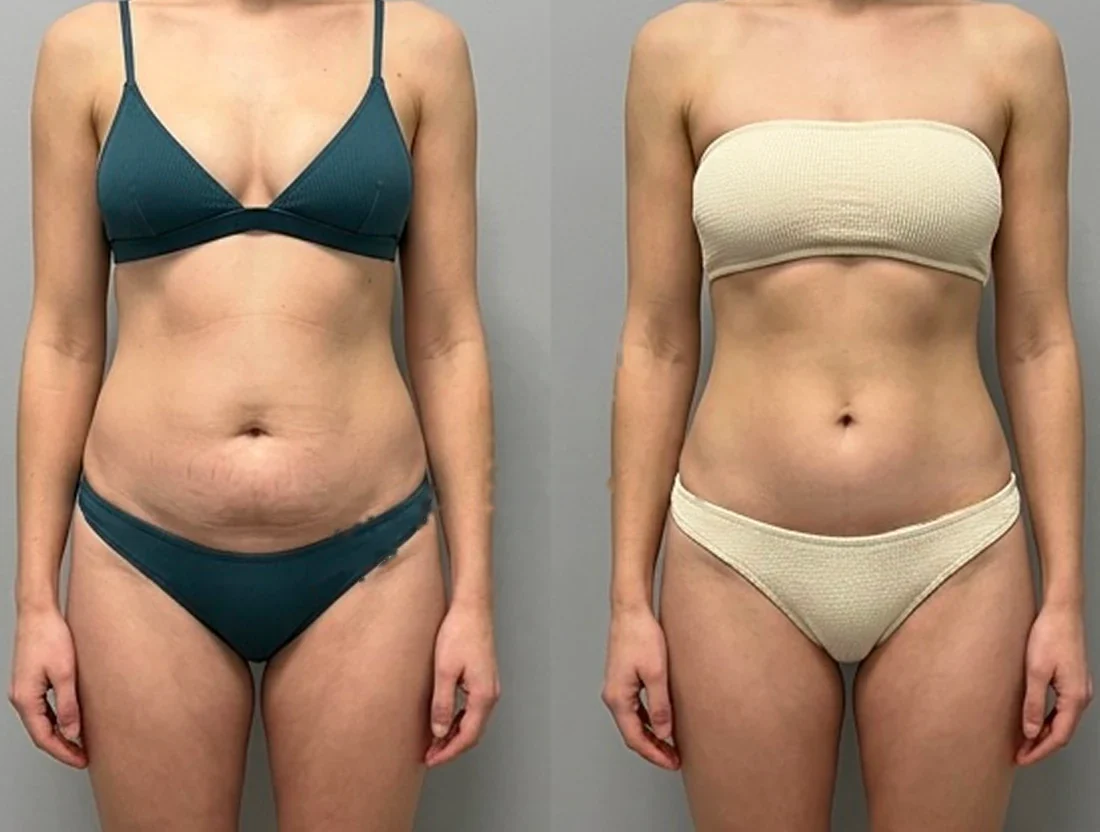
Real case
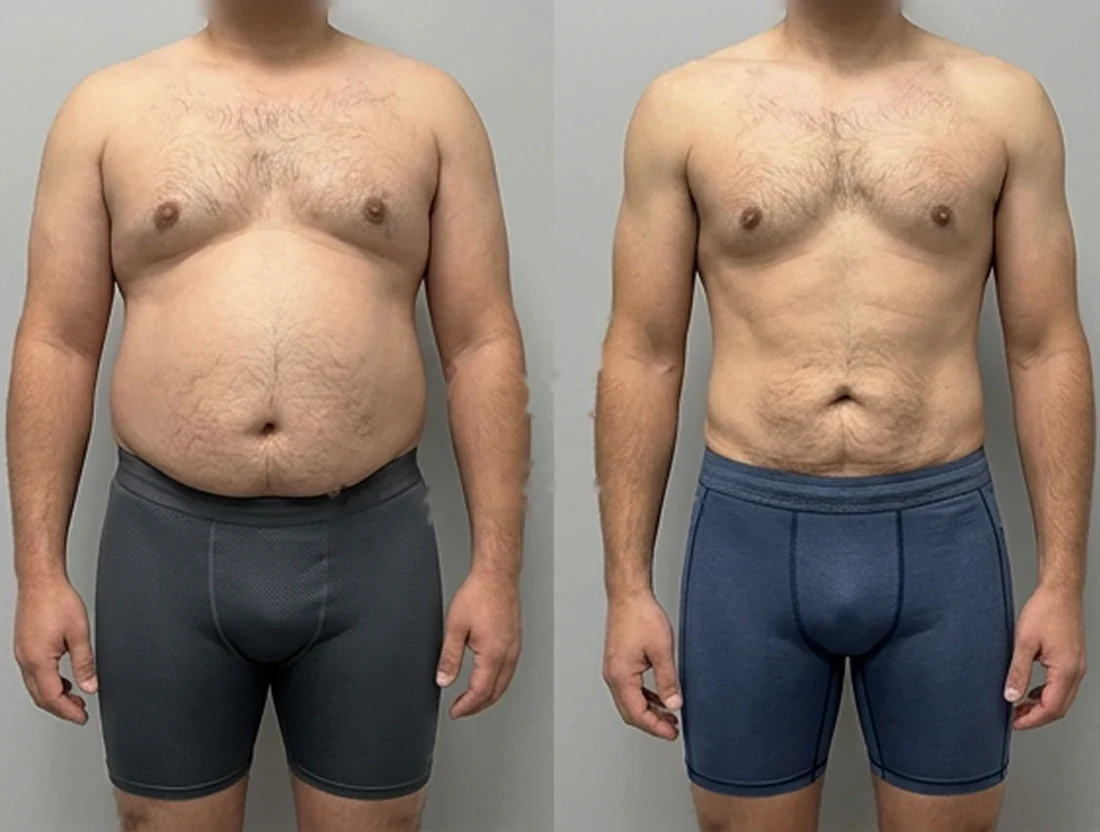
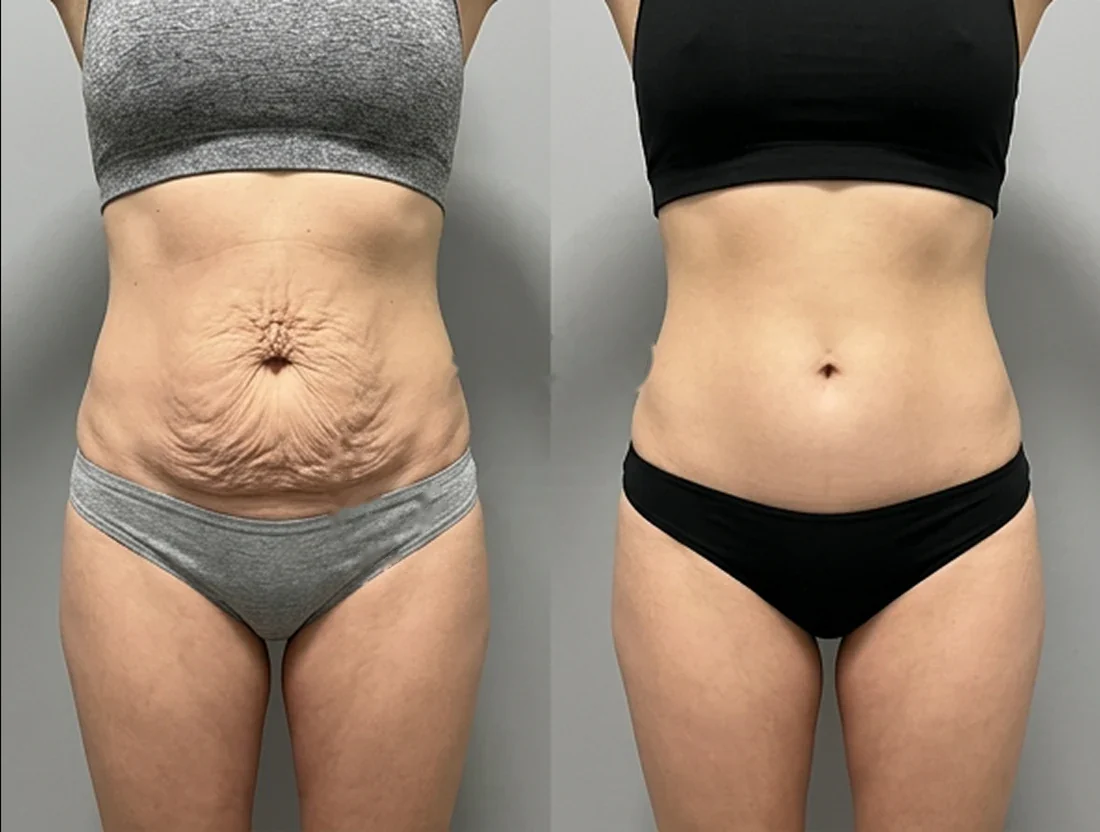
Tummy tuck: a patient's abdomen before and after surgery before after
A flat tummy and a toned silhouette in one operation. Your individual surgical plan and the expected result are discussed at the consultation

Message our coordinator

Free online consultation · Reply within 15 minutes

Message us on Telegram

By messaging us, you agree to our Privacy Policy

Tummy tuck (abdominoplasty) in Nantes: price and key facts

Tummy tuck for patients from Nantes at City Medical Centre: the price is named at the free online consultation and fixed in the contract with no hidden extra charges.

Duration
2–4 hours
Anesthesia
general
Stay
1–3 days
Recovery
back to work after 2–3 weeks
Final result
6–12 months after surgery
How it works
Send photos on WhatsApp or Telegram, get a free doctor assessment and the price, then confirm the plan and dates before anything is booked.

How it works · Tummy tuck prices

Information current as of 24 October 2026

Free online consultation on WhatsApp and Telegram

Results

Tummy tuck (abdominoplasty) results
of our patients

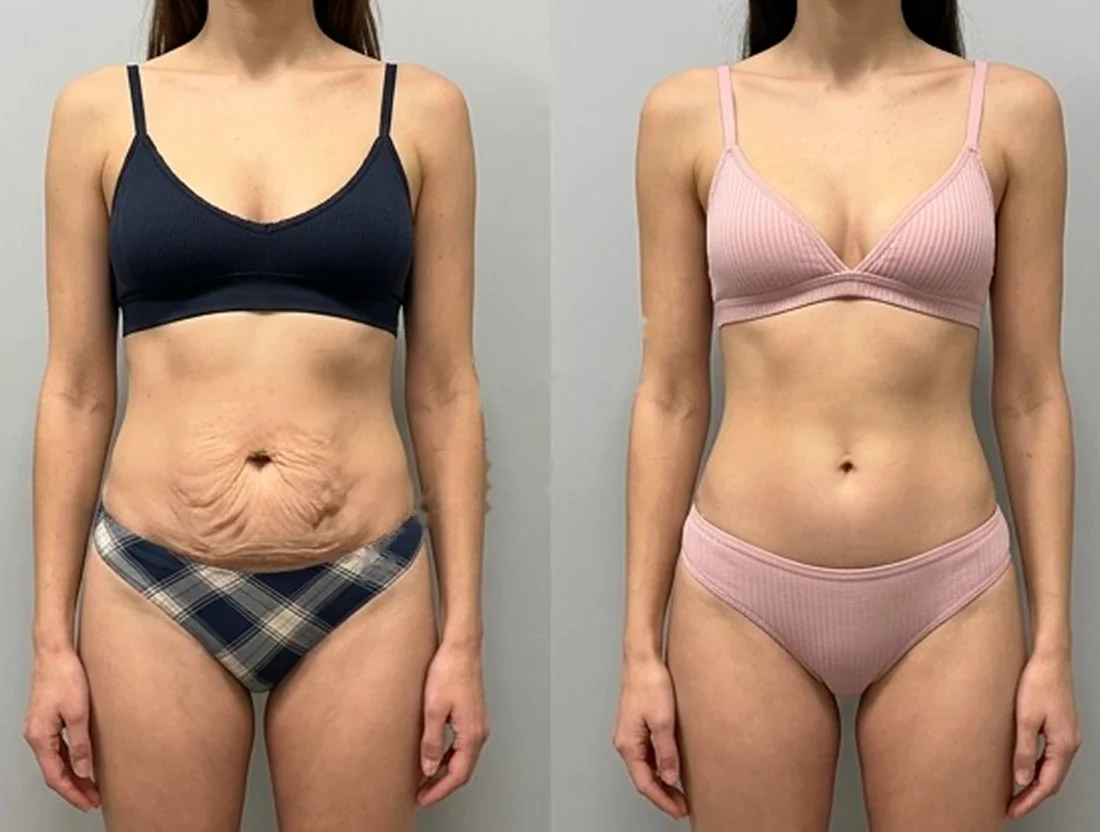
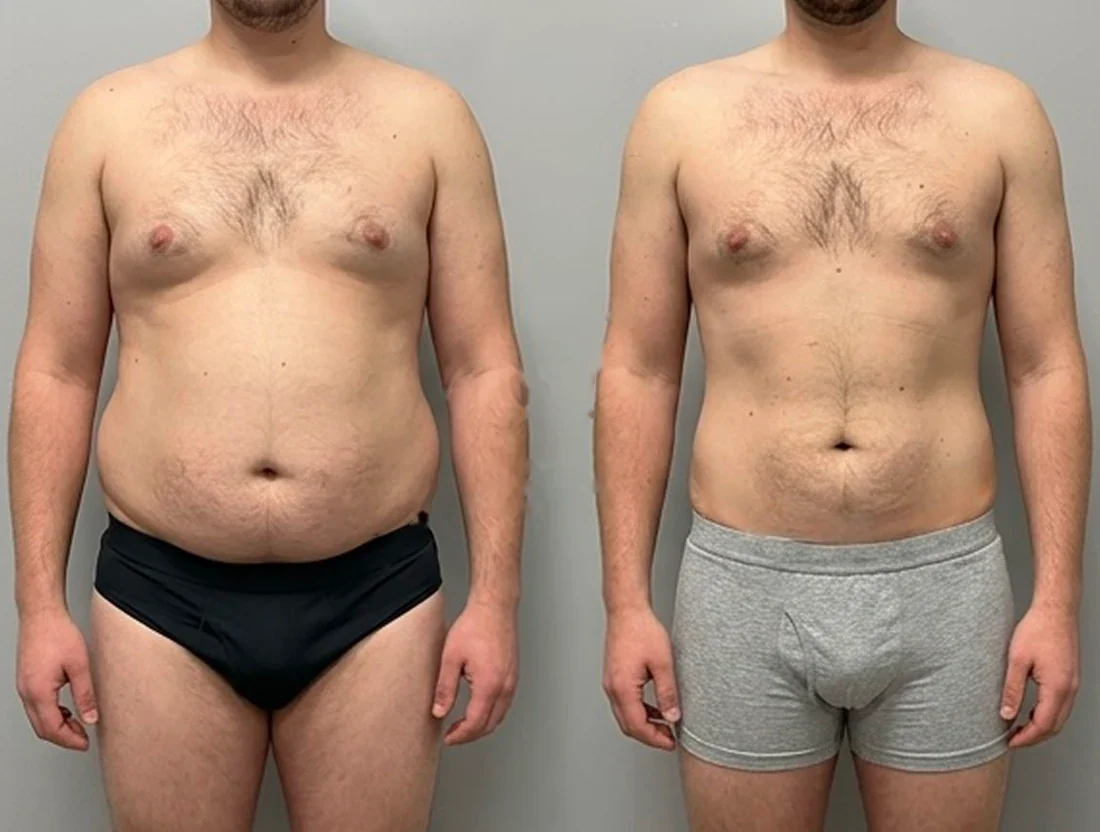
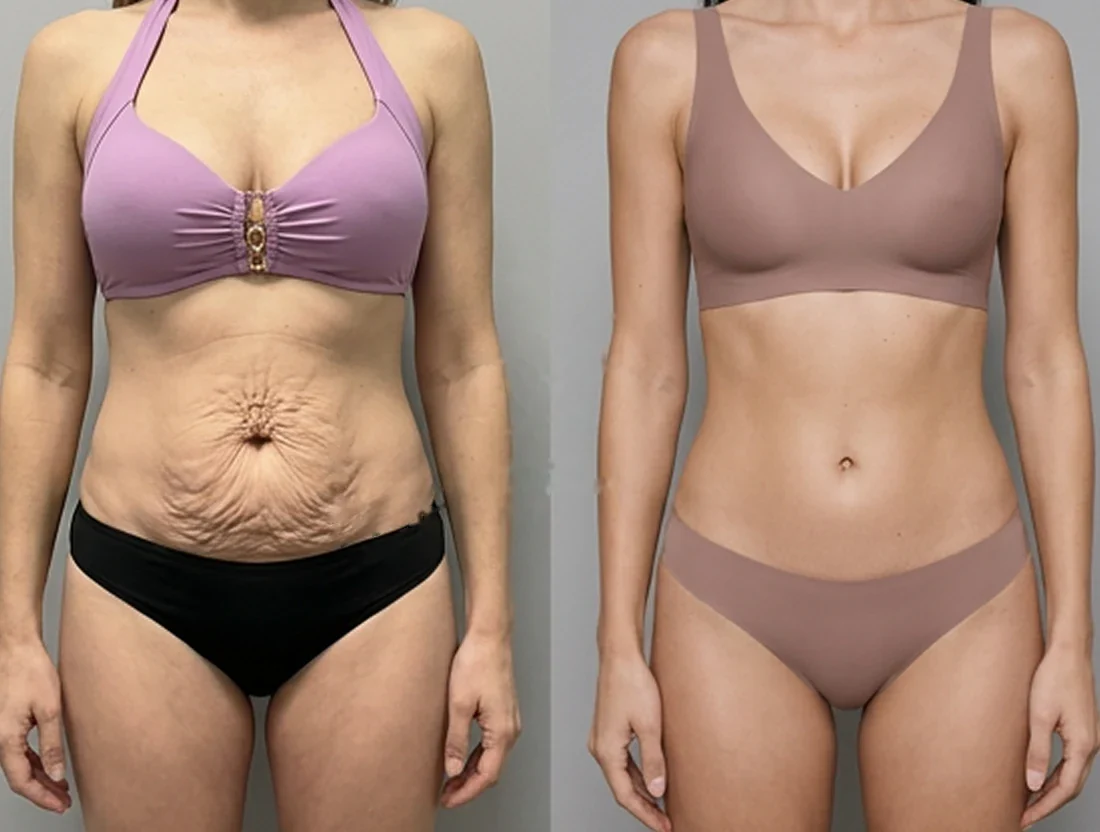
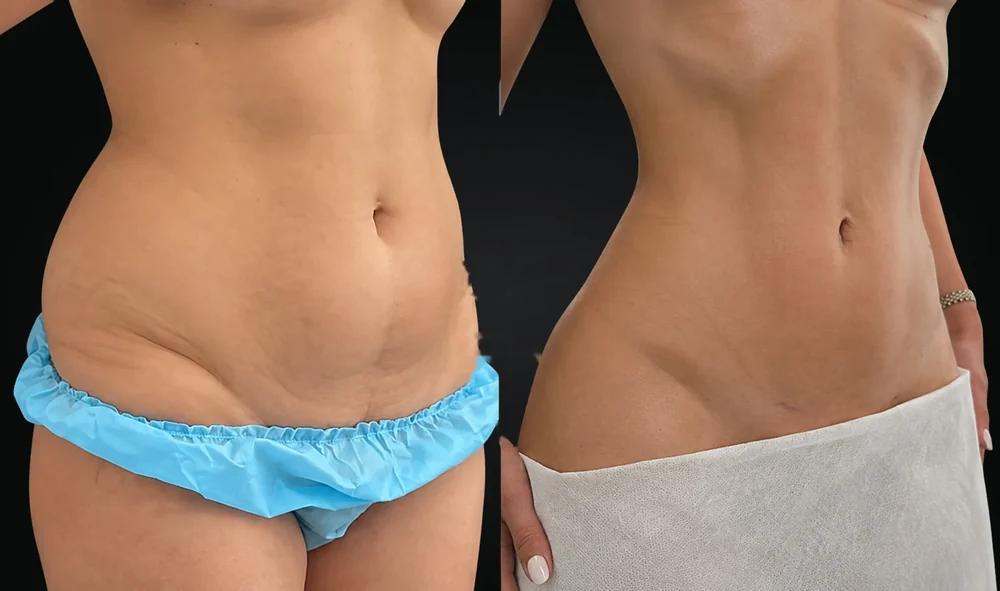
All cases are real patients. Faces and identifying details are hidden.

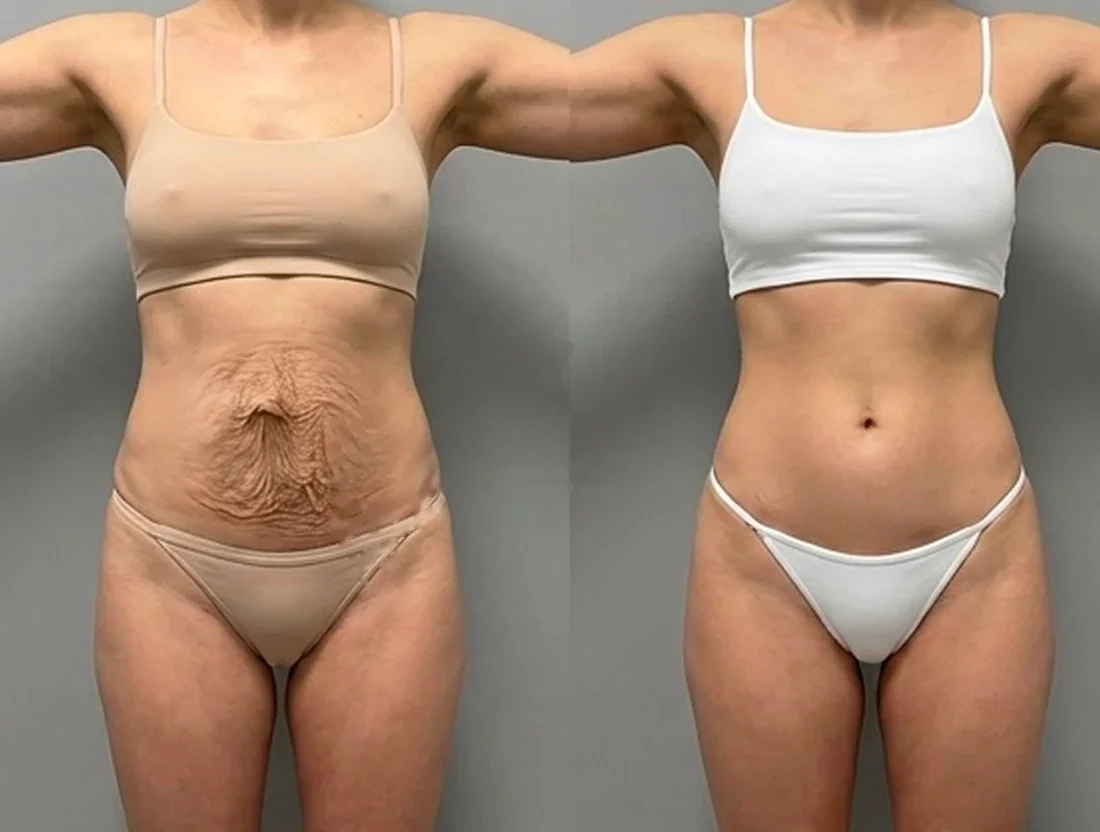
Tummy tuck: a female patient's abdomen before and after surgerybeforeafter
Tummy tuck: a male patient's abdomen before and after surgerybeforeafter
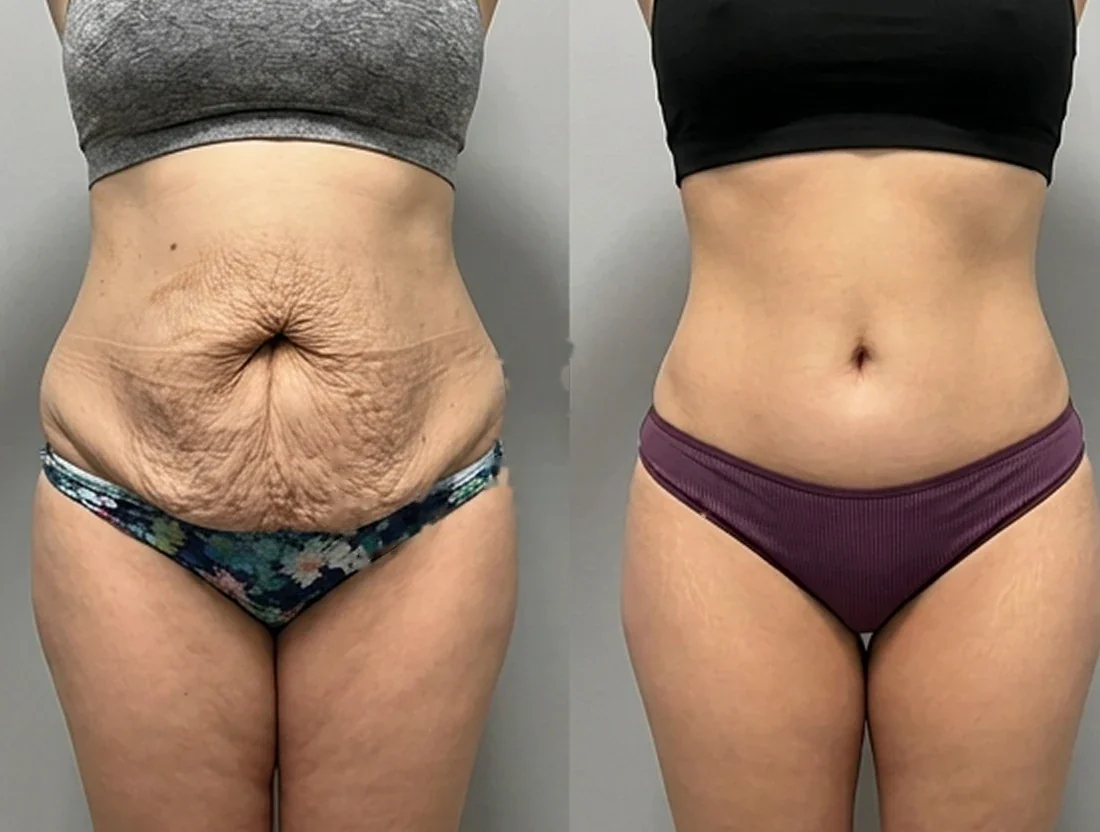
Tummy tuck: a female patient's abdomen before and after surgerybeforeafter
Tummy tuck: a male patient's abdomen before and after surgerybeforeafter
Tummy tuck: a female patient's abdomen before and after surgerybeforeafter
1 of 8

Comparison

Tummy tuck techniques

A tummy tuck is done as a full (classic) or mini operation, or combined with liposuction as lipoabdominoplasty. Compare the scope of surgery, the indications and the expected results to choose the right technique together with your surgeon.

Tummy tuck

Removal of excess skin, abdominal muscle tightening
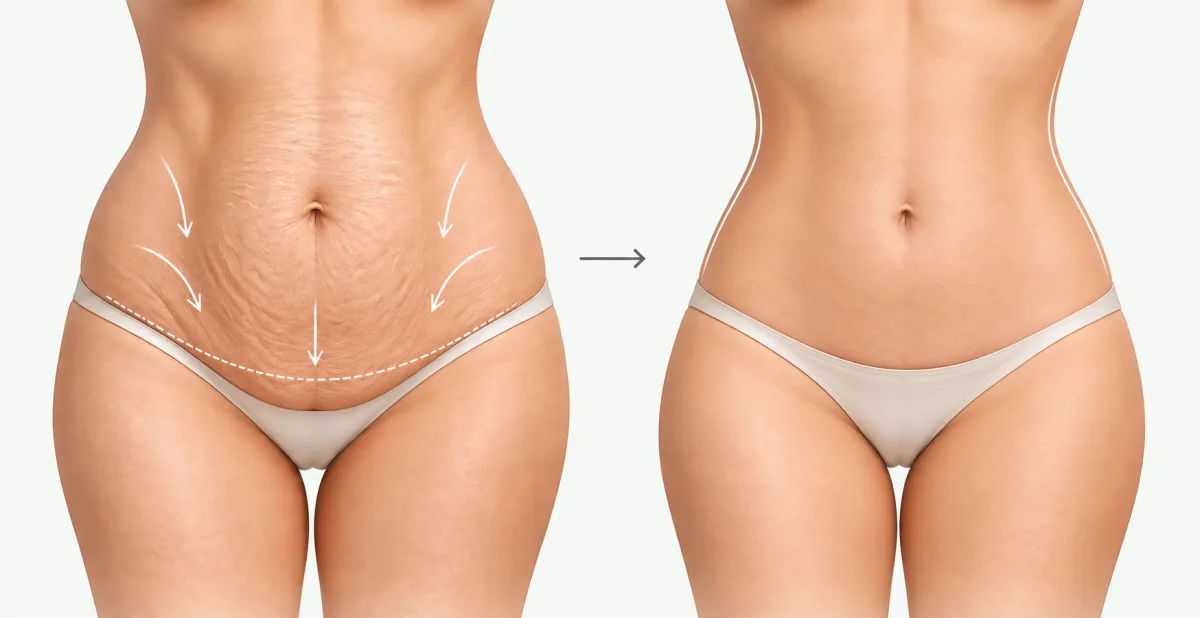
Tummy tuck diagram: the abdomen before surgery with the incision line, and the result
Main goal
Removal of excess skin, diastasis repair
When it is done
Excess skin after childbirth or weight loss
Anaesthesia and stay
General anaesthesia, up to 3 days in hospital

Lipoabdominoplasty

Tummy tuck with added liposuction
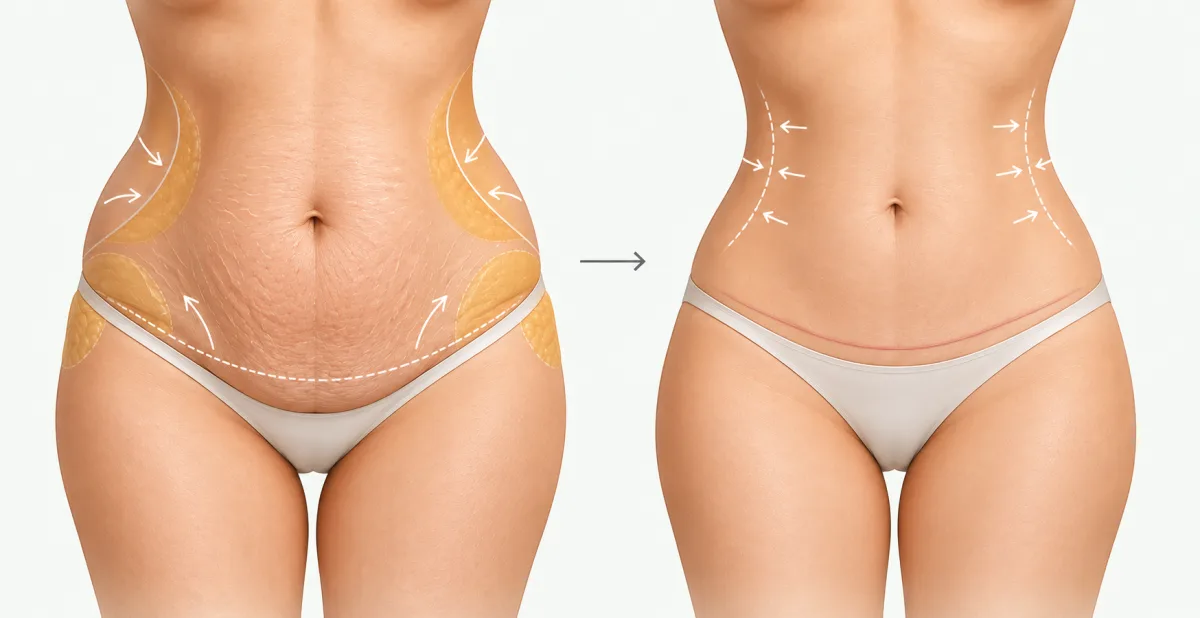
Lipoabdominoplasty diagram: the abdomen with fat on the flanks before surgery, and the result
Main goal
Tummy tightening and waist contouring
When it is done
For fat deposits on the flanks and waist
Anaesthesia and stay
General anaesthesia, up to 3 days in hospital

The benefits and recovery times shown are averaged for each technique and given for guidance: the scope of correction and rehabilitation depend on your anatomy and individual features, and the surgeon confirms them at the consultation.

At the consultation the surgeon draws up a plan for your case and explains how your tummy tuck will go.

Free, before surgery and with no obligation.

Book a consultation

Tummy tuck from the inside

About the clinic

A clinic where you can feel at ease

Modern equipment, comfortable rooms and care for every patient

A doctor and a patient in a clinic ward

Contact us the way that suits you

We will answer your questions and find a convenient time for a consultation

By messaging us, you agree to our Privacy Policy

A tummy tuck is not for everyone

If your case can be solved without surgery, the doctor will tell you so at the consultation — and you will not spend money for nothing.

Suitable

A surgeon shows a patient on a model and a monitor how the abdominal contour changes after a tummy tuck
  • Rectus abdominis diastasis
  • Skin folds after weight loss
  • Loose abdominal skin
  • Stretched skin after pregnancy
  • A distorted abdominal contour

Not suitable

A surgeon discusses the indications and contraindications for a tummy tuck with a patient
  • Acute infections
  • Severe disease of the heart, kidneys or liver
  • Blood coagulation disorders
  • Age below 18
  • Decompensated diabetes
  • Cancer
  • Skin inflammation in the surgical area
  • Pregnancy and nursing

Not sure the surgery is right for you?

Message us — the coordinator will ask for your photos in the messenger, and the surgeon will tell you whether a tummy tuck suits you. No surgery booking needed.

Find out if it suits me

A surgeon goes through a tummy tuck diagram with a patient at the consultation

Prices

You know the price
before surgery

The price is set at the consultation and fixed in the contract.

Other services

  • First consultationFree
  • Liposuction of the abdomen and flanksfrom $1,700
Book a consultation

Find out your tummy tuck plan and price

The surgeon assesses your abdominal skin and muscles, listens to your wishes and chooses the right correction technique.
The price is set at the consultation and fixed in the contract.
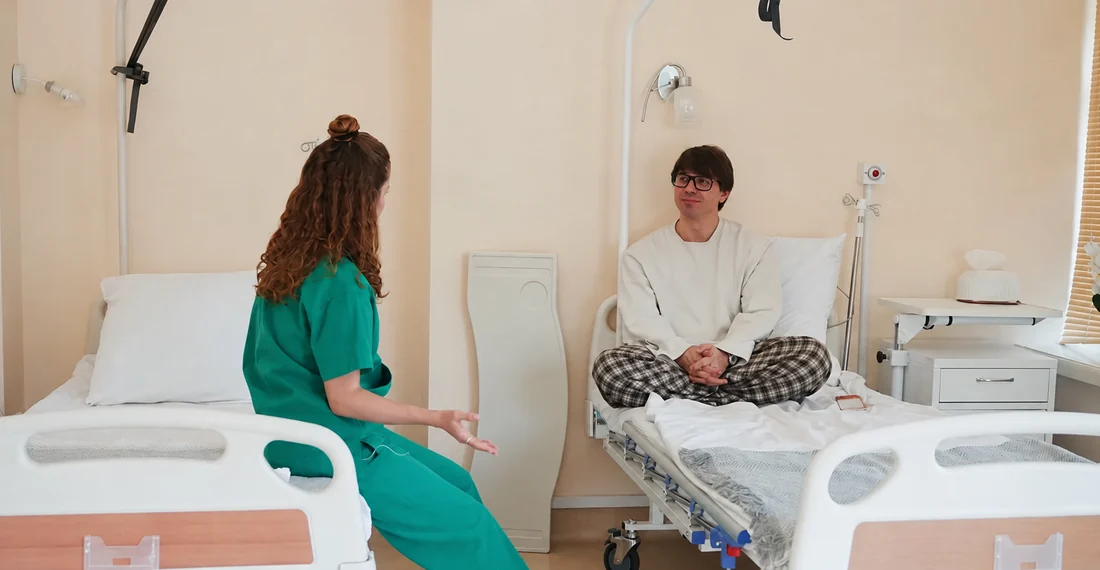
A nurse talks to a patient in a clinic ward

Message our coordinator

Free online consultation · Reply within 15 minutes

Message us on Telegram

By messaging us, you agree to our Privacy Policy
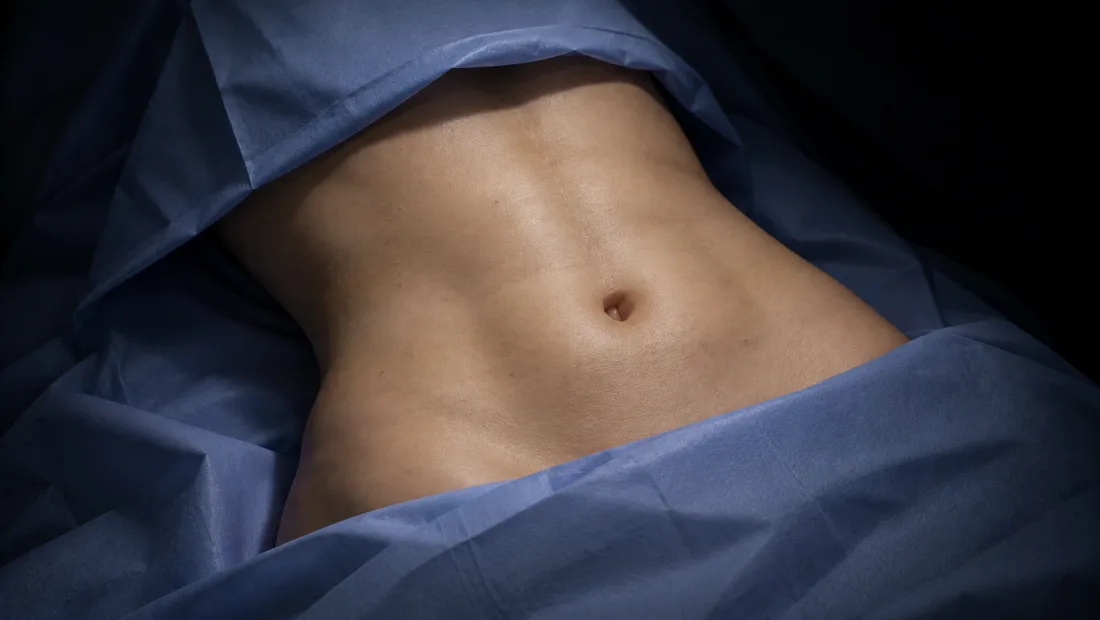
A patient's abdomen before a tummy tuck in the operating room

all inclusive

What the price includes

From preparation for surgery
to post-op check-ups.

  • All scheduled dressings
  • Scheduled post-op check-ups
  • A personal coordinator on call
  • Compression garments fitted on the day of surgery
  • A stay in a comfortable
    hospital ward with meals
  • Individual recommendations
    for recovery
  • Remote progress monitoring
    by photos

How it works

Three days at the clinic —
from preparation to discharge

An agreed correction plan, inpatient observation and post-op check-ups.

A doctor shows a patient a tummy tuck diagram on a monitor1

Consultation
and the surgical plan

The surgeon assesses your abdominal skin and muscles and checks for diastasis, listens to your wishes and chooses the right correction technique.

Paying the deposit by card at the clinic reception2

Booking the date
of surgery

We reserve a surgery date for you: the deposit can be paid by card at the clinic or online by bank transfer. The terms are fixed in the contract for medical services

A blood sample tube for tests before a tummy tuck3

Check-up before
surgery

Before surgery you complete a full lab check-up: blood tests, an ECG, a chest X-ray and reports from the required specialists.

The surgical team during the operation4

Surgery

The surgeon performs the tummy tuck with the chosen technique, repairs diastasis if needed and shapes a firmer abdominal contour.

A hospital ward at the clinic5

Inpatient stay

After surgery the patient stays for 1–3 days in a comfortable hospital ward with meals, under medical supervision.

A surgeon and a patient in the ward during recovery6

Recovery

After surgery you get a recovery programme. Check-ups at 7 days, 3 and 6 months help track your recovery.
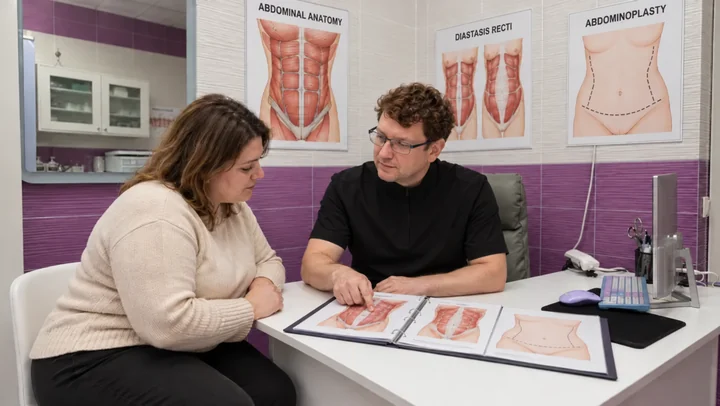
Book a free consultation — the surgeon will plan every step with you.

A doctor discusses the tummy tuck plan with a patient
Book a consultation
A doctor discusses the tummy tuck plan with a patient

How it really happens

Recovery after a tummy tuck

Immediately after surgery the patient stays in hospital for 1–3 days, supervised by doctors. Drains are usually removed after two days, stitches after 7 days. For 1.5–2 months you wear a compression binder that supports the abdominal wall and forms a smooth contour. Most of the swelling goes within 30 days; office work is possible after 2–3 weeks. No sports, sauna or heavy lifting for 2–3 months, and in the beginning it is best to sleep on your back with knees bent. At 12 months the scar is fully mature, faded and barely noticeable.

Post-op check-ups

After 7 days, at 3 months and at 6 months. Until the end of the year, get a post-surgery consultation with your surgeon to review results and get more information, at the clinic's expense

Advantages

Why patients choose City Medical Centre

A surgeon discusses the tummy tuck plan with a patient at the consultation

Just find out — you lose nothing

At the consultation we discuss your wishes and assess your abdominal skin and muscles. The surgeon explains what changes are possible, chooses the correction technique and answers your questions.

A surgeon on a video call with a patient after surgery

We stay with you after surgery

The surgeon follows your recovery and the changing abdominal contour at check-ups after 7 days, 3 and 6 months. Check-ups, dressings and aftercare advice are already included in the price of surgery.

A surgeon shows a patient a model and tummy tuck diagrams

A beautiful contour that fits your figure

We choose the correction technique based on your skin, muscles and figure. Our aim is a harmonious abdominal contour that keeps the natural proportions of your body.

A patient writes down a convenient visit time in her planner

Your schedule is our priority

We respect your time: we work 24/7, with easy booking and a personal approach — we adapt to your pace.
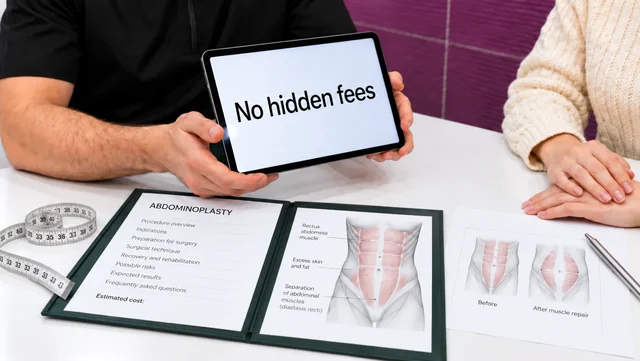
A surgeon shows a patient the fixed price of surgery with no extra charges

Fixed prices

After the consultation the surgeon defines the extent of correction, and you get a clear price for the surgery — no surprises on the way to the result you want.

A surgeon visits a patient in the hospital ward after surgery

Round-the-clock care after surgery

Recovery starts in a comfortable hospital ward under round-the-clock nursing care. The stay and meals are already included in the price.

FAQ

We answer what
people ask before booking

Tummy tuck in Nantes: what you should know

An overhanging apron of skin, a belly that stays rounded despite training, a stretched area above a C-section scar: these are the usual reasons people in Nantes look into a tummy tuck. The operation tightens the front abdominal wall rather than reducing weight. With a small amount of excess skin, a mini tummy tuck may be enough; with marked changes, the classic technique is chosen.

It all begins with a surgeon consultation: the doctor listens to your wishes, examines the abdomen and rules out contraindications, and a hormone screening is ordered to help predict the long-term result. Patients from Nantes then complete a check-up: blood tests including a coagulation panel, biochemistry and infections, ECG and chest X-ray, all available at the clinic with no waiting.

If you are comparing tummy tuck options in Nantes, look at more than the operation itself. Here the approach includes hormone screening before surgery, tests at the clinic with no waiting, a hospital stay under medical supervision and surgeon support until the result. The cost is calculated after a free consultation and fixed in the contract. Leave a request to arrange yours.

Stories of well-known people

Well-known people who spoke openly about this operation, in their own words.

All stories about this operation →

A core that must heal before it lifts again

A tummy tuck is often described by what you see in the mirror, but the first weeks are about the abdominal wall. The operation lasts 2–4 hours under general anaesthesia. Depending on the plan, the muscles may be drawn together if the rectus muscles have separated. Afterwards you stay 1–3 days in a hospital ward under medical supervision, and the days that follow are spent teaching a freshly repaired wall not to be hurried. In Nantes, the planning questions come from an ordinary week: who carries the shopping, who loads the washing machine, who reaches the low cupboard, who lifts a child into a seat. The online consultation is the moment to go through that week one task at a time and decide in advance who takes over each of them.

The recovery timeline from the medical text gives a skeleton for this. Drains are usually removed after two days and stitches after 7 days. A compression binder is worn for 1.5–2 months. Most swelling goes within 30 days, and office work resumes after 2–3 weeks. Sports, sauna and heavy lifting are off-limits for 2–3 months. At first you are advised to sleep on your back with the knees bent. The same material says that physical exertion, heavy lifting and sudden movements are not allowed in the first 2–3 weeks, and that sport returns gradually and only with the doctor's approval. Read together, the picture is not "rest, then normal life". It is a long, graded return in which bending, twisting and carrying come back last.

Bending is where daily life most often catches people out. A desk job and a job on your feet ask different things of the abdomen. Someone who answers emails can plan around the 2–3 week mark for office work. Someone who stocks shelves, lifts patients, carries tools or pushes trolleys needs to talk through the exact movements with the doctor during the consultation, because "back to work after 2–3 weeks" describes office work and not every working day. Photos sent by WhatsApp or Telegram let the coordinators see the picture you describe, and the doctor can tell you which tasks to hand over and for how long.

Nantes has a university that dates from 1460. In 2018–19 it reported 37,140 students, and the text puts the figure at roughly 34,500. Many people in the city therefore work in teaching, research, administration or study support, and these are mostly desk-based roles. That makes the 2–3 week benchmark for office work a realistic planning point for them, though it depends on the individual and on your own recovery. If your timetable includes lectures standing at a board, supervising laboratories or carrying equipment between rooms, raise it at the consultation. At home the abdomen takes the strain in a hundred small ways: reaching into the oven, lifting a laundry basket, getting out of a low sofa. The binder and the knees-bent sleeping position are there so that these movements do not pull on the repair while it is still new.

Household life in the first twelve weeks

A tummy tuck is not a solo project. Even with a personal coordinator on call round the clock and remote progress monitoring by photos, the practical weeks happen in your own flat or house. The medical text says you stay 1–3 days in hospital, and that recovery then continues at home with check-ups at 7 days, 3 months and 6 months. Think of the stretch from discharge to the first check-up as a home stage in which another adult, if you have one, carries more than usual.

Families with young children need the most careful plan. Lifting a toddler, bending to a pushchair and fastening a car seat are exactly the movements the text warns about: heavy lifting and sudden movements. The text also says that surgery is planned once your family is complete, because a pregnancy after a tummy tuck stretches the repaired muscles. If small children are at home, decide before booking who does the lifting for the 2–3 months in which heavy lifting is off-limits. Spouses, grandparents, friends and neighbours can share the load, and a written rota agreed in advance is often easier on everyone than improvised help.

Nantes offers practical ways to keep moving without straining. The city has 100 public parks covering 218 ha, and green space makes up 41% of its area. Gentle walking in a flat park is the sort of activity most people discuss with their doctor in the early stages. The relief is mixed, however. The city sits between 2 m along the Loire and 38 m at the Butte Sainte-Anne, so even a short walk can include a gentle slope, and bridges and embankments add their own gradients. Ask the doctor how far and how fast to walk in each stage. Sport as such returns gradually and only with approval.

Getting around the city is part of the plan too. The tramway has 3 lines covering 43.5 km, and Semitan recorded 132.6 million trips in 2015. The Bicloo bike-sharing scheme offers 880 bicycles at 103 stations. These figures show a city built for moving around without a car, but they do not mean a tram or a bicycle is automatically suitable for you in the first weeks. A crowded tram means standing, bracing against jolts and holding a rail, which is the kind of sudden movement the doctor asks you to avoid early on. Cycling is part of sport and is off-limits until the doctor agrees. A short ride by someone else's car, with a pillow supporting the abdomen, may be easier. Raise this at the consultation, and the doctor will tell you what applies to your case.

Compression, scars and the Atlantic light

The compression binder is the least glamorous part of the programme and one of the most useful. It is worn for 1.5–2 months, and the text says it supports the abdominal wall and shapes a smooth contour. The price includes compression garments fitted on the day of surgery. The FAQ in the same text mentions another 4–8 weeks in compression garments, so treat the exact timeline as something the doctor confirms for you. Its practical effect on daily life is mundane: clothes need to fit over it, sitting at a desk feels different, and washing and drying the garment becomes a routine task. Ask how many garments you will have so one can dry while the other is worn.

A scar is the unavoidable cost of removing excess skin, and the text is straightforward about it. A classic tummy tuck leaves an incision across the lower abdomen from hip to hip, below the underwear or swimsuit line. A mini tummy tuck leaves a much shorter one. By 12 months the scar is fully mature: it fades and is barely noticeable. The text does not say that the scar disappears, and it should not be promised to anyone. What you can do in the meantime is follow the aftercare programme, keep the dressings and check-ups on schedule, and send photos when something seems different.

Sun exposure is where Nantes enters the picture. Its sunshine totals 1,873.3 hours a year, with 232.6 hours in August and 77.6 hours in December. In July the mean daily high is 25.1 °C and in August 25.4 °C. The climate is oceanic, with a record of 42.1 °C, so hot spells do occur. The medical text says to avoid tanning beds for at least a month after the operation and gives a fuller scar timeline of up to 12 months. It does not give specific sun-protection instructions, so ask the doctor how to shield a healing scar in the sunniest months. The difference between 77.6 and 232.6 hours of sun is a good reason to ask now rather than after the first warm weekend.

Humidity and damp matter for dressings and comfort, and Nantes is a humid city. Relative humidity averages 81% over the year, reaching 89% in December and falling to 75% in July. The medical text says nothing about humidity changing recovery. It does say that scheduled dressings are included and that a personal coordinator is on call, so a concern about a damp dressing is a question to raise with them through photos and messages. In winter a binder under layers of warm clothes can feel different from the same binder in a light summer top. Both are workable; it is about being ready.

Choosing the month: damp winters, bright Augusts and French public holidays

Season is not a medical factor in the text, so nobody can honestly say one month is right for everyone. It is a practical one, though, and Nantes has figures worth reading. The wettest months are December with 101.0 mm and November with 94.1 mm. December has 13.5 rainy days against 7.1 in July, and the driest month is July with 44.2 mm. Across the year the city receives 819.5 mm on 119.7 days of at least 1 mm. For someone who has just come home from a 1–3 day stay, a wet pavement is not a medical obstacle on its own, but it does affect how willing you feel to walk gently outdoors.

Temperature is gentle in this oceanic climate. January averages 9.3 °C for the high and 3.4 °C for the low. In July the high is 25.1 °C and the low 14.3 °C. The annual averages are 17.1 °C and 8.3 °C. Mild winters mean the binder will rarely feel too warm. The warmest part of the year is more demanding: the binder is worn for 1.5–2 months, so a summer operation means wearing it through the warmest weeks. The record low is -15.6 °C and the record high is 42.1 °C, which are exceptions and not a plan. None of this decides the question on its own, but it is worth putting beside your work calendar and family life.

France has 11 public holidays: 1 January, Easter Monday, 1 May, 8 May, Ascension, Whit Monday, 14 July, 15 August, 1 November, 11 November and 25 December. They matter because a 2–3 week return to office work can be stretched by several days off if the dates fall conveniently. In spring, 1 May, 8 May, Ascension and Whit Monday come close together, which can offer a chance of fewer working days lost. The same dates can also mean quieter surroundings and fewer people available to help. Look at how the dates fall in the year after 1 November 2026 and see whether a holiday sits inside the first fortnight.

The city's events add another layer of planning, which is personal. La Folle Journée classical music festival takes place each winter over five days, Le Voyage à Nantes runs every summer, and the Rendez-vous de l'Erdre jazz festival draws about 150,000 attendees in September. If you plan to attend any of these, remember that sitting for long stretches, standing in a crowd or being jostled is quite different from a quiet evening at home. Discuss with the doctor how far into the recovery you should be before such an outing. The final result is assessed at 6–12 months, so the operation does not have to be timed to a single date. A date that gives you a steady first month at home is worth more than a perfect month on the calendar.

Coverage rules for cosmetic abdominal surgery in France

Many patients in Nantes ask first whether Assurance Maladie covers a tummy tuck. The answer depends on the reason for the operation. According to an insurer's article on the subject, cosmetic surgery done for reasons of personal comfort is not paid for by the Sécurité sociale. There are exceptions for serious psychological or social harm, with protruding ears and breast reduction given as examples, or for medical criteria such as a deviated septum. In those cases the operating doctor files a prior agreement request, the entente préalable, with the médecin conseil. If no reply comes within 15 days, the request is deemed accepted. The same source says the operation must then be done in a public or approved establishment. The article is an insurer's summary and not an official Assurance Maladie text, so check your own case with your fund.

Reconstructive surgery is treated differently. After an accident, an illness or a malformation, the same source says Assurance Maladie covers the operation, most often in full. Whether a particular abdominal case counts as reconstructive is a question for a French doctor and the médecin conseil, not for a general article or an online coordinator. The medical text we work from does not discuss insurance claims and does not describe any tummy tuck as reconstructive, so please treat this as background and not as advice. The online consultation is a free, no-obligation assessment of skin, muscles and technique, and it does not replace a coverage decision made by your fund.

The wider French system helps explain why people ask. General coverage is described as reaching 99.9% of the population, with the main fund covering 84% of the population. The system generally refunds 70% of most costs, and about 85% of people hold complementary private insurance, a mutuelle. Another source states that in 2020 the general regime had 59.2 million beneficiaries and the CNAM insured 88% of the population. These figures describe ordinary care. The cosmetic exception means a mutuelle should be asked directly whether it offers any benefit for the procedure, because policies differ and the answer is in your contract.

Waiting times are also a fact of French healthcare, though the data are old. A 2010 Commonwealth Fund survey found 53% of specialist appointments within a month and 28% after more than two months, with 46% of elective surgery within a month and 7% waiting four months or more. This is dated and covers the whole country, not Nantes. What it suggests is that planning ahead helps. Because the price is named at the consultation and fixed in the contract before surgery, you can set your budget and calendar side by side. The text says the date is booked with a deposit by card or bank transfer, and the contract is for medical services. You do not need to commit to anything to get the plan and a quote first.

Does the damp Nantes winter change how I should plan the weeks after a tummy tuck?

The medical text gives no weather-related instructions for recovery, so the doctor decides what applies to you. The practical side is different: December averages 13.5 rainy days and 89% humidity, and the wettest months are December and November. Wet pavements may make gentle walks less appealing, and you will wear a compression binder for 1.5–2 months under winter layers. Plan indoor routines in advance, keep dressings dry as instructed, and send photos to your coordinator if a dressing seems damp or unusual.

Is Nantes summer sun a concern for the scar?

The text says the scar is fully mature at 12 months, when it fades and is barely noticeable, and tanning beds are to be avoided for at least a month. Nantes receives 232.6 hours of sunshine in August and the July mean high is 25.1 °C. The text does not give detailed sun-protection rules, so ask the doctor during the consultation how to shield a healing scar, particularly across the months when it is still changing. The classic scar runs hip to hip below the underwear or swimsuit line.

Can I use the tram or a Bicloo bike while I recover?

The city has 3 tram lines covering 43.5 km and the Bicloo scheme has 880 bicycles at 103 stations, but your doctor sets the rules for your recovery. Sports, sauna and heavy lifting are off-limits for 2–3 months, and sudden movements are not allowed in the first 2–3 weeks. A crowded tram involves standing and bracing against jolts, and cycling is a physical activity. Ask which trips are acceptable at each stage and have a plan for the first weeks that does not depend on either.

Will the Sécurité sociale pay for a tummy tuck in France?

According to an insurer's article, cosmetic surgery done for personal comfort is not paid for by the Sécurité sociale. Exceptions exist for serious psychological or social harm or for medical criteria, and they require a prior agreement request from the operating doctor to the médecin conseil. Silence for 15 days counts as acceptance, and the operation must take place in a public or approved establishment. Reconstructive surgery after accident, illness or malformation is covered, most often in full. The source is an insurer, not Assurance Maladie, so confirm your own case with your fund.

Should my mutuelle be involved in the decision?

It is worth asking. About 85% of people in France hold a complementary private insurance, a mutuelle, and the system generally refunds 70% of most costs. Those figures describe ordinary care and do not mean a mutuelle covers a cosmetic operation. Contracts differ widely, so ask your insurer in writing whether any benefit applies to abdominal surgery and what documents it would need. The price is fixed in the contract with the medical centre before surgery, so you can compare it with whatever your insurer says.

How do French public holidays fit into a recovery plan?

France has 11 public holidays: 1 January, Easter Monday, 1 May, 8 May, Ascension, Whit Monday, 14 July, 15 August, 1 November, 11 November and 25 December. Office work resumes after 2–3 weeks, so a holiday inside that period may reduce the days you need away from work. The spring cluster of 1 May, 8 May, Ascension and Whit Monday is the best known example, though it also affects who is available to help at home. Check how the holidays fall in the year after 1 November 2026 and discuss the dates with your coordinator.

What if I have small children or a physical job in Nantes?

Heavy lifting and sudden movements are not allowed in the first 2–3 weeks, and heavy lifting remains off-limits for 2–3 months. The text says surgery is best planned once your family is complete. If you lift a toddler daily or work on your feet, raise it at the consultation so the doctor can tell you what applies. Arrange help from a spouse or relatives before the date is booked, and agree who carries children, shopping and laundry. The 2–3 week benchmark for returning to work applies to office work, not to jobs that involve carrying.

Can I attend a Nantes festival soon after the operation?

The medical text does not mention events, so the answer depends on your recovery and the doctor's advice. La Folle Journée runs over five days each winter, Le Voyage à Nantes takes place every summer, and the Rendez-vous de l'Erdre jazz festival draws about 150,000 attendees in September. Long periods of standing, crowds and being jostled are a different matter from a quiet evening. Most swelling goes within 30 days, but sports and heavy lifting stay off-limits for 2–3 months, so check with the doctor before booking tickets.