City Medical Centre · multi-specialty surgery clinicOpen 24/7

Tummy tuck

Abdominoplasty in Gdansk: Scar and Results

Free consultation

from $2,400

The price is fixed in the contract before surgery

Message us on WhatsApp

Free online consultation · Reply within 15 minutes
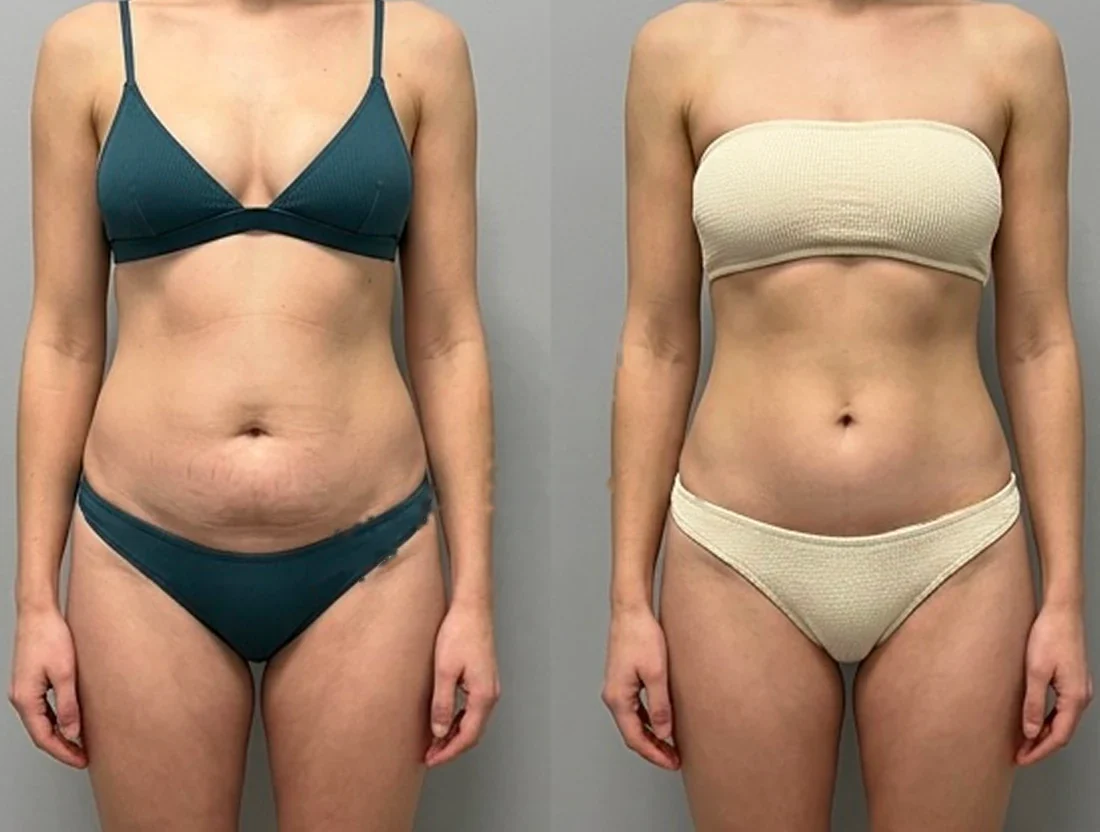
Real case
Tummy tuck: a patient's abdomen before and after surgery before after
A flat tummy and a toned silhouette in one operation. Your individual surgical plan and the expected result are discussed at the consultation

Message our coordinator

Free online consultation · Reply within 15 minutes

Message us on Telegram

By messaging us, you agree to our Privacy Policy

Tummy tuck (abdominoplasty) in Gdansk: price and key facts

Tummy tuck for patients from Gdansk at City Medical Centre: the price is named at the free online consultation and fixed in the contract with no hidden extra charges.

Duration
2–4 hours
Anesthesia
general
Stay
1–3 days
Recovery
back to work after 2–3 weeks
Final result
6–12 months after surgery
How it works
Send photos on WhatsApp or Telegram, get a free doctor assessment and the price, then confirm the plan and dates before anything is booked.

How it works · Tummy tuck prices

Information current as of 24 October 2026

Free online consultation on WhatsApp and Telegram

Results

Tummy tuck (abdominoplasty) results
of our patients

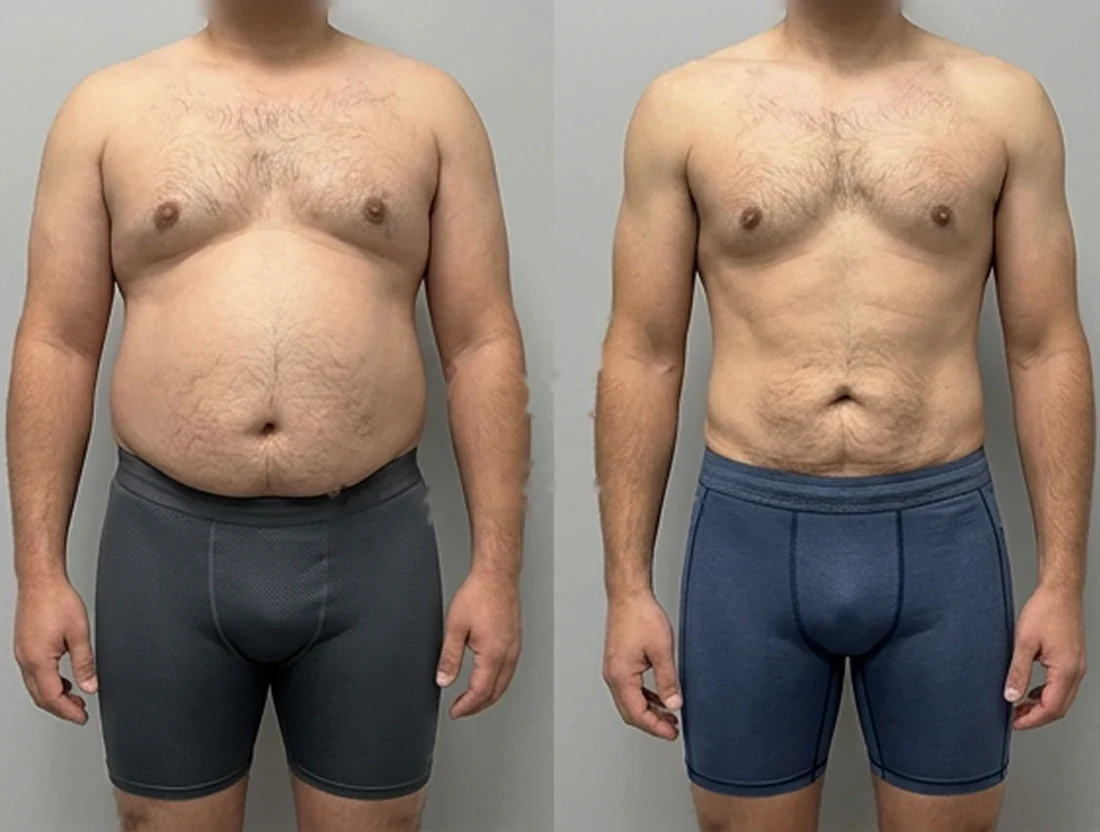
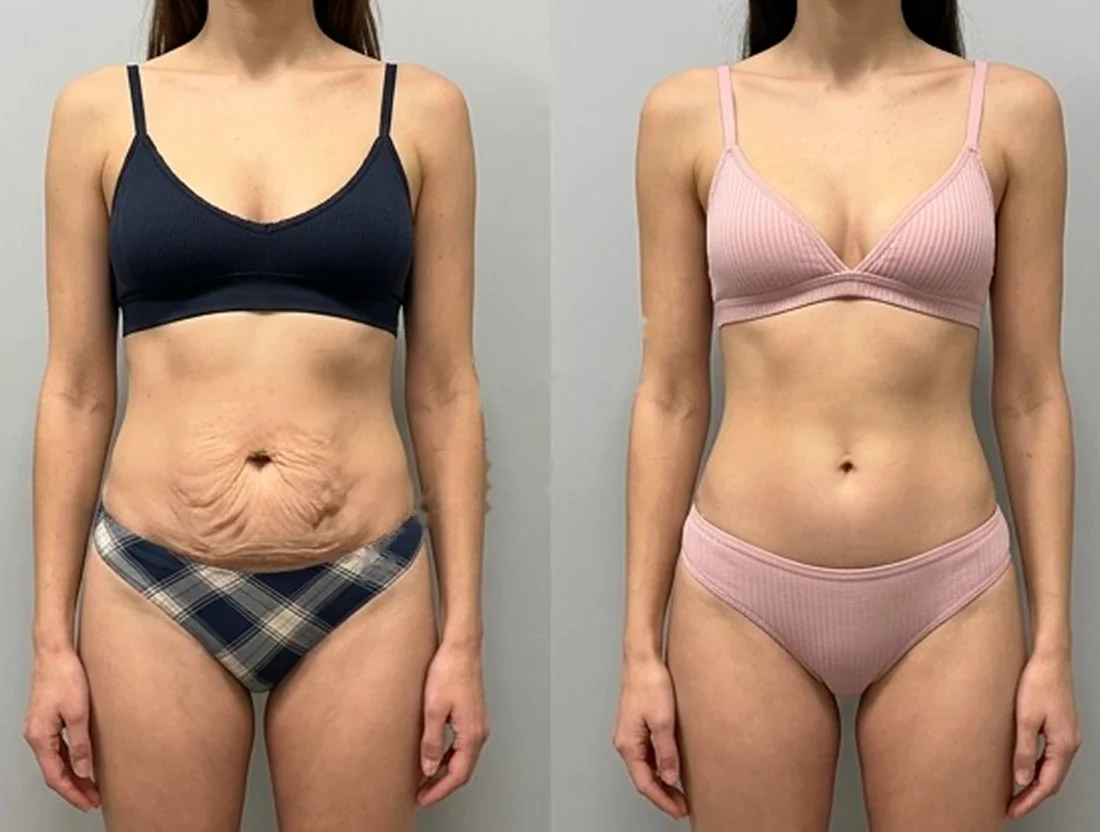
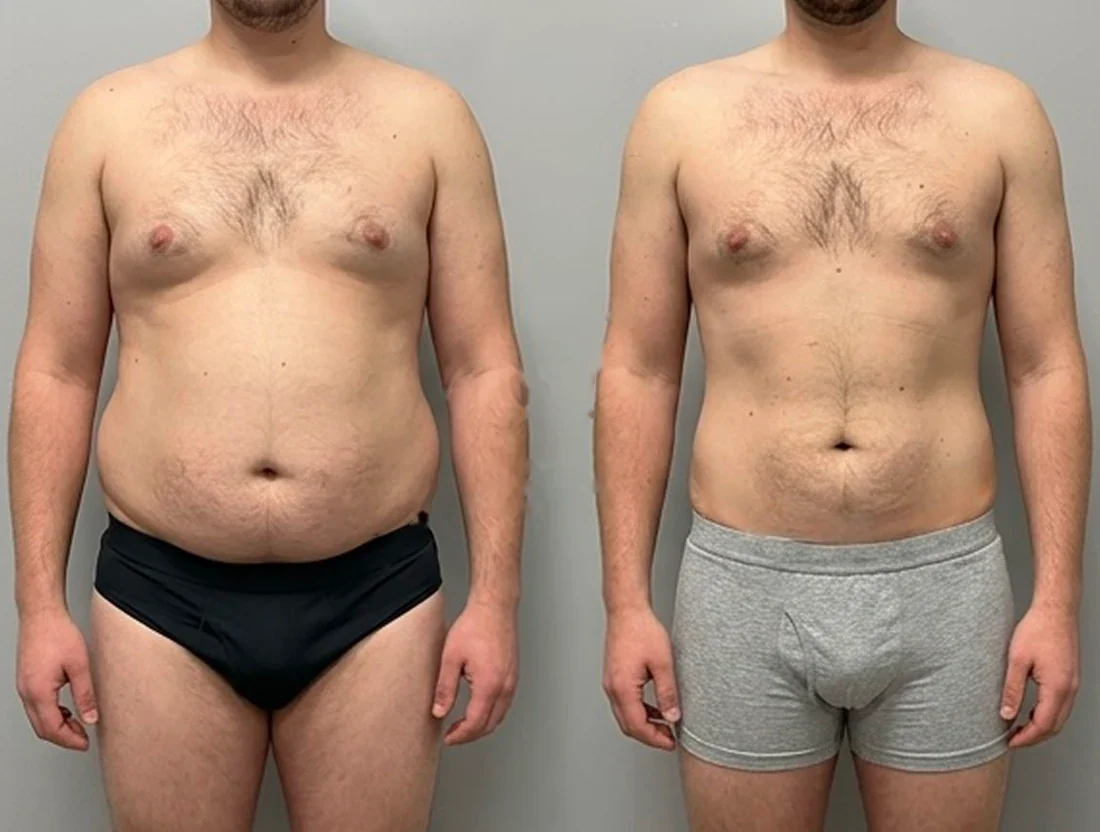
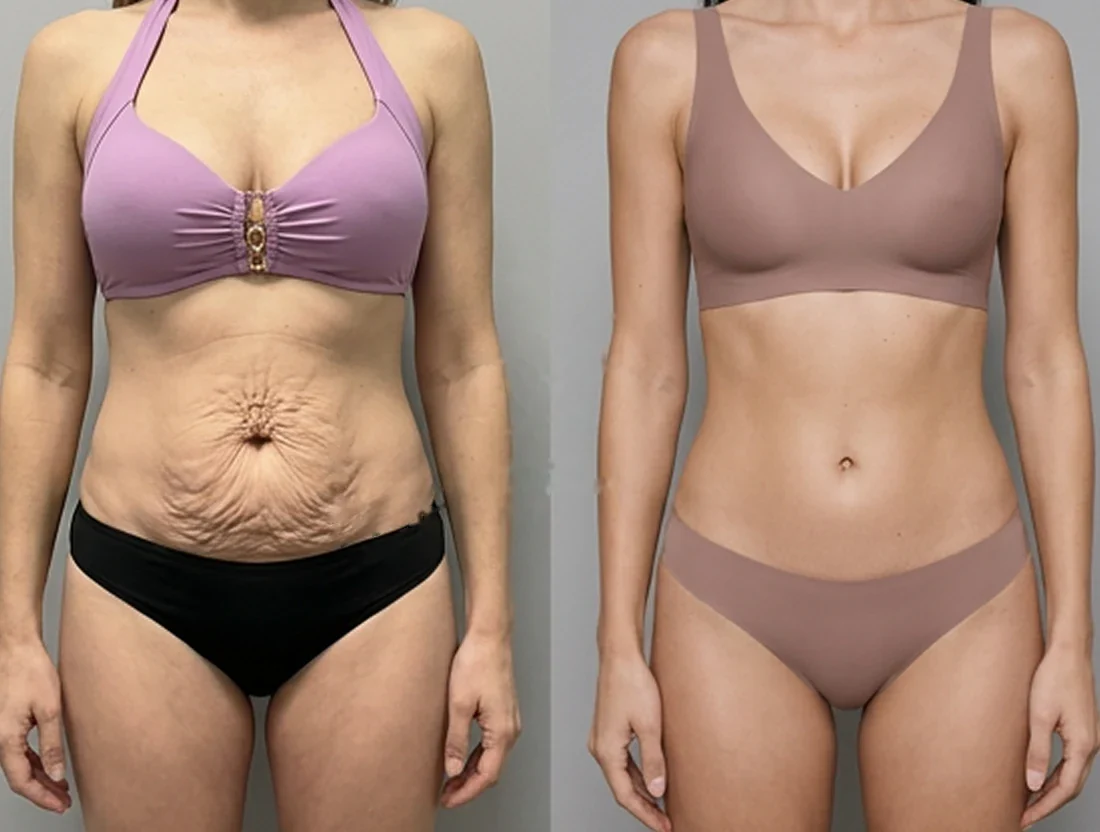
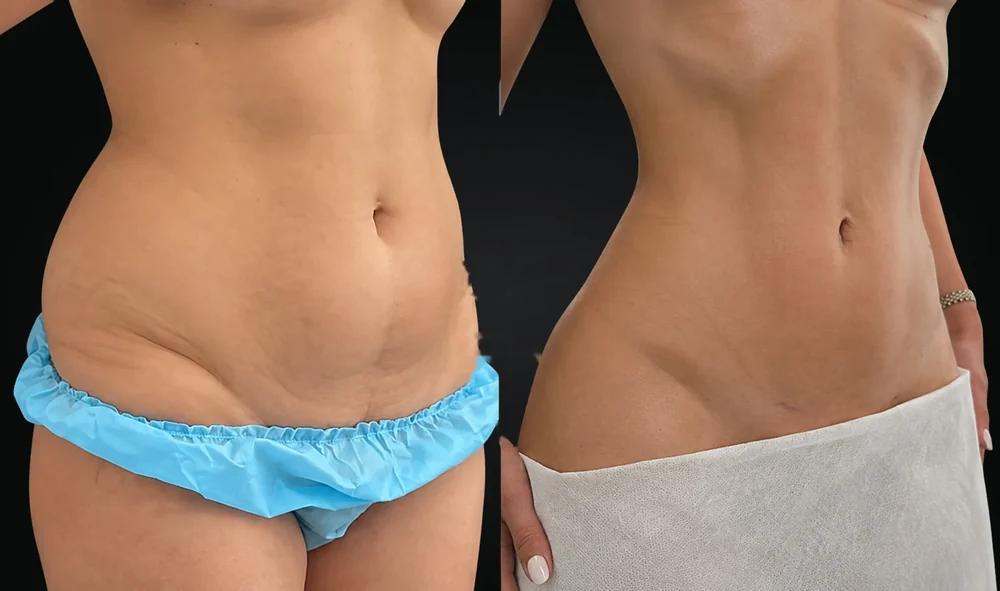
All cases are real patients. Faces and identifying details are hidden.

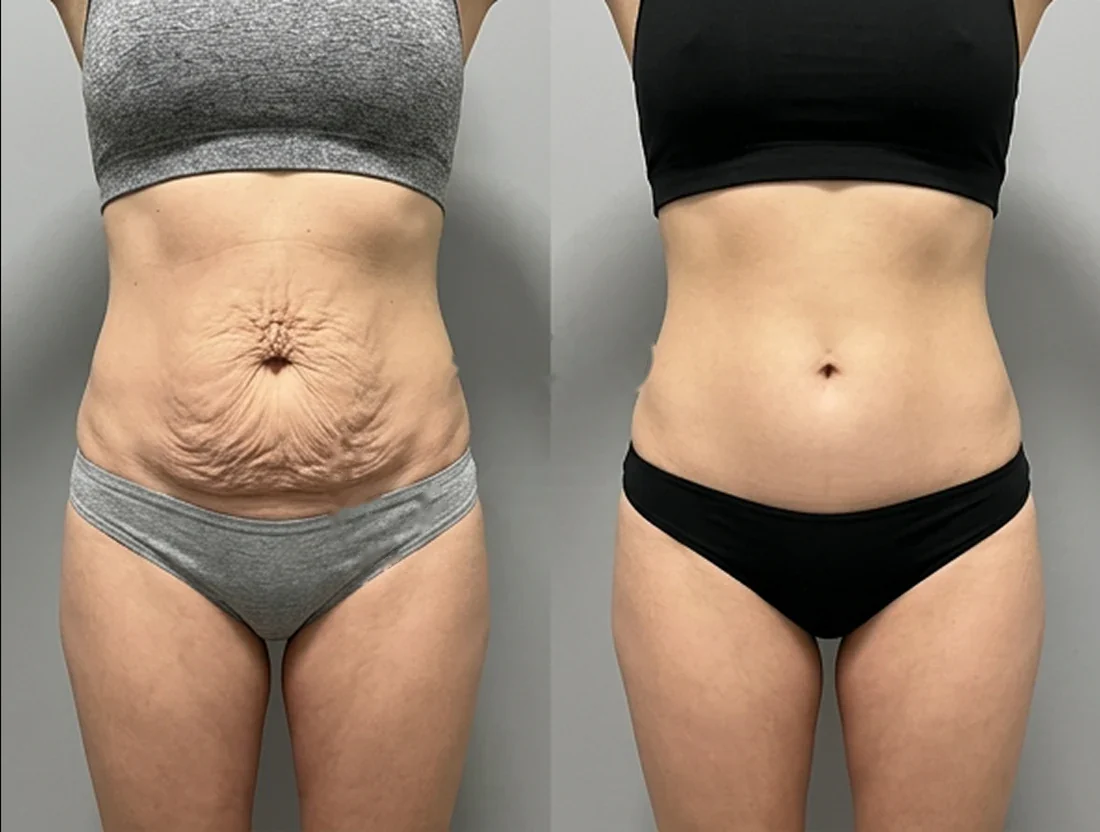
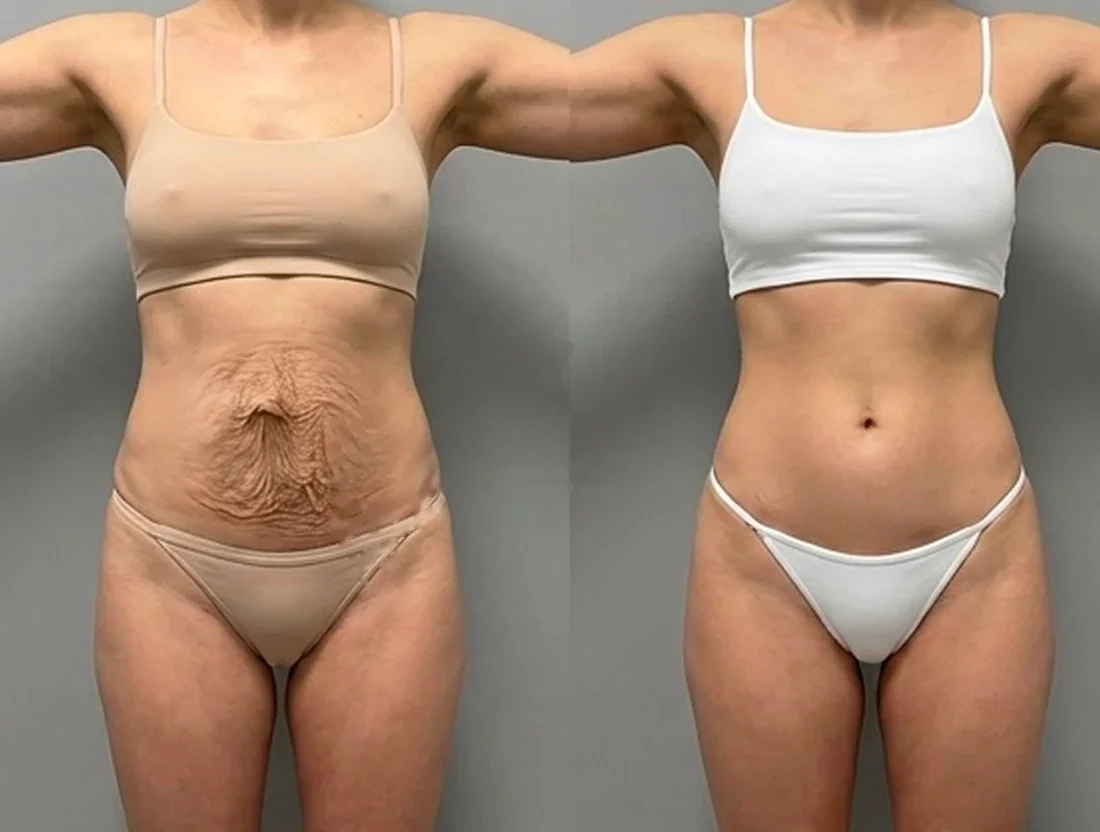
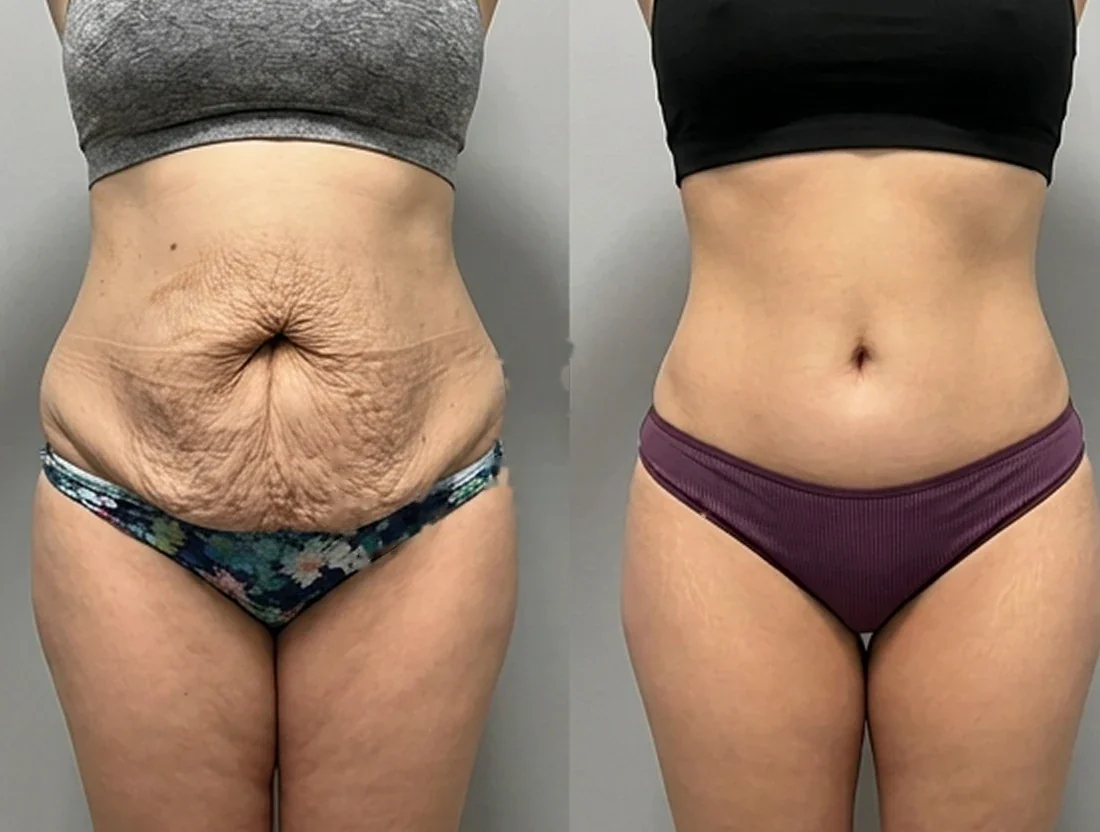
Tummy tuck: a female patient's abdomen before and after surgerybeforeafter
Tummy tuck: a male patient's abdomen before and after surgerybeforeafter
Tummy tuck: a female patient's abdomen before and after surgerybeforeafter
Tummy tuck: a male patient's abdomen before and after surgerybeforeafter
Tummy tuck: a female patient's abdomen before and after surgerybeforeafter
1 of 8

Comparison

Tummy tuck techniques

A tummy tuck is done as a full (classic) or mini operation, or combined with liposuction as lipoabdominoplasty. Compare the scope of surgery, the indications and the expected results to choose the right technique together with your surgeon.

Tummy tuck

Removal of excess skin, abdominal muscle tightening
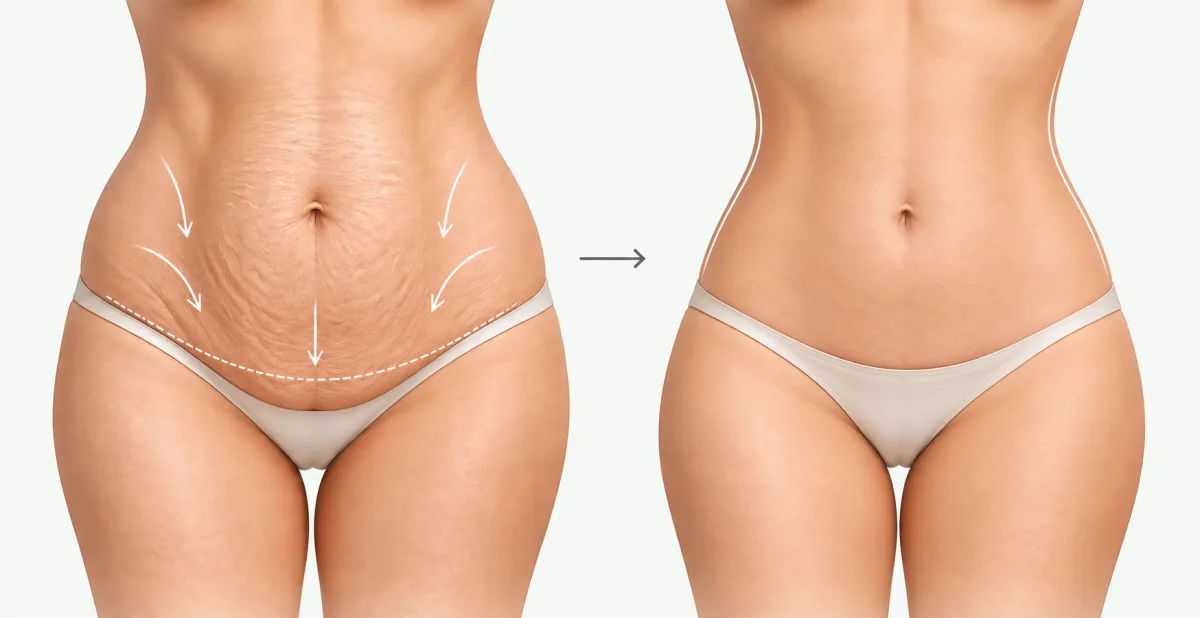
Tummy tuck diagram: the abdomen before surgery with the incision line, and the result
Main goal
Removal of excess skin, diastasis repair
When it is done
Excess skin after childbirth or weight loss
Anaesthesia and stay
General anaesthesia, up to 3 days in hospital

Lipoabdominoplasty

Tummy tuck with added liposuction
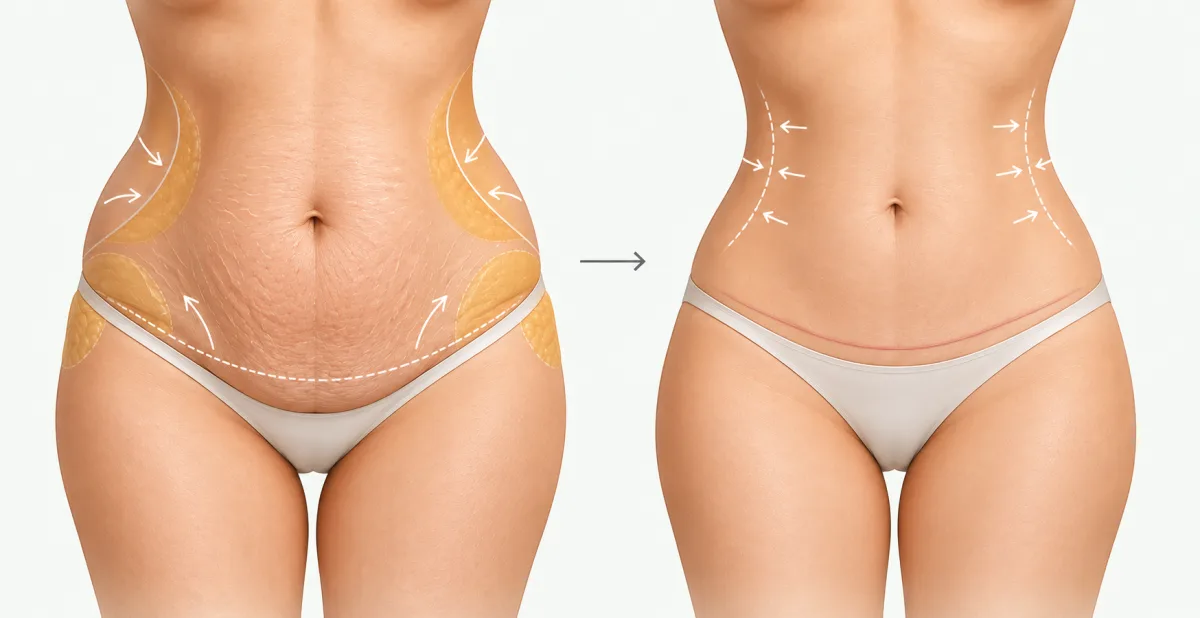
Lipoabdominoplasty diagram: the abdomen with fat on the flanks before surgery, and the result
Main goal
Tummy tightening and waist contouring
When it is done
For fat deposits on the flanks and waist
Anaesthesia and stay
General anaesthesia, up to 3 days in hospital

The benefits and recovery times shown are averaged for each technique and given for guidance: the scope of correction and rehabilitation depend on your anatomy and individual features, and the surgeon confirms them at the consultation.

At the consultation the surgeon draws up a plan for your case and explains how your tummy tuck will go.

Free, before surgery and with no obligation.

Book a consultation

Tummy tuck from the inside

About the clinic

A clinic where you can feel at ease

Modern equipment, comfortable rooms and care for every patient

A doctor and a patient in a clinic ward

Contact us the way that suits you

We will answer your questions and find a convenient time for a consultation

By messaging us, you agree to our Privacy Policy

A tummy tuck is not for everyone

If your case can be solved without surgery, the doctor will tell you so at the consultation — and you will not spend money for nothing.

Suitable

A surgeon shows a patient on a model and a monitor how the abdominal contour changes after a tummy tuck
  • Rectus abdominis diastasis
  • Skin folds after weight loss
  • Loose abdominal skin
  • Stretched skin after pregnancy
  • A distorted abdominal contour

Not suitable

A surgeon discusses the indications and contraindications for a tummy tuck with a patient
  • Acute infections
  • Severe disease of the heart, kidneys or liver
  • Clotting disorders of the blood
  • Age below 18
  • Decompensated diabetes
  • Cancer
  • Skin inflammation in the surgical area
  • Pregnancy and breastfeeding

Not sure the surgery is right for you?

Message us — the coordinator will ask for your photos in the messenger, and the surgeon will tell you whether a tummy tuck suits you. No surgery booking needed.

Find out if it suits me

A surgeon goes through a tummy tuck diagram with a patient at the consultation

Prices

You know the price
before surgery

The price is set at the consultation and fixed in the contract.

Other services

  • First consultationFree
  • Liposuction of the abdomen and flanksfrom $1,700
Book a consultation

Find out your tummy tuck plan and price

The surgeon assesses your abdominal skin and muscles, listens to your wishes and chooses the right correction technique.
The price is set at the consultation and fixed in the contract.
A nurse talks to a patient in a clinic ward

Message our coordinator

Free online consultation · Reply within 15 minutes

Message us on Telegram

By messaging us, you agree to our Privacy Policy
A patient's abdomen before a tummy tuck in the operating room

all inclusive

What the price includes

From preparation for surgery
to post-op check-ups.

  • All scheduled dressings
  • Scheduled post-op check-ups
  • A personal coordinator on call
  • Compression garments fitted on the day of surgery
  • A stay in a comfortable
    hospital ward with meals
  • Individual recommendations
    for recovery
  • Remote progress monitoring
    by photos

How it works

Three days at the clinic —
from preparation to discharge

An agreed correction plan, inpatient observation and post-op check-ups.

A doctor shows a patient a tummy tuck diagram on a monitor1

Consultation
and the surgical plan

The surgeon assesses your abdominal skin and muscles and checks for diastasis, listens to your wishes and chooses the right correction technique.

Paying the deposit by card at the clinic reception2

Booking the date
of surgery

We reserve a surgery date for you: the deposit can be paid by card at the clinic or online by bank transfer. The terms are fixed in the contract for medical services

A blood sample tube for tests before a tummy tuck3

Check-up before
surgery

Before surgery you complete a full lab check-up: blood tests, an ECG, a chest X-ray and reports from the required specialists.

The surgical team during the operation4

Surgery

The surgeon performs the tummy tuck with the chosen technique, repairs diastasis if needed and shapes a firmer abdominal contour.

A hospital ward at the clinic5

Inpatient stay

After surgery the patient stays for 1–3 days in a comfortable hospital ward with meals, under medical supervision.

A surgeon and a patient in the ward during recovery6

Recovery

After surgery you get a recovery programme. Check-ups at 7 days, 3 and 6 months help track your recovery.
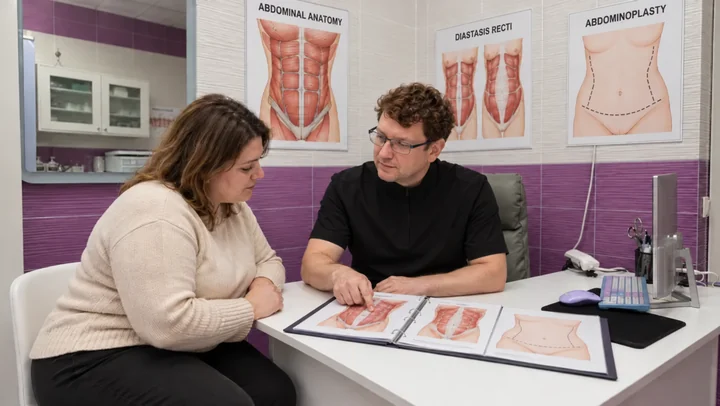
Book a free consultation — the surgeon will plan every step with you.

A doctor discusses the tummy tuck plan with a patient
Book a consultation
A doctor discusses the tummy tuck plan with a patient

How it really happens

Recovery after a tummy tuck

Right after surgery the patient spends 1–3 days in hospital under medical supervision. Drains usually come out after two days and stitches after 7 days. A compression binder is worn for 1.5–2 months to support the abdominal wall and shape a smooth contour. Most swelling goes within 30 days, and office work resumes after 2–3 weeks. Sports, sauna and heavy lifting are off-limits for 2–3 months; at first, sleeping on your back with bent knees is advised. By 12 months the scar is fully mature — it fades and is barely noticeable.

Post-op check-ups

After 7 days, at 3 months and at 6 months. Until the end of the year, get a post-surgery consultation with your surgeon to review results and get more information, at the clinic's expense

Advantages

Reasons to choose City Medical Centre

A surgeon discusses the tummy tuck plan with a patient at the consultation

Just find out — you lose nothing

At the consultation we discuss your wishes and assess your abdominal skin and muscles. The surgeon explains what changes are possible, chooses the correction technique and answers your questions.

A surgeon on a video call with a patient after surgery

We stay with you after surgery

The surgeon follows your recovery and the changing abdominal contour at check-ups after 7 days, 3 and 6 months. Check-ups, dressings and aftercare advice are already included in the price of surgery.

A surgeon shows a patient a model and tummy tuck diagrams

A beautiful contour that fits your figure

We choose the correction technique based on your skin, muscles and figure. Our aim is a harmonious abdominal contour that keeps the natural proportions of your body.

A patient writes down a convenient visit time in her planner

Your schedule is our priority

We respect your time: we work 24/7, with easy booking and a personal approach — we adapt to your pace.
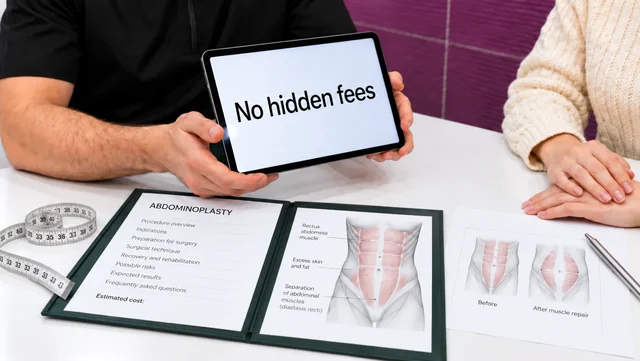
A surgeon shows a patient the fixed price of surgery with no extra charges

Fixed prices

After the consultation the surgeon defines the extent of correction, and you get a clear price for the surgery — no surprises on the way to the result you want.

A surgeon visits a patient in the hospital ward after surgery

Round-the-clock care after surgery

Recovery starts in a comfortable hospital ward under round-the-clock nursing care. The stay and meals are already included in the price.

FAQ

We answer what
people ask before booking

Classic or mini tummy tuck in Gdansk

What exactly changes? The surgery removes sagging skin and the fat apron entirely, and stretch marks below the navel go with them. The upper abdominal skin is pulled downward, so the tummy becomes smooth. If the rectus muscles have separated, they are brought together in the same operation. For anyone researching a tummy tuck in Gdansk, removed skin does not grow back, so that part of the result is permanent.

Is it painful? During the procedure you feel nothing, since a tummy tuck is done under general anaesthesia. Tightness and soreness appear in the first days and are relieved with painkillers prescribed by the doctor; by the end of the first week the discomfort eases noticeably. For people from Gdansk, the first visible changes appear about two weeks after surgery, when the main swelling subsides.

Combining procedures can make the plan more efficient: a tummy tuck with flank and waist liposuction or diastasis repair is done under one anaesthesia with one recovery period. The price for such a combination, as for a standalone operation, is set after a free consultation and fixed in the contract. People in Gdansk can book that consultation through the form or any messenger.

Stories of well-known people

Well-known people who spoke openly about this operation, in their own words.

All stories about this operation →

Winter binder, summer swimsuit: fitting an abdominal operation into a Baltic year

A tummy tuck changes how you move for weeks, so the calendar matters more than people expect. The climate tables for Gdansk, 1991 to 2020, give a mean daily maximum of 6.6 °C in March, 16.8 °C in May and 22.9 °C in August, with 259 hours of sunshine in June. The binder you wear for about 1.5 to 2 months after the operation will therefore spend some of its time under a winter coat and some of it under a summer dress, depending on the month you choose.

Counting backwards from the beach season is a simple method. If you would like to wear a swimsuit on the shore of the Gulf of Gdansk in July, the operation should have been done by roughly March, because the first changes appear at about two weeks, swelling mostly settles within 30 days, the binder comes off at 1.5 to 2 months, and sauna, sport and heavy lifting wait for 2 to 3 months. The final result and the scar are assessed at 6 to 12 months, so a swimsuit in July is realistic, a flawless picture of the scar is not.

Autumn is a sensible alternative. A procedure in October, when the mean daily maximum is 12.7 °C and the daylight is already shorter, lets you rest through the darker weeks without feeling that you are missing anything. The cost of that choice is the Christmas period, which Polish law now treats as a public holiday from 24 December, and which is full of family meals and social events that you may want to enter in good shape.

Think too about the people around you. A tummy tuck limits what you can lift for weeks, which includes shopping bags, laundry baskets, small children and pets on a lead. Before the date is fixed, work out who can take over those tasks and for how long, and give the coordinator the dates of any family event, exam period or work deadline in the following two months. A plan that already includes these items rarely needs rescuing halfway through the recovery.

There is a quieter point about light. Gdansk receives only 39 hours of sunshine in January and 32 in December, against 259 in June. Moving about indoors in the dark months is easy to do for the first week, and a person who prepares a corner with books, films and a comfortable reclining seat will not feel that the weeks are lost. In the bright months you have the opposite risk: the pleasure of a sunny day tempts you to do more than is wise. Make your plan with that tendency in mind.

Skin, muscle and a stable weight: what the doctor wants to know first

The operation removes loose, stretched skin and the fat apron on the abdomen and, where it is needed, repairs the separation of the rectus muscles known as diastasis. Not everyone needs that repair. The doctor sees it at examination, and in doubtful cases an ultrasound confirms it, so the first consultation is mainly a matter of describing your history: pregnancies, big changes in weight, earlier operations and any hernia.

A tummy tuck is not a weight-loss method. It is carried out at a stable weight, and if your weight is still changing, the doctor will advise seeing a dietitian or an endocrinologist first. If you plan another pregnancy, say so at the start: childbirth should come first and the operation afterwards, because skin and muscles stretch again, and doctors advise waiting at least a year after the procedure before conceiving.

Photographs make the online assessment concrete. Send front, side and three-quarter views of the abdomen, standing relaxed and then with the muscles tensed, in daylight and without filters. Add age, height, weight and a few lines on what bothers you most: the apron, the stretch marks below the navel, a bulge in the middle of the abdomen, or the lower scar from an earlier caesarean. With these in the chat the doctor can say which technique fits.

If you have had a caesarean or another abdominal operation, bring the details: the year, the type of incision and any complications you remember. An older scar affects the planning of the new incision, and a hernia, if present, changes the technique and the length of the stay. Medical letters from earlier operations, if you have them, can be photographed and sent in the chat, and the doctor reads them before replying with a plan.

Mental readiness belongs in the preparation as well. A tummy tuck is a planned change that takes weeks to settle, and the first sight of the abdomen in the binder, swollen and bruised, is rarely what the imagination promised. Knowing in advance that swelling subsides, that a scar is an agreed price for removing loose skin and that the final look appears only after months makes the early days easier. The coordinator can describe what other recovering patients usually report, and you can ask the doctor anything that worries you.

Mini, full or combined: three plans you can compare from home

Three versions of the operation are offered. A mini tummy tuck deals with a small excess of skin below the navel, so the incision is shorter, the navel stays where it is and recovery is faster. A full, classic operation removes the skin-and-fat apron across the whole abdomen and moves the navel, and it lets the doctor repair diastasis along the length of the muscles. The third is lipoabdominoplasty, which adds liposuction of the flanks and waist.

Choosing between them is easier when you ask the same three questions of each plan. What will the scar look like and where will it lie? How many days will I spend in hospital? When can I get back to my work? A classic operation leaves an incision from hip to hip below the line of underwear or swimsuit that fades and thins with time, a mini operation leaves a much shorter one, and the stay is one day for the mini and one to three days for the classic.

The coordinator can put the three answers in a short table in the chat, with the dates of the check-ups at 7 days, 3 months and 6 months, so that you can compare without a phone call. The first consultation is free. If your case can be dealt with without an operation, the doctor tells you at the start and you do not pay for what you do not need.

Another question deserves a straight answer: how much does the navel move, and will it look natural afterwards? In the full operation the navel is repositioned, and the doctor can explain on your own photographs what shape and position are realistic. Ask for it in the first conversation instead of leaving it to the day of the operation, since seeing the plan in writing is the best protection against surprises.

Ask about the anaesthetic review as well. Because the operation uses general anaesthesia, the anaesthetist needs a clear medical history: chronic conditions, medicines, allergies and any problems with earlier anaesthesia. If you are under regular follow-up for a heart, lung, thyroid or blood-pressure issue, request a short report from the relevant specialist before the consultation. It shortens the time to a firm plan and lowers the chance that the date has to move.

Hospital days, drains and the first month at home

A tummy tuck is done under general anaesthesia, which means the operation itself is not felt. Tightness and soreness appear over the first days and are relieved with the painkillers the doctor prescribes, and by the end of the first week they ease noticeably. Drains are usually removed after two days and stitches after seven, and a compression binder supports the abdominal wall and shapes a smooth contour.

At home, the main task is a protective posture. In the first weeks you avoid sudden movements, heavy lifting and exertion, and sleeping with the body slightly bent keeps tension off the scar. A short walk indoors several times a day is better than lying still, and office work becomes possible after 2 to 3 weeks. For at least a month you stay away from the sauna, steam bath, pool, tanning beds, alcohol and smoking.

Gdansk belongs to the Tricity, where the SKM urban railway serves Gdansk, Sopot and Gdynia and, in a 2007 count, carried 12.8 % of commuters in the area to work. If you are one of the people who ride that kind of train to work, tell the coordinator: a packed carriage and a heavy bag are not what an abdomen healing for three weeks needs, and a conversation about leave or working from home is worth having before the date is fixed.

A last tip for the hospital stay: bring a loose, front-opening garment, slippers that you can put on without bending, a long phone charger and a short list of the medicines you take. Pack a pillow if you prefer your own. The stay lasts one to three days with meals and monitoring included, and a calm, organised arrival lets the first day pass without small worries.

It helps to set up the home before you leave for the hospital. Move the items you use every day to waist height so that you do not need to bend or stretch, prepare simple meals, and put a chair beside the bed. Remove loose rugs, charge your phone, and arrange who will collect you. None of these steps is dramatic, but together they keep the first nights quiet, which is what the abdominal wall needs most.

The six months after discharge: a milestone map you can pin to the fridge

The weeks and months after a tummy tuck follow a recognisable order, and it is easier to cope with them when you know the map. In the first days you are in hospital or resting at home, with drains out around day two and stitches out around day seven. By the end of the first week the soreness has eased noticeably. Two to three weeks in, office work is possible. Within about 30 days most of the swelling is gone, and the binder continues until 1.5 to 2 months, when the abdominal wall has accepted its new support.

Between two and three months the restrictions on sport, sauna and heavy lifting end, but gradually and with the doctor's approval, not at a stroke. Start with walking and light stretching, add low-impact exercise and only later think of strength work for the abdominal area. Many patients are tempted to return to old routines the day the binder comes off, and the control visit at 3 months is the right place to ask which exercises are safe and which should still wait.

At six months the check-up compares photographs, scar and contour with the first images. The final result and the scar are assessed at 6 to 12 months, since the tissues need that long to adapt fully, and the scar fades and thins over that time. This is also the moment to talk about maintaining the result: a stable weight, regular movement and careful treatment of the scar. Consultations with the doctor remain free until the end of the first year, so a long gap between visits is not a reason to stay silent.

A simple way of keeping track is to photograph the abdomen once a week in the same clothing and the same light, and to write a line about how you feel: pain, energy, sleep, mood. Few people remember how they felt in week three when they are writing to the coordinator in month four. The notes also help the coordinator, who sees your messages in sequence and can spot a pattern early, such as swelling that grows by the end of each day.

Do not underestimate the value of small rewards during this stretch. A first walk of half an hour without a break, a day without painkillers, a morning when the binder feels like a part of your clothing rather than an obstacle: each is a sign of progress, and noting it keeps the long recovery from feeling endless. When the first month ends, many patients say the most useful thing was a clear map, so print this one or copy it to your phone.

Holidays, insurance and the paperwork around the operation

Poland's public holidays include 1 January, Easter Monday, 1 and 3 May, Corpus Christi, 15 August, 1 and 11 November and 24 to 26 December. The first days after a tummy tuck are the least mobile, so placing the operation before a long weekend gives you some uninterrupted rest, though the 2 to 3 weeks before office work still apply and the dates of Easter and Corpus Christi move from year to year.

The National Health Fund, NFZ, finances only services on its official list of covered benefits, and it requires a referral for hospital treatment. An aesthetic abdominoplasty is not something to expect the public system to pay for, and we make no promise about reimbursement. If a hernia or another medical condition is part of your story, a conversation with your own doctor about what the public system offers is sensible.

Before the operation you complete blood and urine tests, a coagulation panel, biochemistry, infection tests, an ECG, a chest X-ray, leg vein ultrasound and a report from your GP. Test results are usually valid for 10 to 14 days, so do not collect them too early. Smoking, alcohol and medicines that affect clotting stop 7 to 10 days before the date. The coordinator gives you the exact list at the consultation and checks it with you step by step, 24/7 in WhatsApp or Telegram.

Think about the first check-up too. At 7 days the doctor looks at the wound, the stitches and the binder, and it is a good moment to ask when you may drive, when you may start gentle exercise, and which movements are still to be avoided. Write the questions in your phone during the week and send them to the coordinator beforehand; the answers will be waiting when the appointment starts, and nothing is forgotten in the rush.

Finally, think about how you will communicate. Coordinators answer on WhatsApp and Telegram round the clock, and you can send a photograph of the binder or the wound at any hour, including during a public holiday such as Easter Monday or 15 August. You do not have to judge by yourself whether a swelling is normal. A quick message and a clear photograph are the right tools, and they cost nothing.

If the plan changes, say so early. A new job, an illness in the family or an unexpected work project is a perfectly good reason to move the date, and the coordinator will shift the check-up schedule to match. Nothing is lost by changing the date before the deposit is paid, and afterwards the contract describes the terms, so read them before you pay and ask about anything that is unclear.

Is October a better month than spring for a tummy tuck in Gdansk?

Both can work. October has a mean daily maximum of 12.7 °C and shorter days, so recovery happens quietly, while spring puts the binder-free weeks before the beach season. Choose according to your diary, not the weather alone.

How do I handle the Christmas period after surgery?

Christmas Eve has been a public holiday since 2025, and the days that follow are busy. If you want to be on your feet and comfortable for them, plan the operation early enough for the 2 to 3 weeks before office work and the binder period to have passed.

Can I commute by train after a tummy tuck?

Not in the first weeks, and not with heavy bags. Ask the coordinator about leave or remote work before you fix the date.

Does NFZ pay for a tummy tuck?

The fund finances only services on its official list, and an aesthetic abdominoplasty is not something to count on. Ask your own doctor if you believe there is a medical reason, such as a hernia.

Which photos should I send from Gdansk?

Front, side and three-quarter views, relaxed and with the muscles tensed, in daylight. Add age, height, weight and your history of pregnancies and weight changes.

Do I have to wait before getting pregnant?

If you are planning a child, surgery is better placed after your family is complete. If a pregnancy follows the operation, the repaired muscles stretch again, so doctors advise waiting at least a year.

Can I combine a tummy tuck with other procedures?

Yes, liposuction of the flanks and waist is often added, and after childbirth the repair of diastasis. You go through one anaesthesia and one recovery period, and the doctor tells you the scope at the consultation.

Can I plan a tummy tuck around the Tricity commute in the colder months?

Yes, if you take leave for the first weeks. Cold and damp make the binder feel comfortable, but heavy bags and crowded trains do not mix with healing, so arrange leave or remote work before you fix the date.

Which scar questions should I raise in the first chat?

Ask where the incision will lie, how long it will be, how it will look in a swimsuit, and when to expect fading. The classic operation leaves a hip-to-hip scar below the underwear line, the mini operation a shorter one.