


























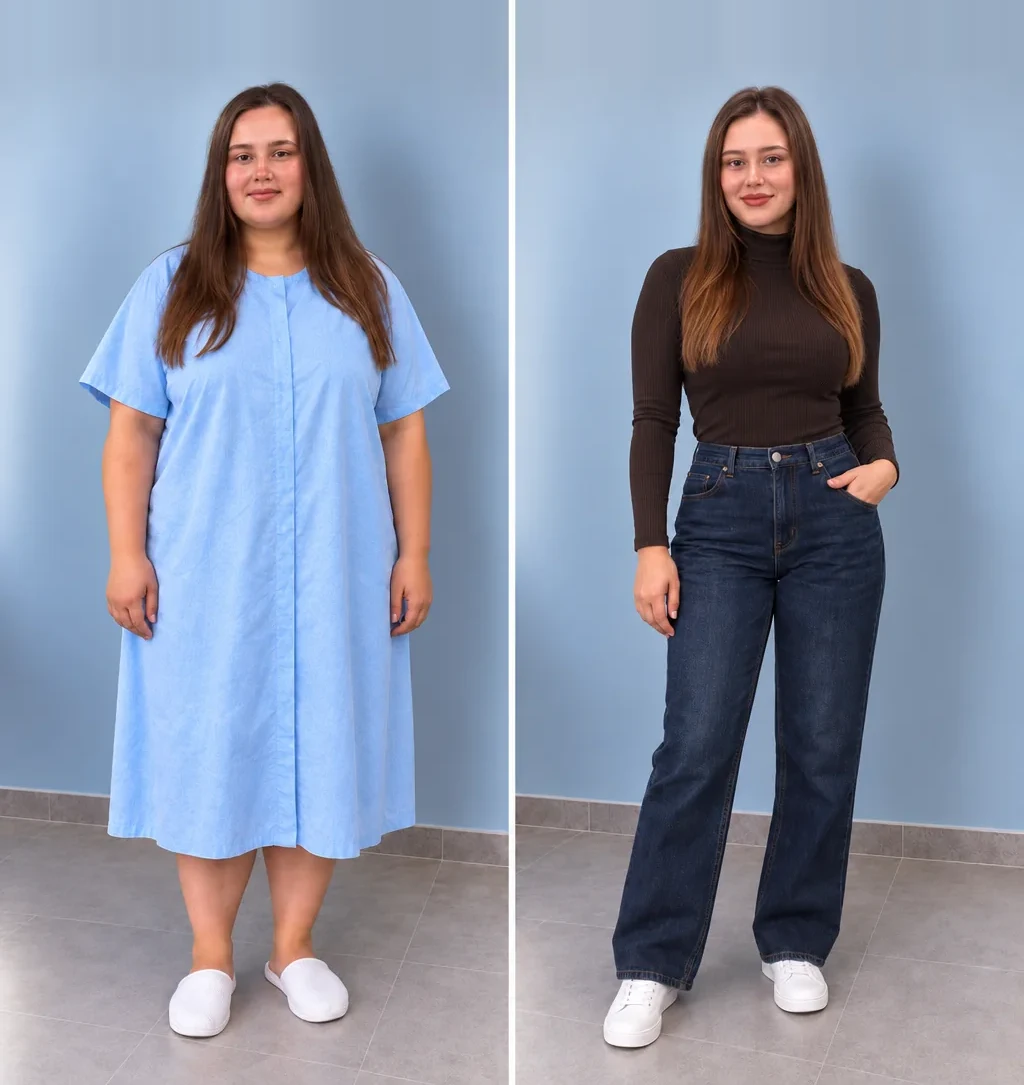
 beforeafter
Irina, 26
Bariatric surgery
Bariatric surgery
$3,600
$4,800 · First consultation — Free
Free online consultation · Reply within 15 minutes
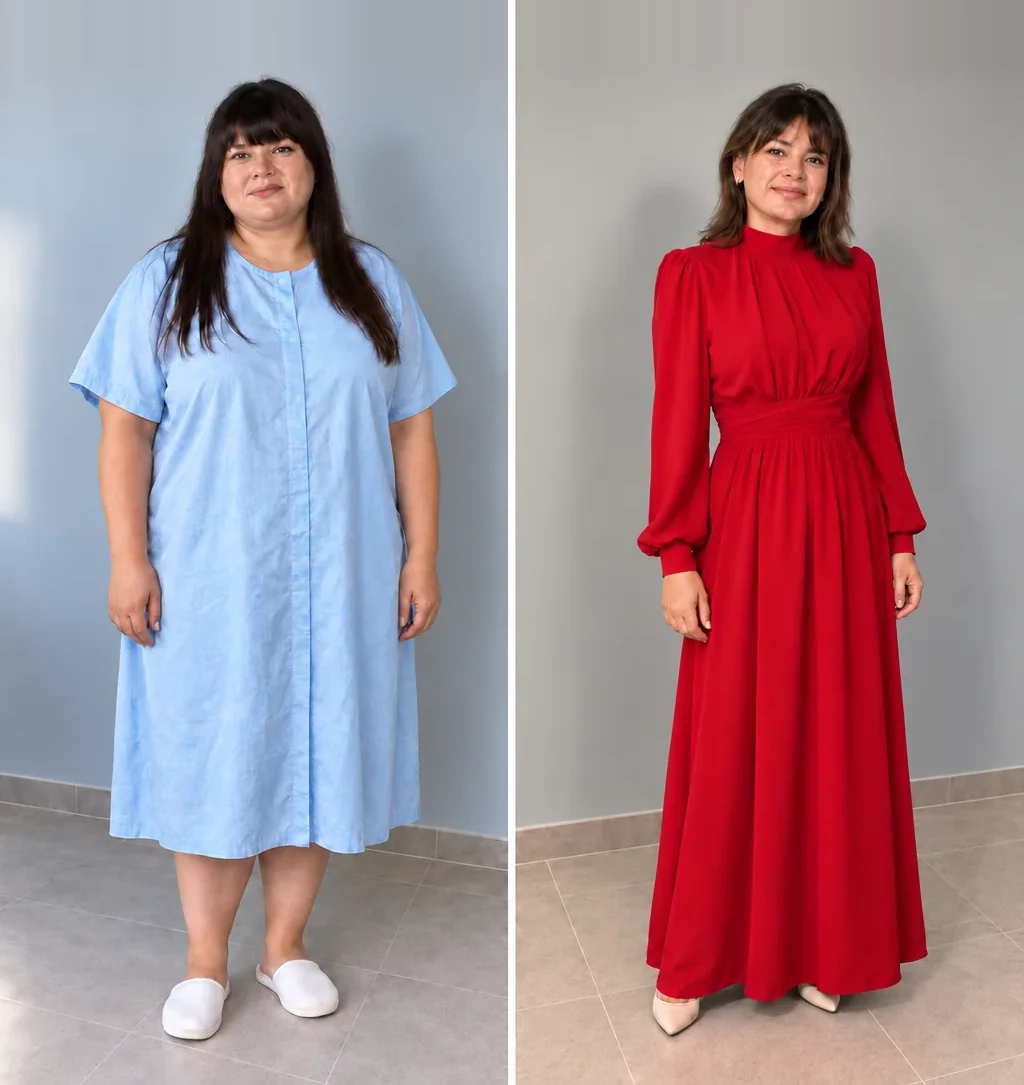 before
after
Message our coordinator
Free online consultation · Reply within 15 minutes
Message us on TelegramMessage us on WhatsAppBy messaging us, you agree to our Privacy Policy
Bariatric surgery for patients from Nice at City Medical Centre starts at €3,250 (from $3,600). The first online consultation is free; the doctor names the final price and it is fixed in the contract.
How it works · Bariatric surgery prices
Information current as of 24 October 2026
Results
These are real patients treated at the clinic.
beforeafterBariatric surgery
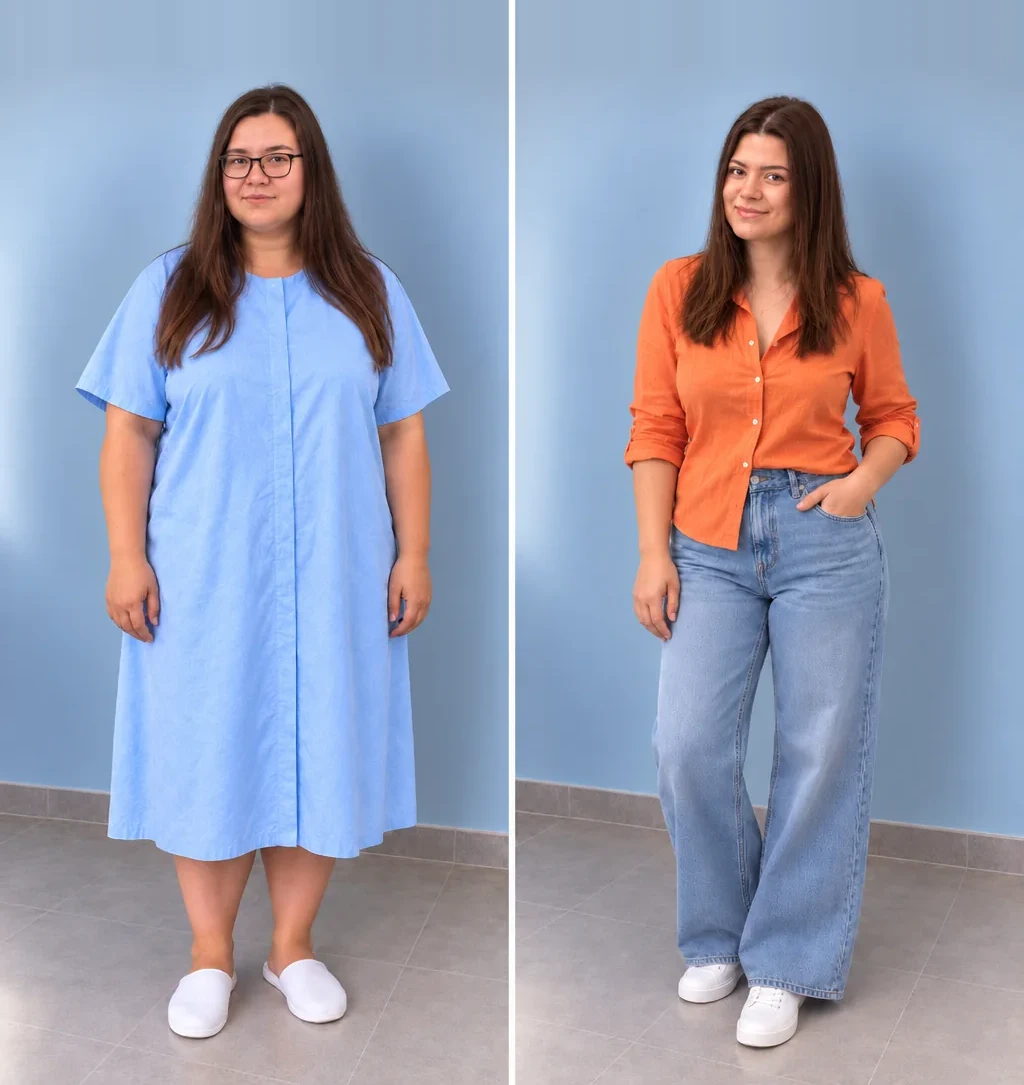 beforeafter
Bariatric surgery
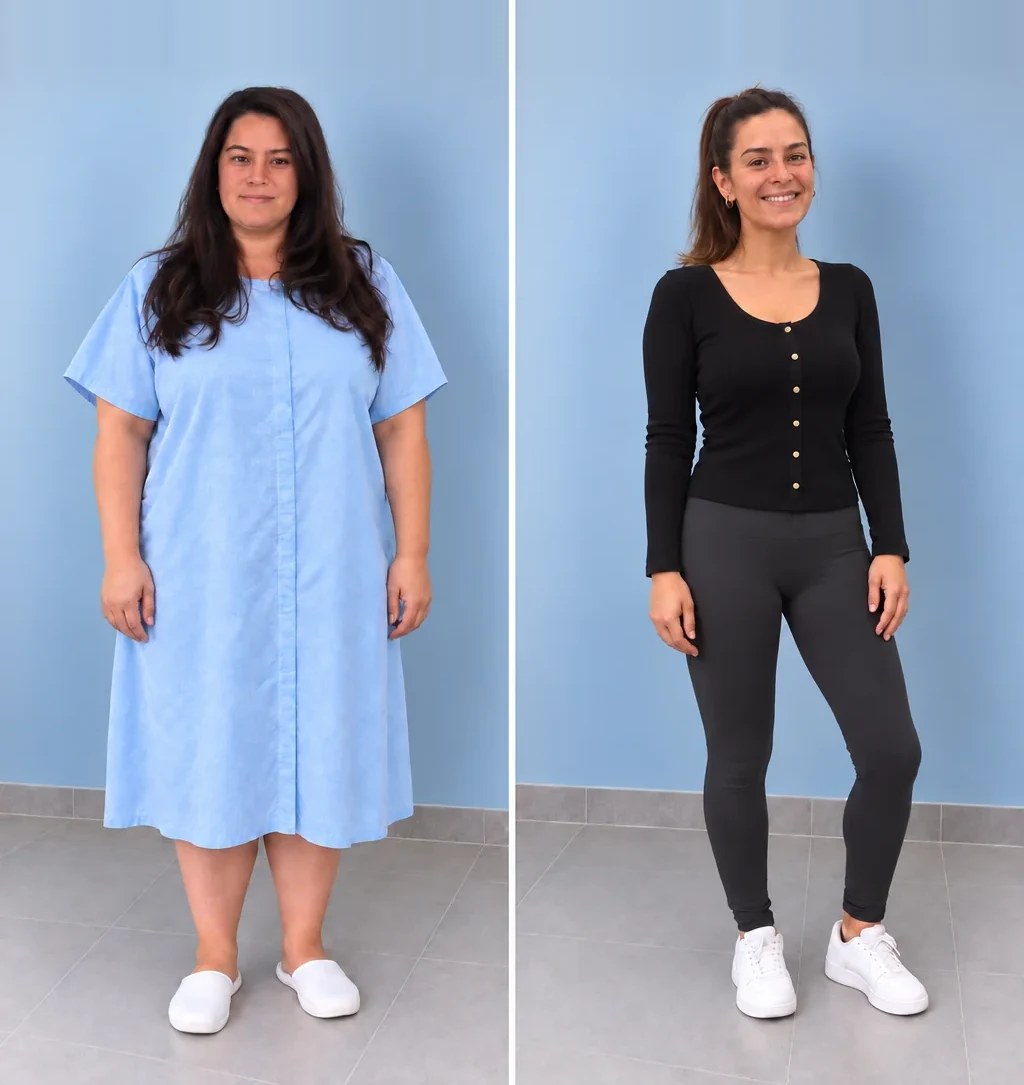 beforeafter
Bariatric surgery
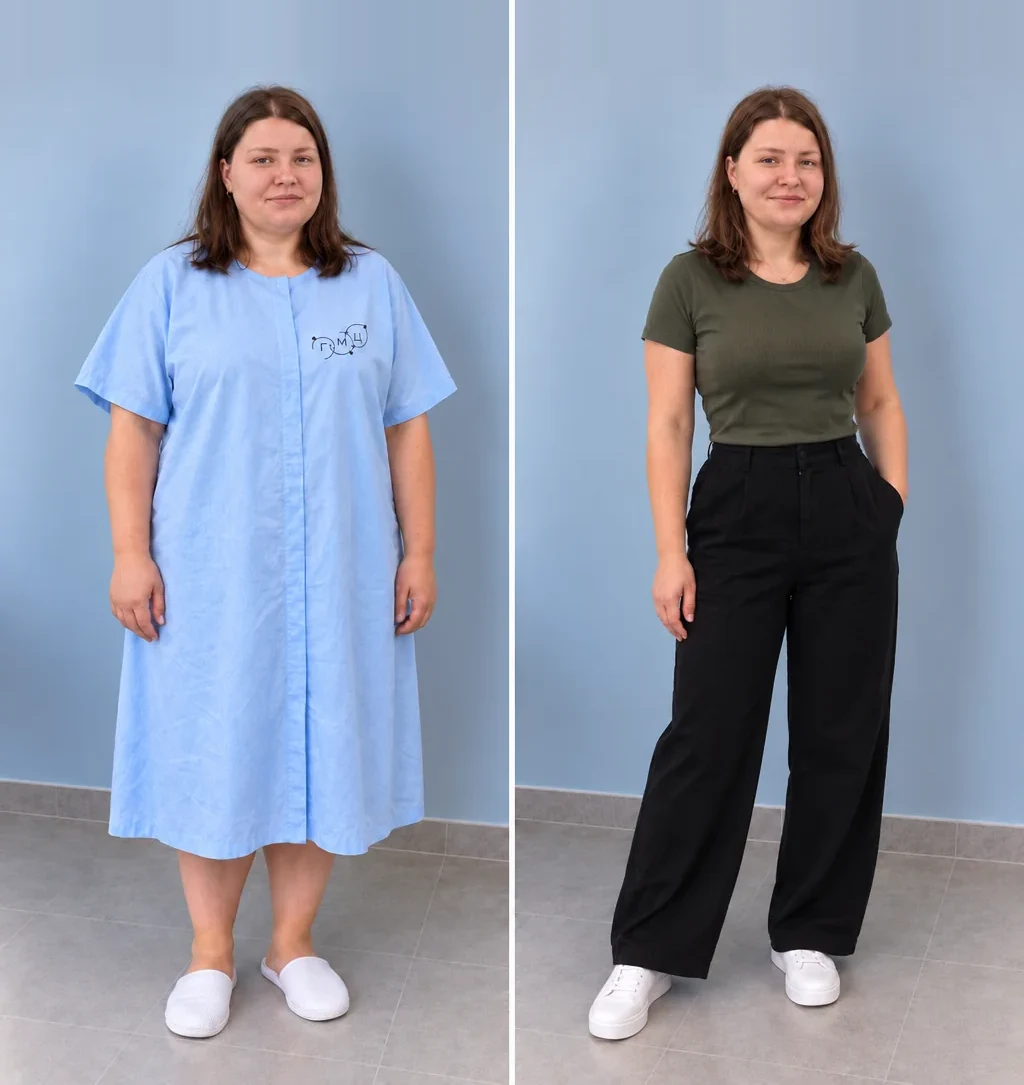 beforeafter
Bariatric surgery
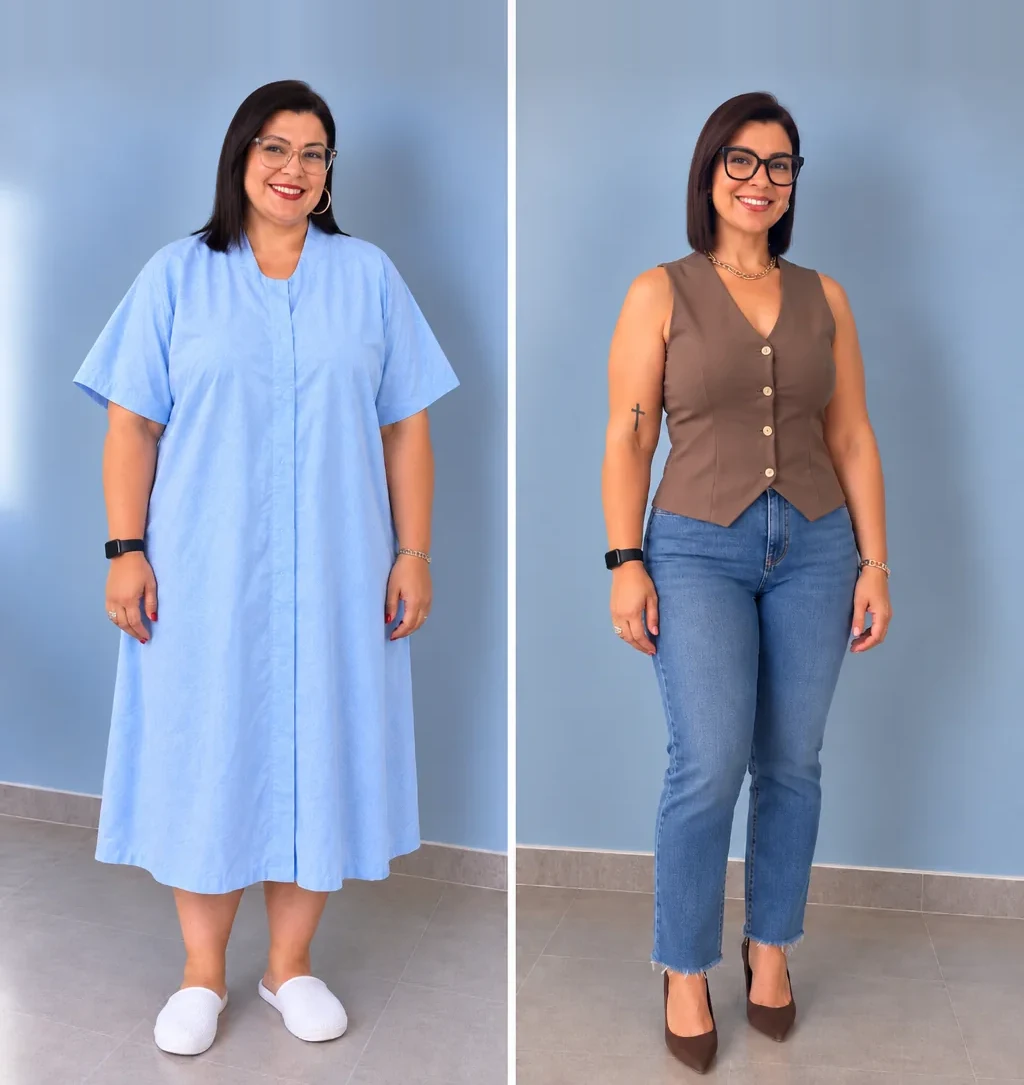 beforeafter
Bariatric surgery
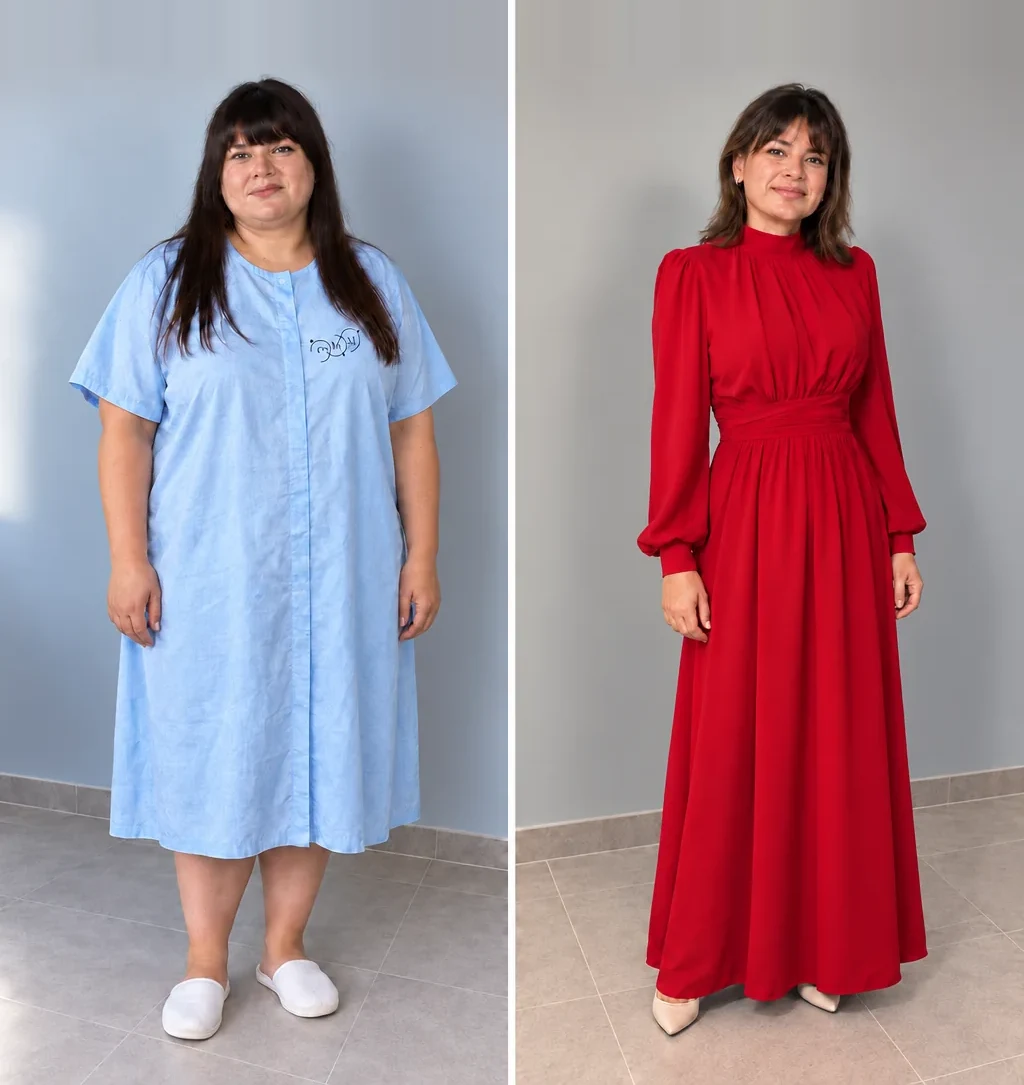 beforeafter
Bariatric surgery
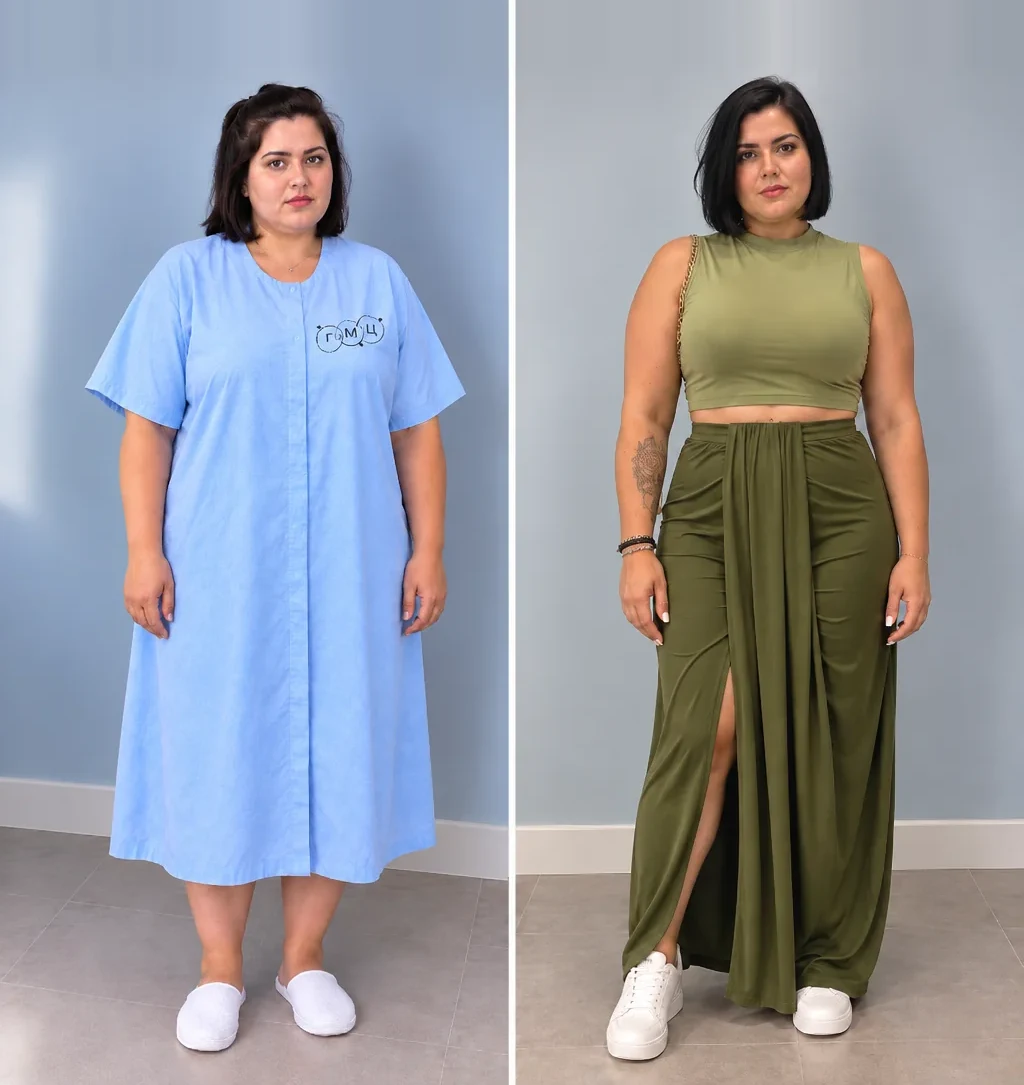 beforeafter
Bariatric surgery
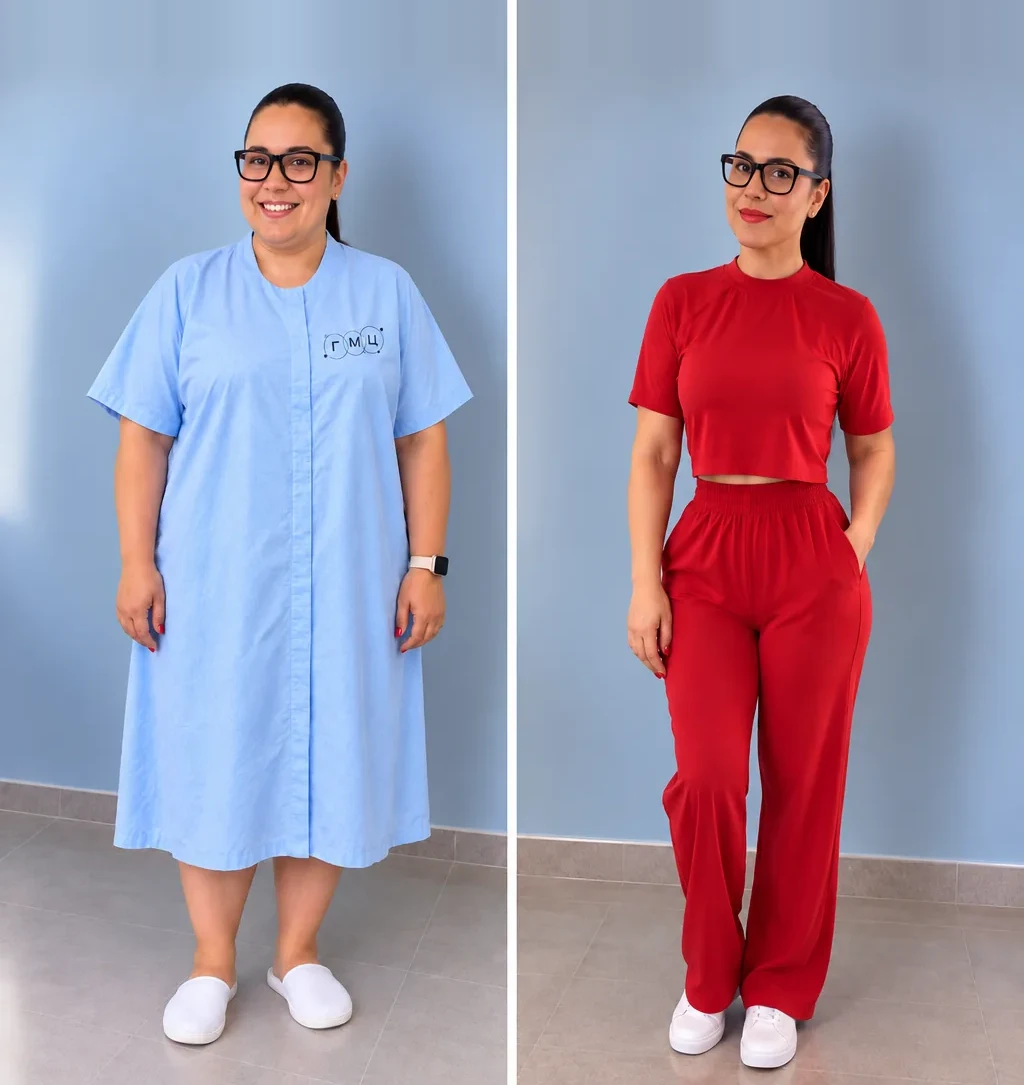 beforeafter
Bariatric surgery
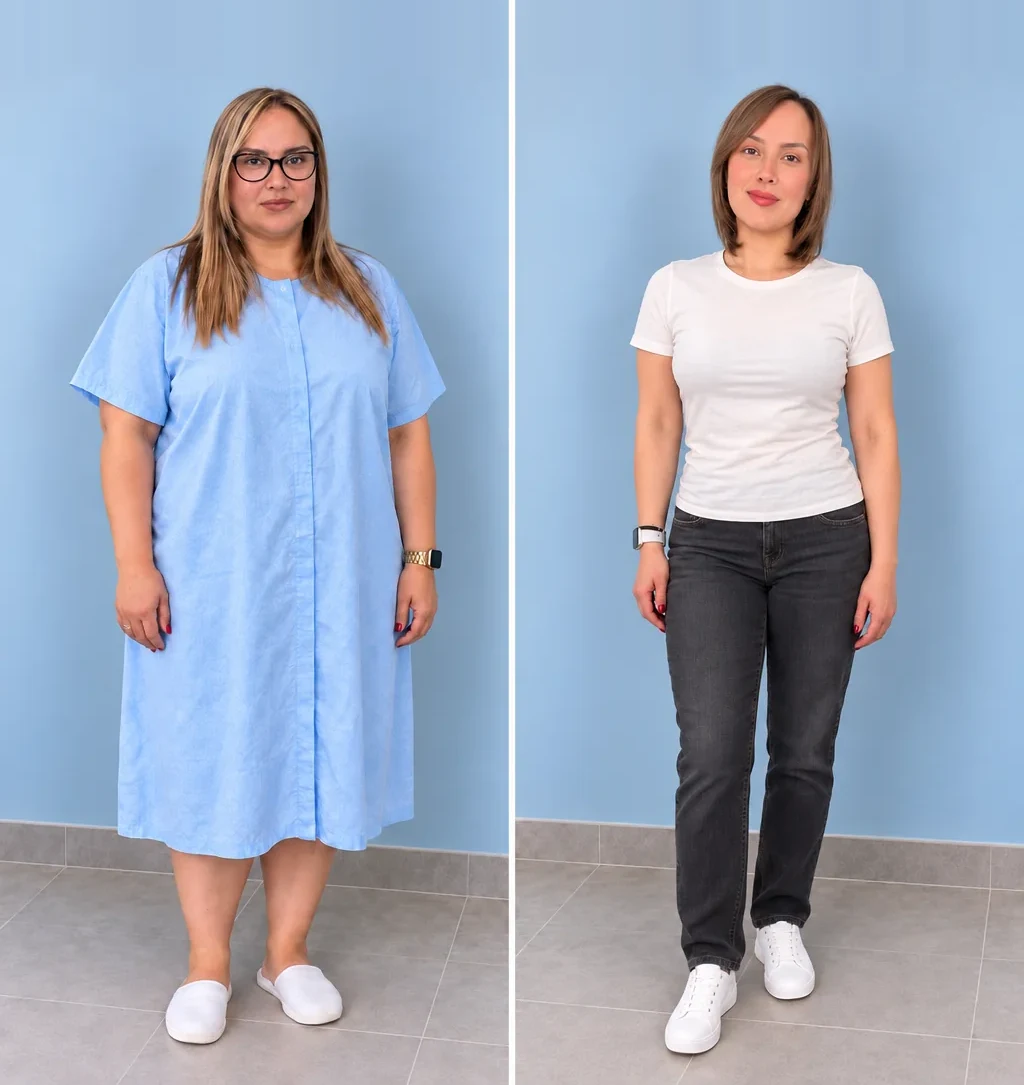 beforeafter
Bariatric surgery
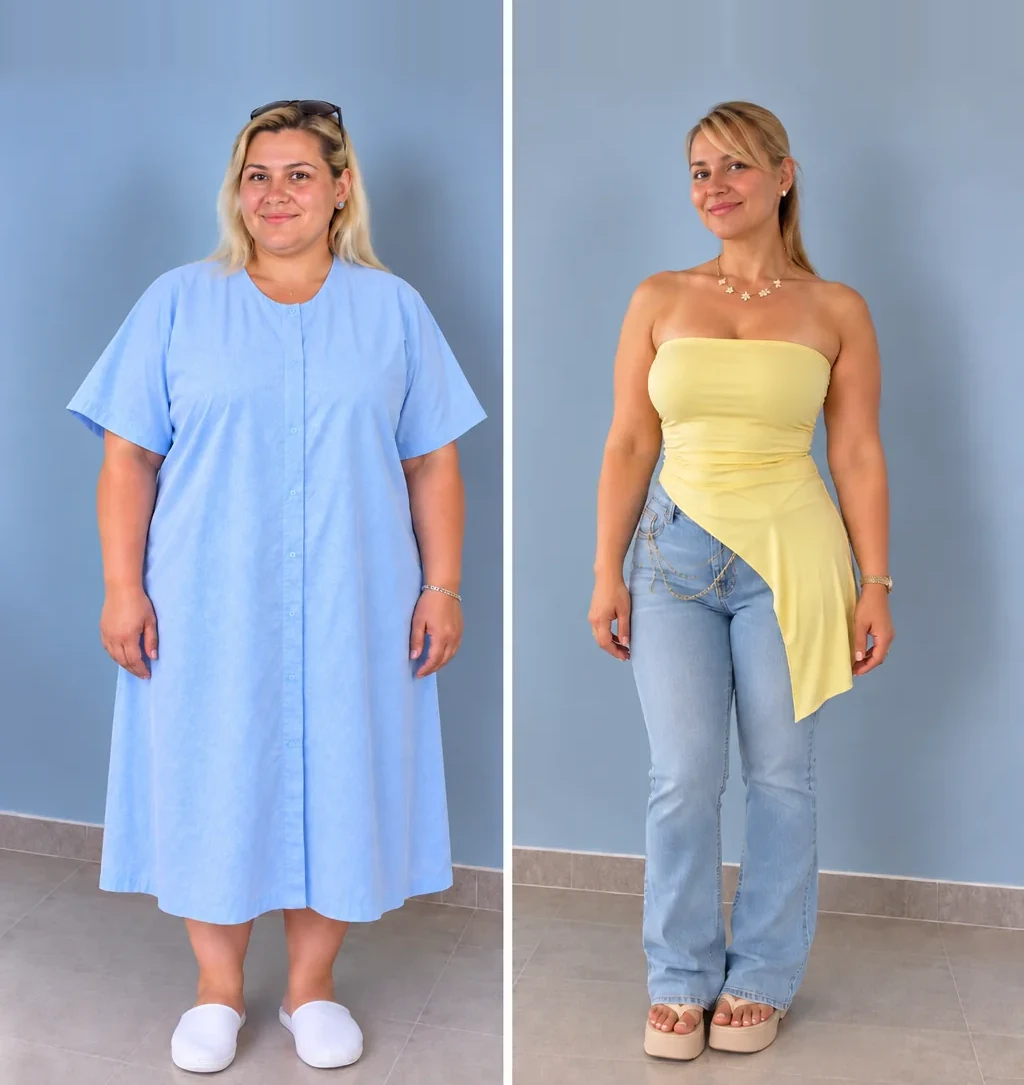 beforeafter
Bariatric surgery
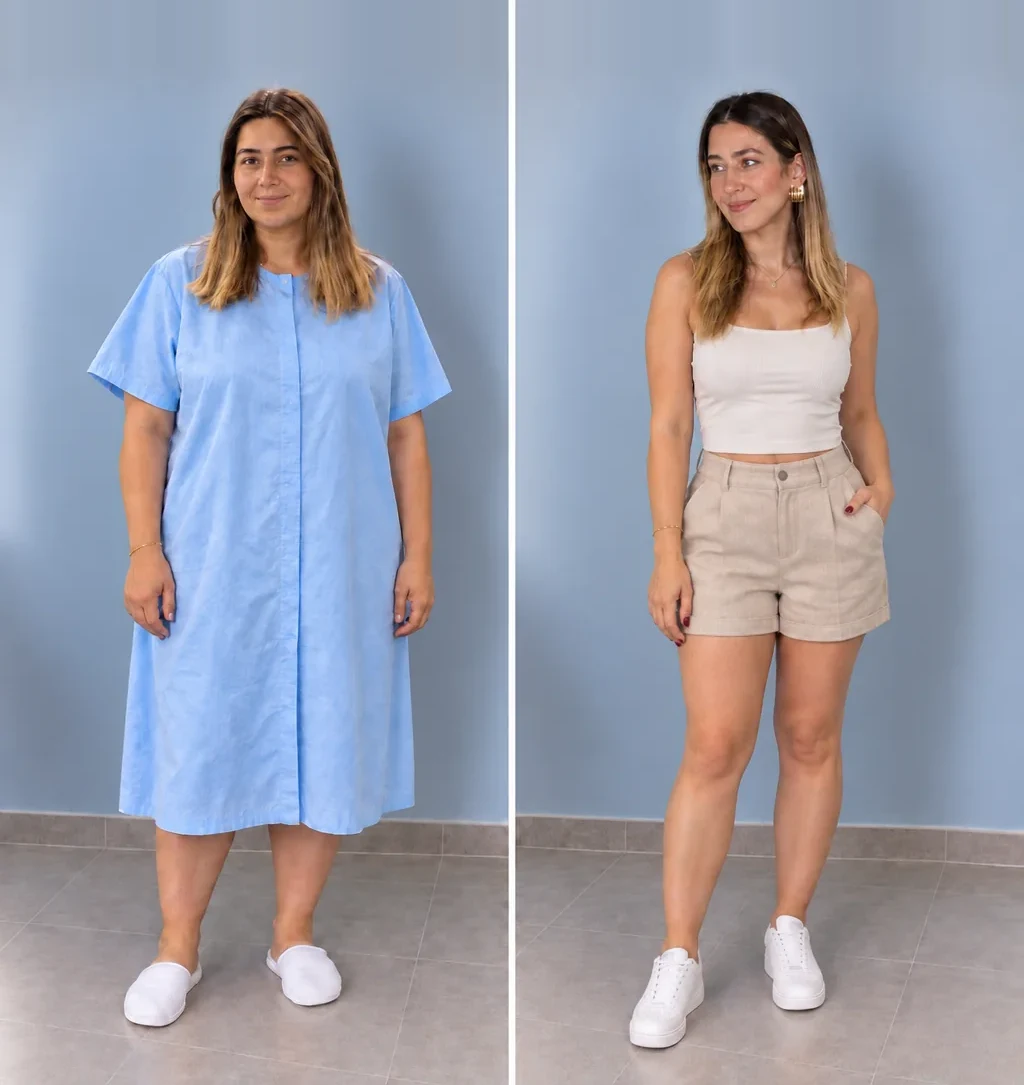 beforeafter
Bariatric surgery
Comparison
We perform two main operations: sleeve gastrectomy and gastric bypass. Compare how they work, what they are for and when they are indicated to choose your method with confidence.
Less stomach volume
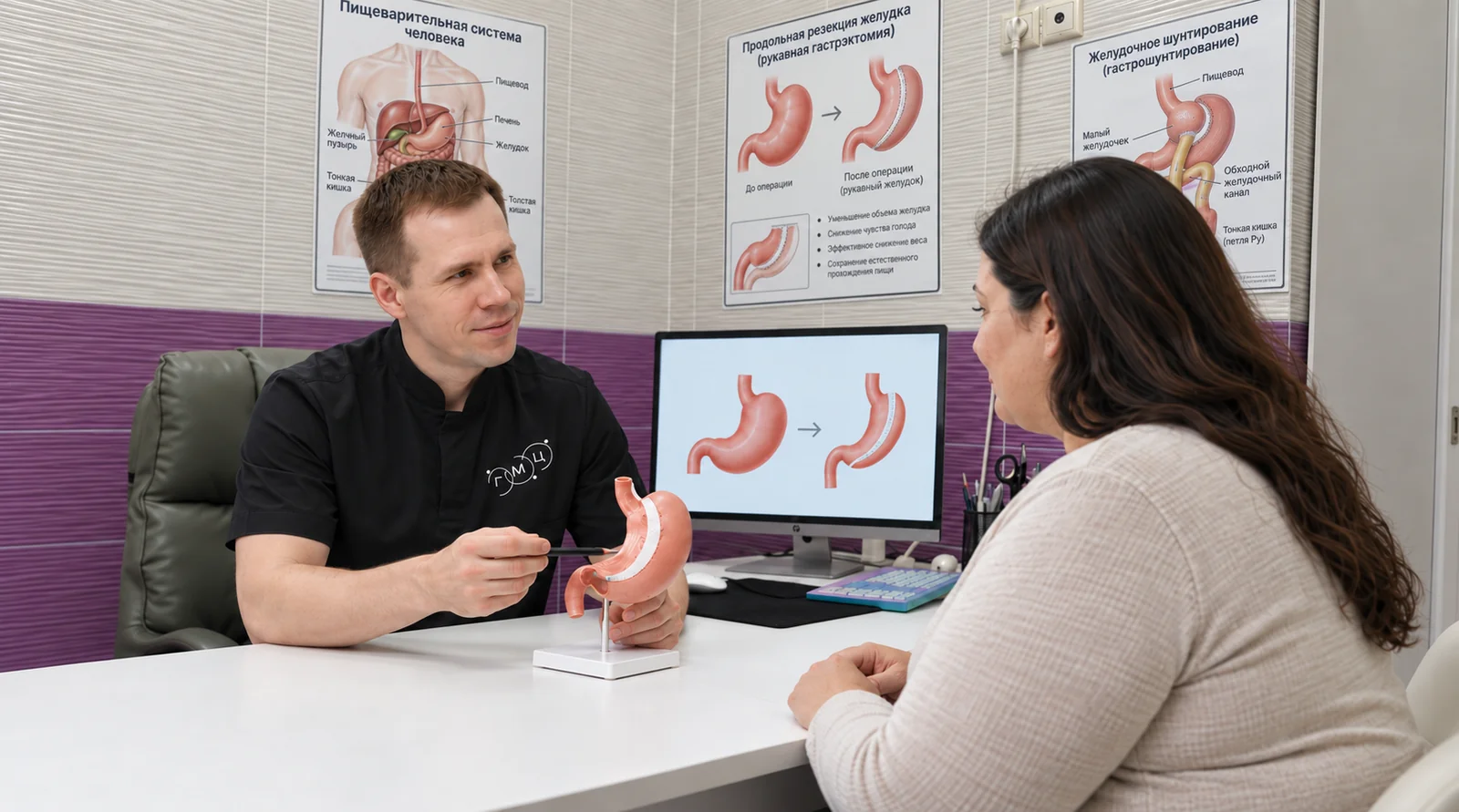
Discounted price
$3,600 $4,800
Reducing the stomach volume and rerouting food
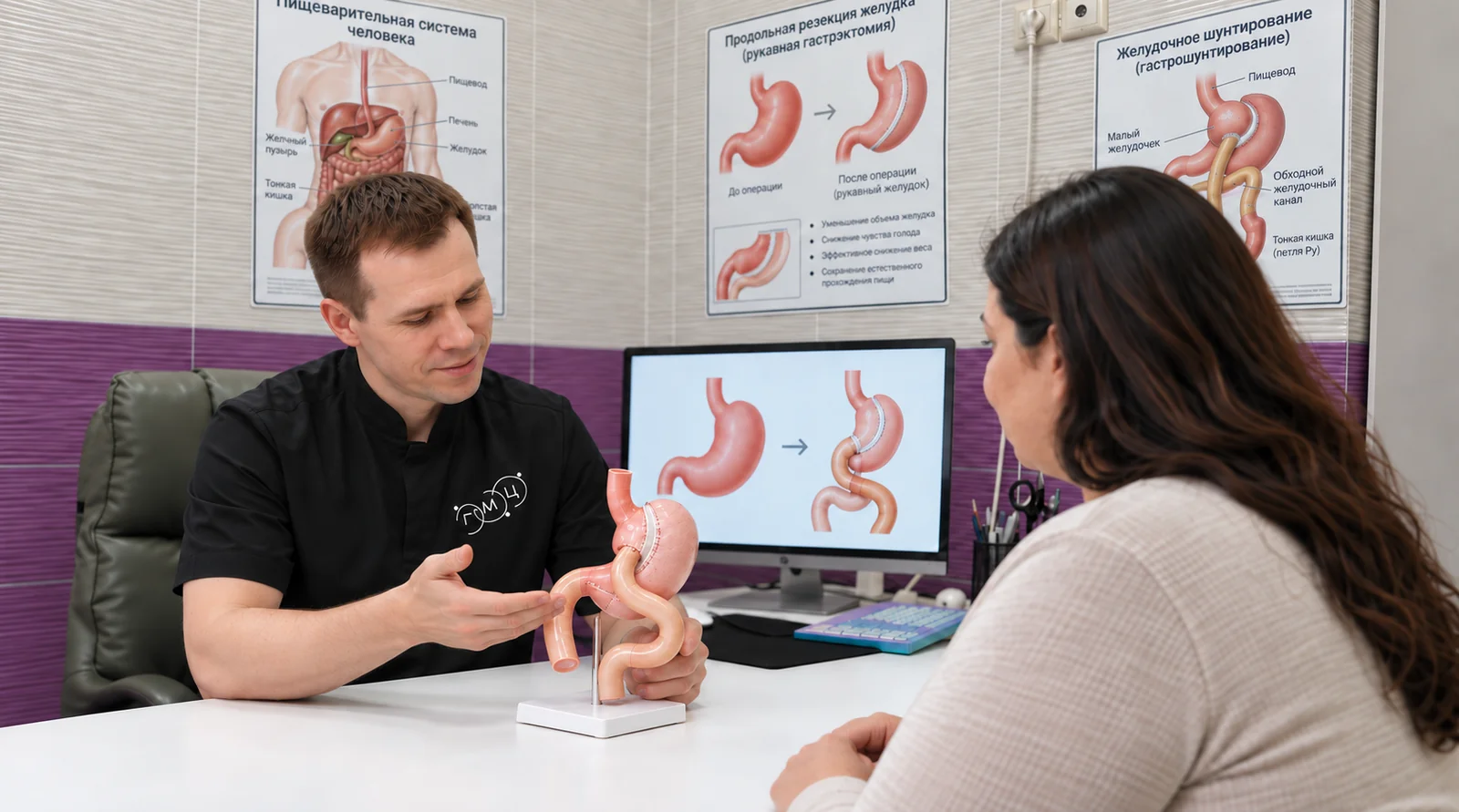
Discounted price
$4,000 $5,200
Treat the recovery times and benefits here as guidance averaged by method: how extensive the surgery is and how you recover depend on your own anatomy and features, and the surgeon confirms this at the consultation.
Book a consultationInside the clinic
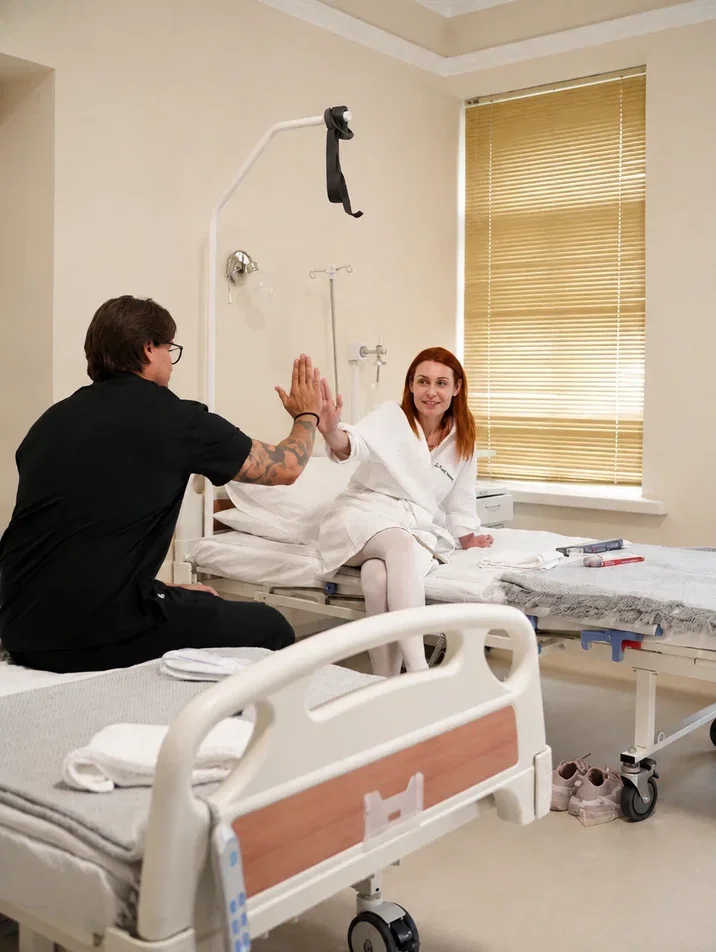
Modern technology, cosy rooms and personal attention for every patient
We will answer your questions and find a convenient time for a consultation
By messaging us, you agree to our Privacy Policy
Get a consultationOnly after a consultation and check-up is the decision on surgery made, jointly with the surgeon.
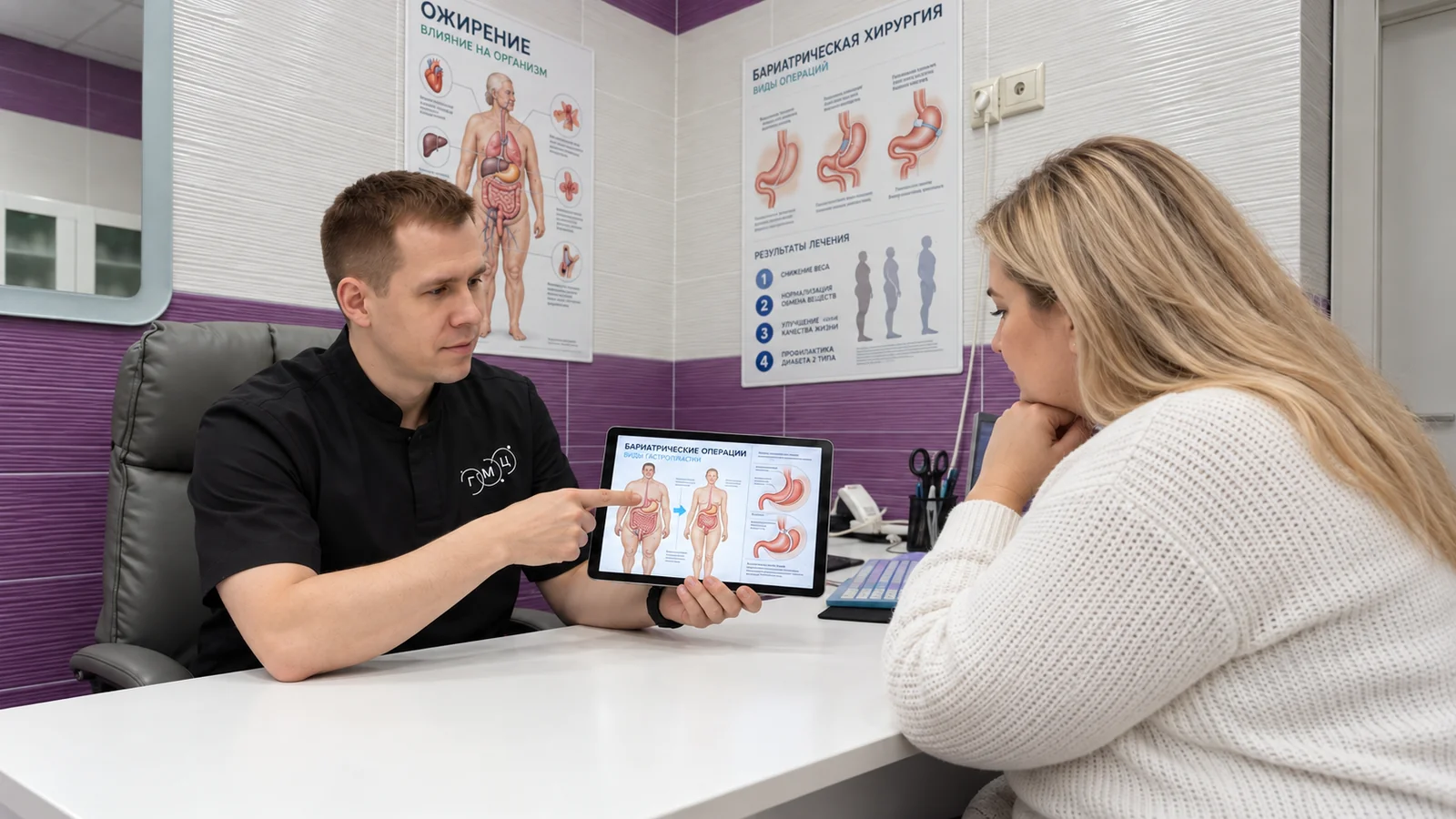
Not sure which column you belong to?
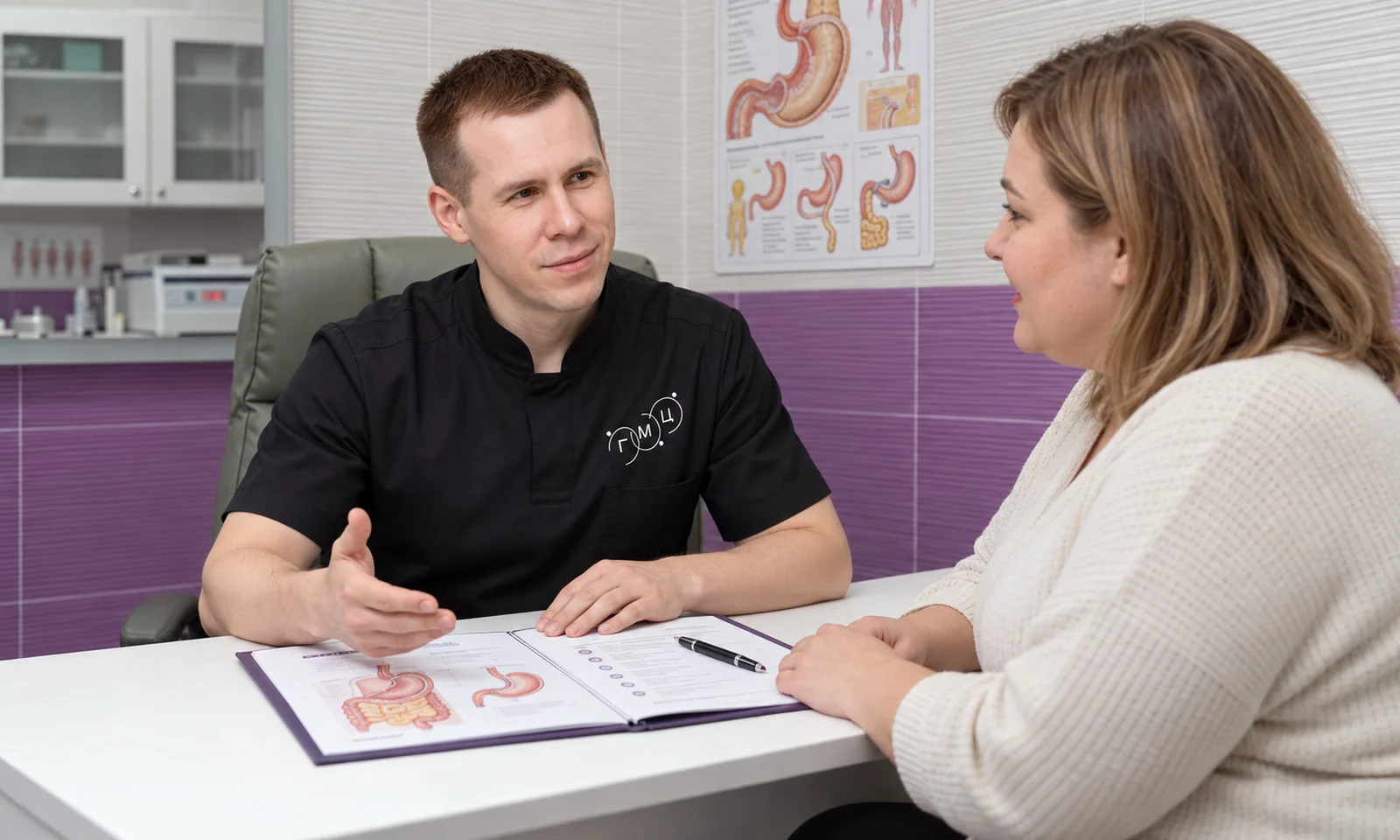
Drop us a line on Telegram — our coordinator will tell you whether you are a candidate for bariatric surgery. The surgeon consultation is free, with no obligation to have surgery.
Find out if it suits me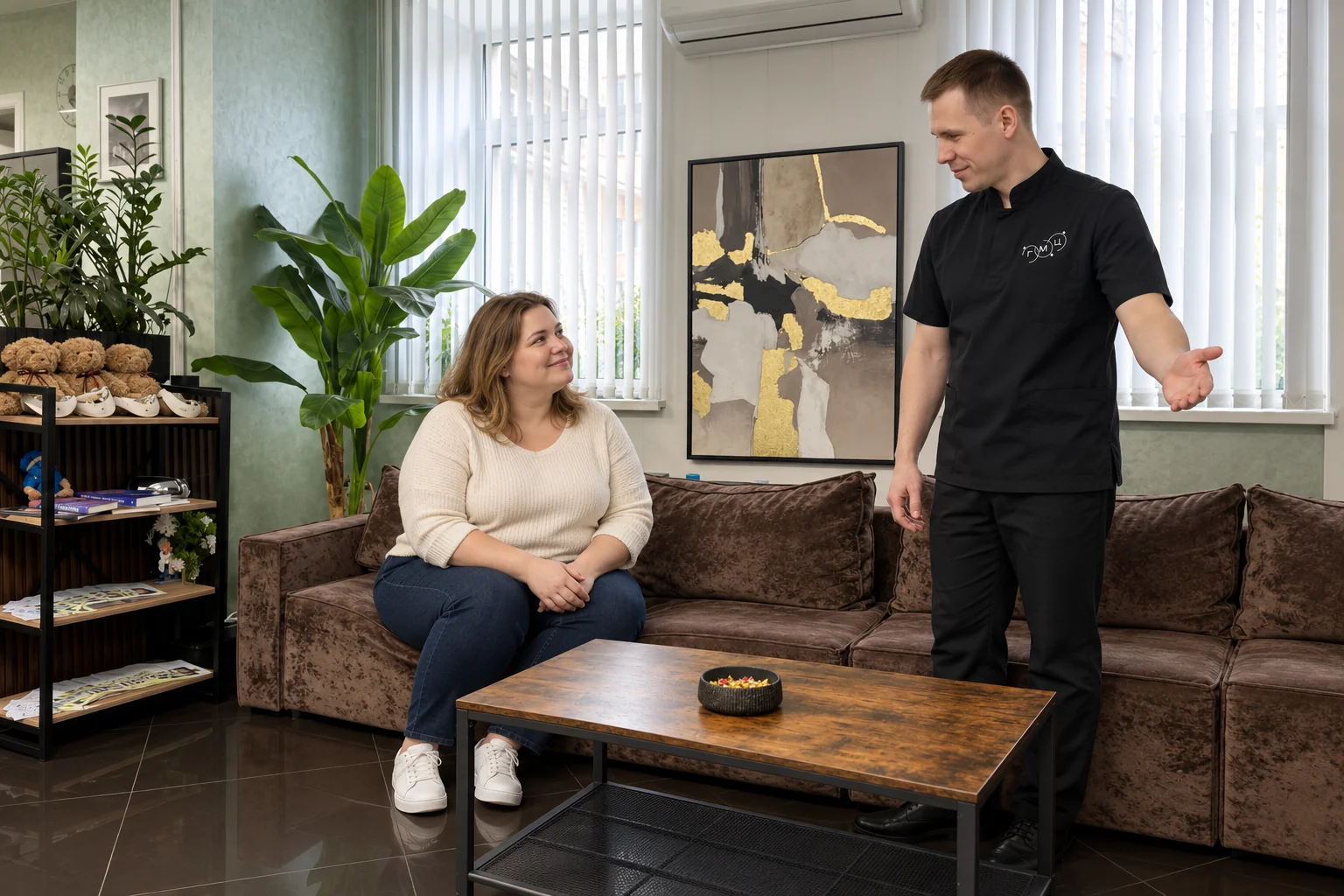
Prices
Your cost is confirmed at the consultation once the plan is ready and written into the contract.
Discounted price
Less stomach volume
$3,600$4,800
Discounted price
Weight loss and a new route for food
$4,000$5,200
Free
The surgeon examines you and draws up a treatment plan

Free
the cost of the operation is named
and recorded in the contract
The doctor reviews your health and goals and decides on the right bariatric surgery method. At the consultation the cost is named, and the contract fixes it.
Message our coordinator
Free online consultation · Reply within 15 minutes
Message us on TelegramMessage us on WhatsAppBy messaging us, you agree to our Privacy Policy

price
A single package: preparation through 12 months of support, no extra charges.From preparation for surgery
to support for 12 months.
How it works
An agreed plan of treatment, in-hospital monitoring and a year of support.
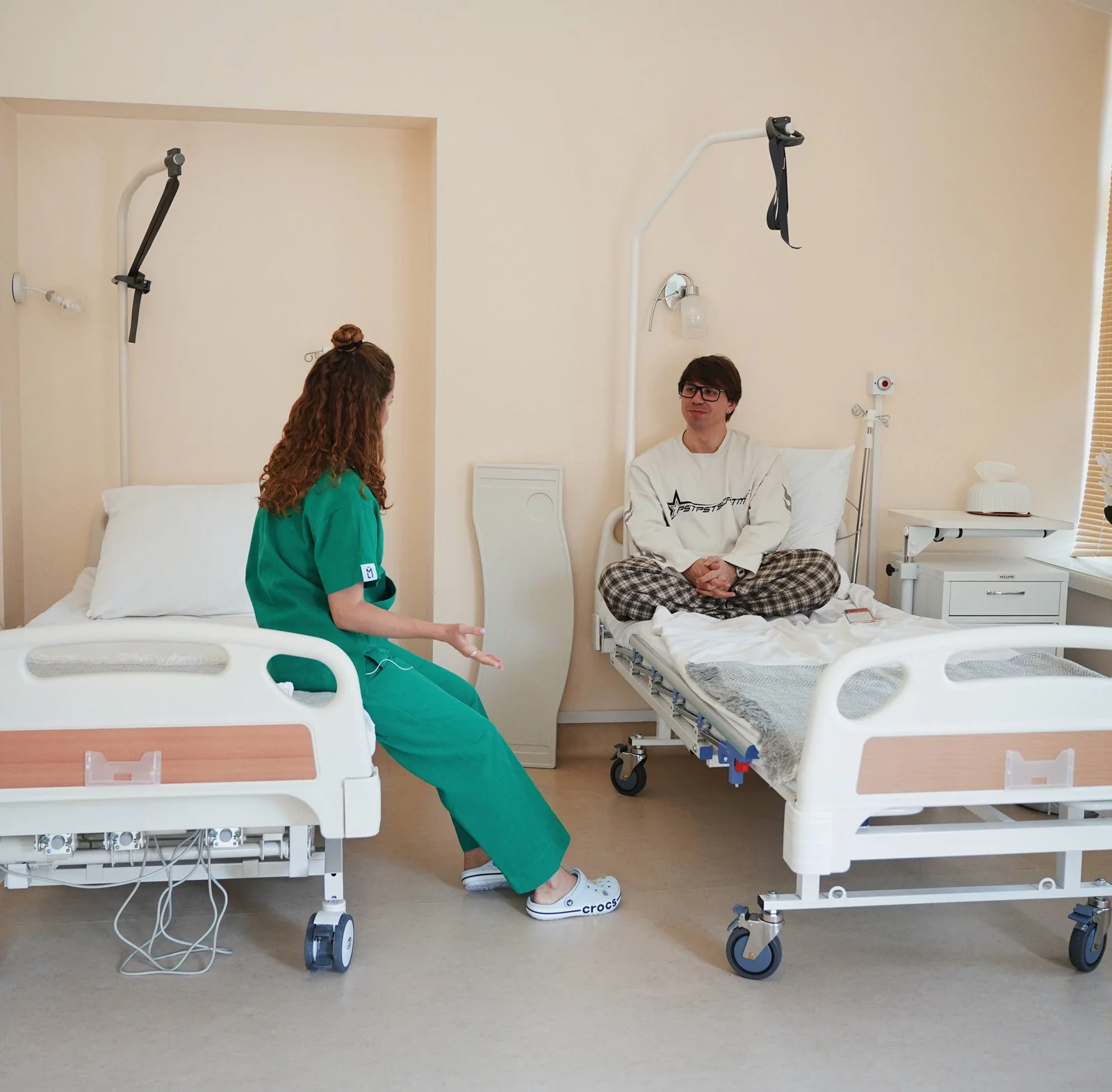
1Assessing your health and discussing your goals, the doctor orders the tests needed to select the appropriate bariatric method.
2A surgery date is reserved for you, with the deposit paid by card at the clinic or online by bank transfer. The terms are recorded in the contract for medical services
 3
Before the operation you have blood and urine tests, an ECG, an ultrasound and a gastroscopy, and see specialists. The doctor gives you the exact list at the consultation.
 4
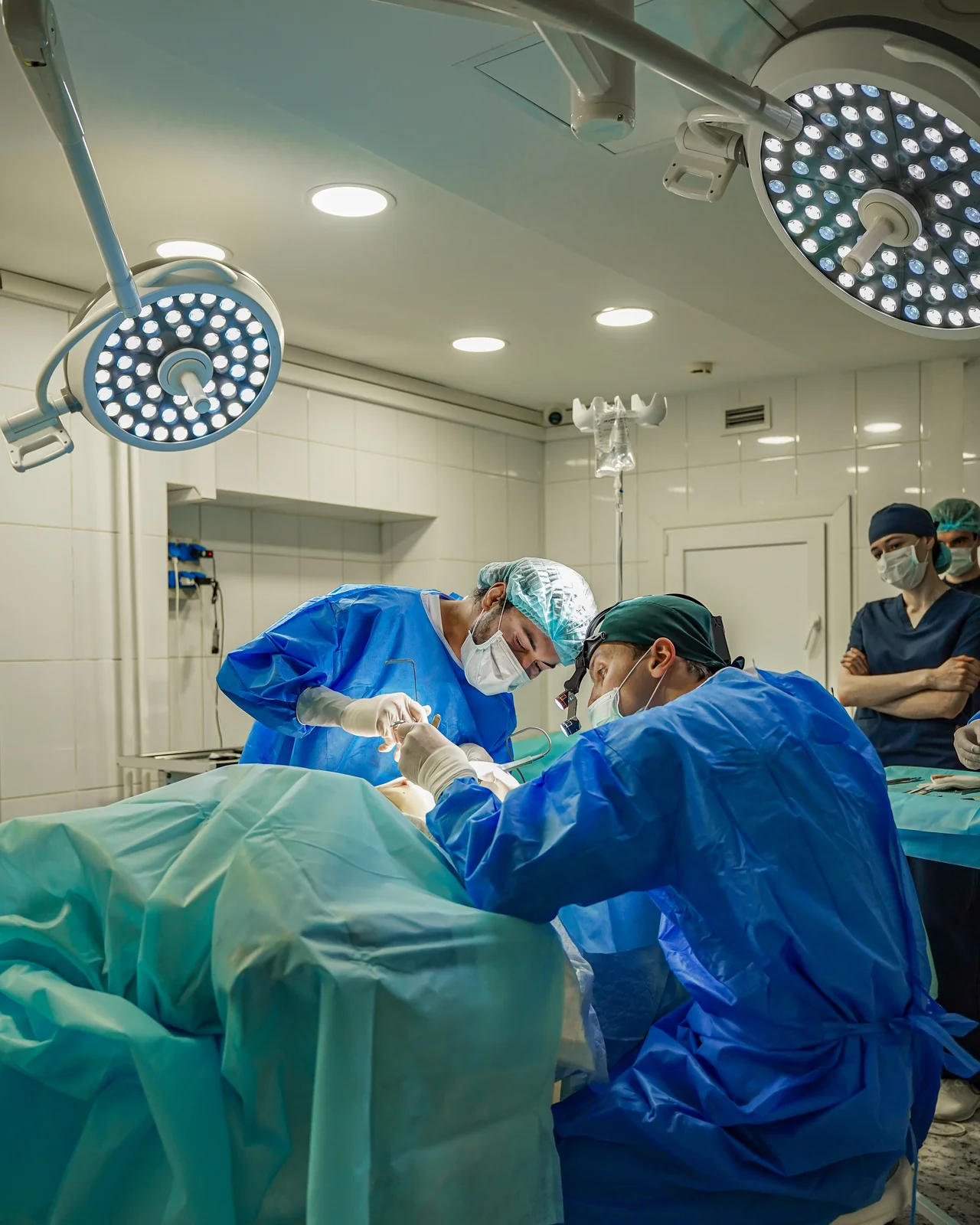
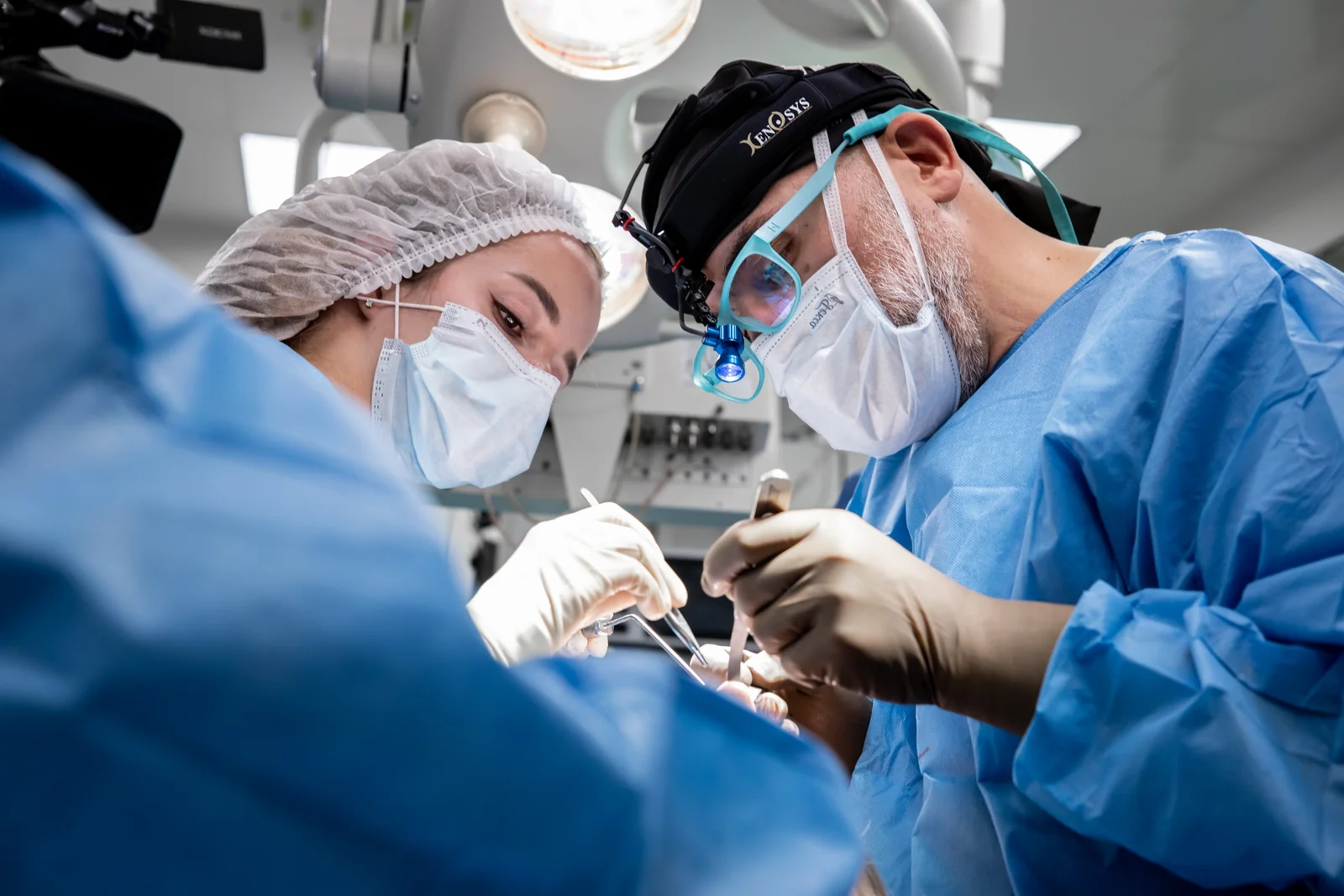
Under general anaesthesia, the surgeon carries out the bariatric operation using the chosen method. After surgery the medical team monitors the patient.
 5
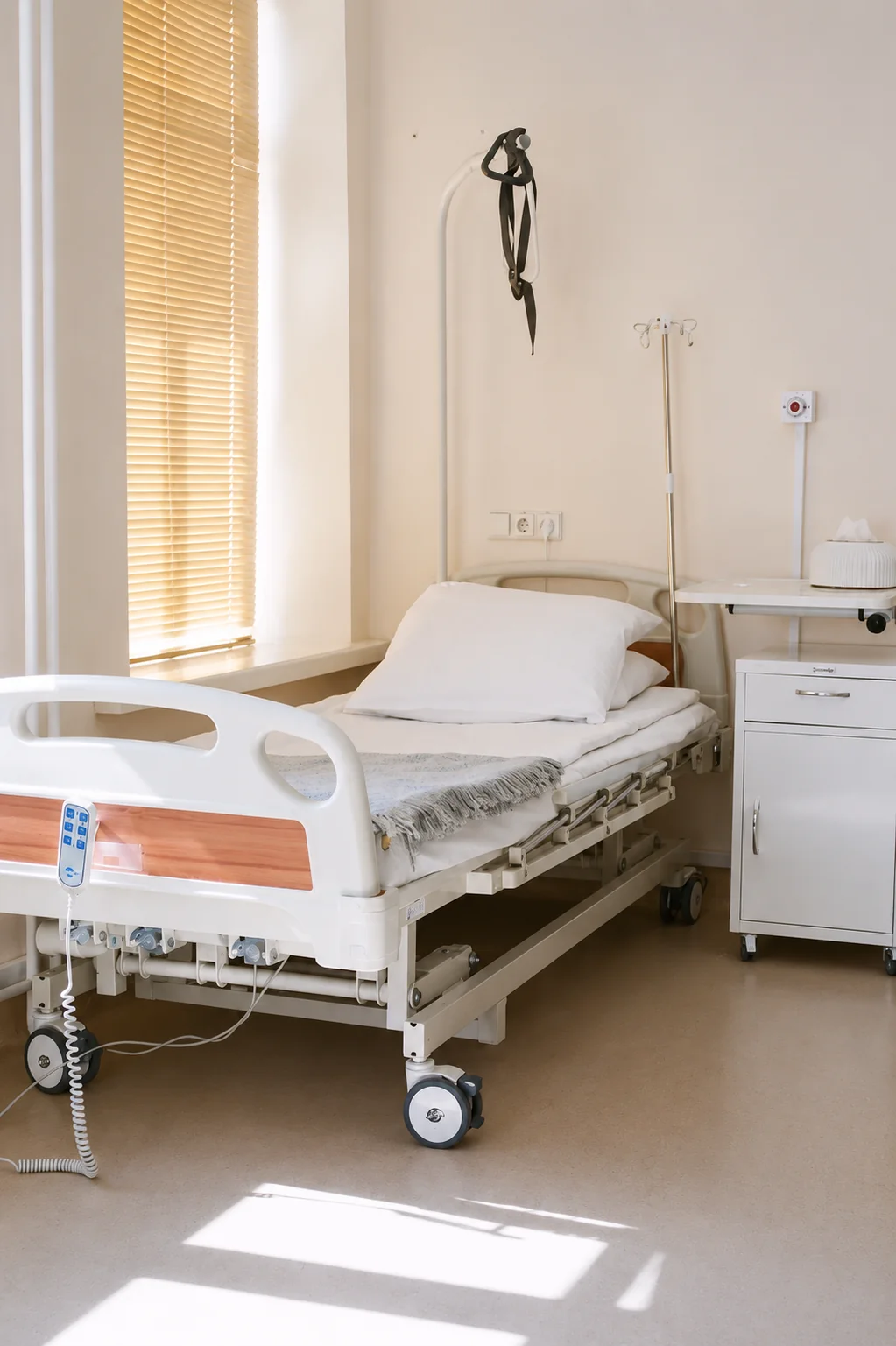
Once the operation is over, you stay in hospital supervised by doctors. Depending on its complexity and how you feel, this lasts from 1–3 to 4–5 days.
 6
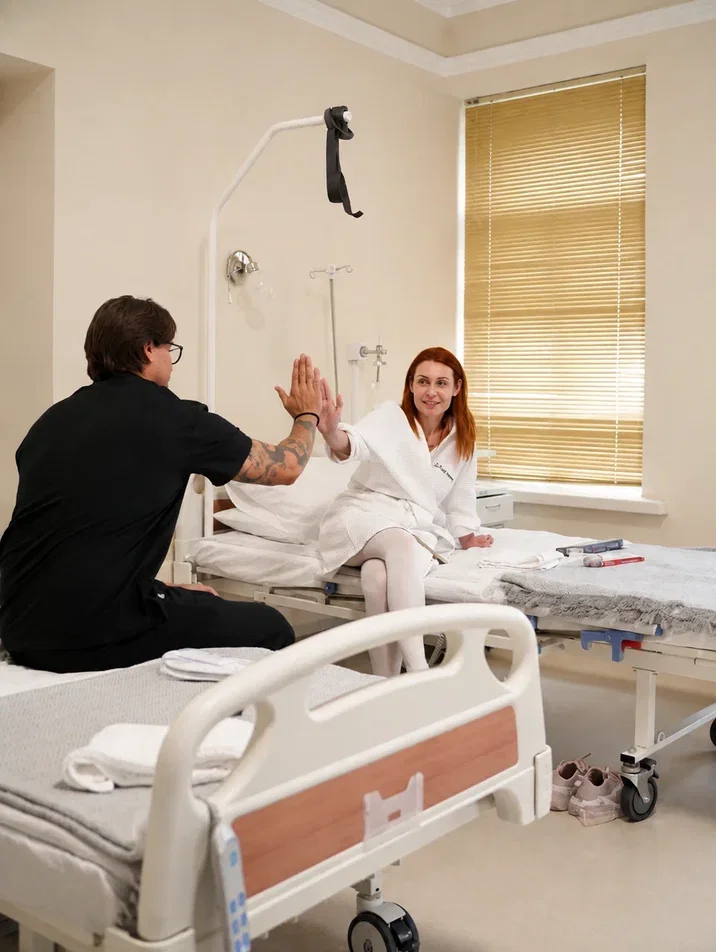
You leave with advice on diet and recovery. Scheduled check-ups then track how you feel, your weight and your test results, and the clinic team stays with you for a year.
At the consultation the doctor makes a plan and tells you how the surgery will go
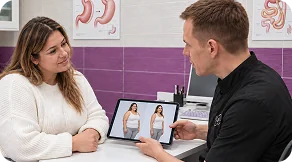
There is no fee for the consultation, is held before surgery and carries no obligation.
Book a consultationDoctors
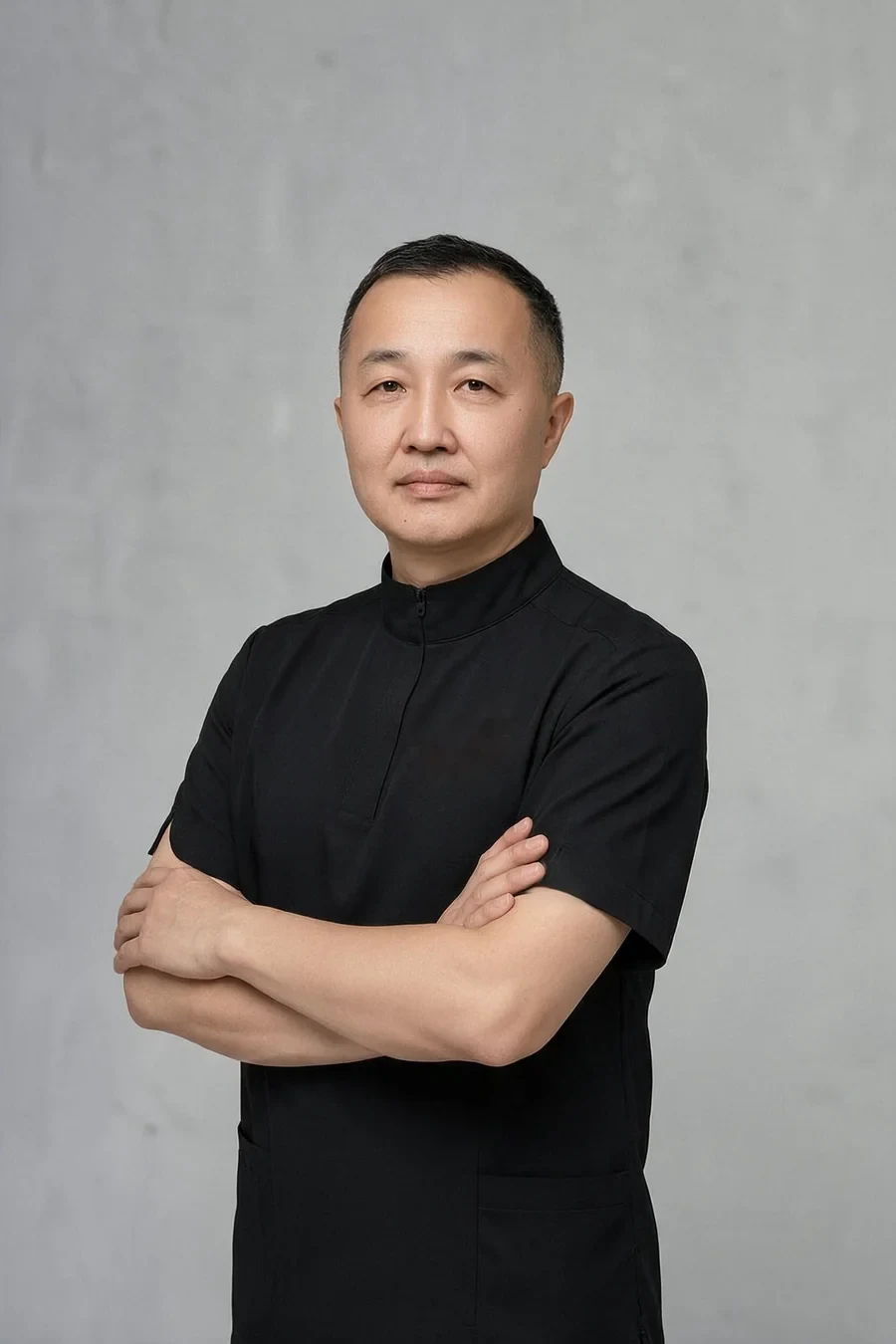
27 years of experience
Head bariatric surgeon
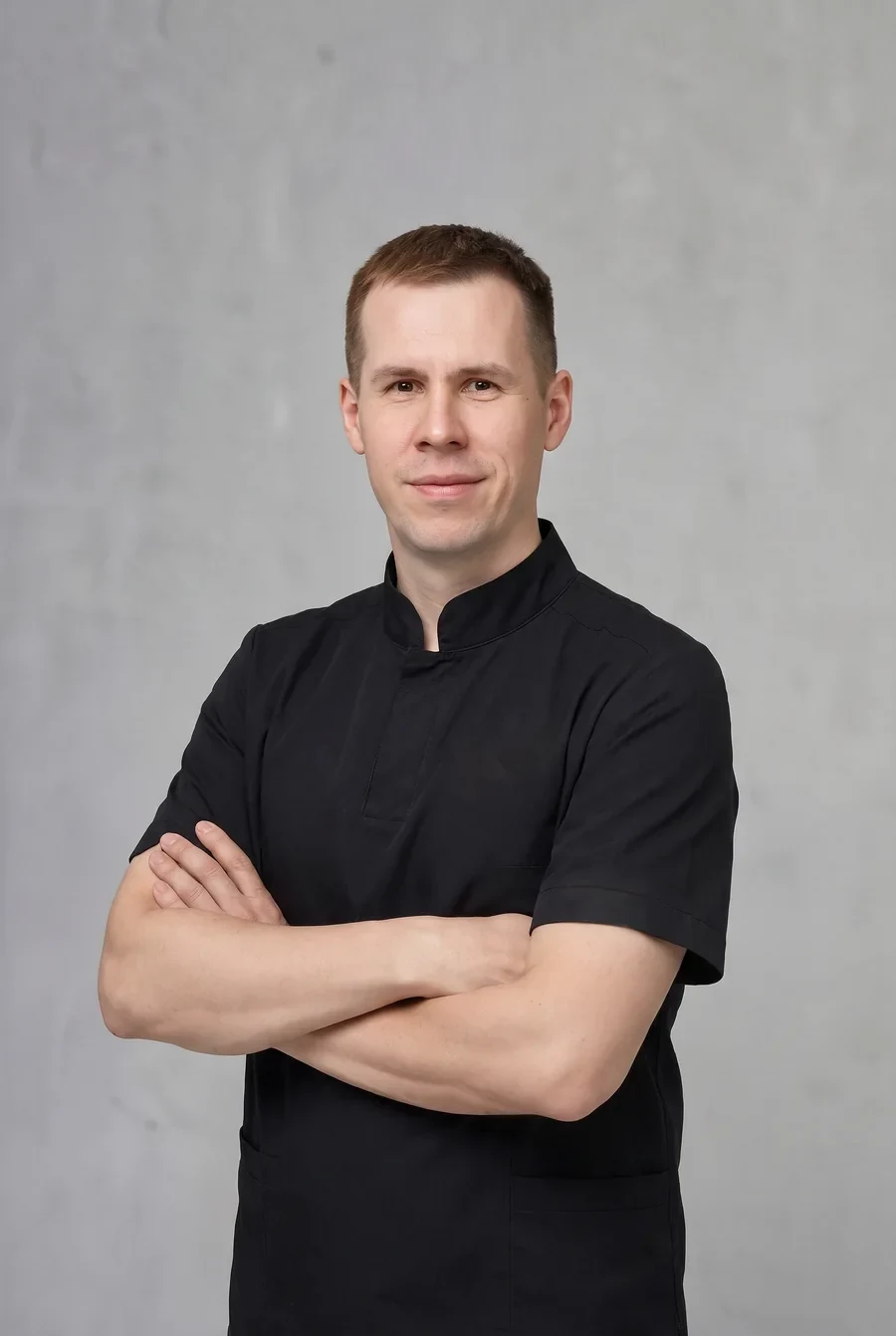
9 years of experience
Bariatric surgeon
Surgical oncologist
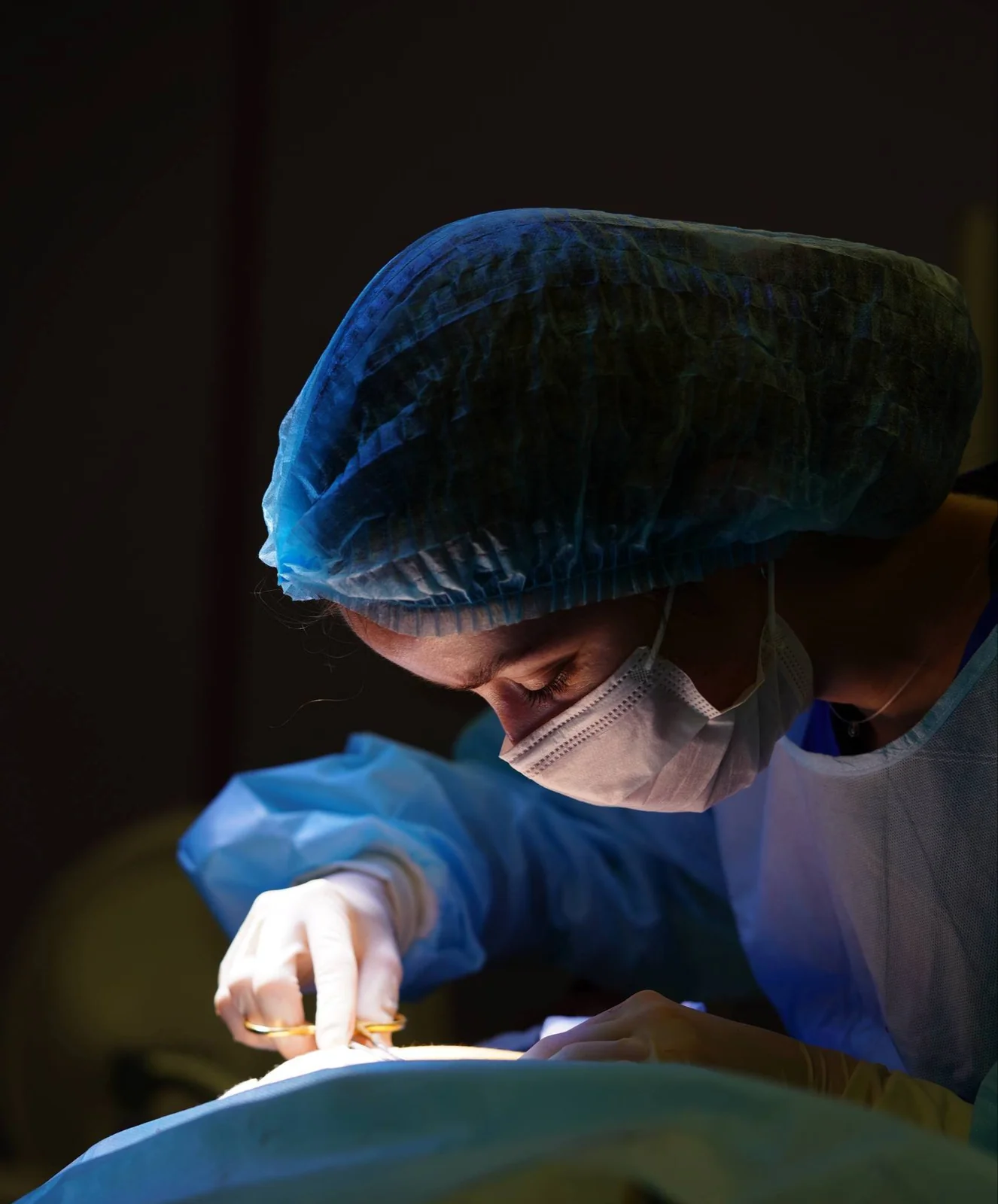
One surgeon operates and follows you all the way, from the first consultation to the result.
The first consultation is with our patient care manager: they calculate your BMI, explain the methods and book you in with the surgeon. Free of charge.
Book a consultationCoordinators
Support at every step of the way

The person you reach first at the clinic, from your first message up to the consultation
Patient care specialist
Answers your questions before the first consultation and helps select a date that works for you

Supports you before and during your stay — from booking through to discharge
Patient care specialist
Helps with your preparation for surgery and stays in touch throughout your clinic stay

With you through recovery — from discharge to your final check-up
Patient care specialist
Remains in touch during recovery and books your follow-up appointments with the surgeon
Advantages
We pick the best method for your health, lifestyle and goals, and our team is with you all the way.
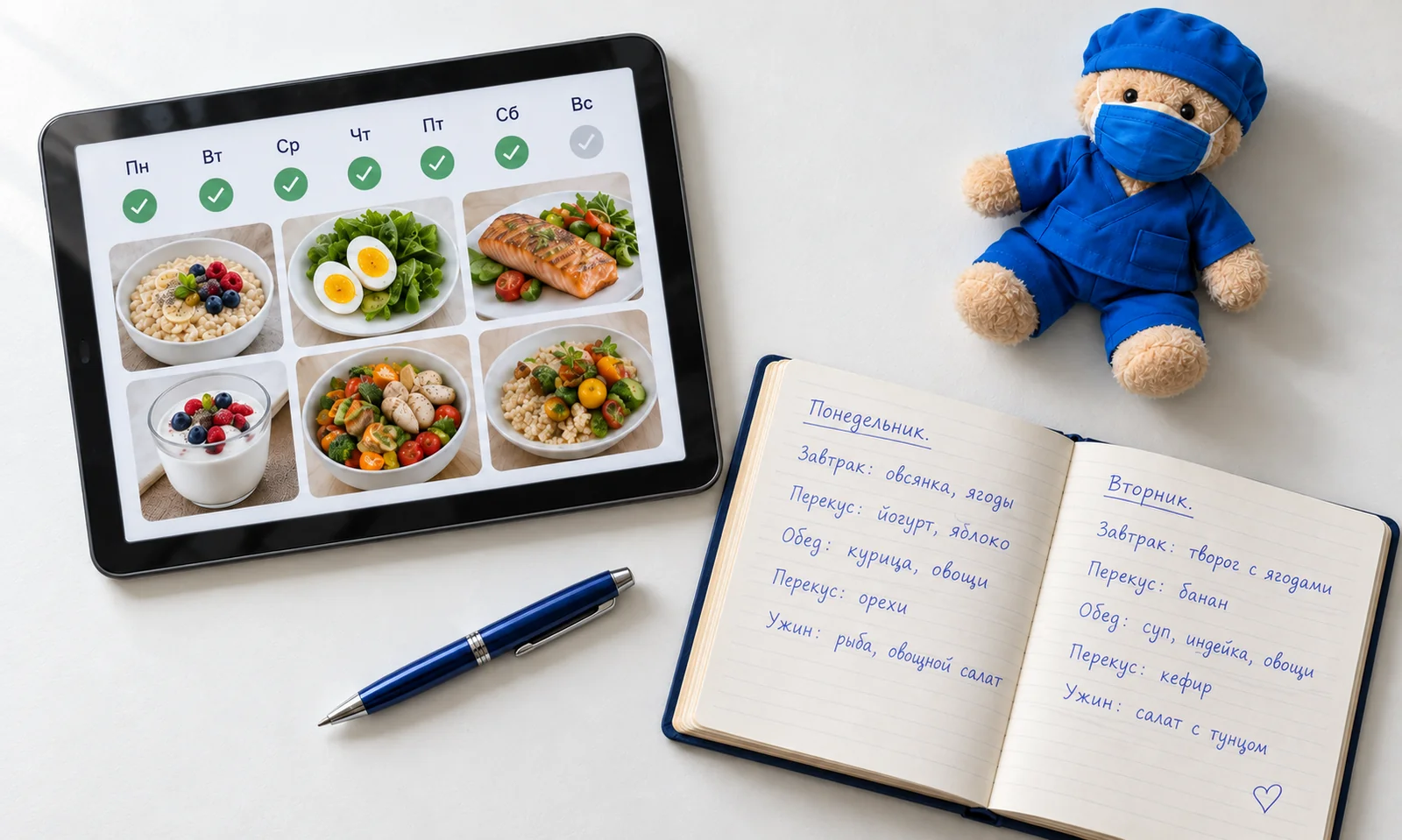
We help you adapt to new eating habits, track your results and keep them.
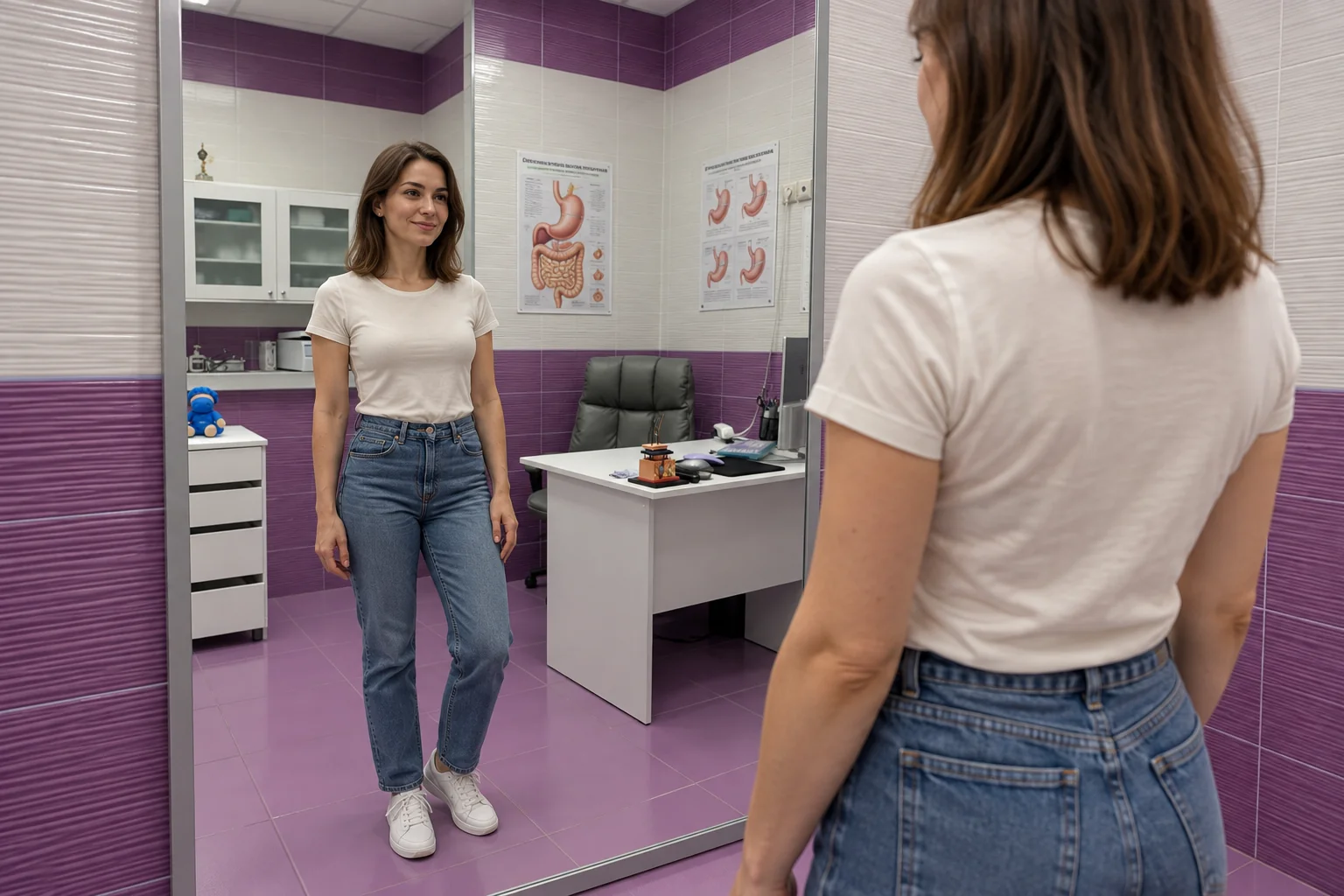
A higher quality of life, better well-being and steady weight loss.

We value your time: we are open 24/7, booking is easy and the approach is personal — we adapt to your pace.
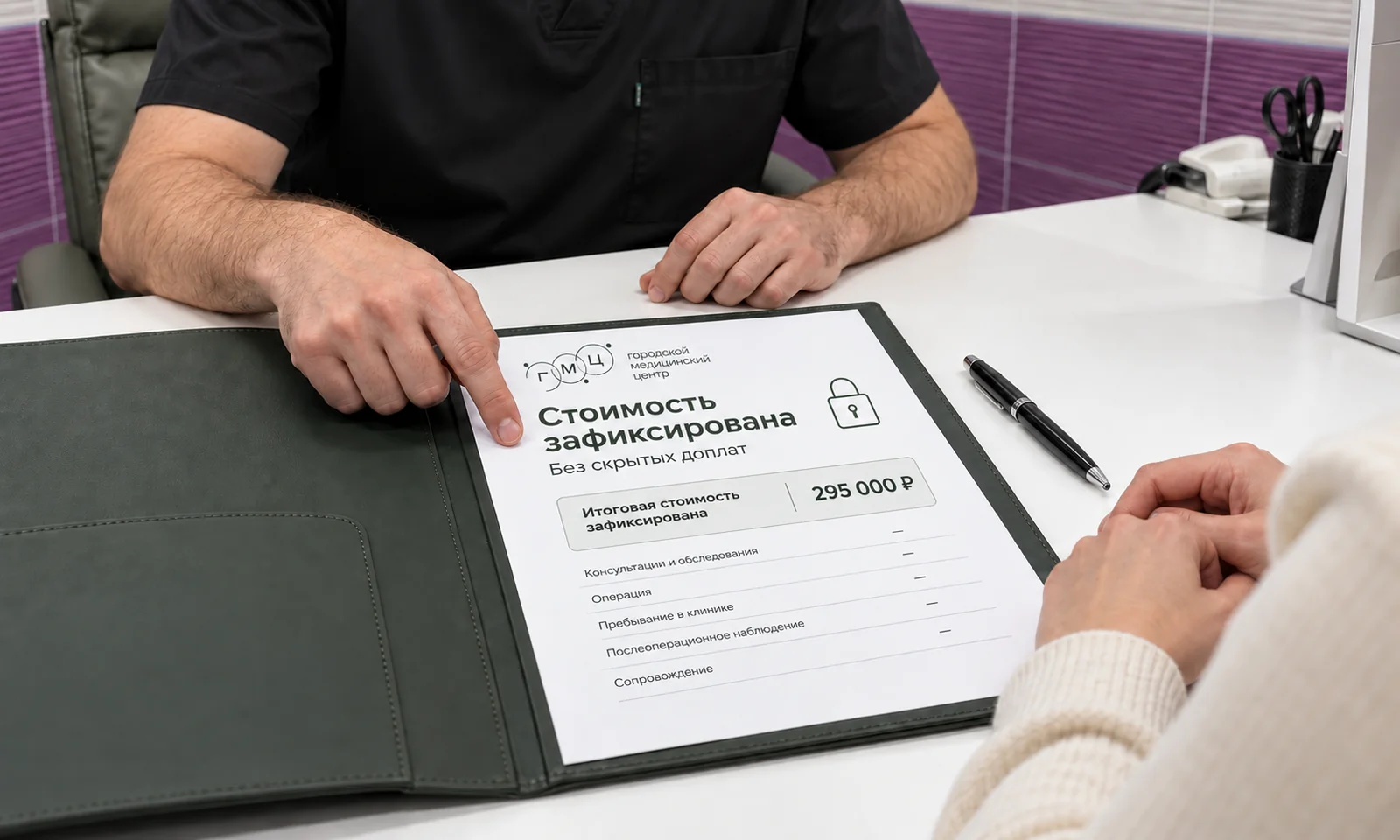
Once the consultation is over, the surgeon chooses the method and you receive a clear price — no hidden fees and no surprises on the way to your result.
FAQ
Yes, bariatric surgery is the medical term for it. At City Medical Centre the main methods are sleeve gastrectomy (gastric sleeve) and gastric bypass; the surgeon chooses the method by your BMI and health.
Usually a BMI over 40, or over 35 with related health conditions. The surgeon confirms whether surgery suits you at the consultation.
At the clinic, bariatric operations are carried out by experienced bariatric surgeons:
Get in touch by message: our coordinator will reply shortly and book your consultation. The bariatric surgeon consultation is free.
Surgery is prescribed only when clear criteria are met
The degree of obesity is mainly assessed with BMI: body weight (kg) divided by height squared (m²). As a rule, surgery is justified when BMI exceeds 40, or exceeds 35 alongside serious related conditions. In some cases lower values may also qualify for surgery if non-surgical approaches have failed.
The two are often confused, yet their goals differ fundamentally. Bariatric surgery is a medical treatment for obesity and its related diseases. It alters how the digestive tract works, tackling the causes of excess weight and metabolism. Plastic surgery changes the body's outer contours; it neither treats obesity nor affects metabolism.
The four main types of bariatric surgery at City Medical Centre are sleeve gastrectomy, Roux-en-Y gastric bypass, mini gastric bypass (MGB) and SADI-S duodeno-ileal bypass. Each method is matched individually to BMI, related conditions and the patient's goals.
Using modern laparoscopic technique, we perform the operation via 4 small punctures of 5 to 15 mm. Cosmetic sutures are placed, leaving marks that are nearly invisible after healing.
Recovery depends on your activity. Office work: after 2–4 weeks. Physical work: after 1.5 months. Sport and activity: swimming allowed after 30 days, other exercise added step by step as weight drops. Travel and holidays: plan them no earlier than a month after surgery.
Diet changes happen in stages, from liquids to soft food and then solids. It centers on protein and limits high-calorie, fatty food.
Pregnancy is an option after bariatric surgery, but doctors advise waiting at least 12–18 months. By then the body has stabilized, weight has reached target values and nutritional status has normalized.
Yes, vitamins become essential after bariatric surgery. The changed digestive anatomy lowers absorption of some nutrients, so regular vitamin and mineral supplements turn into a permanent part of the patient's life.
Regain after bariatric surgery is possible, but very unlikely if you follow the doctor's advice. Proper nutrition, no high-calorie drinks and regular follow-up visits with City Medical Centre specialists make the difference.
Prices are in US dollars; the amount in brackets is an approximate conversion to EUR at the rate of 02.10.2026. The final price is fixed in your contract.
Prices start from $3,600 (≈ €3,250). The surgeon sets the final price at the free consultation, and it is fixed in the contract, with no hidden extras.
General anaesthesia, a personal coordinator from day one, monitoring in the hospital and support for one year.
The hospital stay is 1–5 days, depending on the method and how you feel. Office work is possible after 2–4 weeks.
Yes. The first consultation is free and does not oblige you to anything. You can start online by sending a message to the coordinator.
Message us on WhatsApp or Telegram using the buttons below. A coordinator will answer your questions and book a free consultation where the doctor names the exact price.
By messaging us, you agree to our Privacy Policy
Surgery is usually justified with a BMI above 40, or above 35 when serious related conditions are present, and sometimes at lower values if other approaches have failed. People in Nice who have carried 30 kg or more above normal for years, whose weight returns after every diet, or who live with type 2 diabetes, hypertension or joint pain are typical candidates.
Eating changes in stages. A staged diet lasts 1–2 months, moving from liquid to soft to solid food so the stomach can adapt, with the focus on protein and limited high-calorie, fatty dishes. Following specialist advice, patients lose on average 10% of excess weight per month. Those from Nice build stable eating habits that keep the weight from returning.
One package covers the full journey, from consultation to final result. There are no separate charges added later: ward, meals, nursing care and coordinator support are included. To find out whether surgery suits you, patients in Nice can book a free surgeon consultation; the doctor reviews BMI, health and weight history and recommends a method.
Well-known people who spoke openly about this operation, in their own words.
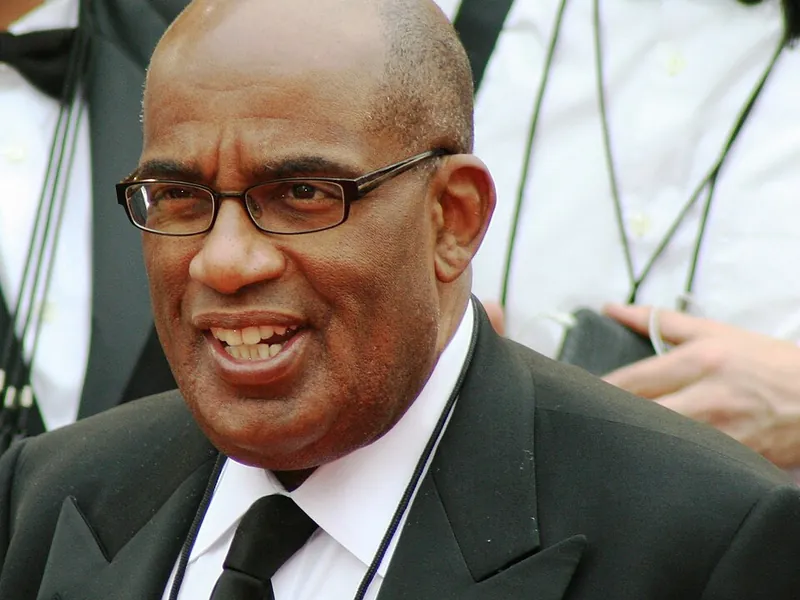 Al Roker and gastric bypass: twenty years of talking about it honestlyAl Roker had gastric bypass surgery in March 2002 and has talked about it for 20 years. His words, how the operation works and what recovery involves.
 Did Billy Gardell have bariatric surgery? Yes — and he says it saved his lifeThe Mike & Molly star had bariatric surgery in 2021 after a diabetes diagnosis. His quotes on the decision, the 100-pound loss and his children.
 Did Graham Elliot have weight-loss surgery? Yes, and he did it for his familyChef Graham Elliot had weight-loss surgery in 2013, saying it was what he needed to do for his family. His words, the operation and recovery.
 Did Mama June have a gastric sleeve? Yes — in her own wordsJune 'Mama June' Shannon had a gastric sleeve in May 2015. Her quotes on the 550-pound start, the regain and starting over.
 Did Randy Jackson have gastric bypass surgery? Yes, and he still talks about maintaining itRandy Jackson had gastric bypass surgery in 2003 and lost 114 pounds. His own words, how the operation works today and what recovery involves.
 Remi Bader and her weight-loss surgery: what she actually saidRemi Bader said in 2023 she had weight-loss surgery removing 80% of her stomach and lost 140 lbs. What she said, how the operation works, and recovery.
What patients write after this operation. Reviews are translated from the original language.
Irina, 26
For a long time I doubted whether to go ahead with surgery, but after the consultation I felt much calmer. Andrey Georgievich explained in detail how gastric bypass is done, what to expect after the operation and how recovery would go. I especially liked that they talked to me calmly and without pressure. I am now gradually getting used to my new way of life and I am very glad I took this step.
Bariatric surgery
Doctor: Andrey G. Ugay
Angelina, 22
For me the hardest part was deciding to have the operation. At the consultation Ruslan Sergeyevich answered all my questions in detail and explained the specifics of sleeve gastrectomy and recovery. After the operation I always understood what I was doing and why. Thank you to the doctor and the whole team for their attentiveness.
Bariatric surgery
Doctor: Ruslan S. Menzulin
Anna, 31
For a very long time I tried to deal with my excess weight on my own, but I did not get the result I wanted. After the consultation with Andrey Georgievich I finally understood what to do next. I came through the operation well, and my recovery was supervised by the doctors. It was important for me to feel that I was not left alone after surgery.
Bariatric surgery
Doctor: Andrey G. Ugay
Veronika, 25
Before the operation I had many fears, mostly of the unknown. Ruslan Sergeyevich explained every stage of treatment in detail and answered even the simplest questions. Thanks to that I felt much more confident. I keep following the recommendations and I am gradually seeing the changes I had the operation for.
Bariatric surgery
Doctor: Ruslan S. Menzulin
Valentina, 23
The decision to have bariatric surgery was not easy for me. I worried both about the operation itself and about how my life would change afterwards. At the consultation Andrey Georgievich explained everything in detail, so little by little my fear turned into confidence. What matters most to me now is the result and the chance to treat my health and lifestyle differently.
Bariatric surgery
Doctor: Andrey G. Ugay
Anna, 27
I am very grateful to Ruslan Sergeyevich for his attentiveness. Before the operation I had a huge number of questions, and I got a clear answer to every one of them. After the operation it was also clear which recommendations to follow and how to eat. It was important to me that the doctor stayed in touch and I felt supported at every stage.
Bariatric surgery
Doctor: Ruslan S. Menzulin
Page medically reviewed by Andrey G. Ugay, lead bariatric surgeon. Review date: .
The Obepi survey of 2020 found that 17% of French adults were obese. The same survey series recorded 8.5% in 1997 and 15% in 2012, so the share has roughly doubled over about two decades. In the 2020 survey, 47.3% of adults were overweight or obese, close to one adult in two. These are national figures. The report we opened gave no split for the Alpes-Maritimes department or the Provence-Alpes-Côte d'Azur region, so we do not claim that Nice is above or below the average.
Nice has 357,737 residents (2023) and is the fifth-largest city in France. About 987,709 people live in its urban area and 641,721 in the metropolitan area. The commune covers 71.92 km², with a density of 4,974 people per km². A population of that size and density means a large number of adults for whom the national trend is a personal question about weight, blood pressure, blood sugar and sleep. It is not an abstract statistic.
Bariatric surgery is a medical treatment of obesity and the illnesses linked to it. It is different from plastic surgery, which reshapes the outer contours of the body. The conditions that the programme lists as improving after weight loss are excess weight, hypertension, type 2 diabetes, sleep apnea, varicose veins, joint disease, fatty liver disease and reproductive health problems. If you live in Nice and recognise yourself in two or three of these, an online consultation is a reasonable first step. It is free and does not commit you to anything.
In France, the eligibility framework for obesity surgery is usually described by reference to a 2009 recommendation of the national health authority (HAS). It speaks of severe obesity with a BMI of 35 or more and at least one complication that surgery can improve. It also covers morbid obesity with a BMI above 40, earlier attempts at dieting that did not work, and no contraindication. It adds that multidisciplinary follow-up is expected both before and after the operation. This matches the medical logic of our own programme. Surgery is generally justified at a BMI above 40, or above 35 when serious related conditions are present. Sometimes it is also considered at lower values, when non-surgical methods have not worked.
BMI is your body weight in kilograms divided by your height in metres squared. Before writing to the coordinator, calculate it at home and note any diagnoses: hypertension, diabetes, sleep apnea, joint problems. These details speed up the first assessment, because the doctor will review them during the consultation alongside photos you send on WhatsApp or Telegram.
Coverage is a separate question, and we prefer to be careful about it. The French system is broad: 99.9% of the population is described as covered, the main fund covers 84% of residents, and about 85% of people hold a complementary private policy, the mutuelle. In general the system refunds a share of most costs and the mutuelle takes up part of the remainder. One insurer's guide explains that cosmetic surgery done for personal comfort is not paid by the Sécurité sociale. Exceptions exist for serious psychological or social harm or for medical criteria. They require a prior request, the "entente préalable", sent by the operating doctor to the insurer's medical adviser. The request is deemed accepted if there is no reply within 15 days, and only public or contracted establishments qualify. Reparative surgery after an accident, illness or malformation is, according to the same guide, most often covered in full.
The French-language encyclopedia article on obesity surgery that we read does not state reimbursement terms. We therefore do not promise that any part of your treatment with us will be refunded. The programme here is delivered under its own contract, and the final amount is named by the doctor and written into that contract. If you hold a mutuelle, ask your insurer in writing what it considers for treatment outside its own network, and keep the answer for the consultation.
Waiting is the main reason many people look at online options. The data we found is old, a 2010 survey cited in the English-language overview of French healthcare. In it, 53% of respondents saw a specialist within a month, while 28% waited more than two months. Elective surgery came within a month for 46%, and 7% waited four months or more. Those numbers predate today's situation and do not describe bariatric pathways specifically. They only show that waiting for a specialist or a planned operation was a real experience for a meaningful minority.
Our process does not use a queue in that sense. Send photos on WhatsApp or Telegram, and the coordinator replies within 15 minutes and works round the clock. You receive a free assessment from the doctor and a price, and nothing is booked until you confirm the plan and the dates. The coordinator then arranges the preparation steps: blood and urine tests, an ECG, an ultrasound, a gastroscopy and visits to specialists. The doctor gives you the exact list during the consultation.
The calendar around you matters when you choose a date. France has 11 public holidays: 1 January, Easter Monday, 1 May, 8 May, Ascension, Whit Monday, 14 July, 15 August, 1 November, 11 November and 25 December. Offices and many services are closed on those days. Check them against the weeks when you want to be in hospital and the 2–4 weeks before you are back at office work. Nice also has its own busy periods. The Carnival runs for about two weeks in February and sometimes into early March, and the article we read reports more than a million visitors a year. The Paris-Nice cycling race finishes in the city, and the Nice Jazz Festival is among its festivals. Busy streets are not a medical issue, but crowds and noise can make the first days of recovery at home less comfortable. If you prefer quiet, you can pick a date outside those weeks.
Students are part of the city's rhythm too. Côte d'Azur University has between nearly 30,000 and 35,000 students, depending on which figure in the source you take. The university has carried that name since 25 July 2019, and Nice University was established in 1965. Anyone who studies or works in that environment can use the 2–4 week office-work estimate, but should confirm it with the doctor, because recovery depends on your activity and individual traits.
Nice has a climate that makes recovery easy to plan. The mean high in January is 13.3 °C with a low of 5.8 °C. In July the mean high is 27.5 °C and the low is 20.8 °C, and August is slightly warmer at 27.9 °C and 21.1 °C. The annual mean high is 19.8 °C. The record is 37.7 °C, set on 1 August 2006. Snow falls on only 1.1 days a year on average, so icy pavements are rare. Rain is concentrated in autumn: November has 138.4 mm and October 127.9 mm. July is the driest month with 13.6 mm, and August has 17.2 mm. Relative humidity averages 71.3%, with 67% in January and 75% in May.
What does this mean for someone after a laparoscopic operation, done through 4 small punctures of 5 to 15 mm? In the 1–5 days you spend in hospital under observation, the weather barely matters. After discharge, it affects how easily you can walk. Short, regular walks are an everyday way to add activity, because other exercise is added gradually as weight drops. In the wet weeks of October and November it is useful to have a plan for indoor movement. In the hot weeks of July and August, heat and the need to drink enough fluids deserve attention. Your diet moves from liquid to soft to solid food in stages, with the main focus on protein and on limiting high-calorie, fatty food. Carry water, avoid high-calorie drinks, and ask the coordinator any question about portions.
The Mediterranean is part of the picture, but with a medical limit. The sea temperature averages 13.4 °C in January and 14.6 °C in April, rising to 23.1 °C in July and a peak of 23.6 °C in August, with a yearly mean of 17.9 °C. Swimming is fine from 30 days after the operation, so a date in late winter would put your first sea swim around spring, when the water is still cool. A date in early summer would let you swim in warm water without waiting long. Sunshine totals 2,760.5 hours a year, with 349.3 in July and 145.2 in December. Outdoor activity is therefore easier in summer, and in winter it needs more planning.
Physical work normally resumes after about 1.5 months. Holidays are best planned from a month after the operation. If your schedule includes a long-planned event in the following weeks, tell the coordinator on day one so the date can be arranged around it.
Weight loss goes on long after you leave the hospital. The final result is reached 18–24 months after surgery, and the programme includes support for 12 months. A single coordinator stays with you from the first message. Remote progress checks are done by photos, and follow-up visits with the doctor are scheduled by the coordinators. That suits a city like Nice, where people live in different districts and may have busy working days. You send a message when it suits you, and the coordinator answers round the clock on WhatsApp and Telegram.
In practice, follow-up covers four things. The first is eating habits: stage-by-stage diet, protein, avoiding high-calorie drinks. The second is vitamins. As digestive anatomy changes, the body absorbs some nutrients less well, so regular vitamin and mineral supplements become a lasting part of life after the operation. The third is weight and test results, checked on schedule. The fourth is planning: if you wish to become pregnant, doctors advise waiting at least 12–18 months, until the body is stable and nutritional status has normalised.
Weight regain is possible after bariatric surgery. It is very unlikely if you follow the doctor's advice: proper eating, no high-calorie drinks and regular follow-up with the specialists. We do not promise an outcome, because it depends on anatomy and on you. What we can offer is a structure that makes it easier to stay in contact. If you already have a general practitioner or a dietitian in Nice, tell the coordinator, and share your test results with them too. A single, consistent set of instructions is better than several different ones.
No. The 17% comes from the national Obepi survey of 2020, which covers French adults as a whole. The report we read does not show a split for Nice, the Alpes-Maritimes department or the Provence-Alpes-Côte d'Azur region, so we do not quote a local rate. Your own BMI and health conditions matter far more than a regional average.
We cannot promise that. The French system is broad and most residents also hold a mutuelle, but the rules depend on the establishment and on prior approval. One insurer's guide notes that cosmetic surgery for comfort is not covered, while reparative surgery is most often covered. Treatment with us is delivered under a contract and the final amount is named by the doctor. Ask your insurer in writing what it considers, and bring the answer to the consultation.
They are close. The French recommendation speaks of a BMI of 35 or more with a complication that surgery can improve, or a BMI above 40, together with earlier failed diets and no contraindication. Our programme says surgery is generally justified at a BMI above 40, or above 35 with serious related conditions, and sometimes at lower values when non-surgical methods have not worked. The doctor confirms during the consultation.
Not medically, but practically. The Carnival runs for about two weeks in February and sometimes into early March, and the city is busy. Summer is warm, with a July mean high of 27.5 °C. Neither is a barrier. Choose a date when you can rest for the 2–4 weeks before office work and avoid unavoidable events in the first month. The coordinator will help you compare options.
Swimming is fine from 30 days after the operation. The sea averages 13.4 °C in January and 23.1 °C in July, with a peak of 23.6 °C in August, so the same 30 days feel very different depending on the season. Other exercise is added gradually as weight drops. The doctor will give personal advice during the consultation.
No. Coordinators answer round the clock on WhatsApp and Telegram, including on the French public holidays such as 1 November, 11 November, 25 December and 1 January. Your own pharmacy or general practitioner may be closed on those days, so plan any prescriptions or documents a little earlier.
Calculate your BMI (weight in kilograms divided by height in metres squared), list your diagnoses and medicines, and note your earlier attempts at weight loss. Take clear photos as the coordinator asks and send them on WhatsApp or Telegram. If you hold a mutuelle, ask it in advance what it considers. The consultation is free and does not commit you to surgery.
Yes, and we encourage it. Share your test results and the doctor's recommendations with your general practitioner or dietitian so that everyone gives the same advice. The programme includes 12 months of support, remote progress checks by photos and scheduled follow-ups.