





























first
12 months later on
2,800 grafts
FUE method
City Medical Centre
0% instalments
from $367/mo
First talk and pricing — $0.
Real outcome
first
12 months later on
FUE method, no stitches needed. Graft count and a result forecast estimated and not billed — before you decide.
Free online consultation · Reply within 15 minutes
Nothing is owed, no surgery booking required
Message our coordinator
Free online consultation · Reply within 15 minutes
Message us on TelegramMessage us on WhatsAppBy messaging us, you agree to our Privacy Policy
Hair transplant for patients from Nice at City Medical Centre starts at €2,000 (from $2,200). The first online consultation is free; the doctor names the final price and it is fixed in the contract.
How it works · Hair transplant prices
Information current as of 24 October 2026
results
Every example is someone treated at CMC.
first
12 months later on
2,800 grafts
FUE method

first
12 months later on
3,500 grafts
FUE method

first
12 months later on
2,600 grafts
FUE method

first
12 months later on
3,000 grafts
FUE method

first
12 months later on
2,700 grafts
FUE method

first
12 months later on
3,300 grafts
FUE method

first
12 months later on
2,900 grafts
FUE method

first
12 months later on
2,500 grafts
FUE method

first
12 months later on
3,400 grafts
FUE method

first
12 months later on
2,500 grafts
FUE method

first
12 months later on
3,100 grafts
FUE method

first
12 months later on
3,600 grafts
FUE method

first
12 months later on
4,000 grafts
FUE method

first
12 months later on
3,200 grafts
FUE method

first
12 months later on
3,000 grafts
FUE method

first
12 months later on
3,700 grafts
FUE method

first
12 months later on
2,700 grafts
FUE method

first
12 months later on
3,800 grafts
FUE method

first
12 months later on
3,300 grafts
FUE method

first
12 months later on
2,800 grafts
FUE method

first
12 months later on
2,500 grafts
FUE method

first
12 months later on
3,900 grafts
FUE method

first
12 months later on
3,500 grafts
FUE method

first
12 months later on
3,800 grafts
FUE method

first
12 months later on
2,900 grafts
FUE method

first
12 months later on
3,600 grafts
FUE method

first
12 months later on
2,600 grafts
FUE method

first
12 months later on
2,700 grafts
FUE method

first
12 months later on
3,700 grafts
FUE method

first
12 months later on
3,200 grafts
FUE method

first
12 months later on
3,000 grafts
FUE method

first
12 months later on
2,800 grafts
FUE method

first
12 months later on
4,000 grafts
FUE method

first
12 months later on
3,400 grafts
FUE method

first
12 months later on
2,900 grafts
FUE method

first
12 months later on
3,100 grafts
FUE method

first
12 months later on
2,600 grafts
FUE method

first
12 months later on
3,300 grafts
FUE method

first
12 months later on
3,900 grafts
FUE method

first
12 months later on
3,500 grafts
FUE method

first
12 months later on
2,700 grafts
FUE method

first
12 months later on
3,800 grafts
FUE method

first
12 months later on
3,200 grafts
FUE method

first
12 months later on
3,000 grafts
FUE method

first
12 months later on
2,800 grafts
FUE method

first
12 months later on
3,100 grafts
FUE method

first
12 months later on
3,600 grafts
FUE method
Comparison
Our work relies on three graft transfer technologies: classic FUE, suture-free DHI and a combined protocol. Compare implantation technique, tissue trauma and graft survival, then choose knowingly.
Classic technique without incisions or stitches

$2,200
$2,700
Graft implantation technique
ForcepsGraft trauma
MinimalThe natural growth angle
NaturalGraft survival
98–100%Suitable for
Androgenetic alopeciaSuture-free placement with a Choi pen

$2,500
$2,900
Graft implantation technique
Choi implanter, DHI penGraft trauma
MinimalThe natural growth angle
NaturalGraft survival
98–100%Suitable for
DensificationFUE extraction, DHI pen implantation

$2,700
$2,900
Graft implantation technique
FUE extraction with DHI implantGraft trauma
MinimalThe natural growth angle
NaturalGraft survival
98–100%Suitable for
Densification for androgenetic alopeciaThe numbers for survival and trauma are averaged for each method and given as a guide: exact values depend on the transplant area and the patient's individual features and are clarified by the doctor at consultation.
Speak to a specialist


















about the clinic
Modern equipment, comfortable rooms and care for all patients

Ask anything you need, and we will slot the consultation into your schedule
Message us on WhatsApp Contact us nowThe doctor speaks plainly at the consultation when an operation is unnecessary, so your budget stays intact. Set out below are the situations where a transplant genuinely delivers.
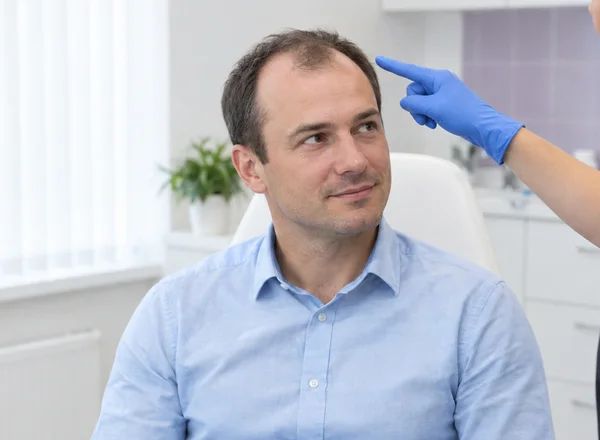

Leave a number: photos go to the coordinator in a messenger, and a doctor says whether a transplant would help. No fee.

services
The price is set at the free consultation, after the grafts are counted, and fixed in the contract.
suture-free graft extraction

$2,200$2,700
or $367/mo — 0% instalments for 6 months
Hold your priceimplantation without channels

$2,500$2,900
or $417/mo — 0% instalments for 6 months
Hold your pricecombined technique

$2,700$2,900
or $450/mo — 0% instalments for 6 months
Hold your price| First medical check | Free |
|---|---|
| Eyebrow transplant, FUE | |
| Beard transplant, FUEinstalments $467/mo | |
| Hair trichopigmentation | |
| PRP therapy / session | $200 |
all included
Starting with pre-op planning, running 12 months on.
Extra charges on the day of surgery do not happen.
two added zones
A hair transplant is not confined to the scalp. Same grafts from the back of the head, same FUE method — only the area changes.
FUE method, free of cuts or stitches

Grafts are taken from the donor area at the back of the head and moved through micro-punctures of roughly 1 mm — no scars are left. You and the doctor discuss the shape before the operation, taking your facial features into account. Transplanted hair grows for life: the beard can be trimmed and styled as usual.
$2,800$3,000
or $467/mo — 0% instalments for 6 months
Hold your priceFUE method, free of cuts or stitches

A drawn shape comes first. The surgeon does it at the first consultation; you go through sample images together, and the proportions of your face decide the curve. The hairs go in at the natural growth angle, which keeps the brows convincing. It also helps where years of plucking stopped growth.
$1,600$1,700
a procedure that needs no stay, numbed locally
Hold your priceFirst the doctor assesses your donor area, counts the grafts and shows the achievable result. The cost is quoted at the consultation and fixed in the contract.

Message our coordinator
Free online consultation · Reply within 15 minutes
Message us on TelegramMessage us on WhatsAppBy messaging us, you agree to our Privacy Policy
Process
From consultation to going home — all in one day

Before anything else, there is a free consultation: the doctor explains FUE and DHI, answers your questions, and works out an individual plan for the surgery.

A deposit is all it takes to lock the day in. Card payment happens at the clinic, or the payment can be made online.

A set of medical tests has to be done beforehand. The clinic hands over the full list and explains exactly what to do.

Local anaesthetic takes care of sensation, so the surgery is painless.

Grafts are harvested from the donor area at the back of the head or the temples, without any stitches.

At this stage, the surgeons position the grafts into the balding area.
Healing is supported by what the clinic provides and by detailed directions on using it.

Crusts come off, swelling goes down, and the area gradually recovers

A normal stage: only the hairs fall out, the follicles stay in place

New hair comes in gradually, the result shows

The hair becomes thicker, the main volume and contour are visible

A natural hairline and the final density take shape

Free, ahead of the surgery, with no obligations.
Speak to a specialistdoctors

Hair transplant doctor, trichologist, surgeon
10 years of experience

Dermatovenereologist, trichologist, surgeon
11 years of experience

Plastic surgeon
9 years of experience

Plastic surgeon
9 years of experience

Assistant
9 years of experience
The doctor will inspect your donor area, count the grafts and say what result is possible.
Speak to a specialistcoordinators
Your own coordinator takes you through every step, right up to full recovery.

Your patient adviser
Stays close through preparation and recovery
Sees to all the papers and diary dates
Your patient adviser
Stays close through preparation and recovery
Sees to all the papers and diary dates
Your patient adviser
Stays close through preparation and recovery
Sees to all the papers and diary dates
Your patient adviser
Stays close through preparation and recovery
Sees to all the papers and diary dates













Ask anything you need, and we will slot the consultation into your schedule
Message us on WhatsApp Contact us nowReviews
I was having trouble with my hair. I came here and got a hair transplant. The results was awesome thank you
Review on Google
І experienced hair loss due to COVID and turned to this clinic; they helped me and performed a hair transplant, moving hair from the back of my head to my temples. Thank you.
Review on Google
I traveled to City Medical Centre, where they helped me overcome hair loss through a transplant to the balding areas of my scalp. I am grateful to the doctors for performing the procedure painlessly.
Review on Google
I am sharing my experience, because before the operation I went through a pile of reviews myself and was looking for real stories. I had a beard transplant six months ago. Honestly, in the first days after the procedure I felt a little jittery: my face looked unfamiliar, there was slight swelling and small scabs. In the first couple of months the hair partly fell out, as the doctor had warned. But now the result truly makes me very happy) From about the 4th month active, even growth began. The transplanted hair took very well, the beard now looks as natural as possible, no bald patches are left. The beard became much thicker and denser, with the shape I had thought about for a long time. All in all, I recommend the clinic, the doctor was polite and explained everything 👍 The result is definitely worth it!
Review on Google
I traveled to this clinic and do hair transplant, very good quality and cheap. Good doctors
Review on Google
I do hair transplant here very good doctors!!
Review on Google
Typical queries
People often say hair implants, but no artificial hair is used. In a hair transplant the doctor moves your own follicles (grafts) from the donor area to thinning or bald areas using FUE or DHI.

Absolutely. Patients based in other towns and other countries are taken on, and a doctor can look at your photographs online.
FUE is $2,200 (≈ €2,000), DHI is $2,500 (≈ €2,250), combined DHI+FUE is $2,700 (≈ €2,450). A free consultation with a graft count gives you the exact, contract-fixed price.
A day-long operation, after which everyone returns home.
It helps with stable pattern hair loss and a receding hairline when there are enough donor grafts. Some types of alopecia need treatment first; the doctor checks this at the consultation.
Nothing hurts: local anaesthesia is given before the work starts.
FUE relies on tweezer harvesting with no incisions or stitches. DHI relies on Choi-pen implantation without channels. The combined DHI+FUE approach harvests by FUE and implants by DHI.
Your donor area decides it, and the precise figure comes from the doctor at a consultation with no fee.
Skin recovers over 0–10 days. A shed at 2–4 weeks is a normal phase, not a setback. Hair pushes through at 3–4 months, looks noticeably fuller between 6–9 months, and settles into its final form at 12–18 months.
Hair growth is covered by a lifetime guarantee, fixed in the signed contract.
The clinic works under a medical licence; care follows the standards and clinical guidelines
of Ministry of Health.

Doctors who will operate: their diplomas and certificates
Check the documentsAKC POMOSHCH LLC
the clinic's own entity
1057746096924
OGRN
7728536872
INN
What a resident of Nice gets is a one-day procedure: FUE and DHI without cuts and without stitches, under local anaesthesia. Graft survival is 98-100 %, and a price starting at $2,200 (≈ €2,000) is fixed in the contract after a free count of the grafts.
The free online consultation is the whole first step in Nice: send photos of the thinning area, and the doctor looks at them and counts how many grafts are needed. The clinic is in touch 24/7, so the exchange stays convenient.
Recovery is short: 0-10 days. The transplanted hairs shed at 2-4 weeks, a normal step, growth begins at 3-4 months, density fills by 6-9 and the final result stands at 12-18. Check-ups at 1, 3, 6, 9 and 12 months, photo tracking with a personal coordinator, growth guaranteed for life.
Prices are in US dollars; the amount in brackets is an approximate conversion to EUR at the rate of 02.10.2026. The final price is fixed in your contract.
By messaging us, you agree to our Privacy Policy
Well-known people who spoke openly about this surgery, in their own words.
 John Cena's hair transplant: “I got a problem, I try to fix it”John Cena spoke openly in 2025 about his hair transplant and the fan signs that pushed him to it. His words, how the procedure works and the recovery.
 Did Calum Best have a hair transplant? Yes, and he said so himselfCalum Best said in 2023 he had his sixth hair transplant, this time using patches of beard hair. His words, how the procedure works and recovery.
 Did Chloe Goodman have a hair transplant? Yes, and she explained whyChloe Goodman had a hair transplant in 2025 after losing hair following pregnancy. Her own words, how the procedure works and what recovery involves.
 Did Dean McCullough have a hair transplant? Yes, and he filmed itRadio 1 presenter Dean McCullough shared his FUE hair transplant on TikTok in 2024. His own words, what the swelling means and how results develop.
 Did Ella Morgan have a hair transplant? Yes — to cover a hairline scarThe Married at First Sight star revealed a hair transplant in 2025 to cover scarring along her hairline from facial surgery. Her own words and the facts.
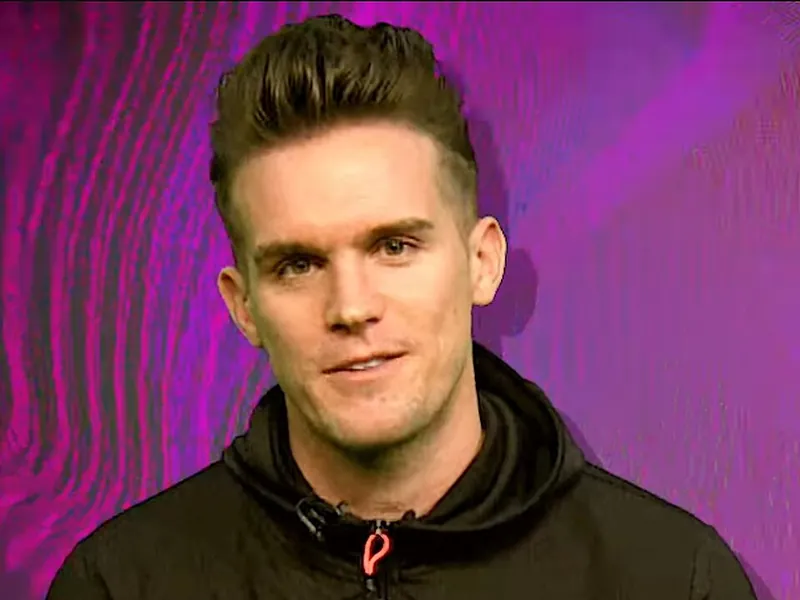 Gaz Beadle on his beard transplant: “I LOVE IT”Gaz Beadle told his 3.6 million followers he had a beard transplant after years of patchy stubble. His own words, and how a hair or beard transplant works today.
Page medically reviewed by Anastasia A. Kolesnik, hair transplant doctor. Review date: .
Nice is one of the sunniest cities in France. The long-term climate record shows 2,760.5 hours of sunshine a year, with 349.3 hours in July and 145.2 hours in December. For a hair transplant, that gap matters. A newly transplanted scalp spends its first weeks under the doctor's instructions on washing, sleeping and headwear. In Nice those instructions carry different weight in July than in December.
The July averages are a daily high of 27.5 °C and a low of 20.8 °C. August is slightly warmer, at 27.9 °C and 21.1 °C. The record high is 37.7 °C, set on 1 August 2006. Summer heat in itself is not a medical problem. But a covered head in warm, bright weather is uncomfortable, and the headwear advice the clinic gives you has to be something you can actually follow. During the free online consultation, tell the doctor how you spend your days: outdoors, at a desk, on a scooter, near the water. A plan that matches your routine is easier to keep to than a generic leaflet.
Winter in Nice is mild. January averages a high of 13.3 °C and a low of 5.8 °C, and snow falls on only 1.1 days a year on average. Frost is not a concern for the scalp, so winter headwear is chosen for comfort and cleanliness, not for warmth. Soft, clean, loose-fitting caps are usually easier to manage than tight ones, but the doctor will tell you what suits your case.
The sea is part of the picture too. The Mediterranean off Nice averages 13.4 °C in January and 14.6 °C in April. It peaks at 23.6 °C in August, and the yearly mean is 17.9 °C. When you may go back into salt water after a transplant is a medical question, not a seasonal one. We do not give a number of days here, because it depends on how your scalp is healing. Ask your coordinator and the doctor, and plan holidays and beach days around the answer rather than the other way round.
Humidity is moderate to high: 71.3% on average, 67% in January and 75% in May. That is not an obstacle to a transplant. It simply means your scalp will feel different from a dry, centrally heated flat in northern Europe. The care plan for the transplant and donor areas, which comes with the procedure, is built to be followed in whatever conditions you live in.
A transplant is a long project. The procedure takes one day at the clinic under local anaesthesia, but the result develops over 12 to 18 months. The stages are the same for everyone: the first 0-10 days are healing, when crusts fall away and swelling subsides. From 2 to 4 weeks the transplanted hairs shed, which is a normal stage, since only the hairs shed and the follicles stay in place. First growth appears at 3-4 months, density shows at 6-9 months, and the final density comes at 12-18 months.
Here is how that could look for a patient in Nice. Suppose the procedure is on 10 November 2026. The first ten days of healing pass in the second half of November. Shedding falls in December and early January. First growth would appear around February to early March 2027, and visible density between May and August 2027. The end result would come between November 2027 and May 2028.
Notice what this means for the calendar. The Carnival of Nice runs for about two weeks in February, sometimes into early March. It lands right around the three-to-four-month mark, when new hairs are only beginning to show. If you want to look your best at a particular event, do not plan around that month. Plan around the later stage, when the main volume and contour are visible.
Now take a spring procedure, for example in April 2027. The shedding phase would fall in May. First growth would arrive in July or August, in the sunniest and hottest part of the year. The density months, 6-9 months after surgery, would then fall in the autumn and winter. That is a perfectly workable timeline. It only asks for more attention to headwear and sun exposure during the early weeks.
Weather also changes through the year. Nice receives 791.3 mm of precipitation a year on 62.1 days with at least 1 mm. November is the wettest month at 138.4 mm, followed by October at 127.9 mm. July is the driest at 13.6 mm, then August at 17.2 mm. A procedure in autumn means the first weeks coincide with the wet season, so rain cover and clean, dry headwear become practical questions. A summer procedure means dry weather but strong sun. Neither is better in itself; each simply needs a different set of habits.
Public holidays are also worth a glance. France has 11, including 1 November, 11 November, 25 December and 1 January. Coordinators answer round the clock on WhatsApp and Telegram, so a holiday does not stop contact. But if you want to pick the procedure date and have time off work afterwards, a long weekend around a holiday can be convenient. It is a scheduling choice, not a medical one.
Because the consultation takes place online, you do not need to arrange anything locally before the first conversation. You send photos on WhatsApp or Telegram, get a free assessment from the doctor and a price, and confirm the plan and dates before anything is booked. The price is fixed in the contract once the grafts have been counted.
After the procedure, follow-up is built around five checkpoints: 1, 3, 6, 9 and 12 months. A personal coordinator is reachable throughout, and progress is tracked by photo. For a patient in Nice this suits the seasons well. You can take photos in good natural light, which the city has plenty of for much of the year. Taking them at the same time of day, with the same angle and distance, makes the comparison between checkpoints more meaningful. Strong midday sun can wash out detail, so softer light is usually better for progress photos.
The 3-month check corresponds to first growth. The 6-month check is when density starts to show. By 9 and 12 months the doctor can compare your photos against the plan. Each check has its own purpose, and the coordinator will tell you what to photograph and when.
Nice is also a university city. Côte d'Azur University has tens of thousands of students, and the university has existed in its present form since 2019. It traces back to Nice University, established in 1965. It is worth mentioning because hair loss does not wait for middle age. However, the rules are clear: a patient under 18 is not suitable for a transplant. Young adults who notice thinning should send photos and let the doctor judge whether surgery is appropriate now, whether it should wait, or whether a different approach fits better. The service itself says some cases can be handled without surgery, and the doctor will say so at the consultation.
France has a broad system of health coverage. It is described as covering 99.9% of the population, and the main fund covers 84% of people. The system generally refunds 70% of most costs, and about 85% of people hold complementary private insurance, known as a mutuelle. Those are national figures and some of the data is dated, so treat them as background, not as a forecast for your own case.
Hair transplantation is a different matter from everyday care. According to an insurer's explanatory article, aesthetic procedures done for personal comfort are not paid by Sécurité sociale. There are exceptions where there is grave psychological or social harm, or where medical criteria apply, and these need a prior request, the entente préalable. That request goes from the practitioner to the insurer's medical adviser, and is deemed accepted if no reply comes within 15 days. The same article says this route applies only to public or approved (conventionné) establishments. So whether your own case could ever fall under an exception is a question for your insurer and your treating doctor. It is not something we can decide for you.
The same article says reconstructive procedures after an accident, illness or malformation are covered by Assurance Maladie. Among the indications for a transplant are the effects left by an injury or a burn, and hair loss from illness. If your hair loss follows such an event, ask the insurer directly whether any part of your care falls under this heading. Bring the medical documents you already have, and your coordinator can tell you what the doctor can provide in writing.
Check your mutuelle contract as well. Contracts differ, and some include a budget for items outside the standard reimbursement. We cannot know what yours says. A short phone call to your insurer before you pay a deposit is a sensible step. The transplant price, the number of grafts and the instalment options are all agreed in advance, and the contract states them. There are no extra payments on the day of the procedure.
Three techniques are available: classic FUE, DHI and a combined protocol. In FUE, grafts are taken from the donor area, either the back of the head or the temples, without incisions or stitches, and they are implanted at a natural growth angle. DHI uses a pen-type implanter, with no sutures and no pre-made channels. The combined option extracts by FUE and implants by DHI. The service text describes graft trauma as minimal for all three, and notes that the exact survival figures depend on the area and on your individual features.
Which one fits depends on your case. Classic FUE is described as suitable for androgenetic alopecia. DHI is described as suitable for densification, meaning thickening areas where some hair remains. The combined method suits both. In a place where summer sun is strong and long, a patient with a wide area of thinning may ask whether to do one large session or plan in stages. The doctor answers that after counting the grafts and looking at the donor area, not before.
The same technique can also be applied to the beard and eyebrows. The beard uses grafts from the back of the head, placed through micro-punctures of about 1 mm. Eyebrows are designed with you at the consultation, with the shape matched to your facial features. Both are outpatient procedures under local anaesthesia. If you spend a lot of time outdoors, mention it, because brows and beard skin are also exposed to sun and salt.
Not every case suits a transplant. The conditions where it works include androgenetic or diffuse alopecia, bald patches, a receding frontal edge of the hair, a high forehead line, thin density, and the effects of injury or burn. Contraindications include trichotillomania, body dysmorphic disorder, cancer, being under 18, intolerance to anaesthetics, epilepsy, serious heart conditions, diabetes mellitus, a pacemaker, AIDS/HIV, hepatitis B or C, pulmonary embolism and patchy alopecia. If you are unsure which group you belong to, send photos to the coordinator. The doctor's answer is free and does not require a booking.
When the plan is agreed, preparation is simple. You receive a list of tests and instructions, you complete the tests with your usual medical contacts, and the date is confirmed in a medical services contract. Think about the weeks after: the care plan covers washing, sleep and headwear, and the return to sport is planned in advance. A runner or cyclist in Nice, with races such as the finish of Paris-Nice in the city's sporting life, should ask about the plan for returning to activity before choosing a date. Football fans heading to OGC Nice matches in Ligue 1 may also want to ask about crowds, sun and headwear in the first weeks.
Neither season is medically better in itself. Nice has 2,760.5 hours of sunshine a year, with 349.3 hours in July and 145.2 in December, so summer means more exposure during the first weeks. Winter is mild, with a January mean high of 13.3 °C, but autumn is wet. The doctor will explain the headwear and washing plan that applies in your chosen month, and you can choose the season that is easiest to follow in your daily routine.
Using the stages in the plan, healing takes about the first 0-10 days, and the transplanted hairs shed at 2-4 weeks. First growth appears at 3-4 months, which for a procedure on 10 November 2026 means roughly February to early March 2027. Density shows at 6-9 months, and the final result comes 12-18 months after the procedure. Individual timing varies, and your photo check-ins show how you are progressing.
It can if you want to look your best then. The Carnival of Nice runs for about two weeks in February and sometimes into early March. For a procedure in November, that falls near the stage when new hairs are only beginning to appear. If a specific event matters to you, tell the coordinator, who can help you choose a date so the visible stages fall at a better time.
The sea is 13.4 °C in January and peaks at 23.6 °C in August, but temperature is not the deciding factor. The timing of returning to salt water depends on how your scalp heals, so the doctor sets it individually. Ask about it during the consultation and plan beach days or water sports around that answer.
An insurer's article states that aesthetic procedures for personal comfort are not paid by Sécurité sociale. Exceptions exist for grave psychological or social harm or for medical criteria, and they require an entente préalable. If there is no reply within 15 days, the request is deemed accepted, but only for public or approved establishments. Reconstructive care after an accident, illness or malformation is covered by Assurance Maladie. Your own situation should be confirmed with your insurer and your mutuelle.
A personal coordinator stays in contact on WhatsApp or Telegram, and follow-up visits are set at 1, 3, 6, 9 and 12 months, with progress tracked by photo. Taking photos in the same soft light, at the same angle each time, makes the comparisons clearer. Coordinators answer round the clock, including on French public holidays such as 1 November and 25 December.
Yes. Send photos to the coordinator and the doctor will say whether a transplant is appropriate now, should wait, or is not needed. A patient under 18 is not suitable for a transplant. For adults, androgenetic alopecia is among the conditions where it may help. The assessment is free and does not require a booking.
Yes, it helps to ask in advance. The care plan includes a schedule for returning to sport, and the doctor can say when activity is reasonable for your case. If you cycle, run or play regularly in Nice's sun, tell the coordinator so the headwear advice fits your routine.

 Forceps
 Minimal


