City Medical Centre · multi-specialty surgery clinicOpen 24/7

Tummy tuck

Tummy Tuck After Pregnancy in Zurich

Free consultation

from $2,400

The price is fixed in the contract before surgery

Message us on WhatsApp

Free online consultation · Reply within 15 minutes
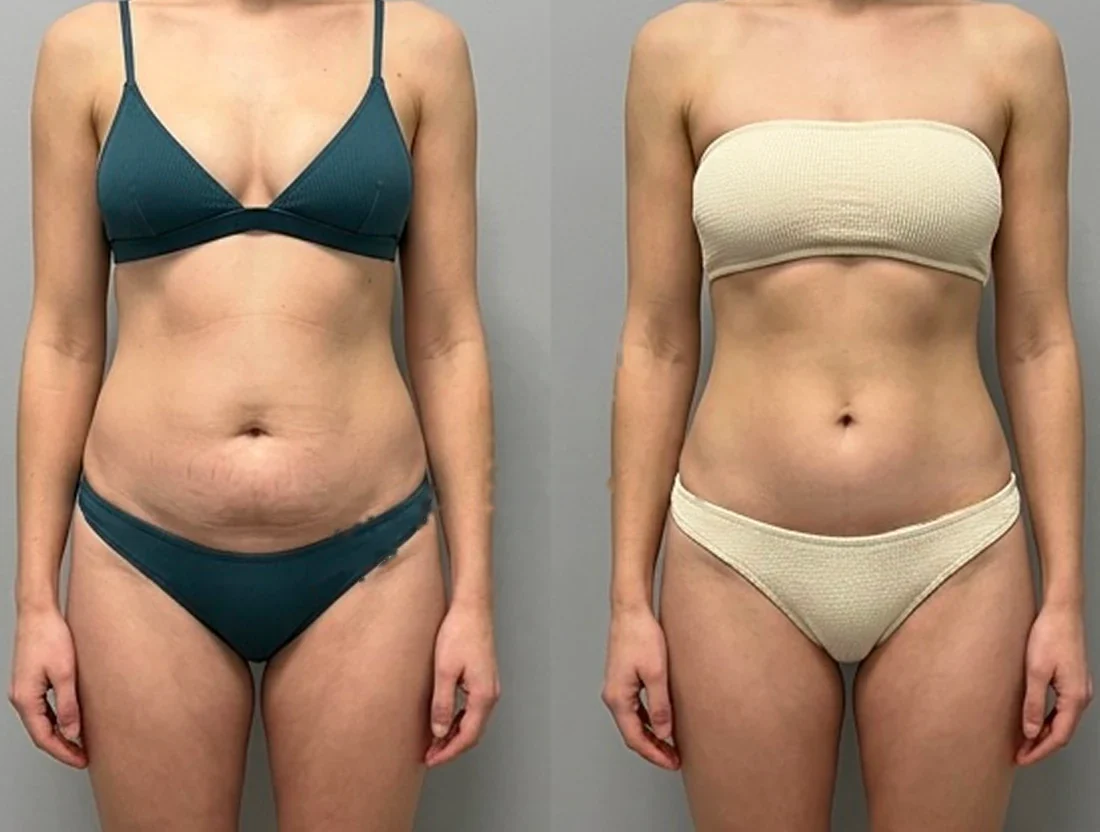
Real case
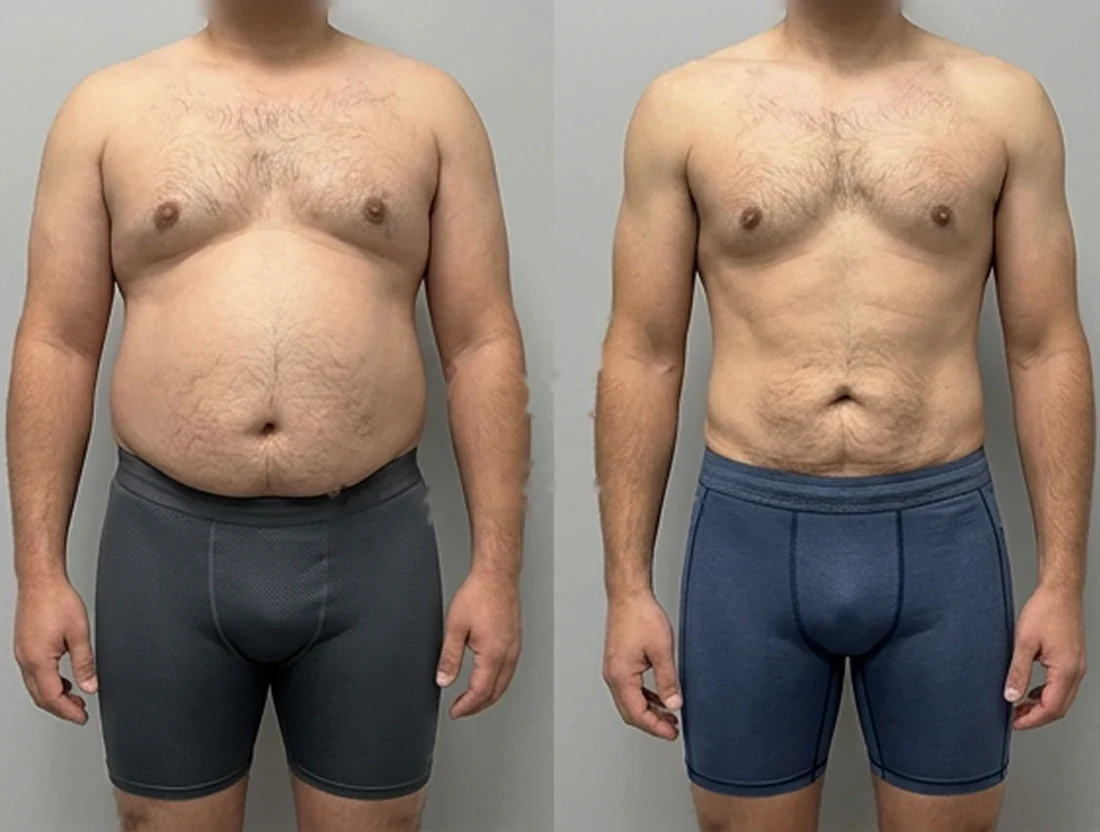
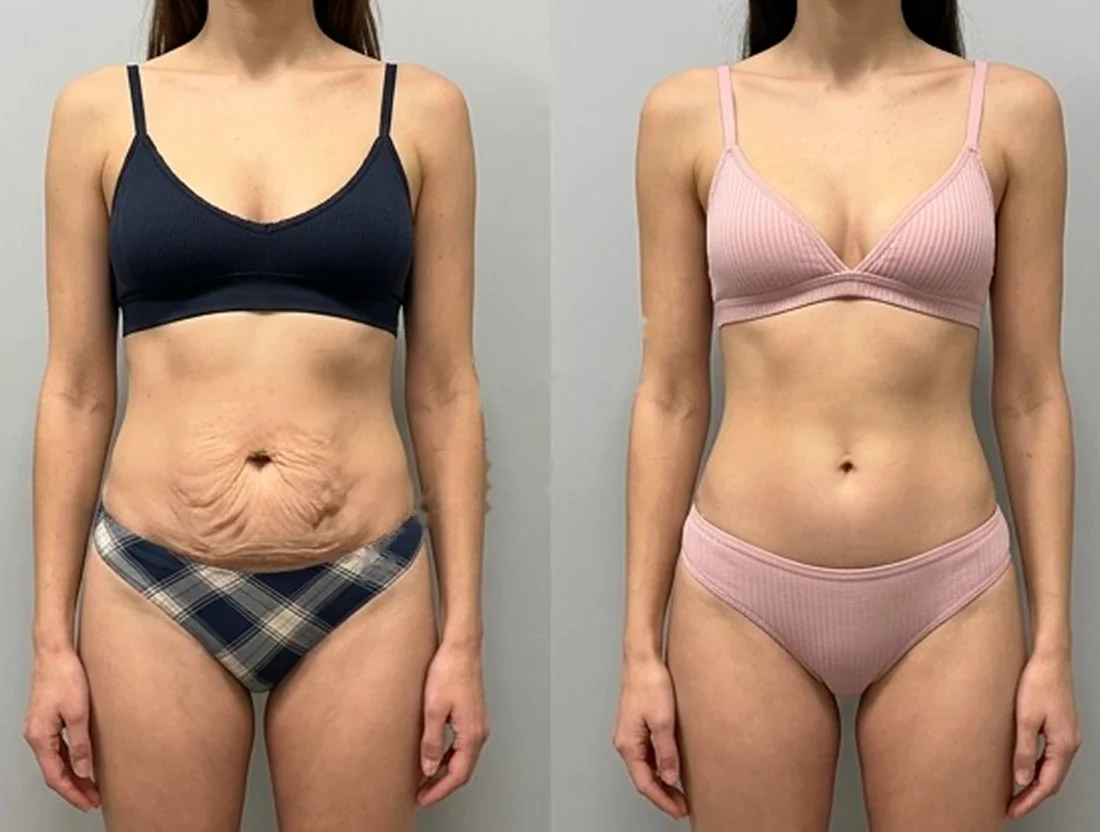
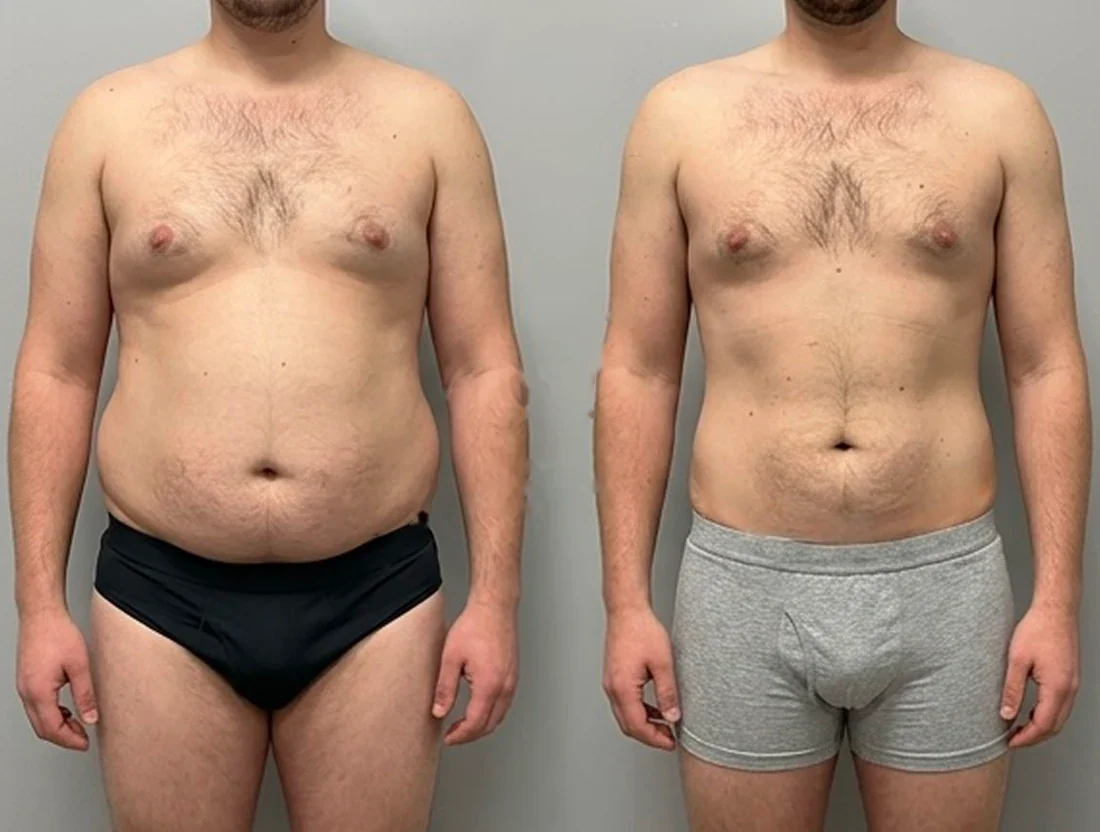
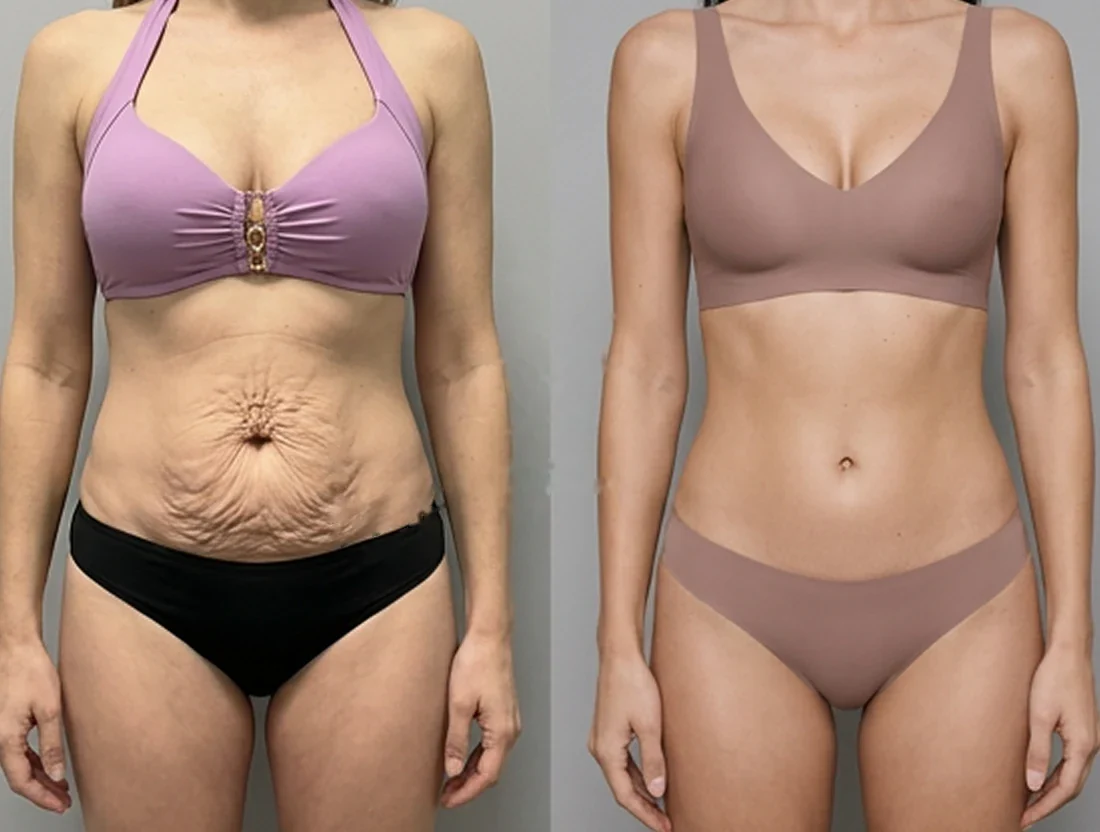
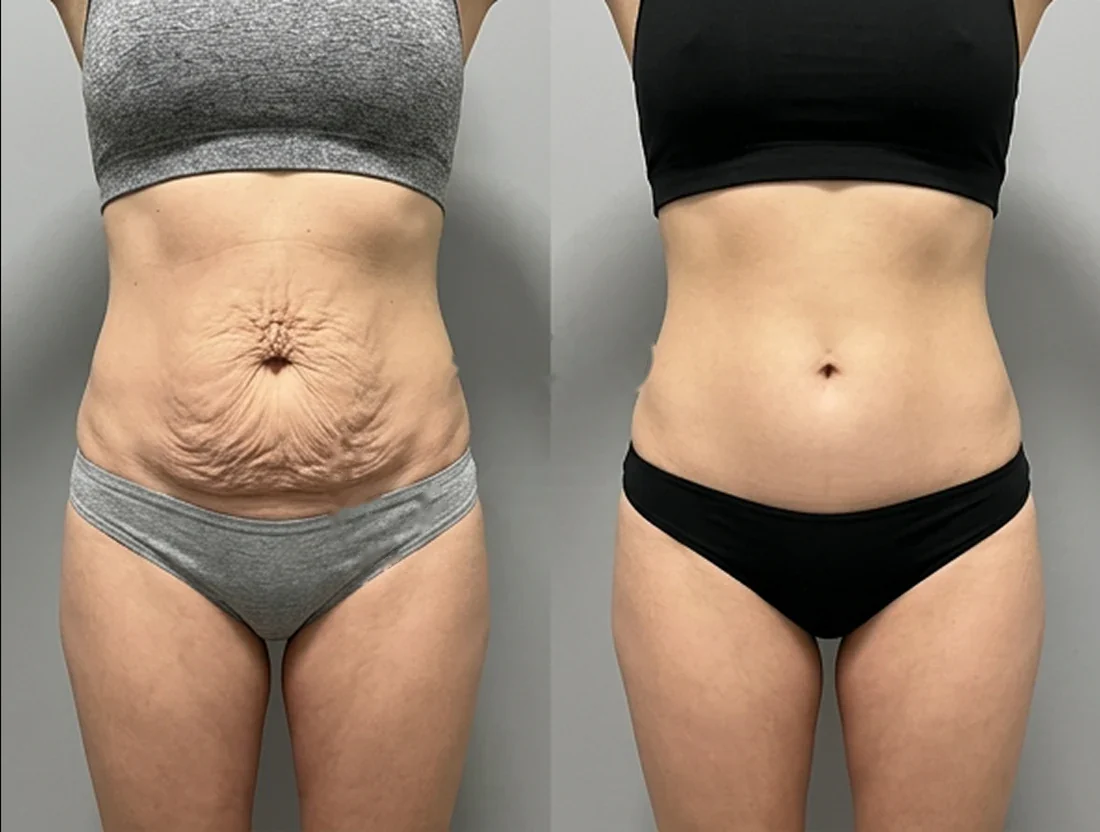
Tummy tuck: a patient's abdomen before and after surgery before after
A flat tummy and a toned silhouette in one operation. Your individual surgical plan and the expected result are discussed at the consultation

Message our coordinator

Free online consultation · Reply within 15 minutes

Message us on Telegram

By messaging us, you agree to our Privacy Policy

Tummy tuck (abdominoplasty) in Zurich: price and key facts

Tummy tuck for patients from Zurich at City Medical Centre: the price is named at the free online consultation and fixed in the contract with no hidden extra charges.

Duration
2–4 hours
Anesthesia
general
Stay
1–3 days
Recovery
back to work after 2–3 weeks
Final result
6–12 months after surgery
How it works
Send photos on WhatsApp or Telegram, get a free doctor assessment and the price, then confirm the plan and dates before anything is booked.

How it works · Tummy tuck prices

Information current as of 24 October 2026

Free online consultation on WhatsApp and Telegram

Results

Tummy tuck (abdominoplasty) results
of our patients

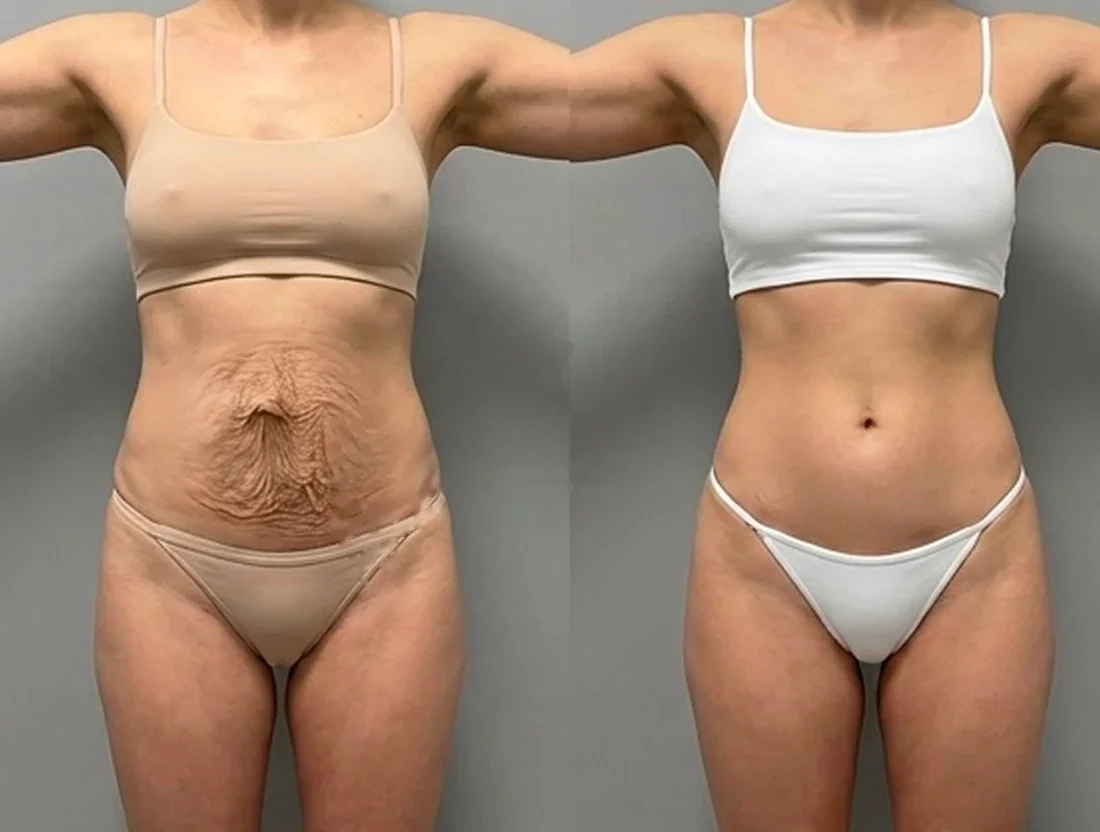
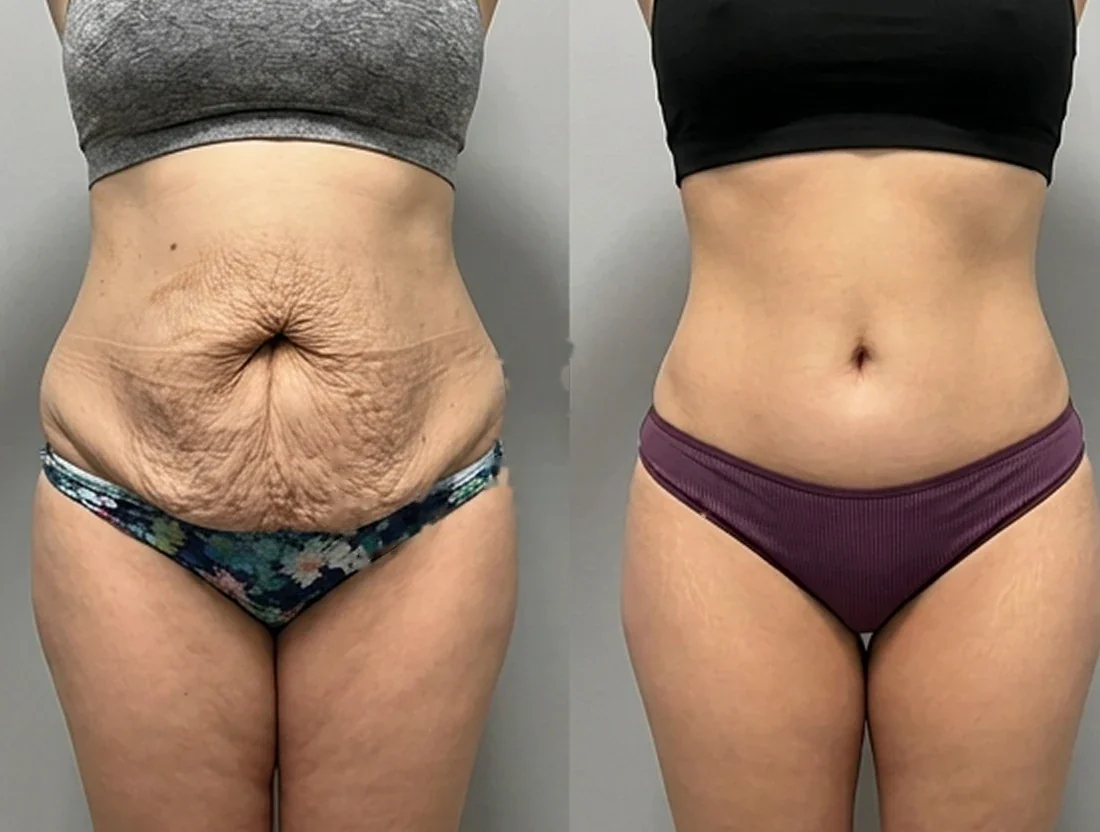
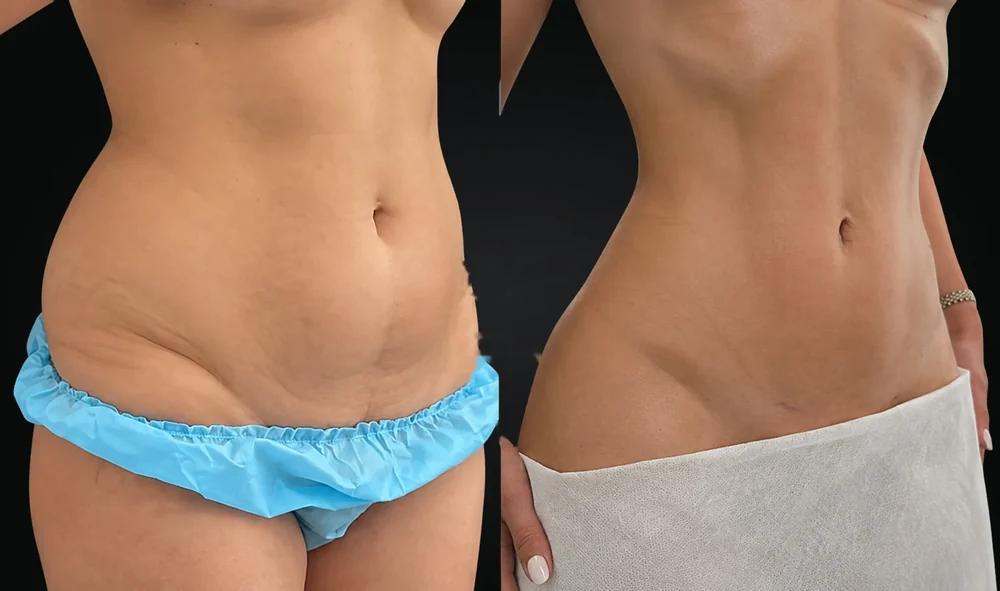
All cases are real patients. Faces and identifying details are hidden.

Tummy tuck: a female patient's abdomen before and after surgerybeforeafter
Tummy tuck: a male patient's abdomen before and after surgerybeforeafter
Tummy tuck: a female patient's abdomen before and after surgerybeforeafter
Tummy tuck: a male patient's abdomen before and after surgerybeforeafter
Tummy tuck: a female patient's abdomen before and after surgerybeforeafter
1 of 8

Comparison

Tummy tuck techniques

A tummy tuck is done as a full (classic) or mini operation, or combined with liposuction as lipoabdominoplasty. Compare the scope of surgery, the indications and the expected results to choose the right technique together with your surgeon.

Tummy tuck

Removal of excess skin, abdominal muscle tightening
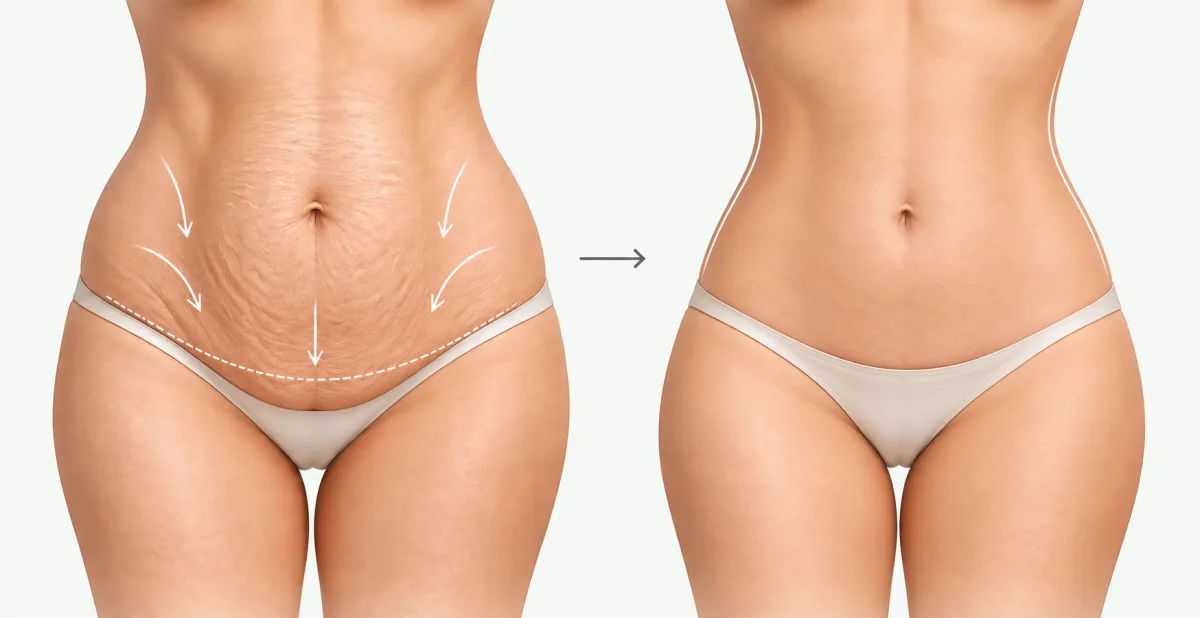
Tummy tuck diagram: the abdomen before surgery with the incision line, and the result
Main goal
Removal of excess skin, diastasis repair
When it is done
Excess skin after childbirth or weight loss
Anaesthesia and stay
General anaesthesia, up to 3 days in hospital

Lipoabdominoplasty

Tummy tuck with added liposuction
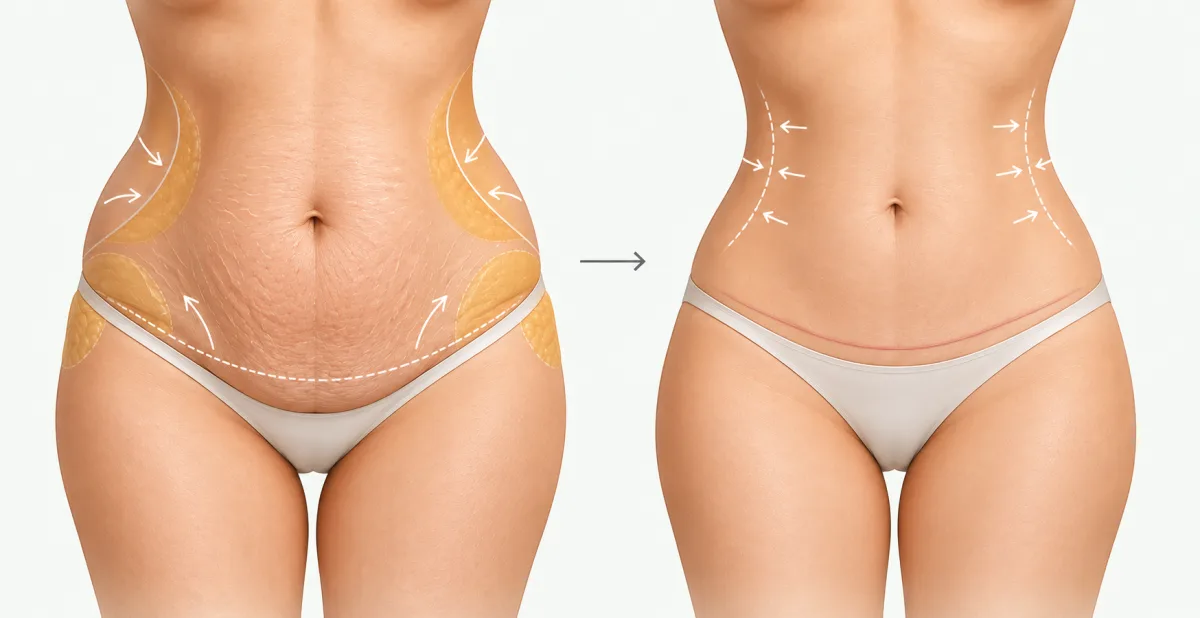
Lipoabdominoplasty diagram: the abdomen with fat on the flanks before surgery, and the result
Main goal
Tummy tightening and waist contouring
When it is done
For fat deposits on the flanks and waist
Anaesthesia and stay
General anaesthesia, up to 3 days in hospital

The benefits and recovery times shown are averaged for each technique and given for guidance: the scope of correction and rehabilitation depend on your anatomy and individual features, and the surgeon confirms them at the consultation.

At the consultation the surgeon draws up a plan for your case and explains how your tummy tuck will go.

Free, before surgery and with no obligation.

Book a consultation

Tummy tuck from the inside

About the clinic

A clinic where you can feel at ease

Modern equipment, comfortable rooms and care for every patient

A doctor and a patient in a clinic ward

Contact us the way that suits you

We will answer your questions and find a convenient time for a consultation

By messaging us, you agree to our Privacy Policy

A tummy tuck is not for everyone

If your case can be solved without surgery, the doctor will tell you so at the consultation — and you will not spend money for nothing.

Suitable

A surgeon shows a patient on a model and a monitor how the abdominal contour changes after a tummy tuck
  • Rectus abdominis diastasis
  • Skin folds after weight loss
  • Loose abdominal skin
  • Stretched skin after pregnancy
  • A distorted abdominal contour

Not suitable

A surgeon discusses the indications and contraindications for a tummy tuck with a patient
  • Acute infections
  • Severe heart, kidney or liver disease
  • Blood coagulation disorders
  • Under the age of 18
  • Decompensated diabetes
  • Cancer
  • Skin inflammation in the surgical area
  • Currently pregnant or breastfeeding

Not sure the surgery is right for you?

Message us — the coordinator will ask for your photos in the messenger, and the surgeon will tell you whether a tummy tuck suits you. No surgery booking needed.

Find out if it suits me

A surgeon goes through a tummy tuck diagram with a patient at the consultation

Prices

You know the price
before surgery

The price is set at the consultation and fixed in the contract.

Other services

  • First consultationFree
  • Liposuction of the abdomen and flanksfrom $1,700
Book a consultation

Find out your tummy tuck plan and price

The surgeon assesses your abdominal skin and muscles, listens to your wishes and chooses the right correction technique.
The price is set at the consultation and fixed in the contract.
A nurse talks to a patient in a clinic ward

Message our coordinator

Free online consultation · Reply within 15 minutes

Message us on Telegram

By messaging us, you agree to our Privacy Policy
A patient's abdomen before a tummy tuck in the operating room

all inclusive

What the price includes

From preparation for surgery
to post-op check-ups.

  • All scheduled dressings
  • Scheduled post-op check-ups
  • A personal coordinator on call
  • Compression garments fitted on the day of surgery
  • A stay in a comfortable
    hospital ward with meals
  • Individual recommendations
    for recovery
  • Remote progress monitoring
    by photos

How it works

Three days at the clinic —
from preparation to discharge

An agreed correction plan, inpatient observation and post-op check-ups.

A doctor shows a patient a tummy tuck diagram on a monitor1

Consultation
and the surgical plan

The surgeon assesses your abdominal skin and muscles and checks for diastasis, listens to your wishes and chooses the right correction technique.

Paying the deposit by card at the clinic reception2

Booking the date
of surgery

We reserve a surgery date for you: the deposit can be paid by card at the clinic or online by bank transfer. The terms are fixed in the contract for medical services

A blood sample tube for tests before a tummy tuck3

Check-up before
surgery

Before surgery you complete a full lab check-up: blood tests, an ECG, a chest X-ray and reports from the required specialists.

The surgical team during the operation4

Surgery

The surgeon performs the tummy tuck with the chosen technique, repairs diastasis if needed and shapes a firmer abdominal contour.

A hospital ward at the clinic5

Inpatient stay

After surgery the patient stays for 1–3 days in a comfortable hospital ward with meals, under medical supervision.

A surgeon and a patient in the ward during recovery6

Recovery

After surgery you get a recovery programme. Check-ups at 7 days, 3 and 6 months help track your recovery.
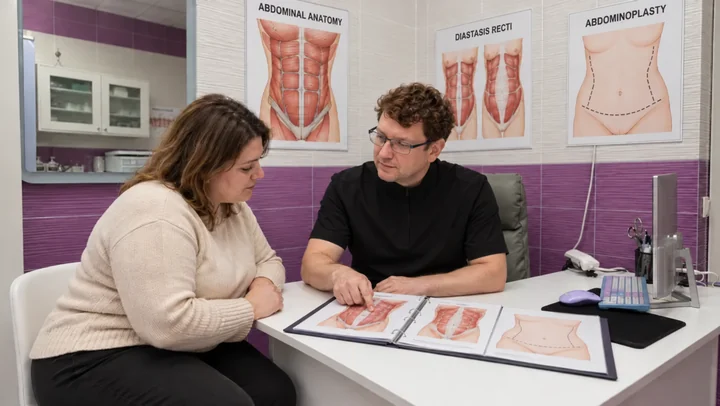
Book a free consultation — the surgeon will plan every step with you.

A doctor discusses the tummy tuck plan with a patient
Book a consultation
A doctor discusses the tummy tuck plan with a patient

How it really happens

Healing after a tummy tuck

For 1–3 days right after surgery the patient stays in hospital under medical supervision. Drains are usually removed after two days, stitches after 7 days. You wear a compression binder for 1.5–2 months; it supports the abdominal wall and shapes a smooth contour. Office work resumes after 2–3 weeks, and most swelling goes within 30 days. Sports, sauna and heavy lifting are off-limits for 2–3 months, and at first sleeping on your back with knees bent is advised. By 12 months the scar is fully mature and fades to barely noticeable.

Post-op check-ups

After 7 days, at 3 months and at 6 months. Until the end of the year, get a post-surgery consultation with your surgeon to review results and get more information, at the clinic's expense

Advantages

Why patients choose City Medical Centre

A surgeon discusses the tummy tuck plan with a patient at the consultation

Just find out — you lose nothing

At the consultation we discuss your wishes and assess your abdominal skin and muscles. The surgeon explains what changes are possible, chooses the correction technique and answers your questions.

A surgeon on a video call with a patient after surgery

We stay with you after surgery

The surgeon follows your recovery and the changing abdominal contour at check-ups after 7 days, 3 and 6 months. Check-ups, dressings and aftercare advice are already included in the price of surgery.

A surgeon shows a patient a model and tummy tuck diagrams

A beautiful contour that fits your figure

We choose the correction technique based on your skin, muscles and figure. Our aim is a harmonious abdominal contour that keeps the natural proportions of your body.

A patient writes down a convenient visit time in her planner

Your schedule is our priority

We respect your time: we work 24/7, with easy booking and a personal approach — we adapt to your pace.
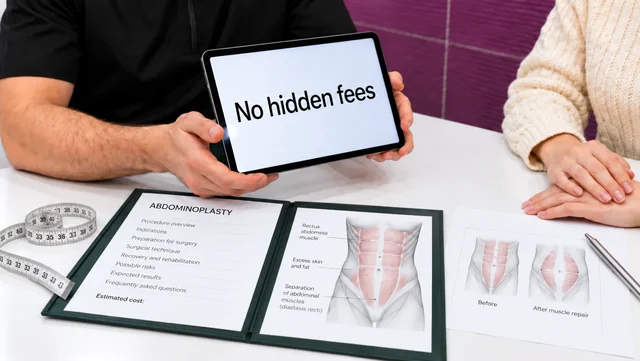
A surgeon shows a patient the fixed price of surgery with no extra charges

Fixed prices

After the consultation the surgeon defines the extent of correction, and you get a clear price for the surgery — no surprises on the way to the result you want.

A surgeon visits a patient in the hospital ward after surgery

Round-the-clock care after surgery

Recovery starts in a comfortable hospital ward under round-the-clock nursing care. The stay and meals are already included in the price.

FAQ

We answer what
people ask before booking

How a tummy tuck works for Zurich residents

Timing matters with abdominoplasty. Because pregnancy stretches the repaired muscles again, surgeons advise having it once your family is complete and planning a pregnancy no earlier than a year afterwards. It is also done only at a stable weight: if yours is still changing, a dietitian or endocrinologist comes first. Women in Zurich thinking about the procedure after childbirth should keep this order in mind.

In the classic operation the surgeon makes a horizontal incision above the pubic area, its length set by the amount of excess tissue. The separated rectus muscles are repaired, excess skin and fat are removed, the navel is repositioned and drains are placed. The mini version works only on the lower abdomen through a shorter incision. Patients from Zurich are under general anaesthesia throughout.

Start with a free consultation for a tummy tuck in Zurich. The surgeon assesses your abdomen, explains the difference between the classic and mini techniques for your case and gives the final price, which is then recorded in the contract. Apply before the end of the year and the consultation is at the clinic's expense. Write to us in any messenger or use the form on the page.

Stories of well-known people

Well-known people who spoke openly about this operation, in their own words.

All stories about this operation →

Planning the first fortnight at home: core, stairs and everyday bending

A tummy tuck is an operation on the centre of the body, so the first days at home are mostly about the core. The medical outline is clear. The operation takes 2–4 hours under general anaesthesia, and the hospital stay is 1–3 days under medical supervision. Drains are usually removed after two days and stitches after 7 days. After that you are at home, and the home is where most of the real recovery happens. It makes sense to look at your own flat or house before the date is set, not after.

Zurich has a particular geography that is worth thinking about. The city centre lies at the lower, northern end of the Zürichsee at an elevation of 409 m, while the Uetliberg reaches 870 m. The height range inside the city boundary runs from 391 to 870 m. Neighbourhoods near the lake and along the Limmat are relatively level, while those on the slopes involve climbs. This matters because the doctor advises sleeping on your back with knees bent at first, and sudden movements and heavy lifting are not allowed in the first 2–3 weeks. A short, flat walk by the water is a very different task from a steep street with shopping bags. When you describe your home during the online consultation, mention whether you live at the lake level or on a slope, and how many floors you climb each day. The doctor can then talk through the practical details with you.

Bending is the other daily problem. Think about the things you normally pick up from the floor or from low cupboards: laundry, a pet bowl, a child's shoes, the dishwasher. Before the operation, move what you use daily to waist or chest height. Prepare meals in advance and set up a place to sleep where you can lie on your back with your knees supported. None of this is medical advice beyond what the doctor tells you. It is simply a way to make the restrictions of the first 2–3 weeks easier to live with, because heavy lifting and sudden movements are exactly what you have to avoid in that period.

Office work usually resumes after 2–3 weeks. That figure is an average and depends on your anatomy and how the recovery goes. If your job involves long sitting, plan how you will get up and sit down gently. If it involves carrying equipment, folders or boxes, tell the coordinator, because sports, sauna and heavy lifting stay off-limits for 2–3 months. This is better settled with your employer before the date is fixed than on the first morning back.

Family life when you cannot lift: children, helpers and the order of events

Many patients considering a tummy tuck are mothers, and the practical question is usually not the operation itself but the weeks that follow. Heavy lifting is not allowed in the first 2–3 weeks, and sports and heavy lifting stay off-limits for 2–3 months. A toddler, a baby carrier or a child who wants to be picked up all count as heavy lifting in this context. It is sensible to arrange a spouse, relative or helper for the first period, and to agree in advance who does the lifting, the shopping and the school or nursery run. The coordinator is available round the clock on WhatsApp and Telegram, so you can ask how a particular household task fits the recovery plan.

The sequence of family events matters too. The medical text on this subject is plain: you can become pregnant after a tummy tuck, but childbirth should come first and surgery after it. Otherwise the skin and muscles stretch again. A pregnancy after the operation stretches the repaired muscles, so surgery is planned once your family is complete. If you are still thinking about another child, say so at the very start of the consultation. Surgery is also done at a stable weight, so if your weight is still changing, the first step is a dietitian or endocrinologist, not the operating date.

Switzerland's basic health insurance provides the same basic benefits for everyone insured and covers illness, accident and maternity. For families, this means that pregnancy and birth are part of a standard insurance framework, and a planned tummy tuck usually comes after that chapter has closed. Whether any part of a planned procedure is reimbursed is a question for your insurer, and the coordinator cannot answer it for you. What the medical team can do is describe the operation in plain terms, so that you can ask the insurer a precise question.

Think also about what the children see and hear. A parent who is wearing a compression binder, sleeping propped on the back and moving slowly can be puzzling for a small child. A short, calm explanation is enough: you are recovering, you cannot be picked up for a while, and cuddles happen sitting down. With older children, a visible plan helps: who takes them to school, what happens on the days when you rest, and when you expect to be back at normal activity. The hospital stay is 1–3 days, so the household only has to run without you for a short time. The more important period is the weeks after you return.

One more point on the family side: the check-ups at 7 days, 3 months and 6 months are dates in a diary. Put them in the family calendar early. Progress is monitored remotely by photos, which means that the contact takes place from your own home, at a time you choose, without arranging childcare around it.

Wearing a compression binder through Zurich's winters and humid summers

The compression binder is worn for 1.5–2 months. It supports the abdominal wall and shapes a smooth contour, and the garment is fitted on the day of the operation. Because the period is so long, the season in which you wear it makes a real difference to comfort. Zurich's climate offers a useful picture. The annual mean temperature is 9.9 °C, according to the MeteoSwiss 1991–2020 normals for the Zürich-Affoltern station. In January the mean temperature is 1.0 °C, with a mean maximum of 3.8 °C and a minimum of −1.9 °C. In July the mean daily maximum is 25.1 °C, in August 24.7 °C and in June 23.1 °C.

In the cold months, the binder sits under normal clothing, and the main practical issue is dressing in layers that you can put on without stretching or twisting. The city has about 87 frost days and about 16 ice days a year. That affects the walk outside more than the binder itself: icy pavements are not the place for sudden movements, and a slip that makes you grab a rail abruptly is exactly the kind of movement the doctor wants you to avoid in the first 2–3 weeks. Choose shoes with a good grip and plan routes with care in winter.

In warm weather, the problem is different. Zurich has about 51 summer days and 11–12 hot days per year, and the mean annual relative humidity is 77.7%. A tight garment under a summer outfit can feel warm on a day at 25 °C. Choose loose clothing in natural fabrics over the binder, keep to shade and avoid any long outings in the middle of the day. Do not remove or loosen the garment on your own to feel cooler. Ask the doctor during the consultation how to manage heat and skin care under the binder, and what to do if the skin becomes irritated.

Rain is part of the picture as well. Annual precipitation is 1,021 mm over 125.2 rain days, and the wettest months are July at 116 mm, May at 115 mm, June at 112 mm and August at 109 mm. February is the driest at 55 mm. For recovery this means that a damp, grey day is just as likely as a bright one, and a short walk may need a waterproof jacket that is easy to put on without raising your arms sharply. Walking is not a substitute for medical guidance. It is simply a reminder that daily plans should be flexible, and that you should not have to depend on perfect weather to get out of the house.

Remember, too, that swelling is part of the process: most of it goes within 30 days, but the shape changes over several months. The garment may fit differently from week to week. If it becomes uncomfortable or marks the skin, send a photo to your coordinator rather than waiting for the next scheduled check-up.

Scar, sunshine and the lake season: choosing a month for the operation

A tummy tuck leaves a scar. A classic operation leaves an incision across the lower abdomen from hip to hip, below the underwear or swimsuit line, and a mini tummy tuck leaves a much shorter one. By 12 months the scar is fully mature, and it fades and is barely noticeable. During that year, sunlight is a practical topic. The doctor explains how to protect the scar, and your task is to plan the months around the guidance, not around the calendar of summer activities.

Zurich's sunshine pattern helps explain why the season matters. The city gets 1,662 hours of sun a year, an average of 4.5 hours a day. In July the average is 7.6 hours a day and in June 7.2, but in December only 1.3 hours and in January 1.6. An operation in the dark months means the first weeks of recovery pass with little sun, and the scar is still maturing when spring arrives. An operation in early summer means the first weeks coincide with the brightest days. Neither is automatically right or wrong. What matters is that you can keep the scar covered and out of strong sunlight, and that you are comfortable indoors for the first 2–3 weeks.

Several restrictions fall into the summer calendar. For at least a month, the list says to avoid sauna, steam bath, pool, tanning beds, alcohol and smoking. Sports, sauna and heavy lifting are off-limits for 2–3 months. Zurich is a lake-and-river city, and many summer routines involve water, so it is worth being realistic. The Flussbad Oberer Letten on the Limmat has free entry, but it is suited only to good swimmers, and swimming takes place in the headrace canal of the Letten power plant. That kind of swimming is not a gentle activity. Whether and when any swimming, in a pool or in open water, is acceptable is something the doctor confirms individually. Do not assume that a date a month after the operation is automatically a green light.

Large public events are another thing to consider. The Street Parade is usually held on the second Saturday in August along the Zürichsee, with about 900,000 visitors (920,000 in 2023, and a record 1,100,000 in 2018). In 2027, that Saturday falls on 14 August. A crowd of that size is the opposite of the calm, unhurried environment that the first weeks require, since sudden movements and jostling are not what a healing abdominal wall needs. If you are planning an operation in the summer of 2027, keep that weekend in mind when you choose the date.

A spring example: Sechseläuten is held on the third Monday of April, which in 2027 is 19 April. The afternoon is a half holiday for city employees, which is a local custom and not a statutory holiday. If you work for the city, a short week around that date could be part of your planning for the return to the office, which is usually possible after 2–3 weeks. Do not rely on it as a rule; ask your employer.

The practical conclusion is to choose the month on the basis of your own calendar: when you can rest, when you do not need to lift, how your work and family look, and how comfortable you are keeping the scar out of the sun. The coordinator can go through the options with you in the free consultation, with no obligation to book.

Insurance questions, tests and the online route to a confirmed date

Everyone staying in Switzerland must have health insurance, and the basic (OKP) benefits are identical nationwide for all insured. They cover illness, accident and maternity. Insurers must offer the basic plan to everyone regardless of age or health status. Adults have an annual franchise, with a 10% co-payment after it, and for stays in hospital a daily contribution applies to persons who do not live with family members. Maternity services and designated preventive measures carry no cost sharing. These are general rules of the insurance system, and they are useful background, not a statement about any particular operation.

When you are thinking about a tummy tuck, the sensible approach is to separate two questions. The first is medical: is the operation suitable for you? The text lists suitable cases such as rectus abdominis diastasis, skin folds after weight loss, loose abdominal skin, stretched skin after pregnancy and a distorted abdominal contour. It also lists reasons it is not suitable: acute infections, severe disease of the heart, kidneys or liver, blood clotting problems, age under 18, decompensated diabetes, cancer, skin inflammation in the surgical area, pregnancy and nursing. The second question is financial and administrative, and your insurer is the right party to ask. Do not expect the coordinators to interpret your policy.

The online process is intentionally simple. You send photos on WhatsApp or Telegram, receive a free assessment from the doctor and a price, then confirm the plan and dates before anything is booked. The price is fixed in the contract, and it covers scheduled dressings, scheduled check-ups, a personal coordinator on call, compression garments fitted on the day of the operation, a stay in a hospital ward with meals, individual recovery recommendations and remote monitoring by photos. The consultation is free and carries no obligation to book. Coordinators answer round the clock, so a question that occurs to you late in the evening does not have to wait.

Preparation is practical and has a deadline. Smoking, alcohol and medicines affecting blood clotting are discontinued 7–10 days before the operation, and the pre-operative check-up should be done in advance, not the day before. It includes blood and urine tests, a coagulation panel, biochemistry, infection tests, an ECG, a chest X-ray, a leg vein ultrasound, a GP's report and an anaesthetist consultation. Tests are usually valid for 10–14 days, so the order of steps matters: do not take every test too early. The doctor gives the exact list at the consultation.

If you are a student or work in a university environment, the calendar needs a little more thought. The city has two very large institutions: Universität Zürich with 28,476 students in 2024, and ETH Zürich with 26,942 students in its article. A semester timetable, laboratory work or exams do not move for a recovery period, and it may help to plan the operation in a break. Sports, sauna and heavy lifting remain off-limits for 2–3 months, which also affects laboratory and sporting activities. Talk to your coordinator about your timetable, and plan the follow-up check-ups at 7 days, 3 months and 6 months in the same way as other appointments.

Finally, a note on expectations. The first changes appear about 2 weeks after the operation as the main swelling subsides, an interim result is seen at 1.5–2 months, and the final contours and the scar are assessed at 6–12 months. The result depends on your anatomy, and the doctor confirms the plan individually. Whatever date you choose, a calm start to the recovery gives you the best conditions for those months.

Does it matter whether I live near the lake or on a hill in Zurich when planning recovery?

It can matter for the first weeks. The city lies between 391 and 870 m, with the centre at 409 m and the Uetliberg at 870 m. Flat routes near the lake or the Limmat are easier than steep streets while heavy lifting and sudden movements are not allowed in the first 2–3 weeks. Describe your home and daily stairs or slopes during the online consultation, so the doctor can discuss the details with you.

Is winter or summer easier for wearing a compression binder in Zurich?

Both have advantages and difficulties. The binder is worn for 1.5–2 months. In January the mean temperature is 1.0 °C and there are about 87 frost days a year, so grip on icy pavements matters. In July the mean daily maximum is 25.1 °C and humidity averages 77.7%, so loose natural-fabric clothing over the binder helps. Do not loosen the garment yourself; ask the coordinator if it irritates the skin.

How should I think about sun and the scar given Zurich's sunshine hours?

The scar is fully mature at 12 months, and it fades and is barely noticeable by then. The city averages 7.6 hours of sun a day in July but only 1.3 in December. Tanning beds are to be avoided for at least a month. Discuss how to protect the scar from sunlight during the consultation, as the doctor confirms the guidance individually.

Can I swim in the Limmat or the lake in the summer after a tummy tuck?

Do not plan it as a given. Pool use is on the list to avoid for at least a month, and sports and sauna are off-limits for 2–3 months. The Flussbad Oberer Letten on the Limmat is suited only to good swimmers. Ask the doctor when any swimming is acceptable in your case, and do not decide by the calendar alone.

Would the Street Parade or other big events affect the choice of date?

They can. The Street Parade is usually held on the second Saturday in August, which is 14 August in 2027, and has about 900,000 visitors. Crowds and jostling are not welcome in the early recovery, when sudden movements are not allowed. If you plan an operation in summer 2027, choose a date that leaves that weekend calm.

Will Swiss basic health insurance pay for a tummy tuck?

This is a question for your insurer, not for the coordinators. The basic insurance provides identical benefits nationwide and covers illness, accident and maternity, and you have an annual franchise and a 10% co-payment. Ask the insurer a precise question about the operation, and the coordinator can describe the procedure in plain medical terms for you.

How can a student or office worker in Zurich fit the recovery into a timetable?

Office work usually resumes after 2–3 weeks, while sports, sauna and heavy lifting stay off-limits for 2–3 months. Choose a break in the semester or work year where you can rest, and put the check-ups at 7 days, 3 months and 6 months in your calendar. Tell the coordinator about laboratory or sporting activities, as these may need special planning.

Could Sechseläuten in April help with returning to work?

Possibly, but only if you work for the city. The afternoon of Sechseläuten, the third Monday of April (19 April in 2027), is a half holiday for city employees. It is a local custom and not a statutory holiday, so it is not a rule for everyone. Confirm it with your employer before building a plan around it.