



























Message our coordinator
Free online consultation · Reply within 15 minutes
Message us on TelegramMessage us on WhatsAppBy messaging us, you agree to our Privacy Policy




Facelift and neck lift in Catania: price and key facts
Facelift for patients from Catania at City Medical Centre starts at €2,150 (from $2,400). The first online consultation is free; the doctor names the final price and it is fixed in the contract.
- Price
- €2,150 (from $2,400)
- Anesthesia
- general (inhalation)
- Recovery
- about 2 months to full recovery
- Final result
- 3–6 months after surgery
- How it works
- Send photos on WhatsApp or Telegram, get a free doctor assessment and the price, then confirm the plan and dates before anything is booked.
How it works · Facelift prices
Information current as of 24 October 2026



50 years
9 months

SMAS facelift

58 years
8 months
SMAS facelift

34 years
5 months
SMAS facelift

32 years
7 months
SMAS facelift

40 years
6 months
SMAS facelift

45 years
8 months
SMAS facelift

38 years
5 months
SMAS facelift

33 years
6 months
SMAS facelift
50 years
9 months
SMAS facelift
58 years
8 months
SMAS facelift
34 years
5 months
SMAS facelift
32 years
7 months
SMAS facelift
40 years
6 months
SMAS facelift
45 years
8 months
SMAS facelift
38 years
5 months
SMAS facelift
33 years
6 months
SMAS facelift


Noticeable sagging of the face and neck
Jowls and a blurred jawline
Loose neck skin and a double chin
Deep marionette lines and nasolabial folds
Drooping brows, a heavy look
Skin firmness lost significantly after 40
Wish for a long-term result (7–10 years)

Age under 30
Active, acute inflammation of the skin
Pregnancy and the breastfeeding stage
A severe disease of the cardiovascular system
A blood-clotting disorder
Cancer
Decompensated diabetes
Facelift in Catania: what you should know
After 40–50 the skin gradually loses firmness: tissues sag, jowls form, the jawline blurs and the cheeks droop. A surgical SMAS facelift works deeper than cosmetology, repositioning the muscle and fascia layer so it treats the cause of sagging rather than its effects. For patients from Catania, this gives a lasting result even when changes are significant, with the effect holding for 7–10 years.
Follow-up does not end at discharge. Throughout the first year, your plastic surgeon monitors how the face settles and checks the result until it is final. Personal support is provided before and after surgery. When combined procedures such as eyelid surgery or double-chin liposuction are planned, the surgeon sets their scope in advance. For patients from Catania, every step is agreed at the consultation.
A facelift costs from $2,400 (≈ €2,150). For patients from Catania, the price includes a one-to-one consultation, a highly experienced medical team, combined inhalation anaesthesia, a stay in comfortable inpatient rooms, 24/7 monitoring by medical staff, meals during your stay, personal support before and after surgery and a year of follow-up by your plastic surgeon. Start with a free consultation.
Stories of well-known people
Well-known people who spoke openly about this operation, in their own words.
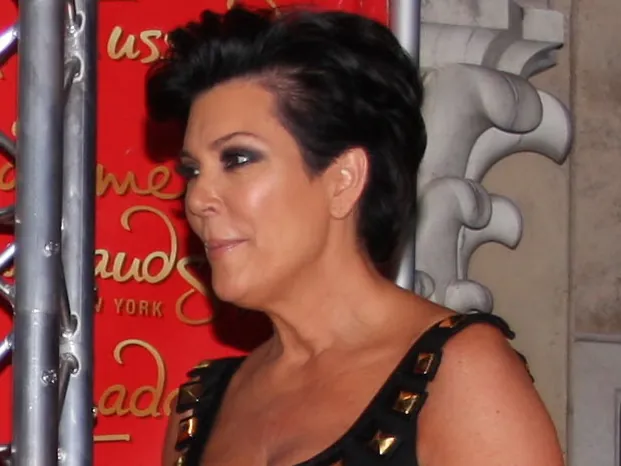 Kris Jenner’s facelift: “I love my facelift”Kris Jenner said she had a facelift about 15 years ago and a refresh before turning 70 — and that she loves it. How a SMAS facelift and recovery work.
 Did Vicki Gunvalson have a facelift? Yes, and she showed the result herselfVicki Gunvalson had a facelift in May 2018 after deciding fillers no longer looked like her. Her own words, how a facelift works and recovery.
 Keltie Knight’s facelift: why she decided to “just own it”Keltie Knight had a facelift in 2023 at 41 and chose to talk about it openly. What she said, how a SMAS facelift works and what recovery looks like.
 Did Linda de Mol have a neck lift? Yes, and she wrote about it herselfLinda de Mol wrote in LINDA. in 2025 that she had a neck lift. What she said, why she chose to be open, and how a face and neck lift works today.
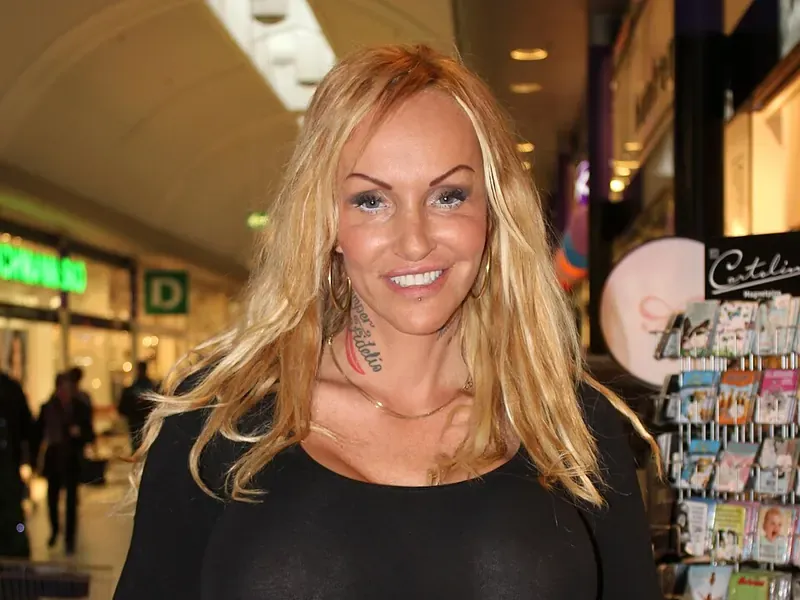 Linse Kessler and her facelifts: what she said herselfDanish reality star Linse Kessler has said openly that she has had several facelifts. Her words, how a modern facelift works and what recovery involves.
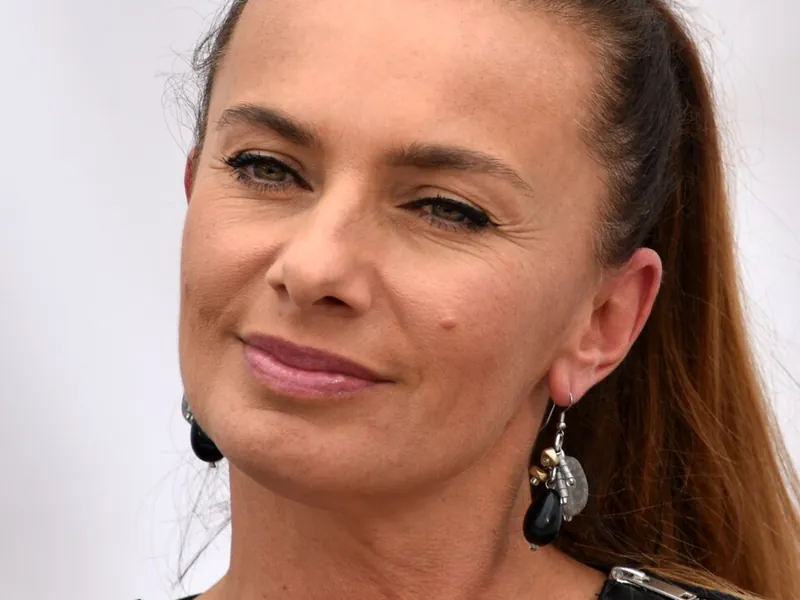 Did Alice Bendová have a facelift? Yes, and she explained why herselfAlice Bendová confirmed a deep plane facelift in September 2026. Her words, how a facelift works, who it suits and what recovery looks like.
Facelift in Catania: price and what is included
Prices are in US dollars; the amount in brackets is an approximate conversion to EUR at the rate of 02.10.2026. The final price is fixed in your contract.
- Faceliftfrom $2,400 (≈ €2,150)
What is a SMAS facelift?
It is a face lift that tightens the deep SMAS layer under the skin, not only the skin itself, so the lower face, jawline and neck stay firmer for longer. The result lasts about 7–10 years.
How much does a facelift in Catania cost?
Prices start from $2,400 (≈ €2,150). The surgeon sets the final price at the free consultation, and it is fixed in the contract, with no hidden extras.
What is included in the price?
A one-to-one consultation, the medical team, anaesthesia, inpatient care with meals, 24/7 monitoring and twelve months of follow-up by the surgeon.
How do I get my exact price?
Message us on WhatsApp or Telegram using the buttons below. A coordinator will answer your questions and book a free consultation where the doctor names the exact price.
By messaging us, you agree to our Privacy Policy
Sun, skin and the Catania calendar
Catania sits on the Ionian coast of Sicily, at the foot of Mount Etna. Its climate shapes how skin ages and how a facelift is planned. The 1991-2020 records from Catania-Sigonella show about 3,225.9 hours of sunshine a year. June alone has 381.6 hours, and even December has 182.3. Mean daily highs reach 35.1 °C in July and 35.5 °C in August, and 40 °C is passed a couple of times in most years. The record is 46.7 °C. Facial skin here gets a lot of ultraviolet exposure for much of the year, and a doctor assessing sagging, texture and fine lines will take that into account.
A SMAS facelift does not treat the skin surface alone. The facial muscle and fascia layer is lifted and fixed, the skin is redraped without excess tension, and fat in the cheeks and lower face is redistributed. Cosmetology works on the top layer, whereas a SMAS lift works deeper, on the cause of sagging. That is why the facelift is described as an operation for people from around 40 to 50, when firmness is gradually lost. In some cases it is considered from 35, and an individual recommendation follows the examination.
In practice the first online consultation in Catania starts with photographs sent to the coordinator on WhatsApp or Telegram. It helps to send pictures taken in ordinary daylight, without a tan filter and without make-up. The doctor can then judge the jowls, the jawline, the neck and the cheeks as they really are. If you spend long hours outdoors in the strong season, say so. It will not change the technique, but it is useful context for the conversation about skin quality and aftercare.
The local calendar has its own rhythm. The festival of Saint Agatha falls every 5 February, with festivities beginning on 3 February. The opera season at the Teatro Massimo Bellini runs from December to May, and the Catania Jazz Festival fills several winter months. The University of Catania, founded in 1434, had 40,287 students in 2024/2025, so the city also keeps an academic calendar. If you plan around these dates, the recovery timeline below shows what to expect.
Swelling, bruising and the weeks that follow
Recovery from a surgical SMAS facelift follows a clear sequence. The operation is done under general (inhalation) anaesthesia, so there is no pain during it. In the first few days there may be discomfort and tightness, which the doctor relieves with prescribed medication. For the first 7-10 days the plan is rest, a compression bandage and reduced physical activity.
Swelling and bruising fade over 2-4 weeks. The first clear changes appear after 3-4 weeks, when the swelling goes down. Full recovery takes about 2 months. The final look of the face arrives 3-6 months after the operation. The patient is followed by the operating team for the whole first year, so questions in month two or month nine have a place to go.
Here is an example with dates. Say the operation is planned for the first half of November 2026. The 7-10 days of quiet rest would pass in mid-November. The 3-4 week mark, when the first clear changes show, would fall in the first half of December. The 2 months of full recovery would end around mid-January. The 3-6 month window for the final look would then run from February into May 2027. This is only an illustration. The real dates are set with the doctor after the consultation and depend on how your tissues respond.
December is the wettest month in Catania, at 78.5 mm, followed by November at 66.2 mm. Annual precipitation is 483.8 mm over 50.7 days with at least 1 mm of rain, and relative humidity averages 70.3%. A damp, grey winter fits a quiet recovery well, because there is little reason to be outdoors. Rest, the compression bandage and low activity are easier to keep to when the weather already keeps you in. Rain does not change the medical plan, but it is a practical argument for choosing the cooler months for the early weeks.
Cold, heat and what the seasons ask of a healing face
Winter in Catania is mild compared with much of Europe. The January mean high is 17.5 °C and the mean low is 6.3 °C. Light snow was recorded on 9 February 2015, the last heavier fall was on 17 December 1988, and the record low is -2.6 °C. For someone recovering from a facelift, a cool but not freezing season is comfortable. Warm clothing that opens at the front is easier than anything pulled over the head, and the compression bandage fits under a scarf or a loose collar.
Summer is a different matter. With July and August highs above 35 °C and 0.4 rainy days in July, heat and strong sun dominate. The record 46.7 °C is a reminder of how extreme it can get. During the first weeks the face is still swollen, bruised and healing, and direct sun and hot conditions are not what healing skin needs. The doctor will give instructions on protecting the face from sun and heat, on when you may return to normal activity, and on how long to keep it up. Follow those instructions rather than general advice.
Because the sun index is so high for most of the year, patients often ask whether summer is a poor season for a facelift. The facts do not support a blanket answer. What matters is how much unprotected sun exposure you will face during the first 2 months, and whether you can arrange your time accordingly. Some patients prefer November to March for this reason. Others schedule a summer procedure and plan to stay indoors for the early weeks. The coordinator can talk through your calendar with you before anything is booked.
Circumetnea, the 110 km narrow-gauge railway around Etna, reaches a maximum elevation of 976 m. Walks on the slopes of the volcano, with changing air and strong light, are something to postpone until the doctor allows normal activity. The same goes for the sports crowd at the Stadio Angelo Massimino, which holds 21,000 people. Crowds, jostling and sun exposure belong in the later stage of recovery, not the first week.
Being presentable again: work, university, festivities
Many people want to know when they can show their face again, and the honest answer is in stages. In the first 7-10 days, expect to stay at home with a compression bandage. After that the bandage comes off as the doctor directs, but visible swelling and bruising may remain until the 2-4 week mark. Around 3-4 weeks, the first clear changes show. By about 2 months you are fully recovered, although the final shape continues to settle until 3-6 months.
For a student at a university with over forty thousand enrolled, this usually means a short break from lectures and a gradual return. For someone who works in an office, it can mean working from home during the first stretch. The facelift is done within a plan that fits around your schedule. The coordinator answers around the clock, so questions that arise at night can be answered in the chat.
Festivals are the most common reason people give for choosing a date. Saint Agatha on 5 February, with the festivities starting on 3 February, is the major local event. Counting back from 5 February 2027, a November 2026 operation leaves roughly the full 2 months of recovery in hand, so the face would be through the main swelling phase by then. The final look will still be settling. Teatro Massimo Bellini's season from December to May and the winter jazz months give several later occasions to aim for. In each case, ask the doctor during the consultation what is realistic for you rather than relying on a fixed rule.
National holidays also matter, because many people use them as natural breaks. The Italian calendar includes 1 January, 6 January, Easter Monday, 25 April, 1 May, 2 June, 15 August, 4 October, 1 November, 8 December, 25 December and 26 December, and every Sunday is a holiday too. Linking the first 7-10 days of rest to such a break reduces the time off needed. The local patron-saint date, 5 February, is not on the national list, so work and study may continue as usual that day.
How the Italian health system fits in, and choosing the type of lift
The Servizio Sanitario Nazionale (SSN) was established in 1978 and gives universal coverage to citizens and residents. It runs on a regional basis, and the Ministry of Health sets the national Essential Levels of Care. A facelift is purely aesthetic, and aesthetic surgery is not paid by the SSN. A national article describes it as accessible only through private services. Reconstructive operations after trauma, burns or mastectomy are covered, as are defined functional cases. Examples include blepharoplasty when vision is reduced by at least 60%, and rhinoplasty for severe septal deviation or breathing problems.
This matters because a facelift is often combined with eyelid surgery, rhinoplasty or double-chin liposuction, and the doctor decides on the combined scope at the consultation. A cosmetic combination is not an SSN matter, but a functional need can be. If you have a medical reason for part of the plan, discuss it with your family doctor and the SSN, and tell the coordinator so the consultation covers it.
Public waiting times were described as usually up to a few months in the big public facilities, and up to a few weeks in private ones contracted with the SSN. No official waiting-list figure was found. A private online consultation with a free first assessment avoids waiting lists for the aesthetic part. Patients from the southern regions have also been described as moving to the more prosperous north for care, but an online consultation lets you start from Catania without moving anywhere.
Four main options exist at City Medical Centre:
- The standard SMAS lift for the mid and lower face.
- The full (circular) lift, covering the forehead, temples, mid and lower face and neck.
- A lift of the lower face and neck.
- An endoscopic lift of the brow and temple, done through tiny punctures.
The standard SMAS lift is described as lasting 7-10 years, and the full lift up to 10 years. The doctor helps you choose according to your age and ageing type. Contraindications include age under 30, acute skin inflammation, pregnancy and breastfeeding, severe cardiovascular disease, clotting problems, cancer and decompensated diabetes. If you have a chronic illness, say so at the start.
Is the summer heat in Catania a reason to avoid scheduling a facelift between June and September?
It is a factor to weigh, not an automatic ban. July and August mean highs are 35.1 °C and 35.5 °C, and 40 °C is passed a couple of times in most years. In the first 7-10 days you are resting with a compression bandage, and swelling and bruising take 2-4 weeks to fade. Direct sun and heat are not a good match for that stage. Some patients choose cooler months, while others plan to stay indoors early on. Discuss your calendar with the coordinator, and the doctor will give sun and heat instructions.
If I have the operation in November 2026, will I be recovered for the festival of Saint Agatha on 5 February 2027?
Counting from the first half of November 2026, the full recovery of about 2 months ends around mid-January, so by 5 February you would be past it. The first clear changes appear at 3-4 weeks, and the final look arrives 3-6 months after the operation, so the face may still be settling in early February. The doctor will confirm the realistic timeline for you after the consultation, and the festival starts on 3 February, so plan for the whole festive period.
Does the Italian national health service cover a facelift?
No. Purely aesthetic surgery is not paid by the SSN and is available only through private services. The SSN covers reconstructive work after trauma, burns or mastectomy, and defined functional cases. Examples are eyelid surgery when vision is reduced by at least 60%, and rhinoplasty for severe septal deviation or breathing problems. A facelift is considered aesthetic, so the free online consultation is the place to start.
Can I combine the lift with an eyelid procedure if I have a functional problem with my vision?
A facelift is often combined with blepharoplasty, rhinoplasty or double-chin liposuction, and the doctor decides on the combined scope at the consultation. If your eyelid problem is functional, the SSN may cover that part in defined cases, for example when vision is reduced by at least 60%. That is a separate question for the SSN and your family doctor. Mention it to the coordinator so the doctor knows during the consultation.
How should I prepare my photos for the online assessment given Catania's strong light?
Take photos in even daylight, away from direct sun and without make-up or filters, so the jowls, jawline, neck and cheeks show as they really are. Strong light with harsh shadows can exaggerate or hide folds. Send several angles on WhatsApp or Telegram, and the coordinator passes them to the doctor. If you spend a lot of time in the sun, mention it, as it is useful context.
Will the damp winter weather in Catania affect my recovery?
Not medically in any way the facts show. December is the wettest month at 78.5 mm, November follows with 66.2 mm, and humidity averages 70.3%. Rain mostly means fewer reasons to go out, which fits the 7-10 days of rest and reduced activity. January highs of 17.5 °C and lows of 6.3 °C are cool but mild. Wear front-opening clothing over the compression bandage, and follow the doctor's instructions.
When could I realistically go back to lectures or office work after a facelift?
The first 7-10 days are for rest with a compression bandage, and swelling and bruising fade over 2-4 weeks. Full recovery takes about 2 months. Many people therefore plan a break of the first stretch, with remote work or study if possible, and a gradual return afterwards. The exact timing depends on how you heal, so ask the doctor during the consultation and keep in touch with the coordinator in the chat.