



























Message our coordinator
Free online consultation · Reply within 15 minutes
Message us on TelegramMessage us on WhatsAppBy messaging us, you agree to our Privacy Policy

Facelift and neck lift in Bologna: price and key facts
Facelift for patients from Bologna at City Medical Centre starts at €2,150 (from $2,400). The first online consultation is free; the doctor names the final price and it is fixed in the contract.
- Price
- €2,150 (from $2,400)
- Anesthesia
- general (inhalation)
- Recovery
- about 2 months to full recovery
- Final result
- 3–6 months after surgery
- How it works
- Send photos on WhatsApp or Telegram, get a free doctor assessment and the price, then confirm the plan and dates before anything is booked.
How it works · Facelift prices
Information current as of 24 October 2026

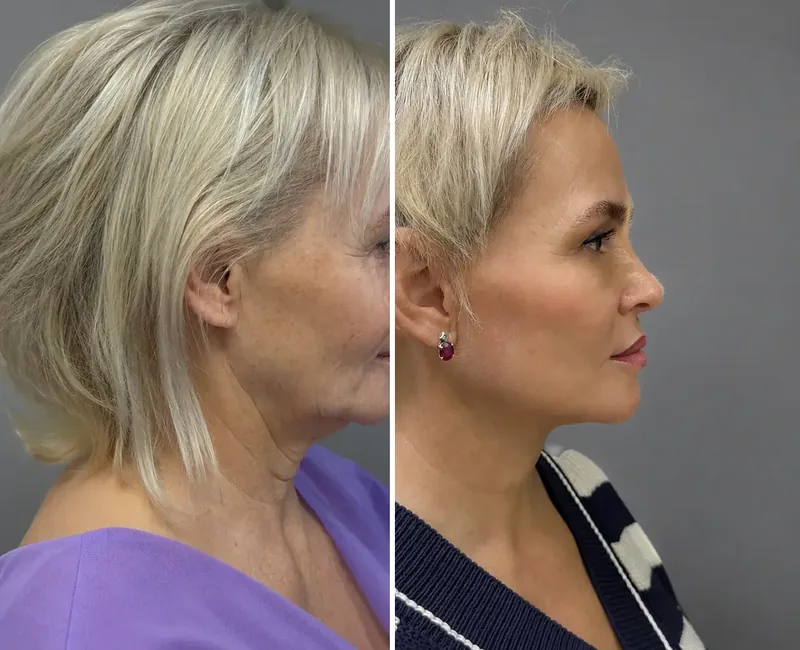
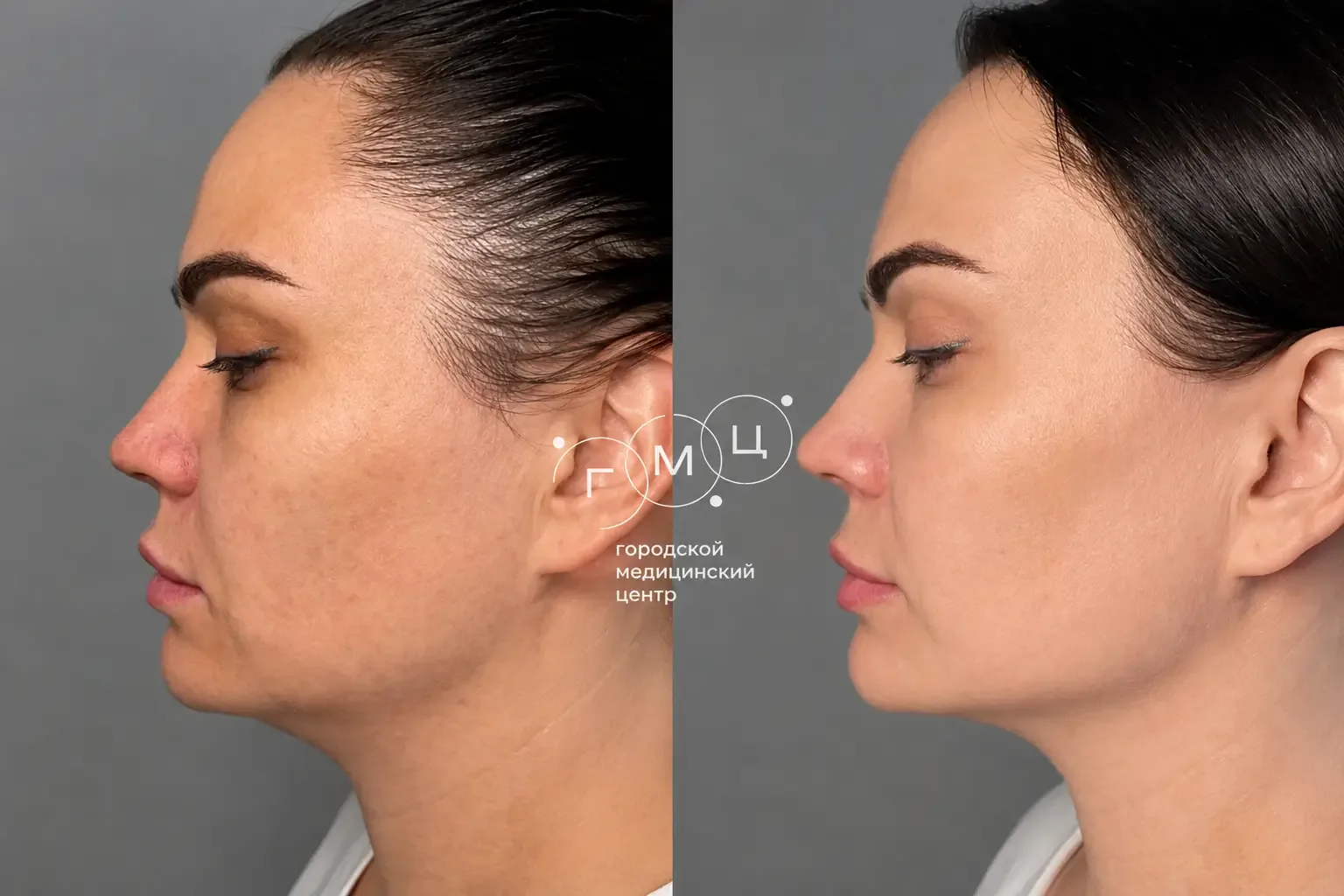
50 years
9 months
SMAS facelift
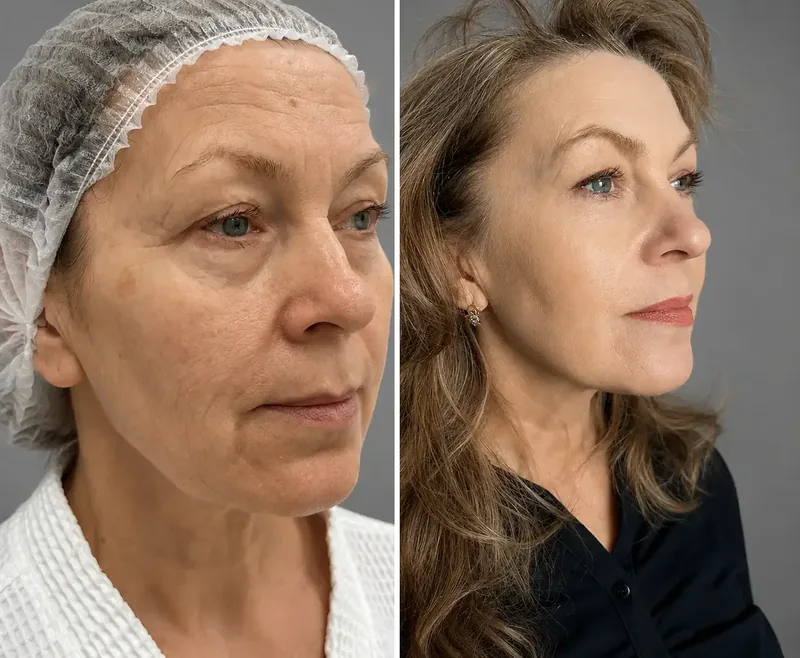
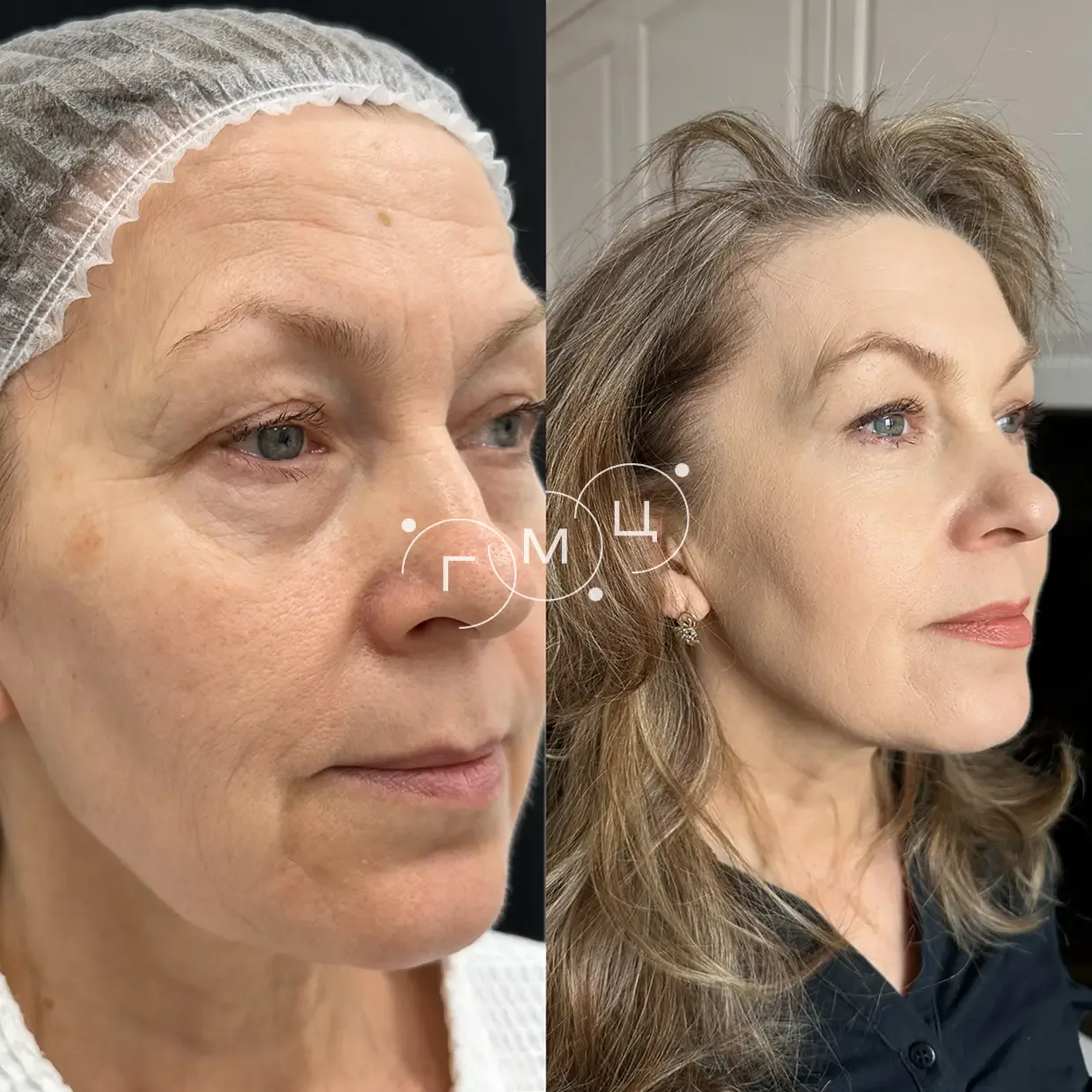
58 years
8 months
SMAS facelift
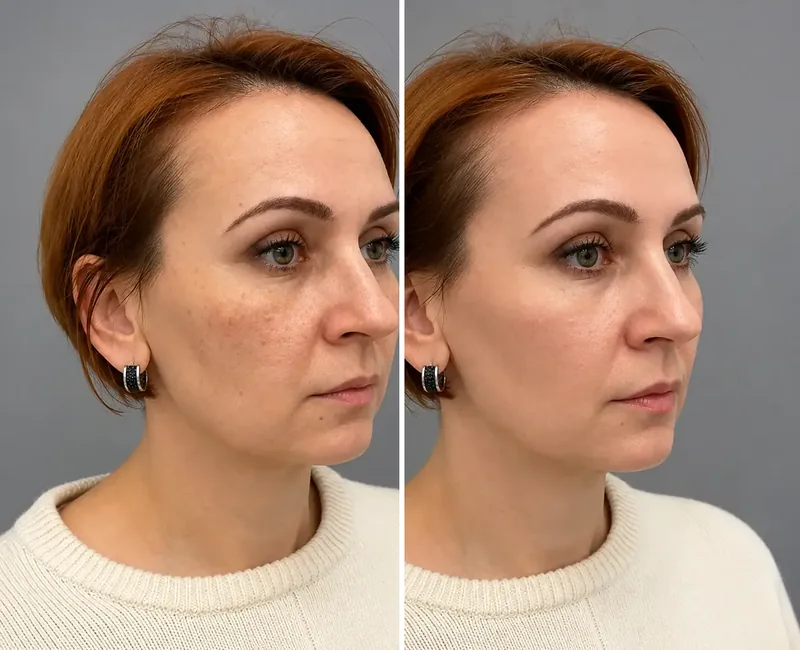
34 years
5 months
SMAS facelift
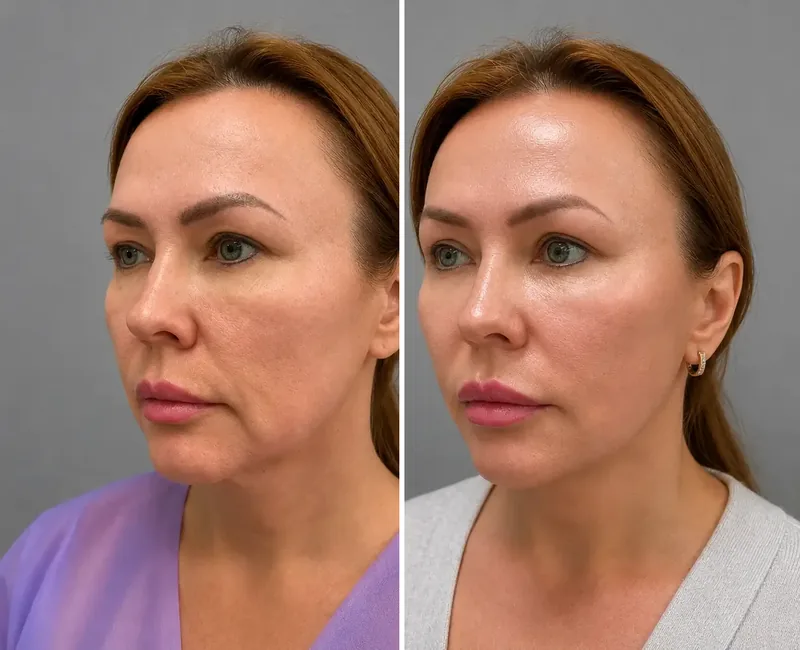
32 years
7 months
SMAS facelift
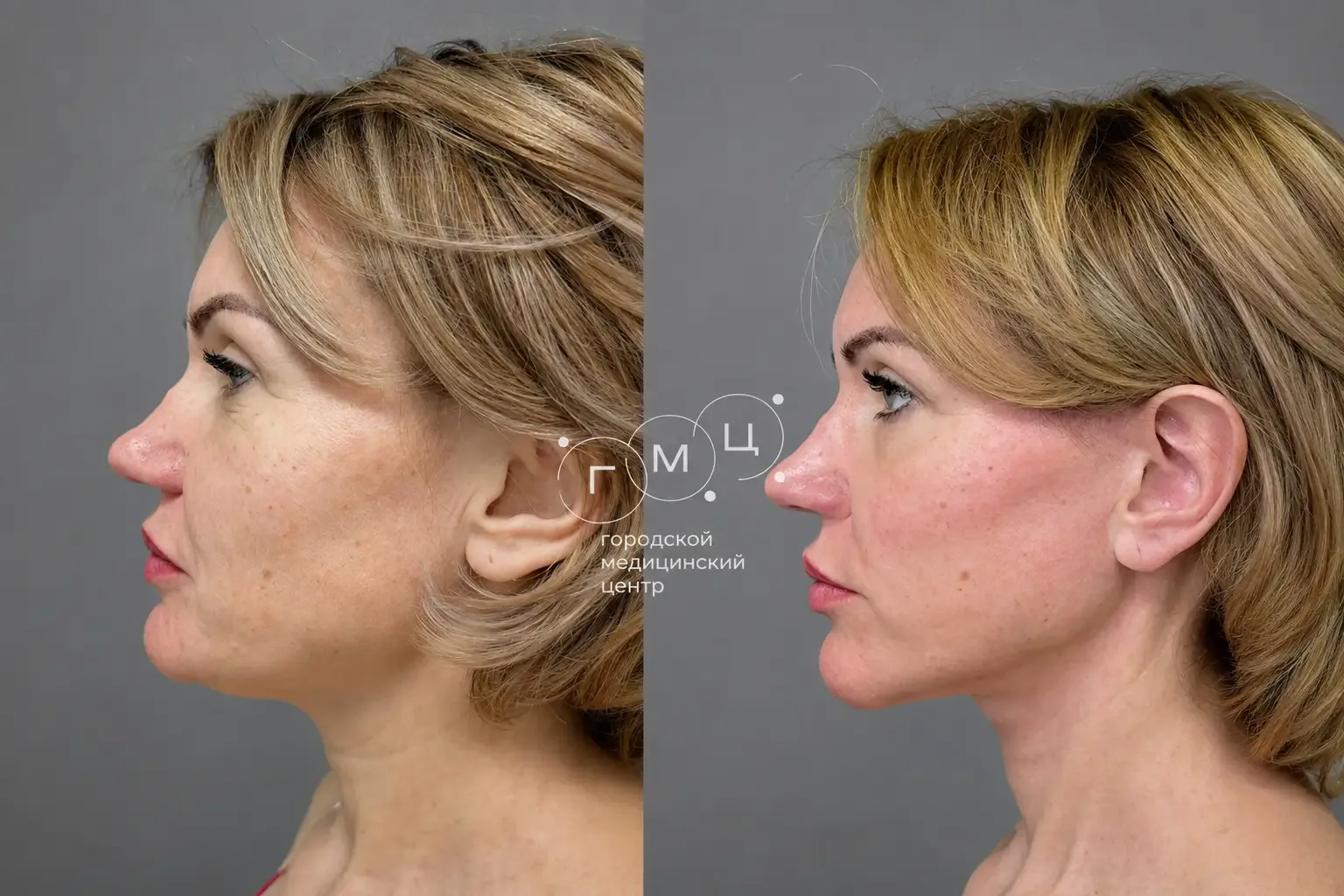
40 years
6 months
SMAS facelift
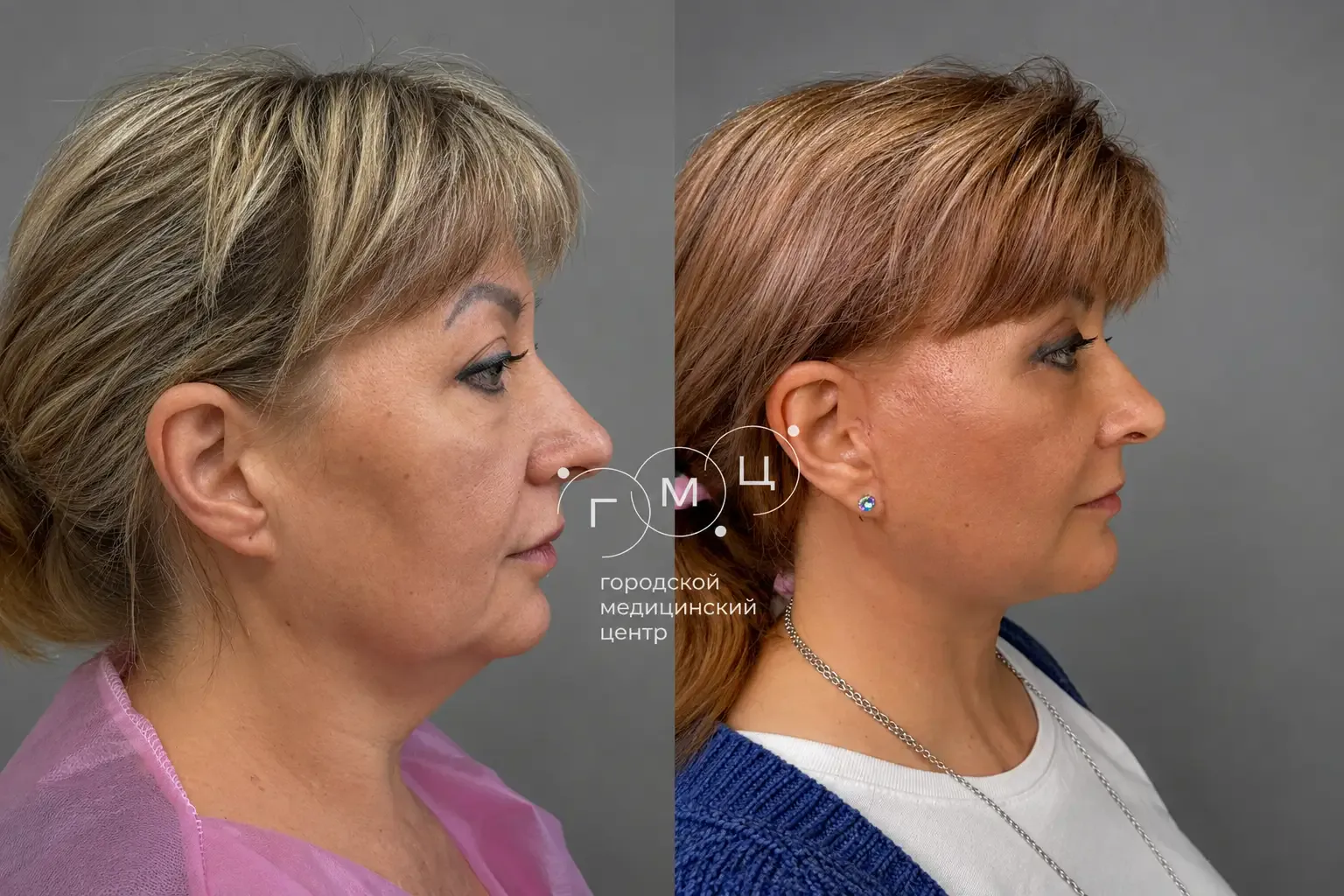
45 years
8 months
SMAS facelift
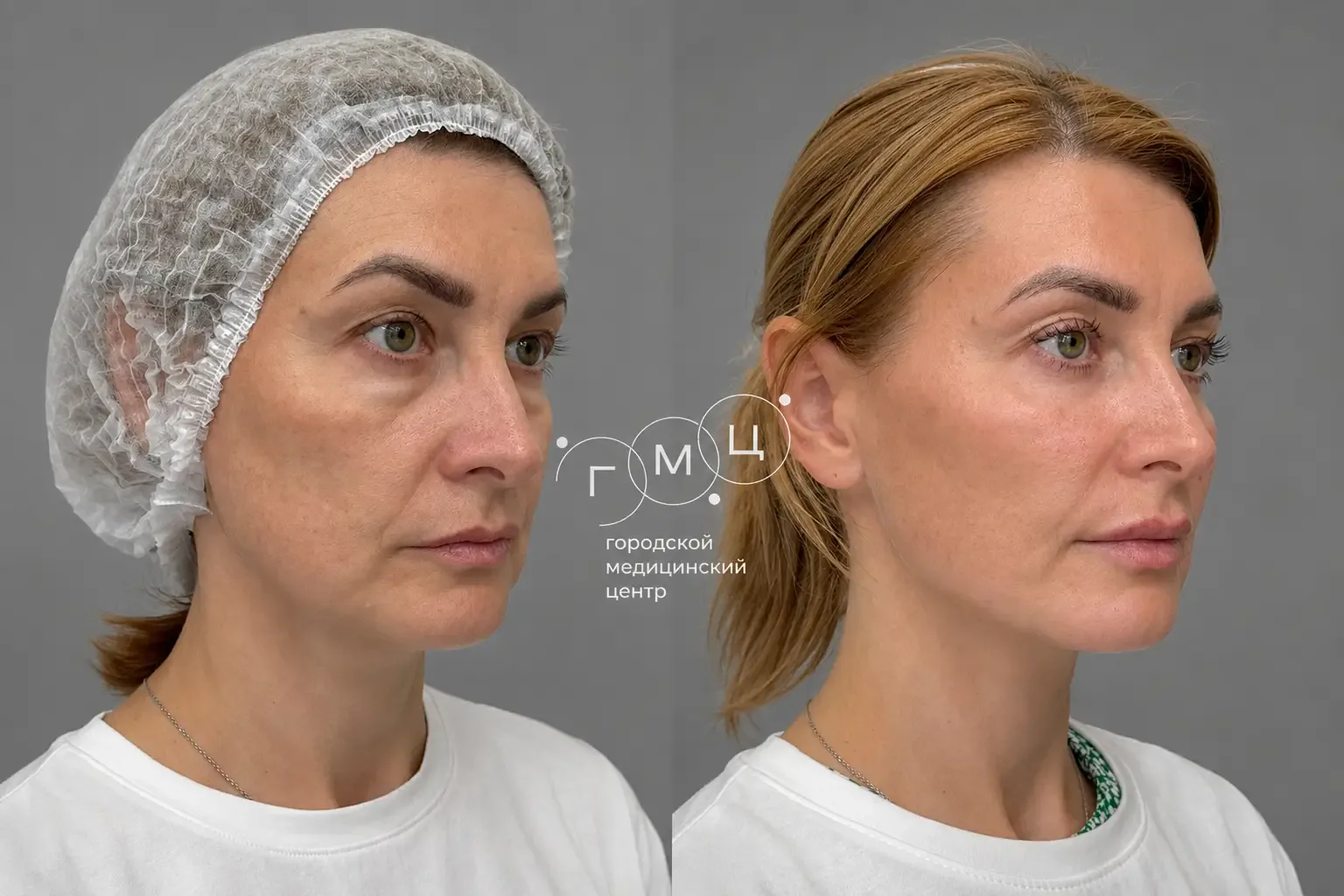
38 years
5 months
SMAS facelift
33 years
6 months
SMAS facelift
50 years
9 months
SMAS facelift
58 years
8 months
SMAS facelift
34 years
5 months
SMAS facelift
32 years
7 months
SMAS facelift
40 years
6 months
SMAS facelift
45 years
8 months
SMAS facelift
38 years
5 months
SMAS facelift
33 years
6 months
SMAS facelift

The face and neck show marked sagging
Jowls and a blurred jawline
A double chin and loose neck skin
Marionette lines and deep nasolabial folds
Brows that droop, giving a heavy look
Skin firmness lost significantly after 40
Looking for a result that lasts (7–10 years)

Patients under the age of 30
Acute skin inflammation
Being pregnant or currently breastfeeding
Severe heart and vascular disease
Blood clotting disorders
Cancer
Decompensated diabetes
Facelift in Bologna: what you should know
What changes after a facelift? The lower-face contour becomes crisp, the cheeks are lifted, the chin line is clean without a double chin and nasolabial folds soften. Brows rise and the eyes look more open. The aim for patients from Bologna is a younger, fresher look without an overdone effect or a mask-like appearance. One surgery gives a complete result, and a full lift keeps it for up to 10 years.
Timing is easier to plan when you know the milestones: a week to ten days of rest, two to four weeks until swelling and bruising fade, about two months to full recovery and three to six months for the final look. The clinic offers flexible booking and a personal approach, so Bologna patients can fit the consultation, surgery and check-ups around a busy schedule.
Start with a free, no-pressure consultation: you get an assessment of your ageing type, an explanation of the expected result and answers on recovery. If you decide to proceed, a facelift costs from $2,400 (≈ €2,150), with anaesthesia, the inpatient stay, meals and a year of follow-up included, and 0% instalments available. People in Bologna can send a request online or message a coordinator.
Stories of well-known people
Well-known people who spoke openly about this operation, in their own words.
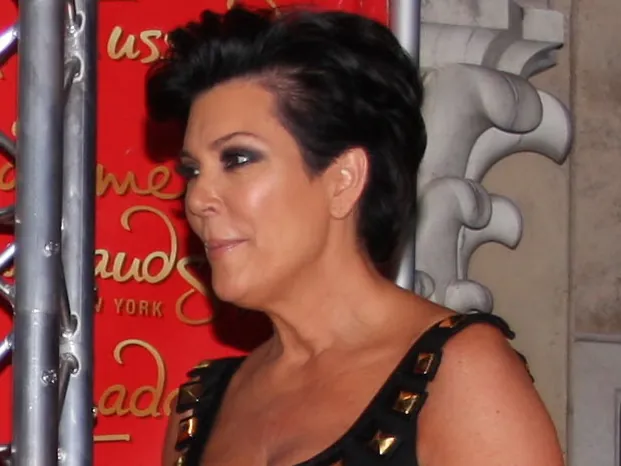 Kris Jenner’s facelift: “I love my facelift”Kris Jenner said she had a facelift about 15 years ago and a refresh before turning 70 — and that she loves it. How a SMAS facelift and recovery work.
 Did Vicki Gunvalson have a facelift? Yes, and she showed the result herselfVicki Gunvalson had a facelift in May 2018 after deciding fillers no longer looked like her. Her own words, how a facelift works and recovery.
 Keltie Knight’s facelift: why she decided to “just own it”Keltie Knight had a facelift in 2023 at 41 and chose to talk about it openly. What she said, how a SMAS facelift works and what recovery looks like.
 Did Linda de Mol have a neck lift? Yes, and she wrote about it herselfLinda de Mol wrote in LINDA. in 2025 that she had a neck lift. What she said, why she chose to be open, and how a face and neck lift works today.
 Linse Kessler and her facelifts: what she said herselfDanish reality star Linse Kessler has said openly that she has had several facelifts. Her words, how a modern facelift works and what recovery involves.
 Did Alice Bendová have a facelift? Yes, and she explained why herselfAlice Bendová confirmed a deep plane facelift in September 2026. Her words, how a facelift works, who it suits and what recovery looks like.
Facelift in Bologna: price and what is included
Prices are in US dollars; the amount in brackets is an approximate conversion to EUR at the rate of 02.10.2026. The final price is fixed in your contract.
- Faceliftfrom $2,400 (≈ €2,150)
What is a SMAS facelift?
It is a face lift that tightens the deep SMAS layer under the skin, not only the skin itself, so the lower face, jawline and neck stay firmer for longer. The result lasts about 7–10 years.
How much does a facelift in Bologna cost?
Prices start from $2,400 (≈ €2,150). The surgeon sets the final price at the free consultation, and it is fixed in the contract, with no hidden extras.
What is included in the price?
A one-to-one consultation, the medical team, anaesthesia, inpatient care with meals, 24/7 monitoring and twelve months of follow-up by the surgeon.
How do I get my exact price?
Message us on WhatsApp or Telegram using the buttons below. A coordinator will answer your questions and book a free consultation where the doctor names the exact price.
By messaging us, you agree to our Privacy Policy
Skin, sun and damp air: reading Bologna's climate before a facelift
Bologna sits at 54 m above sea level on the edge of the Po Plain, where the Reno and Savena valleys meet the foot of the Apennines. The climate is humid subtropical. The 1991-2020 normals give a July mean high of 31.4 °C and a low of 19.1 °C, with August almost identical. January averages 7.2 °C at its warmest and -0.5 °C at its coolest. For facial skin that is a wide yearly range. The coordinator and the doctor can use it to plan the timing of a SMAS lift, because a skin flap that has been lifted and redraped should not spend its first weeks in extreme conditions.
Sunshine is the first point to weigh. The 1961-1990 normals show 2,040.85 hours of sunshine a year. July reaches 291.4 hours and December only 74.4. A patient who operates in midsummer in Bologna will find that daylight and heat fall right in the weeks when the skin is most sensitive. Late autumn and winter are gentler for a face that must stay out of strong light, and they are the usual choice for patients who work indoors. This is not a rule. It is a factor that you and the doctor can weigh during the online consultation, once photos of your skin type and current condition have been reviewed.
Humidity changes the picture as well. Annual relative humidity averages 69.7%. It reaches 79.2% in January and 81% in November, and drops to 59.1% in July. Damp winter air does not dry out healing skin the way dry heated rooms can. Cold mornings with a mean low just under freezing can still tighten and chill a face that is swollen and sensitive. You can ask the coordinator about practical comfort in the first days: soft scarves instead of tight collars, a hat that does not press on the area behind the ears, and a plan to avoid long waits at a cold stop.
Rain and snow matter less than people expect, but they are worth a line. Annual precipitation is 667.6 mm on 73 days with at least 1 mm. November (77.2 mm) and October (75.4 mm) are the wettest months, while January (34 mm) and July (32.1 mm) are the driest. Snow is rare, about 6.35 days a year, and January has the most at 2.4. So in the first days at home you are less likely to be blocked by weather than by your own need to rest. What the doctor will ask you to avoid is strain and strong physical activity during the first 7-10 days.
The Bologna calendar: when your face will be needed again
A facelift is easier to plan when the calendar is honest. The first 7-10 days are for rest, a compression bandage and reduced physical activity. Swelling and bruising usually fade in 2-4 weeks. The first clear changes appear after 3-4 weeks, as the swelling goes down. Full recovery takes about 2 months, and the final look arrives 3-6 months after the operation. Those are the figures the coordinator will build your plan around. Fixed city events can sit before or after those windows, but not inside them.
Bologna's year has an academic pulse. The University of Bologna, founded around 1088, reports 90,291 students in its infobox. The city article gives over 80,000 enrolled in 2015, and the university has 11 schools, 33 departments and 93 libraries. For a lecturer, a researcher or an administrator, the term timetable is the obvious frame. Exam sessions and graduation ceremonies are moments when faces are seen up close and in photographs, so many people plan the operation to finish well before one. If you teach or supervise, tell the coordinator which weeks are non-negotiable and which can be moved. The doctor can then choose a date that leaves at least the first 2-4 weeks free of public appearances.
The festival list works the same way. The English article lists the Bologna Jazz Festival, Biografilm, Il Cinema Ritrovato, Gender Bender, Future Film Festival, the Human Rights Film Festival and Zecchino d'Oro, though it does not give their months. We do not claim when they fall. The advice is simple: check the current dates yourself and compare them with the recovery stages above. If a festival matters to you, count back from it. Allow the 2-4 weeks for swelling and bruising to settle, and add margin if you want the face to look more rested than merely presentable.
Italy's public holidays can help you create a quieter window. They include 1 January, 6 January, Easter Monday, 25 April, 1 May, 2 June, 15 August, 4 October, 1 November, 8 December, 25 December and 26 December, and every Sunday is a holiday too. If you plan the operation for early January 2027, for example, the holiday days at the beginning of the month give you a few calm days with fewer obligations. They do not replace the doctor's rest advice. They simply make it easier to keep to it.
Bandages, scarves and the commute: practical recovery days in a university city
Recovery is mostly logistics. The compression bandage in the first days is the visible part, and it influences what you wear and how you move around. Bologna's public transport has run on trolleybus lines operated by TPER since 2012, and the first tram line is under construction, with four lines planned. The commute averages 5.4 km and takes 53 minutes per weekday trip. A trip that long is not what a patient with a fresh facelift should do in the first week. Plan for a quiet period at home, and let the coordinator know if work needs adjusting so that you are not forced into a crowded morning journey.
When you return to ordinary streets, think about three things. First, small physical knocks: crowded buses, a handbag swinging at head height, a sudden turn in a queue. Second, temperature: a heated vehicle after a cold stop is uncomfortable for swollen skin. Third, how you feel about being looked at. Some patients prefer to go out first at quieter hours, and the doctor will not set a fixed day for this. He or she will judge how the swelling and bruising look in the photos you send. Because the coordinators answer 24/7 on WhatsApp and Telegram, you can send a photo on an ordinary Tuesday evening and get a clear answer on what to do the next morning.
Bologna's density helps here in a small way. The municipality covers 140.86 km² and holds 391,473 people (2026 infobox), a density of 2,779.2 per km². A compact city means short errands, a pharmacy not far away and the possibility of avoiding the car. It also means that you may meet colleagues or acquaintances in the first weeks. Decide in advance what you will say. "I am recovering from a procedure" is a complete answer, and no more is required.
Shaving, make-up, hair colouring and pillow position all deserve a question to the doctor. We do not give blanket rules, because they depend on your type of lift. The full (circular) lift, the lower face and neck lift and the endoscopic brow and temple lift all leave different areas to look after. The incisions of the standard lift run along the frontal edge of the hair and around the ears. For the endoscopic approach, tiny punctures are hidden in the hair. If your hairstyle is part of your everyday look, discuss it at the first consultation.
Match day, long evenings and keeping the face calm
Bologna is a sports city, and a patient in recovery should know what that means for the calendar. Bologna FC 1909 has won seven Serie A titles (the last in 1963-64) and three Coppa Italia trophies (the latest in 2024-25). Stadio Renato Dall'Ara holds 38,000 according to the article body, or 32,000 according to the caption. Virtus Bologna has 17 Italian basketball titles. A fan will want to be at a big fixture. The doctor's advice about the first 7-10 days points the other way: reduced physical activity, rest and avoiding any strain. Excited crowds, a shove in a stairwell or a long, loud evening are all poor companions to a compression bandage. Watching the game at home is a reasonable compromise.
Later in the recovery, when the swelling has gone and bruising has faded within the 2-4 weeks, the calendar opens up. Even then, the face continues to settle until the final result arrives 3-6 months after the operation. This is why we suggest not judging the outcome at the first big social event. A face at three weeks is an intermediate stage, and an honest self-assessment at that point is not the same as the final look.
An evening out is a different matter from a training session or a long walk. Many patients ask whether they can sit in a café or restaurant during the 2-4 week phase. That is a question for the doctor after he or she has seen current photos. We avoid blanket promises because bruising varies between patients. What we can say is that the coordinator will not push you to hurry, and the doctor follows you for the whole first year after the operation.
Choosing the type of lift when your life is in Bologna
The service offers four main options, and the doctor helps you pick the right one for your age and ageing type at the consultation. The standard SMAS facelift treats the mid and lower face: jowls, sagging cheeks, double chin and deep nasolabial folds. Results last 7-10 years. The full (circular) facelift covers the forehead, temples, mid and lower face and neck, suits marked sagging in several areas at once, and lasts up to 10 years. The lower face and neck lift targets the chin, jowls and loose skin on the neck through small incisions. The endoscopic brow and temple lift repositions brows and softens forehead and frown lines through tiny punctures.
Each option fits a different kind of life. If your schedule is crowded and you want one procedure that deals with several areas, the full lift is worth discussing. If the problem is mainly the jawline and neck, the smaller lower-face option may be enough. If your eyes look heavy because the brows have dropped, the endoscopic approach is the topic to raise. The doctor can also combine a facelift with eyelid surgery, rhinoplasty or double-chin liposuction, and decides on the combined scope at the consultation.
Age matters, and the figures come straight from the medical guidance. Surgery is usually advised for patients aged 40+ with marked sagging, and in some cases from 35. Under 30 is a contraindication. Others are acute skin inflammation, pregnancy and breastfeeding, severe cardiovascular disease, clotting disorders, cancer and decompensated diabetes. If you have a chronic condition, mention it in your first message. Bologna's residents range from students to long-established families, and 18.2% of the population are immigrants (2025). So the coordinators regularly work with people who prefer to communicate in a language other than Italian. Tell them which language you want to use and they will arrange it in the chat.
Photos, messages and the first step from Bologna
The first consultation is online and free. You send photos on WhatsApp or Telegram, the doctor assesses the degree of sagging, names the final price and records it in the contract, and you confirm the plan and dates before anything is booked. Good photos make this fast. Use daylight from a window, a plain background and a neutral expression, and take frontal, side and three-quarter views. In Bologna's winter months, when December sunshine is just 74.4 hours for the whole month, a bright window near midday gives the clearest light. In July, avoid harsh direct sun that casts hard shadows on the cheeks.
Planning includes the date. Think about your university term, work deadlines and family events, and then count back using the recovery stages: 7-10 days of rest, 2-4 weeks for swelling and bruising, about 2 months to full recovery and 3-6 months to the final look. If you want the new face to be part of a spring celebration in 2027, for example, it is sensible to begin in the preceding autumn or winter. Tell the coordinator the date and they will help you work backwards.
Finally, remember that you are never asked to decide quickly. The doctor does not push, and the coordinator answers in the chat around the clock, so you can ask the same question twice or come back after a week. The goal is a lasting result of 7-10 years, achieved in one operation, and the first stage towards it is a conversation.
Is winter or summer easier for facelift recovery in Bologna?
Neither is automatically better, but they differ. July has a mean high of 31.4 °C and 291.4 hours of sunshine, so healing skin faces more heat and light. January has a mean high of 7.2 °C and a mean low of -0.5 °C with humidity near 79%, so cold air and chilly mornings are the main factor. Many patients choose the cooler months for the sun reason alone. The doctor will discuss your skin type and schedule during the free consultation.
Can I plan the operation around a Bologna festival or a match?
Yes, if you count backwards from the event. The first 7-10 days are for rest and reduced physical activity, swelling and bruising fade in 2-4 weeks, and the final look comes 3-6 months after the operation. A big match, a crowded festival evening or a film event is best placed after the first weeks. The English city article lists several festivals but gives no months, so check the current dates before planning.
Will the Italian national health service pay for a cosmetic facelift?
Purely aesthetic surgery is not paid by the SSN. A secondary source from January 2024 describes it as accessible only through private services, while the SSN covers reconstructive work after trauma, burns or mastectomy and defined functional cases. A facelift for ageing and sagging falls into the aesthetic category. The coordinator can explain what is included in the contract price and how in-house instalments work, without bank interest.
How should I prepare for the commute and daily errands in the first week?
Plan to stay at home for the first 7-10 days, as the doctor advises rest, a compression bandage and reduced activity. The average weekday commute in Bologna is 5.4 km and 53 minutes, which is too much strain on a fresh facelift. Arrange work from home or leave if possible, and have food and pharmacy items in the house before the operation. When you return to buses or trolleybuses, avoid crowded hours and keep your head protected from knocks.
When will I look presentable for university term events or work meetings?
It depends on how your swelling and bruising behave, which the doctor judges from photos. In general, swelling and bruising fade over 2-4 weeks, and the first clear changes show after 3-4 weeks. Full recovery takes about 2 months, and the final result arrives 3-6 months after the operation. For an important event, plan the operation well before it, and tell the coordinator the date so that the plan has a margin.
Do the dry, sunny days of a Bologna summer affect scars and skin after a lift?
The incisions run along the frontal edge of the hair and around the ears, or are hidden in the hair for the endoscopic option. Bologna has around 2,040 hours of sun a year, with July at 291.4 hours, so strong light is a real factor in summer. The doctor will give instructions on how to protect healing skin, including when it is acceptable to be outdoors. Follow these during the whole first year, in which the doctor monitors your progress.
Can I have a facelift if I live in Bologna but want to discuss it in another language?
Yes. Bologna's population includes 18.2% immigrants (2025), and the coordinators handle messages from people who prefer to write in their own language. The consultation is online, so photos and questions are exchanged in the chat, and coordinators reply 24/7 on WhatsApp and Telegram. Say in your first message which language you want, and the coordinator will arrange it.
Does the free consultation commit me to anything?
No. You send photos, the doctor assesses the degree of sagging and names a final price, which is fixed in the contract. You confirm the plan and dates before anything is booked. There is no pressure, and you can ask questions again after a few days. The doctor explains the expected result and each stage of the surgery.