


























 1
Consultation and scan review
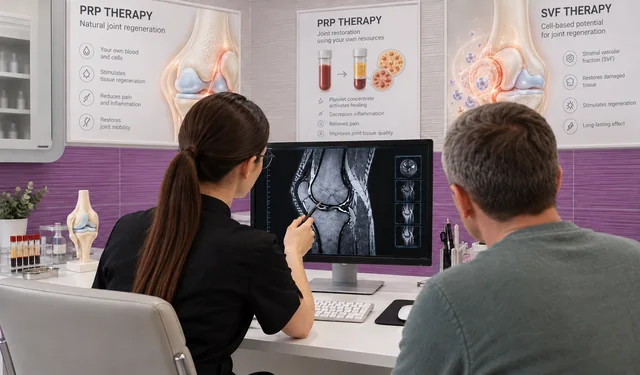
First comes an examination of the joint and a look at your X-rays, MRI or ultrasound; then the doctor decides whether the procedure fits your case. Existing scans can be sent before the visit.
PRP and SVF cell therapy as part of arthritis care for the knee, hand, shoulder and other joints. A doctor reviews your case and tests first
Consultation and review of your scansFree
Message us on WhatsAppFree online consultation · Reply within 15 minutes
Message our coordinator
Free online consultation · Reply within 15 minutes
Message us on TelegramMessage us on WhatsAppBy messaging us, you agree to our Privacy Policy
What it is
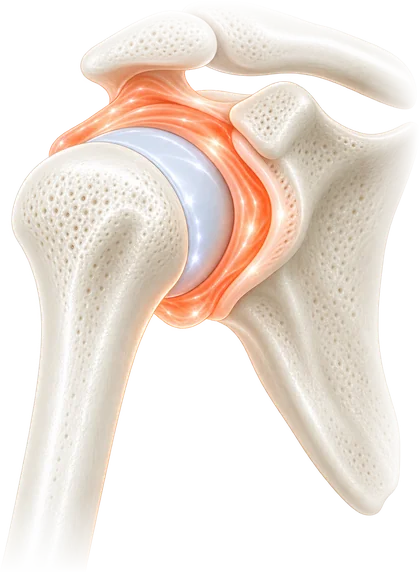
In arthritis the joint is inflamed. People typically notice pain even at rest or at night, stiffness on waking that goes on for more than half an hour, swelling, and a red, warm joint. Behind it may be an autoimmune condition such as rheumatoid or psoriatic arthritis, gout, an infection or old trauma.
Helping to reduce inflammation and pain and to support tissue inside the joint — that is the role of PRP and SVF, alongside, not instead of, a rheumatologist's care for a systemic disease. The doctor first confirms the type of arthritis and waits for the right moment, never acting during a severe flare or an active joint infection.
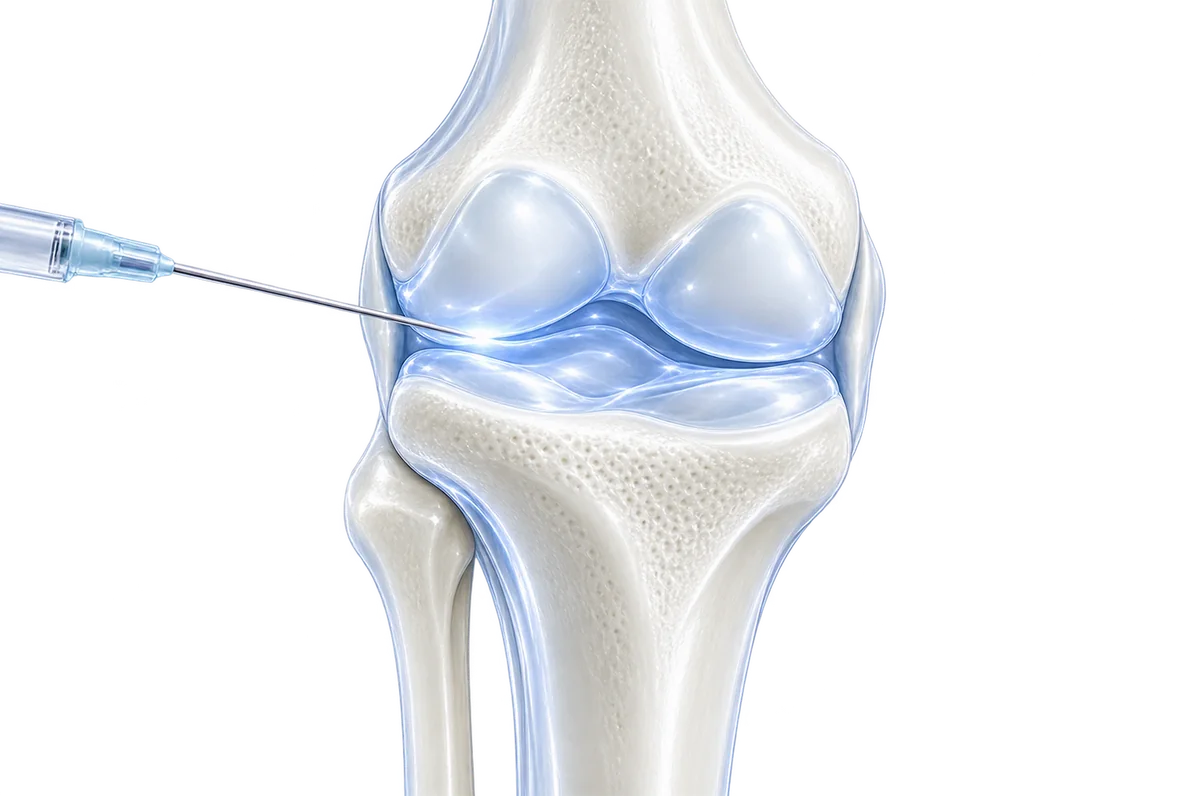
The treatment is only offered once a doctor has examined you and reviewed your scans and found it suitable

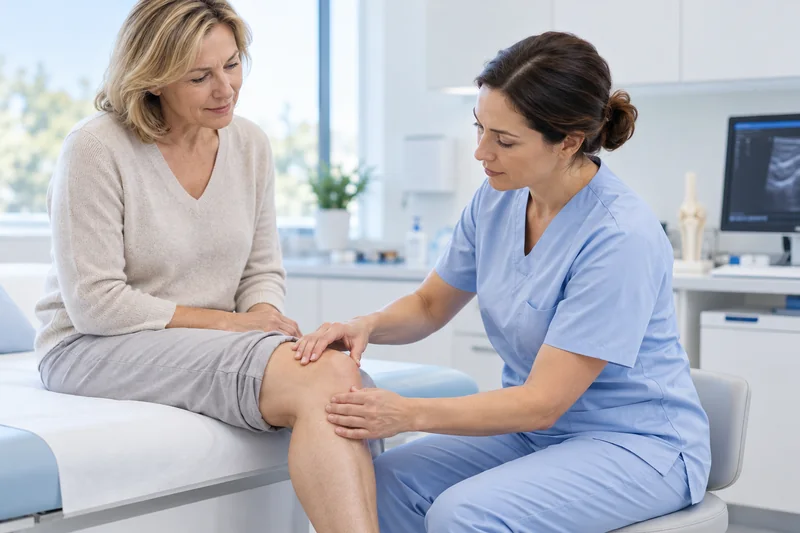
Not sure the treatment is right for you?
Leave your number — the coordinator will ask for your scans (X-ray, MRI or ultrasound), and the doctor will tell you whether treatment without surgery suits you.
Find out if it suits meWhat we treat
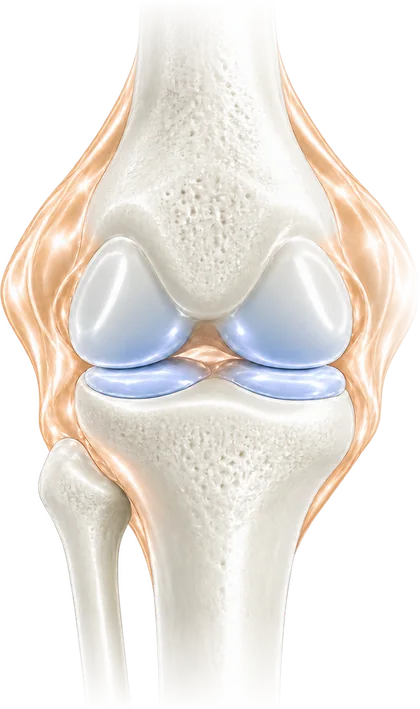 Arthritis
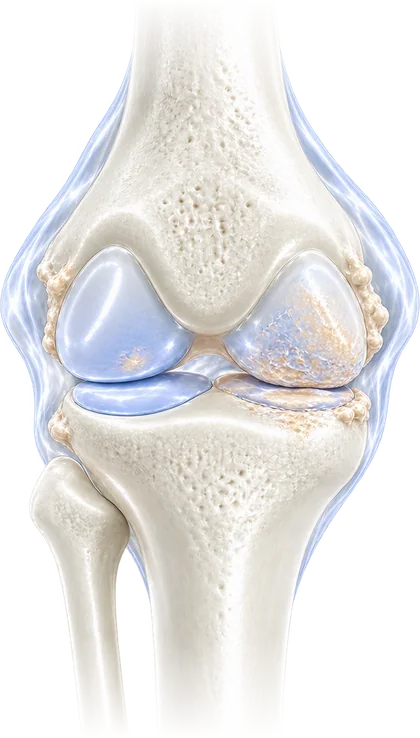 Arthrosis
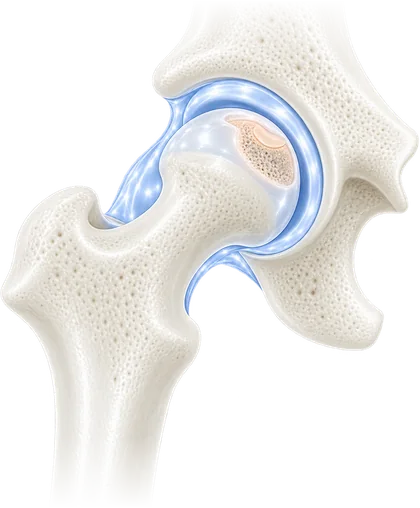 Avascular necrosis
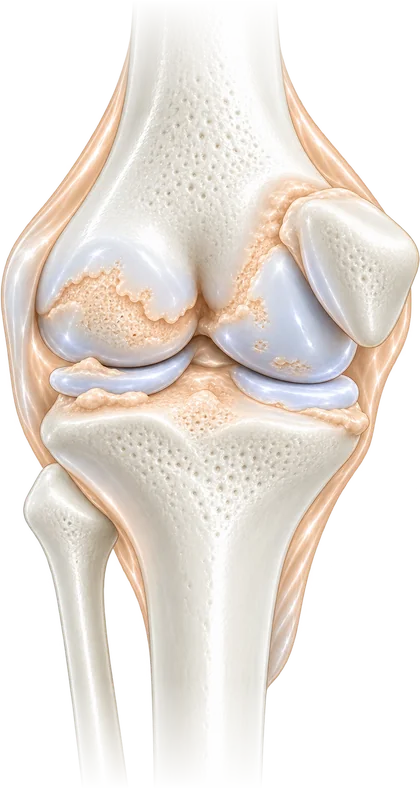 Osteoarthritis
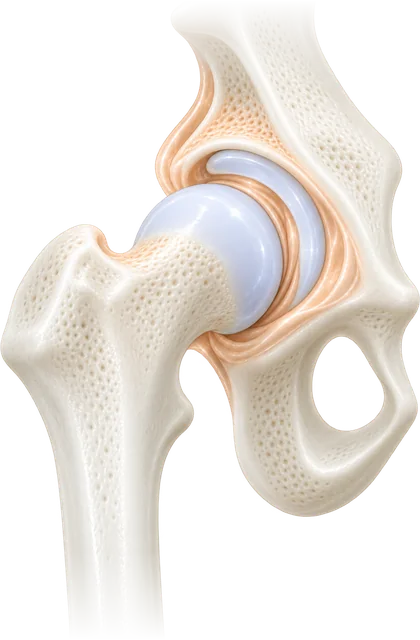 Coxarthrosis (hip osteoarthritis)
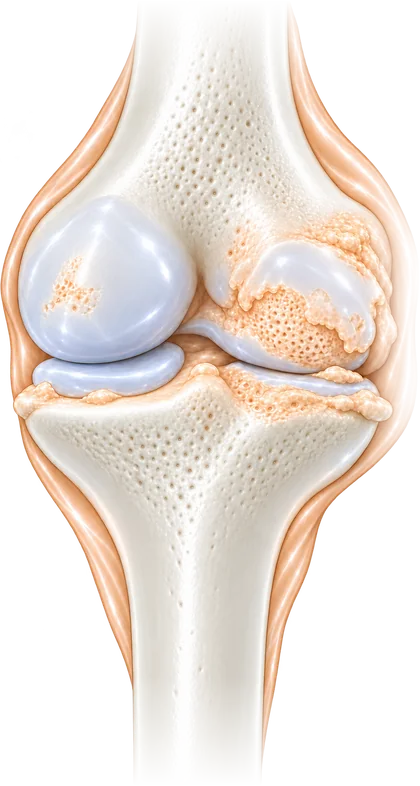 Gonarthrosis (knee osteoarthritis)
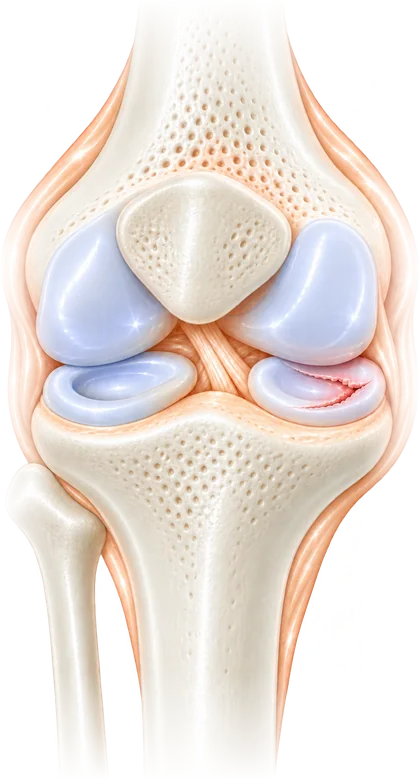 Meniscus pathology and injury
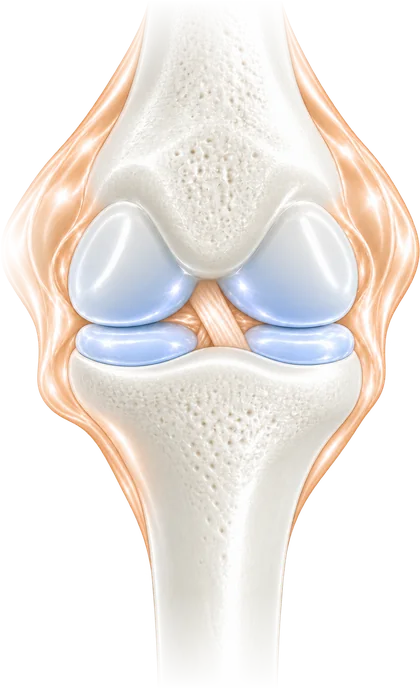 Rehabilitation after injuries and surgery
 Inflammatory joint conditions
How it works
1First comes an examination of the joint and a look at your X-rays, MRI or ultrasound; then the doctor decides whether the procedure fits your case. Existing scans can be sent before the visit.
 2
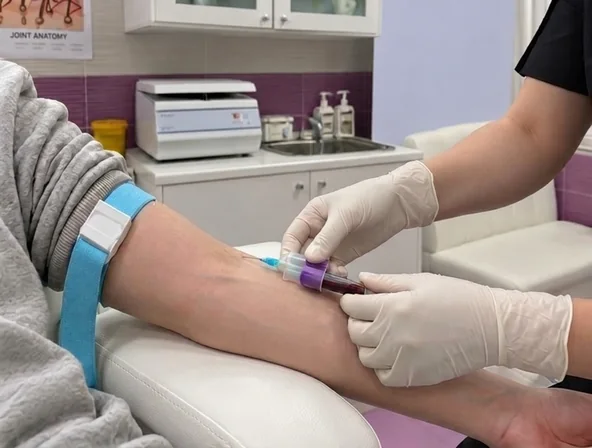
Blood is taken from a vein in a small amount, later to be turned into platelet-rich plasma with growth factors.
 3
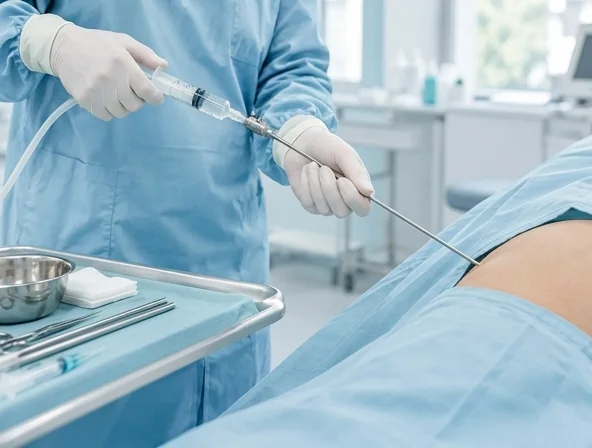
Through a puncture on the inner thigh or abdomen, and under local anaesthetic, about 30 ml of adipose tissue is taken. Stitches are not needed.
 4
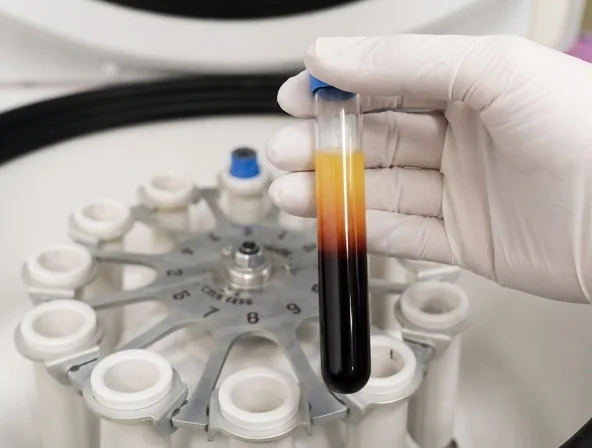
Spinning in a centrifuge divides the sample into layers; the stromal vascular fraction is isolated and blended with the platelet-rich plasma.
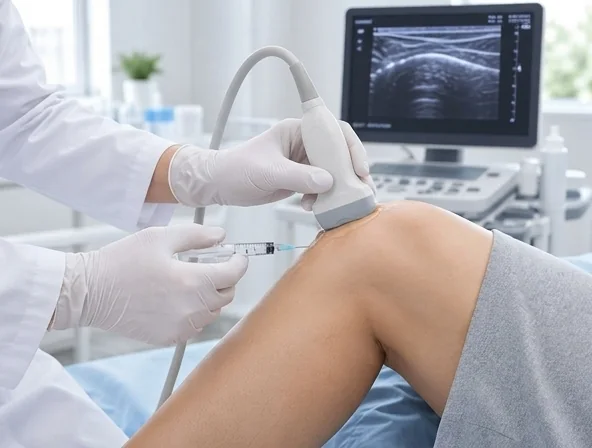 5
Ultrasound guidance helps position it precisely as the prepared material is injected directly into the affected joint.
 6
The doctor follows how the joint responds and stays in touch after the procedure — and you need no crutches or hospital stay.
Call or message us — our coordinator will contact you shortly and book your consultation

Results

The joint may ache a little more — this is an expected reaction.

The pain usually eases.

Mobility and activity improve.

The full effect develops.
How long it lasts differs from person to person and depends on the stage of the condition, body weight, activity and other factors — no one can promise a fixed result.
Comparison
Your own adipose tissue and blood are the only materials used, never donor or synthetic ones
The affected joint receives an injection of the stromal vascular fraction (SVF) — a set of cells involved in tissue repair, isolated from a small sample of your adipose tissue — combined with your own plasma.
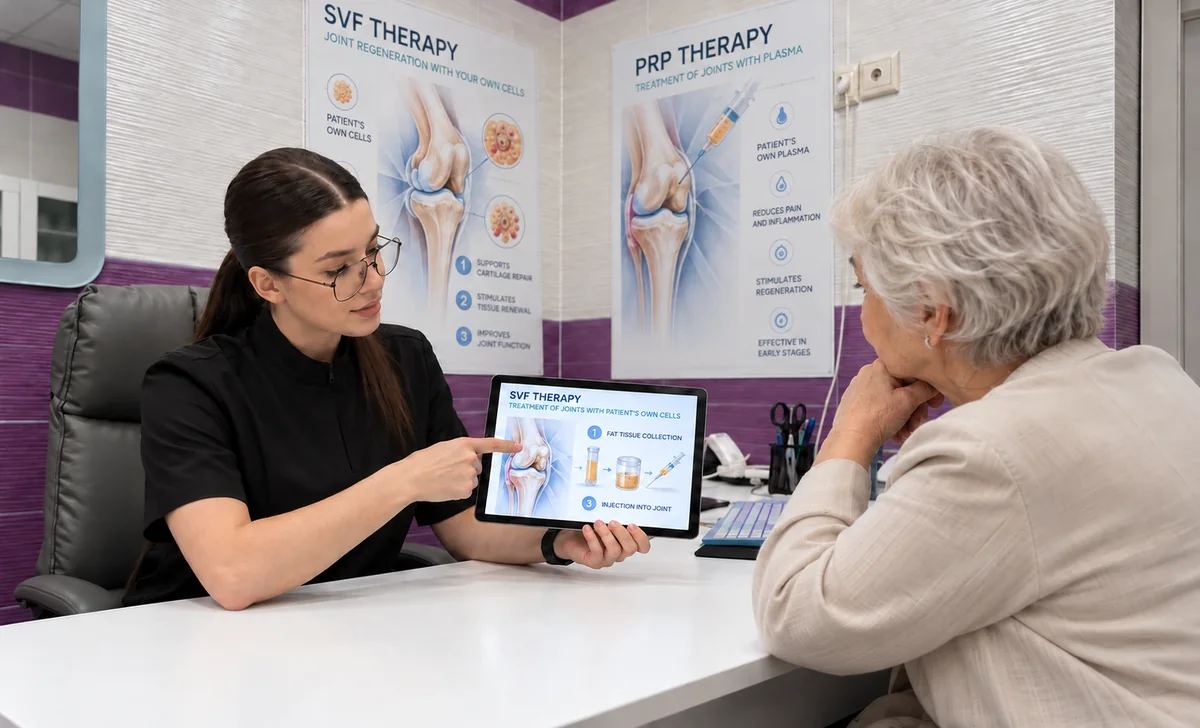
In inflammatory arthritis, after the acute flare has passed, it is chosen for how it acts on local inflammation and tissue repair.
Plasma rich in platelets and growth factors is taken from a small amount of your blood and injected into the joint, where it helps calm inflammation and improves the conditions for tissue repair.
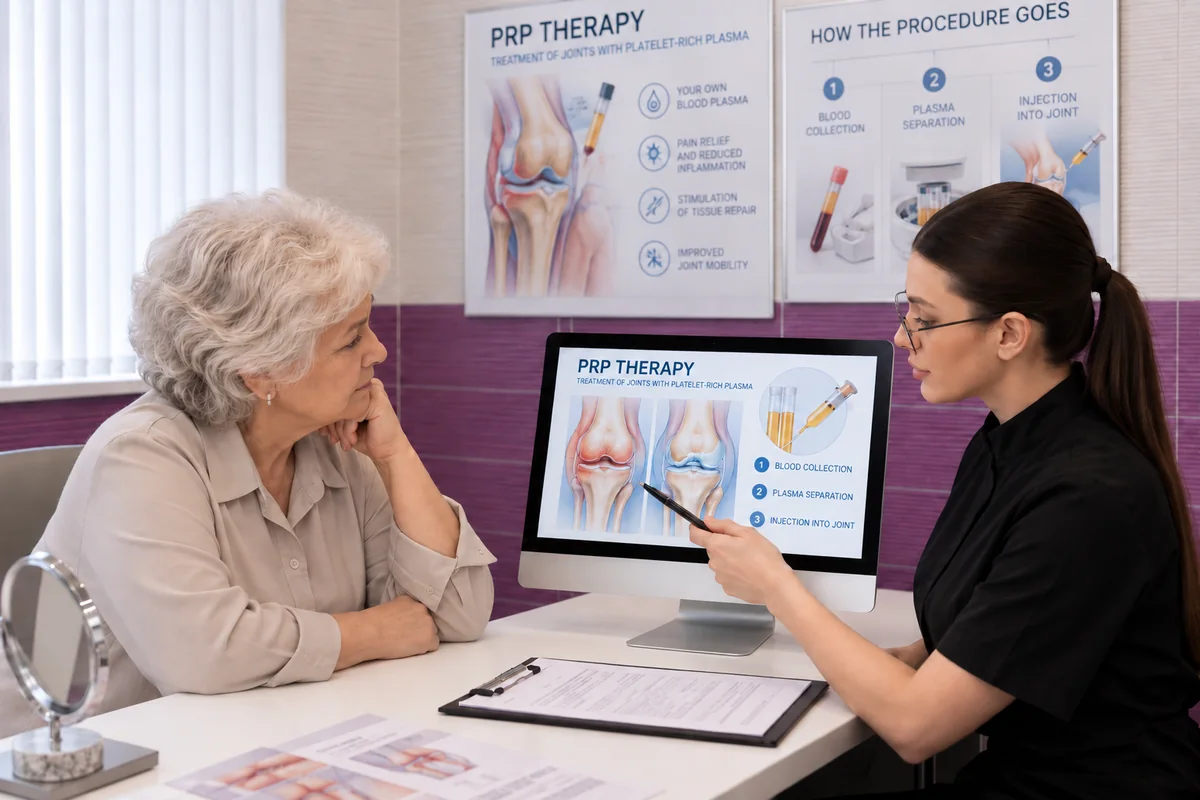
It may be recommended for rheumatoid and other inflammatory arthritis as one part of the overall treatment plan.
The benefits and timings shown are averaged and given for guidance: the plan and recovery depend on your joint and individual features, and the doctor confirms them at the consultation.
At the consultation the doctor will review your scans and suggest a treatment plan
Free consultation
Joints
Large and small joints — the doctor chooses the joint, the method and the number of injections after reviewing your scans
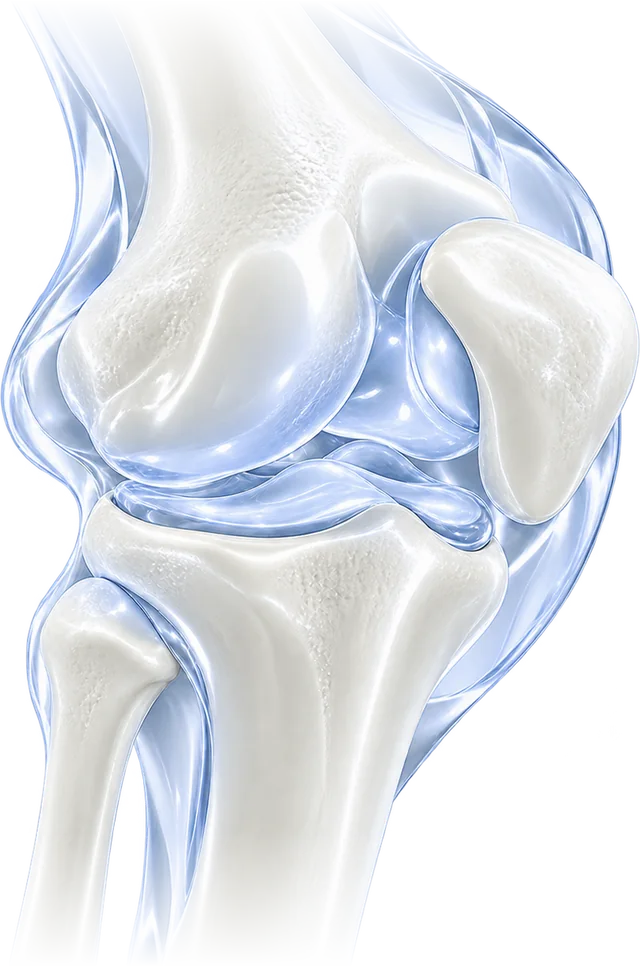
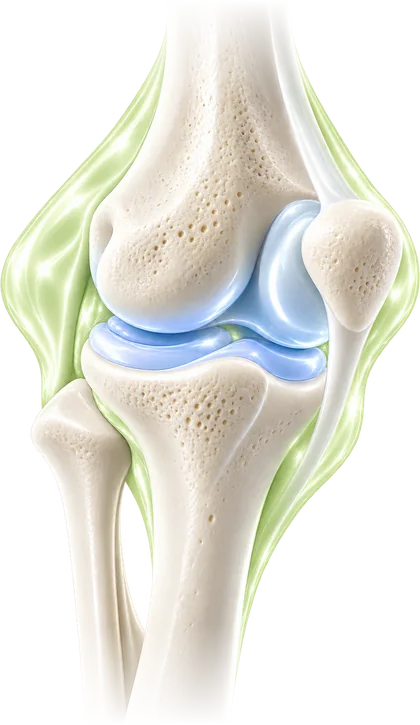 KneeCartilage wear, meniscus problems, pain on stairs and after walking
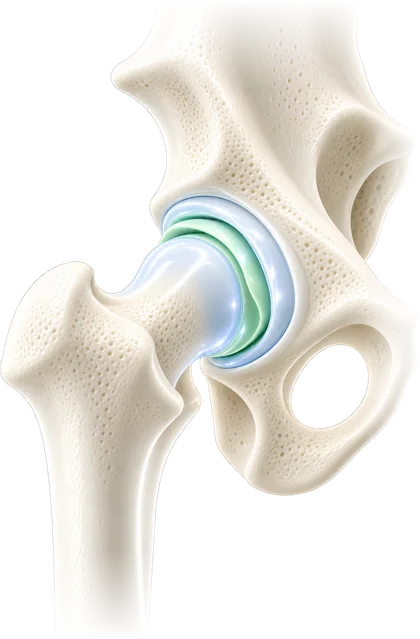 HipEarly hip osteoarthritis, groin pain, limited rotation
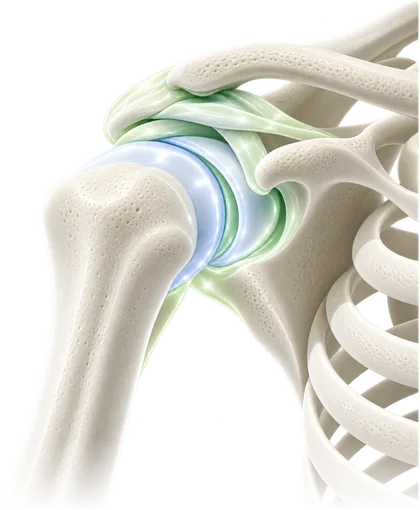 ShoulderPain on lifting the arm and wear of the joint and nearby tendons
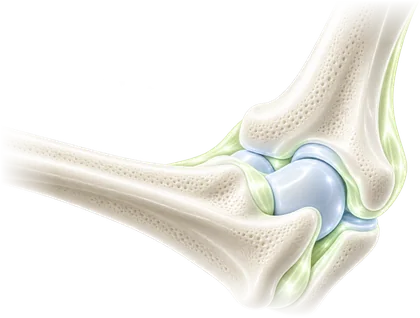 ElbowPain after overuse or sports strain, wear of the joint surfaces
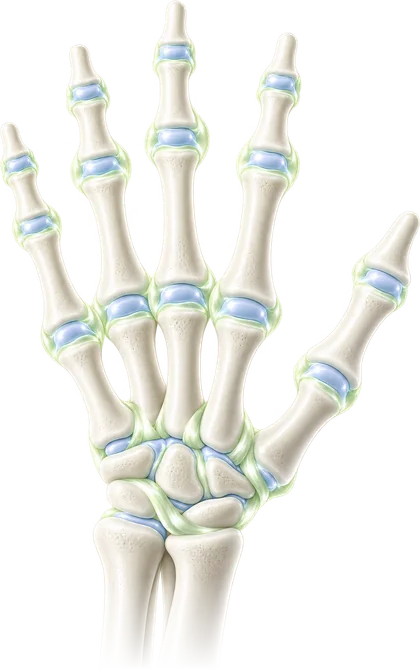 Hand and wrist jointsPain and stiffness in the small joints of the wrist and fingers
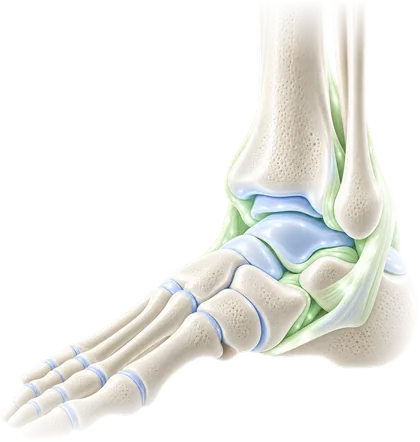 AnklePain and stiffness after sprains and old injuries
Advantages
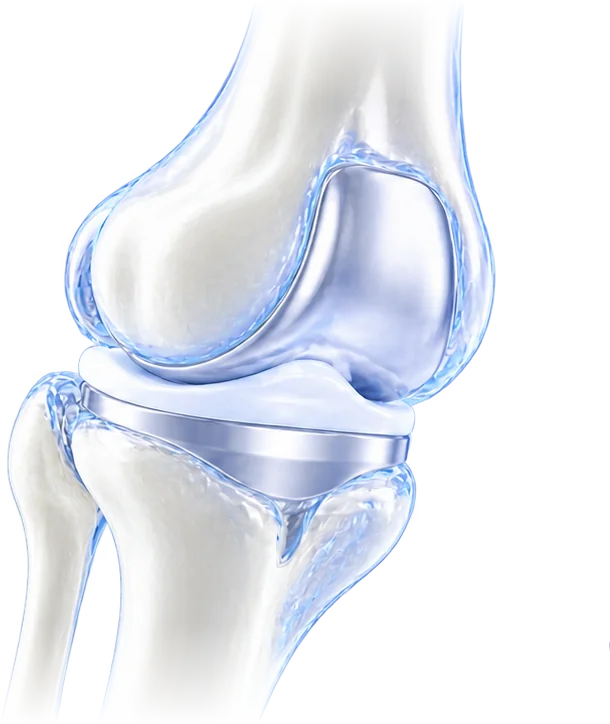
Your own joint stays: we work on keeping it rather than replacing it — treatment without surgery
Your own adipose tissue and blood are the only materials used, never donor or synthetic ones
Local anaesthetic, punctures rather than incisions, and no long rehabilitation
A doctor independently assesses the X-rays, MRI or reports you send — free of charge
The result matters to us beyond injection day, so we stay in touch after the procedure
About the clinic
Modern equipment, comfortable rooms and care for every patient

We will answer your questions and find a convenient time for a consultation
By messaging us, you agree to our Privacy Policy
Request a free callPrice
Because the joint, the type of arthritis and the method all affect the cost, the doctor names it after the consultation
Free
Book — Consultation and review of your scansPrice at consultation
Book — PRP therapy (platelet-rich plasma)Price at consultation
Book — Cell therapy (SVF + PRP), one jointFAQ
Rheumatoid arthritis is a systemic disease that is treated by a rheumatologist. PRP and SVF injections do not cure it; once an acute flare has settled, the doctor can assess whether joint injections may ease local symptoms.
The joints are inflamed in arthritis, which usually means pain at rest and at night, morning stiffness lasting beyond 30 minutes, swelling, redness and warmth. Autoimmune conditions such as rheumatoid arthritis, infections, gout and psoriasis are among the causes.
PRP may be used in rheumatoid and other inflammatory arthritis to help reduce local inflammation, pain and swelling. Growth factors released by platelets influence the immune response and tissue repair. It complements, but does not replace, the treatment prescribed by your rheumatologist.
Being chronic, psoriatic arthritis cannot at present be cured completely. The target is a long remission in which inflammation is controlled and joint deformity prevented; regenerative injections can be one element of the plan.
The cells in SVF can modulate the immune response locally and support repair of damaged joint tissue. As research in this area continues, the doctor will discuss what you can realistically expect for your type of arthritis.
Active joint infection, a severe flare, pregnancy, cancer and blood clotting disorders all rule out the procedure; in these cases the doctor postpones it or proposes another option.
The difference: knee arthritis is inflammation from an autoimmune reaction, infection or gout (redness, warmth, marked swelling, tenderness to touch), while osteoarthritis is wear of the cartilage, usually with a dry crunch and aching pain on movement.
Inflammation never stops stimulating the pain receptors of the joint, whether you move, rest or sleep at night. Treatment that targets inflammation, including PRP and SVF, can help ease this pain.
No. In pregnancy, joint injections such as PRP and SVF are contraindicated, and any arthritis treatment is decided only together with a rheumatologist and an obstetrician.
Yes. A doctor looks at your X-rays, MRI, ultrasound or blood tests free of charge and says whether regenerative treatment could suit your type of arthritis — simply send them.
When left without treatment it can bring permanent joint deformity, loss of function, osteoporosis and damage to the heart, lungs, kidneys and other internal organs. To prevent these complications, it needs timely treatment.
About the conditions
It is gradual wear of the cartilage that covers the ends of the bones in a joint. When the cartilage thins, the joint loses its cushioning, the bones rub against each other, and pain, stiffness and crunching appear. It is a degenerative condition, not an inflammatory one.
At early stages, PRP or SVF injections combined with exercise therapy and physiotherapy can reduce pain and improve movement. If the joint is already badly damaged, replacement may be the more realistic option — the doctor will tell you honestly after seeing your scans.
At early stages (1–2), SVF therapy may be considered to support blood supply to the femoral head and delay the need for joint replacement. At later stages surgery is usually required.
PRP and SVF can help reduce inflammation and pain and support the tissues inside the joint. For patients from Liverpool with systemic disease, they complement, but do not replace, care from a rheumatologist.
Treatment starts with a consultation and a review of your scans and tests. Then blood and a small adipose tissue sample are taken, processed in a centrifuge and injected into the joint under ultrasound guidance. For patients from Liverpool, it is done in one day.
Send your X-rays, MRI, ultrasound or blood test results. Patients from Liverpool receive a free assessment and a clear answer on suitable treatment and its price.
The word arthritis covers a family of conditions, and what they share is inflammation in a joint. The signs that point that way are pain at night or at rest, morning stiffness that lasts longer than half an hour, swelling, and a joint that looks red and feels warm. Wear of the cartilage, which is osteoarthritis, tends to behave differently, so it matters to know which one you are dealing with before choosing any treatment.
The causes differ. Arthritis can be autoimmune, as in rheumatoid or psoriatic arthritis, it can be gout, it can follow an infection, or it can be a late result of an old injury. The NHS explains that in rheumatoid arthritis the immune system, which normally fights infection, attacks the cells that line the joints by mistake, and that over time the inflamed joints can be damaged along with the cartilage and nearby bone. It says there is no cure, but that early treatment can allow months or even years between flares.
That is why our doctor does not begin with an injection. The first step is to confirm the type of arthritis, to look at your scans and to ask what care you already receive. If you have a systemic disease, the injections are a support for the joint, never a substitute for the rheumatologist who looks after the whole condition.
The NHS notes that rheumatoid arthritis is usually first felt in the small joints of the hands and feet and is often diagnosed between the ages of 40 and 60, while osteoarthritis usually starts in the late 40s. Those are broad patterns, not rules, and a stiff hand in your thirties deserves the same attention as one in your fifties. If several joints on both sides of the body are affected at once, tell the coordinator, as this pattern is useful to the doctor.
Arthritis comes in waves. A joint can be fiery for a fortnight and calm for months, and the right moment for an injection is not the worst day. The doctor chooses the moment, and never acts during a severe flare or during an active infection of the joint. A raised temperature, a cold, flu or inflamed skin above the joint are also temporary reasons to wait.
Because of this, honesty in your first message is valuable. Say whether the joint is in a flare at the moment, when it began, and what your rheumatologist or GP has changed in your treatment recently. Mention every medicine you take, including those that reduce the activity of the immune system, since the doctor needs the whole picture before planning anything.
If your coordinator tells you to wait, that is not a refusal. It is the plan. The team can keep the conversation open, ask you for an update on the joint in a few weeks and move your consultation or injection date as needed. You do not have to start again each time.
A joint diary is worth starting now. A line each morning is enough: the joint, the stiffness in minutes, swelling yes or no, pain from one to ten. In a calm phase the entries will be short; in a flare they will tell the doctor and your rheumatologist exactly what happened and for how long.
The clinic uses material prepared from your own tissue. A sample of blood gives platelet-rich plasma with growth factors. About 30 ml of adipose tissue is collected under local anaesthetic through one puncture on the abdomen or inner thigh, with no stitches, and the stromal vascular fraction is isolated in a centrifuge and combined with the plasma. The doctor injects the material into the joint under ultrasound guidance. The role of the injection is to help reduce inflammation and pain and to support tissue inside the joint.
There is no hospital stay and no crutches. In the first week the joint may ache a little more, which is expected. After about a month the pain usually eases, after about three months mobility and activity improve, and after about six months the full effect develops. Duration differs from person to person and depends on the type and stage of the condition, your weight, your activity and other factors, and no one can promise a fixed result.
Who is the treatment not for? People with cancer, pregnancy, blood clotting disorders, acute infections including infection in or near the joint, and a flare-up of a serious chronic illness. The doctor will tell you at the consultation if your situation falls into one of these groups.
The doctor will also ask about the joint that is not the obvious one. A hip may be sore because of a knee, and a shoulder because of the neck, so the review of scans covers the neighbouring joints too. If you have had injections or operations before, describe them and, if you can, send the discharge letters.
The NHS lists the main ways of managing arthritis: physiotherapy and occupational therapy, medicines for pain, swelling and inflammation or to reduce immune system activity, equipment for mobility and daily living, complementary therapies such as acupuncture, and surgery if symptoms are severe and other treatments have not helped. Our injections are a further option, used alongside these, not instead of them.
It helps to tell the people who look after you. Let your GP or rheumatologist know that you are having a second opinion, and ask them for a copy of your latest blood tests, your clinic letters and the dates of recent flares. Send them to the coordinator along with your X-rays, MRI or ultrasound. The more complete the file, the more precise the doctor's advice.
Keep your appointments in order. If you have a rheumatology review in three weeks, mention it, and ask the coordinator whether the injection should come before or after. Do not change or stop any prescribed medicine on your own because of the injections; any adjustment is a matter for the doctor who prescribes it.
Rehabilitation after injuries and operations is within the range of conditions the clinic reviews, and so are inflammatory joint conditions, avascular necrosis and meniscus problems. If your case is one of these, name it in the first message and attach what you have.
Liverpool is a city of about 486,100 people according to the 2021 census published by the Office for National Statistics, and a Liverpool patient who writes to us does not need to go anywhere to begin. A message to the coordinator in WhatsApp or Telegram is enough. The team replies around the clock, so you can write on a bad night as easily as in a quiet afternoon.
Send your scans and a few lines about the joint: which one, how long, what makes it worse, how long the morning stiffness lasts, whether it is swollen or warm now. A doctor then gives a free assessment of your reports. Tell us if you want only a second opinion, and the team will answer that and nothing more.
Whatever the doctor advises, you take the plan home and think it over. The price is named after the consultation, fixed in the contract, and nothing is booked until you confirm the dates.
Pain at night or rest, morning stiffness longer than half an hour, swelling, redness and warmth point to inflammation. The doctor confirms the type from your history and scans, so send both.
The doctor never treats during a severe flare or an active infection of the joint. You may be asked to wait for a calmer phase and then arrange the date.
No. Do not change or stop prescribed medicines on your own. The injections are meant to work alongside, not instead of, your rheumatologist's care.
The NHS lists physiotherapy, occupational therapy, medicines, equipment, complementary therapies and surgery for severe symptoms. Ask your GP what is available to you.
Your latest X-ray, MRI or ultrasound, recent blood tests, letters from your rheumatologist and a list of medicines. Photographs of swollen joints are useful too.
The NHS says there is no cure, but that early treatment can allow months or even years between flares. Our injections do not claim to cure it.
Yes. Coordinators reply around the clock in WhatsApp and Telegram. The doctor's review follows once your documents are in.
A fever, a cold or flu, or inflamed skin above the joint are temporary reasons to postpone. Tell the coordinator and the date will be moved.