





























original
12 months by now
2,800 grafts
FUE method
City Medical Centre
0% instalments
from $367/mo
Advice, then the price — $0.
True case
original
12 months by now
The FUE method: no cuts, no sutures. Grafts and outcome forecast added up, nothing to pay — before you decide.
Free online consultation · Reply within 15 minutes
No payment at all, no surgery booking required
Message our coordinator
Free online consultation · Reply within 15 minutes
Message us on TelegramMessage us on WhatsAppBy messaging us, you agree to our Privacy Policy
Hair transplant for patients from Mannheim at City Medical Centre starts at €2,000 (from $2,200). The first online consultation is free; the doctor names the final price and it is fixed in the contract.
How it works · Hair transplant prices
Information current as of 24 October 2026
results
Every photograph shows a genuine CMC patient.
original
12 months by now
2,800 grafts
FUE method

original
12 months by now
3,500 grafts
FUE method

original
12 months by now
2,600 grafts
FUE method

original
12 months by now
3,000 grafts
FUE method

original
12 months by now
2,700 grafts
FUE method

original
12 months by now
3,300 grafts
FUE method

original
12 months by now
2,900 grafts
FUE method

original
12 months by now
2,500 grafts
FUE method

original
12 months by now
3,400 grafts
FUE method

original
12 months by now
2,500 grafts
FUE method

original
12 months by now
3,100 grafts
FUE method

original
12 months by now
3,600 grafts
FUE method

original
12 months by now
4,000 grafts
FUE method

original
12 months by now
3,200 grafts
FUE method

original
12 months by now
3,000 grafts
FUE method

original
12 months by now
3,700 grafts
FUE method

original
12 months by now
2,700 grafts
FUE method

original
12 months by now
3,800 grafts
FUE method

original
12 months by now
3,300 grafts
FUE method

original
12 months by now
2,800 grafts
FUE method

original
12 months by now
2,500 grafts
FUE method

original
12 months by now
3,900 grafts
FUE method

original
12 months by now
3,500 grafts
FUE method

original
12 months by now
3,800 grafts
FUE method

original
12 months by now
2,900 grafts
FUE method

original
12 months by now
3,600 grafts
FUE method

original
12 months by now
2,600 grafts
FUE method

original
12 months by now
2,700 grafts
FUE method

original
12 months by now
3,700 grafts
FUE method

original
12 months by now
3,200 grafts
FUE method

original
12 months by now
3,000 grafts
FUE method

original
12 months by now
2,800 grafts
FUE method

original
12 months by now
4,000 grafts
FUE method

original
12 months by now
3,400 grafts
FUE method

original
12 months by now
2,900 grafts
FUE method

original
12 months by now
3,100 grafts
FUE method

original
12 months by now
2,600 grafts
FUE method

original
12 months by now
3,300 grafts
FUE method

original
12 months by now
3,900 grafts
FUE method

original
12 months by now
3,500 grafts
FUE method

original
12 months by now
2,700 grafts
FUE method

original
12 months by now
3,800 grafts
FUE method

original
12 months by now
3,200 grafts
FUE method

original
12 months by now
3,000 grafts
FUE method

original
12 months by now
2,800 grafts
FUE method

original
12 months by now
3,100 grafts
FUE method

original
12 months by now
3,600 grafts
FUE method
Comparison
Three ways of transferring grafts are used here: classic FUE, suture-free DHI and a combined protocol. Weigh the implantation technique, tissue trauma and graft survival before you settle on one.
Classic method requiring no cuts or sutures

$2,200
$2,700
Graft implantation technique
ForcepsGraft trauma
MinimalThe natural growth angle
NaturalGraft survival
98–100%Suitable for
Androgenetic alopeciaImplantation with a Choi pen, no sutures

$2,500
$2,900
Graft implantation technique
DHI, a Choi implanterGraft trauma
MinimalThe natural growth angle
NaturalGraft survival
98–100%Suitable for
DensificationFUE extraction, DHI pen implant

$2,700
$2,900
Graft implantation technique
FUE extraction + DHI implantationGraft trauma
MinimalThe natural growth angle
NaturalGraft survival
98–100%Suitable for
Densification for androgenetic alopeciaSurvival and trauma figures are averages for each method, given as a guide: the precise numbers depend on the transplant area and the patient's individual features, and the doctor clarifies them at consultation.
Seek expert guidance


















about the clinic
Modern equipment, comfortable rooms, care for each patient

Ask us anything, and a consultation slot that fits your day will be agreed
Message us on WhatsApp Write to usIf your case can be solved without an operation, the doctor will say so at the consultation, and you will not waste your money. Below are the conditions where a transplant really works.
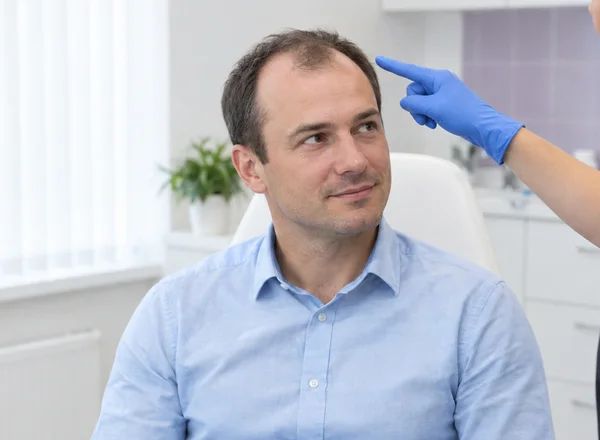

Give a number to reach you on. A coordinator will request pictures of the thinning zone through a messenger, and a doctor reviews them and tells you whether a transplant would help. No fee, no obligation to book.

services
The graft count comes first, at no charge, and the resulting price is set down in the contract.
suture-free graft extraction

$2,200$2,700
or $367/mo — 0% instalments for 6 months
Pin the price downimplantation without channels

$2,500$2,900
or $417/mo — 0% instalments for 6 months
Pin the price downcombined technique

$2,700$2,900
or $450/mo — 0% instalments for 6 months
Pin the price down| The first appointment | Free |
|---|---|
| Eyebrow transplant, FUE | |
| Beard transplant, FUEinstalments $467/mo | |
| Hair trichopigmentation | |
| PRP therapy / session | $200 |
all included
From getting ready for surgery to 12 months after.
The price does not grow on surgery day.
two extra zones
It works away from the scalp on the same basis, with grafts from the back of the head, FUE, and a different zone.
FUE method, no incisions or stitches

Grafts are taken from the donor area at the back of the head and go in through micro-punctures of about 1 mm — no scars are left. The doctor discusses the shape with you ahead of the operation, taking your facial features into account. Transplanted hair grows for life: trim and style the beard as usual.
$2,800$3,000
or $467/mo — 0% instalments for 6 months
Pin the price downFUE method, no incisions or stitches

The surgeon draws the eyebrow shape at the initial consultation: you look through references together and the design takes your facial features into account. The hairs are implanted at the correct angle, so the eyebrows look natural. This also helps where years of plucking stopped growth.
$1,600$1,700
a day-case operation done under local anaesthesia
Pin the price downThe doctor checks the donor zone, arrives at a graft number and explains what outcome is realistic. What you agree at the appointment is exactly what the contract says.

Message our coordinator
Free online consultation · Reply within 15 minutes
Message us on TelegramMessage us on WhatsAppBy messaging us, you agree to our Privacy Policy
Process
From consultation to going home — all in one day

Expect the doctor to walk you through both methods, FUE and DHI, field the questions you bring along, and study the donor area before anything is decided.

This step reserves your surgery date through a deposit, paid by card at the clinic or online, with terms captured in a medical services contract.

Preparation rests on a list of analyses that the clinic gives you, with instructions attached to make it simple.

With local anaesthesia used, the surgery causes no pain for the patient.

The harvesting stage takes grafts from either the back of the head or the temples, with no need for stitches.

Grafts collected from the donor zone are set into the area of baldness.
The clinic gives out what is needed after surgery and explains, in full, how recovery should proceed.

Crusts fall off, the swelling dies away, the skin repairs itself

No cause for worry, the shafts drop and the roots are untouched

New hairs appear bit by bit, the result shows

The hair becomes thicker, the core volume and contour are visible

Full thickness, and a hairline that looks natural

Free, before the operation, with no obligation.
Seek expert guidancedoctors

Hair transplant doctor, trichologist, surgeon
10 years of experience

Dermatovenereologist, trichologist, surgeon
11 years in practice

Plastic surgeon
9 years in practice

Plastic surgeon
9 years in practice

Assistant
9 years in practice
Expect an examination of the donor zone, a graft figure, and a clear picture of the likely outcome.
Seek expert guidancecoordinators
A coordinator is given to you personally and remains with the case until recovery is done.

Care and support lead
Stays available the whole way through
Will sort out your documents and dates
Care and support lead
Stays available the whole way through
Will sort out your documents and dates

Care and support lead
Stays available the whole way through
Will sort out your documents and dates
Care and support lead
Stays available the whole way through
Will sort out your documents and dates













Ask us anything, and a consultation slot that fits your day will be agreed
Message us on WhatsApp Write to usReviews
I was having trouble with my hair. I came here and got a hair transplant. The results was awesome thank you
Review on Google
І experienced hair loss due to COVID and turned to this clinic; they helped me and performed a hair transplant, moving hair from the back of my head to my temples. Thank you.
Review on Google
I traveled to City Medical Centre, where they helped me overcome hair loss through a transplant to the balding areas of my scalp. I am grateful to the doctors for performing the procedure painlessly.
Review on Google
I am sharing my experience, because before the operation I went through a pile of reviews myself and was looking for real stories. I had a beard transplant six months ago. Honestly, in the first days after the procedure I felt a little jittery: my face looked unfamiliar, there was slight swelling and small scabs. In the first couple of months the hair partly fell out, as the doctor had warned. But now the result truly makes me very happy) From about the 4th month active, even growth began. The transplanted hair took very well, the beard now looks as natural as possible, no bald patches are left. The beard became much thicker and denser, with the shape I had thought about for a long time. All in all, I recommend the clinic, the doctor was polite and explained everything 👍 The result is definitely worth it!
Review on Google
I traveled to this clinic and do hair transplant, very good quality and cheap. Good doctors
Review on Google
I do hair transplant here very good doctors!!
Review on Google
What gets asked
People often say hair implants, but no artificial hair is used. In a hair transplant the doctor moves your own follicles (grafts) from the donor area to thinning or bald areas using FUE or DHI.

Certainly, yes. Patients join the practice from towns, cities and countries of every kind, and the consultation may be held online.
FUE costs $2,200 (≈ €2,000), DHI costs $2,500 (≈ €2,250), and the combined DHI+FUE method costs $2,700 (≈ €2,450). The exact amount is confirmed at a free consultation after your grafts are counted, and it is fixed in the contract.
One day covers the entire operation, and home follows.
It helps with stable pattern hair loss and a receding hairline when there are enough donor grafts. Some types of alopecia need treatment first; the doctor checks this at the consultation.
You do not feel it. A local anesthetic is applied to the area.
With FUE, grafts are taken by tweezer with no incisions. With DHI, grafts are implanted directly using a Choi pen, without pre-made channels. The combined method mixes FUE harvesting with DHI implantation.
A free consultation ends with an exact graft figure, determined by the doctor from your donor zone.
Your scalp heals in 0–10 days. The grafted hairs let go at 2–4 weeks, which is normal. New growth appears at 3–4 months, density is marked from 6–9 months, and the result finalises at 12–18 months.
Your procedure includes a lifetime hair-growth guarantee under contract.
The clinic has a medical licence and provides care to the standards and clinical guidelines
of Ministry of Health.

Certificates of the doctors who perform the operation
See the paperworkAKC POMOSHCH LLC
the firm's legal entity
1057746096924
OGRN
7728536872
INN
What makes FUE and DHI right for a patient in Mannheim is how gentle they are: no incisions, no stitches, only local anaesthesia, and one day from the first graft to the last.
Begin from your own sofa if you are in Mannheim. The online consultation is free of charge, the doctor studies pictures of the thinning area and gives a plain answer on whether a transplant helps. Contact is open 24/7.
Healing is done with in 0-10 days. At 2-4 weeks the transplanted hairs shed - normal, predicted and harmless. Growth starts at 3-4 months, and anything you see before that tells you very little.
Prices are in US dollars; the amount in brackets is an approximate conversion to EUR at the rate of 02.10.2026. The final price is fixed in your contract.
By messaging us, you agree to our Privacy Policy
Public figures who spoke openly about this operation, in their own words.
 John Cena's hair transplant: “I got a problem, I try to fix it”John Cena spoke openly in 2025 about his hair transplant and the fan signs that pushed him to it. His words, how the procedure works and the recovery.
 Did Calum Best have a hair transplant? Yes, and he said so himselfCalum Best said in 2023 he had his sixth hair transplant, this time using patches of beard hair. His words, how the procedure works and recovery.
 Did Chloe Goodman have a hair transplant? Yes, and she explained whyChloe Goodman had a hair transplant in 2025 after losing hair following pregnancy. Her own words, how the procedure works and what recovery involves.
 Did Dean McCullough have a hair transplant? Yes, and he filmed itRadio 1 presenter Dean McCullough shared his FUE hair transplant on TikTok in 2024. His own words, what the swelling means and how results develop.
 Did Ella Morgan have a hair transplant? Yes — to cover a hairline scarThe Married at First Sight star revealed a hair transplant in 2025 to cover scarring along her hairline from facial surgery. Her own words and the facts.
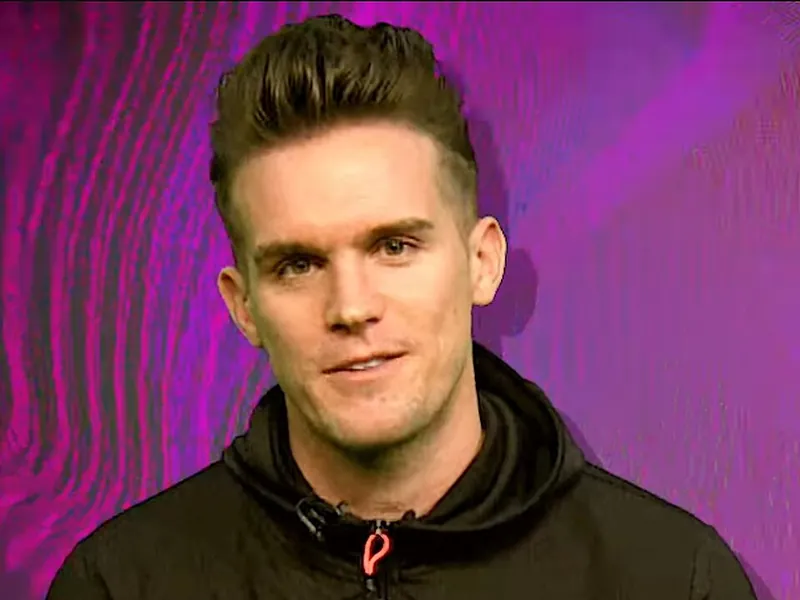 Gaz Beadle on his beard transplant: “I LOVE IT”Gaz Beadle told his 3.6 million followers he had a beard transplant after years of patchy stubble. His own words, and how a hair or beard transplant works today.
Page medically reviewed by Anastasia A. Kolesnik, hair transplant doctor. Review date: .
Mannheim sits where the Neckar flows into the Rhine, at 97 m above sea level, in the Upper Rhine Plain, which is described as Germany's warmest region. For anyone planning a hair transplant, this matters more than it might seem. A transplanted scalp spends its first weeks as a sensitive, healing surface, and what happens outside the window during that time depends heavily on the season.
The warm side of the year is the more demanding one for a fresh graft area. The mean daily maximum is 27.7 °C in July, 26.3 °C in August and 25.6 °C in June. Sunshine averages 8.3 hours a day in July and 8.0 in June, against a yearly average of 5 hours. During the first days after surgery, which the clinic describes as the 0-10 day stage when crusts fall away and swelling subsides, the scalp should not be left to bake in direct sun. In a city built on a river plain with little shade between buildings, that means thinking about where you will actually spend your days, not just whether the weather is pleasant.
Winter brings a different set of questions. The mean daily maximum in January is 6.0 °C and the mean minimum is 0.2 °C, with February's minimum at 0.6 °C. These are not dramatic frosts, but temperatures hover close to freezing. A cold, damp wind off the river valley can be unpleasant on a healing scalp, and the instinct is to pull on a tight wool cap. That is exactly the instinct to discuss with the doctor first. The care plan that comes with the procedure includes advice on washing your hair, on sleep and on headwear, so the question of what you may wear on your head, and from which day, is answered individually rather than by a general rule.
The practical point is that Mannheim does not force you into extremes. Neither a hard continental frost nor a punishing heat wave is typical. That makes the climate relatively forgiving, but it also means the choice of month is yours to shape around comfort, work and social calendar rather than around weather alone.
Relative humidity in Mannheim averages 74.9%. It reaches 84% from November to January and drops to 66% in July. Those numbers are useful when you think about the routine of caring for a healing scalp, which in the early stage involves gentle washing according to the instructions you receive.
In a humid winter month, a washed scalp dries slowly. If you step outside quickly with a wet head into air that is only a few degrees above freezing, you add an unnecessary stress to a recovering area. Planning the washing for the time of day when you can stay indoors afterwards is a simple adjustment. In July, with only 66% humidity and warm temperatures, drying is quick, but the scalp is more exposed to sun and sweat, and then the question becomes protection rather than drying.
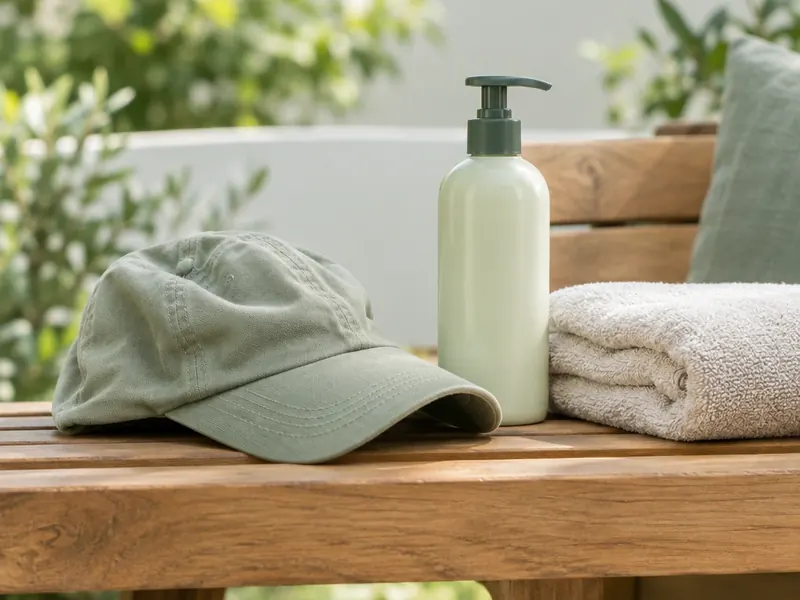
Rain is the other half of the picture. Annual precipitation is 578 mm spread over 153 rainy days. May and June are the wettest months with 69 mm each, and April is the driest with 32 mm. With rain on roughly 153 days of the year, a rainy day is simply a normal day in Mannheim, so the sensible question is how you will cover and shelter the head on such days during the first stage. A broad-brimmed or loose, clean cap and an umbrella can do different jobs, and the coordinator can tell you which options match the stage you are at.
Winter light is also worth noting. Sunshine falls to 1.4 hours a day in December and January. The advantage is that sun exposure of the new grafts is almost a non-issue then; the disadvantage is that long dark afternoons make it easy to skip the daily photo check. The programme includes progress tracked by photo with a personal coordinator, and in low winter light it helps to choose one window or one lamp and use it at the same time each time, so that the photos at 1, 3, 6, 9 and 12 months can be compared honestly.
A transplant is not a one-evening event. The clinic describes the course in stages: 0-10 days of healing, shedding of the transplanted hairs at 2-4 weeks, first growth at 3-4 months, density showing at 6-9 months, and the final result at 12-18 months. The procedure itself is one day at the clinic under local anaesthesia. Laying these stages over the Mannheim calendar helps you decide when to start.
Take an example. Suppose the procedure takes place in mid-November 2026. The healing stage then falls in late November, when humidity is at its seasonal high of 84% and the days are short. Shedding follows in December, which is normal: the hairs shed while the follicles stay in place. The first new growth would appear around February to March 2027, density would become visible from about May to August 2027, and the final result would be judged between November 2027 and May 2028. In that scenario the most visible, most delicate stage happens in the months when a cap on a cold day looks completely ordinary, and the sunniest months arrive only when the hair is already growing.
Now take an example from the other side. A procedure in early May 2027 puts the healing stage at the beginning of the wettest part of the year, with 69 mm of rain in May and June, and brings the shedding stage into the height of summer, when the mean maximum in June is 25.6 °C and in July 27.7 °C. The scalp needs protection from strong sun during the earlier days, and sweating during sport is something to plan around; the programme includes a plan for returning to sport and hair care, so ask about the date when exercise can resume. This calendar is not worse, but it asks for a bit more attention to sun cover.
There is no single correct month. What the facts do suggest is that the cooler months have gentle sun and mild temperatures that make covering the head unremarkable, while the warm months reward careful sun protection. The doctor discusses the plan and dates with you during the free online consultation, and nothing is booked before you confirm.
Mannheim has a rhythm of its own, and the first weeks after a transplant are the ones you may prefer to spend quietly. Universität Mannheim had 11,933 students in the winter semester 2023/24, so for a city of 319,536 inhabitants a considerable share of daily life runs on term time. If you are a student or work at the university, the gaps between teaching periods are natural candidates for the visible healing stage, the 0-10 days when crusts and swelling are present. Lectures that you can follow without being in a crowded room are easier to plan around than a fixed daily presence.
Public events matter in a different way. The Maimarkt begins on the last Saturday in April and lasts eleven days; in 2025 it ran from 26 April to 6 May. It has been recorded since 1613, and the article gives annual attendance between 250,000 and about 350,000 visitors. Counting from the same rule, in 2027 the last Saturday in April is 24 April. If you would like to attend crowded outdoor events with a fully recovered scalp, an earlier date for the procedure is worth considering: a start in November 2026 would place the shedding stage in December and the first growth in the early spring, well before such a fair. If you start close to the event instead, you are likely to be in the middle of healing or shedding in a dense crowd, which is a personal choice to weigh.
The Mannheimer Mess fair is held twice a year, in spring and in autumn. Treat the two fair periods like two bookmarks in the year: they are moments when many people will see you and perhaps photograph you. Because the final result is judged at 12-18 months, no single event is the point at which you will look finished; what you can control is when the early, noticeable stages happen relative to such events. You can ask your coordinator to help match the chosen date to your own diary.
The programme offers a free initial consultation, a conversation about the FUE and DHI methods, and a plan designed for you. Alongside your calendar of events, work and study, it is simplest to bring the dates that matter to that first conversation.
For anyone insured in Germany, the first practical question is usually about coverage. About 92% of the German population is covered by statutory health insurance, and about 88% of the working population is insured through statutory funds, with about 11% privately insured. Against that background, one rule is worth reading carefully. The statutory health insurance does not pay for cosmetic procedures carried out at the patient's own request; the patient bears the full cost, including lost income. The source puts it as no assumption of costs by the Gesetzliche Krankenversicherung.
A second rule concerns what happens if something goes wrong after a procedure that is not medically indicated. Insured persons must share in the costs of resulting complications, including sick pay. Insurers may restrict or refuse benefits under § 52 SGB V, and there is no entitlement to continued wage payment (Entgeltfortzahlung) in that case. For a planned hair transplant, this means that taking time off is not something to assume your employer or insurer will cover. It is sensible to plan leave openly, as holiday or unpaid time, instead of counting on sick leave.
These rules are general descriptions of German practice, not a statement about your particular insurance contract. Whether a transplant counts as medically indicated in your case is not something we can decide on the basis of a text. What you can do is ask your insurer in writing how it classifies the intended procedure, and bring its answer to the consultation. The doctor, for their part, will say whether the transplant suits your situation at all. The clinic states that some cases can be solved without surgery, and that the doctor will say so at the consultation.
Another useful note: a single day at the clinic under local anaesthesia means the time off from work is mostly spent on the visible healing stage, not on a hospital stay. The coordinator, who is reachable round the clock on WhatsApp and Telegram, can help you work out which days you will be most comfortable staying at home.
There is no single answer, because each season asks for something different. In the cooler months the mean daily maximum is 6.0 °C in January and sunshine is only 1.4 hours a day in December and January, so sun on the grafts is hardly an issue, but humidity reaches 84% from November to January, and a freshly washed scalp dries slowly. In summer the mean maximum is 27.7 °C in July with 8.3 hours of sun a day, so shading the scalp matters more. The doctor and coordinator will go through headwear for the stage you are at during the consultation.
The programme includes advice on headwear, so the details are given to you individually. In Mannheim winters the mean maximum in January is 6.0 °C and the minimum 0.2 °C, so you will want to cover your head on many days. Ask the doctor at the consultation which kind of cap is suitable, from which day, and how to keep it clean, rather than reaching for a tight hat on your own.
Annual precipitation is 578 mm over 153 rainy days, with May and June the wettest at 69 mm each. Rain by itself is not a barrier, but it makes timing of walks and washing a point to plan. Ask the coordinator how to protect the treated area on a wet day during the 0-10 day healing stage, and keep a umbrella on hand instead of relying on a cap that could get wet.
Using the stages given by the clinic, a procedure in November 2026 would mean shedding at 2-4 weeks, so December 2026 into early January 2027, and first growth at 3-4 months, so roughly February to March 2027. Density shows at 6-9 months and the final result at 12-18 months. The follow-up visits at 1, 3, 6, 9 and 12 months give fixed points to compare progress by photo.
The general rule is that statutory health insurance does not pay for cosmetic procedures done at the patient's request, and the patient bears the full cost including lost income. If a procedure is not medically indicated, insured persons also share in the costs of resulting complications, and insurers may restrict benefits under § 52 SGB V. Ask your insurer how it classifies your case, and the doctor will tell you at the consultation whether the transplant is suitable for you.
Those events are a calendar reference rather than a medical factor. The Maimarkt starts on the last Saturday in April and lasts eleven days; the Mess is held in spring and autumn. If you would rather not be in a crowd while crusts, swelling or shedding are visible, choose a date so that the 0-10 day stage and the 2-4 week shedding stage do not coincide with them. The coordinator can help you count the weeks.
Humidity averages 74.9%, with 84% from November to January and 66% in July. It is not a medical obstacle, but it influences how slowly or quickly a washed scalp dries. In damp winter months, plan your washing for a moment when you can stay indoors afterwards. The washing instructions come with the care plan, and the coordinator will clarify any detail.
According to the rules described for medically not indicated procedures, you should not assume that sick pay applies: there is no entitlement to continued wage payment in that case, and insurers may restrict benefits. The procedure itself takes one day at the clinic, and the visible healing stage is 0-10 days. Agree your leave with your employer in advance, and ask your insurer for its position in writing.

 Forceps
 Minimal


