





























as it was
12 months later
2,800 grafts
FUE method
City Medical Centre
0% instalments
from $367/mo
Consultation and quote — $0.
Real client
as it was
12 months later
No scalpel, no sutures — the FUE method. Graft count and forecast worked out and not charged — before you decide.
Free online consultation · Reply within 15 minutes
No bill for it, no surgery booking required
Message our coordinator
Free online consultation · Reply within 15 minutes
Message us on TelegramMessage us on WhatsAppBy messaging us, you agree to our Privacy Policy
Hair transplant for patients from Malmo at City Medical Centre starts at SEK 22,500 (from $2,200). The first online consultation is free; the doctor names the final price and it is fixed in the contract.
How it works · Hair transplant prices
Information current as of 24 October 2026
results
Each example is drawn from a genuine patient.
as it was
12 months later
2,800 grafts
FUE method

as it was
12 months later
3,500 grafts
FUE method

as it was
12 months later
2,600 grafts
FUE method

as it was
12 months later
3,000 grafts
FUE method

as it was
12 months later
2,700 grafts
FUE method

as it was
12 months later
3,300 grafts
FUE method

as it was
12 months later
2,900 grafts
FUE method

as it was
12 months later
2,500 grafts
FUE method

as it was
12 months later
3,400 grafts
FUE method

as it was
12 months later
2,500 grafts
FUE method

as it was
12 months later
3,100 grafts
FUE method

as it was
12 months later
3,600 grafts
FUE method

as it was
12 months later
4,000 grafts
FUE method

as it was
12 months later
3,200 grafts
FUE method

as it was
12 months later
3,000 grafts
FUE method

as it was
12 months later
3,700 grafts
FUE method

as it was
12 months later
2,700 grafts
FUE method

as it was
12 months later
3,800 grafts
FUE method

as it was
12 months later
3,300 grafts
FUE method

as it was
12 months later
2,800 grafts
FUE method

as it was
12 months later
2,500 grafts
FUE method

as it was
12 months later
3,900 grafts
FUE method

as it was
12 months later
3,500 grafts
FUE method

as it was
12 months later
3,800 grafts
FUE method

as it was
12 months later
2,900 grafts
FUE method

as it was
12 months later
3,600 grafts
FUE method

as it was
12 months later
2,600 grafts
FUE method

as it was
12 months later
2,700 grafts
FUE method

as it was
12 months later
3,700 grafts
FUE method

as it was
12 months later
3,200 grafts
FUE method

as it was
12 months later
3,000 grafts
FUE method

as it was
12 months later
2,800 grafts
FUE method

as it was
12 months later
4,000 grafts
FUE method

as it was
12 months later
3,400 grafts
FUE method

as it was
12 months later
2,900 grafts
FUE method

as it was
12 months later
3,100 grafts
FUE method

as it was
12 months later
2,600 grafts
FUE method

as it was
12 months later
3,300 grafts
FUE method

as it was
12 months later
3,900 grafts
FUE method

as it was
12 months later
3,500 grafts
FUE method

as it was
12 months later
2,700 grafts
FUE method

as it was
12 months later
3,800 grafts
FUE method

as it was
12 months later
3,200 grafts
FUE method

as it was
12 months later
3,000 grafts
FUE method

as it was
12 months later
2,800 grafts
FUE method

as it was
12 months later
3,100 grafts
FUE method

as it was
12 months later
3,600 grafts
FUE method
Comparison
Three graft transfer technologies are at work here: classic FUE, suture-free DHI and a combined protocol. Compare implantation technique, tissue trauma and graft survival, and choose your method.
Classic technique without incisions or stitches

$2,200
$2,700
Graft implantation technique
ForcepsGraft trauma
MinimalA natural angle for hair
NaturalGraft survival
98–100%Suitable for
Androgenetic alopeciaSuture-free implantation with a Choi pen

$2,500
$2,900
Graft implantation technique
DHI pen (Choi implanter)Graft trauma
MinimalA natural angle for hair
NaturalGraft survival
98–100%Suitable for
DensificationFUE extraction, DHI pen implant

$2,700
$2,900
Graft implantation technique
FUE extraction plus DHI implantGraft trauma
MinimalA natural angle for hair
NaturalGraft survival
98–100%Suitable for
Densification for androgenetic alopeciaSurvival and trauma figures are averaged for each method and given as a guide: the exact numbers depend on the transplant area and the patient's individual features, and the doctor clarifies them at the consultation.
Plan the next step


















about the clinic
Every patient gets care, modern equipment, comfortable rooms

Everything that interests you is explained, and a convenient hour chosen
Message us on WhatsApp Make an enquiryIf an operation is not needed for your case, the doctor will say so right at the consultation — and you will not waste your money. Below are the conditions where a transplant works.
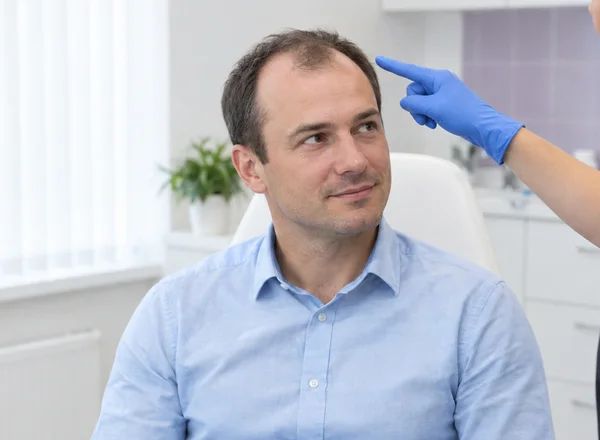

We only need a number. The coordinator requests photographs of the affected area in a messenger, a doctor examines them and reports whether a transplant would help. It is free and commits you to nothing.

services
No figure is named until the grafts have been counted; this happens at the free consultation and is recorded in the contract.
suture-free graft extraction

$2,200$2,700
or $367/mo — 0% instalments for 6 months
Keep this priceimplantation without channels

$2,500$2,900
or $417/mo — 0% instalments for 6 months
Keep this pricecombined technique

$2,700$2,900
or $450/mo — 0% instalments for 6 months
Keep this price| A look at your scalp | Free |
|---|---|
| Eyebrow transplant, FUE | |
| Beard transplant, FUEinstalments $467/mo | |
| Hair trichopigmentation | |
| PRP therapy / session | $200 |
all included
Support spans the pre-op stage and the next 12 months.
No unexpected surcharges on the day of surgery.
two extra patches
Transplants are not restricted to the scalp: donor grafts from the back of the head, FUE as the method, only the zone differs.
FUE method, free of cuts or stitches

The donor area at the back of the head supplies the grafts, moved through micro-punctures of about 1 mm — no scars are left. The doctor goes over the shape with you before the operation, taking your facial features into account. Transplanted hair grows for life and the beard is styled as usual.
$2,800$3,000
or $467/mo — 0% instalments for 6 months
Keep this priceFUE method, free of cuts or stitches

The eyebrow shape is drawn at the initial consultation by the surgeon: references are reviewed together and the design takes your facial features into account. The hairs are implanted at the right angle, so the eyebrows look natural. It also helps where years of plucking ended hair growth.
$1,600$1,700
a procedure done with local anaesthesia only
Keep this priceThe doctor will review your donor area, count the grafts and show what result is achievable for you. The cost is quoted at the consultation and fixed in the contract.

Message our coordinator
Free online consultation · Reply within 15 minutes
Message us on TelegramMessage us on WhatsAppBy messaging us, you agree to our Privacy Policy
Process
From consultation to going home — all in one day

The first appointment is where FUE and DHI get explained properly, where you can ask anything that worries you, and where the doctor looks closely at the donor zone.

Surgical days fill up, so a deposit secures yours. Card payments are taken at the clinic and online payment is also an option.

Getting ready involves laboratory tests, with the clinic providing both the roster of what is needed and how to do it.

A local anaesthetic is given first, so you feel nothing while the surgeon works.

This stage extracts grafts from the back of the head or the temples using a technique that requires no stitches.

Surgeons install each extracted graft in the part of the scalp lacking hair.
Recovery starts with supplies from the clinic and directions that leave nothing unexplained.

The crusts fall away, swelling calms down, the skin heals steadily

Part of the process: shafts are shed while the roots hold on

Thin young hairs come through and the difference is visible

The hair gets denser, the main volume and contour are visible

The volume rounds out with a natural-looking hairline

Free, before the operation and with no obligations.
Plan the next stepdoctors

Hair transplant doctor, trichologist, surgeon
10 years of experience

Dermatovenereologist, trichologist, surgeon
11 years in practice

Plastic surgeon
9 years of experience

Plastic surgeon
9 years of experience

Assistant
9 years of experience
The doctor checks the donor area, counts the grafts and says what result is achievable.
Plan the next stepcoordinators
One named coordinator works with you from the moment you write until recovery is over.
Patient support lead
Supports you before and after the surgery
Sees your papers through and books slots
Patient support lead
Supports you before and after the surgery
Sees your papers through and books slots
Patient support lead
Supports you before and after the surgery
Sees your papers through and books slots
Patient support lead
Supports you before and after the surgery
Sees your papers through and books slots













Everything that interests you is explained, and a convenient hour chosen
Message us on WhatsApp Make an enquiryReviews
I was having trouble with my hair. I came here and got a hair transplant. The results was awesome thank you
Review on Google
І experienced hair loss due to COVID and turned to this clinic; they helped me and performed a hair transplant, moving hair from the back of my head to my temples. Thank you.
Review on Google
I traveled to City Medical Centre, where they helped me overcome hair loss through a transplant to the balding areas of my scalp. I am grateful to the doctors for performing the procedure painlessly.
Review on Google
I am sharing my experience, because before the operation I went through a pile of reviews myself and was looking for real stories. I had a beard transplant six months ago. Honestly, in the first days after the procedure I felt a little jittery: my face looked unfamiliar, there was slight swelling and small scabs. In the first couple of months the hair partly fell out, as the doctor had warned. But now the result truly makes me very happy) From about the 4th month active, even growth began. The transplanted hair took very well, the beard now looks as natural as possible, no bald patches are left. The beard became much thicker and denser, with the shape I had thought about for a long time. All in all, I recommend the clinic, the doctor was polite and explained everything 👍 The result is definitely worth it!
Review on Google
I traveled to this clinic and do hair transplant, very good quality and cheap. Good doctors
Review on Google
I do hair transplant here very good doctors!!
Review on Google
Questions we get
People often say hair implants, but no artificial hair is used. In a hair transplant the doctor moves your own follicles (grafts) from the donor area to thinning or bald areas using FUE or DHI.

Yes, this is possible. An online consultation is offered so patients from other cities and countries can plan ahead.
Prices start at $2,200 (≈ SEK 22,500) for FUE, $2,500 (≈ SEK 25,500) for DHI, and $2,700 (≈ SEK 27,500) for the combined method. Your final price is set after a free graft count and locked into the contract.
Just one day is needed, and you sleep in your own bed.
It helps with stable pattern hair loss and a receding hairline when there are enough donor grafts. Some types of alopecia need treatment first; the doctor checks this at the consultation.
No, not painful at all, thanks to numbing applied locally.
FUE relies on tweezer harvesting with no incisions or stitches. DHI relies on Choi-pen implantation without channels. The combined DHI+FUE approach harvests by FUE and implants by DHI.
A doctor settles the amount at a consultation you do not pay for, judging by the donor area available.
Roughly 0–10 days for healing, then a normal shedding of transplanted hairs at 2–4 weeks. Growth appears around 3–4 months, becomes noticeable across 6–9 months, and completes at 12–18 months.
A contract-backed, lifetime guarantee of hair growth comes with every procedure.
Under a medical licence, with care provided to the standards and clinical guidelines
of Ministry of Health.

Diplomas and certificates of the doctors operating on you
Study the documentsAKC POMOSHCH LLC
the clinic's legal entity
1057746096924
OGRN
7728536872
INN
For a resident of Malmo the method matters more than the map: FUE and DHI leave no cuts and no stitches, run under local anaesthesia and take one day. Graft survival is 98-100 %, and a price from $2,200 (≈ SEK 22,500) is locked in the contract after a free graft count.
For someone in Malmo the whole beginning is online and free of charge: photos of the thinning area go to the doctor, who looks at them and counts the grafts. The clinic keeps in touch 24/7, in the hours you are actually awake.
Healing is a matter of 0-10 days, the transplanted hairs shed at 2-4 weeks and that is expected, growth resumes at 3-4 months, density is obvious at 6-9 and the result is complete at 12-18. The clinic checks in at 1, 3, 6, 9 and 12 months by photo, and the growth guarantee lasts a lifetime.
Prices are in US dollars; the amount in brackets is an approximate conversion to SEK at the rate of 02.10.2026. The final price is fixed in your contract.
By messaging us, you agree to our Privacy Policy
Public figures who spoke openly about this operation, in their own words.
 John Cena's hair transplant: “I got a problem, I try to fix it”John Cena spoke openly in 2025 about his hair transplant and the fan signs that pushed him to it. His words, how the procedure works and the recovery.
 Did Calum Best have a hair transplant? Yes, and he said so himselfCalum Best said in 2023 he had his sixth hair transplant, this time using patches of beard hair. His words, how the procedure works and recovery.
 Did Chloe Goodman have a hair transplant? Yes, and she explained whyChloe Goodman had a hair transplant in 2025 after losing hair following pregnancy. Her own words, how the procedure works and what recovery involves.
 Did Dean McCullough have a hair transplant? Yes, and he filmed itRadio 1 presenter Dean McCullough shared his FUE hair transplant on TikTok in 2024. His own words, what the swelling means and how results develop.
 Did Ella Morgan have a hair transplant? Yes — to cover a hairline scarThe Married at First Sight star revealed a hair transplant in 2025 to cover scarring along her hairline from facial surgery. Her own words and the facts.
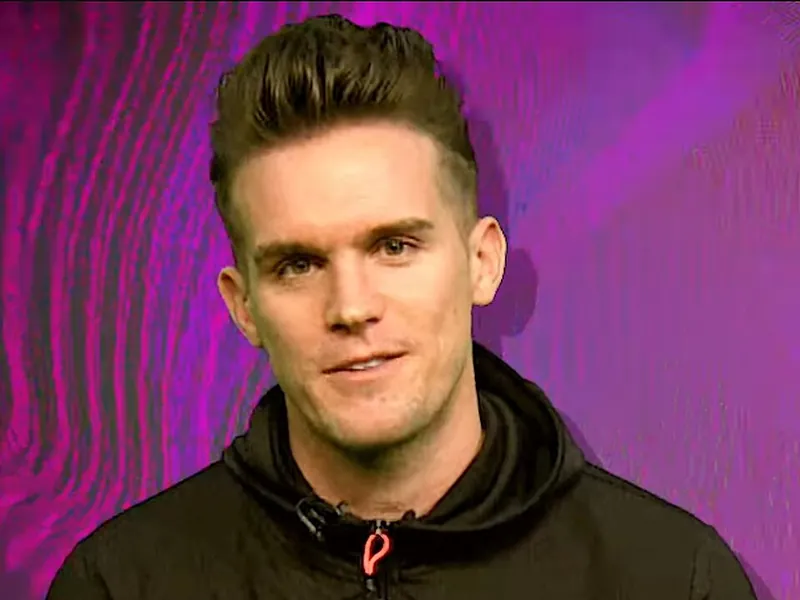 Gaz Beadle on his beard transplant: “I LOVE IT”Gaz Beadle told his 3.6 million followers he had a beard transplant after years of patchy stubble. His own words, and how a hair or beard transplant works today.
Page medically reviewed by Anastasia A. Kolesnik, hair transplant doctor. Review date: .
Malmo sits in Skane County on the Oresund strait, only 12 m above sea level. Climate normals for 1991-2018 give an annual relative humidity of 80.7%, and annual precipitation of roughly 673 mm. Weather-station normals for 1991-2020 count 111.5 days with precipitation a year. For anyone planning a hair transplant, the practical meaning is simple: the first weeks of healing will almost certainly include damp, grey days, and your washing and headwear routine has to work in that weather rather than in an ideal one.
The wettest month is August, with 86.3 mm, followed by July with 71.1 mm and December with 69.4 mm. The driest is April, with 30.0 mm. These figures matter less for the surgery itself than for the weeks of crusts and swelling that follow. In City Medical Centre's programme, the first stage runs from day 0 to day 10: the crusts fall away, the swelling subsides and the area slowly recovers. The care plan includes advice on washing your hair, on sleep and on headwear, and that advice is easier to follow when you have already imagined the weather you will actually be walking in.
During the free online consultation, the doctor looks at your photos, counts the grafts and explains the course of healing. It is worth telling the coordinator about your normal week: how long you spend outdoors, whether you go out in rain, and what you usually wear on your head. Those details let the instructions be matched to a real routine in a humid coastal city instead of a generic leaflet.
One more point about moisture: the transplanted area and the donor area at the back of the head or the temples are two different zones, and both need care. The care plan covers the transplant and donor areas separately. If your work or commute keeps you outside in drizzle, ask in advance how to handle both zones on a wet day, and write the answer down before the procedure.
Winters here are mild by northern standards but not warm. January has a mean maximum of 2.9 °C and a mean minimum of -1.4 °C. February is almost identical at 3.0 °C and -1.5 °C, and December runs from 4.8 °C down to 0.7 °C. The record low is -28.0 °C, a reminder that a cold snap is possible even if it is rare. Snow falls mainly between December and March, but the snow cover is brief and some winters have none at all.
For a person who has just had a transplant, the cold season raises one obvious question: what goes on the head when you step outside? The honest answer is that it depends on the stage of healing, and the doctor gives the instructions. The programme includes advice on headwear, so ask specifically which kinds are acceptable in the first days, which in the first weeks, and what to do on a day when the temperature sits around 0 °C. Do not improvise with a tight woollen hat you happen to own.
Cold months also have a quiet advantage. Many people prefer to go through the visible early stages, the crusts and the swelling, when they are not in a rush to be outdoors. In the programme those stages cover roughly the first 10 days, and the shedding of the transplanted hairs follows at 2-4 weeks. That shedding is a normal stage: only the hairs shed, while the follicles stay in place. If you know that it is coming, a grey February is easier to live through.
Short winter days also affect how you document progress. The coordinator tracks your recovery by photo, and good photos need good light. Midwinter in Malmo is dim: December averages only 33.1 hours of sunshine for the whole month. Plan to take your progress photos by a bright window or under steady indoor light, and keep the angle the same each time so the doctor can compare like with like.
The sunniest stretch is late spring and summer. Malmo gets about 1,917.7 hours of sunshine a year, with May at 274.4 hours, July at 272.1 and June at 271.5. July is the warmest month, with a mean maximum of 23.2 °C and a mean minimum of 13.8 °C, August follows at 22.3 °C and 13.7 °C, and the record high is 35.1 °C. A scalp that has been hidden under a cap all winter meets this much sunlight, so the question of what to wear on your head becomes a summer question as well.
The programme does not hand you a vague warning here. It includes advice on headwear and a plan for returning to sport and hair care, and the doctor explains the timing during the consultation. If your summer plans involve the open-air bathing area at Ribersborg, known locally as Ribban, a man-made shallow beach southwest of the harbour with an open-air bath that dates from the 1890s, or the boardwalk at Scaniaparken and Daniaparken in the Western Harbour, which is popular for swimming, ask about the exact moment when water, sun and sand are acceptable for you. Do not rely on a friend's story about when they went back in.
Cycling is the other everyday habit to think about. Malmo has 410 km of cycle paths, and sources put the share of commuting or trips made by bicycle between roughly 30% and 40%. Riding with a helmet, sweating under it and sitting in a headwind can matter for a healing scalp. Tell the doctor how many days a week you ride, and ask when the helmet is fine and what to do about the straps and padding in the early stage.
The same applies to team sport. Malmo has football and ice hockey on a large scale, and many people who read this have their own training habits. The programme's plan for returning to sport is part of the package, and it is far easier to follow when you have given the coordinator your real schedule: training days, matches, swimming sessions. Ask for the plan in writing, in messenger, and keep it on your phone.
Hair does not grow quickly, and the timeline from the programme stretches across two seasons: 0-10 days to heal, 2-4 weeks of shedding, first growth at 3-4 months, visible density at 6-9 months, and the end result at 12-18 months. Follow-up points are set at 1, 3, 6, 9 and 12 months. Put these next to the Swedish calendar and the planning becomes concrete.
Take an example in which the procedure is done in mid-November 2026. The healing stage ends in late November, the shedding falls in December, right around the Christmas and New Year days off, which in Sweden include 25 and 26 December and, de facto, Christmas Eve and New Year's Eve. First growth then appears from mid-February to mid-March 2027, density shows from about mid-May to mid-August 2027, and the end result arrives between mid-November 2027 and mid-May 2028. Ahead of that, the summer of 2027 would be the first with visibly thicker hair, a good moment for photos.
A different example: a procedure in early February 2027. Shedding is over by March, the first growth appears in May or June, and density builds from about August into the autumn. Midsummer, which in Sweden is celebrated on a Saturday between 20 and 26 June, then arrives at the stage when new hairs are only just showing. That is worth knowing if you have a big gathering planned and want to decide whether to keep the date or keep your expectations modest.
Local events can serve as personal markers. Malmofestivalen takes place in the third week of August every year, and the film festival Nordisk Panorama is held in September. Public holidays such as 1 May, Ascension, National Day on 6 June, Pentecost and All Saints' Day are natural points for a progress photo. A coordinator can help you pick a surgery date so that important events fall at a calm stage, not in the middle of shedding.
Remember that the dates are ranges, not promises. The final density at 12-18 months depends on the transplant area and on individual features of each patient, and the doctor clarifies this in the consultation. Use the calendar to reduce surprises, not to count the days anxiously.
Malmo municipality had 367,924 inhabitants at the end of 2025, the third largest in Sweden, and the metropolitan population was 780,035 in 2024. A city of that size has plenty of choice for medical care, so it is fair to ask why someone would start with an online consultation. The reason is simple: the first step costs nothing and takes a few minutes. You send photos on WhatsApp or Telegram, the coordinator replies, and the doctor assesses your donor area, counts the grafts and shows the result that is realistic for you. Nothing is booked until you confirm the plan and the dates.
Coordinators answer round the clock on both messengers, which is useful in a city where many people work shifts, study, or work across several time zones. Take the photos in daylight: the front, the top, both sides and the back of the head where the donor area is. The doctor will describe what suits your case, such as FUE, DHI or the combined protocol, and the plan is fixed in the contract. The procedure itself is a single day with local anaesthesia, and no stitches are needed with FUE.
A word on public healthcare. The 1177 guidance says that cosmetic surgery, taking the example of removing excess skin, is most often paid by the patient privately, while removal for medical reasons is handled differently depending on the region. Hair restoration is not named there, so do not assume that regional care will cover it. If you have a medical condition that affects hair, a regional appointment may still help to clarify the diagnosis, and you can send the findings to the coordinator for the doctor to read.
Finally, a few practical items to bring to the consultation: a list of medicines you take, any illness the doctor should know about, and a clear idea of what you want. The doctor explains when a transplant suits a case and when it does not, and says so directly if your case can be solved without surgery. You owe nothing at that stage, and you can pause at any step.
The climate figures show a humid coast: annual relative humidity is 80.7% and there are about 111.5 days with precipitation a year. The programme's healing stages do not change because of this, but the advice on washing, sleep and headwear should be matched to your real week. Describe your routine to the coordinator, and the doctor can adapt the instructions to wet, windy or cold days.
Neither is simply better. Winter is cold, with January averaging between 2.9 °C and -1.4 °C, so the headwear question is acute. Summer has long light, with May to July each giving about 270 hours of sun. The doctor will tell you which headwear is acceptable at each stage, so choose the season by your own commitments and ask for the plan in writing.
Mark the stages on the calendar: healing for 0-10 days, shedding at 2-4 weeks, first growth at 3-4 months, density at 6-9 months, and the end result at 12-18 months. A procedure in mid-November 2026, for example, puts shedding in December, around the Christmas days off. Ask the coordinator to help choose a date that keeps big events away from the shedding stage.
Malmo has 410 km of cycle paths and many people ride daily, so this is a very common question. The programme includes a plan for returning to sport and advice on headwear, but the timing for a helmet is a medical decision. Tell the doctor how often you ride and for how long, and ask when a helmet is acceptable and how to protect the transplanted area.
Ribersborg and the Western Harbour boardwalks are popular for summer bathing, but the right moment to go into the water depends on your healing stage, and the doctor sets it. Ask for the date when swimming, sun and sand are acceptable and keep it in your messenger. Plan your summer around that date rather than the other way round.
Do not assume it will. The 1177 guidance says cosmetic procedures, using excess skin removal as the example, are most often paid by the patient, and that medical removal is handled differently by region. Hair restoration is not mentioned, so ask your regional care provider if you want to be sure. At City Medical Centre the plan and the final terms are fixed in the contract after the free consultation.
Winter light is weak, since December has only about 33.1 hours of sunshine in the whole month. Take photos beside a bright window or under steady, even indoor light: the front, the top, both sides and the back of the head. Keep the same angles and the same light for later progress photos, so the doctor can compare them fairly at the follow-up points.
Coordinators answer on WhatsApp and Telegram around the clock, 24/7, and the first online consultation is free. You send photos, get an assessment from the doctor, and confirm the plan and dates only when you are ready. Nothing is booked in advance, and you can ask the coordinator any question about the stages, the aftercare or the timetable.

 Forceps
 Minimal


