first
12 months elapsed
2,800 grafts
FUE method
City Medical Centre
FUE · DHI
from $2,200
A look and a figure — $0.
Real outcome
first
12 months elapsed
FUE method, no scalpel and no sutures. Graft count and forecast assessed with no fee at all — before you decide.
Free online consultation · Reply within 15 minutes
Nothing is owed, no surgery booking required
Message our coordinator
Free online consultation · Reply within 15 minutes
Message us on TelegramMessage us on WhatsAppBy messaging us, you agree to our Privacy Policy
Hair transplant for patients from Gothenburg at City Medical Centre starts at SEK 22,500 (from $2,200). The first online consultation is free; the doctor names the final price and it is fixed in the contract.
How it works · Hair transplant prices
Information current as of 5 November 2026
results
The people you see are genuine CMC patients.
first
12 months elapsed
2,800 grafts
FUE method

first
12 months elapsed
3,500 grafts
FUE method

first
12 months elapsed
2,600 grafts
FUE method

first
12 months elapsed
3,000 grafts
FUE method

first
12 months elapsed
2,700 grafts
FUE method

first
12 months elapsed
3,300 grafts
FUE method

first
12 months elapsed
2,900 grafts
FUE method

first
12 months elapsed
2,500 grafts
FUE method

first
12 months elapsed
3,400 grafts
FUE method

first
12 months elapsed
2,500 grafts
FUE method

first
12 months elapsed
3,100 grafts
FUE method

first
12 months elapsed
3,600 grafts
FUE method

first
12 months elapsed
4,000 grafts
FUE method

first
12 months elapsed
3,200 grafts
FUE method

first
12 months elapsed
3,000 grafts
FUE method

first
12 months elapsed
3,700 grafts
FUE method

first
12 months elapsed
2,700 grafts
FUE method

first
12 months elapsed
3,800 grafts
FUE method

first
12 months elapsed
3,300 grafts
FUE method

first
12 months elapsed
2,800 grafts
FUE method

first
12 months elapsed
2,500 grafts
FUE method

first
12 months elapsed
3,900 grafts
FUE method

first
12 months elapsed
3,500 grafts
FUE method

first
12 months elapsed
3,800 grafts
FUE method

first
12 months elapsed
2,900 grafts
FUE method

first
12 months elapsed
3,600 grafts
FUE method

first
12 months elapsed
2,600 grafts
FUE method

first
12 months elapsed
2,700 grafts
FUE method

first
12 months elapsed
3,700 grafts
FUE method

first
12 months elapsed
3,200 grafts
FUE method

first
12 months elapsed
3,000 grafts
FUE method

first
12 months elapsed
2,800 grafts
FUE method

first
12 months elapsed
4,000 grafts
FUE method

first
12 months elapsed
3,400 grafts
FUE method

first
12 months elapsed
2,900 grafts
FUE method

first
12 months elapsed
3,100 grafts
FUE method

first
12 months elapsed
2,600 grafts
FUE method

first
12 months elapsed
3,300 grafts
FUE method

first
12 months elapsed
3,900 grafts
FUE method

first
12 months elapsed
3,500 grafts
FUE method

first
12 months elapsed
2,700 grafts
FUE method

first
12 months elapsed
3,800 grafts
FUE method

first
12 months elapsed
3,200 grafts
FUE method

first
12 months elapsed
3,000 grafts
FUE method

first
12 months elapsed
2,800 grafts
FUE method

first
12 months elapsed
3,100 grafts
FUE method

first
12 months elapsed
3,600 grafts
FUE method
Comparison
We work with three graft transfer technologies: classic FUE, suture-free DHI and a combined protocol. Compare the implantation technique, tissue trauma and graft survival to choose your method with open eyes.
Classic technique without incisions or stitches

$2,200
$2,700
Graft implantation technique
ForcepsGraft trauma
MinimalNatural hair growth angle
NaturalGraft survival
98–100%Suitable for
Androgenetic alopeciaSuture-free placement with a Choi pen

$2,500
$2,900
Graft implantation technique
DHI pen, Choi implanterGraft trauma
MinimalNatural hair growth angle
NaturalGraft survival
98–100%Suitable for
DensificationFUE extraction, DHI pen implantation

$2,700
$2,900
Graft implantation technique
FUE extraction + DHI implantationGraft trauma
MinimalNatural hair growth angle
NaturalGraft survival
98–100%Suitable for
Androgenetic alopecia and densificationEach method has averaged survival and trauma figures, given for orientation: the exact numbers depend on the transplant area and the patient's individual features, and the doctor clarifies them at the consultation.
Book an appointment


















about the clinic
Good equipment, pleasant rooms and attention to each patient

Questions are answered first, then a suitable slot for the consultation is chosen
TelegramMessage us on TelegramMessage us on Telegram Message us on WhatsApp Get in touchIf an operation is the wrong answer for you, you will hear so at the consultation and no money is wasted. Below you will find the situations where a transplant is truly effective.
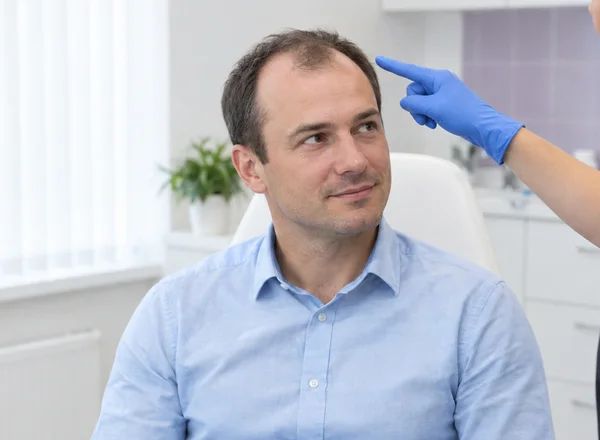

Leave your number: a coordinator asks for photos in a messenger, the doctor says if a transplant will help. No booking, no fee.

services
Free consultation, grafts counted, price announced, and the contract keeps it unchanged.
suture-free graft extraction

$2,200$2,700
A look and a figure — $0.
Save this priceimplantation without channels

$2,500$2,900
A look and a figure — $0.
Save this pricecombined technique

$2,700$2,900
A look and a figure — $0.
Save this price| The first assessment | Free |
|---|---|
| Eyebrow transplant, FUE | |
| Beard transplant, FUE | |
| Hair trichopigmentation | |
| PRP therapy / session | $200 |
all included
From preparing for the operation to 12-month follow-up.
No surprise extra charges on the day of surgery.
two added zones
Transplants are not restricted to the scalp: donor grafts from the back of the head, FUE as the method, only the zone differs.
FUE method, free of cuts or stitches

Grafts are taken from the back of the head, the donor area, and moved through micro-punctures of about 1 mm, so no scars are left. The doctor discusses the shape with you before the operation, taking your facial features into account. Transplanted hair grows for life: trim and style the beard as usual.
$2,800$3,000
A look and a figure — $0.
Save this priceFUE method, free of cuts or stitches

The surgeon maps the brow shape during the first consultation, sample photos are examined together and your face's proportions dictate the outline. Because every hair is angled the way it grows, the result passes as natural. Brows that stopped growing after long years of plucking are a good fit for it.
$1,600$1,700
an outpatient session under a local anaesthetic
Save this priceDonor zone inspected, grafts counted, realistic outcome explained. Your cost is decided at that consultation and written down in the contract.

Message our coordinator
Free online consultation · Reply within 15 minutes
Message us on TelegramMessage us on WhatsAppBy messaging us, you agree to our Privacy Policy
Process
From consultation to going home — all in one day

This step brings you face to face with the doctor, who explains how FUE and DHI are performed, answers everything you want to know, and draws up an individual plan for your surgery — free of charge.

Booking involves reserving the surgery date with a deposit — card payment at the clinic or an online transfer — under a medical services contract.

Patients in Gothenburg prepare for the transplant by completing a set of pre-surgery tests, using the list and instructions the clinic provides.

With local anaesthesia used, the surgery causes no pain for the patient.

Grafts come from the donor area — the back of the head or temples — collected in a way that avoids stitches entirely.

This step places each graft into the area affected by hair loss.
This step supports fast healing, with the clinic providing all the necessary items and full instructions.

The crusts are shed, the swelling recedes, the skin heals over

Normal. Only the hairs fall out, the follicles remain in place

Young growth appears and the difference becomes obvious

The hair becomes thicker, the main volume and shape are visible

The transplant matures into full volume and a soft hairline

Free, ahead of the operation, with no commitment.
Book an appointmentdoctors

Hair transplant doctor, trichologist, surgeon

Dermatovenereologist, trichologist, surgeon
11 years of experience

Plastic surgeon
9 years in practice

Plastic surgeon
9 years in practice

Assistant
9 years in practice
The doctor studies the donor zone, arrives at the graft count and sets out the achievable outcome.
Book an appointmentcoordinators
A coordinator is assigned to you and stays with you until you have recovered.
Patient support lead
With you through to recovery
Looks after the papers and the booking
Patient support lead
With you through to recovery
Looks after the papers and the booking

Patient support lead
With you through to recovery
Looks after the papers and the booking
Patient support lead
With you through to recovery
Looks after the papers and the booking













Questions are answered first, then a suitable slot for the consultation is chosen
TelegramMessage us on TelegramMessage us on Telegram Message us on WhatsApp Get in touchReviews
I was having trouble with my hair. I came here and got a hair transplant. The results was awesome thank you
Review on Google
І experienced hair loss due to COVID and turned to this clinic; they helped me and performed a hair transplant, moving hair from the back of my head to my temples. Thank you.
Review on Google
I traveled to City Medical Centre, where they helped me overcome hair loss through a transplant to the balding areas of my scalp. I am grateful to the doctors for performing the procedure painlessly.
Review on Google
I am sharing my experience, because before the operation I went through a pile of reviews myself and was looking for real stories. I had a beard transplant six months ago. Honestly, in the first days after the procedure I felt a little jittery: my face looked unfamiliar, there was slight swelling and small scabs. In the first couple of months the hair partly fell out, as the doctor had warned. But now the result truly makes me very happy) From about the 4th month active, even growth began. The transplanted hair took very well, the beard now looks as natural as possible, no bald patches are left. The beard became much thicker and denser, with the shape I had thought about for a long time. All in all, I recommend the clinic, the doctor was polite and explained everything 👍 The result is definitely worth it!
Review on Google
I traveled to this clinic and do hair transplant, very good quality and cheap. Good doctors
Review on Google
I do hair transplant here very good doctors!!
Review on Google
Common questions
People often say hair implants, but no artificial hair is used. In a hair transplant the doctor moves your own follicles (grafts) from the donor area to thinning or bald areas using FUE or DHI.

Yes, patients in Gothenburg are accepted regularly. An online consultation lets you discuss your case before booking.
Prices start at $2,200 (≈ SEK 22,500) for FUE, $2,500 (≈ SEK 25,500) for DHI, and $2,700 (≈ SEK 27,500) for the combined method. Your final price is set after a free graft count and locked into the contract.
The whole operation is completed in one day, with no overnight stay needed.
It helps with stable pattern hair loss and a receding hairline when there are enough donor grafts. Some types of alopecia need treatment first; the doctor checks this at the consultation.
It isn't painful: local anaesthesia is used throughout the surgery.
FUE is the classic method: grafts are harvested with tweezers, with no cuts or stitches. DHI implants grafts without channels, using a Choi pen. A combined method harvests grafts by FUE and implants them with the DHI pen.
The doctor calculates the exact number of grafts at a free consultation, based on your donor area.
Healing takes 0–10 days. Transplanted hair sheds at 2–4 weeks, which is normal. New growth starts at 3–4 months, with noticeable density at 6–9 months and the final result at 12–18 months.
A lifetime guarantee of hair growth is included, confirmed in your contract.
The clinic works under a medical licence, care meets the standards and clinical guidelines
per Ministry of Health.

Diplomas and certificates of the team that will operate
Study the documentsAKC POMOSHCH LLC
our clinic's legal entity
1057746096924
OGRN
7728536872
INN
Someone in Gothenburg does not need a ward bed for this. FUE and DHI work without incisions and without sutures, the area is simply numbed with local anaesthesia, and the whole thing is done between morning and evening of the same day.
The free online consultation is the whole first step in Gothenburg: send photos of the thinning area, and the doctor looks at them and counts how many grafts are needed. The clinic is in touch 24/7, so the exchange stays convenient.
The first 0-10 days go on healing. Between 2-4 weeks the transplanted hairs fall out, which sounds alarming and is in fact entirely normal. Growth begins at 3-4 months and keeps going quietly from there.
Prices are in US dollars; the amount in brackets is an approximate conversion to SEK at the rate of 02.10.2026. The final price is fixed in your contract.
By messaging us, you agree to our Privacy Policy
Well-known people who openly discussed this operation, in their own words.
Written by Anastasia A. Kolesnik, plastic surgeon, hair transplant doctor
Medically reviewed by Ellina V. Goncharova, dermatovenereologist, trichologist, surgeon. Review date:
How we prepare and review medical content · Medical disclaimer
Gothenburg is a municipality of 612,231 residents (2025), and a person who notices thinning here can start the whole process from a phone. The first assessment is online, it is free, and nothing is reserved by sending a message. Before you go further, though, build a small file of documents that the clinic supplies in writing.
Start with identity: the medical licence and its number, and the legal name of the organisation that delivers the care. Next come the doctors. Ask for the name, qualification and specialty of the person who will carry out the transplant, and for the diplomas and certificates behind it. The clinic works with a plastic surgeon and hair transplant doctor and with a dermatovenereologist and trichologist, so the name matters: you want to know which of them stands at the table on the day.
The third request is the contract for medical services. Read what it says about the method, the graft count, the area to be covered, what is included afterwards and when payment falls due. A deposit reserves the surgery date, and the terms of that deposit belong in the contract, not in a chat message. Anything promised in conversation but absent from the document is only a sentence.
Finally, ask who examines you after the operation. The clinic describes personal coordinator support and checks at 1, 3, 6, 9 and 12 months; request that schedule as a written line and ask what a missed check means in practice. Keep every reply, with its date, in one folder you can open later. Put a date beside each reply and a short mark beside anything that is only spoken, so that when two answers disagree you can tell which one was signed.
In Sweden the National Board of Health and Welfare, Socialstyrelsen, maintains the Register of Authorised Healthcare Professionals, known as HOSP. It covers physicians among others and includes specialist certificates, and its information is generally public. When a clinic gives you the name of the doctor who will operate, comparing that name and specialty with an official record is a sensible second check.
Sweden also has a supervisory authority, the Health and Care Inspectorate (IVO), which checks that health care follows laws and regulations. Whatever a provider tells you, the paper you hold should name the legal entity that gives the care. A deposit demanded in the very first conversation is a reason to slow down.
Three ways of moving hair are on offer, and they differ in how the grafts leave the donor area and how they arrive at the destination. Classic FUE removes units one at a time with forceps, without incisions or stitches, and the clinic rates graft trauma as minimal. DHI uses a Choi implanter pen so the graft is placed directly, with no channels cut in advance. The combined protocol extracts by FUE and implants by DHI, and is described as a densification route for androgenetic alopecia.
A comparison of these methods is only useful if it ends in a decision. After your photos are reviewed, ask the doctor to say, in a sentence you can copy down, why one method suits your pattern of loss better than the others, and which finding would change the answer. If the reply is vague, that is information as well.
Survival of grafts under FUE is given as 98 to 100 per cent. Treat it as an average for orientation: the exact figures vary with the treated area and with your own characteristics, and the doctor sets them out at the consultation. A figure that is quoted loudly before anyone has examined the donor area deserves a second question.
Counting comes next. The doctor studies the donor zone, arrives at the number of grafts and explains what outcome is realistic. Have that number entered in the contract. When you later compare two quotations, the only fair comparison puts method, graft count, treated area and operating doctor side by side, one grid for each clinic.
Beard and eyebrow work follows the same donor logic. Beard grafts come from the back of the head and go in through micro-punctures of about 1 mm, while for eyebrows the surgeon draws the line first and goes through reference photographs with you. Name the area that bothers you most in your first message, since it changes what the doctor studies.
The coordinator asks for little: a phone number and images of the places where hair has thinned. A doctor goes through them and tells you whether a transplant would help. How well that works depends on the pictures. Use daylight, a plain background, no flash, hair dry and parted the way you normally wear it. Take the crown, the front, both temples, the back and a clear shot of the donor zone. If you have an older photo showing the density you had years ago, include it.
Under the pictures write a short note. When did you first notice the change? How quickly has it moved? Do close relatives have similar loss? What have you tried so far? Add one line about your health history and any regular medicines, because the list of cases where a transplant is not appropriate is long and the doctor needs the full picture.
Then write the questions that matter to you. A few that tend to be useful: which of the three methods fits and why; how many grafts are likely to be needed; who will be in the operating room; which tests come before surgery and who explains them; what the first ten days look like at home; and which instructions on washing, sleep and headwear you will receive in writing.
Photographs show the pattern, not the final count. Anything said about grafts before the donor zone is inspected is provisional. The figure that counts is the one reached at the consultation and entered in the contract.
A reliable clinic will say when an operation is not the right step, and it states this openly. The cases where a transplant clearly helps are androgenetic or diffuse alopecia, bald areas and a receding front of the scalp.
Other situations call for a frank conversation or rule the operation out. The list includes trichotillomania, body dysmorphic disorder, cancer, being under 18, a pacemaker, epilepsy, serious heart conditions, diabetes mellitus, pulmonary embolism, hepatitis B or C, HIV or AIDS and intolerance to anaesthetics. Disclose every item that applies to you, even if it feels unrelated, because the doctor can weigh only what has been said.
If the doctor says a transplant would not help, ask what would, and request the reasoning in writing. A refusal with a reason is a sign of a careful team; a yes that arrives before anyone has seen your donor zone is not.
You do not have to know in advance whether you qualify. Send the pictures, hear the verdict, then decide at your own speed; a short list of your own reasons for and against, written the evening before the call, keeps the conversation on track.
Results arrive slowly, so keep a dated list on your phone. Days 0–10 bring shedding crusts and fading swelling. Weeks 2–4 are when the transplanted hairs fall out, which is a normal stage; the follicles stay put. New hairs start at 3–4 months, thickness comes back at 6–9 months, and the finished result with a natural edge is expected at 12–18 months. If month five looks quiet, that is the calendar working as described, not a reason to panic.
Ask the coordinator to list in writing what the aftercare covers: dressings, healing checks, a care plan for both treated areas, advice on washing, sleep and headwear, and a plan for getting back to sport. Then add your own habit. Before each check, photograph the same spots in the same light and send the set along; a month-by-month series is easier for a doctor to read than a single snapshot taken in a hurry.
The medical licence and number, the legal name of the care provider, the doctors' diplomas and certificates, and the contract for medical services.
HOSP, the Register of Authorised Healthcare Professionals kept by Socialstyrelsen. It includes physicians and specialist certificates, and its information is generally public.
The Health and Care Inspectorate, IVO, checks that health care follows laws and regulations. For a clinic's paperwork, start with the licence, the legal name and the contract.
Yes. Coordinators are reachable round the clock in WhatsApp and Telegram, and the first assessment is free.
Daylight pictures of the crown, front, temples and back, a clear image of the donor zone, and a short note about when the thinning began.
No. Grafts also come from the back of the head and are placed through micro-punctures of about 1 mm.
The doctor, after studying the donor zone at the consultation. Ask for the number to be written into the contract.
At 1, 3, 6, 9 and 12 months, with photographs exchanged with your coordinator between visits.

 Forceps
 Minimal