





























earlier
by 12 months
2,800 grafts
FUE method
City Medical Centre
0% instalments
from $367/mo
Assessment plus figure — $0.
A real case
earlier
by 12 months
Stitch-free FUE, no incisions. Graft count and outcome forecast totted up at no cost to you — before you decide.
Free online consultation · Reply within 15 minutes
Nothing is owed, no surgery booking required
Message our coordinator
Free online consultation · Reply within 15 minutes
Message us on TelegramMessage us on WhatsAppBy messaging us, you agree to our Privacy Policy
Hair transplant for patients from Bradford at City Medical Centre starts at £1,700 (from $2,200). The first online consultation is free; the doctor names the final price and it is fixed in the contract.
How it works · Hair transplant prices
Information current as of 24 October 2026
results
All cases here are real CMC patients.
earlier
by 12 months
2,800 grafts
FUE method

earlier
by 12 months
3,500 grafts
FUE method

earlier
by 12 months
2,600 grafts
FUE method

earlier
by 12 months
3,000 grafts
FUE method

earlier
by 12 months
2,700 grafts
FUE method

earlier
by 12 months
3,300 grafts
FUE method

earlier
by 12 months
2,900 grafts
FUE method

earlier
by 12 months
2,500 grafts
FUE method

earlier
by 12 months
3,400 grafts
FUE method

earlier
by 12 months
2,500 grafts
FUE method

earlier
by 12 months
3,100 grafts
FUE method

earlier
by 12 months
3,600 grafts
FUE method

earlier
by 12 months
4,000 grafts
FUE method

earlier
by 12 months
3,200 grafts
FUE method

earlier
by 12 months
3,000 grafts
FUE method

earlier
by 12 months
3,700 grafts
FUE method

earlier
by 12 months
2,700 grafts
FUE method

earlier
by 12 months
3,800 grafts
FUE method

earlier
by 12 months
3,300 grafts
FUE method

earlier
by 12 months
2,800 grafts
FUE method

earlier
by 12 months
2,500 grafts
FUE method

earlier
by 12 months
3,900 grafts
FUE method

earlier
by 12 months
3,500 grafts
FUE method

earlier
by 12 months
3,800 grafts
FUE method

earlier
by 12 months
2,900 grafts
FUE method

earlier
by 12 months
3,600 grafts
FUE method

earlier
by 12 months
2,600 grafts
FUE method

earlier
by 12 months
2,700 grafts
FUE method

earlier
by 12 months
3,700 grafts
FUE method

earlier
by 12 months
3,200 grafts
FUE method

earlier
by 12 months
3,000 grafts
FUE method

earlier
by 12 months
2,800 grafts
FUE method

earlier
by 12 months
4,000 grafts
FUE method

earlier
by 12 months
3,400 grafts
FUE method

earlier
by 12 months
2,900 grafts
FUE method

earlier
by 12 months
3,100 grafts
FUE method

earlier
by 12 months
2,600 grafts
FUE method

earlier
by 12 months
3,300 grafts
FUE method

earlier
by 12 months
3,900 grafts
FUE method

earlier
by 12 months
3,500 grafts
FUE method

earlier
by 12 months
2,700 grafts
FUE method

earlier
by 12 months
3,800 grafts
FUE method

earlier
by 12 months
3,200 grafts
FUE method

earlier
by 12 months
3,000 grafts
FUE method

earlier
by 12 months
2,800 grafts
FUE method

earlier
by 12 months
3,100 grafts
FUE method

earlier
by 12 months
3,600 grafts
FUE method
Comparison
Graft transfer is done here by three technologies: classic FUE, suture-free DHI and a combined protocol. Look at the implantation technique, the tissue trauma and the graft survival before you choose.
Classic technique without incisions or stitches

$2,200
$2,700
Graft implantation technique
ForcepsGraft trauma
MinimalThe natural growth angle
NaturalGraft survival
98–100%Suitable for
Androgenetic alopeciaStitch-free implantation with a Choi pen

$2,500
$2,900
Graft implantation technique
DHI pen (Choi implanter)Graft trauma
MinimalThe natural growth angle
NaturalGraft survival
98–100%Suitable for
DensificationFUE extraction, DHI pen implantation

$2,700
$2,900
Graft implantation technique
FUE extraction, DHI implantationGraft trauma
MinimalThe natural growth angle
NaturalGraft survival
98–100%Suitable for
Androgenetic alopecia and densificationFor every method the survival and trauma figures are averages and serve as a guide: the precise numbers follow from the transplant area and the patient's individual features, clarified by the doctor at consultation.
Schedule a consult


















about the clinic
Comfort in the rooms, modern equipment, care for every patient

The coordinator answers everything and agrees a suitable slot with you
Message us on WhatsApp Contact us nowWhere your case can be resolved without surgery, the doctor will say so at the consultation — and you will not waste your money. Below are the conditions in which a transplant works.
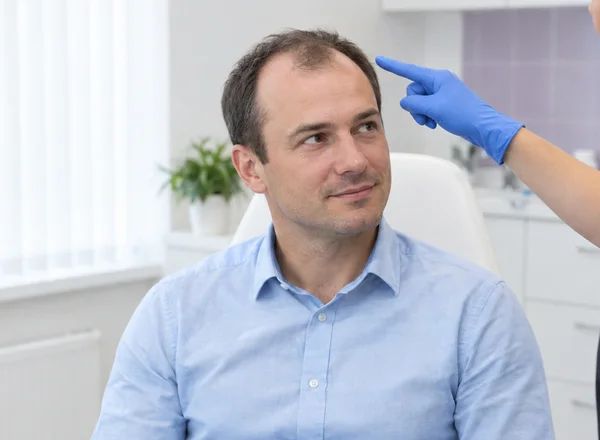

All we need is a phone number. Photos of the thinning area go to a coordinator in a messenger, a doctor examines them and answers whether a transplant would help you. Costs nothing, books nothing.

services
Counting comes before pricing: both happen at the free consultation, and the contract fixes the price.
suture-free graft extraction

$2,200$2,700
or $367/mo — 0% instalments for 6 months
Set the price nowimplantation without channels

$2,500$2,900
or $417/mo — 0% instalments for 6 months
Set the price nowcombined technique

$2,700$2,900
or $450/mo — 0% instalments for 6 months
Set the price now| The first sit-down | Free |
|---|---|
| Eyebrow transplant, FUE | |
| Beard transplant, FUEinstalments $467/mo | |
| Hair trichopigmentation | |
| PRP therapy / session | $200 |
all included
We stay with you from pre-op planning to 12 months later.
You will not be asked for more on surgery day.
two other areas
Not only on the scalp: the same grafts from the back of the head, the same FUE method — only the area changes.
FUE method, free of cuts or stitches

The back of the head serves as the donor area: grafts move from there through micro-punctures of about 1 mm and leave no scars. The doctor discusses the shape with you before the operation, taking your facial features into account. Transplanted hair grows for life and the beard is trimmed and styled as usual.
$2,800$3,000
or $467/mo — 0% instalments for 6 months
Set the price nowFUE method, free of cuts or stitches

At the first consultation the surgeon draws the brow, you look through reference photos together and the design is matched to the proportions of your face. Hairs placed at the growth angle make the brows believable. It also works where years of plucking stopped growth.
$1,600$1,700
an outpatient session under a local anaesthetic
Set the price nowThe doctor will assess the donor area, count the grafts and show what result is achievable in your case. The cost is named at the consultation and fixed in the contract.

Message our coordinator
Free online consultation · Reply within 15 minutes
Message us on TelegramMessage us on WhatsAppBy messaging us, you agree to our Privacy Policy
Process
From consultation to going home — all in one day

It starts with a conversation in which the doctor sets out the workings of FUE and DHI, answers your questions, and evaluates the donor zone.

Once the deposit is paid — in person by card or online — the surgery date is booked and confirmed under a medical services contract.

You are given the full set of test requirements by the clinic, with directions attached, so preparation is straightforward.

The surgery proceeds under local anaesthesia, ensuring a painless experience for the patient.

This step gathers grafts from the back of the head or temples, using a stitchless technique.

At this point, the grafts are implanted into the balding area by the surgical team.
The clinic hands you all the essentials and complete instructions to help you recover quickly.

The scabs clear, the swelling flattens out, the skin recovers in time

Only the visible part goes. The root stays in place

Young growth appears and the difference becomes obvious

The hair becomes thicker, the main volume and shape are visible

The result reaches full thickness with a believable hairline

Free, before surgery, and nothing is owed for it.
Schedule a consultdoctors

Hair transplant doctor, trichologist, surgeon
10 years in practice

Dermatovenereologist, trichologist, surgeon
11 years of experience

Plastic surgeon
9 years of experience

Plastic surgeon
9 years of experience

Assistant
9 years of experience
The doctor will assess your donor zone, count the grafts and say what result is achievable.
Schedule a consultcoordinators
You are assigned a personal coordinator, your guide from the first enquiry to recovery.
Your care coordinator
Answers and helps whenever you need it
Will sort your papers and book you the slot
Your care coordinator
Answers and helps whenever you need it
Will sort your papers and book you the slot
Your care coordinator
Answers and helps whenever you need it
Will sort your papers and book you the slot
Your care coordinator
Answers and helps whenever you need it
Will sort your papers and book you the slot













The coordinator answers everything and agrees a suitable slot with you
Message us on WhatsApp Contact us nowReviews
I was having trouble with my hair. I came here and got a hair transplant. The results was awesome thank you
Review on Google
І experienced hair loss due to COVID and turned to this clinic; they helped me and performed a hair transplant, moving hair from the back of my head to my temples. Thank you.
Review on Google
I traveled to City Medical Centre, where they helped me overcome hair loss through a transplant to the balding areas of my scalp. I am grateful to the doctors for performing the procedure painlessly.
Review on Google
I am sharing my experience, because before the operation I went through a pile of reviews myself and was looking for real stories. I had a beard transplant six months ago. Honestly, in the first days after the procedure I felt a little jittery: my face looked unfamiliar, there was slight swelling and small scabs. In the first couple of months the hair partly fell out, as the doctor had warned. But now the result truly makes me very happy) From about the 4th month active, even growth began. The transplanted hair took very well, the beard now looks as natural as possible, no bald patches are left. The beard became much thicker and denser, with the shape I had thought about for a long time. All in all, I recommend the clinic, the doctor was polite and explained everything 👍 The result is definitely worth it!
Review on Google
I traveled to this clinic and do hair transplant, very good quality and cheap. Good doctors
Review on Google
I do hair transplant here very good doctors!!
Review on Google
Queries we hear
People often say hair implants, but no artificial hair is used. In a hair transplant the doctor moves your own follicles (grafts) from the donor area to thinning or bald areas using FUE or DHI.

Yes, this is standard. People become patients no matter which town or country they are in, and your photographs go to the doctor online.
The base prices are $2,200 (≈ £1,700) (FUE), $2,500 (≈ £1,900) (DHI) and $2,700 (≈ £2,050) (combined). The precise cost is determined at a free consultation and graft count, then fixed in your contract.
Just a day, and then patients are on their way back home.
It helps with stable pattern hair loss and a receding hairline when there are enough donor grafts. Some types of alopecia need treatment first; the doctor checks this at the consultation.
Local anaesthesia is standard, and that keeps the work pain-free.
With FUE, grafts are taken by tweezer with no incisions. With DHI, grafts are implanted directly using a Choi pen, without pre-made channels. The combined method mixes FUE harvesting with DHI implantation.
Graft count is calculated by the doctor at no cost, based on an assessment of your donor zone.
Healing occupies 0–10 days. The 2–4 week shedding of transplanted hair is normal and temporary. Regrowth starts from 3–4 months, real volume appears at 6–9 months, then the result matures at 12–18 months.
Your procedure includes a lifetime hair-growth guarantee under contract.
Under a medical licence, with care provided to the standards and clinical guidelines
of the Ministry of Health.

Diplomas and certificates of the doctors doing the surgery
Read the documentsAKC POMOSHCH LLC
our clinic's legal entity
1057746096924
OGRN
7728536872
INN
Any patient in Bradford can be treated with FUE or DHI. Cuts are not made, stitches are not needed, local anaesthesia is the only thing administered, and the operation is completed during a single day.
Photos first, decisions later. A patient in Bradford pays nothing for the online consultation, and the doctor looks at the thinning area and says whether a transplant will help. The clinic is reachable 24/7.
Set aside 0-10 days for healing and the rest looks after itself. The transplanted hairs shed at 2-4 weeks - a normal step, though it rarely feels like one. Regrowth sets in at 3-4 months and continues steadily afterwards.
Prices are in US dollars; the amount in brackets is an approximate conversion to GBP at the rate of 02.10.2026. The final price is fixed in your contract.
By messaging us, you agree to our Privacy Policy
If you want a visible result for a date, plan about a year ahead: growth starts at 3–4 months, thickens by 6–9 and is final at 12–18 months. Healing alone takes 0–10 days.
Yes. The first consultation is free and starts online: send your details and photos on WhatsApp or Telegram, and the doctor reviews them and explains the options and the price.
Clear photos of the hairline from the front, the top, the crown and the donor area at the back of the head, plus your age and whether you have had a transplant before. The doctor counts the grafts from them, and the price is fixed in the contract.
One day for the procedure, after which you leave the same day, and then healing of 0–10 days. The healing check-ups are part of the price.
Yes. Send us the date you have in mind on WhatsApp or Telegram. The first consultation is free, and you can start it online with the photos and details you send; the clinic then confirms the nearest available dates for the consultation and the operation before you plan anything.
Well-known people who spoke openly about this operation, in their own words.
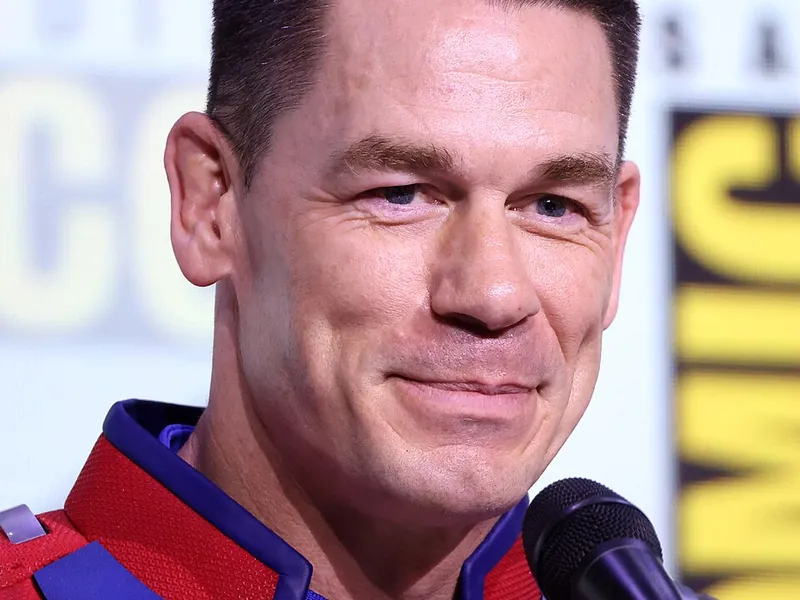 John Cena's hair transplant: “I got a problem, I try to fix it”John Cena spoke openly in 2025 about his hair transplant and the fan signs that pushed him to it. His words, how the procedure works and the recovery.
 Did Calum Best have a hair transplant? Yes, and he said so himselfCalum Best said in 2023 he had his sixth hair transplant, this time using patches of beard hair. His words, how the procedure works and recovery.
 Did Chloe Goodman have a hair transplant? Yes, and she explained whyChloe Goodman had a hair transplant in 2025 after losing hair following pregnancy. Her own words, how the procedure works and what recovery involves.
 Did Dean McCullough have a hair transplant? Yes, and he filmed itRadio 1 presenter Dean McCullough shared his FUE hair transplant on TikTok in 2024. His own words, what the swelling means and how results develop.
 Did Ella Morgan have a hair transplant? Yes — to cover a hairline scarThe Married at First Sight star revealed a hair transplant in 2025 to cover scarring along her hairline from facial surgery. Her own words and the facts.
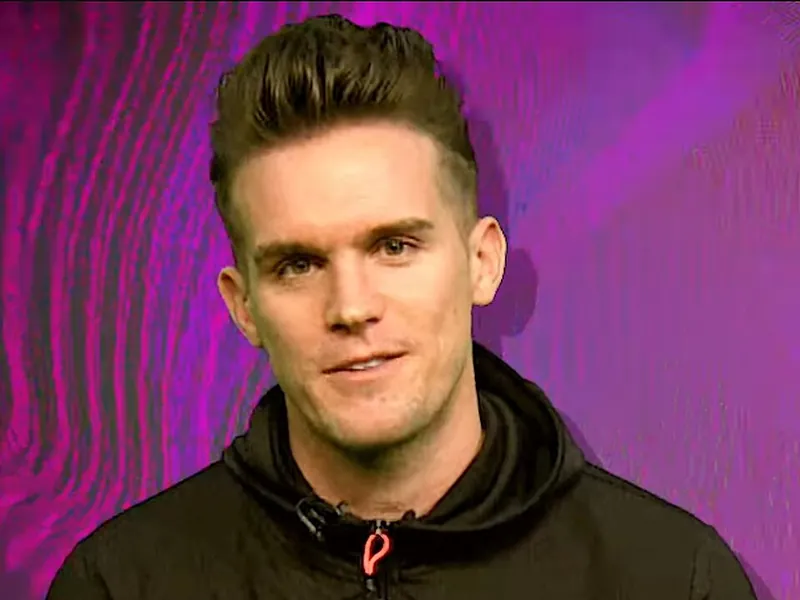 Gaz Beadle on his beard transplant: “I LOVE IT”Gaz Beadle told his 3.6 million followers he had a beard transplant after years of patchy stubble. His own words, and how a hair or beard transplant works today.
Page medically reviewed by Anastasia A. Kolesnik, hair transplant doctor. Review date: .
Hair grafts do not grow on the day of the operation. They grow over the following 12 to 18 months, so the calendar matters as much as the technique. Bradford sits in the eastern foothills of the South Pennines moorland, at about 134 m above sea level at the Lister Park weather station. The Met Office 1991-2020 averages from that station give a useful outline of the seasons the new hair will go through.
July is the warmest month, with a mean maximum of 20.4 °C and a mean minimum of 12.2 °C. August is close behind at 19.8 °C. January is the coldest, with a mean maximum of 6.8 °C and a minimum of 1.8 °C, and February is similar. These are moderate figures with no long heatwave season, which is why the main question for a transplanted scalp is usually not heat. It is how to cover and protect a healing scalp in a changeable, damp climate. The records are wider: 37.9 °C in July and -13.9 °C in January, both since measurements began in 1908. A scalp that is healing or newly covered with fine hair should not be left unprotected on an unusually hot day or exposed to a hard frost.
The text you receive after the consultation includes advice on washing your hair, on sleep and on headwear. We do not replace it with general tips here. Instead, use the weather data to ask the doctor concrete questions. What should I wear on my head during the first days if the forecast is for rain? How should I handle the first washes in a cold, wet month? When will it be reasonable to go back to my normal routine outdoors? The doctor will answer these for your own case and your chosen method, whether FUE, DHI or the combined protocol.
One more point on terms. In the course of your recovery the scalp passes through several stages: 0-10 days of healing, when crusts fall away and swelling subsides; 2-4 weeks of shedding of the transplanted hairs; first growth at 3-4 months; visible density at 6-9 months; and the end result at 12-18 months. Each stage will fall in a different part of the Bradford year. That is the practical reason to look at the local weather together with the doctor before you fix a date.
Rain is a defining feature of the local climate. The Lister Park station records 889.6 mm of precipitation a year, spread over 142.1 days. December is the wettest month at 99.0 mm, followed by November at 90.3 mm and January at 88.4 mm. The driest month is May, with 52.0 mm. A damp, cold winter has a direct effect on how you plan the first fortnight. During the period of crusts and swelling you will want a headwear plan that is dry, clean and not tight, and you should agree its details with the doctor rather than improvise.
Sunshine is the other side of the picture. Bradford gets 1,319.4 hours of sun a year. The sunniest months are May with 173.3 hours and July with 167.2 hours, and the dullest are December with 38.0 hours and January with 43.2 hours. For a transplant this matters because the transplanted area and the donor area at the back of the head are both skin that has been through a procedure. A bright May or July is when many people are tempted to go without a cap, so it is worth asking the doctor in advance how to treat sun exposure at your particular stage of recovery.
An example of how the numbers can work. If the operation takes place in mid-November 2026, the healing stage ends around the end of that month. Shedding then falls in early to mid December, in the dullest and wettest part of the year, when direct sun is least of a concern. First growth would be expected from about mid-February to mid-March 2027. The stage of visible density, 6-9 months, would run from roughly mid-May to mid-August 2027, covering the sunniest weeks of the year. At that point the hair is still maturing, and the headwear and sun advice you were given is the part of the plan you will actually be using. These dates are only an illustration; your own dates are set by the doctor after the consultation.
A spring or summer operation reverses the picture. The healing stage falls in a brighter, drier time, and the shedding stage and first growth move into autumn and winter. Neither arrangement is better in itself. What matters is that you choose knowingly, with the weather of each stage in mind, instead of discovering it afterwards.
Recovery begins with a short, visible period. In the first 10 days there are crusts and swelling, and then the shedding stage of 2-4 weeks, when the transplanted hairs fall out and the follicles stay in place. Many patients prefer to spend these weeks away from large public events, so it helps to look at the local calendar.
Bradford has a busy festival year. The Bradford International Film Festival is held every March, the Bradford Animation Festival every November, and the Bradford Mela forms part of the Bradford Festival in June. Vaisakhi is celebrated on 14 April with nagar kirtan processions, and Bradford Carnival is held annually at Bowling Park. If you are planning to take part in any of these, work backwards. An event on a fixed date, such as 14 April, gives you a clear point: you would want the healing and shedding stages behind you by then, which means an operation well before it. Because the first visible growth is only expected at 3-4 months and density at 6-9 months, a transplant in November 2026 would see you at the April 2027 events in the middle of the growth stage, not yet at the final result. It is better to know that in advance and set your expectations accordingly.
Students and college staff have their own rhythm. The University of Bradford has over 10,000 students and Bradford College has 23,000 students and 1,800 staff. For a young adult at either, a term calendar often determines when a few quiet weeks are possible. Because the procedure itself takes a single day at the clinic and recovery is supported with a care plan, a coordinator can help you match the date to a break rather than the middle of an exam period. Tell the coordinator what your academic or work calendar looks like when you send your photos.
Public holidays help with time off. Under the 2026 list from GOV.UK, England and Wales have eight bank holidays, including Christmas Day on 25 December and the substitute Boxing Day on 28 December. For a patient who wants the first days of healing spent at home without using up leave, an operation placed shortly before the Christmas period can cover part of the healing stage. The follow-up schedule is also worth considering: visits are at 1, 3, 6, 9 and 12 months, and a coordinator can help you plan them around your work.
Bradford has 37 parks and gardens within the city district, and Lister Park was voted Britain's Best Park for 2006. For many patients the question is not whether they can walk outside, which is usually fine, but how soon they can return to running, cycling or team sport. The program you receive after the operation includes a plan for returning to sport and hair care, and the doctor will give the specific timing. We do not set one here, because it depends on the area treated and how your skin heals.
What the local outdoors does give you is a reason to think about conditions. A park walk in the damp of November and a walk in the bright light of May are different for a scalp in recovery. When you speak to the doctor, mention the sort of exercise you do and where: a moorland path, a park route, a gym or a pitch. This lets the doctor give a practical answer rather than a general one.
A note on the donor area. Grafts are taken from the back of the head or from the temples, without stitches. That area also needs care during the first days, especially in rain or wind, because it is the part that has been worked on in addition to the recipient zone. Your care plan covers both the transplanted area and the donor area. If you wear a helmet for cycling or work, ask the coordinator and the doctor how and when it can be worn again, since that is a practical issue for many people.
The overall message is simple. The surrounding landscape, from the park routes to the moorland edge, does not prevent a transplant, but it does shape the details of aftercare. A sensible plan names those details before the operation, not after.
The NHS states that cosmetic surgery is not routinely provided on the NHS. It may pay for some procedures for psychological or other health reasons, and the examples it gives are rhinoplasty for breathing problems and breast enlargement for very uneven or absent breasts causing significant psychological distress. The NHS also notes that most people who want cosmetic surgery need to pay privately. For someone in Bradford looking at hair restoration, that is the realistic starting point: a transplant for androgenetic alopecia is not something to expect through a GP referral.
Waiting times on the health service are another reason people look at private options for planned procedures in general. NHS England's statistical press notice of 10 September 2026 reported 7.3 million pathways waiting to start treatment at the end of July 2026, covering around 6.2 million unique patients, with 111,379 having waited more than 52 weeks. These figures concern NHS treatment overall and not hair restoration in particular, but they show how crowded the list for planned care is. A free online consultation, by contrast, begins with photos sent to a coordinator, with a reply within 15 minutes, and the doctor then gives an assessment and counts the grafts.
It is worth being clear about what the consultation does and does not do. The doctor will say honestly whether a transplant suits you. It works for conditions such as androgenetic or diffuse alopecia, bald patches and a receding frontal edge of the hair, and effects left by an injury or burn. It is not suited to everyone: contraindications include trichotillomania, body dysmorphic disorder, cancer, being under 18, and a number of medical conditions such as epilepsy, diabetes mellitus, serious heart conditions, a pacemaker, HIV/AIDS, hepatitis B/C and pulmonary embolism. If your case can be solved without an operation, the doctor will tell you so at the consultation. The decision about the method, FUE, DHI or the combined protocol, is made together with you after the graft count.
Cost and contract details are given to you at that stage and fixed in the contract, and nothing is booked until you have confirmed the plan and dates. Instalments are available, and the coordinator can explain how they work.
The whole first stage can be done from your sofa. You send photos on WhatsApp or Telegram, and the coordinators answer round the clock, 24/7. The doctor looks at your donor area, counts the grafts and shows the result achievable in your case. Good photos help: use daylight, which in Bradford is in short supply from November to January, when the sun gives only 38.0 to 43.2 hours a month on average. That is a practical point. Take pictures near a window in the middle of the day, or under steady, even lighting indoors, so that the density of the donor area and the thinning zone are clear.
Next comes preparation. Patients complete a set of pre-surgery tests using the list and instructions the clinic provides, and these results go to the doctor. After that the date is set once the deposit is paid and confirmed under a medical services contract. The operation is carried out under local anaesthesia and takes one day at the clinic. Dressings, healing checks and a care plan for both areas are included, as is a personal coordinator you can reach and progress tracked by photo.
Photos are also used after the procedure. You will send pictures at the milestones, and the coordinator compares them with the expected stage. If, say, you are at 3 months and see only partial first growth, the comparison helps put it in context, since first growth is expected at 3-4 months and the final result only at 12-18 months. Patience is part of the process, and having a regular check at 1, 3, 6, 9 and 12 months provides structure for it.
Finally, think about who will support you at home. The first days involve crusts and swelling, and it can be a comfort to have a spouse, relative or friend who can help with washing instructions and with keeping the scalp clean. Mention this to the coordinator, who can adapt the guidance to your living situation, whether you share a household or live alone.
There is no single best month, but the climate figures help you choose. The Lister Park averages show the driest month is May with 52.0 mm of rain, while November to January are the wettest. In the first 10 days the crusts fall away and swelling subsides, so a drier, milder spell makes headwear and washing simpler. A winter date is still workable if you agree a dry, clean headwear plan with the doctor first.
The sunniest months are May (173.3 hours) and July (167.2 hours), and the record high at Lister Park is 37.9 °C. The doctor and the care plan will tell you how to treat sun exposure at your stage of recovery, because the right advice at 3 months differs from the right advice at 9 months. Ask about headwear and sun protection specifically when you speak to the doctor.
Yes, and it is sensible to work backwards from the date. Vaisakhi is on 14 April, and the Bradford Mela is in June as part of the Bradford Festival. Remember the stages: shedding at 2-4 weeks, first growth at 3-4 months, density at 6-9 months and the end result at 12-18 months. An operation in November 2026 would reach those April and June 2027 events in the growth stage, not at the final result. Tell the coordinator which events matter to you.
The NHS says cosmetic surgery is not routinely provided and that most people who want it need to pay privately. It may fund some procedures for psychological or other health reasons, with the examples it gives being a nose procedure for breathing problems and breast enlargement in specific circumstances. A hair transplant for androgenetic alopecia is not something to count on through a GP. The consultation with us is free, and the doctor gives you an honest view of whether a transplant would help.
Daylight is limited in Bradford from November to January, when the sun averages only 38.0 and 43.2 hours a month in December and January. For clear photos, stand near a window around midday or use even indoor lighting. Send the top, front, sides and the back of the head. The doctor needs a clear view of the donor area to count the grafts, so retake any picture that is dark or blurred.
It can. The 2026 bank holidays include Christmas Day on 25 December and a substitute Boxing Day on 28 December, so some of the healing days may fall on days off. Coordinators are available 24/7, including over holidays. Keep in mind that the follow-up visits at 1, 3, 6, 9 and 12 months should be planned too, and that the shedding stage of 2-4 weeks falls soon after. Ask the coordinator to map the whole sequence to the calendar before you commit.
The operation takes one day at the clinic, and the early recovery is the most visible part, with crusts and swelling during the first 10 days. Many students prefer to place it at the start of a long break so the early stages pass quietly. Share your term dates with the coordinator, who can build a plan around them, including the follow-up schedule.
Send photos to the coordinator on WhatsApp or Telegram. The doctor will tell you whether a transplant helps in your case, or whether it can be solved without surgery. The assessment is free, no booking is required, and nothing is arranged until you confirm the plan and the dates.

 Forceps
 Minimal


