before
12 months later
2,800 grafts
FUE method
City Medical Centre
0% instalments
from $367/mo
Consultation and quote — $0.
Real case
before
12 months later
Stitch-free FUE, no incisions. Graft count and outcome forecast calculated free of charge — before you decide.
Free online consultation · Reply within 15 minutes
Free of charge, no surgery booking required
Message our coordinator
Free online consultation · Reply within 15 minutes
Message us on TelegramMessage us on WhatsAppBy messaging us, you agree to our Privacy Policy
Hair transplant for patients from Albuquerque at City Medical Centre starts at $2,200. The first online consultation is free; the doctor names the final price and it is fixed in the contract.
How it works · Hair transplant prices
Information current as of 5 November 2026
results
All cases come from real CMC patients.
before
12 months later
2,800 grafts
FUE method

before
12 months later
3,500 grafts
FUE method

before
12 months later
2,600 grafts
FUE method

before
12 months later
3,000 grafts
FUE method

before
12 months later
2,700 grafts
FUE method

before
12 months later
3,300 grafts
FUE method

before
12 months later
2,900 grafts
FUE method

before
12 months later
2,500 grafts
FUE method

before
12 months later
3,400 grafts
FUE method

before
12 months later
2,500 grafts
FUE method

before
12 months later
3,100 grafts
FUE method

before
12 months later
3,600 grafts
FUE method

before
12 months later
4,000 grafts
FUE method

before
12 months later
3,200 grafts
FUE method

before
12 months later
3,000 grafts
FUE method

before
12 months later
3,700 grafts
FUE method

before
12 months later
2,700 grafts
FUE method

before
12 months later
3,800 grafts
FUE method

before
12 months later
3,300 grafts
FUE method

before
12 months later
2,800 grafts
FUE method

before
12 months later
2,500 grafts
FUE method

before
12 months later
3,900 grafts
FUE method

before
12 months later
3,500 grafts
FUE method

before
12 months later
3,800 grafts
FUE method

before
12 months later
2,900 grafts
FUE method

before
12 months later
3,600 grafts
FUE method

before
12 months later
2,600 grafts
FUE method

before
12 months later
2,700 grafts
FUE method

before
12 months later
3,700 grafts
FUE method

before
12 months later
3,200 grafts
FUE method

before
12 months later
3,000 grafts
FUE method

before
12 months later
2,800 grafts
FUE method

before
12 months later
4,000 grafts
FUE method

before
12 months later
3,400 grafts
FUE method

before
12 months later
2,900 grafts
FUE method

before
12 months later
3,100 grafts
FUE method

before
12 months later
2,600 grafts
FUE method

before
12 months later
3,300 grafts
FUE method

before
12 months later
3,900 grafts
FUE method

before
12 months later
3,500 grafts
FUE method

before
12 months later
2,700 grafts
FUE method

before
12 months later
3,800 grafts
FUE method

before
12 months later
3,200 grafts
FUE method

before
12 months later
3,000 grafts
FUE method

before
12 months later
2,800 grafts
FUE method

before
12 months later
3,100 grafts
FUE method

before
12 months later
3,600 grafts
FUE method
Comparison
We transfer grafts by three technologies: classic FUE, suture-free DHI and a combined protocol. Compare them by implantation technique, tissue trauma and graft survival, and pick your method knowingly.
Classic method requiring no cuts or sutures

$2,200
$2,700
Graft implantation technique
ForcepsGraft trauma
MinimalNatural hair growth angle
NaturalGraft survival
98–100%Suitable for
Androgenetic alopeciaStitch-free implantation with a Choi pen

$2,500
$2,900
Graft implantation technique
DHI pen, Choi implanterGraft trauma
MinimalNatural hair growth angle
NaturalGraft survival
98–100%Suitable for
DensificationExtraction by FUE, DHI implant

$2,700
$2,900
Graft implantation technique
Extraction by FUE, DHI implantGraft trauma
MinimalNatural hair growth angle
NaturalGraft survival
98–100%Suitable for
Densification for androgenetic alopeciaAveraged for each method, the survival and trauma figures are a guide only: the exact numbers depend on the transplant area and the patient's individual features and are clarified by the doctor at the consultation.
Book a consultation


















about the clinic
Care for every patient, modern equipment, comfortable rooms

We will answer your questions and pick a convenient time for your consultation
TelegramMessage us on TelegramMessage us on Telegram Message us on WhatsApp Choose a messengerIf there is a non-surgical way to solve your case, the doctor says so at the consultation — and you will not waste your money. Below are the conditions in which a transplant works.
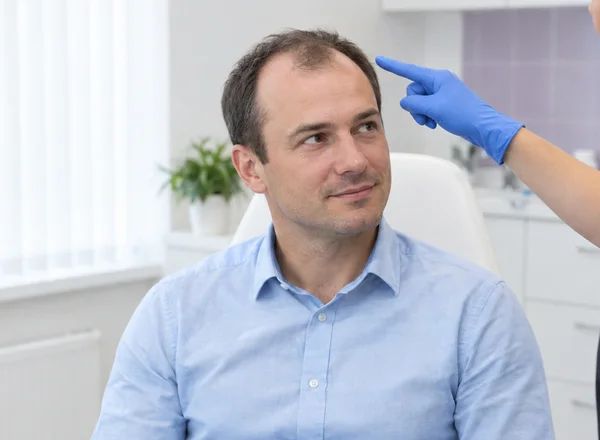

Leave a number. Photos go to a coordinator in a messenger, the doctor answers whether a transplant helps. Free, no booking.

services
The cost is named at the free consultation, after the graft count, and written into the contract.
suture-free graft extraction

$2,200$2,700
or $367/mo — 0% instalments for 6 months
Lock in the priceimplantation without channels

$2,500$2,900
or $417/mo — 0% instalments for 6 months
Lock in the pricecombined technique

$2,700$2,900
or $450/mo — 0% instalments for 6 months
Lock in the price| Initial consultation | Free |
|---|---|
| Eyebrow transplant, FUE | |
| Beard transplant, FUEinstalments $467/mo | |
| Hair trichopigmentation | |
| PRP therapy / session | $200 |
all included
From readiness for surgery to 12 months of follow-up.
No hidden extra charges on the day of surgery.
two more areas
The scalp is not the only option. Same grafts from the back of the head, same FUE method — only the area changes.
FUE, no incisions and no stitches

Grafts come from the donor area at the back of the head and are placed through micro-punctures of about 1 mm, leaving no scars. The doctor discusses the shape with you before surgery, taking your facial features into account. The transplanted hair grows for life, and the beard can be trimmed and styled as usual.
$2,800$3,000
or $467/mo — 0% instalments for 6 months
Lock in the priceFUE, no incisions and no stitches

During the initial consultation the surgeon draws the eyebrow shape: you look through references together, and the design takes your facial features into account. The hairs are implanted at the right angle, so the eyebrows look natural — and it helps where plucking has stopped hair growth.
$1,600$1,700
a day procedure done under local anaesthesia
Lock in the priceThe doctor will evaluate your donor area, count the grafts and show what result your case allows. The cost is named at the consultation and fixed in the contract.

Message our coordinator
Free online consultation · Reply within 15 minutes
Message us on TelegramMessage us on WhatsAppBy messaging us, you agree to our Privacy Policy
Process
Care for every patient, modern equipment, comfortable rooms

This first step, offered free of charge, is where the doctor explains FUE and DHI, answers your questions, and drafts an individual plan for the operation.

This step fixes your surgery date with a deposit, payable by card on site or online, and the agreement is captured in a medical services contract.

Getting ready for surgery means completing the required tests, and the clinic supplies the list and instructions to make it straightforward.

Local anaesthesia is used throughout, keeping the surgery painless from start to finish.

Harvesting takes place in the donor zone, typically the back of the head or the temples, with no stitches involved.

For patients in Albuquerque, this step means the surgeons implant the grafts into the balding zone.
The clinic provides everything you need, along with complete instructions, to support a fast recovery.

Crusts come off, the swelling goes down, the area recovers gradually

The stage is normal: only hairs fall out, follicles stay in place

Gradually new hairs appear and the result shows

Thicker hair, with the main volume and the contour now visible

Final density and a natural hairline take shape

Free, before surgery, with no obligations at all.
Book a consultationdoctors

Hair transplant doctor, trichologist surgeon

Dermatovenereologist, trichologist, surgeon
11 years of experience

Plastic surgeon
9 years in practice

Plastic surgeon
9 years in practice

Assistant
9 years in practice
The doctor will check your donor area, count the grafts and say what result is achievable.
Book a consultationcoordinators
You are assigned a personal coordinator to guide you from first enquiry to recovery.

Patient care specialist
Will support you ahead of and after surgery
Will help with papers and bookings

Patient care specialist
Will support you ahead of and after surgery
Will help with papers and bookings

Patient care specialist
Will support you ahead of and after surgery
Will help with papers and bookings
Patient care specialist
Will support you ahead of and after surgery
Will help with papers and bookings













We will answer your questions and pick a convenient time for your consultation
TelegramMessage us on TelegramMessage us on Telegram Message us on WhatsApp Choose a messengerReviews
I was having trouble with my hair. I came here and got a hair transplant. The results was awesome thank you
Review on Google
І experienced hair loss due to COVID and turned to this clinic; they helped me and performed a hair transplant, moving hair from the back of my head to my temples. Thank you.
Review on Google
I traveled to City Medical Centre, where they helped me overcome hair loss through a transplant to the balding areas of my scalp. I am grateful to the doctors for performing the procedure painlessly.
Review on Google
I am sharing my experience, because before the operation I went through a pile of reviews myself and was looking for real stories. I had a beard transplant six months ago. Honestly, in the first days after the procedure I felt a little jittery: my face looked unfamiliar, there was slight swelling and small scabs. In the first couple of months the hair partly fell out, as the doctor had warned. But now the result truly makes me very happy) From about the 4th month active, even growth began. The transplanted hair took very well, the beard now looks as natural as possible, no bald patches are left. The beard became much thicker and denser, with the shape I had thought about for a long time. All in all, I recommend the clinic, the doctor was polite and explained everything 👍 The result is definitely worth it!
Review on Google
I traveled to this clinic and do hair transplant, very good quality and cheap. Good doctors
Review on Google
I do hair transplant here very good doctors!!
Review on Google
Frequent questions
People often say hair implants, but no artificial hair is used. In a hair transplant the doctor moves your own follicles (grafts) from the donor area to thinning or bald areas using FUE or DHI.

Yes, patients in Albuquerque are accepted regularly. An online consultation lets you discuss your case before booking.
FUE is $2,200, DHI is $2,500, combined DHI+FUE is $2,700. A free consultation with a graft count gives you the exact, contract-fixed price.
It takes just one day from start to finish, and you're free to go home afterward.
It helps with stable pattern hair loss and a receding hairline when there are enough donor grafts. Some types of alopecia need treatment first; the doctor checks this at the consultation.
No — the procedure is done under local anaesthesia and is painless.
FUE means tweezer-based, incision-free graft harvesting. DHI means channel-free implantation with a Choi pen. Combined DHI+FUE uses FUE for harvesting and the DHI pen for implanting.
The number of grafts is assessed for free by the doctor, based on how much donor hair you have.
First comes 0–10 days of healing, then shedding at 2–4 weeks (a normal stage). Growth starts at 3–4 months, density is clear by 6–9 months, and the final outcome shows at 12–18 months.
Your procedure includes a lifetime hair-growth guarantee under contract.
The clinic holds a medical licence; care meets the standards and clinical guidelines
per Ministry of Health.

Diplomas and certificates of the doctors at the surgery
View the documentsAKC POMOSHCH LLC
the clinic's own entity
1057746096924
OGRN
7728536872
INN
Someone in Albuquerque needs no hospital stay for this: FUE and DHI go without cuts or stitches, under local anaesthesia, and the whole operation takes one day. Graft survival is 98-100 %, and a price from $2,200 is set in the contract after a free graft count.
Nothing has to be arranged in advance to start in Albuquerque. The online consultation is free: the doctor studies photos of the thinning area and counts the grafts needed. The clinic is in touch 24/7, so you write when it suits you.
Healing runs 0-10 days and the transplanted hairs shed at 2-4 weeks, a stage that surprises only the unprepared. Growth returns at 3-4 months, density at 6-9, the final result at 12-18. Check-ups at 1, 3, 6, 9 and 12 months, photo tracking with a personal coordinator, lifetime growth guarantee.
Prices are in US dollars and fixed in your contract. Message us to get your exact price.
By messaging us, you agree to our Privacy Policy
Write to us on WhatsApp or Telegram or leave a request on this page. The coordinator asks for the photos and health details the doctor needs, and the doctor gives you a free assessment and a price.
Clear photos of the hairline from the front, the top, the crown and the donor area at the back of the head, plus your age and whether you have had a transplant before. The doctor counts the grafts from them, and the price is fixed in the contract.
Healing takes up to 10 days, then the transplanted hairs shed at 2–4 weeks. New growth starts at 3–4 months, density comes at 6–9 months and the final result at 12–18 months.
Message the coordinator with your preferred dates. The first consultation is free, and you can start it online; the clinic then confirms which dates are open, and only after that is anything booked.
The procedure takes one day and you go home the same day. Healing takes 0–10 days, and the follow-up dressings and healing check-ups are part of the price.
Known people who talked openly about this operation, in their own words.
A mile above sea level on a high desert plateau, with something like 278 sunny days most years, Albuquerque hits an exposed scalp with noticeably stronger UV than a lower, hazier city would — a detail that matters in the days right after a hair transplant, while both the donor strip and the newly placed grafts are still raw.
A loose-fitting hat that doesn't press on the fresh grafts covers the first ten days or so, since sun on healing follicles risks both irritation and uneven fading of the skin underneath. Once the early crusting clears, scalp-formulated sunscreen takes over as the longer-term habit, given how much cumulative UV the area takes in across a typical Albuquerque year.
Albuquerque's private medical practices are spread across several distinct commercial districts rather than one downtown core: Nob Hill and Uptown along the central corridor, and the newer Journal Center area further north, each with its own mix of office buildings and parking that has little to do with any particular clinic's hair restoration experience.
Uptown in particular has grown into one of the city's denser commercial areas since the 1960s, home to shopping centres and medical office buildings side by side, while Journal Center developed later as a business park aimed at companies wanting newer construction and easier freeway access. Neither setting says anything about graft count or technique — that still comes down to the consultation.
A patient comparing a Nob Hill practice with one near Journal Center is mostly comparing commute and parking, not surgical skill; the license check and the direct questions about graft survival and donor assessment covered above matter far more than which side of the city a clinic calls home.
Central Avenue, the old Route 66 alignment running through both Nob Hill and the downtown core, still ties these districts together visually with its mid-century signage, even though the clinics along it today have nothing to do with the motor courts the road was originally built to serve.
The 2020 U.S. Census recorded 564,559 residents in Albuquerque, making it New Mexico's largest city by a wide margin and the state's clear hub for private medical care, including hair restoration. A large number of available clinics makes booking convenient, but it says nothing about how many grafts a specific clinic's team has transplanted, or how consistent their results have been.
That's a direct question for the free consultation: how the donor area is assessed, what graft survival rate the clinic reports, and whether the same team handles both the harvesting and the implantation stages of the procedure. A clear, specific answer to all three says more about the quality of a clinic's work than anything on its homepage.
Physicians in New Mexico are licensed through the New Mexico Medical Board, part of the state's Regulation and Licensing Department, and confirming a doctor's current license status there takes only a few minutes before any consultation is booked. It's a worthwhile habit regardless of how a clinic presents itself online.
Hair transplantation in the U.S. has no single protected specialist title of its own, so licensure confirms a doctor can legally practise medicine, not specifically that they've performed hundreds of FUE or DHI procedures — that distinction only comes from asking directly at the consultation.
New Mexico's Healthy Workplaces Act, in force since July 1, 2022, requires employers of any size to let staff accrue paid sick leave over time — a broader rule than most neighbouring states have. That law is written for illness, though, not an elective hair restoration procedure someone schedules themselves, so it's worth confirming directly with an employer whether planned time off for this fits the accrued leave or needs to be arranged separately.
On the insurance side, hair transplantation for ordinary pattern hair loss is treated as cosmetic by Medicare and nearly all private U.S. insurers, which generally reserve coverage for hair loss tied to injury, burns or certain medical conditions — a distinction worth raising directly with an insurer if there's a specific medical history involved, rather than assuming either outcome.
Beyond its Spanish colonial roots, modern Albuquerque grew substantially around Kirtland Air Force Base and Sandia National Laboratories, research institutions that turned the city into one of the country's quieter but more significant centres for scientific and engineering work from the mid-20th century onward.
That combination — old adobe architecture downtown alongside a serious research and technology sector — gives Albuquerque's private healthcare market an unusual depth for a city of its size, though that broader reputation says nothing on its own about a specific hair transplant team's track record.
Old Town Albuquerque, the original Spanish colonial plaza dating back to the city's 1706 founding, still sits just a short distance from this newer research economy, with adobe buildings, small galleries and a plaza church giving a direct physical sense of how far the city has come since then. Nob Hill, the stretch of Route 66 just east of the university, grew up in the mid-20th century around neon-lit motor courts and diners, and much of that original signage has been preserved or restored rather than torn down — a different, later layer of the city's history sitting alongside both the colonial plaza and the modern research corridor.
One day, local anaesthesia, no overnight stay: that's the shape of the procedure itself, with grafts lifted from the back of the head and moved straight into the thinning zone, stitches needed at neither point. Around day 10 the visible healing is mostly done, which is when a stage nobody warns patients about enough tends to show up — the transplanted hairs fall out between weeks 2 and 4, unsettling to watch but entirely expected, since the follicle underneath is simply resetting rather than dying.
New growth begins around month 3 to 4, density becomes clearly visible by months 6 to 9, and the final result — both density and a settled, natural hairline — takes shape at the 12-to-18-month mark. None of that timeline shifts because of Albuquerque's climate; what the dry, sunny conditions change is how carefully the scalp needs shielding in the early weeks, not how quickly the biology proceeds.
FUE and DHI both harvest grafts through tiny punch extractions rather than cutting out a strip of scalp, which is why neither leaves a long linear scar and why the donor area itself is typically comfortable again within just a few days, well ahead of the fuller scalp healing timeline. That detail matters for anyone in Albuquerque used to thinking of hair transplants as a more invasive, strip-harvest procedure from years past.
Graft survival rates in the 98 to 100 percent range are standard for a well-executed FUE or DHI procedure, which is why clinics count grafts precisely at the consultation rather than offering a vague estimate — the number quoted is close to the number that should take hold months later. A careful count at the start is one of the clearest practical signs that a clinic takes the planning stage seriously, well before anything irreversible happens on the day of surgery.
Photos of the thinning area sent to the coordinator on Telegram or WhatsApp get a response at any hour, so an early read on the case doesn't require waiting for a scheduled appointment.
Yes — the combination of altitude and near-constant sunshine makes a loose, non-pressing hat important in the first ten days, followed by scalp-specific sunscreen once the initial healing settles, since this high desert sun is stronger than it feels even on a mild-looking day.
Check the name against the New Mexico Medical Board's register before committing to a consultation, rather than relying only on a clinic's own marketing.
Insurance generally treats ordinary pattern hair loss as cosmetic and doesn't cover it; the Healthy Workplaces Act provides accrued leave for illness, which is a separate question from a scheduled elective procedure worth confirming with an employer.
New growth typically begins around month 3 to 4, well after the shed that normally happens between weeks 2 and 4 — that shedding is expected, not a sign the graft failed.
Most patients reach their final result, both in density and in a natural-looking hairline, somewhere between 12 and 18 months after the procedure.
Not typically — the method uses tiny punch extractions rather than a single cut strip, so any marks are small, scattered and generally hidden once the surrounding hair grows back over them.
Graft survival depends mainly on surgical technique and aftercare rather than ambient humidity; the climate's main practical effect is on scalp comfort and sun protection in the early healing days, not on whether the grafts themselves take hold.
Written by Anastasia A. Kolesnik, plastic surgeon, hair transplant doctor
Medically reviewed by Ellina V. Goncharova, dermatovenereologist, trichologist, surgeon. Review date:
How we prepare and review medical content · Medical disclaimer

 Forceps
 Minimal