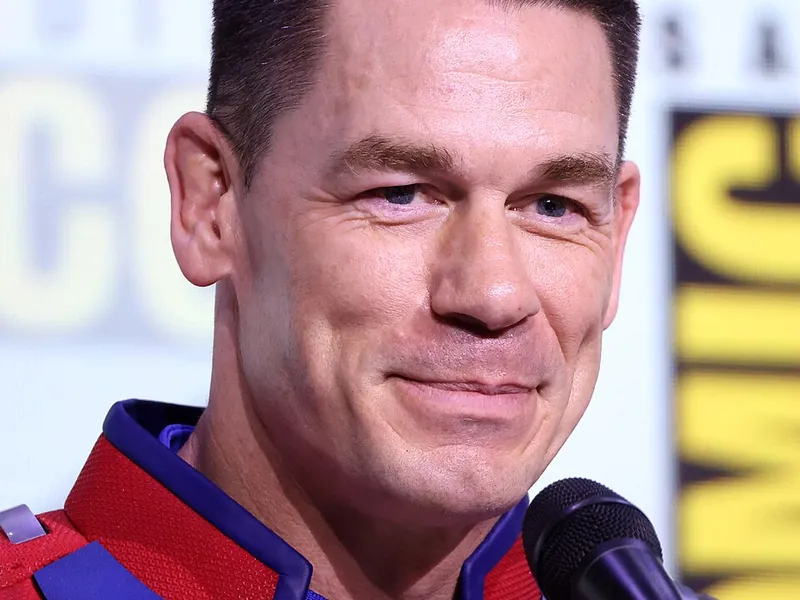
before
12 months later
2,800 grafts
FUE method
City Medical Centre
0% instalments
from $367/mo
Consultation and quote — $0.
Real case
before
12 months later
FUE method without cuts or stitches. Grafts and result forecast calculated free of charge — before you decide.
Free online consultation · Reply within 15 minutes
Free of charge, no surgery booking required
Message our coordinator
Free online consultation · Reply within 15 minutes
Message us on TelegramMessage us on WhatsAppBy messaging us, you agree to our Privacy Policy
Hair transplant for patients from Denver at City Medical Centre starts at $2,200. The first online consultation is free; the doctor names the final price and it is fixed in the contract.
How it works · Hair transplant prices
Information current as of 5 November 2026
results
All the cases are real CMC patients.
before
12 months later
2,800 grafts
FUE method

before
12 months later
3,500 grafts
FUE method

before
12 months later
2,600 grafts
FUE method

before
12 months later
3,000 grafts
FUE method

before
12 months later
2,700 grafts
FUE method

before
12 months later
3,300 grafts
FUE method

before
12 months later
2,900 grafts
FUE method

before
12 months later
2,500 grafts
FUE method

before
12 months later
3,400 grafts
FUE method

before
12 months later
2,500 grafts
FUE method

before
12 months later
3,100 grafts
FUE method

before
12 months later
3,600 grafts
FUE method

before
12 months later
4,000 grafts
FUE method

before
12 months later
3,200 grafts
FUE method

before
12 months later
3,000 grafts
FUE method

before
12 months later
3,700 grafts
FUE method

before
12 months later
2,700 grafts
FUE method

before
12 months later
3,800 grafts
FUE method

before
12 months later
3,300 grafts
FUE method

before
12 months later
2,800 grafts
FUE method

before
12 months later
2,500 grafts
FUE method

before
12 months later
3,900 grafts
FUE method

before
12 months later
3,500 grafts
FUE method

before
12 months later
3,800 grafts
FUE method

before
12 months later
2,900 grafts
FUE method

before
12 months later
3,600 grafts
FUE method

before
12 months later
2,600 grafts
FUE method

before
12 months later
2,700 grafts
FUE method

before
12 months later
3,700 grafts
FUE method

before
12 months later
3,200 grafts
FUE method

before
12 months later
3,000 grafts
FUE method

before
12 months later
2,800 grafts
FUE method

before
12 months later
4,000 grafts
FUE method

before
12 months later
3,400 grafts
FUE method

before
12 months later
2,900 grafts
FUE method

before
12 months later
3,100 grafts
FUE method

before
12 months later
2,600 grafts
FUE method

before
12 months later
3,300 grafts
FUE method

before
12 months later
3,900 grafts
FUE method

before
12 months later
3,500 grafts
FUE method

before
12 months later
2,700 grafts
FUE method

before
12 months later
3,800 grafts
FUE method

before
12 months later
3,200 grafts
FUE method

before
12 months later
3,000 grafts
FUE method

before
12 months later
2,800 grafts
FUE method

before
12 months later
3,100 grafts
FUE method

before
12 months later
3,600 grafts
FUE method
Comparison
Three graft transfer technologies are on the table: classic FUE, suture-free DHI and a combined protocol. Implantation technique, tissue trauma and graft survival are what you compare when choosing.
Classic technique without incisions or stitches

$2,200
$2,700
Graft implantation technique
ForcepsGraft trauma
MinimalNatural hair growth angle
NaturalGraft survival
98–100%Suitable for
Androgenetic alopeciaSuture-free implantation with a Choi pen

$2,500
$2,900
Graft implantation technique
DHI pen, Choi implanterGraft trauma
MinimalNatural hair growth angle
NaturalGraft survival
98–100%Suitable for
DensificationFUE for extraction, DHI implant

$2,700
$2,900
Graft implantation technique
Extraction by FUE, DHI implantGraft trauma
MinimalNatural hair growth angle
NaturalGraft survival
98–100%Suitable for
Densification for androgenetic alopeciaSurvival and trauma figures are averaged for each method and given as a guide: the exact numbers depend on the transplant area and the patient's individual features, and the doctor clarifies them at the consultation.
Book a consultation


















about the clinic
Comfortable rooms, up-to-date equipment, care for each patient

We will take your questions and find a consultation time convenient for you
TelegramMessage us on TelegramMessage us on Telegram Message us on WhatsApp Choose a messengerCases that can be solved without surgery are named by the doctor right at the consultation — so you will not waste your money. Below are the conditions in which a transplant works.
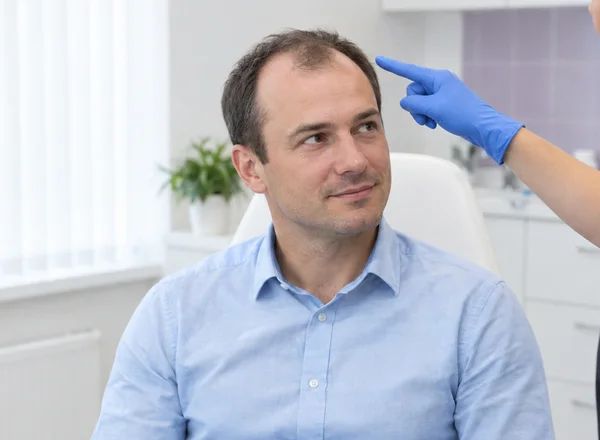

Leave your number and photos in a messenger. The doctor looks and tells you if a transplant helps. Free, nothing booked.

services
The free consultation gives you the graft count and the cost, which is fixed in the contract.
suture-free graft extraction

$2,200$2,700
or $367/mo — 0% instalments for 6 months
Lock in the priceimplantation without channels

$2,500$2,900
or $417/mo — 0% instalments for 6 months
Lock in the pricecombined technique

$2,700$2,900
or $450/mo — 0% instalments for 6 months
Lock in the price| Initial consultation | Free |
|---|---|
| Eyebrow transplant, FUE | |
| Beard transplant, FUEinstalments $467/mo | |
| Hair trichopigmentation | |
| PRP therapy / session | $200 |
all included
From pre-surgery preparation to 12-month follow-up.
No add-on charges on the day of your surgery.
two more areas
The same donor grafts from the back of the head, the same FUE method — only the area changes, not just the scalp.
The FUE method, no incisions used

Grafts taken from the back of the head, the donor area, move through micro-punctures of about 1 mm, with no scars left. The doctor discusses the shape with you before the operation, taking your facial features into account. The hair grows for life once transplanted; the beard can be trimmed and styled as usual.
$2,800$3,000
or $467/mo — 0% instalments for 6 months
Lock in the priceThe FUE method, no incisions used

During the initial consultation the surgeon draws the eyebrow shape: you look through references together, and the design takes your facial features into account. The hairs are implanted at the right angle, so the eyebrows look natural — and it helps where plucking has stopped hair growth.
$1,600$1,700
a day procedure done under local anaesthesia
Lock in the priceThe doctor will look at your donor area, count the grafts and show the result achievable in your case. The cost is quoted at the consultation and fixed in the contract.

Message our coordinator
Free online consultation · Reply within 15 minutes
Message us on TelegramMessage us on WhatsAppBy messaging us, you agree to our Privacy Policy
Process
Comfortable rooms, up-to-date equipment, care for each patient

The process opens with a free consultation where the FUE and DHI methods are explained, your questions are answered, and an individual operation plan is created.

Booking involves reserving the surgery date with a deposit — card payment at the clinic or an online transfer — under a medical services contract.

This stage is about completing the pre-operative tests, for which the clinic gives you a clear list and step-by-step instructions.

The patient receives local anaesthesia, allowing the surgery to proceed painlessly.

For patients in Denver, grafts are harvested from the donor zone at the back of the head or temples, without stitches.

At this point, the grafts are implanted into the balding area by the surgical team.
The clinic ensures recovery goes smoothly by providing everything needed along with full instructions.

Crusts come off, swelling goes down, and the area gradually recovers

A normal, expected stage: hairs fall out, follicles stay in place

New hairs slowly appear, the result begins to show

The hair grows thicker, the main volume and contour are visible

The hairline looks natural and density is final

Free, before surgery and without any obligation.
Book a consultationdoctors

Hair transplant doctor, surgeon trichologist

Dermatovenereologist, trichologist, surgeon
11 years in practice

Plastic surgeon
9 years in practice

Plastic surgeon
9 years in practice

Assistant
9 years in practice
The doctor will look at your donor area, count the grafts and say what result you can get.
Book a consultationcoordinators
You are assigned a personal coordinator to guide you from first enquiry to recovery.

Patient care specialist
Will be with you before and after the surgery
Will help with papers and appointments
Patient care specialist
Will be with you before and after the surgery
Will help with papers and appointments

Patient care specialist
Will be with you before and after the surgery
Will help with papers and appointments
Patient care specialist
Will be with you before and after the surgery
Will help with papers and appointments













We will take your questions and find a consultation time convenient for you
TelegramMessage us on TelegramMessage us on Telegram Message us on WhatsApp Choose a messengerReviews
I was having trouble with my hair. I came here and got a hair transplant. The results was awesome thank you
Review on Google
І experienced hair loss due to COVID and turned to this clinic; they helped me and performed a hair transplant, moving hair from the back of my head to my temples. Thank you.
Review on Google
I traveled to City Medical Centre, where they helped me overcome hair loss through a transplant to the balding areas of my scalp. I am grateful to the doctors for performing the procedure painlessly.
Review on Google
I am sharing my experience, because before the operation I went through a pile of reviews myself and was looking for real stories. I had a beard transplant six months ago. Honestly, in the first days after the procedure I felt a little jittery: my face looked unfamiliar, there was slight swelling and small scabs. In the first couple of months the hair partly fell out, as the doctor had warned. But now the result truly makes me very happy) From about the 4th month active, even growth began. The transplanted hair took very well, the beard now looks as natural as possible, no bald patches are left. The beard became much thicker and denser, with the shape I had thought about for a long time. All in all, I recommend the clinic, the doctor was polite and explained everything 👍 The result is definitely worth it!
Review on Google
I traveled to this clinic and do hair transplant, very good quality and cheap. Good doctors
Review on Google
I do hair transplant here very good doctors!!
Review on Google
Frequent questions
People often say hair implants, but no artificial hair is used. In a hair transplant the doctor moves your own follicles (grafts) from the donor area to thinning or bald areas using FUE or DHI.

Yes. The clinic works with patients from other cities and countries, and an online consultation is available first.
The base prices are $2,200 (FUE), $2,500 (DHI) and $2,700 (combined). The precise cost is determined at a free consultation and graft count, then fixed in your contract.
It is a one-day procedure — you leave for home right after.
It helps with stable pattern hair loss and a receding hairline when there are enough donor grafts. Some types of alopecia need treatment first; the doctor checks this at the consultation.
No — local anaesthesia keeps the whole procedure pain-free.
In FUE, grafts are harvested with a tweezer, no cuts or stitches involved. In DHI, a Choi pen implants grafts without opening channels first. The combined method pairs FUE harvesting with DHI implantation.
A doctor determines the graft number at a free consultation, looking at your donor area's capacity.
First comes 0–10 days of healing, then shedding at 2–4 weeks (a normal stage). Growth starts at 3–4 months, density is clear by 6–9 months, and the final outcome shows at 12–18 months.
Your procedure includes a lifetime hair-growth guarantee under contract.
The clinic runs on a medical licence, care follows the standards and clinical guidelines
under Ministry of Health.

The diplomas and certificates of your operating doctors
View the documentsAKC POMOSHCH LLC
the clinic's legal name
1057746096924
OGRN
7728536872
INN
A hair transplant by FUE or DHI works for a resident of Denver exactly as it does for anyone else: no cuts, no stitches, local anaesthesia, one day. Graft survival reaches 98-100 %, and a price from $2,200 is written into the contract after a free graft count.
A patient in Denver can get a doctor's opinion at home: the online consultation is free, the photos of the thinning area are enough, and the grafts are counted from them. The clinic keeps in touch 24/7, in your own hours.
Healing 0-10 days, normal shedding of the transplanted hairs 2-4 weeks, first growth 3-4 months, real density 6-9, final result 12-18: that is the whole calendar. Check-ups at 1, 3, 6, 9 and 12 months with photo tracking by a personal coordinator, and a growth guarantee that lasts a lifetime.
Prices are in US dollars and fixed in your contract. Message us to get your exact price.
By messaging us, you agree to our Privacy Policy
Photos of the thinning areas and of the donor area at the back of the head in good light, your age, and whether you have had a transplant before. The doctor names the number of grafts and the price.
The transplant itself is a one-day procedure under local anaesthesia. Healing runs 0–10 days, and the doctor sets the check-ups.
Message the coordinator with your preferred dates. The first consultation is free, and you can start it online; the clinic then confirms which dates are open, and only after that is anything booked.
Yes. The first consultation is free and starts online: send your details and photos on WhatsApp or Telegram, and the doctor reviews them and explains the options and the price.
Healing takes up to 10 days, then the transplanted hairs shed at 2–4 weeks. New growth starts at 3–4 months, density comes at 6–9 months and the final result at 12–18 months.
Well-known people who spoke openly about this operation, in their own words.
Denver began on 22 November 1858, when land speculators William Larimer and Jonathan Cox staked a claim with cottonwood logs on a bluff above the confluence of the South Platte River and Cherry Creek. Larimer named the site Denver City to flatter the Kansas Territorial Governor, James W. Denver, hoping to win a county seat, unaware that the governor had already resigned. Across the creek stood the mining camp of Auraria and seasonal Cheyenne and Arapaho encampments; Confluence Park covers the spot today.
The gold rush had reached the Rockies that same November. Early Denver City lived on saloons, gambling and trade with miners, and plots of land were sometimes lost at cards or swapped for grubstakes. Another founder, Edward W. Wynkoop, arrived in 1859, and Wynkoop Street in LoDo still carries his name.
The railway changed the scale of everything. Money and people poured in, paying for landmarks such as the Brown Palace Hotel and mining magnate Horace Tabor's Grand Opera House, and city leaders deliberately courted industry beyond mining and rail, a diversification the economy still rests on.
The 2020 census counted 715,522 residents. Denver is the Mile High City: its official elevation of 5,280 feet is marked on the steps of the Colorado State Capitol, and the state moves the marker whenever national surveys revise the figure.
Denver Health's main campus has stood in the same place since 1873, when the young city replaced its first hospital with a purpose-built medical centre, an early sign of how quickly the gold-rush town turned into a permanent city with public institutions of its own.
Denver's oldest downtown streets run on a diagonal, lined up with the river confluence rather than the compass, an idea credited to Henry Brown, founder of the Brown Palace Hotel; a plaque near the hotel still says so. The tilt suits a city with real winters: one set of streets catches the morning sun and the other the afternoon sun, so snow melts on both instead of lingering on a permanently shaded side.
Larimer Street, named after the founder and running through LoDo, is the oldest street in the city and sits on that diagonal. In the old section the numbered streets begin under the Colfax Avenue and Interstate 25 viaducts, while the named streets start at Colfax and Broadway.
The grid sits in a cool semi-arid steppe climate. The air is dry, the city logs about 3,100 hours of sunshine a year, December, the coldest month, averages a daytime high of about 7°C, and July reaches an average high near 32°C.
At altitude or at sea level, the stages are identical: 0-10 days for the scalp to heal, loss of the implanted hairs at 2-4 weeks while the roots hold, the first regrowth at 3-4 months, real density at 6-9 months and the definitive result at 12-18 months.
Denver's weather also changes fast. Sitting on the High Plains at the foot of the Rockies, the city has large day-to-night temperature swings all year, and winter alternates between snow with hard cold and mild spells brought by Chinook winds, when a January afternoon can pass 15°C. About 38 summer days reach 32°C, often with sharp afternoon thunderstorms, and Denver ranks among the most hail-prone large cities in the continental United States. Snow, around 136 cm a season on the 1981-2010 average, usually falls between mid-October and late April but has arrived as early as September and as late as June. On 22 December 2022 the temperature fell to -31°C with a wind chill of -40°C.
Denver's altitude changes the aftercare more than any season does. A mile up, the atmosphere is thinner and lets more UV through, even on a cold, clear December morning, so shade and a loose hat make sense in every month, not only in July. Low humidity dries out healing skin, which makes the doctor's moisturising instructions worth following to the letter.
A December start puts the first fortnight into the coldest, driest weeks and the 3-4 month regrowth into March or April, when the Front Range spring can go from warm to snowing overnight. A July start places the earliest days under the strongest sun of the year, with density building through the following winter.
In practice that means dressing for the swing rather than the forecast high: a loose hat and a light layer for a chilly morning, shade for a strong midday sun, and staying indoors when a hailstorm or a sudden cold front is forecast in the first days, so the scalp is neither knocked nor chilled while it heals.
Doctors in Colorado are licensed by the Colorado Medical Board, which works under the Department of Regulatory Agencies (DORA) and keeps a public record of every licence. DORA is the state's main consumer-protection body: nine divisions and more than 40 boards and commissions that together license and regulate over 700,000 people and 24,000 businesses. Taking consumer complaints and explaining patients' rights is written into its mission, and the agency is headquartered downtown, a short walk from Civic Center Park and the State Capitol.
DORA was created in 1968, and the same department houses the Division of Insurance and the Division of Civil Rights alongside the Division of Professions and Occupations, which oversees medical licensing. For a patient, that means a question about a licence, a dispute over an insurance claim and a discrimination complaint all go to one state department rather than three unrelated offices.
Before a consultation, look the doctor up in the Colorado Medical Board record. During it, find out how the back and sides of the head will be judged as a donor source, how many grafts that source can honestly provide, and how the clinic will record regrowth month by month.
Denver Health Medical Center, the city's publicly funded safety-net hospital, opened in 1860 as City Hospital and has also been the Poor House and Denver General Hospital. It now has 525 beds in the Lincoln Park neighbourhood, is one of seven Level I trauma centres in Colorado, teaches for the University of Colorado School of Medicine and ranks as Denver's fourth-largest employer; HCA HealthONE, the local arm of a national private chain, is the sixth-largest. The hospital opened the first nursing school west of the Mississippi, was one of the earliest centres for treating tuberculosis, and counted Florence Sabin, who helped build a working public health department, among its staff.
Federal Medicare rules leave out most cosmetic surgery, which they define as work that alters appearance instead of treating a medical condition; a transplant done to restore a hairline does not fit any of the few exceptions, and private plans sold in Colorado generally follow the same reasoning.
The price agreed at the consultation, covering the procedure and its months of follow-up, is therefore the complete cost, whatever coverage a patient otherwise carries.
If a private health plan refuses a claim for any treatment and the answer seems wrong, the Colorado Division of Insurance, part of DORA, is the state office that handles such disputes, separate from both the insurer and the clinic. DORA also runs an Office of Consumer Counsel, and educating consumers about their rights is one of the department's stated jobs.
Yes. Write to a coordinator on Telegram or WhatsApp at any hour; the donor assessment and graft estimate are free and happen before any commitment.
Not the stages, but thinner air lets more UV through all year and the dry climate dries the skin, so sun protection and moisturising matter more than at sea level.
Not medically. Winter sun a mile up is still strong, so a loose hat is as useful in December as in July.
Yes. They fall out at 2-4 weeks while the roots hold, and regrowth begins at 3-4 months.
Real density builds at 6-9 months, and the result is called definitive at 12-18 months.
In the Colorado Medical Board's public record, kept under DORA; it is more reliable than anything a clinic publishes about itself.
DORA, through the Colorado Medical Board; handling consumer complaints is part of the agency's stated mission.
No. Medicare leaves out procedures done to change appearance, and Colorado private plans almost always follow suit.
Written by Anastasia A. Kolesnik, plastic surgeon, hair transplant doctor
Medically reviewed by Ellina V. Goncharova, dermatovenereologist, trichologist, surgeon. Review date:
How we prepare and review medical content · Medical disclaimer

 Forceps
 Minimal