before
12 months later
2,800 grafts
FUE method
City Medical Centre
0% instalments
from $367/mo
Consultation and quote — $0.
Real case
before
12 months later
FUE surgery, no cuts and no stitches. Grafts and the forecast calculated free of charge — before you decide.
Free online consultation · Reply within 15 minutes
Free of charge, no surgery booking required
Message our coordinator
Free online consultation · Reply within 15 minutes
Message us on TelegramMessage us on WhatsAppBy messaging us, you agree to our Privacy Policy
Hair transplant for patients from Philadelphia at City Medical Centre starts at $2,200. The first online consultation is free; the doctor names the final price and it is fixed in the contract.
How it works · Hair transplant prices
Information current as of 5 November 2026
results
Real City Medical Centre patients in every case.
before
12 months later
2,800 grafts
FUE method

before
12 months later
3,500 grafts
FUE method

before
12 months later
2,600 grafts
FUE method

before
12 months later
3,000 grafts
FUE method

before
12 months later
2,700 grafts
FUE method

before
12 months later
3,300 grafts
FUE method

before
12 months later
2,900 grafts
FUE method

before
12 months later
2,500 grafts
FUE method

before
12 months later
3,400 grafts
FUE method

before
12 months later
2,500 grafts
FUE method

before
12 months later
3,100 grafts
FUE method

before
12 months later
3,600 grafts
FUE method

before
12 months later
4,000 grafts
FUE method

before
12 months later
3,200 grafts
FUE method

before
12 months later
3,000 grafts
FUE method

before
12 months later
3,700 grafts
FUE method

before
12 months later
2,700 grafts
FUE method

before
12 months later
3,800 grafts
FUE method

before
12 months later
3,300 grafts
FUE method

before
12 months later
2,800 grafts
FUE method

before
12 months later
2,500 grafts
FUE method

before
12 months later
3,900 grafts
FUE method

before
12 months later
3,500 grafts
FUE method

before
12 months later
3,800 grafts
FUE method

before
12 months later
2,900 grafts
FUE method

before
12 months later
3,600 grafts
FUE method

before
12 months later
2,600 grafts
FUE method

before
12 months later
2,700 grafts
FUE method

before
12 months later
3,700 grafts
FUE method

before
12 months later
3,200 grafts
FUE method

before
12 months later
3,000 grafts
FUE method

before
12 months later
2,800 grafts
FUE method

before
12 months later
4,000 grafts
FUE method

before
12 months later
3,400 grafts
FUE method

before
12 months later
2,900 grafts
FUE method

before
12 months later
3,100 grafts
FUE method

before
12 months later
2,600 grafts
FUE method

before
12 months later
3,300 grafts
FUE method

before
12 months later
3,900 grafts
FUE method

before
12 months later
3,500 grafts
FUE method

before
12 months later
2,700 grafts
FUE method

before
12 months later
3,800 grafts
FUE method

before
12 months later
3,200 grafts
FUE method

before
12 months later
3,000 grafts
FUE method

before
12 months later
2,800 grafts
FUE method

before
12 months later
3,100 grafts
FUE method

before
12 months later
3,600 grafts
FUE method
Comparison
Three graft transfer technologies stand behind the work: classic FUE, suture-free DHI and a combined protocol. Compare implantation technique, tissue trauma and graft survival, then choose knowingly.
Classic method requiring no cuts or sutures

$2,200
$2,700
Graft implantation technique
ForcepsGraft trauma
MinimalThe natural growth angle
NaturalGraft survival
98–100%Suitable for
Androgenetic alopeciaStitch-free implantation with a Choi pen

$2,500
$2,900
Graft implantation technique
DHI pen, Choi implanterGraft trauma
MinimalThe natural growth angle
NaturalGraft survival
98–100%Suitable for
DensificationFUE for extraction, DHI implant

$2,700
$2,900
Graft implantation technique
FUE extraction plus DHI implantGraft trauma
MinimalThe natural growth angle
NaturalGraft survival
98–100%Suitable for
Androgenetic alopecia and densificationAveraged survival and trauma figures are given for each method as a guide: the exact numbers depend on the transplant area and the patient's individual features, and the doctor clarifies them at consultation.
Book a consultation


















about the clinic
Up-to-date equipment, comfortable rooms, care for the patient

We will answer your questions and book a consultation time that suits you
TelegramMessage us on TelegramMessage us on Telegram Message us on WhatsApp Choose a messengerShould your case be solvable without surgery, the doctor says so right at the consultation — and you spend nothing in vain. Below are the conditions in which a transplant really works.
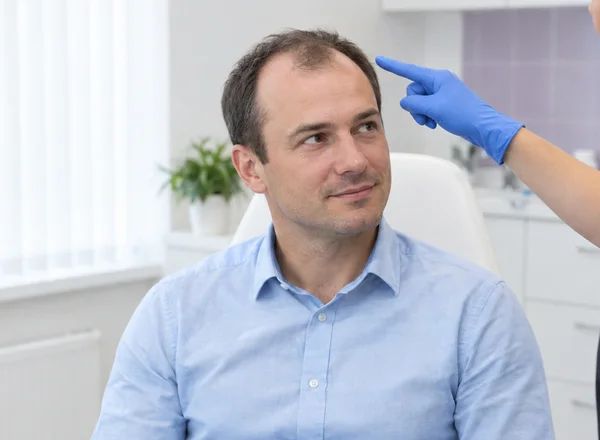

Just a number. A coordinator asks for photos in a messenger, the doctor replies whether a transplant will help you. Free, no booking.

services
The cost is quoted after the grafts are counted at the free consultation, and fixed in the contract.
suture-free graft extraction

$2,200$2,700
or $367/mo — 0% instalments for 6 months
Lock in the priceimplantation without channels

$2,500$2,900
or $417/mo — 0% instalments for 6 months
Lock in the pricecombined technique

$2,700$2,900
or $450/mo — 0% instalments for 6 months
Lock in the price| Initial consultation | Free |
|---|---|
| Eyebrow transplant, FUE | |
| Beard transplant, FUEinstalments $467/mo | |
| Hair trichopigmentation | |
| PRP therapy / session | $200 |
all included
From preparation for surgery to 12 months of follow-up.
No hidden extra charges on the day of surgery.
two more areas
Beyond the scalp too: the same grafts from the back of the head, the same FUE method — only the area changes.
FUE, no incisions and no stitches

Grafts come from the donor area at the back of the head and are placed through micro-punctures of about 1 mm, leaving no scars. The doctor discusses the shape with you before surgery, taking your facial features into account. The transplanted hair grows for life, and the beard can be trimmed and styled as usual.
$2,800$3,000
or $467/mo — 0% instalments for 6 months
Lock in the priceFUE, no incisions and no stitches

At the first consultation the surgeon draws the shape of the eyebrows: references are looked through together and the design respects your facial features. The hairs are implanted at the right angle, so the brows look natural. It also helps where plucking over years has stopped hair growth.
$1,600$1,700
a day procedure done under local anaesthesia
Lock in the priceThe doctor assesses your donor area, counts the grafts and shows what result is achievable for you. The cost is quoted at the consultation and fixed in the contract.

Message our coordinator
Free online consultation · Reply within 15 minutes
Message us on TelegramMessage us on WhatsAppBy messaging us, you agree to our Privacy Policy
Process
Up-to-date equipment, comfortable rooms, care for the patient

At this first meeting, the doctor walks you through both the FUE and DHI methods, addresses any questions you have, and designs a surgical plan built around your case — at no cost.

A deposit — paid by card at the clinic or sent online — reserves the surgery date, and the terms are set out in a medical services contract.

Preparation for the surgery includes a set of tests, and the clinic makes the process easy with a full list and instructions.

Local anaesthesia numbs the area before surgery starts, keeping the entire procedure painless.

For patients in Philadelphia, grafts are harvested from the donor zone at the back of the head or temples, without stitches.

The grafts are implanted into the area of hair loss by the surgical team.
The clinic backs your recovery with full supplies and complete instructions for quick healing.

Crusts fall off, swelling goes down, the area heals step by step

A normal stage. Only the hairs fall, the follicles stay in place

New hairs show up step by step, the result begins

The hair grows denser, the main volume and contour are visible

Natural hairline and final density take their shape

Free, before the operation and free of commitment.
Book a consultationdoctors

Trichologist surgeon, hair transplant doctor

Dermatovenereologist, trichologist, surgeon
11 years of experience

Plastic surgeon
9 years of experience

Plastic surgeon
9 years of experience

Assistant
9 years of experience
The doctor assesses your donor area, counts the grafts and says what result is achievable.
Book a consultationcoordinators
A personal coordinator accompanies you from your first enquiry through to recovery.

Patient care specialist
Will stay beside you before and after surgery
Will help with papers and appointments
Patient care specialist
Will stay beside you before and after surgery
Will help with papers and appointments

Patient care specialist
Will stay beside you before and after surgery
Will help with papers and appointments
Patient care specialist
Will stay beside you before and after surgery
Will help with papers and appointments













We will answer your questions and book a consultation time that suits you
TelegramMessage us on TelegramMessage us on Telegram Message us on WhatsApp Choose a messengerReviews
I was having trouble with my hair. I came here and got a hair transplant. The results was awesome thank you
Review on Google
І experienced hair loss due to COVID and turned to this clinic; they helped me and performed a hair transplant, moving hair from the back of my head to my temples. Thank you.
Review on Google
I traveled to City Medical Centre, where they helped me overcome hair loss through a transplant to the balding areas of my scalp. I am grateful to the doctors for performing the procedure painlessly.
Review on Google
I am sharing my experience, because before the operation I went through a pile of reviews myself and was looking for real stories. I had a beard transplant six months ago. Honestly, in the first days after the procedure I felt a little jittery: my face looked unfamiliar, there was slight swelling and small scabs. In the first couple of months the hair partly fell out, as the doctor had warned. But now the result truly makes me very happy) From about the 4th month active, even growth began. The transplanted hair took very well, the beard now looks as natural as possible, no bald patches are left. The beard became much thicker and denser, with the shape I had thought about for a long time. All in all, I recommend the clinic, the doctor was polite and explained everything 👍 The result is definitely worth it!
Review on Google
I traveled to this clinic and do hair transplant, very good quality and cheap. Good doctors
Review on Google
I do hair transplant here very good doctors!!
Review on Google
Frequent questions
People often say hair implants, but no artificial hair is used. In a hair transplant the doctor moves your own follicles (grafts) from the donor area to thinning or bald areas using FUE or DHI.

Yes, patients in Philadelphia are accepted regularly. An online consultation lets you discuss your case before booking.
FUE is $2,200, DHI is $2,500, combined DHI+FUE is $2,700. A free consultation with a graft count gives you the exact, contract-fixed price.
The procedure is completed within a single day, after which you head home.
It helps with stable pattern hair loss and a receding hairline when there are enough donor grafts. Some types of alopecia need treatment first; the doctor checks this at the consultation.
No — local anaesthesia keeps the whole procedure pain-free.
FUE relies on tweezer harvesting with no incisions or stitches. DHI relies on Choi-pen implantation without channels. The combined DHI+FUE approach harvests by FUE and implants by DHI.
Graft count is calculated by the doctor at no cost, based on an assessment of your donor zone.
First comes 0–10 days of healing, then shedding at 2–4 weeks (a normal stage). Growth starts at 3–4 months, density is clear by 6–9 months, and the final outcome shows at 12–18 months.
The clinic provides a lifetime guarantee on hair growth, stated in the contract.
The clinic holds a medical licence and care meets the standards and clinical guidelines
per Ministry of Health.

Diplomas and certificates held by the operating doctors
View the documentsAKC POMOSHCH LLC
the firm's legal entity
1057746096924
OGRN
7728536872
INN
Living in Philadelphia changes nothing in the surgery itself: FUE and DHI are done without cuts and without stitches, under local anaesthesia, in a single day. Graft survival is 98-100 %, and a price from $2,200 is fixed in the contract after a free graft count.
Nothing has to be arranged in advance to start in Philadelphia. The online consultation is free: the doctor studies photos of the thinning area and counts the grafts needed. The clinic is in touch 24/7, so you write when it suits you.
Recovery is short: 0-10 days. The transplanted hairs shed at 2-4 weeks, a normal step, growth begins at 3-4 months, density fills by 6-9 and the final result stands at 12-18. Check-ups at 1, 3, 6, 9 and 12 months, photo tracking with a personal coordinator, growth guaranteed for life.
Prices are in US dollars and fixed in your contract. Message us to get your exact price.
By messaging us, you agree to our Privacy Policy
Healing takes up to 10 days, then the transplanted hairs shed at 2–4 weeks. New growth starts at 3–4 months, density comes at 6–9 months and the final result at 12–18 months.
Yes. Write to us with the dates that suit you. You can start the free first consultation online, so you can do it from home: after the doctor reviews your details, the clinic offers its nearest free dates.
The procedure takes one day and you go home the same day. Healing takes 0–10 days, and the follow-up dressings and healing check-ups are part of the price.
Clear photos of the hairline from the front, the top, the crown and the donor area at the back of the head, plus your age and whether you have had a transplant before. The doctor counts the grafts from them, and the price is fixed in the contract.
Yes. The first consultation is free and starts online: send your details and photos on WhatsApp or Telegram, and the doctor reviews them and explains the options and the price.
Well-known people who spoke openly about this surgery, in their own words.
Philadelphia straddles the edge of the humid subtropical zone, close enough to the boundary that summers lean hot and muggy while winters still bring real cold rather than the milder version found further south — four clearly separate seasons rather than two long extremes. That summer humidity matters in the ten days right after a hair transplant, since sweat pooling under a cap against freshly placed grafts works against healing rather than helping it along.
A breathable, loose-fitting cap gets a patient through a sticky Philadelphia summer, while a light moisturizer earns its place once winter heating dries the indoor air instead — two seasonal tweaks layered onto the same core aftercare routine every patient follows no matter which month the procedure happens to land in.
Spring and fall bring their own mild, generally comfortable stretches in between, with neither extreme heat nor extreme cold to plan around, which makes either season an easy window for the early healing weeks if a patient has flexibility in timing.
Plenty of Philadelphia's hair restoration practices sit well outside Center City, in neighbourhoods such as Chestnut Hill in the northwest, Roxborough along the Schuylkill, and the much larger Northeast Philadelphia section beyond Roosevelt Boulevard, each with its own cluster of medical office buildings rather than one dominant district.
Chestnut Hill in particular keeps a distinctly older, stone-built streetscape that sets it apart from the newer suburban-style medical plazas common in the Northeast, though neither setting says anything about a specific clinic's graft survival record or technique.
Weighing a Chestnut Hill office against one in the Northeast mostly comes down to drive time across the city, nothing more — confirming the license and pressing for a straight answer on graft experience at the consultation is what actually tells one clinic apart from the next, no matter which part of Philadelphia it calls home.
The 2020 U.S. Census put Philadelphia's population at 1,603,797, the largest of any city in Pennsylvania and one of the largest nationwide, with a private medical sector — hair restoration included — sized to match. Plenty of options makes booking convenient, but a crowded market reveals nothing about any one team's actual graft count or how its results hold up over time; pressing a clinic directly on donor assessment, reported survival rates, and whether one team stays responsible from harvest through to placement is the only way to find that out before committing.
Pennsylvania channels licensing through its Department of State: the State Board of Medicine keeps the official public record of who currently holds a valid license, searchable in a few minutes at no cost, regardless of how a clinic's marketing presents its own doctors.
That record speaks only to legal standing, though — it says nothing about how many hair transplants a particular surgeon has personally performed, since no separate protected title exists for the procedure anywhere in American medicine. Some Philadelphia practices are formally tied to one of the city's academic hospital networks — Penn Medicine, Jefferson Health or Temple Health among them — while others operate independently; asking which applies, and what backup exists for a complication, is a fair question a license lookup alone won't answer.
Zoom out to the state level and Pennsylvania has nothing requiring paid sick leave, same as most of its neighbours — but zoom back into Philadelphia specifically and the picture changes: a city ordinance, Promoting Healthy Families and Workplaces, requires many local employers to provide paid sick time regardless of what the rest of the state does.
That city rule, though, was written with certified illness in mind, not a procedure someone books for themselves on a chosen date, so the honest move is asking an employer directly how it treats planned recovery time rather than assuming it slots neatly into that ordinance. On the insurance side, the exclusion is the usual one: Medicare and almost every private U.S. plan treats ordinary pattern hair loss as elective and cosmetic, with any coverage reserved for hair loss tied to injury, burns or a documented medical condition.
Franklin, the city's own founding polymath figure, never saw a hair transplant in his lifetime, but Pennsylvania Hospital — which he co-founded in 1751 — still stands today as the country's first hospital, a reminder of how far back Philadelphia's medical institutions actually reach, long before cosmetic surgery existed as its own specialty.
Philadelphia was founded in 1682 by William Penn, who planned its original street grid personally, and the city went on to serve as the meeting place where the Declaration of Independence was adopted in 1776 and the U.S. Constitution drafted in 1787 — a concentration of early American history still visible around Independence Hall and the Liberty Bell in the historic district today.
The city's nickname, the City of Brotherly Love, comes directly from the Greek roots of its name — philos for love, adelphos for brother — chosen deliberately by William Penn, a Quaker seeking religious tolerance, when he laid out the city more than three centuries ago.
That old colonial core sits only a short distance from Philadelphia's modern hospital and medical research district, one of the largest in the country relative to the city's size — a fact that says more about the breadth of general medical infrastructure here than about any individual clinic's specific hair transplant results.
Day 10 is the first marker: the scalp has done most of its visible healing from a procedure that, start to finish, was wrapped up in one appointment — grafts lifted from the back of the head and set into the thinning patch through nothing more invasive than small punches, no stitches needed.
Week 2 through week 4 is the second, and the one that unsettles patients who weren't told about it in advance: the hairs just transplanted fall out again, a process that looks like the opposite of progress but is the follicle resetting itself below the skin, intact the entire time.
The third marker lands much further out, around the one-year-to-eighteen-month mark, once density has built steadily from month 3 onward and the hairline has finally stopped shifting — that stretch, not the early weeks, is when a surgeon actually calls the result finished. Whether that whole stretch runs through Philadelphia's muggy summers or its colder winters changes nothing about when each of these three dates arrives; it only changes which precautions matter most along the way.
The two methods differ mainly in sequencing, not in the follicles themselves: FUE pulls grafts out with a small punch and places them afterward through separately made openings, while DHI threads each graft straight into a pen-style implanter that opens its own channel and seats the hair in one motion. That difference shows up mostly in how densely a surgeon can pack grafts in a single sitting, not in the long-term biology of regrowth.
A Philadelphia patient doesn't need to walk in with a preference already decided — donor density, the size of the thinning area and the surgeon's own comfort with each technique all factor into which approach gets used, a call made at the consultation after an actual look at the scalp in question. Some providers also run a blended session, splitting a larger area between both methods.
Photos shared with the coordinator through Telegram or WhatsApp get looked at any time of day, so there's no need to wait for a scheduled visit just to start the conversation.
Yes — a loose, breathable hat helps manage sweat during the first ten days in summer, while a light moisturizer can help with dry winter indoor heat; the underlying healing timeline stays the same either way.
Pull up the name in the State Board of Medicine's free public record before agreeing to anything — it takes only a few minutes and beats taking a clinic's word for it.
Insurance generally excludes ordinary cosmetic hair loss, and the city's paid sick leave ordinance is built for certified illness rather than a scheduled elective procedure — worth confirming directly with an employer how it applies.
Real growth typically begins around month 3 to 4, well after the expected shedding phase at weeks 2 to 4.
Most patients reach their settled final result somewhere between 12 and 18 months after the procedure.
Not typically with FUE or DHI, since grafts come from many tiny individual extraction points rather than one long incision, leaving marks that are faint and easily covered by surrounding hair.
There's no stock number — a surgeon counts the available donor hair and the size of the thinning patch in person, and only then is a graft count, and a price, put in writing.
Written by Anastasia A. Kolesnik, plastic surgeon, hair transplant doctor
Medically reviewed by Ellina V. Goncharova, dermatovenereologist, trichologist, surgeon. Review date:
How we prepare and review medical content · Medical disclaimer

 Forceps
 Minimal