





























before
12 months later
2,800 grafts
FUE method
City Medical Centre
0% instalments
from $367/mo
Consultation and quote — $0.
Real case
before
12 months later
FUE: incision-free and stitch-free. Grafts and outcome forecast calculated free of charge — before you decide.
Free online consultation · Reply within 15 minutes
Free of charge, no surgery booking required
Message our coordinator
Free online consultation · Reply within 15 minutes
Message us on TelegramMessage us on WhatsAppBy messaging us, you agree to our Privacy Policy
Hair transplant for patients from Nairobi at City Medical Centre starts at KES 285,000 (from $2,200). The first online consultation is free; the doctor names the final price and it is fixed in the contract.
How it works · Hair transplant prices
Information current as of 5 November 2026
results
Every case is a real CMC patient.
before
12 months later
2,800 grafts
FUE method

before
12 months later
3,500 grafts
FUE method

before
12 months later
2,600 grafts
FUE method

before
12 months later
3,000 grafts
FUE method

before
12 months later
2,700 grafts
FUE method

before
12 months later
3,300 grafts
FUE method

before
12 months later
2,900 grafts
FUE method

before
12 months later
2,500 grafts
FUE method

before
12 months later
3,400 grafts
FUE method

before
12 months later
2,500 grafts
FUE method

before
12 months later
3,100 grafts
FUE method

before
12 months later
3,600 grafts
FUE method

before
12 months later
4,000 grafts
FUE method

before
12 months later
3,200 grafts
FUE method

before
12 months later
3,000 grafts
FUE method

before
12 months later
3,700 grafts
FUE method

before
12 months later
2,700 grafts
FUE method

before
12 months later
3,800 grafts
FUE method

before
12 months later
3,300 grafts
FUE method

before
12 months later
2,800 grafts
FUE method

before
12 months later
2,500 grafts
FUE method

before
12 months later
3,900 grafts
FUE method

before
12 months later
3,500 grafts
FUE method

before
12 months later
3,800 grafts
FUE method

before
12 months later
2,900 grafts
FUE method

before
12 months later
3,600 grafts
FUE method

before
12 months later
2,600 grafts
FUE method

before
12 months later
2,700 grafts
FUE method

before
12 months later
3,700 grafts
FUE method

before
12 months later
3,200 grafts
FUE method

before
12 months later
3,000 grafts
FUE method

before
12 months later
2,800 grafts
FUE method

before
12 months later
4,000 grafts
FUE method

before
12 months later
3,400 grafts
FUE method

before
12 months later
2,900 grafts
FUE method

before
12 months later
3,100 grafts
FUE method

before
12 months later
2,600 grafts
FUE method

before
12 months later
3,300 grafts
FUE method

before
12 months later
3,900 grafts
FUE method

before
12 months later
3,500 grafts
FUE method

before
12 months later
2,700 grafts
FUE method

before
12 months later
3,800 grafts
FUE method

before
12 months later
3,200 grafts
FUE method

before
12 months later
3,000 grafts
FUE method

before
12 months later
2,800 grafts
FUE method

before
12 months later
3,100 grafts
FUE method

before
12 months later
3,600 grafts
FUE method
Comparison
We transfer grafts by three technologies: classic FUE, suture-free DHI and a combined protocol. Compare them by implantation technique, tissue trauma and graft survival, and pick your method knowingly.
Classic method requiring no cuts or sutures

$2,200
$2,700
Graft implantation technique
ForcepsGraft trauma
MinimalHair's natural angle
NaturalGraft survival
98–100%Suitable for
Androgenetic alopeciaSuture-free placement with a Choi pen

$2,500
$2,900
Graft implantation technique
DHI pen (Choi implanter)Graft trauma
MinimalHair's natural angle
NaturalGraft survival
98–100%Suitable for
DensificationExtraction by FUE, DHI implant

$2,700
$2,900
Graft implantation technique
FUE extraction plus DHI implantGraft trauma
MinimalHair's natural angle
NaturalGraft survival
98–100%Suitable for
Androgenetic alopecia and densificationThe survival and trauma figures for each method are averages, given as a guide; exact numbers depend on the transplant area and the patient's individual traits and are clarified by the doctor at the consultation.
Book a consultation


















about the clinic
Modern equipment and comfortable rooms, care for every patient

We will answer the questions you have and find a convenient consultation time
TelegramMessage us on TelegramMessage us on Telegram Message us on WhatsApp Choose a messengerIf your case can be solved without surgery, you will hear that right at the consultation — and you will not waste your money. Below are the conditions where a transplant really works.
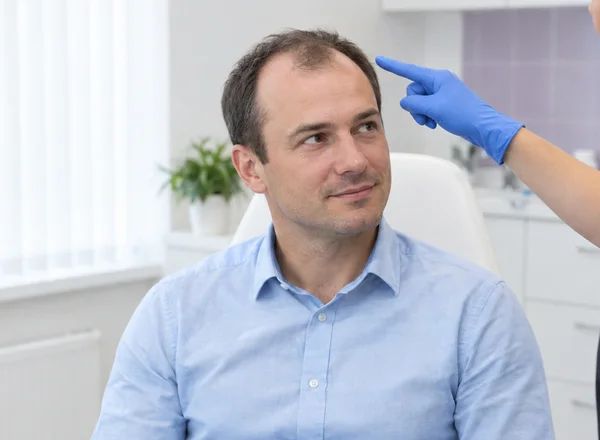

Leave your number. The coordinator asks for photos in a messenger, the doctor decides if a transplant will help. Free of charge.

services
After the grafts are counted at the free consultation, the cost is named and fixed in the contract.
suture-free graft extraction

$2,200$2,700
or $367/mo — 0% instalments for 6 months
Lock in the priceimplantation without channels

$2,500$2,900
or $417/mo — 0% instalments for 6 months
Lock in the pricecombined technique

$2,700$2,900
or $450/mo — 0% instalments for 6 months
Lock in the price| Initial consultation | Free |
|---|---|
| Eyebrow transplant, FUE | |
| Beard transplant, FUEinstalments $467/mo | |
| Hair trichopigmentation | |
| PRP therapy / session | $200 |
all included
From preparation for surgery up to 12 months after.
No additional charges on the day of surgery.
two more areas
A hair transplant is not only about the scalp — the same grafts from the back of the head, the same FUE method, only the area changes.
The FUE method, no incisions used

Grafts are taken from the donor area at the back of the head and moved through micro-punctures of about 1 mm — no scars are left. The doctor discusses the shape with you before the operation, taking your facial features into account. Transplanted hair grows for life: the beard can be trimmed and styled as usual.
$2,800$3,000
or $467/mo — 0% instalments for 6 months
Lock in the priceThe FUE method, no incisions used

The eyebrow shape is drawn by the surgeon at the initial consultation. You look through references together and the design takes your facial features into account. The hairs are implanted at the right angle, so the eyebrows look natural. It also helps where plucking stopped hair growth.
$1,600$1,700
an outpatient procedure under local anaesthesia
Lock in the priceYour donor area is assessed, the grafts counted and the achievable result shown. The cost is quoted at the consultation and fixed in the contract.

Message our coordinator
Free online consultation · Reply within 15 minutes
Message us on TelegramMessage us on WhatsAppBy messaging us, you agree to our Privacy Policy
Process
Modern equipment and comfortable rooms, care for every patient

At no cost, the doctor uses the initial consultation to explain FUE and DHI, answer your questions, and outline an individual surgical plan.

Patients in Nairobi can reserve their surgery date with a deposit paid by card at the clinic or online, formalized through a medical services contract.

Before the operation, you'll need to complete a set of medical tests. The clinic provides a full list and instructions to guide you through it.

This step uses local anaesthesia to make sure the operation is completely painless.

The donor zone at the back of the head or the temples supplies the grafts, taken without any stitching required.

At this point, the grafts are implanted into the balding area by the surgical team.
This step supports fast healing, with the clinic providing all the necessary items and full instructions.

The crusts come away, the swelling eases, the area gradually recovers

A normal stage. Only hairs fall out, the follicles stay in place

New hairs surface gradually, the result shows

The hair is thicker now, the main volume and contour are visible

Final density arrives, the hairline looks natural

Free, before surgery, and nothing is owed for it.
Book a consultationdoctors

Hair transplant doctor and trichologist

Dermatovenereologist, trichologist, surgeon
11 years in practice

Plastic surgeon
9 years of experience

Plastic surgeon
9 years of experience

Assistant
9 years of experience
The doctor will assess the donor area, count the grafts and say what result is achievable.
Book a consultationcoordinators
We assign you a personal coordinator: they guide you from the first enquiry to recovery.
Patient care specialist
Will back you up before and after surgery
Will help with paperwork and visits
Patient care specialist
Will back you up before and after surgery
Will help with paperwork and visits
Patient care specialist
Will back you up before and after surgery
Will help with paperwork and visits
Patient care specialist
Will back you up before and after surgery
Will help with paperwork and visits













We will answer the questions you have and find a convenient consultation time
TelegramMessage us on TelegramMessage us on Telegram Message us on WhatsApp Choose a messengerReviews
I was having trouble with my hair. I came here and got a hair transplant. The results was awesome thank you
Review on Google
І experienced hair loss due to COVID and turned to this clinic; they helped me and performed a hair transplant, moving hair from the back of my head to my temples. Thank you.
Review on Google
I traveled to City Medical Centre, where they helped me overcome hair loss through a transplant to the balding areas of my scalp. I am grateful to the doctors for performing the procedure painlessly.
Review on Google
I am sharing my experience, because before the operation I went through a pile of reviews myself and was looking for real stories. I had a beard transplant six months ago. Honestly, in the first days after the procedure I felt a little jittery: my face looked unfamiliar, there was slight swelling and small scabs. In the first couple of months the hair partly fell out, as the doctor had warned. But now the result truly makes me very happy) From about the 4th month active, even growth began. The transplanted hair took very well, the beard now looks as natural as possible, no bald patches are left. The beard became much thicker and denser, with the shape I had thought about for a long time. All in all, I recommend the clinic, the doctor was polite and explained everything 👍 The result is definitely worth it!
Review on Google
I traveled to this clinic and do hair transplant, very good quality and cheap. Good doctors
Review on Google
I do hair transplant here very good doctors!!
Review on Google
Frequent questions
People often say hair implants, but no artificial hair is used. In a hair transplant the doctor moves your own follicles (grafts) from the donor area to thinning or bald areas using FUE or DHI.

Yes, this is possible. An online consultation is offered so patients from other cities and countries can plan ahead.
FUE: $2,200 (≈ KES 285,000). DHI: $2,500 (≈ KES 325,000). Combined: $2,700 (≈ KES 350,000). A free consultation and graft count gives you the final, contract-fixed price with no hidden extras.
The procedure is completed within a single day, after which you head home.
It helps with stable pattern hair loss and a receding hairline when there are enough donor grafts. Some types of alopecia need treatment first; the doctor checks this at the consultation.
No pain during the procedure, thanks to local anaesthesia.
In FUE, grafts are harvested with a tweezer, no cuts or stitches involved. In DHI, a Choi pen implants grafts without opening channels first. The combined method pairs FUE harvesting with DHI implantation.
Graft count is calculated by the doctor at no cost, based on an assessment of your donor zone.
Healing takes 0–10 days. Transplanted hair sheds at 2–4 weeks, which is normal. New growth starts at 3–4 months, with noticeable density at 6–9 months and the final result at 12–18 months.
Your procedure includes a lifetime hair-growth guarantee under contract.
FUE: $2,200 (≈ KES 285,000). DHI: $2,500 (≈ KES 325,000). Combined: $2,700 (≈ KES 350,000). A free consultation and graft count gives you the final, contract-fixed price with no hidden extras.
Yes — 0% instalments for 6 months, from $367/mo.
The clinic holds a medical licence; care meets the standards and clinical guidelines
of the Ministry of Health.

Diplomas and certificates of the doctors on your surgery
View the documentsAKC POMOSHCH LLC
the clinic's legal name
1057746096924
OGRN
7728536872
INN
Two methods are used for a resident of Nairobi, FUE and DHI, and both go without cuts and stitches, under local anaesthesia, within one day. Graft survival is 98-100 %, and a price from $2,200 (≈ KES 285,000) appears in the contract after a free count of the grafts.
Nothing has to be arranged in advance to start in Nairobi. The online consultation is free: the doctor studies photos of the thinning area and counts the grafts needed. The clinic is in touch 24/7, so you write when it suits you.
The wounds close in 0-10 days, the transplanted hairs fall out at 2-4 weeks as they are supposed to, growth starts at 3-4 months, visible density comes at 6-9 and the final picture at 12-18. Reviews are held at 1, 3, 6, 9 and 12 months by photo with a personal coordinator, under a lifetime growth guarantee.
Prices are in US dollars; the amount in brackets is an approximate conversion to KES at the rate of 02.10.2026. The final price is fixed in your contract.
By messaging us, you agree to our Privacy Policy
Public accounts from well-known people about the operation: hair transplant.
Written by Anastasia A. Kolesnik, plastic surgeon, hair transplant doctor
Medically reviewed by Ellina V. Goncharova, dermatovenereologist, trichologist, surgeon. Review date:
How we prepare and review medical content · Medical disclaimer
Nairobi stands at roughly 1,795 metres above sea level, and its subtropical highland climate (Köppen Cwb) is the reason a city so near the equator feels temperate. For a hair transplant that altitude matters, because the procedure is the start of a year-long project, not a single afternoon. The long rains peak around April and May, a cloudy and often drizzly stretch follows until about September, and the short rains return in October and November.
Figures from the Jomo Kenyatta weather station, based on 1991–2020 averages, show the spread. Daily highs average 23.6 °C in July and 28.0 °C in March, nights drop to 11.9 °C in July, and sunshine runs from about 282 hours in January to 124 hours in July and August. April and November are the wettest months there; July is the driest.
A second station, Dagoretti, tells a slightly different story, which is useful if you live on the western side of town. Its 1961–1990 averages put July and August night-time lows near 9 °C and annual rainfall at about 1,061 mm, against roughly 749 mm at the Jomo Kenyatta station. Neighbourhoods are not all alike, so ask yourself whether your commute is cool and damp or dry and bright before you pick a season.
Now lay the stages of recovery over those months. Scalp healing takes days one to ten, the transplanted hairs fall out in weeks two to four, fresh growth begins in month three or four, density builds between months six and nine, and the outcome settles between months twelve and eighteen. A July operation therefore puts healing in the coolest, driest weeks, the shedding in the dull days of August, the first regrowth in the short rains, and visible density in the sunny first quarter of the next year. A January operation shifts every milestone by half a year.
The January to March window is the sunniest and driest. Sunshine at the Jomo Kenyatta station is about 282 hours in January and 265.6 in February, and daily highs sit between 26.9 and 28.0 °C. An operation here means healing in bright weather, and regrowth that begins around May to July, in the cool season, with density arriving in the second half of the year.
April and May bring the long rains: 130.2 mm in April and 108.9 mm in May, with relative humidity between 77 and 79 percent. Starting in this window means the first ten days of healing happen in damp, grey weather, and the shedding stage falls in late May and June, when it is cool and often overcast. If you commute on foot, think about how they will keep their head covered and dry on the way.
June to September is the cool stretch. Daily highs hover between about 23.6 and 26.3 °C, nights fall to between 11.9 °C and 13.1 °C, and rainfall is only 11 to 29 mm a month. It is the easiest period for the opening weeks of recovery, since there is little rain and less strong sun. A start in September pushes the regrowth stage toward December and January, the sunniest months of the year.
October to December has the short rains, 50.0 mm in October, 130.6 mm in November and 85.4 mm in December. A start in October means healing in a mixed spell of showers and sun, shedding in November, and the long wait for density through the first half of the following year. None of these windows is wrong; the useful question is which weeks you most want to keep quiet and which you would rather spend outdoors.
On the day of surgery the doctor works under local anaesthesia, using FUE, DHI or a combination of the two, and you go home after one day at the clinic. Grafts come from the donor zone at the back of the head or the temples. After that, a written care plan takes over, covering how to wash, how to sleep and what to wear on your head, so the first week does not depend on advice from friends or forums.
Nairobi’s height above sea level means sunlight is strong even when the air feels cool, and the Jomo Kenyatta station logs more than 250 hours of sun in both December and January. Think about your routine during the opening ten days: who drives, where you park, whether you walk to work, and what you will put on your head when you do. If your job or your weekends are spent outdoors, mention it to the coordinator before a date is fixed.
One practical idea is a Thursday or Friday date with a light week after it. That is a planning suggestion rather than a medical rule; any restrictions come from the doctor and the written plan. Because you stay in your own city, you also keep your usual salon, your family and your own bed. And the coordinator answers on WhatsApp and Telegram at any hour, so a worry about a scab at midnight does not wait for morning.
At the 2019 census Nairobi County held 4,397,073 people on 696 square kilometres, and the wider metropolitan area is far larger. People arrive with very different starting points: a few thin areas at the temples, a receding front line, a history of burns or injuries. The doctor reviews photos of your own scalp and counts the grafts you need at no charge, so the plan starts from your head rather than from a template.
Medicine in Kenya is regulated by the Kenya Medical Practitioners and Dentists Council, abbreviated KMPDC. It describes its job as regulating how medicine and dentistry are taught and practised, and it registers and licenses practitioners and health facilities and carries out inspections.
Two free searches on its website are open to any patient. Under the Search Registers menu you can find out whether a named doctor is registered and licensed for the current year, and a second search does the same for a health facility. Because licences are annual, a doctor who was registered last year but has not renewed will not appear as licensed this year. That is exactly why a certificate framed on a wall is no substitute for ten minutes at the register.
Write down the full name of the operating doctor, the full name of the facility and what each search returns, then compare the answers with what you have been told. At the free online consultation you can also ask which technique is planned, who removes the grafts and who places them, how many grafts the doctor expects to use, and how the photo reviews at months 1, 3, 6, 9 and 12 will be run. Keep those answers in writing beside your contract.
Public health financing in Kenya now sits with the Social Health Authority, set up under the Social Health Insurance Act No. 16 of 2023. It runs three funds: primary healthcare, the Social Health Insurance Fund for inpatient, maternity, renal, mental health and surgical services, and a fund for emergencies and chronic or critical illness. These descriptions are built around medical need, and none mentions elective cosmetic work. If you hold cover, do not budget for a transplant to be reimbursed; ask the Authority directly and get the answer in writing.
Time away from work is a separate matter. Section 30 of the Employment Act gives an employee who has completed two months of service up to 14 days of sick leave in a year, the first seven days at full pay at the employer’s discretion and the next seven at half pay, supported by a certificate of incapacity from a qualified medical practitioner. Whether an elective procedure falls under that rule is something to agree with your employer beforehand.
In practice a transplant needs little time off. Most people take a few ordinary days around the date and work from home if the job allows. One thing worth warning colleagues or family about is the shedding in weeks two to four: it is an expected stage, the follicles stay where they are, and only the hairs fall out.
No month is the best for everyone. A July date places the first ten days in cool, dry weather, but the same schedule would move the shedding stage into the grey days of August. Work backwards from events you care about, using the milestones of weeks two to four, months three to four and months six to nine.
On the KMPDC website. The Search Registers menu includes a search for registered practitioners that shows whether a doctor is licensed for the current year, and a separate one for health facilities. Repeat the check if your date slips into a new calendar year.
Its published fund descriptions cover primary care, inpatient and surgical services, emergencies and chronic illness, and they do not name elective cosmetic procedures. Plan to pay yourself unless the Authority confirms otherwise in writing.
Not the operation. It only changes the weather you plan around: the Dagoretti station on that side records cooler nights and more rain than the Jomo Kenyatta station, so the headwear and drying instructions in your care plan may matter more to you.
No, the technique, local anaesthesia and one-day stay do not change. The effect is practical: strong sun in December and January, and cool, cloudy weeks in the middle of the year.
Ask the doctor to mark on your own photos where grafts would be taken, either from the back of the head or the temples, and what that area should look like as it heals. Extraction needs no stitches.
The coordinator is in touch around the clock on WhatsApp and Telegram and can look at photos. Dressings and healing checks are part of the plan.
Shedding is expected in weeks two to four, so it is not a reason to call off anything. The photo reviews at months 1, 3, 6, 9 and 12 are there so you can see growth build up.

 Forceps
 Minimal


