


























Hair transplantUnited Kingdom5 min read
Did Stephanie Davis have a hair transplant? Yes — and she spoke for women
Hair loss is usually discussed as a men's topic, which makes the women who talk about it publicly all the more valuable. Stephanie Davis, the actress known from Hollyoaks and reality television, had a hair transplant in 2019 and said plainly that women can have the operation too. Here is what she said and what female hair transplantation involves.
By messaging us, you agree to our Privacy Policy
Medically reviewed by Ellina V. Goncharova, dermatovenereologist, trichologist, surgeon. Review date: .
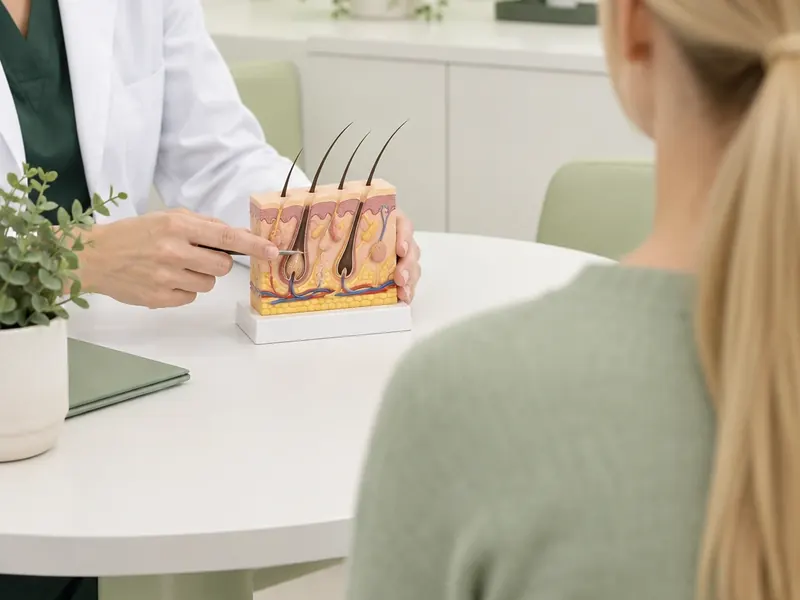
Key facts about the procedure
- Stay in clinicSame day
- Final result12–18 months
- AnaesthesiaLocal
- Price
$2,700from $2,200
Profile
Stephanie Davis
- Country
- United Kingdom
- Who
- British actress and reality TV personality
- Year of operation
- 2019
- Quote source
- The Sun, 24 November 2025
What did Stephanie Davis say about her hair transplant?
Stephanie Davis had a hair transplant in 2019 to lower her hairline, and her message was aimed squarely at other women. As The Sun noted in its round-up of celebrity hair transplants, she said: “Hair transplant surgery isn't just for men, women can also have it and it can make a huge difference.”
Hair Transplant London, Hair Transplant Dublin — price and consultation.
Price in your country — message us on WhatsApp
WhatsAppIt is a short quote that covers three facts patients often miss. The operation exists for women as well as men. For a woman the goal is often different — not filling a bald crown but lowering or reshaping a hairline, or restoring density where partings widen. And the difference it makes, as she put it, can be large: hairline position shapes the whole face.
That is what this article relies on: the outlet's report and her quoted words. Details of her treatment — the technique and graft count — were not set out publicly, so none of that is guessed here. Everything below describes hair transplantation in general, with the notes that matter specifically for women, not her treatment.
What her story changes for female patients
Women make up a substantial share of hair transplant patients, and their cases differ from men's in ways worth knowing. Female pattern loss usually thins hair diffusely rather than receding at the temples, so the surgeon's first job is to find the cause: thyroid problems, iron deficiency, postpartum shedding, tight hairstyles, scarring.
More on this topic: Hair Transplant, DHI Hair Transplant, Beard Transplant, FUE & DHI Hair Transplant in Detroit, FUE & DHI Hair Transplant in Denver.
Those causes are checked and treated before surgery is discussed, because a transplant placed into active uncontrolled hair loss can disappoint.
A lowered hairline like Stephanie Davis's is one classic indication. Others are widened partings restored with density work, eyebrow and eyebrow-adjacent loss, and repair of scarring — including scars from previous cosmetic surgery along the hairline. What unites them is the same medical logic as in men: donor hair from the back of the head is moved to where it is needed, and it keeps its resistance to loss.
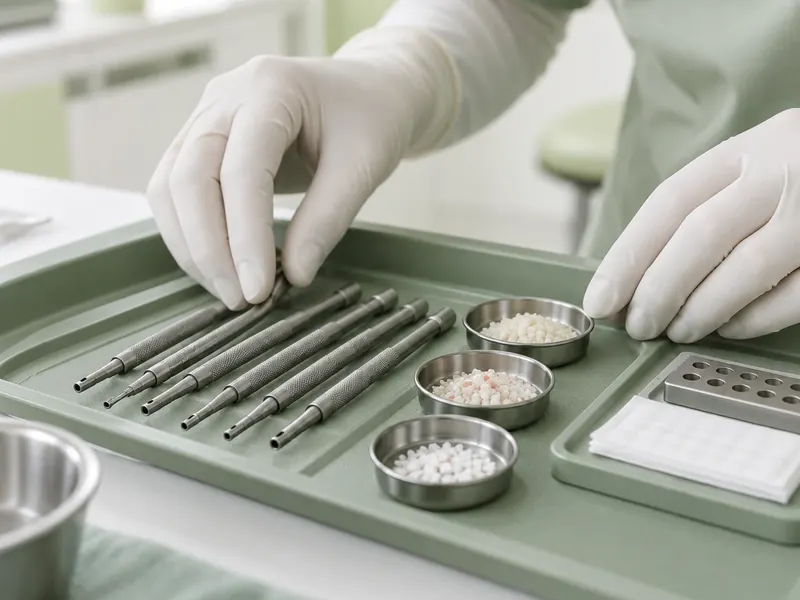
How a hair transplant works today
A modern hair transplant is an outpatient operation under local anaesthesia. Follicles are taken one by one from the donor area at the back of the head and implanted where hair is missing. The two main techniques are:
- FUE — grafts are extracted individually through tiny punctures and placed into channels the surgeon prepares in advance. No linear scar, no stitches.
- DHI — grafts are implanted directly with a Choi implanter pen without pre-made channels, which gives fine control over angle and direction — important for hairlines.
How grafts are placed
- FUE
- Into channels prepared in advance
- DHI
- Directly with an implanter pen
Anaesthesia
- FUE
- Local
- DHI
- Local
Stitches
- FUE
- None
- DHI
- None
Typical use
- FUE
- Larger areas, more grafts
- DHI
- Hairline work and dense packing of smaller areas
Price at City Medical Centre
- FUE
- $2,200
- DHI
- $2,500
A combined approach — FUE extraction with DHI implantation — is also used. For women, the surgeon also plans around future parting patterns and styling so the result stays natural.
Who is a good candidate, and how to prepare
The first step for any woman considering a transplant is a proper diagnosis of the hair loss. Once causes like iron deficiency or thyroid disease are treated and the loss has stabilised, transplantation becomes a realistic option when:
- the hairline sits too high or has an unusual shape;
- the parting has widened and density work would restore it;
- scarring — from injury, burns or earlier surgery — needs coverage.
Contraindications include patchy (focal) alopecia, age under 18, trichotillomania, body dysmorphic disorder, severe heart disease, diabetes mellitus, epilepsy and intolerance to anaesthetics. Before surgery you usually stop alcohol and blood-thinning medicines for the period the doctor names.
What recovery and results look like
You go home the same day. Over the first ten days the scalp heals and small crusts fall off. Transplanted hairs usually shed in weeks two to four — that is normal, the follicles stay under the skin — and new growth starts after three to four months. Density becomes clearly visible at six to nine months, and the final result is judged at 12–18 months.
One practical note for women: the donor area needs a short trim, which longer hairstyles can usually cover, and the surgeon plans the work so no line of shaved hair shows.
How hair transplant results usually develop
- Day of surgeryLocal anaesthesia, grafts are taken and implanted; you go home the same day.
- Days 1–10The scalp heals and small crusts fall off; you follow the washing and sleeping instructions.
- Weeks 2–4Transplanted hairs shed. This is expected: the follicles remain under the skin.
- Months 3–4New hair begins to grow, often fine at first.
- Months 6–9Density becomes clearly visible.
- Months 12–18The final result can be assessed.
A hair transplant at City Medical Centre
City Medical Centre performs FUE, DHI and combined hair transplants for international patients, including patients from London, for both men and women. The first consultation is free and can be held online: the doctor assesses photos of the hair and the donor area, checks possible causes of loss, estimates the number of grafts and names the price, which is then fixed in the contract. Prices start at $2,200 for FUE, $2,500 for DHI and $2,700 for the combined method.
The price includes follow-up appointments at 1, 3, 6, 9 and 12 months, and the clinic gives a lifetime guarantee of hair growth. More details are on the hair transplant page and the page for patients from London.
To be clear: City Medical Centre has no connection with Stephanie Davis or her treatment. Her story is quoted here only because she chose to talk about her procedure openly.
Hair transplant prices in this article are the current offer, valid until 30 November 2026. Regular prices: FUE $2,700, DHI $2,900, combined method $2,900. The price that applies to you is confirmed at the consultation.
Frequently asked questions
Did Stephanie Davis have a hair transplant?
Yes. She had the procedure in 2019 to lower her hairline, as The Sun noted in its round-up of celebrity hair transplants.
What did Stephanie Davis say about hair transplants?
She said: "Hair transplant surgery isn't just for men, women can also have it and it can make a huge difference."
Can women have hair transplants?
Yes. Common indications are a high or reshaped hairline, widened partings, eyebrow loss and scar coverage. The cause of the hair loss is diagnosed and treated first, and the work is planned around female hair patterns.
Does a female hair transplant require shaving the head?
The donor area at the back needs a short trim; longer hairstyles usually cover it, and the surgeon plans the work so no shaved line is visible after healing.
How much does a hair transplant cost at City Medical Centre?
Prices start at $2,200 for FUE, $2,500 for DHI and $2,700 for the combined method. The final price is given after the free consultation and fixed in the contract.
Sources
What the article says about the celebrity is based only on these public statements.
- The Sun, 24 November 2025
Medical background and further reading
General information about the procedure from health authorities and medical societies. It is not advice for any individual patient.
- PubMed / NCBI — Follicular Unit Extraction for Hair Transplantation: An Update (Actas Dermosifiliogr, 2017)
- PubMed / NCBI — Donor site healing in follicular unit extraction hair transplantation (Cell Mol Biol, 2025)
- International Society of Hair Restoration Surgery — Hair loss treatments and solutions
How we prepare and review medical content · Medical disclaimer
Considering the same operation? Get a free consultation
Message a coordinator on Telegram: we reply right in the chat, and you can send photos and questions there too.
- The first consultation is free, online consultations are available
- The doctor names the cost after the assessment, and it is fixed in the contract
- A personal coordinator guides you from the first message to recovery
Message our coordinator
We reply right in the chat — you can send photos
Message us on TelegramMessage us on WhatsAppBy messaging us, you agree to our Privacy Policy
In other cities
Read also
 Hair transplant
Did Calum Best have a hair transplant? Yes, and he said so himself
Calum Best said in 2023 he had his sixth hair transplant, this time using patches of beard hair. His words, how the procedure works and recovery.
 Hair transplant
Did Chloe Goodman have a hair transplant? Yes, and she explained why
Chloe Goodman had a hair transplant in 2025 after losing hair following pregnancy. Her own words, how the procedure works and what recovery involves.
 Hair transplant
Did Dean McCullough have a hair transplant? Yes, and he filmed it
Radio 1 presenter Dean McCullough shared his FUE hair transplant on TikTok in 2024. His own words, what the swelling means and how results develop.
 Hair transplant
Eyebrow Transplant: How It Works, Results, Cost and How to Avoid Regret
Eyebrow transplant guide: how FUE works for brows, recovery in 7–10 days, how long results last, why trimming is needed, common regrets and the price at our clinic.