





























earlier
after 12 months
2,800 grafts
FUE method
City Medical Centre
FUE · DHI
from $2,200
Meeting and a quote — $0.
Our patient
earlier
after 12 months
FUE: no surgical cuts, no stitches. Grafts and outcome forecast counted up, you pay nothing — before you decide.
Free online consultation · Reply within 15 minutes
Free, no catch, no surgery booking required
Message our coordinator
Free online consultation · Reply within 15 minutes
Message us on TelegramMessage us on WhatsAppBy messaging us, you agree to our Privacy Policy
Hair transplant for patients from Poznan at City Medical Centre starts at PLN 8,600 (from $2,200). The first online consultation is free; the doctor names the final price and it is fixed in the contract.
How it works · Hair transplant prices
Information current as of 5 November 2026
results
Each example is drawn from a genuine patient.
earlier
after 12 months
2,800 grafts
FUE method

earlier
after 12 months
3,500 grafts
FUE method

earlier
after 12 months
2,600 grafts
FUE method

earlier
after 12 months
3,000 grafts
FUE method

earlier
after 12 months
2,700 grafts
FUE method

earlier
after 12 months
3,300 grafts
FUE method

earlier
after 12 months
2,900 grafts
FUE method

earlier
after 12 months
2,500 grafts
FUE method

earlier
after 12 months
3,400 grafts
FUE method

earlier
after 12 months
2,500 grafts
FUE method

earlier
after 12 months
3,100 grafts
FUE method

earlier
after 12 months
3,600 grafts
FUE method

earlier
after 12 months
4,000 grafts
FUE method

earlier
after 12 months
3,200 grafts
FUE method

earlier
after 12 months
3,000 grafts
FUE method

earlier
after 12 months
3,700 grafts
FUE method

earlier
after 12 months
2,700 grafts
FUE method

earlier
after 12 months
3,800 grafts
FUE method

earlier
after 12 months
3,300 grafts
FUE method

earlier
after 12 months
2,800 grafts
FUE method

earlier
after 12 months
2,500 grafts
FUE method

earlier
after 12 months
3,900 grafts
FUE method

earlier
after 12 months
3,500 grafts
FUE method

earlier
after 12 months
3,800 grafts
FUE method

earlier
after 12 months
2,900 grafts
FUE method

earlier
after 12 months
3,600 grafts
FUE method

earlier
after 12 months
2,600 grafts
FUE method

earlier
after 12 months
2,700 grafts
FUE method

earlier
after 12 months
3,700 grafts
FUE method

earlier
after 12 months
3,200 grafts
FUE method

earlier
after 12 months
3,000 grafts
FUE method

earlier
after 12 months
2,800 grafts
FUE method

earlier
after 12 months
4,000 grafts
FUE method

earlier
after 12 months
3,400 grafts
FUE method

earlier
after 12 months
2,900 grafts
FUE method

earlier
after 12 months
3,100 grafts
FUE method

earlier
after 12 months
2,600 grafts
FUE method

earlier
after 12 months
3,300 grafts
FUE method

earlier
after 12 months
3,900 grafts
FUE method

earlier
after 12 months
3,500 grafts
FUE method

earlier
after 12 months
2,700 grafts
FUE method

earlier
after 12 months
3,800 grafts
FUE method

earlier
after 12 months
3,200 grafts
FUE method

earlier
after 12 months
3,000 grafts
FUE method

earlier
after 12 months
2,800 grafts
FUE method

earlier
after 12 months
3,100 grafts
FUE method

earlier
after 12 months
3,600 grafts
FUE method
Comparison
There are three graft transfer technologies to pick from: classic FUE, suture-free DHI and a combined protocol. Compare the implantation technique, the tissue trauma and the graft survival of each.
Classic technique without incisions or stitches

$2,200
$2,700
Graft implantation technique
ForcepsGraft trauma
MinimalThe natural growth angle
NaturalGraft survival
98–100%Suitable for
Androgenetic alopeciaNo-stitch implantation with a Choi pen

$2,500
$2,900
Graft implantation technique
Choi implanter, DHI penGraft trauma
MinimalThe natural growth angle
NaturalGraft survival
98–100%Suitable for
DensificationFUE extraction, DHI pen implantation

$2,700
$2,900
Graft implantation technique
FUE extraction plus DHI implantGraft trauma
MinimalThe natural growth angle
NaturalGraft survival
98–100%Suitable for
Densification for androgenetic alopeciaThe survival and trauma figures shown are method averages, a guide only: exact numbers depend on the transplant area and the patient's individual features, and the doctor clarifies them at the consultation.
Start with advice


















about the clinic
Attention to each person, pleasant rooms, good equipment

We will deal with your questions and pick a convenient time to consult you
TelegramMessage us on TelegramMessage us on Telegram Message us on WhatsApp Get in touchIf your case can be solved without an operation, the doctor will say so at the consultation, and you will not waste your money. Below are the conditions where a transplant really works.
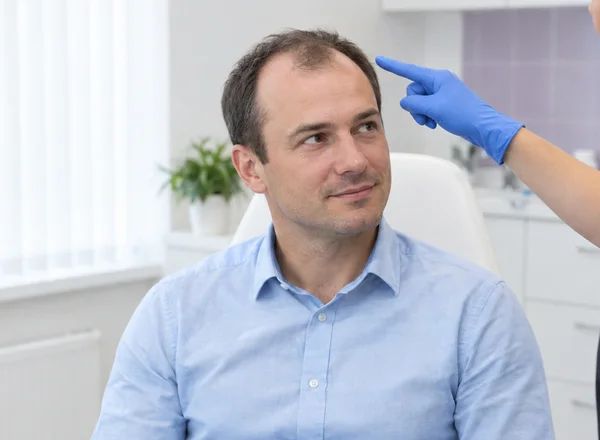

Leave your number and photos in a messenger. The doctor looks and tells you if a transplant helps. Free, nothing booked.

services
First the grafts are counted at the free consultation, then you are told the price, and the contract secures it.
suture-free graft extraction

$2,200$2,700
Meeting and a quote — $0.
Freeze your quoteimplantation without channels

$2,500$2,900
Meeting and a quote — $0.
Freeze your quotecombined technique

$2,700$2,900
Meeting and a quote — $0.
Freeze your quote| First medical check | Free |
|---|---|
| Eyebrow transplant, FUE | |
| Beard transplant, FUE | |
| Hair trichopigmentation | |
| PRP therapy / session | $200 |
all included
Groundwork beforehand, then 12 months of aftercare.
No additional charges on the day of surgery.
two extra patches
Outside the scalp the work is identical: donor grafts from the back of the head, the FUE method, and only the zone is new.
FUE method, free of cuts or stitches

Grafts are taken from the back of the head, the donor area, and moved through micro-punctures of about 1 mm, so no scars are left. The doctor discusses the shape with you before the operation, taking your facial features into account. Transplanted hair grows for life: trim and style the beard as usual.
$2,800$3,000
Meeting and a quote — $0.
Freeze your quoteFUE method, free of cuts or stitches

Contour first: the surgeon draws it at the first appointment, references are lined up for comparison, and the design follows your facial proportions. Hairs set at the growth angle make the brows look natural up close. Where years of plucking stopped growth, this is the answer.
$1,600$1,700
a day procedure done under local anaesthetic
Freeze your quoteThe doctor checks the donor zone, arrives at a graft number and explains what outcome is realistic. What you agree at the appointment is exactly what the contract says.

Message our coordinator
Free online consultation · Reply within 15 minutes
Message us on TelegramMessage us on WhatsAppBy messaging us, you agree to our Privacy Policy
Process
From consultation to going home — all in one day

For patients in Poznan, the journey starts with a free consultation that covers FUE and DHI, answers questions, and produces an individual surgical plan.

A deposit, paid by card at the clinic or transferred online, locks in the surgery date, and the arrangement is written into a medical services contract.

Before the hair transplant, the necessary tests are completed using the list and instructions the clinic provides.

Local anaesthesia is given ahead of the procedure, so it remains pain-free throughout.

Grafts are collected from the back of the head or temples, using a technique that requires no stitches.

At this stage, the surgeons position the grafts into the balding area.
Recovery wraps up the process, with the clinic offering all essentials and thorough instructions.

The crusts are gone, the swelling goes down, the area recovers

This is how it should be: shafts shed, roots stay in place

Thin young hairs come through and the difference is visible

Hair density climbs, the principal volume and outline are clear

Full thickness, and a hairline that looks natural

Free, before the operation, and you owe nothing.
Start with advicedoctors

Hair transplant doctor, trichologist, surgeon

Dermatovenereologist, trichologist, surgeon
11 years in practice

Plastic surgeon
9 years in practice

Plastic surgeon
9 years in practice

Assistant
9 years in practice
Expect an examination of the donor zone, a graft figure, and a clear picture of the likely outcome.
Start with advicecoordinators
You are assigned a personal coordinator: with you from the first enquiry to recovery.

Patient support officer
Will accompany you before and after surgery
Takes care of the forms and of scheduling
Patient support officer
Will accompany you before and after surgery
Takes care of the forms and of scheduling

Patient support officer
Will accompany you before and after surgery
Takes care of the forms and of scheduling
Patient support officer
Will accompany you before and after surgery
Takes care of the forms and of scheduling













We will deal with your questions and pick a convenient time to consult you
TelegramMessage us on TelegramMessage us on Telegram Message us on WhatsApp Get in touchReviews
I was having trouble with my hair. I came here and got a hair transplant. The results was awesome thank you
Review on Google
І experienced hair loss due to COVID and turned to this clinic; they helped me and performed a hair transplant, moving hair from the back of my head to my temples. Thank you.
Review on Google
I traveled to City Medical Centre, where they helped me overcome hair loss through a transplant to the balding areas of my scalp. I am grateful to the doctors for performing the procedure painlessly.
Review on Google
I am sharing my experience, because before the operation I went through a pile of reviews myself and was looking for real stories. I had a beard transplant six months ago. Honestly, in the first days after the procedure I felt a little jittery: my face looked unfamiliar, there was slight swelling and small scabs. In the first couple of months the hair partly fell out, as the doctor had warned. But now the result truly makes me very happy) From about the 4th month active, even growth began. The transplanted hair took very well, the beard now looks as natural as possible, no bald patches are left. The beard became much thicker and denser, with the shape I had thought about for a long time. All in all, I recommend the clinic, the doctor was polite and explained everything 👍 The result is definitely worth it!
Review on Google
I traveled to this clinic and do hair transplant, very good quality and cheap. Good doctors
Review on Google
I do hair transplant here very good doctors!!
Review on Google
Asked all the time
People often say hair implants, but no artificial hair is used. In a hair transplant the doctor moves your own follicles (grafts) from the donor area to thinning or bald areas using FUE or DHI.

Yes — patients from other cities and countries are welcome, and you can start with a free online consultation.
Prices start at $2,200 (≈ PLN 8,600) for FUE, $2,500 (≈ PLN 9,800) for DHI, and $2,700 (≈ PLN 11,000) for the combined method. Your final price is set after a free graft count and locked into the contract.
It takes just one day from start to finish, and you're free to go home afterward.
It helps with stable pattern hair loss and a receding hairline when there are enough donor grafts. Some types of alopecia need treatment first; the doctor checks this at the consultation.
The surgery is performed under local anaesthesia, so it's painless.
In FUE, grafts are harvested with a tweezer, no cuts or stitches involved. In DHI, a Choi pen implants grafts without opening channels first. The combined method pairs FUE harvesting with DHI implantation.
The doctor calculates the exact number of grafts at a free consultation, based on your donor area.
The timeline is: 0–10 days healing, 2–4 weeks shedding (normal), 3–4 months new growth, 6–9 months visible density, and 12–18 months for the final result.
A contract-backed, lifetime guarantee of hair growth comes with every procedure.
The clinic holds a medical licence; care meets the standards and clinical guidelines
under Ministry of Health.

Diplomas and certificates of the doctors who operate on you
Browse the documentsAKC POMOSHCH LLC
the clinic's legal name
1057746096924
OGRN
7728536872
INN
A patient in Poznan keeps an ordinary schedule: FUE and DHI are carried out without cuts or stitches, under local anaesthesia, in one day. Graft survival is 98-100 %, and a price from $2,200 (≈ PLN 8,600) is fixed in the contract after a free count of the grafts.
The first step in Poznan happens on a phone screen and costs nothing. Photos of the thinning area are examined by the doctor, who then gives a verdict on whether a transplant will change anything. Replies go out 24/7.
Healing takes 0-10 days; at 2-4 weeks the transplanted hairs shed, and that is normal; growth begins at 3-4 months, density builds by 6-9 and the final result settles at 12-18. Check-ups fall on months 1, 3, 6, 9 and 12, with photo tracking by a personal coordinator and a lifetime growth guarantee in the contract.
Prices are in US dollars; the amount in brackets is an approximate conversion to PLN at the rate of 02.10.2026. The final price is fixed in your contract.
By messaging us, you agree to our Privacy Policy
Well-known people who spoke openly about this surgery, in their own words.
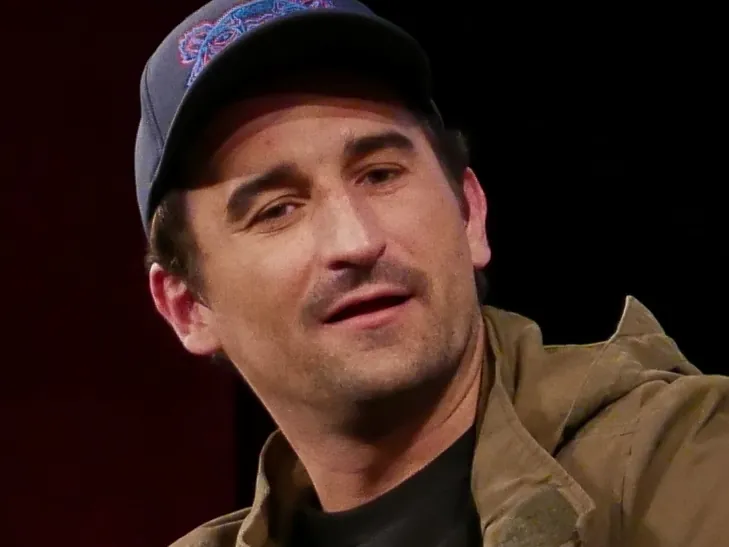 Did Michał Koterski have a hair transplant? Yes, and he told his fans himselfMichał Koterski told fans in December 2021 that he was having a hair transplant. What he said, how the procedure works and why new hair takes months.
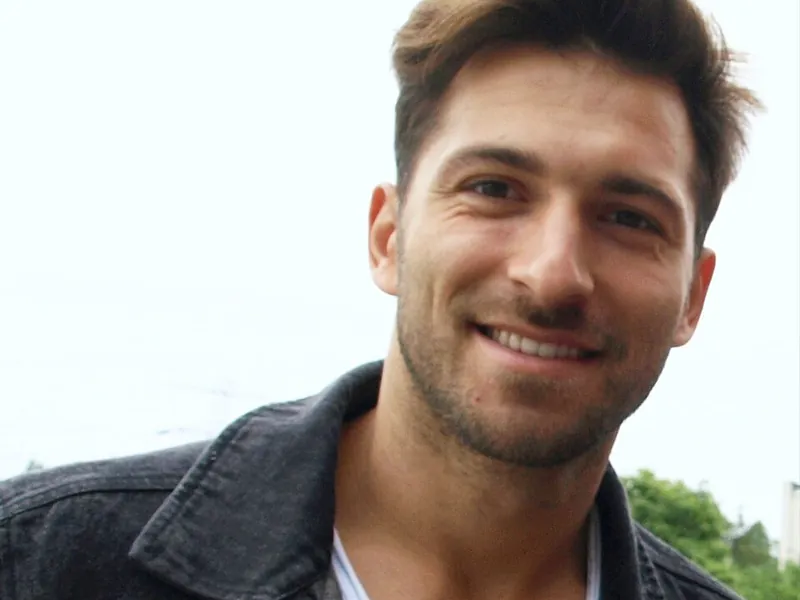 Did Rafał Maślak have a hair transplant? Yes, and he told the whole story himselfMister Poland 2014 Rafał Maślak spoke about his hair transplant in a long video. What he said, how the procedure works and how results develop over months.
Written by Anastasia A. Kolesnik, plastic surgeon, hair transplant doctor
Medically reviewed by Ellina V. Goncharova, dermatovenereologist, trichologist, surgeon. Review date:
How we prepare and review medical content · Medical disclaimer
Poznań had 536,151 inhabitants at the end of 2024 (the city itself; the metropolitan area counts 1,029,021), and a person in Poznań who looks at thinning hair has one first question: will an operation actually help me? The doctor's first job is to say honestly whether surgery will help. Androgenetic or diffuse thinning and bald zones with a receding frontal area are the reasons the clinic gives for going ahead.
The reasons against form a long list: trichotillomania, body dysmorphic disorder, cancer, age under 18, intolerance to anaesthetics, epilepsy, serious heart disease, diabetes mellitus, a pacemaker, hepatitis B or C, HIV and pulmonary embolism. Each has a different explanation, and the doctor goes through the ones that concern you. Shedding after an illness or because of a hormonal imbalance is a separate matter, and the doctor will tell you when it is better to treat the cause first.
A first opinion costs nothing. Send photographs of the places where the hair has thinned to a coordinator in WhatsApp or Telegram, a doctor reviews them, and nothing is booked until you decide. The coordinators answer at any hour. Take the photographs in even daylight, from the front, from both sides, from above and from behind, and add a line on how long the thinning has gone on and whether anyone in the family has similar loss.
If the answer is positive, the donor area is examined, grafts are counted, and a realistic result is described. The grafts come from the back of the head or the temples, and the operation is done under local anaesthesia, finishing within one day.
The National Health Fund, the NFZ, is the public body that finances health care in Poland. For cosmetic and aesthetic treatments the picture is clear in Polish medical journalism: Medycyna Praktyczna, in an interview with a plastic surgeon, says that reconstructive, reparative and post-trauma plastic surgery is reimbursed, while procedures that only improve appearance, such as changing the shape of the nose, are not. The article does not name hair restoration among the reimbursed procedures, so do not assume any cover: ask the NFZ or your own doctor, and get the answer in writing.
That does not make your own doctor irrelevant. Several of the conditions on the clinic's exclusion list, such as diabetes, a heart condition or epilepsy, are worth discussing with the doctor who knows your history before any surgery.
Poland has a Central Register of Physicians kept by the Polish Chamber of Physicians, Naczelna Izba Lekarska. Its website links directly to a lookup labelled in Polish as a check for a doctor or dentist, at rejestr.nil.org.pl, and publishes the rules for verifying a doctor's right-to-practise number. Before choosing a surgeon for any procedure it is reasonable to spend a minute there.
Note the surgeon's name, the specialty shown in the register and the date of your check. Then ask the coordinator for the medical licence number, the legal entity that provides the care and the diplomas and certificates of the doctors; the clinic says you can check all of this before you pay.
The clinic works with three approaches. FUE takes grafts without a cut, with a tweezer; DHI implants them directly with a Choi pen, skipping the making of channels; the combined protocol takes grafts by FUE and places them by DHI. No method is better in the abstract. The question is which fits your pattern of loss, your donor area and the density you hope for, and the answer should be written in the plan, with the reasons.
Ask the surgeon to explain in your words, not in brochure words, why the chosen method suits you and what the alternative would change. If you were offered one approach in the first message and another after the examination, ask what changed. A change after examination is natural, since the donor area is judged by looking at it. A change in the answer to the same question on the same day is not.
Ask also what the day itself looks like. The operation is completed within a single day, with local anaesthesia, and you go home afterwards. Find out who will be with you in the operating room, who removes the grafts and who places them, and whether the doctor you meet at the consultation is the doctor who operates. The clinic says that it is.
Beard and eyebrow transplants use the same grafts from the back of the head and the same FUE method, and only the area changes. If you are thinking about a second zone, put both on the table from the beginning, so that the donor area is planned as a whole and not spent twice.
The cost and the plan both depend on the graft count, and the count is made at the consultation, after the donor zone has been inspected and a realistic outcome explained. Ask for the result in writing: the zones to be covered, the number of grafts that the doctor proposes, the part of the scalp they come from and the density the surgeon considers achievable. A number without an area is not a plan.
A thoughtful report also says what is not promised. Transplanted hairs shed in the second to fourth weeks as a normal stage and the follicles stay in place, so a patient who knows this does not panic at the mirror in week three. Ask what happens to the donor area, how it will look in the first days, and what the care plan covers for both zones.
Ask whether you may keep any photographs taken at the consultation. They are the only fair comparison with the result a year and more later, and they make the later conversations concrete. A surgeon who takes such pictures and shares them is working in the open.
Finally, ask how the plan changes if you do not want to go as far as proposed. A modest first stage with the option of a second one is a legitimate request, and a good team can describe both versions without pressure.
The clinic reviews you at 1, 3, 6, 9 and 12 months, and a personal coordinator follows your photographs and messages in between. The stages are 0–10 days of healing, a shedding phase in weeks 2 to 4, regrowth from months 3 to 4, thickness at months 6 to 9 and a final result at 12 to 18 months. Treat the first year as a project with five meetings, and put each in your own calendar when the date is fixed.
The inclusions are practical: dressings and healing checks, a care plan for the transplant and donor areas, guidance on hair washing, sleep and headwear, and a plan for returning to sport and hair care. Ask for these instructions in writing before the day and read them with someone close to you. Instructions given in a hurry on the day are the easiest ones to forget.
Agree on how you will photograph yourself. Use the same room, the same distance and the same angles every month, and send the pictures to the coordinator when asked. Without such a series, a thinning crown that is slowly filling in looks the same every morning, and the improvement is easy to miss.
Keep all papers in one place: the contract, the receipts, the plan with the graft count, the care instructions and the dates of the visits.
Yes. Send photographs of the thinning areas to a coordinator on WhatsApp or Telegram, a doctor reviews them, and nothing is booked until you decide. The first assessment is free.
Medycyna Praktyczna, quoting a plastic surgeon, says that reconstructive and post-trauma plastic surgery is reimbursed while procedures that only improve appearance are not. It does not name hair restoration among them, so do not assume any cover and get a written answer from the NFZ or your physician.
The Polish Chamber of Physicians keeps a Central Register of Physicians, and its website links to the lookup at rejestr.nil.org.pl. Note the surgeon's name, specialty and the date you checked.
Ask the surgeon which method fits your pattern of loss and donor area, and ask for the reason in writing. FUE extracts grafts without cutting; DHI implants them with a Choi pen; the combined protocol uses FUE to take and DHI to place.
The zones to be covered, the proposed number of grafts, the donor area they come from and the achievable density. Ask also for the photographs taken at the consultation, to compare with later pictures.
Guidance on hair washing, sleep and headwear, the care plan for the transplant and donor areas, and a plan for returning to sport and hair care. Ask for them before the day of the operation.
At 1, 3, 6, 9 and 12 months, with photographs and messages to your personal coordinator between the visits.

 Forceps
 Minimal


