before
12 months later
2,800 grafts
FUE method
City Medical Centre
0% instalments
from $367/mo
Consultation and quote — $0.
Real case
before
12 months later
With FUE there are no cuts or stitches. Grafts and the forecast calculated free of charge — before you decide.
Free online consultation · Reply within 15 minutes
Free of charge, no surgery booking required
Message our coordinator
Free online consultation · Reply within 15 minutes
Message us on TelegramMessage us on WhatsAppBy messaging us, you agree to our Privacy Policy
Hair transplant for patients from Salem at City Medical Centre starts at ₹215,000 (from $2,200). The first online consultation is free; the doctor names the final price and it is fixed in the contract.
How it works · Hair transplant prices
Information current as of 5 November 2026
results
Each of the cases is a real CMC patient.
before
12 months later
2,800 grafts
FUE method

before
12 months later
3,500 grafts
FUE method

before
12 months later
2,600 grafts
FUE method

before
12 months later
3,000 grafts
FUE method

before
12 months later
2,700 grafts
FUE method

before
12 months later
3,300 grafts
FUE method

before
12 months later
2,900 grafts
FUE method

before
12 months later
2,500 grafts
FUE method

before
12 months later
3,400 grafts
FUE method

before
12 months later
2,500 grafts
FUE method

before
12 months later
3,100 grafts
FUE method

before
12 months later
3,600 grafts
FUE method

before
12 months later
4,000 grafts
FUE method

before
12 months later
3,200 grafts
FUE method

before
12 months later
3,000 grafts
FUE method

before
12 months later
3,700 grafts
FUE method

before
12 months later
2,700 grafts
FUE method

before
12 months later
3,800 grafts
FUE method

before
12 months later
3,300 grafts
FUE method

before
12 months later
2,800 grafts
FUE method

before
12 months later
2,500 grafts
FUE method

before
12 months later
3,900 grafts
FUE method

before
12 months later
3,500 grafts
FUE method

before
12 months later
3,800 grafts
FUE method

before
12 months later
2,900 grafts
FUE method

before
12 months later
3,600 grafts
FUE method

before
12 months later
2,600 grafts
FUE method

before
12 months later
2,700 grafts
FUE method

before
12 months later
3,700 grafts
FUE method

before
12 months later
3,200 grafts
FUE method

before
12 months later
3,000 grafts
FUE method

before
12 months later
2,800 grafts
FUE method

before
12 months later
4,000 grafts
FUE method

before
12 months later
3,400 grafts
FUE method

before
12 months later
2,900 grafts
FUE method

before
12 months later
3,100 grafts
FUE method

before
12 months later
2,600 grafts
FUE method

before
12 months later
3,300 grafts
FUE method

before
12 months later
3,900 grafts
FUE method

before
12 months later
3,500 grafts
FUE method

before
12 months later
2,700 grafts
FUE method

before
12 months later
3,800 grafts
FUE method

before
12 months later
3,200 grafts
FUE method

before
12 months later
3,000 grafts
FUE method

before
12 months later
2,800 grafts
FUE method

before
12 months later
3,100 grafts
FUE method

before
12 months later
3,600 grafts
FUE method
Comparison
There are three graft transfer technologies to pick from: classic FUE, suture-free DHI and a combined protocol. Compare the implantation technique, the tissue trauma and the graft survival of each.
Classic technique without incisions or stitches

$2,200
$2,700
Graft implantation technique
ForcepsGraft trauma
MinimalNatural hair growth angle
NaturalGraft survival
98–100%Suitable for
Androgenetic alopeciaSuture-free placement with a Choi pen

$2,500
$2,900
Graft implantation technique
DHI, a Choi implanterGraft trauma
MinimalNatural hair growth angle
NaturalGraft survival
98–100%Suitable for
DensificationExtraction by FUE, DHI implant

$2,700
$2,900
Graft implantation technique
FUE extraction with DHI implantGraft trauma
MinimalNatural hair growth angle
NaturalGraft survival
98–100%Suitable for
Androgenetic alopecia and densificationSurvival and trauma figures come as method averages, as a reference point: the exact numbers depend on the transplant area and the patient's individual features, and the doctor clarifies them at consultation.
Book a consultation


















about the clinic
Comfortable rooms and modern equipment, care for each patient

We will answer your questions and find a consultation time that suits you
TelegramMessage us on TelegramMessage us on Telegram Message us on WhatsApp Choose a messengerIf there is a non-surgical way to solve your case, the doctor says so at the consultation — and you will not waste your money. Below are the conditions in which a transplant works.
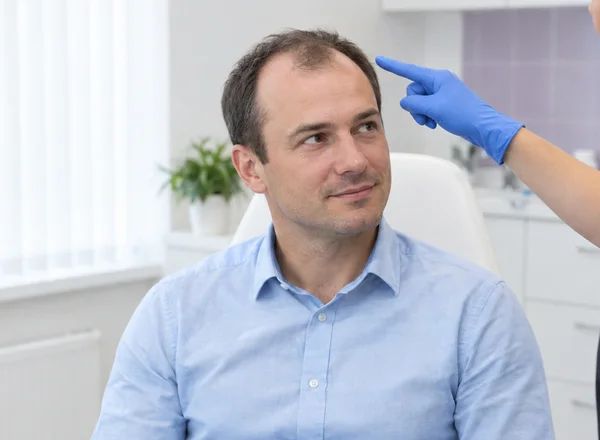

Send your number - a coordinator requests photos in a messenger, the doctor replies whether a transplant helps. Free, no booking.

services
The price is set at the free consultation, after the grafts are counted, and fixed in the contract.
suture-free graft extraction

$2,200$2,700
or $367/mo — 0% instalments for 6 months
Lock in the priceimplantation without channels

$2,500$2,900
or $417/mo — 0% instalments for 6 months
Lock in the pricecombined technique

$2,700$2,900
or $450/mo — 0% instalments for 6 months
Lock in the price| Initial consultation | Free |
|---|---|
| Eyebrow transplant, FUE | |
| Beard transplant, FUEinstalments $467/mo | |
| Hair trichopigmentation | |
| PRP therapy / session | $200 |
all included
From preparation for surgery up to 12 months after.
No additional charges on the day of surgery.
two more areas
Beyond the scalp too: the same grafts from the back of the head, the same FUE method — only the area changes.
FUE method, free of cuts or stitches

Grafts are taken from the donor area at the back of the head and moved through micro-punctures of about 1 mm — no scars are left. The doctor discusses the shape with you before the operation, taking your facial features into account. Transplanted hair grows for life: the beard can be trimmed and styled as usual.
$2,800$3,000
or $467/mo — 0% instalments for 6 months
Lock in the priceFUE method, free of cuts or stitches

The eyebrow shape comes from the surgeon at the initial consultation: you look through references together and the design accounts for your facial features. The hairs are implanted at the right angle, so the eyebrows look natural. It also helps where years of plucking stopped hair growth.
$1,600$1,700
a day procedure done under local anaesthesia
Lock in the priceThe doctor will examine your donor area, count the grafts and show what result is achievable in your case. The cost is named at the consultation and fixed in the contract.

Message our coordinator
Free online consultation · Reply within 15 minutes
Message us on TelegramMessage us on WhatsAppBy messaging us, you agree to our Privacy Policy
Process
Comfortable rooms and modern equipment, care for each patient

At no cost, the doctor uses the initial consultation to explain FUE and DHI, answer your questions, and outline an individual surgical plan.

The date is booked once a deposit is paid — by card at the clinic or online — and the conditions are set down in a medical services contract.

The clinic gives you everything needed to prepare — a list of required tests and instructions — before the transplant takes place.

Local anaesthesia is used throughout, keeping the surgery painless from start to finish.

The donor zone at the back of the head or the temples supplies the grafts, taken without any stitching required.

The grafts are implanted into the balding area, completing the surgical part of the procedure.
The clinic provides everything you need, along with complete instructions, to support a fast recovery.

The crusts fall off, the swelling reduces, the area slowly recovers

A normal stage. Only the hairs shed, the follicles stay in place

New hairs arrive gradually, the result starts to show

Thicker hair, with the main volume and the contour now visible

The final thickness and natural hairline take shape

Free, before surgery and with no obligations.
Book a consultationdoctors

Hair transplant doctor and trichologist

Dermatovenereologist, trichologist, surgeon
11 years of experience

Plastic surgeon
9 years in practice

Plastic surgeon
9 years in practice

Assistant
9 years in practice
The doctor will examine your donor area, count the grafts and say what result is possible.
Book a consultationcoordinators
A personal coordinator guides you from your first enquiry all the way to recovery.

Patient care specialist
Supports you both before and after surgery
Will help with papers and bookings
Patient care specialist
Supports you both before and after surgery
Will help with papers and bookings

Patient care specialist
Supports you both before and after surgery
Will help with papers and bookings
Patient care specialist
Supports you both before and after surgery
Will help with papers and bookings













We will answer your questions and find a consultation time that suits you
TelegramMessage us on TelegramMessage us on Telegram Message us on WhatsApp Choose a messengerReviews
I was having trouble with my hair. I came here and got a hair transplant. The results was awesome thank you
Review on Google
І experienced hair loss due to COVID and turned to this clinic; they helped me and performed a hair transplant, moving hair from the back of my head to my temples. Thank you.
Review on Google
I traveled to City Medical Centre, where they helped me overcome hair loss through a transplant to the balding areas of my scalp. I am grateful to the doctors for performing the procedure painlessly.
Review on Google
I am sharing my experience, because before the operation I went through a pile of reviews myself and was looking for real stories. I had a beard transplant six months ago. Honestly, in the first days after the procedure I felt a little jittery: my face looked unfamiliar, there was slight swelling and small scabs. In the first couple of months the hair partly fell out, as the doctor had warned. But now the result truly makes me very happy) From about the 4th month active, even growth began. The transplanted hair took very well, the beard now looks as natural as possible, no bald patches are left. The beard became much thicker and denser, with the shape I had thought about for a long time. All in all, I recommend the clinic, the doctor was polite and explained everything 👍 The result is definitely worth it!
Review on Google
I traveled to this clinic and do hair transplant, very good quality and cheap. Good doctors
Review on Google
I do hair transplant here very good doctors!!
Review on Google
Frequent questions
People often say hair implants, but no artificial hair is used. In a hair transplant the doctor moves your own follicles (grafts) from the donor area to thinning or bald areas using FUE or DHI.

Yes. City Medical Centre accepts patients from other cities and countries, and an online consultation is available before you decide.
FUE costs $2,200 (≈ ₹215,000), DHI costs $2,500 (≈ ₹245,000), and the combined DHI+FUE method costs $2,700 (≈ ₹265,000). The exact amount is confirmed at a free consultation after your grafts are counted, and it is fixed in the contract.
The whole operation is completed in one day, with no overnight stay needed.
It helps with stable pattern hair loss and a receding hairline when there are enough donor grafts. Some types of alopecia need treatment first; the doctor checks this at the consultation.
No pain during the procedure, thanks to local anaesthesia.
With FUE, grafts are taken by tweezer with no incisions. With DHI, grafts are implanted directly using a Choi pen, without pre-made channels. The combined method mixes FUE harvesting with DHI implantation.
The number of grafts is assessed for free by the doctor, based on how much donor hair you have.
First comes 0–10 days of healing, then shedding at 2–4 weeks (a normal stage). Growth starts at 3–4 months, density is clear by 6–9 months, and the final outcome shows at 12–18 months.
A contract-backed, lifetime guarantee of hair growth comes with every procedure.
There is a medical licence, and care is provided to the standards and clinical guidelines
of the Ministry of Health.

Diplomas and certificates of the doctors operating on you
View the documentsAKC POMOSHCH LLC
the clinic's legal name
1057746096924
OGRN
7728536872
INN
A hair transplant by FUE or DHI works for a resident of Salem exactly as it does for anyone else: no cuts, no stitches, local anaesthesia, one day. Graft survival reaches 98-100 %, and a price from $2,200 (≈ ₹215,000) is written into the contract after a free graft count.
A resident of Salem can settle the main question from the sofa: the free online consultation shows the doctor your thinning area in photos and produces a graft count. The clinic is on the line 24/7, with no waiting list.
Timeline after surgery: healing 0-10 days, shedding of the transplanted hairs 2-4 weeks and it is normal, growth 3-4 months, density 6-9, final result 12-18. A personal coordinator tracks it all by photo with check-ups at 1, 3, 6, 9 and 12 months, and the contract gives a lifetime growth guarantee.
Prices are in US dollars; the amount in brackets is an approximate conversion to INR at the rate of 02.10.2026. The final price is fixed in your contract.
By messaging us, you agree to our Privacy Policy
Well-known people who openly discussed this operation, in their own words.
Written by Anastasia A. Kolesnik, plastic surgeon, hair transplant doctor
Medically reviewed by Ellina V. Goncharova, dermatovenereologist, trichologist, surgeon. Review date:
How we prepare and review medical content · Medical disclaimer
Salem, the administrative centre of its district in Tamil Nadu, had 829,267 residents in the 2011 census, with an urban agglomeration of 917,414. It lies 278 m above sea level and has a tropical climate with high humidity. The mean daily maximum is 32.1 °C in January, 37.8 °C in April, 37.1 °C in May and 34.1 °C in July, with minimums between 19.3 °C and 25.2 °C. Summer runs from March to May, and the highest temperature on record is 42.8 °C, reached in April, May and June. Annual rainfall averages 992.5 mm, delivered in nearly equal parts by the southwest and northeast monsoons.
Humidity swings as much as temperature. The annual average early-evening relative humidity is 52 per cent, but it ranges from 33 per cent in March to 67 per cent in October. Temperatures begin to drop in mid-June as the monsoon arrives. So the dry, hottest stretch of the year and the wet months differ not only in rainfall but in how the air feels on a healing scalp, which is a good topic for the first conversation with the doctor.
A hair transplant is not an operation that is finished in a day, and the best way to see that is to lay the clinic's timeline over this climate. After surgery come 0–10 days of healing, when the crusts fall off and the swelling reduces. At 2–4 weeks the transplanted hairs shed, a normal stage in which only the hairs fall out while the follicles stay in place. Growth starts at 3–4 months, visible density arrives at 6–9 months, and the final thickness takes shape at 12–18 months.
Now count it forward from a few start dates. An operation in January means shedding in February, the first new growth in April or May, in the hottest weeks of the year, visible density between July and October, and a final result between January and July of the following year. An operation in July moves the first healing days into a month with a mean maximum of 34.1 °C, and growth starts around October or November. Neither is better; the point is to know what the weather will be at each stage.
The clinic's care plan covers exactly the practical items that a hot climate makes relevant: how to wash your hair, how to sleep and how to choose headwear, plus a plan for returning to sport and for hair care. Ask the doctor about each of them for your own working week, so that the advice fits the months you have chosen.
In February 2026 the Tamil Nadu Medical Council issued a public notice, reported on 14 February, clarifying who may perform aesthetic and cosmetology procedures on skin and hair, including hair transplantation and laser treatments. Only Registered Medical Practitioners with recognised medical qualifications and valid registration with the state medical council may do so. The notice invokes the NMC Act, 2019, and refers to guidelines on aesthetic procedures in skin and hair issued by the national regulator's Ethics and Medical Registration Board on 20 September 2022.
Those guidelines recommend an MCh or DNB in plastic surgery, or an MD or DNB in dermatology, with adequate training in dermatological surgery, for hair transplantation. The reasoning is plain: hair transplantation involves surgery, with incisions for graft extraction or at the recipient sites, even when robotics are used, and it is not an emergency operation. It is also treated as unethical for a registered practitioner to train an unlicensed person to perform or assist such surgery.
The notice adds a point about places. Doctors must perform these procedures only in establishments licensed under the Tamil Nadu Clinical Establishments Act, with informed consent and standard medical records, and state health authorities are to take strict legal action against persons who perform the procedures without recognised qualifications, and against the establishments. Regular inspections of clinics offering such procedures are recommended.
The notice also leans on two further references: an NMC clarification letter to the Telangana State Medical Council dated 13 June 2025, and the Minimum Standards for Cosmetology Clinics prescribed by the Directorate General of Health Services of the Government of India. Taken together they describe one consistent picture: surgery on the scalp is a medical act, performed by a qualified doctor in a licensed place, and patients are entitled to ask for proof of both.
For a patient the useful translation is three questions for any clinic: who exactly will operate, what is that person's qualification, and where is the operation licensed. At City Medical Centre the consultation is with the operating doctor, who examines the donor area, counts the grafts and says what result is possible, and the clinic states that diplomas and certificates of the doctors operating on you can be viewed before you pay.
India's national medical regulator, the NMC, publishes the Indian Medical Register on its website, listing the doctors registered with the various State Medical Councils across India; the register itself says its data is being updated. Entries can be searched by doctor name, year of registration, registration number or State Medical Council, an advanced search combines these, and a result opens as a detailed record that can be printed. A separate page for blacklisted doctors is linked from the search area.
In practice the search is simple. Open the advanced search, combine two or three criteria, for example the registration number with the State Medical Council, and open the result through the detailed record view, which has print and close options. Keep a printout with the date; if the clinic later changes the doctor named in your plan, you can repeat the search for the new name.
A register entry confirms that a person is registered. It does not tell you whether he or she is trained for hair transplantation, which is why the qualification question from the previous section matters. Write down the full name and registration number the clinic gives you, search for them, and compare the qualification listed with what you were told.
If the details do not match, ask the coordinator to explain before you go further. Coordinators are on the line 24/7 on WhatsApp and Telegram, and a reply comes within 15 minutes, so the question does not have to wait for a working day.
The method follows from the situation. With classic FUE, grafts are taken with forceps and placed without incisions or stitches. With DHI, the grafts are implanted with a Choi implanter pen, without pre-made channels. The combined protocol extracts by FUE and implants by DHI. The donor zone is at the back of the head or the temples, and the clinic describes graft trauma as minimal for all three methods. The operation is done under local anaesthesia and takes one day at the clinic.
How many grafts you need is worked out by the doctor from the donor area, free of charge, and the price follows from the count and is fixed in the contract. That order, first the count and then the price, is why the free online consultation starts with photos of the thinning area sent to the coordinator.
If you are unsure which group you fall into, there is a short route: leave your number, the coordinator asks for photos in a messenger, and the doctor replies on whether a transplant helps. It is free and does not require booking. A high frontal area, insufficient hair density, the genetic side of hair growth, the consequences of an injury or a burn, shedding after an illness, and shedding tied to hormonal imbalance are all cases the doctor looks at separately.
A transplant suits stable pattern hair loss, androgenetic or diffuse alopecia, bald patches and a receding frontal area, the consequences of an injury or a burn, and shedding that has settled after an illness or hormonal imbalance. It does not suit trichotillomania, body dysmorphic disorder, cancer, age under 18, epilepsy, serious heart conditions, diabetes mellitus, a pacemaker, HIV or hepatitis B and C, pulmonary embolism or intolerance to anaesthetics. When a non-surgical route would solve your case, the doctor says so at the consultation.
After surgery the personal coordinator tracks the result by photo, with follow-ups at 1, 3, 6, 9 and 12 months. Because the result is tracked by photo, ask the coordinator at the start how the photos should be taken, so that the doctor compares like with like.
The route to the operating day is short and written down. The first consultation is free: the doctor explains FUE and DHI, answers your questions and outlines an individual surgical plan. The date is booked once a deposit is paid, by card at the clinic or online, and the conditions are set down in a medical services contract. You then receive a list of required tests and instructions for preparing.
On the day, local anaesthesia is used throughout. The grafts are taken from the donor zone at the back of the head or the temples without stitching, and then implanted into the area that is thinning or bald, which completes the surgical part. Afterwards the clinic provides everything you need and complete instructions to support recovery, and you go home the same day.
The same logic extends to the beard and the eyebrows. For a beard, grafts from the back of the head are moved through micro-punctures of about 1 mm, with the shape discussed beforehand in light of your facial features. For eyebrows, you and the surgeon look through references together, the hairs are implanted at the right angle so the brows look natural, and the procedure is useful where years of plucking stopped the growth. Both are day procedures under local anaesthesia.
Healing takes 0–10 days. The mean daily maximum is 32.1 °C in January and 37.8 °C in April, so the cooler months need less planning around heat. The doctor confirms the care plan for your case.
Counting from the clinic's timeline, shedding falls in February, growth begins at 3–4 months, around April or May, and density becomes visible at 6–9 months.
A February 2026 notice from the Tamil Nadu Medical Council says only Registered Medical Practitioners with recognised medical qualifications may perform hair transplantation and aesthetic procedures.
The NMC's Ethics and Medical Registration Board guidelines recommend an MCh or DNB in plastic surgery, or an MD or DNB in dermatology, with adequate training in dermatological surgery.
Use the Indian Medical Register on the NMC website. Search by name, year of registration, registration number or State Medical Council.
The Tamil Nadu notice says these procedures must be performed in establishments licensed under the Tamil Nadu Clinical Establishments Act, with informed consent and standard medical records, and it recommends regular inspections of clinics that offer them. Ask the clinic to show its licence before you pay.
FUE takes grafts with forceps and implants them without incisions or stitches. DHI implants with a Choi pen. The combined method extracts by FUE and implants by DHI.
At 1, 3, 6, 9 and 12 months, with photo tracking by your personal coordinator. The clinic also stays in touch between those dates, so a question about shedding at 2–4 weeks, which is a normal stage, can be sent with a photo.

 Forceps
 Minimal