




Before
12 months out
2,800 grafts
FUE method
City Medical Centre
Free quote
Free consultation and cost estimate.
Real result
Before
12 months out
FUE method, no stitches needed. Graft count and a result forecast estimated and not billed — before you decide.
Nothing is owed, no surgery booking required
Message our coordinator
Free online consultation · Reply within 15 minutes
Message us on TelegramMessage us on WhatsAppBy messaging us, you agree to our Privacy Policy
results
All cases are real City Medical Centre patients.
Before
12 months out
2,800 grafts
FUE method

Before
12 months out
3,500 grafts
FUE method

Before
12 months out
2,600 grafts
FUE method

Before
12 months out
3,000 grafts
FUE method

Before
12 months out
2,700 grafts
FUE method

Before
12 months out
3,300 grafts
FUE method

Before
12 months out
2,900 grafts
FUE method

Before
12 months out
2,500 grafts
FUE method

Before
12 months out
3,400 grafts
FUE method

Before
12 months out
2,500 grafts
FUE method

Before
12 months out
3,100 grafts
FUE method

Before
12 months out
3,600 grafts
FUE method

Before
12 months out
4,000 grafts
FUE method

Before
12 months out
3,200 grafts
FUE method

Before
12 months out
3,000 grafts
FUE method

Before
12 months out
3,700 grafts
FUE method

Before
12 months out
2,700 grafts
FUE method

Before
12 months out
3,800 grafts
FUE method

Before
12 months out
3,300 grafts
FUE method

Before
12 months out
2,800 grafts
FUE method

Before
12 months out
2,500 grafts
FUE method

Before
12 months out
3,900 grafts
FUE method

Before
12 months out
3,500 grafts
FUE method

Before
12 months out
3,800 grafts
FUE method

Before
12 months out
2,900 grafts
FUE method

Before
12 months out
3,600 grafts
FUE method

Before
12 months out
2,600 grafts
FUE method

Before
12 months out
2,700 grafts
FUE method

Before
12 months out
3,700 grafts
FUE method

Before
12 months out
3,200 grafts
FUE method

Before
12 months out
3,000 grafts
FUE method

Before
12 months out
2,800 grafts
FUE method

Before
12 months out
4,000 grafts
FUE method

Before
12 months out
3,400 grafts
FUE method

Before
12 months out
2,900 grafts
FUE method

Before
12 months out
3,100 grafts
FUE method

Before
12 months out
2,600 grafts
FUE method

Before
12 months out
3,300 grafts
FUE method

Before
12 months out
3,900 grafts
FUE method

Before
12 months out
3,500 grafts
FUE method

Before
12 months out
2,700 grafts
FUE method

Before
12 months out
3,800 grafts
FUE method

Before
12 months out
3,200 grafts
FUE method

Before
12 months out
3,000 grafts
FUE method

Before
12 months out
2,800 grafts
FUE method

Before
12 months out
3,100 grafts
FUE method

Before
12 months out
3,600 grafts
FUE method
Comparison
Three technologies transfer the grafts: classic FUE, suture-free DHI and a combined protocol. Study the implantation technique, the tissue trauma and the graft survival, and make an informed choice.
Classic technique without incisions or stitches

On request
Graft implantation technique
ForcepsGraft trauma
MinimalNatural hair growth angle
NaturalGraft survival
98–100%Suitable for
Androgenetic alopeciaSuture-free implantation with a Choi pen

On request
Graft implantation technique
DHI pen (Choi implanter)Graft trauma
MinimalNatural hair growth angle
NaturalGraft survival
98–100%Suitable for
DensificationFUE extraction, DHI pen implantation

On request
Graft implantation technique
FUE extraction + DHI implantationGraft trauma
MinimalNatural hair growth angle
NaturalGraft survival
98–100%Suitable for
Androgenetic alopecia and densificationEach method has averaged survival and trauma figures, given for orientation: the exact numbers depend on the transplant area and the patient's individual features, and the doctor clarifies them at the consultation.
Ask a hair expert


















about the clinic
Modern equipment, comfortable rooms and care for the patient

Ask us anything, we will reply.
Message us on Telegram Message us on WhatsApp Submit the formNobody will push you towards an operation you do not need — the doctor says it at the consultation, and nothing is spent for nothing. The situations where a transplant genuinely helps are set out below.
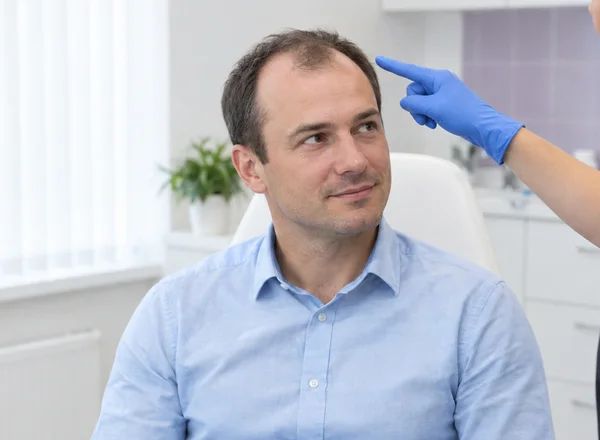

Write to us in WhatsApp or Telegram. A coordinator will request pictures of the thinning zone through a messenger, and a doctor reviews them and tells you whether a transplant would help. No fee, no obligation to book.

services
Grafts are counted at the free consultation, then the cost is named and fixed in the contract.
| The doctor's first look | Free |
|---|---|
| Eyebrow transplant, FUE | On request |
| Beard transplant, FUE | On request |
| Hair trichopigmentation | On request |
| PRP therapy / session | On request |
all included
Planning beforehand and 12 months of follow-up after.
No unplanned charges on the day of surgery.
another two zones
Different zone, same procedure: grafts taken from the back of the head, the FUE method, no other difference.
FUE method, no incisions or stitches

Grafts are taken from the donor area at the back of the head and moved through micro-punctures of about 1 mm — no scars are left. The doctor discusses the shape with you before the operation, taking your facial features into account. Transplanted hair grows for life: the beard can be trimmed and styled as usual.
On request
Pin the price downFUE method, no incisions or stitches

The surgeon draws the brow outline at the very first consultation: you look over sample images together, and your face shape decides the design. Every hair is placed to follow the angle of natural growth, which keeps the result believable. Brows thinned by years of plucking are helped too.
On request
a day procedure done under local anaesthetic
Pin the price downYou see the state of your donor zone, the number of grafts and the result it allows. The cost follows from the count, is named at the consultation and fixed in writing.

Message our coordinator
Free online consultation · Reply within 15 minutes
Message us on TelegramMessage us on WhatsAppBy messaging us, you agree to our Privacy Policy
Process
From consultation to going home — all in one day

At this first meeting, the doctor walks you through both the FUE and DHI methods, addresses any questions you have, and designs a surgical plan built around your case — at no cost.

The date is booked once a deposit is paid — by card at the clinic or online — and the conditions are set down in a medical services contract.

Ahead of surgery, a series of tests is required, and the clinic hands you the exact list along with instructions on how to complete it.

The patient receives local anaesthesia, allowing the surgery to proceed painlessly.

Follicles are lifted out of the donor zone, at the back of the head or by the temples, and nothing is stitched.

Surgeons transfer every collected graft into the area that has gone bald.
For patients in Ait Melloul, everything required for healing is provided, with instructions explaining its use.

The crusts come away, the swelling eases, the area gradually recovers

Normal stage — only the hairs fall out, the follicles stay in place

New hairs emerge gradually, the result shows

The hair becomes thicker, the main volume and outline are visible

You see the full volume and a convincingly natural edge

Free, ahead of surgery, with no commitment.
Ask a hair expertdoctors

Hair transplant doctor, trichologist, surgeon
10 years of experience

Dermatovenereologist, trichologist, surgeon
11 years of experience

Plastic surgeon
9 years of experience

Plastic surgeon
9 years of experience

Assistant
9 years of experience
The doctor assesses the donor zone, counts the grafts and describes the outcome.
Ask a hair expertcoordinators
One named coordinator works with you from the moment you write until recovery is over.

Patient services lead
Will accompany you before and after surgery
Deals with all your papers and time slots

Patient services lead
Will accompany you before and after surgery
Deals with all your papers and time slots

Patient services lead
Will accompany you before and after surgery
Deals with all your papers and time slots
Patient services lead
Will accompany you before and after surgery
Deals with all your papers and time slots













Usual things asked

Yes. Enquiries from distant cities and distant countries are handled every day, and the doctor's first look happens online.
The exact amount is confirmed at a free consultation after your grafts are counted, and it is fixed in the contract.
The session runs a single day and ends with you going home.
It does not hurt — the scalp is fully numbed with a local anesthetic.
In FUE, grafts are harvested with a tweezer, no cuts or stitches involved. In DHI, a Choi pen implants grafts without opening channels first. The combined method pairs FUE harvesting with DHI implantation.
It is determined individually: the doctor examines the donor area and names the figure at a free consultation.
0–10 days for healing, 2–4 weeks for normal shedding of transplanted hair, 3–4 months for new growth to start, 6–9 months for real density, and 12–18 months for the final result.
A lifetime guarantee of hair growth is included, confirmed in your contract.
The clinic works under a medical licence, care is provided to the standards and clinical guidelines
of the Ministry of Health.
Someone in Ait Melloul does not need a ward bed for this. FUE and DHI work without incisions and without sutures, the area is simply numbed with local anaesthesia, and the whole thing is done between morning and evening of the same day.
Nothing has to be arranged in advance to start in Ait Melloul. The online consultation is free: the doctor studies photos of the thinning area and counts the grafts needed. The clinic is in touch 24/7, so you write when it suits you.
Plan on 0-10 days of healing, then a normal shedding of the transplanted hairs at 2-4 weeks, then patience until 3-4 months, which is when growth begins and the whole undertaking starts to look worthwhile.
The cost is calculated individually after a free online consultation. Write to us on WhatsApp or Telegram.
By messaging us, you agree to our Privacy Policy
Ait Melloul is a city on the west coast of Morocco, in the suburban area of Agadir, just southeast of Inezgane, on the southern bank of the Sous River. According to the 2024 census it is home to 210,870 inhabitants and 53,781 households, and it is the most populous city in Inezgane-Aït Melloul Prefecture. It grew from a small village into a busy urban centre where the roads serving the south meet, and many people here spend their day working, trading, studying or driving between neighbouring towns.
A hair transplant by the FUE or DHI method is a decision that sits inside this daily rhythm. It touches your work schedule, your family calendar, the way you cover your head in the sun and wind, and the way you plan sport. This text is written for people in Ait Melloul who want to understand how the procedure fits into local life before they send a first message.
The operation itself is carried out at the clinic in Rabat, Morocco. The first step, however, happens at home: a free online consultation with a coordinator who is available around the clock, 24/7, on Telegram and WhatsApp. You can ask your first questions from your own living room, in your own language, at any hour that suits your shift or your family.
The climate of Ait Melloul is mild and temperate in general, sometimes hot and dry. It is shaped by air currents from the Atlantic Ocean, while dry currents from the south and hot winds from the Sahara also influence temperature. For a person with fresh grafts this mix matters, because sun, dry air and wind all reach the scalp.
In the first days the treated area and the donor area are sensitive. General advice is to avoid direct sun on the head, to avoid dusty places and to follow the washing routine your surgeon gives you. On a windy day with Saharan air, dust and dryness can irritate the scalp, so ask the team exactly how to protect it and what kind of headwear is suitable, because a tight cap can rub the grafts.
The healing period covers about 0–10 days. During this time plan your routine around shade, calm days and clean surroundings rather than around outdoor errands. Because the city lies close to the Atlantic coast, the sea is tempting, but salt water, sand and crowded beaches are not something to improvise with after surgery. Ask your doctor when swimming in the sea or in a pool becomes appropriate for you and follow that answer, not a neighbour's advice.
Many people ask whether there is a best season. In a place with sun and occasional hot, dry winds, the main question is how much time you will spend outdoors in the first weeks. Choose a period when you can limit direct sun, avoid dust and take it easy without pressure from work or events.
Think about the calendar of your family and community: weddings, holidays, graduations and gatherings. The early stage includes visible redness and small crusts, and the transplanted hairs let go during weeks 2–4, which is expected shedding. If you have an important event, plan the operation so that the first weeks pass before it, and remember that the final look needs time.
The timeline you can use as a guide is simple: 0–10 days for healing, 2–4 weeks for normal shedding of transplanted hair, 3–4 months for new growth to start, 6–9 months for real density, and 12–18 months for the final result. Count from your operation date and mark the months on a calendar at home.
Ait Melloul is a service centre for the wider Souss area, so many residents have jobs that involve customers, driving, shops, workshops or offices. A student at the university campus attached to Ibn Zohr University, opened in 2015, has a different schedule from a trader or a driver. Each of them should tell the coordinator what a normal week looks like so the surgeon can advise on a sensible return.
If your work is indoors and calm, returning is usually easier than if you work outside in dust, heat or among heavy machinery. Ask the surgeon directly which tasks to avoid at first and for how long, and which signs mean you should write to the coordinator. Do not rely on guesses from friends who had a different technique or different hair.
Students can plan the operation around a lighter period of lectures and exams, and wear loose headwear that does not press on the grafts if the surgeon allows it. Anyone who works in front of people should remember the early stage: redness and crusts fade, and the shedding in weeks 2–4 is part of the normal path, not a sign of failure.
Football is part of the life of the city. Union Aït Melloul plays in the second division of Moroccan football and the municipal stadium can host up to 5,000 fans. Many local men also play casual matches with friends, which makes the question of sport after a transplant very practical.
Heading the ball, collisions, sweat and sun are all concerns for a scalp that is healing. Ask the surgeon when you can resume running, the gym, football and swimming, and follow the dates given to you in writing. Do not return to contact sport on your own schedule, and do not watch a match from the sun-exposed stands without covering advice from your doctor.
A good approach is to tell your coordinator about your sport at the first consultation. The team can then explain the stages, from light walking to full training, and you can plan around your own team's matches or your gym routine.
The Souss region has a strong Amazigh identity alongside Arab influences, and the Tachelhit language is widely spoken next to Moroccan Arabic. Family gatherings, shared meals and local festivals are central to social life. After a transplant, these occasions deserve a plan.
Large family meals are usually fine in themselves, but crowded rooms, hot kitchens and steam, and close greetings can be uncomfortable in the first days. Tell relatives in advance that you are healing and ask them not to touch your head. If you are invited to a celebration soon after the operation, discuss with the surgeon whether you should attend and how to protect the scalp.
Daily habits matter too. Sleep in the position your doctor advises, keep your hands clean, avoid scratching and avoid products that were not recommended. Good food and enough water support general recovery, but no diet replaces the instructions you receive.
In general terms, a candidate is someone whose hair loss has been assessed, who has enough healthy hair in the donor area at the back of the head and who has realistic expectations. Younger patients with unstable hair loss may need a conversation about the pattern of loss and the plan for the future.
Some conditions call for caution or a delay: active scalp disease, uncontrolled chronic illness, certain blood problems or medicines that affect healing. Your online consultation is where you share your medical history honestly. Never hide a diagnosis or a medicine to speed up the process.
Grafts are taken from the back of the head, the donor area, and moved through micro-punctures of about 1 mm, so nothing scars over. The doctor discusses the shape with you before the operation, taking your facial features into account. The same approach applies to beard work: transplanted hair grows for life, so you can trim and style the beard as usual.
You write to a coordinator on Telegram or WhatsApp from home. You send clear photos of the front, the top, the sides and the back of the head, and describe your history, your medicines and your goals. The consultation is online and free, and a coordinator will be on the phone 24/7.
Then the doctor evaluates your case and discusses the plan, including the line, the density and the technique, FUE or DHI. The operation takes place at the clinic in Rabat, Morocco. We stay with you from pre-op planning to 12 months later, with check-ups at months 1, 3, 6, 9 and 12.
Use the consultation to prepare your list of questions, and take your time. A serious team does not push you to decide on the first day.
Patients from Ait Melloul often start with practical worries rather than medical ones. Will colleagues notice? How many days off do I need to plan? Can I keep my usual week in a busy suburban city where people move constantly between Inezgane, Agadir and home? These are good questions, and they are better answered in the online consultation than guessed at from forum posts.
Another common question is whether FUE or DHI suits a particular head of hair. The answer depends on the density of the donor area, the area to be covered and the shape you want. Send clear photos in daylight and be ready to describe how long the hair loss has been going on. The doctor can then explain which technique fits and why.
Many people also ask what is normal in the first weeks. Redness, small crusts and the shedding of transplanted hairs in weeks 2–4 are expected. Knowing this beforehand removes a lot of anxiety, especially if a relative or neighbour sees you in the middle of that stage and comments.
Prepare a short written list before the consultation. Ask who will plan the hair line and how the shape is chosen for your face. Ask how many sessions the plan may need, which area is the donor area and how it will look afterwards. Ask what the first night at home should look like and which signs mean you should write to the coordinator at once.
Ask also about the practical details of life in a warm, sunny part of Morocco: how long to avoid direct sun, which headwear is suitable, when washing starts and how it is done, and when the sea or a pool is allowed. Ask for dates in writing for sport and for returning to physical work.
Finally, ask what the follow-up looks like. We stay with you from pre-op planning to 12 months later, with check-ups at months 1, 3, 6, 9 and 12. A clear follow-up plan matters as much as the operation day, because the final look settles 12–18 months after surgery.
Ait Melloul belongs to the Souss-Massa region, which is known for its Atlantic coast, tourism around Agadir and irrigated farmland that produces citrus fruit. Many families in the wider area have ties to farming, trade or services, and the working day often begins early and includes time outdoors.
If your work or family business keeps you in the fields, a market or a yard, speak openly about it. Dust, sun and sweat are the main enemies of a healing scalp, so the coordinator and surgeon can help you choose a calm period or arrange lighter tasks for the first days.
The region also has a strong tradition of music, festivals and craft, with the Tachelhit language heard everywhere beside Moroccan Arabic. Local festivals and gatherings are a pleasure, but in the early stage choose carefully: avoid crowds, heat and close contact until the surgeon says the scalp can cope.
A transplant moves your own hair; it does not create new donor hair. That is why planning the shape and the number of grafts is a conversation about the long term. A younger person with ongoing hair loss should ask how the plan will look in the years ahead.
Photos of other people are only a rough guide. Hair thickness, curl, colour and the density of the donor area all change the outcome. Ask the doctor to explain what is realistic for your case, and be wary of anyone who promises the same result for everyone.
Patience helps. The months between the shedding stage and the visibly thicker stage at 6–9 months can feel slow, and this is exactly when many people lose confidence. Keep your monthly photos, keep your check-ups and write to the coordinator if something worries you.
Results take time, and patience is the main skill. In weeks 2–4 the transplanted hairs let go, as expected. From 3–4 months hair comes back, by 6–9 months it looks visibly thicker, and the settled look arrives 12–18 months after surgery.
One patient described it this way: from about the 4th month active, even growth began, the transplanted hair took very well, and the beard now looks as natural as possible with no bald patches left. It became much thicker and denser, with the shape he had thought about for a long time. This is one personal experience, and each person's course differs.
Take photos at the same light and angle each month, and compare them at the check-ups. That helps you and the doctor judge progress honestly.
Yes. The first consultation is online and free. You write to a coordinator on Telegram or WhatsApp, and coordinators are available 24/7. The operation itself is done at the clinic in Rabat, Morocco.
They matter in the early stage. Hot, dry winds and dust can irritate a healing scalp, so protect it from direct sun and dust, and ask your surgeon which headwear is suitable and for how long.
Transplanted hairs let go in weeks 2–4, which is expected. New growth starts in 3–4 months.
Hair becomes visibly thicker at 6–9 months, and the settled look comes 12–18 months after surgery.
The healing stage covers about 0–10 days. Plan calm days with limited sun and dust during this time.
Not right away. Ask the surgeon for the dates for running, gym, contact sport and swimming, and follow them. Tell the coordinator about your sport at the first consultation.
We stay with you from pre-op planning to 12 months later, with check-ups at months 1, 3, 6, 9 and 12.
Grafts are taken from the back of the head and moved through micro-punctures of about 1 mm, so nothing scars over.
Yes. The doctor discusses the shape with you before the operation, taking your facial features into account. Transplanted hair grows for life, so you trim and style the beard as usual.
People with active scalp disease, uncontrolled chronic illness or conditions that affect healing may need to wait. Share your full medical history during the online consultation.
In the first days redness and small crusts may be visible, and the shedding of transplanted hairs comes in weeks 2–4. Plan the operation for a period when you can keep a low profile, and ask the surgeon how to cover and protect the area.
Clear daylight photos of the front, top, sides and back of the head, a short history of your hair loss, your medicines and your goals. Send them on Telegram or WhatsApp, where a coordinator is available 24/7.
That depends on your donor area, the area to cover and how your hair loss develops. Raise this question with the surgeon during the consultation so the plan is clear from the start.

 Forceps
 Minimal








