




start
12 months by now
2,800 grafts
FUE method
City Medical Centre
Free quote
Free consultation and cost estimate.
Real patient
start
12 months by now
Graft count, plus a forecast of the result. FUE without stitches estimated and not billed — before you decide.
Free, no catch, no surgery booking required
Message our coordinator
Free online consultation · Reply within 15 minutes
Message us on TelegramMessage us on WhatsAppBy messaging us, you agree to our Privacy Policy
results
Genuine City Medical Centre patients, every one.
start
12 months by now
2,800 grafts
FUE method

start
12 months by now
3,500 grafts
FUE method

start
12 months by now
2,600 grafts
FUE method

start
12 months by now
3,000 grafts
FUE method

start
12 months by now
2,700 grafts
FUE method

start
12 months by now
3,300 grafts
FUE method

start
12 months by now
2,900 grafts
FUE method

start
12 months by now
2,500 grafts
FUE method

start
12 months by now
3,400 grafts
FUE method

start
12 months by now
2,500 grafts
FUE method

start
12 months by now
3,100 grafts
FUE method

start
12 months by now
3,600 grafts
FUE method

start
12 months by now
4,000 grafts
FUE method

start
12 months by now
3,200 grafts
FUE method

start
12 months by now
3,000 grafts
FUE method

start
12 months by now
3,700 grafts
FUE method

start
12 months by now
2,700 grafts
FUE method

start
12 months by now
3,800 grafts
FUE method

start
12 months by now
3,300 grafts
FUE method

start
12 months by now
2,800 grafts
FUE method

start
12 months by now
2,500 grafts
FUE method

start
12 months by now
3,900 grafts
FUE method

start
12 months by now
3,500 grafts
FUE method

start
12 months by now
3,800 grafts
FUE method

start
12 months by now
2,900 grafts
FUE method

start
12 months by now
3,600 grafts
FUE method

start
12 months by now
2,600 grafts
FUE method

start
12 months by now
2,700 grafts
FUE method

start
12 months by now
3,700 grafts
FUE method

start
12 months by now
3,200 grafts
FUE method

start
12 months by now
3,000 grafts
FUE method

start
12 months by now
2,800 grafts
FUE method

start
12 months by now
4,000 grafts
FUE method

start
12 months by now
3,400 grafts
FUE method

start
12 months by now
2,900 grafts
FUE method

start
12 months by now
3,100 grafts
FUE method

start
12 months by now
2,600 grafts
FUE method

start
12 months by now
3,300 grafts
FUE method

start
12 months by now
3,900 grafts
FUE method

start
12 months by now
3,500 grafts
FUE method

start
12 months by now
2,700 grafts
FUE method

start
12 months by now
3,800 grafts
FUE method

start
12 months by now
3,200 grafts
FUE method

start
12 months by now
3,000 grafts
FUE method

start
12 months by now
2,800 grafts
FUE method

start
12 months by now
3,100 grafts
FUE method

start
12 months by now
3,600 grafts
FUE method
Comparison
Classic FUE, suture-free DHI and a combined protocol: three graft transfer technologies we work with. Compare implantation technique, tissue trauma and graft survival, and choose your method knowingly.
Classic technique without incisions or stitches

On request
Graft implantation technique
ForcepsGraft trauma
MinimalNatural hair growth angle
NaturalGraft survival
98–100%Suitable for
Androgenetic alopeciaSuture-free implantation with a Choi pen

On request
Graft implantation technique
DHI pen (Choi implanter)Graft trauma
MinimalNatural hair growth angle
NaturalGraft survival
98–100%Suitable for
DensificationFUE extraction, DHI pen implantation

On request
Graft implantation technique
FUE extraction + DHI implantationGraft trauma
MinimalNatural hair growth angle
NaturalGraft survival
98–100%Suitable for
Androgenetic alopecia and densificationSurvival and trauma are shown as averages for each method, as a guide: the exact numbers depend on the transplant area and the patient's individual features, and the doctor details them at the consultation.
Start with advice


















about the clinic
Unhurried care, comfortable rooms and current equipment

Ask us anything, we will reply.
Message us on Telegram Message us on WhatsApp Drop us a lineYou will be told at the consultation when surgery has nothing to offer you, which keeps your money where it is. The situations in which a transplant is truly effective are set out below.
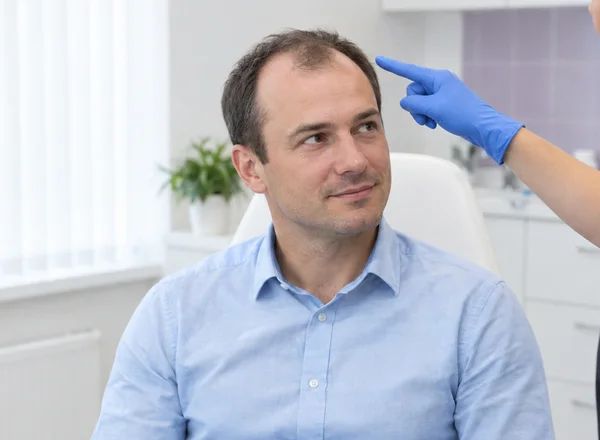

Write to us in WhatsApp or Telegram; photos go to a coordinator there, and the doctor says if a transplant helps. Free, with no booking.

services
Counting the grafts at the free consultation gives the price, which the contract then fixes.
| Where it all begins | Free |
|---|---|
| Eyebrow transplant, FUE | On request |
| Beard transplant, FUE | On request |
| Hair trichopigmentation | On request |
| PRP therapy / session | On request |
all included
From pre-op prep to follow-up at 12 months.
On surgery day no extra charges come up.
two other areas
Not only on the scalp: the same grafts from the back of the head, the same FUE method — only the area changes.
FUE method, no incisions or stitches

Grafts are collected from the donor area at the back of the head and moved through micro-punctures of about 1 mm, which leaves no scars. The doctor discusses the shape with you before the operation, taking your facial features into account. Transplanted hair grows for life and can be trimmed and styled as usual.
On request
Hold the cost nowFUE method, no incisions or stitches

During the initial consultation the surgeon draws the eyebrow shape: you look through references together, and the design takes your facial features into account. The hairs are implanted at the right angle, so the eyebrows look natural — and it helps where plucking has stopped hair growth.
On request
a procedure you go home from, numbed locally
Hold the cost nowThe donor zone is looked at, the grafts are added up and a realistic result is spelled out. At that consultation you also learn the cost, which the contract then fixes.

Message our coordinator
Free online consultation · Reply within 15 minutes
Message us on TelegramMessage us on WhatsAppBy messaging us, you agree to our Privacy Policy
Process
From consultation to going home — all in one day

The process opens with a free consultation where the FUE and DHI methods are explained, your questions are answered, and an individual operation plan is created.

To confirm the surgery date, a deposit is required, paid by card at the clinic or transferred online, formalized in a medical services contract.

A list of required tests reaches you from the clinic, together with the instructions needed to complete them all.

Local anaesthetic is administered, and from then on the operation is painless.

The donor area, located at the back of the head or the temples, provides the grafts, collected without any stitching.

The grafts are implanted into the area of hair loss by the surgical team.
For a swift recovery, the clinic supplies what is needed and explains every instruction clearly.

The crusts clear away, the puffiness fades, the skin repairs itself

Losing the shafts is normal, and the roots are not lost

Little by little the area fills in, and the difference shows

The hair gains density, and the volume and hairline are clear

The final thickness and natural hairline take shape

Free, before surgery, and it commits you to nothing.
Start with advicedoctors

Hair transplant doctor, trichologist, surgeon
10 years of experience

Dermatovenereologist, trichologist, surgeon
11 years of experience

Plastic surgeon
9 years of experience

Plastic surgeon
9 years of experience

Assistant
9 years of experience
A careful look at the donor zone, a graft calculation and a clear statement of the outcome.
Start with advicecoordinators
One named coordinator works with you from the moment you write until recovery is over.

Care and support lead
Answers and helps whenever you need it
Will sort out your documents and dates

Care and support lead
Answers and helps whenever you need it
Will sort out your documents and dates

Care and support lead
Answers and helps whenever you need it
Will sort out your documents and dates
Care and support lead
Answers and helps whenever you need it
Will sort out your documents and dates













Common questions

Yes. People from all manner of towns and countries form a large part of the practice, and an online consultation opens everything.
A free consultation and graft count gives you the final, contract-fixed price with no hidden extras.
It runs for one day only, and nobody stays the night.
Nothing hurts: local anaesthesia is given before the work starts.
In FUE, grafts are harvested with a tweezer, no cuts or stitches involved. In DHI, a Choi pen implants grafts without opening channels first. The combined method pairs FUE harvesting with DHI implantation.
Your donor area decides it, and the precise figure comes from the doctor at a consultation with no fee.
The wounds are gone in 0–10 days. Losing the transplanted hairs at 2–4 weeks is no cause for concern. Regrowth is under way at 3–4 months, density is visible at 6–9 months, and the result is final at 12–18 months.
A lifetime guarantee of hair growth is included, confirmed in your contract.
We work under a medical licence, and care follows the standards and clinical guidelines
of the Ministry of Health.
A patient in Ksar El Kebir is offered the same two methods as anyone else: FUE and DHI, no incisions, no sutures, local anaesthesia, one day from start to finish.
Begin from your own sofa if you are in Ksar El Kebir. The online consultation is free of charge, the doctor studies pictures of the thinning area and gives a plain answer on whether a transplant helps. Contact is open 24/7.
Afterwards it goes like this: 0-10 days of healing, 2-4 weeks to the normal shedding of the transplanted hairs, 3-4 months to first growth, 6-9 to density and 12-18 to the final result. Check-ups at 1, 3, 6, 9 and 12 months, photos with a personal coordinator, growth guaranteed for life.
The cost is calculated individually after a free online consultation. Write to us on WhatsApp or Telegram.
By messaging us, you agree to our Privacy Policy
Ksar El Kebir is a city in northwestern Morocco, in Larache province and the Tanger-Tétouan-Al Hoceïma region. It recorded a population of 124,701 in the 2024 Moroccan census. People in the city talk openly about appearance, family events and work, and more and more of them ask what a hair transplant by FUE or DHI really involves, who it suits and what the months afterwards look like.
This text is written for residents of Ksar El Kebir who are thinking about the procedure. The first step is an online consultation, free of charge, from your own home. Coordinators are available around the clock, 24/7, on Telegram and WhatsApp, so you can write when it suits you, after work, between lessons or late in the evening.
The operation itself is performed at the clinic in Rabat, Morocco. The city facts place Rabat at about 143 kilometres from Ksar El Kebir. Everything before and after the operation, from the first questions to the check-ups, is handled remotely and in plain language.
With both FUE and DHI, grafts are taken from the back of the head, the donor area, and moved through micro-punctures of about 1 mm, so nothing scars over. That is the main point to understand before you decide: the donor area is not cut open in a long line, and the treated area is made of tiny punctures.
The doctor discusses the shape with you before the operation, taking your facial features into account. For a patient in Ksar El Kebir this means a frontal hair line that suits your face, your age and your own hair, not a copied pattern. Bring photos of yourself from earlier years, and show how you usually wear your hair.
Transplanted hair grows for life, so you can trim and style the beard as usual if you have had a beard transplant. The same applies to the scalp: a barber in the city can cut it like any other hair once the healing phase is over.
The city lies close to the Atlantic Ocean, about 30 km away, and the Mediterranean, about 90 km away. It has a Mediterranean climate with Atlantic influences, and summers are marked by high temperatures that the Atlantic influence sometimes softens. The Loukous River runs beside the city and forms the wide Loukous basin.
For recovery this matters in a simple way. In the hot months the scalp should be protected from direct sun during the healing period, and you should avoid sweating heavily in the open. A light, clean, loose cap approved by your surgeon is better than a tight one, and the coordinator will tell you when headwear is acceptable.
In the cooler, damper months, the main concerns are keeping the area clean and not touching it with dusty hands or headgear. Agricultural work around the city raises dust at some times of year, so plan the first days indoors and follow the washing instructions you receive.
Sea and pool bathing should wait until the doctor allows it. People in the region like to go to the Atlantic coast in summer, so ask about this at the consultation and plan the date accordingly.
There is no single correct month. What matters is that the first stretch of healing, described as 0–10 days for healing, fits a quiet period in your life. In Ksar El Kebir many people work in agriculture, trade and services, and the economy of the city relies on farming and commerce, so busy periods differ from one family to another.
Autumn and winter are often convenient because strong sun is less of a problem and a cap or hood does not attract attention. Summer is possible too if you can stay out of the sun and heat during the early days.
Also think about family occasions. Weddings, Eid gatherings and big meals are part of life in Moroccan cities, and many patients prefer to finish the visible early phase before such events. Remember that the first weeks include the shedding of transplanted hair, so the date of the event should be set against the full timeline, not just the operation day.
The stages are as follows: 0–10 days for healing, 2–4 weeks for normal shedding of transplanted hair, 3–4 months for new growth to start, 6–9 months for real density, and 12–18 months for the final result.
At 2-4 weeks the transplanted hairs let go, as expected. This is a normal stage and not a failure, and it is the moment when patients most often write to the coordinator. At 3-4 months the hair comes back. At 6-9 months it looks visibly thicker, and at 12-18 months the look has settled.
One patient who had a beard transplant described it this way: the result made him very happy, active and even growth began from about the 4th month, the transplanted hair took very well, no bald patches were left, and the beard became much thicker and denser, with the shape he had thought about for a long time. Your own timeline will be individual, so treat this as an example of the rhythm, not a promise.
Whether you work in an office, a shop, a workshop or the fields around the city, discuss your daily routine with the surgeon beforehand. The key question is how soon you can be among colleagues or customers without discomfort, and what to avoid in the first days: dust, heavy sweating, friction on the scalp.
Students should plan around exams and presentations, since the early period includes visible redness and the shedding phase. Football is loved in the city, which has produced well-known players, so many young men ask about sport. Contact sports and heading the ball should wait until the doctor confirms that it is safe, and your coordinator will explain when light exercise can restart.
Meals and cafe culture are a social habit in Ksar El Kebir. Eating normally is fine, but avoid leaning your head against walls or seat backs, and ask about hot steam from cooking or the hammam in the early period.
In general terms, good candidates have enough healthy hair in the donor area and stable hair loss, and they have realistic expectations. Younger patients whose loss is still progressing may be advised to wait or to combine the operation with other care.
Certain conditions, such as active scalp disease, uncontrolled chronic illness, or blood-clotting problems, call for a doctor's review first. Tell the coordinator about every medicine you take and any past operations. This is why the online consultation is useful: you can send photos of your head from several angles and get an honest assessment before taking any decision.
If you are told that the operation is not right for you yet, that is a useful answer. Good planning includes saying no or not now.
You write to the coordinators on Telegram or WhatsApp at any hour. You send photos of the front, the crown, the sides and the back of the head, answer a few questions about health and hair history, and then have an online conversation with the medical side. The consultation is free.
We stay with you from pre-op planning to 12 months later. Check-ups are held at months 1, 3, 6, 9 and 12, and a coordinator will be on the phone 24/7. For someone in Ksar El Kebir this means you can send a photo of your scalp from home at any stage instead of waiting for an appointment.
Before you decide, prepare a short list of questions and keep it for the conversation with the surgeon.
Ksar El Kebir is a city where the barber is a regular stop for many men, and a visit is often part of preparing for a wedding, a holiday or a family gathering. After a hair transplant these habits need a short pause. Plan the first haircut, the first shave and any hair product only after the surgeon or coordinator confirms that the treated area has healed.
It is worth telling your barber in advance that you are considering a transplant. A good barber can help you see how your hair line looks at different lengths and which cut will blend the transplanted hair with the hair you already have. Later, once healing is over, a normal visit to the barber is fine, and for a beard transplant the beard can be trimmed and styled as usual because transplanted hair grows for life.
Keep a small routine in the first weeks: clean towels, a clean pillowcase, no scratching and no rubbing the scalp with a cap that is not clean. These small habits matter more than any product.
The city sits beside the Loukous River in a wide agricultural basin, and its economy relies on farming and trade. For people who spend part of the day outdoors, the early recovery needs a realistic plan. Ask the surgeon how many days you should stay out of dust, direct sun and heavy physical effort, and arrange for someone to cover your tasks.
Family life also shapes the plan. Households in the city are often busy, with relatives visiting and children around. Tell the people at home what to expect: redness at the beginning, small crusts during healing, then the shedding phase at 2-4 weeks. When everyone knows this is normal, the first weeks are much calmer.
Keep your phone close. A coordinator will be on the phone 24/7, so a doubt at night or at the weekend does not have to wait until the next working day.
Ksar El Kebir is connected by rail to Tangier, Fez, Oujda and Rabat, and by the national road network to most cities of the kingdom. Rabat is about 143 km from the city. Because the operation is done at the clinic in Rabat, Morocco, many patients ask how much of the process needs a physical presence.
The answer is that the consultation, the planning talk, the questions after the operation and the check-ups at months 1, 3, 6, 9 and 12 are handled remotely, with photos and messages. This keeps your daily life in the city almost unchanged and lets you compare your progress calmly month after month.
The weeks before a hair transplant are a good time to simplify your routine. Tell the coordinator about every medicine, supplement and skin or scalp problem you have, and about any earlier operations. Photos of the front, crown, sides and back of the head, taken in daylight, let the medical side judge the donor area from Ksar El Kebir without any delay.
Think about practical things at home. Prepare clean pillowcases and towels, a loose front-opening shirt that will not drag over the head, and a quiet corner where you can rest. In a lively family household it helps to agree in advance who will answer the door and the phone during the first days.
Write down what you want from the result: a lower or higher frontal hair line, more density at the crown, or a fuller beard. A clear aim makes the planning talk with the surgeon much more useful.
The first nights are where many patients feel unsure. Ask the surgeon how to position your head, what pillow arrangement is best and how to wash the treated area and the donor area. Follow the instructions exactly as given and do not improvise with shampoos or home remedies.
In the warm months of the north, a hot bedroom can make the scalp itch. Keep the room ventilated, avoid heavy blankets and resist scratching. If the itch becomes strong, write to the coordinator, who is reachable around the clock on Telegram and WhatsApp.
Small crusts are part of the healing period of 0–10 days. They should not be picked. Your coordinator will tell you from photos whether what you see is normal.
The most common mistake is judging the result too early. The shedding of transplanted hair at 2-4 weeks is expected, and new growth begins at 3-4 months. Real density arrives at 6-9 months, and the settled look at 12-18 months. A person in Ksar El Kebir who knows this calendar will feel calmer during the quiet middle weeks.
Take a photo in the same light, from the same angles, on the same day each month. Check-ups at months 1, 3, 6, 9 and 12 are far more useful when the pictures can be compared fairly. Avoid comparing yourself with other people's photos, because every head grows at its own pace.
If you feel worried between check-ups, write at once. We stay with you from pre-op planning to 12 months later, and a coordinator will be on the phone 24/7.
Many men ask about the beard rather than the scalp. Patchy areas on the cheeks or the chin can be filled with grafts from the back of the head, and the doctor discusses the shape with you before the operation, taking your facial features into account. Bring photos of the beard line you like and say how you usually keep it.
The same method applies: grafts from the donor area are moved through micro-punctures of about 1 mm, so nothing scars over. Because transplanted hair grows for life, you can trim and style the beard as usual once the healing phase is over.
Shaving should wait until the surgeon or coordinator confirms it is safe. Plan this around family events and holidays so that you are not tempted to shave early.
Ask how the frontal hair line will be designed for your face, how many sessions you may need in the long term, and how the donor area will be protected so that it keeps looking natural. Ask which method, FUE or DHI, suits your case and why.
Ask what the first days will look like, what to do about sleep position, washing and headwear in the climate of the north of Morocco, and which signs should make you contact the coordinator at once.
Ask about the schedule of check-ups and how photos are compared across months, so that you can judge progress calmly when the shedding phase arrives.
Yes. The first consultation is online and free, and you can start it from home by writing to the coordinators on Telegram or WhatsApp, available 24/7.
At the clinic in Rabat, Morocco. The consultation, planning and follow-up are remote, so you stay in contact from your own city.
Grafts are taken from the back of the head and moved through micro-punctures of about 1 mm, so nothing scars over.
Between 2 and 4 weeks the transplanted hairs let go, as expected. This is normal shedding and the hair comes back later.
New growth starts at about 3-4 months, becomes visibly thicker at 6-9 months, and the settled look comes at 12-18 months.
Protect the scalp during healing, avoid long exposure and heavy sweating, and ask the coordinator when a light cap is acceptable. Summers in the area are hot, so plan accordingly.
Wait until the surgeon allows it. Ask about it at the consultation if you plan a coastal holiday.
We stay with you from pre-op planning to 12 months later, with check-ups at months 1, 3, 6, 9 and 12.
Transplanted hair grows for life: trim and style the beard as usual.
People with active scalp disease, unstable chronic conditions or very unstable hair loss may be asked to wait. The doctor decides after reviewing your photos and history.
Yes, once the healing phase is over and the surgeon or coordinator confirms it. Until then avoid cutting, shaving or using products on the treated area.
It helps to explain the normal stages: redness first, shedding at 2-4 weeks, regrowth from 3-4 months and a settled look at 12-18 months. People who know the timeline worry less.
No. Check-ups at months 1, 3, 6, 9 and 12 are done remotely from Ksar El Kebir. The operation itself is performed at the clinic in Rabat, Morocco.
Clear daylight photos of the front, crown, sides and back of the head, plus a short note on your health, medicines and hair history. The consultation is free and the coordinators are available 24/7.
Yes. At 2-4 weeks the transplanted hairs let go, as expected. Write to the coordinator if you want reassurance and a photo review.
Grafts from the donor area can be placed to fill patchy zones, and the doctor discusses the shape with you beforehand, taking your facial features into account.

 Forceps
 Minimal








